You Should Never Plug These Items Into a Power Strip


All featured products and deals are selected independently and objectively by the author. Better Report may receive a share of sales via affiliate links in content.
According to Electrical Safety Foundation International, there are around 51,000 residential electrical fires in the U.S. every year, causing 500 deaths and 1,400 injuries (not to mention more than $1 billion in property damage). Some of those fires originate in power strips and extension cords, devices that are easier to misuse than you may think. We consulted two experts to find out what you can and can’t plug into a power strip, as well as best practices for using them safely.
Extension Cords vs. Power Strips vs. Surge Protectors
When you’re looking for additional plugs to power items, you’re likely to think of one of three devices: an extension cord, a power strip, or a surge protector. They’re not interchangeable, though — each serves a specific purpose.
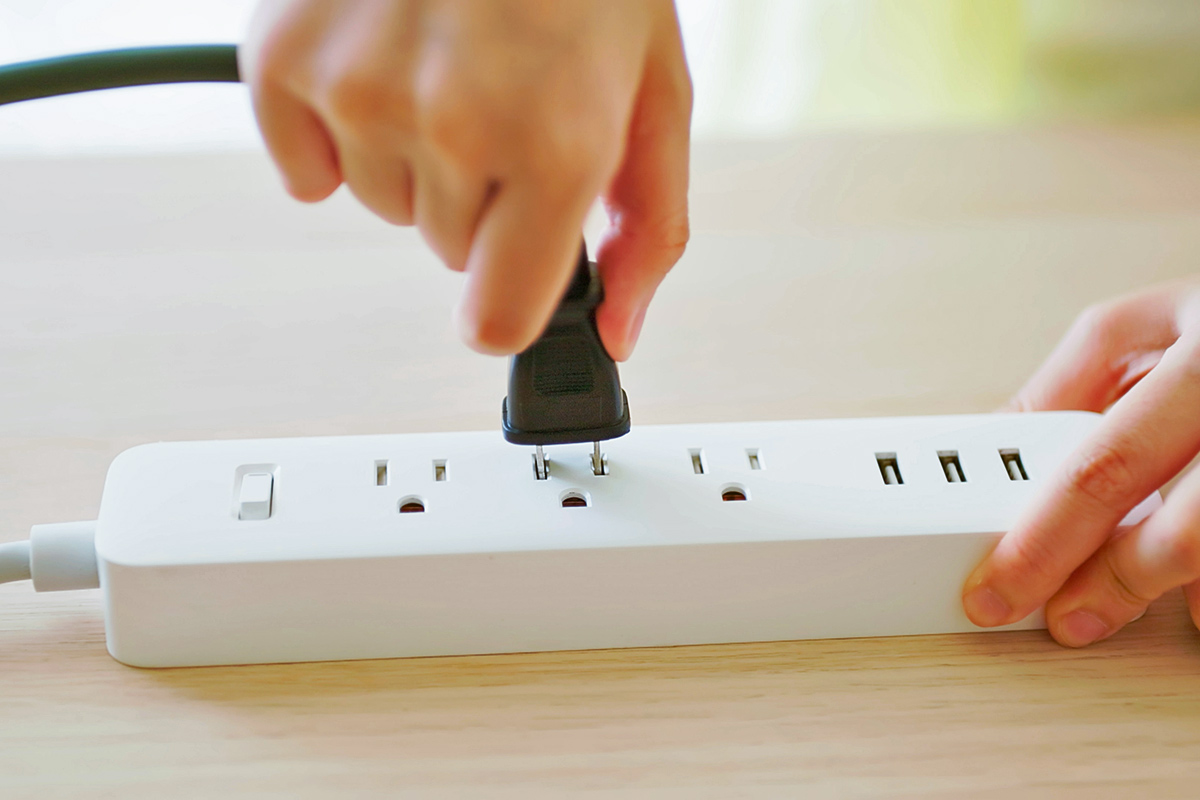
“The purpose of power strips is to expand the number of available outlets at a single wall receptacle,” says Jordan Benjamin, president of Done Rite Services, an Arizona-based electrical, plumbing, and HVAC company. “[A] common misconception is that power strips create more power, but this isn’t true. Your circuit capacity is fixed at your breaker. Power strips just redistribute that existing capacity.”
Power strips differ from surge protectors, which offer additional protection against voltage spikes. Extension cords, meanwhile, “are designed to temporarily deliver power when an outlet isn’t accessible,” Benjamin says. “They are not designed to be a permanent solution for a lack of outlets.”
Items You Should Never Plug Into a Power Strip
Whichever device you’re buying, “It is very important to pay attention to the amp[erage] rating on the power strip to not exceed it,” says Tom Jameson, owner of AstroWatt Electric in North Carolina. “The biggest misconception [people have] is that all power strips and extension cords are safe. Using the wrong size and gauge can do more harm than good.” You can find the maximum capacity of the strip in amps or watts on the underside, and calculate the total load by adding up the wattage of everything you plan to plug in (which should be somewhere on the devices themselves). You can convert amps to watts by multiplying amps times voltage.
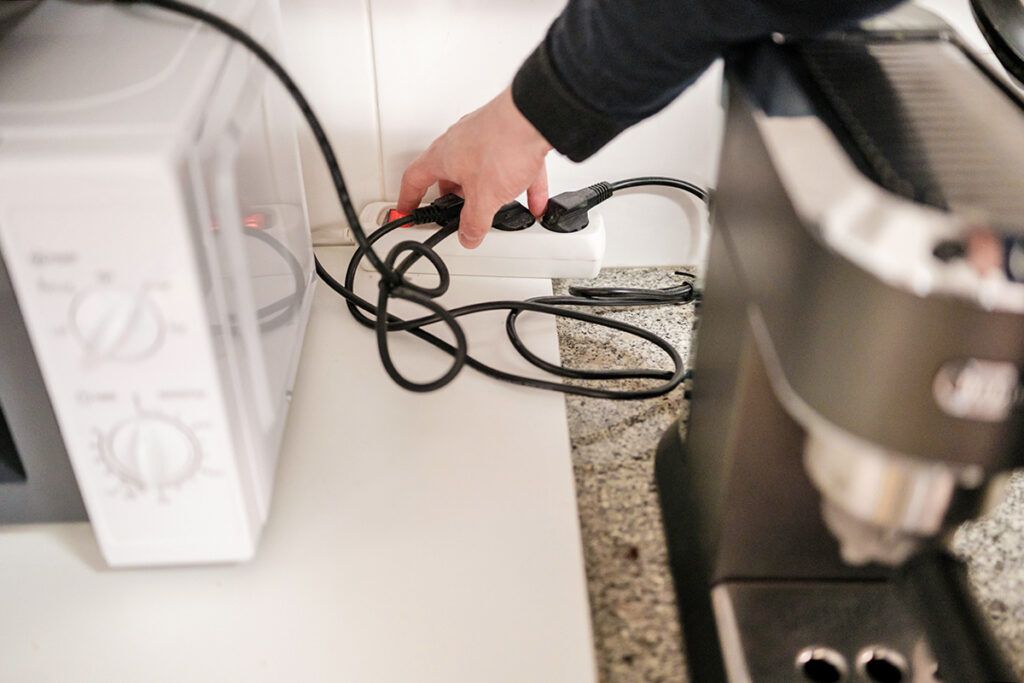
The list of items you can’t plug into a power strip is long, but a good rule of thumb is to avoid high-wattage appliances (1,000 watts and above), anything that produces heat, and anything with a motor — they can overload a power strip and cause a fire. “These types of devices draw high current and have a significant startup surge when cycling on, which is more than a power strip is designed to handle,” Benjamin says. Here’s a short list of devices that aren’t ever safe to plug in:
- • Fridges (or mini fridges)
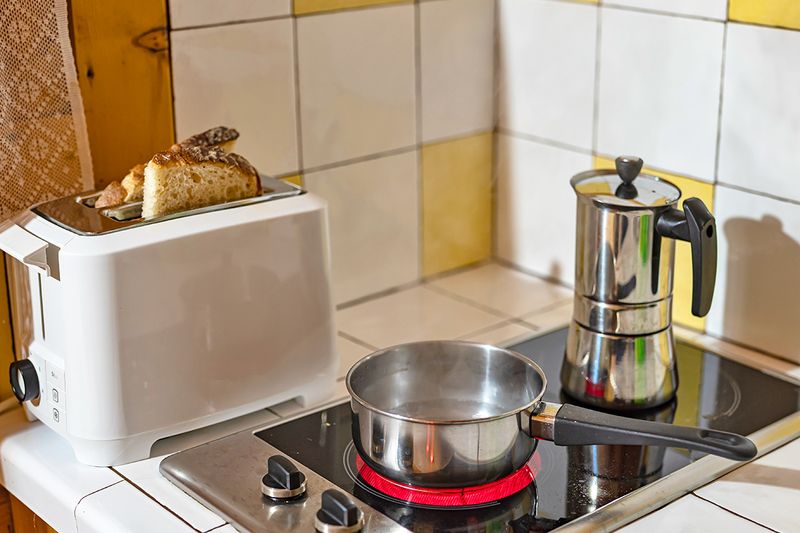
- • Toasters
- • Slow cookers
- • Coffee makers
- • Microwaves
- • Air fryers
- • Blenders
- • Irons
- • Air conditioners
- • Space heaters
- • CPAP machines
- • Electric blankets
- • Power tools
There are also plenty of items you may think are OK for a power strip that actually aren’t. “Vacuums, hair dryers, and crock pots are [indoor] items people plug in all the time” that can cause problems, Jameson says.
For all of these items, it’s safest to use a wall outlet rather than a power strip or surge protector (which can also get overloaded). According to Benjamin, wall outlets are the “only safe option” because “they are part of a dedicated electrical circuit that was designed to carry a specific load with properly sized wiring, secure connections, and a protective breaker matched to that capacity. Power strips are simply not designed to handle big loads.”
And, as Jameson points out, unlike a lot of power strips, most wall outlets are tamper-resistant, which “prevent[s] kids or animals from getting into them.”
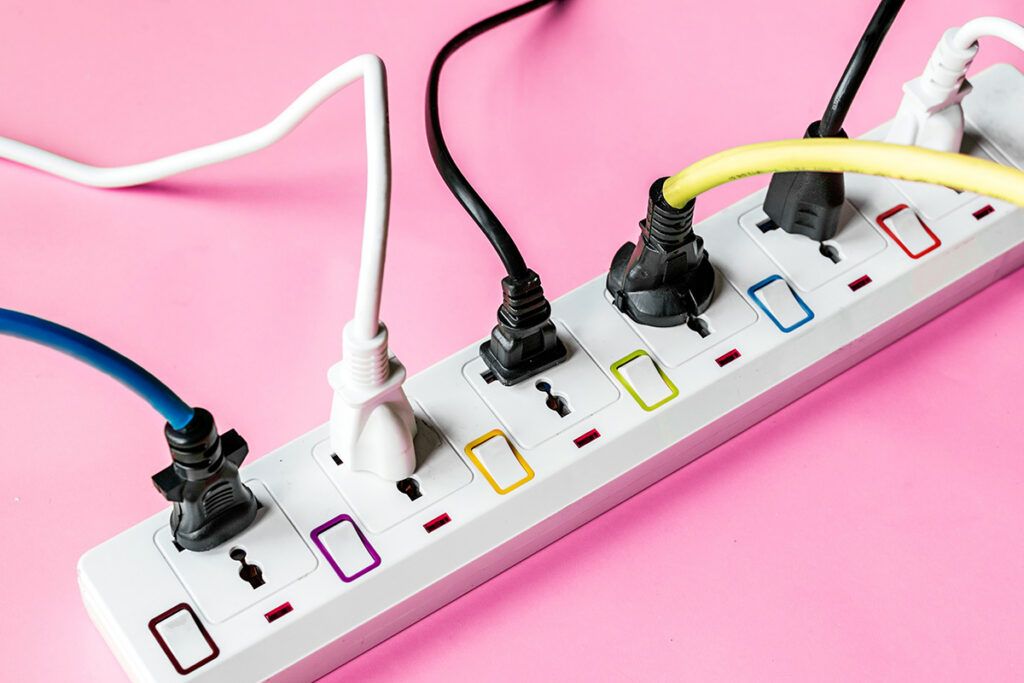
You should also never plug an extension cord into a power strip, or a power strip into another power strip, a practice known as daisy chaining. According to Benjamin, “Daisy-chaining several strips together can lead to overheating and a greatly increased risk of fire and/or electrical shocks.”
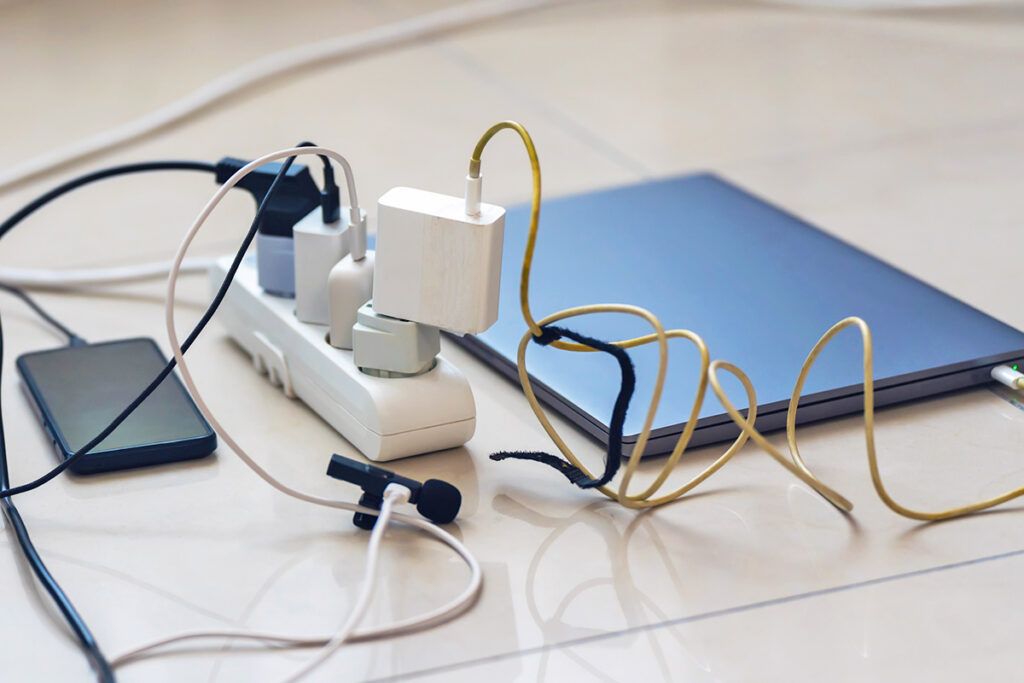
Both Benjamin and Jameson have horror stories about things customers have plugged into power strips that have no business being there. “One of the worst setups I’ve encountered involved multiple power strips daisy-chained together behind an entertainment center,” Benjamin says. “This setup was used to power a TV, a cable box, a landline phone and answering machine, multiple gaming systems, a space heater, a small fan, and various chargers. It’s a miracle that the family never had a fire, but believe it or not, this type of setup isn’t at all uncommon.”
In addition to space heaters — “the No. 1 item to never plug into a power strip” — Jameson often sees people using the strips in garages. “That should never be done, either,” he says, because garages are full of dust and debris, “and dust and electricity do not mix.” (Dust isn’t as big of an issue inside your home, he says, but it’s still not ideal, so he recommends keeping a can of compressed air around to clean out power strips as well as your smoke detector.)
What You Can Use a Power Strip For
At this point, no one would blame you for wondering what you actually can plug into a power strip. According to Benjamin, “electronics and devices with a relatively low, steady power draw that don’t produce heat or run off of a motor or compressor are safe to use on a power strip.”
That includes TVs, routers and modems, alarm clocks, phone and tablet chargers, and lamps. Laptops and computer monitors should be OK, but not if you have gaming setup or a ton of home office equipment. “The issue is that so many devices are plugged in and all are running simultaneously,” he says. “This draws more power than you would think and can lead to overheating, internal component melting, and damage to devices.”
What To Look for in a Power Strip
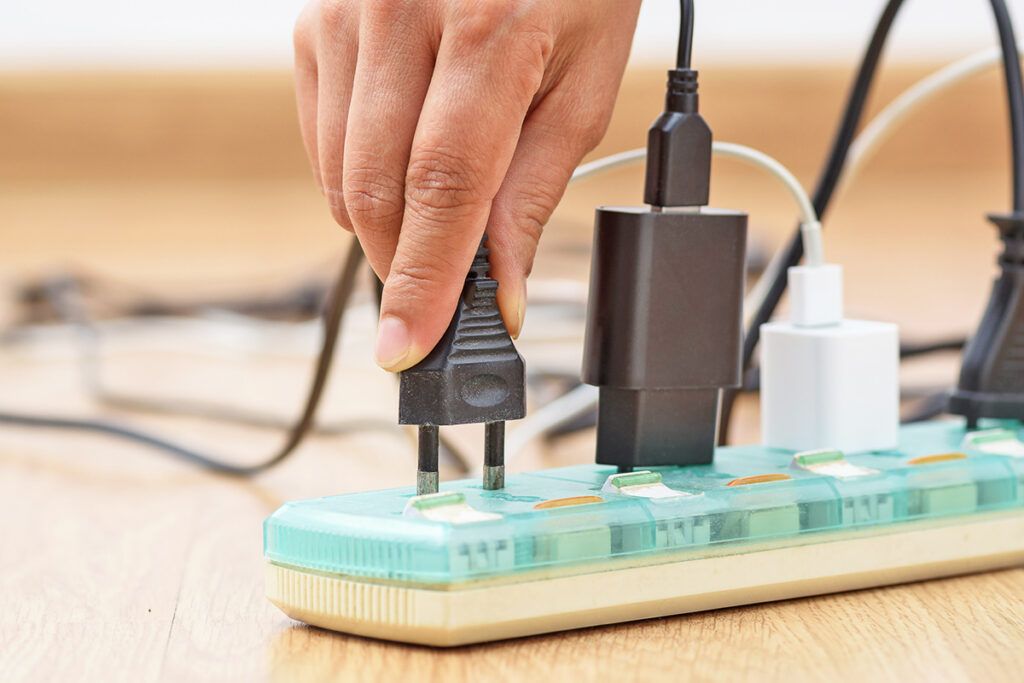
“When purchasing power strips,” Jameson says, “the main thing to look for is to ensure it’s UL Listed,” which means that it’s been tested by UL Solutions, a company that provides independent testing to ensure devices meet safety standards. He also recommends getting one that’s tamper-resistant — which will have safety shutters over the outlets — with a minimum rating of 15 amps. USB charging ports are a plus, too. (That said, “I wouldn’t ever personally recommend someone to use a power strip as a licensed electrician. I would always recommend having an electrician add more outlets to plug things in the right way.”)
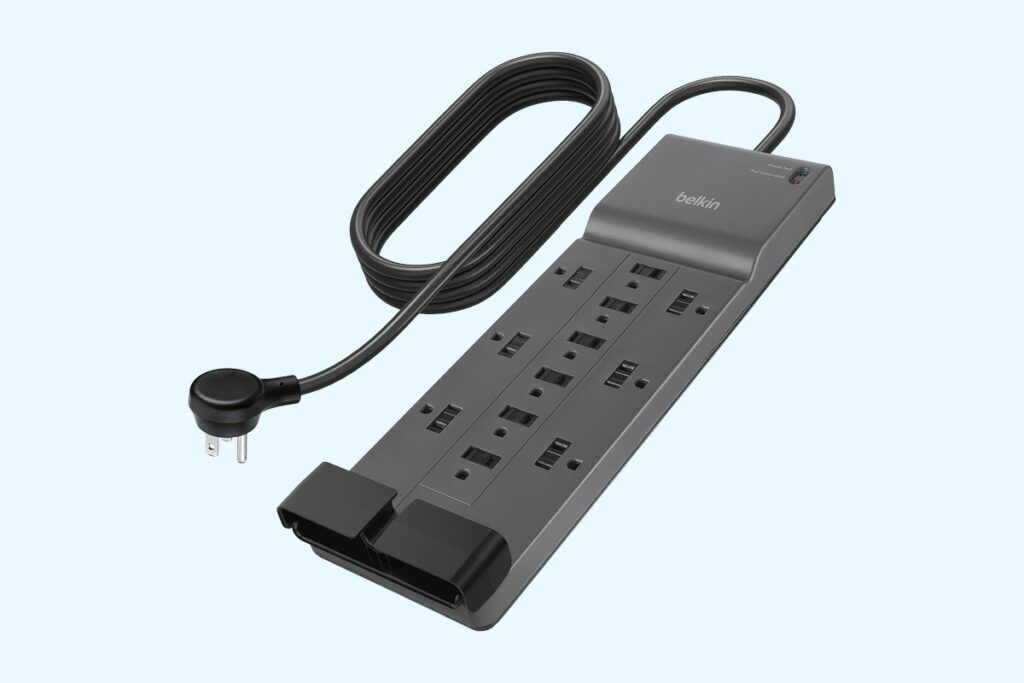
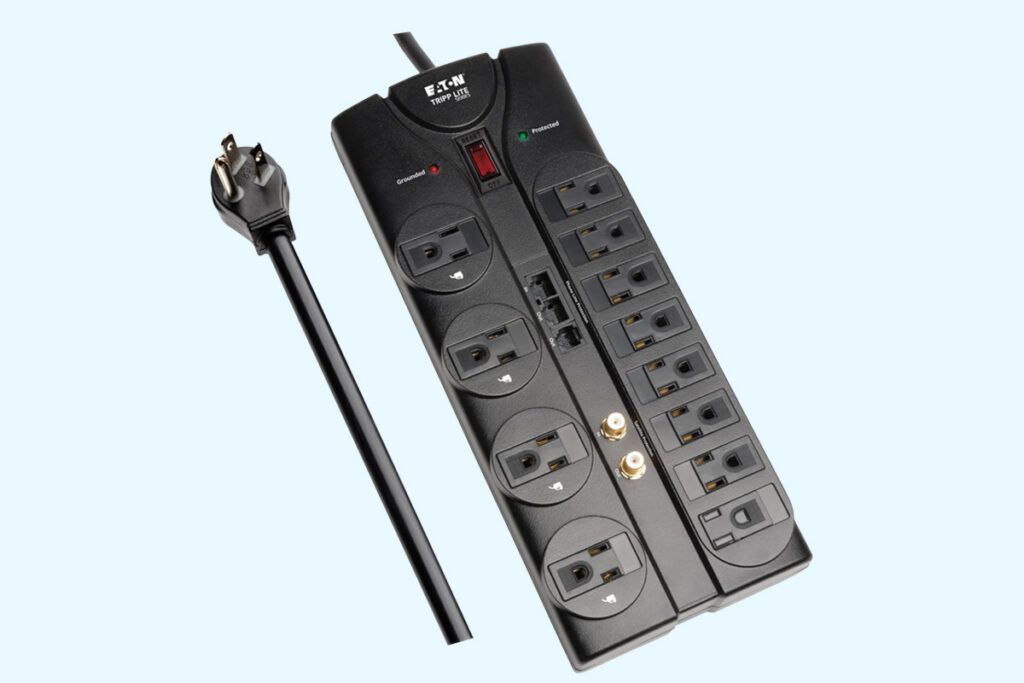
Benjamin says that if you need more outlets, you should opt for a surge protector over a power strip to get that extra protection: “Look for a high joule rating — 2,000+ is ideal — ‘UL 1449 Revision 2’ stated on the packaging, clamping voltage (VPR) of 330V to 400V, a protection indicator light, and 3-line protection.” And make sure you’re buying from a reputable brand, even if it costs you a few extra bucks. “When it comes to valuable electronics, you don’t want to take any chances,” he says.
Belkin 12-Outlet Surge Protector
Eaton Tripp Lite Home Theater Surge Protector
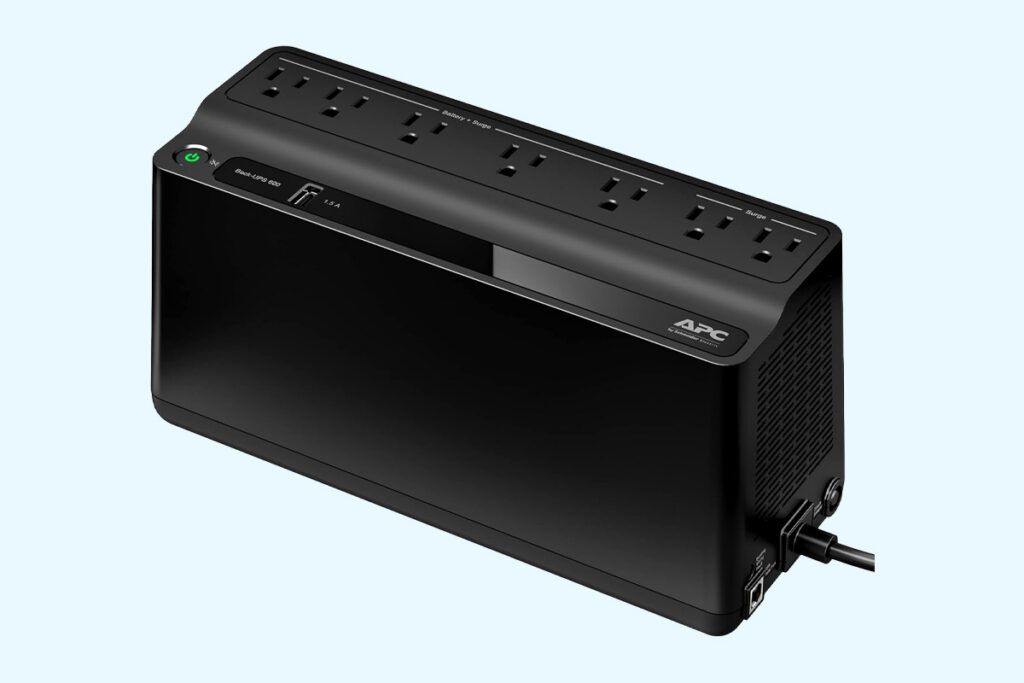
APC UPS 600VA Battery Backup
Power Strip Safety Tips
As we mentioned above, never, ever daisy chain power strips. You should also never use extension cords as permanent power solutions.
Additionally, you should visually inspect power strips regularly for damage. Jameson is always on the lookout for “any sort of discoloration or melting,” he says. “If you ever see anything changing color, burn marks, plastic melting, etc., unplug and throw away.” (Don’t just toss them in the trash, though; you should drop them off at a retailer with an e-waste recycling program or an authorized e-waste facility.)
Other signs that it’s time to toss your power strip and get a new one, according to Benjamin, are if the device “feels hot to the touch when in use, produces burning smells, frequently trips the breaker, doesn’t plug into the wall snugly, or doesn’t maintain consistent power anymore.”
You should also avoid running any cords under rugs or furniture that’s low to the ground, which can cause heat to build up and increase the risk of fire. Benjamin says you can put them in cabinets, provided that heat can escape (the back of the cabinet is open, for example, or there’s a vent). The power strip should also be mounted to the wall of the cabinet and there should be a hole for the cord so it doesn’t get pinched by the door.
When it comes to what to plug into the outlet, Benjamin says, “err on the side of caution and use a wall outlet.” And if you find that you need a ton of power strips around your home, it may be time to make a phone call. “If you’re looking for additional options to plug in more devices [and] equipment,” Jameson says, “contact a licensed and insured electrician.”
Featured Image Credit: © PonyWang/iStock