How to Safely Handle Raw Chicken, According to a Chef

All featured products and deals are selected independently and objectively by the author. Better Report may receive a share of sales via affiliate links in content.
Chicken is one of Americans’ favorite foods: According to the National Chicken Council, people in the U.S. consume over 100 pounds per person each year — almost as much as beef and pork combined. And why not? It’s tasty, it’s versatile, and it’s a good source of lean protein.
Of course, there are a few negatives to go along with those positives, and a big one is food poisoning: The CDC estimates that 1 in 25 packages of grocery-store chicken is infected with salmonella or other bacteria. Also, if we’re honest, handling raw chicken is just kind of gross.
I’m a trained chef and former restaurateur, and was also a certified food safety trainer during my time in the business. I’ve handled a lot of chicken over the years, and trained staff to do it as well. So, if you’ve ever wondered whether you’re handling raw chicken correctly, keep reading.
Keep it Cold
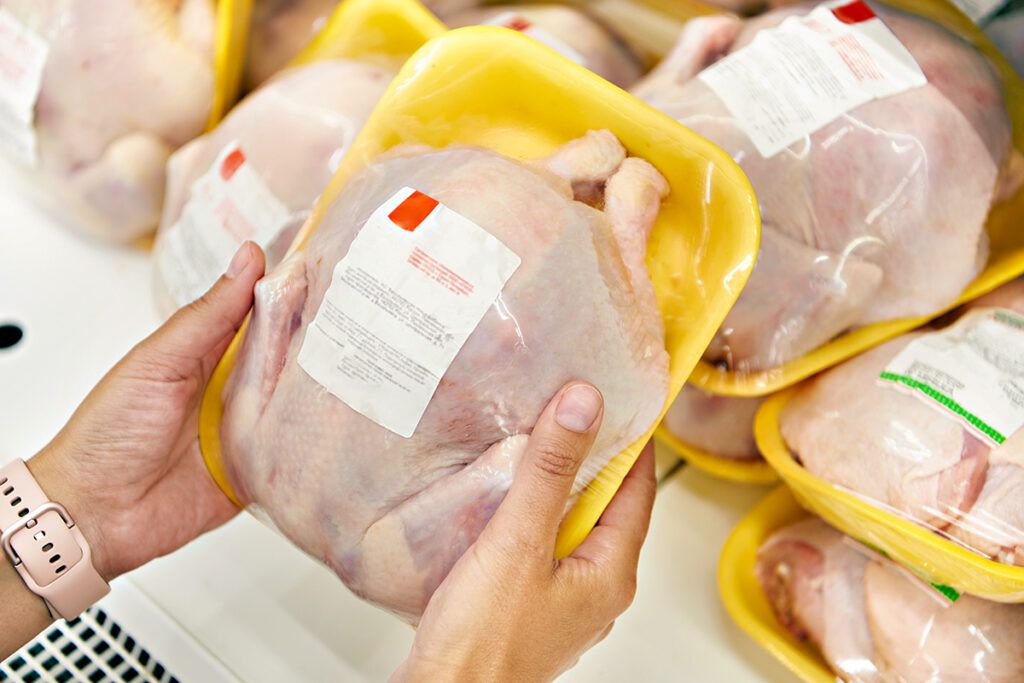
You can usually be confident that the store you buy your chicken from has handled it correctly, so your responsibility begins at checkout. Chicken shouldn’t stay at room temperature for more than two hours, so put it in a cooler or insulated bag after you purchase it and transfer it to the fridge as soon as you get home. You should use it or freeze it within one or two days.
Pathogens — bacteria like Salmonella that can cause human illness — flourish at temperatures between 40° and 140° Fahrenheit, the so-called danger zone for food safety. The more bacteria in your food, the more likely you’ll get sick, so you really want to limit time in the danger zone.
Keep Raw Chicken Separate From Other Foods
One of the big issues for chefs and home cooks alike is the risk of cross-contamination. That’s what happens when potentially bacteria-laden juices from the chicken come into contact with anything ready to eat. It can happen directly through a drip, or occur indirectly because something that’s touched the raw chicken — your hand, your knife, a cutting board, or the counter itself — touched other food afterwards.

Reader Favorites



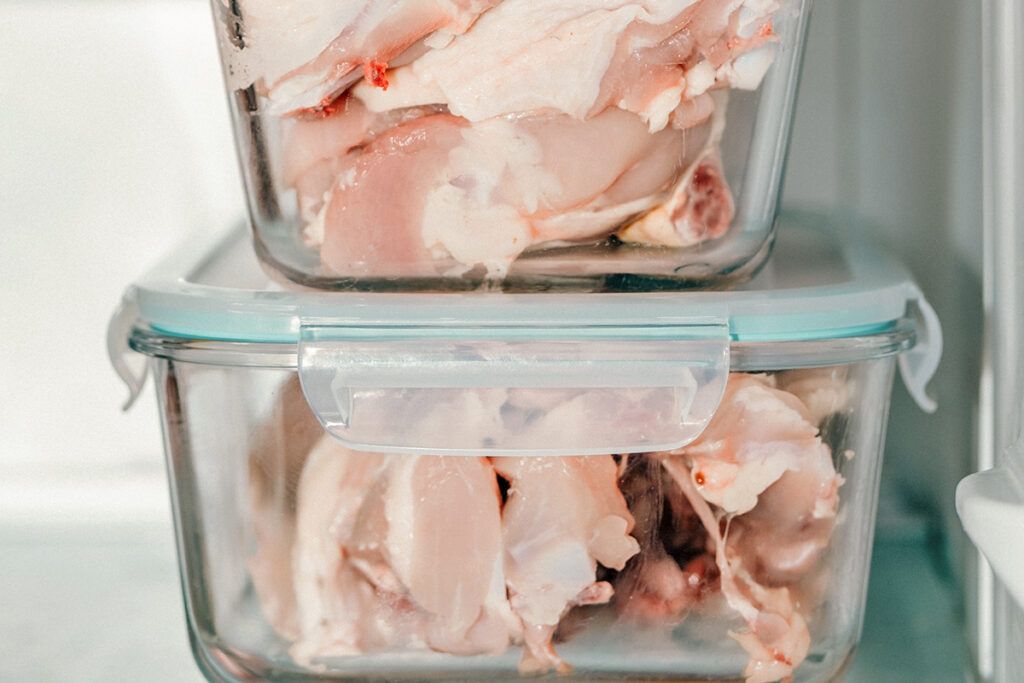
You can reduce this risk right at the store by putting your chicken inside a plastic bag to prevent leakage. When you get home, put the chicken on the bottom shelf of your fridge below other foods with a bowl or plate underneath to catch drips.
Clean, Clean, Clean
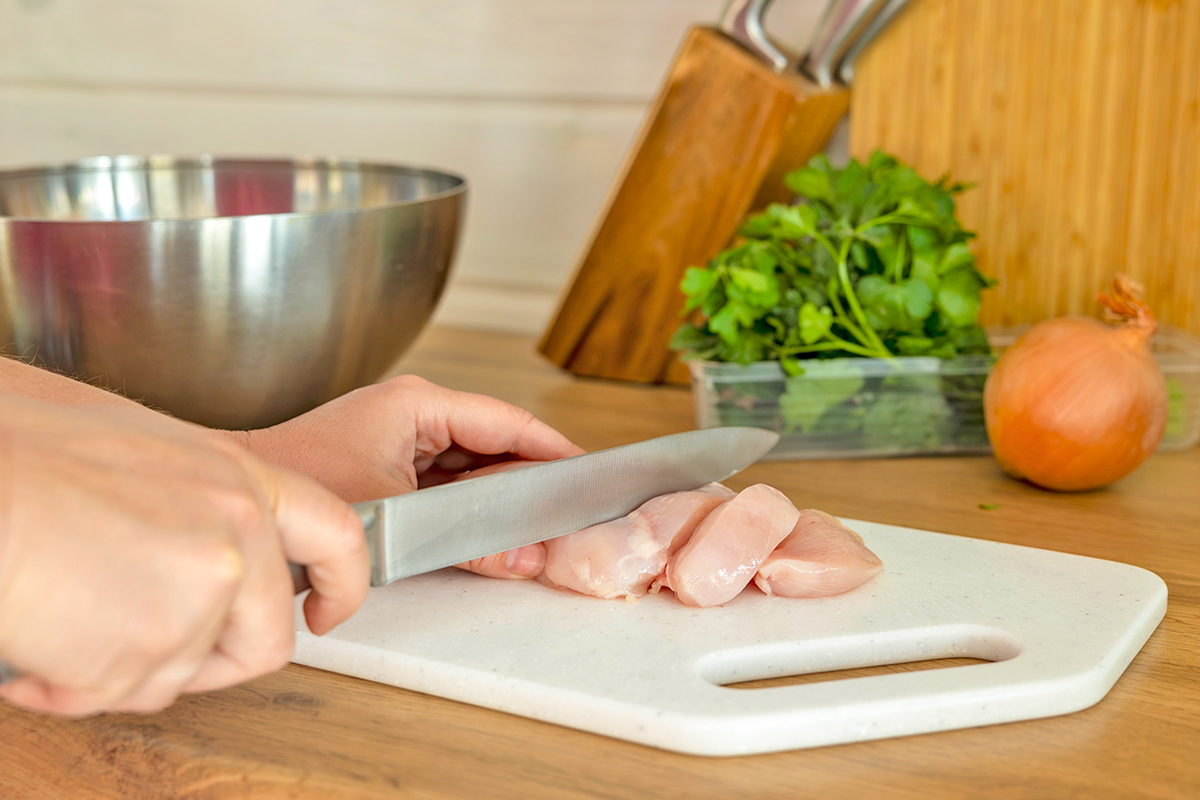
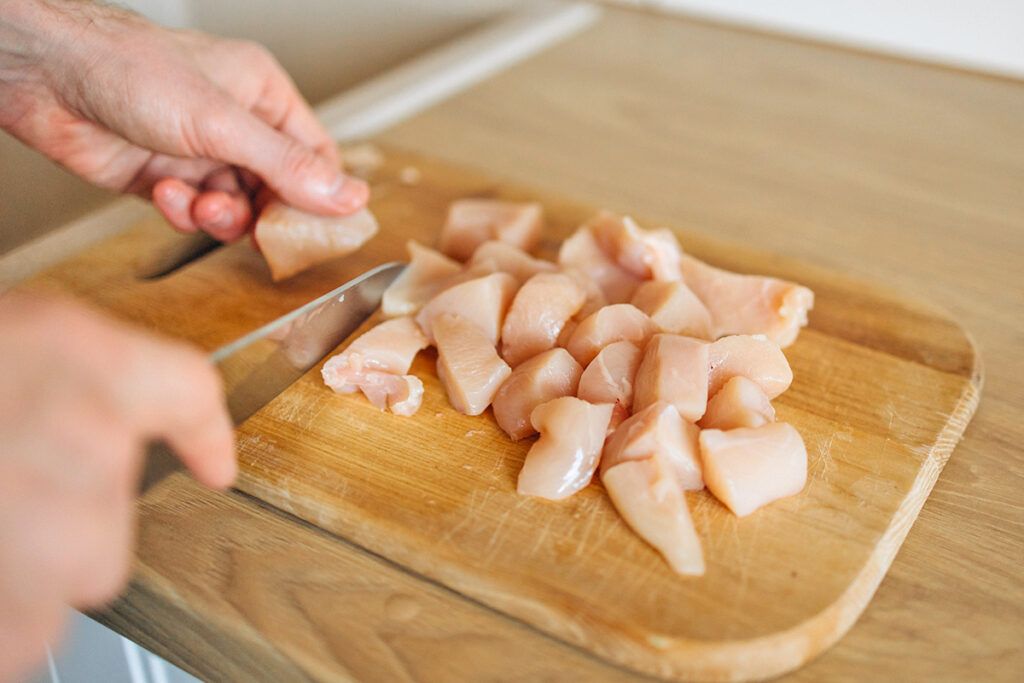
Keeping everything scrupulously clean is just as important as physical separation. Wash your counter, cutting board, knife, and hands before you start. The only thing you shouldn’t wash is the chicken itself. Rinsing it won’t remove bacteria; it will just spread them around your kitchen. Seriously, the CDC would love it if you’d stop doing that.
A few things I get asked a lot in cooking classes are pertinent here.
Should I wear gloves to handle raw chicken?
From a food safety standpoint, gloves are neutral. Every time you handle raw chicken, you should either wash your hands or change gloves. So, if touching raw chicken gives you “the ick,” then by all means use them. I usually use disposable vinyl or nitrile gloves like these, just so I don’t have to wash my hands and dry out my skin.
Should I use a plastic cutting board or wood?
That’s a personal choice. Studies have shown that some kinds of wood have naturally antibacterial properties, but plastic can go right into your dishwasher. I use both, but the perk of having multiple low-cost cutting boards is that you can designate them for meat-only, produce-only, and so on. It helps if they’re color-coded, like these ones from Amazon. Plastic cutting boards can be a source of microplastics, though, so if you’re trying to avoid them, opt for a wooden cutting board like this one.
Are soap and water enough to clean up, or do I need to sanitize?
Plain soap and hot water do most of the heavy lifting for your hands as well as utensils and surfaces (and lots of general-purpose household cleansers sanitize your surfaces, too). If you want to be really sure, you can make a DIY sanitizer by mixing 1 teaspoon of bleach in 1 cup of room-temperature water. Spray it on your freshly-cleaned utensils and surfaces, let it sit for one minute, then wipe it dry with a clean towel. This kind of sanitizer is only good for 24 hours, so you’ll need to mix it fresh each time.
Cook Your Chicken to the Right Temperature
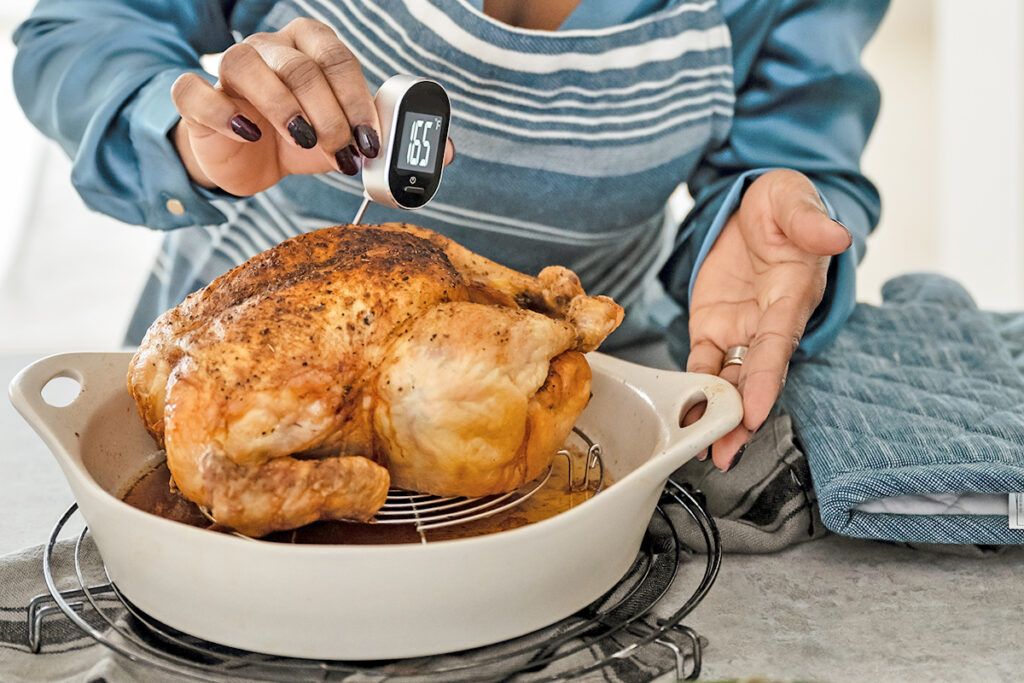
The final step in handling your raw chicken correctly is fully cooking it to a temperature that kills potentially harmful bacteria. For chicken or poultry, the USDA-recommended temperature is 165 degrees Fahrenheit. Realistically, the only way to know when you reach that temperature is to check the chicken with a thermometer. “When the juices run clear” isn’t a precise test, and often means you’ve overcooked your chicken.
Then there’s the question of the meat staying pink with bone-in chicken. That’s not a sign it’s undercooked — it’s a chemical reaction involving oxygen-carrying proteins in chicken meat. That pink color is heat-stable, so it won’t change as you keep cooking your bird.
A fast-acting instant-read thermometer is the only way to know for sure when your chicken is fully cooked. I recommend ThermoWorks’ Thermapen ONE, which is fast, accurate, and reliable. If you’re not prepared to spend that much, the colorful ThermoPop 2 is more affordable but still offers excellent speed and accuracy. Either one will help you cook your chicken confidently to the correct temperature.
Featured Image Credit: © Maria Nikitina/iStock
More From Our Network
Better Report is part of Inbox Studio, an email-first media company. *Indicates a third-party property.






Fred Decker is a trained chef and former restaurateur. Since closing his restaurants over a decade ago he has been a prolific freelance writer, publishing several thousand articles on dozens of high-volume websites including Taste Of Home, Hunker, Tasting Table, Week&, eHow, and GOBankingRates. He lives on a rural acreage shared with a big garden, chickens, rabbits, and grandkids.
This article is for general informational purposes only.
Affiliate Disclaimer Medical Disclaimer Financial Disclaimer