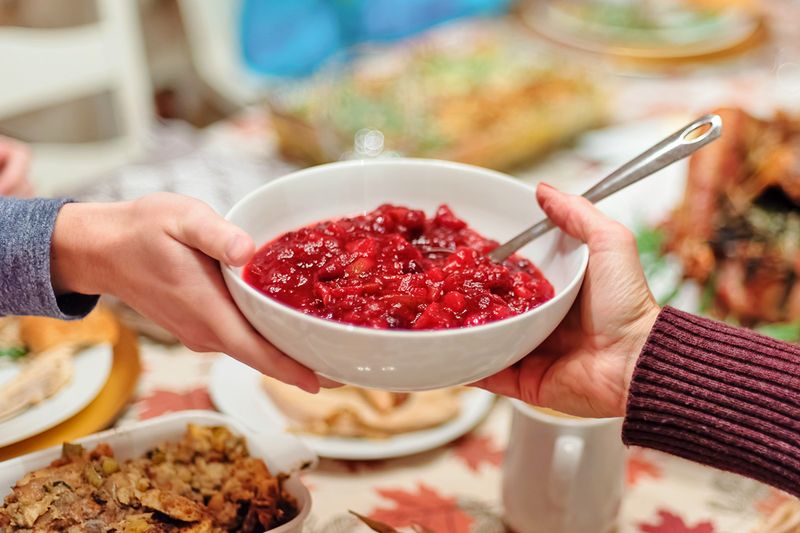
Is It Safe To Eat Lettuce That’s Turning Red?

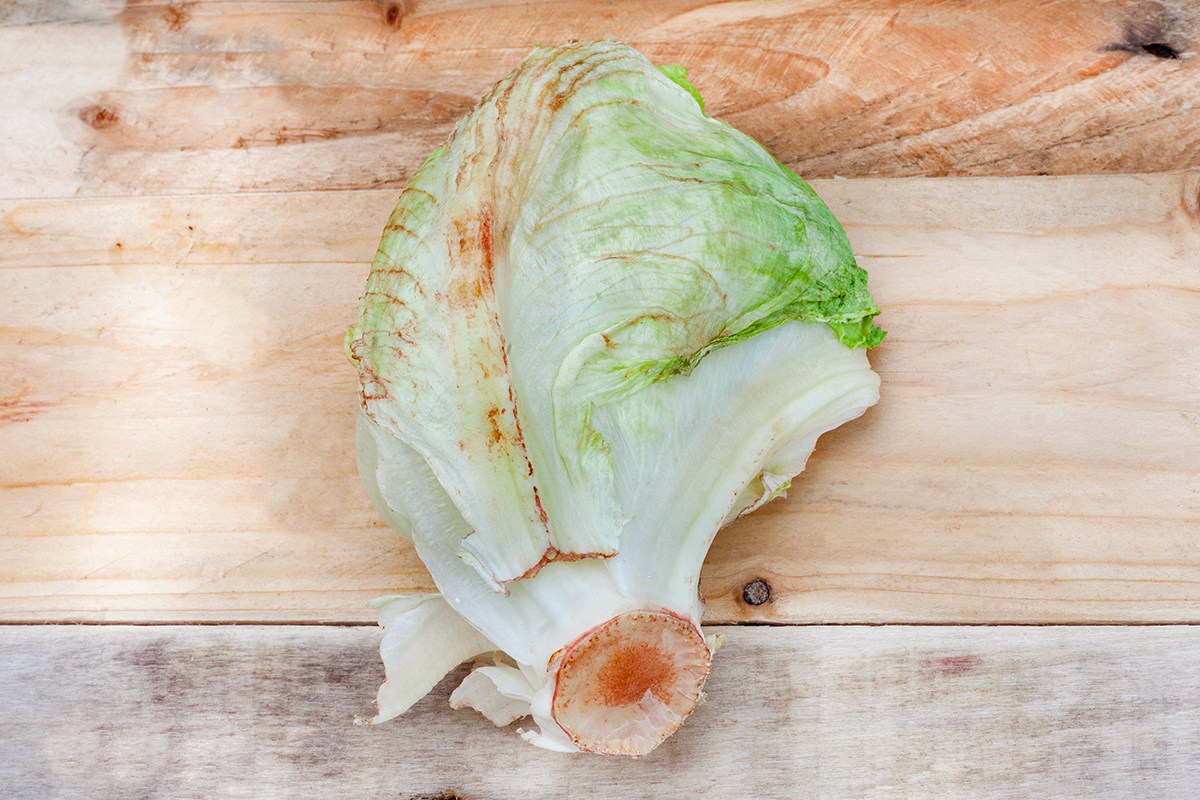
A head of lettuce can sometimes feel like a ticking time bomb in your fridge. Unlike sturdier root or cruciferous vegetables, delicate leafy greens are prone to wilting within a few days of coming home in your grocery bag. And that’s the best-case scenario. Worst case is opening your crisper drawer to find your lettuce looking like something you dug out of the compost bin.
Changes in color can be a sign that your produce has crossed the point of no return. But some shades — like a pinkish rust color that appears on the pale cores of some lettuce leaves — are tricky to decipher. Is lettuce that’s turning red in some places still safe to eat? Or is it better to be safe and skip the Caesar salad before dinner?
Why Does Some Lettuce Change Color?
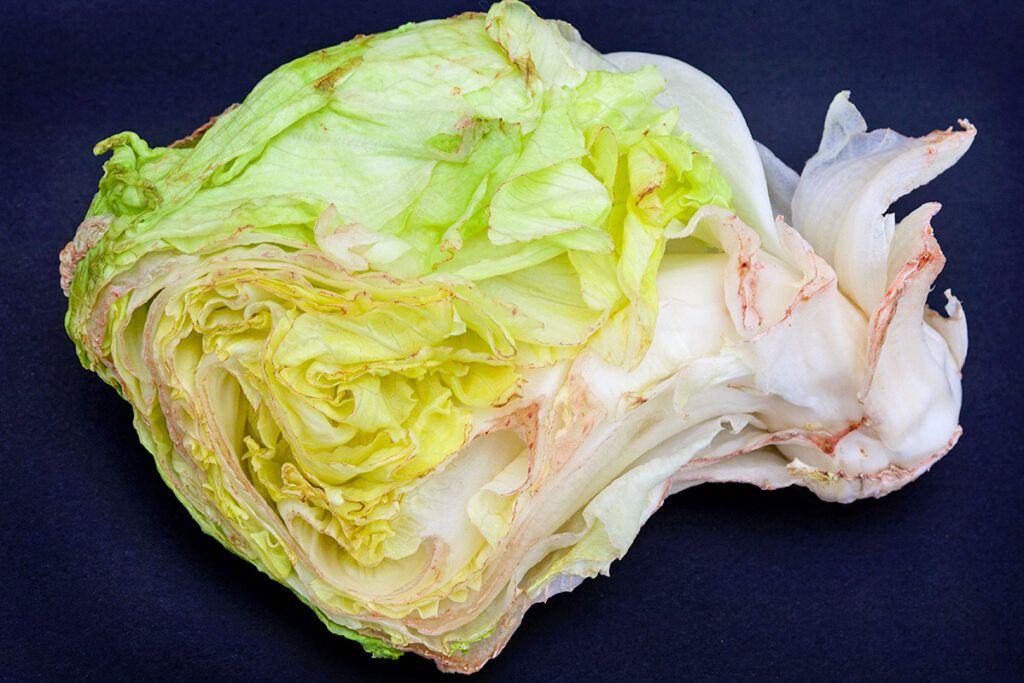
Romaine and iceberg lettuce varieties are both susceptible to something called “rusting” or “russet spotting.” It’s a sign not of spoilage, but that the vegetable is attempting to stop itself from going bad using its own chemistry.
Like all fresh produce, lettuce starts to oxidize when its cells have been damaged and exposed to the air. As a defense mechanism, the leaves produce polyphenols, plant compounds capable of fighting off harmful microbes like fungi and mold. Not only are polyphenols safe to eat, but they even have anti-inflammatory properties that make them a natural antioxidant. In lettuce, they also have the unfortunate side effect of giving the paler parts of the leaves an unappealing, orangey-pink hue.
Mishandling on the way to the supermarket — or your kitchen — is a common cause of bruising in lettuce that can lead to oxidation. If you buy your lettuce precut, you can also expect to see rusty spots when you open the bag.
Another possible source of oxidation is exposure to ethylene. Fruits release lots of ethylene when they’re ready to ripen, and nearby produce can be triggered by it even though the compound didn’t originate with them. That’s why tossing a hard avocado in a paper bag with ripe apples or bananas is one of the most effective ways to get it to ripen faster.

Reader Favorites



In the case of lettuce, which is ready to eat as soon as it’s picked, ethylene exposure means oxidation, which means rusting and eventually decomposition. So if your romaine shares a corner of your fridge with ethylene-producing fruits, you may be setting it up for an untimely demise.
How To Keep Lettuce From Going Bad
If a slight blushing around the core is the only significant change to your lettuce, it’s still OK to eat. The telltale signs of spoilage in leafy greens tend to be more obvious: a noticeable odor and slimy texture, for example.
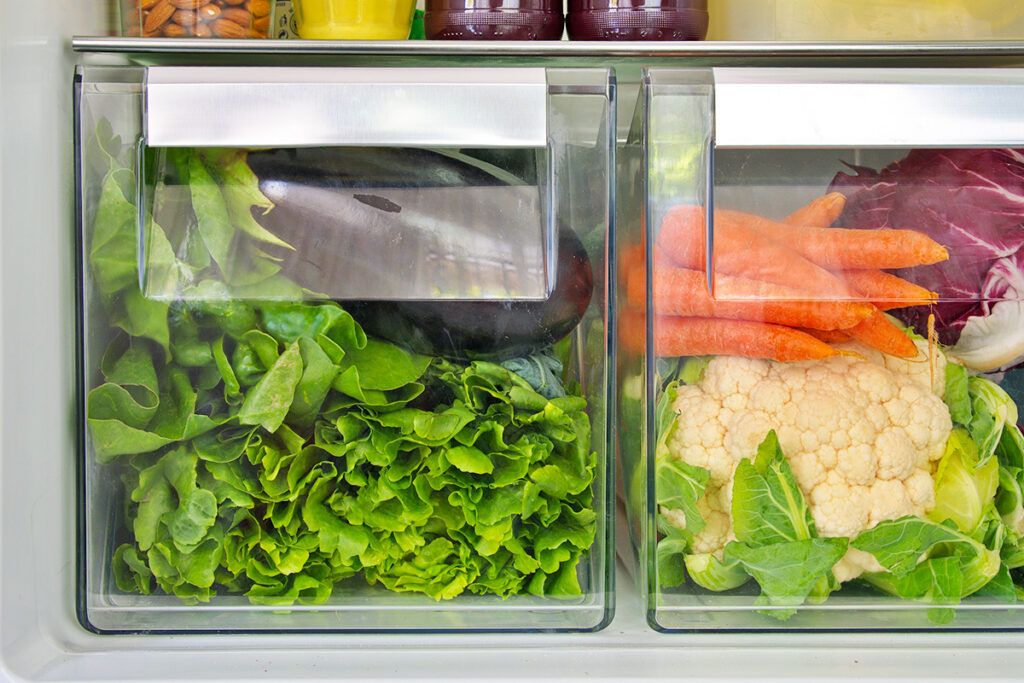
To limit rusting and extend your lettuce’s shelf life, be intentional with how you store it. The crisper drawer is the best spot for it in your fridge; it’s actually designed to preserve more delicate produce and keep leaves crisp for as long as possible. The key is to reserve the drawer for leafy greens exclusively and store your fruit in another part of the refrigerator — or better yet, on your counter.
Featured image credit: © Aninka/stock.adobe.com
More From Our Network
Better Report is part of Inbox Studio, an email-first media company. *Indicates a third-party property.






Michele Debczak is a writer and editor based in Brooklyn, New York. She appears in seasons four through six of History Channel's “The Food That Built America,” and her work has been featured in Mental Floss, Smithsonian Magazine, Eater, and Vice.
This article is for general informational purposes only.
Affiliate Disclaimer Medical Disclaimer Financial Disclaimer