Are the Brown Marks on Your Skin Dangerous?
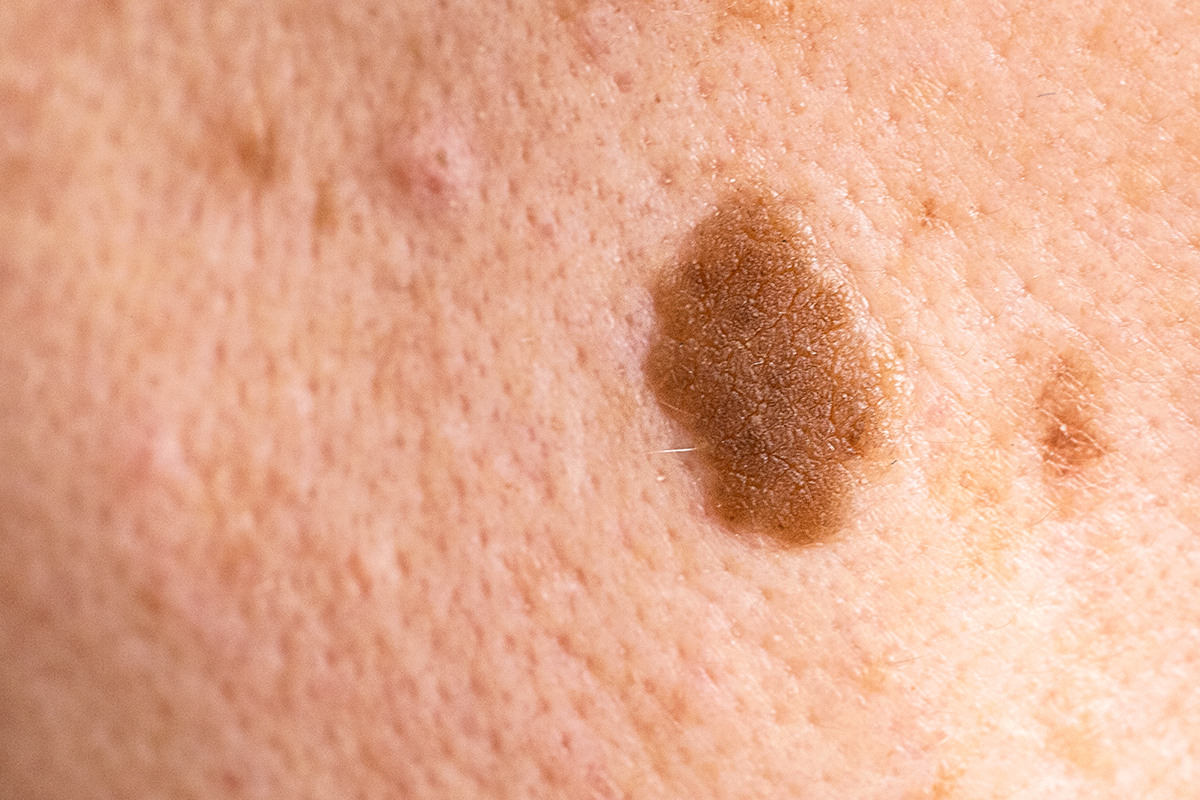
Have you ever noticed a raised, rough-looking spot on your skin and wondered what it was? It may be brown, tan, or even look a little waxy. If that sounds familiar, you may have a seborrheic keratosis, a common, benign (noncancerous) skin growth that often develops with age. It’s important to identify these spots because they sometimes resemble dangerous skin spots, such as precancerous lesions or skin cancer. Here’s what experts say about these growths and when you should see a doctor.
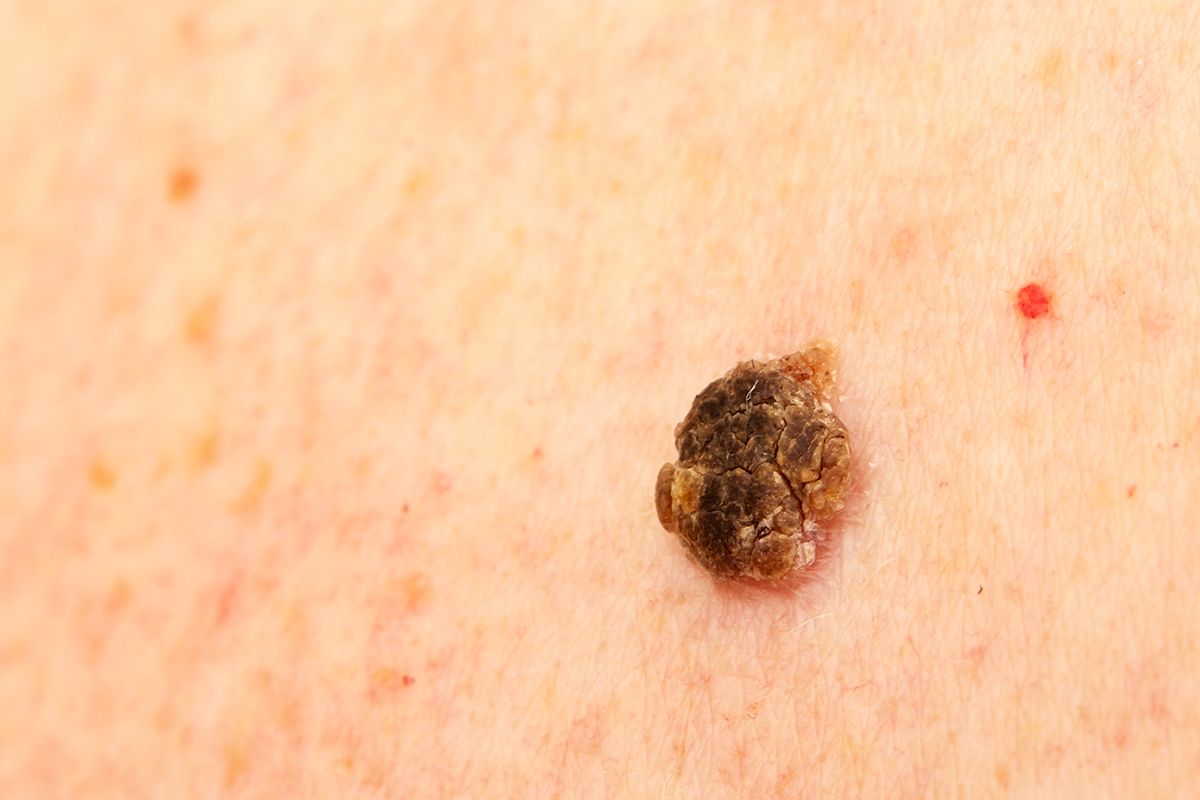
How To Identify Seborrheic Keratoses
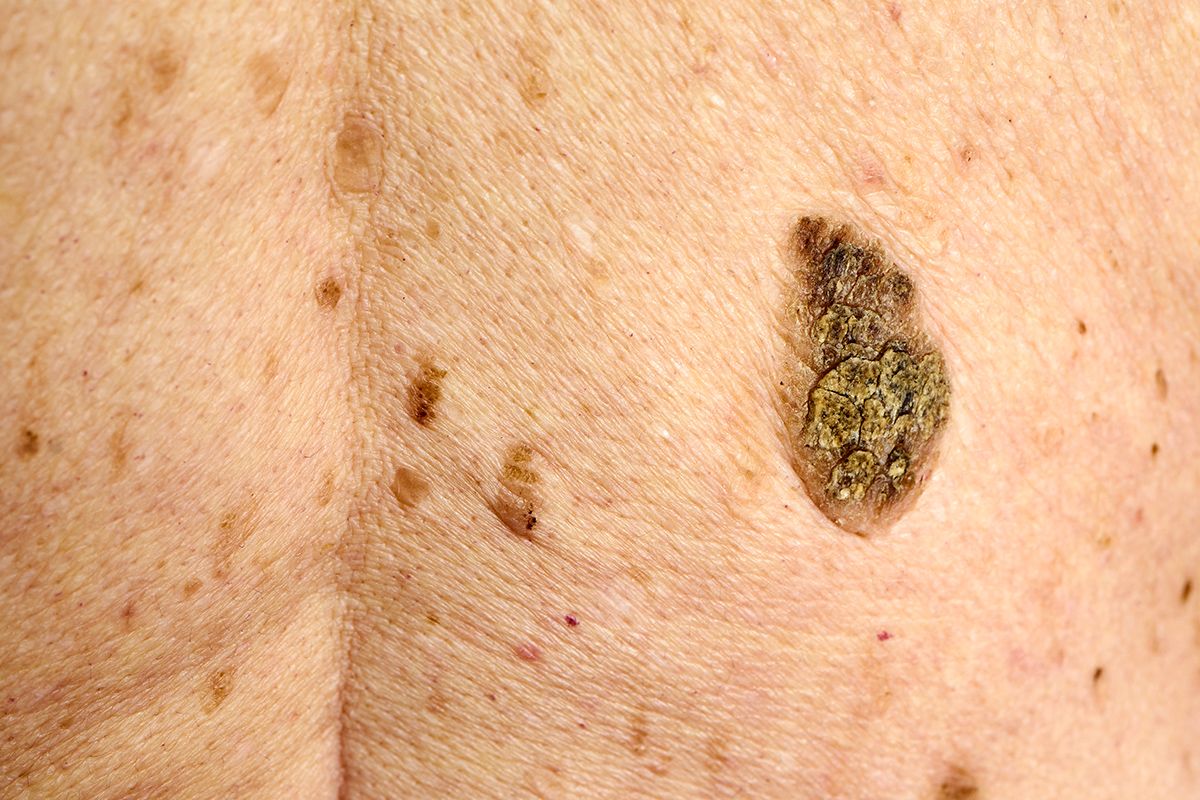
“Seborrheic keratoses typically have a ‘stuck-on’ look,” says Dr. Eleonora Fedonenko, medical director of Your Laser Skin Care in Los Angeles. “They are usually waxy, scaly, and slightly raised, and range from light tan to dark brown or black.” They’re typically oval or round and, while usually darker, they can occasionally be pink, yellow, or white, according to the Cleveland Clinic.
Seborrheic keratoses consist of clusters of extra cells on the outermost layer of skin. They have keratin — the same protein that makes up fingernails — on their surface, which creates texture that can form ridges or a scab-like appearance. While they can pop up nearly anywhere on the body, “they commonly appear on the chest, back, face, and scalp, often in clusters, and typically spare the palms and soles,” Dr. Fedonenko says.

Who Gets Seborrheic Keratoses, and Can They Be Prevented?
According to Yale Medicine, some 80 million Americans have at least one seborrheic keratosis on their skin, making it “the most common type of benign skin lesion.” Dr. Mary Ann D. Bentz, chief of dermatology at Lawrence and Memorial Hospital, calls them “marks of maturity” because they tend to develop and “become more common with age, usually starting after 30.”
Dr. Fedonenko concurs: “Age is the most consistent risk factor for seborrheic keratoses,” she says, adding that according to one study published in 2022, “the prevalence of seborrheic keratoses increased from 38% in those aged 24 to 49 years to 90% in those aged 70 to 79 years.”

Reader Favorites



Unfortunately, you can’t prevent seborrheic keratoses from developing, and nothing has been “conclusively proven” to cause them, Dr. Fedonenko says. But there are some suspected risk factors in addition to age. “They are mostly genetic,” Dr. Bentz explains, and they can run in families. Additionally, “there tend to be more in sun-damaged areas,” so “preventing sun damage may reduce their number.” (Making sure you’re wearing sunscreen has the added benefit of decreasing your risk of getting skin cancer.)
On the plus side, seborrheic keratoses aren’t viral or bacterial, so they aren’t contagious, and they don’t spread.
Do Seborrheic Keratoses Require Treatment?
If a spot looks suspicious, “your dermatologist may recommend dermoscopy (using a special magnifying device to get a closer look at your skin) or a biopsy (removal of part or all of a lesion for examination under a microscope) to confirm the diagnosis,” Dr. Fedonenko says.
Removal isn’t necessary if the spot proves to be a benign seborrheic keratosis. For everyday management, “moisturizing and gently exfoliating can keep them smooth and less annoying,” Dr. Bentz says. She adds that they “do not require treatment unless they are irritated or painful.”
However, if a patient wants to remove a spot for cosmetic reasons, they do have options. “Cryotherapy (freezing), electrodesiccation (burning), curettage (scraping away the lesion), and laser therapy are all treatment options,” Dr. Fedonenko says.
Most at-home removal options aren’t safe and can lead to infection or permanent scarring. However, according to the Cleveland Clinic, there are a few over-the-counter options that may reduce the appearance of seborrheic keratoses, including tazarotene cream 0.1%, alpha hydroxy acid (AHA) products (including glycolic acid and salicylic acid peels), and vitamin D3 cream. Note that research on these OTC treatments is limited, and they are not 100% effective. Check with your dermatologist if you’re interested in using any of them.
How To Distinguish Them From Potentially Cancerous Lesions
As Dr. Fedonenko explains, “seborrheic keratosis does not transform into skin cancer; however, skin cancer may arise next to a seborrheic keratosis.” This is why it’s so important to have new skin spots checked by a doctor.
In some cases, precancerous lesions and skin cancer can resemble seborrheic keratoses. Actinic keratosis, for example, looks a lot like seborrheic keratosis but is caused by sun exposure and has a 5% to 10% chance of turning into skin cancer. Actinic keratoses are usually flatter and less pigmented than seborrheic keratoses and often appear in clusters in sun-exposed areas.
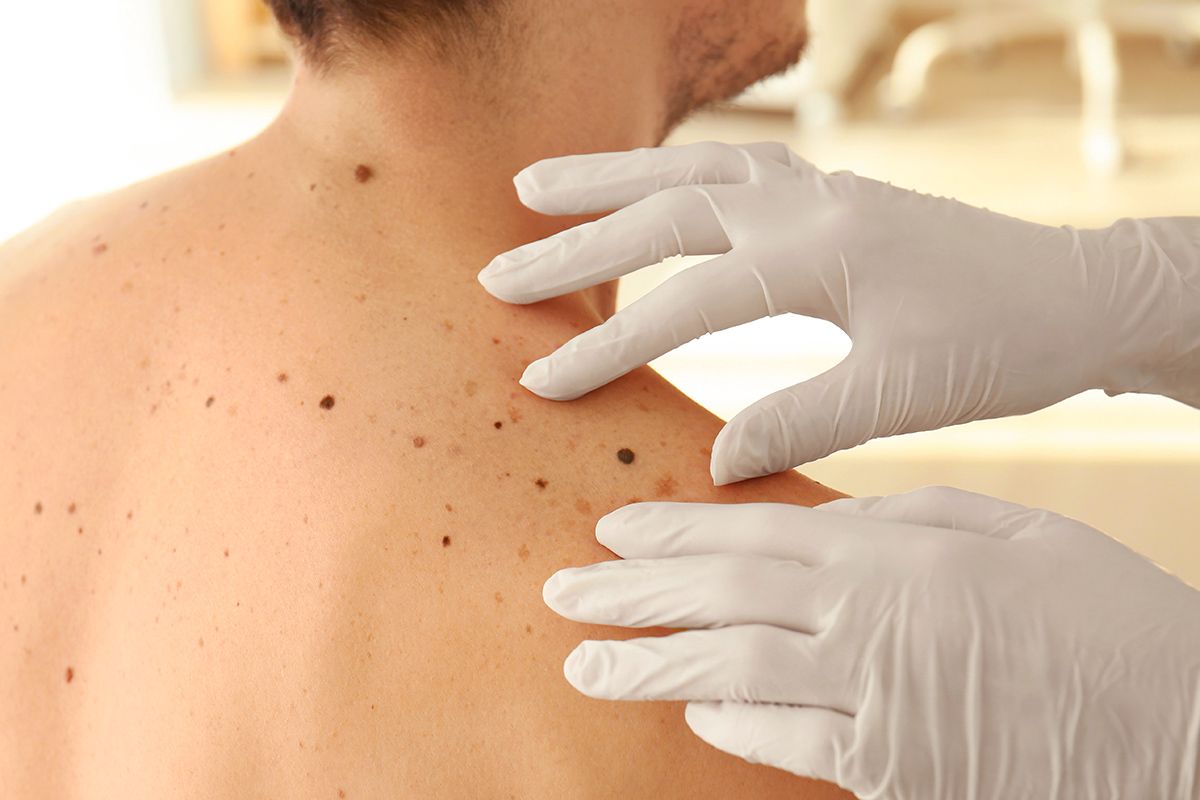
Melanoma, the most dangerous and deadliest type of skin cancer, can also be mistaken for seborrheic keratosis.“Because melanoma can mimic a seborrheic keratosis, it’s important to know the warning signs,” Dr. Fedonenko says. She outlines the ABCDE guide for melanoma identification: “A for asymmetry, meaning half of the growth doesn’t match the other half; B for border, meaning edges are ragged or blurred; C for color, meaning the growth isn’t an even color; D for diameter, meaning the growth is larger than 6 millimeters, though some melanomas are smaller; E for evolving, meaning the growth is changing in size, shape, or color.”
According to Dr. Fedonenko, “Other warning signs include rapid growth, darkening, bleeding, a sore that won’t heal, a growth that doesn’t look like other seborrheic keratoses, and many new seborrheic keratoses appearing at once.” If many lesions erupt at the same time, it may be a concern and is worth getting checked to rule out something more serious. Rarely, a group of seborrheic keratoses appearing at the same time may be a sign of internal cancer, which doctors call “the sign of Leser Trélat.”
To stay on top of your skin health, Dr. Fedonenko suggests “tak[ing] photos of your skin monthly under consistent lighting [and] paying attention to any growths that resemble seborrheic keratoses. If you notice that a lesion is growing rapidly, getting darker, or doesn’t look like your other lesions, schedule a visit with your dermatologist.”
Featured Image Credit: © Iuliia Burmistrova—Moment/Getty Images
More From Our Network
Better Report is part of Inbox Studio, an email-first media company. *Indicates a third-party property.