Your Vintage Pyrex Could Be Worth Big Bucks


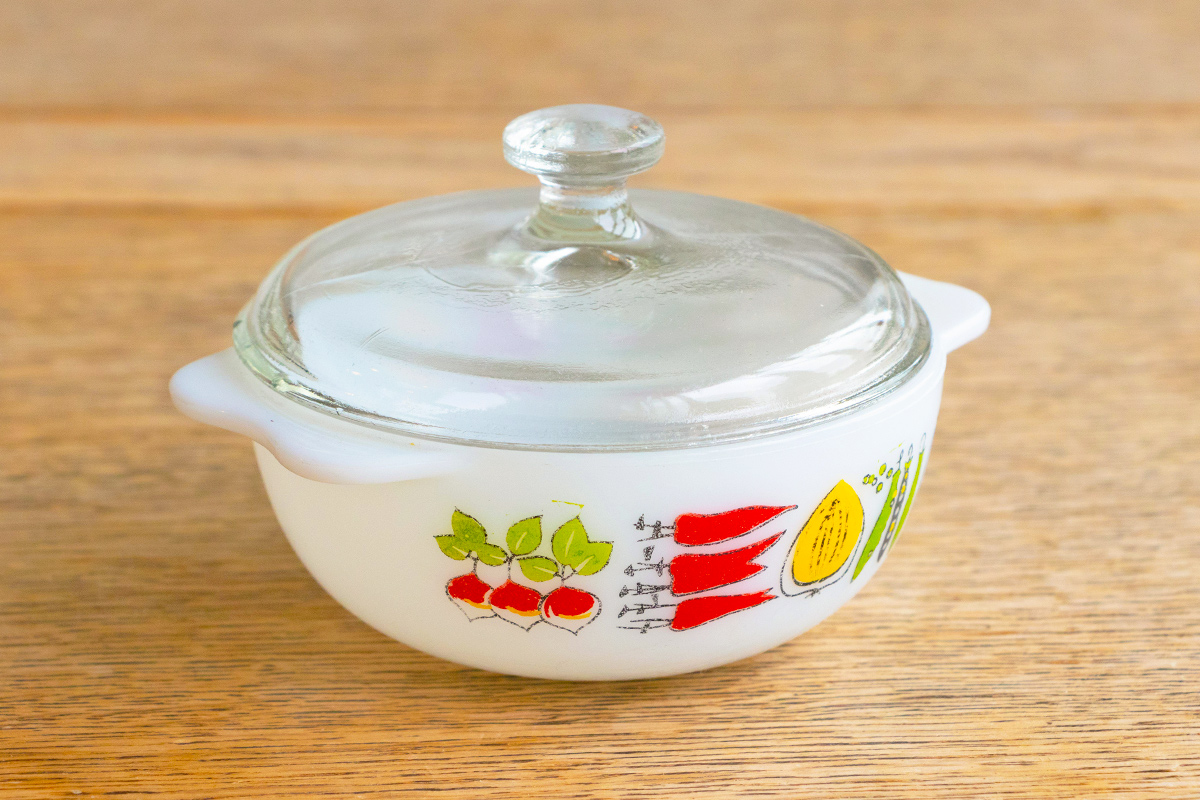
For many Americans, vintage Pyrex dishes trigger a wave of nostalgia. But for collectors, that sentimental value can translate into serious cash.
The beloved kitchen brand, which has been a staple of family dinners for more than a century, is now a highly sought-after commodity, with some pieces selling for thousands of dollars among collectors. That means that you could have a small fortune stored beneath your sink or hidden away in your attic — as long as you know what you’re looking for.
What Is the Most Valuable Pyrex Piece?
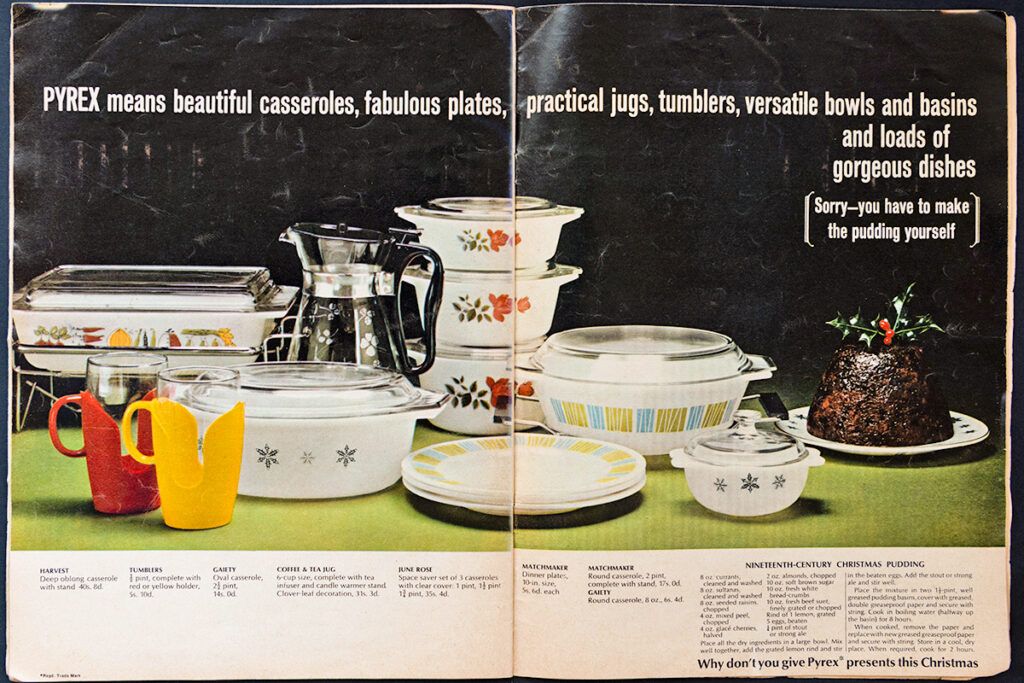
While Pyrex has gone through some changes in ownership and materials since it was first introduced in 1915, the company is still very much in business. And that’s part of the appeal: “One of the joys of collecting Pyrex is that valuable, sought-after pieces are still available,” Jolene Forrester, owner of JoRetro vintage shop in Havre de Grace, Maryland, which specializes in rare Pyrex pieces, told Country Living.
Still, if you’re looking to score a major payday, it’s often the decades-old exclusive or promotional pieces that are the most valuable. The extremely rare “Lucky in Love” pattern, a mix of hearts and shamrocks that was introduced in 1959, is considered the holy grail among Pyrex collectors, as the design was never mass-produced. In 2022, a casserole dish with the print sold for a whopping $22,100 on eBay (though according to experts, most go for between $4,000 and $10,000).
Other prints that can command top dollar include 1957’s Pumpkin Orange Amish Butterprint, which can be worth between $800 and $1,600; 1960’s Atomic Starburst print, which can sell for $600 to $1,500; and Atomic Eyes pieces, which can fetch between $200 and $650. “[T]his is a turquoise blue or pink mid-century elongated eye-shaped pattern that was made from 1950 to 1959 in a chip and dip service,” glass specialist Reyne Hirsch, who has appeared on Antiques Roadshow and American Pickers, told Parade. “Later, a coffee carafe was also produced.”
What To Look For When Evaluating Pyrex
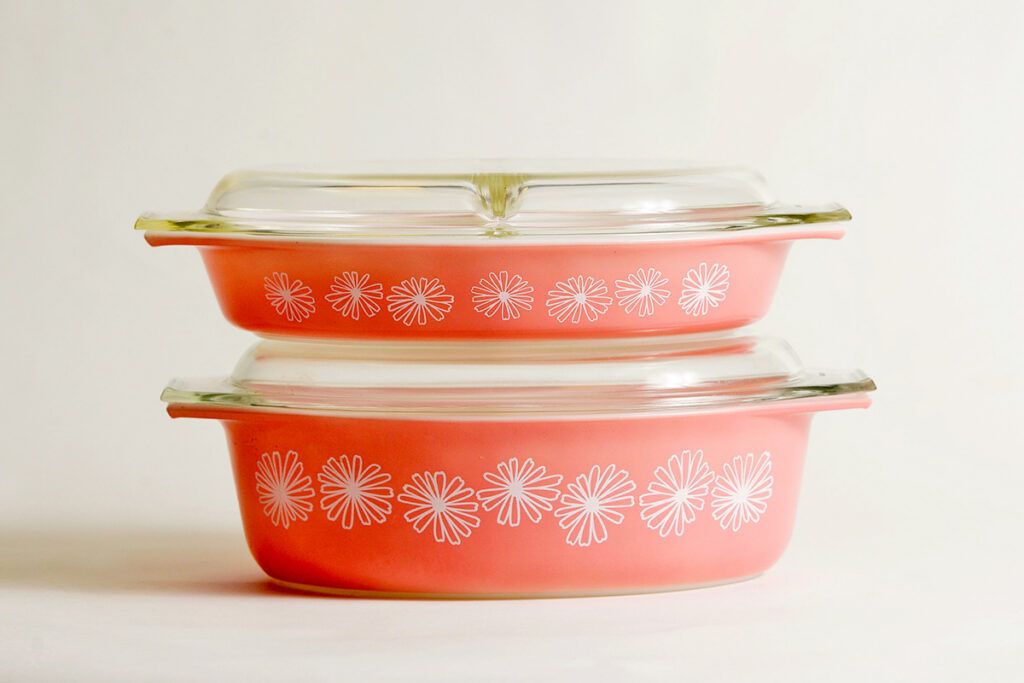
While rare patterns are one of the surest ways to guarantee the value of your Pyrex, they’re not the only factor used in determining worth. Certain colors can yield higher values, as can condition.
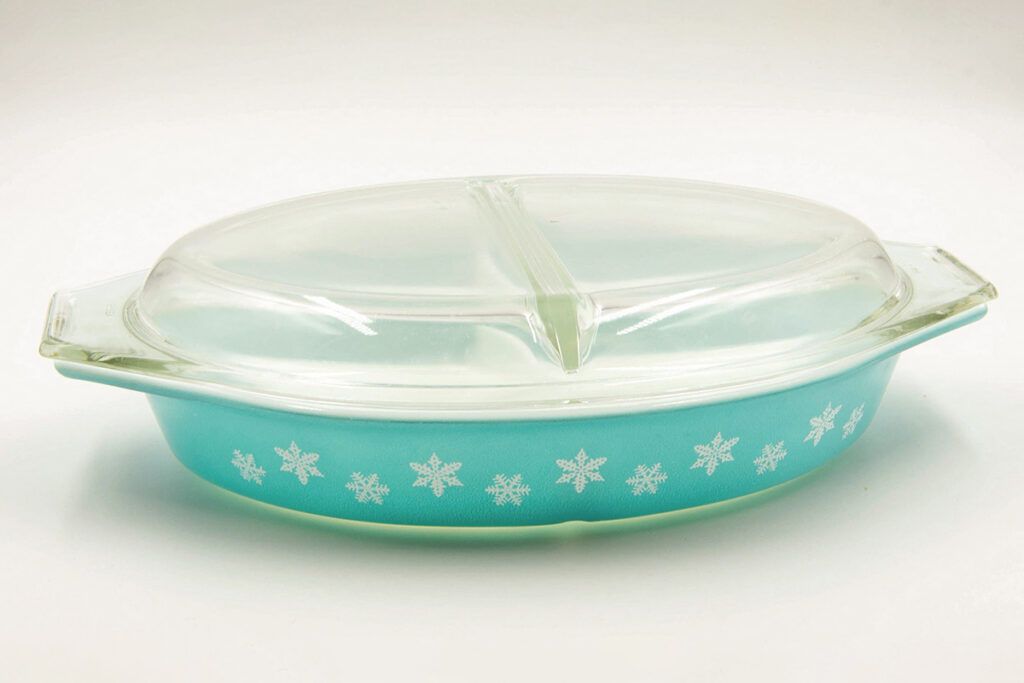
Two colors to keep an eye out for, according to Forrester, are “pinks and turquoises, which instantly stand out and were produced in more limited quantities.”
Hirsch agrees with those color choices, and notes that the more complete a set is, the better. (Think space-saving casserole dishes, nesting sets, and items that include their original lids.)
As with any valuable item, the closer it is to like-new condition, the more valuable it will be. “Even small damage greatly reduces the value of each item,” Hirsch told Parade. “The damaged value is often 10% to 20% of the value if it was [in mint condition].”
While Pyrex dishes are typically dishwasher- and microwave-safe, if you have collectible pieces you want to keep in the best possible condition, you should avoid putting them in the microwave and always hand-wash them.
How Can I Tell If My Pyrex Is Worth Anything?
To determine whether that vintage dish gathering dust in your basement is worth anything, you need to authenticate it. The easiest way to do this is to first check for the Pyrex logo, which most items were stamped with.
Pyrex by Corning: A Collector’s Guide by Susan Tobier Rogove and Marcia Buan Steinhauer details nearly two dozen stamps used by the company between 1915 and 1965 to help you authenticate your piece and determine when it was made. A stamp that’s in all capital letters is often more valuable. If a piece’s color is faded, that can lower its value. “A lot of it was ruined by dishwashers,” vintage kitchenware seller David Ross told Martha Stewart Living.
Because Pyrex was made to be used, not displayed, valuable pieces are still hiding in kitchen cabinets, thrift stores, and attics across the country. So before you drop that old mixing bowl into the donation bin, you may want to flip it over and check the stamp first.
Featured Image Credit: © Hugh Williamson/Alamy