What Do White Marks on Your Nails Mean?

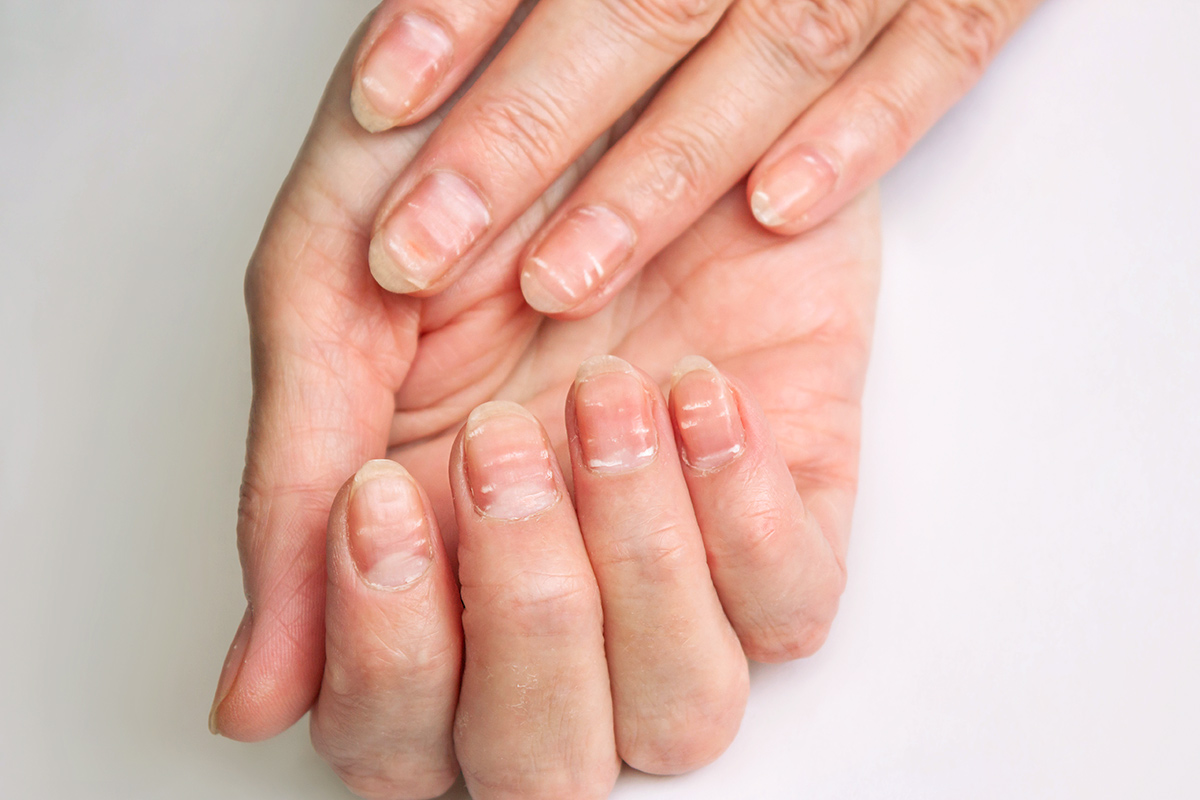
Many of us notice white marks on our nails and wonder what they mean. Maybe you’ve heard they’re caused by a calcium deficiency, or that they come from eating too much mayonnaise.
The truth is, both are myths. While some believe nutrient and vitamin deficiencies may play a role, medical researchers aren’t conclusively sure whether they actually cause white spots specifically, and severe deficiencies of any kind are rare in the United States.
Here’s what we know about what causes the spots, and how you can determine when it’s time to have your nails checked.

The Most Common Cause of White Spots on Nails
The medical term for white discoloration of the nails, including white spots, is “leukonychia.” And as dermatologist Dr. Shari Lipner, an associate professor of clinical dermatology at Weill Cornell Medicine, told TODAY.com, white spots are usually caused by minor trauma to the nail.
That could include bumping your finger, aggressive manicures, picking at your cuticles, sports injuries, or repeated pressure on the nail. Because fingernails grow slowly — about 1 millimeter per week — a white spot may not appear until weeks after an injury occurred.

Reader Favorites



The good news? Most small white spots are benign and don’t require treatment. They simply disappear naturally as the nail grows. In some cases, however, white marks on the nails may be related to a fungal infection, certain medications, or a systemic disease such as diabetes or heart failure.
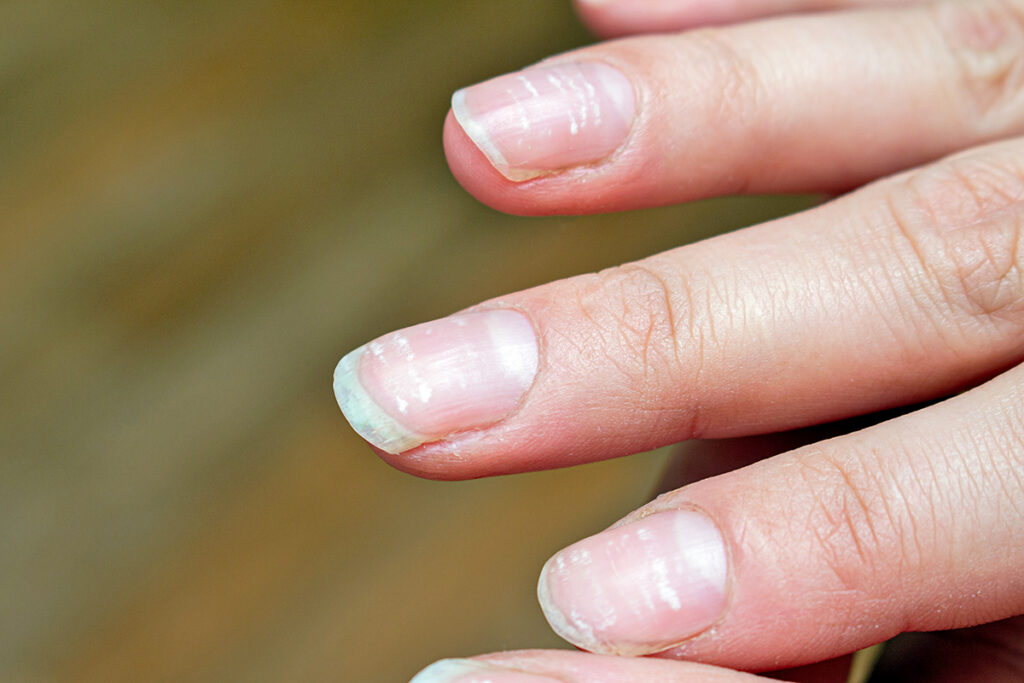
What Different White Marks Can Mean
Small white spots: Usually caused by minor trauma and generally nothing to worry about.
White lines or streaks: Some result from trauma, including manicures. In other cases, horizontal white lines across multiple nails, known as Mees’ lines, can be linked to arsenic poisoning, chemotherapy, or severe systemic illness such as kidney failure. Vertical white lines are typically harmless and are more commonly associated with aging or minor injury. Lines that extend across the entire nail, appear on several nails, or don’t move outward as the nails grow should be evaluated by a health care provider.
White, flaky patches: These may be caused by a fungal nail infection. The nail may also be rough, crumbly, thickened, or discolored. Nail fungus affects up to 50% of people over age 70. You’re more likely to develop it if you have conditions such as diabetes and cancer.
A nail that’s mostly white: This is less common and may be associated with an underlying medical condition, such as low iron levels, kidney disease, or liver scarring (cirrhosis). This appearance differs from the occasional small white spot caused by an injury.
A nail that’s mostly white with a thin pink or red band at the top is a condition called Terry’s nails, which can occur with aging but may also signal liver disease, congestive heart failure, or diabetes. Separately, when a nail lifts away from the nail bed (a condition called onycholysis, which can be triggered by injury, infection, thyroid imbalance, or psoriasis), the detached nail can look cloudy white, yellow, or green.
Changes in nail texture should also be taken into account. Nails that exhibit pitting or grooves, become brittle, split, or begin separating from the nail bed could indicate an issue that a doctor needs to treat.

When To See a Health Care Provider
Most isolated white spots don’t require treatment. However, you should make an appointment with a medical professional if:
• Several nails suddenly turn mostly white for no obvious reason.
• The discoloration does not move toward the tip or grow out over time.
• Your nails become painful or develop significant changes in texture or appearance.
A health care provider can often uncover the cause by examining your nails. For example, if they suspect a fungal infection, they’ll likely test a nail clipping or scraping. Additional screening may be recommended when the appearance of the nails or your medical history suggests a more serious condition.
In most cases, though, a single white spot is simply a reminder that nails record small injuries long after you’ve forgotten them. If the mark moves outward as the nail grows and no other nail changes occur, there’s usually no reason for concern.
Featured Image Credit: © Ольга Шефер/stock.adobe.com
More From Our Network
Better Report is part of Inbox Studio, an email-first media company. *Indicates a third-party property.







With a nursing background and a passion for making health information accessible, Monica Romano brings a unique clinical perspective to her freelance writing. Based in the Pacific Northwest, she covers health, wellness, and everyday living with warmth and authority. Her work is featured in Woman's World magazine and across top health and wellness platforms.
This article is for general informational purposes only.
Affiliate Disclaimer Medical Disclaimer Financial Disclaimer