Are the Tiny Red Dots on Your Skin Dangerous?

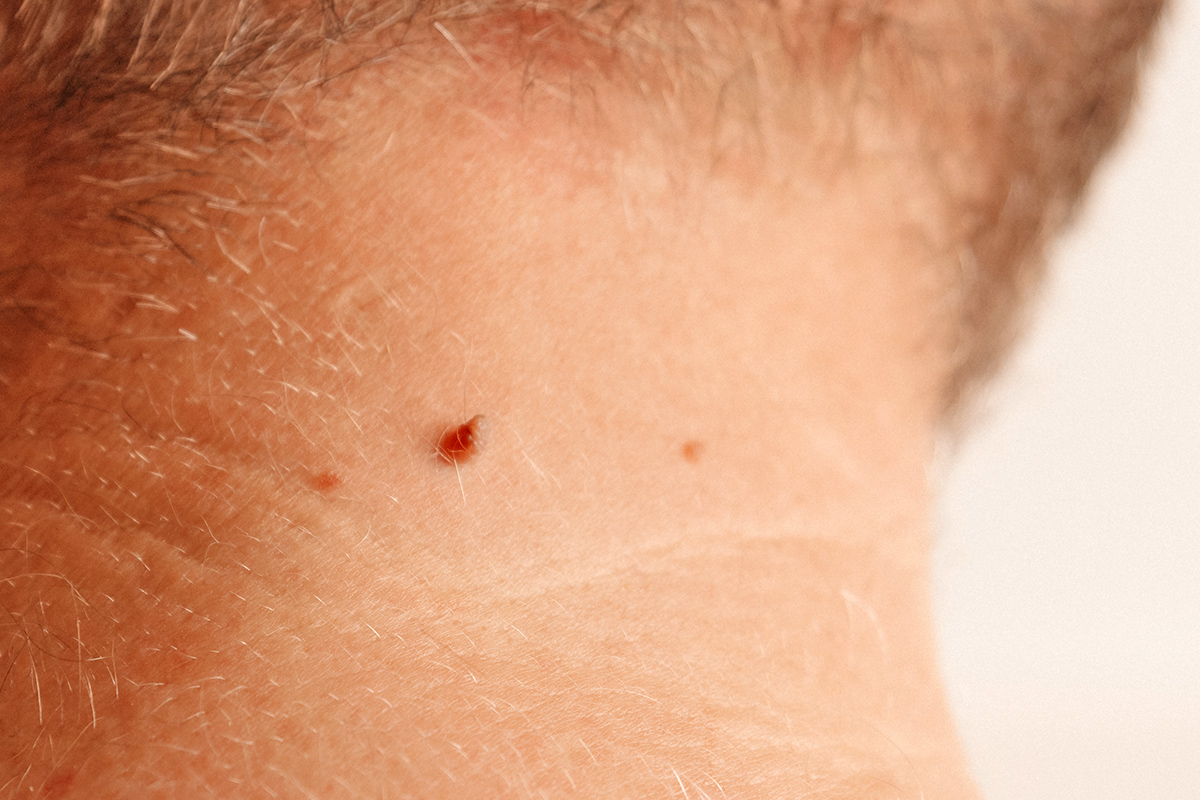
Picture this: You’re moisturizing after a shower one day when you notice some tiny, bright red dots on your skin. What are they? And do you need to worry about them? Here’s what may be behind the dots, and when you should see a doctor.
The Cherry on Top
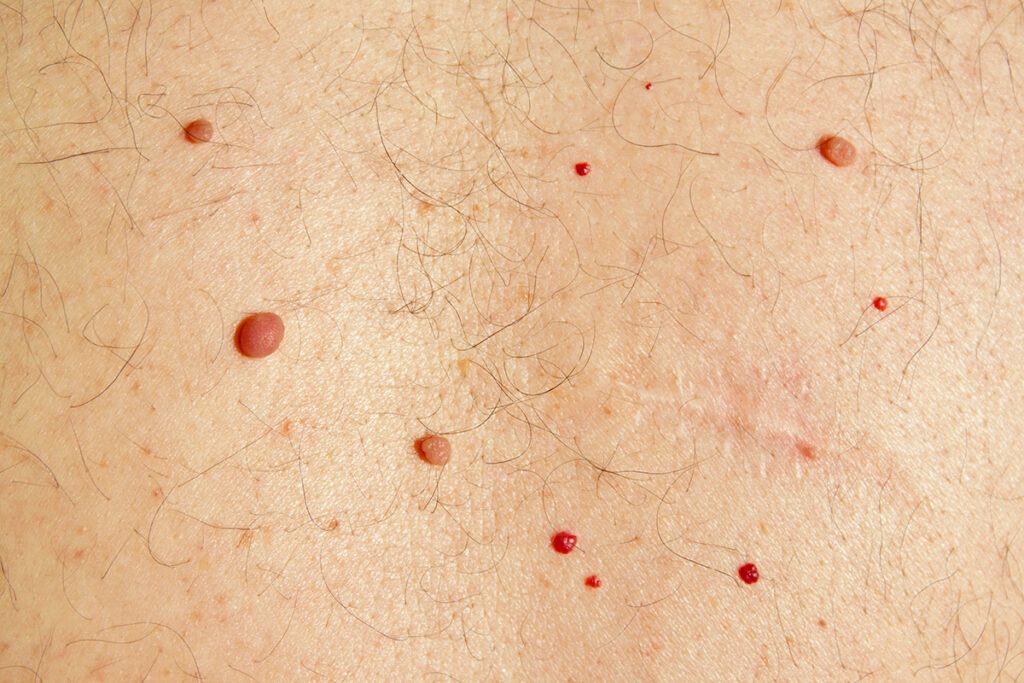
Seeing a new growth where you once had unblemished skin can be scary. Thankfully, one of the most common causes of red marks on the skin, cherry angiomas, are typically nothing to worry about.
“Cherry angiomas are not dangerous,” says Dr. Samantha Schneider, a dermatologist and Mohs micrographic surgeon at Pacific Crest Dermatology in Carson City, Nevada. “They are not skin cancer and don’t turn into skin cancer. They are benign growths.”
Cherry angiomas get their name from their color — they range from light to dark, purplish red — and their tendency to pop up in clusters. According to Dr. Schneider, these dome-shaped growths “are made up of vascular cells.” They can be round or oval and measure from 1 millimeter (the thickness of a pinhead) to 5 millimeters (the size of a pea).
Anyone can get cherry angiomas, and what exactly causes them is a mystery, though they’re more prevalent in some people than in others. “Genetics plays a role,” Dr. Schneider says. “People with fair skin and those of Caucasian ancestry tend to be more affected than others. And men tend to have more lesions than women.”
Cherry angiomas can appear anywhere on the body. The most common spots are the trunk (specifically your chest and abdomen) and back, and women tend to get more of them on their legs, according to Dr. Schneider. They usually appear with age: According to the Cleveland Clinic, around 50% of people over 30 have them, and that number jumps to 75% for those over 75.
“Most often cherry angiomas appear over time,” Dr. Schneider says, “but you can occasionally have a group pop up in a shorter period of time — still usually weeks to months.” They may get larger or change in appearance over time.
Can You Get Rid of Them?
If you hate the appearance of these tiny red dots, we have bad news and good(ish) news. Bad news first: “Unfortunately, there is not anything that you can do to prevent them from appearing,” Dr. Schneider says.
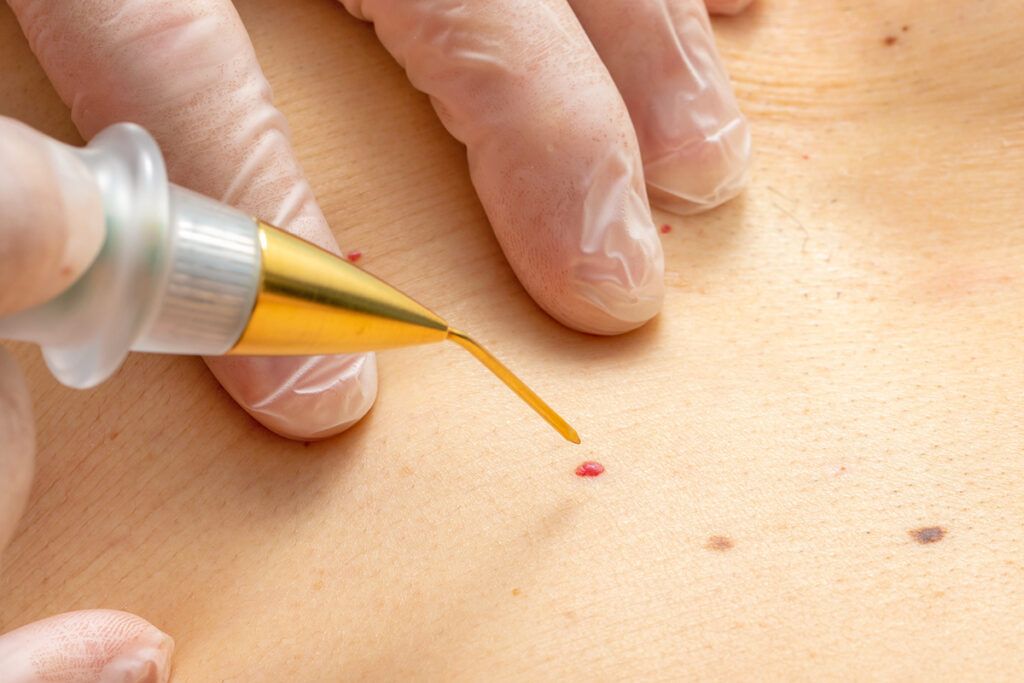
The good(ish) news is, they can be removed — but it may cost you. “Getting rid of cherry angiomas is considered cosmetic and so is generally not covered by insurance,” she explains. “Oftentimes, dermatologists use destructive methods to get rid of [them], such as lasers, liquid nitrogen, or electrodessication (burning).” You should never try to remove them yourself.
It’s important to note that “anytime you have any lesions removed, it is always possible that it could leave a mark behind — though this is not common — and you could still develop new lesions in the future,” Dr. Schneider says.

Reader Favorites



Other Potential Causes of Red Marks on the Skin
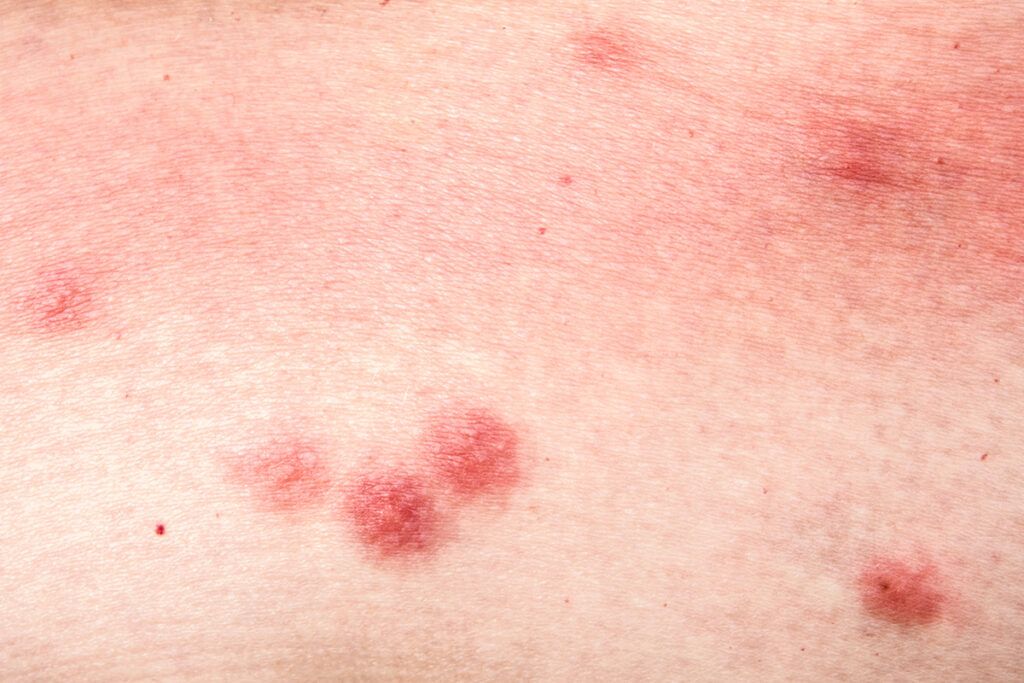
Cherry angiomas aren’t the only thing that can cause red marks on your skin. “There are many growths that can appear as red bumps,” Dr. Schneider says. Here’s a short list of conditions that may be behind a red bump.
• Acne and bug bites can lead to red bumps, as can things like heat rash, contact dermatitis, eczema, and certain infections.
• Pyogenic granulomas are benign red bumps that are prone to oozing and bleed easily. They can occur at any age but are most common in pregnant people and children, teens, and young adults. They may also be caused by medications.
• Angiokeratomas are domed and look like warts. These benign tumors are caused by capillaries breaking open under your skin. They start out red, then darken to blue, purple, or black.
• Some skin cancers can also cause red marks on the skin. Basal cell carcinoma, the most common type of skin cancer, can manifest in any number of ways, including as a red, pink, tan, or brown growth (depending on your skin color) with elevated edges. Squamous cell carcinoma may appear as a firm pink, red, black, or brown bump. Pink or red bumps may also be indicative of skin cancers such as merkel cell carcinoma or amelanotic melanoma, according to Dr. Schneider.
• Petechiae are tiny flat dots under the skin caused by minor hemorrhages. They may appear red or purple and may be indicative of a serious condition such as an autoimmune disorder. Unlike cherry angiomas, they’ll fade with time.
“The[se] other red lesions often look different than cherry angiomas, but they are also red and often papules,” Dr. Schneider says. “If anyone is developing a new or changing lesion that looks concerning to them or they have questions about, it is always a good idea to get a spot checked by a board-certified dermatologist.”

When Should You See a Doctor?
You can have your dermatologist look at the mark on your skin to confirm it’s a cherry angioma; sometimes they may take a biopsy to confirm. No further treatment should be necessary unless you want to have it removed, but there are some exceptions.
“If someone has a crop of new lesions pop up, that is a good time to go in and see a dermatologist, as there are a few conditions that can lead to increasing numbers of cherry angiomas,” Dr. Schneider says, including “certain chemical exposures, immunosuppression, changes in hormones, like during pregnancy, and even, though less common, with certain types of cancers.”
She also notes it’s important to go to the doctor if you suspect that the red mark isn’t a cherry angioma, or you notice “anything that is changing that looks different than other lesions on [your] body — the ugly duckling sign — or [you] aren’t sure what it is.”
Featured Image Credit: © Alena Vilgelm/stock.adobe.com
More From Our Network
Better Report is part of Inbox Studio, an email-first media company. *Indicates a third-party property.







Erin is a writer, editor, and content strategist living in the New York City area. Previously, she was the VP/Editor-in-Chief of MentalFloss.com and an editor at Popular Mechanics magazine. When she’s not working, Erin is hanging out with her cats, reading books from her never-ending TBR, traveling, karaoking, and making sourdough with her starter Stephen Sondheim.
This article is for general informational purposes only.
Affiliate Disclaimer Medical Disclaimer Financial Disclaimer