Do Blue-Light Glasses Actually Work?



The internet is filled with ads for blue-light-blocking glasses whose manufacturers claim all kinds of health benefits. Many promise to “defend your eyes” from “potentially pesky” blue light without specifying why your peepers might need defending. Some say wearing the glasses “[boosts] evening melatonin production” and helps regulate your circadian rhythms for better sleep. Others claim to absorb blue light from digital devices to relieve eye strain and fatigue or even help prevent eye diseases.
Should you believe the hype? Or are blue-light blockers just smoke and mirrors? Here’s what the science says.
Blue-Light Basics
Blue light is a short, high-energy wavelength of light that comprises about one-third of all visible light in our atmosphere. The sun is our main source, but it also shines from light-emitting diodes (LEDs), the mechanisms that backlight smartphones, laptops, tablets, and TVs. While exposure to blue light does boost your energy and wakefulness by regulating your internal circadian rhythm, too much blue light can disrupt sleep by suppressing your brain’s production of melatonin. Extremely high doses of blue light in the environment can even damage the eye’s retina and contribute to cataracts and macular degeneration.
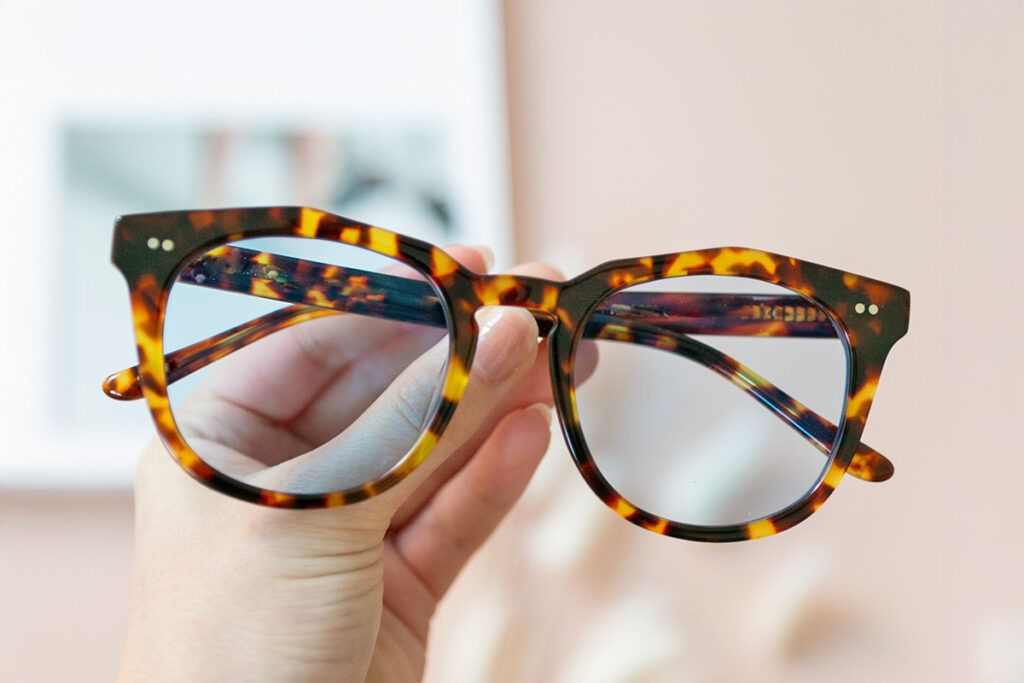
Our eyes are not great at blocking blue light on their own. But with many teens and adults spending hours every day looking at screens, and likely experiencing some degree of eye fatigue from that activity, blue-light-blocking glasses have emerged as a potential solution. These glasses often have a special coating or amber lenses meant to prevent some of the blue wavelength of light from penetrating your eyes.

Shedding Light on Eye Health
A few randomized, controlled trials have found that wearing blue-light-blocking glasses before bedtime had some positive effects on sleep quality, but these trials were small and used self-reported data. A 2023 meta-analysis of 17 randomized clinical trials revealed little evidence that the glasses relieved eye fatigue from screen use and no consensus on whether the glasses improved sleep.
As for eye comfort, screen-related eye strain and blurred vision usually come from forgetting to blink while looking at your phone or computer — not from the blue light emanating from the device, according to the American Academy of Ophthalmology. A better solution for scrolling fatigue is to keep your screens an arm’s length from your eyes and take “20-20-20” breaks: Shift your gaze to an object 20 feet away for 20 seconds every 20 minutes. Rewetting drops can also keep your corneas comfortable.

The Bottom Line
While long-term exposure to ambient blue light may cause eye problems, there is no evidence that the amount of light put out by digital devices, including blue light, causes any eye disease. In fact, the amount of blue light in Earth’s atmosphere, which you’re exposed to every day, is much higher than the amount emitted from your smartphone, computer, or TV.
UVA and UVB radiation, which also emanate from the sun, pose a bigger risk to eye health than blue light does. Long-term exposure to UVA/UVB can cause cataracts, macular degeneration, and eye cancer. Because of that well-established risk, the most effective glasses for eye protection are probably not blue blockers with iffy health claims, but a pair of sunglasses with a 100% UV protection rating.
Featured Image Credit: © PhotoLife94/iStock