Is Sourdough Actually Healthier Than Regular Bread?


Sourdough bread has taken the world by storm. During the pandemic, many people grew their own starters to get around the shortage of commercial yeast, and from there the trend snowballed into a phenomenon. Today, there are tons of sourdough content creators showing off their crumbs on social media. Even Taylor Swift is in her sourdough era, talking about her bread everywhere from podcasts to late-night talk shows.
Sourdough’s recent spike in popularity has come with claims that it’s healthier for you than regular bread. But is it actually? To find out, we asked Lakelyn Lumpkin, a registered dietitian at Top Nutrition Coaching.
Sourdough vs. Traditional Bread
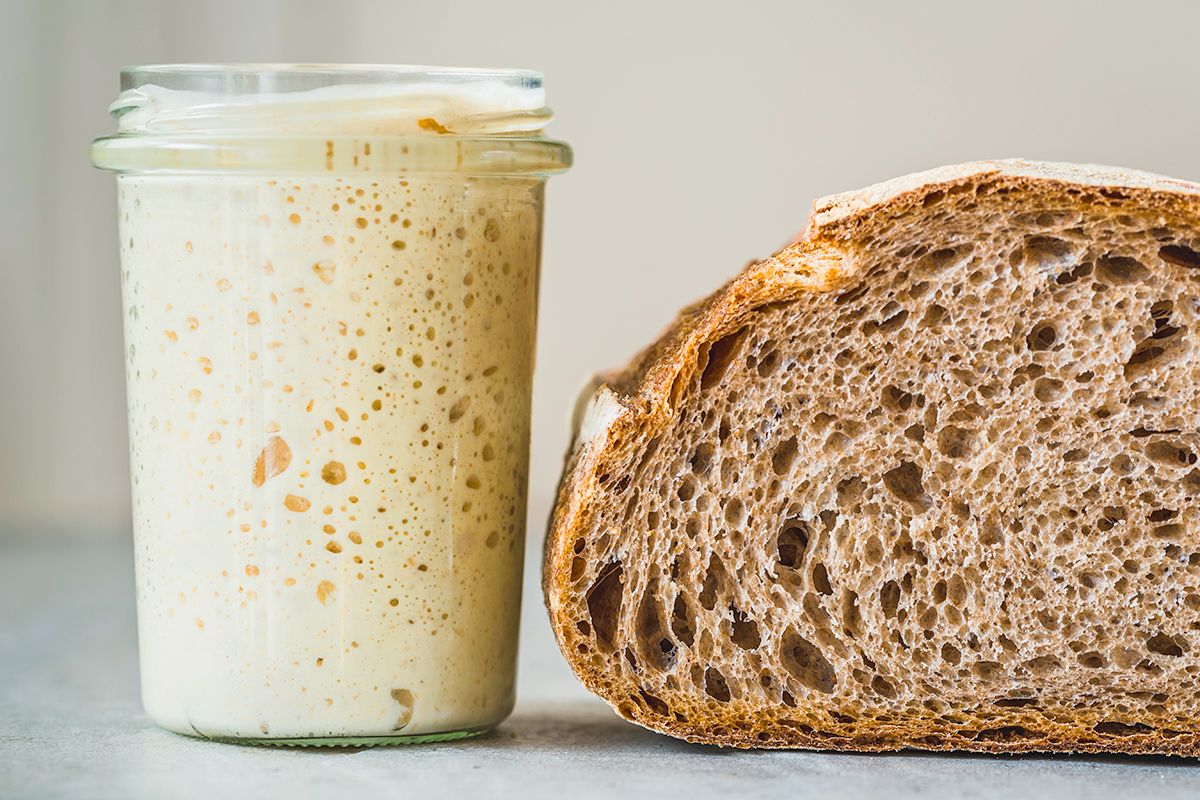
Let’s start with the basics: Sourdough bread and traditional bread are made differently. Regular bread relies on commercial yeast to rise, and the process of kneading, proofing, and baking it usually takes just a few hours total. Sourdough, on the other hand, “uses a fermented starter made up of wild yeast and lactic acid bacteria,” Lumpkin says. That means it rises more slowly and takes longer to make — sometimes several days.
Fermentation is what gives sourdough its signature sour flavor, but according to Lumpkin, it does other things, too: “The fermentation process changes some of the carbohydrates and proteins in the flour to then affect how we digest the bread and how our bodies respond to it.”

Reader Favorites




Sourdough’s Supposed Health Benefits
Indeed, most articles covering the potential health benefits of sourdough credit the fermentation process. We know that fermented foods are good for gut health, but does fermentation make sourdough easier to digest than regular bread?
It turns out there may be something to that. “There is definitely some research suggesting that sourdough may be easier for certain people to tolerate,” Lumpkin says, “but I wouldn’t say that it’s automatically easier to digest for everyone.”
In sourdough, she explains, fermentation helps break down substances in wheat such as fructans, a type of oligosaccharide that’s hard for our small intestines to absorb. (People with sensitive stomachs may know oligosaccharides as one of the FODMAPs, aka fermentable oligosaccharides, disaccharides, monosaccharides, and polyols.) Fructans “can cause bloating, gas, or other digestive symptoms in some people,” Lumpkin says. “Fermentation also reduces [the plant compound] phytate, which can make minerals such as iron and zinc a little more available for absorption.”
By processing these substances, sourdough fermentation acts as a kind of predigestion. “So, for someone who notices that regular wheat bread doesn’t sit particularly well, a traditionally fermented sourdough may be worth trying,” Lumpkin says. “But everyone’s digestion is different, and things like the flour used, how long the dough fermented, and even how much bread someone eats can make a difference.”
The fermentation process also degrades some of the gluten in the bread, but Lumpkin cautions that “that does not mean a regular wheat sourdough is safe for someone with celiac disease. People with celiac should stick with products specifically labeled gluten-free and still be cautious about cross-contact with gluten-containing products.”
Another claim is that because fermentation breaks down some of the sugars in sourdough, it has a lower glycemic index (GI) than regular bread — meaning your blood sugar won’t spike as high if you’re eating sourdough.
According to Lumpkin, this supposed benefit is a bit more complicated. “There is research showing that some sourdough breads can produce a lower blood glucose and insulin response after a meal compared with certain conventional breads,” she says. “One possible reason is that the acids produced during fermentation can slow gastric emptying and the digestion of starch.”
But that doesn’t mean that a bread labeled “sourdough” always has a low GI. That’s because “the type of flour, fiber content, processing, fermentation time, and the overall recipe all matter,” Lumpkin says. “A refined white-flour sourdough and a whole-grain sourdough can have very different nutritional profiles.”
The bottom line? According to Lumpkin, “Research reviews have found some promising effects of sourdough fermentation on blood glucose and insulin responses, but the results aren’t perfectly consistent, so I think it’s more accurate to say sourdough may have an advantage in some situations rather than saying it always has a lower GI.”

Homemade vs. Store-Bought Sourdough
Many people feel strongly that homemade is always better. And while there are some advantages to baking your own bread (not the least of which is how enjoyable it can be), the sourdough you make at home isn’t necessarily healthier than what you get at the supermarket. “The nice thing about making it yourself is that you have complete control over the ingredients and fermentation time, which can be fun if you’re someone who likes baking,” Lumpkin says. “But there are plenty of perfectly nutritious store-bought options, too.”
When picking up bread from the store, remember that the word “sourdough” doesn’t tell you the whole story. “Some commercial products use sourdough starter for flavor but also use commercial yeast and other ingredients,” Lumpkin says. “That doesn’t make them bad, but it does mean that two loaves labeled ‘sourdough’ can be pretty different.”
She recommends taking a close look at a bread’s ingredients list and nutrition label before you buy. You’ll want to pick a loaf that has a whole grain as the first ingredient and also contains plenty of fiber. Bread can be surprisingly high in sodium, so you’ll want to check that, too, to make sure you’re not adding too much to your diet.
Another reason to check the ingredients? Even if a loaf is on the darker side, it may not be made with whole grain. “The ingredient list will tell you much more than the color will,” Lumpkin says.
How To Make Your Own Sourdough More Nutritious
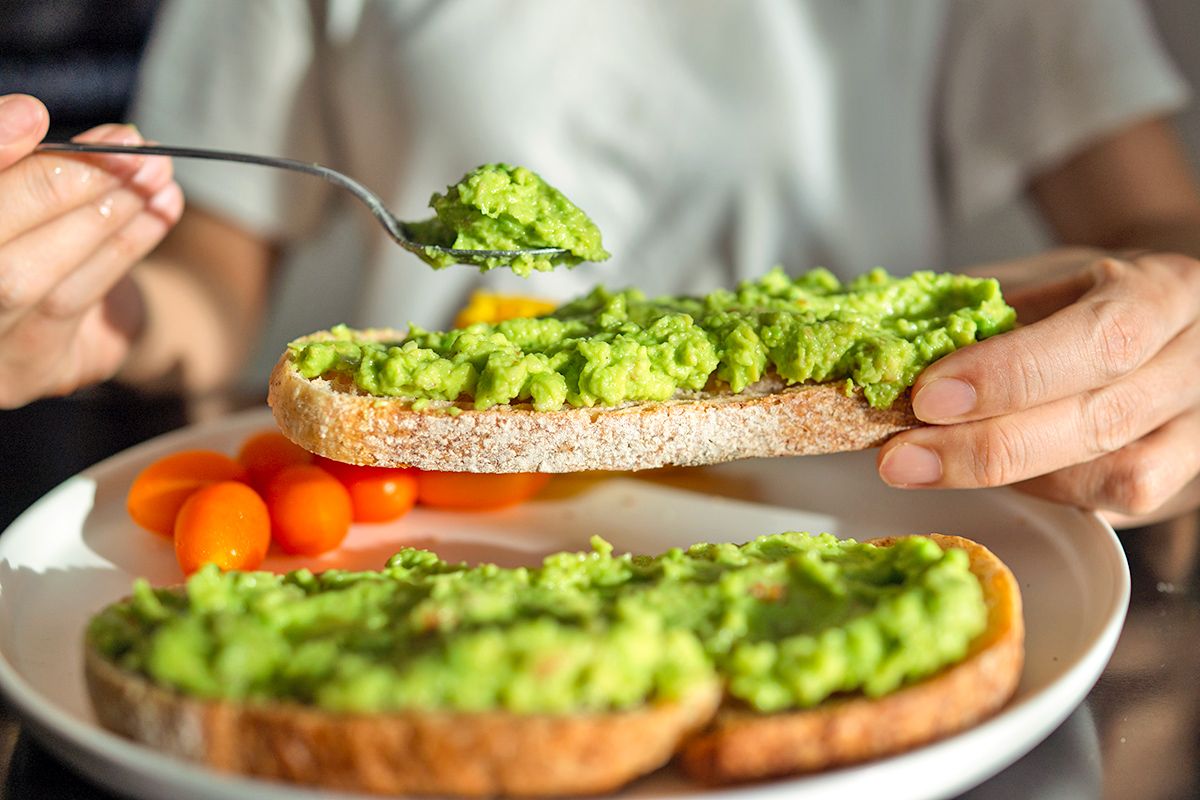
According to Lumpkin, there are some easy tweaks that will boost the nutritional value of your homemade sourdough. One is to substitute white all-purpose or bread flour for a whole-grain flour. “That adds more fiber, vitamins, minerals, and other beneficial plant compounds compared with using only refined white flour,” she says. You can also add inclusions such as oats, flax, and pumpkin or sunflower seeds.
Keep in mind, though, that it’s not just what you put in the bread that matters. “Don’t forget about what you’re putting on the bread!” Lumpkin says. “A piece of sourdough topped with avocado and eggs, hummus and vegetables, or nut or seed butter and fruit is going to be a much more balanced and satisfying meal than bread eaten by itself.”

Is Sourdough Healthier Than Regular Bread?
As with the debate over homemade versus store-bought sourdough, there isn’t a clear answer as to whether sourdough bread is healthier than regular bread. And it’s certainly not a health food.
“I wouldn’t necessarily put sourdough in the ‘health food’ category,” Lumpkin says. “I think it’s better to think of it as a type of bread that has some potentially unique benefits because of the fermentation process.”
What matters more than the “sourdough” label, according to Lumpkin, is what’s in the bread. “A whole-grain sourdough can absolutely be a nutritious choice, but so can a high-fiber whole-grain bread made with conventional yeast. If I had to choose between a refined white sourdough and a high-fiber whole-grain bread, I wouldn’t automatically pick the sourdough just because it has that trendy label. I’d look at the whole nutritional picture.”
Ultimately, she says, “sourdough isn’t some sort of special, magic bread! … [T]he word ‘sourdough’ alone doesn’t tell you whether a bread is nutritious. The flour, fiber content, ingredients, fermentation process, and portion all matter.”
But if you simply like sourdough and want to eat it, “absolutely enjoy it,” Lumpkin says. “You don’t need to eat sourdough to have a healthy diet, but there’s certainly no reason to avoid it either.”
Featured Image Credit: © Giovanna Kamimura/Pexels.com
More From Our Network
Better Report is part of Inbox Studio, an email-first media company. *Indicates a third-party property.







Erin is a writer, editor, and content strategist living in the New York City area. Previously, she was the VP/Editor-in-Chief of MentalFloss.com and an editor at Popular Mechanics magazine. When she’s not working, Erin is hanging out with her cats, reading books from her never-ending TBR, traveling, karaoking, and making sourdough with her starter Stephen Sondheim.
This article is for general informational purposes only.
Affiliate Disclaimer Medical Disclaimer Financial Disclaimer