Skip to content
Better Report
  • Home
  • Health
  • Wealth
8 Low-Maintenance Plants That Thrive on Neglect
  • Search
  • Subscribe
  • Home
  • Health
  • Wealth
  • About
  • Privacy Policy
  • Terms of Use
  • Contact Us
  • SubscribeSubscribe
  • Search
Thank you for confirming your email! Welcome to the community.

Tag: Sponsored

Why Having a Will Isn’t the Same as Estate Planning

Sponsored By
Wealth | Updated: February 25, 2026
Aleks Kang
Author
Aleks Kang is one half of the Britannica Group's Content Studio, a hub for high-quality editorial, branded, and commerce content across our newsletters and websites.
Better Report

You finally sit down to write your will — something you’ve meant to do for years. You name an executor and outline who should get what. It feels like a responsible milestone, maybe even a relief. Estate, planned. That moment can feel like the finish line. It isn’t, though.

A Will Is Just the Start

A will is one of the clearest ways to document your wishes. It lets you name someone to manage your estate and spell out who should receive specific assets, but it doesn’t necessarily simplify what comes next. Even with a will in place, your estate may still go through probate, the court process that oversees how assets are distributed. 

But without a will or trust at all, state law may determine who receives your estate. So, yes, having a will is important, but it’s just one part of a full plan.

Other Tools for Estate Planning

Certain investment accounts, such as IRAs or transfer-on-death (TOD) accounts, let you name beneficiaries directly. These designations are often set and forgotten, but they play a major role in what actually happens with your assets. You can name both primary and contingent beneficiaries, and unless you update them, those choices typically stay in place.

Advertisement

Living trusts are another option. These written agreements let you name someone to manage your assets and specify who will receive them. Unlike a will, a living trust can also help if you become unable to manage your finances during your lifetime. Someone you trust could step in and handle things on your behalf, without waiting for a court’s permission.
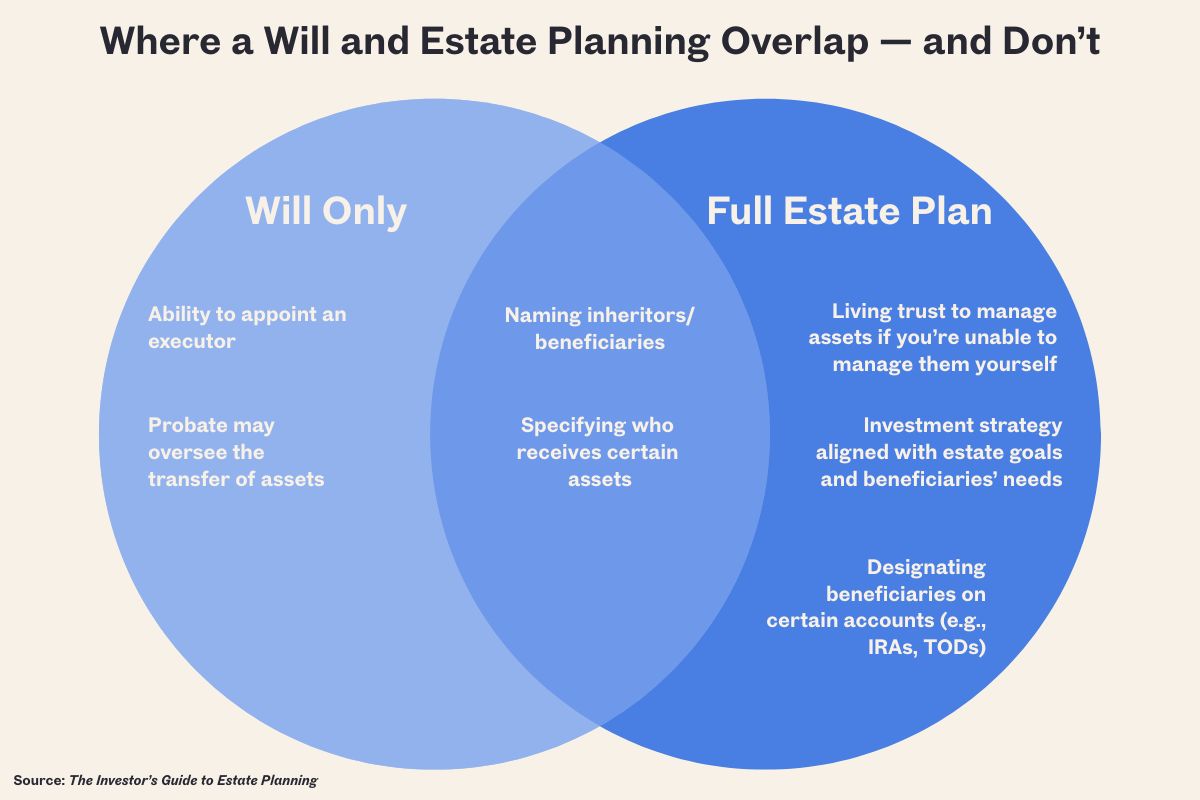
For some investors, beneficiary designations and trusts don’t replace a will; they work alongside it. Each tool serves a different purpose, and understanding where they overlap can help clarify how a complete plan fits together.

It Only Works If the Money Adds Up

Estate planning isn’t just about completing the proper paperwork. Your investment strategy is equally important. If you aim to leave a specific amount behind, your portfolio must support that objective.

If you’re leaving assets to younger family members or organizations, there’s a chance they’ll need to rely on that money for years to come. That calls for a portfolio built for long-term growth. A plan on paper only works if the investment strategy is designed to execute it.

Advertisement

How to Turn Plans Into Peace of Mind

The process is complicated. That’s the simple truth, but doing the work to organize your estate while you’re still living ensures your plan will be properly executed. A will is an important starting point, but it may not cover everything on its own. Beneficiary designations, trusts, and investment decisions all shape what happens down the line. 

For some people, that means thinking through how a spouse will access shared assets. For others, it’s about lessening the burden for adult children or fulfilling a charitable goal. Everyone’s reasons are different, but the value of a clear, connected plan is the same.

If you want a better sense of how these tools work together and what to consider next, Fisher Investments’ Investor’s Guide to Estate Planning can help.

Download Fisher Investments’ Investor’s Guide to Estate Planning to start planning your estate.  

Advertisement

This story was paid for by an advertiser. Better Report’s editorial staff was not involved in the creation of this content.

This story was paid for by an advertiser. Better Report's editorial staff was not involved in the creation of this content.


Recommended Articles

  • 6 Holiday Scams To Watch Out For

  • Why Gift Cards Are Actually Terrible Gifts

  • The Strange Reason Why Time Feels Like It’s Moving Faster

  • How To Spot a Fake Amazon Review

Advertisement
Advertisement

Related Articles

6 Holiday Scams To Watch Out For

7 min read

Why Gift Cards Are Actually Terrible Gifts

6 min read

How To Spot a Fake Amazon Review

7 min read

7 Things You Can Stop Buying To Save Money

6 min read

13 Stocking Stuffers That Are Actually Useful

8 min read
Advertisement

What the 0.1% Aren’t Telling the Rest of Us About Retirement

Sponsored By
Sponsored Content
Wealth | Updated: December 12, 2025
Better Report

This story was paid for by an advertiser. Better Report’s editorial staff was not involved in the creation of this content.

Most Americans enter retirement hoping their savings, investment decisions, and timing align to support their long-term goals — keyword: hoping. For the top 0.1% of wealth holders, though, the reality looks different. Their portfolios may be larger, but the distinction isn’t only about income. They’re in the top 0.1% of planners, tax managers, and decision makers. 

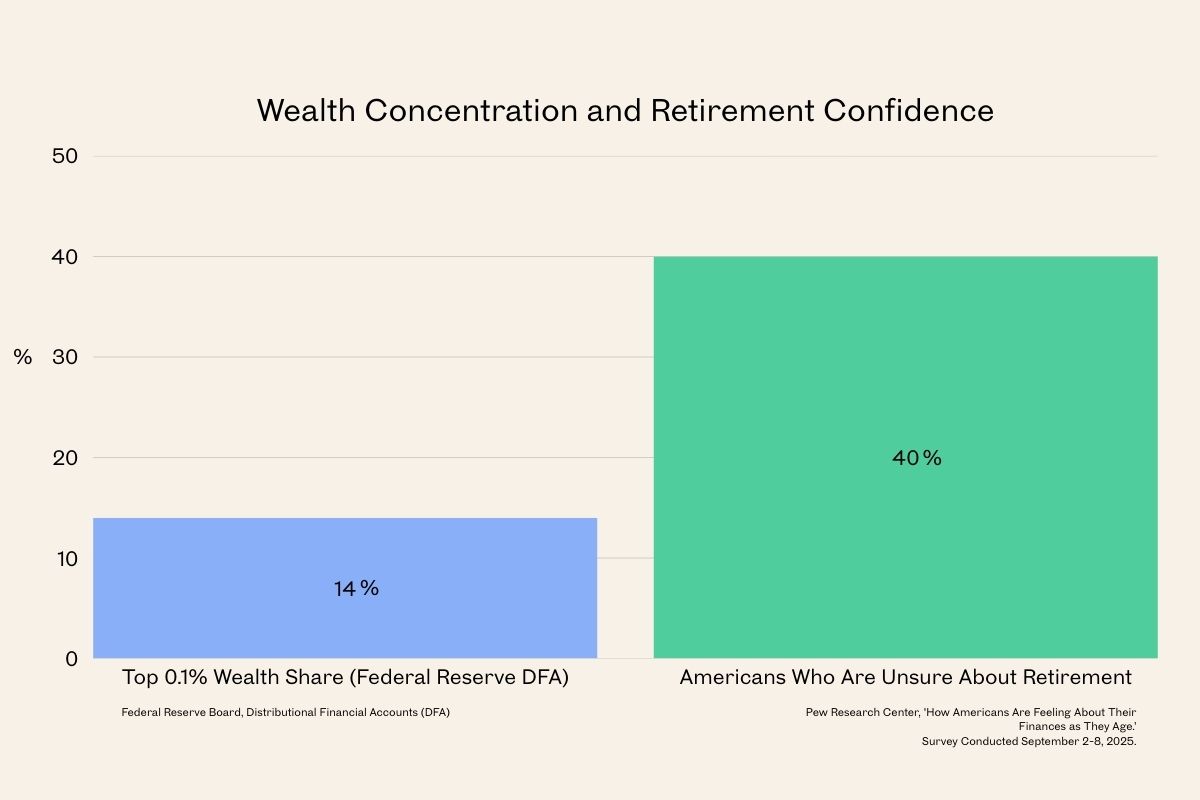
Federal Reserve data on household wealth distribution shows the share of the nation’s assets this small group holds. The numbers are startling, but they didn’t shift overnight. The data reflect habits formed long before retirement, including how these households manage taxes and coordinate different types of accounts.

How the Ultra-Affluent Approach Taxes

For the most affluent retirees, tax planning isn’t a once-a-year event. It’s something they add to their long-term strategy, especially when it comes to Required Minimum Distributions (RMDs), capital gains, and changes in taxable income. Instead of waiting until distributions are unavoidable, they may consider how taking money earlier or adjusting the timing of gains might help manage taxes over several years. A key part of the strategy is understanding how different types of investment income are taxed.

Advertisement

“Capital gains have a much lower tax rate than earned income, interest, or dividends. And therefore are advantageous in that regard, relative to interest and dividends, with a higher total return,” Ken Fisher, founder and executive chairman at Fisher Investments, said.

Rather than focusing on minimizing their tax implication in a single year, they adapt their strategy to keep their withdrawal plan steady and sustainable.

They Coordinate Their Withdrawals Across Multiple Accounts

Affluent retirees often coordinate their withdrawals across multiple account types. Traditional IRAs, Roth accounts, brokerage assets, and appreciated holdings each play a role. They’re used in combination to support post-work income needs and manage tax bills across different stages of retirement. A long-term mindset often guides those decisions, especially when investors are balancing different assets and timelines.

“Stocks are inherently volatile, at least in the short term,” Aaron Anderson, senior vice president of research at Fisher Investments, said. “They become much less so over the long term — meaning the further out you go, the longer your time horizon, the more consistent stock returns become.”

Advertisement

This type of coordination can help keep taxable events predictable, whether someone is drawing down tax-deferred savings, using Roth accounts later for flexibility, or handling unexpected income changes.

They Take Planning Seriously

Even with planning tools available, many Americans are unsure how far their savings will stretch. A Pew Research Center survey found that roughly four in 10 Americans don’t feel confident they will have enough money to last their entire retirement. That uncertainty stands in contrast to the longer-range planning affluent households do. Though an early start lets you take advantage of compound interest, planning at any stage makes retirement feel more attainable. The gap between where wealth is concentrated and how people feel about their own retirement shows how much planning shapes the experience.

They Know When to Ask an Expert

Few households sit anywhere near the top 0.1% in wealth, a group whose share of national assets matches that of the bottom 50%, but the way those investors plan their taxes and sequence their withdrawals can still serve as a playbook for the other 99.9% of retirees. Many affluent households trust professional advisors who help them take a longer-term view of taxes and make decisions spanning decades. Fisher Investments offers these same resources to everyday investors, explaining these concepts (and others) in more depth.

Read Fisher Investments’ Tax-Efficient Wealth Management for Affluent Investors guide to get additional insights into tax-smart planning.

Advertisement

Feature Image Credit: Jordan Siemens / Getty Images

This story was paid for by an advertiser. Better Report's editorial staff was not involved in the creation of this content.

Recommended Articles

  • 6 Holiday Scams To Watch Out For

  • Why Gift Cards Are Actually Terrible Gifts

  • The Strange Reason Why Time Feels Like It’s Moving Faster

  • How To Spot a Fake Amazon Review

Advertisement
Advertisement

Related Articles

6 Holiday Scams To Watch Out For

7 min read

Why Gift Cards Are Actually Terrible Gifts

6 min read

How To Spot a Fake Amazon Review

7 min read

7 Things You Can Stop Buying To Save Money

6 min read

13 Stocking Stuffers That Are Actually Useful

8 min read
Advertisement

0.1% of People Retire With This Much Money. Will You?

Sponsored By
Sponsored Content
Wealth | Updated: November 18, 2026
Better Report

This story was paid for by an advertiser. No members of Better Report’s editorial staff were involved in the creation of this content.

For retirees, a million dollars has always seemed like a solid goal. $1 million puts your mind at ease. Without doing the math to back into an annual salary, the sum should be enough to keep you afloat (and then some) through retirement, allowing you to do largely what you want and live where you please, enjoying your golden years to the fullest.

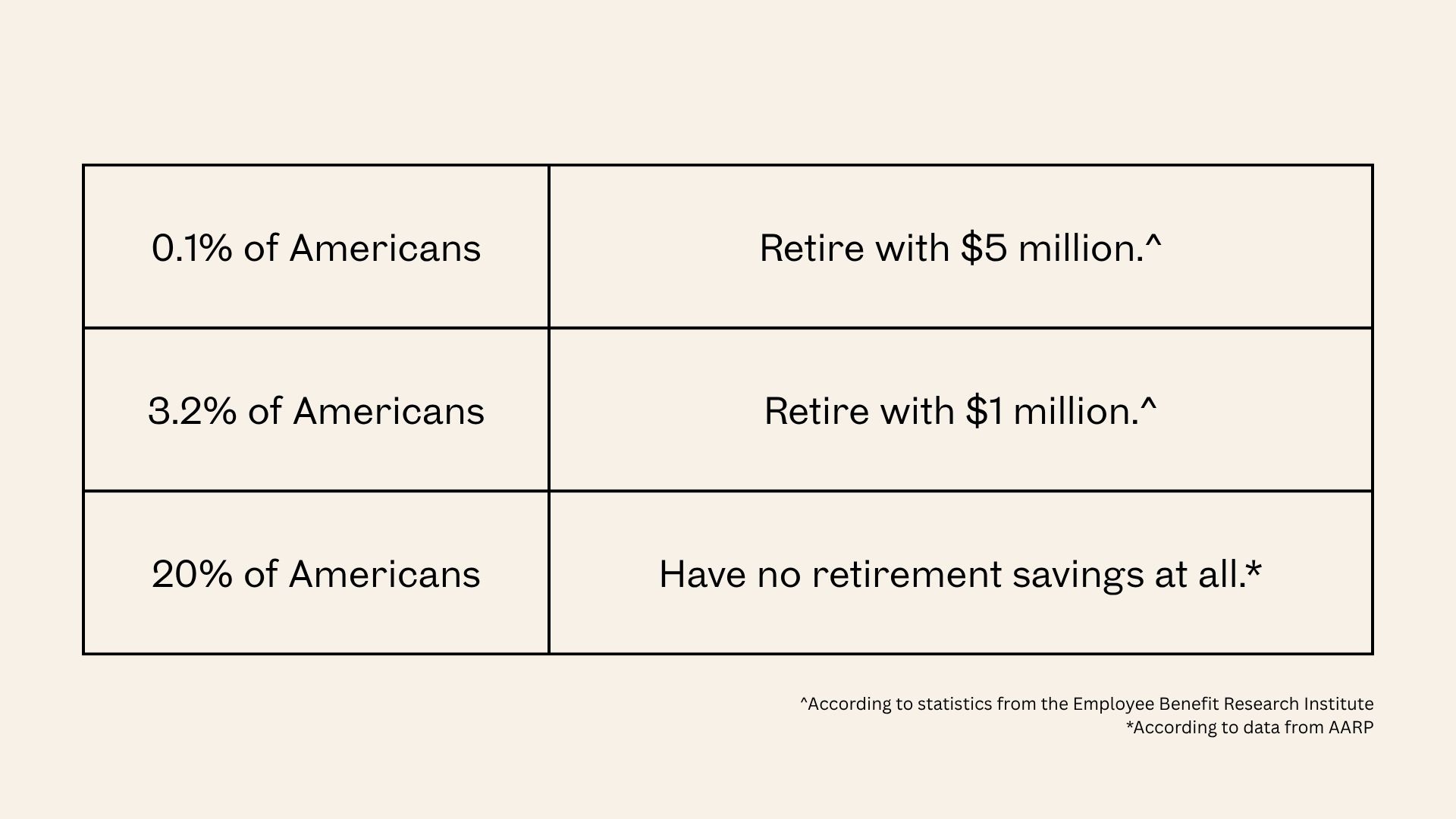
When you’re saving toward retirement, $1 million seems like an attainable plateau, too — somewhere you should reach, if all goes to plan. Though other surveys put that number closer to $4 million to be safe, a million is a commendable financial milestone that most will never reach. According to data from the Employee Benefit Research Institute’s analysis of the Federal Reserve’s Survey of Consumer Finances, just over 3% of retirees reach the $1 million milestone. 0.1% of them get to the $5 million mark. That means, in reality, most Americans are retiring with much less. Some have no savings at all, and, in turn, no investment income either. 

That means reaching either of the aforementioned financial milestones is an incredible achievement. At that point, it’s more than a nest egg; it’s an estate — something that puts you, and your family, at a financial advantage for generations, potentially. But it comes with new challenges, which require you to work smartly to protect what you’ve built. When your assets grow, so do your tax considerations — and even minor missteps can cost you more than you think.

As such, it’s wise to seek out the most tax-efficient ways to manage your wealth. From optimizing your investment strategy to planning when and how to draw from your account, a tax-smart approach can make the difference between maintaining your wealth and watching it erode.

Advertisement

Fisher Investments’ free guide, Tax-Efficient Wealth Management for Affluent Investors (for those who have $5 million or more), breaks it all down. It offers forward-looking advice to strengthen and optimize your portfolio, along with clear, actionable tax management techniques for retirement. Inside, you’ll find strategies that affluent investors use to stay a step ahead — whether that’s timing capital gains, structuring income for lower tax exposure, or making smarter charitable and estate planning decisions.

Download Tax-Efficient Wealth Management for Affluent Investors today.

This story was paid for by an advertiser. Better Report's editorial staff was not involved in the creation of this content.

Recommended Articles

  • 6 Holiday Scams To Watch Out For

  • Why Gift Cards Are Actually Terrible Gifts

  • The Strange Reason Why Time Feels Like It’s Moving Faster

  • How To Spot a Fake Amazon Review

Advertisement
Advertisement

Related Articles

6 Holiday Scams To Watch Out For

7 min read

Why Gift Cards Are Actually Terrible Gifts

6 min read

How To Spot a Fake Amazon Review

7 min read

7 Things You Can Stop Buying To Save Money

6 min read

13 Stocking Stuffers That Are Actually Useful

8 min read
Advertisement
  • Home
  • Health
  • Wealth
  • Logo
  • Advertise
  • About
  • Contact Us
  • Privacy Policy
  • Terms of Use
  • Your Privacy Choices
x
Thumb Image

Elevate your everyday.

Sign up to receive the practical tips and expert advice you need to pare down the complexities of everyday living right in your inbox.

Sorry, your email address is not valid. Please try again.

Your email is:

Edit Image
Sorry, your email address is not valid. Please try again.
Thank you for subscribing...

By subscribing you are agreeing to our Terms of Use and Privacy Policy.

Close image
Thumb Image
Second Thumb Image

Elevate your everyday.

Sign up to receive the practical tips and expert advice you need to pare down the complexities of everyday living right in your inbox.

Sorry, your email address is not valid. Please try again.

By subscribing you are agreeing to our Privacy Policy and Terms of Use.

Close image