What Your Tongue Says About Your Health


The human tongue is an impressive and important organ, albeit one that many people don’t pay much attention to. This muscular multitasker helps you move food and drink around in your mouth for chewing and swallowing and is essential for speaking and even breathing properly. Your tongue can also be a key indicator of some health conditions and illnesses, providing valuable information about many systems in your body. Here’s an overview of tongue characteristics that can give you signals about your health — and how to interpret those signals.

Texture
A healthy tongue is somewhat rough and bumpy in texture. Those little bumps are called papillae; there are four types, and inside three of them are your taste buds. If your tongue feels or appears to be completely smooth, a condition called atrophic glossitis (or sometimes simply “bald tongue”), it could indicate a deficiency in nutrients such as iron or vitamin B12.
Painful bumps on the tongue could come from things like biting it or smoking. In more infrequent cases, they could be a sign of oral cancer. The tongue can also develop cold sores, although those are more common on the lips.
As you get older, you may notice more wrinkles and cracks appear in your tongue. Those are usually normal signs of aging, but you should still take extra care to clean those crevices.
Moisture
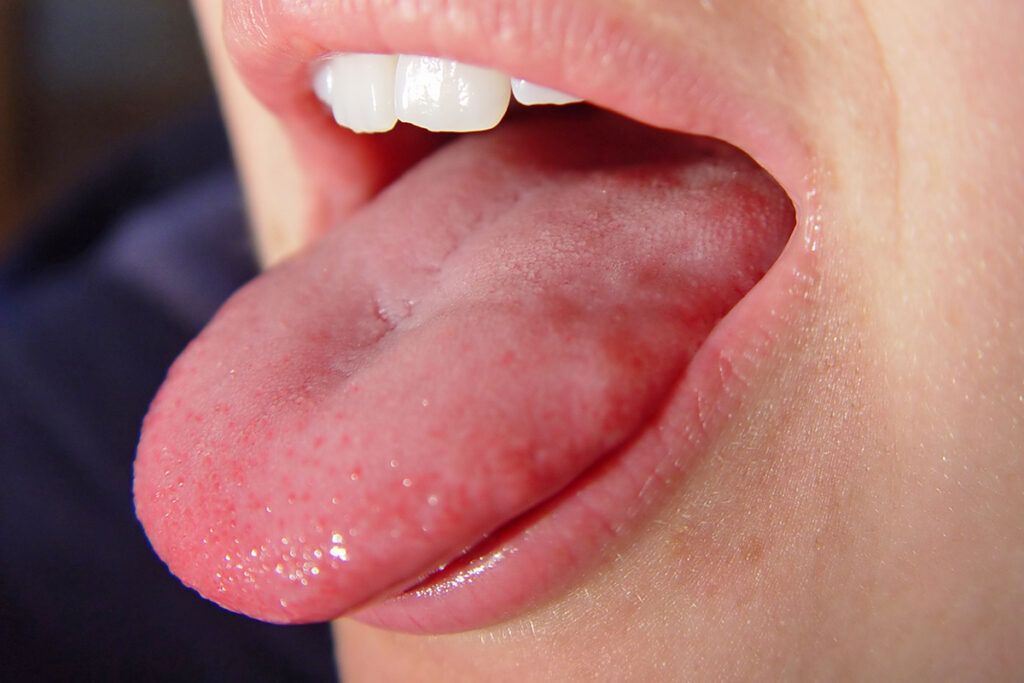
Moisture helps your tongue with its essential functions, so it should feel moist with saliva the majority of the time. A dry mouth and tongue often indicates dehydration, but it can also be the result of high blood sugar, autoimmune conditions such as Sjögren’s syndrome or lupus, or breathing with your mouth open.
As you age, your mouth may produce less saliva, which can lead to dry mouth. This may, in turn, impede your tongue’s functionality and subsequently affect your ability to taste and swallow.
Movement
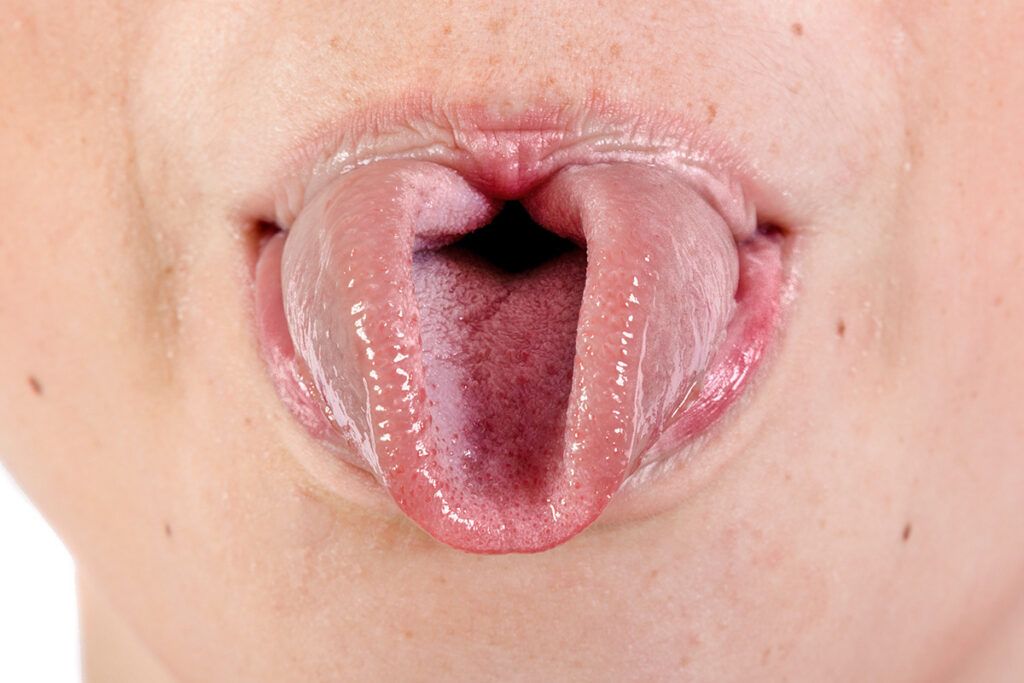
The tongue is mostly made of muscles, and a healthy tongue can move up, down, forward, back, and from side to side. You should also be able to extend and retract your tongue to make it longer and shorter. Some people may be able to curl, roll, and twist it.
Difficulty moving the tongue may be due to nerve damage, which can cause the tongue muscles to become weak or paralyzed. Research has shown that muscle tissue in the tongue shrinks and fat mass increases as we age, which can lead to differences in tongue function over time.

Reader Favorites



Another major cause of decreased tongue movement is ankyloglossia, also known as tongue-tie. People with this condition have a short frenulum (the band of tissue that connects the tongue to the floor of the mouth). Tongue-tie can sometimes impair speech, and in babies it can cause issues with feeding.

Sense of Taste
A distorted sense of taste, or dysgeusia, can be caused by several different medical conditions, including cancers of the head and neck, chronic acid reflux, inflammation, diabetes, hypothyroidism, kidney or liver disease, and infections such as COVID-19. It can also be caused by nerve damage or neurological conditions such as Parkinson’s disease, Alzheimer’s disease, or multiple sclerosis.
People who are deficient in vitamin B or zinc often experience a distorted sense of taste as well. Some people find these changes come naturally with age or even with the surge of hormones associated with pregnancy.
Additionally, the number of taste buds you have decreases as you get older. A complete loss of taste, or ageusia, is common in people older than 50, and it can be caused by many of the same conditions that cause dysgeusia or by other mouth issues such as tongue inflammation or periodontal disease. Medications may also affect your ability to taste or cause a loss of taste while you are taking them.

Size
The average human tongue is about 3 inches long and 2.5 inches wide. A tongue noticeably larger than this can indicate an injury or an inflammatory health condition. Enlarged tongues may also be a sign of amyloidosis, a rare disorder that causes clumps of proteins to build up in bodily tissues.

Shape
The tongue generally has a smooth and somewhat rounded shape. If your tongue is scalloped the edge or displays teeth marks, however, that may be a sign you’re grinding your teeth at night or that your tongue sits abnormally against your teeth. This can also be an indication of sleep apnea, as the tongue may be pushing into the teeth in an attempt to open the airway. Scalloped tongue can also be caused by conditions such as Down syndrome or hypothyroidism.
Color
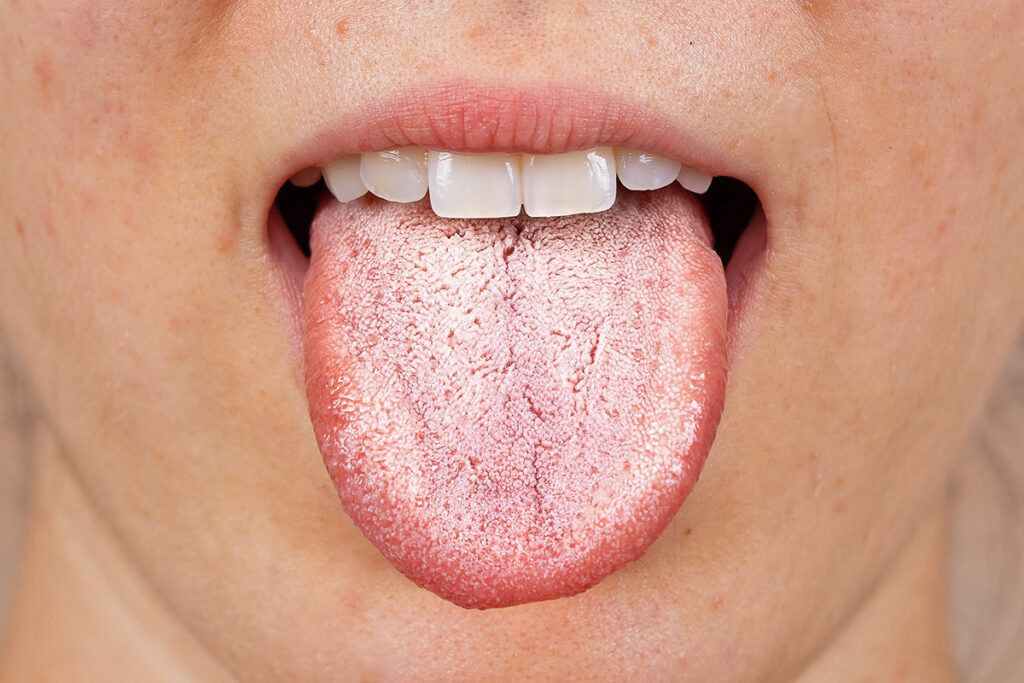
Normally, the tongue has a pinkish-red hue, but variations in its color can indicate various medical issues.
Creamy white patches on the tongue can be a sign of thrush (a fungal infection). If the patches have a lacy appearance, they may be lichen planus (an autoimmune condition). Leukoplakia, a condition that causes flat white patches in the mouth that won’t come off, can be caused by a variety of factors, including irritation in the mouth. The patches are typically benign, but some can show signs of cancer.
Black (or sometimes yellow or brown) discoloration on the tongue can indicate a weakened immune system caused by a condition such as diabetes, heavy tobacco use, or an overgrowth of bacteria and debris, among other causes. A deep red or purple color may be caused by vitamin deficiency, Kawasaki disease (a rare childhood disease that causes inflammation of blood vessels), scarlet fever, or a benign condition called geographic tongue, which causes inflammation in patches that may look like a map. A yellow tongue can be the result of smoking or coffee intake, psoriasis, or sometimes jaundice, while blue tongues are most often caused by oxygen deficiency (so you should call your doctor right away if you’re experiencing this).

Sensation
Tongue numbness can happen for several reasons, including allergic reactions to food or medicine, nerve damage, vitamin deficiency, or autoimmune disorders. In some rarer cases, numbness or tingling of the tongue can be a sign of a stroke.
Soreness of the tongue can be caused by minor infections, smoking, sores, or wearing dentures that don’t fit properly. More infrequently, tongue soreness can be a symptom of oral cancer. A soreness that burns may be due to burning mouth syndrome, a condition that’s most common in people who have gone through menopause.
You don’t need to obsessively monitor your tongue, but checking it every now and again can help you keep tabs on your overall health. And while minor variations from day to day can be normal, if you notice any changes in your tongue’s condition or ability to function, it may be a good idea to schedule a visit with a health care professional.
Featured Image Credit: © STUDIO TAURUS/stock.adobe.com
More From Our Network
Better Report is part of Inbox Studio, an email-first media company. *Indicates a third-party property.







Ali Eldridge is a writer and editor based in Chicago. Currently the editor of "What on Earth! Magazine," she has also contributed extensively to Encyclopaedia Britannica and published several books for children. She spends much of her free time learning new languages and trading puns with her clever kid.
This article is for general informational purposes only.
Affiliate Disclaimer Medical Disclaimer Financial Disclaimer