Your $1 Bill Could Be Worth Thousands

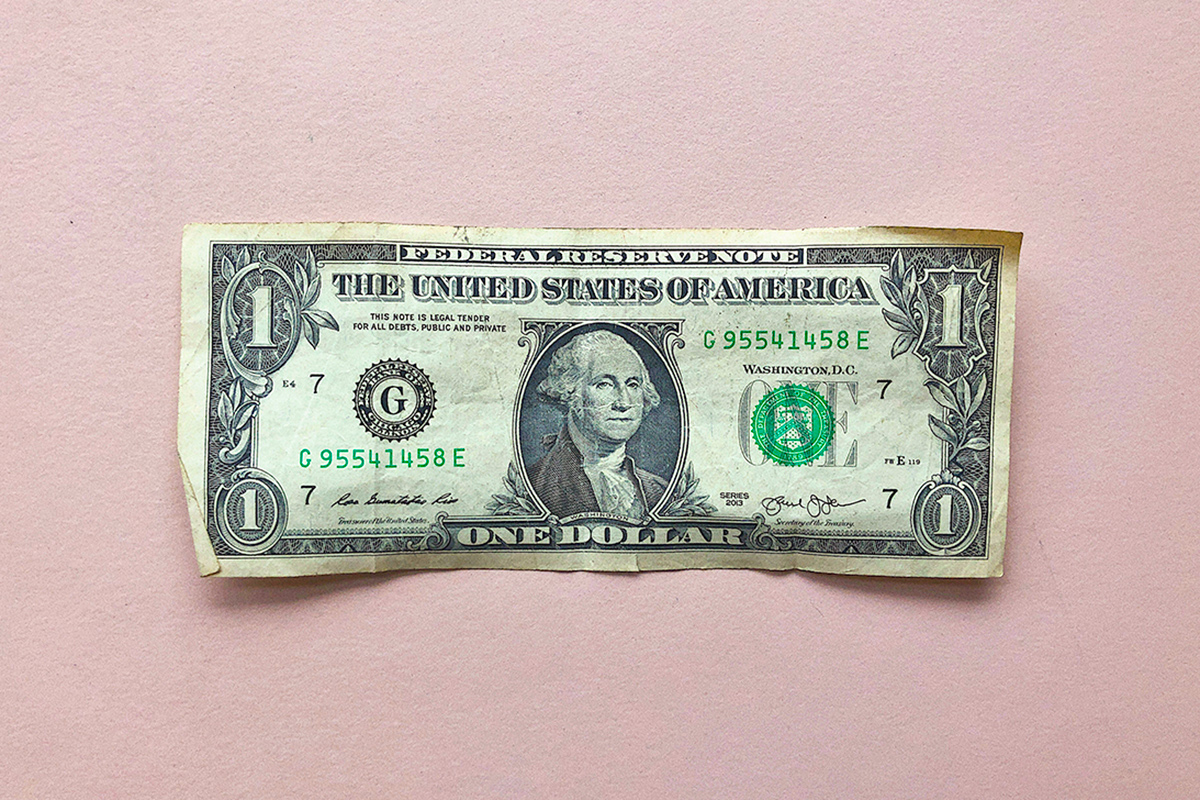
It would be logical to think that the value of the cash in your wallet is printed right there on the face of the bill. But that assumption could end up costing you.
According to Wealthy Nickel, a rare printing error by the U.S. Bureau of Engraving and Printing has made some $1 bills worth up to a whopping $150,000 to collectors. Here’s what you should know before you spend any potentially valuable currency.

The Big Whoops
In November 2014, the Bureau of Engraving and Printing sent an order to print a batch of $1 bills to its Washington, D.C., facility. Then, in July 2016, it accidentally sent the same printing order to its Fort Worth, Texas, facility.
The result: Millions of $1 bills entered circulation with duplicate serial numbers. Because every U.S. bill is supposed to have a unique serial number, the mistake created matching bills that collectors now consider one of the most unusual modern currency errors.
Rather than making the bills worthless, the printing blunder has made them highly desirable. Collectors are searching for matching pairs of the duplicate notes and, in exceptional cases involving bills in excellent condition, may be willing to pay as much as $150,000 for a complete matched set.

How To Tell If Your $1 Bill Is Valuable
Not every $1 bill with an unusual serial number is worth a fortune. The most sought-after notes all share three specific characteristics:
Series 2013: Look for the words “Series 2013” printed near George Washington’s portrait.
A “B” Federal Reserve Seal: The letter “B” indicates the bill was issued by the Federal Reserve Bank of New York.

Reader Favorites



A Star Serial Number in a Specific Range: The serial number must end with a star (*) and fall within one of these ranges:
B00000001* through B00250000*
B03200001* through B09600000*
If your bill checks all three boxes, it could be one half of a rare duplicate pair created by the Bureau of Engraving and Printing’s error.
However, finding one of the bills is only part of the challenge. The biggest payouts go to collectors who can match their note with its duplicate — another bill carrying the exact same serial number — which is no small feat.
Although more than 6.4 million duplicate notes entered circulation, only nine matching pairs have so far been reunited. The highest estimates of up to $150,000 apply to exceptionally rare matched pairs in top condition. Single notes can still fetch you a couple hundred dollars but generally command far less than a complete pair.

What Should You Do If You Find One?
If you discover a qualifying bill, avoid folding it or spending it. Keep it in a protective currency sleeve and record the serial number. Collectors maintain online databases, such as Project 2013B, to help owners determine whether the matching bill has already surfaced. If you eventually locate the duplicate, having both notes professionally authenticated and graded can significantly increase what collectors are willing to pay.

Other $1 Bills That Could Be Worth More Than Face Value
Even if that single dollar hiding under your couch cushion isn’t one of the rare duplicate serial number notes, it could be worth more than its face value. Currency collectors also pay premiums for certain other $1 bills, including:
Star Notes: Bills with a star (*) at the end of the serial number are replacement notes printed to take the place of bills damaged during production. While most are worth only a small premium, low-print-run star notes or those in pristine condition can be significantly more valuable.
Unusual Serial Numbers: Collectors seek out bills with unusual serial numbers, such as all the same digit (11111111), ladders (12345678), radars (a palindrome like 12344321), repeaters, or very low serial numbers such as 00000025. Depending on the pattern and condition, these bills can sell for significantly more than their face value.
Printing Errors: Notes with major production mistakes — such as missing serial numbers, off-center printing, inverted overprints, or missing seals — are among the most desirable modern error notes. Some have sold for hundreds of dollars at auction.
So, before you shove that next dollar bill into a tip jar, it may be worth taking a closer look. You never know when an ordinary buck could turn out to be worth a small fortune.
Featured Image Credit: © Ryan Quintal/Unsplash.com
More From Our Network
Better Report is part of Inbox Studio, an email-first media company. *Indicates a third-party property.






Jennifer M. Wood has been writing about news, entertainment, culture, and travel for longer than she cares to admit. She lives just outside Philadelphia with her husband and an ever-growing menagerie of rescue pets.
This article is for general informational purposes only.
Affiliate Disclaimer Medical Disclaimer Financial Disclaimer