Why Is Everyone Talking About Fiber?

Fiber has become a nutrition buzzword lately, popping up everywhere from morning talk shows to grocery store labels. You’ve likely heard that fiber is good for you — but what exactly is it, and why does it matter?
Dietary fiber, found in plant-based foods, plays a key role in digestive health. Beyond that, it supports overall wellness and may help reduce the risk of certain chronic diseases. Despite its importance, however, the American Society for Nutrition estimates that only 7% of adults meet daily fiber recommendations, leaving plenty of room for improvement. Here’s what you need to know about this essential nutrient and how to incorporate more of it into your diet.
Why Is Fiber Important?
Dietary fiber is a type of carbohydrate found in the indigestible parts of plants. Unlike other nutrients, such as fats and proteins, fiber cannot be broken down or absorbed by the human body. Instead, it moves through the digestive tract, supporting several key functions along the way.

Reader Favorites



“[Fiber] aids in satiety because it adds bulk to your food without adding calories, can help reduce cholesterol, slows the spike of blood sugar from eating, and promotes gut health by providing food for your healthy gut bacteria,” Devon Kroesche, a registered dietitian nutritionist who specializes in women’s health, explains. Getting more fiber is also linked to overall longevity, including a decreased risk of heart disease and type 2 diabetes, according to the Mayo Clinic.

What Are Some High-Fiber Foods?
There are two main types of dietary fiber: soluble and insoluble. Soluble fiber dissolves in water, forming a gel-like material that slows digestion. This can lower cholesterol and stabilize blood sugar levels. Kroesche recommends oats, bananas, and sweet potatoes as good sources of soluble fiber; peas, beans, apples, citrus fruits, and carrots are also excellent options.
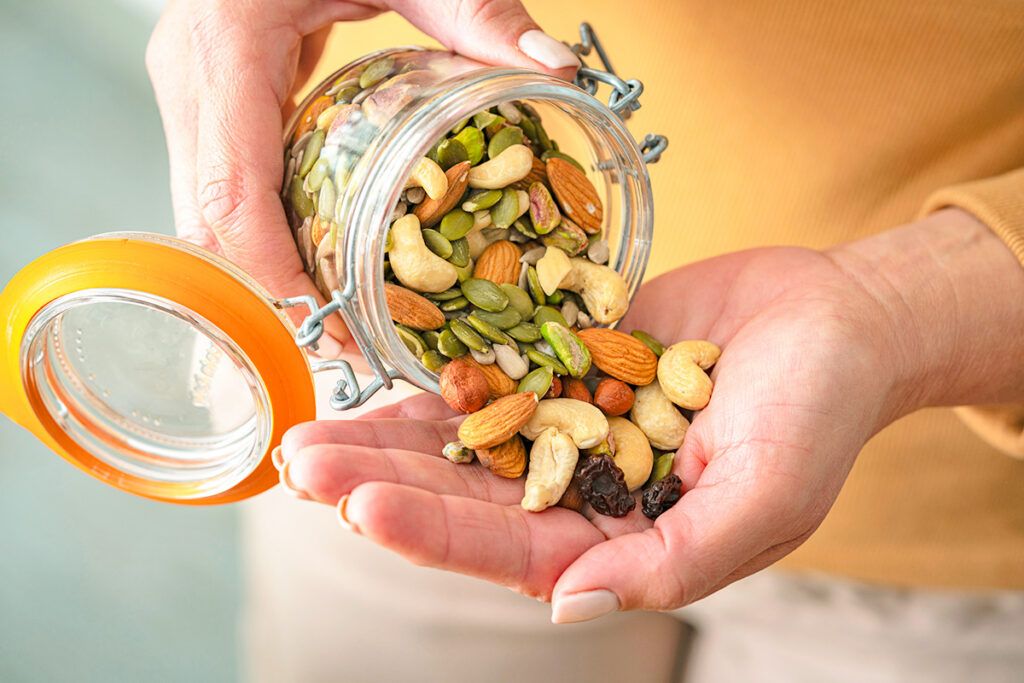
Insoluble fiber, as its name suggests, does not dissolve in water. It helps move nutrients through the digestive system and adds bulk to stool, which can ease constipation. To increase your intake, focus on whole grains, nuts, seeds, and whole vegetables with skins.
It’s worth noting that many high-fiber plant foods contain both types of fiber, so variety is key to meeting your daily needs.

What Are Some Easy Ways To Increase Fiber Intake?
Adding more fiber to your diet doesn’t have to be complicated. Amanda Callenberg, a London-based registered nutritional therapist specializing in gut health and IBS, offers several simple strategies: “Add an extra serving of vegetables to meals, include beans or lentils, swap to whole grains, and add nuts or seeds where you can.”
Why prioritize whole grains? Refined or processed foods are lower in fiber because the bran (the outer portion) is removed from the grain. This strips away nutrients, including fiber. Choosing whole-grain pastas, cereals, and breads allows you to retain those benefits without sacrificing taste. Similarly, removing skin or pulp from fruits and vegetables reduces fiber levels, so opt for whole foods whenever possible.

How Much Daily Fiber Do We Really Need?
A recent social media trend known as “fibermaxxing” encourages a very high daily fiber intake — but is there a limit?
“There can be a misconception that more is always better when it comes to fiber,” Kroesche says. “In reality, we want just the right amount of fiber — not more or less.” Consuming too much fiber, she warns, can cause digestive discomfort or more serious issues, such as digestive tract blockages.
While there isn’t a strict upper limit to how much fiber you can consume, the Mayo Clinic recommends a daily goal of 25 grams of dietary fiber for women and 38 grams for men. As with all aspects of nutrition, these goals should be tailored to your health, including any current digestive issues, your age, and your activity level. Kroesche also recommends gradually increasing your daily intake by about 5 grams per week. “Your gut is a muscle and may need some time to adapt to a higher-fiber diet to prevent gas and bloating,” she says.

Do Older Adults Need To Think About Fiber Differently?
Fiber is important at all stages of life, and according to Callenberg, “meeting those needs can become more challenging with age, as appetite and activity levels often decrease.” Other challenges older adults face include reduced stomach acid and slowed digestion, which may affect how well fiber is tolerated.
To reduce fiber-related digestive issues, focus on a consistent intake spread throughout the day and drink plenty of water to prevent blockages. Hydration and fiber efficacy go hand in hand.
Fiber needs also decrease slightly with age. The Mayo Clinic recommends a daily intake of 21 grams for women over 50 and 30 grams for men over 50. Meeting these targets — without overdoing it — can help you maintain digestive system balance.

Are Fiber Supplements as Effective as Whole Foods?
Fiber supplements can be helpful if you’re struggling to meet your needs through diet alone. However, whole foods are generally preferred. If you decide to start a fiber supplement, consult your doctor.
“Many other nutrients, such as vitamins and minerals, [are] contained in high-fiber foods,” Kroesche says. “Incorporating more of these foods often displaces less nutrient-dense foods,” such as processed foods. A whole-food-first approach not only supports digestion but also contributes to a more nourishing diet with long-lasting health benefits.
Featured Image Credit: © Happy Kikky/iStock
More From Our Network
Better Report is part of Inbox Studio, an email-first media company. *Indicates a third-party property.