The Correct Way To Use Sanitizer, According to Experts

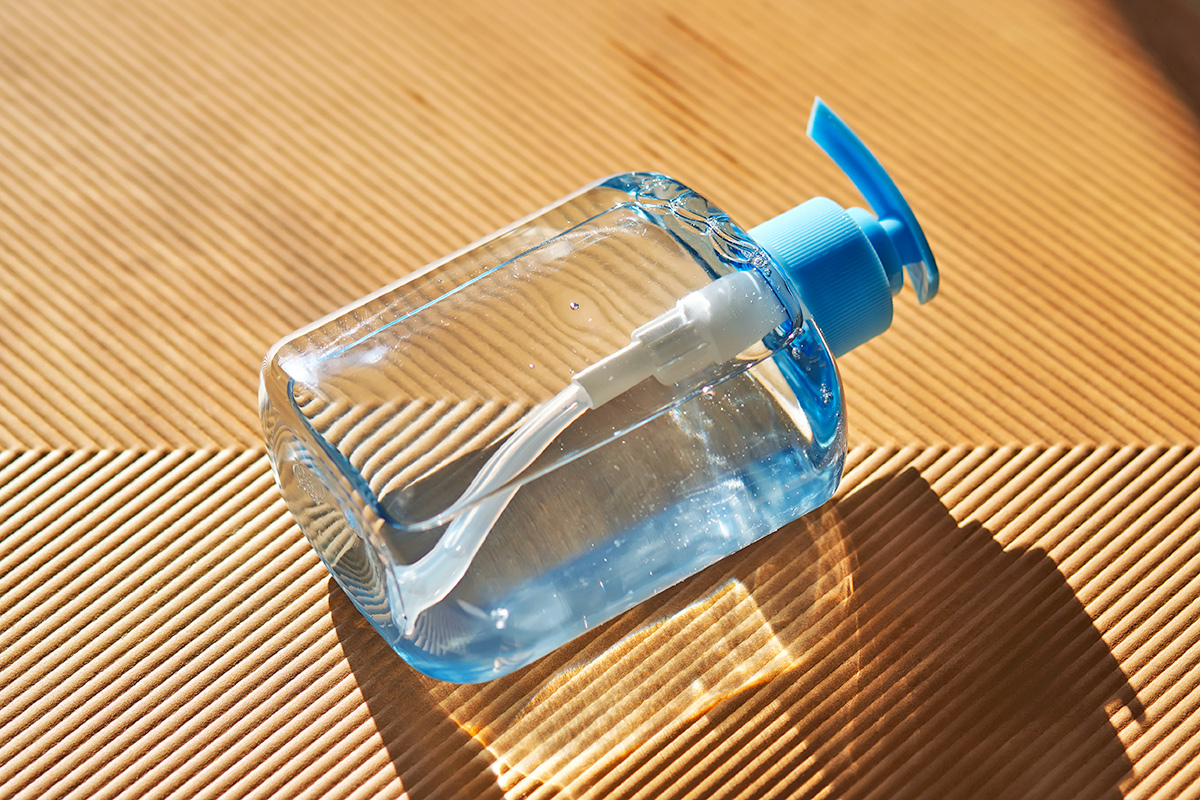
Cold and flu season is upon us, and chances are, you’re making liberal use of hand sanitizer. Unfortunately, the likelihood is also high that you’re not using it correctly.
“The real problem is feeling safe when you are not,” says Harsha Moole, M.D., founder of the investment firm Physician Estate and Find My Direct Doctor, a directory for primary care and concierge medicine. “Your hands feel clean and dry, but they still have germs on them. That is how one sick kid turns into three, and how germs move around a hospital.”
Here’s where most people go wrong — and how you can get it right.
The Alcohol Content Isn’t High Enough
When buying a hand sanitizer, you should be looking for at least 60% ethyl or isopropyl alcohol (the label should tell you this), along with ingredients like water, glycerin (a moisturizer), hydrogen peroxide (a preservative), and denaturants (which make hand sanitizer taste unpleasant so it’s not accidentally consumed).
“Alcohol content is the whole game,” Moole says. “The effective range is 60% to 90% alcohol. Below 60%, it does not reliably kill germs, and very high concentrations can evaporate before they work.” He suggests confirming that the sanitizer you’re buying isn’t on the FDA’s do-not-use list; those products may contain methanol (aka wood alcohol, which is toxic) or not have enough alcohol.
You should also be wary of commercial hand sanitizers with extra ingredients for skin care. “Many of these ‘added ingredients’ are added in such [quantities] that the total percent of alcohol in the final product is below 60%,” Carol Lokare, R.N., N.P., an adviser at MyNursingSchools.com, tells Better Report. “These products may look very good on paper, but they contain far less active sanitizer than is required to be effective.”
If you’re prone to irritation, use a hand sanitizer made with ethyl alcohol, which Lokare says is gentler on the skin. You should skip alcohol-free sanitizers — “Those use weaker stuff that does not kill as well,” Moole says — and avoid ones that are heavily scented. “Scent does not dictate strength of a product and can mask poor formulation,” Lokare notes. “There are many sanitizers on the market that contain fragrances, which make them attractive to consumers who want a spray that smells good, but in reality [they] provide no added benefit to fight infection.”

Reader Favorites



You’re Not Using Enough
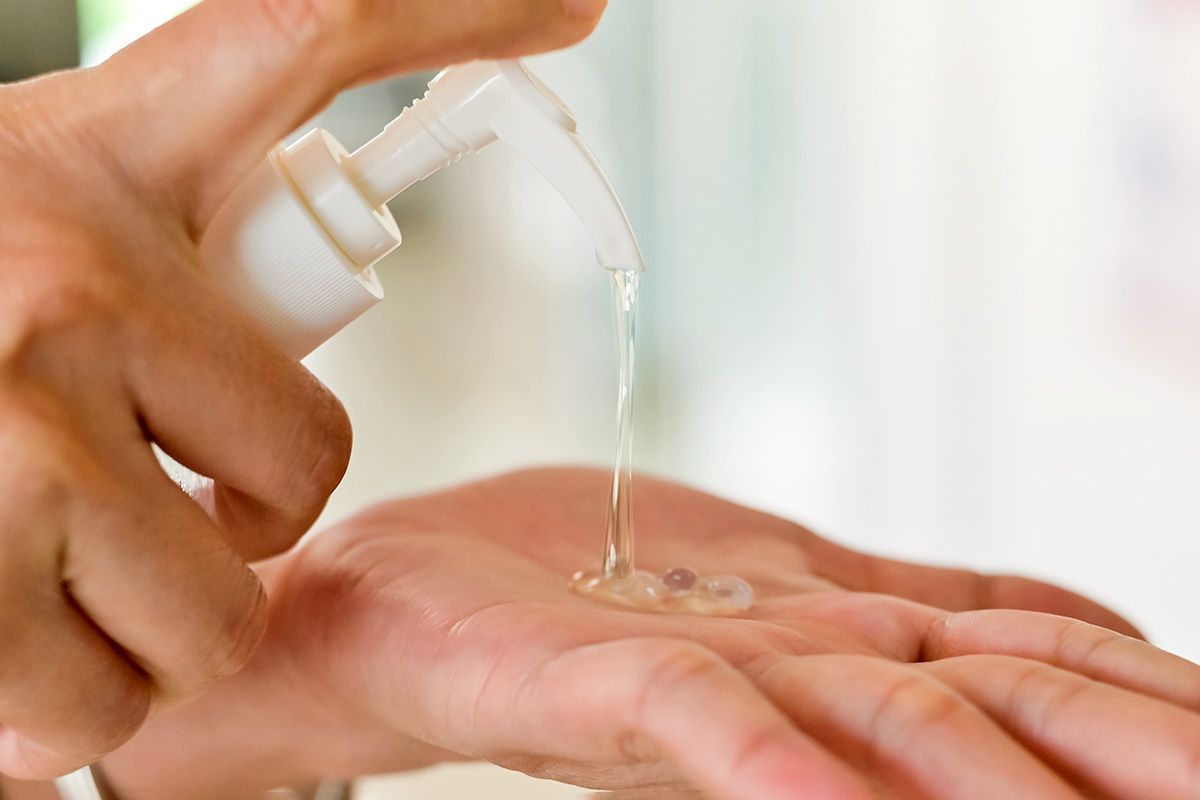
The World Health Organization (WHO) recommends using enough hand sanitizer to cover all surfaces of both of your hands — about a palmful. Moole says that’s around 3 milliliters, or up to 6 milliliters if you have large hands.
This gets tricky if you’re using a hand-sanitizing spray. You get only a small amount of sanitizer with every spray pump (about 0.1 to 0.2 milliliters), which means you would need to pump the nozzle many more times — around 15 to 30 — for adequate coverage. “Most people spray once or twice, use way less than they think, and believe their hands are clean when they are not,” Moole says. “You need a lot of pumps to get there. That is the real reason sprays let people down.”
Thankfully, there’s an easy way to know whether you’ve used enough. Lokare advises new nurses to completely coat their hands with spray and then rub them together for 20 seconds. If their hands are still a little wet when the time’s up, they’ve used enough spray. If their hands are dry, however, they should reapply and repeat the process.
You’re Not Rubbing It — or Letting It Dry
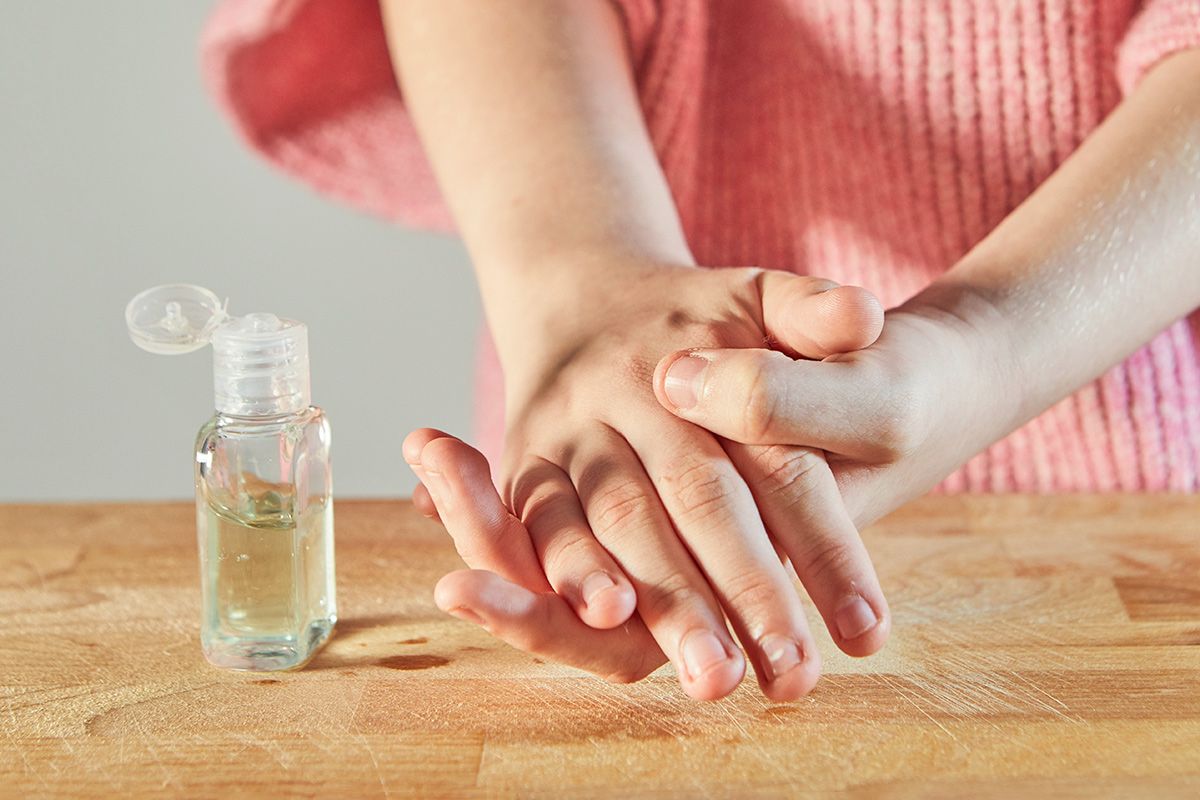
In order for hand sanitizer to work properly, you need to rub until it’s dry. “That is not fussy — that is how the stuff works,” Moole says. “The alcohol only kills germs while it is still wet. Once it dries, it stops working.”
That means it’s important to resist the urge to wipe your hands off before the sanitizer is dry — a mistake even the pros make. “When you wipe your hands on your scrub top or your pants, you have ended the hand sanitizer process prematurely,” Lokare says. “I witness this happening with my co-workers throughout each work shift, usually while walking away from the sanitizer dispenser.”
Another mistake you may be making: using hand sanitizer on wet hands. “Water dilutes the alcohol,” Moole says.
You’re Missing Spots
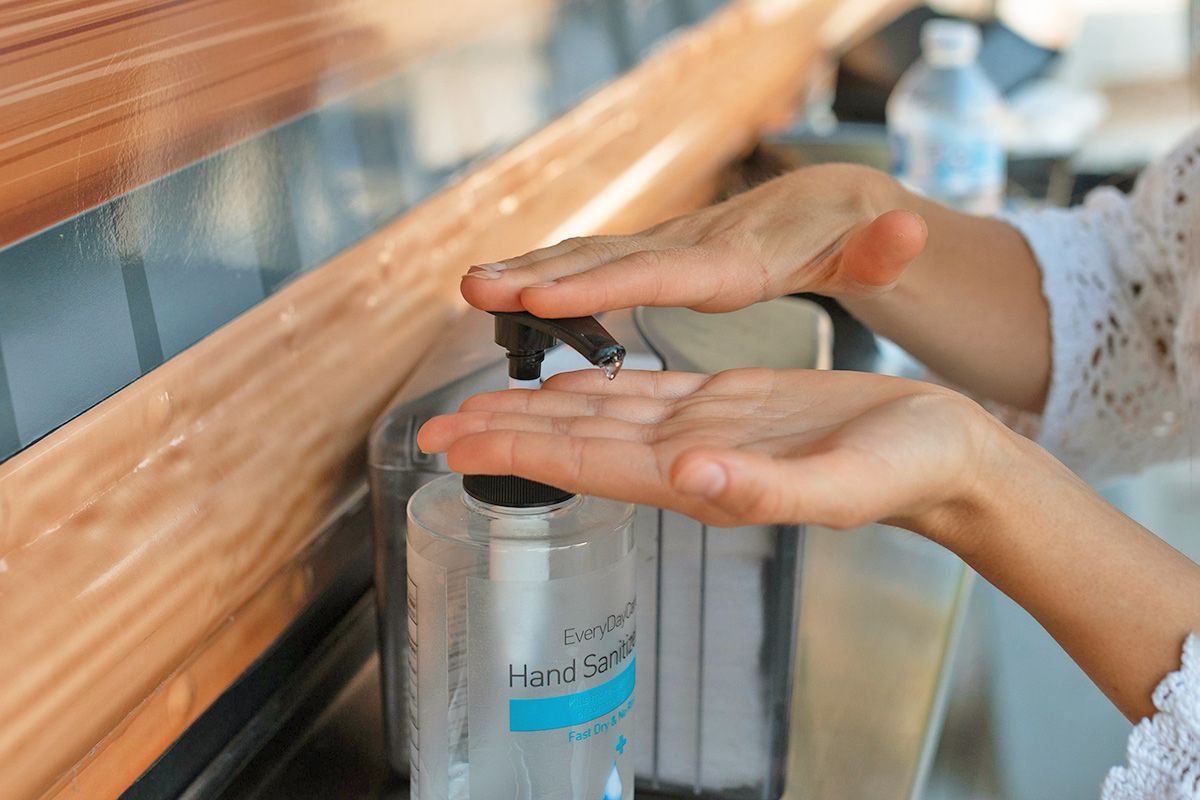
Both Lokare and Moole say people frequently miss spots when applying sanitizer, including the fingertips, thumbs, index fingers, around the nails, between the fingers, and the backs of the hands. “Most people just rub their palms together and call it done,” Moole says.
This may be especially true if you’re using hand-sanitizing sprays, which Lokare says “require more of a deliberate action to spread evenly over the skin.”
You’re Using It When You Should Be Washing Your Hands
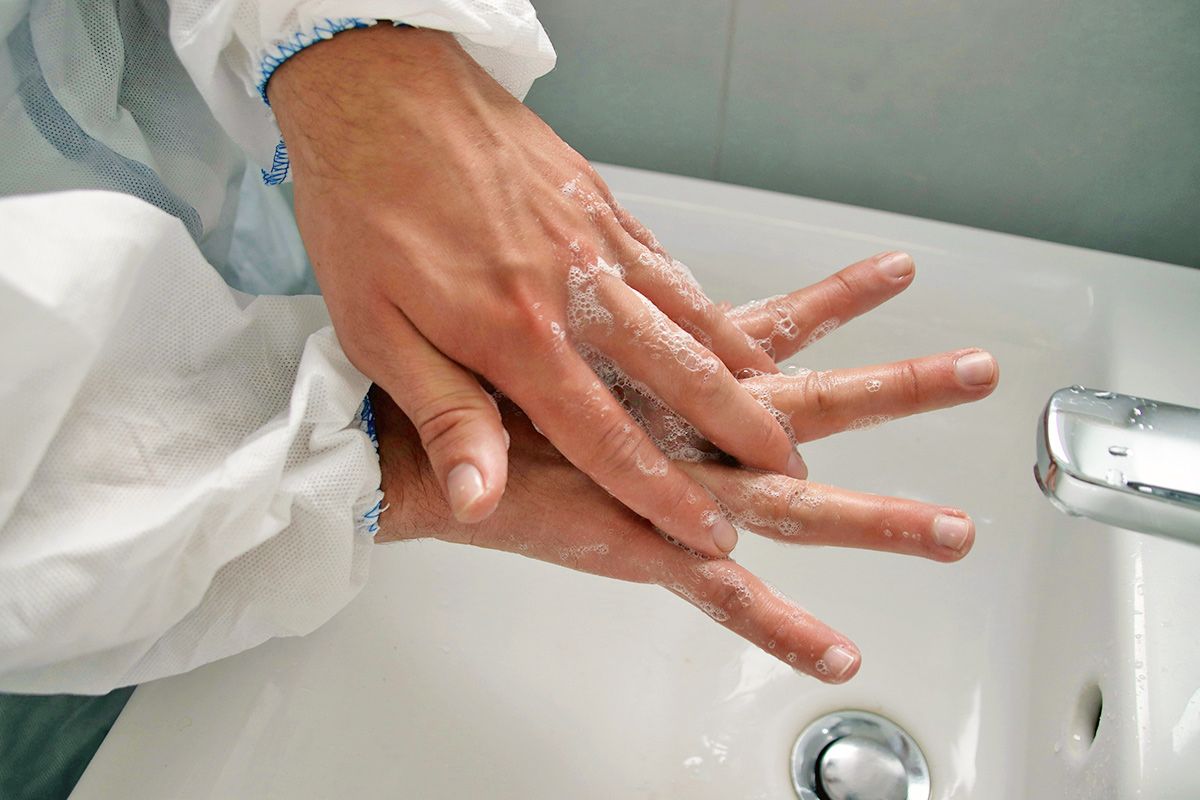
Hand sanitizer isn’t always the best way to get your hands clean. In fact, according to the CDC, “Washing hands with soap and water is the best way to get rid of germs in most situations.” So it’s important to know when you should, and shouldn’t, be using hand sanitizer.
“There are certain conditions where hand sanitizer will fail, including [on] visibly dirty or greasy hands,” Lokare says. (She’s seen colleagues use hand sanitizer in this case, even when they know better.) “There are two types of viral outbreaks, C. diff [Clostridioides difficile] and norovirus, which require a combination of both soap and running water. This is due to the fact that alcohol-based hand sanitizers are unable to eliminate spores.”
Moole concurs: “No hand sanitizer replaces soap and water when your hands are visibly dirty or greasy, or after the bathroom or changing a diaper,” he says. “Alcohol does not beat the stomach bug (norovirus) or spores. Soap does.”
You’re Using It Past the Expiration Date
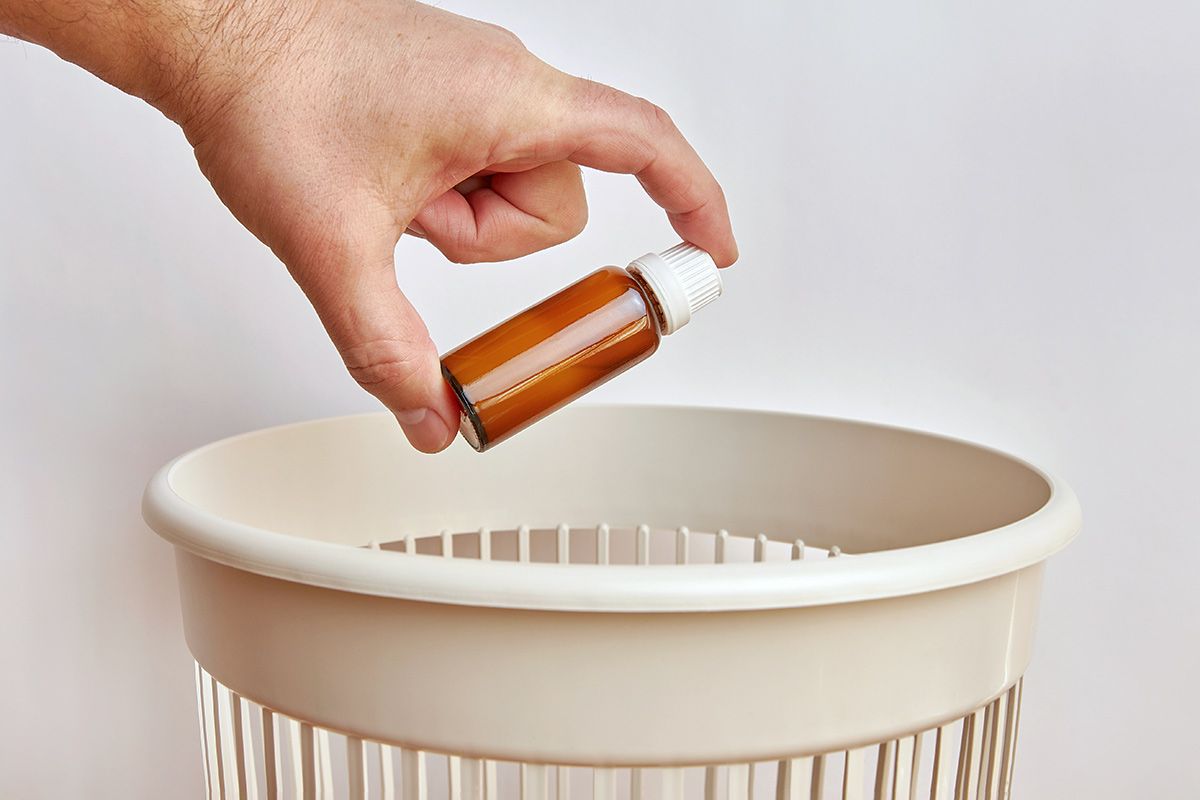
According to Healthline, manufacturers estimate a hand sanitizer’s expiration date based on how long it takes the proportion of the active ingredient “to drop below 90% of the percentage stated on the label.”
Hand sanitizer should last about two to three years. It’s not dangerous past its expiration date, though it may be less effective, because “alcohol [evaporates] from open bottles over time and the strength drops,” Moole says.
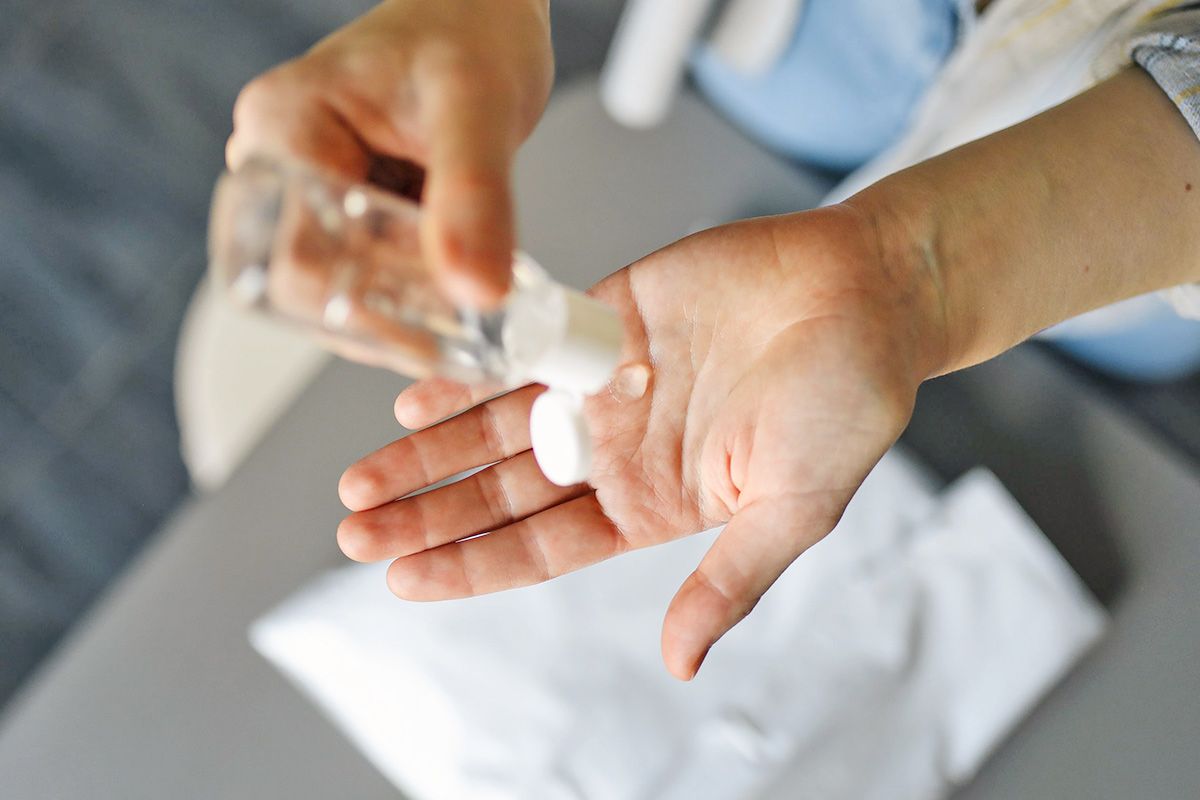
The Right Way To Use Hand Sanitizer
“Most people use too little and stop too early,” Moole says. Don’t let that be you.
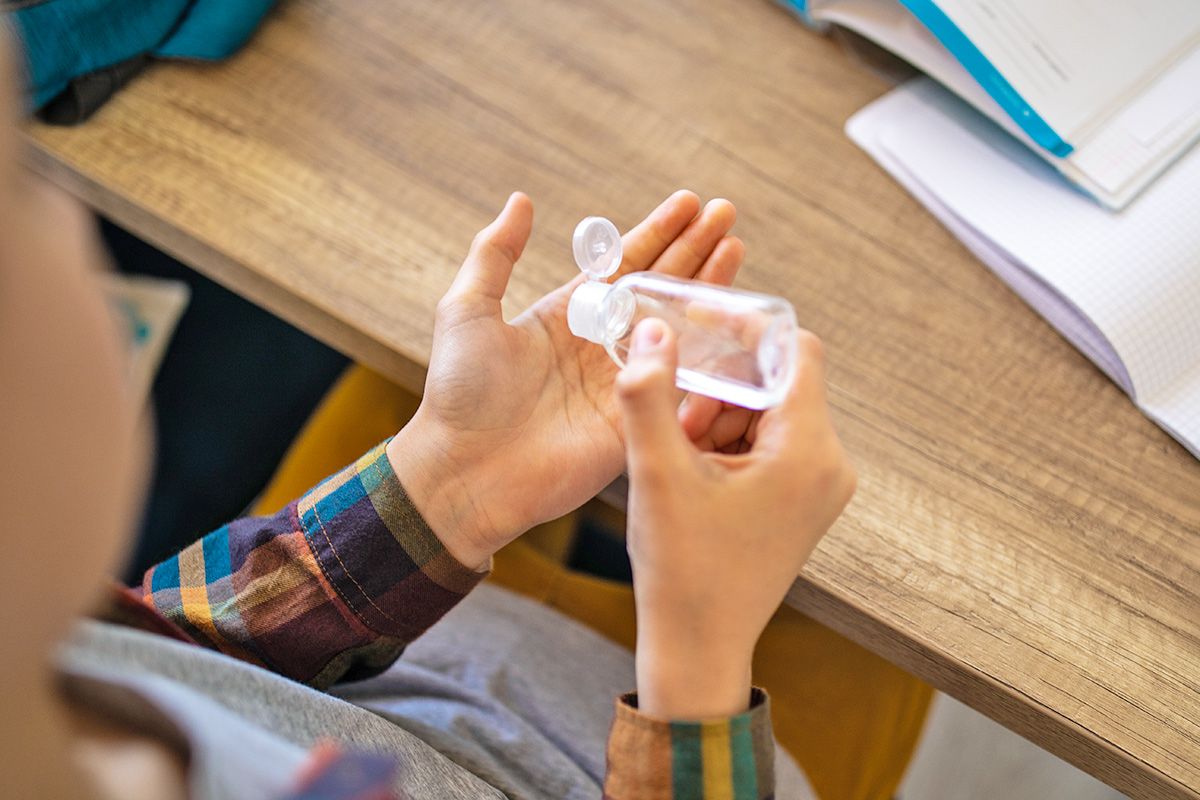
When it’s time to apply, squirt a palmful into your hand, or use enough spray to cover the fronts and backs of your hands. Then, start rubbing them together. Make sure to get all of your fingers and the areas between them. “Rub each thumb inside the opposite palm, rub your fingertips into the opposite palm, and go over the backs of your hands and between your fingers on purpose,” Moole advises. You can see illustrations of a good application technique here.
Keep rubbing until the liquid dries — about 20 seconds, or how long it takes you to sing “Happy Birthday” twice. If the sanitizer dries up before then, apply more.
Finally, don’t forget to moisturize. Using hand sanitizer frequently can irritate the skin and even cause it to crack, and “bacteria can grow easier in cracked skin versus healthy, intact skin,” Lokare says. Once the hand sanitizer is dry, you can use a separate moisturizer on your hands. Then, before you go to bed at night, dampen your hands and apply a thick cream. “A thicker, more emollient barrier cream can provide more benefit than a light lotion,” Lokare says. “Since it is applied before bed and left on for hours without being washed off, it provides prolonged time for the skin’s recovery.”
Featured Image Credit: © Mariya Borisova—500px/Getty Images
More From Our Network
Better Report is part of Inbox Studio, an email-first media company. *Indicates a third-party property.







Erin is a writer, editor, and content strategist living in the New York City area. Previously, she was the VP/Editor-in-Chief of MentalFloss.com and an editor at Popular Mechanics magazine. When she’s not working, Erin is hanging out with her cats, reading books from her never-ending TBR, traveling, karaoking, and making sourdough with her starter Stephen Sondheim.
This article is for general informational purposes only.
Affiliate Disclaimer Medical Disclaimer Financial Disclaimer