Should You Throw Out Food if a Fly Lands on It?
All featured products and deals are selected independently and objectively by the author. Better Report may receive a share of sales via affiliate links in content.
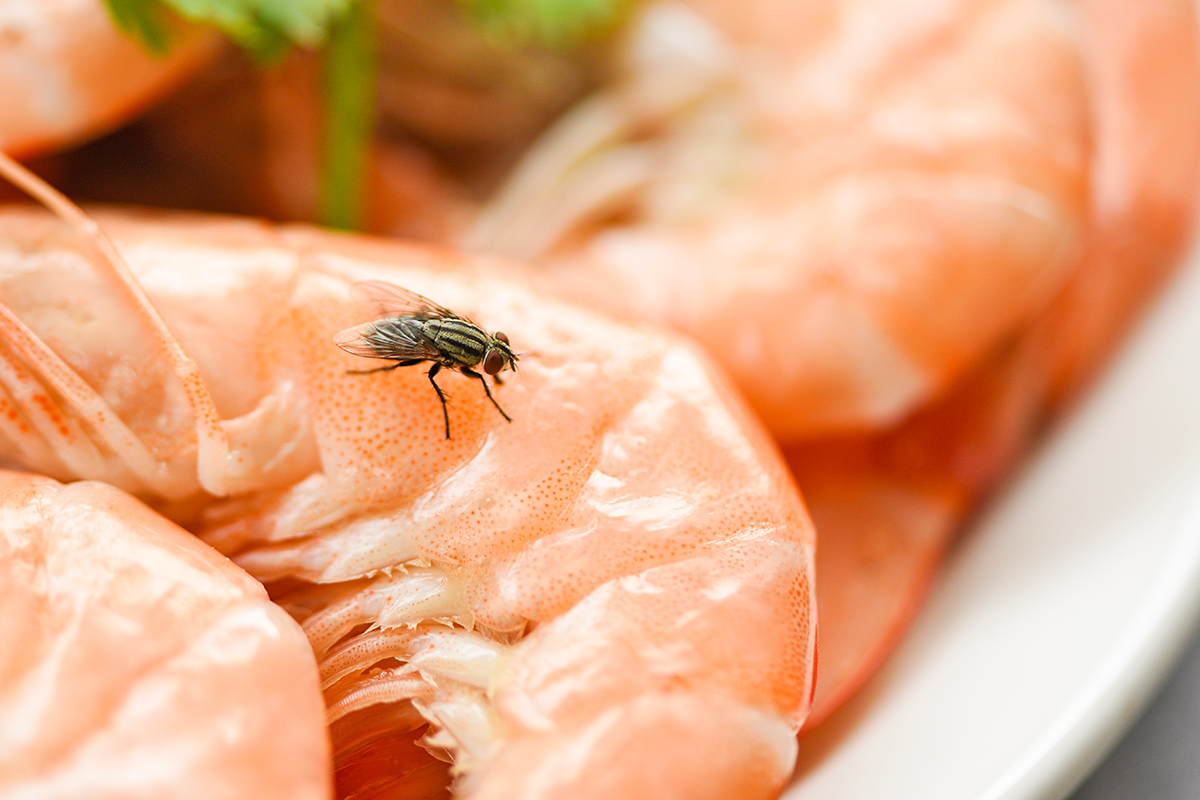
Too often, we find unwanted guests at our dinner table: flies. Though there are more than 160,000 species of flies, the housefly accounts for about 90% of those found in our homes. Known as “filth flies,” they plague households and picnics around the world, popping up during warmer months en masse.
Before sanitation standards improved, houseflies posed a major threat to public health in cities. Is their reputation as harbingers of disease deserved? Here’s what the research says.
Do Flies Carry Disease?
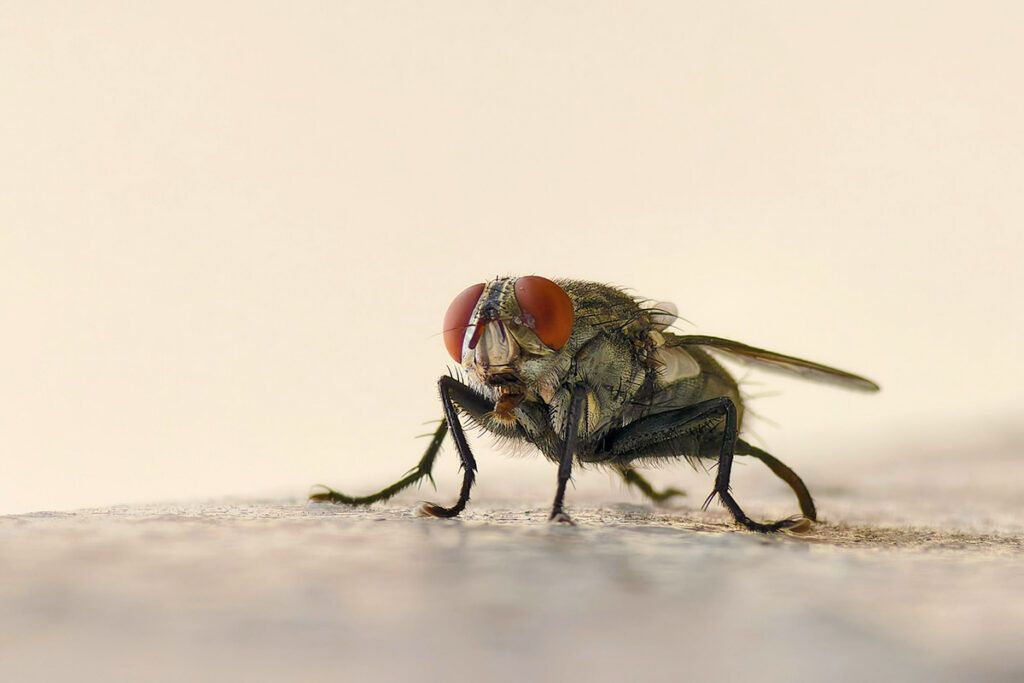
Houseflies don’t distinguish between clean food and contaminated surfaces, which means they can transmit disease. They spend much of their time on unsanitary, decomposing organic matter, such as animal carcasses, feces, and rotting plants.
When flies land on things like garbage or manure, germs are transferred to their feet and bodies. As a result, they may carry millions of microorganisms, including potentially harmful pathogens and parasites. These microbes can then be transferred to food upon contact.
Another sanitation concern is how flies eat. They land on our food because they like to eat it, but they can’t bite into it — their mouthparts are made only to sponge or lap up food. Instead, they spit out saliva loaded with enzymes that dissolve food so they can suck it up. If a fly spends a lot of time on our food, it may vomit, eat, and defecate repeatedly, potentially leaving behind pathogens.

Reader Favorites



Researchers estimate that flies have the ability to transmit at least 65 diseases to humans through regurgitation and defecation. This includes things like typhoid fever, dysentery, cholera, leprosy, and tuberculosis — though real-world evidence of disease transmission is mostly circumstantial.
Should You Throw Fly-Ridden Food Away?
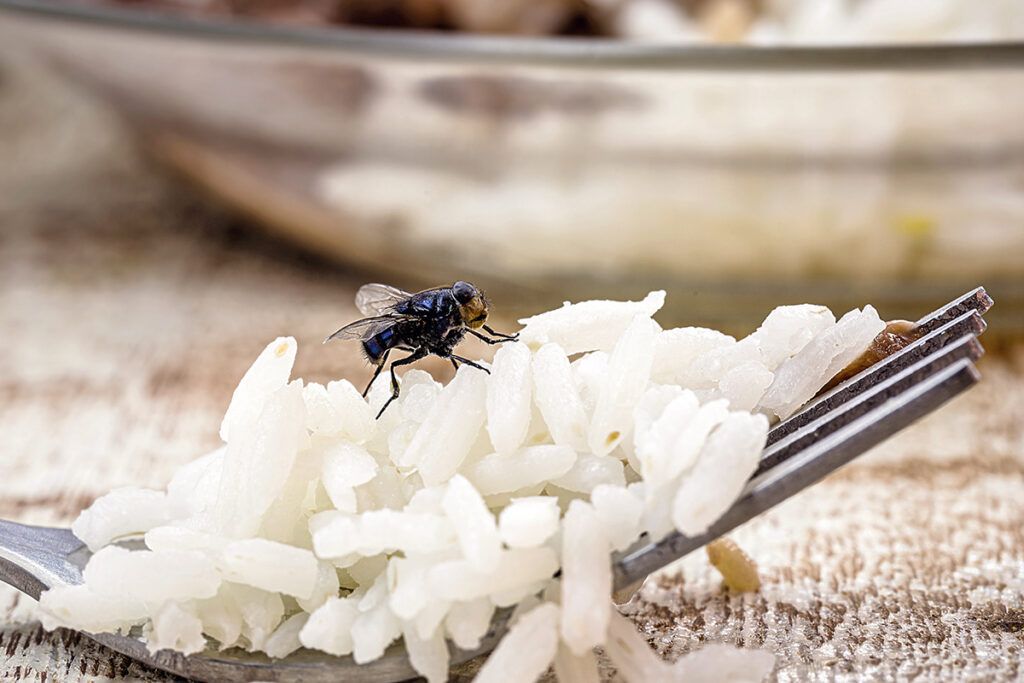
Everyone handles the question of flies on food differently. Some swat them away and continue eating. Others throw away the parts of the food that were touched, while some toss out the entire plate. The correct answer can be any of these options, depending on the situation.
According to Dr. Cameron Webb, a clinical lecturer at Sydney Medical School, a single landing from a fly is unlikely to contain enough bacteria to cause illness, provided a person is healthy — so in that case, there’s no reason to throw away your food. However, longer periods of contact, along with greater numbers of flies, increase the likelihood of contamination. For example, if a serving plate at a picnic is covered in flies, it’s best to throw the food away. As with all communicable diseases, any threat would be greater for at-risk groups, such as young children, older adults, and immunocompromised individuals.
Interestingly, the risk of transmission is greater outside of cities, where flies are more likely to come into contact with animal waste and decaying matter. In urban areas, insecticides and hygiene measures have reduced both fly populations and their exposure to highly contaminated materials.
Keeping Flies at Bay
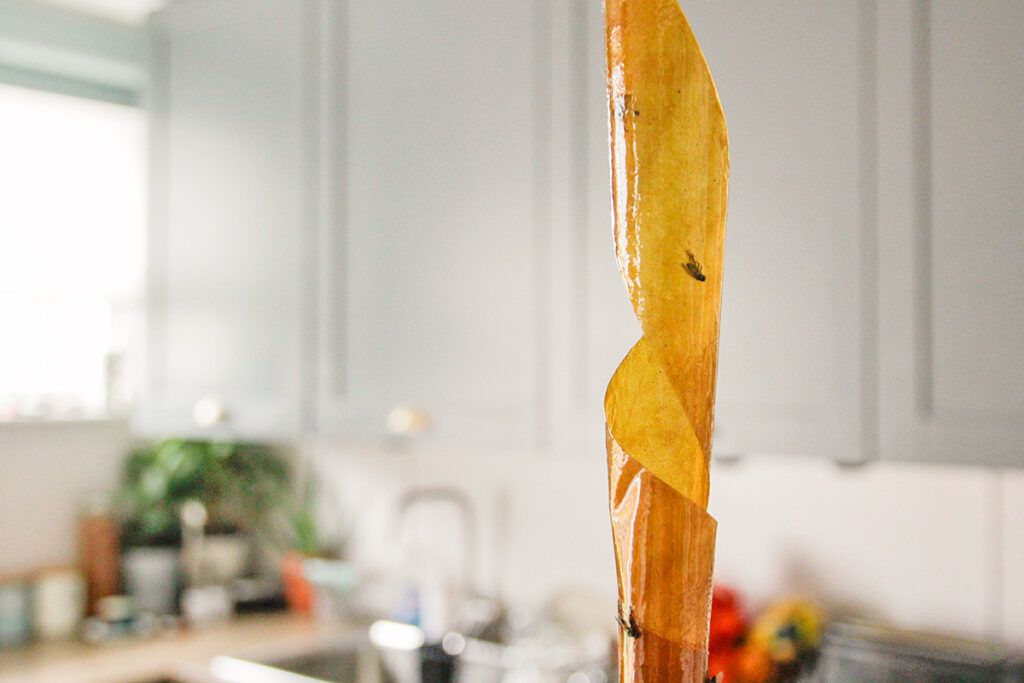
To limit the number of flies in and around your home and reduce your risk of food contamination, focus on sanitation first so that flies have fewer places to breed. This means keeping trash cans tightly closed and clearing piles of decaying organic matter, such as garbage, grass clippings, weed piles, and animal feces.
Physical barriers can be effective, too. Install screens on windows, doors, and ventilation openings, and seal gaps around pipes or wiring that may allow flies to enter the home.
Additionally, there are several nonchemical methods of reducing flies in indoor settings, such as UV traps, sticky traps, and fly swatters. As a last resort, chemical control may be necessary. Indoors, an aerosol spray for winged insects will provide temporary relief.
Stronger insecticides may be used on exterior surfaces, but they often break down in sunlight within several days. And some housefly populations have developed resistance to certain insecticides such as DDT, limiting their effectiveness.
Not All Flies Are All Bad
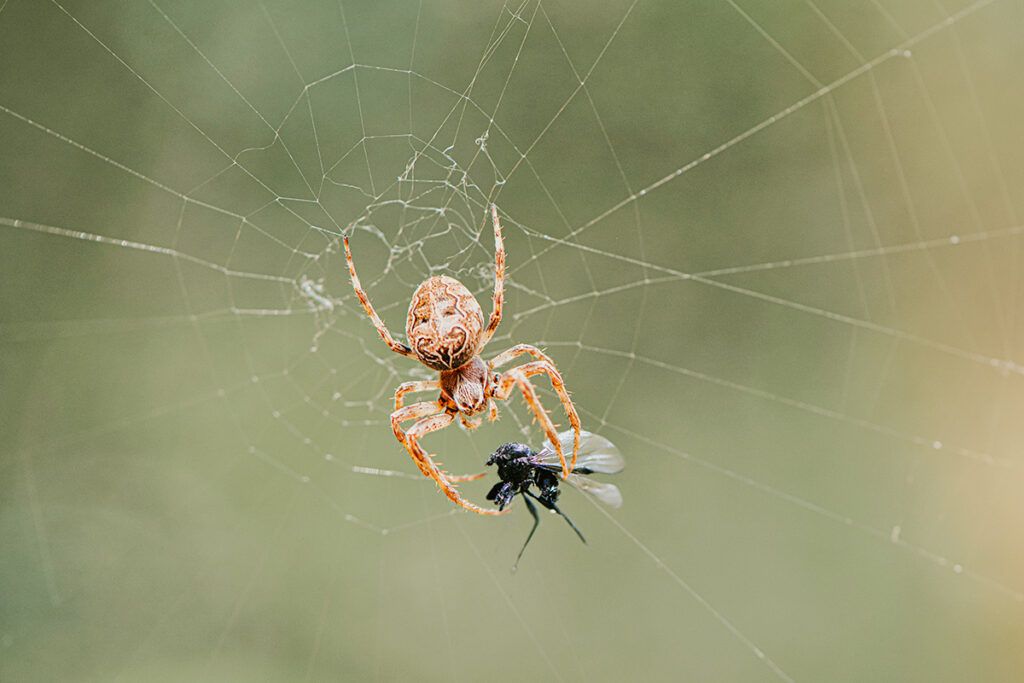
Despite their reputation as nuisance insects, flies in general play an important ecological role. Many species contribute to pollination and help break down organic matter, accelerating decomposition.
In many food chains around the world, flies also serve as food for insectivorous predators, such as frogs, lizards, spiders, and birds, making them a valuable part of many ecosystems. So, while we don’t want them in our food or homes, they still have a role to play in nature.
4 Fly Deterrent Products
Portable Fly Repellant Fans
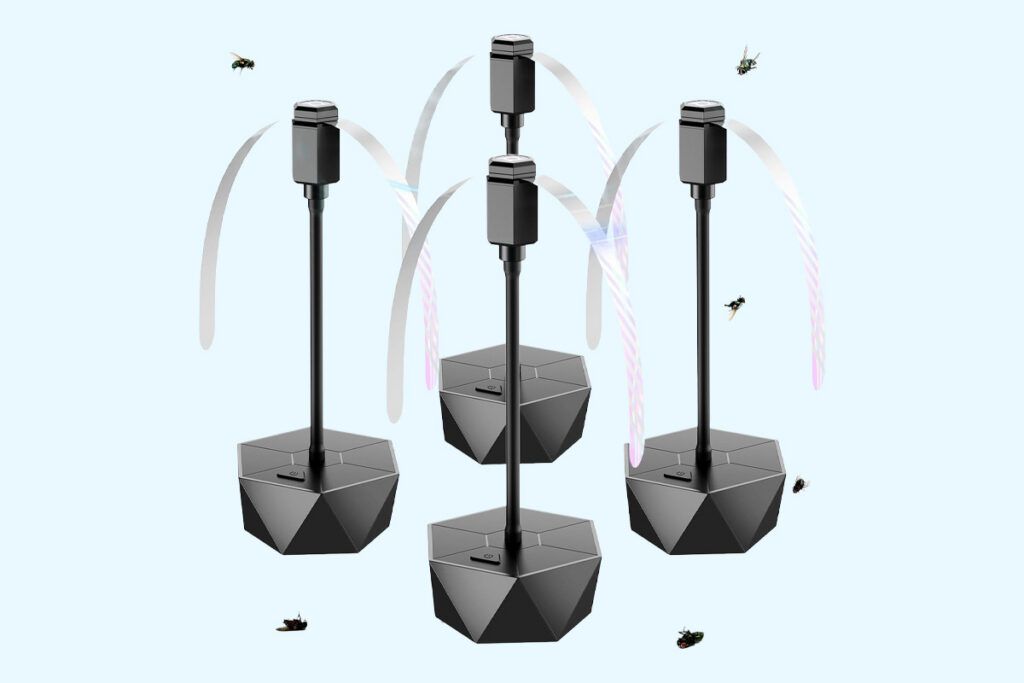
These battery-powered fans help keep flies away without the need for insecticide sprays near food. Their soft-touch blades stop on contact for safety, while the reflective, holographic pattern helps deter insects. Pick up this set of four for your next barbecue.
Mesh Food Tents
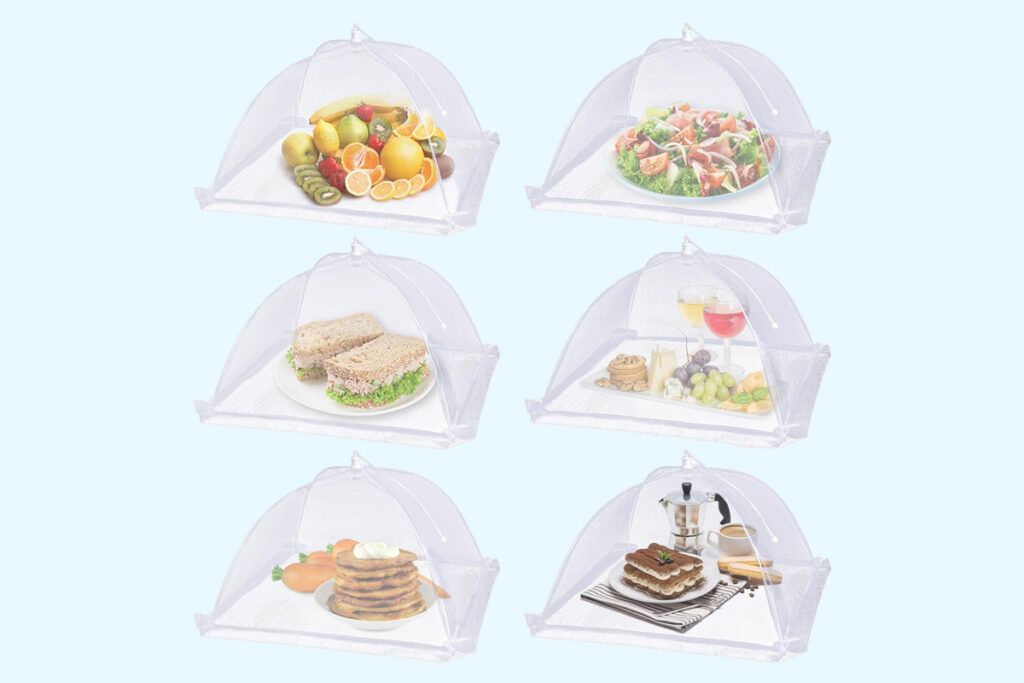
Protect your food from insects, dust, and debris with breathable nylon covers. A sturdy metal frame keeps them in place outdoors, while the fine mesh allows airflow and helps prevent condensation buildup.
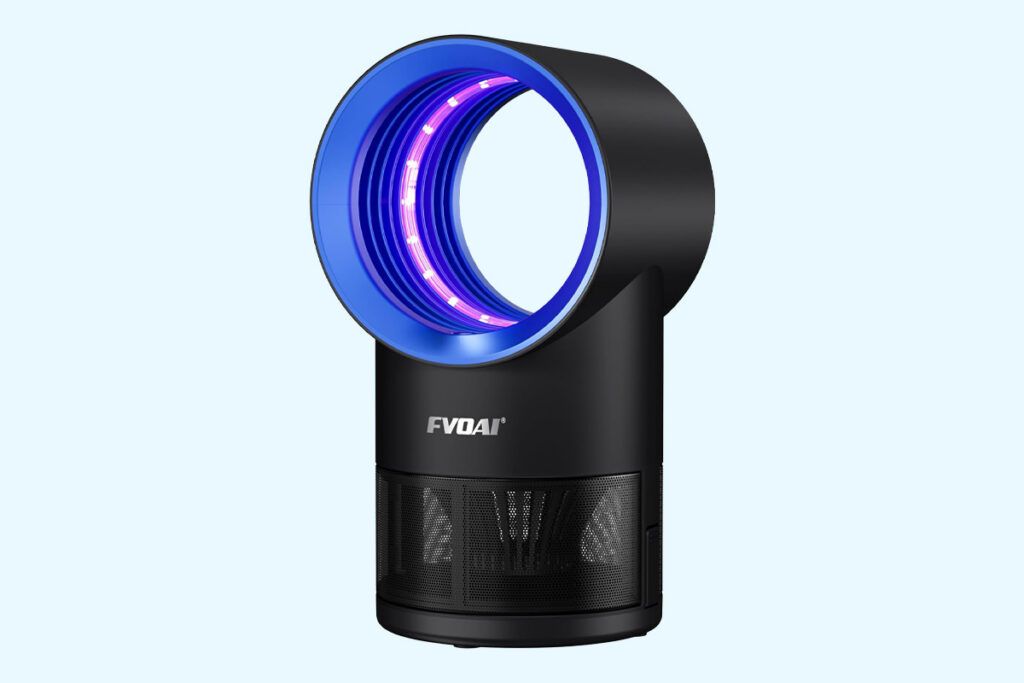
Indoor Fly Trap
No one likes using heavy-duty chemicals inside the home. This indoor fly trap uses light and gentle suction to attract and capture insects instead. Flies are trapped on a concealed glue board, helping reduce indoor populations discreetly.
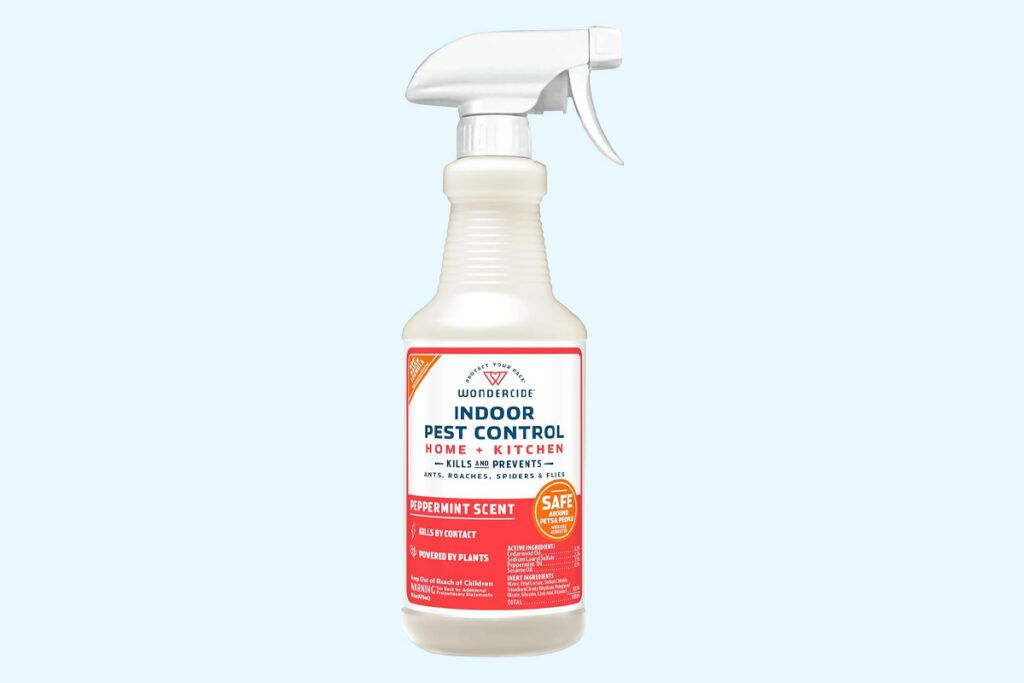
Indoor Pest Control Spray With Essential Oils
While heavy-duty insecticides are generally recommended for outdoor use, plant-based sprays such as Wondercide — which is formulated with essential oils including peppermint, cedarwood, lemongrass, and rosemary — are safe for indoor use. They can help repel and kill common household pests without posing a health risk. (The spray can cause irritation and possibly allergic reactions if used improperly, however, so make sure to use as directed.)
Featured Image Credit: © Bigc Studio/stock.adobe.com
More From Our Network
Better Report is part of Inbox Studio, an email-first media company. *Indicates a third-party property.