What the Whites of Your Eyes Are Trying To Tell You


They say the eyes are the window to the soul — but if you ask a doctor, the eyes are also a window into a person’s current health. If you notice that the whites of your eyes look discolored, it could be a sign of a brewing medical concern. Yellowing, browning, graying, or other changes in color indicate different ailments that are worth paying attention to. Let’s take a look at the possible reasons that the whites of your eyes may look tinted.
Changes Worth Keeping an Eye On
When we talk about changes in eye color, we’re not referring to the iris — the central circle that’s typically brown, blue, or green. We’re talking about the sclera, which is the white part that makes up the majority of an eye’s surface. Changes to the color of the sclera can be indicative of anything from possible disease to being on certain medications.

Red or Pink
Every once in a while, your sclera may look red or pink. Any redness is often a relatively harmless case of allergies, dryness, or something slightly more annoying such as pink eye. It could also be a subconjunctival hemorrhage; this sounds scary, but it’s just a broken blood vessel that will typically heal on its own over time. Red eyes can also be a sign of conditions like uveitis (inflammation of the middle layer of the eyeball, which can lead to vision loss) or glaucoma. If you have any concerns, it’s best to visit an eye doctor.

Reader Favorites



Yellow
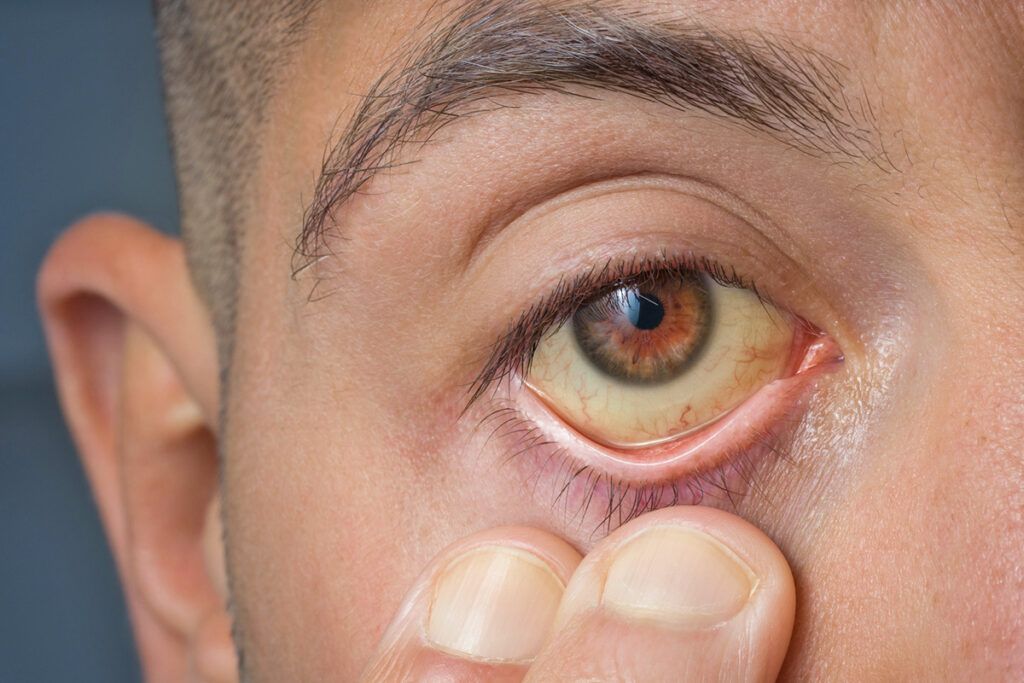
One of the most common ophthalmological color changes is yellowing, which could be caused by a number of things. If you notice a small, yellowish raised growth, for example, it could be a pinguecula. It’s believed that the growth — which is on the conjunctiva, the clear tissue that covers the sclera — is caused by irritation and exposure to UV light, wind, and dust. It won’t go away, but it can be treated with eye drops if necessary. (In rare cases, it can become a condition called pterygium, in which the growth spreads across the eye toward the cornea. This may lead to loss of vision and require surgical removal.)
If you notice the entire sclera has turned yellow, however, you might be suffering from a more pressing concern known as jaundice. Jaundice is caused by a buildup of bilirubin, which is created when red blood cells break down. Normally, this substance would be filtered out by the liver and turned into bile, so any yellowing in an eyeball could be a sign that something is wrong with the liver, gallbladder, or pancreas. Contact a medical professional if your sclera looks yellow.
Brown
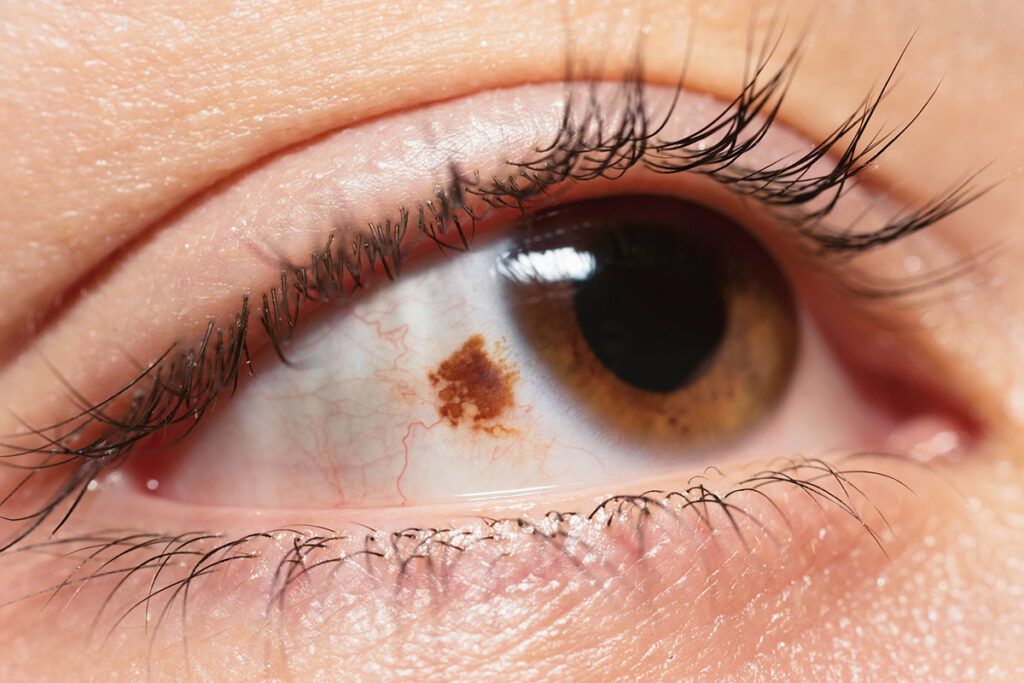
Some eyeballs also have browning, and little brown spots that look like freckles can pop up from time to time. While those spots could be nothing, they could also be a sign of a condition known as primary acquired melanosis. This affliction tends to appear in people who are middle-aged, and often, it’s on the conjunctiva of just one eye. It can develop into cancer, so if you notice brown spots, it’s probably best to contact your doctor to determine the underlying cause.
Blue or Gray
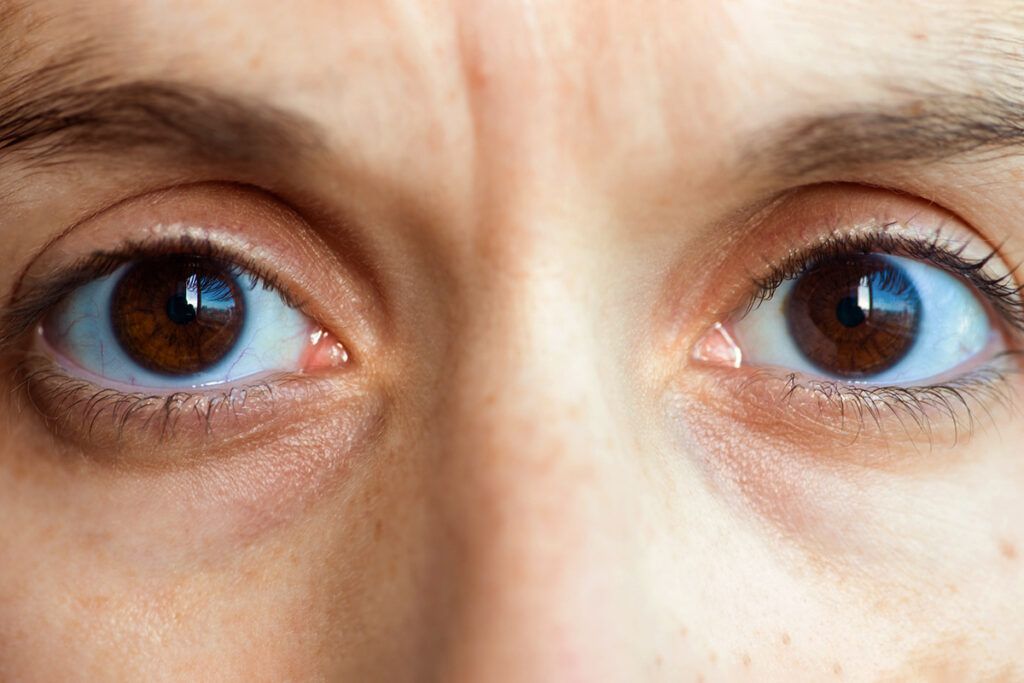
Last but not least, there are cases where the sclera may turn a shade of blue or gray. This can be caused by medications such as minocycline, which people take if they have rheumatoid arthritis or certain other conditions. Over time, minocycline is known to cause changes not just to the color of the sclera but also to the skin, teeth, and fingernails.
However, blueing/graying can indicate health conditions as well. For example, it can be a sign that the sclera is thinning and revealing the tissue underneath. It may also be a sign of Marfan’s syndrome, brittle bone disease, or anemia and/or iron deficiency. We’re not doctors and can’t make a diagnosis, so — as is the case with all of the potential concerns described in this article — be sure to ask a medical professional who can help you find a solution.
Featured Image Credit: © MarioGuti/iStock
More From Our Network
Better Report is part of Inbox Studio, an email-first media company. *Indicates a third-party property.







Bennett Kleinman is a New York City-based staff writer for Inbox Studio. He is also a freelance comedy writer, devoted New York Yankees and New Jersey Devils fan, and thinks plain seltzer is the best drink ever invented.
This article is for general informational purposes only.
Affiliate Disclaimer Medical Disclaimer Financial Disclaimer