Why You Should Try ‘Habit Stacking’


“Habit stacking” sounds like a term that refers to laundry day at a nunnery, where the nuns toss their used habits into a communal pile to be washed. But it’s actually the name of a self-help tool that may change your life for the better.
Habit stacking is an effective way to establish new habits by combining them with extant ones. It’s ideal for those who struggle to incorporate positive changes into their regular routine. If you’ve never heard of or tried habit stacking before, don’t worry — it’s quite easy to pick up once you familiarize yourself with the concept. Here’s how to stack habits and start down the path to self-improvement.

A Life Hack You Can Stack
The term “habit stacking” was coined by author James Clear in his 2018 book, Atomic Habits: An Easy & Proven Way To Build Good Habits & Break Bad Ones. (He based it on a concept called “anchoring” in BJ Fogg’s book Tiny Habits: The Small Changes That Change Everything.) The idea, according to Clear, is to “identify a current habit you already do each day and then stack your new behavior on top.”
In layman’s terms, you pick a habit you’d like to incorporate into your daily routine, and then start doing it in tandem with an extant habit you already do regularly, which will be your “trigger event.” This idea can be summarized by the following formula: “After/Before [CURRENT HABIT], I will [NEW HABIT].”
If you’re looking to try habit stacking on your own, experts advise building a list with two columns — one containing your daily habits, and one of the habits you’d like to form — and working from that to create stacks that make sense. If you drink coffee every morning without fail, for example, that’s a trigger event to work with. Say the new habit you’d like to establish is doing 10 push-ups, but you have yet to successfully incorporate the push-ups into your routine. To habit stack, tell yourself, “After I drink coffee, I will do 10 push-ups.” Then do it.

Reader Favorites



While this may seem forced at first, you’ll teach your brain to associate push-ups with coffee. Over time, these two concepts will become inseparable, and it’ll be hard to remember a time when you didn’t do push-ups after drinking your coffee.
Once you stack two habits together, you can continue to stack more on top or even in the middle. That said, it’s best to focus on adding one new habit at a time — otherwise, you may get overwhelmed. Only when a new habit is firmly entrenched should you stack another new one on top of it.
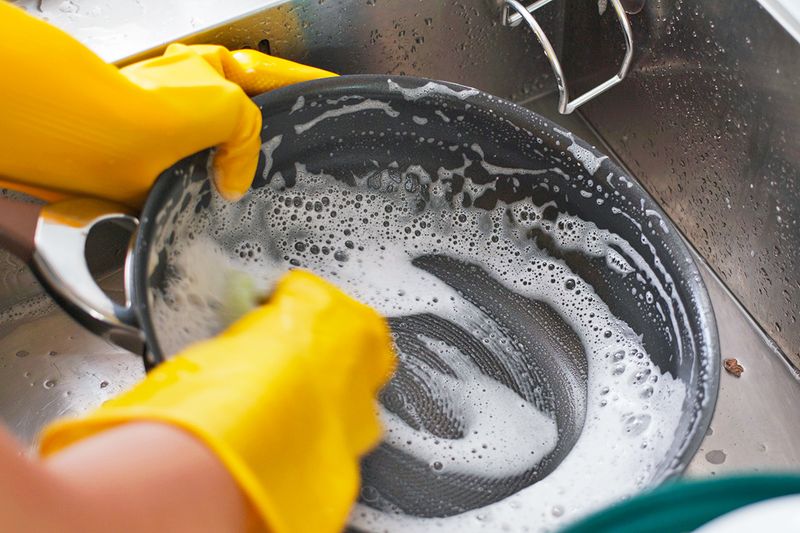
For instance, you may decide on this plan: After drinking coffee I’ll do 10 push-ups, and after doing push-ups I’ll meditate for two minutes, and after meditating I’ll clean up the dishes. You’re essentially creating a game plan for each day, always knowing what action comes next.

Selecting the Right Trigger Event
It’s important to choose the right trigger event when habit stacking. Setting a goal of doing push-ups in the morning is, on its own, a bit vague. You might do the push-ups at 8 a.m. some days, then put it off until 11 a.m. other days, and some mornings may be so busy that you end up not doing any push-ups at all. It’s too chaotic for new habits to reliably form.
Instead, always choose specific events to build on, like “after drinking my first cup of coffee” or “before taking my morning shower.” And don’t set yourself up for failure by picking a trigger event that happens during a busy time of day. If you always have a work meeting after your morning coffee, then that’s a bad time to start stacking habits. But if you typically have five to 10 minutes of free time after you finish your coffee, that’s a great time to start incorporating new habits.
Be sure to pick trigger events that are as frequent as you’d like the new habit to be. In other words, if you drink coffee only once or twice each week, that won’t help you start doing push-ups every day — but a habit like brushing your teeth is the perfect daily cue.
Lastly, don’t be vague with regard to the habit itself. “I want to work out more” doesn’t work as well as “I want to do 10 push-ups,” because you’re left scrambling to figure out what “working out” means on any given day. Be specific, and get stacking.
Featured Image Credit: © Getty Images/Unsplash.com
More From Our Network
Better Report is part of Inbox Studio, an email-first media company. *Indicates a third-party property.







Bennett Kleinman is a New York City-based staff writer for Inbox Studio. He is also a freelance comedy writer, devoted New York Yankees and New Jersey Devils fan, and thinks plain seltzer is the best drink ever invented.
This article is for general informational purposes only.
Affiliate Disclaimer Medical Disclaimer Financial Disclaimer