Skip to content
Better Report
  • Home
  • Health
  • Wealth
8 Low-Maintenance Plants That Thrive on Neglect
  • Search
  • Subscribe
  • Home
  • Health
  • Wealth
  • About
  • Privacy Policy
  • Terms of Use
  • Contact Us
  • SubscribeSubscribe
  • Search
Thank you for confirming your email! Welcome to the community.

Tag: Etiquette

Is It OK To Snack Before Paying at the Grocery Store?

Wealth | Updated: October 7, 2026
Bennett Kleinman
Author
Bennett Kleinman is a New York City-based staff writer for Inbox Studio. He is also a freelance comedy writer, devoted New York Yankees and New Jersey Devils fan, and thinks plain seltzer is the best drink ever invented.
Man eating chips at grocery store checkout
Featured image Credit: © Noel Hendrickson—DigitalVision/Getty images

As you wander through the grocery store, that package of Double Stuf Oreos in your cart may seem to call to you like the sirens called out to Odysseus. But should you give into that temptation to snack before paying, or is doing so strictly taboo? 

The answer differs depending on whom you ask, but there are several factors to consider when you feel tempted to snack before reaching the checkout lane. 

Advertisement
Advertisement
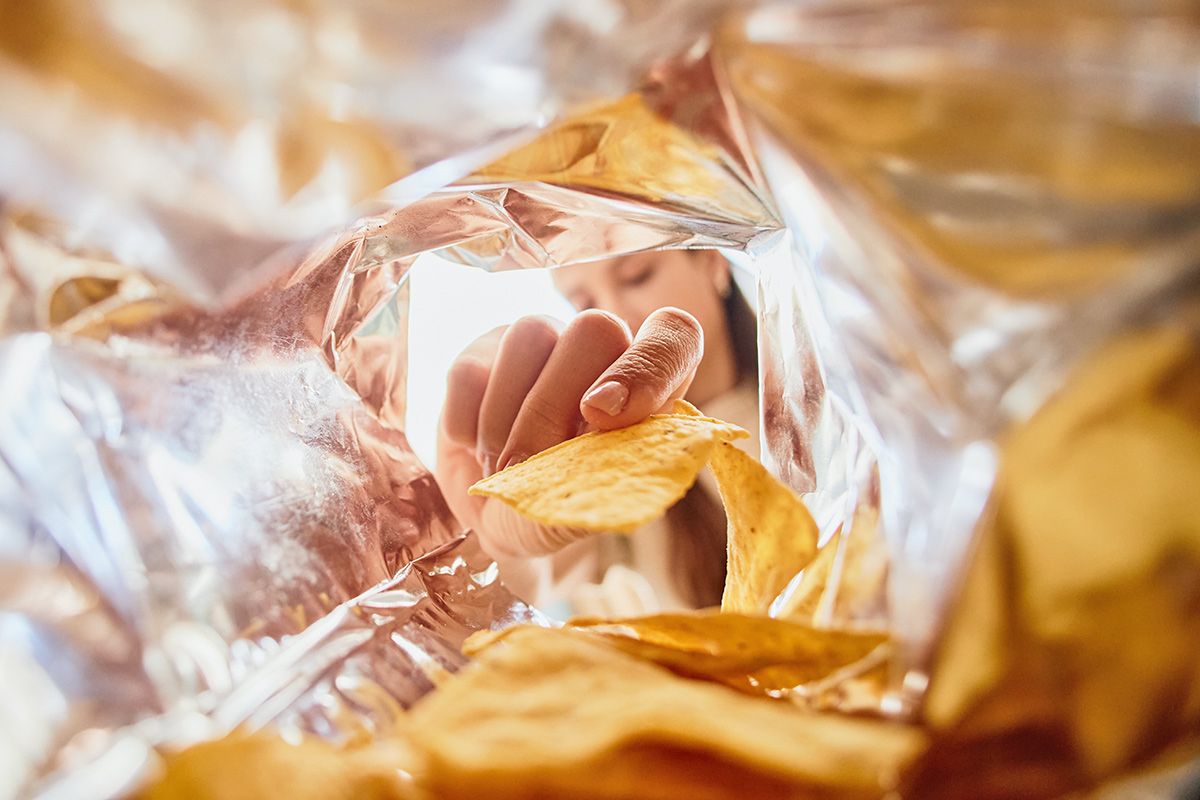
Woman taking chip out of bag
Credit: © SeventyFour—iStock/Getty Images

Is It a Crime?

In terms of criminality, intent matters. If a customer snacks on something with the full intent of paying later on, it’s not necessarily illegal. However, there’s a concept known as “shopkeeper’s privilege” that allows merchants to detain suspected shoplifters. Even if you snack with no ill intent, a peeved merchant can still accuse you of wrongdoing. To avoid any accusations that you’re trying to steal, never be sneaky about in-store snacking — keep that open bag of pretzels on top of your cart rather than tucked in your pocket, as that shows you have little to hide.

Recommended Articles

  • The Most Popular Car Colors in the U.S.

  • 5 Small Changes You Can Make To Decrease Your Risk of Dementia

  • First-Date Etiquette Tips for People Over 40, According to a Matchmaker

  • 6 Holiday Foods You Didn’t Know Were Healthy

Advertisement
Advertisement

Reader Favorites

  • Person breaking into a car

    The 10 Most Stolen Cars in the U.S.

  • Older man with hands on cane

    Why Do We Smell Different As We Age?

  • Man in grocery store

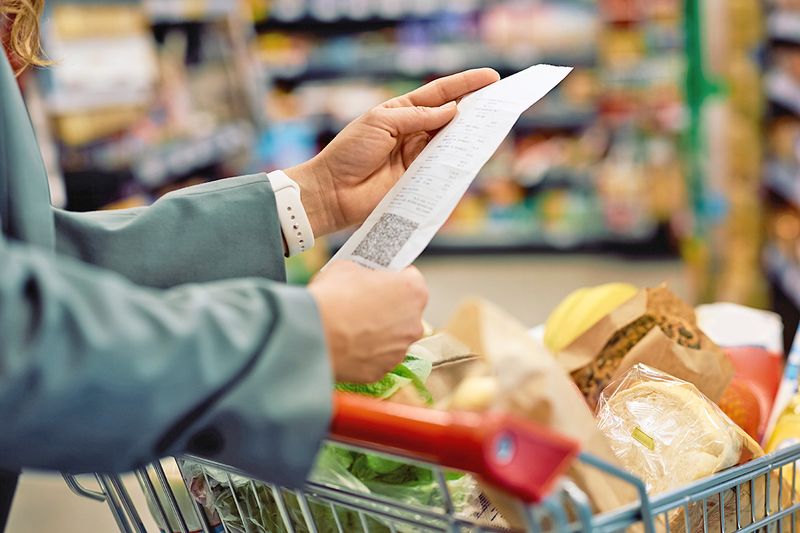
    6 Grocery Habits Costing You More Than You Think

Be aware, though, that if the food you’re noshing on is measured by weight, that can be a criminal matter. It’s not hard to see why: The cost of a bag of chips isn’t going to change if you eat half of it, because the barcode pulls up the same price no matter what. But if you decide to take a few bites of an apple that costs $2.99 per pound, you’re decreasing the weight of the item — and lowering its price.

Cashier at grocery store
Credit: © alvaro gonzalez—Moment/Getty Images

Is It Against Store Policy?

Even if snacking isn’t criminal, it may violate store policy. In an article for Reader’s Digest, author Charlotte Hilton Andersen recounted her time working in a grocery store, where employees were told to ask customers not to eat in the store. A store may not actively enforce this rule, but its employees can refuse service to anyone in the future — so if you choose to keep snacking after someone has asked you not to, you risk being banned by those who deem your conduct to be egregious.

Advertisement
Advertisement
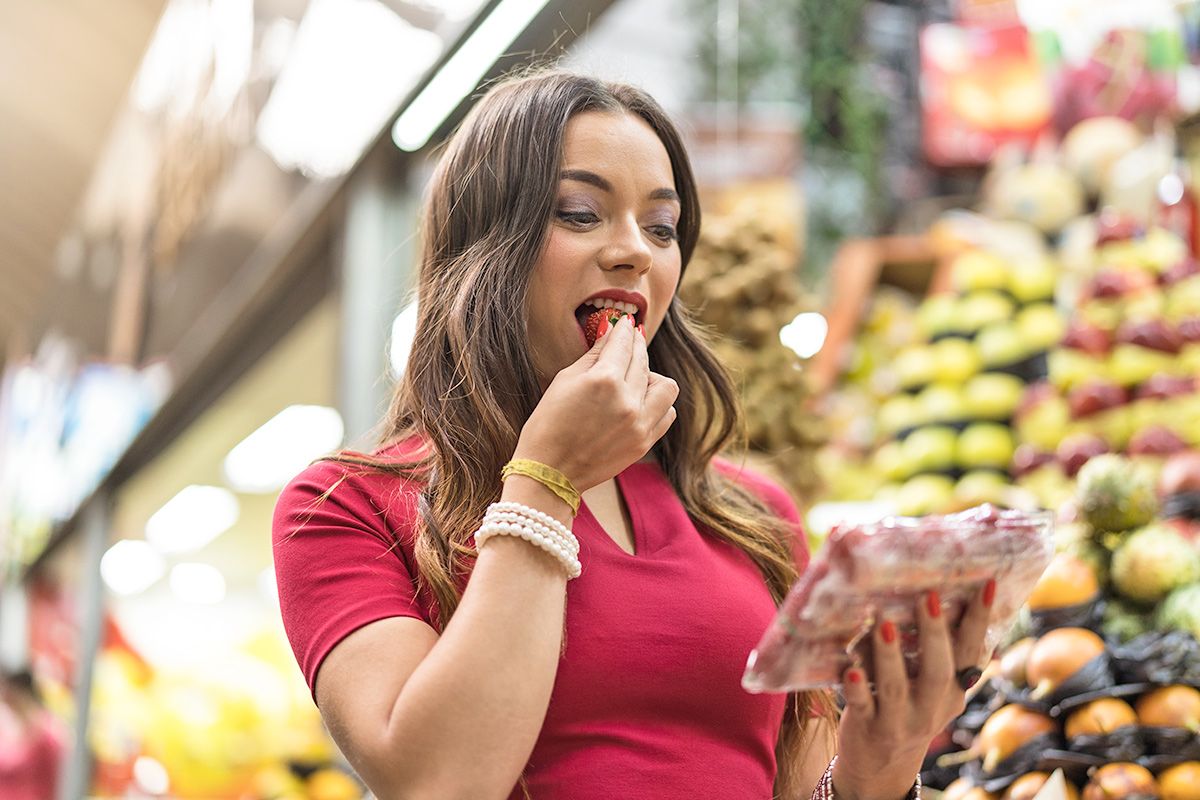
Woman eating strawberry at grocery store
Credit: © FG Trade—E+/Getty Images

Is It Bad Manners?

Whether snacking on store goods before buying is a breach of etiquette depends on whom you ask. 

According to I’Talia McCarthy — general manager of a Chicago-based food co-op — nonweighted items and bottles of soda are OK. However, foods with strong smells or ones that create crumbs for employees to clean up later should not be consumed inside the store.

Advertisement

Etiquette expert Jo Hayes is notably stricter.  “Eating should be kept for eating situations, like restaurants or at the kitchen table,” Hayes told Reader’s Digest. If shoppers all chose to snack whenever they felt like it, then “grocery stores would descend into chaos,” she noted. Snacking also makes the checkout process more difficult for cashiers, who may be forced to scan empty bags, banana peels, or other messy containers.

Advertisement
Advertisement
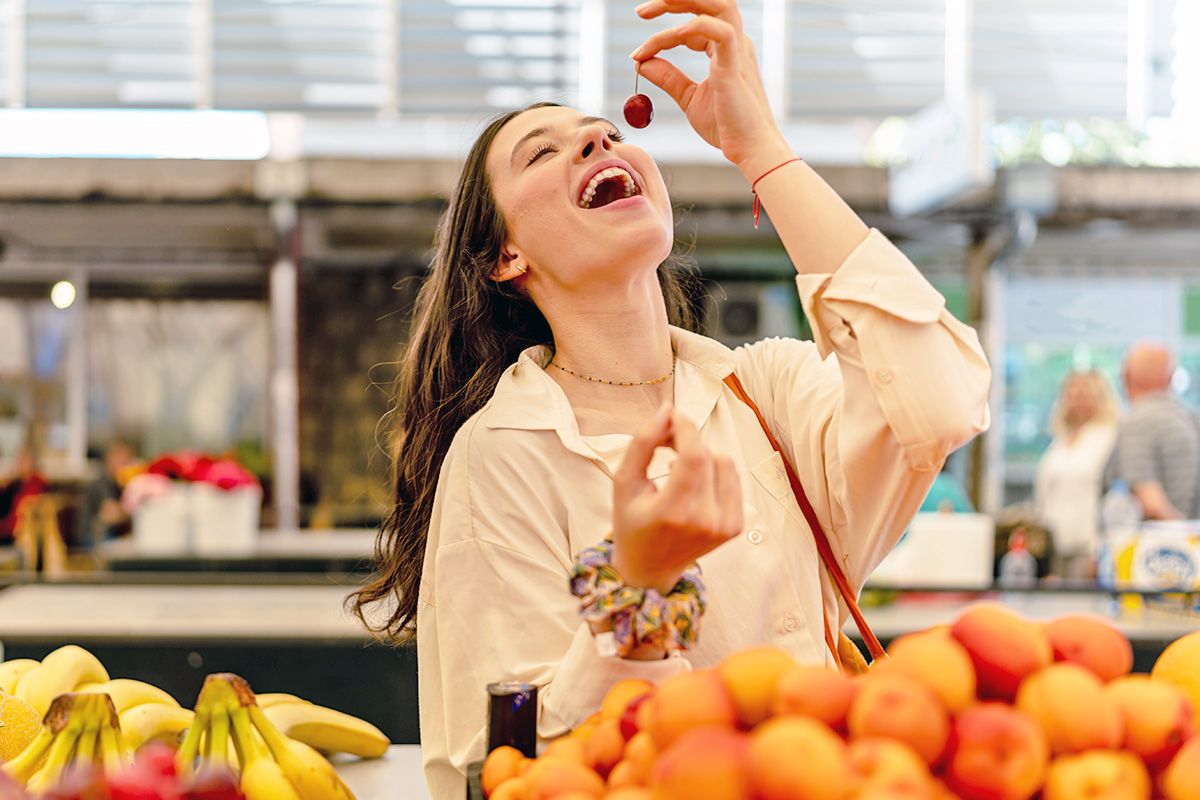
Woman eating cherry at grocery store
Credit: © ProfessionalStudioImages—E+/Getty Images

So, Should You Snack or Hold Back?

At the end of the day, snacking in the supermarket depends on the situation, the store, and whom you ask. The only way to avoid stepping on toes is to wait to snack until you’re in your car or back home — minus any free samples that the store might be handing out, of course. 

If you do choose to snack, stick to foods with minimal odor and limited cleanup so as to avoid ruining anyone else’s supermarket experience, and never snack on food priced by weight — that’s theft.

Featured image Credit: © Noel Hendrickson—DigitalVision/Getty images

Advertisement
Advertisement

More From Our Network

Better Report is part of Inbox Studio, an email-first media company. *Indicates a third-party property.

Go Retro With This 1960s Fashion Quiz

Quiz Daily

Go Retro With This 1960s Fashion Quiz

True or False: Are You a Master of U.S. Geography?

Travel Quiz

True or False: Are You a Master of U.S. Geography?

5 Reasons You Can Be Denied Boarding an Airplane

Daily Passport

5 Reasons You Can Be Denied Boarding an Airplane

What Did People Do Before Eyeglasses?

History Facts

What Did People Do Before Eyeglasses?

How To Use a Balloon To Clean Up Dust

House Outlook

How To Use a Balloon To Clean Up Dust

11 Shopping Hacks Costco Members Should Know

FinanceBuzz*

11 Shopping Hacks Costco Members Should Know

Share this article

  • Share to Facebook
  • Share to Twitter
  • Copy Url
  • Share to Email
Bennett Kleinman
Staff Writer

Bennett Kleinman is a New York City-based staff writer for Inbox Studio. He is also a freelance comedy writer, devoted New York Yankees and New Jersey Devils fan, and thinks plain seltzer is the best drink ever invented.

This article is for general informational purposes only.
Affiliate Disclaimer Medical Disclaimer Financial Disclaimer

Updated: July 20, 2023
Posted In: Wealth
Hero Image Credit: Featured image Credit: © Noel Hendrickson—DigitalVision/Getty images
Advertisement

Related Articles

How Far a $100 Grocery Budget Goes in Every State

7 min read

Why You Should Never Put Your Utility Bills on Autopay

5 min read

The Best Cars for Resale Value, According to Auto Experts

5 min read

5 Common Estate Planning Mistakes (and How To Avoid Them)

6 min read

How To Spot a Bank Spoof Call

8 min read
Advertisement

Is It Rude To Ask for Leftovers at Fancy Restaurants?

Wealth | Updated: September 8, 2026
Nicole Pyles
Author
Based in Portland, Oregon, Nicole Pyles is an experienced freelance writer who writes about home and kitchen, health and wellness, and more. She's written for a variety of outlets, including Better Homes and Gardens, Tom's Guide, Better Report, and more.
Person eating food at restaurant
Better Report

One of the biggest perks of dining out is leaving with leftovers. You gain delicious next-day lunch options, get your money’s worth, and minimize food waste — which is abundant in the United States, where, according to the USDA, 30% to 40% of our food supply is wasted. 

But if you’re dining at a fancy restaurant, you may hesitate to request a box for your uneaten food. Will asking for a doggy bag raise eyebrows or earn a look of disapproval? 

Fortunately, you no longer have to worry about looking ill-mannered when asking for leftovers, even in the swankiest of establishments. “A restaurant is the one place we treat food we have already paid for as embarrassing to keep,” says David Jubé, founder of The Gourmet Host. “That discomfort is [a] social habit rather than an actual rule.”

Advertisement
Advertisement
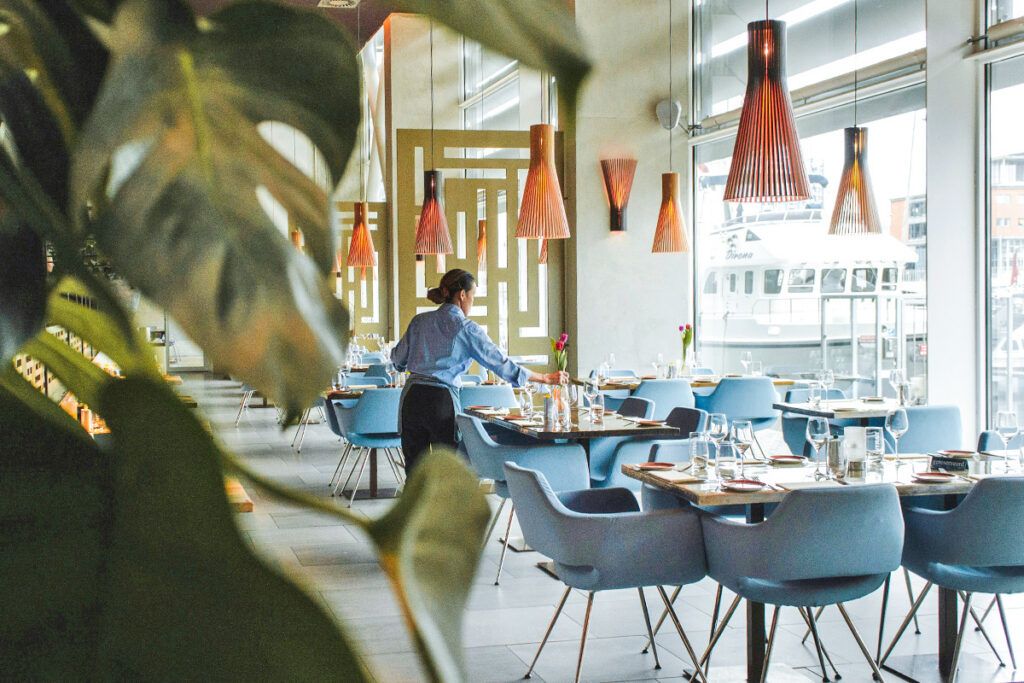
Waiter putting flowers on table at restaurant
Credit: © Louis Hansel/Pexels.com

Why We Hesitate To Take Home Fine-Dining Leftovers 

According to modern-day etiquette expert Genevieve Dreizen, COO and co-founder of Fresh Starts Registry, fine dining became more widely available in the post-World War II era. At that time, she says, “It was seen as déclassé to bring a doggy bag home.”

That may be because those who could previously afford sit-down dining didn’t care about leftovers, Dreizen explains. “This might have been because of portions, prices, or the experience of dining, or that the classes that had had access to fine- [and] sit-down dining before this time were not interested in getting their money’s worth,” she says. “I believe the idea of looking down at someone for not wanting to waste money and literally throw away uneaten, paid-for food was rooted in classicism and an intentional disregard to say, ‘So what if I’ve paid for it?’”

Advertisement

That sentiment seems to be a thing of the past. According to Jubé, one reason we may hesitate now is fear of judgment by the server, or by those around us. But rest assured: They’re not judging you. Instead, “[t]he awkwardness is almost always self-generated,” he says, “and it usually comes from worrying about looking cheap in front of the people you are eating with.” 

Helpful Guidelines for Requesting Leftovers

There’s no right or wrong way to request your leftovers, Dreizen says. As she puts it, “Quite literally, get that bag.” But she and Jubé do have some suggestions for how to feel as suave as possible when requesting a to-go bag. 

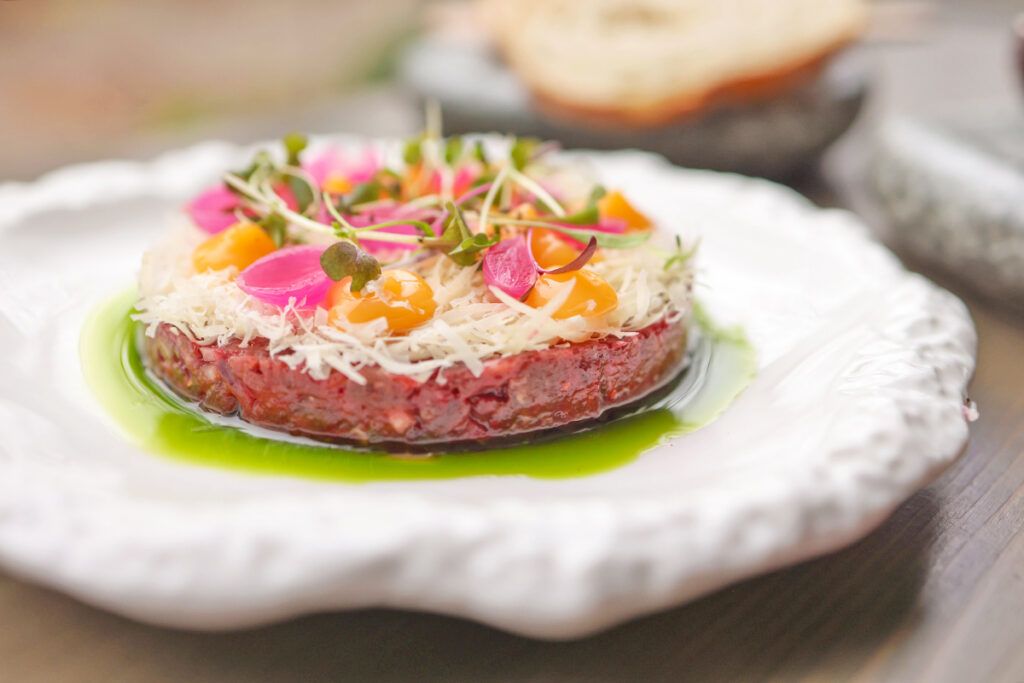
Tartar
Credit: © Valeria Boltneva/Pexels.com

Avoid Taking Home Certain Foods

Almost any food is fair game, but both Jubé and Dreizen caution against taking certain dishes home. Don’t ask for food that’s meant to be hot and won’t reheat well, such as “seafood, soufflés, [and] delicate sauces that’ll break or separate,” Dreizen says. 

Jube suggests leaving “anything raw or barely cooked: oysters, tartare, sushi, rare shellfish.” 

Advertisement

Dreizen says that “appetizers … that everyone’s already had a fork in, are also better left behind,” unless “you’re sharing with your spouse, kids, or close family and friends.”

Jubé also recommends leaving any food that has been out throughout a long dinner or won’t survive the trip home. This may include “dressed salad, fried food, a sauce finished at the table, or a dessert built to be eaten the moment it lands.” Tasting menu courses also box up badly, he says.

Recommended Articles

  • The Most Popular Car Colors in the U.S.

  • 5 Small Changes You Can Make To Decrease Your Risk of Dementia

  • First-Date Etiquette Tips for People Over 40, According to a Matchmaker

  • 6 Holiday Foods You Didn’t Know Were Healthy

Advertisement
Advertisement

Reader Favorites

  • Person breaking into a car

    The 10 Most Stolen Cars in the U.S.

  • Older man with hands on cane

    Why Do We Smell Different As We Age?

  • Man in grocery store

    6 Grocery Habits Costing You More Than You Think

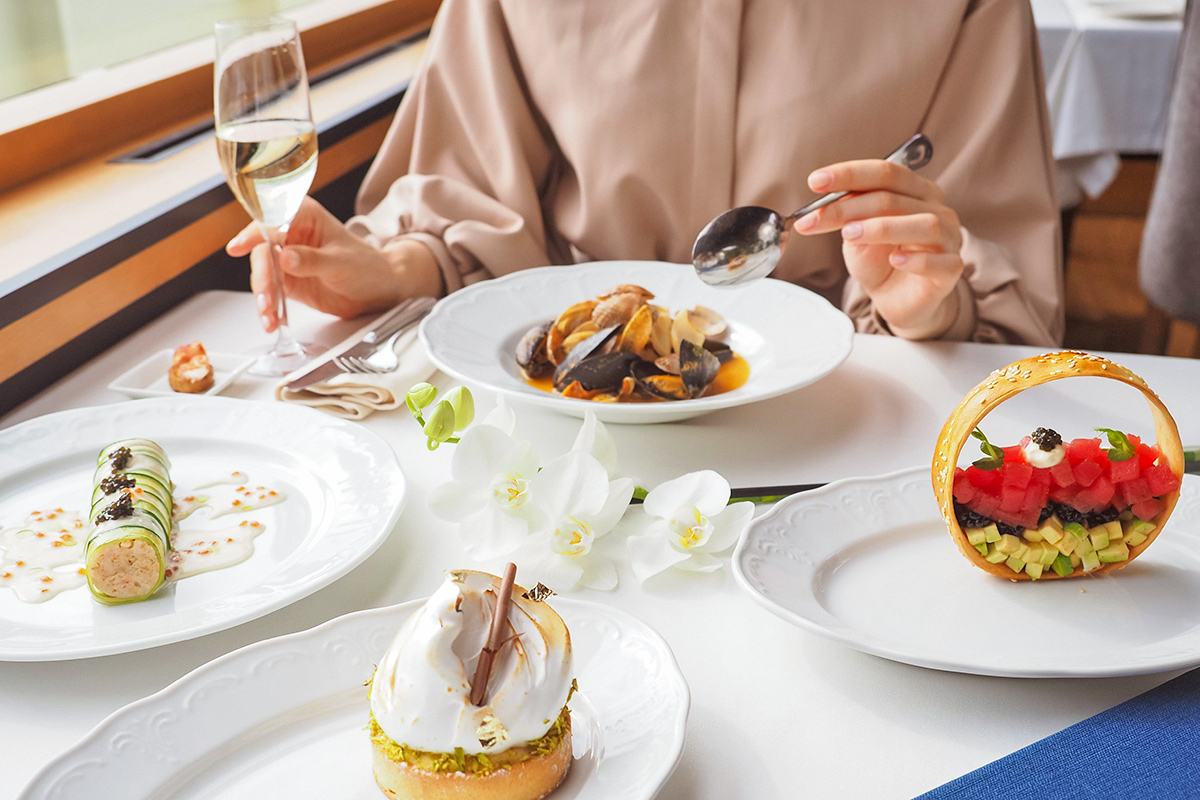
Couple having dinner at a fancy restaurant
Credit: © Andrej Lišakov/Unsplash.com

Be Mindful of Your Fellow Diners

Who you’re dining with may also determine whether or not you ask to take home leftovers. “You might not want to ask for your leftovers if you’re at a business meal or on a date,” Dreizen says. “You might want to consider if you need those three fries and the two bites of burger [that] are mostly bun.”

Jubé notes that “[w]hoever pick[s] up the bill sets the tone, so if you invited the table, ask [for leftovers] first, and you have quietly given everyone else permission.” 

Both Dreizen and Jubé advise against claiming another person’s leftovers. And Jubé says you should never claim a shared dish without asking others first. 

Advertisement
Advertisement
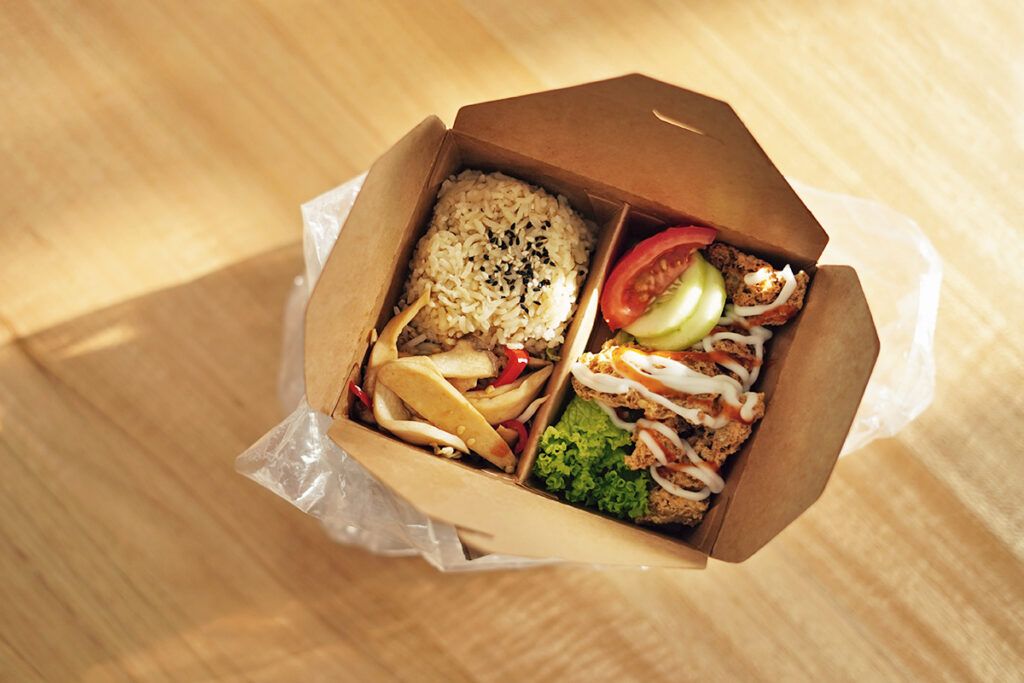
Takeout container full of food
Credit: © szefei—Moment/Getty Images

Skip the DIY Approach

According to Jubé and Dreizen, it’s totally fine to bring your own container to take food home in. But there’s a right and a wrong approach. Don’t try to pack the food yourself — or worse, wrap it with a noisy sheet of foil. “What people actually notice is foil rustling at the table, not the container itself,” Jubé says. 

Advertisement
Advertisement

Instead, take along a clean, sealed container that’s small enough to put into your bag. “Give it to the server closed, at the moment you would otherwise have asked for a box,” Jubé advises, and say: “‘Would you mind putting it in this?’” This makes the whole thing a nonevent: “The only version that lands badly is the one performed for an audience,” he says.

Advertisement

It’s important to know, however, that your server may refuse to use your container due to health concerns. “It opens them up to potential issues, such as your packaging introducing germs to their food,” Dreizen says. That could become a problem for them if you then get food poisoning.

So, if the answer is no, “take the box and don’t turn it into a negotiation,” Jubé says. “Then use your own container when you get home.”

Feature Image Credit: © Nadin Sh/Pexels.com

More From Our Network

Better Report is part of Inbox Studio, an email-first media company. *Indicates a third-party property.

Go Retro With This 1960s Fashion Quiz

Quiz Daily

Go Retro With This 1960s Fashion Quiz

True or False: Are You a Master of U.S. Geography?

Travel Quiz

True or False: Are You a Master of U.S. Geography?

5 Reasons You Can Be Denied Boarding an Airplane

Daily Passport

5 Reasons You Can Be Denied Boarding an Airplane

What Did People Do Before Eyeglasses?

History Facts

What Did People Do Before Eyeglasses?

How To Use a Balloon To Clean Up Dust

House Outlook

How To Use a Balloon To Clean Up Dust

11 Shopping Hacks Costco Members Should Know

FinanceBuzz*

11 Shopping Hacks Costco Members Should Know

Share this article

  • Share to Facebook
  • Share to Twitter
  • Copy Url
  • Share to Email
Nicole Pyles
Writer

Based in Portland, Oregon, Nicole Pyles is an experienced freelance writer who writes about home and kitchen, health and wellness, and more. She's written for a variety of outlets, including Better Homes and Gardens, Tom's Guide, Better Report, and more.

This article is for general informational purposes only.
Affiliate Disclaimer Medical Disclaimer Financial Disclaimer

Updated: September 18, 2024
Posted In: Wealth
Hero Image Credit: Better Report
Advertisement

Related Articles

How Far a $100 Grocery Budget Goes in Every State

7 min read

Why You Should Never Put Your Utility Bills on Autopay

5 min read

The Best Cars for Resale Value, According to Auto Experts

5 min read

5 Common Estate Planning Mistakes (and How To Avoid Them)

6 min read

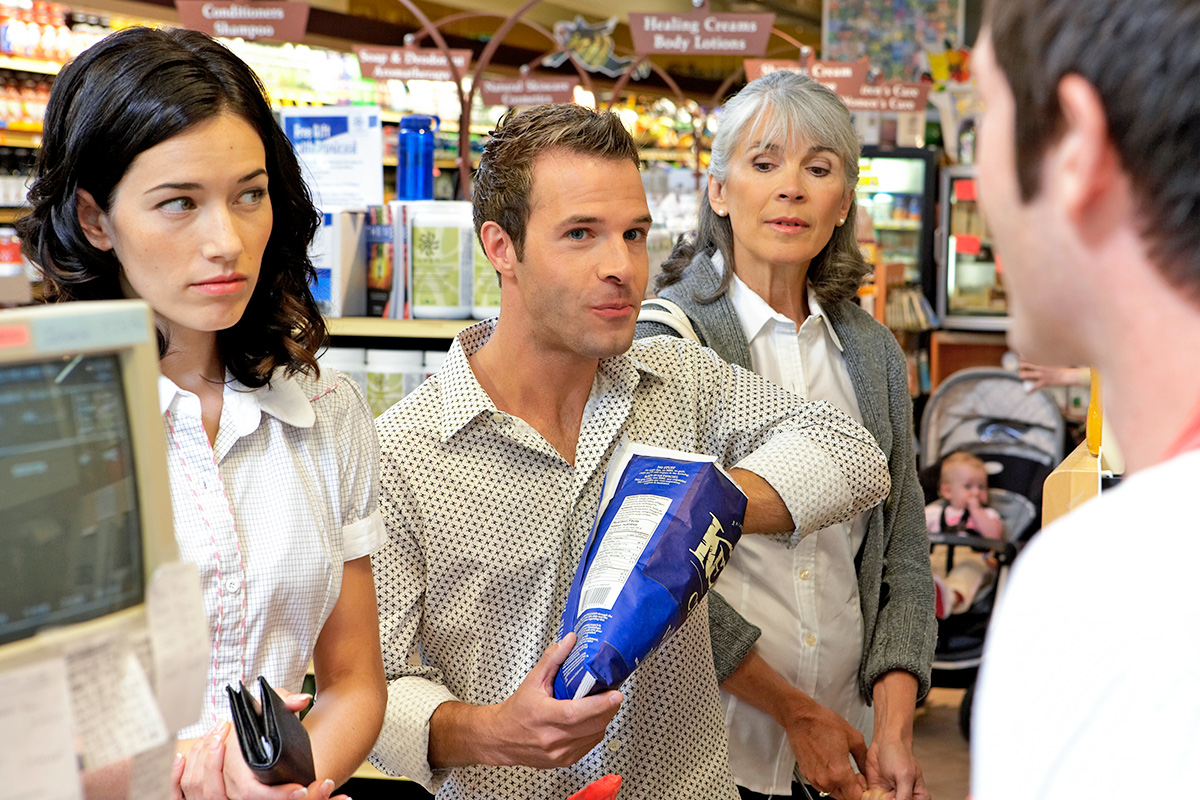
Is It OK To Snack Before Paying at the Grocery Store?
4 min read
Advertisement
  • Home
  • Health
  • Wealth
  • Logo
  • Advertise
  • About
  • Contact Us
  • Privacy Policy
  • Terms of Use
  • Your Privacy Choices
x
Thumb Image

Elevate your everyday.

Sign up to receive the practical tips and expert advice you need to pare down the complexities of everyday living right in your inbox.

Sorry, your email address is not valid. Please try again.

Your email is:

Edit Image
Sorry, your email address is not valid. Please try again.
Thank you for subscribing...

By subscribing you are agreeing to our Terms of Use and Privacy Policy.

Close image
Thumb Image
Second Thumb Image

Elevate your everyday.

Sign up to receive the practical tips and expert advice you need to pare down the complexities of everyday living right in your inbox.

Sorry, your email address is not valid. Please try again.

By subscribing you are agreeing to our Privacy Policy and Terms of Use.

Close image