Skip to content
Better Report
  • Home
  • Health
  • Wealth
Why Doesn’t Plastic Totally Dry in the Dishwasher?

  • Search
  • Subscribe
  • Home
  • Health
  • Wealth
  • About
  • Privacy Policy
  • Terms of Use
  • Contact Us
  • SubscribeSubscribe
  • Search
Thank you for confirming your email! Welcome to the community.
Advertisement

Why Doesn’t Plastic Totally Dry in the Dishwasher?
Home | Updated: October 21, 2026
Erin Scottberg
Author
Erin Scottberg is a Brooklyn-based writer, garden designer, and houseplant expert — and the founder of Full Sun Studio (fullsun.studio), a garden design and plant consulting studio in New York City. She holds an Urban Horticulture Certificate from Brooklyn Botanic Garden, an NYC Street Tree Pruner License, and an NYC Master Composter Certification, and spent three years as Head of Content and Education at The Sill. When she's not working, you can find her creating in her textile studio, running craft nights in her neighborhood, or hanging with her rescue pup, Sunny. She's an ambitious DIYer, avid composter, and has never been able to walk by a thirft store without taking a look.
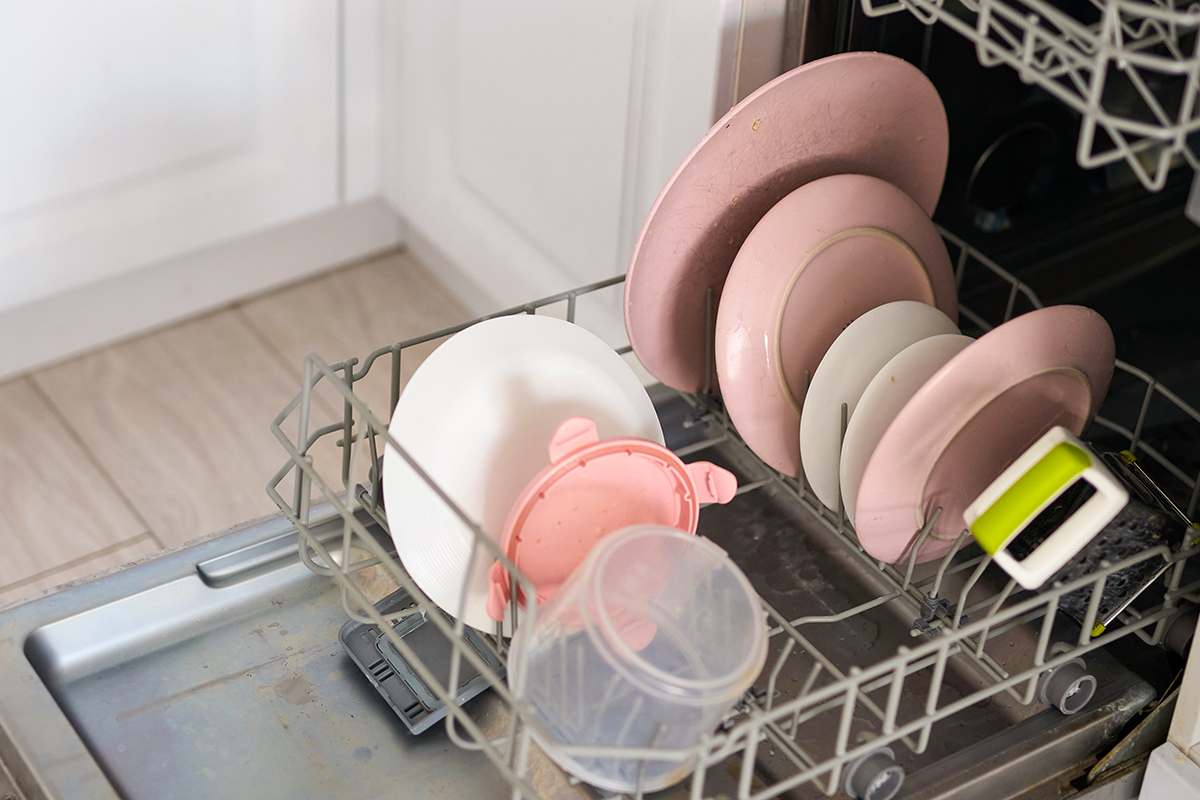
Open dishwasher
Feature Image Credit: © elenavolf/stock.adobe.com

There are certain household questions that are constantly asked, yet almost never answered: “Where does the other sock go?” “Who keeps putting the nearly empty water pitcher back in the fridge?” “Why does everything in the dishwasher come out dry except the plastic?”

The last one, at least, has an answer. It comes down to how the material holds heat, and how water behaves once it lands on it.
Advertisement
Advertisement
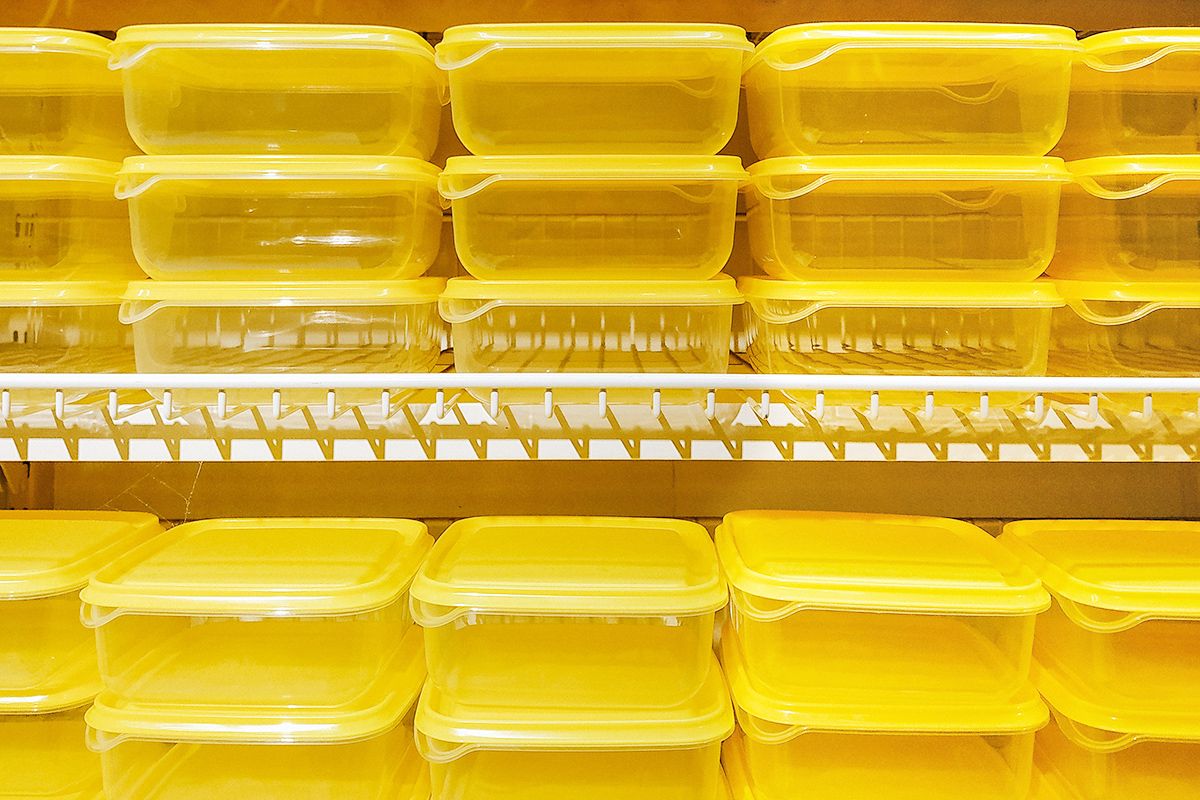
Plastic containers
Credit: © Peter Plashkin/Unsplash.com

Plastic Doesn’t Hang on to Heat

The first thing to know is that dishwashers use heat from the final, hot water rinse to dry dishes. This water makes the dishes hot, and the water clinging to them evaporates as they cool. The longer a dish stays hot, the drier it gets. Some midrange to high-end dishwashers have additional heating mechanisms that can be flipped on to help speed up drying, but even then, some of your plastics will likely come out damp. And it’s all because of how plastic holds heat.

Plastic can hold more heat than glass or ceramic ounce for ounce. But plastic containers are thin and light, while a ceramic plate is dense and heavy. More mass means more stored heat overall, so the plate stays warm long after the plastic has cooled. And because plastic is cooler than everything around it, it’s the perfect surface for steam circulating inside the machine to condense on. The effect is especially noticeable in dishwashers that use condensation drying, which rely entirely on residual heat to dry.  

Recommended Articles

  • First-Date Etiquette Tips for People Over 40, According to a Matchmaker

  • 6 Holiday Foods You Didn’t Know Were Healthy

  • Is It Safe To Drink a Glass of Water That Sat Out Overnight?

  • Putting This in Your Dryer Is a Major Fire Risk

Advertisement
Advertisement

Reader Favorites

  • Person breaking into a car

    The 10 Most Stolen Cars in the U.S.

  • Older man with hands on cane

    Why Do We Smell Different As We Age?

  • Man in grocery store

    6 Grocery Habits Costing You More Than You Think

Add to that the fact that most plastics are hydrophobic, meaning they repel water, so water pulls itself into beads on the surface. Glass and ceramic are hydrophilic, so water spreads across them in a thin film instead. A thin film evaporates faster than a bead holding the same amount of water. 

So plastic loses on both counts: It cools off faster, and the water sitting on it dries more slowly.
Advertisement
Advertisement
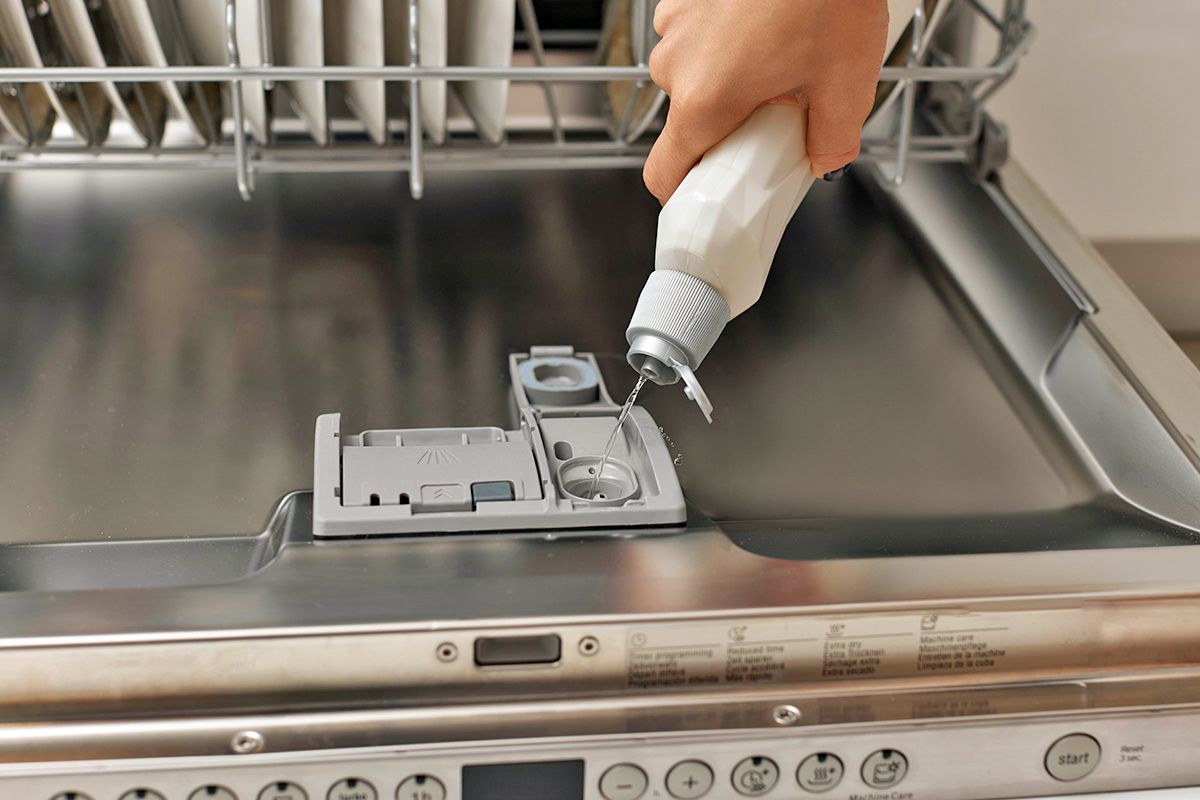
Adding rinse agent
Credit: © Rychko Yevhen/stock.adobe.com

How To Speed Things Along

Rinse aids lower water’s surface tension so it runs off instead of beading, even on plastic. In fact, Whirlpool lists skipping rinse aid as one of the most common reasons dishes don’t dry.

Advertisement

Another option is to turn up the heat. If your machine gives the option, you can choose “Heated Dry” or “Extra Dry” for plastic-heavy loads. On the flip side, skip Eco and Quick cycles, which cut both heat and drying time. 
Advertisement
Advertisement
Fully loaded dishwasher
Credit: © Evgeniia Primavera/stock.adobe.com

Loading and Unloading Tips

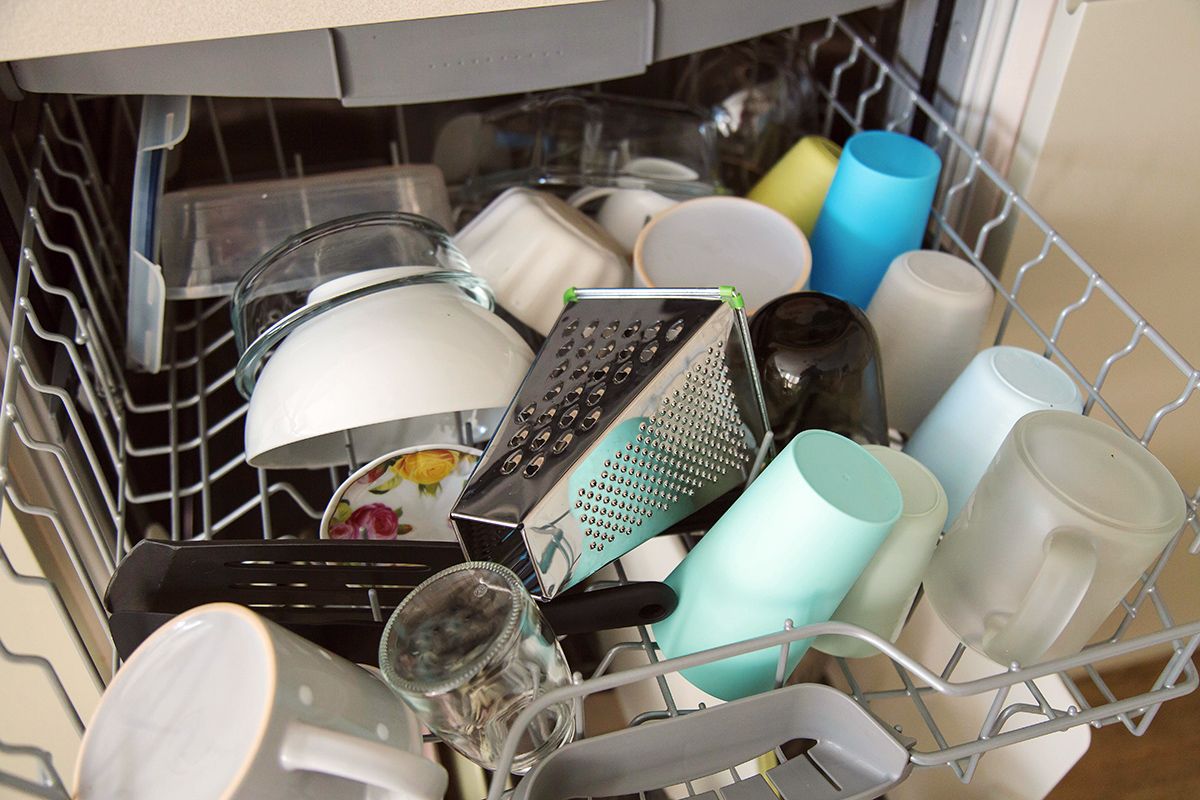
When loading your dishwasher, keep plastics on the top rack. Leave ample space between items so air has more room to circulate, which will help plastic dry more quickly. 

When the cycle ends, prop the door open slightly so steam can escape instead of settling back onto the dishes. Then, when it’s time to unload, start with the bottom rack — upturned plastic on top (which seems to always happen) can collect water, and pulling the top rack out first would cause spillage onto  the dry dishes below. 

Even with all these tips, some plastic will probably still come out damp. But that’s just physics — and nothing a quick wipe with a dish towel can’t tackle.

Feature Image Credit: © elenavolf/stock.adobe.com

Advertisement
Advertisement

More From Our Network

Better Report is part of Inbox Studio, an email-first media company. *Indicates a third-party property.

Go Retro With This 1960s Fashion Quiz

Quiz Daily

Go Retro With This 1960s Fashion Quiz

True or False: Are You a Master of U.S. Geography?

Travel Quiz

True or False: Are You a Master of U.S. Geography?

5 Reasons You Can Be Denied Boarding an Airplane

Daily Passport

5 Reasons You Can Be Denied Boarding an Airplane

What Did People Do Before Eyeglasses?

History Facts

What Did People Do Before Eyeglasses?

How To Use a Balloon To Clean Up Dust

House Outlook

How To Use a Balloon To Clean Up Dust

11 Shopping Hacks Costco Members Should Know

FinanceBuzz*

11 Shopping Hacks Costco Members Should Know

Share this article

  • Share to Facebook
  • Share to Twitter
  • Copy Url
  • Share to Email
Erin Scottberg
Writer

Erin Scottberg is a Brooklyn-based writer, garden designer, and houseplant expert — and the founder of Full Sun Studio (fullsun.studio), a garden design and plant consulting studio in New York City. She holds an Urban Horticulture Certificate from Brooklyn Botanic Garden, an NYC Street Tree Pruner License, and an NYC Master Composter Certification, and spent three years as Head of Content and Education at The Sill. When she's not working, you can find her creating in her textile studio, running craft nights in her neighborhood, or hanging with her rescue pup, Sunny. She's an ambitious DIYer, avid composter, and has never been able to walk by a thirft store without taking a look.

This article is for general informational purposes only.
Affiliate Disclaimer Medical Disclaimer Financial Disclaimer

Updated: May 27, 2026
Posted In: Home
Hero Image Credit: Feature Image Credit: © elenavolf/stock.adobe.com
Advertisement

Related Articles

First-Date Etiquette Tips for People Over 40, According to a Matchmaker

3 min read

Putting This in Your Dryer Is a Major Fire Risk

3 min read

18 Surprising Things You Should Never Put Down Your Drain

5 min read

The Nostalgic Car Protection Device That’s Making a Comeback

4 min read

19 Foods a Chef Says You Should Always Freeze

10 min read
Advertisement
  • Home
  • Health
  • Wealth
  • Logo
  • Advertise
  • About
  • Contact Us
  • Privacy Policy
  • Terms of Use
  • Your Privacy Choices
x
Thumb Image

Elevate your everyday.

Sign up to receive the practical tips and expert advice you need to pare down the complexities of everyday living right in your inbox.

Sorry, your email address is not valid. Please try again.

Your email is:

Edit Image
Sorry, your email address is not valid. Please try again.
Thank you for subscribing...

By subscribing you are agreeing to our Terms of Use and Privacy Policy.

Close image
Thumb Image
Second Thumb Image

Elevate your everyday.

Sign up to receive the practical tips and expert advice you need to pare down the complexities of everyday living right in your inbox.

Sorry, your email address is not valid. Please try again.

By subscribing you are agreeing to our Privacy Policy and Terms of Use.

Close image