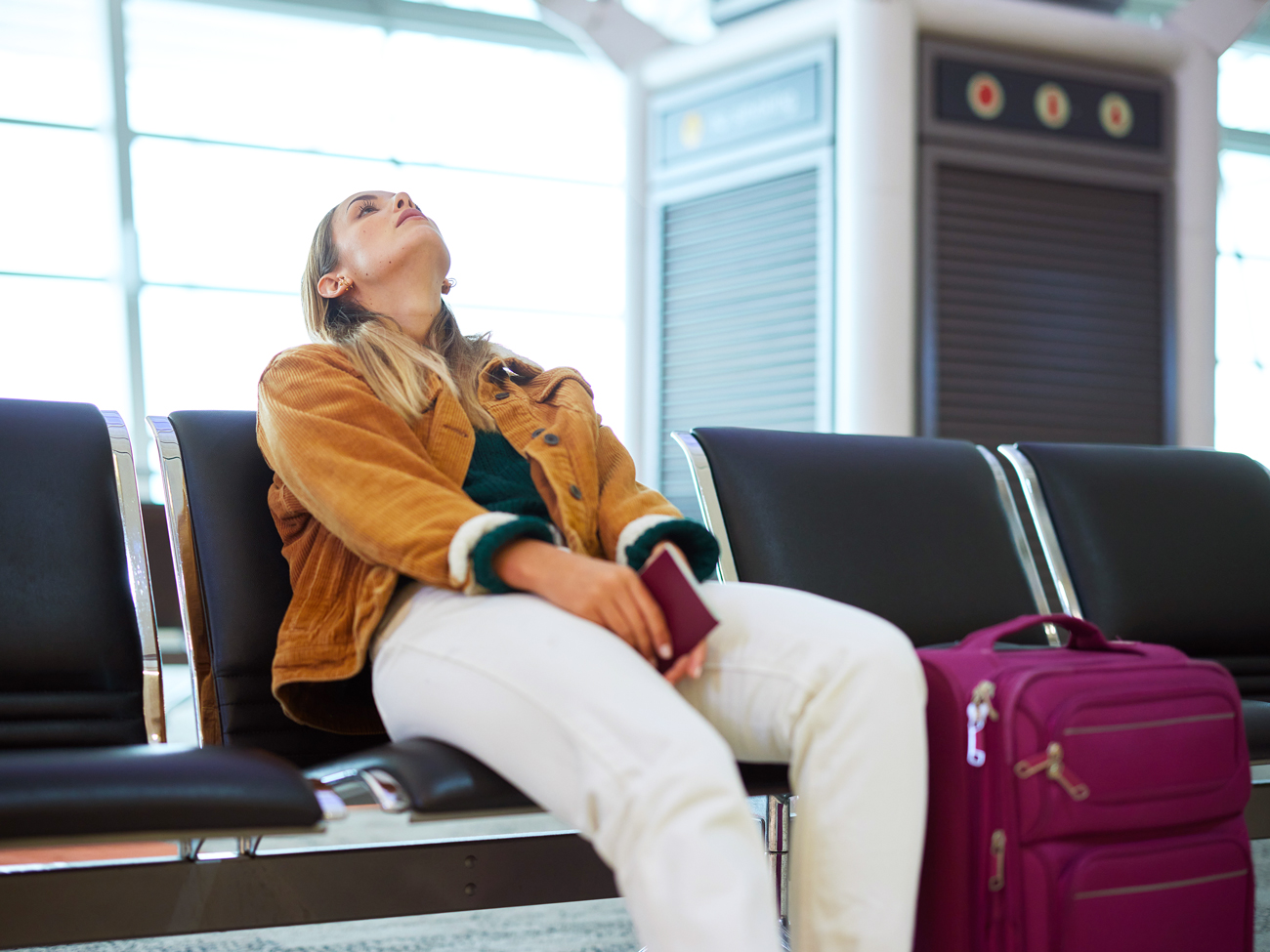
Your Go-To Travel Outfit Could Be Dangerous to Your Health
All featured products and deals are selected independently and objectively by the author. Better Report may receive a share of sales via affiliate links in content.
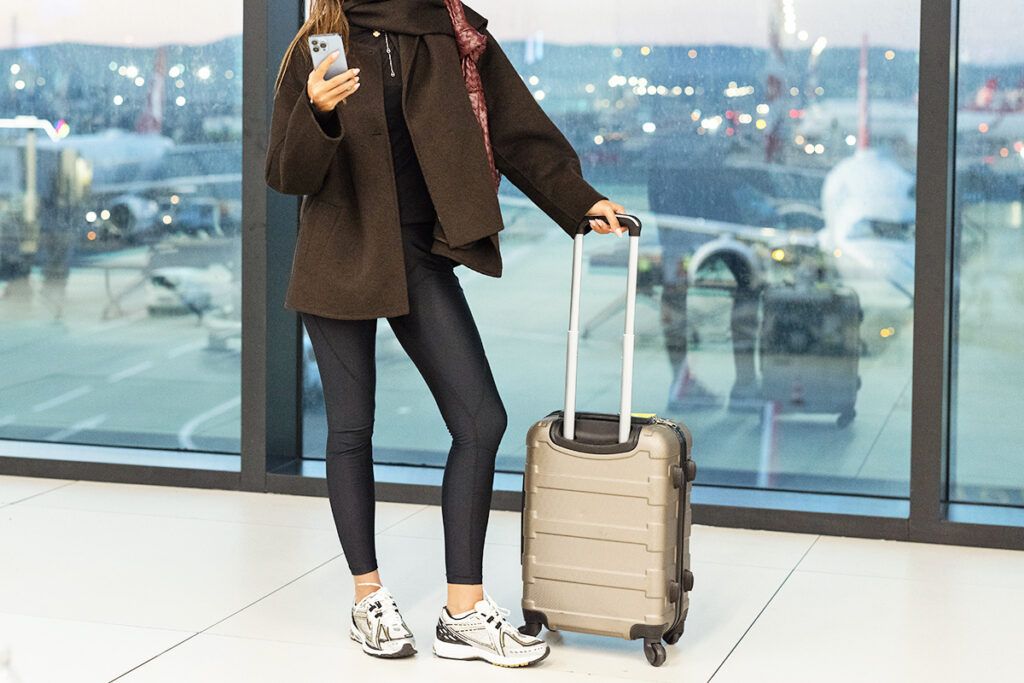
For many travelers, athleisure is the ultimate go-to: It’s stretchy and versatile, and it manages to feel comfortable while still looking put together. Among the most popular athleisure staples are leggings, which are soft, supportive, and widely worn across age groups. But your favorite plane outfit might not be as harmless as it seems. While convenient, certain styles of leggings can pose health and safety concerns during air travel. Here’s why.
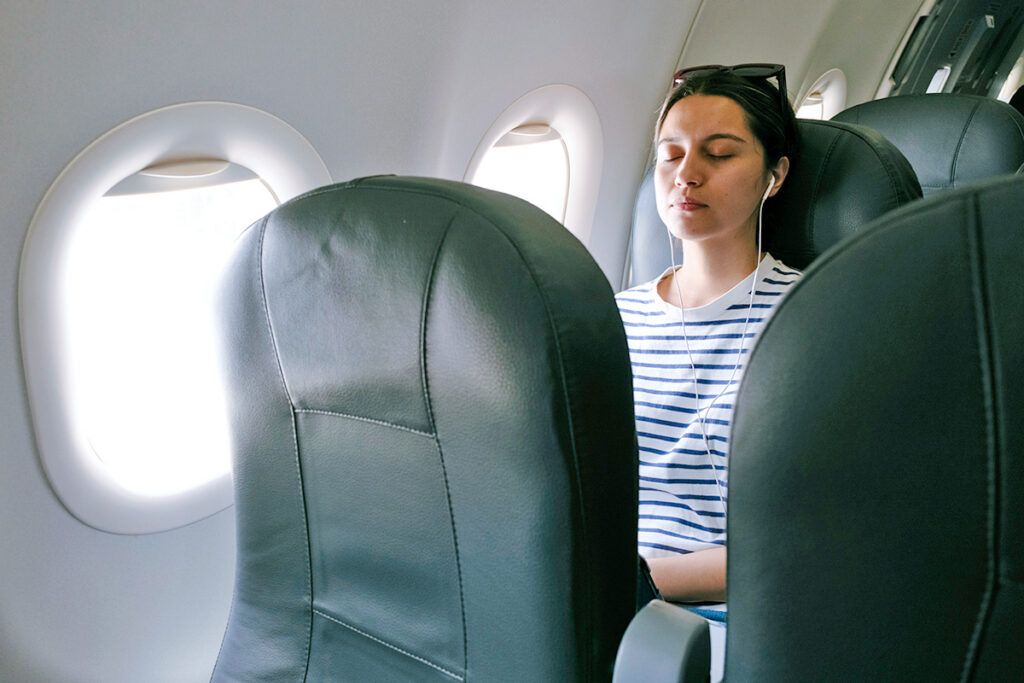
Why Tight Clothing Can Be a Problem During Flights
Flying can cause uncomfortable side effects for travelers, including swelling due to reduced circulation and slower lymphatic drainage. On long-haul flights, the risks can increase: Flyers may experience leg edema, which occurs when excess fluid is trapped in body tissues, and deep vein thrombosis (DVT), or “traveler’s thrombosis,” a condition in which blood clots form in deep veins. (The risk for the latter is low in healthy people, but does increase in flights lasting longer than four hours.)
Contributing factors include changes in cabin air pressure, prolonged immobility, and dehydration. Staying hydrated, walking the aisles when possible, and doing simple in-seat exercises, such as calf raises, can help. But what you wear also plays a role.
Medical experts warn that tight garments can restrict blood flow in and out of the legs, which are already vulnerable during flights and long periods of sitting. Specifically, clothing that fits snugly at the waist, thighs, or ankles — such as leggings and skinny jeans — may further limit circulation. Tight clothing can also slow lymphatic flow, causing fluid to pool where it shouldn’t, which worsens swelling.
Additionally, cabin pressure can cause gas in the stomach and intestines to expand, leading to bloating. Anything tight around the waist can make this discomfort more noticeable.
That said, while some tight garments may be problematic, travelers do have other options for compression wear.
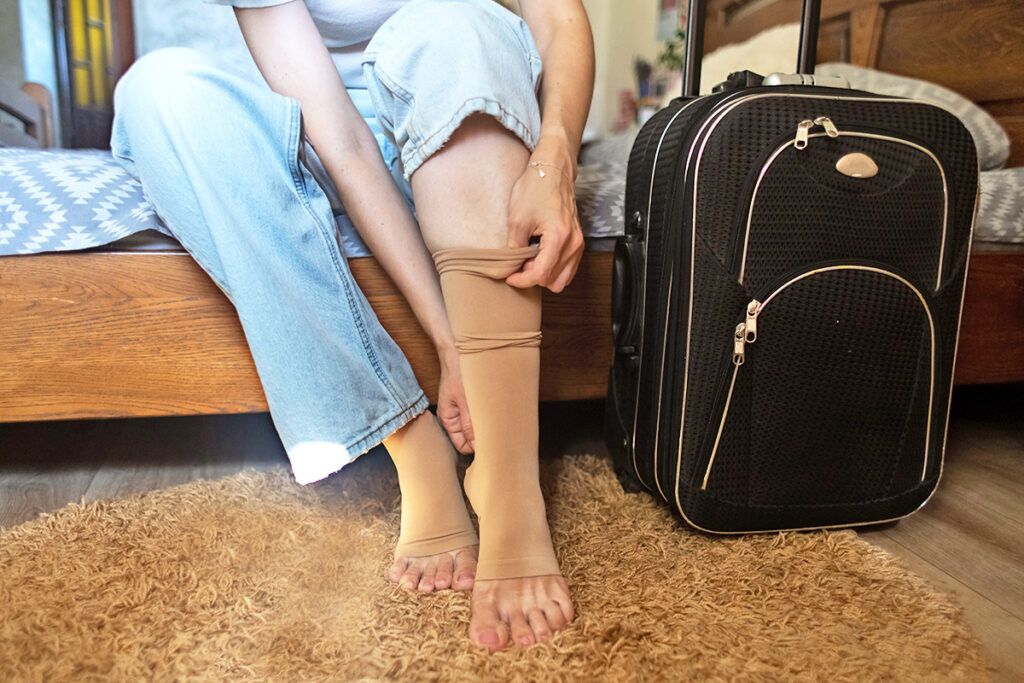
The Difference: Compression Wear vs. Athleisure
Compression socks and leggings are a popular choice for travelers looking to support circulation, not just on flights but also during long car, bus, or train travel. However, not all compression is created equal.

Reader Favorites



Unlike standard leggings, which feature uniform compression throughout the entire garment, medical-grade compression socks and leggings apply graduated pressure. The ankle area has the most compression, which gradually decreases up the leg to promote healthy blood flow.
For some travelers, medical-grade compression can reduce discomfort and vascular health risks during flights. This is especially relevant for those at higher risk of complications, including people over 40, individuals with a personal or family history of blood clots, and those with obesity, recent surgery, cancer, pregnancy, or who take estrogen-based medications.
But medical-grade compression wear isn’t one-size-fits-all. It’s best to consult a health care provider before choosing a style, as some options may be too restrictive for in-flight use or for certain individuals.
Synthetic Fabrics May Pose a Safety Hazard
Beyond comfort and circulation, another factor to consider is fabric type. Leggings are often made from synthetic materials, such as polyester, nylon, and spandex. This may pose a safety hazard in the rare event of a fire, as these fabrics can melt or stick to the skin when exposed to extreme heat, increasing the risk of burns.
Rest assured that in-cabin fires are uncommon (and are more likely to occur on the ground than in mid-air), but it’s still worth making informed decisions when traveling.
What To Wear Instead
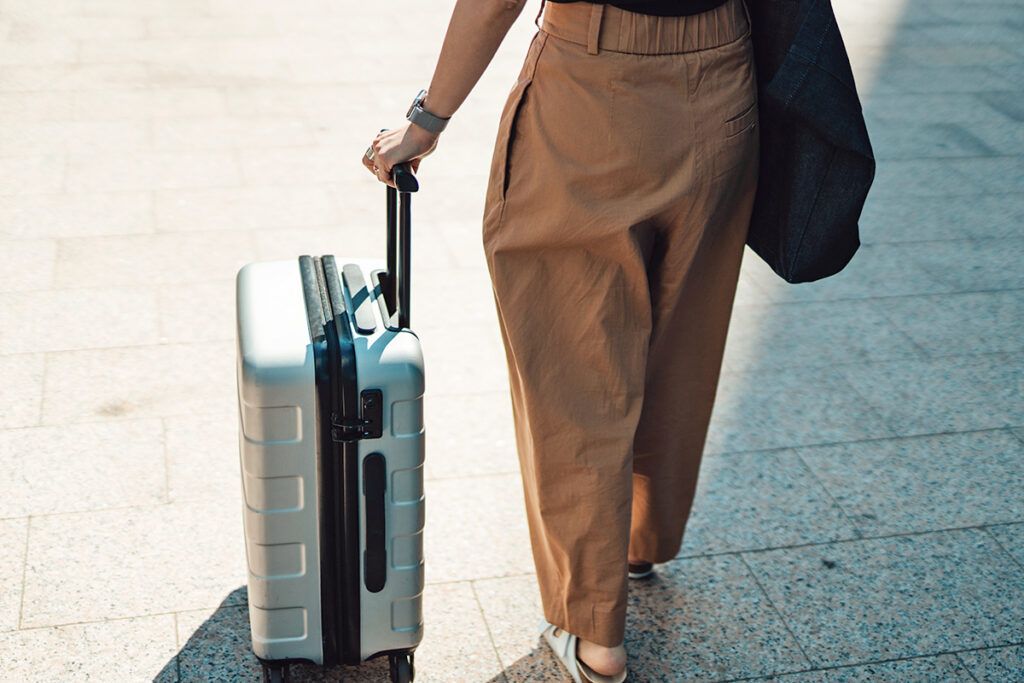
If you’re rethinking your travel outfit, consider loose-fitting pieces made from natural fibers. Not only are these options more breathable, but they’re also less of a safety hazard, and they promote healthy circulation. Good options include relaxed joggers, chinos, linen pants, and even loose-fitting denim.
If compression is recommended for you, pair medical-grade compression socks with looser pants for a more balanced approach. These changes will make your travel day safer and more comfortable.
And don’t feel the need to kick your leggings to the curb. There’s still a time and place for them, but it may not be at 40,000 feet.
Featured Image Credit: © Andrej Lišakov/Unsplash.com
More From Our Network
Better Report is part of Inbox Studio, an email-first media company. *Indicates a third-party property.