The Ideal Thermostat Setting for Fall

As we move past summer and cooler temperatures start to set in, you may be inclined to turn down the AC and start cranking the heat. But fall is a bit of a tricky transitional season — temperatures can swing from frigid one day to toasty the next. As a result, some people find themselves tinkering with the thermostat every day to keep up with the elements. Doing so isn’t always necessary, though. Here’s how you can set your thermostat during autumn to balance comfort and cost, regardless of how it feels outside.
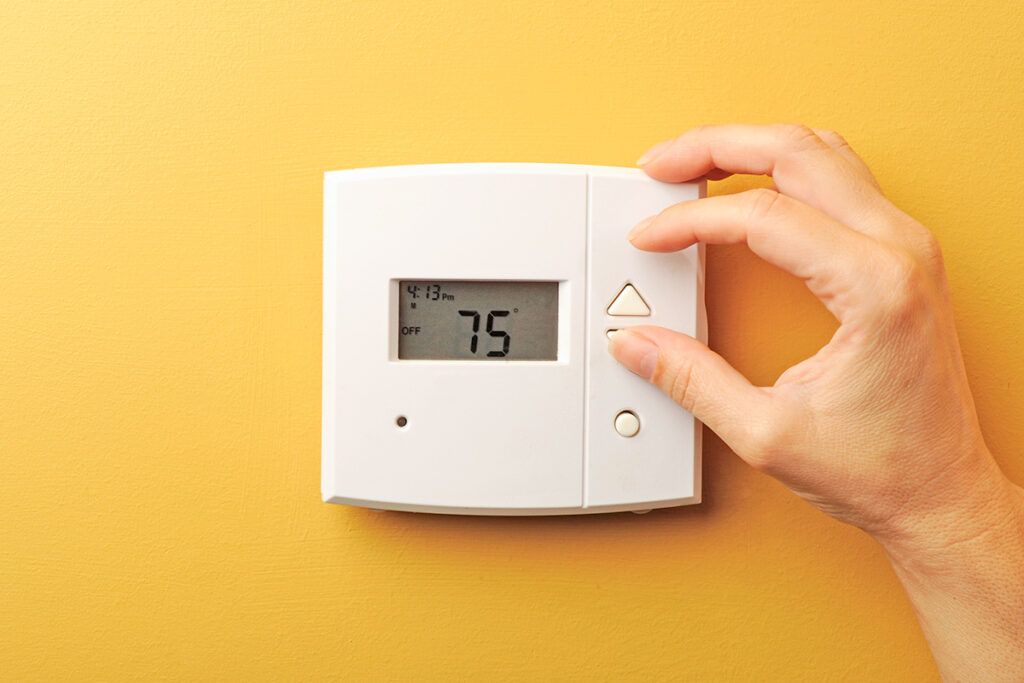
The Ideal Setting for Cost Cutting
If all you’re looking to do is save money on utility bills, you can set the thermostat as close to the temperature outside as possible. According to the Department of Energy, “The smaller the difference between the indoor and outdoor temperatures, the lower your overall [energy] bill will be.”
That’s because the closer your home’s interior temperature is to the temperature outside, the slower heat will transfer from one environment to the other. When temperatures outside are chilly, for example, a low interior temperature actually slows heat loss: “As soon as your house drops below its normal temperature, it will lose energy to the surrounding environment more slowly,” the DOE notes. “[T]he longer your house remains at the lower temperature, the more energy you save, because your house has lost less energy than it would have at the higher temperature.” In this case, keeping the thermostat low prevents the HVAC from overexerting itself to sustain a warmer interior temperature.
A similar concept applies when the weather heats up: The warmer it is inside your home, the slower the exterior heat will come in. Setting the thermostat lower will cause your HVAC to kick on more frequently to cool your house — and raise your electric bill as a result. That’s why the government’s recommendation for your thermostat setting in summer is 78 degrees Fahrenheit.
Still, this strategy may not be entirely practical in terms of comfort — nobody wants their living room to feel like a frigid 50-degree October night or an unseasonably warm 80-degree November day — and it will likely require you to fiddle with your thermostat daily. Thankfully, there’s another way to approach your thermostat this season.

The Best Setting for Comfort and Cost Savings
Ultimately, the temperature you should set your thermostat to will depend on where you live and how low temperatures tend to get during the fall season. But according to experts, you can balance cost savings and personal comfort during the fall by setting your thermostat to around 68 degrees Fahrenheit and no higher than 70 degrees Fahrenheit when you’re home and awake. This is similar to what you should do in the springtime, which is also a transitional season. (If the temperature creeps into the 80s, though, you may want to put your AC to work. The DOE’s recommendation for the summer is to “[set] the thermostat to a setting as high as is comfortable for you when you are at home and need cooling and to ensure humidity control if needed,” so the same is likely true for unseasonably hot fall days.)
This recommended range is the sweet spot for keeping HVAC use down without feeling overly hot or cold. If you do start to get chilly, consider a blanket or hoodie before raising the thermostat into the 70s. And if you feel a little warm, switch to lighter clothing before you lower the temperature.

Reader Favorites




The Best Settings for Sleep (and When You’re Not at Home)
That said, there are times you should lower the thermostat, particularly when you go to sleep and when you leave the house.
When it’s time for bed, experts recommend bumping your thermostat down to as low as 60 degrees (if you’re healthy) and no higher than 68 for optimal sleep. The reason is that autumn temperatures tend to be cooler at night, so lowering the device down to 60 means your HVAC will function a lot more efficiently. At the same time, you’ll be bundled up in bed and should feel nice and toasty under your blankets despite the lower thermostat setting.
When you leave the house for a few hours, it’s also worth setting the thermostat to be a bit more in line with the temperature outside, as it helps the HVAC run more efficiently. After all, if there’s nobody home, there’s no sense worrying about how comfortable it is indoors.
So, before leaving the house, set the thermostat as much as seven degrees higher or lower — the direction entirely depends on whether you’re trying to align with hotter or colder temperatures outside. This will help to cut down on costs while you’re gone, and you can always set it back to around 68 degrees when you get home. (Just don’t turn it off entirely — it will need to work much harder, and therefore use more energy, to get back to your preferred temperature.)
Featured Image Credit: © Monkey Business/stock.adobe.com
More From Our Network
Better Report is part of Inbox Studio, an email-first media company. *Indicates a third-party property.







Bennett Kleinman is a New York City-based staff writer for Inbox Studio. He is also a freelance comedy writer, devoted New York Yankees and New Jersey Devils fan, and thinks plain seltzer is the best drink ever invented.
This article is for general informational purposes only.
Affiliate Disclaimer Medical Disclaimer Financial Disclaimer