Does Taking the Stairs Actually Make a Difference?


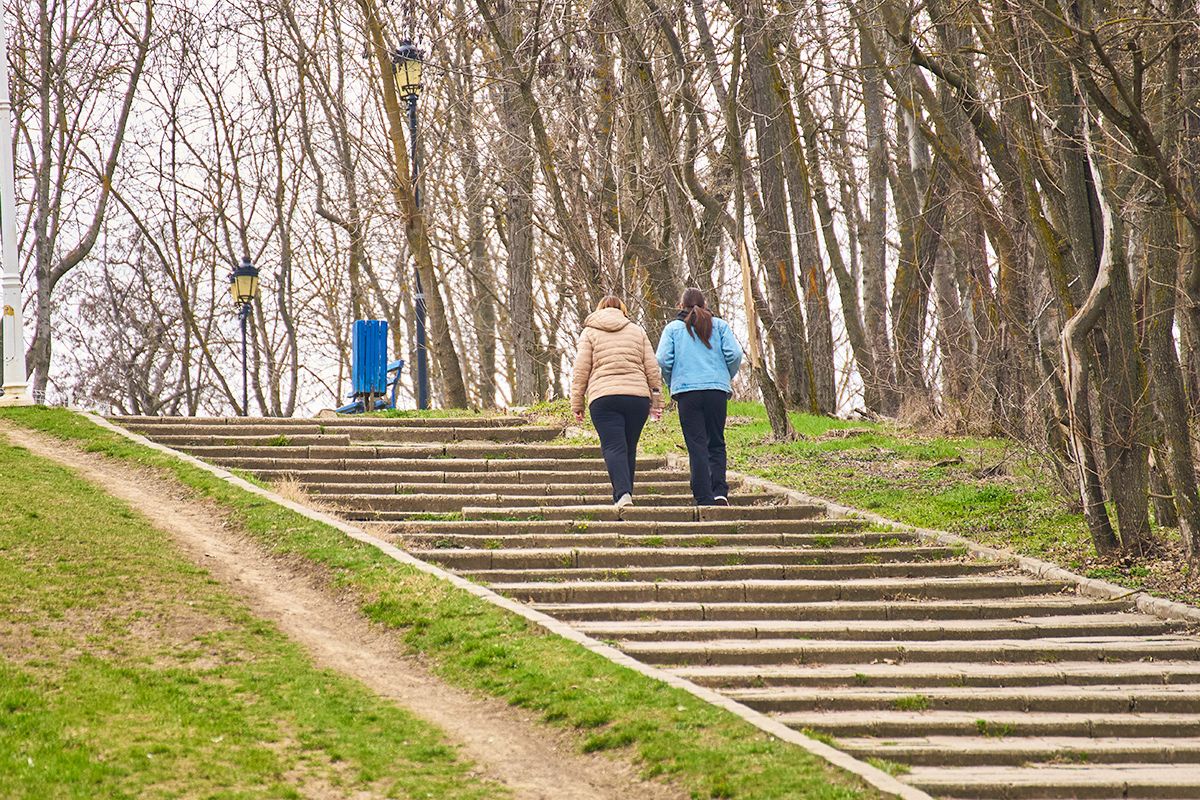
When given the choice between walking up a dim flight of stairs or taking the elevator to a higher floor, most of us will opt for the elevator. Sometimes that decision makes sense, like when you’re headed up to a skyscraper’s penthouse, carrying heavy bags, or unable to find the stairwell in a vast lobby. But a growing amount of research suggests that climbing stairs offers health benefits you won’t get in an automated lift.
A new study in the American Journal of Cardiovascular Drugs reports that people who climbed stairs were significantly less likely to die of heart disease and had a lower risk of heart attack, stroke, and heart failure compared to those who rarely took the stairs. Let’s take a closer look at what the results mean — and how many calories stair climbing may actually burn.

Exercise and Your Heart
Physical activity is essential for heart health. The American Heart Association recommends a minimum of 150 minutes of moderate aerobic activity (50% to 70% of your maximum heart rate, which is calculated by subtracting your age from 220) or 75 minutes of vigorous activity (70% to 85% of your maximum heart rate) per week to improve circulation, decrease stress, and build strength and stamina, among other perks. Because you’re moving your body upward against gravity, your heart rate will increase pretty quickly once you hit the stairs. Continuous stair climbing, considered a vigorous exercise, requires 9.6 times more energy than sitting.
Past studies have linked varying amounts of stair climbing to better cardiorespiratory health, improved balance and muscle strength, reduced LDL (bad) cholesterol, and a lower risk of developing Type 2 diabetes and metabolic syndrome. Researchers tend to see stair climbing as a practical way for people to engage in more daily physical activity, since stairs are readily and freely accessible in office towers, transit hubs, and other public spaces.

Links to Lower Risk of Heart Problems
The new study aimed to quantify just how much stair climbing may lower the chance of dying from cardiovascular problems. Researchers in the U.K. reviewed studies in two large databases and found nine that examined associations between stair climbing and cardiovascular disease, which included a total of 480,479 participants monitored over a median of 14 years. Of the nine studies, five monitored mortality from heart disease and from any cause.
The studies included people ages 35 to 84 with and without a history of heart problems, and about half were women.

Reader Favorites



Participants who climbed stairs frequently were 39% less likely to die from heart-related conditions, and 24% less likely to die prematurely from any cause, compared to the non-climbers. People who took the stairs also had lower risks of heart attack, stroke, and heart failure.
“Cardiovascular disease is the leading cause of death worldwide,” senior author Vassilios Vassiliou, MBBS, a clinical professor of cardiac medicine at the University of East Anglia’s Norwich Medical School in the U.K., said in a statement. “But it is largely preventable through a healthy lifestyle, including regular physical activity, a heart-healthy diet, not smoking, maintaining a healthy weight, and managing blood pressure, cholesterol, and diabetes.”
Calorie Counting
The number of calories burned by stair climbing depends on a few factors, such as your weight and the speed of climbing. The American Council on Exercise’s physical activity calculator indicates a person weighing 150 pounds who climbs stairs for 30 minutes will burn roughly 272 calories, and the more a person weighs, the more calories that will be burned in a given time. That’s more calories than the same person would burn walking at a moderate pace (112 calories), doing intense aerobic dancing (238) or weight lifting (204), or playing a casual soccer game (238) for the same period of time. And running up stairs will burn about three times more calories than climbing at a slower pace.
If you want to incorporate more stairs into your daily routine, it’s important to start slow. It’s also a good idea to talk with your doctor about your strength and balance before starting any exercise regimen. If they give you the all clear, feel free to get climbing.
Featured Image Credit: © Raul Mellado/stock.adobe.com
More From Our Network
Better Report is part of Inbox Studio, an email-first media company. *Indicates a third-party property.







Kat Long is a freelance science journalist in the Washington, D.C. area. Previously, she was the science editor at Mental Floss and a digital editor at National Geographic. She now writes the Arctic Archives newsletter on Substack. Kat spends her free time birdwatching, road-tripping to historical sites and perusing old manuscripts at libraries.
This article is for general informational purposes only.
Affiliate Disclaimer Medical Disclaimer Financial Disclaimer