The Military Secret to Falling Asleep Fast

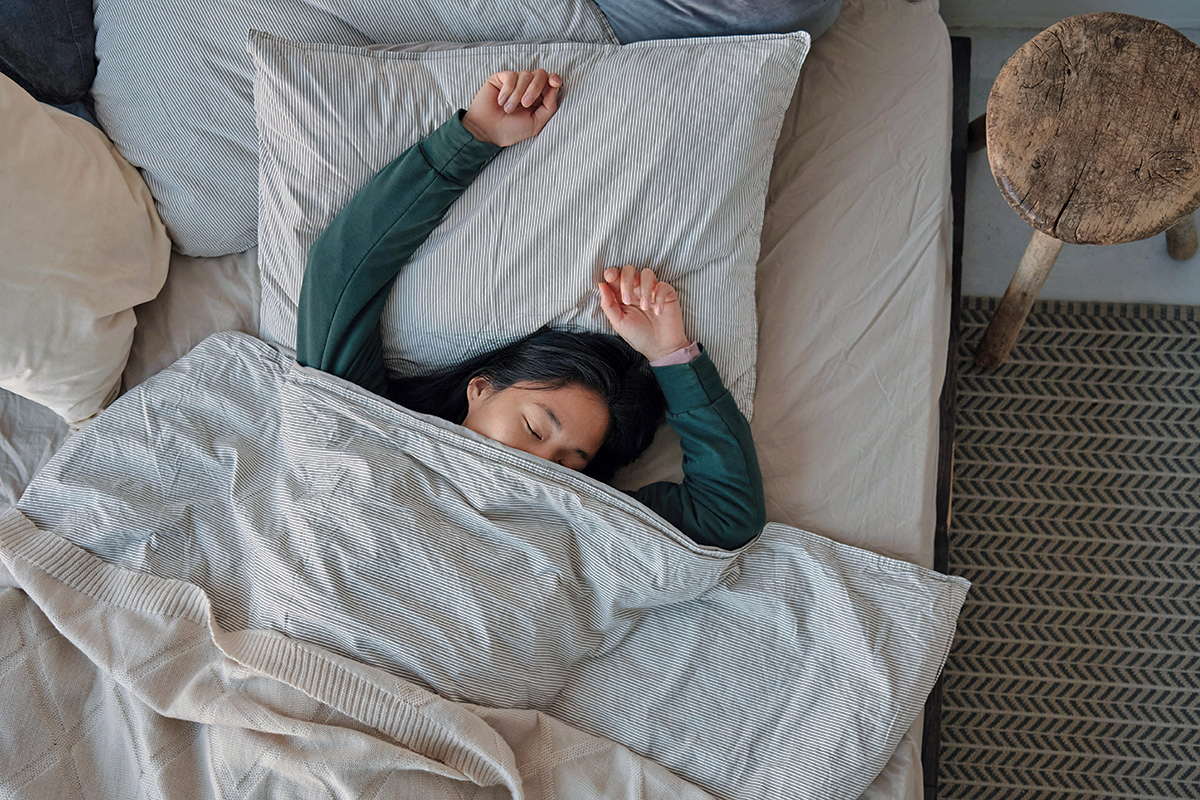
The military teaches its members strict discipline, useful survival skills, and the value of teamwork. But its lessons can also teach regular folks how to get a good night’s sleep, which is vital to our mental and physical health. All you need to do is follow what’s known as the “military sleep method,” a technique intended to help anyone fall asleep fast.
Here’s a look at the logic behind this method, and how you can incorporate it into your own life to achieve more restful slumbers.
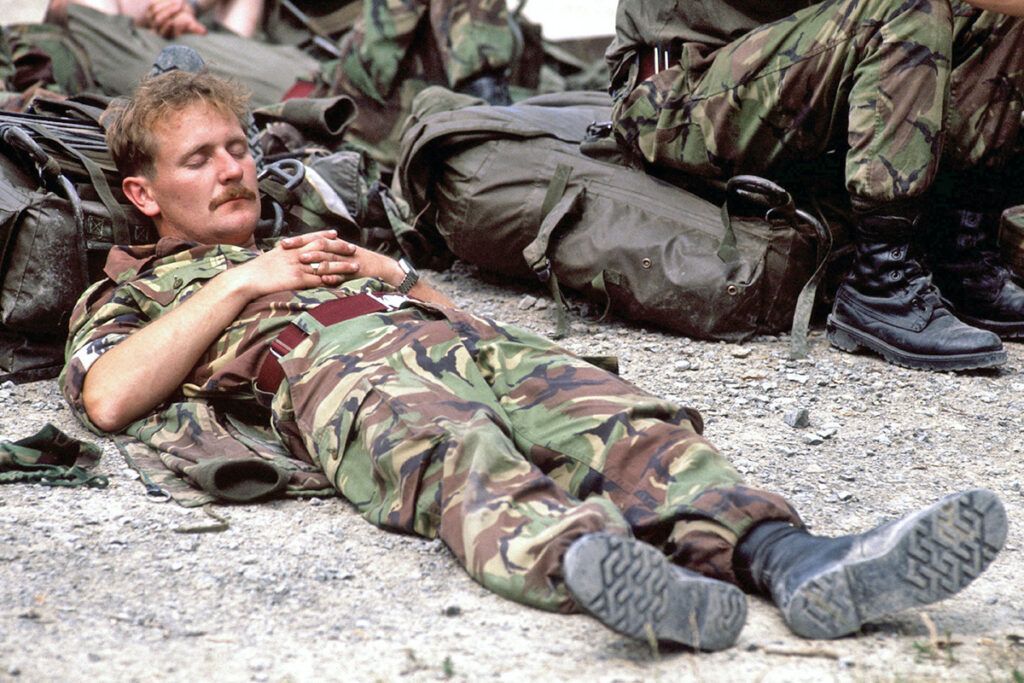
What Is the Military Sleep Method?
This technique was popularized in 1981’s Relax and Win: Championship Performance, by world-famous track coach Lloyd “Bud” Winter. But Winter didn’t devise this method for the book — it dates back decades earlier, to the period before World War II.
At the time, Winter was the football and track coach at San Jose University. He and the college’s boxing coach, Dewitt Portal, decided to enroll in a course taught by psychologist Dr. Dorothy Hazeltine Yates called “Psychology for Aviators and Athletes.” There, they learned “psycho-techniques,” which Winter described as “a mental approach to learning to relax.” The boxers utilized the techniques and won every match; Winter was about to start teaching the techniques to his track team when Pearl Harbor occurred, and he enlisted in naval aviation. “When the Navy brass learned of my association with Dr. Yates” after graduation, he wrote, “they directed me to set up and test a program of relaxation for Navy aviators.”

Reader Favorites



Winter, who was stationed at the Del Monte Naval Pre-Flight School near Monterey, California, recruited both psychologists and coaches (including Portal, who had also enlisted) to put the technique together and test it.. The results were overwhelmingly positive: 96% of pilots who practiced the technique were able to fall asleep in under 120 seconds.
It took six weeks of training for the pilots to see a change in their sleep habits, however, so this technique isn’t an overnight fix. It’s also worth pointing out that no studies have been done on the method’s efficacy. And there’s no evidence that the military uses the technique, though the Center for Military Psychiatry and Neuroscience does have a guide for sleeping under stressful conditions that focuses on guided imagery and muscle relaxation.
Still, the method does rely on established relaxation techniques and shares several components in common with treatment for insomnia, so it may be worth looking into for anyone who’d like to improve their sleep habits.
One caveat, though: As sleep research Dean Miller told Inc., this method will likely help you fall asleep faster, but it’s highly unlikely you’ll be snoozing in under two minutes. “As a general guideline,” he said, “consistently falling asleep within eight minutes is considered unusual, and consistently falling asleep within five minutes can be a sign of excessive daytime sleepiness. For civilians working 9-to-5 and maintaining a regular schedule, falling asleep within 10 to 20 minutes is considered normal.”
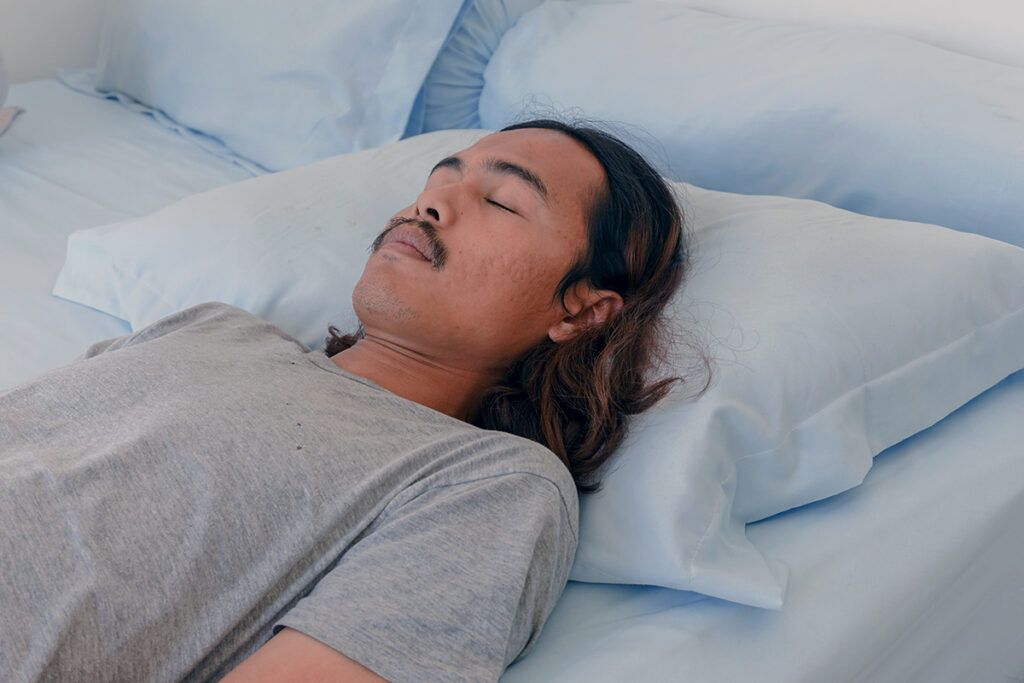
How Does It Work?
The military sleep method is broken into six components designed to help relax the body and mind. You start at the face and work down from there. Begin by closing your eyes, breathing deeply, and slowly relaxing all your face muscles — unclench your jaw, unfurrow your brow, let your cheeks droop, and relax your tongue and eyes.
Next, work on your neck, shoulders, and arms. Continue to breathe deeply. Let your neck sink into the pillow, and let your shoulders drop as well. Then slowly work your way down each arm, releasing tension from the biceps, forearms, and hands. Focus on one arm at a time so you’re not thinking about too much at once.
Once you feel like your face, shoulders, and arms are thoroughly relaxed, exhale deeply to release tension from your chest and work down toward the lower body. Focus on releasing stress from each leg, one at a time. Unclench your thighs, let the calves relax, and allow your ankles and feet to sink into the mattress.
At this point your body should feel relaxed, though your mind may still be running a mile a minute. Try to let go of any stresses you may be experiencing, and paint a relaxing picture in your head. While “relaxation” means something different to everyone, there are two recommended scenes to imagine that have proved successful. First, imagine yourself lying on your back in a canoe on a calm lake with clear blue sky above for 10 seconds. Next, picture yourself lying in a black velvet hammock inside a pitch-black room, and hold that image for 10 seconds. If painting a picture doesn’t work, it’s time to employ the final step: repeating the words “don’t think” for 10 seconds. This should help your brain shut off.
The method is simple, but again, don’t expect it to improve your sleep overnight. It takes time and practice, so give it several weeks, and hopefully, you’ll notice a big improvement.
Featured Image Credit: © Andrej Lišakov/Unsplash.com
More From Our Network
Better Report is part of Inbox Studio, an email-first media company. *Indicates a third-party property.






Bennett Kleinman is a New York City-based staff writer for Inbox Studio. He is also a freelance comedy writer, devoted New York Yankees and New Jersey Devils fan, and thinks plain seltzer is the best drink ever invented.
This article is for general informational purposes only.
Affiliate Disclaimer Medical Disclaimer Financial Disclaimer