The Two-Minute Test to See if Olive Oil is Past its Prime


Olive oil is a flavor-enhancing ingredient that makes almost every dish taste special. You can add olive oil to just about everything, whether you have a basic plate of noodles or an extravagant dish of grilled meats and vegetables. However, unlike wine, which gets better with age, olive oil can lose its flavor over time. If you’ve discovered a neglected bottle in the back of your cabinet, you’ll want to check if it’s usable first. Try this two-minute test that will let you know if your olive oil is ready to cook with.
What is the Shelf Life of Olive Oil?
While olive oil can expire, it doesn’t spoil as quickly as an ignored carton of milk or avocado sitting on the counter. Unopened, its shelf life lasts approximately 18 to 24 months, according to the North American Olive Association.
Like any other food or spice, you’ll find a best-by date on the bottle, indicating when the olive oil is at its peak flavor. However, that doesn’t automatically mean it’s still suitable for use or not. The specific time frame can vary based on several factors, including the room’s temperature, the storage conditions, and any additional ingredients it contains. Other elements — ones you don’t have much control over — play a part as well, such as the quality of the olives, harvesting methods, milling procedures, and where it originates.
How to Perform the Two-Minute Test
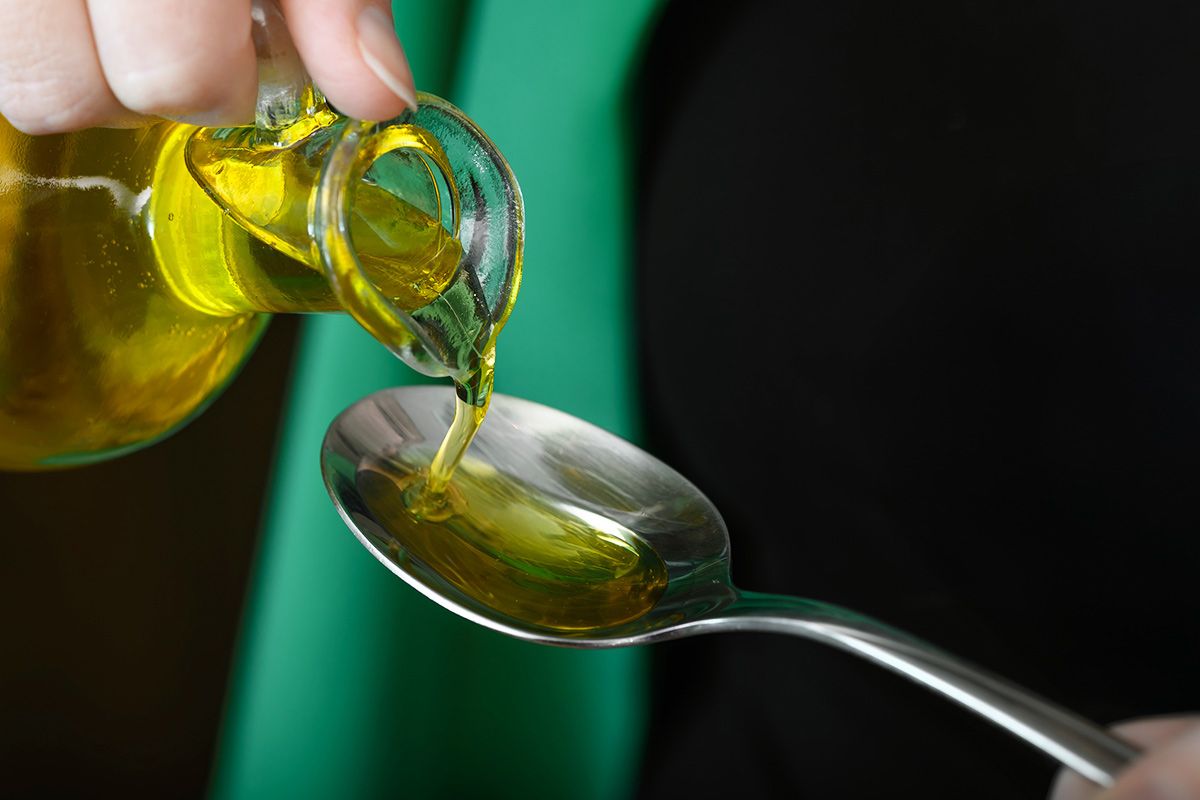
Warm Up a Spoon
Run a metal spoon under hot water and pour a little oil on while it’s still warm. Warming the spoon helps liquify the oil, especially if it’s been in a cool place and has started to solidify. Avoid plastic, since it can warp in the heat and may not be suitable for testing.
Smell the Oil
Smell the oil still on the warm spoon. Fresh olive oil should have a slightly grassy aroma. It might even have a fruity or vegetable-type scent. And, of course, there should be hints of olives. If you detect a waxy odor, like crayons, putty, or old walnuts, that’s a sign it’s gone rancid.
Taste it
If your olive oil has passed the smell test, now it’s time to taste it. Take a small sip or dab your index finger in the olive oil to put a little on your tongue. If your olive oil is good quality, it will have a light peppery, fruity, or pungent note to it. If it’s gone bad, it will taste fatty or stale.
Debunking the Refrigerator Solidification Test
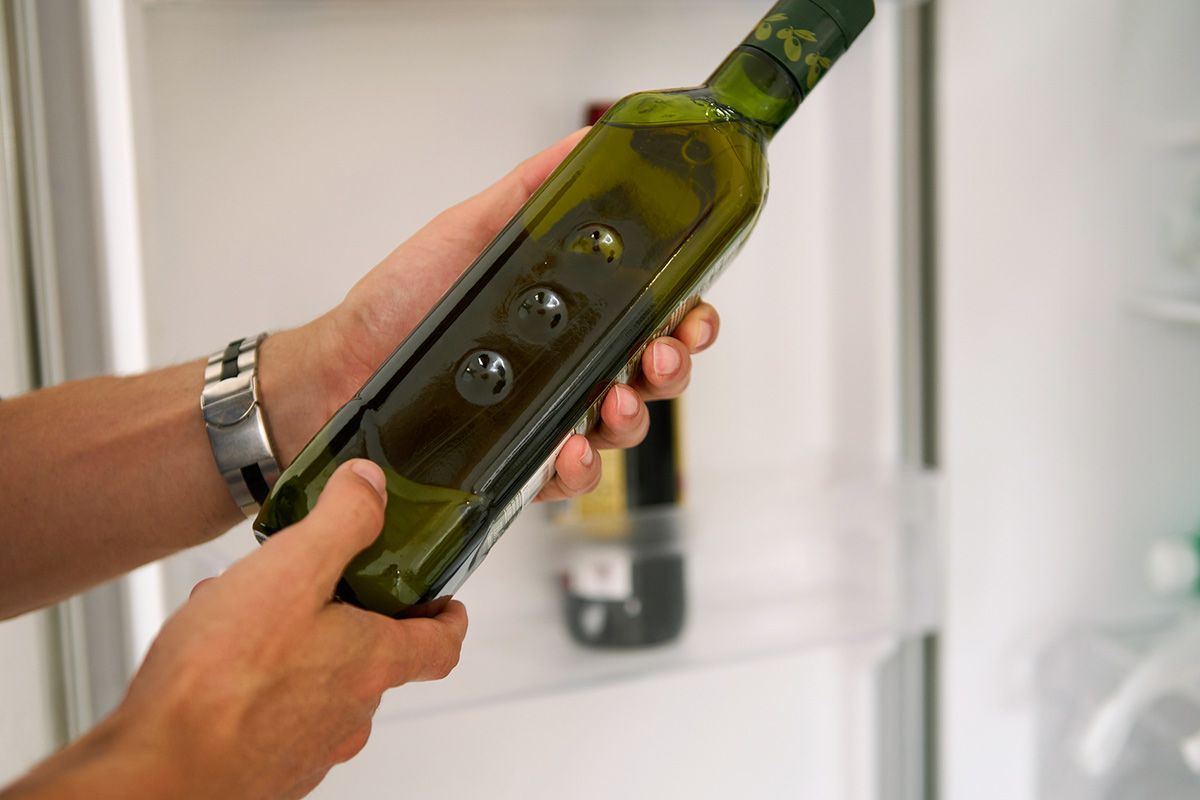
Leaving your olive oil in the fridge is a well-known, but wildly misinformed, method of testing its freshness. The idea goes that if it’s solidified when you wake up in the morning, it’s real, fresh olive oil. However, that method has been discredited by experts.
Any oil, with the exception of canola oil, will solidify in the fridge eventually. Even olive oil altered with peanut oil or sunflower oil will coagulate, so it’s not an indicator of freshness. Plus, this method doesn’t tell you whether the olive oil still tastes good.

Reader Favorites



Storing Your Olive Oil
Whether you’ve determined your olive oil is fresh or you’ve tossed out the old bottle for a new one, you’ll want to keep a few storage methods in mind:
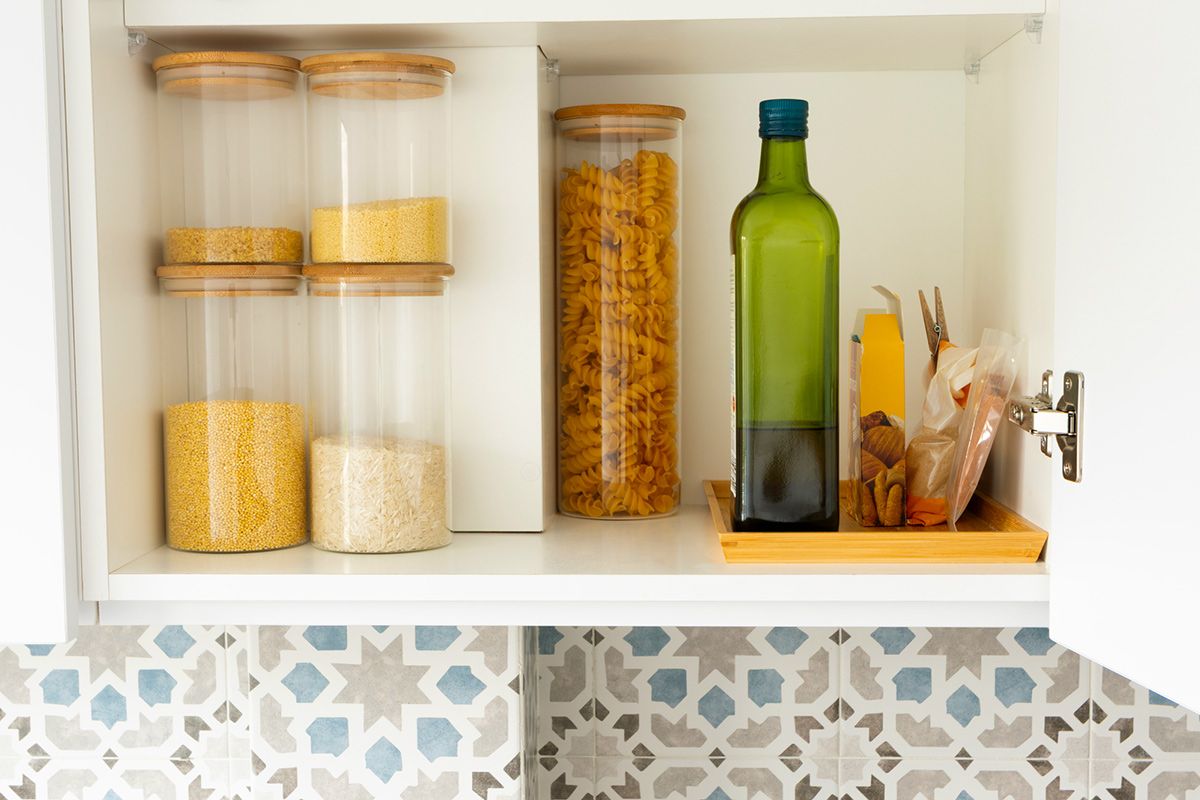
Store the bottle in a cool, dark place, such as your pantry or kitchen cupboard. Exposing your olive oil to the harsh rays of sunlight can cause it to degrade. That’s why olive oil is often put in black or dark green-colored bottles.
Move your olive oil if a heatwave is coming. If you notice temperatures rising above 80 degrees, consider keeping the bottle in the fridge in the meantime. During the winter, you may notice that your olive oil solidifies, which is a common occurrence.
Close it tightly. Oxygen can also affect your oil, so be sure to firmly tighten its cap or cork between uses.
Pay attention to the best by date. Try to use up your olive oil within that time frame to make it as enjoyable as possible.
Featured Image Credit: DragonImages/ iStock
More From Our Network
Better Report is part of Inbox Studio, an email-first media company. *Indicates a third-party property.






Based in Portland, Oregon, Nicole Pyles is an experienced freelance writer who writes about home and kitchen, health and wellness, and more. She's written for a variety of outlets, including Better Homes and Gardens, Tom's Guide, Better Report, and more.
This article is for general informational purposes only.
Affiliate Disclaimer Medical Disclaimer Financial Disclaimer