Skip to content
Better Report
  • Home
  • Health
  • Wealth
8 Low-Maintenance Plants That Thrive on Neglect
  • Search
  • Subscribe
  • Home
  • Health
  • Wealth
  • About
  • Privacy Policy
  • Terms of Use
  • Contact Us
  • SubscribeSubscribe
  • Search
Thank you for confirming your email! Welcome to the community.

Tag: Skin

Are the Tiny Red Dots on Your Skin Dangerous?

Health | Updated: August 26, 2026
Erin McCarthy
Author
Erin is a writer, editor, and content strategist living in the New York City area. Previously, she was the VP/Editor-in-Chief of MentalFloss.com and an editor at Popular Mechanics magazine. When she’s not working, Erin is hanging out with her cats, reading books from her never-ending TBR, traveling, karaoking, and making sourdough with her starter Stephen Sondheim.
Cherry angioma
Better Report

Picture this: You’re moisturizing after a shower one day when you notice some tiny, bright red dots on your skin. What are they? And do you need to worry about them? Here’s what may be behind the dots, and when you should see a doctor.

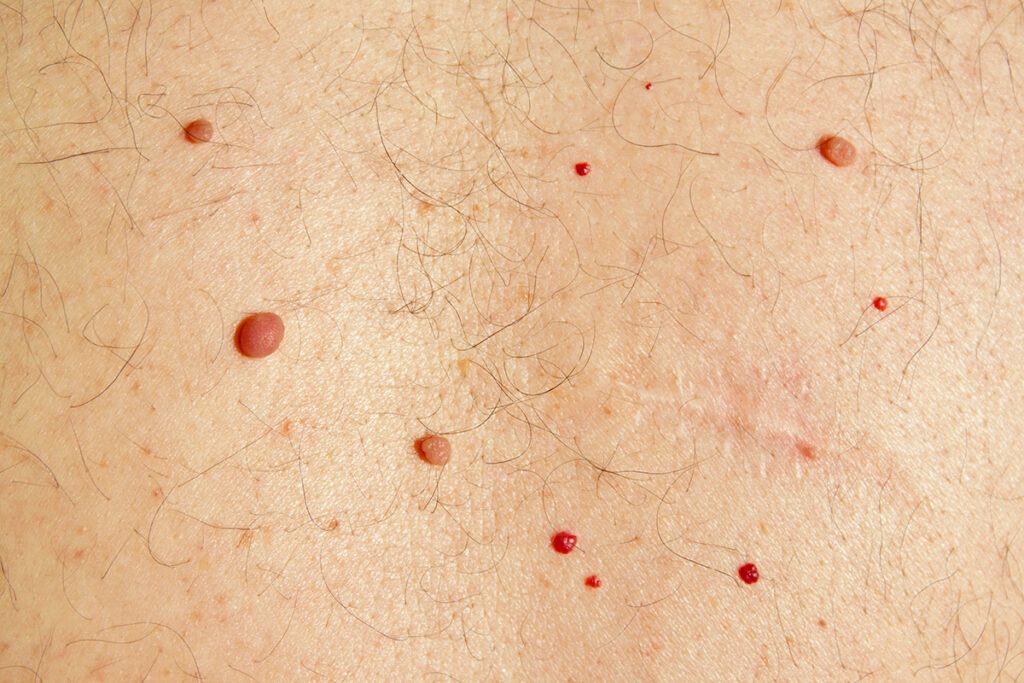
Moles and cherry angiomas
Credit: © whitemay—E+/Getty Images

The Cherry on Top

Seeing a new growth where you once had unblemished skin can be scary. Thankfully, one of the most common causes of red marks on the skin, cherry angiomas, are typically nothing to worry about.

“Cherry angiomas are not dangerous,” says Dr. Samantha Schneider, a dermatologist and Mohs micrographic surgeon at Pacific Crest Dermatology in Carson City, Nevada. “They are not skin cancer and don’t turn into skin cancer. They are benign growths.”  

Advertisement
Advertisement

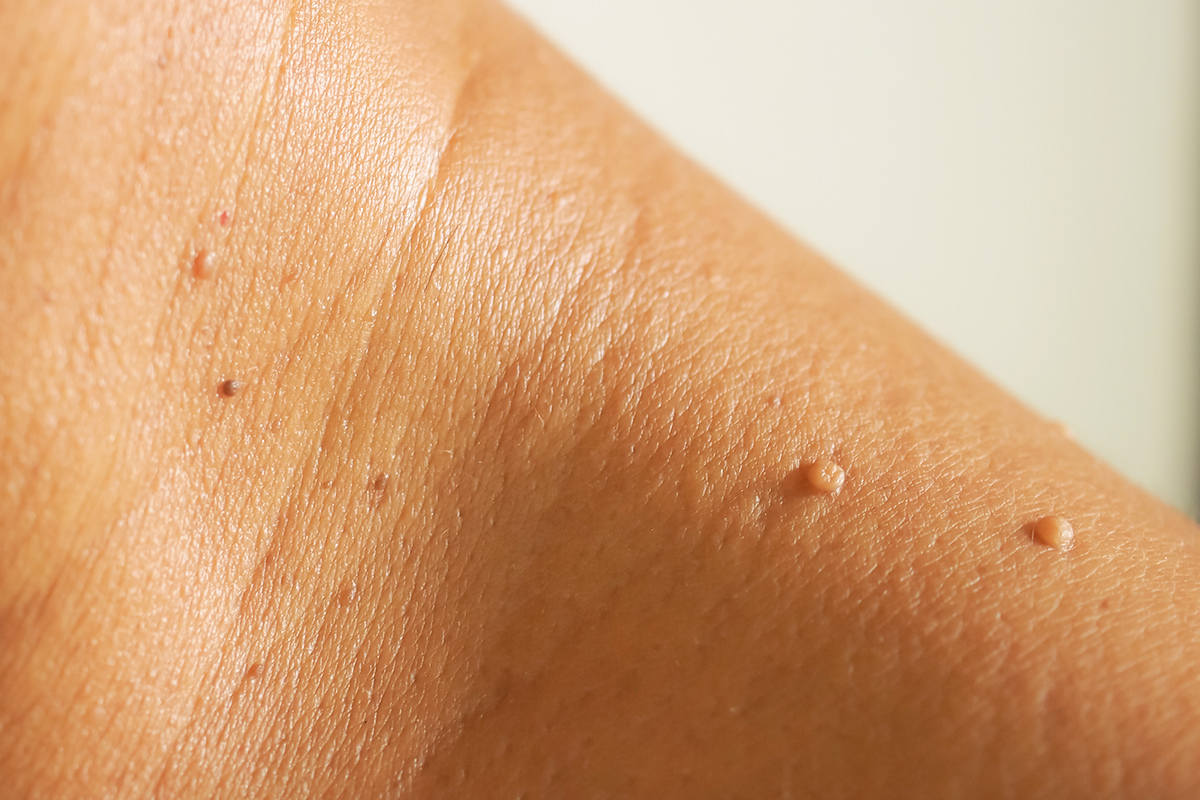
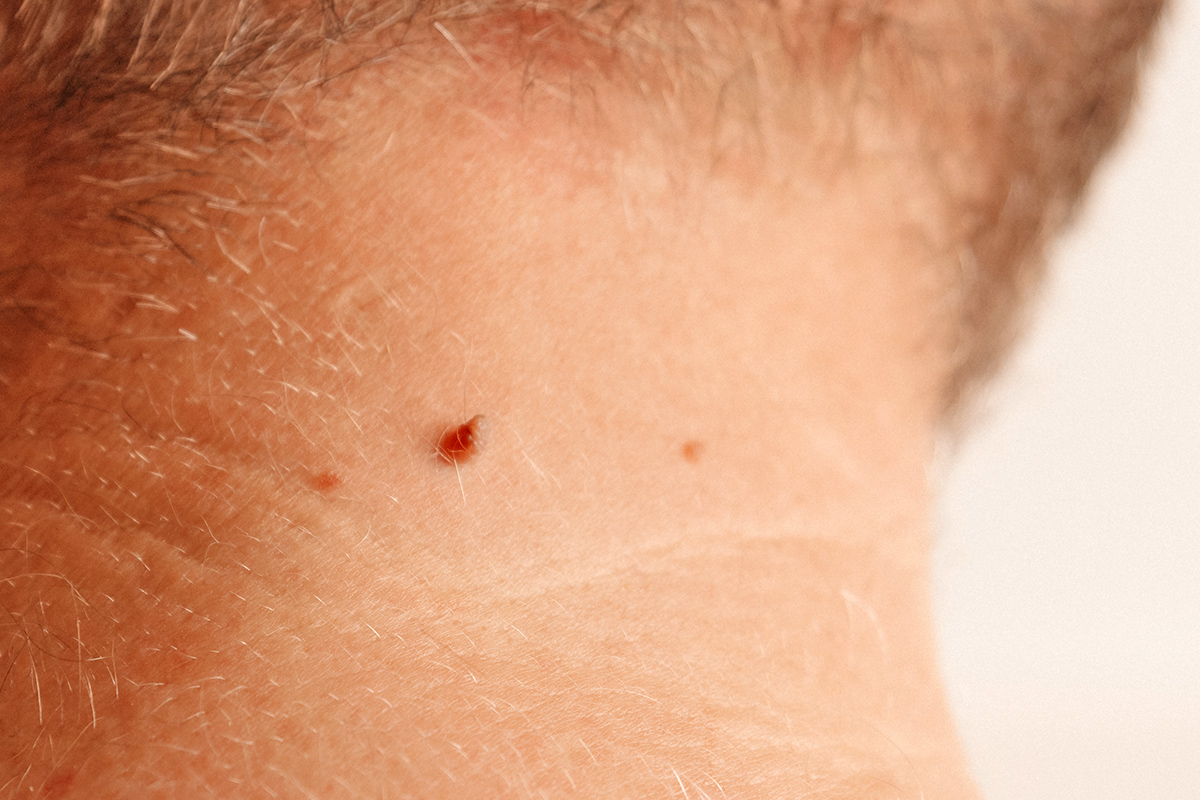
Cherry angiomas get their name from their color — they range from light to dark, purplish red — and their tendency to pop up in clusters. According to Dr. Schneider, these dome-shaped growths “are made up of vascular cells.” They can be round or oval and measure from 1 millimeter (the thickness of a pinhead) to 5 millimeters (the size of a pea). 

Anyone can get cherry angiomas, and what exactly causes them is a mystery, though they’re more prevalent in some people than in others. “Genetics plays a role,” Dr. Schneider says. “People with fair skin and those of Caucasian ancestry tend to be more affected than others. And men tend to have more lesions than women.”  

Advertisement

Cherry angiomas can appear anywhere on the body. The most common spots are the trunk (specifically your chest and abdomen) and back, and women tend to get more of them on their legs, according to Dr. Schneider. They usually appear with age: According to the Cleveland Clinic, around 50% of people over 30 have them, and that number jumps to 75% for those over 75.

“Most often cherry angiomas appear over time,” Dr. Schneider says, “but you can occasionally have a group pop up in a shorter period of time — still usually weeks to months.” They may get larger or change in appearance over time. 

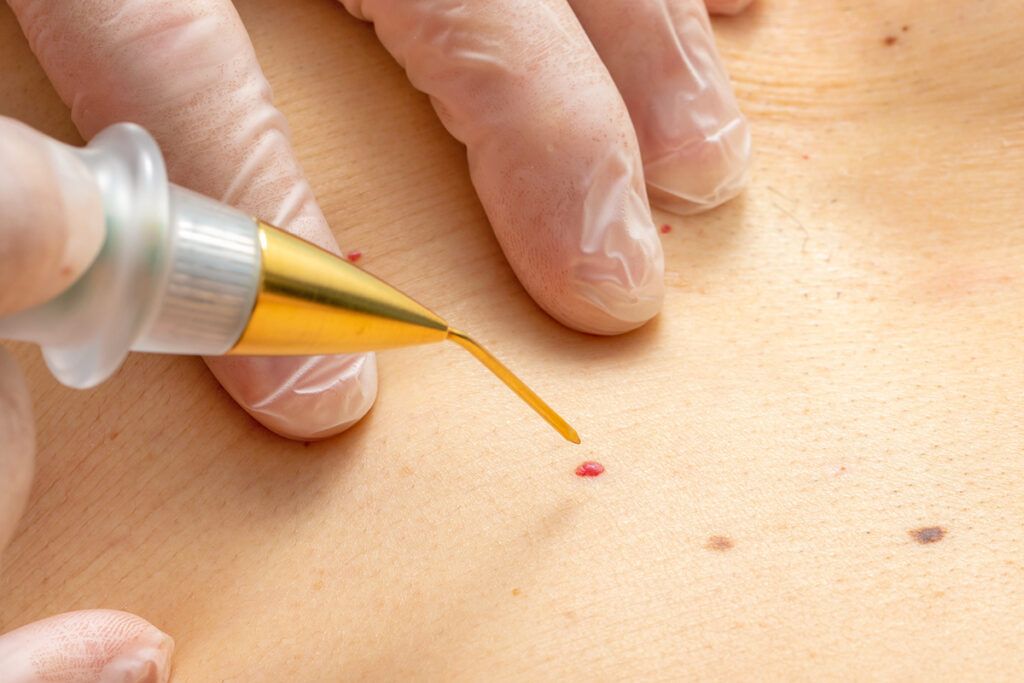
Removing cherry angioma
Credit: © karelnoppe/stock.adobe.com

Can You Get Rid of Them?

If you hate the appearance of these tiny red dots, we have bad news and good(ish) news. Bad news first: “Unfortunately, there is not anything that you can do to prevent them from appearing,” Dr. Schneider says. 

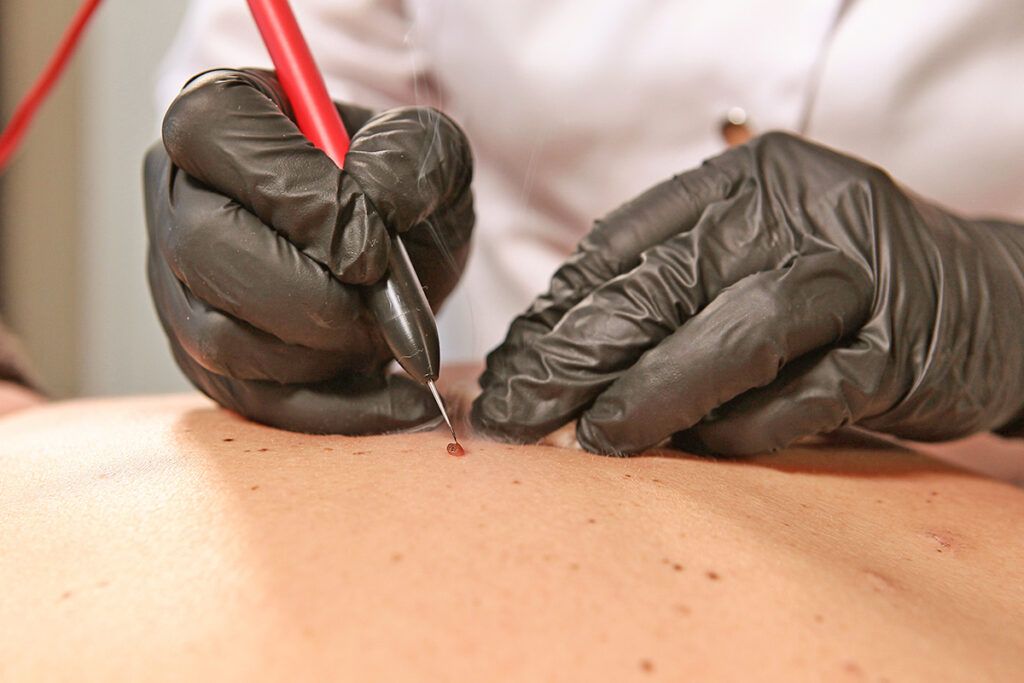
The good(ish) news is, they can be removed — but it may cost you. “Getting rid of cherry angiomas is considered cosmetic and so is generally not covered by insurance,” she explains. “Oftentimes, dermatologists use destructive methods to get rid of [them], such as lasers, liquid nitrogen, or electrodessication (burning).” You should never try to remove them yourself.

Advertisement

It’s important to note that “anytime you have any lesions removed, it is always possible that it could leave a mark behind — though this is not common — and you could still develop new lesions in the future,” Dr. Schneider says.

Recommended Articles

  • 5 Things To Ask Your Doctor About the New Flu Shot

  • Is Sourdough Actually Healthier Than Regular Bread?

  • Do You Really Need a Bidet in Your Home?

  • Is It Actually Better To Lease a Car?

Advertisement
Advertisement

Reader Favorites

  • Woman looking in fridge

    9 Foods You Should Toss ASAP if They’re Expired

  • Person eating salad

    7 Things a Chef Never Orders at a Restaurant

  • Cherry angioma

    Are the Tiny Red Dots on Your Skin Dangerous?
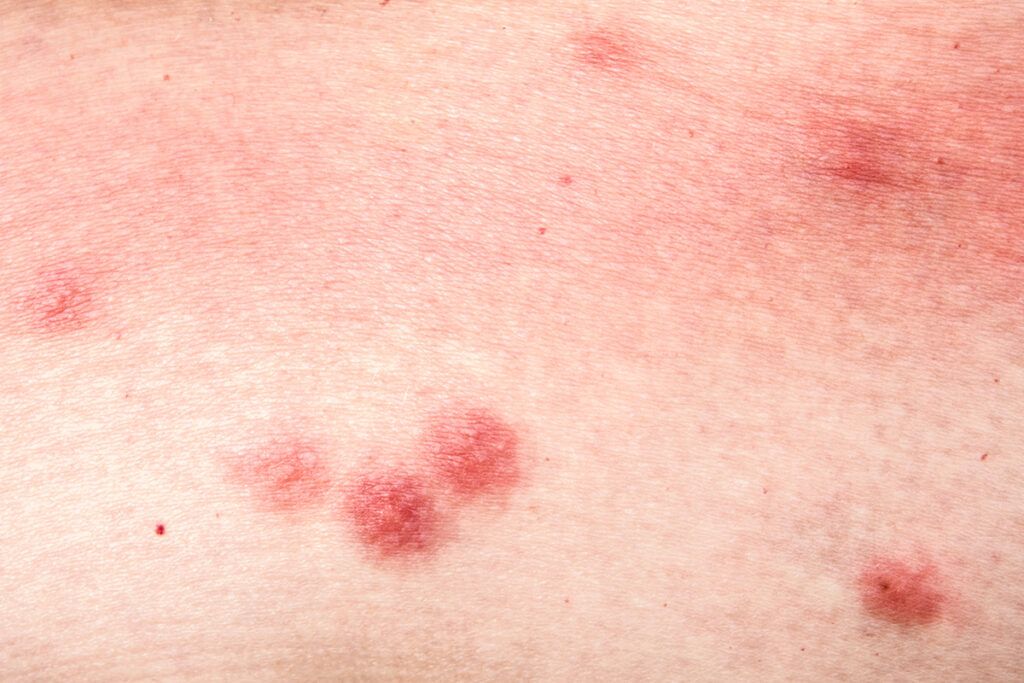
Bug bites on skin
Credit: © Stanislav Tiplyashin—Photodisc/Getty Images

Other Potential Causes of Red Marks on the Skin

Cherry angiomas aren’t the only thing that can cause red marks on your skin. “There are many growths that can appear as red bumps,” Dr. Schneider says. Here’s a short list of conditions that may be behind a red bump.

• Acne and bug bites can lead to red bumps, as can things like heat rash, contact dermatitis, eczema, and certain infections. 
• Pyogenic granulomas are benign red bumps that are prone to oozing and bleed easily. They can occur at any age but are most common in pregnant people and children, teens, and young adults. They may also be caused by medications. 
• Angiokeratomas are domed and look like warts. These benign tumors are caused by capillaries breaking open under your skin. They start out red, then darken to blue, purple, or black.
• Some skin cancers can also cause red marks on the skin. Basal cell carcinoma, the most common type of skin cancer, can manifest in any number of ways, including as a red, pink, tan, or brown growth (depending on your skin color) with elevated edges. Squamous cell carcinoma may appear as a firm pink, red, black, or brown bump. Pink or red bumps may also be indicative of skin cancers such as merkel cell carcinoma or amelanotic melanoma, according to Dr. Schneider. 
• Petechiae are tiny flat dots under the skin caused by minor hemorrhages. They may appear red or purple and may be indicative of a serious condition such as an autoimmune disorder. Unlike cherry angiomas, they’ll fade with time.  

Advertisement
Advertisement

“The[se] other red lesions often look different than cherry angiomas, but they are also red and often papules,” Dr. Schneider says. “If anyone is developing a new or changing lesion that looks concerning to them or they have questions about, it is always a good idea to get a spot checked by a board-certified dermatologist.”
Dermatologist looking at skin
Credit: © Inside Creative House—iStock/Getty Images

When Should You See a Doctor?

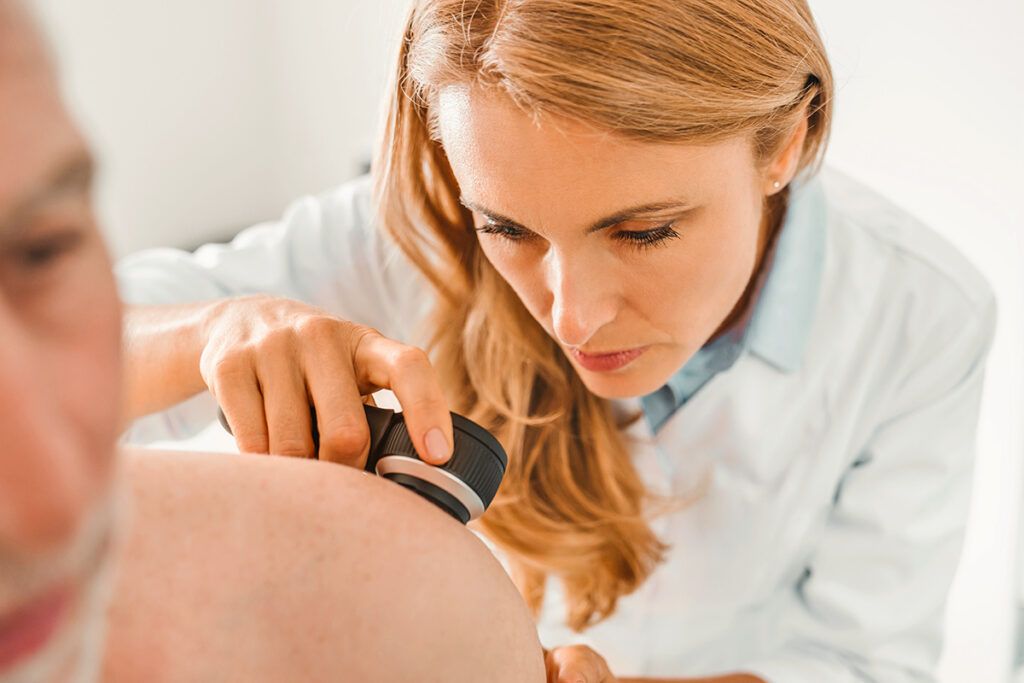
You can have your dermatologist look at the mark on your skin to confirm it’s a cherry angioma; sometimes they may take a biopsy to confirm. No further treatment should be necessary unless you want to have it removed, but there are some exceptions.

“If someone has a crop of new lesions pop up, that is a good time to go in and see a dermatologist, as there are a few conditions that can lead to increasing numbers of cherry angiomas,” Dr. Schneider says, including “certain chemical exposures, immunosuppression, changes in hormones, like during pregnancy, and even, though less common, with certain types of cancers.” 

Advertisement

She also notes it’s important to go to the doctor if you suspect that the red mark isn’t a cherry angioma, or you notice “anything that is changing that looks different than other lesions on [your] body — the ugly duckling sign — or [you] aren’t sure what it is.” 

Advertisement
Advertisement

Featured Image Credit: © Alena Vilgelm/stock.adobe.com

More From Our Network

Better Report is part of Inbox Studio, an email-first media company. *Indicates a third-party property.

Go Retro With This 1960s Fashion Quiz

Quiz Daily

Go Retro With This 1960s Fashion Quiz

True or False: Are You a Master of U.S. Geography?

Travel Quiz

True or False: Are You a Master of U.S. Geography?

5 Reasons You Can Be Denied Boarding an Airplane

Daily Passport

5 Reasons You Can Be Denied Boarding an Airplane

What Did People Do Before Eyeglasses?

History Facts

What Did People Do Before Eyeglasses?

How To Use a Balloon To Clean Up Dust

House Outlook

How To Use a Balloon To Clean Up Dust

11 Shopping Hacks Costco Members Should Know

FinanceBuzz*

11 Shopping Hacks Costco Members Should Know

Share this article

  • Share to Facebook
  • Share to Twitter
  • Copy Url
  • Share to Email
Erin McCarthy
Editor, Better Report

Erin is a writer, editor, and content strategist living in the New York City area. Previously, she was the VP/Editor-in-Chief of MentalFloss.com and an editor at Popular Mechanics magazine. When she’s not working, Erin is hanging out with her cats, reading books from her never-ending TBR, traveling, karaoking, and making sourdough with her starter Stephen Sondheim.

This article is for general informational purposes only.
Affiliate Disclaimer Medical Disclaimer Financial Disclaimer

Updated: March 23, 2026
Posted In: Health
Hero Image Credit: Better Report
Advertisement

Related Articles

5 Things To Ask Your Doctor About the New Flu Shot

5 min read

Is Sourdough Actually Healthier Than Regular Bread?

7 min read

Do You Really Need a Bidet in Your Home?

4 min read

3 Common Sleep Habits That May Be Aging Your Brain

5 min read

Is the Traditional Mediterranean Diet Actually the Best for Your Brain?

4 min read
Advertisement

What Are Skin Tags (And How Do You Get Rid of Them)?

Ali Eldridge
Health | Updated: June 2, 2026
Skin tags
Better Report

All featured products and deals are selected independently and objectively by the author. Better Report may receive a share of sales via affiliate links in content.

Our skin makes up about 16% of our body’s total mass — it’s our largest organ. It protects us from a wide range of threats, including germs, pollution, and the sun. The outermost layer, called the epidermis, has many unique features, from hair and freckles to scars and wrinkles.

But there’s something else that can appear anywhere on the surface of the skin: skin tags. These soft growths hang from the epidermis, sometimes in very visible places, making them aesthetically annoying. Here’s a breakdown of their features, any potential concerns, and how to remove them.

Skin tags
Credit: © Oleh Strus—iStock/Getty Images

Are Skin Tags Dangerous?

The good news: Skin tags are almost always harmless. They’re also very common. According to the Cleveland Clinic, half of all adults will have at least one skin tag in their lifetime, but unfortunately, there is no guaranteed way to prevent them.

Advertisement
Advertisement

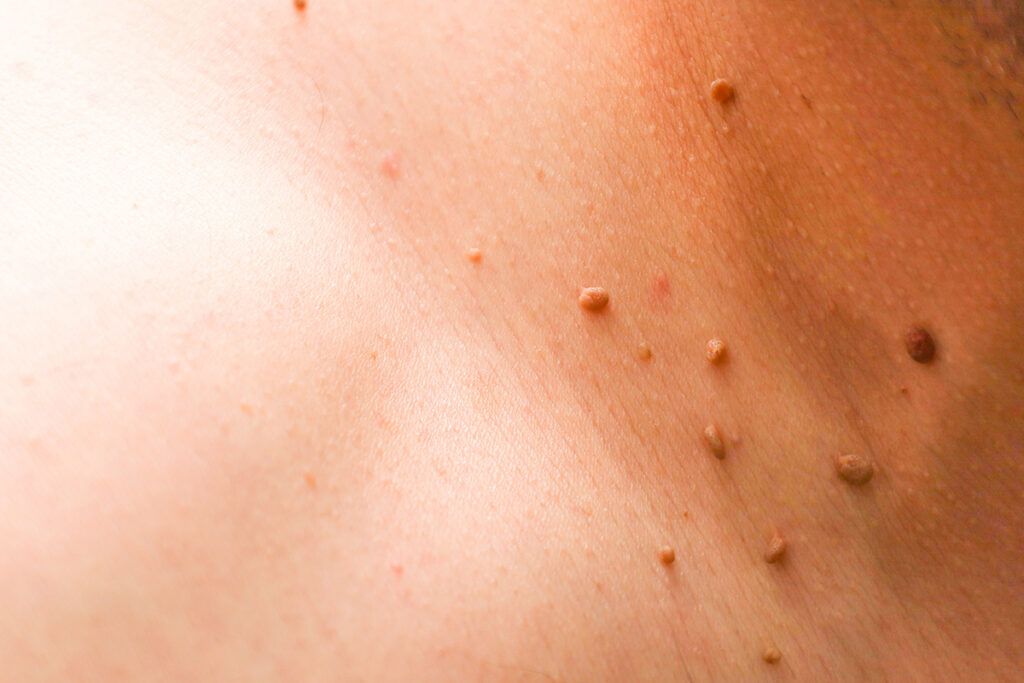
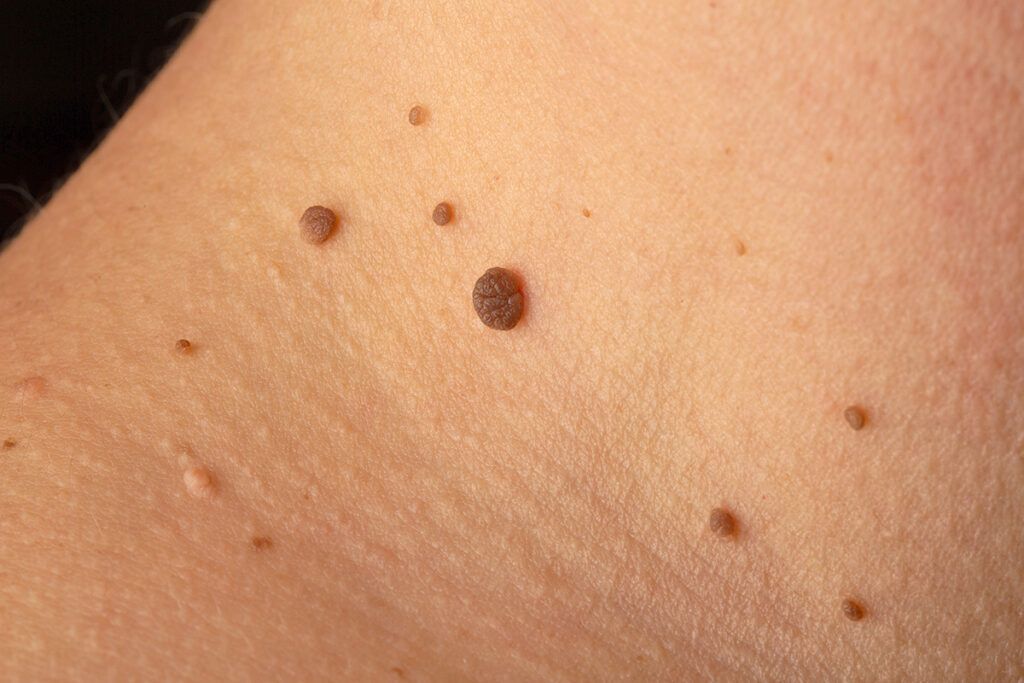
Formally known as acrochordons, skin tags are noncancerous growths that can appear anywhere on the body. They’re usually pink, flesh-colored, or slightly darker than the surrounding area, though they may turn red when friction or pressure is applied. Some skin tags hang from the skin on a thin stalk, while others are more firmly attached — both are normal —  and most measure between 1 and 5 millimeters, though some can grow much larger.

Most of the time, skin tags are nothing to worry about. But if a skin tag changes color rapidly, becomes painful, bleeds, grows quickly, or becomes firm or ulcerated, it’s important to see a dermatologist. These symptoms may indicate another type of growth or condition, such as a mole, wart, skin disease, or, in rare cases, skin cancer.

Advertisement
Aged skin with moles and skin tags
Credit: © TANIDA/stock.adobe.com

What Are Some Common Causes?

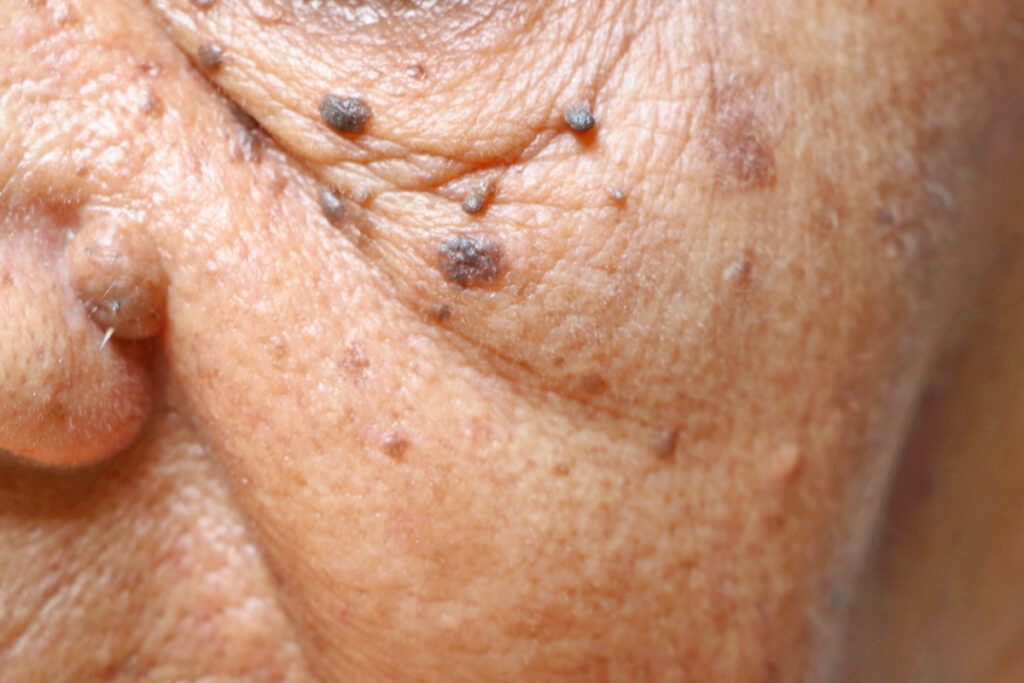
Skin tags most often appear due to friction from skin rubbing against itself, jewelry, or clothing for an extended period. This is why they commonly occur in creases and folds around the body, such as the underarms, groin, neck, and eyelids.

Hormonal changes may also cause new skin tags, as hormones affect the growth and regeneration of skin cells. Pregnancy, menopause, hormonal imbalances, and some endocrine conditions may explain their sudden appearance.

Recommended Articles

  • 5 Things To Ask Your Doctor About the New Flu Shot

  • Is Sourdough Actually Healthier Than Regular Bread?

  • Do You Really Need a Bidet in Your Home?

  • Is It Actually Better To Lease a Car?

Advertisement
Advertisement

Reader Favorites

  • Woman looking in fridge

    9 Foods You Should Toss ASAP if They’re Expired

  • Person eating salad

    7 Things a Chef Never Orders at a Restaurant

  • Cherry angioma

    Are the Tiny Red Dots on Your Skin Dangerous?

Age and genetics can also affect the size and number of skin tags. After 40, collagen and elastin levels decline, which can lead to new growths on the skin. However, certain medical conditions, such as diabetes and metabolic syndrome (a group of conditions that include high blood pressure and unhealthy cholesterol), may also promote their growth. If you develop many skin tags rapidly, this could be a rare sign that something else is going on inside your body (such as insulin resistance), and it’s time for a checkup.

Skin tags
Credit: © Alessandro Grandini/stock.adobe.com

Should I Remove a Skin Tag Myself?

Unfortunately, skin tags don’t fall off or go away on their own, causing many people to try to get rid of the blemishes themselves. But this is best left to the professionals, as DIY methods can do more harm than good: In particular, at-home skin tag removal kits and devices that involve cutting, freezing, or topical solutions come with risks for infection, bleeding, and scarring. This is why dermatologists don’t recommend them, especially in sensitive areas such as the face or eyelids. Moreover, the chances of incomplete removal — meaning the skin tag will grow back — are higher with at-home remedies.

Advertisement
Advertisement

If you decide to try an over-the-counter skin tag remover on a low-risk area, choose an FDA-cleared product specifically labeled for skin tags and follow instructions carefully. Wart removers, for example, are often too harsh and may damage the surrounding skin. One popular example of an FDA-cleared product specifically for skin tags is Dr. Scholl’s Freeze Away Skin Tag Remover.

Removing growth on skin
Credit: © Alla/stock.adobe.com

How Does a Dermatologist Remove Skin Tags?

Keep in mind that because skin tags are benign, most health insurance plans don’t cover removal, as it’s considered cosmetic. That said, there are several methods a dermatologist may use to remove them, depending on their size and location on the body.

Advertisement
Advertisement

One popular option is cryosurgery, in which the skin tag is frozen with liquid nitrogen. Another method, electrodesiccation, uses a tiny needle to zap the skin tag. In both methods, the skin tag will scab and eventually fall off.

Advertisement

Finally, in a more direct approach, your dermatologist may simply numb the area and snip off the tag with a blade or scissors. (Do not try this at home.) When left to a professional, scarring from these types of removals is very minimal or even undetectable. If these procedures sound intimidating, don’t worry — skin tags often don’t need to be removed at all.

Featured Image Credit: © Duangjan/stock.adobe.com

More From Our Network

Better Report is part of Inbox Studio, an email-first media company. *Indicates a third-party property.

Go Retro With This 1960s Fashion Quiz

Quiz Daily

Go Retro With This 1960s Fashion Quiz

True or False: Are You a Master of U.S. Geography?

Travel Quiz

True or False: Are You a Master of U.S. Geography?

5 Reasons You Can Be Denied Boarding an Airplane

Daily Passport

5 Reasons You Can Be Denied Boarding an Airplane

What Did People Do Before Eyeglasses?

History Facts

What Did People Do Before Eyeglasses?

How To Use a Balloon To Clean Up Dust

House Outlook

How To Use a Balloon To Clean Up Dust

11 Shopping Hacks Costco Members Should Know

FinanceBuzz*

11 Shopping Hacks Costco Members Should Know

Share this article

  • Share to Facebook
  • Share to Twitter
  • Copy Url
  • Share to Email
Ali Eldridge

This article is for general informational purposes only.
Affiliate Disclaimer Medical Disclaimer Financial Disclaimer

Updated:
Posted In: Health
Hero Image Credit: Better Report
Advertisement

Related Articles

5 Things To Ask Your Doctor About the New Flu Shot

5 min read

Is Sourdough Actually Healthier Than Regular Bread?

7 min read

Do You Really Need a Bidet in Your Home?

4 min read

3 Common Sleep Habits That May Be Aging Your Brain

5 min read

Is the Traditional Mediterranean Diet Actually the Best for Your Brain?

4 min read
Advertisement
  • Home
  • Health
  • Wealth
  • Logo
  • Advertise
  • About
  • Contact Us
  • Privacy Policy
  • Terms of Use
  • Your Privacy Choices
x
Thumb Image

Elevate your everyday.

Sign up to receive the practical tips and expert advice you need to pare down the complexities of everyday living right in your inbox.

Sorry, your email address is not valid. Please try again.

Your email is:

Edit Image
Sorry, your email address is not valid. Please try again.
Thank you for subscribing...

By subscribing you are agreeing to our Terms of Use and Privacy Policy.

Close image
Thumb Image
Second Thumb Image

Elevate your everyday.

Sign up to receive the practical tips and expert advice you need to pare down the complexities of everyday living right in your inbox.

Sorry, your email address is not valid. Please try again.

By subscribing you are agreeing to our Privacy Policy and Terms of Use.

Close image