Skip to content
Better Report
  • Home
  • Health
  • Wealth
8 Low-Maintenance Plants That Thrive on Neglect
  • Search
  • Subscribe
  • Home
  • Health
  • Wealth
  • About
  • Privacy Policy
  • Terms of Use
  • Contact Us
  • SubscribeSubscribe
  • Search
Thank you for confirming your email! Welcome to the community.

Author: akang

First-Date Etiquette Tips for People Over 40, According to a Matchmaker

Sponsored By
Home | Updated: October 22, 2026
Jessica Levy
Author
Jessica Levy is a freelance writer and editor covering a broad range of topics from travel and parenting to personal finance and health. Her work has appeared in The New York Times and The Atlantic, among others.
Credit: Tawkify

By 40, you know how you like to spend your days and what you won’t tolerate, and you’re probably more confident than you were when you were still battling algebra. But that doesn’t mean dating is easy.

These first-date etiquette guidelines will help set you up for dating success — from how much to share about your past to how to balance achieving your relationship goals with letting connections build naturally.

1. Don’t Lead With “What Do You Do?”

Work may take up a lot of your time, but it’s probably not the most interesting thing about either of you. To keep the date from feeling like a job interview, lead with a question like “What keeps you busy outside of work?”

“As we age, we often have a clearer sense of what we want, which can make it tempting to work through a checklist,” Katie Hisey, director of matchmaking at Tawkify, says. “Leave room to discover the person beyond those criteria.”

Advertisement

2. It’s a Date, Not an Audition

“You can be intentional about finding a partner while still letting the conversation be playful,” Hisey says.

Nobody wants a date that turns into a monologue. If you’re doing more than your share of the talking, turn the spotlight back on your date with an open-ended question. 

Credit: Inside Creative House / iStock

3. Don’t Invite Your Ex on Your Date

Be forthcoming about past serious relationships, but don’t make your date compete with your ex. If you share too much, your date might start making comparisons or wonder whether you’re ready to move on. 

“Be open about the parts that shape your life today, such as children, co-parenting, or how long you’ve been single,” Hisey says. “The deeper details can unfold as trust develops.”

Advertisement

Factual context is fine, but dissecting what went wrong or criticizing an ex relentlessly can be off-putting.

4. Be Honest About Where You Stand

Once you know it’s not a match, don’t offer an enthusiastic “We should do this again sometime!” that leaves your date checking their phone for a message that never comes. Let them know so they can move on, too.

Avoiding that awkwardness is yet another reason to consider a Tawkify matchmaker. After a date, they’ll collect feedback and let both people know whether there’s mutual interest, so there’s no ghosting or guessing.

5. Separate an Off Night From an Actual Mismatch

A joke that didn’t land or a lull in conversation doesn’t necessarily mean incompatibility, especially when you’re already aligned on what matters long-term. Between kids’ schedules, demanding jobs, and established routines, over-40 dating rarely allows for the all-consuming spark of your 20s, but real chemistry can build between busy weeks.

Advertisement

“First dates can be awkward, especially when you’re fitting dating around an already full life,” Hisey says. She suggests asking yourself, “Was there something about this person that didn’t feel right, or did the experience simply feel unfamiliar?”

Credit: nicexray / iStock

Your Next Chapter Deserves a Great Love Story

If you’re 40 or over and done waiting for the right person to find you, let a Tawkify matchmaker do the searching. You’ll get handpicked matches and fully planned dates, so all you have to do is show up. With more than 200,000 connections made and counting, your best date yet could be closer than you think. Start with a complimentary consultation.

Featured Image Credit: Provided by Tawkify

This story was paid for by an advertiser. Better Report's editorial staff was not involved in the creation of this content.


Recommended Articles

  • 13 Stocking Stuffers That Are Actually Useful

  • Are the Brown Marks on Your Skin Dangerous?

  • 7 Common Meds Seniors Overuse

  • The Best Gifts for Every Budget

Advertisement
Advertisement

Related Articles

Should You Refrigerate Peanut Butter?

6 min read

The Most Popular Car Colors in the U.S.

4 min read

Why Doesn’t Plastic Totally Dry in the Dishwasher?

3 min read

Putting This in Your Dryer Is a Major Fire Risk

3 min read

18 Surprising Things You Should Never Put Down Your Drain

5 min read
Advertisement

What the 0.1% Aren’t Telling the Rest of Us About Retirement

Sponsored By
akang
Wealth | Updated: December 12, 2025
Better Report

This story was paid for by an advertiser. Better Report’s editorial staff was not involved in the creation of this content.

Most Americans enter retirement hoping their savings, investment decisions, and timing align to support their long-term goals — keyword: hoping. For the top 0.1% of wealth holders, though, the reality looks different. Their portfolios may be larger, but the distinction isn’t only about income. They’re in the top 0.1% of planners, tax managers, and decision makers. 

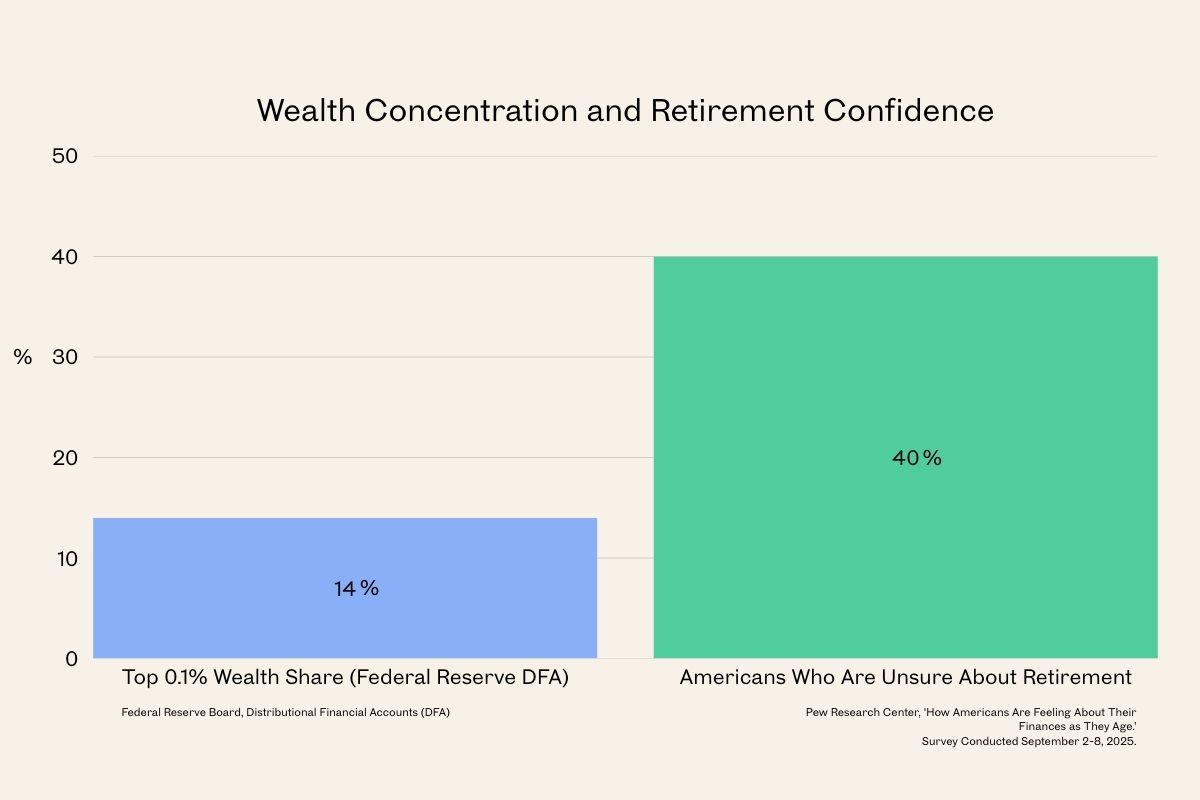
Federal Reserve data on household wealth distribution shows the share of the nation’s assets this small group holds. The numbers are startling, but they didn’t shift overnight. The data reflect habits formed long before retirement, including how these households manage taxes and coordinate different types of accounts.

How the Ultra-Affluent Approach Taxes

For the most affluent retirees, tax planning isn’t a once-a-year event. It’s something they add to their long-term strategy, especially when it comes to Required Minimum Distributions (RMDs), capital gains, and changes in taxable income. Instead of waiting until distributions are unavoidable, they may consider how taking money earlier or adjusting the timing of gains might help manage taxes over several years. A key part of the strategy is understanding how different types of investment income are taxed.

Advertisement

“Capital gains have a much lower tax rate than earned income, interest, or dividends. And therefore are advantageous in that regard, relative to interest and dividends, with a higher total return,” Ken Fisher, founder and executive chairman at Fisher Investments, said.

Rather than focusing on minimizing their tax implication in a single year, they adapt their strategy to keep their withdrawal plan steady and sustainable.

They Coordinate Their Withdrawals Across Multiple Accounts

Affluent retirees often coordinate their withdrawals across multiple account types. Traditional IRAs, Roth accounts, brokerage assets, and appreciated holdings each play a role. They’re used in combination to support post-work income needs and manage tax bills across different stages of retirement. A long-term mindset often guides those decisions, especially when investors are balancing different assets and timelines.

“Stocks are inherently volatile, at least in the short term,” Aaron Anderson, senior vice president of research at Fisher Investments, said. “They become much less so over the long term — meaning the further out you go, the longer your time horizon, the more consistent stock returns become.”

Advertisement

This type of coordination can help keep taxable events predictable, whether someone is drawing down tax-deferred savings, using Roth accounts later for flexibility, or handling unexpected income changes.

They Take Planning Seriously

Even with planning tools available, many Americans are unsure how far their savings will stretch. A Pew Research Center survey found that roughly four in 10 Americans don’t feel confident they will have enough money to last their entire retirement. That uncertainty stands in contrast to the longer-range planning affluent households do. Though an early start lets you take advantage of compound interest, planning at any stage makes retirement feel more attainable. The gap between where wealth is concentrated and how people feel about their own retirement shows how much planning shapes the experience.

They Know When to Ask an Expert

Few households sit anywhere near the top 0.1% in wealth, a group whose share of national assets matches that of the bottom 50%, but the way those investors plan their taxes and sequence their withdrawals can still serve as a playbook for the other 99.9% of retirees. Many affluent households trust professional advisors who help them take a longer-term view of taxes and make decisions spanning decades. Fisher Investments offers these same resources to everyday investors, explaining these concepts (and others) in more depth.

Read Fisher Investments’ Tax-Efficient Wealth Management for Affluent Investors guide to get additional insights into tax-smart planning.

Advertisement

Feature Image Credit: Jordan Siemens / Getty Images

This story was paid for by an advertiser. Better Report's editorial staff was not involved in the creation of this content.

Recommended Articles

  • 13 Stocking Stuffers That Are Actually Useful

  • Are the Brown Marks on Your Skin Dangerous?

  • 7 Common Meds Seniors Overuse

  • The Best Gifts for Every Budget

Advertisement
Advertisement

Related Articles

13 Stocking Stuffers That Are Actually Useful

8 min read

The Best Gifts for Every Budget

9 min read

America’s Most Expensive ZIP Codes

5 min read

What Gifting Experts Get People Who Are Hard To Shop For

6 min read

Surprisingly Great Gifts You Can Get From Costco

8 min read
Advertisement
  • Home
  • Health
  • Wealth
  • Logo
  • Advertise
  • About
  • Contact Us
  • Privacy Policy
  • Terms of Use
  • Your Privacy Choices
x
Thumb Image

Elevate your everyday.

Sign up to receive the practical tips and expert advice you need to pare down the complexities of everyday living right in your inbox.

Sorry, your email address is not valid. Please try again.

Your email is:

Edit Image
Sorry, your email address is not valid. Please try again.
Thank you for subscribing...

By subscribing you are agreeing to our Terms of Use and Privacy Policy.

Close image
Thumb Image
Second Thumb Image

Elevate your everyday.

Sign up to receive the practical tips and expert advice you need to pare down the complexities of everyday living right in your inbox.

Sorry, your email address is not valid. Please try again.

By subscribing you are agreeing to our Privacy Policy and Terms of Use.

Close image