Do Multivitamins Actually Do Anything?


Walk down the supplement aisle at your local pharmacy and you’ll find no shortage of multivitamins. They’re formulated for women, men, children, and seniors, and promise to support everything from your cardiovascular system to your immunity. But can one pill do that much to improve your health?
What Are Multivitamins?
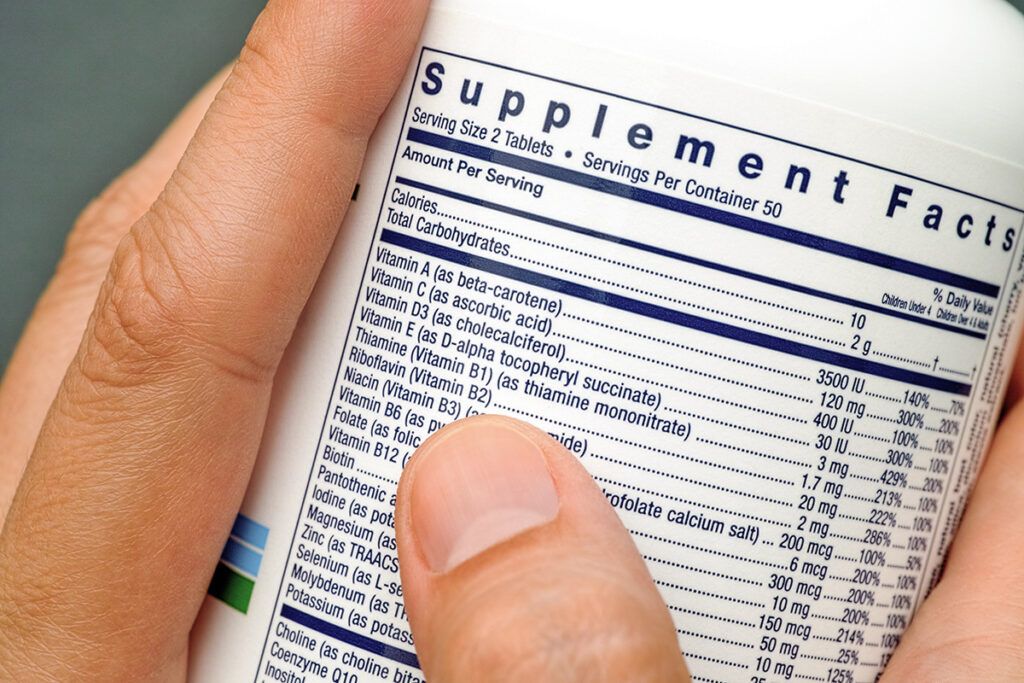
The National Institutes of Health (NIH) defines a multivitamin as a supplement that combines vitamins and minerals in amounts near your recommended daily allowance. The first multivitamins hit the U.S. market in the 1940s, and Americans have been taking them ever since. Today, as many as one in three adults in the U.S. takes a daily multivitamin, according to the Journal of the American Medical Association (JAMA).
Multivitamins can include calcium, folate, iron, magnesium, zinc, vitamins B12 and D, and more, but there’s no standardization when it comes to their formulas. They’re also not regulated by the Food and Drug Administration, which means their nutritional makeup will vary depending on the brand. To ensure the supplement you’re taking is safe, you can use the Department of Defense’s (DoD) Operation Supplement Safety Scorecard, a simple yes-or-no quiz that directs you to look for things like third-party certification, the number of ingredients, and the percentage of daily values. If the supplement scores 4 or above, it’s OK to take, provided it doesn’t include any of the ingredients on the DoD’s prohibited list.
Multivitamins are big business, too. You can find them in tablets, capsules, gummies, and liquids. Americans spent nearly $9.2 billion on multivitamins in 2025, accounting for 12.4% of the total $74.15 billion in U.S. supplement sales that year, according to the 2026 Nutrition Business Journal Supplement Business Report, which tracks the U.S. dietary supplement industry.

Do Multivitamins Work?
The short answer: It depends. Taking multivitamins is supposed to help fill in nutritional gaps in your diet. Because your health relies so much on what you eat, you should aim to get your vitamins and minerals from your food. But if you’re consistently lacking fresh fruits, vegetables, and whole grains — or you have a condition that affects your ability to absorb vitamins and minerals — taking a multivitamin could be beneficial, if your doctor OKs or recommends it.

Reader Favorites



If you’re a relatively healthy person eating a well-balanced diet, though, there’s likely no reason for you to take a multivitamin. The U.S. Preventive Services Task Force, in fact, says there’s not enough evidence to say whether the benefits of taking a multivitamin outweigh the potential harms.

Do Multivitamins Make You Healthier?
Research over decades has found taking multivitamins won’t lower the risk of a cardiac event in men or women, or prevent common cancers like prostate, colorectal, or lung cancer. It also won’t prevent, or even reduce, your odds of early death. One study even found that for older women, taking multivitamins was associated with a higher risk of death compared to those who didn’t use them.
However, other research shows taking multivitamins can have benefits, including three COcoa Supplement and Multivitamin Outcomes Study (COSMOS) trials focusing on cognition and memory. The studies tested about 5,000 people and showed a significant benefit to memory and cognition in those who took a daily multivitamin compared to those who took a placebo.
But even multivitamins have some potential risks if you take them at high doses. Fat-soluble vitamins like A, D, E, and K get stored in your liver and can be toxic if you take too much. Others can interfere with medications you’re taking. That’s why it’s important to talk to your doctor before starting a multivitamin.
So, is it worth spending the money to take a daily multivitamin? The good news is taking one every day likely won’t harm you (provided you’re taking it as directed and aren’t also eating fortified foods that could put you over the recommended maximum of some daily nutrients). If you need to fill in a nutritional gap in your diet, a multivitamin may even be beneficial. But if you’re a healthy adult, most evidence suggests that daily multivitamins won’t dramatically improve your health. You’re better off getting the recommended daily allowance of vitamins and minerals from a well-balanced diet.
As physician Dr. Lola Okunnu put it in an interview about multivitamins with Houston Methodist Hospital, “If you’re eating well-rounded meals three times a day, the only thing a multivitamin provides you is expensive urine.”
Featured Image Credit: © Pressmaster—iStock/Getty Images
More From Our Network
Better Report is part of Inbox Studio, an email-first media company. *Indicates a third-party property.







Sarah Gleim is an Atlanta-based freelancer with more than 25 years of experience writing and producing explainers and features about history, science, food, and health for media outlets like AARP, WebMD, The Conversation, History.com, HowStuffWorks, CNN, and others. She’s also the editor of several cookbooks for Southern Living and Cooking Light.
This article is for general informational purposes only.
Affiliate Disclaimer Medical Disclaimer Financial Disclaimer