10 Foods You Should Buy Frozen Instead of Fresh

All featured products and deals are selected independently and objectively by the author. Better Report may receive a share of sales via affiliate links in content.
Frozen food sometimes gets a bad rap (“Ours is fresh, never frozen!”), as if it’s a compromise or of lower quality. But make no mistake: It’s more than just a convenience. Commercially frozen food preserves fruits, vegetables, and meats at their peak of freshness and flavor, and super-cold blast freezing causes less damage to food than freezing done at home.
As a former chef, I appreciate frozen food for a lot of reasons. Sometimes it’s outright better than fresh. Sometimes it’s cheaper or more practical, and it’s almost always more convenient. Here are 10 foods I recommend buying frozen rather than fresh.
Fish
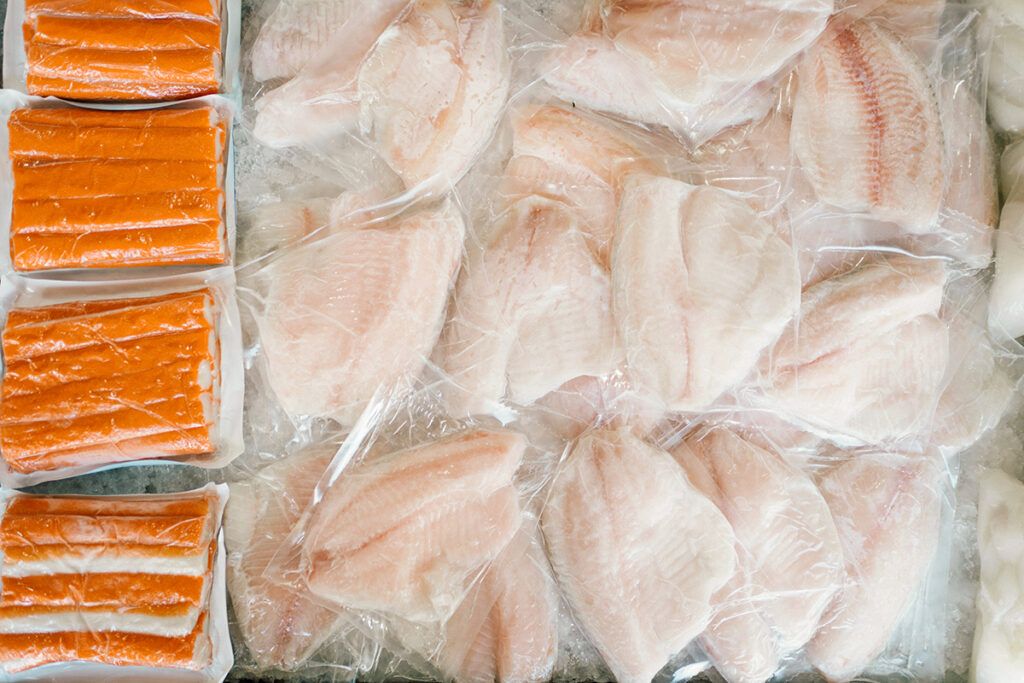
Unless you literally buy your seafood off the boat, frozen fish is usually fresher and of higher quality than what you find at your store’s fish counter. It’s blast-frozen either on the fishing vessel itself or at a processing plant immediately after it comes ashore, and that quick freezing process preserves the fish’s texture and prevents spoilage. In fact, a lot of the “fresh” fish you’ve bought in your life was probably previously frozen. (Even fish used for sushi is typically frozen to kill parasites.)
Frozen fish is also convenient and low-stress. Fresh or previously frozen fish needs to be cooked within a day or two (although same day is best); otherwise its quality goes downhill rapidly. But you can keep frozen fish on hand and use it whenever you feel like it. (How long it will keep depends on the type of fish and its packaging: Fatty fish such as tuna will last for around three months, leaner fish like halibut for six, and vacuum-sealed fish can last for up to a year. I have a FoodSaver, which I use for anything I won’t be eating in the near-term, and use Ziplocs only for food that’ll be eaten within a month or two.) Frozen fish is also usually cheaper, which makes it better for your budget, too.

Reader Favorites



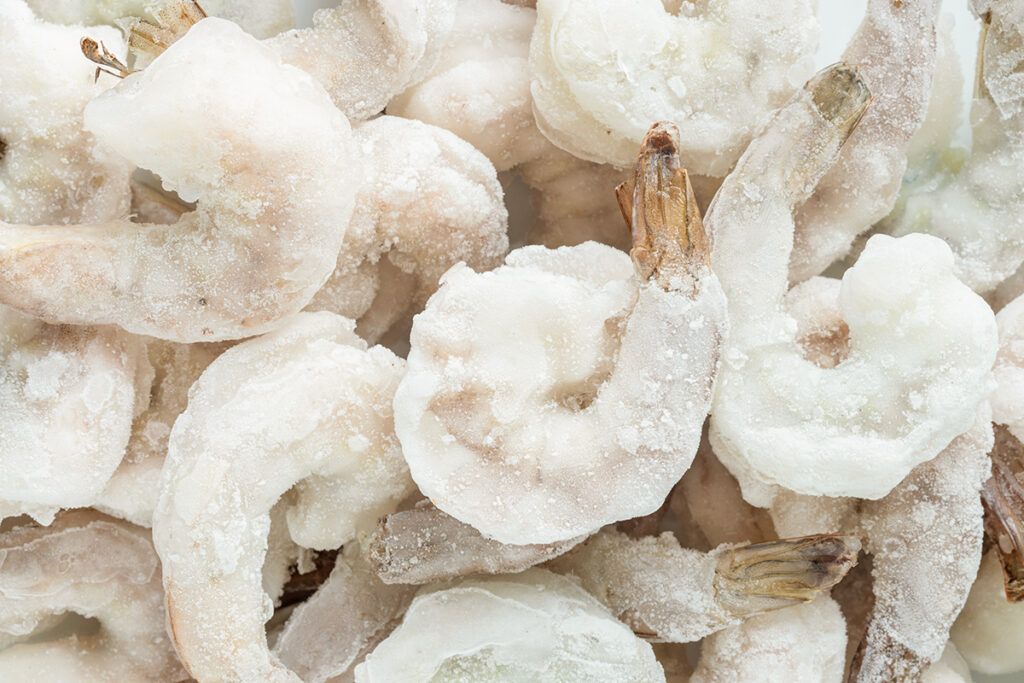
Shrimp
In a few markets around the U.S., it’s possible to buy fresh, local shrimp that have just come out of the ocean. For everyone else, the choices almost invariably are frozen shrimp or previously frozen shrimp, though some specialty stores may offer them live and swimming. Shrimp and other shellfish are even more perishable than finned fish, which makes freshness all the more important, so if you can’t buy them live or directly from a boat, frozen is your best bet.
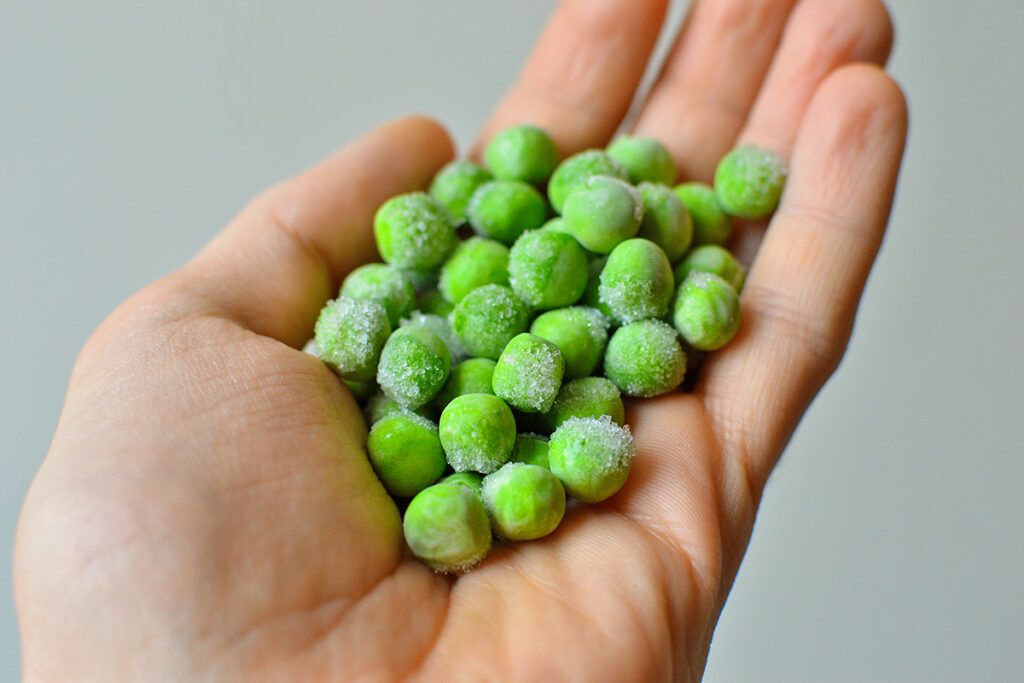
Shell Peas
There’s nothing quite as good as shell peas fresh from the garden: They’re sweet and delicately flavorful, and especially tender if you pick them before they reach full size. But for those who don’t garden, or who want to enjoy their fresh early-summer flavor all year long, frozen peas are a slam-dunk. They capture that flavor and color beautifully because processing plants are usually located close to the growing areas, minimizing shipping time and giving consumers a better product. (The saved time and shipping costs also make them more profitable for processors.) The same holds true for soybeans (edamame) and shell beans.
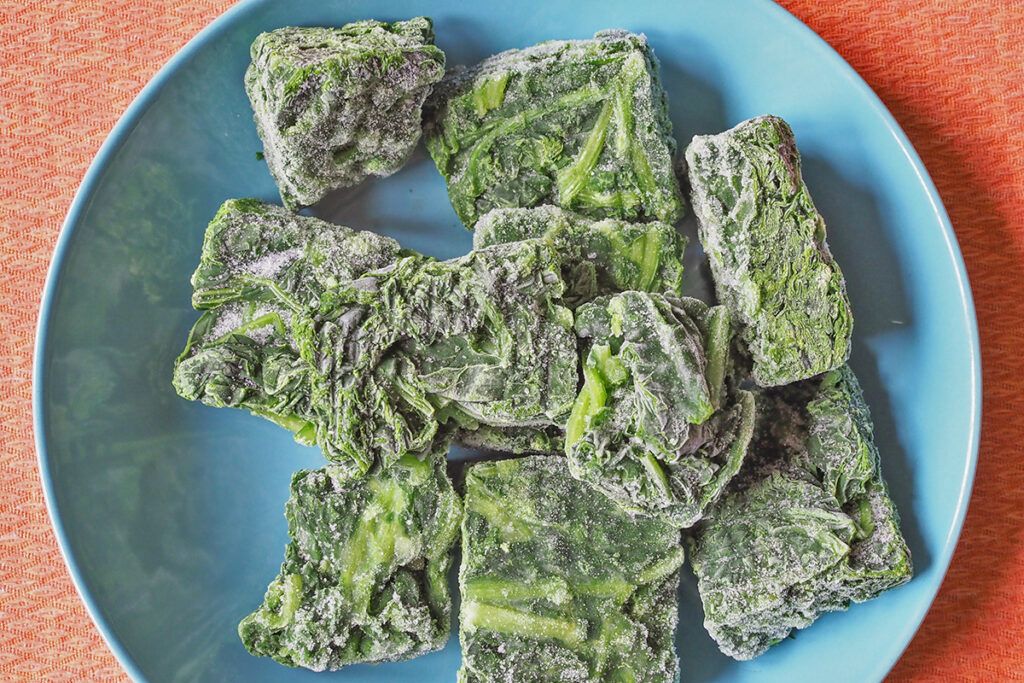
Spinach and Other Leafy Greens
Greens, especially the more delicate ones like spinach, have a tendency to shrink as they cook. So, if you eat greens regularly and want to put dinner on the table in a hurry, you may want to buy them frozen.
Frozen vegetables are always blanched — parcooked in steam or boiling water — prior to freezing to deactivate enzymes that would otherwise start breaking them down, even at freezer temperatures. Blanching shrinks greens to their final size, so you can tell at a glance whether you’re using enough, and it also means they’ll keep their bright color longer when cooked, so your finished dishes will look better.
Those factors, plus the convenience and fresh flavor you get with frozen greens, make keeping them on hand a no-brainer.
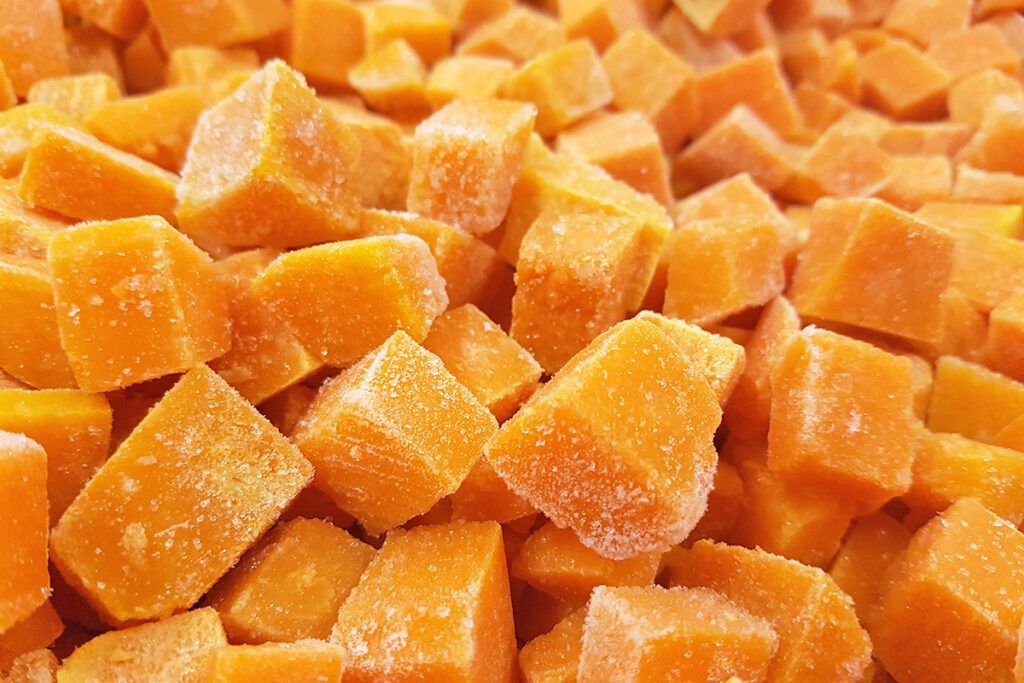
Winter Squash
Butternut, Hubbard, and other winter squashes are some of the longest-lasting, and hardiest, vegetables. That means they’re widely available and stay relatively inexpensive year-round — so why buy them frozen?
In a word, convenience. Winter squashes are known for their hard flesh and tough rinds, which means they’re kind of a pain to work with, especially if your knives and knife skills aren’t the best, or if you have physical limitations that impact your cooking. So if you love squash, but hate the hard work of preparing it, getting yours frozen and already diced is well worth the modest price premium.
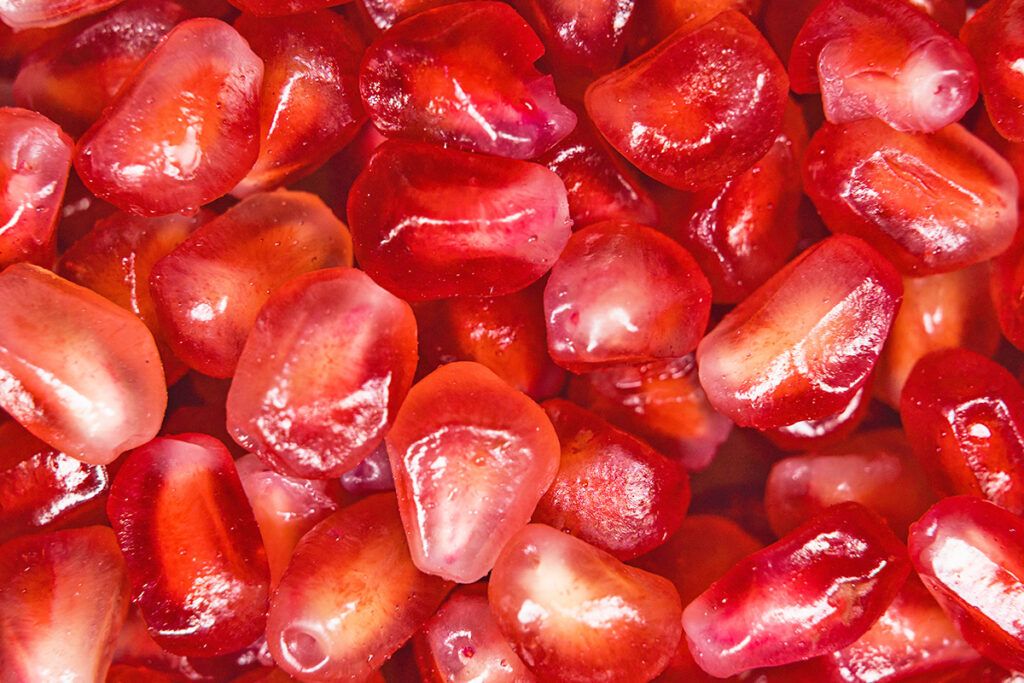
Pomegranate
If ever a fruit was made to be a festive accent, it’s pomegranate. The deep, jewel-like red of pomegranate arils (seeds) brings a striking splash of color anywhere you use them, from party punch to salads to your breakfast bowl. But stripping the arils from a fresh pomegranate is a messy and time-consuming business, and you’ll run the risk of staining both your hands and clothes with the colorful juice. Buying them frozen means you can sprinkle as many as you need straight from the bag, which is both simpler and cleaner.
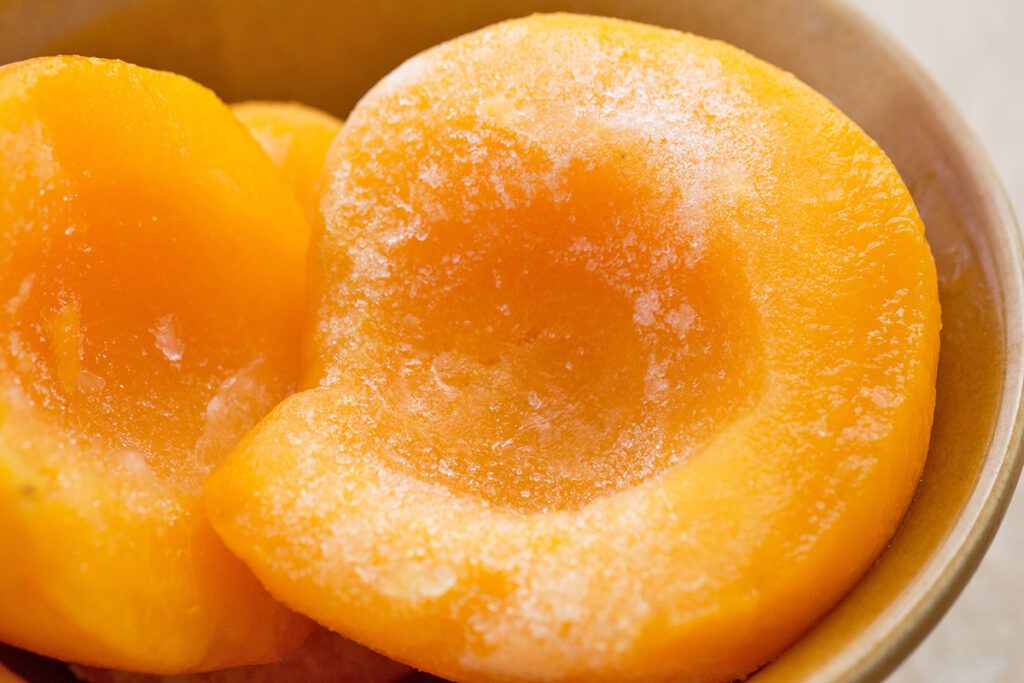
Peaches
Georgians may get their backs up over this one, but hear us out. Unfortunately, people who live outside of peach-growing areas can seldom rely on getting really good peaches. They’re a climacteric fruit, meaning they continue to ripen after picking — so they’re harvested early while still hard enough to stand up to shipping and will (theoretically) ripen once you get them home.
That doesn’t always happen, of course. Peaches bruise and brown easily, which might make them start to decompose before you can eat them. If conditions aren’t right, they can also shrivel up without ever ripening. Worst of all, they may look and feel ripe but be dry and mealy rather than lush and juicy when you cut into them.
Buying your peaches frozen lets you avoid all of those issues. And because processing plants are usually located near the orchards, peaches destined for the freezer can be harvested when fully ripe, sweet, and juicy (because they don’t need to stand up to shipping). So when the urge for a cobbler or a peach pie comes along, you’ll enjoy both convenience and a better product with frozen peaches.
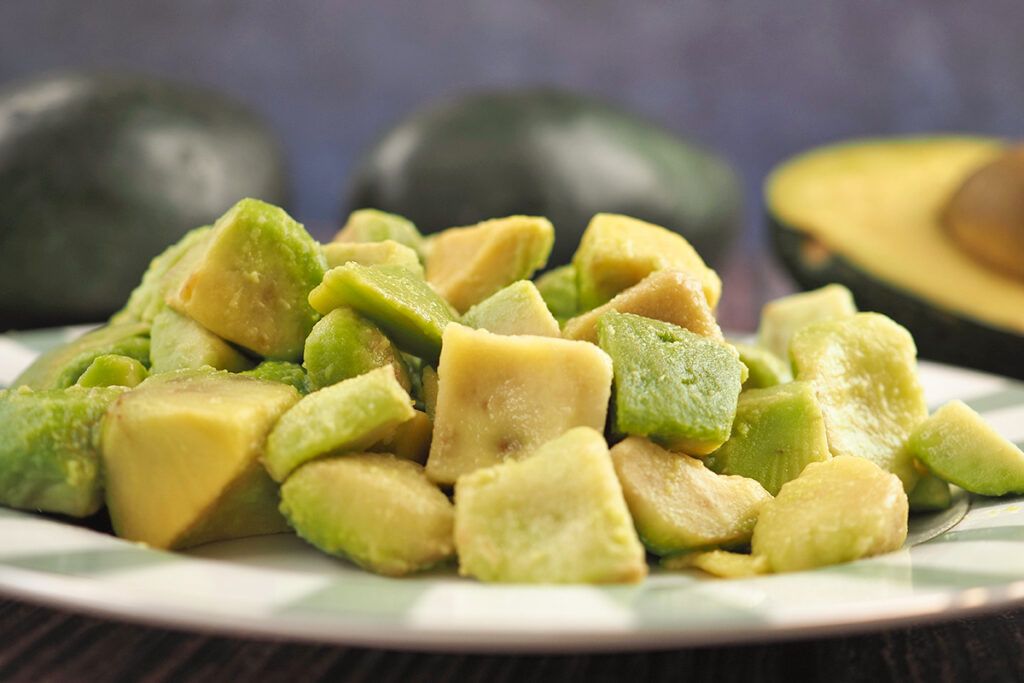
Avocados
This one may also raise some eyebrows, given that avocados are so easily damaged by cold temperatures. But unless you eat avocados every day, it’s hard to time their ripening process so that you can whip up a batch of guacamole exactly when you feel like it.
Frozen avocados aren’t as common as other kinds of frozen fruit, but if you can find them, they’re really convenient to keep on hand. Some are cut in half and frozen in airtight individual cryo packs, and can be thawed and sliced for things like sandwiches. Others are sold in chunks, which are good for guacamole or salads or smoothies.
One caveat: Frozen foods are often a no-compromise option, but in this case you’ll find that freezing and thawing does alter the avocado’s texture, making it slightly softer than it would normally be. Ideally, you’d use it mashed or in a dish where there’s a contrasting texture, such as in salads or on toast. Also, to prevent browning, frozen avocado is usually treated with an antioxidant like citric acid, which can give it a tart overtone that you won’t get with fresh avos. Still, they’re useful to keep on hand for those days when you have a craving and can’t find one ripe.
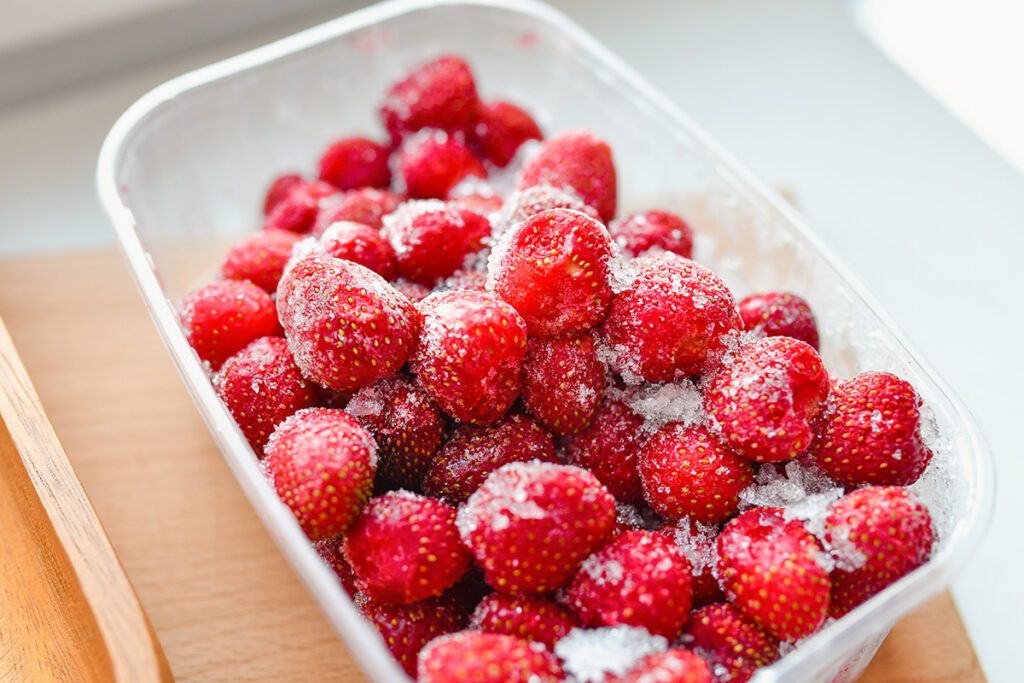
Mixed Fruit and Berries (aka “Smoothie Fruit”)
If you love smoothies, you already know that many of the popular fruits and berries have short lives on the counter and in the fridge. Bananas, like avocados, have a way of going from not-ripe to overripe in the blink of an eye.
So if your standard breakfast, lunch, or on-the-go meal is a smoothie or protein shake, it makes sense to keep one or two bags of frozen fruits and mixed berries in the freezer. It means less food waste and it’s usually cheaper than buying all of those fruits and berries individually. Best of all, getting your fruit already frozen means you’ll need less ice (or maybe none at all) to get the thick, cold consistency you’re looking for.
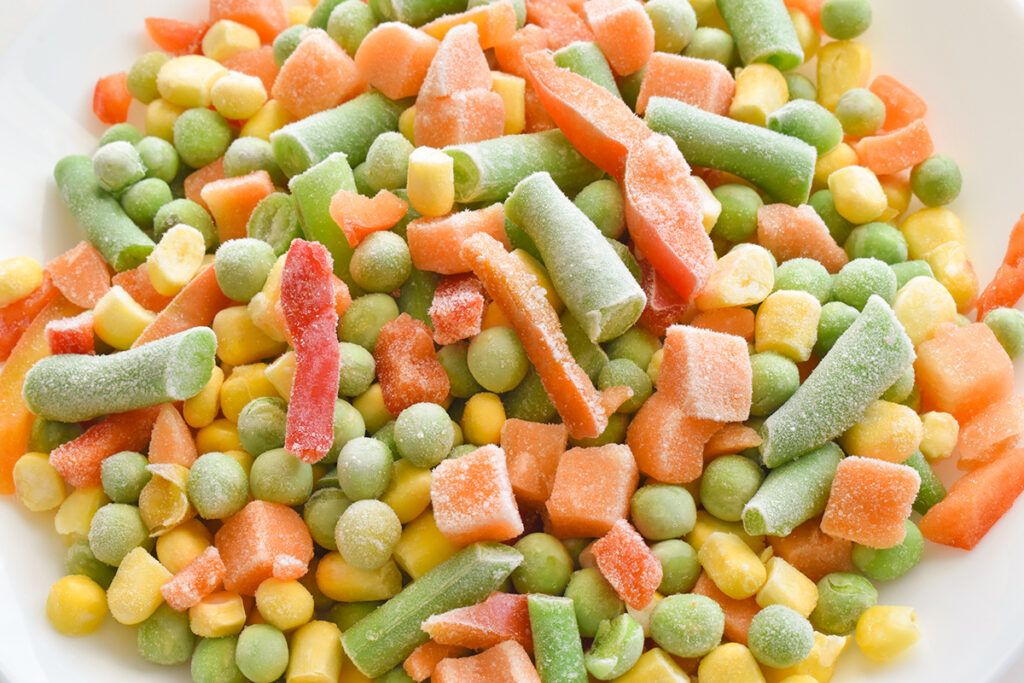
Vegetable Mixes
Preparing vegetables is one of the biggest time-sinks when you’re cooking — those minutes you spend washing, peeling, and cutting vegetables account for a big chunk of a meal’s prep time. You’ll get dinner on the table a lot faster if you keep a few strategically chosen bags of mixed vegetables in the freezer.
Most producers have a number of options, from the carrot-and-pea mix you see in cafeteria food to themed blends oriented around a specific kind of dish or style of cooking (California mix, stir-fry mix, etc.). Most are meant to provide you with a ready-made vegetable side dish that just needs to be cooked. Others, though, are intended to be used as the base of a dish made from scratch, like a classic French-style mirepoix (onion, carrots, and celery) or perhaps a “spaghetti mix” for making tomato sauce.
In either case, you get all the usual benefits of frozen produce — peak freshness, zero waste, minimal prep, low cost compared to buying the vegetables separately — and you save time while still putting a healthy meal on the table.








Usually, it boils down to a combination of these advantages:
• Commercial freezing uses high-speed blast freezers, which creates a better-quality product than home freezers can produce.
• Seafoods, meats, and produce items are frozen at peak freshness and flavor, close to where they’re grown or harvested. Which means that …
• Frozen fruits, vegetables, and perishable meats are often a higher-quality option than buying fresh.
• Frozen foods are convenient: You don’t have to use them right away, they require no preparation, and they can save you a lot of time and effort when mealtime rolls around.
Featured Image Credit: © JGalione—E+/Getty Images
More From Our Network
Better Report is part of Inbox Studio, an email-first media company. *Indicates a third-party property.






Fred Decker is a trained chef and former restaurateur. Since closing his restaurants over a decade ago he has been a prolific freelance writer, publishing several thousand articles on dozens of high-volume websites including Taste Of Home, Hunker, Tasting Table, Week&, eHow, and GOBankingRates. He lives on a rural acreage shared with a big garden, chickens, rabbits, and grandkids.
This article is for general informational purposes only.
Affiliate Disclaimer Medical Disclaimer Financial Disclaimer