Skip to content
Better Report
  • Home
  • Health
  • Wealth
8 Low-Maintenance Plants That Thrive on Neglect
  • Search
  • Subscribe
  • Home
  • Health
  • Wealth
  • About
  • Privacy Policy
  • Terms of Use
  • Contact Us
  • SubscribeSubscribe
  • Search
Thank you for confirming your email! Welcome to the community.

Author: mikenewman

What’s the Healthiest Type of Bread?

Health | Updated: August 28, 2024
Rachel Gresh
Author
Rachel Gresh is a Washington, D.C.-based freelance writer. When she's not writing, you can find her wandering a museum, exploring an unfamiliar city, or baking something new in the kitchen.
Person holding a loaf of bread that's been cut in half
Better Report

All featured products and deals are selected independently and objectively by the author. Better Report may receive a share of sales via affiliate links in content.

These days, restaurants have replaced bread with lettuce wraps and cauliflower crusts to offer “healthier” options. While these are great substitutes, they also vilify bread. Most fad diets and health “gurus” offer a disparaging opinion on bread, mainly because of its high carbohydrate levels. However, in some cases, the benefits of bread can outweigh the carbs. Besides, our bodies need those carbs to function correctly. The right type of bread — a low-fat bread packed with nutrients — can be a healthy addition to a balanced diet. Here’s what dieticians and health experts say about the most nutritious types of bread.
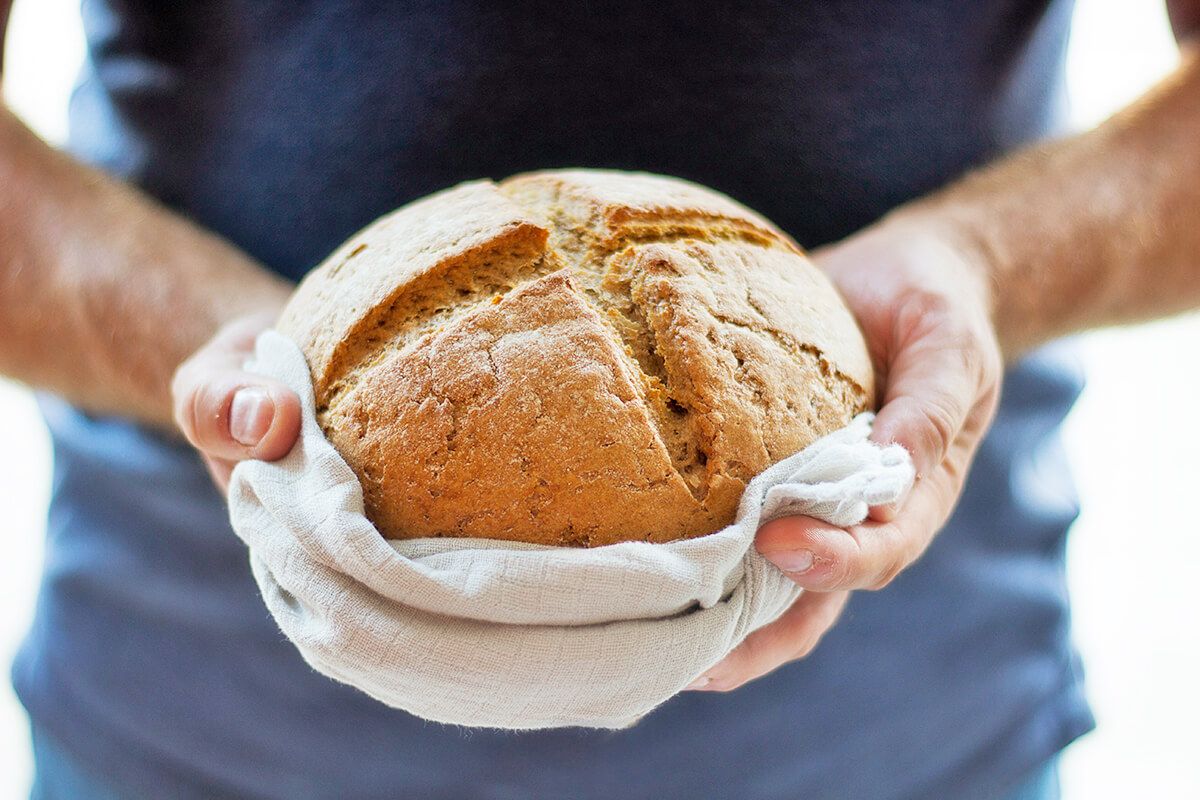
Man holding a loaf of bread
Credit: Kate Remmer/ Unsplash

Why Bread Isn’t Bad

You won’t find low-carb diets with bread on the menu, but here’s the catch: we need carbohydrates, and bread is a great way to get them. Carbs are the body’s primary energy source for brain and nervous system function. So why the bad rap? Eating too many carbs has adverse health impacts, including increased weight, blood sugar levels, risk of diabetes, and other diseases. For these reasons, many consumers seek to reduce their bread intake.

However, not all breads are created equal. The American Heart Association has weighed in on the debate about bread, stating, “Concerns over carbs, sodium, and gluten sometimes overshadow what can be a simple, tasty way to add important vitamins and minerals as well as fiber to daily meals.” Some breads are even fortified with essential vitamins and minerals such as iron, riboflavin, thiamine, and niacin.
Advertisement
Advertisement
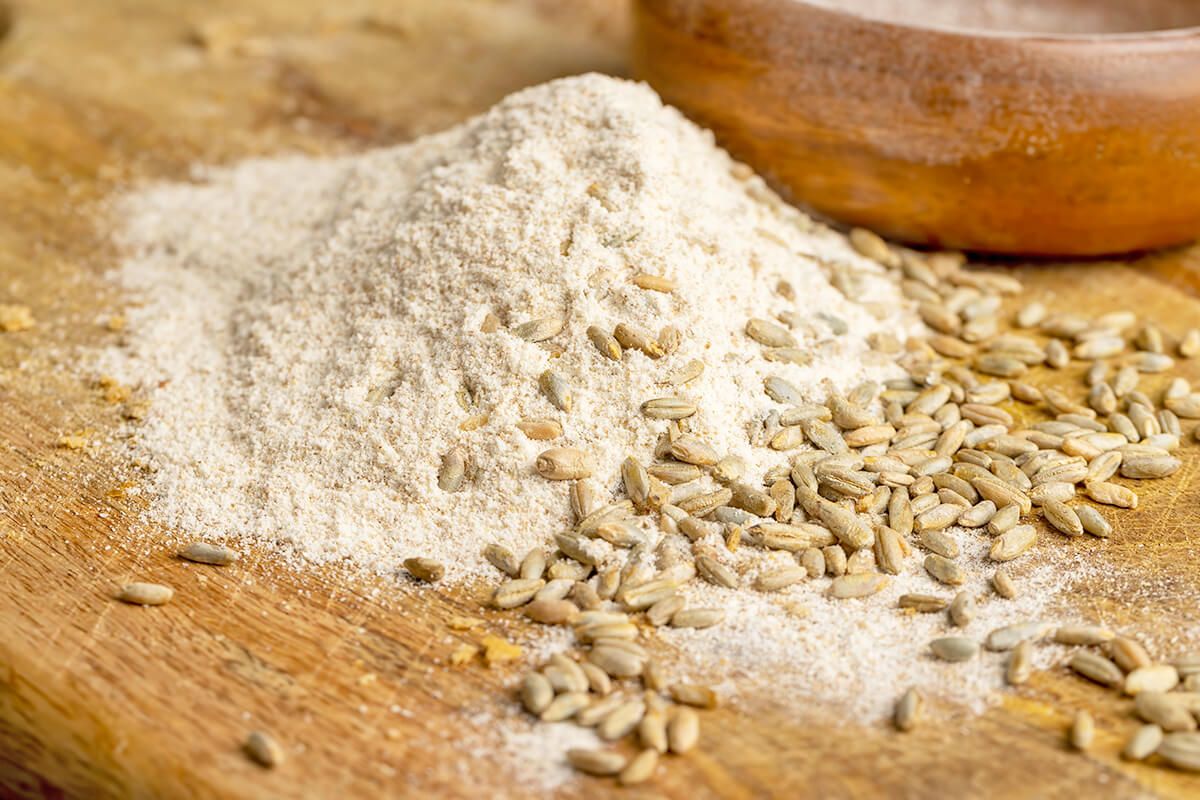
Close up shot of flour and grains
Credit: rsooll/ Shutterstock

Whole Grains Come Out on Top

From Italian ciabatta to Southern-style cornbread or a New York bagel — there are hundreds of tasty bread options. However, some bread types should be limited to special occasions (like dessert) because of high sugar or sodium content. There are a few types of bread you can feel good about, and one option reigns supreme: whole grain bread.

Whole grain breads provide the best of both worlds, with lower calorie and fat levels than other breads, an average amount of carbs, and plenty of health benefits. Whole grain flours are made using all parts of the kernel, the bran, germ, and endosperm. These whole kernels include protein, fiber, B vitamins, phytochemicals, vitamin E, and other healthy fats. Whole grains stand out from other breads on store shelves because they’re darker in color, have visible grain kernels, and are less fluffy. When bread is refined, the germ and bran are removed, which results in a lighter, fluffier flour (think pre-sliced white bread), but with less nutritional benefits and more calories and carbs.
Advertisement
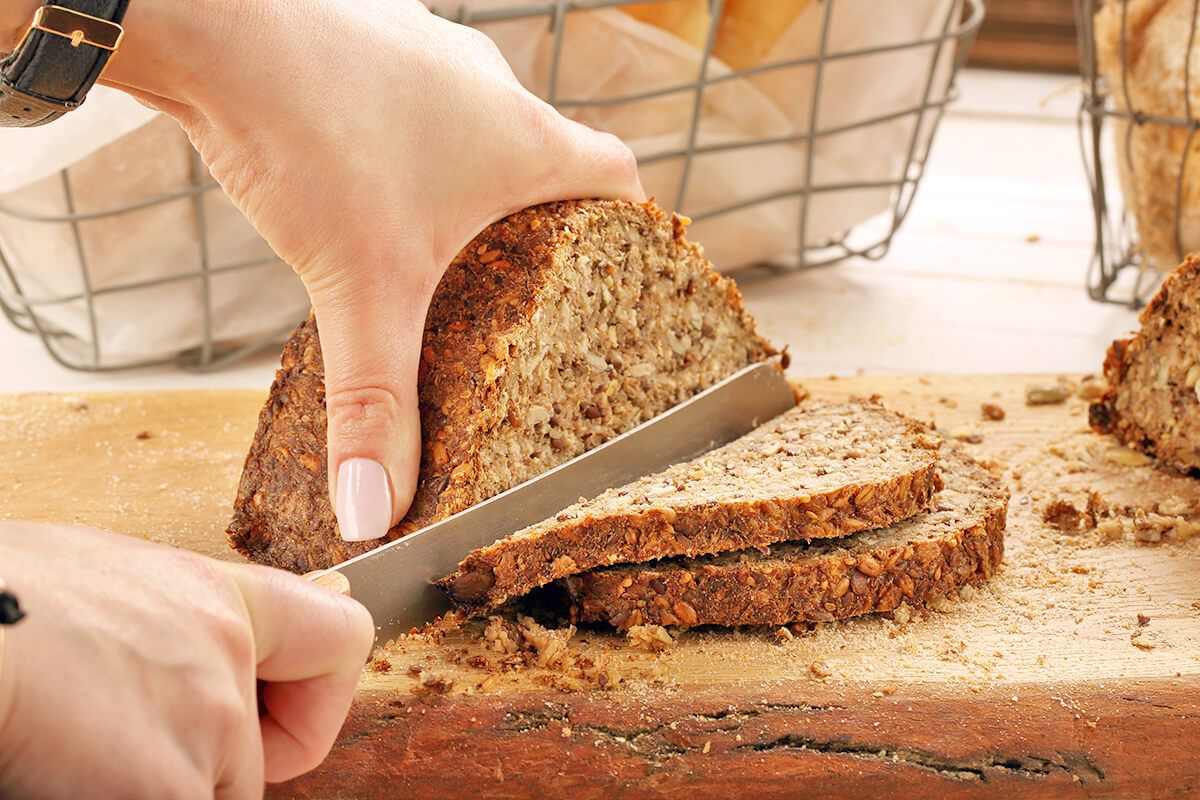
Person slicing loaf of whole grain bread
Credit: wideonet/ Shutterstock

Types of Whole Grain Bread

“Whole grain” is a broad category. Consumers have many choices when looking for a healthy type of bread. The most popular type of whole grain bread is whole wheat, but plenty of other whole grains can be made into bread flour, including oats, buckwheat, barley, brown rice, sorghum, millet, quinoa, and amaranth. Aside from barley and wheat, these grains are gluten-free, making them an excellent choice for those sensitive to gluten.

Recommended Articles

  • The Most Popular Car Colors in the U.S.

  • 5 Small Changes You Can Make To Decrease Your Risk of Dementia

  • First-Date Etiquette Tips for People Over 40, According to a Matchmaker

  • 6 Holiday Foods You Didn’t Know Were Healthy

Advertisement
Advertisement

Reader Favorites

  • Person breaking into a car

    The 10 Most Stolen Cars in the U.S.

  • Older man with hands on cane

    Why Do We Smell Different As We Age?

  • Man in grocery store

    6 Grocery Habits Costing You More Than You Think

Whole wheat bread on a cutting board
Credit: yipengge/ iStock

Whole Wheat

Of all the types of whole grain bread, whole wheat is the most popular and readily available. The average slice of whole grain bread contains around 81 calories, 14 grams of carbs, and four grams of protein. In comparison, a slice of white bread has more calories and carbs with less protein, containing around 98 calories, 18 grams of carbs, and three grams of protein. If you prefer the taste of white bread over whole wheat, look for 100 percent white whole wheat bread (made with albino whole wheat grain). It is the same nutritionally as whole wheat bread and tastes more like white bread.
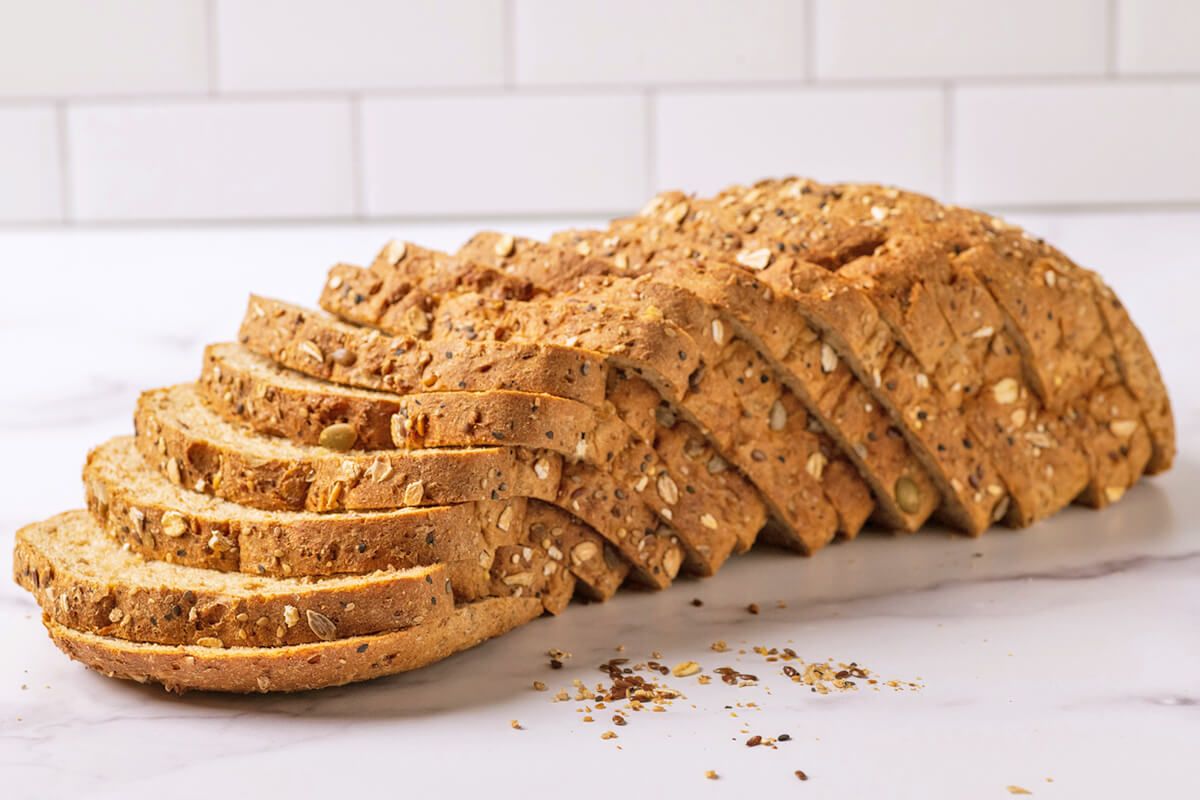
Loaf of sliced whole grain bread
Credit: Juanmonino/ iStock

Sprouted Whole Grain Bread

To increase the nutrition benefits, opt for sprouted whole grain bread, which boasts the same benefits as whole grain but is made with sprouted grains (soaked grains that have begun to grow). When grains sprout, they are more easily digestible, and the body better absorbs the nutrients. Dietician Lisa Valente, M.S., RD, recommends sprouted whole grain to her patients, “The one type that always stands out to me as a good choice is sprouted grain bread,” citing their high-protein and low-sodium content. Check the bakery, natural food, or freezer sections if you can’t find sprouted whole grain bread in the regular bread aisle.

Advertisement
Advertisement
Person holding a loaf of bread that's been sliced in half
Credit: Poompui/ Shutterstock

The Truth About Multigrain 

Not all multigrain breads are whole grain, so breads labeled this way require more legwork from consumers. Ensure you read the ingredients because the grains used in the flour might not be whole grains. Sally Kuzemchak, M.S., RDN, explains, “And ‘multigrain’ sounds amazing, but just means it’s made with multiple grains — none of them necessarily need to be whole.” If the grains are whole, they will be listed on the label, as seen in Dave’s Killer Bread Organic 21 Whole Grains and Seeds Bread. Whole grain multigrain breads are a great choice to add diversity to your whole grain intake.
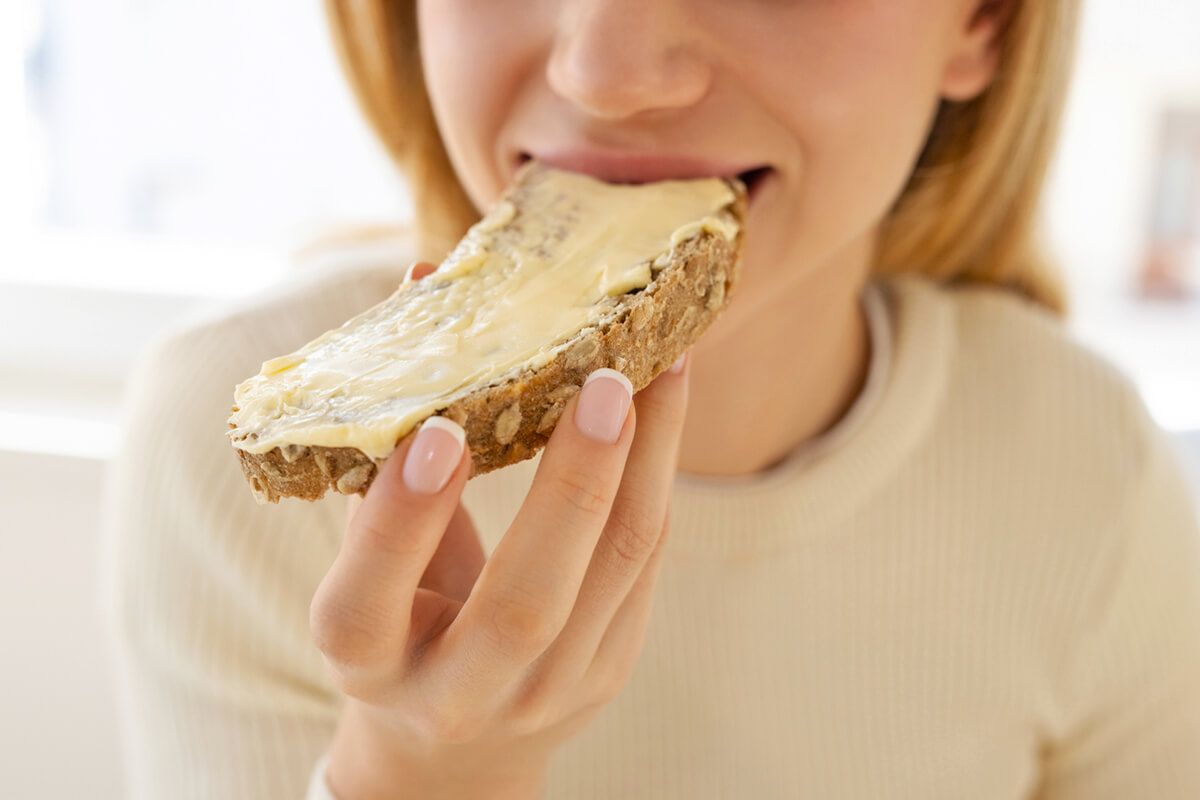
Woman eating a slice of bread with butter on it
Credit: bymuratdeniz/ iStock

The Bottom Line

Bread can undoubtedly be included in a balanced diet, so don’t shy away if you don’t have to. Marie-Pierre St-Onge, an associate professor of nutritional medicine at Columbia University, sums it up nicely: “A leaf of lettuce will have a couple of calories, where a slice of bread will have 100-something calories. But will you have the same amount of vitamins and minerals in a leaf of lettuce that you will get in a slice of bread? No.” When choosing bread, remember to opt for healthier types, such as whole grains, to reap the nutritional benefits while enjoying a tasty meal.

More From Our Network

Better Report is part of Inbox Studio, an email-first media company. *Indicates a third-party property.

Go Retro With This 1960s Fashion Quiz

Quiz Daily

Go Retro With This 1960s Fashion Quiz

True or False: Are You a Master of U.S. Geography?

Travel Quiz

True or False: Are You a Master of U.S. Geography?

5 Reasons You Can Be Denied Boarding an Airplane

Daily Passport

5 Reasons You Can Be Denied Boarding an Airplane

What Did People Do Before Eyeglasses?

History Facts

What Did People Do Before Eyeglasses?

How To Use a Balloon To Clean Up Dust

House Outlook

How To Use a Balloon To Clean Up Dust

11 Shopping Hacks Costco Members Should Know

FinanceBuzz*

11 Shopping Hacks Costco Members Should Know

Share this article

  • Share to Facebook
  • Share to Twitter
  • Copy Url
  • Share to Email
Rachel Gresh
Writer

Rachel Gresh is a Washington, D.C.-based freelance writer. When she's not writing, you can find her wandering a museum, exploring an unfamiliar city, or baking something new in the kitchen.

This article is for general informational purposes only.
Affiliate Disclaimer Medical Disclaimer Financial Disclaimer

Updated: December 15, 2023
Posted In: Health
Hero Image Credit: Better Report
Advertisement

Related Articles

5 Small Changes You Can Make To Decrease Your Risk of Dementia

4 min read

6 Holiday Foods You Didn’t Know Were Healthy

7 min read

Is It Safe To Drink a Glass of Water That Sat Out Overnight?

3 min read

The Health Risks of Shopping at the Dollar Store

4 min read

Does Going Outside With Wet Hair Really Make You Sick?

4 min read
Advertisement

How to Use a Rubber Band to Open Stubborn Jar Lids

Jessica Levy
Home | Updated: August 26, 2024
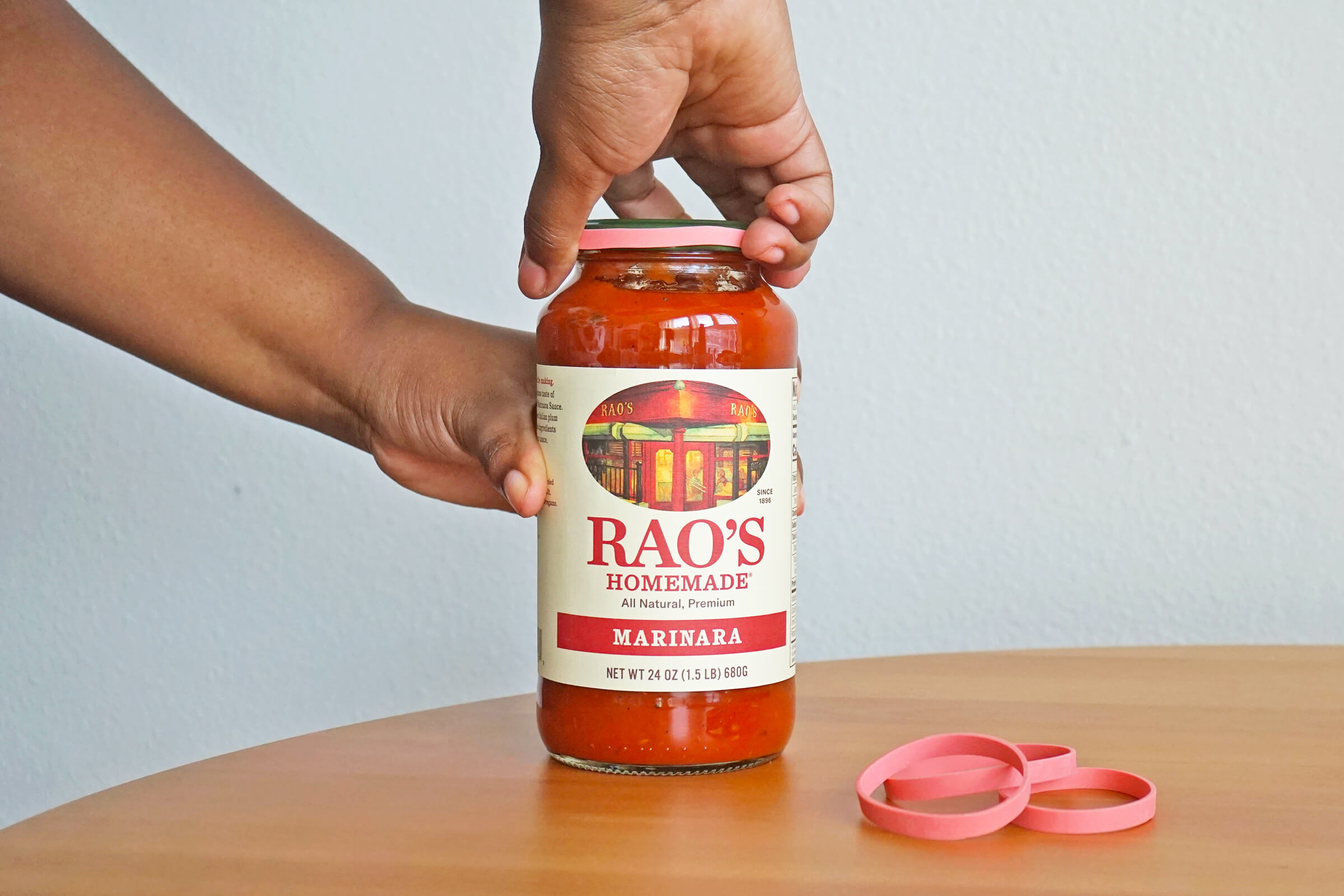
Person putting rubber band around jar of Rao's Homemade Marinara sauce
Better Report

Look, cooking can be stressful. Things go wrong in the kitchen — milk spoils, crusts burn, you realize you have baking soda, not baking powder. It happens to the best of us. But one of the most frustrating things about cooking, or even just grabbing a quick snack, is when you can’t even open a jar. If that lid won’t budge and you’ve run out of options, keep reading to discover a quick and easy way to loosen a jar lid using a simple household item.

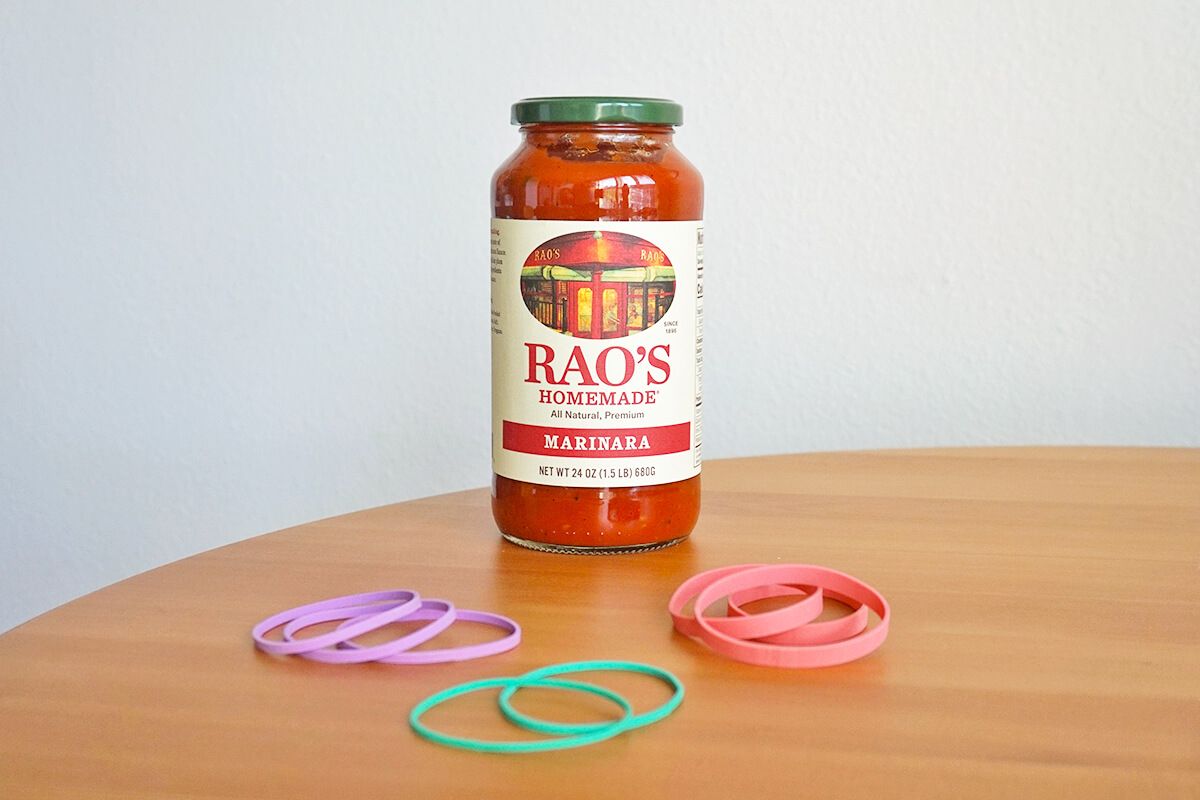
Rao's Homemade Marinara sauce jar next to a bunch of rubber bands
Photo Credit: Courtesy of Zoie Griffin

How to Use a Rubber Band to Open a Lid

Opening a stubborn jar lid with a rubber band is a great skill to keep in your repertoire. Whether the jar is simply stuck or you have mobility or joint issues that can affect your grip, having a kitchen hack to make your life easier can come in handy when others aren’t around to assist.

Advertisement
Advertisement
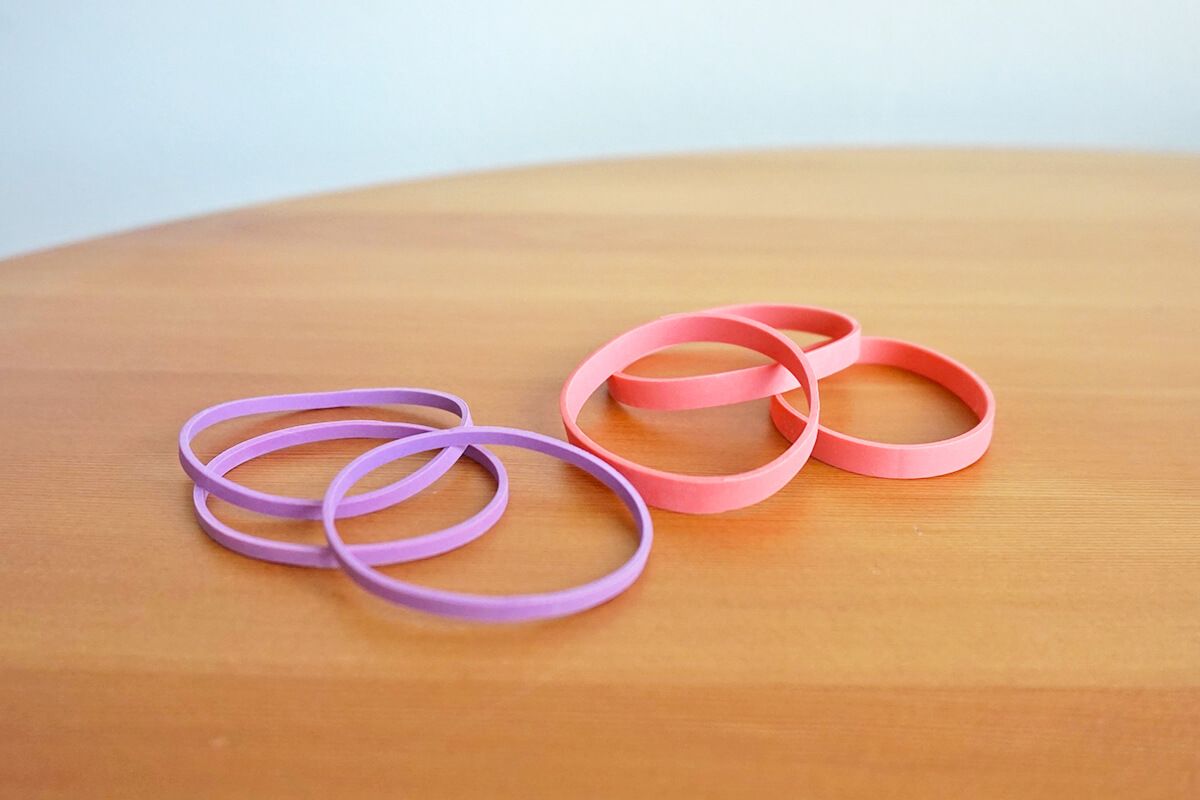
Two stacks of rubber bands, one purple and the other pink
Photo Credit: Courtesy of Zoie Griffin

Step 1: Select the Right Rubber Band

You want a thick rubber band that’s wide enough to stretch around the lid. A band with more surface area will provide better traction against the metal, helping you concentrate your strength around the rim for more effortless opening.

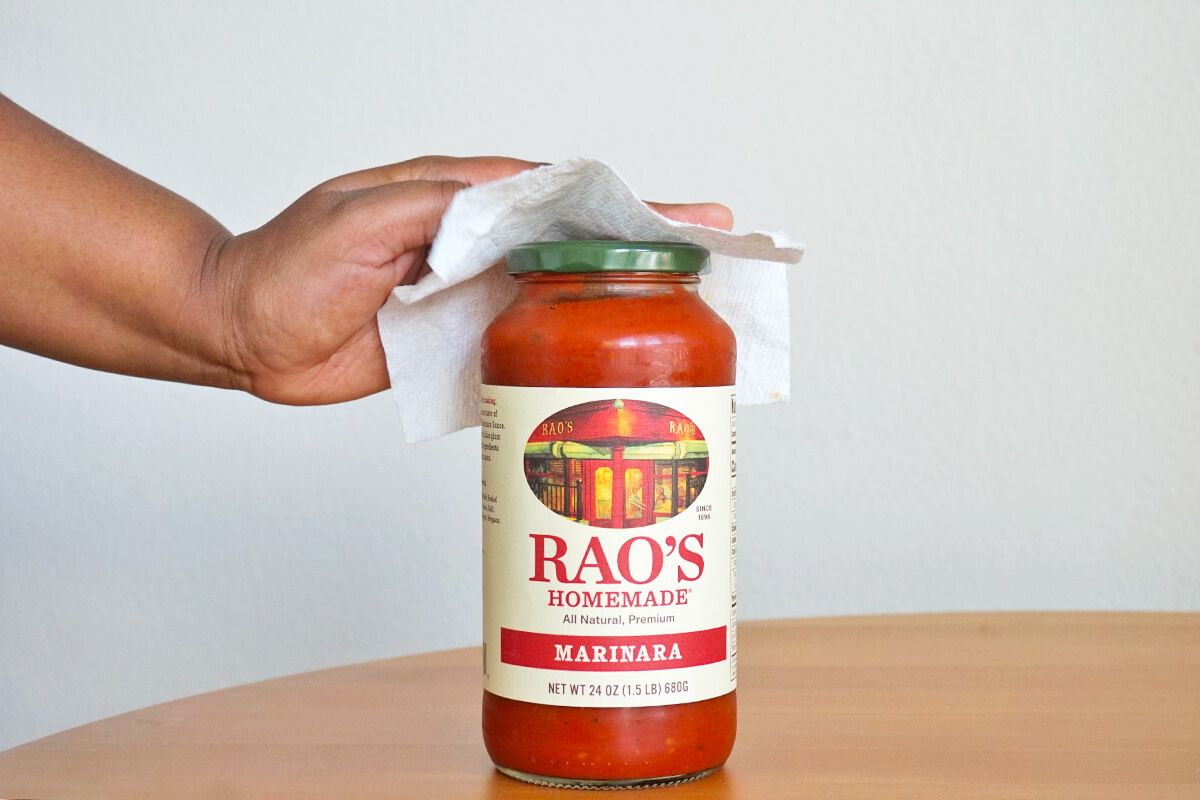
Person wiping down the lid of a jar of marinara sauce
Photo Credit: Courtesy of Zoie Griffin

Step 2: Prepare the Jar

Your rubber band won’t be able to get a firm grip if the lid is wet. Wipe off any moisture from your hands (or condensation if the jar has been sitting out for a while). This will help the band “hold” to the lid better.

Recommended Articles

  • The Most Popular Car Colors in the U.S.

  • 5 Small Changes You Can Make To Decrease Your Risk of Dementia

  • First-Date Etiquette Tips for People Over 40, According to a Matchmaker

  • 6 Holiday Foods You Didn’t Know Were Healthy

Advertisement
Advertisement

Reader Favorites

  • Person breaking into a car

    The 10 Most Stolen Cars in the U.S.

  • Older man with hands on cane

    Why Do We Smell Different As We Age?

  • Man in grocery store

    6 Grocery Habits Costing You More Than You Think

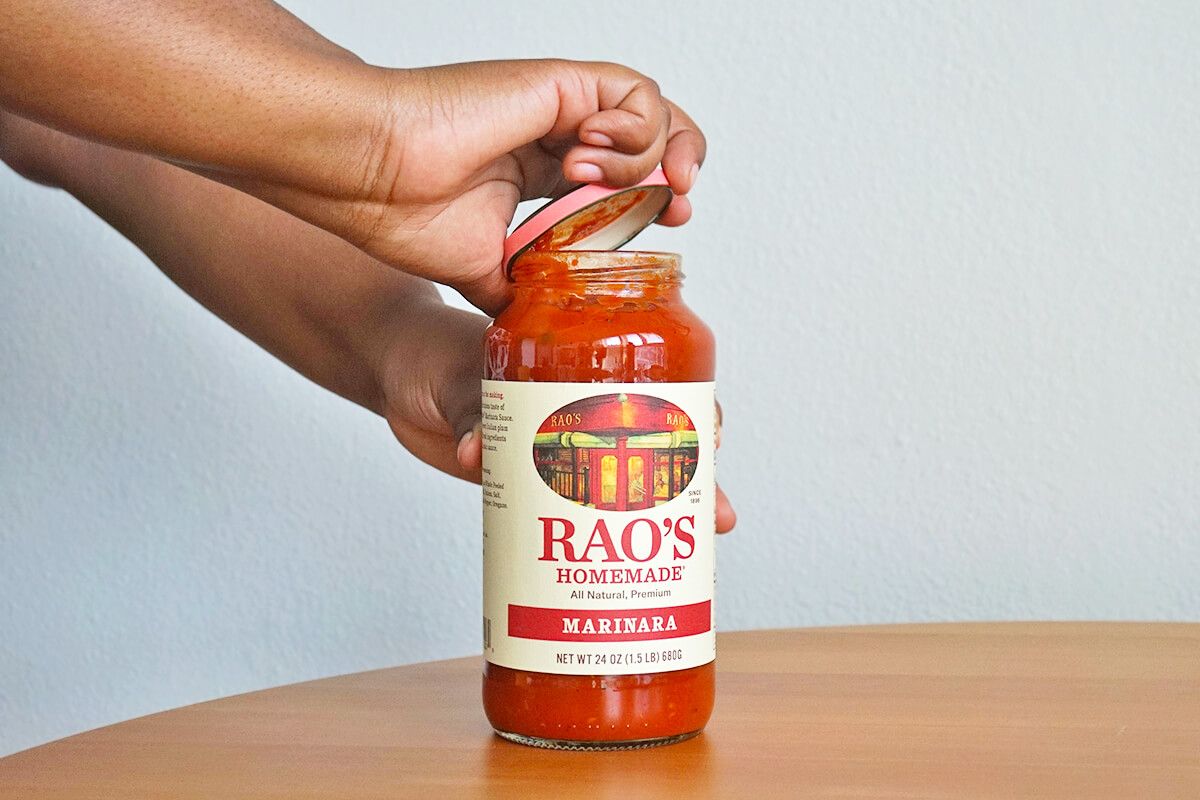
Person using a rubber band around the lid of a jar of marinara sauce to remove the lid
Photo Credit: Courtesy of Zoie Griffin

Step 3: Open the Lid

Once you have the right band and the jar is dry, simply wrap the band around the outer edge of the lid. Make sure the band is as snug as it can get — wrap it around the lid twice if you have to — and apply a firm grip, twisting with downward pressure counterclockwise. You may have to do this a couple of times to get your grip just right to get the most traction under the rubber band. Ideally, the lid should pop right off with a little force.

If you’re still having trouble, run the stuck lid under hot water for a few seconds, turning so that every part of the lid is warmed through. This will help expand the metal of the lid a bit. Wipe off the excess water and try again.

More From Our Network

Better Report is part of Inbox Studio, an email-first media company. *Indicates a third-party property.

Go Retro With This 1960s Fashion Quiz

Quiz Daily

Go Retro With This 1960s Fashion Quiz

True or False: Are You a Master of U.S. Geography?

Travel Quiz

True or False: Are You a Master of U.S. Geography?

5 Reasons You Can Be Denied Boarding an Airplane

Daily Passport

5 Reasons You Can Be Denied Boarding an Airplane

What Did People Do Before Eyeglasses?

History Facts

What Did People Do Before Eyeglasses?

How To Use a Balloon To Clean Up Dust

House Outlook

How To Use a Balloon To Clean Up Dust

11 Shopping Hacks Costco Members Should Know

FinanceBuzz*

11 Shopping Hacks Costco Members Should Know

Share this article

  • Share to Facebook
  • Share to Twitter
  • Copy Url
  • Share to Email
Jessica Levy

This article is for general informational purposes only.
Affiliate Disclaimer Medical Disclaimer Financial Disclaimer

Updated:
Posted In: Home
Hero Image Credit: Better Report
Advertisement

Related Articles

The Most Popular Car Colors in the U.S.

4 min read

First-Date Etiquette Tips for People Over 40, According to a Matchmaker

3 min read

Why Doesn’t Plastic Totally Dry in the Dishwasher?

3 min read

Putting This in Your Dryer Is a Major Fire Risk

3 min read

18 Surprising Things You Should Never Put Down Your Drain

5 min read
Advertisement

5 Bizarre Things People Collect That Are Worth a Fortune

Wealth | Updated: August 26, 2024
Rachel Gresh
Author
Rachel Gresh is a Washington, D.C.-based freelance writer. When she's not writing, you can find her wandering a museum, exploring an unfamiliar city, or baking something new in the kitchen.
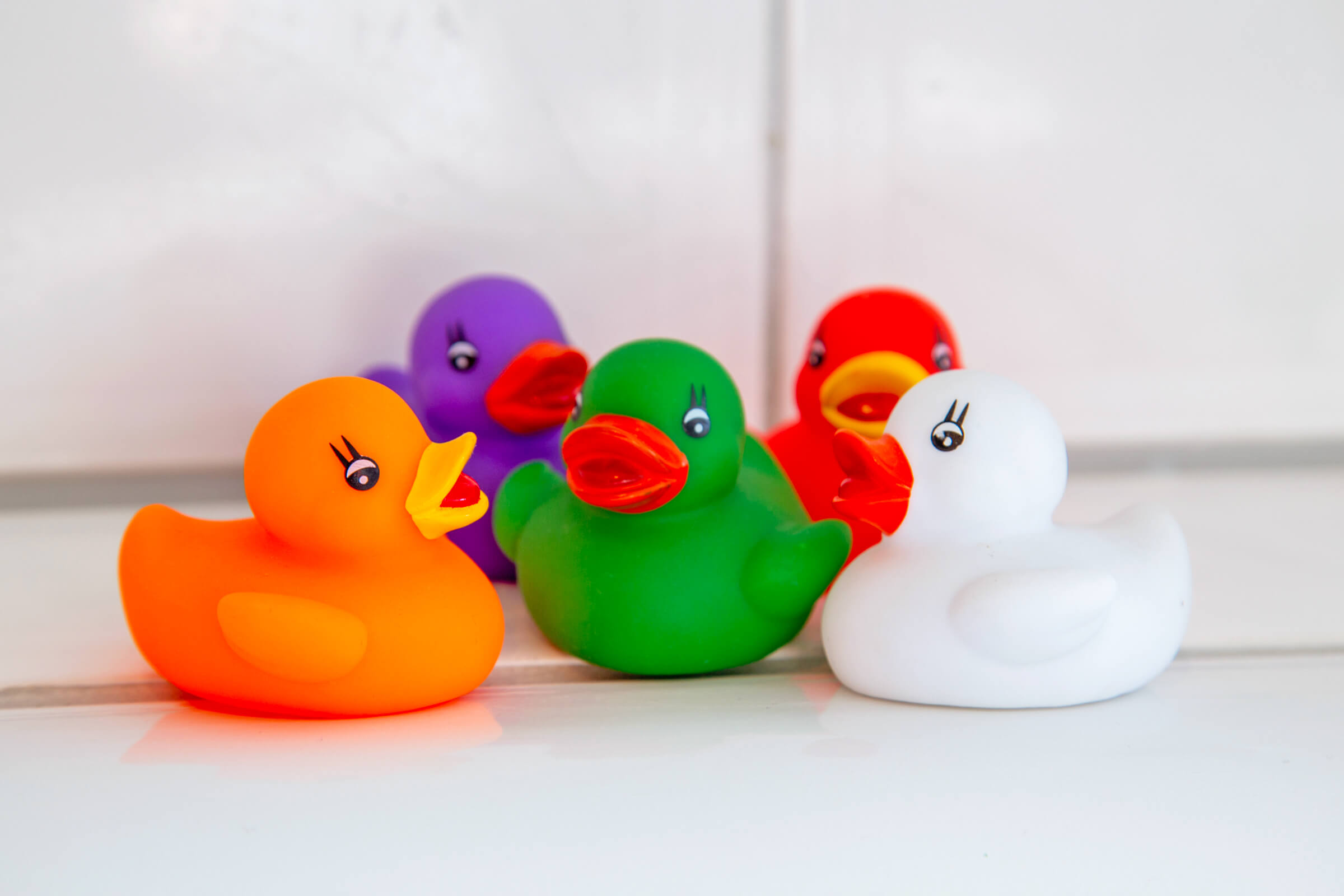
Rubber ducks of all different colors
Better Report

Do you dream of winning the Powerball or Mega Millions jackpot? While these lottery games offer the chance for an instant fortune, the odds are slim. However, some dedicated collectors have discovered more unexpected ways to amass a fortune. Instead of rushing to the gas station for a lottery ticket, they set out on a thrilling hunt through their local thrift stores and eBay. There, they uncover collectibles worth hundreds, if not thousands, of dollars. But these are not your typical coins, stamps, or baseball cards. These collectibles are peculiar but still bring their owners just as much happiness.

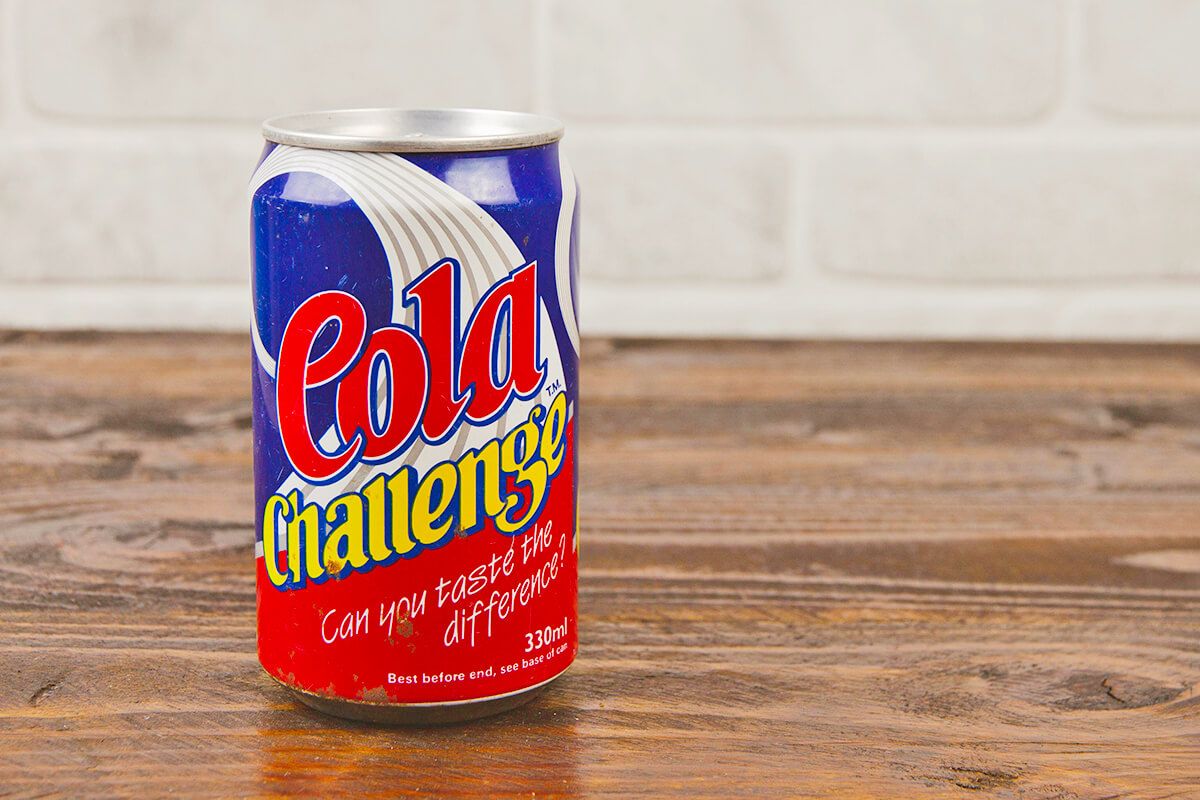
Soda can that reads "Cola Challenge"
Credit: Vladimir Volovodov/ Alamy Stock Photo

Soda Cans

Your next payday could be lying in a recycling bin. Popular soda cans include special editions featuring Olympic logos, blockbuster movie characters, and vintage designs. Like coin and bill collectors pay big bucks for “error” items with incorrect printing, soda can collectors also seek out error cans. The most sought-after error can for collectors is a brand-new, empty can. You could cash in big if you ever come across a sealed soda can without any liquid.

In 2023, the most expensive soda can ever listed on eBay was $347,000. Rare soda cans are selling for hundreds on eBay. A set of three vintage Hi-C Ghostbusters Green Slime cans sold for around $800, and a single vintage can of Dr. Pepper sold for $150.

Advertisement
Advertisement
Different versions of Monopoly
Credit: Leon Neal/ Getty Images News via Getty Images

Monopoly Games

The board game that challenges players to control their impulses to win it all has been a staple of family-friendly entertainment since the early 1900s. Many Monopoly players, however, don’t know they can earn real cash, but not by playing the game — by collecting the boards themselves. Neil Scallan knows a thing or two about Monopoly board collections. He’s the Guinness World Record holder for Monopoly memorabilia, with a collection of 2,249 items — which means he owns a small fortune.

A regular Monopoly board game costs around $20, but luxury editions, made of leather or wood, cost around $300. Vintage and special edition games (from NFL teams to Nintendo and Disney characters) are sold for hundreds, if not thousands, of dollars on places like eBay. The most expensive monopoly set designed by artist Sidney Mobell was valued at $2 million upon completion. The 23-karat gold game is studded in diamonds, sapphires, and rubies.

Advertisement
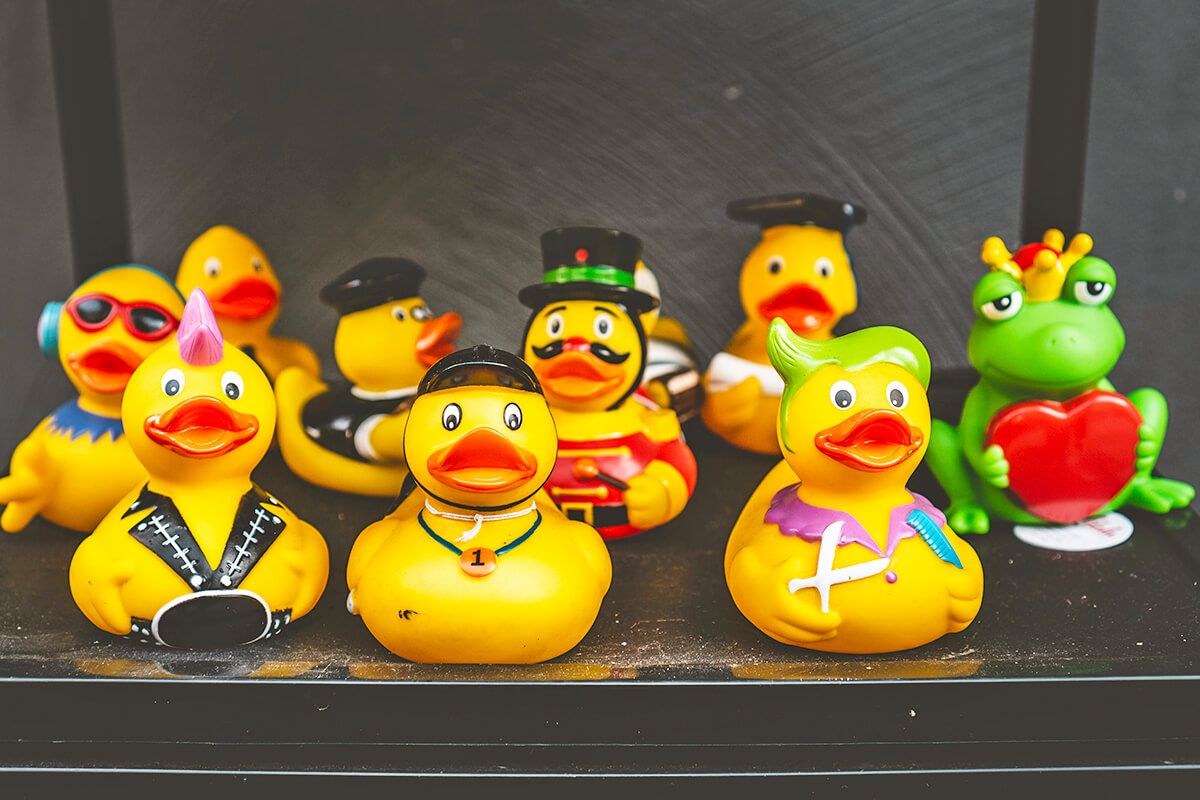
Rubber ducks with different outfits
Credit: Jonathan Kemper/ Unsplash

Rubber Ducks

This unorthodox collector’s item became popular in the mid-20th century, and now, special edition rubber duckies are produced by famous brands worldwide. Charlotte Lee, the world record holder of duck collections, owns over 9,000. Her collection includes rare and vintage ducks dating to the 1930s. She finds them everywhere: “Grocery stores, art museums, flea markets, antique stores, even book shops…” The most she’s paid for a duck is $150 for a special edition item from Japan — but some are sold for even more. A rare Lufthansa golden rubber duck has a price tag of $500, and Axe “evil” rubber ducks with devil horns go for around $300.

Recommended Articles

  • The Most Popular Car Colors in the U.S.

  • 5 Small Changes You Can Make To Decrease Your Risk of Dementia

  • First-Date Etiquette Tips for People Over 40, According to a Matchmaker

  • 6 Holiday Foods You Didn’t Know Were Healthy

Advertisement
Advertisement

Reader Favorites

  • Person breaking into a car

    The 10 Most Stolen Cars in the U.S.

  • Older man with hands on cane

    Why Do We Smell Different As We Age?

  • Man in grocery store

    6 Grocery Habits Costing You More Than You Think

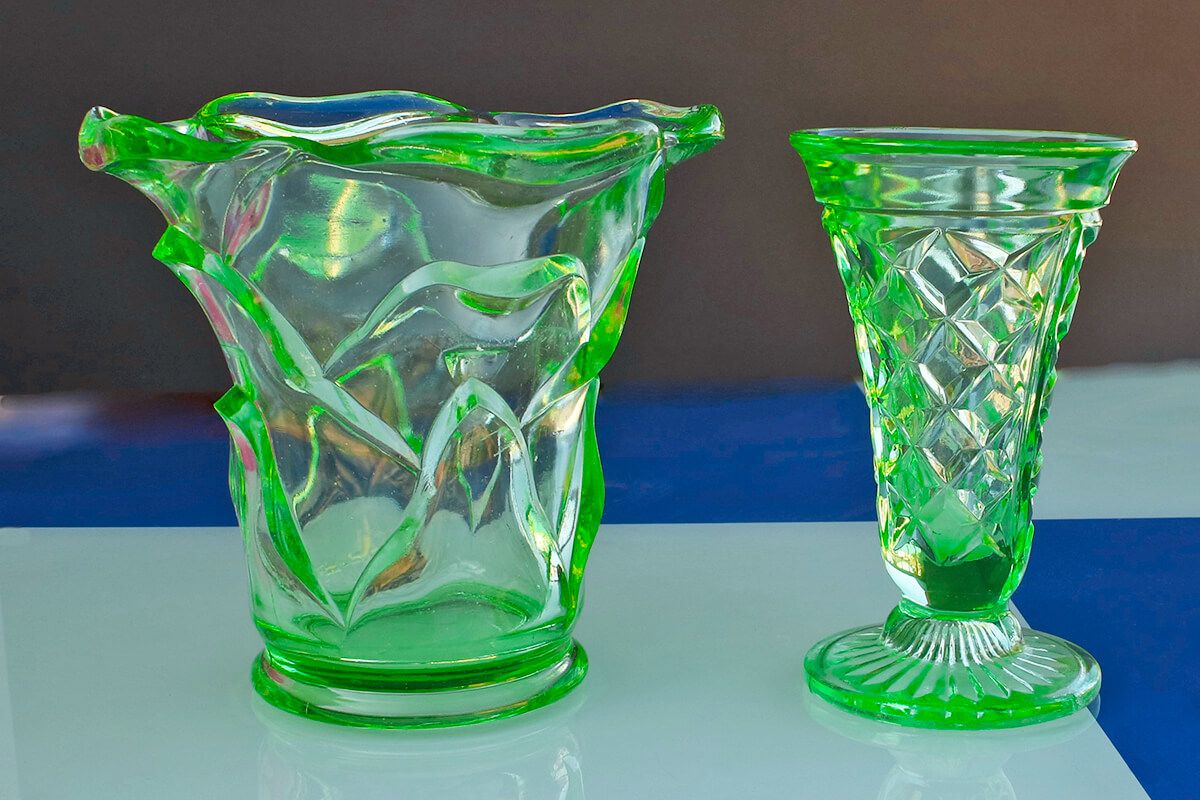
A pair of green uranium glasess
Credit: Jason Vanajek/ Shutterstock

Uranium Glass

Now used primarily as fuel for nuclear reactors, uranium has found a place in the homes of avid collectors who favor unconventional dishware. Uranium was first used to color glass during the mid-19th century, giving it a luminescent yellow-green color. Due to a low uranium supply, it fell out of production during World War II and became a rare collector’s item decades later. 

Part of the allure of uranium glass (also called vaseline, custard, Burmese, or canary glass) is that it glows in the dark. These pieces sell for anywhere from $10 to $10,000, depending on how rare the piece is. A vintage uranium fruit bowl costs around $350 — but don’t put real fruit in it. You can’t drink or eat out of uranium products due to the risk of ingesting radioactive materials, but in general, it is safe to have in your home if you avoid frequent handling and store it correctly. To find uranium glass pieces, look for yellow-green glass that glows under UV light.

Two McDonald's toy characters
Credit: nigel james  Alamy Stock Photo

McDonald’s Toys

Who doesn’t have fond memories of opening a McDonald’s Happy Meal to find an exciting new toy? As of 2021, the franchise discontinued including plastic miniatures in meals, so McDonald’s toys have become a nostalgic collector’s item. Even seemingly basic toys, such as 1980s Happy Meal Hot Wheels cars, sell for $70 a pop in their original packaging. 

Toys from the 2000s are valuable, too. Happy Meal Furbies from this era are valued at over $100 each. If you’re holding on to any Fraggle Rock toys from the 1990s, it might be time to turn them into cash — they are valued at over $400 each. The most expensive individual Happy Meal toys are 1970s Robots and Underwater Monsters by Diener Keshi, valued at $600 each. You could amass a small fortune if you had an entire collection in mint condition. 

Advertisement

Feature Image Credit: Marius Steinke/ iStock

More From Our Network

Better Report is part of Inbox Studio, an email-first media company. *Indicates a third-party property.

Go Retro With This 1960s Fashion Quiz

Quiz Daily

Go Retro With This 1960s Fashion Quiz

True or False: Are You a Master of U.S. Geography?

Travel Quiz

True or False: Are You a Master of U.S. Geography?

5 Reasons You Can Be Denied Boarding an Airplane

Daily Passport

5 Reasons You Can Be Denied Boarding an Airplane

What Did People Do Before Eyeglasses?

History Facts

What Did People Do Before Eyeglasses?

How To Use a Balloon To Clean Up Dust

House Outlook

How To Use a Balloon To Clean Up Dust

11 Shopping Hacks Costco Members Should Know

FinanceBuzz*

11 Shopping Hacks Costco Members Should Know

Share this article

  • Share to Facebook
  • Share to Twitter
  • Copy Url
  • Share to Email
Rachel Gresh
Writer

Rachel Gresh is a Washington, D.C.-based freelance writer. When she's not writing, you can find her wandering a museum, exploring an unfamiliar city, or baking something new in the kitchen.

This article is for general informational purposes only.
Affiliate Disclaimer Medical Disclaimer Financial Disclaimer

Updated: December 15, 2023
Posted In: Wealth
Hero Image Credit: Better Report
Advertisement

Related Articles

How Far a $100 Grocery Budget Goes in Every State

7 min read

Why You Should Never Put Your Utility Bills on Autopay

5 min read

The Best Cars for Resale Value, According to Auto Experts

5 min read

5 Common Estate Planning Mistakes (and How To Avoid Them)

6 min read

Is It OK To Snack Before Paying at the Grocery Store?

4 min read
Advertisement

A Pinch vs. A Dash — Decoding Recipe Instructions

Jessica Levy
Home | Updated: August 22, 2024
Person in an apron sprinkling salt on tomatoes and mozzarella
Better Report

All featured products and deals are selected independently and objectively by the author. Better Report may receive a share of sales via affiliate links in content.

Home cooking isn’t for everyone, especially if you’re anything like Homer Simpson and have started a fire while making cereal. But if you’ve followed a recipe, you’ve probably heard culinary terms like pinch, dash, and splash. While those measurements may sound vague, they’re shorthand for exact amounts you should adhere to while making your meal. If you don’t pay attention and use a pinch instead of a dash, you could wind up with an utterly under-seasoned meal. Here are tips for decoding any of those seemingly confusing recipe instructions.

Person seasoning a salad
Credit: Ground Picture/ Shutterstock

Pinch vs. Dash

Both pinch and dash sound like equally tiny amounts that you add to food, but a dash is double the size of a pinch. A dash equals 1/8 of a teaspoon, whereas a pinch equals 1/16. There are shorthand terms for even smaller amounts as well, including smidgen (1/32 of a teaspoon) and drop (1/64 of a teaspoon). There’s also “hint,” which equals the extremely negligible amount of 1/128 of a teaspoon. On the flip side, you’ve got a “tad” — the largest of any of these amounts at about 1/4 teaspoon. It’s best to buy a set of smaller measuring spoons to portion out these exact amounts.

Advertisement
Advertisement
Person pouring oil over a salad
Credit: John Shutter/ Shutterstock

Glug, Splash, and Drizzle

Regarding liquid measurements, you’re probably familiar with terms like glug, splash, and drizzle. A glug is the largest of these three, equivalent to between one and two tablespoons. A splash is the smallest, equalling about 1/2 of a teaspoon. A drizzle fits right in the middle and measures between a teaspoon and a tablespoon. If a recipe calls for any of these amounts, don’t worry about carefully measuring out the liquid, as there’s usually some room for error, and it’s often fine if a little extra splashes into the bowl.

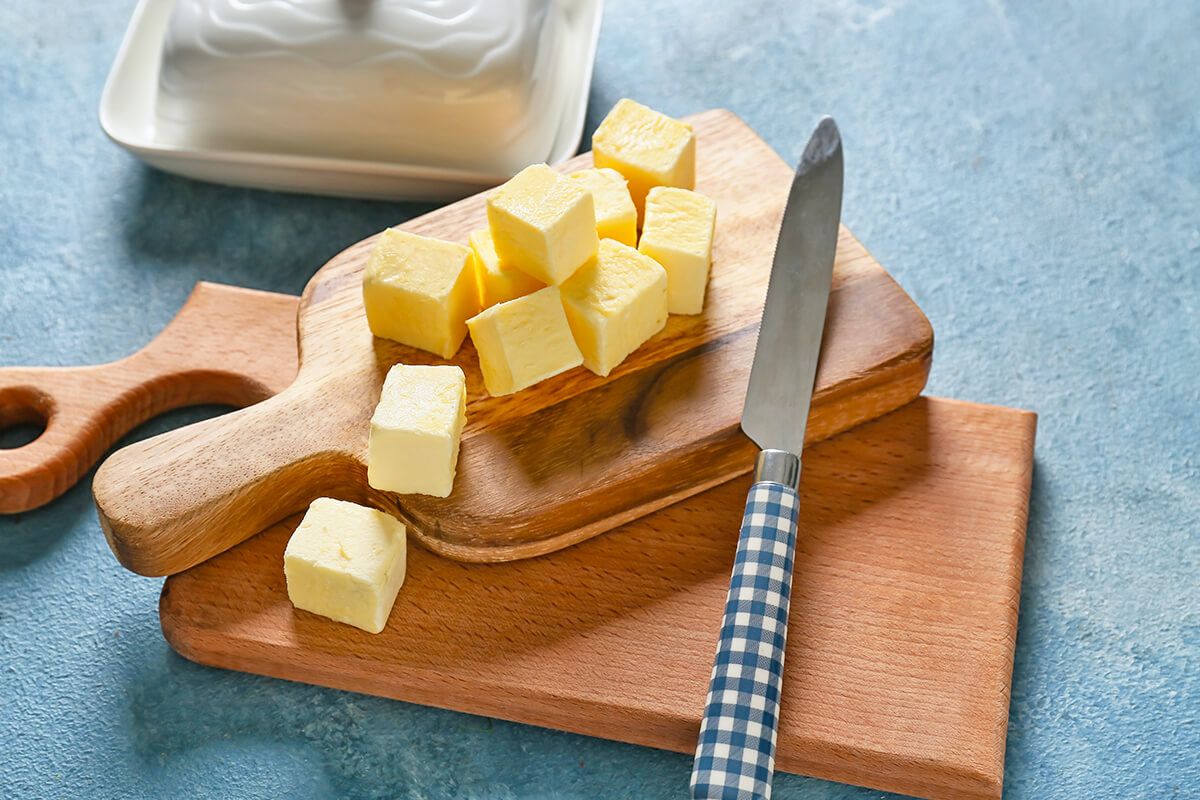
Butter on a cutting board next to a knife
Credit: Pixel-Shot/ Shutterstock

Knob of Butter

Many older recipes may call for a “knob of butter,” which is an old-school way to refer to a small cube of butter. A knob is generally considered to equal about two tablespoons or 30 grams, depending on which measuring system you use.

Recommended Articles

  • The Most Popular Car Colors in the U.S.

  • 5 Small Changes You Can Make To Decrease Your Risk of Dementia

  • First-Date Etiquette Tips for People Over 40, According to a Matchmaker

  • 6 Holiday Foods You Didn’t Know Were Healthy

Advertisement
Advertisement

Reader Favorites

  • Person breaking into a car

    The 10 Most Stolen Cars in the U.S.

  • Older man with hands on cane

    Why Do We Smell Different As We Age?

  • Man in grocery store

    6 Grocery Habits Costing You More Than You Think

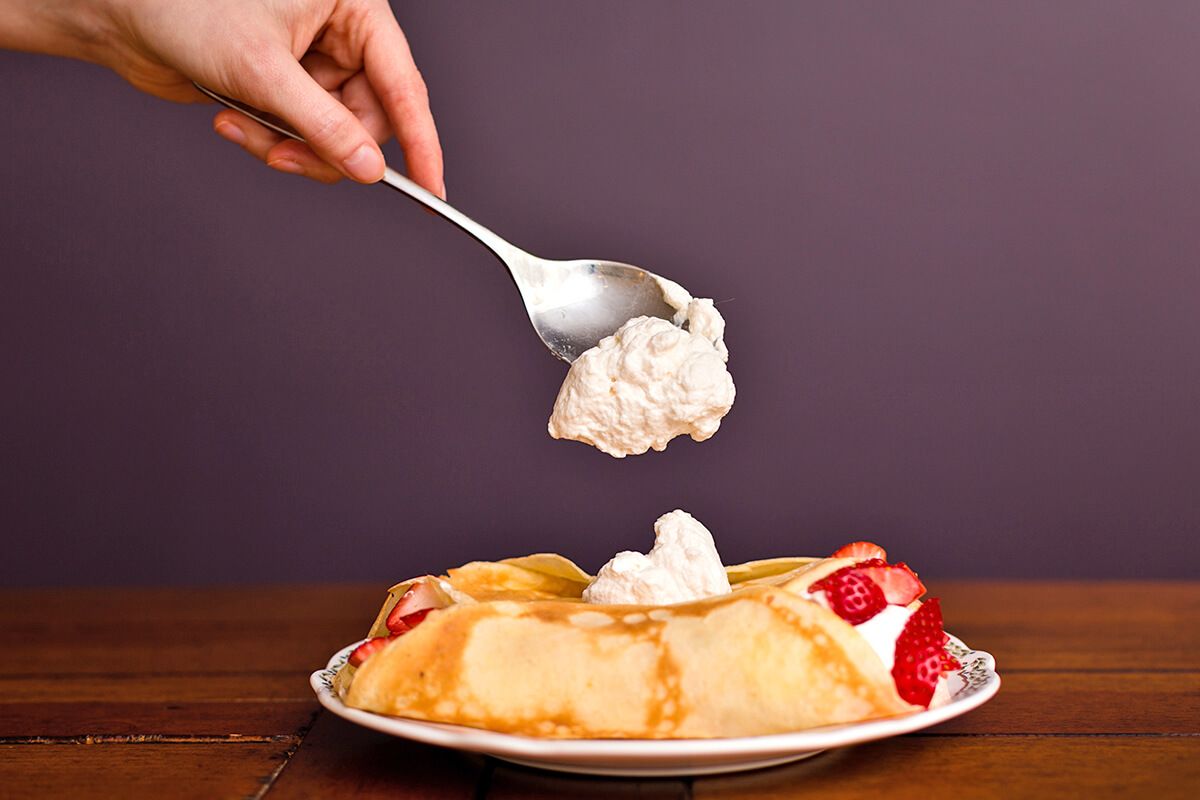
Spoon with whipped cream on it, falling onto a fluffy pancake
Credit: Adam Melnyk/ Shutterstock

Plop and Dollop

“Plop” and “dollop” are terms that are most commonly used to refer to softer foods that can be scooped onto a dish to add flavor or thickness. Traditionally, a single plop equals just about a tablespoon, while one dollop is considered by some to be about a plop and a half — or about 1.5 tablespoons.

Someone pouring a shot of liquid out of jigger into a serving bowk
Credit: doble-d/ iStock

Jigger

Jiggers are hourglass-shaped metal devices that are commonly used in cocktail making. There are usually two sides to each jigger — a larger side measuring out one jigger and a smaller side measuring out 1/2 of a jigger. If you see a drink recipe calling for one jigger but don’t have a jigger handy, don’t worry. We’re here to tell you that one jigger is equal to 1.5 ounces of liquid, which is also the size of a standard shot glass.

Advertisement
Advertisement
Jacobsen Salt Company salt pack
Credit: Courtesy of Jacobsen Salt Co.

Up Your Spice Game

When using a “pinch” of salt, it’s best to use high-quality ingredients in order to elevate the flavor of any dish. Jacobsen Salt Co. is an excellent resource for any home cook, as they produce some of the most potent and delicious spices available. Check out their collection of infused salts, which include flavors like black garlic and lemon zest.

More From Our Network

Better Report is part of Inbox Studio, an email-first media company. *Indicates a third-party property.
Go Retro With This 1960s Fashion Quiz

Quiz Daily

Go Retro With This 1960s Fashion Quiz

True or False: Are You a Master of U.S. Geography?

Travel Quiz

True or False: Are You a Master of U.S. Geography?

5 Reasons You Can Be Denied Boarding an Airplane

Daily Passport

5 Reasons You Can Be Denied Boarding an Airplane

What Did People Do Before Eyeglasses?

History Facts

What Did People Do Before Eyeglasses?

How To Use a Balloon To Clean Up Dust

House Outlook

How To Use a Balloon To Clean Up Dust

11 Shopping Hacks Costco Members Should Know

FinanceBuzz*

11 Shopping Hacks Costco Members Should Know

Share this article

  • Share to Facebook
  • Share to Twitter
  • Copy Url
  • Share to Email
Jessica Levy

This article is for general informational purposes only.
Affiliate Disclaimer Medical Disclaimer Financial Disclaimer

Updated:
Posted In: Home
Hero Image Credit: Better Report
Advertisement

Related Articles

The Most Popular Car Colors in the U.S.

4 min read

First-Date Etiquette Tips for People Over 40, According to a Matchmaker

3 min read

Why Doesn’t Plastic Totally Dry in the Dishwasher?

3 min read

Putting This in Your Dryer Is a Major Fire Risk

3 min read

18 Surprising Things You Should Never Put Down Your Drain

5 min read
Advertisement

How to Create a Healthy Relationship With Your Phone

Health | Updated: August 22, 2024
Rachel Gresh
Author
Rachel Gresh is a Washington, D.C.-based freelance writer. When she's not writing, you can find her wandering a museum, exploring an unfamiliar city, or baking something new in the kitchen.
Man in bed looking at his phone
Better Report

Plenty of us have our heads buried in our phones these days, whether scrolling through social media, browsing aimlessly on Amazon, or spending hours playing Candy Crush. It seems no one is immune. We use our phones for everything. But what happens when we become addicted to them? 

We can’t completely cut phones out of our lives, because we need them for professional and personal communication, so it’s unreasonable to tell someone to “just shut it off.” Sure, we can say we’re going to “limit social media time to X hours a day” or “turn off the phone at eight o’clock every night,” but to actually implement these goals is difficult. Instead, there are a few realistic steps to reduce screen time and cultivate a healthy relationship with your phone.

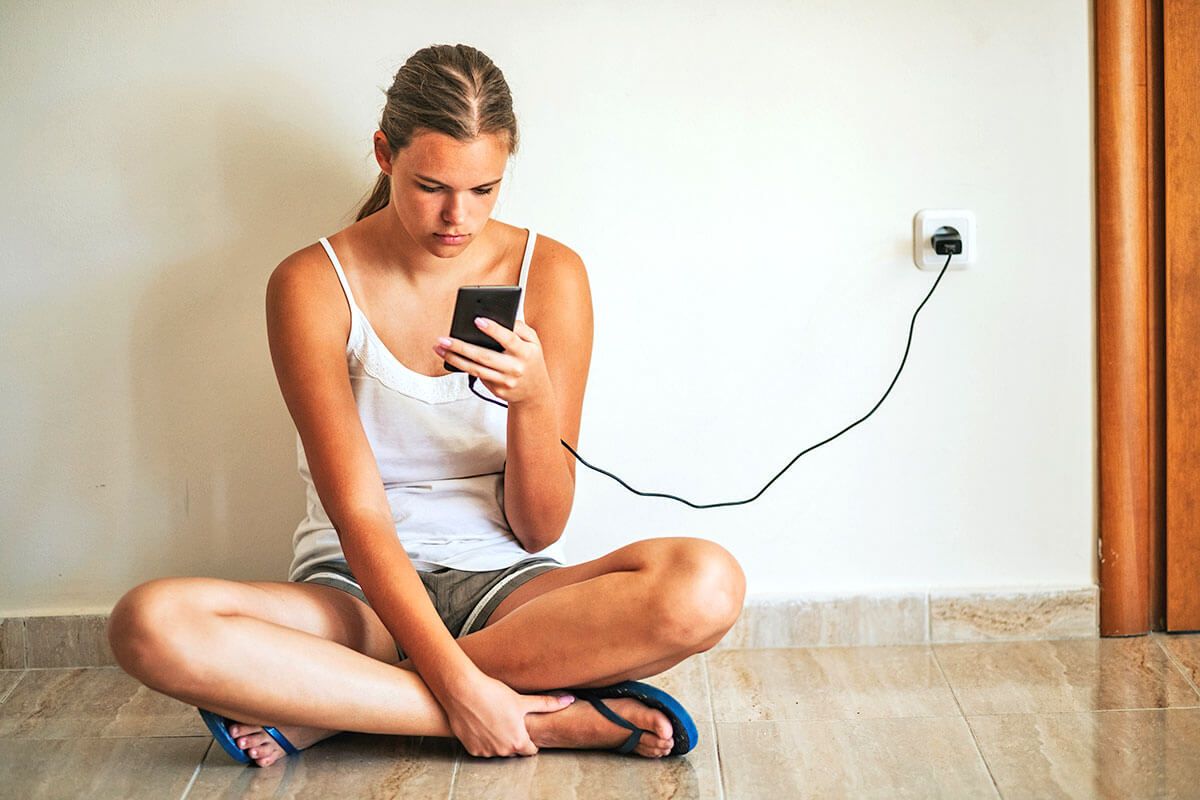
Woman sitting cross-legged looking at her phone, which is plugged into the wall
Credit: Constantinis/ iStock

What Is a Phone Addiction?

Cell phone apps were designed to be addictive. Former Google design ethicist Tristan Harris points out that some features, such as “pull to refresh,” intentionally mimic slot machines and other addictive casino games. It keeps users wanting more. Even if you manage to ignore these psychological cravings and put the phone down, the break probably doesn’t last long. “If you disengage, you get peppered with little messages or bonus offers to get your attention and pull you back in,” explains Natasha Schüll, author of Addiction by Design. It makes kicking the habit nearly impossible.

With the world at our fingertips, pulling away can be extremely difficult. The Addiction Center estimates that over six percent of the population has a phone addiction. Some signs of phone addiction include lying about smartphone use, getting up at night to check the phone, neglecting other duties, and getting irritated when phone use is interrupted. Overusing phones can disrupt our relationships, productivity, and mental health. Here’s how to reduce your screen time and prevent falling victim to a phone addiction.

Advertisement
Advertisement
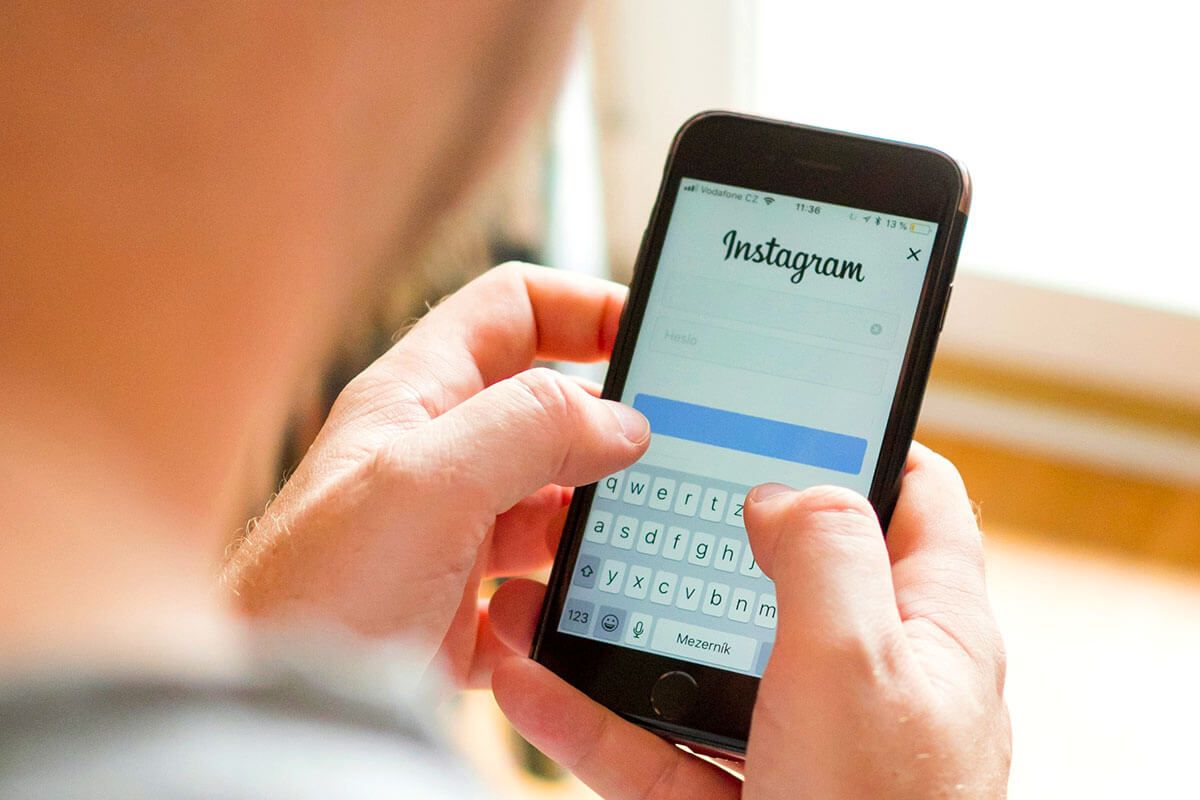
Person looking at Instagram on their phone
Credit: Katka Pavlickova/ Unsplash

How to Kick the Social Media Habit — No, Really

It’s the most common complaint of phone overusers. Our brains love social media. Viewing our friends’ Facebook photos or watching funny TikToks activates the brain’s reward center as dopamine (a feel-good chemical) is released. Social media’s popularity shows no signs of slowing down — 69% of adults and 81% of teens use it. But curiously, we log in repeatedly, even if our last browsing session left us angry, irritated, or anxious. This is because, like gambling, the results of social media browsing are random, and we become addicted to the high points. 

Advertisement

“When the outcome is unpredictable, the behavior is more likely to repeat. Think of a slot machine: if game players knew they never were going to get money by playing the game, then they never would play,” explains psychologist Jacqueline Sperling, PhD. She goes on to use image posting on social media as a comparable example to gambling. “One does not know how many likes a picture will get, who will ‘like’ the picture, and when the picture will receive likes. The unknown outcome and the possibility of a desired outcome can keep users engaged with the sites.” 

Unfortunately, many of us stay connected with friends, family, and colleagues via these platforms, so simply deleting them isn’t easy. Instead, try turning off notifications. This way, you won’t be pinged whenever someone likes a photo, comments on your post, or adds you as a friend. The next step is to decide how often you’ll check your apps daily to reduce screen time further. Set a number and stick with it.

After a few weeks of practice, the urge to constantly check social media should subside, and you won’t be glued to every “ding” your phone makes. If this doesn’t work, delete social media apps from your phone but keep them on a less portable device, such as a tablet or computer. This way, you can still check your accounts, but you won’t have access to them 24/7. They do say absence makes the heart grow fonder.

Recommended Articles

  • The Most Popular Car Colors in the U.S.

  • 5 Small Changes You Can Make To Decrease Your Risk of Dementia

  • First-Date Etiquette Tips for People Over 40, According to a Matchmaker

  • 6 Holiday Foods You Didn’t Know Were Healthy

Advertisement
Advertisement

Reader Favorites

  • Person breaking into a car

    The 10 Most Stolen Cars in the U.S.

  • Older man with hands on cane

    Why Do We Smell Different As We Age?

  • Man in grocery store

    6 Grocery Habits Costing You More Than You Think

Person doing yoga with their phone on their mat
Credit: Backgroundy/ Shutterstock

Replace Bad Phone Habits With Good Ones

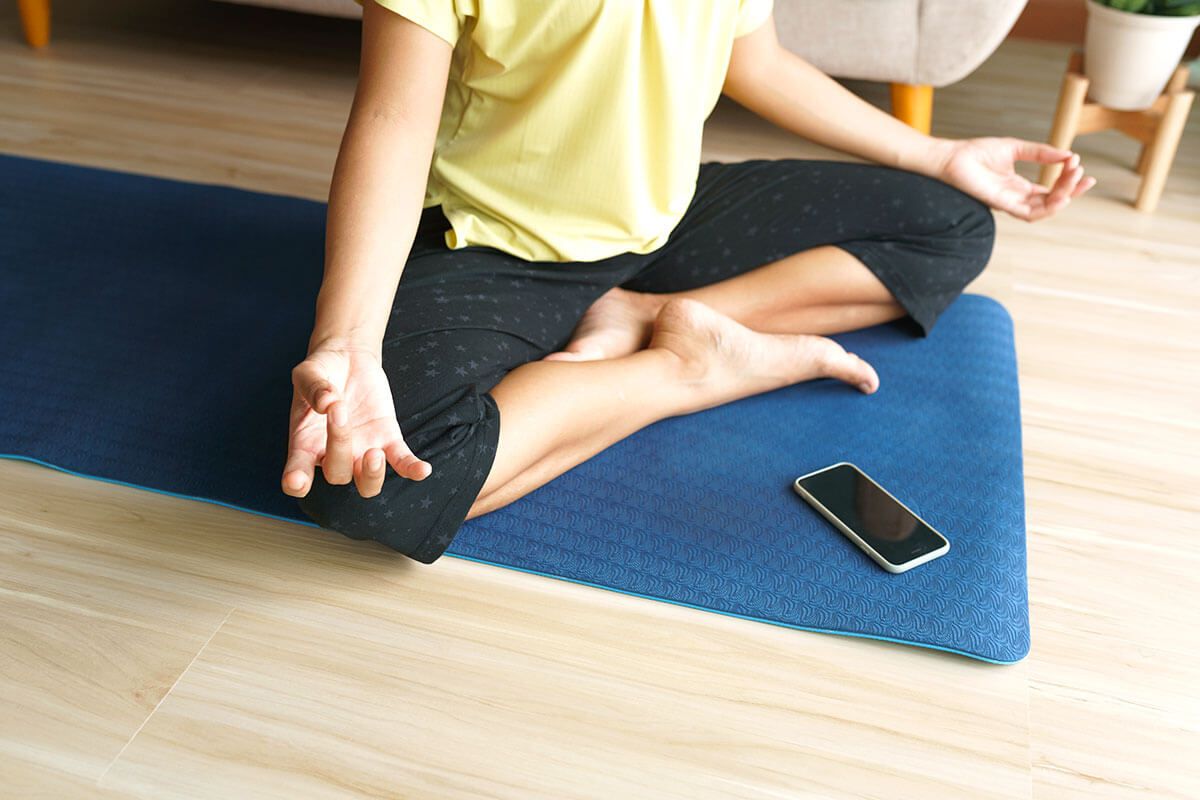
Phones get a bad rap these days, but they aren’t the real problem; it’s how we use them. They can also be fantastic tools for learning and productivity. Replace your social media “doomscrolling” with something more fruitful to boost your mood instead of sinking it. Check out the app store (especially free apps) to exercise your brain. Learn a new language, enjoy guided meditation, read books, listen to music or podcasts, or play brain games like crossword puzzles or trivia. You’ll feel better about how you spend your time, and you’ll learn something new.

Phone screen that reads "Do Not Disturb"
Credit: Andreas Naegeli/ iStock via Getty Images Plus

Put “Do Not Disturb” to Good Use

Social media notifications aren’t the only things popping up on phone screens during all hours of the day. Emails, group chats, news, text messages, and more bombard us even when it’s time to sleep. An underutilized tool is the “do not disturb” setting. It silences calls, alerts, and notifications without turning off cellular service in just a few taps. You can still use your phone but won’t be notified of incoming messages or calls until you turn the setting off.

Advertisement

On iPhone, this setting is a moon icon and can be set for one hour, “until this evening,” or “until I leave this location” (which comes in handy during business meetings or dinner dates). On an Android device, the icon looks like a circle with a horizontal line through it. You can also customize these settings by choosing the notifications you’ll still receive when it’s engaged. For example, head to an iPhone’s “do not disturb” settings and select “sleep focus.” You can then choose what people and apps are still allowed to notify you at night, and anyone or anything not selected will still be silenced. Parents love this setting because their kids can still contact them during an emergency, but annoying social media notifications or emails won’t disrupt their sleep.

Advertisement
Advertisement
Woman wrapped in a yellow blanket sitting on a couch on her balcony
Credit: AleksandarNakic/ iStock

Set Up Tech-Free Zones for a Digital Detox

This recommendation sounds scarier than it is. Being connected to everyone 24/7 is a perk and a pitfall of modern life, but sometimes, it’s best just to put the phone down. Indeed, it’s nearly impossible to turn your phone off the entire time you’re at home, so a more reasonable option is to assign a few phone-free (or even tech-free) rooms. 

The best rooms to go tech-free are the bedroom, dining room, and family room. You’re enjoying downtime and spending time with loved ones in these spaces. This way, you can be fully present. According to the Cleveland Clinic, a digital detox such as this has several mental health benefits, including stress reduction and sharper focus, and it also improves our social interactions. And one more suggestion — invest in an alarm clock to keep your bedroom tech-free. This way, you’ll roll over in the mornings to turn off the alarm and not be tempted to check emails or social accounts immediately.

More From Our Network

Better Report is part of Inbox Studio, an email-first media company. *Indicates a third-party property.
Go Retro With This 1960s Fashion Quiz

Quiz Daily

Go Retro With This 1960s Fashion Quiz

True or False: Are You a Master of U.S. Geography?

Travel Quiz

True or False: Are You a Master of U.S. Geography?

5 Reasons You Can Be Denied Boarding an Airplane

Daily Passport

5 Reasons You Can Be Denied Boarding an Airplane

What Did People Do Before Eyeglasses?

History Facts

What Did People Do Before Eyeglasses?

How To Use a Balloon To Clean Up Dust

House Outlook

How To Use a Balloon To Clean Up Dust

11 Shopping Hacks Costco Members Should Know

FinanceBuzz*

11 Shopping Hacks Costco Members Should Know

Share this article

  • Share to Facebook
  • Share to Twitter
  • Copy Url
  • Share to Email
Rachel Gresh
Writer

Rachel Gresh is a Washington, D.C.-based freelance writer. When she's not writing, you can find her wandering a museum, exploring an unfamiliar city, or baking something new in the kitchen.

This article is for general informational purposes only.
Affiliate Disclaimer Medical Disclaimer Financial Disclaimer

Updated: December 15, 2023
Posted In: Health
Hero Image Credit: Better Report
Advertisement

Related Articles

5 Small Changes You Can Make To Decrease Your Risk of Dementia

4 min read

6 Holiday Foods You Didn’t Know Were Healthy

7 min read

Is It Safe To Drink a Glass of Water That Sat Out Overnight?

3 min read

The Health Risks of Shopping at the Dollar Store

4 min read

Does Going Outside With Wet Hair Really Make You Sick?

4 min read
Advertisement

What is “Functional Freeze”?

Jessica Levy
Health | Updated: August 22, 2024
Woman sitting in front of laptop with her hands on her temples
Better Report

Fortunately, talking about mental health is no longer taboo, but even still, it’s a complicated subject to navigate. This is especially true if you aren’t quite sure how or why you feel a certain way. If you happen to feel like you’ve checked out of everyday life, whether you’re socializing less, experiencing constant anxiety, feeling numb, or “doomscrolling” every evening, these tips might help you. These feelings, along with a host of other bothersome symptoms, can be signs of something called “functional freeze.”

Woman sitting with her back to the back of a couch hunched over
Credit: Joice Kelly/ Unsplash

Responses to Stressors

When faced with stressors, our bodies can respond in a few different ways. You’ve likely heard of fight-or-flight responses, which are natural reactions driven by your sympathetic nervous system, the mode that prepares your body for danger. However, these aren’t the only two sympathetic nervous system responses. There are two other reactions, “fawn” and “freeze.” Our response to stressors can be any of these four options or a hybrid of several.

Of these responses to danger, “fight” and “flight” are self-explanatory. The less-talked-about “fawn” involves submitting to or trying to appease the source of danger. “Freeze” is also not often discussed, but it is among the most popular responses. When someone freezes in the face of stress or danger, their body goes into an involuntary pause. Think of the actors’ reactions in Jurassic Park freezing as a Tyrannosaurus rex approaches. Unfortunately, freezing manifests itself in all sorts of ways — and it doesn’t take a dinosaur to trigger it.

Advertisement
Advertisement
Woman sitting in front of laptop with her hands over her face
Credit: Anna Shvets/ Pexels

Functional Freeze

Functional freeze is a less obvious state of emotion that impacts sufferers mentally and physically but without showing the classic symptoms of textbook anxiety or depression. It isn’t yet a clinical term, but it’s gaining traction in the world of mental health because so many of us experience this phenomenon. It’s a stress response that causes you to freeze mentally, physically, and emotionally while still going through the motions of daily life. If everyday tasks, meeting up with friends, and texting back have become taxing, you might be experiencing functional freeze. 

Also referred to as being on “autopilot,” functional freeze isn’t a total shutdown. Sufferers retain basic levels of function without causing concern to those around them. However, those suffering in silence feel the difference, but they can’t pinpoint what’s wrong. “People are able to engage in kind of the bare minimum basic functioning, so still going to work and engaging with others, but performance may slip,” explains psychologist T.M. Robinson-Mosley. Stress, burnout, and unresolved trauma are the most prevalent sources of functional freeze.

Advertisement
Man hunched over in front of computer with his head on his arm
Credit: Nataliya Vaitkevich/ Pexels

Signs You’re in Functional Freeze

There are several telltale signs of functional freeze, although it does look different for everyone. If one or more of these situations describe you, you could be in functional freeze.

You Can’t Shake Constant Anxiety 

Do you feel like something terrible is always about to happen? This unwarranted sense of impending doom can be debilitating, and with no discernible cause, pinpointing the source and fixing it seems impossible. This ongoing, low-level anxiety is a hallmark of functional freeze. 

You Procrastinate

Advertisement

You let daily chores, work assignments, self-care activities, and other tasks fall by the wayside, even though you want and need to do them. Procrastinating becomes your go-to, resulting in things piling up and making you even more anxious. Binge-watching television and scrolling through social media are two of the most popular forms of functional freeze procrastination.

You Avoid Socializing

Weekends of canceled plans or dozens of ignored calls and messages could be a sign of functional freeze. When you’re in freeze mode, your need to isolate yourself from others skyrockets, and you’ll be more introverted than ever. This can also look like “crashing” or shutting down when you return home from work or social functions.

You Feel Exhausted

Advertisement

If you can’t seem to bring yourself to the gym even though you know you’d feel better, you could be in functional freeze. Even everyday physical activity, such as walking your dog or taking out the trash, can be jarring. You find that you want to stay inside on the couch, even though it ultimately makes you feel worse. 

You Lack Emotion

Things that once made you feel excited or happy now fall short. If your emotions feel muted, it could be a functional freeze. This is because as you disconnect from social connections, daily tasks, and everyday life, you feel disassociated from yourself and your surroundings as anxiety continues to build. The one emotion you probably do feel is a sense of being overwhelmed.

Recommended Articles

  • The Most Popular Car Colors in the U.S.

  • 5 Small Changes You Can Make To Decrease Your Risk of Dementia

  • First-Date Etiquette Tips for People Over 40, According to a Matchmaker

  • 6 Holiday Foods You Didn’t Know Were Healthy

Advertisement
Advertisement

Reader Favorites

  • Person breaking into a car

    The 10 Most Stolen Cars in the U.S.

  • Older man with hands on cane

    Why Do We Smell Different As We Age?

  • Man in grocery store

    6 Grocery Habits Costing You More Than You Think

Credit: George Milton/ Pexels

How to “Unfreeze”

It’s important to remember that functional freeze is not a permanent state. With the right strategies, you can overcome it and regain control of your life. To “unfreeze,” you must activate your parasympathetic nervous system, which allows the body to transition from sympathetic mode into a calmer, more relaxed state. Get back on track with these helpful tips.

Get Moving

Advertisement

Not only is exercise good for your physical health, but it’s just as beneficial for mental health. Stress relief and improved mood are just the tip of the iceberg regarding the benefits. Light activities, including stretching, yoga, or walking, can soothe your body. Some sufferers of functional freeze have found success in joining gyms, classes, or even local running clubs. A defined workout routine allows you to build your daily schedule around it, making you more likely to make time for it. 

Slow Down

We know what you’re thinking — “You just told us to keep moving!” — but maintaining a healthy lifestyle and positive mindset is about balance. Deep breathing and meditation are proven to deliver many physical and mental benefits. They can be done anywhere, anytime, making them accessible to anyone stuck in functional freeze. Breathing exercises and meditation raise awareness of your mind and body connection, allowing you to be in touch with your emotions and surroundings and help ease feelings of dissociation that functional freeze can cause.

Go Outside

Advertisement

Breathing fresh air and reconnecting with nature is proven to reduce blood pressure, heart rate, and cortisol levels (a stress hormone). It also provides a change of environment, which can help snap you out of your couch-dwelling session. Research shows that one hour a day of “grounding” — walking barefoot in the grass — can boost mood and promote relaxation.

Get Organized

Making to-do lists, journaling, following a schedule, and other forms of daily organization can help you fight functional freeze. Setting goals will help increase your motivation and build healthy habits to help pull you out of freeze mode. 

It’s essential to be aware of and manage the symptoms of functional freeze. Not only are they disruptive to daily life, but they can manifest further, resulting in other forms of anxiety, depression, and other mental health conditions. If you find yourself struggling to “unfreeze,” talk to a trusted mental health professional for help.

Advertisement

Feature Image Credit: Karolina Kaboompics/ Pexels

More From Our Network

Better Report is part of Inbox Studio, an email-first media company. *Indicates a third-party property.

Go Retro With This 1960s Fashion Quiz

Quiz Daily

Go Retro With This 1960s Fashion Quiz

True or False: Are You a Master of U.S. Geography?

Travel Quiz

True or False: Are You a Master of U.S. Geography?

5 Reasons You Can Be Denied Boarding an Airplane

Daily Passport

5 Reasons You Can Be Denied Boarding an Airplane

What Did People Do Before Eyeglasses?

History Facts

What Did People Do Before Eyeglasses?

How To Use a Balloon To Clean Up Dust

House Outlook

How To Use a Balloon To Clean Up Dust

11 Shopping Hacks Costco Members Should Know

FinanceBuzz*

11 Shopping Hacks Costco Members Should Know

Share this article

  • Share to Facebook
  • Share to Twitter
  • Copy Url
  • Share to Email
Jessica Levy

This article is for general informational purposes only.
Affiliate Disclaimer Medical Disclaimer Financial Disclaimer

Updated:
Posted In: Health
Hero Image Credit: Better Report
Advertisement

Related Articles

5 Small Changes You Can Make To Decrease Your Risk of Dementia

4 min read

6 Holiday Foods You Didn’t Know Were Healthy

7 min read

Is It Safe To Drink a Glass of Water That Sat Out Overnight?

3 min read

The Health Risks of Shopping at the Dollar Store

4 min read

Does Going Outside With Wet Hair Really Make You Sick?

4 min read
Advertisement

Can Plants Really Improve Air Quality in Your Home?

Home | Updated: August 20, 2024
Rachel Gresh
Author
Rachel Gresh is a Washington, D.C.-based freelance writer. When she's not writing, you can find her wandering a museum, exploring an unfamiliar city, or baking something new in the kitchen.
Collection of indoor plants
Better Report

All featured products and deals are selected independently and objectively by the author. Better Report may receive a share of sales via affiliate links in content.

For decades, green thumbs have praised the benefits of their potted companions, and for good reason. Not only do plants liven up a room, but their stress-reducing properties have proven mental health benefits to boot. One prevailing belief is that plants can improve air quality by filtering out harmful particles. Enter pot-lined kitchens, bedrooms, living rooms, and nurseries. But this idea, and the research behind it, is decades old — so how does it hold up now?

Shot of the inside of a space shuttle cabin
Credit: :designprojects/ iStock

Plants in Outer Space

Supporters of the “plants are air filters” theory cite a famous 1989 NASA study that found plants cleared a small air chamber of VOCs (volatile organic compounds), specifically the gases benzene, trichloroethylene, and formaldehyde. VOCs are potentially harmful to our health, so a significant presence of VOCs in the International Space Station poses a threat to astronauts. These findings led to the hope that plants could resolve the problem naturally. While the data is verified, the experiment doesn’t translate well to real-life situations, giving consumers the wrong idea about indoor plants. Although plants can potentially clean the air in your home, this isn’t what actually happens.

Advertisement
Advertisement
Plants in potters on a shelf indoors
Credit: Annie Spratt/ Unsplash

The Pitfalls of Plants

This is the answer we’ve all been waiting for but don’t want to hear: Although your pothos plants look lovely, houseplants do not improve indoor air quality in homes or offices. However, this doesn’t mean they can’t enhance air quality at all — they can and do remove VOCs — but the sheer number of plants it would take to do so is unrealistic. To clean the air of a 1,500-square-foot home, for example, you’d need around 680 plants, according to the American Lung Association. Although this sounds like a dream come true for some plant lovers, it’s not feasible unless you live in a greenhouse.

Further diminishing the theory, a 2020 study found that around 10 to 1,000 plants per square meter (depending on the type of plants and air pollution) would be needed to get results anywhere close to those found in the NASA study and other similar studies. This is because far more gasses constantly cycle into homes and offices (via outdoor air from windows, doors, ventilation systems, etc.) than enclosed chambers used in labs. This dramatically increases VOC concentrations, rendering the average indoor plant useless in combating them. 

Not only are plants disproven to help clean the air, but they can also trigger allergies for some people. “They create more problems than they help,” says Dr. Nicholas BuSaba, associate professor of otolaryng­ology at Harvard ­Medical School. He recommends keeping them outside because they can foster mold and other allergens, which can cause adverse side effects for allergy sufferers.

Advertisement
Person opening a window next to a potted plant
Credit: Nadya Tkach/ iStock

How to Clean Indoor Air

“It would be so wonderful if we had all these beautiful plants that clean our air for us, but there are more effective ways of cleaning indoor air that require mechanical systems to move air over some sort of filtration device,” explains Portland State University Professor Elliott Gall. But don’t pitch your plants just yet. Although they might not double as air filters, they’re still beautiful to look at and worthy additions to your home.

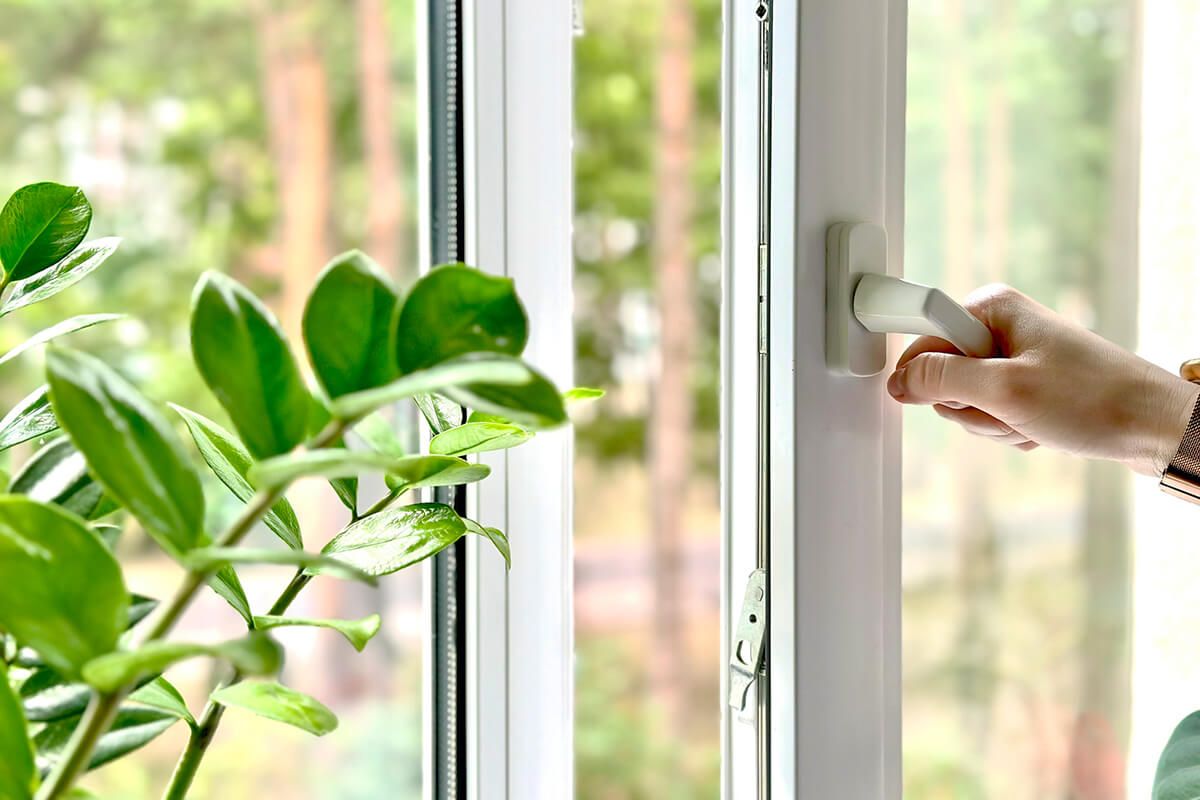
However, the U.S. Environmental Protection Agency offers three tips if you’re looking for new or better ways to clean your indoor spaces. First, eliminate sources of pollution and reduce emissions. This includes fuel-burning appliances, tobacco products, cleaning products, and pesticides (among other things). The EPA’s second tip is to improve ventilation, which means opening windows and doors, especially when indoor pollutants are present. The last piece of advice from the EPA is to invest in air cleaners, such as portable air cleaners, or upgrade your HVAC system to include a better filtration system.

Recommended Articles

  • The Most Popular Car Colors in the U.S.

  • 5 Small Changes You Can Make To Decrease Your Risk of Dementia

  • First-Date Etiquette Tips for People Over 40, According to a Matchmaker

  • 6 Holiday Foods You Didn’t Know Were Healthy

Advertisement
Advertisement

Reader Favorites

  • Person breaking into a car

    The 10 Most Stolen Cars in the U.S.

  • Older man with hands on cane

    Why Do We Smell Different As We Age?

  • Man in grocery store

    6 Grocery Habits Costing You More Than You Think

Older woman turning on a small air purifier
Credit: pikselstock/ Shutterstock

Choosing an Air Purifier

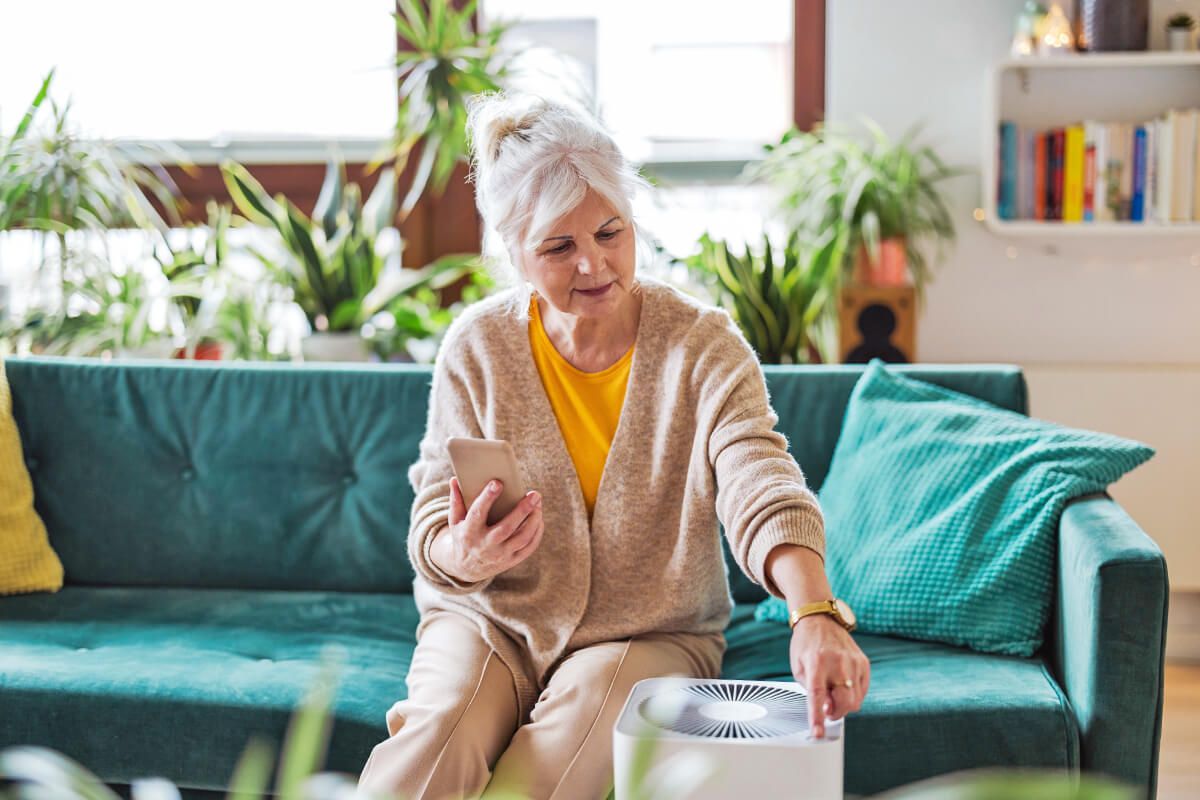
Portable air cleaners, also called air purifiers, might not look as pretty as a fiddle leaf fig, but they are proven to reduce or remove pollutants from indoor air while also ventilating the room with clean air. Choose an air purifier with a clean air delivery rate (CADR) large enough for the room you want to clean. This information should be listed in the product description.

Air purifier
Credit: Courtesy of Amazon

Look for the Right Filter

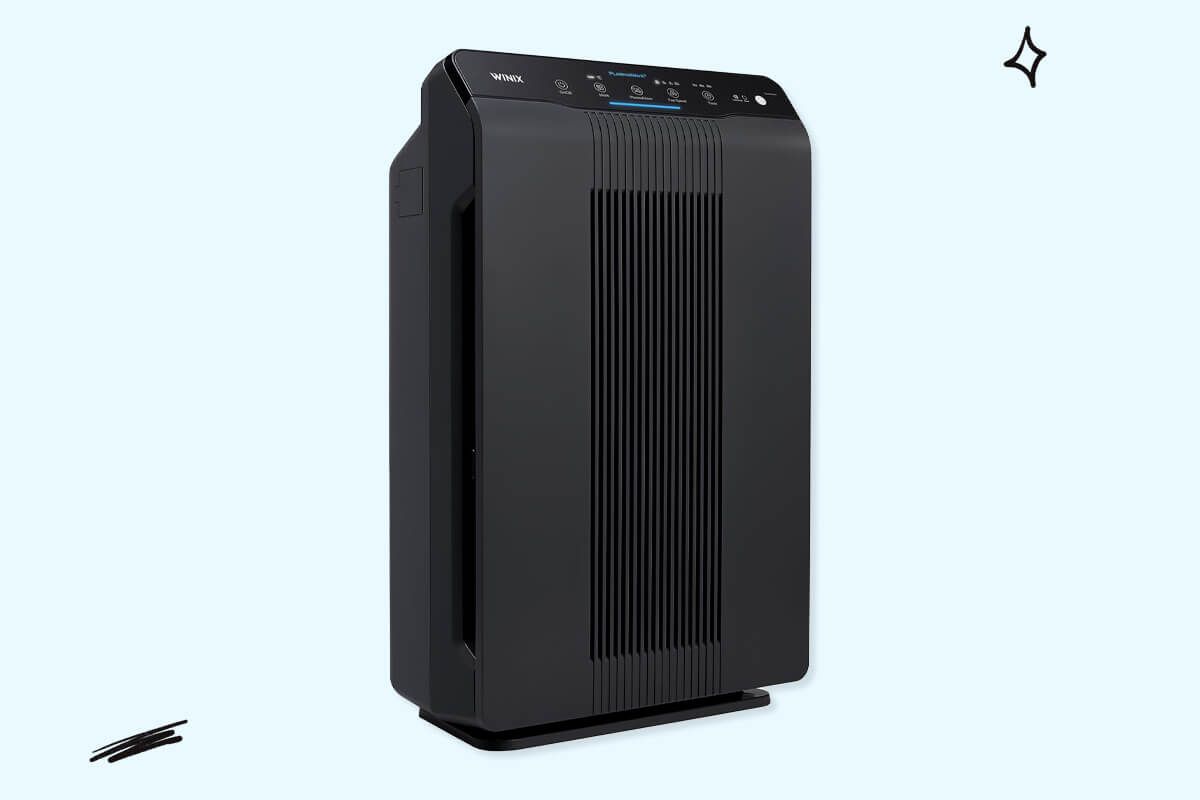
Look for purifiers that use a high-efficiency particulate air (HEPA) filter, such as this Winix model, and watch for activated carbon filters, which help remove gases. Other special considerations might include models made to mitigate pet allergies, smoke, dust, or other pollutants specific to your home or office. Hopefully, with these tips and tricks, you’ll enjoy cleaner indoor air in no time.

More From Our Network

Better Report is part of Inbox Studio, an email-first media company. *Indicates a third-party property.

Go Retro With This 1960s Fashion Quiz

Quiz Daily

Go Retro With This 1960s Fashion Quiz

True or False: Are You a Master of U.S. Geography?

Travel Quiz

True or False: Are You a Master of U.S. Geography?

5 Reasons You Can Be Denied Boarding an Airplane

Daily Passport

5 Reasons You Can Be Denied Boarding an Airplane

What Did People Do Before Eyeglasses?

History Facts

What Did People Do Before Eyeglasses?

How To Use a Balloon To Clean Up Dust

House Outlook

How To Use a Balloon To Clean Up Dust

11 Shopping Hacks Costco Members Should Know

FinanceBuzz*

11 Shopping Hacks Costco Members Should Know

Share this article

  • Share to Facebook
  • Share to Twitter
  • Copy Url
  • Share to Email
Rachel Gresh
Writer

Rachel Gresh is a Washington, D.C.-based freelance writer. When she's not writing, you can find her wandering a museum, exploring an unfamiliar city, or baking something new in the kitchen.

This article is for general informational purposes only.
Affiliate Disclaimer Medical Disclaimer Financial Disclaimer

Updated: December 15, 2023
Posted In: Home
Hero Image Credit: Better Report
Advertisement

Related Articles

The Most Popular Car Colors in the U.S.

4 min read

First-Date Etiquette Tips for People Over 40, According to a Matchmaker

3 min read

Why Doesn’t Plastic Totally Dry in the Dishwasher?

3 min read

Putting This in Your Dryer Is a Major Fire Risk

3 min read

18 Surprising Things You Should Never Put Down Your Drain

5 min read
Advertisement

Want to Clean Your Microwave Quickly? Use a Lemon

Jessica Levy
Home | Updated: August 20, 2024
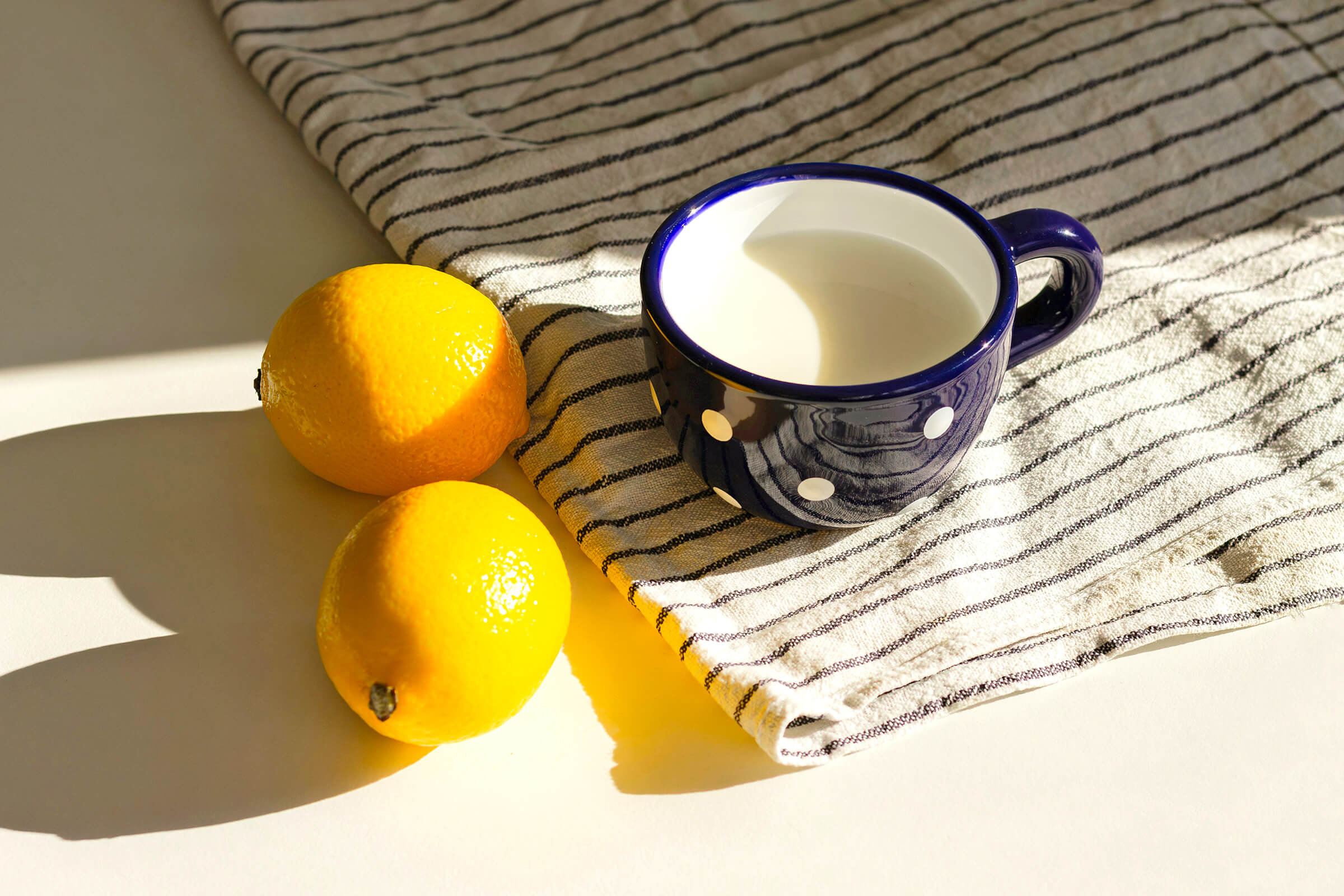
Two lemons next to a mug on a placemat
Better Report

Putting your food into a stained and splattered microwave doesn’t seem that appetizing when heating up leftovers. While you can use various cleaning products to scrub yours down, you may want to go a more natural route — or maybe you just don’t want to have to head to the grocery store to pick up supplies. Instead, a lemon is all you need to have a fresh microwave in no time.

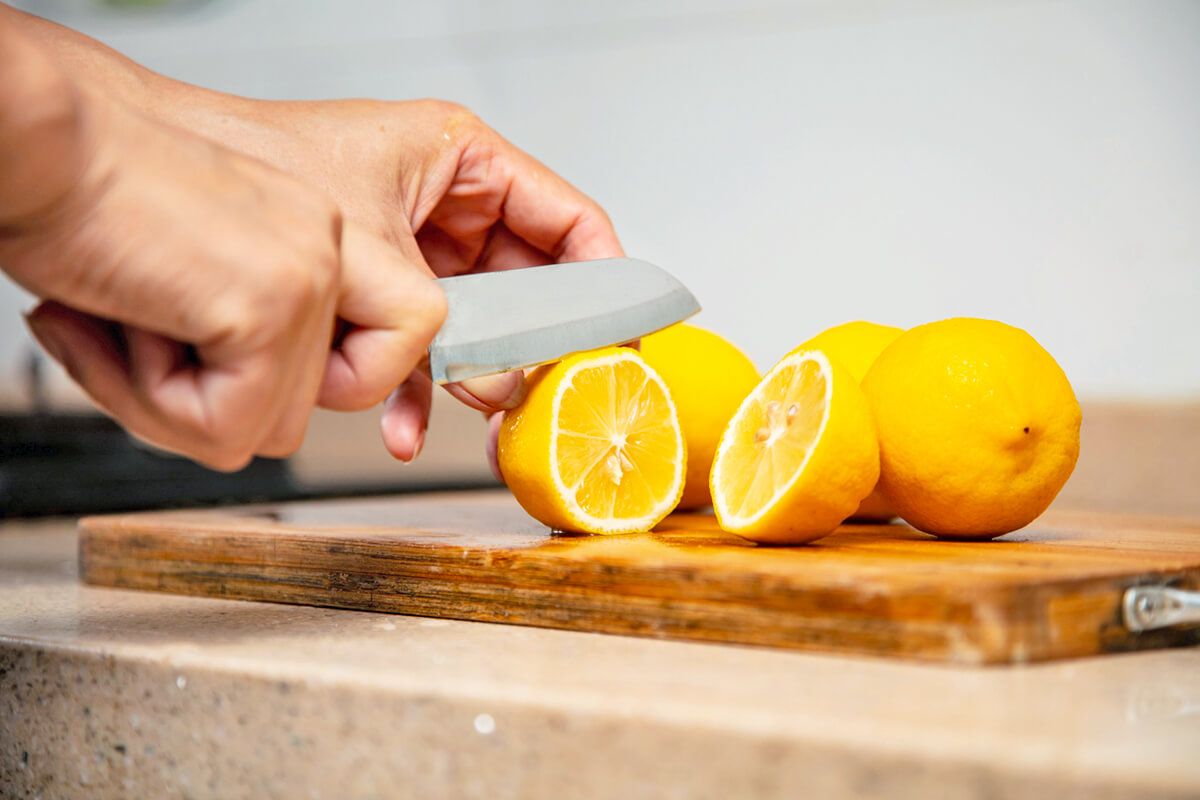
Person slicing lemons with a knife
Credit: shisheng ling/ iStock

Why Use Lemon for Cleaning?

Lemons are a natural cleaning powerhouse, making them an ideal choice for this project — and a variety of other household needs. Their acidic properties effectively break down grease and grime, while their antibacterial qualities help eliminate nasty bacteria. Unlike chemical cleaners, lemons are safe in the kitchen and won’t leave any harsh residues behind. And who doesn’t love a lemony-fresh scent in the kitchen?

Advertisement
Advertisement
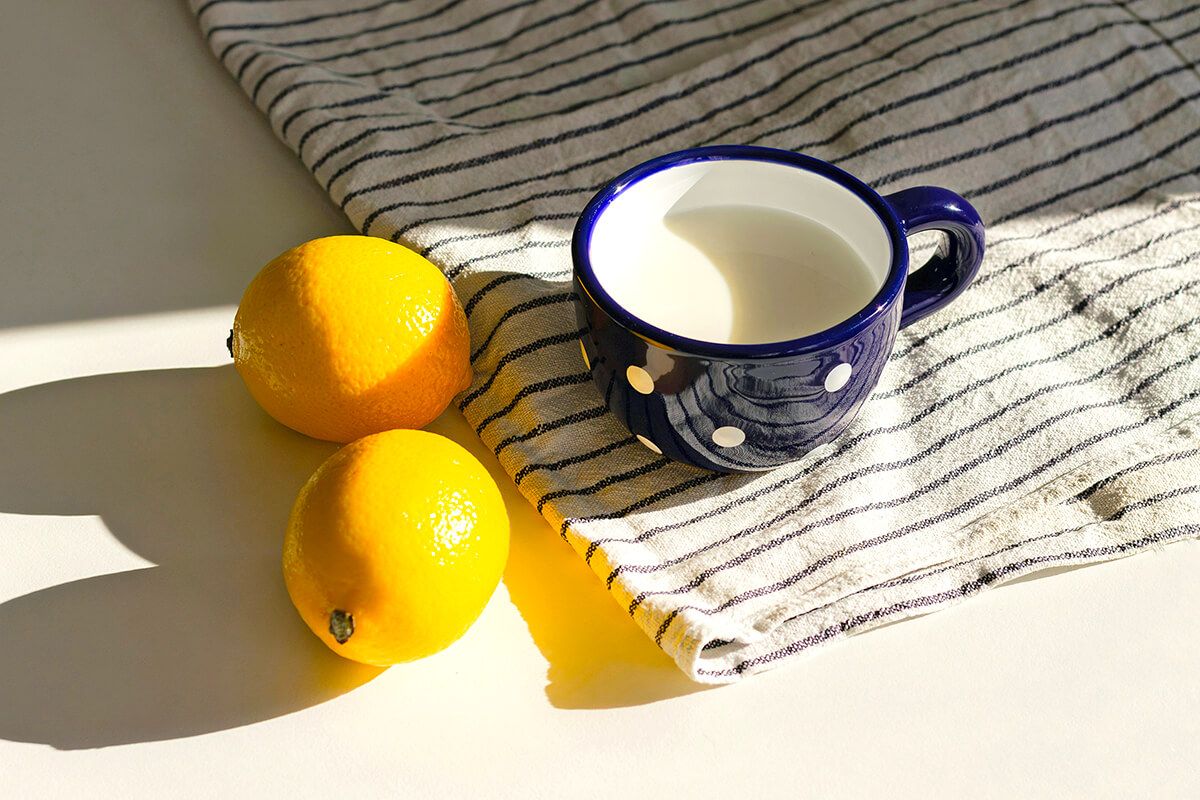
Two lemons next to a mug on a placemat
Credit: Boglárka Salamon/ Unsplash

How to Clean Your Microwave With Lemon

You’re in luck. This method requires little prep and very little elbow grease. To clean your microwave this way, you’ll need a lemon, a sponge or rag, and a bowl of water.

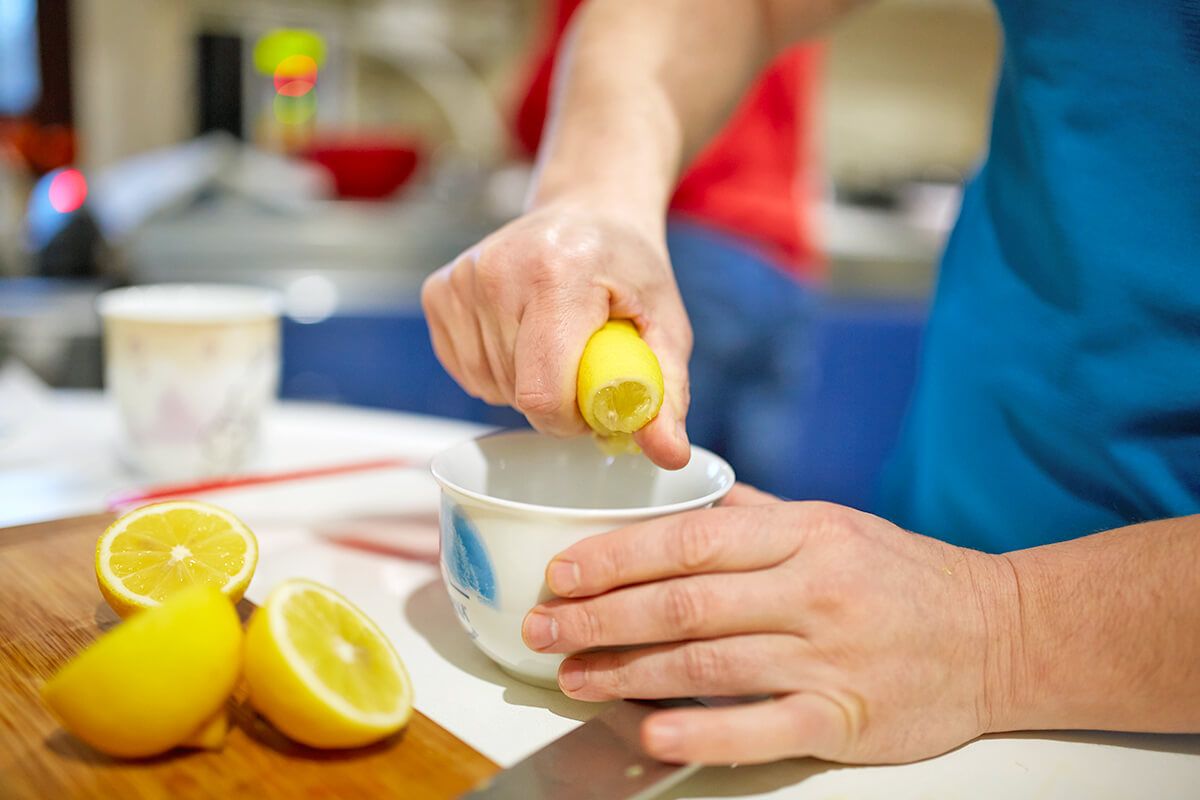
Person squeezing a lemon over a bowl
Credit: Slatan/ Shutterstock

Step 1: Cut and Squeeze

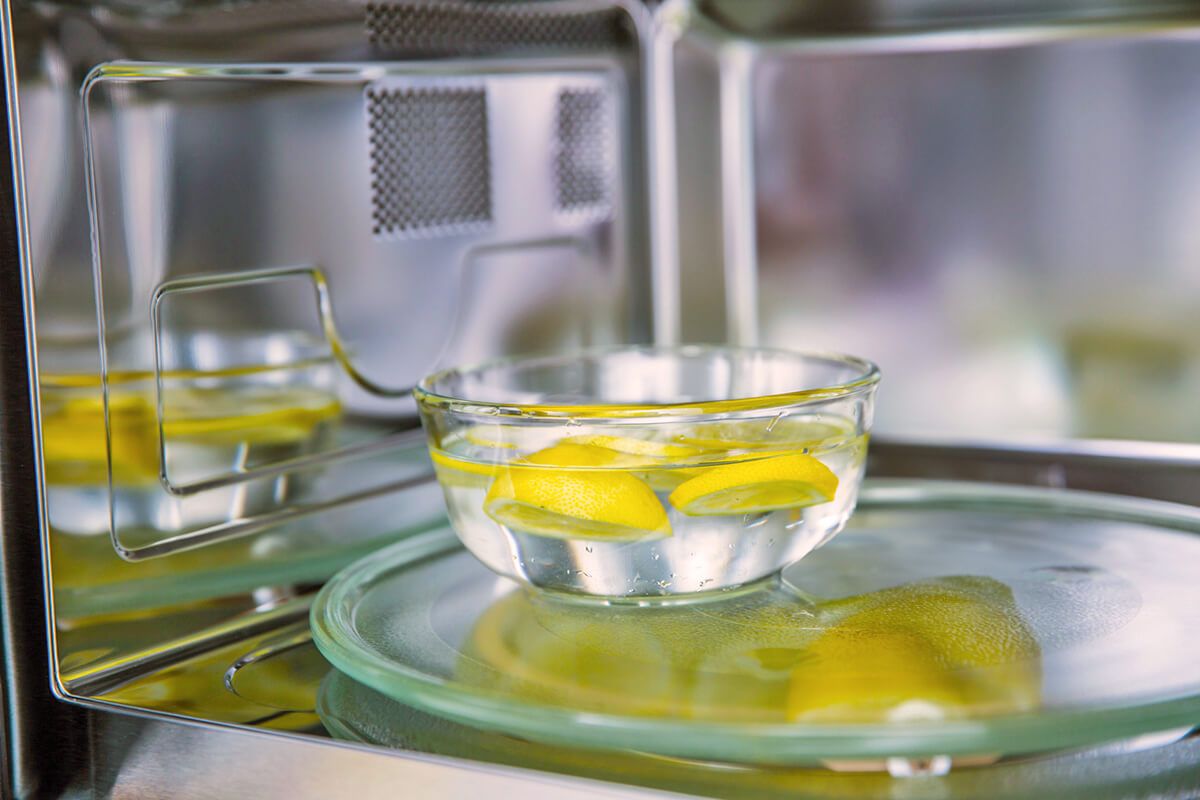
Cut the lemon in half and squeeze its juice into the microwave-safe bowl. Place the lemon halves in the bowl as well. Add about half a cup of water to the bowl, ensuring that the lemon halves are submerged. The purpose of this is to get the water saturated with the lemon’s natural antibacterial properties while also having enough water to produce steam, which loosens the grime from the inside of the microwave.

Recommended Articles

  • The Most Popular Car Colors in the U.S.

  • 5 Small Changes You Can Make To Decrease Your Risk of Dementia

  • First-Date Etiquette Tips for People Over 40, According to a Matchmaker

  • 6 Holiday Foods You Didn’t Know Were Healthy

Advertisement
Advertisement

Reader Favorites

  • Person breaking into a car

    The 10 Most Stolen Cars in the U.S.

  • Older man with hands on cane

    Why Do We Smell Different As We Age?

  • Man in grocery store

    6 Grocery Habits Costing You More Than You Think

Bowl of water with lemons in it in the microwave
Credit: MarianVejcik/ iStock

Step 2: Zap It

Place the bowl with the lemon solution inside the microwave. Set the microwave to 3-5 minutes and watch the magic happen. As the lemon-water solution heats up, it will produce steam that helps break down tough stains and spills. Allow the bowl to sit inside the microwave for an additional 2 minutes after the timer goes off, as the bowl of water will continue to produce steam, and you want the interior to be as damp as possible to make for easy scrubbing.

Person wiping down the inside of a microwave with a yellow rag
Credit: Yana Tikhonova/ iStock

Step 3: Quick Wipe Down

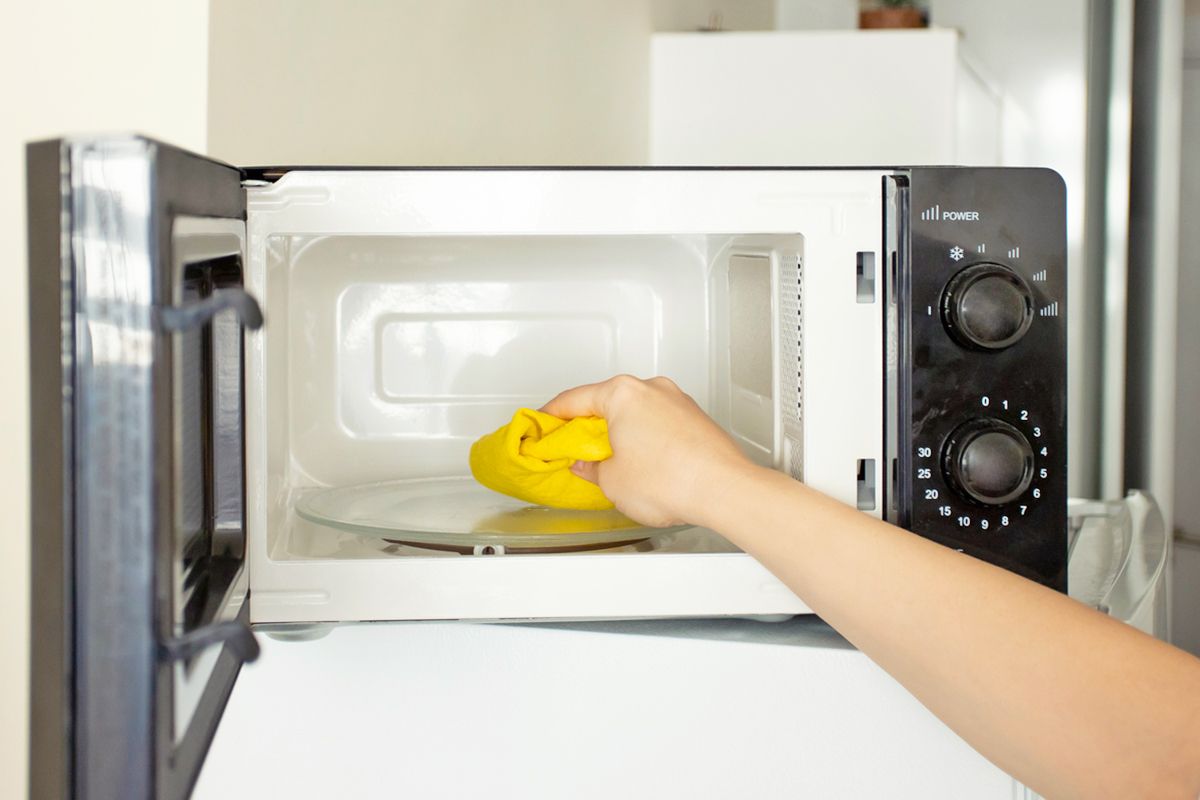
Carefully remove the bowl from the microwave, which will be nearly at a boiling temperature. Take a clean sponge or cloth and wipe down the interior surfaces of the microwave, making sure to check those corners and the microwave roof where food tends to stick.

Advertisement
Shot of the interior of a clean microwave
Credit: leungchopan/ iStock

Step 4: Clean the Turntable

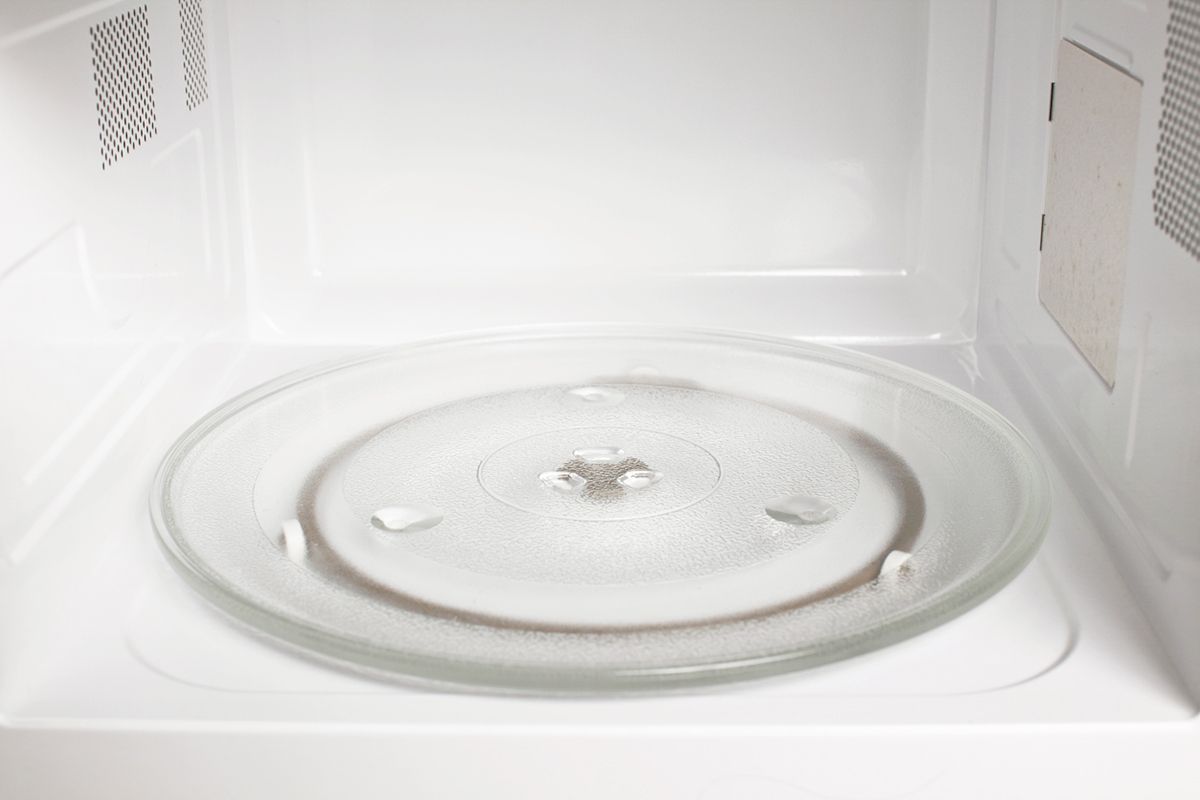
Remove the turntable and wash it separately with warm, soapy water. Rinse and dry it thoroughly before placing it back in the microwave. This ensures that every part of your microwave is thoroughly cleaned and ready for use.

Advertisement
Advertisement
Person opening their microwave
Credit: ilkermetinkursova/ iStock

How Often Should I Clean My Microwave?

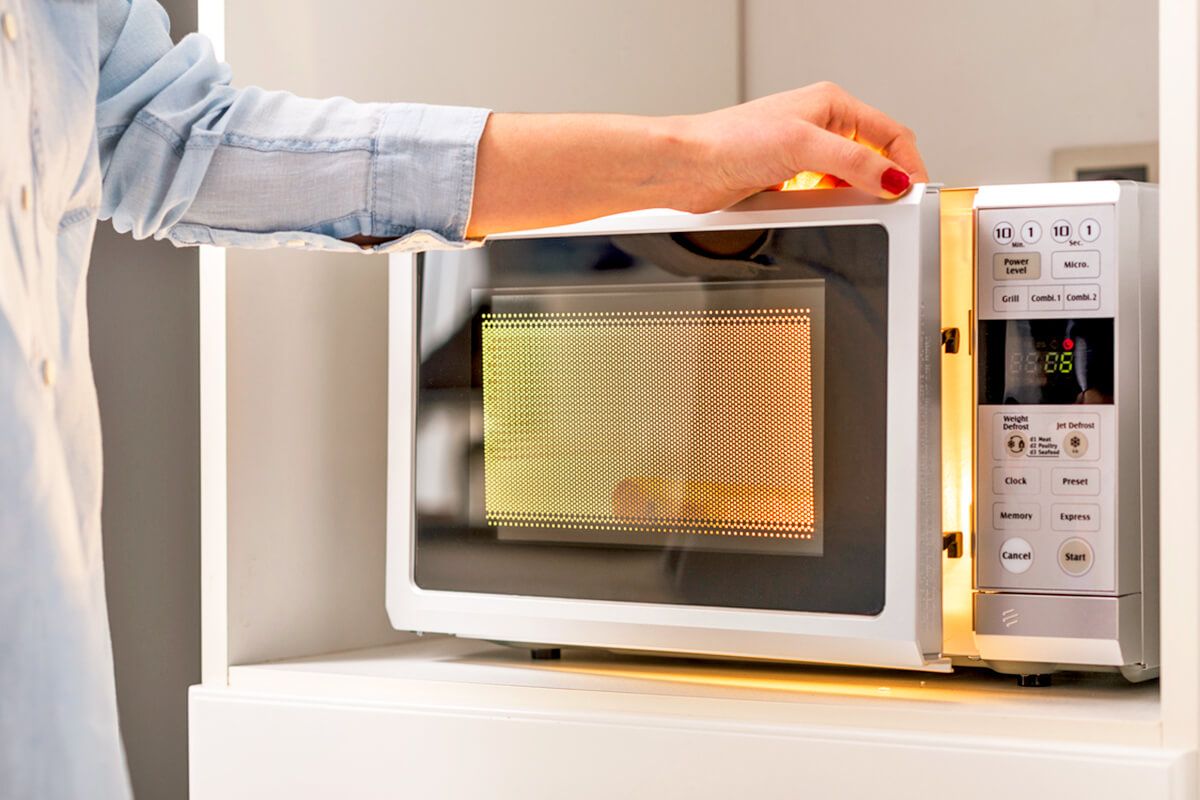
Some people say you should clean your microwave every week, while others say about once a month or even twice a year. It depends on a few factors, including how often you are using your microwave and, as silly as it may seem, what you are cooking in there. If you are prone to using your microwave for saucy dishes or more odor-causing foods like fish, perhaps once a week may be right for you. But if you’re the kind who may just like the occasional bag of popcorn or to warm up your coffee, a week will most definitely be overkill. A good rule of thumb is that if you see or smell anything when you open your microwave door, it’s probably a good time to give it a scrub-down.

More From Our Network

Better Report is part of Inbox Studio, an email-first media company. *Indicates a third-party property.

Go Retro With This 1960s Fashion Quiz

Quiz Daily

Go Retro With This 1960s Fashion Quiz

True or False: Are You a Master of U.S. Geography?

Travel Quiz

True or False: Are You a Master of U.S. Geography?

5 Reasons You Can Be Denied Boarding an Airplane

Daily Passport

5 Reasons You Can Be Denied Boarding an Airplane

What Did People Do Before Eyeglasses?

History Facts

What Did People Do Before Eyeglasses?

How To Use a Balloon To Clean Up Dust

House Outlook

How To Use a Balloon To Clean Up Dust

11 Shopping Hacks Costco Members Should Know

FinanceBuzz*

11 Shopping Hacks Costco Members Should Know

Share this article

  • Share to Facebook
  • Share to Twitter
  • Copy Url
  • Share to Email
Jessica Levy

This article is for general informational purposes only.
Affiliate Disclaimer Medical Disclaimer Financial Disclaimer

Updated:
Posted In: Home
Hero Image Credit: Better Report
Advertisement

Related Articles

The Most Popular Car Colors in the U.S.

4 min read

First-Date Etiquette Tips for People Over 40, According to a Matchmaker

3 min read

Why Doesn’t Plastic Totally Dry in the Dishwasher?

3 min read

Putting This in Your Dryer Is a Major Fire Risk

3 min read

18 Surprising Things You Should Never Put Down Your Drain

5 min read
Advertisement

5 Peculiar Fitness Trends to Try

Health | Updated: August 19, 2024
Rachel Gresh
Author
Rachel Gresh is a Washington, D.C.-based freelance writer. When she's not writing, you can find her wandering a museum, exploring an unfamiliar city, or baking something new in the kitchen.
Man on exercise bike while wearing a VR headset
Better Report

Fitness influencers, health gurus, and major exercise brands always look to raise the stakes, leading to exciting, if not unorthodox, developments. From prancercise and goat yoga to hula hooping and the thigh master — the diverse world of fitness has no shortage of peculiar trends. However, we’re skipping the barnyard animals and plastic rings in favor of newer fitness fads. Not only are these workout activities fun, but they have proven benefits, and they’re trending now. Backed by health experts and celebrated on social media, these trends might be here to stay. Which of these unique exercises would you try?

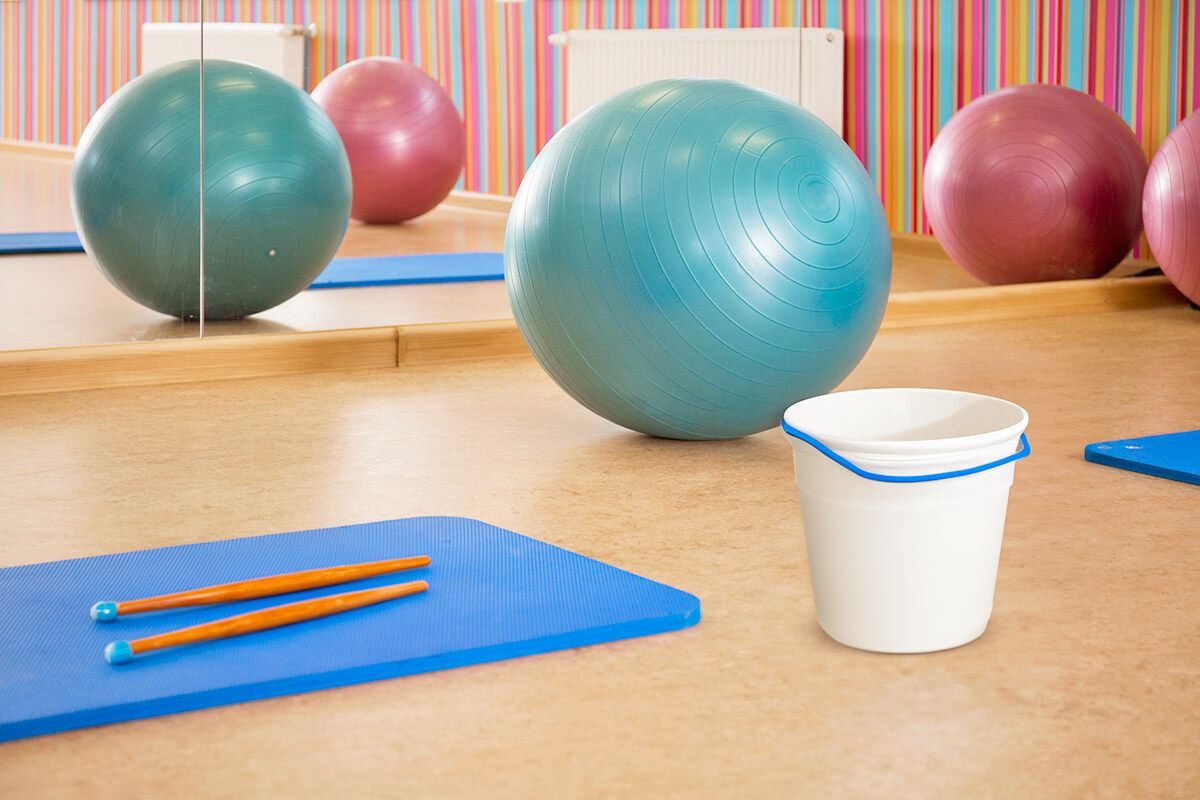
Collection of inflatable exercise balls next to a bucket and a pair of drum sticks
Credit: KatarzynaBialasiewicz/ iStock

Cardio Drumming

This fun exercise trend, known as cardio drumming, is precisely as it sounds — high-intensity drumming that doubles as a heart-healthy workout. However, this type of drumming requires very different equipment from what your favorite rock stars would use. No, you won’t make music, but it will make you sweat. Cardio drumming can be done in group classes or at home. All you need is a pair of drumsticks (or something of similar size), a large exercise ball, and a bucket to hold the ball. 

The workout is simple: Drum on the exercise ball along to the beat of your favorite songs. You’ll end up with an excellent cardio exercise. Up the ante by incorporating dance moves, jumps, and other whole-body motions. This fun aerobic workout can improve cardiovascular health and lower blood pressure while reducing anxiety and stress.

Advertisement
Advertisement
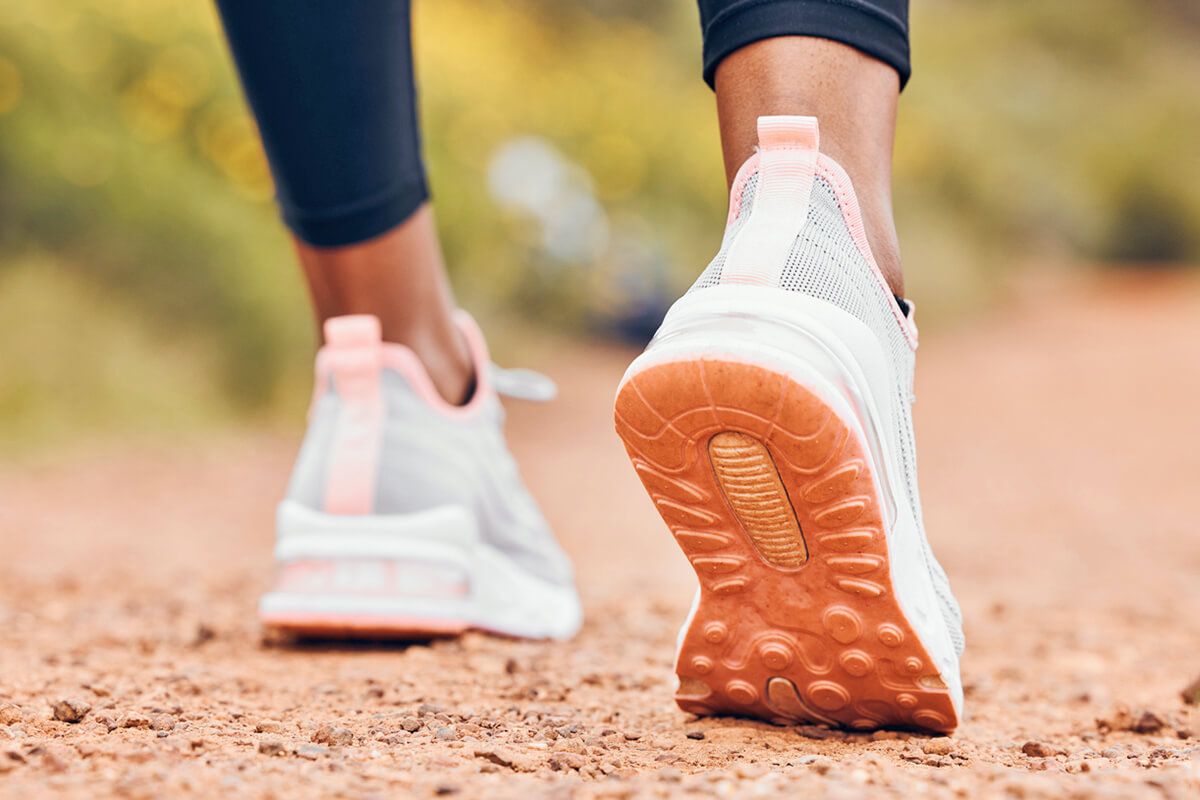
Shot of someone wearing athletic sneakers walking
Credit: Jacob Wackerhausen/ iStock

Backward Walking

By now, everyone likely knows the health benefits of walking, which is why so many of us strive to reach a 10,000-step daily goal. A new fitness trend proposes a twist to the world’s simplest workout: do it backward. Also called “retro-walking,” this viral TikTok-turned-mainstream fitness trend is gaining traction, and experts support it as a low-impact, calorie-burning activity.

This exercise involves walking backward on a treadmill, track, or quiet sidewalk, but don’t try this in downtown Manhattan; opt for a less populated area to avoid collisions. The movement engages different muscles than forward walking, taking pressure off your knees while improving flexibility and coordination. According to physical therapist Kristyn Holc, doctors have been recommending this activity for decades. It’s an excellent option for anyone who wants to strengthen their lower body. Still, it is especially beneficial for older adults who might experience joint pain while doing other forms of exercise.

Advertisement
Man writing notes in a notebook with a salad next to him
Credit: KucherAV/ iStock

75 Hard Challenge

Popularized on social media, the “75 Hard Challenge” is true to its name. This fitness trend is a 75-day wellness program that requires participants to follow five daily rules without substitutions or rest days. The rules include following a strict meal plan (such as the Mediterranean diet) with no alcohol, drinking one gallon of water, completing two 45-minute workouts (one must be outside), reading 10 pages of a nonfiction book, and taking progress pictures. It’s undoubtedly tricky, so much so that a new, less-intense version was created, coined “75 Soft.” It cuts most of the activities in half, making it easier for participants to accomplish.

If this sounds like something you’re interested in trying, health and sports psychologist Dr. Matthew Sacco urges participants to be realistic and not overdo it: “Something like this requires smart goal setting: Your goals have to be measurable, attainable, realistic and time-limited. And sometimes, that looks like walking around the block three times a week for two weeks, and then scaling that up when you’re comfortable, instead of pushing to run two miles every day without rest.”

Recommended Articles

  • The Most Popular Car Colors in the U.S.

  • 5 Small Changes You Can Make To Decrease Your Risk of Dementia

  • First-Date Etiquette Tips for People Over 40, According to a Matchmaker

  • 6 Holiday Foods You Didn’t Know Were Healthy

Advertisement
Advertisement

Reader Favorites

  • Person breaking into a car

    The 10 Most Stolen Cars in the U.S.

  • Older man with hands on cane

    Why Do We Smell Different As We Age?

  • Man in grocery store

    6 Grocery Habits Costing You More Than You Think

Man running barefoot on a trail
Credit: nattrass/ iStock

Barefoot Running

This trend requires no fancy equipment, gym membership, or structured schedule. The sentiment is simple: run au naturel. Also called “minimal running,” barefoot running has been making headlines for its potential health benefits. It involves running without shoes on or with a thin protective layer such as a sock. Supporters of the trend say it reinforces the proper biomechanics of the lower body, and for some, it might work wonders. There are reports of runners suffering from IT band or hip issues who have turned to barefoot running and found their pain went away. 

Physical therapist Michael Bogden supports the trend: “For most people, you’re probably going to have better mechanics running barefoot. It encourages a running pattern that is more efficient.” According to the Cleveland Clinic, barefoot running can help stabilize a flat arch, reduce instances of plantar fasciitis, and burn more calories. Still, others have reported shin splints or other injuries after switching to running barefoot, so the results vary from person to person. Remember, barefoot running shouldn’t cause any pain.

Woman working out while wearing a VR headset
Credit: mangpor_2004/ iStock

Virtual Reality Workouts

Technology has revolutionized the fitness industry over the last few decades, from smartwatches to high-tech fitness machines like Peloton. Another new trend, virtual reality workouts, is stealing the spotlight. Strapping on a headset to exercise might seem a little wonky, but don’t knock it until you try it. 

Advertisement

Imagine working out in the Italian Alps or on the beaches of Oahu from the comfort of your home. This is now possible thanks to fitness apps made for virtual reality headsets. Explore more than 10 million miles of roads on your stationary bike using the VZfit app, or try a sweat-inducing mixed martial arts session in the metaverse on the Les Mills Bodycombat XR app. With virtual reality fitness, the sky’s not the limit; it’s just the beginning.

More From Our Network

Better Report is part of Inbox Studio, an email-first media company. *Indicates a third-party property.

Go Retro With This 1960s Fashion Quiz

Quiz Daily

Go Retro With This 1960s Fashion Quiz

True or False: Are You a Master of U.S. Geography?

Travel Quiz

True or False: Are You a Master of U.S. Geography?

5 Reasons You Can Be Denied Boarding an Airplane

Daily Passport

5 Reasons You Can Be Denied Boarding an Airplane

What Did People Do Before Eyeglasses?

History Facts

What Did People Do Before Eyeglasses?

How To Use a Balloon To Clean Up Dust

House Outlook

How To Use a Balloon To Clean Up Dust

11 Shopping Hacks Costco Members Should Know

FinanceBuzz*

11 Shopping Hacks Costco Members Should Know

Share this article

  • Share to Facebook
  • Share to Twitter
  • Copy Url
  • Share to Email
Rachel Gresh
Writer

Rachel Gresh is a Washington, D.C.-based freelance writer. When she's not writing, you can find her wandering a museum, exploring an unfamiliar city, or baking something new in the kitchen.

This article is for general informational purposes only.
Affiliate Disclaimer Medical Disclaimer Financial Disclaimer

Updated: December 15, 2023
Posted In: Health
Hero Image Credit: Better Report
Advertisement

Related Articles

5 Small Changes You Can Make To Decrease Your Risk of Dementia

4 min read

6 Holiday Foods You Didn’t Know Were Healthy

7 min read

Is It Safe To Drink a Glass of Water That Sat Out Overnight?

3 min read

The Health Risks of Shopping at the Dollar Store

4 min read

Does Going Outside With Wet Hair Really Make You Sick?

4 min read
Advertisement

What Actually Happens at the Dry Cleaners? 

Jessica Levy
Home | Updated: August 26, 2024
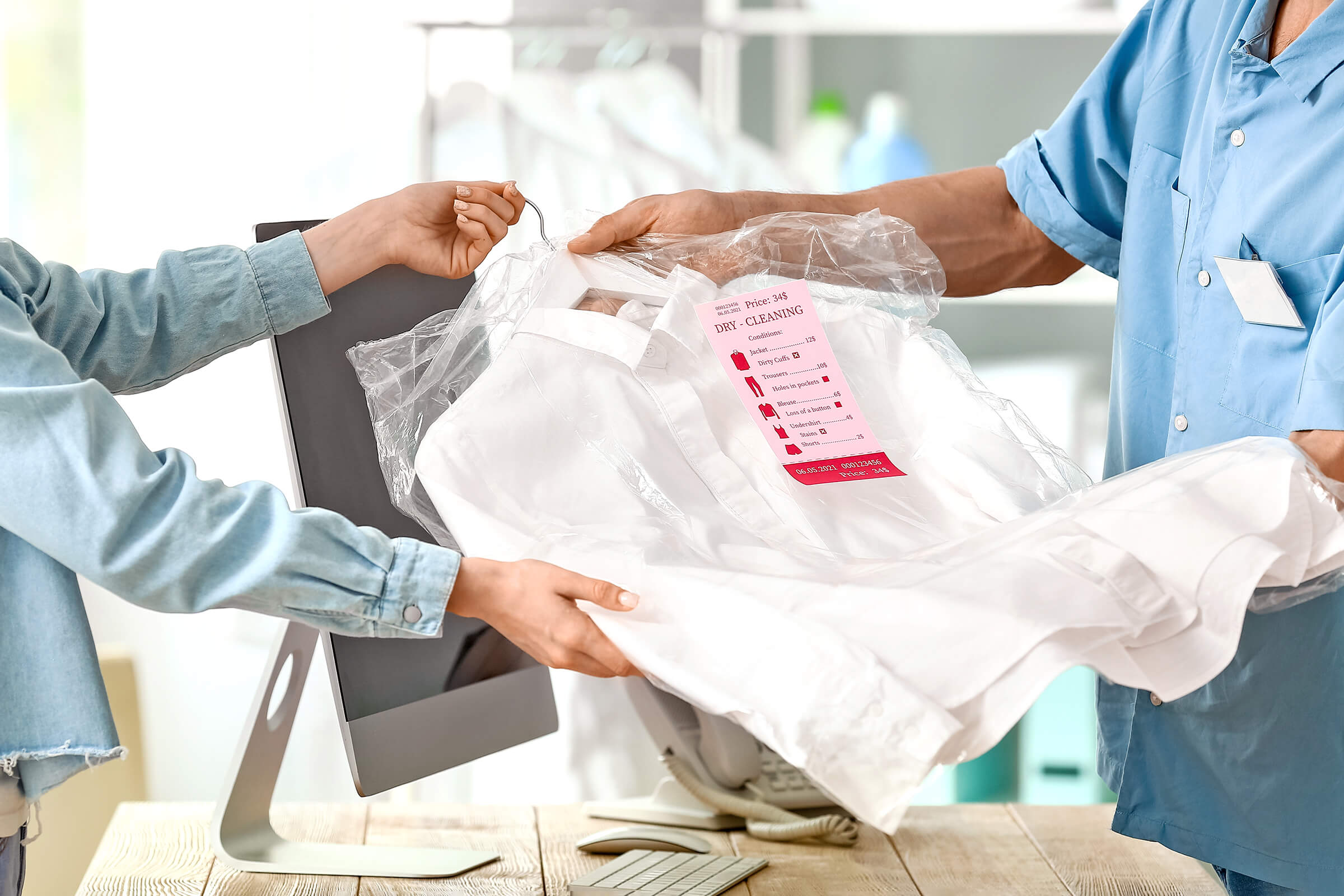
Person picking up dry cleaning
Better Report

Dry cleaning: it’s one of life’s great mysteries. We don’t question its methods while reaping its benefits, but it’s time to demystify the process and discover what goes on behind the counter. After all, it is the best way to get fresh, cleanly pressed clothes while avoiding damage. So, shouldn’t we all know how it works? The confusion lies in its name because, contrary to what many people think, dry cleaning isn’t dry. It’s a wet multi-step process involving the careful inspection and machine cleaning of your most delicate items. This is what actually happens when you drop clothes off at the dry cleaners.

Credit: Hispanolistic/ iStock

What Is Dry Cleaning?

Dry cleaning is one of the most common ways to clean clothes, yet it’s undoubtedly the most mysterious. You might be surprised to learn that dry cleaning isn’t dry at all. The reality is that there’s “nothing dry about it,” says Wayne Edelman, the president of Meurice Garment Care of New York. “The clothes get wet with a solvent,” he explains. The process involves washing clothes in a machine (similar to an at-home washing machine), but chemical solvents and soap are used instead of water. 

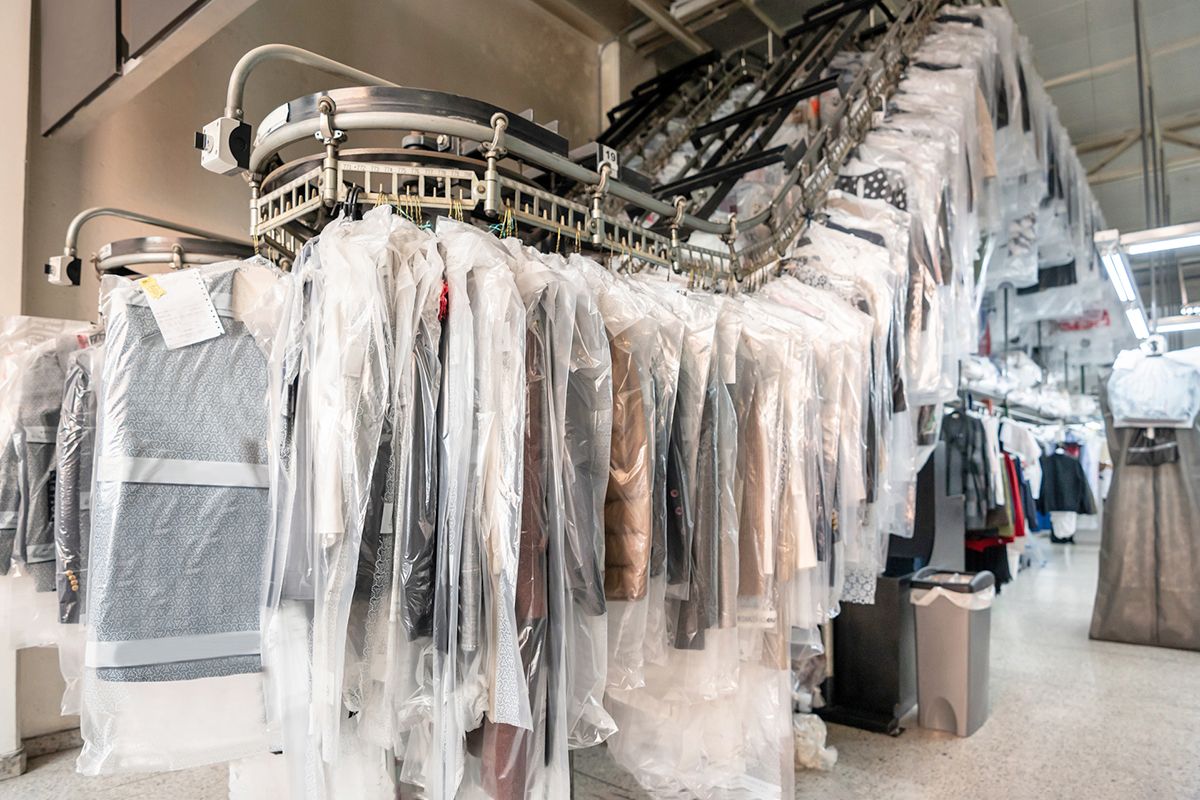
Here is a step-by-step breakdown of what happens after your clothes are dropped off at the cleaners, according to the pros:

Tagging: Your garments are tagged with your name, contact information, and the type of garment. This helps staffers group garments by material.

Advertisement

Inspection: Cleaning technicians inspect the garment for stains and tears, noting any before they begin cleaning. If the item is too damaged to clean, you’ll be notified. Any buttons or delicate embellishments are removed.

Pretreatment: This stain-fighting boost is used if the technician believes a regular machine cleaning will not do the trick. It’s a chemical cleaner sprayed directly onto the item. Some stains can cause further damage if washed without a pretreatment.

Machine Cleaning: This is the bulk of the dry cleaning process. Clothes are tossed into the heated machine and rinsed with a chemical solvent and soap. The gentle agitation of the machine loosens dirt and grime without damaging the items. The machine then dries the garments using warm air and extracts leftover solvent, which can be recycled and reused.

Post-Treatment: After the machine washing, garments are inspected for stains again. Sometimes, stubborn stains need extra cleaning, typically done by hand.

Advertisement

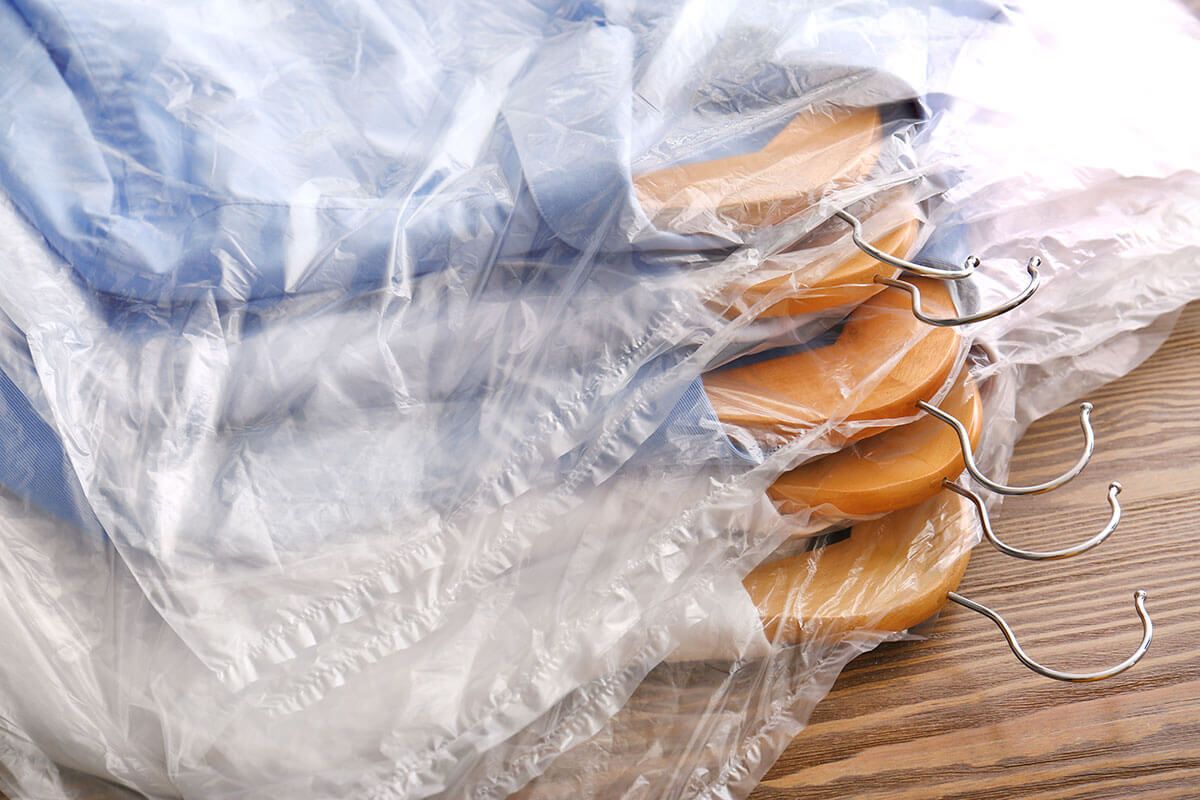
Wrinkle Removal: The technician eliminates wrinkles using an iron or steaming, leaving clothes looking extra fresh.Inspection and Packaging: Items are inspected for stains, buttons are resewn, and notes are made for extra fees. Clothing is packaged into protective bags and placed in the pick-up-ready area.

Advertisement
Advertisement
Credit: Science History Images/ Alamy Stock Photo

What Liquid Is Used in Dry Cleaning?

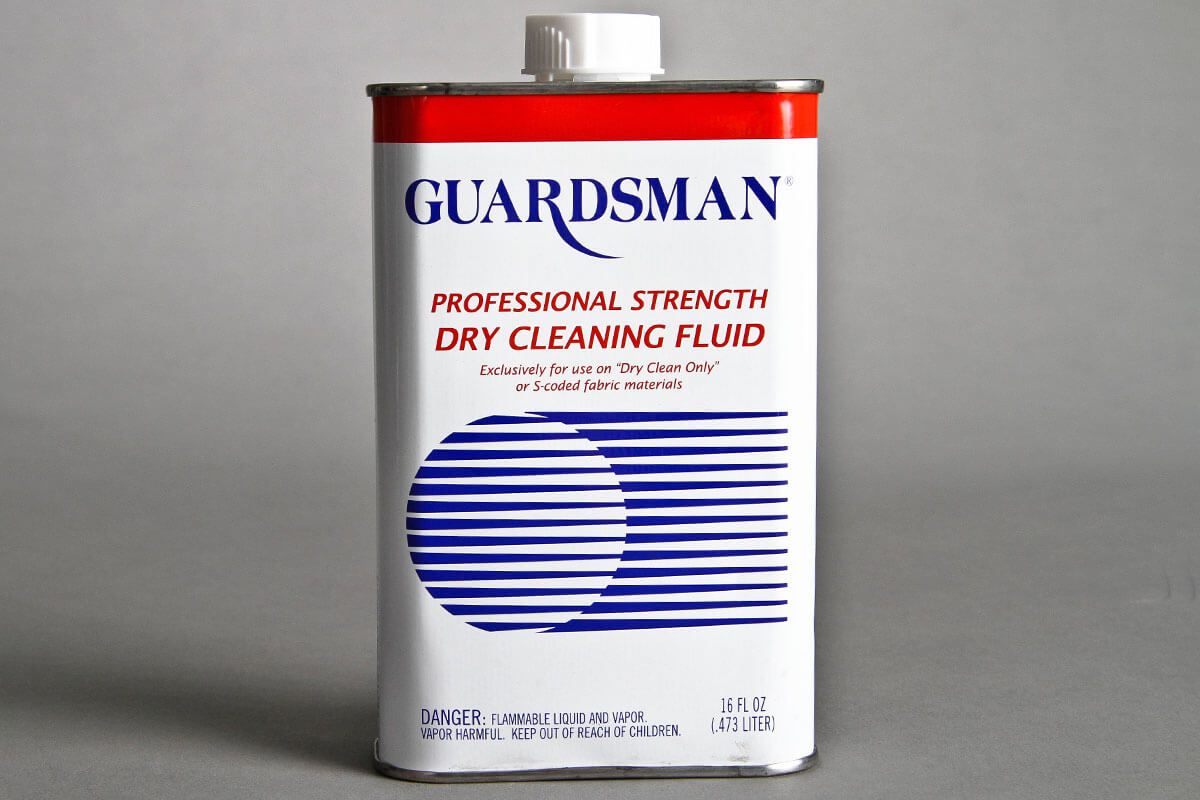
Dry cleaning has come a long way since the 19th century when Jean-Baptiste Jolly spilled a kerosene lamp on a dirty tablecloth, accidentally discovering the solvent’s cleaning properties and inventing dry cleaning as we know it. People began using this flammable liquid to clean clothes and fabrics, but this was an unsafe practice. Today, a much safer solvent is used.

Now, you’re probably thinking, what is this mystery liquid made of? It’s a petroleum-based solvent called perchloroethylene, or “perc.” It’s been used in dry cleaning for nearly a century. However, it’s currently being phased out for less hazardous chemicals like hydrocarbons or alternative solvents like the silicone-based GreenEarth.

Credit: New Africa/ Shutterstock

Dry Cleaning Tips

Here’s how to get the most out of your dry cleaning. For starters, store your freshly dry-cleaned clothes in a cool, dry, dark place — a closet should fit the bill. Although dry cleaning is the best way to clean delicate items, even this gentle process can damage clothing over time. For this reason, don’t overdo it on the dry cleaning. Try to take clothes in as infrequently as possible. Consider spot-cleaning small stains at home to extend the time between dry cleanings. Lastly, don’t try to remove heavy stains from delicate items at home because this can cause a bigger mess that even the dry cleaners can’t fix. If in doubt, consult your local dry cleaner for advice.

Recommended Articles

  • The Most Popular Car Colors in the U.S.

  • 5 Small Changes You Can Make To Decrease Your Risk of Dementia

  • First-Date Etiquette Tips for People Over 40, According to a Matchmaker

  • 6 Holiday Foods You Didn’t Know Were Healthy

Advertisement
Advertisement

Reader Favorites

  • Person breaking into a car

    The 10 Most Stolen Cars in the U.S.

  • Older man with hands on cane

    Why Do We Smell Different As We Age?

  • Man in grocery store

    6 Grocery Habits Costing You More Than You Think

Credit: Courtesy of Amazon

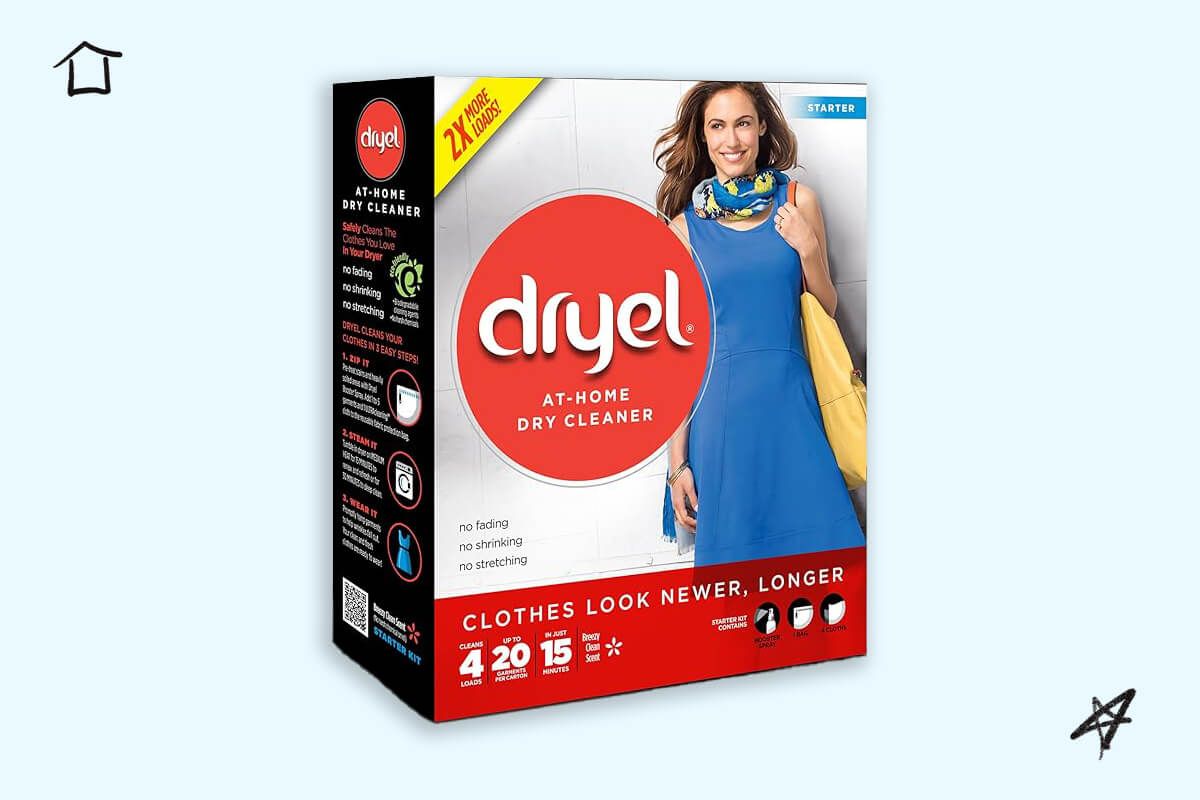
At-Home Dry Cleaning

If taking an item to the dry cleaner isn’t possible, try this at-home trick using a heat-activated stain remover and steam in your dryer. These products are designed to remove light stains, odors, and dirt from clothes. The easiest way to try this is with an at-home kit that bundles everything you need to get started. Most kits include a reusable dryer bag and a stain remover solution. Here’s how it works: you pretreat the stains with the provided solution, place the garment in the dryer bag, and put it in the dryer for the indicated time. The heat and steam generated in the bag help remove the stains and freshen the garment.

While this method will leave clothes smelling fresh and appearing less wrinkly, it doesn’t always work well on heavy stains. However, this fast, cost-effective method cleans clothes in 15 minutes for around $1 per item. It works well on sweaters, blouses, jeans, delicates, and even hard-to-clean wool and cashmere. A good rule of thumb is to refresh slightly soiled clothes at home and leave the bigger messes for the professionals.

More From Our Network

Better Report is part of Inbox Studio, an email-first media company. *Indicates a third-party property.
Go Retro With This 1960s Fashion Quiz

Quiz Daily

Go Retro With This 1960s Fashion Quiz

True or False: Are You a Master of U.S. Geography?

Travel Quiz

True or False: Are You a Master of U.S. Geography?

5 Reasons You Can Be Denied Boarding an Airplane

Daily Passport

5 Reasons You Can Be Denied Boarding an Airplane

What Did People Do Before Eyeglasses?

History Facts

What Did People Do Before Eyeglasses?

How To Use a Balloon To Clean Up Dust

House Outlook

How To Use a Balloon To Clean Up Dust

11 Shopping Hacks Costco Members Should Know

FinanceBuzz*

11 Shopping Hacks Costco Members Should Know

Share this article

  • Share to Facebook
  • Share to Twitter
  • Copy Url
  • Share to Email
Jessica Levy

This article is for general informational purposes only.
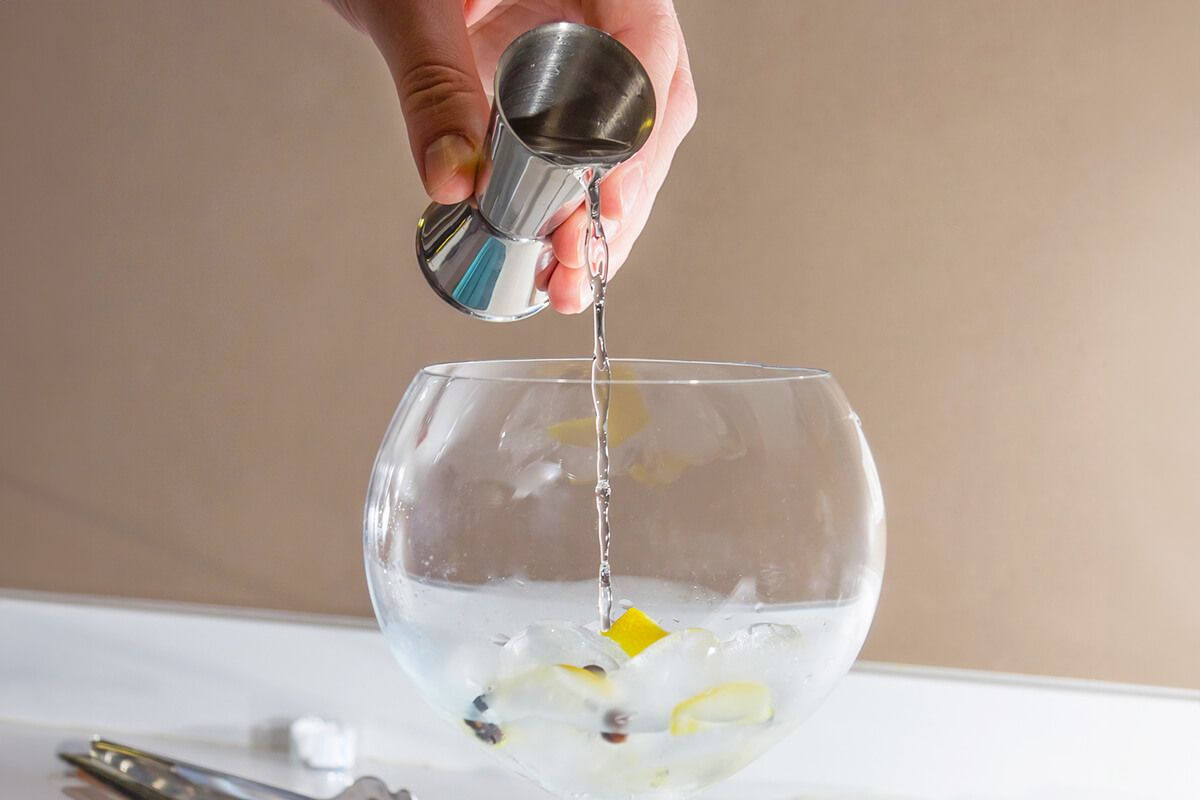
Affiliate Disclaimer Medical Disclaimer Financial Disclaimer

Updated:
Posted In: Home
Hero Image Credit: Better Report
Advertisement

Related Articles

The Most Popular Car Colors in the U.S.
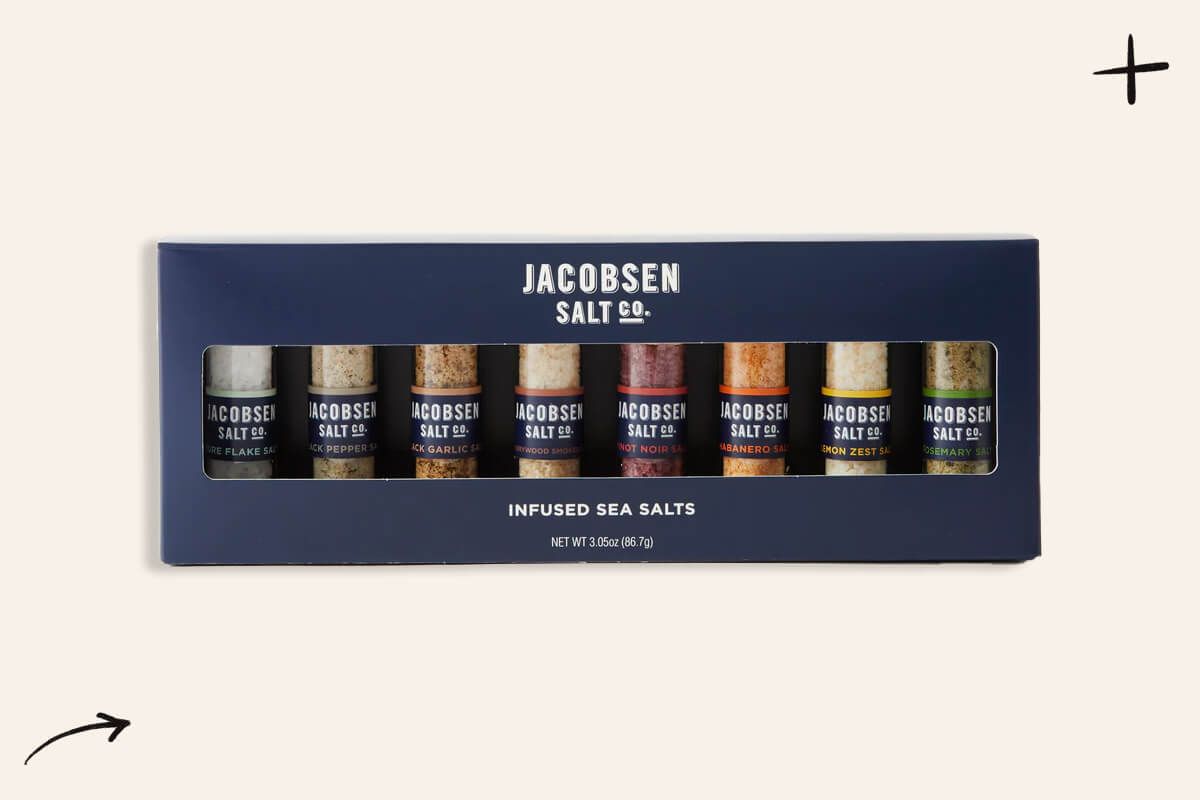
4 min read

First-Date Etiquette Tips for People Over 40, According to a Matchmaker

3 min read

Why Doesn’t Plastic Totally Dry in the Dishwasher?

3 min read

Putting This in Your Dryer Is a Major Fire Risk

3 min read

18 Surprising Things You Should Never Put Down Your Drain

5 min read
Advertisement

Posts navigation

Older posts
Newer posts
  • Home
  • Health
  • Wealth
  • Logo
  • Advertise
  • About
  • Contact Us
  • Privacy Policy
  • Terms of Use
  • Your Privacy Choices
x
Thumb Image

Elevate your everyday.

Sign up to receive the practical tips and expert advice you need to pare down the complexities of everyday living right in your inbox.

Sorry, your email address is not valid. Please try again.

Your email is:

Edit Image
Sorry, your email address is not valid. Please try again.
Thank you for subscribing...

By subscribing you are agreeing to our Terms of Use and Privacy Policy.

Close image
Thumb Image
Second Thumb Image

Elevate your everyday.

Sign up to receive the practical tips and expert advice you need to pare down the complexities of everyday living right in your inbox.

Sorry, your email address is not valid. Please try again.

By subscribing you are agreeing to our Privacy Policy and Terms of Use.

Close image