Why You Should Never Thaw Fish the Way You Thaw Meat

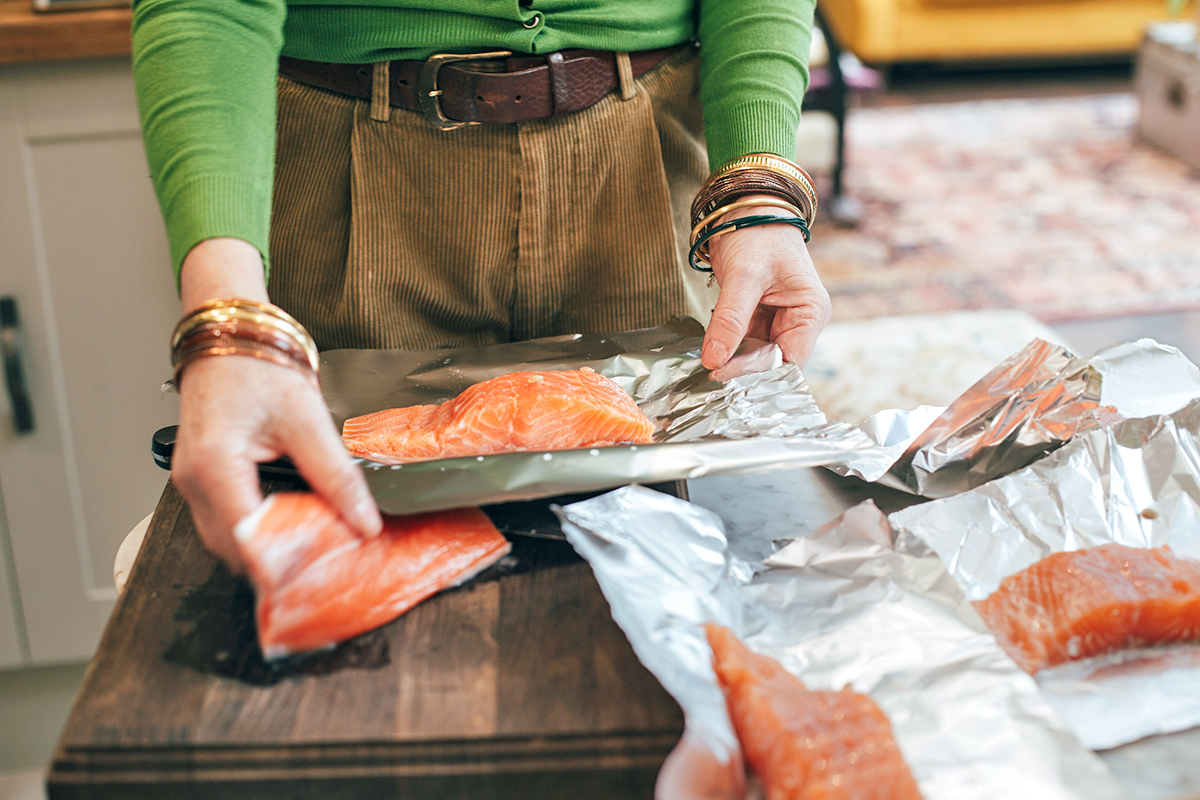
The next time you grab something from your freezer to make a quick weeknight meal, take a moment to thank Clarence Birdseye. Inspired by the Inuit he saw in Canada’s north as a young scientist, he developed a process to flash-freeze fish commercially and founded the company that still bears his name a century later.
Commercially blast-frozen fish retains its fresh flavor remarkably well, especially if it’s vacuum-packed to prevent exposure to oxygen. But you should be careful how you thaw it, because in this case, what you don’t know actually can hurt you.
Fish Are Especially Perishable
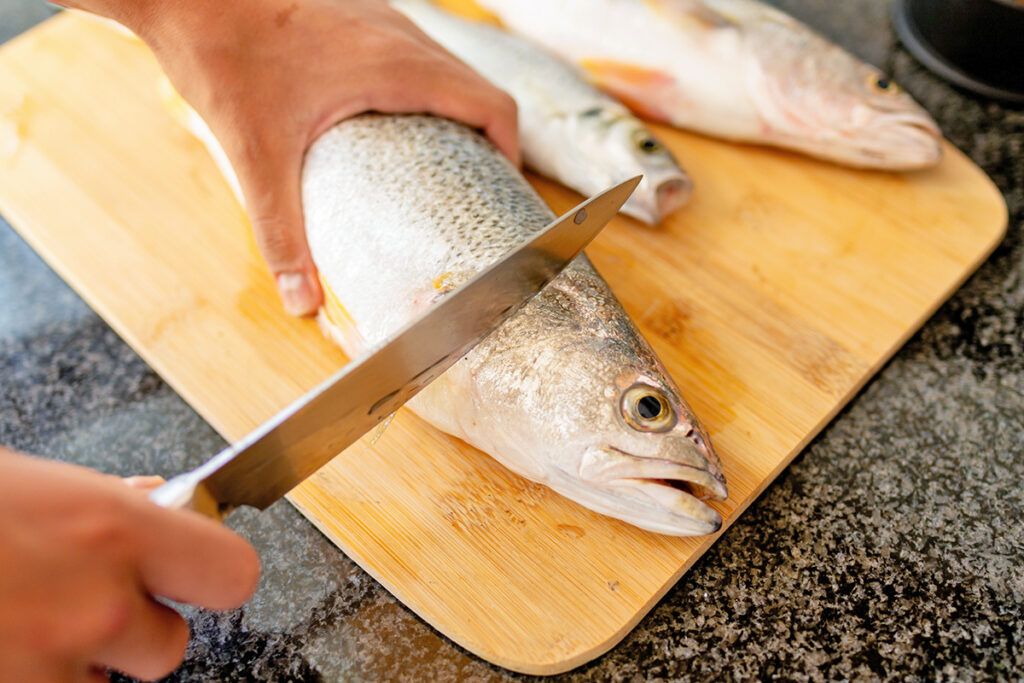
Fish and shellfish were an obvious use-case for freezing once the technology developed, because they’re highly perishable — much more so than red meat. They’re good for only a day or two in the fridge at best, and they’ll go “off” after just a couple of hours in the summer heat. Blast-freezing on a boat, or in a plant as soon as they make it to shore, captures their fresh quality and stops deterioration.
That perishability carries over to when you thaw them as well. The USDA endorses three thawing options for food, each with advantages and disadvantages. While overnight in the fridge is your best option — it’s the gentlest and the fish never gets above a food-safe temperature — the downside is that it takes the longest and starts the meter on that two-day refrigerator life.
Thawing in cold water is faster, but it means you’ll need to cook the fish as soon as it’s thawed. Microwave thawing fish is also OK but tricky, because fish is especially delicate, and thin fillets can go from defrosting to cooking in the blink of an eye. It’s always best to stop the microwave while they’re still partly frozen, but pliable rather than rock-hard.

Reader Favorites



You should never thaw on the counter or in hot water, because that turbocharges the growth of any bacteria that happen to be in the fish. If they’re the kind of bacteria that cause spoilage, the fish won’t taste or smell fresh — and if they’re pathogens, you could get sick.
Vacuum-Sealed Fish Poses a Special Threat
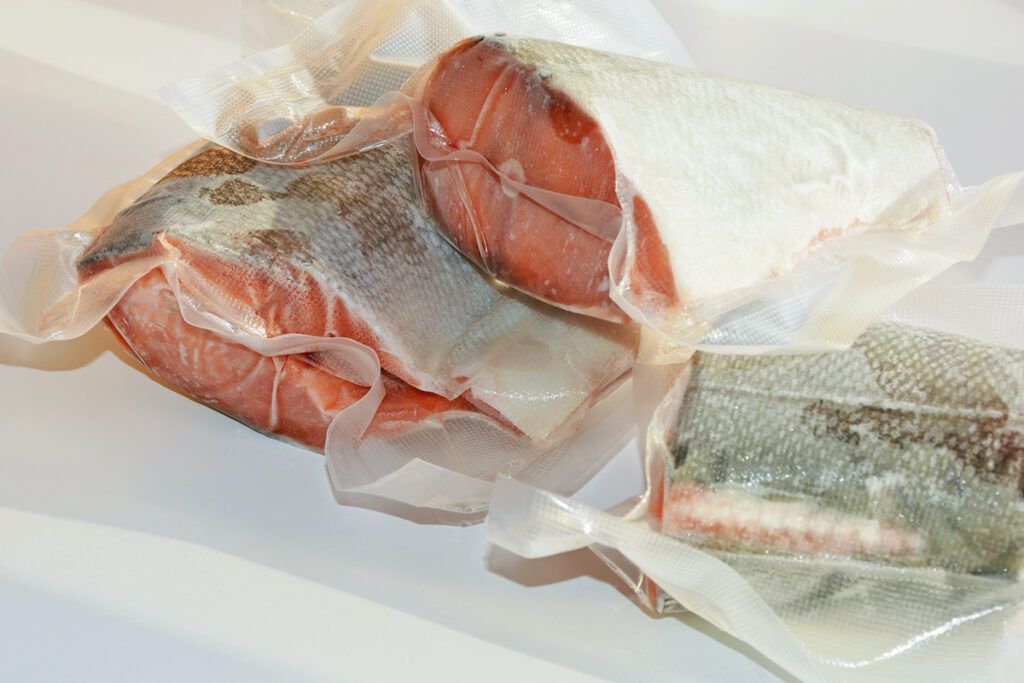
Foods always last longer, and hold their quality better, if they’re vacuum-sealed after freezing. That’s because the vacuum-sealing process extracts almost all air from the packaging, and oxygen with it. That’s mostly a good thing: Oxygen reacts with the food, causing freezer burn and “off” flavors. But there are some bacteria that have evolved to thrive in oxygen-free, or anaerobic, environments, and one of them is Clostridium botulinum. It causes botulism, which is a rare but extremely dangerous form of food poisoning with a high fatality rate.
You might think of botulism mostly as a risk of canned foods, but vacuum packaging is also susceptible to it. This is more of a threat with fish than red meat, not only because you’re more likely to buy your fish vacuum-sealed, but because C. botulinum can naturally be found in the gills and guts of fish and shellfish, and therefore has a higher chance of making it into the fillet you need to defrost. So, while all three of the thawing methods are applicable to ordinary frozen or vacuum-sealed fish, the vacuum-sealed version requires an extra step.
The best defense against botulism is simply air. When you pull a package of vacuum-sealed fish from the freezer, open the packaging and transfer it to a new bag. Exposure to oxygen will kill the bacteria.
A Few Other Things To Know
Botulism isn’t the only risk associated with fish. Listeria monocytogenes is another nasty one: As FDA’s Bad Bug Book points out, it can survive in both aerobic and anaerobic environments. It’s also salt-tolerant, so it can survive in cured meats and fish (you may recall it was the culprit in the massive 2024 Boar’s Head recalls). And, unlike most bacteria, it can continue to reproduce at refrigerator temperatures. According to the CDC, Listeria kills an average of 172 people a year in the U.S., from about 1,250 cases. Cooking to a temperature of 165 degrees Fahrenheit will kill it, though that’s higher than you’d ideally cook fish. As with soft egg yolks and rare beef, you’ll need to judge risk versus reward for yourself.
A few other pathogens show up in various forms of fish or seafood, but unlike C. botulinum, they don’t demand any extra steps. As long as you follow the basic rules of handling seafood safely, you should be OK.
One final thing to remember about fish is that with a few exceptions such as fresh tuna or swordfish, it’s physically more delicate than meat. That’s especially important to have in mind when you’re microwave thawing, because portions that edge from thawed to cooked will be fragile and tend to fall apart when they’re handled. The best approach might be simply to cook from frozen. It stretches your cooking time by up to 50%, but it’s a surefire way to avoid any issues with improper thawing.
Featured Image Credit: © SolStock/iStock
More From Our Network
Better Report is part of Inbox Studio, an email-first media company. *Indicates a third-party property.







Fred Decker is a trained chef and former restaurateur. Since closing his restaurants over a decade ago he has been a prolific freelance writer, publishing several thousand articles on dozens of high-volume websites including Taste Of Home, Hunker, Tasting Table, Week&, eHow, and GOBankingRates. He lives on a rural acreage shared with a big garden, chickens, rabbits, and grandkids.
This article is for general informational purposes only.
Affiliate Disclaimer Medical Disclaimer Financial Disclaimer