What the Tooth Fairy’s Paying in 2026


Certain statistics are good indicators of how the overall economy is performing, such as inflation and the unemployment rate. But there’s an unexpected metric that provides an equally good indication of the current state of the economy: the Tooth Fairy.
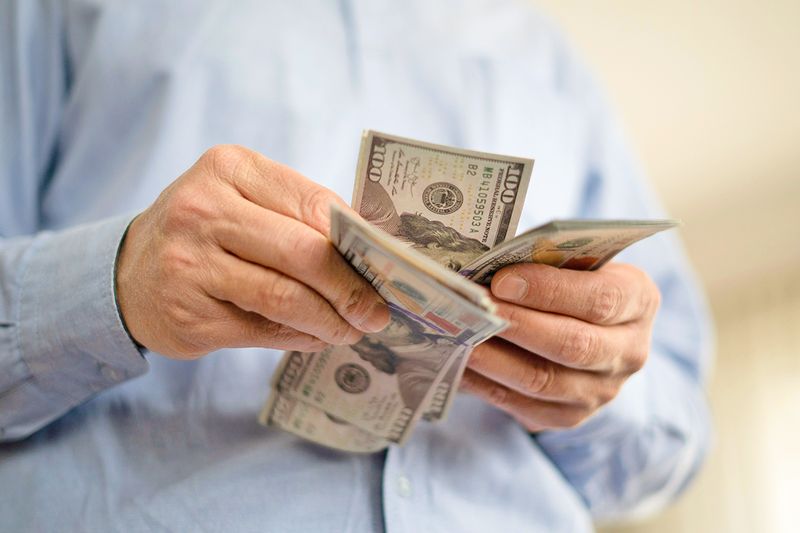
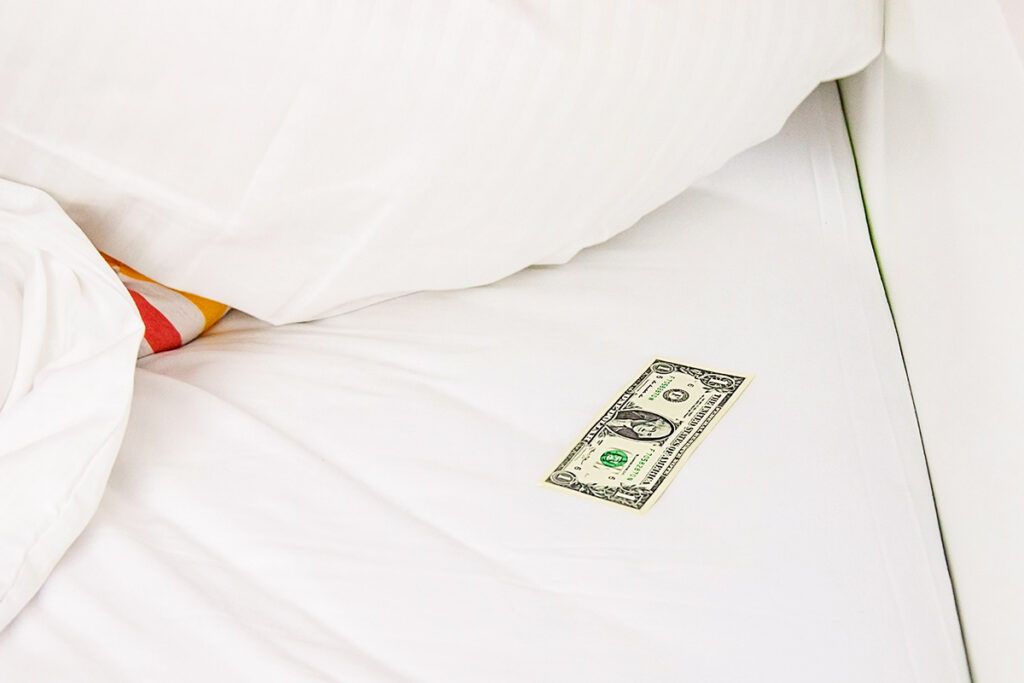
It’s long been a tradition in the U.S. and other countries around the world for the Tooth Fairy (wink wink) to leave cash when a child loses a baby tooth. But according to Delta Dental, which comprises the largest group of dental insurance companies in the U.S., the average amount of money has risen sharply over time. The company has released an annual Tooth Fairy Index (TFI) since 1998, and it shows parallel growth to the S&P 500 stock index. Here’s a look at what the Tooth Fairy is paying in 2026.

A Continued Rise
Before diving into the numbers, a quick look at the methodology: Delta Dental surveyed 1,000 parents nationwide with children ages 6 through 12, conducting the poll between January 5 and 16 of 2026. The results have a margin of error of +/- 3%.
Now let’s get to the numbers: When the first Tooth Fairy Index was conducted in 1998, the average amount paid per tooth was $1.30, which equates to more than $2.50 when adjusted for inflation. But the current average sits at $5.84, denoting a 17% increase from last year’s average of $5.01. This marks the first time since 2023 that the TFI has gone up, as 2024 and 2025 each saw a slight decline. The current $5.84 average also marks a 349% spike since the TFI began.

Reader Favorites



The 17% increase in the TFI from 2025 to 2026 is almost perfectly in line with the S&P 500, which increased 16% over that same time period. The S&P 500 has also jumped 480.93% since 1998 — the year the TFI began. While the percentage may be higher than the TFI’s 349%, it indicates parallel growth during that same time period. (But that’s not to say it’s all growth all the time: The S&P 500 has been trending downward in recent weeks.)
Delta Dental provided some additional insights, including the fact that parents — ahem, sorry, the Tooth Fairy — reported leaving more money when a child loses their first tooth. The stats show that a first tooth is worth 23% more than average, or around $7.17. Some 38% of parents who were surveyed said they left extra cash to celebrate that milestone before dropping the amount for any teeth lost going forward. And the Tooth Fairy doesn’t leave cash for everyone: 32% of kids got gifts instead.
The Tooth Fairy’s Rates by Region
The average amount left for a tooth also varies depending on where the Tooth Fairy visits.
The Northeast has the highest total of any region at $6.45, which is a 41% jump from 2025. In the West, lost teeth earn a $5.99 reward — a 5% increase year-over-year.
Next up is the South, which held the top spot in 2025. Despite a 3% increase from 2025 to 2026, it now holds the third ranking at $5.89. Last on the list is the Midwest, where kids earn $5.27 per tooth, 52% more than in 2025.
But the Tooth Fairy isn’t merely an American phenomenon — other countries reward kids for lost teeth as well. In Canada, the average is $8.00 CAD ($5.78 USD); in England it’s 4.34 pounds ($5.78 USD); Spain and Ireland leave 4.96 euros ($5.72 USD) per tooth; and in Japan, each tooth is worth 904 yen ($5.66 USD).
Featured Image Credit: © undefined undefined/iStock
More From Our Network
Better Report is part of Inbox Studio, an email-first media company. *Indicates a third-party property.






Bennett Kleinman is a New York City-based staff writer for Inbox Studio. He is also a freelance comedy writer, devoted New York Yankees and New Jersey Devils fan, and thinks plain seltzer is the best drink ever invented.
This article is for general informational purposes only.
Affiliate Disclaimer Medical Disclaimer Financial Disclaimer