Skip to content
Better Report
  • Home
  • Health
  • Wealth
8 Low-Maintenance Plants That Thrive on Neglect
  • Search
  • Subscribe
  • Home
  • Health
  • Wealth
  • About
  • Privacy Policy
  • Terms of Use
  • Contact Us
  • SubscribeSubscribe
  • Search
Thank you for confirming your email! Welcome to the community.

Tag: retirement

What It Costs To Retire in Every U.S. State

Wealth | Updated: August 5, 2026
Jennifer M. Wood
Author
Jennifer M. Wood has been writing about news, entertainment, culture, and travel for longer than she cares to admit. She lives just outside Philadelphia with her husband and an ever-growing menagerie of rescue pets.
Hand holding cash
Better Report

From the day you started working, you’ve probably dreamed about retirement: where you’ll live, how you’ll spend your days, and who you’ll spend them with. But before you start pondering whether you’d prefer a beach town or a mountain escape, there’s one practical — and far less romantic — question to answer: Where can you actually afford to retire?

A new report from Investopedia analyzed federal data to estimate how much a typical retired couple would spend in every U.S. state plus Washington, D.C., as well as the size of the nest egg needed to support that lifestyle. The differences are striking, with retirement costs varying by hundreds of thousands of dollars depending on location.

Older couple looking at computer
Credit: © Getty Images/Unsplash.com

What the Report Says

The analysis concluded that the typical couple age 65 or older needs a nest egg of about $1.16 million to retire comfortably in the U.S. — which they equate to spending $84,000 a year — compared with the $898,000 a single retiree (around $60,000 a year) would require. That number jumps if the couple is dreaming of living out their golden years in Hawaii, where they’ll need $1,326,000 in the bank. That’s only slightly less than in New Jersey, the most expensive state on the list, where retirees would need roughly $1,329,000. California and Washington, D.C., are the next most expensive places to call home, with retirees needing roughly $1.32 million. 

Advertisement
Advertisement

The East Coast dominates much of the rest of the top 10, with New York, Massachusetts, Connecticut, and Maryland joining Washington state on the list, each requiring nest eggs in the $1.2 million range.

If cost is your most important consideration, you may want to consider the Plains or Appalachia. North Dakota is the most affordable state to retire in, with a couple needing about $800,000 in savings. Arkansas ($807,000), Mississippi ($813,000), West Virginia ($821,000), and Iowa ($834,000) round out the five least expensive places to retire.

Advertisement
Map of the U.S. on a wall with pins in each state
Credit: © Olga/stock.adobe.com

The Cost of Retirement in Each State 

Alabama: $862,000

Alaska: $1,098,000

Arizona: $1,039,000

Arkansas: $807,000

Advertisement

California: $1,324,000

Colorado: $1,130,000

Connecticut: $1,206,000

Delaware: $1,031,000

Advertisement

Florida: $1,103,000

Georgia: $969,000

Hawaii: $1,326,000

Idaho: $929,000

Advertisement

Illinois: $1,072,000

Indiana: $896,000

Iowa: $834,000

Kansas: $884,000

Advertisement

Kentucky: $847,000

Louisiana: $837,000

Maine: $1,001,000

Maryland: $1,203,000

Advertisement

Massachusetts: $1,213,000

Michigan: $946,000

Minnesota: $1,046,000

Mississippi: $813,000

Advertisement

Missouri: $886,000

Montana: $935,000

Nebraska: $887,000

Nevada: $1,087,000

Advertisement

New Hampshire: $1,185,000

New Jersey: $1,329,000

New Mexico: $895,000

New York: $1,231,000

Advertisement

North Carolina: $939,000

North Dakota: $800,000

Ohio: $915,000

Oklahoma: $848,000

Advertisement

Oregon: $1,134,000

Pennsylvania: $980,000

Rhode Island: $1,119,000

South Carolina: $921,000

Advertisement

South Dakota: $845,000

Tennessee: $857,000

Texas: $988,000

Utah: $1,027,000

Advertisement

Vermont: $1,063,000

Virginia: $1,081,000

Washington: $1,217,000

Washington, D.C.: $1,320,000

Advertisement

West Virginia: $821,000

Wisconsin: $952,000

Wyoming: $926,000

Older couple
Credit: © AI25.Studio/Pexels.com

How the Numbers Were Calculated

The gap between the most and least expensive states underscores just how much geography can shape your retirement finances. A couple retiring in Hawaii or New Jersey would need more than $500,000 in additional savings compared with a couple settling in North Dakota, according to the analysis. 

Recommended Articles

  • The Safety Rules for Candles You Probably Don’t Know

  • How Old Are the Apples in the Grocery Store?

  • How To Tell if You’re Brushing Your Teeth Too Hard

  • 5 Things Your Car Needs Before the First Freeze

Advertisement
Advertisement

Reader Favorites

  • Woman looking in fridge

    9 Foods You Should Toss ASAP if They’re Expired

  • Person eating salad

    7 Things a Chef Never Orders at a Restaurant

  • Cherry angioma

    Are the Tiny Red Dots on Your Skin Dangerous?

While housing costs play a major role (they account for around 27% of a retired couple’s expenses), they’re far from the only factor. The report looked at typical household spending using federal consumer expenditure data, taking into account everyday expenses such as groceries, utilities, and health care, as well as discretionary spending, including travel and entertainment. After determining what the typical couple would get in Social Security benefits, Investopedia then estimated how much they would need to cover the rest of their costs over their retirement. The calculations also took into account the 4% rule, a retirement guideline that suggests retirees withdraw 4% of their retirement account in their first year and then adjust annually based on inflation.

Advertisement

Those figures, of course, are only estimates, as no two retirements look exactly alike. Whether you’ve paid off your home, how often you travel, your health care needs, and the lifestyle you hope to maintain can all dramatically affect how much you’ll ultimately need to save. State taxes, insurance costs, and the local cost of living can also make one destination considerably more affordable than another. 

Advertisement
Advertisement

The report serves as a reminder that retirement planning isn’t just about deciding at what age to stop working — it’s also about figuring out where your savings will go the furthest. If you’re still years away from retirement, factoring your ideal destination into your savings goals now could help you avoid an expensive surprise later. And if you’re flexible about where you’ll put down roots, relocating to a lower-cost state could stretch your nest egg significantly further. 

For many Americans, the biggest retirement decision may not be when to stop working, but where to spend the years that come after.

Featured image credit: © Jonathan Borba/Unsplash.com

More From Our Network

Better Report is part of Inbox Studio, an email-first media company. *Indicates a third-party property.

Go Retro With This 1960s Fashion Quiz

Quiz Daily

Go Retro With This 1960s Fashion Quiz

True or False: Are You a Master of U.S. Geography?

Travel Quiz

True or False: Are You a Master of U.S. Geography?

5 Reasons You Can Be Denied Boarding an Airplane

Daily Passport

5 Reasons You Can Be Denied Boarding an Airplane

What Did People Do Before Eyeglasses?

History Facts

What Did People Do Before Eyeglasses?

How To Use a Balloon To Clean Up Dust

House Outlook

How To Use a Balloon To Clean Up Dust

11 Shopping Hacks Costco Members Should Know

FinanceBuzz*

11 Shopping Hacks Costco Members Should Know

Share this article

  • Share to Facebook
  • Share to Twitter
  • Copy Url
  • Share to Email
Jennifer M. Wood
Writer

Jennifer M. Wood has been writing about news, entertainment, culture, and travel for longer than she cares to admit. She lives just outside Philadelphia with her husband and an ever-growing menagerie of rescue pets.

This article is for general informational purposes only.
Affiliate Disclaimer Medical Disclaimer Financial Disclaimer

Updated: May 8, 2026
Posted In: Wealth
Hero Image Credit: Better Report
Advertisement

Related Articles

5 Things Your Car Needs Before the First Freeze

4 min read

6 Amazon Prime Day Hacks

6 min read

Is It Actually Better To Lease a Car?

9 min read

7 Free MIT Classes You Can Experience From Home

4 min read

The Bedroom Color That Adds $2,000 to Your Home Value

3 min read
Advertisement

9 Money-Saving Habits Retirees Swear By

Ali Eldridge
Wealth | Updated: February 6, 2026
Better Report

It’s fair to say that most of us are looking for better ways to save money, whether that’s for a specific goal like an addition on your home, or for peace of mind in retirement. There are lots of money-saving tips out there, but the best should be simple to complete, not complicated hacks that feel like a full-time job! If you’re just starting out, don’t try to tackle a whole bunch at once. Try one new money-saving habit for a little while. Then add in another one. If one doesn’t work, try a different tip instead. Every small step you take gets you closer to your money goals.

Credit: Mikhail Nilov/ Pexels

Schedule Money Check-Ins

Schedule several times throughout the year to check in on your money. Some can be a quick once-over, while others should be a more in-depth look at your finances.

Once a month, do your monthly budget. Consider what you’ll earn and where that money will go. Schedule bill payments and transfers for retirement, savings, vacations, or any other long-term plans. Plan for car maintenance or anything else coming up that month.

Advertisement
Advertisement

Then, once a week, set aside a shorter amount of time to check in with your budget and make sure you’re on track. Pay off credit cards you used that week and readjust any budget categories that got off-track. It’s much easier to course-correct once a week than to try to catch up at the end of the month.

Finally, once a year, look at your overall money health and budget, considering big goals like home renovations or an overseas trip. Whether you’re gearing up for retirement or are already living that post-grind bliss, make sure you and your partner are on the same page. Consider whether one of you needs to earn more money or even whether one of you wants to earn less and do something else with your time. Start dreaming about one-year, five-year, or 10-year plans. 

Advertisement
Credit: Photobuay/ iStock

Change Jar Treat Fund

There are days when all of us just want a little pick-me-up, like a fancy coffee, a new book, or a trip to the movies. The problem with these little treats is that individually, they don’t feel terribly expensive, but they can add up! In fact, we often don’t realize just how much we’re spending on them, because each little purchase seems so small. That’s where the change jar treat fund can be helpful.

Anytime you find yourself with extra change or a few dollars in your wallet, add them to your change jar. When you have enough money, allow yourself one of those little treats. You won’t blow your budget, but you can still indulge every so often.

Credit: WendellandCarolyn/ iStock

Freezer Cash

The concept of freezer cash can help you avoid impulsive spending. It’s exactly what it sounds like: take your cash or credit card, and freeze it in a block of ice. You won’t be able to spend it until it’s thawed. This builds in a waiting period, so you have time to consider whether you really want to spend your money on the item in question. 

Recommended Articles

  • The Safety Rules for Candles You Probably Don’t Know

  • How Old Are the Apples in the Grocery Store?

  • How To Tell if You’re Brushing Your Teeth Too Hard

  • 5 Things Your Car Needs Before the First Freeze

Advertisement
Advertisement

Reader Favorites

  • Woman looking in fridge

    9 Foods You Should Toss ASAP if They’re Expired

  • Person eating salad

    7 Things a Chef Never Orders at a Restaurant

  • Cherry angioma

    Are the Tiny Red Dots on Your Skin Dangerous?

Credit: sdominick/ iStock

Grocery Deals

Groceries take up a good part of most people’s monthly budgets. One of the easiest ways to save is to check the circled deals in weekly grocery store discount ads. Many times, those circled deals are loss leaders. That means they’re priced low enough that the store could lose money, but it’s worth it to them to get you in the door and sell you other items as well. 

You don’t have to be a serious coupon clipper to nab other great deals. Some stores have double-ad days, where last week’s ads and this week’s ads overlap, giving you more deals at once. Some stores also sell “ugly produce,” which looks a little wilted or bruised but is generally fine, at a discount. You can even find grocery staples at Dollar Tree. Many major cities have coupon blogs specific to the area, where you can see the best local deals for your food. Also, use cashback apps like Ibotta and Rakuten to get money back on your grocery shopping trips.

Advertisement
Credit: Hispanolistic/ iStock

Check In With Companies

Call companies that you pay a monthly or yearly fee to use — like cable, internet, phone, and satellite radio  — and see if they’ll offer a better deal than you’re currently getting. We just did this at my house and ended up with faster high-speed internet at a lower price. It helps to do some research so you can come to the conversation armed with what competitors are offering. If your company refuses to match it, you might want to switch to the competition instead. But usually companies will match the rate. They want to keep you around!

Advertisement
Advertisement
Credit: ozgurcankaya/ iStock

Airfare Reimbursement

I’ve always assumed that if I book a plane ticket and the price goes down, it was just my tough luck to deal with. It turns out, many airlines have policies where you can get some of that money back. Some airlines refund the difference if you booked a certain kind of ticket. Some offer credits, and some refund the entire difference, regardless. You can find airline reimbursement policies on their websites, or you can call your airline to see if you can get a reimbursement. 

Credit: Ugur Karakoc/ iStock

Store Discounts

Many stores, including several craft stores, department stores, drugstores, and even grocery stores, offer discounts for seniors. Some of these discounts are on certain days or times, while others are good anytime you shop. 

Teachers, military members, first responders, and members of clubs like AAA or AARP may also get discounts on certain goods and services. 

Advertisement
Advertisement
Credit: Moyo Studio/ iStock

Library E-Books 

We hope many retirement days are spent curled up with a good book. One of the easiest ways for avid readers to save money on books is to stop buying them! I’ve been a library e-book lover for several years now. It still amazes me that I can push a few buttons and have an entire book to read for free without leaving my couch. You’ll need a device to read them on. We recommend e-readers for their E ink screens that are easy on the eyes, but any smartphone or computer will work.

I appreciate that my library gives me an estimate on how long it will likely take for my book to be ready. If there’s a hot new novel with a long waitlist, I’ll add my name. But I’ll also see if that author has a backlist of older books that they’ve written. While I’m waiting for the trendy novel to be ready, I’ll read one of theirs from a few years ago that’s less popular.

Advertisement
Credit: guvendemir/ iStock

Automatic Dividend Reinvesting

Automatic dividend reinvesting is when the dividends of an investment you make are used to buy more shares or reinvested back into the company. You don’t miss the money, because you never see it before it’s reinvested. It’s a set-it-and-forget-it way of saving and making money, usually slowly and over a long period of time. Many brokerages offer this service without charging commissions or transaction fees.

Featured Image Credit: Alberto van Herckenrode/ iStock

More From Our Network

Better Report is part of Inbox Studio, an email-first media company. *Indicates a third-party property.

Go Retro With This 1960s Fashion Quiz

Quiz Daily

Go Retro With This 1960s Fashion Quiz

True or False: Are You a Master of U.S. Geography?

Travel Quiz

True or False: Are You a Master of U.S. Geography?

5 Reasons You Can Be Denied Boarding an Airplane

Daily Passport

5 Reasons You Can Be Denied Boarding an Airplane

What Did People Do Before Eyeglasses?

History Facts

What Did People Do Before Eyeglasses?

How To Use a Balloon To Clean Up Dust

House Outlook

How To Use a Balloon To Clean Up Dust

11 Shopping Hacks Costco Members Should Know

FinanceBuzz*

11 Shopping Hacks Costco Members Should Know

Share this article

  • Share to Facebook
  • Share to Twitter
  • Copy Url
  • Share to Email
Ali Eldridge

This article is for general informational purposes only.
Affiliate Disclaimer Medical Disclaimer Financial Disclaimer


Updated:
Posted In: Wealth
Hero Image Credit: Better Report
Advertisement

Related Articles

5 Things Your Car Needs Before the First Freeze

4 min read

6 Amazon Prime Day Hacks

6 min read

Is It Actually Better To Lease a Car?

9 min read

7 Free MIT Classes You Can Experience From Home

4 min read

The Bedroom Color That Adds $2,000 to Your Home Value

3 min read
Advertisement

What the 0.1% Aren’t Telling the Rest of Us About Retirement

Sponsored By
Wealth | Updated: December 12, 2025
Aleks Kang
Author
Aleks Kang is one half of the Britannica Group's Content Studio, a hub for high-quality editorial, branded, and commerce content across our newsletters and websites.
Better Report

This story was paid for by an advertiser. Better Report’s editorial staff was not involved in the creation of this content.

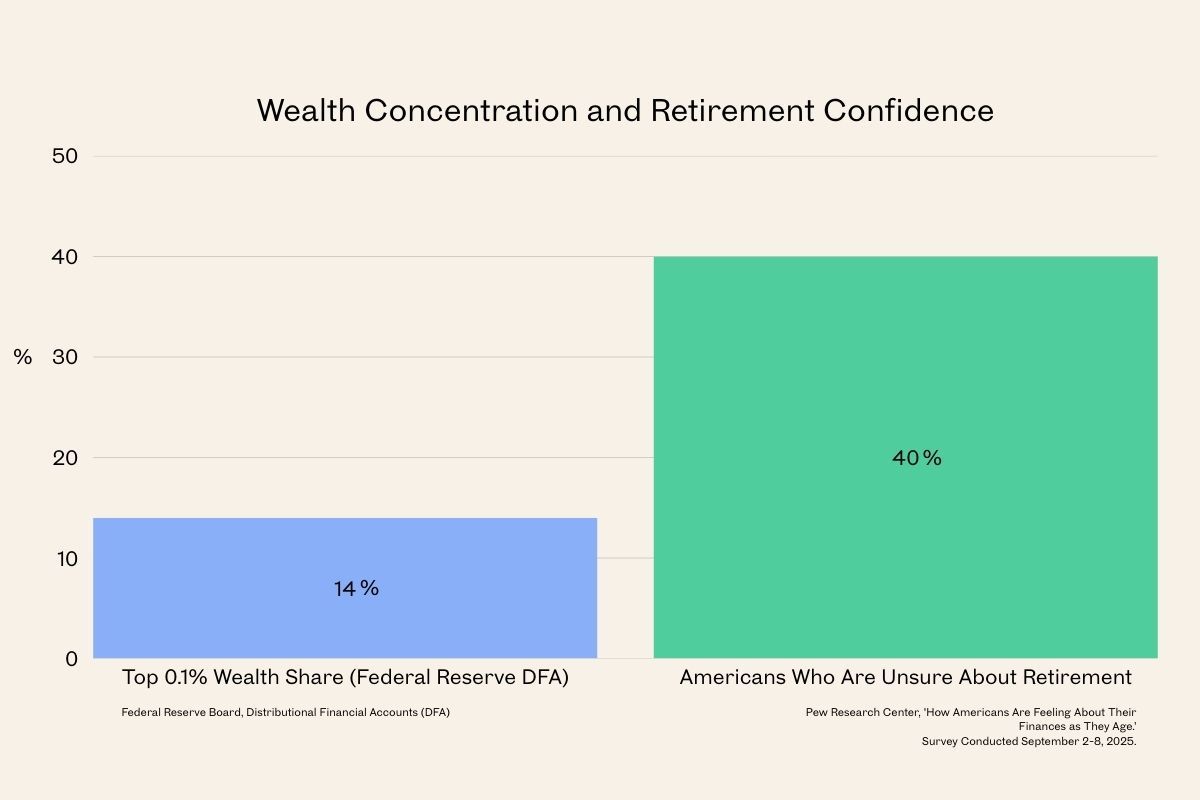
Most Americans enter retirement hoping their savings, investment decisions, and timing align to support their long-term goals — keyword: hoping. For the top 0.1% of wealth holders, though, the reality looks different. Their portfolios may be larger, but the distinction isn’t only about income. They’re in the top 0.1% of planners, tax managers, and decision makers. 

Federal Reserve data on household wealth distribution shows the share of the nation’s assets this small group holds. The numbers are startling, but they didn’t shift overnight. The data reflect habits formed long before retirement, including how these households manage taxes and coordinate different types of accounts.

How the Ultra-Affluent Approach Taxes

For the most affluent retirees, tax planning isn’t a once-a-year event. It’s something they add to their long-term strategy, especially when it comes to Required Minimum Distributions (RMDs), capital gains, and changes in taxable income. Instead of waiting until distributions are unavoidable, they may consider how taking money earlier or adjusting the timing of gains might help manage taxes over several years. A key part of the strategy is understanding how different types of investment income are taxed.

Advertisement

“Capital gains have a much lower tax rate than earned income, interest, or dividends. And therefore are advantageous in that regard, relative to interest and dividends, with a higher total return,” Ken Fisher, founder and executive chairman at Fisher Investments, said.

Rather than focusing on minimizing their tax implication in a single year, they adapt their strategy to keep their withdrawal plan steady and sustainable.

They Coordinate Their Withdrawals Across Multiple Accounts

Affluent retirees often coordinate their withdrawals across multiple account types. Traditional IRAs, Roth accounts, brokerage assets, and appreciated holdings each play a role. They’re used in combination to support post-work income needs and manage tax bills across different stages of retirement. A long-term mindset often guides those decisions, especially when investors are balancing different assets and timelines.

“Stocks are inherently volatile, at least in the short term,” Aaron Anderson, senior vice president of research at Fisher Investments, said. “They become much less so over the long term — meaning the further out you go, the longer your time horizon, the more consistent stock returns become.”

Advertisement

This type of coordination can help keep taxable events predictable, whether someone is drawing down tax-deferred savings, using Roth accounts later for flexibility, or handling unexpected income changes.

They Take Planning Seriously

Even with planning tools available, many Americans are unsure how far their savings will stretch. A Pew Research Center survey found that roughly four in 10 Americans don’t feel confident they will have enough money to last their entire retirement. That uncertainty stands in contrast to the longer-range planning affluent households do. Though an early start lets you take advantage of compound interest, planning at any stage makes retirement feel more attainable. The gap between where wealth is concentrated and how people feel about their own retirement shows how much planning shapes the experience.

They Know When to Ask an Expert

Few households sit anywhere near the top 0.1% in wealth, a group whose share of national assets matches that of the bottom 50%, but the way those investors plan their taxes and sequence their withdrawals can still serve as a playbook for the other 99.9% of retirees. Many affluent households trust professional advisors who help them take a longer-term view of taxes and make decisions spanning decades. Fisher Investments offers these same resources to everyday investors, explaining these concepts (and others) in more depth.

Read Fisher Investments’ Tax-Efficient Wealth Management for Affluent Investors guide to get additional insights into tax-smart planning.

Advertisement

Feature Image Credit: Jordan Siemens / Getty Images

This story was paid for by an advertiser. Better Report's editorial staff was not involved in the creation of this content.

Recommended Articles

  • The Safety Rules for Candles You Probably Don’t Know

  • How Old Are the Apples in the Grocery Store?

  • How To Tell if You’re Brushing Your Teeth Too Hard

  • 5 Things Your Car Needs Before the First Freeze

Advertisement
Advertisement

Related Articles

5 Things Your Car Needs Before the First Freeze

4 min read

6 Amazon Prime Day Hacks

6 min read

Is It Actually Better To Lease a Car?

9 min read

7 Free MIT Classes You Can Experience From Home

4 min read

The Bedroom Color That Adds $2,000 to Your Home Value

3 min read
Advertisement

0.1% of People Retire With This Much Money. Will You?

Sponsored By
Ali Eldridge
Wealth | Updated: November 21, 2025
Better Report

This story was paid for by an advertiser. No members of Better Report’s editorial staff were involved in the creation of this content.

For retirees, a million dollars has always seemed like a solid goal. $1 million puts your mind at ease. Without doing the math to back into an annual salary, the sum should be enough to keep you afloat (and then some) through retirement, allowing you to do largely what you want and live where you please, enjoying your golden years to the fullest.

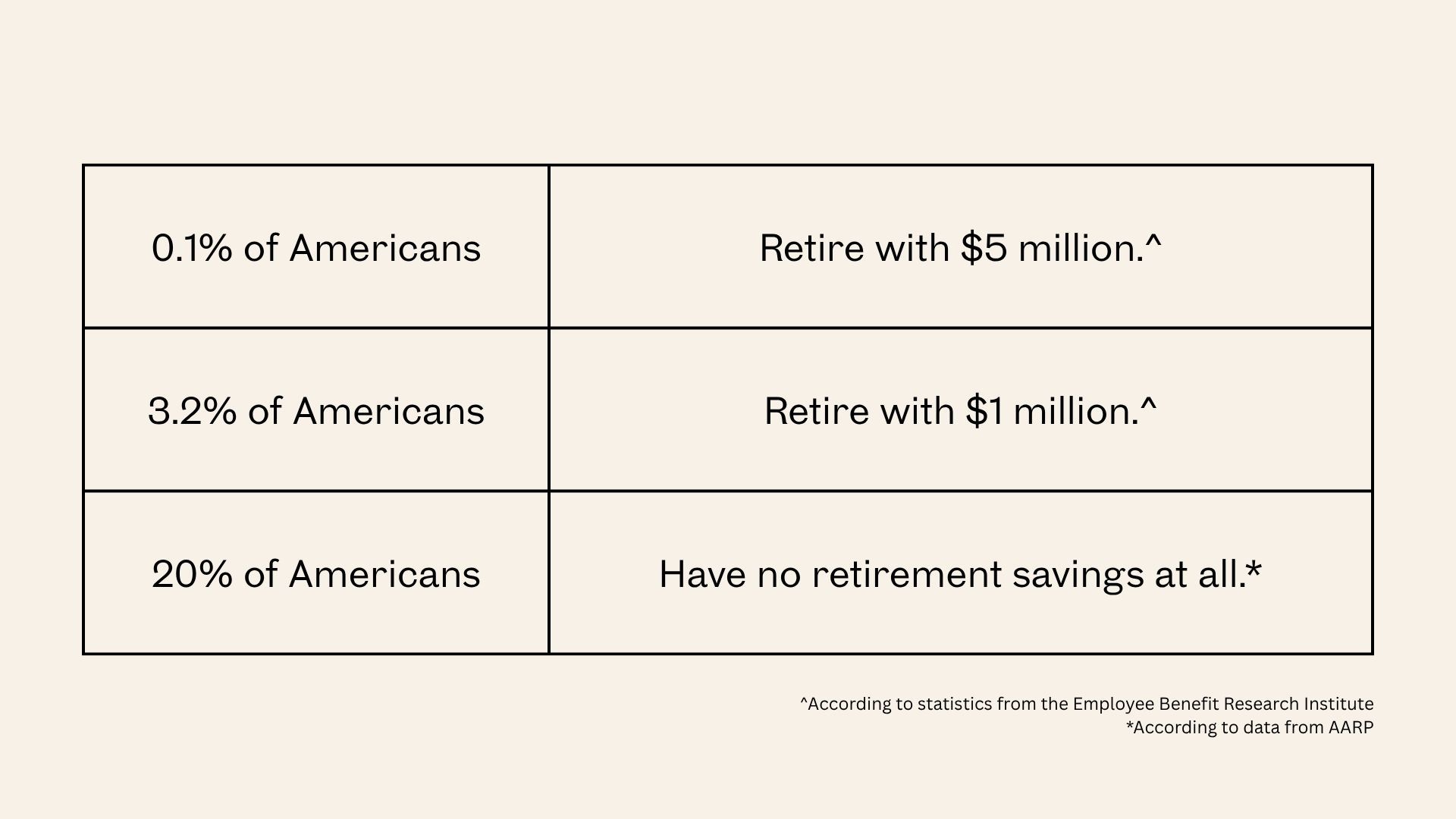
When you’re saving toward retirement, $1 million seems like an attainable plateau, too — somewhere you should reach, if all goes to plan. Though other surveys put that number closer to $4 million to be safe, a million is a commendable financial milestone that most will never reach. According to data from the Employee Benefit Research Institute’s analysis of the Federal Reserve’s Survey of Consumer Finances, just over 3% of retirees reach the $1 million milestone. 0.1% of them get to the $5 million mark. That means, in reality, most Americans are retiring with much less. Some have no savings at all, and, in turn, no investment income either. 

That means reaching either of the aforementioned financial milestones is an incredible achievement. At that point, it’s more than a nest egg; it’s an estate — something that puts you, and your family, at a financial advantage for generations, potentially. But it comes with new challenges, which require you to work smartly to protect what you’ve built. When your assets grow, so do your tax considerations — and even minor missteps can cost you more than you think.

As such, it’s wise to seek out the most tax-efficient ways to manage your wealth. From optimizing your investment strategy to planning when and how to draw from your account, a tax-smart approach can make the difference between maintaining your wealth and watching it erode.

Advertisement

Fisher Investments’ free guide, Tax-Efficient Wealth Management for Affluent Investors (for those who have $5 million or more), breaks it all down. It offers forward-looking advice to strengthen and optimize your portfolio, along with clear, actionable tax management techniques for retirement. Inside, you’ll find strategies that affluent investors use to stay a step ahead — whether that’s timing capital gains, structuring income for lower tax exposure, or making smarter charitable and estate planning decisions.

Download Tax-Efficient Wealth Management for Affluent Investors today.

This story was paid for by an advertiser. Better Report's editorial staff was not involved in the creation of this content.

Recommended Articles

  • The Safety Rules for Candles You Probably Don’t Know

  • How Old Are the Apples in the Grocery Store?

  • How To Tell if You’re Brushing Your Teeth Too Hard

  • 5 Things Your Car Needs Before the First Freeze

Advertisement
Advertisement

Related Articles

5 Things Your Car Needs Before the First Freeze

4 min read

6 Amazon Prime Day Hacks

6 min read

Is It Actually Better To Lease a Car?

9 min read

7 Free MIT Classes You Can Experience From Home

4 min read

The Bedroom Color That Adds $2,000 to Your Home Value

3 min read
Advertisement

You Can Still Make Money During Retirement. Here’s How

Sponsored By
Better Report
Wealth | Updated: November 21, 2025
Puzzled worried serious elderly lady accountant with gray hair working from home, examining pay check sitting at kitchen table at home, counting expanses and income. Grandma holding utility bill
Better Report

This story was paid for by an advertiser. No members of Better Report’s editorial staff were involved in the creation of this content.

Retirement is supposed to be a reward, an opportunity to do whatever you want, whenever you want — within reason, of course. Sleeping in, booking trips, or finally trying the hobbies, no matter how esoteric or mundane, you’ve been meaning to try. Birding? Sounds great. Baking? Delicious. You can try these without worrying about interfering with your work schedule, meaning they can, if you so desire, become your entire personality. 

Though work is finally a thing of the past for you, money questions don’t magically disappear once your commute does. Nearly half of retirees — 45% to be exact — risk running out of savings, and that’s counting those who invested carefully and diversified their portfolios. The good news? You don’t need a job to keep making money. With the right income streams, your nest egg can keep generating cash while you focus on living your life — and learning to bake county-fair-quality pies.

Like pie, those streams come in many flavors: Dividend-paying stocks deliver regular cash payments. Bonds hand you coupons you can actually spend. Combining a few approaches yields a mix of growth and stability, which means it’s wise to explore more than just stocks and bonds. There are real estate investment trusts (REITs), master limited partnerships (MLPs), annuities, and countless others — each with unique trade-offs in terms of yield, taxes, and liquidity. 

Advertisement

Unsure where to start? That’s totally fair. It’s a lot to learn, but when understood and used together, they can make your savings stretch so much further. 

Fisher Investments’ free resource, The Definitive Guide to Retirement Income, explains how seven popular strategies work and how to choose the right ones for your goals. That said, planning requires more than simply weighing the pros and cons of income streams. Their helpful guide also shows you how to prevent inflation from eroding your purchasing power and adjust your portfolio as your priorities shift, ensuring you meet your goals. 

Request the Definitive Guide to Retirement Income today.

This story was paid for by an advertiser. Better Report's editorial staff was not involved in the creation of this content.

Recommended Articles

  • The Safety Rules for Candles You Probably Don’t Know

  • How Old Are the Apples in the Grocery Store?

  • How To Tell if You’re Brushing Your Teeth Too Hard

  • 5 Things Your Car Needs Before the First Freeze

Advertisement
Advertisement

Related Articles

5 Things Your Car Needs Before the First Freeze

4 min read

6 Amazon Prime Day Hacks

6 min read

Is It Actually Better To Lease a Car?

9 min read

7 Free MIT Classes You Can Experience From Home

4 min read

The Bedroom Color That Adds $2,000 to Your Home Value

3 min read
Advertisement
  • Home
  • Health
  • Wealth
  • Logo
  • Advertise
  • About
  • Contact Us
  • Privacy Policy
  • Terms of Use
  • Your Privacy Choices
x
Thumb Image

Elevate your everyday.

Sign up to receive the practical tips and expert advice you need to pare down the complexities of everyday living right in your inbox.

Sorry, your email address is not valid. Please try again.

Your email is:

Edit Image
Sorry, your email address is not valid. Please try again.
Thank you for subscribing...

By subscribing you are agreeing to our Terms of Use and Privacy Policy.

Close image
Thumb Image
Second Thumb Image

Elevate your everyday.

Sign up to receive the practical tips and expert advice you need to pare down the complexities of everyday living right in your inbox.

Sorry, your email address is not valid. Please try again.

By subscribing you are agreeing to our Privacy Policy and Terms of Use.

Close image