The Gross Reason Your Pillow Gets Heavier Over Time

All featured products and deals are selected independently and objectively by the author. Better Report may receive a share of sales via affiliate links in content.
You probably don’t think much about your pillow except when you lay your head on it at night. But the experts at the Sleep Foundation say that an optimal sleep environment is critical to a good night’s rest — and that includes a great pillow.
Once your pillow is past its prime, it’ll be lumpy and saggy, and it won’t support your head and neck properly. It likely has gotten heavier while you’ve been sleeping, too, and you won’t like why.

What’s Lurking Inside Your Pillow?
Every night when you go to sleep, you’re exposing your pillow and sheets to organic debris, moisture, and microscopic life, including dead skin, dirt, bacteria, dust, dust mites, sweat, drool, and skin oils. Over time, they get trapped in your pillow’s filling and fibers and increase its overall weight (though it won’t double in weight, as some posts around the internet claim).
According to the Cleveland Clinic, you shed nearly half a teaspoon of dead skin every night while you sleep. Many of these microscopic cells end up in your pillow, where they provide the perfect food source for dust mites.
These tiny arachnids — and their droppings — account for 10% of the weight of a 2-year-old pillow, according to LiveScience, and have the potential to make you sick. Dust mites are one of the most common household allergens and they thrive in warm, humid environments like pillows. (Depending on what material your pillow is made out of, you may be able to wash it to keep dust mites from building up. If you’re able to do so, aim to throw your pillow in the wash every six months.)

Reader Favorites



And if you sweat, drool, or put wet hair on your pillow, you’re providing dust mites exactly what they need. You’re also adding to the weight of your pillow.
Sweating at night is normal, especially if your room is too warm. Some conditions, including menopause and certain infections, can make you sweat excessively at night. Your pillow will absorb some of that moisture. And if the air is humid, the moisture can stay trapped in the filling, making your pillow feel heavier. It may even cause it to turn yellow.
The Type of Pillow Matters
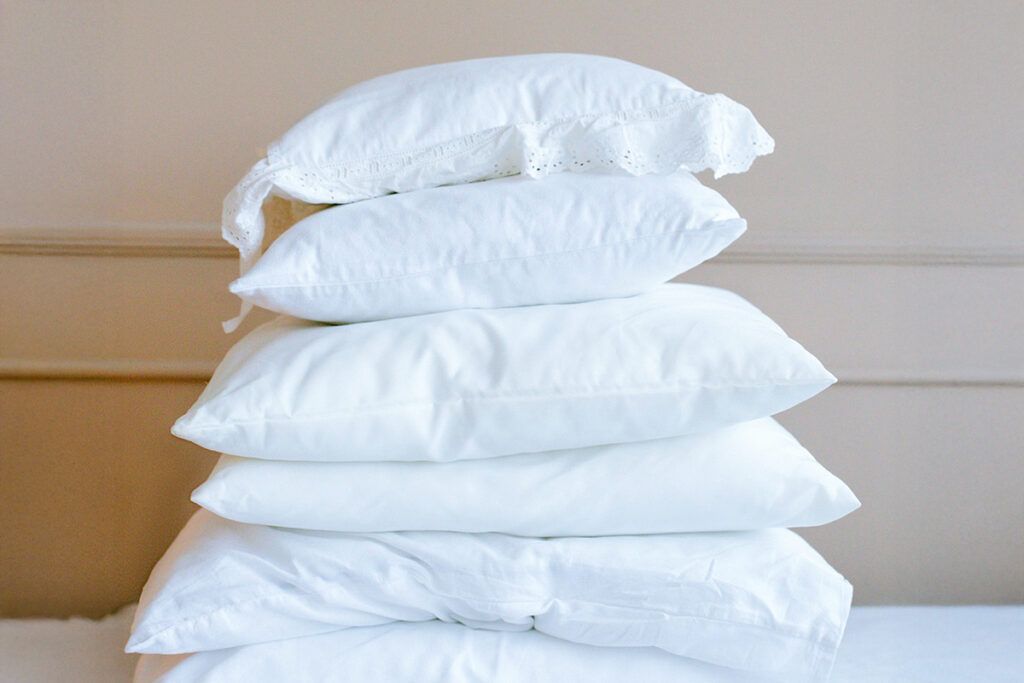
The kind of filling in your pillow is a factor, too. Researchers at the Wellington Asthma Research Group found that pillows filled with synthetic materials like polyester had higher concentrations of dust mite allergens than feather pillows after 12 months of use.
But down and feather pillows aren’t perfect, either — they also trap debris and moisture. Memory foam isn’t much better; it does a poor job of preventing buildup of moisture and repelling dust mites.
Buckwheat hull pillows, on the other hand, are among the best at repelling dust mites and moisture. They’re filled with the shells of buckwheat seeds, which you can add or remove to modify the pillow’s shape to the curvature of your head and neck. The space between the hulls also lets air flow and moisture wick and dry easily.
Regardless of what material it’s made of, though, your pillow will gradually lose its structural integrity over time. The filling will compress and may get lumpy or flat.
Synthetic pillows, including memory foam, also shed fibers and microplastics as they break down, and you could be exposed to these tiny particles every night. According to a 2025 study in PLOS One, the estimated amount of microplastics suspended in air indoors is “higher than previously thought”; these particles, which can penetrate into the lungs, “may contribute to causing lung tissue damage, inflammation, and associated diseases.”
How Often Should I Replace My Pillow?
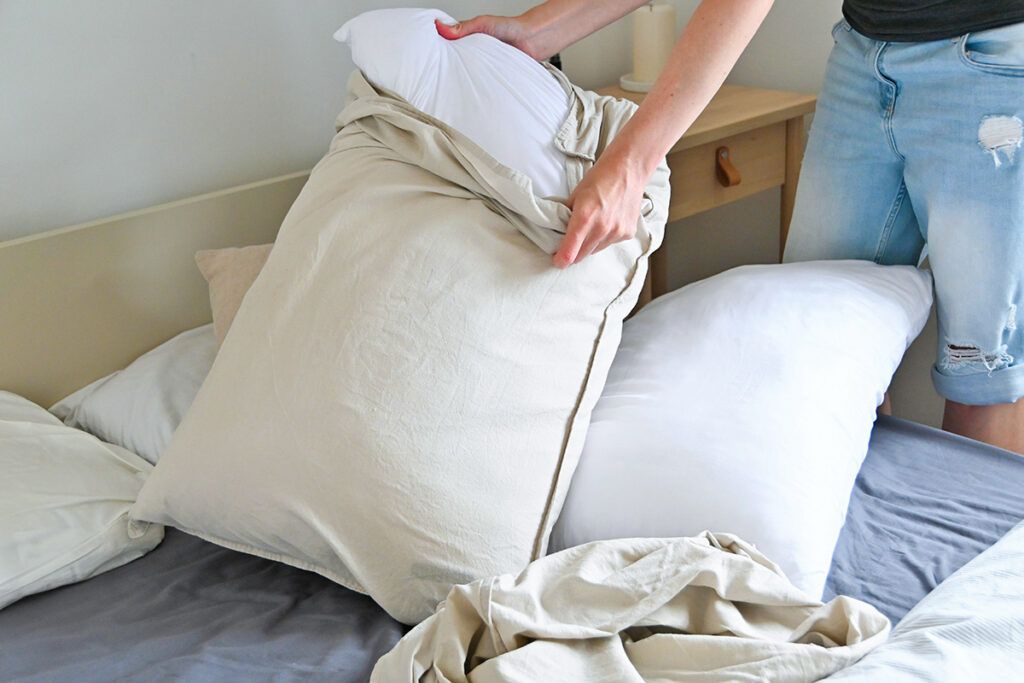
Even if you regularly wash your pillows, the Sleep Foundation recommends replacing your pillows at least every other year to ensure they’re providing proper support. You also may want to consider a pillow protector: A 2002 study demonstrated that using one can reduce the accumulation of dust mites. Consumer Reports suggests purchasing a pillow protector with fabric weave openings of 6 micrometers or less to help keep out the tiniest mites and skin cells.
Just remember, no pillow will stay pristine forever. They’ll collect your skin cells, sweat, and dust mites, which can make you sneeze, give you itchy eyes, and even cause asthma flare-ups. So if your pillow feels heavier, flatter, or lumpier, it’s probably time for a new one.
Featured Image Credit: © Iuliia Pilipeichenko—iStock/Getty Images
More From Our Network
Better Report is part of Inbox Studio, an email-first media company. *Indicates a third-party property.







Sarah Gleim is an Atlanta-based freelancer with more than 25 years of experience writing and producing explainers and features about history, science, food, and health for media outlets like AARP, WebMD, The Conversation, History.com, HowStuffWorks, CNN, and others. She’s also the editor of several cookbooks for Southern Living and Cooking Light.
This article is for general informational purposes only.
Affiliate Disclaimer Medical Disclaimer Financial Disclaimer