Skip to content
Better Report
  • Home
  • Health
  • Wealth
8 Low-Maintenance Plants That Thrive on Neglect
  • Search
  • Subscribe
  • Home
  • Health
  • Wealth
  • About
  • Privacy Policy
  • Terms of Use
  • Contact Us
  • SubscribeSubscribe
  • Search
Thank you for confirming your email! Welcome to the community.

Tag: Safety

Your Old Glassware May Not Be Safe To Drink Out Of

Health | Updated: May 21, 2026
Bennett Kleinman
Author
Bennett Kleinman is a New York City-based staff writer for Inbox Studio. He is also a freelance comedy writer, devoted New York Yankees and New Jersey Devils fan, and thinks plain seltzer is the best drink ever invented.
Old glassware
Better Report

All featured products and deals are selected independently and objectively by the author. Better Report may receive a share of sales via affiliate links in content.

There are a few benefits to using vintage glassware: Not only is it more durable than the mass-produced products made today, but the elegant and fun designs make the glasses a pleasure to look at and drink out of. 

However, sipping from an older glass comes with a warning that’s not to be taken lightly. Certain materials that were once commonly used to make glassware are now known to be harmful toxins that shouldn’t be ingested. Here’s how to determine if your old glassware is safe to drink from, or if it’s better suited for decorative purposes.

Advertisement
Advertisement
Vintage glasses in cabinet
Credit: © Sophia Kunkel/Unsplash.com

A Slew of Toxic Ingredients

Before 1978, there were no federal regulations prohibiting the use of lead paint in consumer products. This is why you hear about so many old houses having lead-related issues, but the concerns also extend to vintage glassware. Many of the intricate designs and fun characters painted onto old glasses were drawn with paint that contains lead as well as cadmium — another harmful chemical once used to achieve colorful pigments. Not only that, but both lead and cadmium were used in the manufacture of glass itself.

Lead-poisoning prevention advocate Tamara Rubin told The Guardian that “vintage barware can have enough contaminants to cause biological harm to humans.” Collectible glasses given out by fast-food restaurants in the 1970s and 1980s (and, in one instance, the 2010s) have also been found to contain lead and cadmium. If the toxic paint comes into contact with any acidic liquids such as fruit juices or wines, those acids can draw out the toxins and contaminate whatever’s being consumed.

Paint is one thing, but according to experts, there’s little to worry about if you accidentally drank from a lead crystal glass once. As toxicology expert Dr. Michael Kosnett explained to America’s Test Kitchen, “that’s not going to give a significant amount of lead.” Experts speaking with Consumer Reports noted that drinking from lead glassware occasionally is OK for adults other than pregnant women. You don’t necessarily have to throw it away, but you shouldn’t be using it daily or for extended periods of time.

Recommended Articles

  • A Warning Sign for Heart Attack and Stroke Could Show Up on Your Face

  • 6 Holiday Scams To Watch Out For

  • Why Gift Cards Are Actually Terrible Gifts

  • The Strange Reason Why Time Feels Like It’s Moving Faster

Advertisement
Advertisement

Reader Favorites

  • Person washing part of a coffee machine

    18 Surprising Things You Should Never Put Down Your Drain

  • Woman brushing hair

    9 Surprising Signs You’re Aging

  • White car on the road

    The Best Cars for Resale Value, According to Auto Experts

And don’t leave liquids sitting in glass containers that may contain lead, such as vintage decanters, for too long. Storing some scotch that way may look nice, but doing so raises the risk that lead will leach out into the liquid. Once consumed, lead and cadmium can accumulate in the body, leading to issues such as higher blood pressure, cardiovascular problems, and kidney damage, among other major ailments. So, if you must use that heirloom decanter, pour the liquor back into the bottle as soon as you’re done with it.

Advertisement
Rainbow prisms in glass
Credit: © mivod/stock.adobe.com

What To Watch For

There’s no way to confirm that a glass contains toxins just by looking at it, so if you have vintage glassware, you may want to  err on the side of caution and use it only decoratively. There are some red flags to look for that can indicate a glass isn’t safe, however.

Be wary of old glassware that’s orange, yellow, or red, as cadmium was often used to achieve those pigments. Additionally, painted decorations that feel rough or raised may contain lead. You should also check items for wear, as scratches can easily cause the shedding of toxic microparticles.

Advertisement
Advertisement

According to America’s Test Kitchen, there are some simple tests that will tell you if lead was used in the manufacturing of your vintage glassware. If you shine white light through the glass and see a rainbow, that’s a sign of lead. Likewise, if tapping the glass with a metal utensil produces a high-pitched ringing, then the glass likely contains lead. But if it produces a low-pitched clunk instead, it’s probably safe to use.

Last but not least, if the glass has a green or yellowish color, it may contain radioactive uranium. You can tell by shining a black light on the glass — if it glows a bright green, then it contains uranium. (Be aware, though, that not all glass that contains uranium will glow under a black light.) 

Advertisement
Advertisement

If you have any uranium glass on hand, it’s probably not going to cause harm if you just touch it. But people are advised to play it safe and avoid using uranium glasses as practical drinkware.

Credit: © Drobot Dean/stock.adobe.com

Get the Lead Out

There are ways to test for lead in your vintage glassware that go beyond making an educated guess by looking at it (or tapping on it). 

Advertisement

Home testing kits using swabs are readily available and provide results in as little as 30 seconds, though they’re not as reliable as tests done in a controlled lab environment and may return false positives. 

Advertisement
Advertisement

Lumetallix, another home testing option, can reportedly detect an amount of lead as small as a nanogram. All you have to do is spray the colorless solution onto the glass, shine a light on it, and look for a green glow. The test does have limitations: It doesn’t work on food, soil, or water, and Lumetallix cautions that it can show only whether or not lead is present; if the lead is inaccessible due to a sealant, for example, the test will not be positive, so it’s “not meant to replace X-ray fluorescence,” which looks beyond the surface of an object and can tell you exactly how much lead is in a particular item.

Lumetallix is considered easier to use than swab tests. But according to Consumer Reports — which tested 11 at-home lead-detecting kits — no matter what home test you buy, it’s likely that it will be good at detecting high levels of lead, but not lower levels or any lead that may be lurking under the surface. So, if you’re particularly worried about lead exposure — or children are regularly in your home — you may just want to get rid of the items you feel may be risky.

Featured Image Credit: © Olivie Strauss/Unsplash.com

More From Our Network

Better Report is part of Inbox Studio, an email-first media company. *Indicates a third-party property.

Go Retro With This 1960s Fashion Quiz

Quiz Daily

Go Retro With This 1960s Fashion Quiz

True or False: Are You a Master of U.S. Geography?

Travel Quiz

True or False: Are You a Master of U.S. Geography?

5 Reasons You Can Be Denied Boarding an Airplane

Daily Passport

5 Reasons You Can Be Denied Boarding an Airplane

What Did People Do Before Eyeglasses?

History Facts

What Did People Do Before Eyeglasses?

How To Use a Balloon To Clean Up Dust

House Outlook

How To Use a Balloon To Clean Up Dust

11 Shopping Hacks Costco Members Should Know

FinanceBuzz*

11 Shopping Hacks Costco Members Should Know

Share this article

  • Share to Facebook
  • Share to Twitter
  • Copy Url
  • Share to Email
Bennett Kleinman
Staff Writer

Bennett Kleinman is a New York City-based staff writer for Inbox Studio. He is also a freelance comedy writer, devoted New York Yankees and New Jersey Devils fan, and thinks plain seltzer is the best drink ever invented.

This article is for general informational purposes only.
Affiliate Disclaimer Medical Disclaimer Financial Disclaimer

Updated: July 20, 2023
Posted In: Health
Hero Image Credit: Better Report
Advertisement

Related Articles

A Warning Sign for Heart Attack and Stroke Could Show Up on Your Face

4 min read

The Strange Reason Why Time Feels Like It’s Moving Faster

5 min read

Are the Brown Marks on Your Skin Dangerous?

6 min read

7 Common Meds Seniors Overuse

4 min read

Is It Actually Bad To Wear Your Shoes in the House?

4 min read
Advertisement

Beware of This Social Security Scam

Wealth | Updated: May 19, 2026
Jennifer M. Wood
Author
Jennifer M. Wood has been writing about news, entertainment, culture, and travel for longer than she cares to admit. She lives just outside Philadelphia with her husband and an ever-growing menagerie of rescue pets.
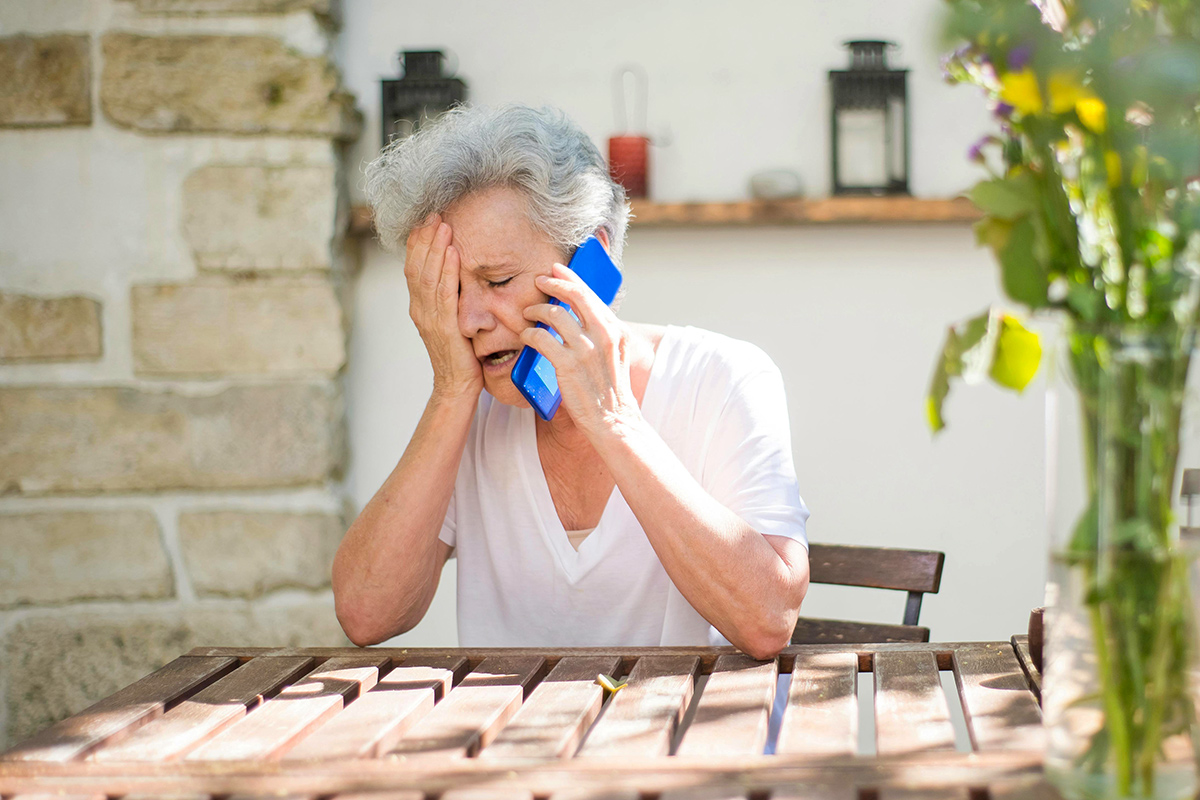
Woman upset on phone
Better Report

Answering the phone used to feel like a welcome interruption. Now, it can be a risky prospect.

The Social Security Administration (SSA) is warning about a sharp spike in impersonation scams targeting retirees and other beneficiaries, with fraudsters posing as government employees to obtain sensitive information or money. These schemes are increasingly common: Government impersonation scams are now among the most reported types of fraud in the U.S., and complaints surged sharply in 2025, with the Federal Trade Commission logging more than 330,000 incidents — a 25% increase from the previous year.

Advertisement
Advertisement

The scammers’ tactics are simple but effective: They create panic, apply pressure on victims to act immediately, and insist on secrecy, all to keep people from verifying their claims.

“Scammers who impersonate the Social Security Administration prey on fear and a false sense of urgency to steal from hardworking Americans, causing real financial harm to individuals and families,” Michelle L. Anderson, assistant inspector general for audit, said in a recent statement.

Here’s how the scam works — and how to protect yourself from falling for it.

Advertisement
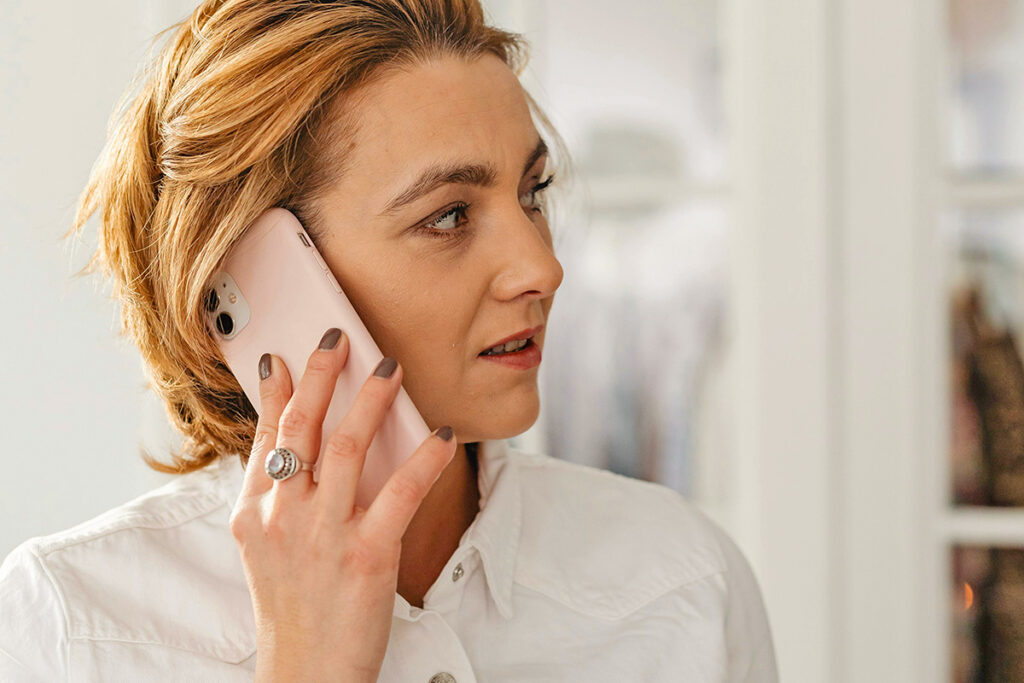
Woman on phone
Credit: © kaboompics/Pexels.com

How Social Security Impostor Scams Work

A typical impostor scam usually begins with an unexpected phone call, text, or email from a person claiming to represent the SSA. The message is designed to sound urgent and alarming, often warning you that your Social Security number (SSN) will be suspended or your benefits are at risk. In many cases, the perpetrators even spoof official-looking phone numbers or use the name of a real employee (sometimes even going so far as to create a fake badge or credentials to attach to emails) to make the contact appear more legitimate.

Recommended Articles

  • A Warning Sign for Heart Attack and Stroke Could Show Up on Your Face

  • 6 Holiday Scams To Watch Out For

  • Why Gift Cards Are Actually Terrible Gifts

  • The Strange Reason Why Time Feels Like It’s Moving Faster

Advertisement
Advertisement

Reader Favorites

  • Person washing part of a coffee machine

    18 Surprising Things You Should Never Put Down Your Drain

  • Woman brushing hair

    9 Surprising Signs You’re Aging

  • White car on the road

    The Best Cars for Resale Value, According to Auto Experts

Once the fraudster has gained your attention, they immediately escalate the pressure. They insist that you must act immediately to avoid serious consequences, which can range from loss of benefits to potential legal action or arrest. The goal is to create a sense of panic and discourage verification of the information being provided.

At this point, scammers typically request sensitive personal information, such as your SSN or banking details. They may also push for immediate payment through untraceable methods like gift cards, payment apps, or cryptocurrency. 

Advertisement
Advertisement

This is where the red flags should be impossible to ignore, as no government agency operates this way. But the speed and intimidation of the interaction are often enough to catch people off guard.

Woman looking down at phone upset
Credit: © Daniels C/stock.adobe.com

How To Avoid Falling for Social Security Impostor Scams

The best way to avoid impersonation scams is to remain clear-headed and not let panic take over. If you receive a call, text, email, social media message, or even a written letter claiming to be from the SSA, don’t respond with personal information — no matter how official it seems. 

Advertisement
Advertisement

The safest move is to independently verify the claim. Hang up and contact the SSA directly using the official phone number listed on SSA.gov — not a number provided in the message you received. Never use links in unsolicited emails or texts, since those often lead to fake websites designed to steal your information. Don’t download any attachments, either. Most importantly, remember that the SSA will never ask for sensitive details like your SSN, bank account information, or onetime verification codes over an unsolicited call or message.

It also helps to be cautious about the information you share publicly. Scammers often gather personal details from social media profiles to make their stories more convincing. Limiting what you post, like your full birth date or address, can reduce your exposure. If something feels off, trust your gut: Taking a moment to pause and verify is often what can save you from becoming a victim.

Advertisement
Person typing on computer
Credit © AI25.Studio/Pexels.com

How To Report a Suspected Social Security Impostor Scams

If you believe you’ve been the victim of an SSA scam, report it online using the SSA Scam Reporting Form or contact the SSA’s Office of the Inspector General hotline at 1-800-269-0271.

Advertisement
Advertisement

Featured Image Credit: © Kampus Production/Pexels.com

More From Our Network

Better Report is part of Inbox Studio, an email-first media company. *Indicates a third-party property.

Go Retro With This 1960s Fashion Quiz

Quiz Daily

Go Retro With This 1960s Fashion Quiz

True or False: Are You a Master of U.S. Geography?

Travel Quiz

True or False: Are You a Master of U.S. Geography?

5 Reasons You Can Be Denied Boarding an Airplane

Daily Passport

5 Reasons You Can Be Denied Boarding an Airplane

What Did People Do Before Eyeglasses?

History Facts

What Did People Do Before Eyeglasses?

How To Use a Balloon To Clean Up Dust

House Outlook

How To Use a Balloon To Clean Up Dust

11 Shopping Hacks Costco Members Should Know

FinanceBuzz*

11 Shopping Hacks Costco Members Should Know

Share this article

  • Share to Facebook
  • Share to Twitter
  • Copy Url
  • Share to Email
Jennifer M. Wood
Writer

Jennifer M. Wood has been writing about news, entertainment, culture, and travel for longer than she cares to admit. She lives just outside Philadelphia with her husband and an ever-growing menagerie of rescue pets.

This article is for general informational purposes only.
Affiliate Disclaimer Medical Disclaimer Financial Disclaimer

Updated: May 8, 2026
Posted In: Wealth
Hero Image Credit: Better Report
Advertisement

Related Articles

6 Holiday Scams To Watch Out For

7 min read

Why Gift Cards Are Actually Terrible Gifts

6 min read

How To Spot a Fake Amazon Review

7 min read

7 Things You Can Stop Buying To Save Money

6 min read

13 Stocking Stuffers That Are Actually Useful

8 min read
Advertisement

Why You Need a Go Bag  —  And What Should Be in It

Sponsored Content
Home | Updated: June 30, 2026
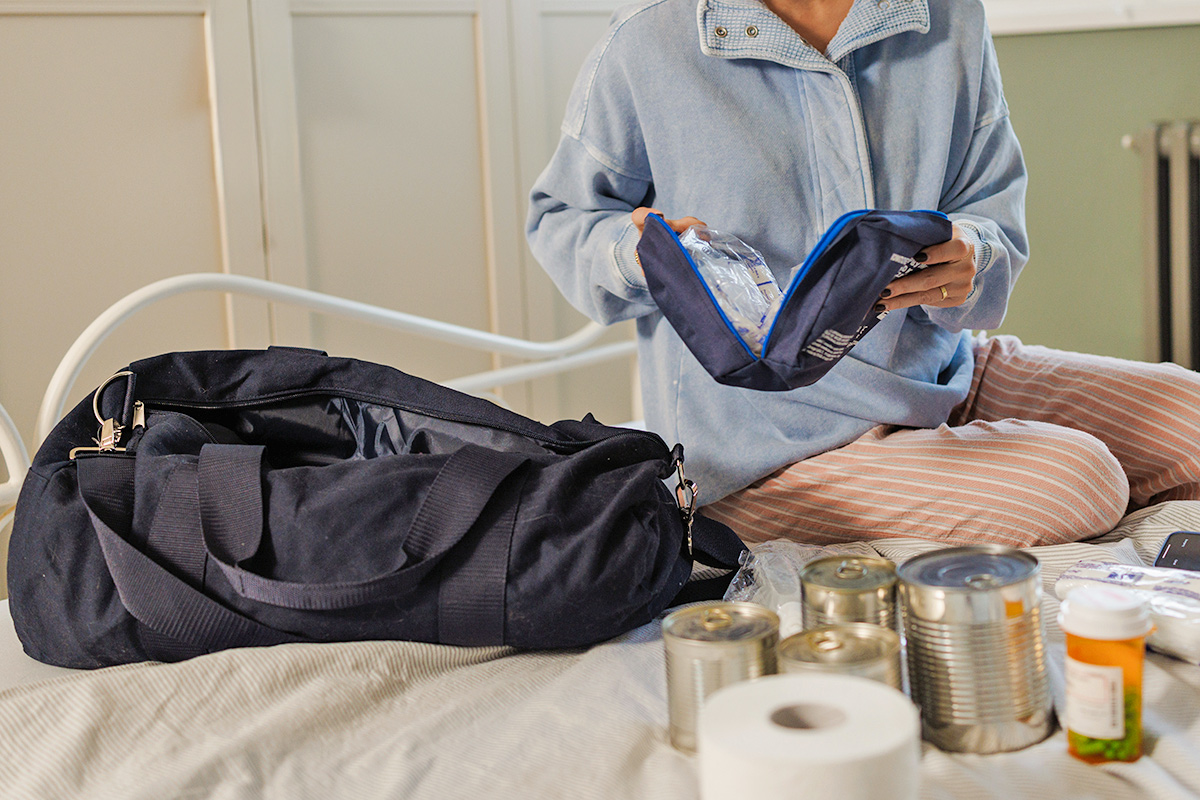
Person packing bag
Better Report

All featured products and deals are selected independently and objectively by the author. Better Report may receive a share of sales via affiliate links in content.

Most people don’t think about what they would take with them in an emergency, at least not until they have to — but when something does happen, there’s rarely time to stop and think about what matters. You take what you can carry, often in a rush, and hope you haven’t forgotten anything important. 

That uncertainty is exactly why being prepared is so crucial, particularly when help may not arrive straight away and access to basic supplies isn’t guaranteed. As the name suggests, a go bag is simply a bag you pack in advance so you can leave quickly if needed. Sure, it takes a bit of planning and effort, but having one makes things easier if you find yourself in an emergency. And while a go bag won’t fix everything, it can help you get through those first hours (or days) with a bit more control. Here’s what you need.

Advertisement
Advertisement

What To Pack

There’s no single version of a perfect go bag, and what you pack will differ depending on where you live and your specific situation. Most follow the same basic idea, though: Cover your essential needs for (at least) a few days.

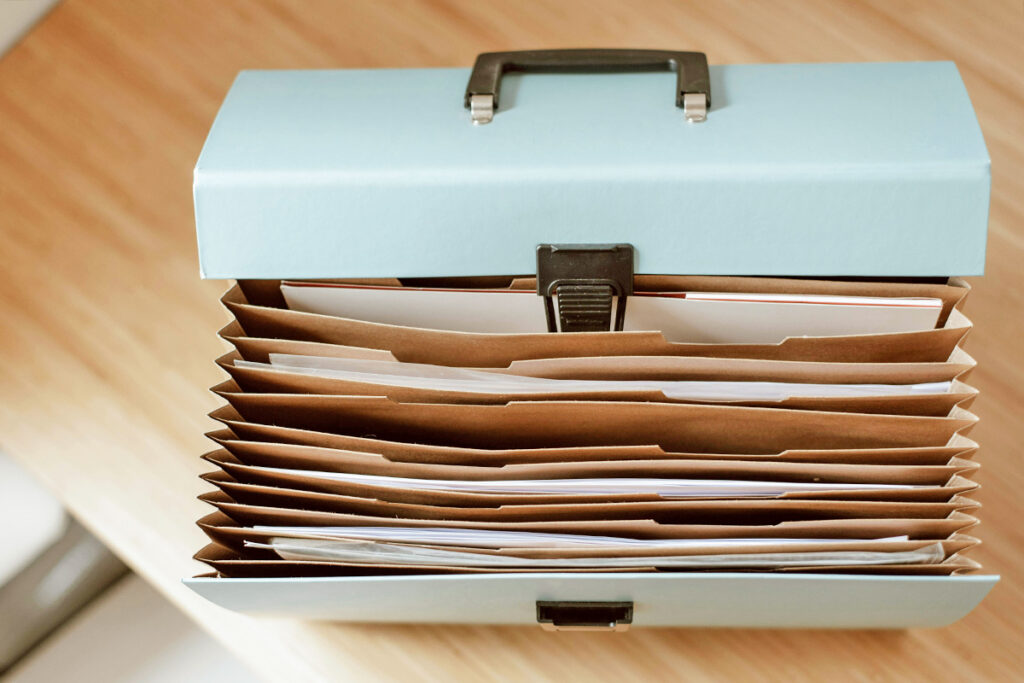
File of documents
Credit: © Anete Lusina/Pexels.com

Essential Documents and Valuables 

These can include copies of birth certificates, Social Security cards, passports, driver’s licenses, and insurance cards and policies, along with emergency contact information and a small amount of cash. You may also want to keep copies of the front and back of your credit cards in your go bag in the event that you can’t grab your wallet as you’re evacuating. It’s wise to keep everything together in a waterproof and fireproof pouch so it’s protected from the elements. (If you don’t want paper copies of these documents, you can store them on an encrypted flash drive instead.)

Recommended Articles

  • A Warning Sign for Heart Attack and Stroke Could Show Up on Your Face

  • 6 Holiday Scams To Watch Out For

  • Why Gift Cards Are Actually Terrible Gifts

  • The Strange Reason Why Time Feels Like It’s Moving Faster

Advertisement
Advertisement

Reader Favorites

  • Person washing part of a coffee machine

    18 Surprising Things You Should Never Put Down Your Drain

  • Woman brushing hair

    9 Surprising Signs You’re Aging

  • White car on the road

    The Best Cars for Resale Value, According to Auto Experts

Granola bars
Credit: © ange1011/stock.adobe.com

Food and Water

You’ll need a small supply of nonperishable food — think lightweight, ready-to-eat items like energy bars, canned goods, or dried foods — and enough water for at least three days of drinking and basic hygiene. If you have pets, you’ll want to pack food and water for them, too.

Advertisement
Advertisement
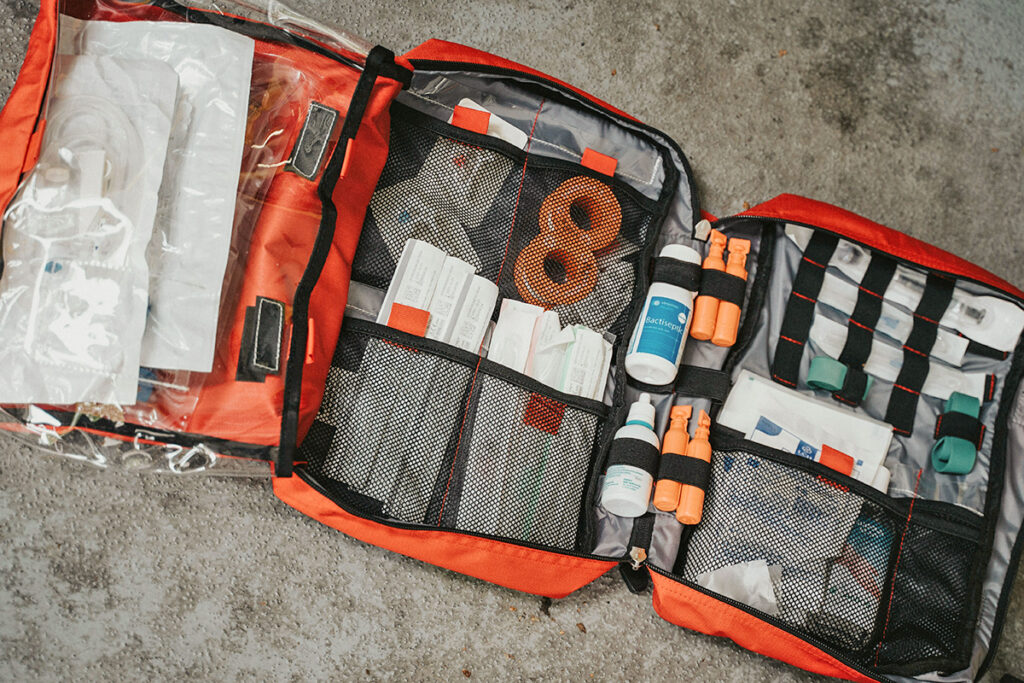
First aid kit
Credit: © Mathurin NAPOLY / matnapo/Unsplash.com

Medical Supplies

A basic first-aid kit — which includes bandages, antiseptic wipes, and pain relief — along with any prescription or over-the-counter medications you rely on, are essentials. It’s also worth packing a few simple hygiene items, such as hand sanitizer or wipes, and keeping copies of prescriptions in case you need them. You should also pack an extra set of eyeglasses (if you have them) or contact lenses, and you’ll want to bring along your pet’s medications and vaccine records, too.

Advertisement
Advertisement
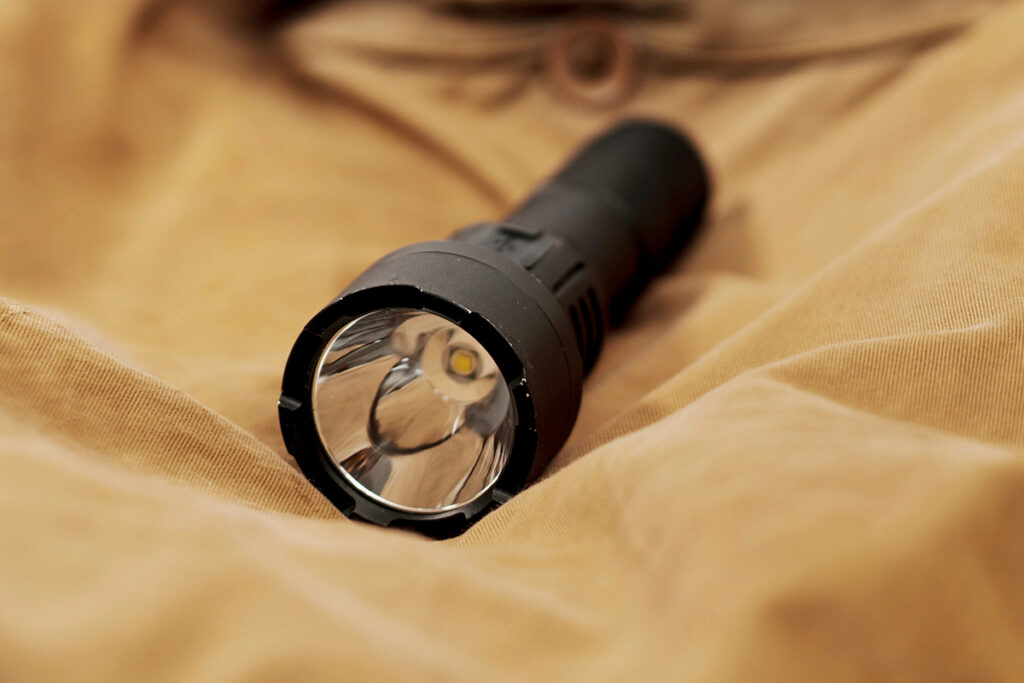
Flashlight
Credit: Serhii Prystupa—Moment/Getty Images

Lighting and Communication

A flashlight and spare batteries are important if the power goes out, and a portable radio can help you stay informed if internet access or cell service is unavailable. Similarly, something like a whistle might seem trivial, but it can come in especially handy if you need to get someone’s attention quickly. Don’t forget to pack extra chargers for your phone and other devices.

Advertisement
Advertisement
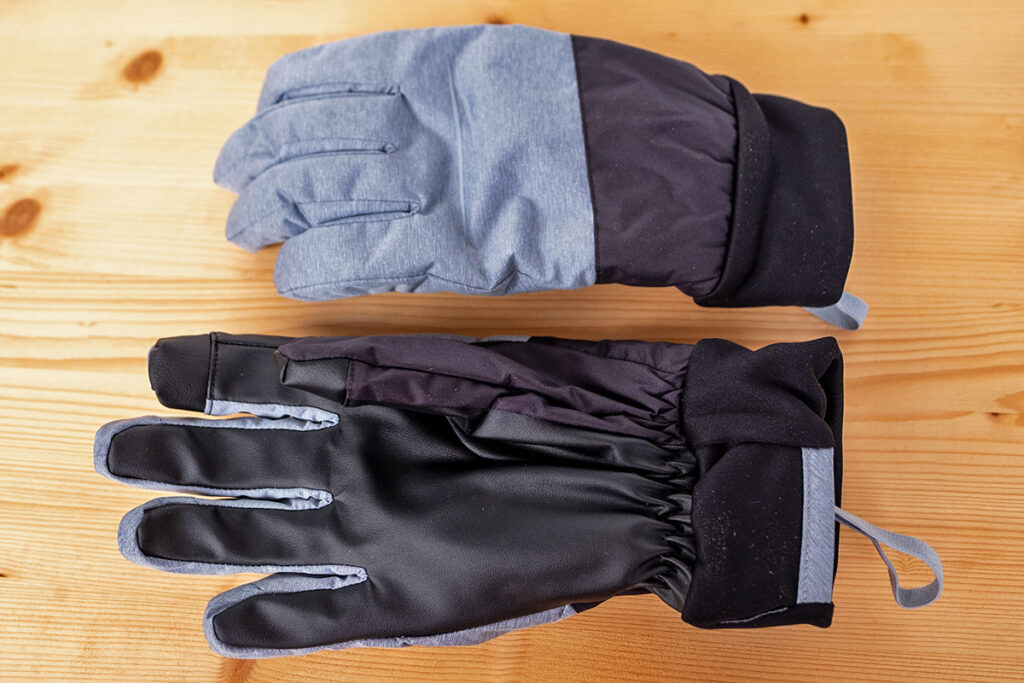
Gloves
Credit: © kittyfly/stock.adobe.com

Protective Items

Think in terms of practicality — clothing suited to the weather, waterproof gloves and outerwear (depending on the season or climate), and an emergency blanket. You should pack at least one change of clothing and a durable pair of shoes for each member of your family. 

Advertisement
Advertisement
Person holding multitool
Credit: © PeopleImages—iStock/Getty Images

Basic Tools

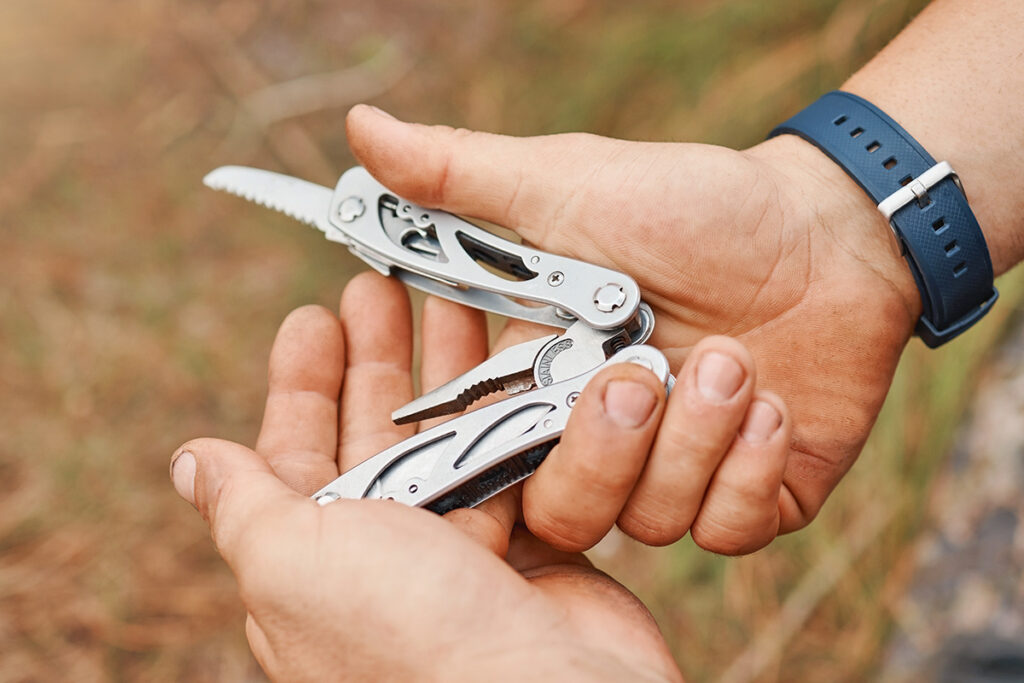
It’s a good idea to stash a couple of basic tools, such as a multitool, duct tape, and a manual can opener, in your kit. They can come in handy for quick fixes, turning off utilities, or setting up a temporary shelter if necessary.

Advertisement
Advertisement
Packed bag by door
Credit: © Anastasiya Mihailovna—Moment/Getty Images

Your Go Bag Is Packed — Now What? 

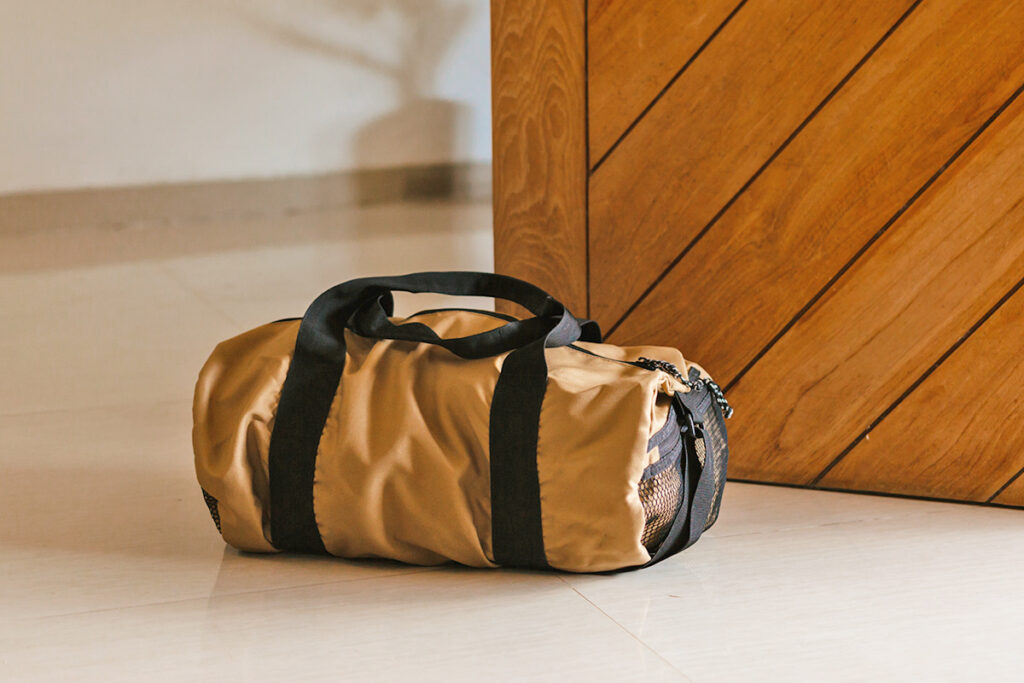
Keep your go bag in a designated spot in your home and make sure everyone knows where it is so they can grab it if necessary. (You may also want to consider keeping similar kits at work and in your car.)

Advertisement
Advertisement

An important note: A go bag isn’t something you pack once and forget about. Supplies run out, batteries die, and your needs change over time, so it’s worth checking it every so often. That might mean updating it for the season, replacing expired items, or making sure it still fits your situation — whether your health has changed or you now have a child or pet.

Featured Image Credit: © Riska—E+/Getty Images

More From Our Network

Better Report is part of Inbox Studio, an email-first media company. *Indicates a third-party property.

Go Retro With This 1960s Fashion Quiz

Quiz Daily

Go Retro With This 1960s Fashion Quiz

True or False: Are You a Master of U.S. Geography?

Travel Quiz

True or False: Are You a Master of U.S. Geography?

5 Reasons You Can Be Denied Boarding an Airplane

Daily Passport

5 Reasons You Can Be Denied Boarding an Airplane

What Did People Do Before Eyeglasses?

History Facts

What Did People Do Before Eyeglasses?

How To Use a Balloon To Clean Up Dust

House Outlook

How To Use a Balloon To Clean Up Dust

11 Shopping Hacks Costco Members Should Know

FinanceBuzz*

11 Shopping Hacks Costco Members Should Know

Share this article

  • Share to Facebook
  • Share to Twitter
  • Copy Url
  • Share to Email
Sponsored Content

This article is for general informational purposes only.
Affiliate Disclaimer Medical Disclaimer Financial Disclaimer

Updated:
Posted In: Home
Hero Image Credit: Better Report
Advertisement

Related Articles

The Most Dangerous Things You Do With Your Christmas Tree

4 min read

12 Foods You Shouldn’t Store Together

6 min read

17 Home Safety Gifts Your Family Actually Needs

10 min read

Should You Refrigerate Peanut Butter?

6 min read

The Most Popular Car Colors in the U.S.

4 min read
Advertisement

Your Go-To Travel Outfit Could Be Dangerous to Your Health

Health | Updated: May 4, 2026
Rachel Gresh
Author
Rachel Gresh is a Washington, D.C.-based freelance writer. When she's not writing, you can find her wandering a museum, exploring an unfamiliar city, or baking something new in the kitchen.
Woman on plane
Better Report

All featured products and deals are selected independently and objectively by the author. Better Report may receive a share of sales via affiliate links in content.

For many travelers, athleisure is the ultimate go-to: It’s stretchy and versatile, and it manages to feel comfortable while still looking put together. Among the most popular athleisure staples are leggings, which are soft, supportive, and widely worn across age groups. But your favorite plane outfit might not be as harmless as it seems. While convenient, certain styles of leggings can pose health and safety concerns during air travel. Here’s why.

Woman sleeping on plane
Credit: Adolfo Félix/Unsplash.com

Why Tight Clothing Can Be a Problem During Flights

Flying can cause uncomfortable side effects for travelers, including swelling due to reduced circulation and slower lymphatic drainage. On long-haul flights, the risks can increase: Flyers may experience leg edema, which occurs when excess fluid is trapped in body tissues, and deep vein thrombosis (DVT), or “traveler’s thrombosis,” a condition in which blood clots form in deep veins. (The risk for the latter is low in healthy people, but does increase in flights lasting longer than four hours.)

Contributing factors include changes in cabin air pressure, prolonged immobility, and dehydration. Staying hydrated, walking the aisles when possible, and doing simple in-seat exercises, such as calf raises, can help. But what you wear also plays a role.

Medical experts warn that tight garments can restrict blood flow in and out of the legs, which are already vulnerable during flights and long periods of sitting. Specifically, clothing that fits snugly at the waist, thighs, or ankles — such as leggings and skinny jeans — may further limit circulation. Tight clothing can also slow lymphatic flow, causing fluid to pool where it shouldn’t, which worsens swelling.

Advertisement
Advertisement

Additionally, cabin pressure can cause gas in the stomach and intestines to expand, leading to bloating. Anything tight around the waist can make this discomfort more noticeable. 

Advertisement

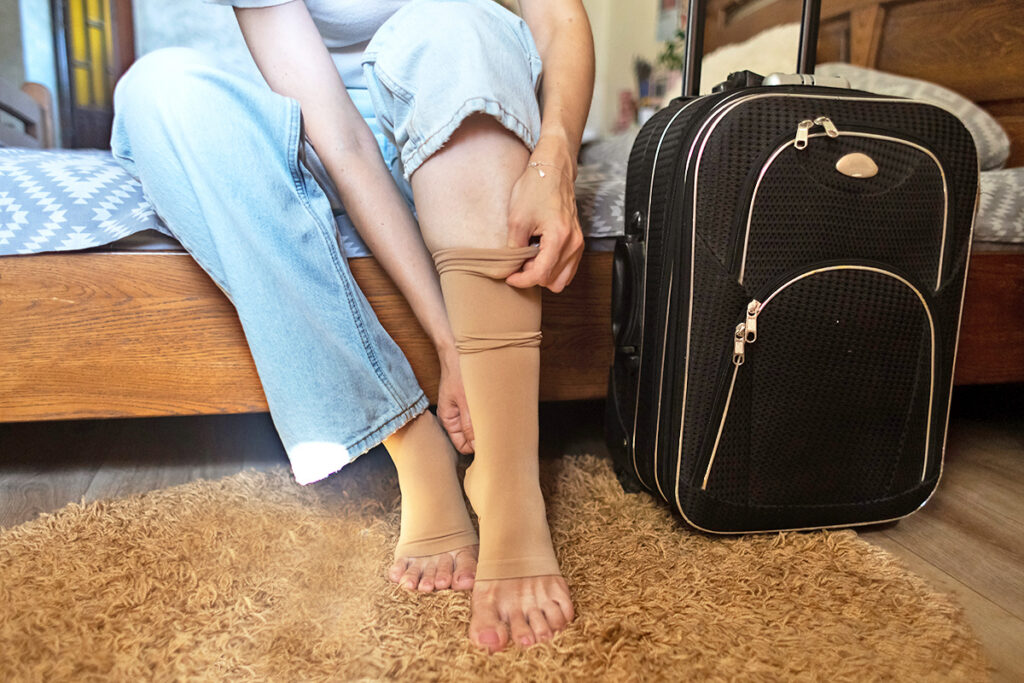
That said, while some tight garments may be problematic, travelers do have other options for compression wear.

Person putting on compression socks
Credit: © Alona Siniehina—iStock/Getty Images

The Difference: Compression Wear vs. Athleisure

Compression socks and leggings are a popular choice for travelers looking to support circulation, not just on flights but also during long car, bus, or train travel. However, not all compression is created equal.

Recommended Articles

  • A Warning Sign for Heart Attack and Stroke Could Show Up on Your Face

  • 6 Holiday Scams To Watch Out For

  • Why Gift Cards Are Actually Terrible Gifts

  • The Strange Reason Why Time Feels Like It’s Moving Faster

Advertisement
Advertisement

Reader Favorites

  • Person washing part of a coffee machine

    18 Surprising Things You Should Never Put Down Your Drain

  • Woman brushing hair

    9 Surprising Signs You’re Aging

  • White car on the road

    The Best Cars for Resale Value, According to Auto Experts

Unlike standard leggings, which feature uniform compression throughout the entire garment, medical-grade compression socks and leggings apply graduated pressure. The ankle area has the most compression, which gradually decreases up the leg to promote healthy blood flow.

For some travelers, medical-grade compression can reduce discomfort and vascular health risks during flights. This is especially relevant for those at higher risk of complications, including people over 40, individuals with a personal or family history of blood clots, and those with obesity, recent surgery, cancer, pregnancy, or who take estrogen-based medications.

Advertisement
Advertisement

But medical-grade compression wear isn’t one-size-fits-all. It’s best to consult a health care provider before choosing a style, as some options may be too restrictive for in-flight use or for certain individuals.

Woman in airport terminal on phone
Credit: © RgStudio—E+/Getty Images

Synthetic Fabrics May Pose a Safety Hazard

Beyond comfort and circulation, another factor to consider is fabric type. Leggings are often made from synthetic materials, such as polyester, nylon, and spandex. This may pose a safety hazard in the rare event of a fire, as these fabrics can melt or stick to the skin when exposed to extreme heat, increasing the risk of burns. 

Advertisement
Advertisement

Rest assured that in-cabin fires are uncommon (and are more likely to occur on the ground than in mid-air), but it’s still worth making informed decisions when traveling.

Advertisement
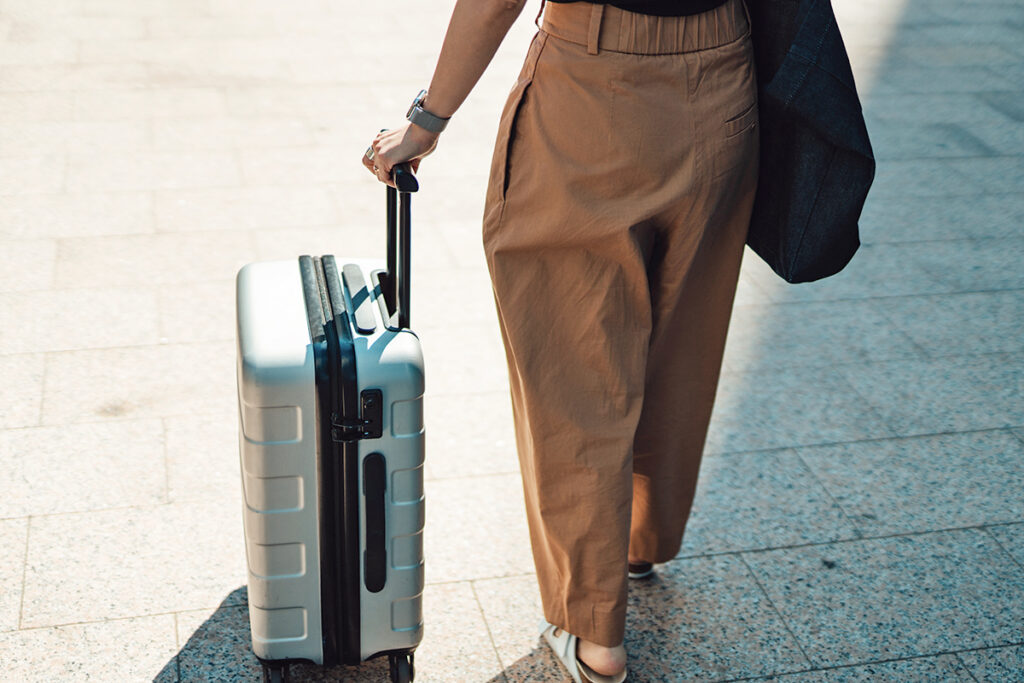
Woman in loose-fitting pants with suitcase
Credit: © Oscar Wong—Moment/Getty Images

What To Wear Instead

If you’re rethinking your travel outfit, consider loose-fitting pieces made from natural fibers. Not only are these options more breathable, but they’re also less of a safety hazard, and they promote healthy circulation. Good options include relaxed joggers, chinos, linen pants, and even loose-fitting denim. 

Advertisement
Advertisement

If compression is recommended for you, pair medical-grade compression socks with looser pants for a more balanced approach. These changes will make your travel day safer and more comfortable.

And don’t feel the need to kick your leggings to the curb. There’s still a time and place for them, but it may not be at 40,000 feet. 

Featured Image Credit: © Andrej Lišakov/Unsplash.com

More From Our Network

Better Report is part of Inbox Studio, an email-first media company. *Indicates a third-party property.

Go Retro With This 1960s Fashion Quiz

Quiz Daily

Go Retro With This 1960s Fashion Quiz

True or False: Are You a Master of U.S. Geography?

Travel Quiz

True or False: Are You a Master of U.S. Geography?

5 Reasons You Can Be Denied Boarding an Airplane

Daily Passport

5 Reasons You Can Be Denied Boarding an Airplane

What Did People Do Before Eyeglasses?

History Facts

What Did People Do Before Eyeglasses?

How To Use a Balloon To Clean Up Dust

House Outlook

How To Use a Balloon To Clean Up Dust

11 Shopping Hacks Costco Members Should Know

FinanceBuzz*

11 Shopping Hacks Costco Members Should Know

Share this article

  • Share to Facebook
  • Share to Twitter
  • Copy Url
  • Share to Email
Rachel Gresh
Writer

Rachel Gresh is a Washington, D.C.-based freelance writer. When she's not writing, you can find her wandering a museum, exploring an unfamiliar city, or baking something new in the kitchen.

This article is for general informational purposes only.
Affiliate Disclaimer Medical Disclaimer Financial Disclaimer

Updated: December 15, 2023
Posted In: Health
Hero Image Credit: Better Report
Advertisement

Related Articles

A Warning Sign for Heart Attack and Stroke Could Show Up on Your Face

4 min read

The Strange Reason Why Time Feels Like It’s Moving Faster

5 min read

Are the Brown Marks on Your Skin Dangerous?

6 min read

7 Common Meds Seniors Overuse

4 min read

Is It Actually Bad To Wear Your Shoes in the House?

4 min read
Advertisement

3 Things That Could Put You at Risk for an Accidental Fall

Sponsored Content
Health | Updated: May 4, 2026
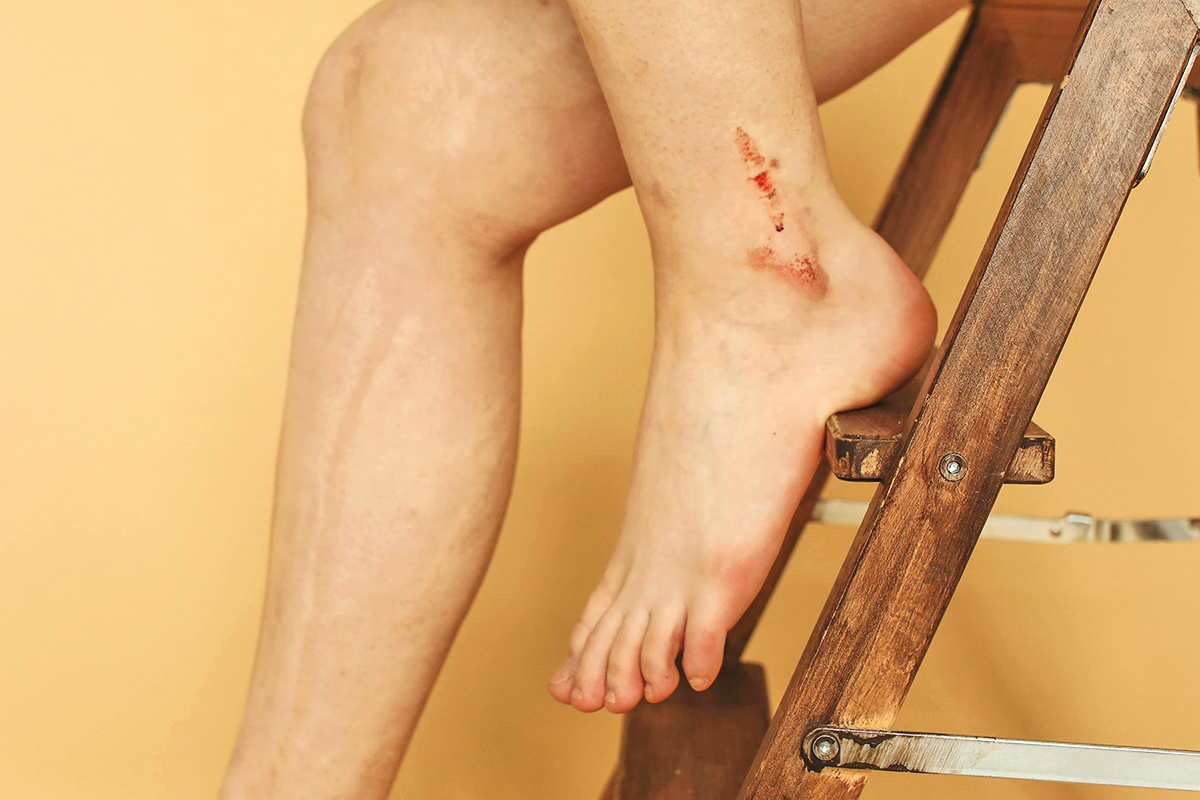
Person sitting on ladder with scrape on ankle
Better Report

All featured products and deals are selected independently and objectively by the author. Better Report may receive a share of sales via affiliate links in content.

It’s no shocker that people are prone to accidental tumbles, especially as they grow older and lose their balance more easily. But not all unexpected falls are due to aging — there are a slew of other culprits, some more surprising than others. 

Since 2000, studies have indicated an uptick in the frequency of fatal falls across an array of age groups both young and old. Here’s a closer look at some reasons behind this concerningly growing trend.

Advertisement
Advertisement
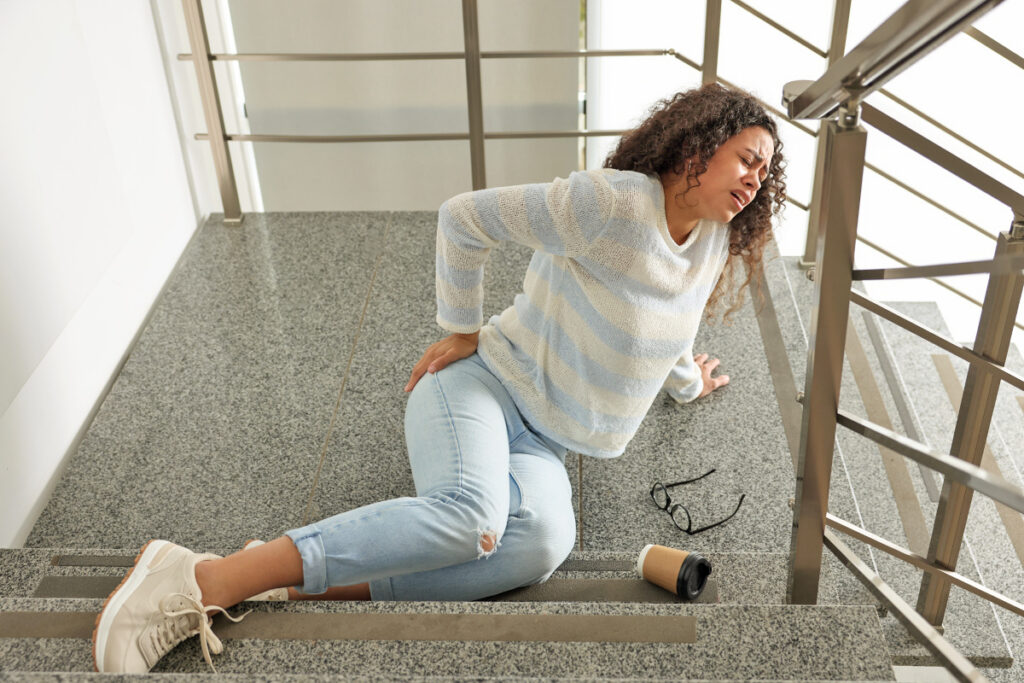
Woman who fell down the stairs holding her back
Credit: © New Africa/stock.adobe.com

Falling Upward

According to statistics from the Centers for Disease Control and Prevention compiled by the data analysis site USAFacts, the rate of death caused by accidental falls has jumped from 4.7 people per 100,000 in 2000 to 11.4 (when adjusted for age) as of 2023 — more than a 2.4-fold increase. The rise comes despite continued efforts to educate Americans about risks associated with falling, such as the debut of Falls Prevention Awareness Week in 2007 and the launch of the STEADI (Stopping Elderly Accidents, Deaths, & Injuries) initiative in 2012. 

Recommended Articles

  • A Warning Sign for Heart Attack and Stroke Could Show Up on Your Face

  • 6 Holiday Scams To Watch Out For

  • Why Gift Cards Are Actually Terrible Gifts

  • The Strange Reason Why Time Feels Like It’s Moving Faster

Advertisement
Advertisement

Reader Favorites

  • Person washing part of a coffee machine

    18 Surprising Things You Should Never Put Down Your Drain

  • Woman brushing hair

    9 Surprising Signs You’re Aging

  • White car on the road

    The Best Cars for Resale Value, According to Auto Experts

But this doesn’t affect just seniors (although they are significantly more at risk). The death rate from accidental falls has increased for people aged 35 and up as well. Here’s how the data breaks down: 

• Ages 35 and 44: 15.4% increase 
• Ages 45 to 54: 34.8% increase 
• Ages 55 to 64: 94.9% increase 
• Ages 65 to 74: 113.3% increase 
• Ages 75 to 84: 140.2% increase
• Ages 85 and up: 201.5% increase

    The only age demographics to see a drop are the 25 to 34 (-12.5%), 15 to 24 (-50%), and 1 to 14 (-39.1%) groups.

    Advertisement
    Advertisement

    While fatal falls have increased in frequency, the rate of other major causes of death has gone down. Since the year 2000, cancer deaths have dropped 6.8%, vehicle deaths are down 13%, and heart disease-related deaths have plummeted 19.5%.

    Advertisement
    Hand holding medication
    Credit: © Ksenia Yakovleva/Unsplash.com

    3 Things That Could Be Causing the Increase in Accidental Falls

    Putting age aside, one of the big reasons for the uptick in severe falls may be increased use of prescription medication, which can make people woozy and less stable. This includes meds such as antidepressants and psychotherapeutics, both of which are prescribed and used more frequently than a quarter-century ago. One survey found that the percentage of Americans 65 and older using psychotherapeutics went from 9.4% between January 1999 and March 2000 to 21% between January 2017 and March 2020, while antidepressant use rose from 8.4% to 20%. 

    Advertisement
    Advertisement

    In a similar vein, increased alcohol consumption may also be a driving force behind accidental falls: Between 2002 and 2019, the percentage of Americans 65 and older who consumed alcohol monthly increased 16%, according to data from the National Survey of Drug Use and Health.

    Another problem area worth noting is America’s high rate of obesity, which, at 41.64%, is one of the highest in the world. Obesity has an adverse impact on people’s posture and balance, and is believed to be a major reason why Americans fall and suffer injury so often.

    Person slipping on rug
    Credit: © Liudmila Chernetska—iStock/Getty Images

    Additional Theories 

    There are two other potential causes noted by USAFacts, the first of which is a change in the way that falls are reported. Back in the day, you may have reported a fall only if it was from a high distance, such as off a ladder while doing roof repairs. But there’s an argument to be made that more people are reporting falls from “on the same level” — i.e., if you were to fall while standing on the ground. While those falls may seem minor, they can lead to serious injury that becomes more apparent days or weeks later.

    Advertisement
    Advertisement

    One final theory is that an increase in fall deaths is related to a decrease in other causes of death. With fewer people dying from cancer, heart disease, or car accidents, it opens the door for potentially fatal events such as falling.

    Older man working out at home
    Credit: © SHVETS production/Pexels.com

    Safety Tips

    Despite this concerning uptick, there are precautions you can take to prevent major falls at home. 

    Advertisement
    Advertisement

    One way to do so is to eliminate areas that may potentially trip you up. Moving to a home with fewer stairs, for instance, eliminates changes in elevation that might be a bit more difficult to navigate with age. You can also install railings for more stability, put no-slip pads underneath any rugs, and use bright lighting so you don’t trip over a hazard that you can’t see. And it’s a good idea to wear house shoes with traction for added support.

    Advertisement

    You can further lower the risk of falling by living a healthy lifestyle. Take care of your vision so you don’t accidentally bump into things and tumble over. Maintain a manageable weight to avoid putting extra strain on your joints. Steer clear of drugs and alcohol, and consult your doctor to see if they’re able to prescribe medications that won’t make you woozy. All of these lifestyle choices can go a long way toward keeping you on your feet and off the ground.

    Featured Image Credit: © Polina Tankilevitch/Pexels.com

    More From Our Network

    Better Report is part of Inbox Studio, an email-first media company. *Indicates a third-party property.

    Go Retro With This 1960s Fashion Quiz

    Quiz Daily

    Go Retro With This 1960s Fashion Quiz

    True or False: Are You a Master of U.S. Geography?

    Travel Quiz

    True or False: Are You a Master of U.S. Geography?

    5 Reasons You Can Be Denied Boarding an Airplane

    Daily Passport

    5 Reasons You Can Be Denied Boarding an Airplane

    What Did People Do Before Eyeglasses?

    History Facts

    What Did People Do Before Eyeglasses?

    How To Use a Balloon To Clean Up Dust

    House Outlook

    How To Use a Balloon To Clean Up Dust

    11 Shopping Hacks Costco Members Should Know

    FinanceBuzz*

    11 Shopping Hacks Costco Members Should Know

    Share this article

    • Share to Facebook
    • Share to Twitter
    • Copy Url
    • Share to Email
    Sponsored Content

    This article is for general informational purposes only.
    Affiliate Disclaimer Medical Disclaimer Financial Disclaimer

    Updated:
    Posted In: Health
    Hero Image Credit: Better Report
    Advertisement

    Related Articles

    A Warning Sign for Heart Attack and Stroke Could Show Up on Your Face

    4 min read

    The Strange Reason Why Time Feels Like It’s Moving Faster

    5 min read

    Are the Brown Marks on Your Skin Dangerous?

    6 min read

    7 Common Meds Seniors Overuse

    4 min read

    Is It Actually Bad To Wear Your Shoes in the House?

    4 min read
    Advertisement

    How To Put Out Every Kind of Fire

    Home | Updated: May 6, 2026
    Nicole Pyles
    Author
    Based in Portland, Oregon, Nicole Pyles is an experienced freelance writer who writes about home and kitchen, health and wellness, and more. She's written for a variety of outlets, including Better Homes and Gardens, Tom's Guide, Better Report, and more.
    fire in a pot on a stove
    Better Report

    All featured products and deals are selected independently and objectively by the author. Better Report may receive a share of sales via affiliate links in content.

    A fire can cause immense damage to your home and property and even put your life at risk. According to the U.S. Fire Administration, there were more than 300,000 residential fires between 2014 and 2023, which caused over $11 billion in damage. The right fast-acting response can save your home and your life.

    However, not all fires should be handled the same way. Nicholai Allen, an active wildland firefighter and CEO of the fire safety company MAUS USA, says that “using the wrong method can make a fire dramatically worse.”

    With that in mind, we’re sharing ways to handle different types of fire in their earliest stages. Your first step should be to call 911. Then, “if the fire is small, contained, and you have the right tool on hand, you can attempt to suppress it, only if you can do so safely and maintain a clear exit path,” Allen says.  But “if it’s growing, producing heavy smoke, or blocking your exit, leave immediately,” he adds, and leave the firefighting to the professionals.

    Advertisement
    Advertisement

    Handling Fires by Class

    The National Fire Protection Association (NFPA) classifies fires by the substance that is burning. There are five classifications — A, B, C, D, and K — and each requires a different approach.

    clothing burning
    Credit: © Wirestock, Inc./Alamy

    Class A Fire

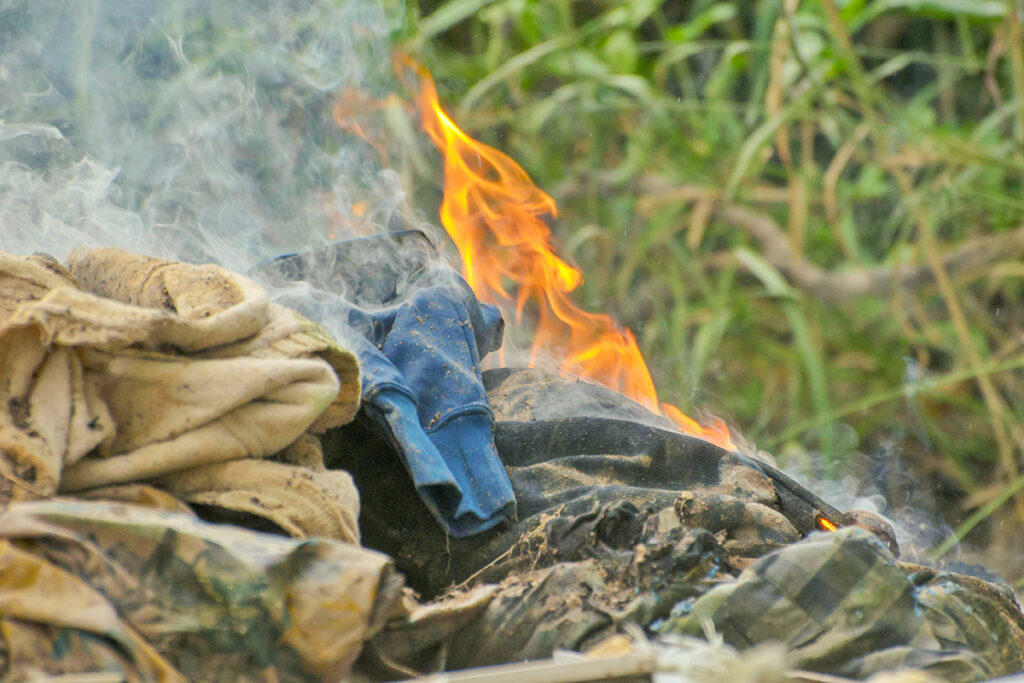
    A Class A fire includes the burning of common combustible materials, such as wood, cloth, paper, rubber, and many plastics. For this type of fire, Allen says that “early intervention matters most” as it can “quickly become nondefensible.”

    Recommended Articles

    • A Warning Sign for Heart Attack and Stroke Could Show Up on Your Face

    • 6 Holiday Scams To Watch Out For

    • Why Gift Cards Are Actually Terrible Gifts

    • The Strange Reason Why Time Feels Like It’s Moving Faster

    Advertisement
    Advertisement

    Reader Favorites

    • Person washing part of a coffee machine

      18 Surprising Things You Should Never Put Down Your Drain

    • Woman brushing hair

      9 Surprising Signs You’re Aging

    • White car on the road

      The Best Cars for Resale Value, According to Auto Experts

    A Class A fire can be put out with a water, foam, or ABC extinguisher. To do so, “aim at the base [where the fire is burning] and maintain an exit path,” Allen advises. “Avoid letting it spread into walls, attics, or multiple fuel sources.”

    Advertisement
    Propane tank burning
    Credit: © B_Nattasak—iStock/Getty Images

    Class B Fire

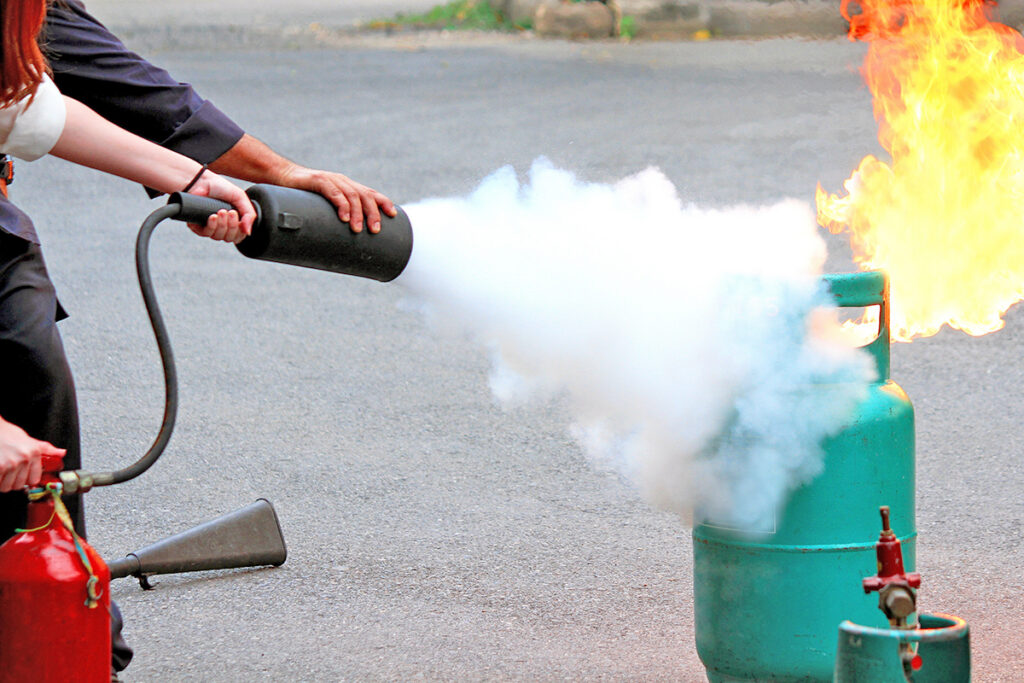
    A Class B fire is the burning of flammable and combustible liquids, such as gasoline, solvents, or propane. For this type of fire, you should “never use water, as it spreads the fuel and fire,” Allen says. Instead, “use foam, CO2, or ABC extinguishers to smother the fire.” Additionally, if it’s safe to do so, “stop the flow of flammable liquid or gas feeding the fire,” Allen says. “For example, [by] turning off a gas valve, stopping a leak, or moving nearby fuel containers away from the fire.”

    Advertisement
    Advertisement
    Electrical outlet burning
    Credit: © weerapatkiatdumrong—iStock/Getty Images

    Class C Fire

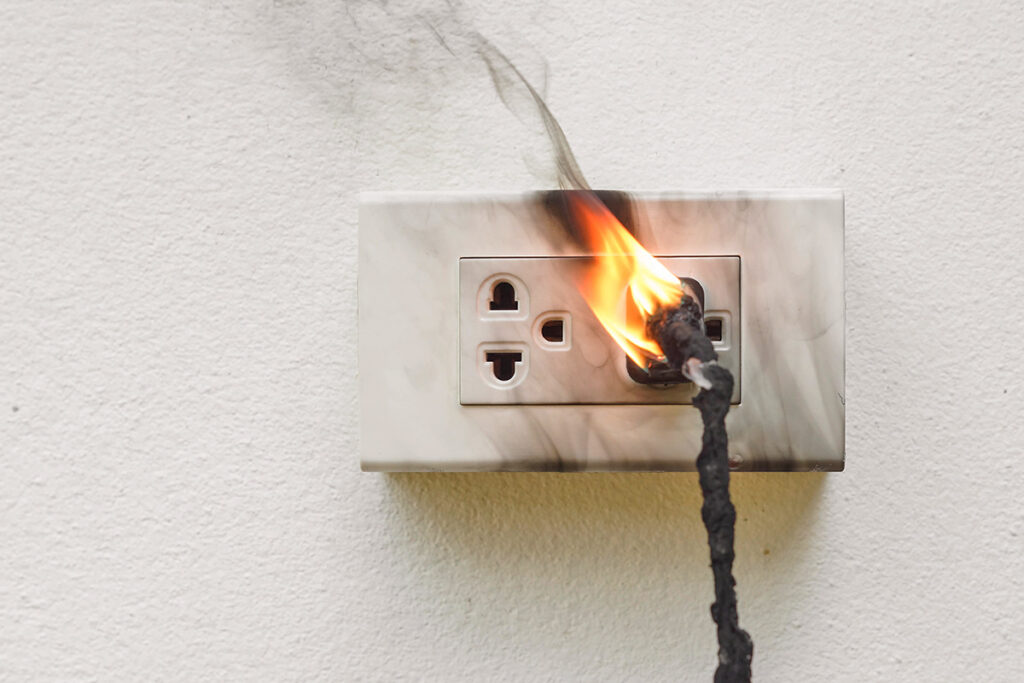
    A Class C fire can include fuel from Class A or B, but with powered electrical equipment involved. Allen advises that the safest way to put out this type is to turn off the power first, if you can do so safely. Never use water, which can conduct electricity and put you in danger. Instead, Allen says, extinguishers that use “nonconductive agents like CO2 or dry chemical” are best. Using a fire suppressor — a device designed to interrupt the fire at a chemical level — is also an option. Not only do they “rapidly suppress fire in small spaces,” Allen says, but they also won’t damage your electronics, which is a possibility with traditional fire extinguishers.

    Advertisement
    Advertisement
    Burning battery
    Credit: © Just_Super—iStock/Getty Images

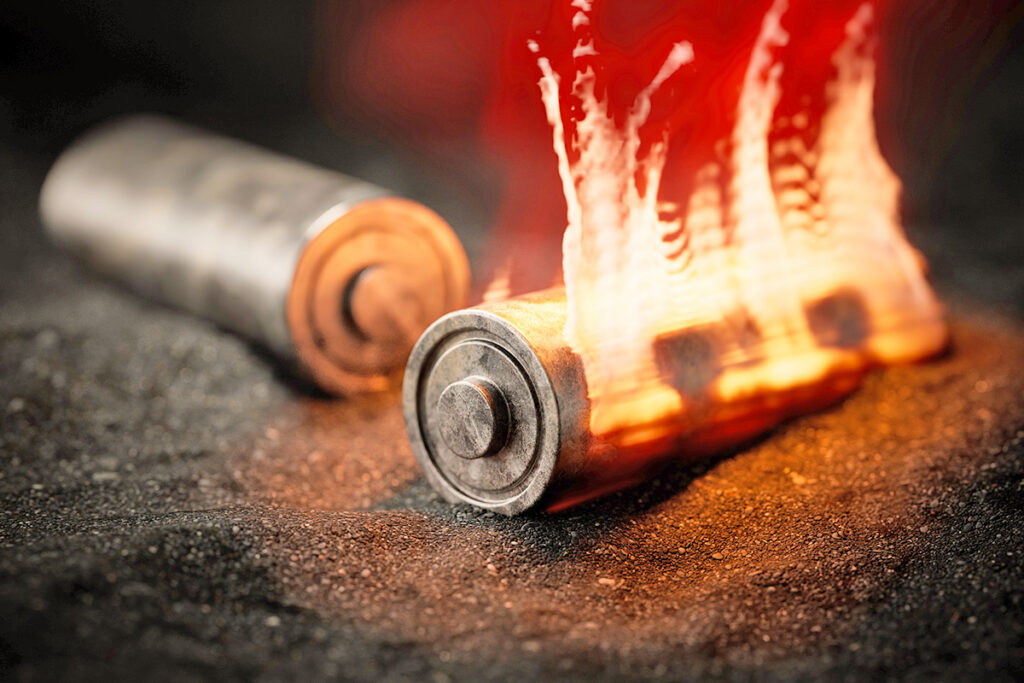
    Class D Fire

    A Class D fire includes combustible metals, such as magnesium, titanium, zirconium, sodium, lithium, and potassium. Allen recommends avoiding DIY suppression as these “are highly specialized hazards.” Never use water or a traditional fire extinguisher, which Allen says can lead to explosions. Instead, evacuate the area and wait for professional firefighters to arrive. 

    Advertisement
    Advertisement
    Firefighter in front of pan on fire
    Credit: © Kileman—iStock/Getty Images

    Class K Fire

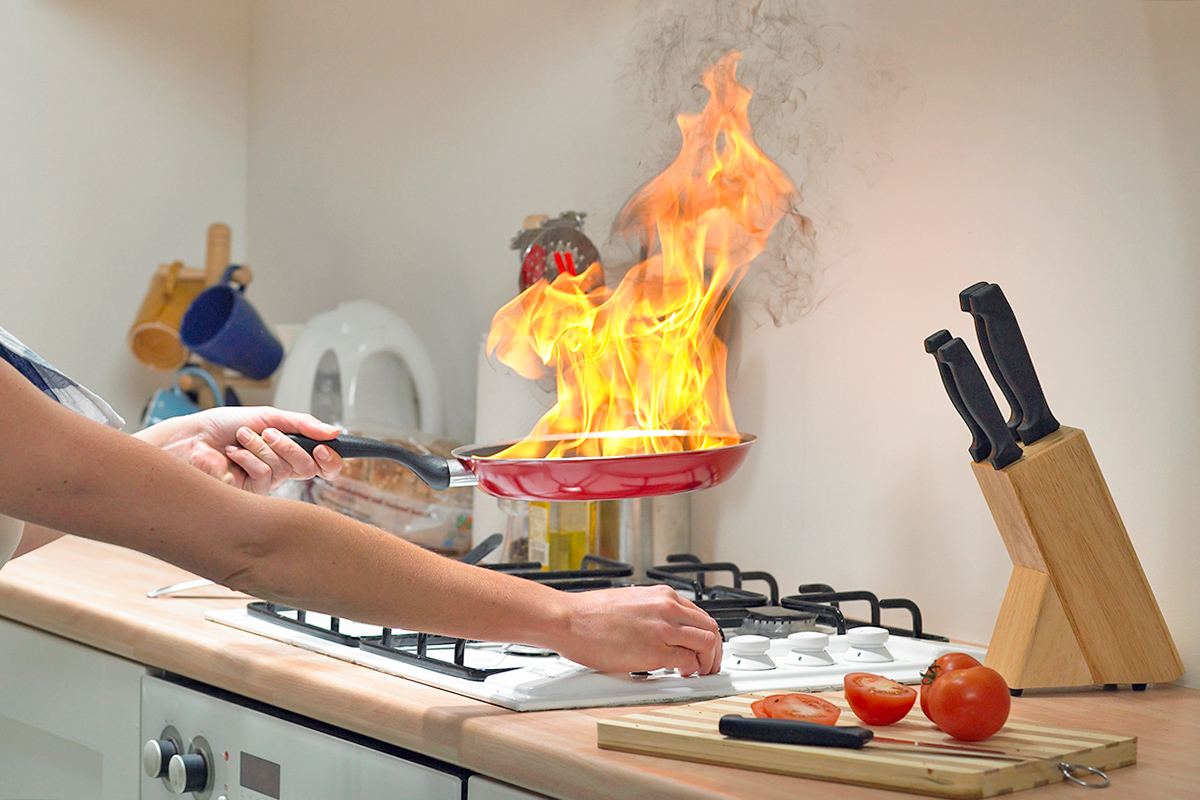
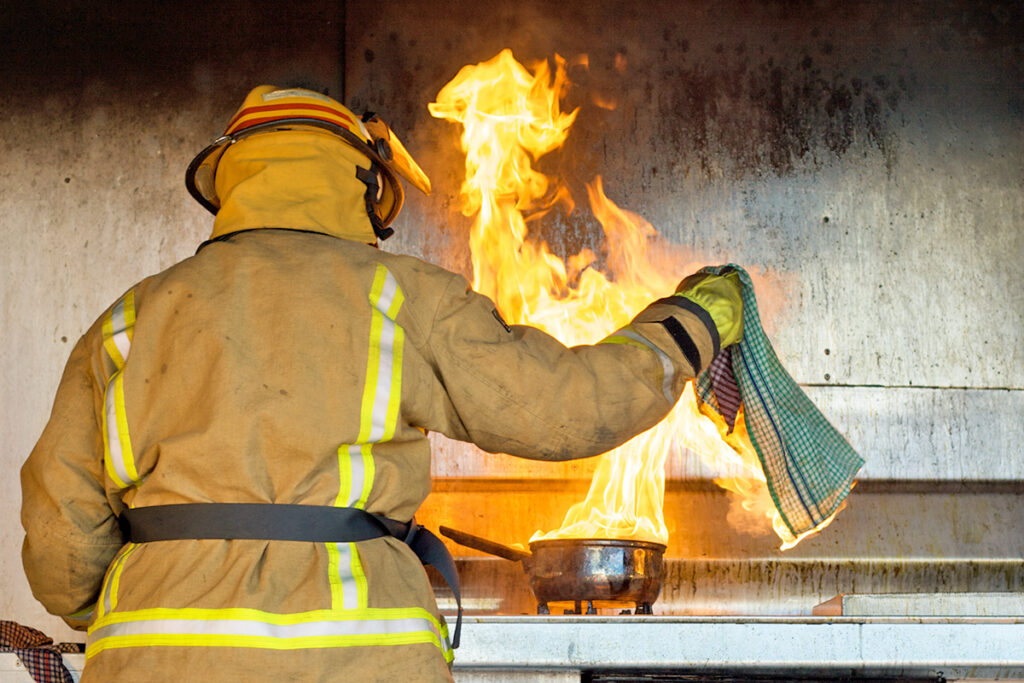
    Class K fires include the burning of cooking oil and grease. This is the type of fire you’ll typically experience cooking at home. It’s responsible for about 44% of home fires in the U.S., according to the National Fire Protection Association (NFPA), and it’s “one of the most dangerous [fire scenarios] if handled incorrectly,” Allen says. 

    If it’s a small fire, the best move is to “cover it with a lid or fire blanket [and] turn off the heat,” Allen says. “Never use water, as it can cause explosive flare-ups.” For a larger fire, use a Class K extinguisher. 

    Advertisement
    Advertisement

    Must-Have Equipment for Handling Fires at Home

    While it’s preferable to leave firefighting to the professionals, there are steps you can take at home to stop a fire from spreading. Just make sure to call 911 right away, as fires can spread quickly.

    Here’s a list of must-have items to have on hand:

    • Fire blankets, such as LifeVac Fire Blanket or Premium Defense Fire Blanket, are suitable for Class A, B, and K fires or for covering yourself during escape. However, they can leave fiberglass behind and may require cleanup. 
    • ABC extinguishers, such as the First Alert Residential Rechargeable Fire Extinguisher and Kidde Basic Fire Extinguisher for Home, Residential, can be used for Class A, B, and C fires.
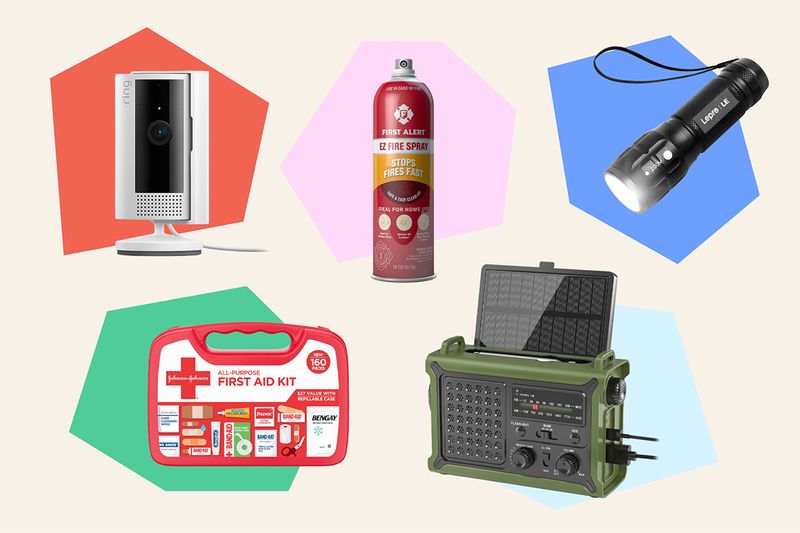
    • Aerosol fire suppressants, such as the one made by Allen’s company, MAUS Multipurpose Extinguishing Spray, or First Alert EZ Fire Spray, are suitable for Class A, B, and C fires.
    • CO2 BC fire extinguishers such as the Kidde Home and Workshop BC Fire Extinguisher work on Class B and C fires.

    Advertisement
    Testing smoke detector
    Credit: CatLane—iStock/Getty Images

    Preventing a Fire

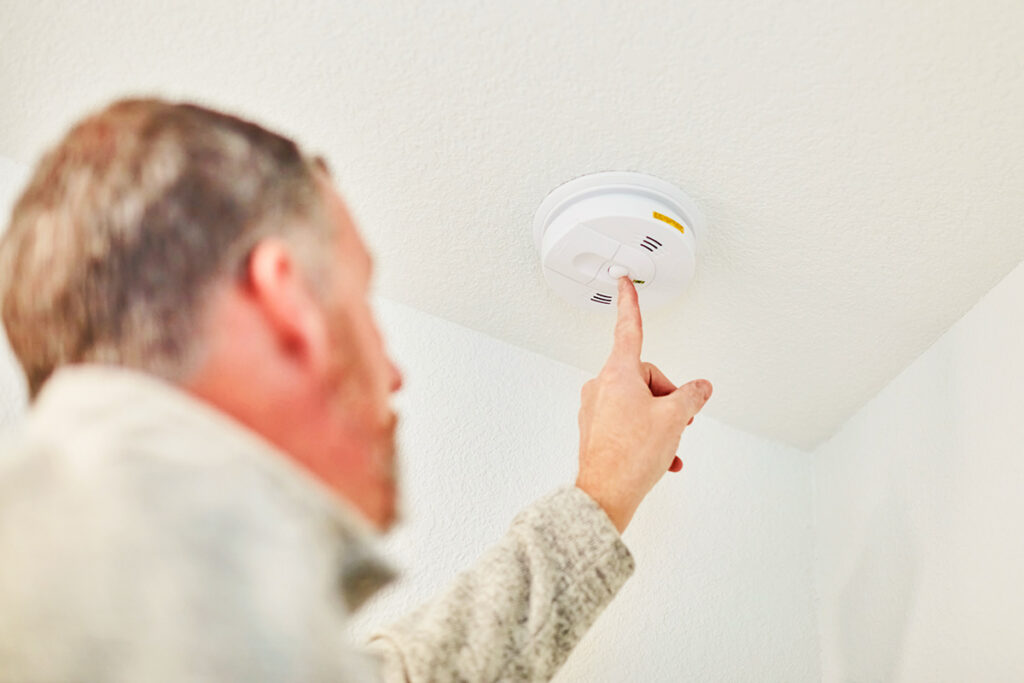
    You can reduce your chances of having to handle a fire by taking the proper preventative steps. According to the American Red Cross, you should have smoke alarms installed on every level of your home. Test them every month to ensure they’re working and change the batteries when needed. Also, talk to your loved ones about a fire escape plan and practice it twice a year. As Allen says, evacuation is essential “when the fire is beyond control.”

    Advertisement
    Advertisement

    Knowing how to use a fire extinguisher can help you take action when needed. Don’t practice with one around the house — you’ll need to refill it once it’s been used and will likely create an unnecessary mess. Instead, contact your local fire department or city for potential training. And don’t forget to check regularly to make sure it’s not expired. 

    Featured Image Credit: © Michael Blann—DigitalVision/Getty Images

    More From Our Network

    Better Report is part of Inbox Studio, an email-first media company. *Indicates a third-party property.

    Go Retro With This 1960s Fashion Quiz

    Quiz Daily

    Go Retro With This 1960s Fashion Quiz

    True or False: Are You a Master of U.S. Geography?

    Travel Quiz

    True or False: Are You a Master of U.S. Geography?

    5 Reasons You Can Be Denied Boarding an Airplane

    Daily Passport

    5 Reasons You Can Be Denied Boarding an Airplane

    What Did People Do Before Eyeglasses?

    History Facts

    What Did People Do Before Eyeglasses?

    How To Use a Balloon To Clean Up Dust

    House Outlook

    How To Use a Balloon To Clean Up Dust

    11 Shopping Hacks Costco Members Should Know

    FinanceBuzz*

    11 Shopping Hacks Costco Members Should Know

    Share this article

    • Share to Facebook
    • Share to Twitter
    • Copy Url
    • Share to Email
    Nicole Pyles
    Writer

    Based in Portland, Oregon, Nicole Pyles is an experienced freelance writer who writes about home and kitchen, health and wellness, and more. She's written for a variety of outlets, including Better Homes and Gardens, Tom's Guide, Better Report, and more.

    This article is for general informational purposes only.
    Affiliate Disclaimer Medical Disclaimer Financial Disclaimer
    Updated: September 18, 2024
    Posted In: Home
    Hero Image Credit: Better Report
    Advertisement

    Related Articles

    The Most Dangerous Things You Do With Your Christmas Tree

    4 min read

    12 Foods You Shouldn’t Store Together

    6 min read

    17 Home Safety Gifts Your Family Actually Needs

    10 min read

    Should You Refrigerate Peanut Butter?

    6 min read

    The Most Popular Car Colors in the U.S.

    4 min read
    Advertisement

    You Should Never Plug These Items Into a Power Strip

    Home | Updated: April 23, 2026
    Erin McCarthy
    Author
    Erin is a writer, editor, and content strategist living in the New York City area. Previously, she was the VP/Editor-in-Chief of MentalFloss.com and an editor at Popular Mechanics magazine. When she’s not working, Erin is hanging out with her cats, reading books from her never-ending TBR, traveling, karaoking, and making sourdough with her starter Stephen Sondheim.
    Person plugging a cord into a power strip
    Better Report

    All featured products and deals are selected independently and objectively by the author. Better Report may receive a share of sales via affiliate links in content.

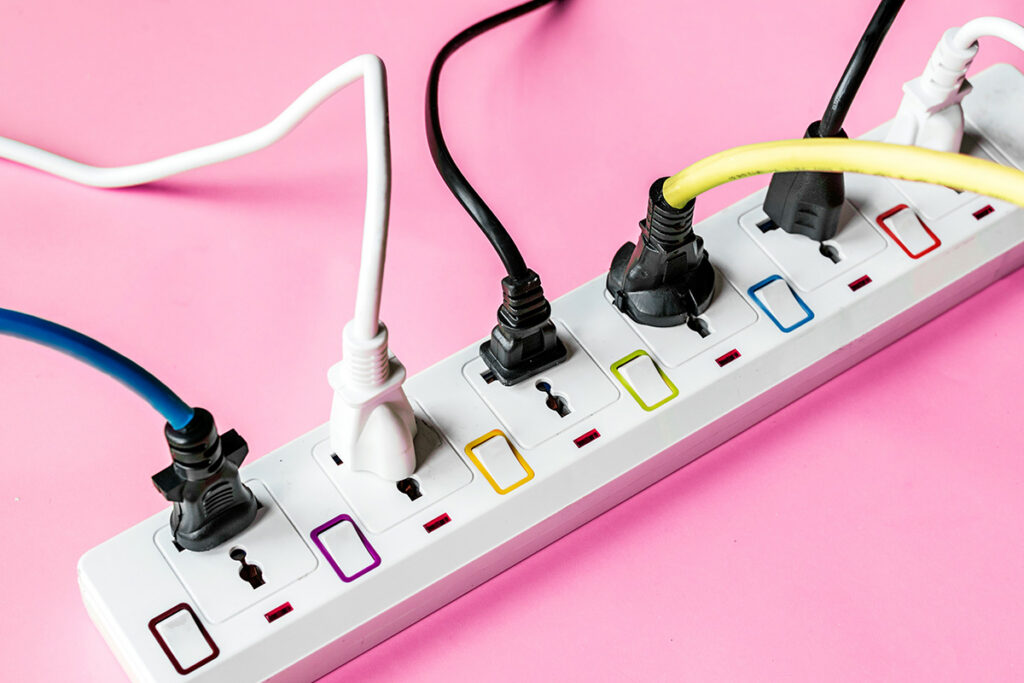
    According to Electrical Safety Foundation International, there are around 51,000 residential electrical fires in the U.S. every year, causing 500 deaths and 1,400 injuries (not to mention more than $1 billion in property damage). Some of those fires originate in power strips and extension cords, devices that are easier to misuse than you may think. We consulted two experts to find out what you can and can’t plug into a power strip, as well as best practices for using them safely.

    Pwer strip with items plugged in
    Credit: © Curated Lifestyle/Unsplash.com

    Extension Cords vs. Power Strips vs. Surge Protectors

    When you’re looking for additional plugs to power items, you’re likely to think of one of three devices: an extension cord, a power strip, or a surge protector. They’re not interchangeable, though — each serves a specific purpose.

    “The purpose of power strips is to expand the number of available outlets at a single wall receptacle,” says Jordan Benjamin, president of Done Rite Services, an Arizona-based electrical, plumbing, and HVAC company. “[A] common misconception is that power strips create more power, but this isn’t true. Your circuit capacity is fixed at your breaker. Power strips just redistribute that existing capacity.”

    Power strips differ from surge protectors, which offer additional protection against voltage spikes. Extension cords, meanwhile, “are designed to temporarily deliver power when an outlet isn’t accessible,” Benjamin says. “They are not designed to be a permanent solution for a lack of outlets.”

    Advertisement
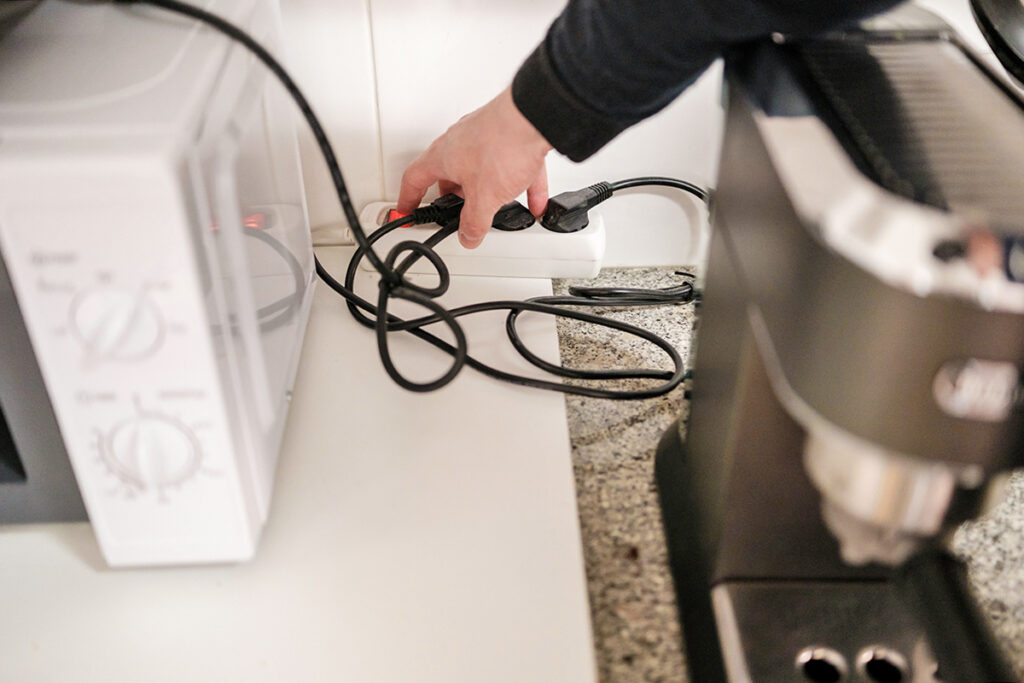
    Plugging a microwave into a power strip
    Credit: © José Araújo/iStock

    Items You Should Never Plug Into a Power Strip

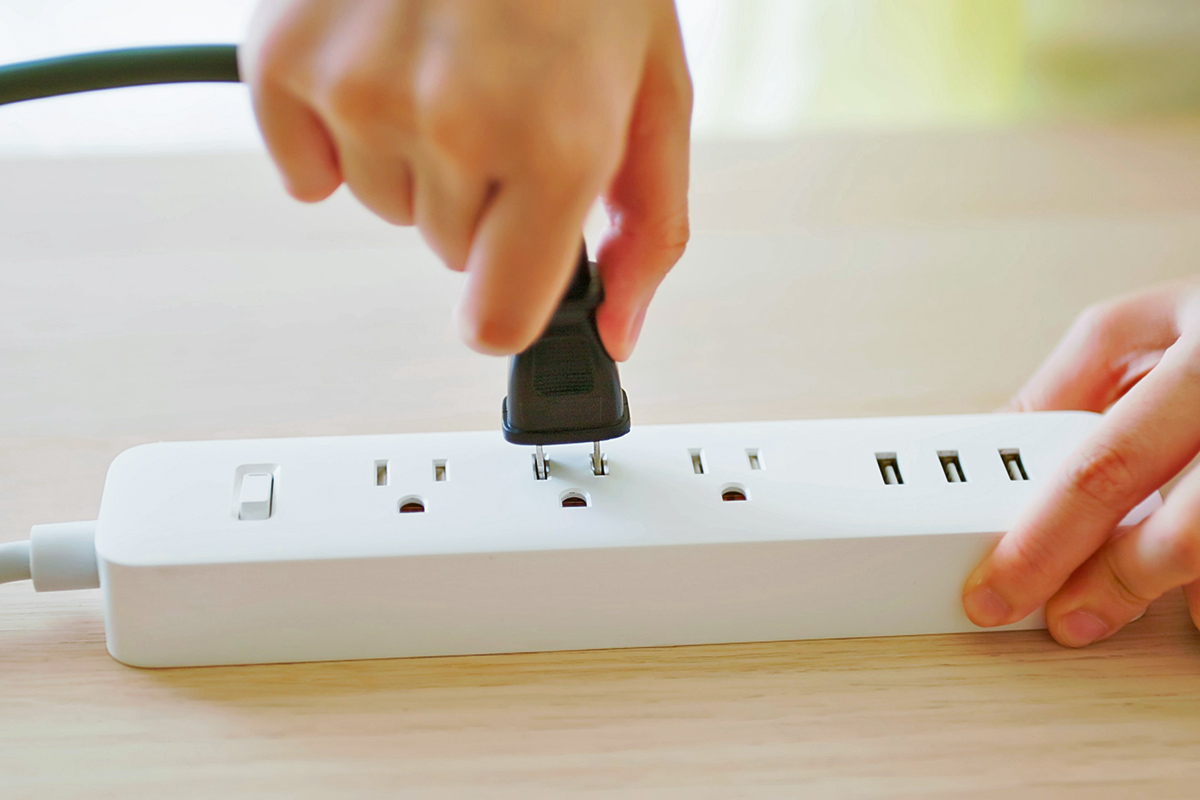
    Whichever device you’re buying, “It is very important to pay attention to the amp[erage] rating on the power strip to not exceed it,” says Tom Jameson, owner of AstroWatt Electric in North Carolina. “The biggest misconception [people have] is that all power strips and extension cords are safe. Using the wrong size and gauge can do more harm than good.” You can find the maximum capacity of the strip in amps or watts on the underside, and calculate the total load by adding up the wattage of everything you plan to plug in (which should be somewhere on the devices themselves). You can convert amps to watts by multiplying amps times voltage.

    The list of items you can’t plug into a power strip is long, but a good rule of thumb is to avoid high-wattage appliances (1,000 watts and above), anything that produces heat, and anything with a motor — they can overload a power strip and cause a fire. “These types of devices draw high current and have a significant startup surge when cycling on, which is more than a power strip is designed to handle,” Benjamin says. Here’s a short list of devices that aren’t ever safe to plug in:

    • • Fridges (or mini fridges)
    • • Toasters
    • • Slow cookers
    • • Coffee makers
    • • Microwaves
    • • Air fryers
    • • Blenders
    • • Irons
    • • Air conditioners
    • • Space heaters
    • • CPAP machines
    • • Electric blankets
    • • Power tools
    •  

    There are also plenty of items you may think are OK for a power strip that actually aren’t. “Vacuums, hair dryers, and crock pots are [indoor] items people plug in all the time” that can cause problems, Jameson says.

    For all of these items, it’s safest to use a wall outlet rather than a power strip or surge protector (which can also get overloaded). According to Benjamin, wall outlets are the “only safe option” because “they are part of a dedicated electrical circuit that was designed to carry a specific load with properly sized wiring, secure connections, and a protective breaker matched to that capacity. Power strips are simply not designed to handle big loads.” 

    Advertisement

    And, as Jameson points out, unlike a lot of power strips, most wall outlets are tamper-resistant, which “prevent[s] kids or animals from getting into them.”

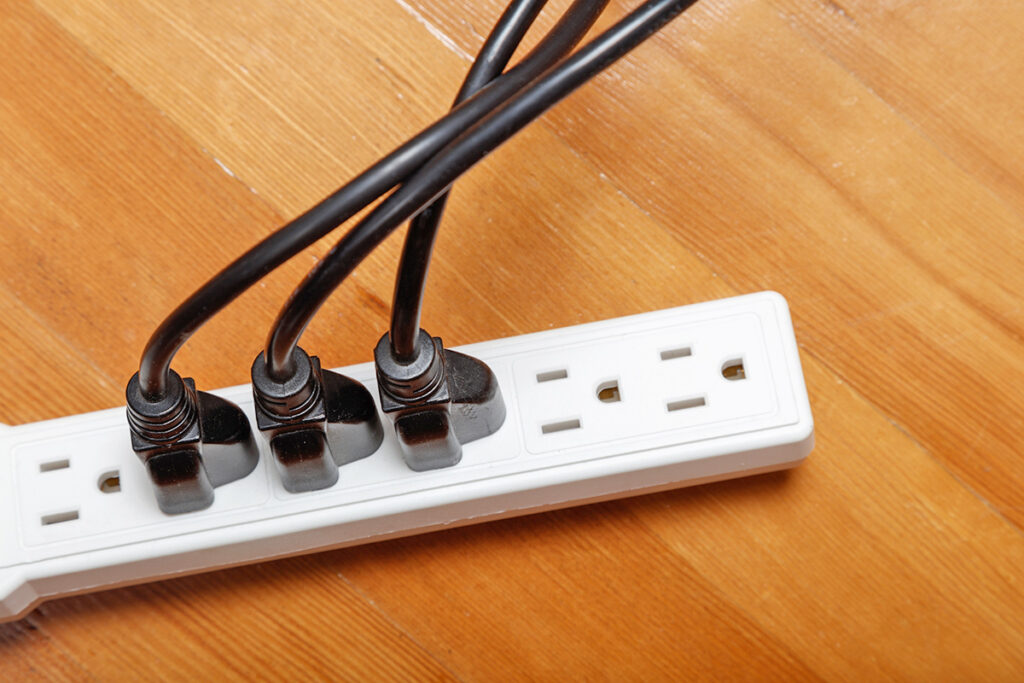
    You should also never plug an extension cord into a power strip, or a power strip into another power strip, a practice known as daisy chaining. According to Benjamin, “Daisy-chaining several strips together can lead to overheating and a greatly increased risk of fire and/or electrical shocks.”

    Both Benjamin and Jameson have horror stories about things customers have plugged into power strips that have no business being there. “One of the worst setups I’ve encountered involved multiple power strips daisy-chained together behind an entertainment center,” Benjamin says. “This setup was used to power a TV, a cable box, a landline phone and answering machine, multiple gaming systems, a space heater, a small fan, and various chargers. It’s a miracle that the family never had a fire, but believe it or not, this type of setup isn’t at all uncommon.”

    In addition to space heaters — “the No. 1 item to never plug into a power strip” — Jameson often sees people using the strips in garages. “That should never be done, either,” he says, because garages are full of dust and debris, “and dust and electricity do not mix.” (Dust isn’t as big of an issue inside your home, he says, but it’s still not ideal, so he recommends keeping a can of compressed air around to clean out power strips as well as your smoke detector.)

    Advertisement
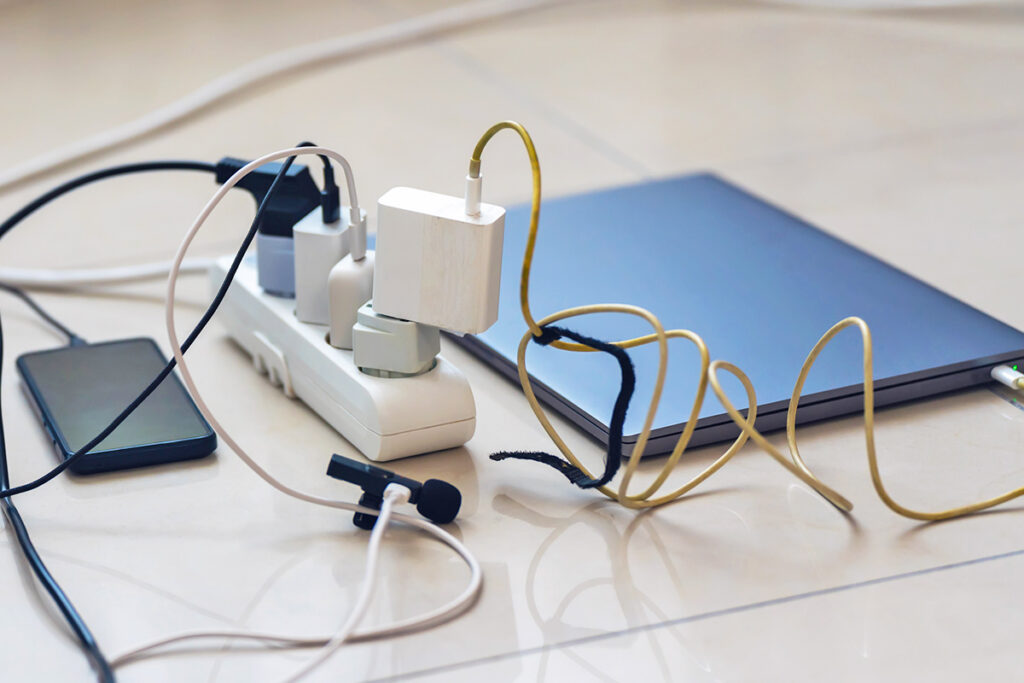
    Laptop, phone, and other small items plugged into a power strip
    Credit: © Andrei310/iStock

    What You Can Use a Power Strip For

    At this point, no one would blame you for wondering what you actually can plug into a power strip. According to Benjamin, “electronics and devices with a relatively low, steady power draw that don’t produce heat or run off of a motor or compressor are safe to use on a power strip.”

    That includes TVs, routers and modems, alarm clocks, phone and tablet chargers, and lamps. Laptops and computer monitors should be OK, but not if you have gaming setup or a ton of home office equipment. “The issue is that so many devices are plugged in and all are running simultaneously,” he says. “This draws more power than you would think and can lead to overheating, internal component melting, and damage to devices.”

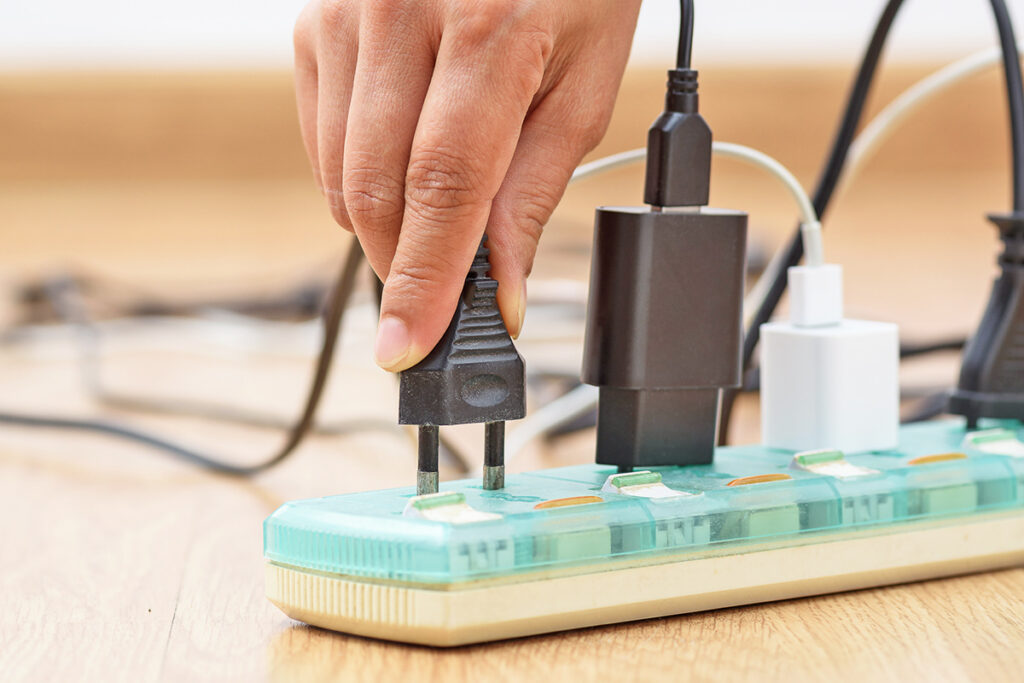
    Plugging an item into a power strip
    Credit: © nipastock/iStock

    What To Look for in a Power Strip

    “When purchasing power strips,” Jameson says, “the main thing to look for is to ensure it’s UL Listed,” which means that it’s been tested by UL Solutions, a company that provides independent testing to ensure devices meet safety standards. He also recommends getting one that’s tamper-resistant — which will have safety shutters over the outlets — with a minimum rating of 15 amps. USB charging ports are a plus, too. (That said, “I wouldn’t ever personally recommend someone to use a power strip as a licensed electrician. I would always recommend having an electrician add more outlets to plug things in the right way.”)

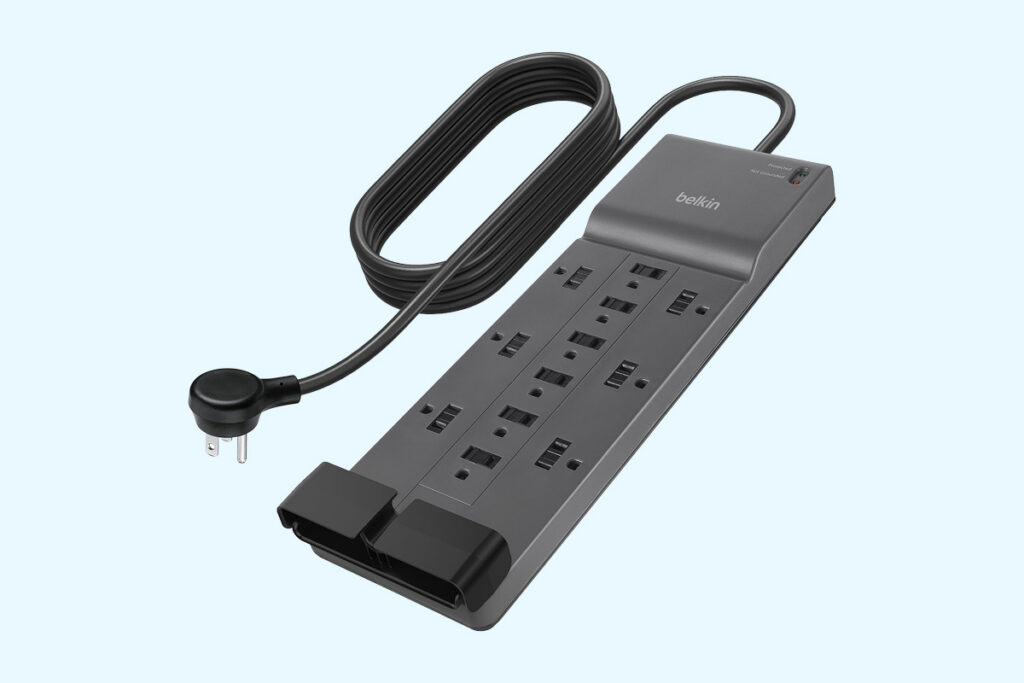
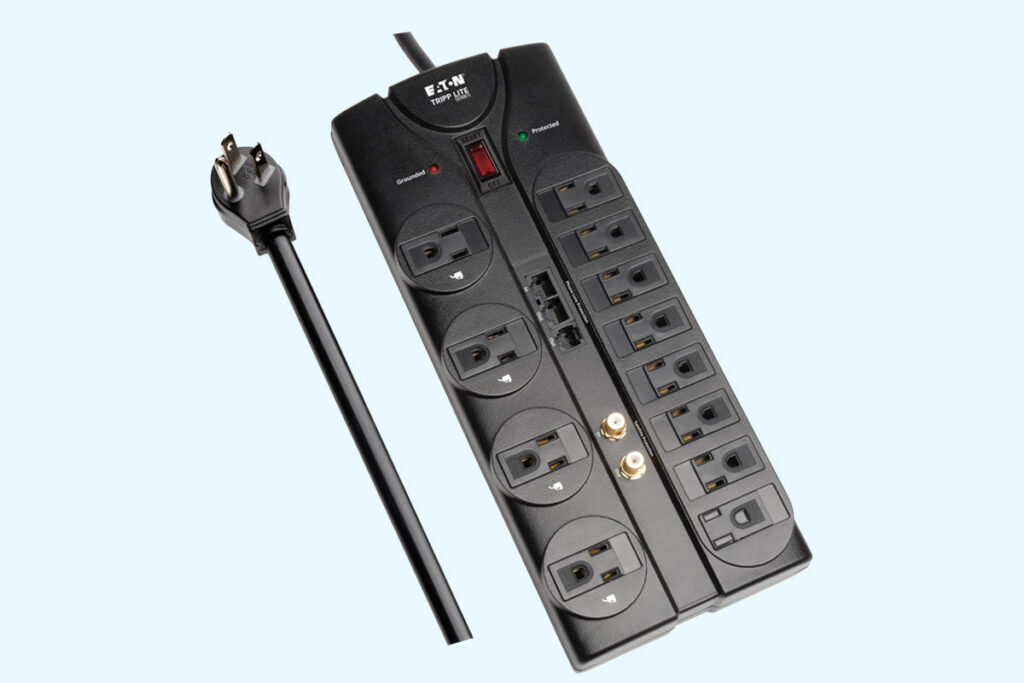
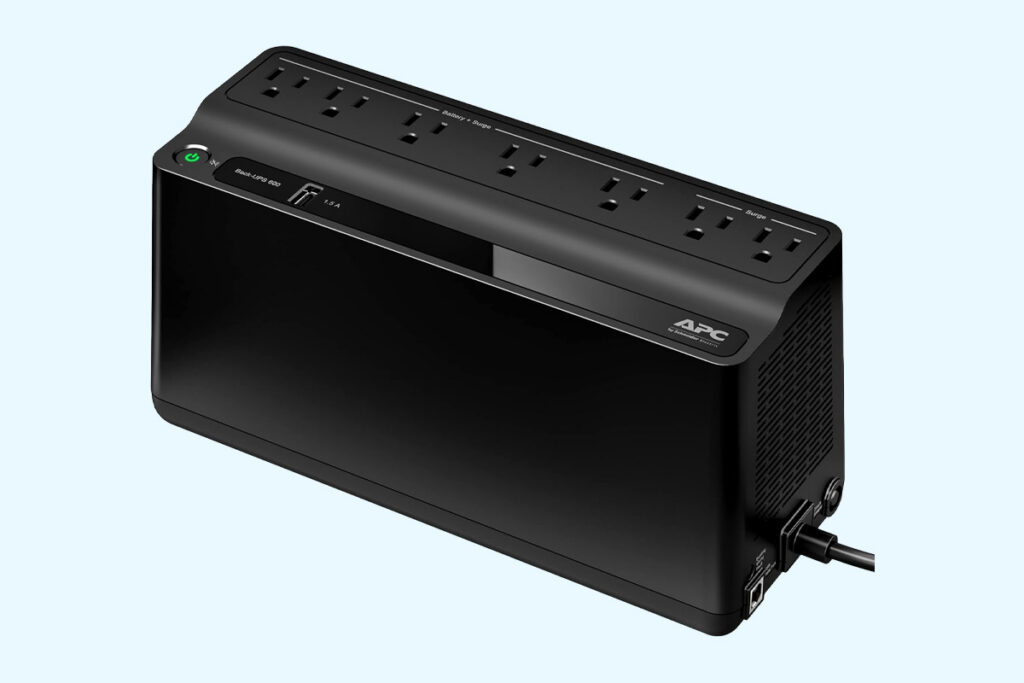
    Benjamin says that if you need more outlets, you should opt for a surge protector over a power strip to get that extra protection: “Look for a high joule rating — 2,000+ is ideal — ‘UL 1449 Revision 2’ stated on the packaging, clamping voltage (VPR) of 330V to 400V, a protection indicator light, and 3-line protection.” And make sure you’re buying from a reputable brand, even if it costs you a few extra bucks. “When it comes to valuable electronics, you don’t want to take any chances,” he says.

    Advertisement

    Belkin 12-Outlet Surge Protector

    Amazon
    Buy for $29 on Amazon

    Eaton Tripp Lite Home Theater Surge Protector

    Amazon
    Buy for $55 on Amazon

    APC UPS 600VA Battery Backup

    Amazon
    Buy for $84 on Amazon
    Power strip with items plugged in
    Credit: © Devonyu/iStock

    Power Strip Safety Tips

    As we mentioned above, never, ever daisy chain power strips. You should also never use extension cords as permanent power solutions. 

    Additionally, you should visually inspect power strips regularly for damage. Jameson is always on the lookout for “any sort of discoloration or melting,” he says. “If you ever see anything changing color, burn marks, plastic melting, etc., unplug and throw away.” (Don’t just toss them in the trash, though; you should drop them off at a retailer with an e-waste recycling program or an authorized e-waste facility.) 

    Other signs that it’s time to toss your power strip and get a new one, according to Benjamin, are if the device “feels hot to the touch when in use, produces burning smells, frequently trips the breaker, doesn’t plug into the wall snugly, or doesn’t maintain consistent power anymore.”

    You should also avoid running any cords under rugs or furniture that’s low to the ground, which can cause heat to build up and increase the risk of fire. Benjamin says you can put them in cabinets, provided that heat can escape (the back of the cabinet is open, for example, or there’s a vent). The power strip should also be mounted to the wall of the cabinet and there should be a hole for the cord so it doesn’t get pinched by the door.

    Advertisement

    When it comes to what to plug into the outlet, Benjamin says, “err on the side of caution and use a wall outlet.” And if you find that you need a ton of power strips around your home, it may be time to make a phone call. “If you’re looking for additional options to plug in more devices [and] equipment,” Jameson says, “contact a licensed and insured electrician.”

    Featured Image Credit: © PonyWang/iStock

    Advertisement
    Advertisement

    Related Articles

    The Most Dangerous Things You Do With Your Christmas Tree

    4 min read

    12 Foods You Shouldn’t Store Together

    6 min read

    17 Home Safety Gifts Your Family Actually Needs

    10 min read

    Should You Refrigerate Peanut Butter?

    6 min read

    The Most Popular Car Colors in the U.S.

    4 min read
    Advertisement

    5 Signs Your Tires Are a Safety Hazard

    Sponsored Content
    Home | Updated: April 27, 2026
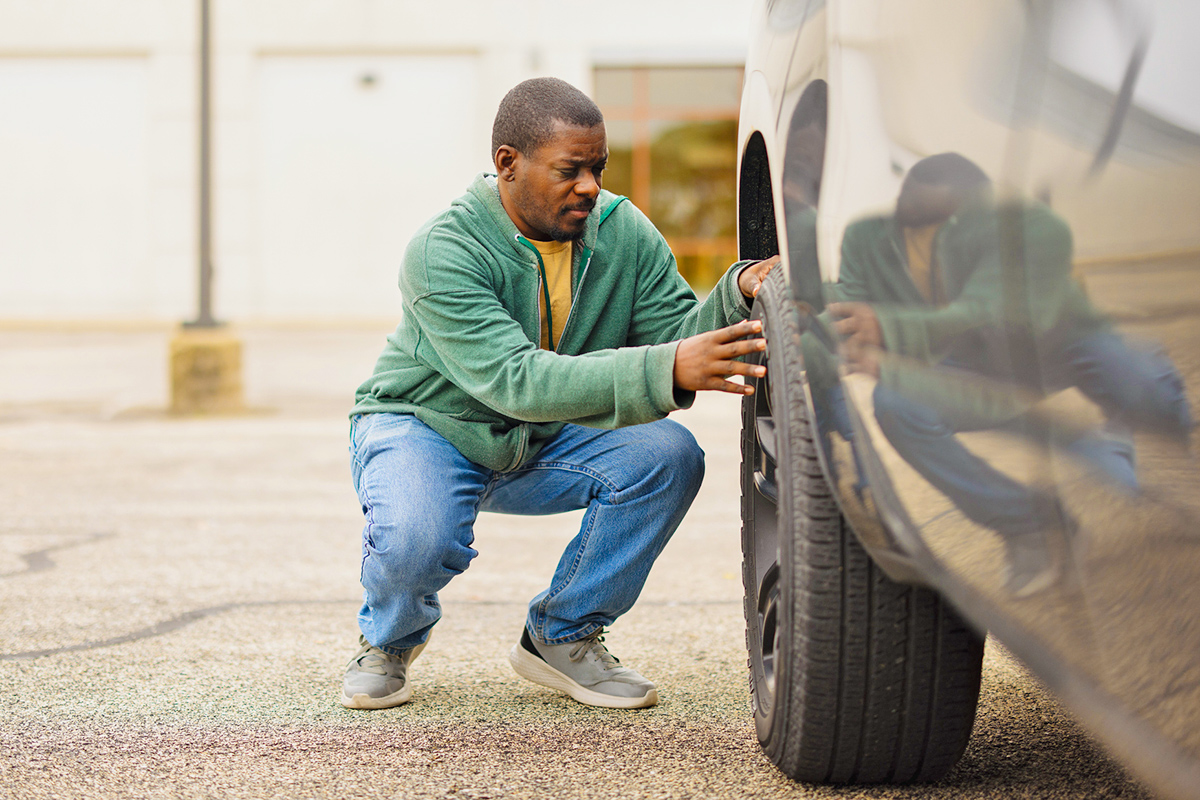
    Man checking tire
    Better Report

    There are countless perils you might encounter on the road — deer leaping out from behind bushes, reckless or distracted drivers, potholes and construction debris, stalled vehicles, and so on. While some of these issues are random and unavoidable, other potential problem areas are well within your control.

    One thing you can and should do is properly maintain your tires, which are necessary for providing traction and stability. Over time, tires wear down and become safety hazards, or worse: According to the National Highway Traffic Safety Administration (NHTSA), 646 people died of tire-related crashes in 2023. 

    Advertisement
    Advertisement

    The good news is that tires can be replaced, but the bad news is that a lot of people don’t know when to do so. Here are five signs it’s time to swap out those old tires for a new set.

    Quarter in a tire tread
    Credit: © JJ Gouin/iStock

    Poor Tread Depth

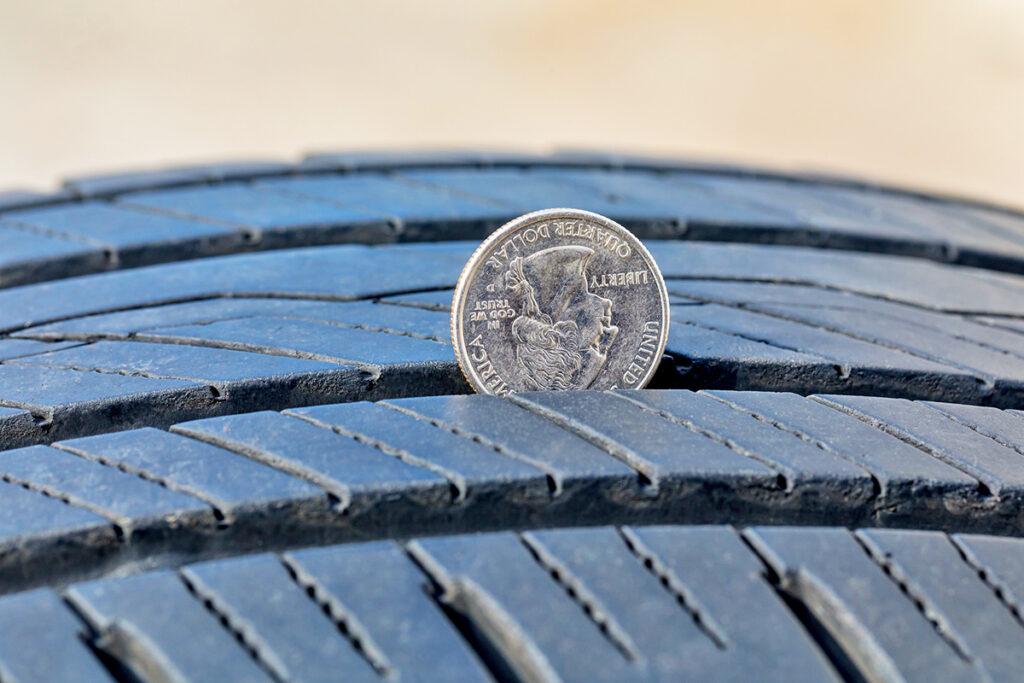
    The patterns and grooves on a new tire are known as the tire tread, and they  provide traction on the road. But that tread wears down the more you drive, and in some cases it may end up completely smooth. The NHTSA recommends measuring tread depth at least once a month. New tires have a tread depth between 10/32 and 12/32 of an inch. Anything measuring around 4/32 of an inch is risky, and 2/32 of an inch or less is dangerous and below the legal limit.

    Thankfully, there’s an easy way to measure tread depth using spare change. First, take a quarter and stick it into the tread with Washington’s scalp facing in toward the tire. The gap between his head and the edge of the quarter measures 4/32 of an inch, so if you see any open space, you know you’re teetering near dangerously low tread depth. Next, repeat the same test using a penny, which has 2/32 of an inch of space between the top of Lincoln’s head and the edge. If you see any space, you need to replace your tires ASAP.

    Advertisement
    Person in car staring at steering wheel
    Credit: © Yuliia Kaveshnikova/iStock

    Excess Vibration

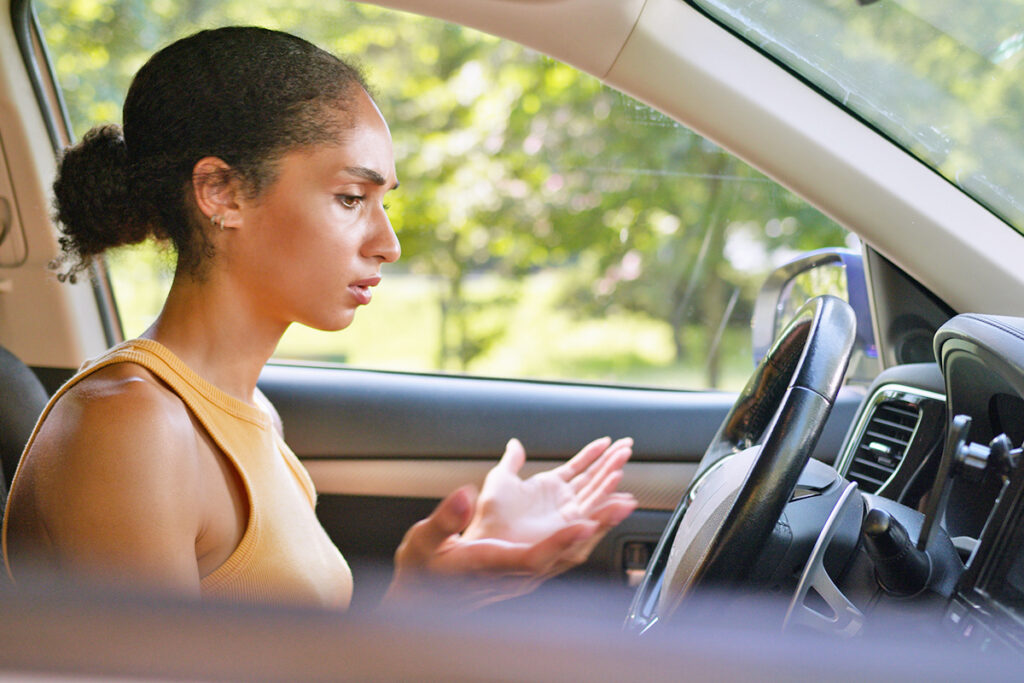
    While there may be no damage visible to the naked eye, an excessive amount of vibration while you’re driving can be a sign of internal wear in the tire. It can also indicate a misshapen tire, uneven treads, or a variety of other issues — all of which warrant replacing the tire. Whatever the case may be, you’ll likely notice the vibration at higher speeds, so stay alert on the highway.

    Recommended Articles

    • A Warning Sign for Heart Attack and Stroke Could Show Up on Your Face

    • 6 Holiday Scams To Watch Out For

    • Why Gift Cards Are Actually Terrible Gifts

    • The Strange Reason Why Time Feels Like It’s Moving Faster

    Advertisement
    Advertisement

    Reader Favorites

    • Person washing part of a coffee machine

      18 Surprising Things You Should Never Put Down Your Drain

    • Woman brushing hair

      9 Surprising Signs You’re Aging

    • White car on the road

      The Best Cars for Resale Value, According to Auto Experts

    It may be difficult to determine which tire is at fault, but there are methods to narrow it down. If you feel more vibration coming from the steering wheel, the problem is likely emanating from one of the front two tires. But if you feel more vibration in the seat, the issue is probably coming from one of the rear tires. 

    While it is possible to fix the issue by having a professional rotate and adjust your tires, sometimes the wear is too substantial to remedy. Also, even if it’s only one tire creating the issue, it’s recommended to replace the entire set. This ensures that all tires have the same amount of tread, which can prevent future issues from popping up.

    Advertisement
    Advertisement
    Closeup of a tire with worn treads
    Credit: © Abu Hanifah/iStock

    Uneven Wear

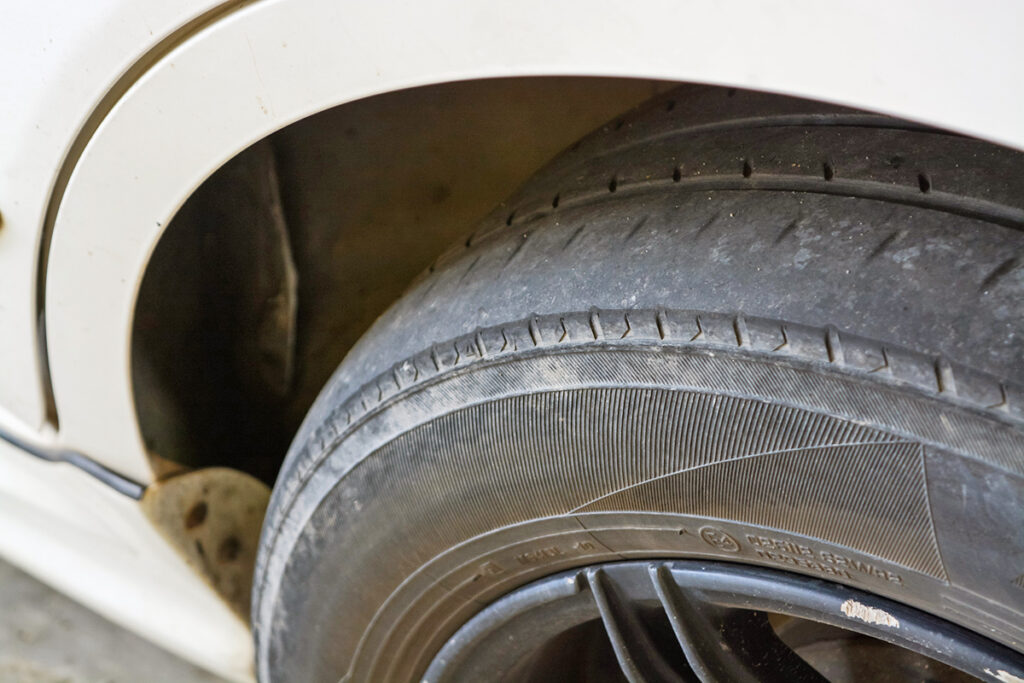
    If you notice uneven tread wear on your tires, it may be due to improper installation. For instance, if the exterior half of the tire looks far more worn than the interior half (or vice versa), that’s one potential sign of poor alignment. Or if you notice that the middle part of the tire looks more worn down than the outer edges, that’s a sign of overinflation. These are just two examples, but whatever caused the issue, you should never drive on a tire with unevenly worn-down treads, as it could cause you to lose control on the road.

    Advertisement
    Advertisement
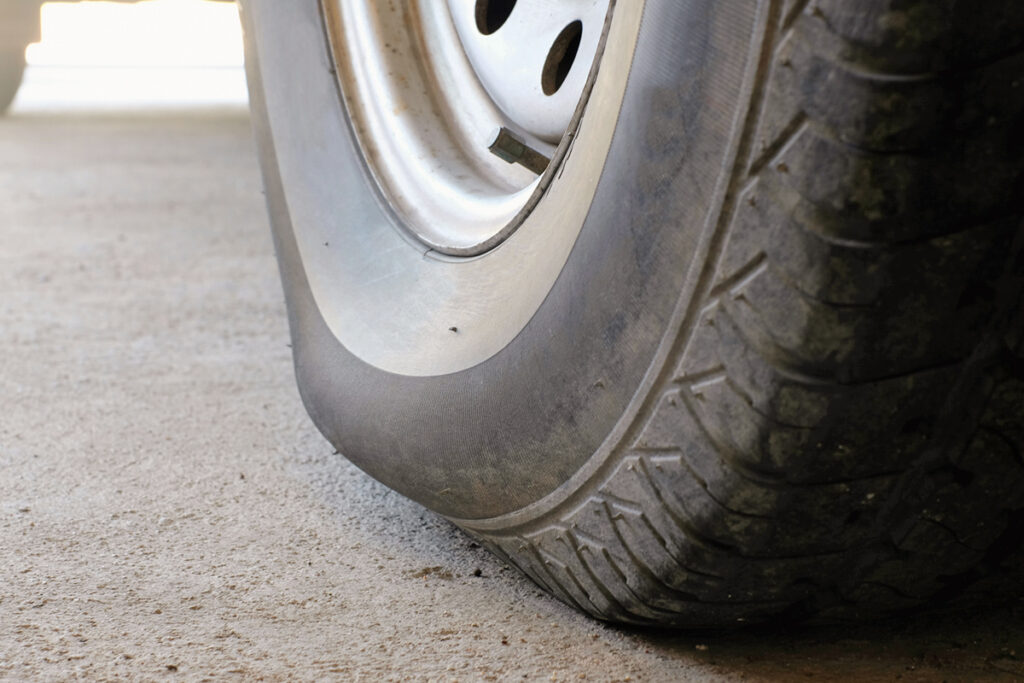
    Bulge in a tire
    Credit: © wachira aekwiraphong/iStock

    Bubbles or Bulging

    Visible bubbles or bulging are a surefire sign that the structural integrity of the tire has been compromised. These bulges usually form in the wake of a high-impact event — for example, hitting a large pothole, colliding with the curb, or driving too fast over a speed bump. Such events can damage the inner lining and cause leakage, which in turn leads to big bulges and the potential for the tire to pop. If you notice any of these bubbles beginning to form, swap out the tire for a new one ASAP.

    Advertisement
    Advertisement
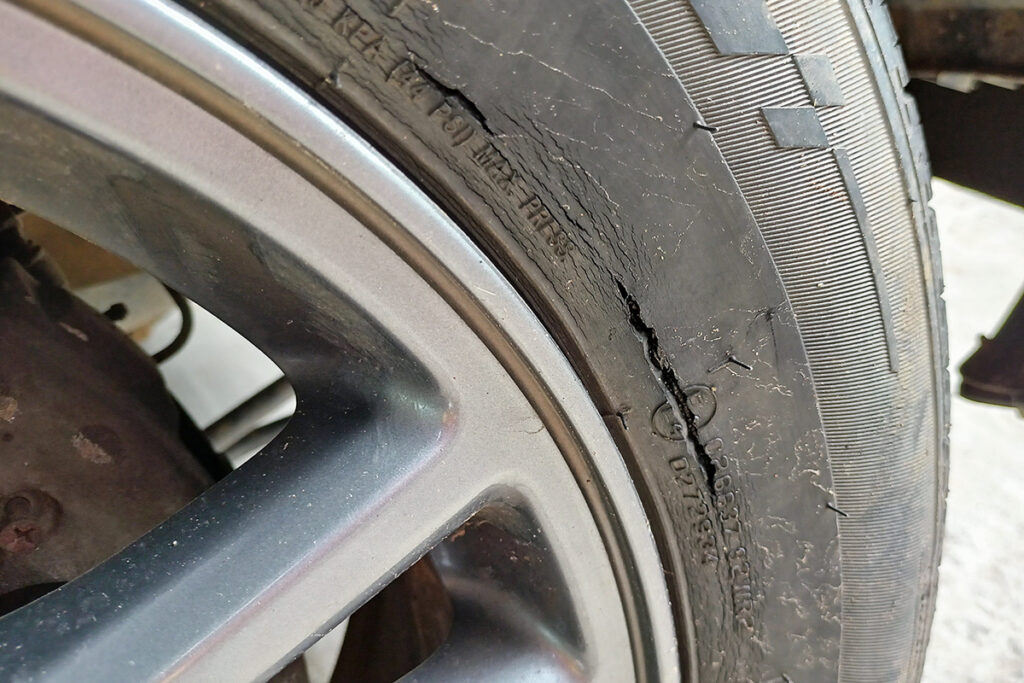
    Cracks in a tire
    Credit: © ใหม่ ยิ้มเหงา/iStock

    Sidewall Cracks

    Take a look at the side of your tires — do you notice any cracking, akin to an old leather chair that’s started to show its age? If so, the tires are likely quite old themselves, and it may be time to replace them. Cracking is an issue that arises from general wear and tear as opposed to a single traumatic event. It’s a sign that your tires have served you well for years, but also that it’s time to install a new set. Leaving the cracks as-is can lead to a blowout in the blink of an eye.

    Advertisement
    Advertisement

    Featured Image Credit: © Ivan Pantic/iStock

    More From Our Network

    Better Report is part of Inbox Studio, an email-first media company. *Indicates a third-party property.

    Go Retro With This 1960s Fashion Quiz

    Quiz Daily

    Go Retro With This 1960s Fashion Quiz

    True or False: Are You a Master of U.S. Geography?

    Travel Quiz

    True or False: Are You a Master of U.S. Geography?

    5 Reasons You Can Be Denied Boarding an Airplane

    Daily Passport

    5 Reasons You Can Be Denied Boarding an Airplane

    What Did People Do Before Eyeglasses?

    History Facts

    What Did People Do Before Eyeglasses?

    How To Use a Balloon To Clean Up Dust

    House Outlook

    How To Use a Balloon To Clean Up Dust

    11 Shopping Hacks Costco Members Should Know

    FinanceBuzz*

    11 Shopping Hacks Costco Members Should Know

    Share this article

    • Share to Facebook
    • Share to Twitter
    • Copy Url
    • Share to Email
    Sponsored Content

    This article is for general informational purposes only.
    Affiliate Disclaimer Medical Disclaimer Financial Disclaimer

    Updated:
    Posted In: Home
    Hero Image Credit: Better Report
    Advertisement

    Related Articles

    The Most Dangerous Things You Do With Your Christmas Tree

    4 min read

    12 Foods You Shouldn’t Store Together

    6 min read

    17 Home Safety Gifts Your Family Actually Needs

    10 min read

    Should You Refrigerate Peanut Butter?

    6 min read

    The Most Popular Car Colors in the U.S.

    4 min read
    Advertisement

    Do You Actually Know How to Use Your Fire Extinguisher?

    Home | Updated: August 6, 2025
    Matt Jancer
    Author
    Matt Jancer has been in the industry for 15 years and lives in the greatest city on Earth, New York City. He’s traded words for money on behalf of more than 15 magazines. Some of his longest-running bylines were spent covering motorcycles, electric cars, outdoors gear, and other cutting-edge technology for Car and Driver, Outside, Esquire, Popular Mechanics, and Wired. When he isn't writing up deals and guides on how to live your life more easily, he's writing for enjoyment or out enjoying the great outdoors.
    Better Report

    All featured products and deals are selected independently and objectively by the author. Better Report may receive a share of sales via affiliate links in content.

    You’ve got one nearby. I’m sure of it. Maybe it’s behind a plastic case mounted to the wall in your apartment building’s hallway, at your storage unit, in your workplace, or at school. It’s smart to keep at least one in your home and garage. It’s your fire extinguisher, and despite what Looney Tunes and the Three Stooges would have you believe, it’s not entirely intuitive to use.

    Take it from me. I’ve had to use several in my lifetime during real-life emergencies, both at home and in the garage. You might be thinking, “Hey, it’s just a point-and-click interface. How hard could it be?” Spraying the foam (or powder) isn’t the tricky part. It’s knowing where to aim it in order to actually put out the fire. Preparation beats panic. It pays to think about this now, because when there’s a real-life emergency, you’ll be in no emotional state to learn or figure out how to use a fire extinguisher. You won’t exactly have time to pull up your phone and begin loading YouTube tutorials when your curtains or your kitchen cabinets are burning away.

    Credit: iteerex/ iStock

    How to Use a Fire Extinguisher

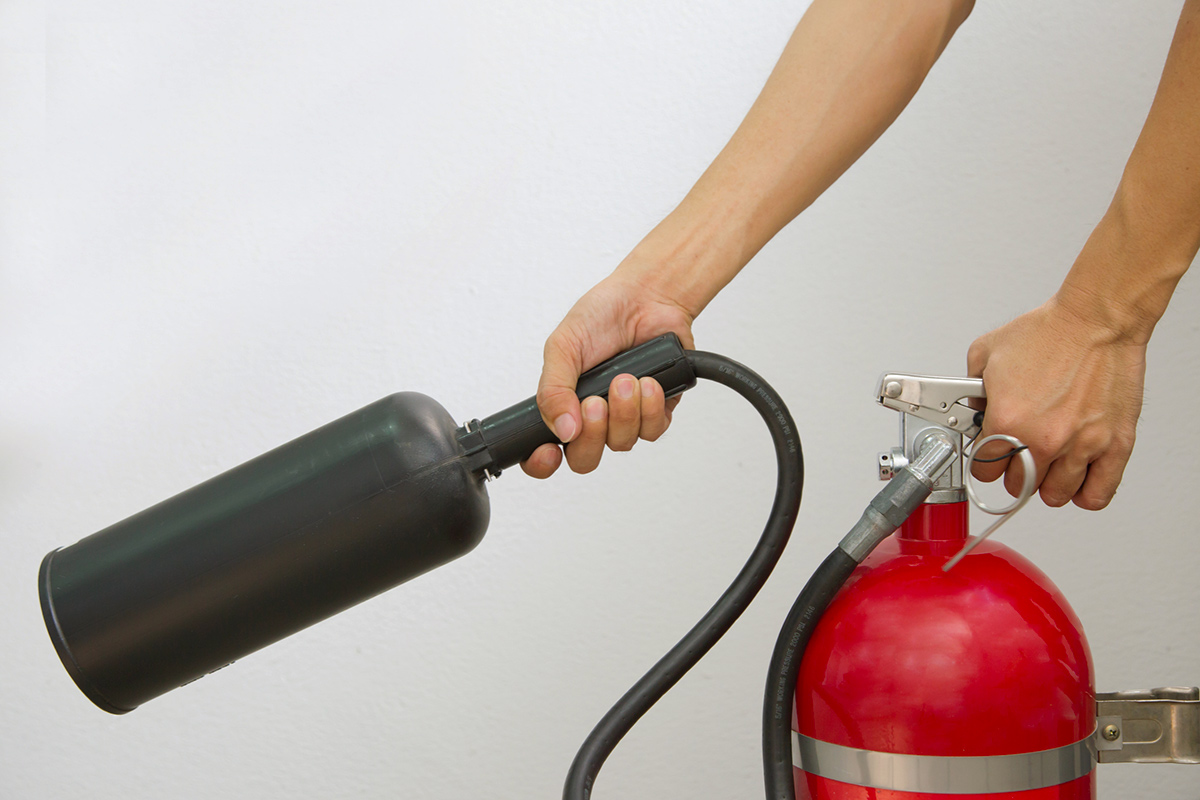
    There’s a cutesy acronym for the right way to use a fire extinguisher: PASS. It stands for pull, aim, squeeze, and sweep. Do these four things correctly in that order, and your fire extinguisher just might put out the flames.

    First, pull the safety pin that blocks the handle from being squeezed. It’s a loop of silver bare metal wire that unwinds into a straight pin, like a giant P, and it’s stuck through a hole in the handle. It’s easy to overlook, but every fire extinguisher I’ve seen has one. After all, the last thing you want is one going off accidentally and making a mess.

    Advertisement
    Advertisement

    Then, aim the nozzle at the base of the flames. This is the important part that people tend to miss. In their panic, people often shoot the fire extinguisher wildly into the fire, and the extinguishing foam just goes through the tips of the flames without quenching them. You’re not going to put them out unless you go right for their base.

    Advertisement

    Now, with your nozzle aimed at the base of the flames, squeeze the trigger. Prepare yourself for a tremendous jet of white foam or powder to shoot out. The amount may surprise you, but keep going. Lastly, don’t just aim at a single spot at the base of the flames. Sweep the nozzle back and forth across the base of the area that’s on fire to put it all out, rather than just one little pinprick of an area.

    Credit: Photography/ iStock 

    Types of Extinguishers

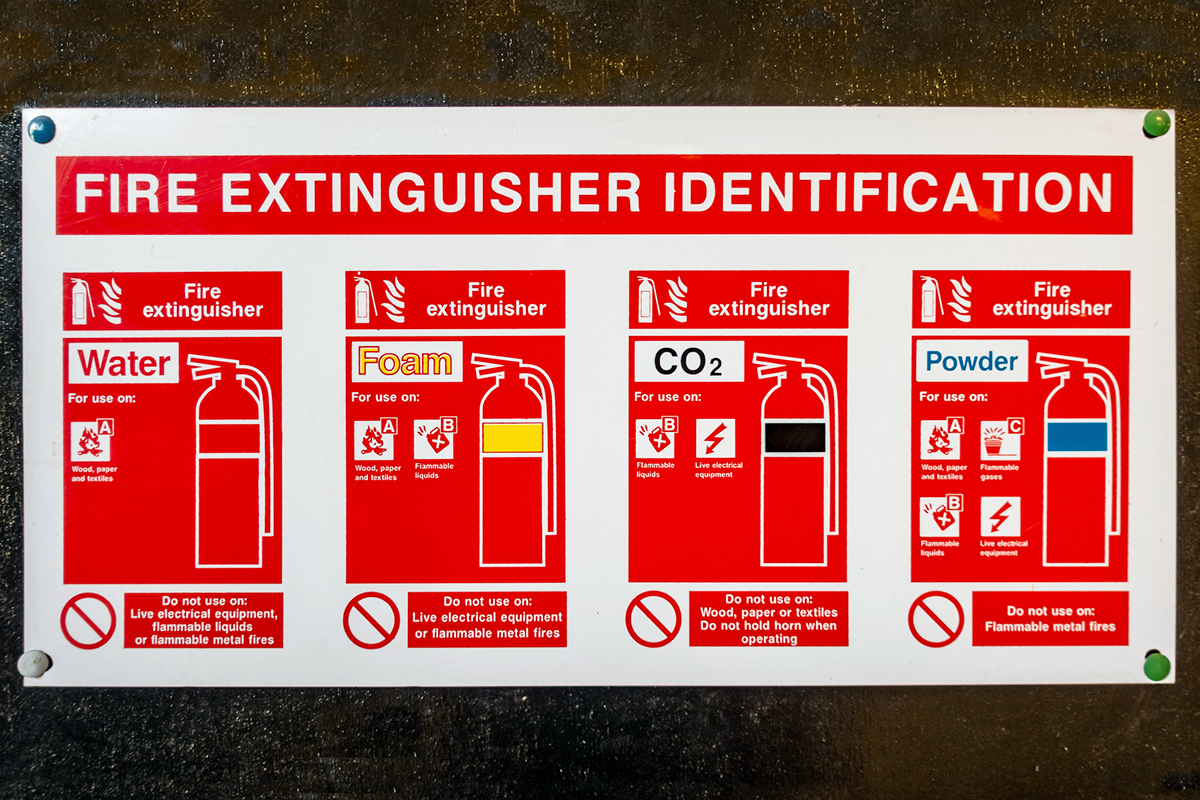
    Whether foam or powder comes out of your extinguisher depends on the types of fires for which it’s rated. Fire extinguishers are classed according to the types of fires they’re designed to extinguish.

    Class A: Common dry combustibles, including wood, paper, fabrics, rubber, and many types of plastics.
    Class B: Flammable liquids, including gasoline, alcohol, oil, and paint.
    Class C: Electrical equipment.
    Class D: Flammable metals, such as titanium, magnesium, and sodium.
    Class K: Cooking oils and fats, particularly for industrial kitchens.

    Recommended Articles

    • A Warning Sign for Heart Attack and Stroke Could Show Up on Your Face

    • 6 Holiday Scams To Watch Out For

    • Why Gift Cards Are Actually Terrible Gifts

    • The Strange Reason Why Time Feels Like It’s Moving Faster

    Advertisement
    Advertisement

    Reader Favorites

    • Person washing part of a coffee machine

      18 Surprising Things You Should Never Put Down Your Drain

    • Woman brushing hair

      9 Surprising Signs You’re Aging

    • White car on the road

      The Best Cars for Resale Value, According to Auto Experts

    Class A fires are so common, especially around the home, that it’s crucial to have an extinguisher capable of putting them out. Virtually everyone should prioritize having at least one or two ABC-rated fire extinguishers, which use sodium bicarbonate to smother A-, B-, and C-rated fires. I recommend the First Alert ABC-Rated Extinguisher or the Kidde ABC-Rated Extinguisher. Because cars are packed full of such diverse, flammable materials from all three classes, including rubber, gasoline, and electrical equipment, you should get an ABC-rated fire extinguisher for your garage, too.

    BC-rated fire extinguishers use monoammonium phosphate as its extinguishing agent, which does a bit better of a job fighting Class B and C fires. Class D and K fire extinguishers are uncommon outside of industrial settings. Few companies sell them for the home.

    Advertisement
    Credit: manopjk/ iStock

    Maintaining Your Extinguisher

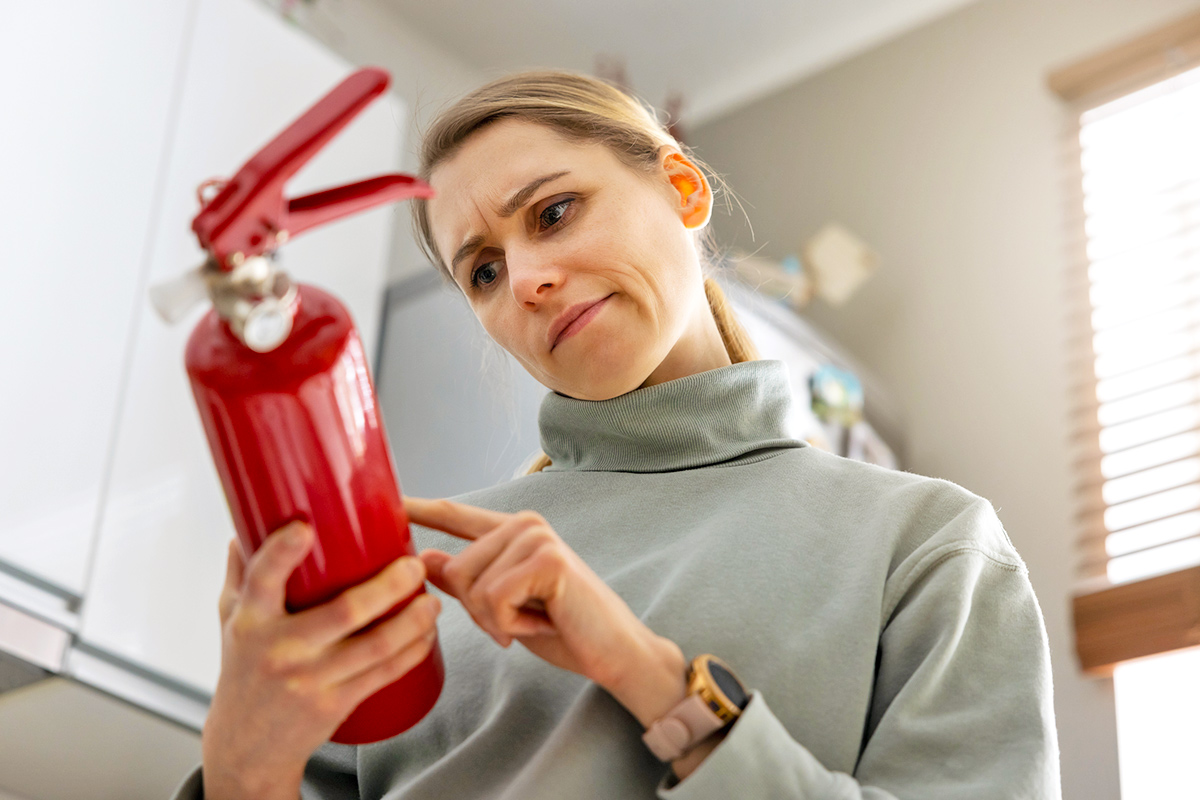
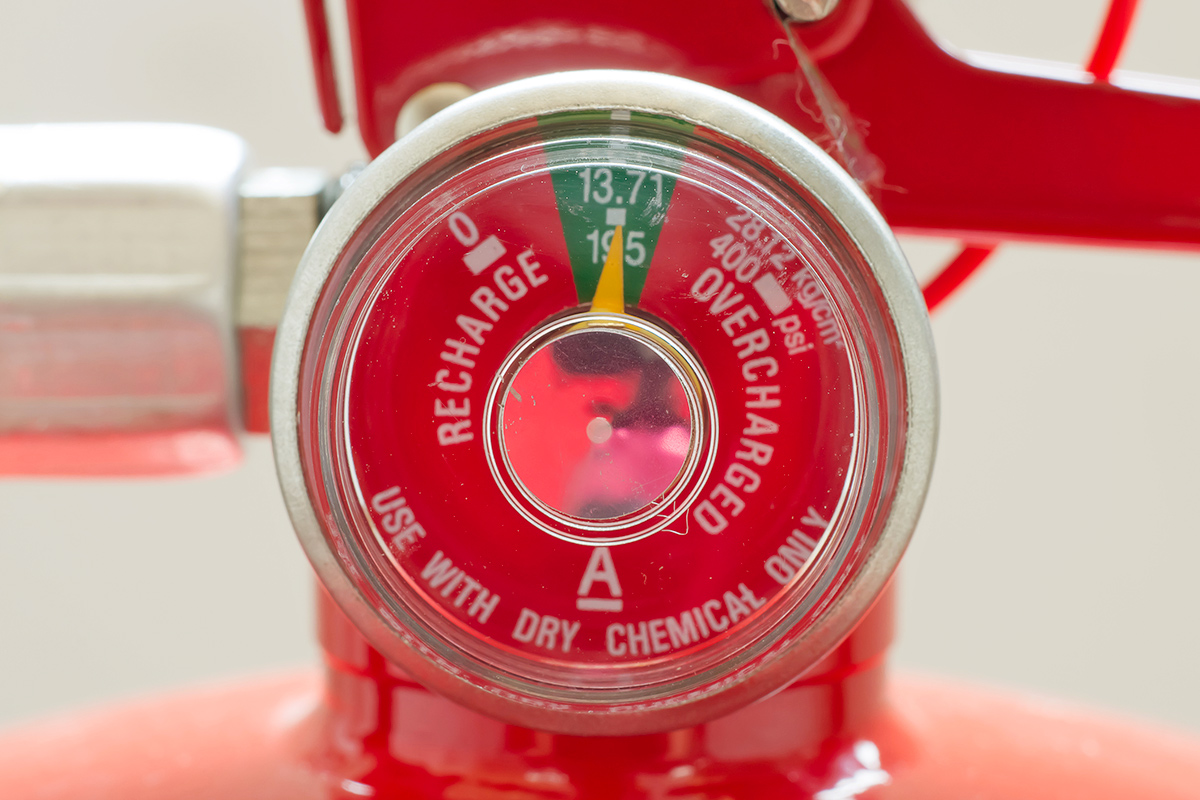
    Whichever you buy, make sure you routinely check the pressure gauge on each of your extinguishers. The needle should rest within the green zone. If it exceeds or drops below and into the red on either side, you need to either replace the fire extinguisher or have it checked by a certified fire equipment dealer near you — not your local fire department.

    Advertisement
    Advertisement

    Traditionally, the advice is to have one fire extinguisher per level of your home. My own practice is to keep one in the kitchen, because that’s one of the most common locations of home fires, one in the bedroom, and one in the garage, at a bare minimum. From there, I’d add more for additional floors of the home if I had multiple stories still without an extinguisher on them. However many you choose and whichever brand you get, you’ve done yourself a huge service in preparedness just by reading this article. Now you know how to use a fire extinguisher exactly how you’re supposed to, should you ever need to.

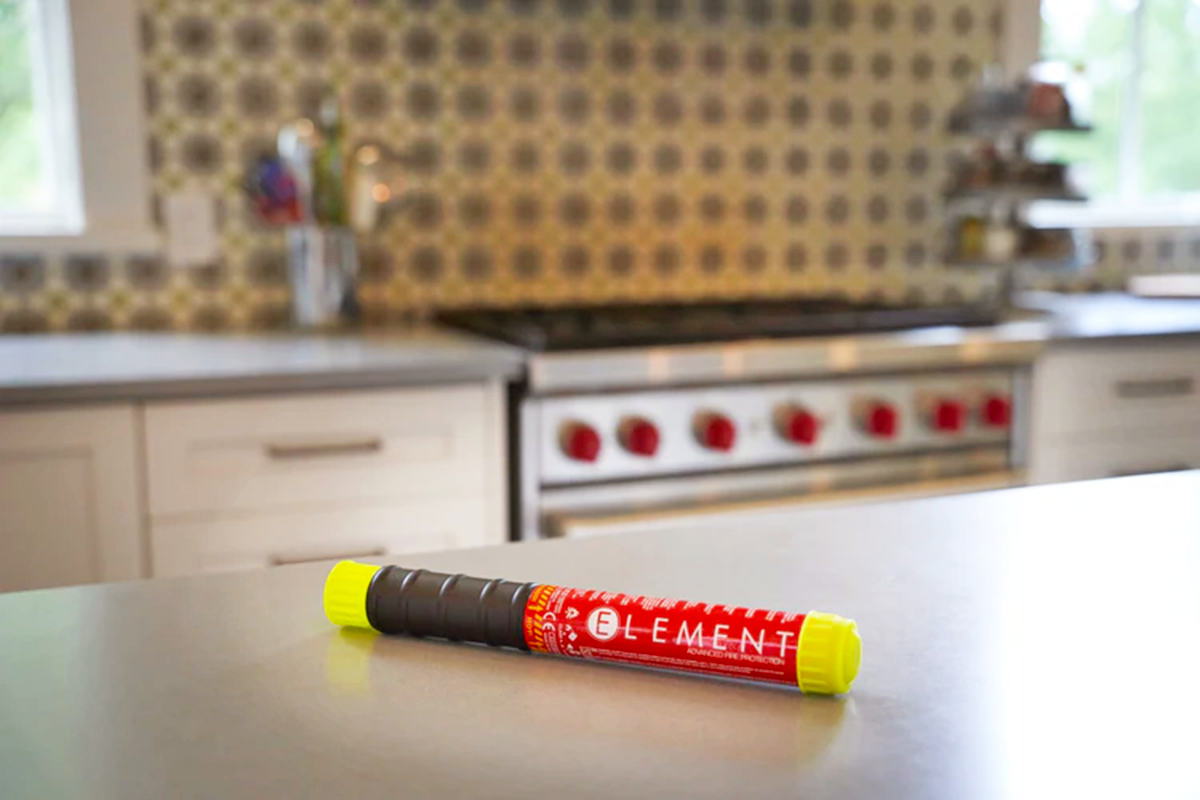
    Credit: Image courtesy of Element

    An Alternative

    There is an interesting alternative fairly new to consumers. Marketed to regular folks most notably by Element, these fire extinguishers ditch the spray of foam or powder in favor of a mess-free gas that “chemically interrupts the chain of combustion,” as Element puts it. More simply, it suffocates the fire of oxygen so that the flame can’t sustain itself. Cleaning up after a fire extinguisher goes off takes a lot of elbow grease. Although it’s a lot easier than cleaning up after an unchecked fire.

    Element extinguishers are a lot more expensive at $90, but they’re rated to fight all classes of fires, and they’re significantly smaller and lighter than traditional fire extinguishers. They haven’t replaced my traditional extinguishers around the house, but I’ve begun to outfit my cars with them.

    Featured Image Credit: ronstik/ iStock

    More From Our Network

    Better Report is part of Inbox Studio, an email-first media company. *Indicates a third-party property.

    Go Retro With This 1960s Fashion Quiz

    Quiz Daily

    Go Retro With This 1960s Fashion Quiz

    True or False: Are You a Master of U.S. Geography?

    Travel Quiz

    True or False: Are You a Master of U.S. Geography?

    5 Reasons You Can Be Denied Boarding an Airplane

    Daily Passport

    5 Reasons You Can Be Denied Boarding an Airplane

    What Did People Do Before Eyeglasses?

    History Facts

    What Did People Do Before Eyeglasses?

    How To Use a Balloon To Clean Up Dust

    House Outlook

    How To Use a Balloon To Clean Up Dust

    11 Shopping Hacks Costco Members Should Know

    FinanceBuzz*

    11 Shopping Hacks Costco Members Should Know

    Share this article

    • Share to Facebook
    • Share to Twitter
    • Copy Url
    • Share to Email
    Matt Jancer
    Writer

    Matt Jancer has been in the industry for 15 years and lives in the greatest city on Earth, New York City. He’s traded words for money on behalf of more than 15 magazines. Some of his longest-running bylines were spent covering motorcycles, electric cars, outdoors gear, and other cutting-edge technology for Car and Driver, Outside, Esquire, Popular Mechanics, and Wired. When he isn't writing up deals and guides on how to live your life more easily, he's writing for enjoyment or out enjoying the great outdoors.

    This article is for general informational purposes only.
    Affiliate Disclaimer Medical Disclaimer Financial Disclaimer

    Updated: February 24, 2025
    Posted In: Home
    Hero Image Credit: Better Report
    Advertisement

    Related Articles

    The Most Dangerous Things You Do With Your Christmas Tree

    4 min read

    12 Foods You Shouldn’t Store Together

    6 min read

    17 Home Safety Gifts Your Family Actually Needs

    10 min read

    Should You Refrigerate Peanut Butter?

    6 min read

    The Most Popular Car Colors in the U.S.

    4 min read
    Advertisement

    8 Safety Items You Should Always Keep in Your Car

    Sponsored Content
    Home | Updated: June 2, 2025
    Better Report

    All featured products and deals are selected independently and objectively by the author. Better Report may receive a share of sales via affiliate links in content.

    Going on a road trip has always represented freedom. You get to place the world’s problems on pause and drive towards new adventures. But while hitting the open road on a whim sounds fun, you don’t want to forget about an important need: safety. From car-related emergencies to risky weather to health concerns, you’ll want to take a few essentials to keep yourself and others safe. Don’t worry, preparing for the unexpected doesn’t have to mean overwhelming your car or causing unnecessary anxiety. Most of our picks can fit into your glove compartment, purse, or messenger bag and give you much-needed peace of mind about your upcoming trip, so you can get back to worrying about what matters: the best car-friendly snacks and an expertly tailored playlist.

    Prices are accurate as of May 29, 2025. Subject to change.

    Courtesy of Amazon

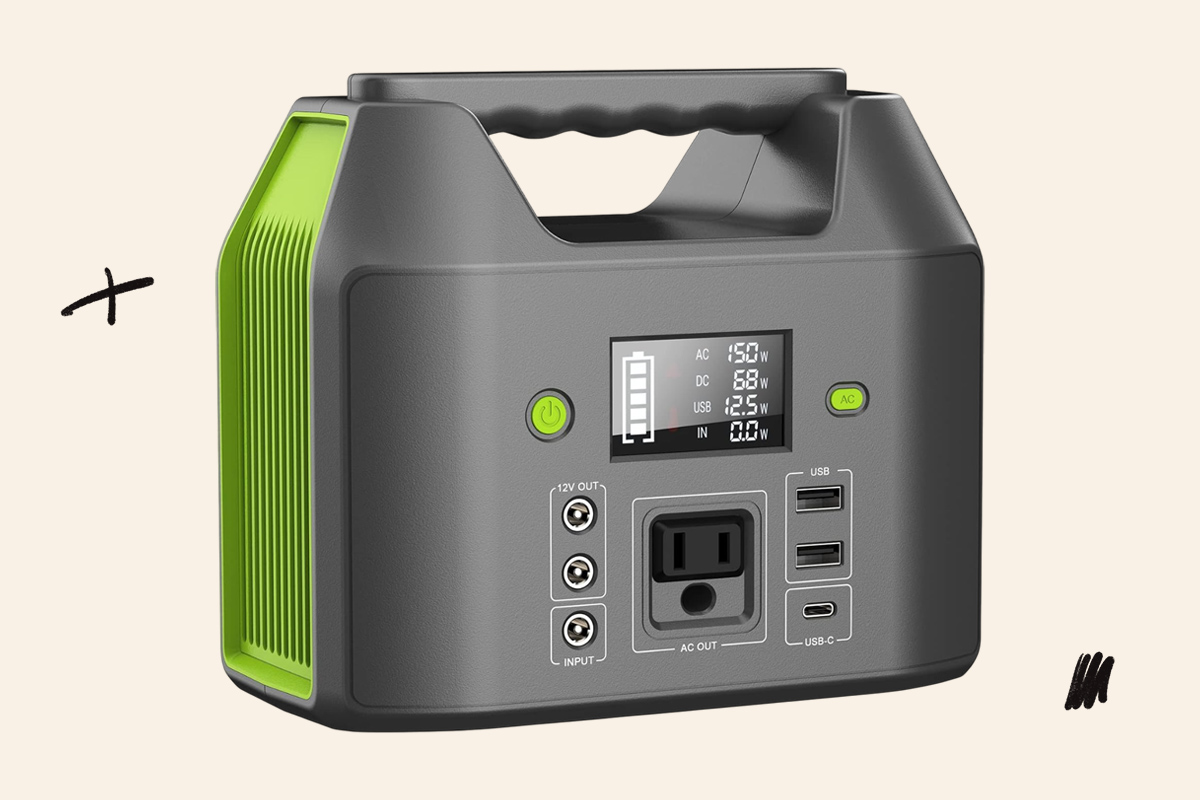
    Portable Power Station

    You may not always remember to charge your phone on the road. That’s why you want a portable power station. This model by EnginStar has been my trusted choice for several years. It’s versatile, accommodating AC outlets, USB, and USB-C connectors. All of your devices will stay powered.

    Another helpful feature is the built-in light. It’s surprisingly powerful, and especially ideal if you have nighttime car trouble or you’re looking for something in the dark corners of your vehicle. It’s also lightweight at only four pounds, so it won’t weigh your bag down. Plus, it provides several hours of power on a single charge. You may not use it every day of your trip, but you’ll be glad you have it when you need it.

    BUY FOR $110 AT AMAZON
    Advertisement
    Courtesy of AsterApp

    AsterApp by LogicMark

    Whether you’re venturing solo on the open road or traveling with your loved ones, emergencies can happen when you least expect them. Our phones give us easy access to help, but you may not want to — or be able to — fumble with it during a scary or stressful situation. The AsterApp solves this problem. 

    With this free app, add your loved ones as contacts who’ll see your schedule on the road. You can alert them about stops during your trip, like when you take a lunch break or when you are stopping for the night. If you don’t check in after a specified period of time and after responding to a text from AsterApp itself, the app alerts authorities. You may also want to combine this with the Aster Bluetooth button. Attach it to your purse or keys, and press the button if you need help.

    DOWNLOAD ON APP STORE
    DOWNLOAD ON GOOGLE PLAY
    Advertisement
    Advertisement
    Courtesy of Amazon

    LifeVac Travel Kit

    Snacks go hand in hand with road trips. Whether you embrace your inner five-year-old and go for junk food choices or opt for healthier alternatives, it’s one of the highlights of any adventure. However, choking is a serious risk that’s often overlooked. According to recent statistics, over 5,000 people died from choking in 2023 alone. The LifeVac Travel Kit will give you major peace of mind for this scenario. 

    This handy little device is compact enough for travel, but has life-saving benefits when needed. Put the mask over your or someone else’s mouth, push down on the mask (which does not push the obstruction further down the throat), and pull back for the suctioning. It includes a mask for both children and adults, and you can even perform it on yourself. We suggest getting used to the motion of using it without attaching it to someone’s mouth, so you’re prepared just in case. Some Better Report staffers have LifeVacs at home, too, however, it’s important to note that the LifeVac is not FDA-approved. We still think it’s important to learn how to do the Heimlich maneuver, but in the case that you can’t do it, having a backup plan isn’t a bad idea.

    BUY FOR $80 AT AMAZON
    Courtesy of Amazon

    Emergency Radio with NOAA Weather Alert

    This multi-functional weather radio will become your essential adventure buddy if you are venturing off into regions with unpredictable weather patterns. Beyond receiving critical NOAA weather alerts, you can also tune into local AM/FM stations so you’re sure to get important local reports to help you navigate.

    While it runs on batteries, there is a solar hand crank to keep it running during an emergency. The comprehensive design also includes a reading lamp and side flashlight, in case you want to check your surroundings or navigate to help. In the rare moment you truly do get lost, it comes with an SOS alert that uses a blinking red light and a surprisingly deafening alarm, which can potentially help people locate you if you get lost or visibility conditions become a challenge.

    BUY FOR $36 AT AMAZON

    Recommended Articles

    • A Warning Sign for Heart Attack and Stroke Could Show Up on Your Face

    • 6 Holiday Scams To Watch Out For

    • Why Gift Cards Are Actually Terrible Gifts

    • The Strange Reason Why Time Feels Like It’s Moving Faster

    Advertisement
    Advertisement

    Reader Favorites

    • Person washing part of a coffee machine

      18 Surprising Things You Should Never Put Down Your Drain

    • Woman brushing hair

      9 Surprising Signs You’re Aging

    • White car on the road

      The Best Cars for Resale Value, According to Auto Experts

    Courtesy of Amazon

    Car Roadside Emergency Kit

    Even if you don’t have the skill set to perform car repairs, an emergency roadside kit comes in handy. This comprehensive set has just about everything you need to keep yourself safe and potentially address easy-to-fix problems.

    Inside, you’ll find high-quality jumper cables, a sturdy tow rope, and a safety hammer to break the window if you can’t open the door. You’ll also find tire repair tools for fixable flats and reflective warning triangles to alert other drivers. There’s even a poncho for coverage in a rainstorm and safety gloves to prevent injury. Best of all, everything fits inside an easy-to-store bag that won’t overwhelm your trunk or backseat. Like some other items on this list, go through this kit and familiarize yourself with all the components. If you don’t know how to use jumper cables, for example, practice before heading out on the road.

    BUY FOR $35 AT AMAZON
    Advertisement
    Courtesy of Amazon

    KeepGoing First Aid Kit

    Whether it’s a minor cut or scrape or a bee sting, this first aid kit has pretty much all you need. The compact design won’t take up precious space in your vehicle while still giving you all the essentials in a nicely organized case. All the supplies from bandages to sting relief fit inside easy-to-sort folders. Find what you need in seconds, even if you’re stressed. If you’re bringing your little ones along, they’re sure to appreciate the included stickers that can become fun body decor after treatment. 

    BUY FOR $40 AT AMAZON
    Advertisement
    Advertisement
    Courtesy of Amazon

    VIAIR Portable Air Compressor

    Roadside service on your car isn’t always easy or fast. This portable tire inflator can come in handy, especially in combination with the roadside assistance kit. When possible, like if your tire simply loses air, you can inflate it with this portable and convenient tire inflator. The 10-foot power cord and three-foot air hose provide enough reach to handle all four tires.

    It’s easy to take with you, and it’s not overly complicated to use. Just plug it into your car’s cigarette lighter, start your engine, connect the airhose to your tire, and power on the unit. The built-in pressure gauge gives precise readings so you won’t over- or under-inflate. It also works with a range of vehicles, including motorcycles, off-road vehicles, and more.

    BUY FOR $70 AT AMAZON
    Courtesy of Amazon

    Rechargeable Flashlights

    While both the weather radio and the power station mentioned earlier come with built-in flashlights, sometimes you want a dedicated option that is brighter and easier to handle in a moment’s notice. This rechargeable option comes with five practical lighting modes. Turn on the high beam for maximum visibility, medium beam for general use, or low beam to conserve power. There’s also a strobe light to grab someone’s attention or a flashing SOS feature if you are trying to alert anyone for help.

    It is fully waterproof, so no need to worry about a rainstorm getting in the way of your light source. You also don’t need to purchase extra batteries as it is USB rechargeable and a charge lasts for up to 12 hours.

    BUY 3-PACK FOR $40 AT AMAZON

    Feature Image Credit: Andrej Lišakov/ Unsplash

    More From Our Network

    Better Report is part of Inbox Studio, an email-first media company. *Indicates a third-party property.

    Go Retro With This 1960s Fashion Quiz

    Quiz Daily

    Go Retro With This 1960s Fashion Quiz

    True or False: Are You a Master of U.S. Geography?

    Travel Quiz

    True or False: Are You a Master of U.S. Geography?

    5 Reasons You Can Be Denied Boarding an Airplane

    Daily Passport

    5 Reasons You Can Be Denied Boarding an Airplane

    What Did People Do Before Eyeglasses?

    History Facts

    What Did People Do Before Eyeglasses?

    How To Use a Balloon To Clean Up Dust

    House Outlook

    How To Use a Balloon To Clean Up Dust

    11 Shopping Hacks Costco Members Should Know

    FinanceBuzz*

    11 Shopping Hacks Costco Members Should Know

    Share this article

    • Share to Facebook
    • Share to Twitter
    • Copy Url
    • Share to Email
    Sponsored Content

    This article is for general informational purposes only.
    Affiliate Disclaimer Medical Disclaimer Financial Disclaimer

    Updated:
    Posted In: Home
    Hero Image Credit: Better Report

    Advertisement

    Related Articles

    The Most Dangerous Things You Do With Your Christmas Tree

    4 min read

    12 Foods You Shouldn’t Store Together

    6 min read

    17 Home Safety Gifts Your Family Actually Needs

    10 min read

    Should You Refrigerate Peanut Butter?

    6 min read

    The Most Popular Car Colors in the U.S.

    4 min read
    Advertisement

    Posts navigation

    Older posts
    Newer posts
    • Home
    • Health
    • Wealth
    • Logo
    • Advertise
    • About
    • Contact Us
    • Privacy Policy
    • Terms of Use
    • Your Privacy Choices
    x
    Thumb Image

    Elevate your everyday.

    Sign up to receive the practical tips and expert advice you need to pare down the complexities of everyday living right in your inbox.

    Sorry, your email address is not valid. Please try again.

    Your email is:

    Edit Image
    Sorry, your email address is not valid. Please try again.
    Thank you for subscribing...

    By subscribing you are agreeing to our Terms of Use and Privacy Policy.

    Close image
    Thumb Image
    Second Thumb Image

    Elevate your everyday.

    Sign up to receive the practical tips and expert advice you need to pare down the complexities of everyday living right in your inbox.

    Sorry, your email address is not valid. Please try again.

    By subscribing you are agreeing to our Privacy Policy and Terms of Use.

    Close image