Skip to content
Better Report
  • Home
  • Health
  • Wealth
8 Low-Maintenance Plants That Thrive on Neglect
  • Search
  • Subscribe
  • Home
  • Health
  • Wealth
  • About
  • Privacy Policy
  • Terms of Use
  • Contact Us
  • SubscribeSubscribe
  • Search
Thank you for confirming your email! Welcome to the community.

Author: erin

The Secret Button That Cools Your Car Quickly

Home | Updated: July 31, 2026
Bennett Kleinman
Author
Bennett Kleinman is a New York City-based staff writer for Inbox Studio. He is also a freelance comedy writer, devoted New York Yankees and New Jersey Devils fan, and thinks plain seltzer is the best drink ever invented.
Woman in car with fan
Better Report

Sometimes you have no choice but to park your car in direct sunlight on a hot summer’s day. In those situations, it doesn’t take long for temperatures inside the vehicle to skyrocket to 140 degrees or higher. When you hop back in, your first instinct may be to crank the AC as high as it goes to get the temperature back down to a comfortable level — but AC alone is not the most efficient method for cooling your car. There’s actually a “secret” button that helps the interior cool down fast. Here’s what you need to know about this solution that’s hiding in plain sight.

Car dashboard with buttons lit up in green
Credit: © Nischaporn/stock.adobe.com

The Air Recirculation Button

It’s likely that you don’t know exactly what every button  on your car’s dashboard actually does. But if there’s one potentially unfamiliar feature that you should know about, it’s the air recirculation button, which is typically located near the AC controls. It depicts the silhouette of a car with a U-turn-shaped arrow inside, and it’s the key to cooling down your vehicle as efficiently as possible. (If you don’t see this button on your dash, it could be because some modern vehicles no longer have a physical button and rely on sensors to monitor the temperature and humidity inside the car instead.)

Advertisement
Advertisement

The air recirculation button prevents warm outside air from being sucked into the car and instead recirculates air that’s already inside the cabin. That means once you turn on the AC, wait for it to get cold, and press that button, it will push the cooler air around the interior of the car, lowering the temperature quickly and efficiently. 

The logic here is simple: It takes far less time to recirculate cold air than it does to repeatedly cool down hot air pulled in from the outside. By blocking new air from being sucked into the car, you’re speeding up the cooling process while using the least amount of energy possible, and your car will get cooler the longer you have that button on. As an added benefit, using the button will keep things like traffic exhaust and pollen from getting into your car.

There are times, however, when it’s not ideal to rely on the air recirculation button. It’s less helpful during the winter, as it can recirculate moist air inside the cabin and lead to foggier windows. Also, running the air recirculation button for too long at any time of year increases carbon dioxide levels inside your car, so turn it off as soon as the vehicle is adequately cool.

Advertisement
Car with sun shade
Credit: © schankz—iStock/Getty Images

Other Tips for Cooling Your Car

One of the surest ways to keep your car cool is some simple planning ahead. Try parking in a shady location if possible, or covering your windshield with a reflective sun shade. If you’re forced to park in direct sunlight for any reason, try turning your wheel 180 degrees. That way, when you get back inside, the part of the wheel that you’re more likely to touch will have been in the shade the whole time, and won’t be nearly as hot as the part that was turned toward the sun — so your hands will feel that heat only as long as it takes you to turn the wheel.

Recommended Articles

  • The Safety Rules for Candles You Probably Don’t Know

  • 5 Things Your Car Needs Before the First Freeze

  • 6 Amazon Prime Day Hacks

  • 5 Things To Ask Your Doctor About the New Flu Shot

Advertisement
Advertisement

Reader Favorites

  • Woman looking in fridge

    9 Foods You Should Toss ASAP if They’re Expired

  • Person eating salad

    7 Things a Chef Never Orders at a Restaurant

  • Cherry angioma

    Are the Tiny Red Dots on Your Skin Dangerous?

Another great tip comes from mathematician Hannah Fry, who advises using fluid dynamics to cool down any car. While you’re still parked, roll down the rear passenger-side window, then rapidly open and shut the driver’s door five to 10 times. This creates a vacuum that sucks hot air out through the open door and draws in more temperate air through the open window. According to Southern Living, your next step should be to hop in the car, roll down all the windows, and blast the AC to push the rest of the warm air out. The car should cool down far quicker thanks to all the warm air you forced out initially.

Featured Image Credit: © DimaBerlin/stock.adobe.com

More From Our Network

Better Report is part of Inbox Studio, an email-first media company. *Indicates a third-party property.

Go Retro With This 1960s Fashion Quiz

Quiz Daily

Go Retro With This 1960s Fashion Quiz

True or False: Are You a Master of U.S. Geography?

Travel Quiz

True or False: Are You a Master of U.S. Geography?

5 Reasons You Can Be Denied Boarding an Airplane

Daily Passport

5 Reasons You Can Be Denied Boarding an Airplane

What Did People Do Before Eyeglasses?

History Facts

What Did People Do Before Eyeglasses?

How To Use a Balloon To Clean Up Dust

House Outlook

How To Use a Balloon To Clean Up Dust

11 Shopping Hacks Costco Members Should Know

FinanceBuzz*

11 Shopping Hacks Costco Members Should Know

Share this article

  • Share to Facebook
  • Share to Twitter
  • Copy Url
  • Share to Email
Bennett Kleinman
Staff Writer

Bennett Kleinman is a New York City-based staff writer for Inbox Studio. He is also a freelance comedy writer, devoted New York Yankees and New Jersey Devils fan, and thinks plain seltzer is the best drink ever invented.

This article is for general informational purposes only.
Affiliate Disclaimer Medical Disclaimer Financial Disclaimer

Updated: July 20, 2023
Posted In: Home
Hero Image Credit: Better Report
Advertisement

Related Articles

The Safety Rules for Candles You Probably Don’t Know

5 min read

9 Items in Your Basement You Should Toss Right Now

5 min read

5 Vegetables You Should Never Store in the Fridge

3 min read

Why a Flashing Check Engine Light Is Different From a Solid One

3 min read

Why Does Your Sink Have a Tiny Hole?

3 min read
Advertisement

7 Medicare Mistakes You May Be Making

Wealth | Updated: July 31, 2026
Nicole Pyles
Author
Based in Portland, Oregon, Nicole Pyles is an experienced freelance writer who writes about home and kitchen, health and wellness, and more. She's written for a variety of outlets, including Better Homes and Gardens, Tom's Guide, Better Report, and more.
Older woman looking at computer
Better Report

More than 70 million Americans are on Medicare. Whether you’re 65 or older or have an eligible disability, Medicare can be a necessary lifeline that helps reduce the costs of medical care, prescriptions, and more. But the amount of information and the necessary steps involved in signing up or navigating a potential change in your plan can be overwhelming. We talked with Danielle Roberts, co-founder and Medicare insurance expert at Boomer Benefits, about the mistakes you could be making when it comes to Medicare — and how to avoid them. 

Older couple having a discussion
Credit: © shurkin_son—E+/Getty Images

Treating Medicare as a One-Size-Fits-All Benefit

Medicare isn’t the same for everyone. “Each person has their own eligibility, their own premiums, and their own enrollment timeline,” Roberts says. “Even within the same household, one spouse may be enrolled in Medicare while the other is not or may have completely different coverage rules.”

Advertisement
Advertisement

Regardless of whether you and your spouse are enrolling at the same time, or your friend recommends a certain type of coverage, it’s important to make Medicare decisions based on what’s right for you as an individual. “Get started on your Medicare research several months in advance of your Medicare eligibility,” Roberts recommends. “Medicare decisions affect coverage, costs, and, in some cases, tax planning, so the timing matters.”

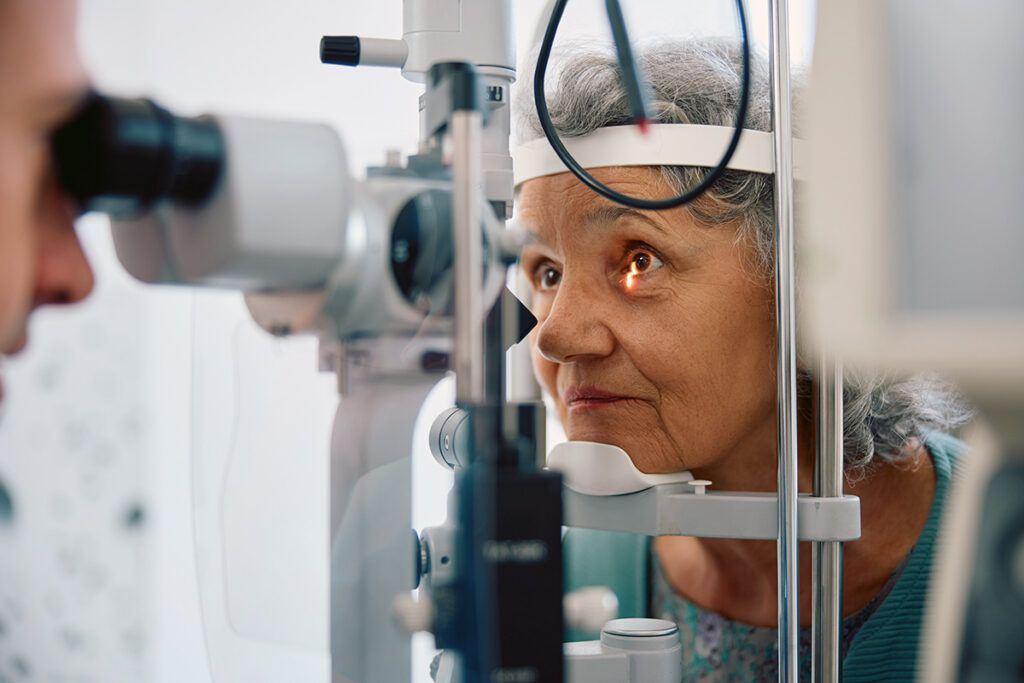
Older woman at eye doctor
Credit: © Drazen Zigic—iStock/Getty Images

Not Anticipating or Planning for Gaps in Medicare Coverage

Medicare, including Part A (hospital insurance) and Part B (medical insurance), isn’t comprehensive. “Part A and Part B still include deductibles, copayments, and coinsurance,” Roberts says. “For example, Part B generally covers 80% of approved outpatient services, leaving the remaining 20% as the beneficiary’s responsibility.”

Recommended Articles

  • The Safety Rules for Candles You Probably Don’t Know

  • 5 Things Your Car Needs Before the First Freeze

  • 6 Amazon Prime Day Hacks

  • 5 Things To Ask Your Doctor About the New Flu Shot

Advertisement
Advertisement

Reader Favorites

  • Woman looking in fridge

    9 Foods You Should Toss ASAP if They’re Expired

  • Person eating salad

    7 Things a Chef Never Orders at a Restaurant

  • Cherry angioma

    Are the Tiny Red Dots on Your Skin Dangerous?

Whether you’re considering Medicare or planning to switch to another Medicare plan, focus on the services you’ll use. For example, most Medicare plans don’t include coverage of vision, hearing, and long-term care, according to Roberts. In that case, you may want to opt for one of the Medicare Advantage plans (Part C) that do include these services. Make sure to review them carefully to ensure they include your preferred doctors.

Cash in a jar
Credit: © A. C./Unsplash.com

Contributing to HSA Accounts

If you’ve enrolled in Medicare Parts A and B or a Medicare Advantage plan, you can no longer contribute to a Health Savings Account (HSA). Roberts says she often sees confusion about HSAs and Medicare. “Many people continue contributing to an HSA … without realizing the rules change at enrollment. Once Medicare begins, HSA contributions are no longer allowed. Continuing contributions can create unnecessary tax issues that are entirely avoidable with proper timing.”

Advertisement

If you’re 65 or older, still working, and want to continue contributing to your HSA, you can delay enrolling in Medicare. Be aware, however, that there can be penalties for delaying enrollment, and if you delay, your  HSA contributions will need to stop six months before you ultimately apply for Medicare, Roberts says.

Advertisement
Advertisement

But if you’re enrolling in Medicare at 65, according to Roberts, “you can keep contributing to your HSA all the way up until the day before your 65th birthday month.” The good news is, no matter when you join, you can still use your existing HSA funds for expenses such as copays and deductibles. 

Man and woman having discussion
Credit: © SolStock—E+/Getty Images

Not Confirming How Medicare Works Alongside Employer Health Plans

If you’re working past 65 and have employer-sponsored medical coverage, Medicare still matters. Roberts often sees people misunderstand how Medicare works alongside other coverage. “Employer plans and retiree coverage do not always function the way they did before age 65,” she says.

Advertisement
Advertisement

Once you turn 65, find out from your employer whether you need to sign up for Part A or Part B. “Depending on employer size and plan rules, Medicare may be primary or secondary, and that order determines how claims are paid,” Roberts explains.

Man on phone looking confused
Credit: © bymuratdeniz—E+/Getty Images

Delaying Medicare Because of Other Plans

“Another common mistake is delaying Medicare because of COBRA or a retiree health plan,” Roberts says. “These types of coverage do not allow you to safely delay Medicare enrollment. It often results in lifelong late enrollment penalties or gaps in coverage.” (You can decline to enroll in Medicare entirely, but according to Heathline, doing so will require you to decline other monthly benefits such as Social Security, and you’ll also need to repay what you’ve already received.)

Advertisement
Advertisement

Contact your health insurance provider for more information if you’re unsure whether to sign up for Medicare given your current coverage. If you have post-employment COBRA coverage, your next steps may vary. The U.S. Centers for Medicare & Medicaid Services provides specific guidelines based on your current coverage and has an easy quiz to help confirm next steps.

Hands on a keyboard
Credit: © Jacob Wackerhausen—iStock/Getty Images

Missing the Correct Enrollment Period

Another big mistake, according to Roberts, is missing your correct enrollment window. “Medicare has several enrollment periods every year, which can be confusing,” she says. “However, your Initial Enrollment Period is the most important one.” 

Advertisement

Your Initial Enrollment Period begins three months before you turn 65 and lasts three months after, lasting seven months total. “There can be permanent penalties and gaps in coverage if a beneficiary doesn’t enroll within their allotted window and has other creditable coverage,” Roberts says. 

Advertisement
Advertisement

Many people also miss their Medigap Open Enrollment window. Medigap is the additional coverage from private companies that you can purchase to fill gaps in Medicare. There is a onetime period when you can buy a Medigap plan without medical underwriting. Once that window closes, “the underwriter can decline you for health reasons unless you live in one of the few states with Guaranteed Issue rights, allowing residents to buy a Medigap without having to pass underwriting during certain times of the year,” Roberts says.

Research your Medicare enrollment window before you turn 65, and base your decisions on your current coverage. If you’re looking to switch Medigap plans, take this quiz offered by the U.S. Centers for Medicare & Medicaid Services to understand your options.

Older woman looking at paperwork
Credit: © grandriver–iStock/Getty Images

Missing Your Yearly Review

Roberts advises reviewing Medicare every year. “A brief yearly review helps prevent unexpected costs and ensures coverage still fits your needs,” she says. 

Advertisement
Advertisement

Renewals can happen automatically unless you make changes. “Each fall, beneficiaries receive an Annual Notice of Change (ANOC) outlining updates for the coming year,” Roberts explains. “Check your Annual Notice of Change that arrives in September and compare the full picture, deductibles, copays, and whether your specific medications and doctors are still covered.” She recommends changing if your plan is “dropping one of your important medications next year, your Advantage plan is dropping your doctor from its network, or your plan has a drastic increase in premiums.”

Featured image credit: © Pranithan Chorruangsak—iStock/Getty Images

More From Our Network

Better Report is part of Inbox Studio, an email-first media company. *Indicates a third-party property.

Go Retro With This 1960s Fashion Quiz

Quiz Daily

Go Retro With This 1960s Fashion Quiz

True or False: Are You a Master of U.S. Geography?

Travel Quiz

True or False: Are You a Master of U.S. Geography?

5 Reasons You Can Be Denied Boarding an Airplane

Daily Passport

5 Reasons You Can Be Denied Boarding an Airplane

What Did People Do Before Eyeglasses?

History Facts

What Did People Do Before Eyeglasses?

How To Use a Balloon To Clean Up Dust

House Outlook

How To Use a Balloon To Clean Up Dust

11 Shopping Hacks Costco Members Should Know

FinanceBuzz*

11 Shopping Hacks Costco Members Should Know

Share this article

  • Share to Facebook
  • Share to Twitter
  • Copy Url
  • Share to Email
Nicole Pyles
Writer

Based in Portland, Oregon, Nicole Pyles is an experienced freelance writer who writes about home and kitchen, health and wellness, and more. She's written for a variety of outlets, including Better Homes and Gardens, Tom's Guide, Better Report, and more.

This article is for general informational purposes only.
Affiliate Disclaimer Medical Disclaimer Financial Disclaimer

Updated: September 18, 2024
Posted In: Wealth
Hero Image Credit: Better Report
Advertisement

Related Articles

5 Things Your Car Needs Before the First Freeze

4 min read

6 Amazon Prime Day Hacks

6 min read

Is It Actually Better To Lease a Car?

9 min read

7 Free MIT Classes You Can Experience From Home

4 min read

The Bedroom Color That Adds $2,000 to Your Home Value

3 min read
Advertisement

The Least Healthy Alcoholic Beverages

Ali Eldridge
Health | Updated: July 29, 2026
Person sipping beer
Better Report

Most of us know that drinking alcohol isn’t the healthiest choice. “People who cut back or quit alcohol often find they feel better about their energy, sleep, mood, and well-being,” says Kristy Thomas, a registered nutritionist at Prowise Healthcare. 

The fact is, there is no safe level of alcohol consumption: The World Health Organization (WHO) lists alcohol as a Group 1 carcinogen alongside things like radiation and tobacco. In the body, the ethanol in alcohol breaks down into acetaldehyde, a carcinogen that damages DNA — and when DNA is damaged, it can prevent cell repair, increasing your risk of cancer. WHO notes that “alcohol causes at least seven types of cancer … any beverage containing alcohol, regardless of its price and quality, poses a risk of developing cancer.”

Advertisement
Advertisement

The best option is to avoid alcohol completely — after all, “no drinking means no alcohol-related risks, such as liver damage, sleep problems, and heart or cancer issues,” Thomas says. But it isn’t always so simple, because everyone’s lifestyle is different. “If abstaining from alcohol means you avoid social situations and instead spend time on screens or feeling lonely, this is not likely the healthiest route,” says nutritionist Amelia Winslow, M.S., MPH, VP of marketing at Pop & Bottle.

So, if you do indulge in an alcoholic beverage, you want to make the healthiest choice possible. And there are certain drinks you sip with dinner or after a long day that can harm your health more than others, whether it’s because they include ingredients that carry their own negative impact or because they inspire you to drink more than you should. Here are a few of the most harmful selections to avoid the next time you’re ordering or pouring yourself a drink. 

frozen cocktail
Credit: © Raelle Cameron/Unsplash.com

Sugary Cocktails

According to Thomas, alcoholic drinks that are high in sugar are the worst option. “Some of the least nutritious include piña colada, mudslide, Long Island iced tea, and frozen daiquiri cocktails, which are often loaded with syrups, cream, sweetened juices, and liqueurs,” she says. She would also include ready-made cocktails in this group. The added sweeteners in these drinks mask the flavor of alcohol, which could cause you to consume more booze that you realize. These drinks are also high in calories: Not only does alcohol contain 7 calories per gram, Thomas notes, but the ingredients also contain calories.

Advertisement

Winslow concurs: “You’re guzzling down many unnecessary calories, sometimes 500+ in a single drink,” she says.

Recommended Articles

  • The Safety Rules for Candles You Probably Don’t Know

  • 5 Things Your Car Needs Before the First Freeze

  • 6 Amazon Prime Day Hacks

  • 5 Things To Ask Your Doctor About the New Flu Shot

Advertisement
Advertisement

Reader Favorites

  • Woman looking in fridge

    9 Foods You Should Toss ASAP if They’re Expired

  • Person eating salad

    7 Things a Chef Never Orders at a Restaurant

  • Cherry angioma

    Are the Tiny Red Dots on Your Skin Dangerous?

Alcohol in a glass
Credit: © Sarah Power/Unsplash.com

Creamy Liqueurs

Both Thomas and Winslow agree that creamy liqueurs such as Irish coffee or spiked eggnog are unhealthy choices. “You’re getting calories from sugar and saturated fat, on top of calories from alcohol,” Winslow says. These cream-based drinks can also be tough on the stomach — and if you’re taking GLP-1 medications, they can potentially trigger nausea due to their high-fat, high-sugar content. 

Advertisement
Advertisement
Beer flight
Credit: © Bohdan Stocek/Unsplash.com

High ABV (Alcohol by Volume) Craft Beers

Both Winslow and Thomas advise skipping the craft beers with high alcohol volume. While most standard beers have roughly 4% to 6% ABV, others can be as high as 40%. Plus, standard beer averages about 150 calories per bottle. Higher ABV craft beers “have more calories and alcohol per serving,” Winslow explains. “It can leave you feeling like you ate a loaf of bread in one sitting.” 

Advertisement
Advertisement
Cocktail in a glass
Credit: © David Todd McCarty/Unsplash.com 

Skinny Cocktails

Skinny cocktails sound tempting because they’re lower in calories — a fact that can often cause you to drink more. “If drinking something ‘skinny’ makes you think you can have five drinks instead of one,” Winslow says, “you’ll be doing more damage than good by choosing the light option.” 

And if your goal is to consume fewer calories, it’s important to note that alcohol can trick your brain into making you feel hungrier. A low-cal cocktail or two can lead to more calories for that reason alone. That said, if you can limit yourself, “you’re likely skipping hundreds of calories and a potential hangover” with a skinny cocktail, Winslow says.

Advertisement
Advertisement
Espresso martini
Credit: © Timothé Durand/Unsplash.com

Caffeine-Based Cocktails

If your go-to cocktail of choice is the popular espresso martini, we have some bad news: According to Thomas, combining coffee with booze “can make individuals feel more alert without diminishing the effects of alcohol. This state of mind can make people think they are doing well, and so they end up drinking more than they know is good for them.” The same is true, she says, of other cocktails that contain an energy drink or caffeine. On top of that, due to the added ingredients, an espresso martini is one of the higher-calorie cocktails — some recipes have more than 200 calories per drink. 

Advertisement
Advertisement
Woman with glass of wine
Credit: © Israel Sebastian—Moment/Getty Images 

The Best Choices To Make When It Comes to Alcohol

In general, the best way to mitigate the risks of alcohol is to “drink in moderation, drink plenty of water, and don’t drink on an empty stomach,” Thomas says. And if you opt for an alcoholic beverage with dinner, or to wind down at night, she suggests sticking to simpler drinks. “A glass of wine … or a light beer … limit[s] the amount of sugar and calories consumed.”

As Winslow says, “Drink what you can sip on leisurely, in good company, without overdoing it.”

Advertisement
Advertisement

Featured Image Credit: © Engin Akyurt/Pexels.com

More From Our Network

Better Report is part of Inbox Studio, an email-first media company. *Indicates a third-party property.

Go Retro With This 1960s Fashion Quiz

Quiz Daily

Go Retro With This 1960s Fashion Quiz

True or False: Are You a Master of U.S. Geography?

Travel Quiz

True or False: Are You a Master of U.S. Geography?

5 Reasons You Can Be Denied Boarding an Airplane

Daily Passport

5 Reasons You Can Be Denied Boarding an Airplane

What Did People Do Before Eyeglasses?

History Facts

What Did People Do Before Eyeglasses?

How To Use a Balloon To Clean Up Dust

House Outlook

How To Use a Balloon To Clean Up Dust

11 Shopping Hacks Costco Members Should Know

FinanceBuzz*

11 Shopping Hacks Costco Members Should Know

Share this article

  • Share to Facebook
  • Share to Twitter
  • Copy Url
  • Share to Email
Ali Eldridge

This article is for general informational purposes only.
Affiliate Disclaimer Medical Disclaimer Financial Disclaimer

Updated:
Posted In: Health
Hero Image Credit: Better Report
Advertisement

Related Articles

5 Things To Ask Your Doctor About the New Flu Shot

5 min read

Is Sourdough Actually Healthier Than Regular Bread?

7 min read

Do You Really Need a Bidet in Your Home?

4 min read

3 Common Sleep Habits That May Be Aging Your Brain

5 min read

Is the Traditional Mediterranean Diet Actually the Best for Your Brain?

4 min read
Advertisement

5 Scary Parasites You Can Get From Your Food (And How To Avoid Them)

Health | Updated: July 27, 2026
Kat Long
Author
Kat Long is a freelance science journalist in the Washington, D.C. area. Previously, she was the science editor at Mental Floss and a digital editor at National Geographic. She now writes the Arctic Archives newsletter on Substack. Kat spends her free time birdwatching, road-tripping to historical sites and perusing old manuscripts at libraries.
Person washing lettuce
Better Report

Fresh fruits and vegetables seem so innocent when stacked in dewy rows at the grocery store. But produce and other common foods can be vectors for parasites if proper handling guidelines aren’t followed, and these bugs can make you sick if you’re not careful. Here’s what could be lurking in your lettuce — and what you can do to stay safe.

Older woman washing carrots
Credit: © CDC/Unsplash.com

Giardia

In 1681, when the pioneering microbiologist Antonie van Leeuwenhoek peered through a microscope at a sample of his own feces, giardia stared back at him. This protozoan parasite’s life cycle includes a stage as an infectious cyst that can contaminate food, water, soil, and other substances. When ingested, the cysts colonize the host’s small intestine and change into their active form, allowing them to absorb nutrients and multiply. Eventually the parasites make their way to the host’s colon, turn back into infectious cysts, and exit the host’s body through defecation.

Giardia is the most common intestinal parasite in humans, and it can be found worldwide. Symptoms of infection include frequent diarrhea, gas, stomach cramps, and nausea, and untreated cases can lead to irritable bowel syndrome and other complications. 

Advertisement
Advertisement

To avoid this unpleasantness, wash your hands after touching potentially infected substances and before preparing food; wash fresh produce thoroughly with clean water; cook fruits and vegetables to kill any parasites; never drink untreated water from lakes, rivers, or streams; and clean and disinfect any potentially contaminated surfaces.

Person swimming in pool
Credit: © Yunus Tuğ/Unsplash.com

Cryptosporidium

Like giardia, cryptosporidium is transmitted through the “fecal-oral route”: Hosts (including humans) ingest the microscopic parasites via contaminated food or water, the parasites multiply in the host’s gastrointestinal tract, and then the parasites exit the host in feces. Symptoms of crypto infection range from diarrhea and stomach discomfort to low fever and loss of appetite. Immunocompromised people can experience more severe and long-lasting effects. 

Advertisement

People contract cryptosporidium by accidentally swallowing contaminated water while swimming (including at the pool — chlorine can’t kill it), eating contaminated produce or unpasteurized dairy products, or coming into contact with infectious feces (such as when changing an infant’s diaper). The best ways to prevent a nasty bout of crypto are washing produce before consuming it, avoiding unpasteurized foods and untreated water, and frequently washing your and your grandkids’ hands. 

Recommended Articles

  • The Safety Rules for Candles You Probably Don’t Know

  • 5 Things Your Car Needs Before the First Freeze

  • 6 Amazon Prime Day Hacks

  • 5 Things To Ask Your Doctor About the New Flu Shot

Advertisement
Advertisement

Reader Favorites

  • Woman looking in fridge

    9 Foods You Should Toss ASAP if They’re Expired

  • Person eating salad

    7 Things a Chef Never Orders at a Restaurant

  • Cherry angioma

    Are the Tiny Red Dots on Your Skin Dangerous?

Close-up of lettuce
Credit: © Anita Austvika/Unsplash.com

Cyclospora

Humans are the only known hosts for cyclospora, which made headlines in July 2026 when an outbreak of the intestinal infection it causes hit several U.S. states. Preliminary results from the Food and Drug Administration’s investigation linked the cases to contaminated iceberg lettuce. 

Advertisement
Advertisement

Cyclospora is another microscopic parasite transmitted via the fecal-oral route, most often through produce or water contaminated with human poop. Infections can be asymptomatic, or they may cause gastrointestinal upset, diarrhea (“possibly explosive”), weight loss, bloating, and flu-like symptoms. Health agencies recommend thoroughly washing and peeling raw fruits and vegetables and then cooking them to 158 degrees Fahrenheit to kill potential cyclospora; washing alone, especially with a bit of dish soap, may reduce the number of parasites clinging to produce but may not eliminate them completely. Experts also suggest drinking only purified or bottled water when traveling outside the U.S. where sanitation practices are less rigorous and cyclospora is endemic.

Cat in a litter box
Credit: © Nadiye Odabaşı/Pexels.com

Toxoplasma gondii

For a single-celled parasite, Toxoplasma gondii can lead to a lot of problems. T. gondii causes toxoplasmosis, an illness with a constellation of symptoms ranging from mild muscle aches in healthy people to damage to the eyes, brain, and other organs in immunocompromised people.  Pregnant people are particularly at risk because the parasite can cause miscarriage or congenital toxoplasmosis in babies, leading to further health issues down the line.

Advertisement
Advertisement

Cats are T. gondii’s primary hosts. The parasite colonizes feline intestines, and people usually contract toxoplasmosis by ingesting undercooked meat (including shellfish), as well as produce, soil, or water contaminated by cat feces. Dealing with your cat’s litter box is another common mode of transmission. To avoid getting sick, wash hands and all food prep surfaces and utensils before and after use. Wash and peel fruits and vegetables before eating them and don’t consume raw shellfish or raw dairy. Don’t forget to wear gloves when gardening and emptying your cat’s litter box.

Deer in the grass
Credit: © Fiona Pröll/Pexels.com 

Trichinella

Trichinella — a genus of roundworms — is conveyed in raw meat. People usually contract trichinellosis by eating raw or undercooked wild game, including deer, moose, seal, or bear, or pork purchased “on the hoof” (in other words, a whole animal bought directly from a farmer, then butchered for personal consumption), that contains trichinella larvae. After being consumed, the larvae grow into adult worms in the host’s small intestine. Females then release new larvae that migrate to the host’s striated muscle tissue. Symptoms at this stage include swelling and inflammation around the eyes, fever, joint aches, and muscle pain.

Advertisement
Advertisement

The easiest way to avoid trichinella is to cook wild game to a safe temperature using a meat thermometer. Cuts of pork less than 6 inches thick can be frozen at 5 degrees Fahrenheit for three weeks to kill T. spiralis, the species of roundworm found in domestic pigs (though freezing at any temperature doesn’t work on game, which usually carries T. nativa, a hardier species). Be sure to wash and disinfect any surfaces that come into contact with raw meat, including your hands.

Featured Image Credit: © Getty Images/Unsplash.com

More From Our Network

Better Report is part of Inbox Studio, an email-first media company. *Indicates a third-party property.

Go Retro With This 1960s Fashion Quiz

Quiz Daily

Go Retro With This 1960s Fashion Quiz

True or False: Are You a Master of U.S. Geography?

Travel Quiz

True or False: Are You a Master of U.S. Geography?

5 Reasons You Can Be Denied Boarding an Airplane

Daily Passport

5 Reasons You Can Be Denied Boarding an Airplane

What Did People Do Before Eyeglasses?

History Facts

What Did People Do Before Eyeglasses?

How To Use a Balloon To Clean Up Dust

House Outlook

How To Use a Balloon To Clean Up Dust

11 Shopping Hacks Costco Members Should Know

FinanceBuzz*

11 Shopping Hacks Costco Members Should Know

Share this article

  • Share to Facebook
  • Share to Twitter
  • Copy Url
  • Share to Email
Kat Long
Writer

Kat Long is a freelance science journalist in the Washington, D.C. area. Previously, she was the science editor at Mental Floss and a digital editor at National Geographic. She now writes the Arctic Archives newsletter on Substack. Kat spends her free time birdwatching, road-tripping to historical sites and perusing old manuscripts at libraries.

This article is for general informational purposes only.
Affiliate Disclaimer Medical Disclaimer Financial Disclaimer

Updated: April 6, 2026
Posted In: Health
Hero Image Credit: Better Report
Advertisement

Related Articles

5 Things To Ask Your Doctor About the New Flu Shot

5 min read

Is Sourdough Actually Healthier Than Regular Bread?

7 min read

Do You Really Need a Bidet in Your Home?

4 min read

3 Common Sleep Habits That May Be Aging Your Brain

5 min read

Is the Traditional Mediterranean Diet Actually the Best for Your Brain?

4 min read
Advertisement

6 Supplements You Should Never Take With Coffee

Health | Updated: July 27, 2026
Sarah Gleim
Author
Sarah Gleim is an Atlanta-based freelancer with more than 25 years of experience writing and producing explainers and features about history, science, food, and health for media outlets like AARP, WebMD, The Conversation, History.com, HowStuffWorks, CNN, and others. She’s also the editor of several cookbooks for Southern Living and Cooking Light.
Woman drinking coffee
Better Report

If part of your morning routine includes a cup of coffee, listen up. According to the 2025 National Coffee Data Trends report, two-thirds (66%) of Americans drink it every day, getting a boost of energy from an average of three cups. But if you also take supplements, you might want to think twice before you swallow them down with your cup of joe at your next breakfast.

Taking supplements with coffee isn’t dangerous, but the caffeine and polyphenols in coffee, and its diuretic effect, can change how some work — and may even prevent your body from getting needed nutrients. Here are six supplements you should never take with coffee.

Advertisement
Advertisement
Pregnant person with supplements
Credit: Maksym/stock.adobe.com

Iron

Your body needs the mineral iron for growth and hormone production. Most Americans get enough from their diet, but certain groups, including pregnant women, may need to take supplements. If you take one with coffee, though, you may not get the full benefit: One study found that doing so could decrease iron absorption by 54% to 66%.

Instead, take iron with water at least two hours before your coffee. You also can pair your iron supplement with foods or drinks high in vitamin C, such as orange juice, to help your body fully absorb it.

Cup of coffee with milk being poured in
Credit: Feyza Daştan/Pexels.com

Calcium

Calcium is a mineral you need for strong bones and teeth. If you don’t get enough, you could be at risk for osteoporosis and fractures.

Advertisement

Caffeine in coffee can reduce your body’s absorption of calcium. Studies also suggest that because coffee makes you go to the bathroom, it filters too much calcium out of your system. For every cup you drink, you lose as much as 5 milligrams of calcium through urine.

You can add dairy to your coffee to compensate for the calcium loss. But caffeine also changes how efficiently your body absorbs the vitamin D in dairy (more on that below). So it’s best to take calcium at another time of the day.

Recommended Articles

  • The Safety Rules for Candles You Probably Don’t Know

  • 5 Things Your Car Needs Before the First Freeze

  • 6 Amazon Prime Day Hacks

  • 5 Things To Ask Your Doctor About the New Flu Shot

Advertisement
Advertisement

Reader Favorites

  • Woman looking in fridge

    9 Foods You Should Toss ASAP if They’re Expired

  • Person eating salad

    7 Things a Chef Never Orders at a Restaurant

  • Cherry angioma

    Are the Tiny Red Dots on Your Skin Dangerous?

Avocado toast
Credit: Freddy G/Unsplash.com

Vitamin D

You need vitamin D to help absorb and use calcium for healthy bones, and the caffeine in coffee can inhibit how well your body absorbs vitamin D because caffeine influences how vitamin D receptors work.

Take your vitamin D with a meal such as breakfast. Vitamin D is fat-soluble, which means your body absorbs it best when you take it with healthy fats, such as eggs, yogurt, nuts, or avocado. Wait at least an hour before having any coffee. 

Advertisement
Advertisement
Pills coming out of a bottle
Credit: Odin Mcraig/Pexels.com

B Vitamins

Unlike vitamin D, B vitamins — including thiamine (B1), riboflavin (B2), niacin (B3), and folate (B9) — are water-soluble, and your body can’t produce or store them (with the exception of B12, which is stored in the liver). Instead, they need to be replaced every day, either through your diet or via supplements. 

The caffeine in coffee also increases how much of these vitamins your body eliminates through urine. Studies show drinking coffee tends to lead to lower levels of folate, pyridoxal phosphate (the active form of vitamin B6), and riboflavin. It also interferes with how some B vitamins metabolize.

Advertisement

You should take your B vitamins at least an hour after your last coffee, with or without food — but they might be easier to swallow with breakfast.

Advertisement
Advertisement
White tablets in hand
Credit: © elifilm—iStock/Getty Images

Magnesium and Zinc

Magnesium and zinc are important nutrients you need to stay healthy: The former contributes to a number of the body’s processes, including regulating blood pressure and blood sugar, and the latter is used by the body to make DNA and assist the immune system in fighting illnesses. But the polyphenols and tannins in coffee attach to the minerals and reduce how much your body can absorb. Some of the nutrients can also be filtered out as a result of  coffee’s diuretic effects. And because magnesium plays a role in how you sleep, you should avoid caffeinated coffee if you’re taking a magnesium supplement at bedtime. Zinc also can irritate an empty stomach, so take it with lunch or dinner instead of your morning coffee. 

Advertisement
Advertisement

Featured Image Credit: © Marcus Aurelius/Pexels.com

More From Our Network

Better Report is part of Inbox Studio, an email-first media company. *Indicates a third-party property.

Go Retro With This 1960s Fashion Quiz

Quiz Daily

Go Retro With This 1960s Fashion Quiz

True or False: Are You a Master of U.S. Geography?

Travel Quiz

True or False: Are You a Master of U.S. Geography?

5 Reasons You Can Be Denied Boarding an Airplane

Daily Passport

5 Reasons You Can Be Denied Boarding an Airplane

What Did People Do Before Eyeglasses?

History Facts

What Did People Do Before Eyeglasses?

How To Use a Balloon To Clean Up Dust

House Outlook

How To Use a Balloon To Clean Up Dust

11 Shopping Hacks Costco Members Should Know

FinanceBuzz*

11 Shopping Hacks Costco Members Should Know

Share this article

  • Share to Facebook
  • Share to Twitter
  • Copy Url
  • Share to Email
Sarah Gleim
Writer

Sarah Gleim is an Atlanta-based freelancer with more than 25 years of experience writing and producing explainers and features about history, science, food, and health for media outlets like AARP, WebMD, The Conversation, History.com, HowStuffWorks, CNN, and others. She’s also the editor of several cookbooks for Southern Living and Cooking Light.

This article is for general informational purposes only.
Affiliate Disclaimer Medical Disclaimer Financial Disclaimer

Updated: June 9, 2026
Posted In: Health
Hero Image Credit: Better Report
Advertisement

Related Articles

5 Things To Ask Your Doctor About the New Flu Shot

5 min read

Is Sourdough Actually Healthier Than Regular Bread?

7 min read

Do You Really Need a Bidet in Your Home?

4 min read

3 Common Sleep Habits That May Be Aging Your Brain

5 min read

Is the Traditional Mediterranean Diet Actually the Best for Your Brain?

4 min read
Advertisement

Why Car Headlights Are Now Dangerously Bright

Ali Eldridge
Health | Updated: July 22, 2026
Cars with headlights on on a road
Better Report

It’s an all-too-common scenario these days: You’re barreling down the highway when a blinding light suddenly appears in front of you. Is it someone shining a laser pointer? A police officer with a spotlight on their vehicle? Or is a UFO trying to abduct you, and you’re caught in its tractor beam?

It’s likely none of the above. Odds are that the blinding beam is coming from the headlights of an approaching car. Here’s a look at why so many modern headlights seem brighter than the sun, and how to manage the situation when it arises.

Bright headlights of an oncoming car
Credit: © Mohammad Alizade/Unsplash.com 

Why Car Headlights Are So Bright

If you feel that car headlights have gotten too bright, you’re not alone. A 2026 survey conducted by AAA found that six out of 10 drivers struggle with headlight glare. The study also determined that 73% of drivers think that the situation has gotten worse over the last decade. This isn’t just opinion, either — it’s a reality that’s partially attributable to a change in the ways that cars are manufactured. 

Advertisement
Advertisement

According to AAA, there are two major factors that are responsible for the issue. One has to do with the headlights themselves: While older car models typically used halogen headlights, many modern cars instead use LEDs, which produce four to five times more lumens per watt than halogens. LEDs also have a blue hue compared to yellow-tinted halogens. This potentially makes the problem worse, as blue-colored lights are associated with eyestrain.

The other factor is vehicle height. Seven of the 10 most popular vehicles sold in 2025 were trucks or SUVs. These vehicles are higher off the ground than the smaller cars on the road, which means their headlights are more elevated — and therefore more likely to point into the eyes of people driving those smaller cars.

Advertisement

There’s a case to be made for why LED headlights are an improvement, especially if you’re in the driver’s seat: They do a much better job than halogens at providing adequate visibility. According to Greg Brannon, director of automotive engineering at AAA, “old-style halogen reflector headlights did not provide enough forward lighting … Above 45 miles an hour, you could outdrive your lights.” 

Despite the benefits they offer, though, bright headlights remain a serious concern for drivers in other cars.

Recommended Articles

  • The Safety Rules for Candles You Probably Don’t Know

  • 5 Things Your Car Needs Before the First Freeze

  • 6 Amazon Prime Day Hacks

  • 5 Things To Ask Your Doctor About the New Flu Shot

Advertisement
Advertisement

Reader Favorites

  • Woman looking in fridge

    9 Foods You Should Toss ASAP if They’re Expired

  • Person eating salad

    7 Things a Chef Never Orders at a Restaurant

  • Cherry angioma

    Are the Tiny Red Dots on Your Skin Dangerous?

Hand adjusting rearview mirror
Credit: © Jo Panuwat D/stock.adobe.com 

How To Deal With Bright Headlights

For better or worse, LED headlights are here to stay. That’s not to say that adjustments won’t be made over time, but it’ll take trial and error for car makers to find a balance. Until then, there are methods to manage bright oncoming headlights.

If you’re driving and come upon a particularly bright set of headlights, one thing you can do is look toward the right shoulder of the road. This will lessen the intensity of the lights until the other car passes, but you’ll still be able to see the lane clearly and thus drive safely. You can also purchase clear-lens glasses specifically designed for nighttime driving. These types of glasses have a coating that blocks out blue light and reduces glare, while maintaining your ability to see the road clearly. It may help to keep your windshield clean from any dirt or debris, too, as a dirty windshield can make glare worse.

Advertisement
Advertisement

Finally, one way to mitigate the effect of bright headlights behind you is to tilt your rearview mirror at a slight downward angle so that the mirror won’t reflect the lights  into your eyes. Rearview mirrors also have a night setting you can activate by pulling the tab at the bottom, which reduces light intensity.

Adjusting headlights
Credit: © m-gucci—iStock/Getty Images 

What If Your Own Headlights Are the Problem?

There’s a chance the headlights in your vehicle may be improperly aligned, which could be blinding other drivers. The good news is that you can adjust the headlights easily — you just need to determine if they’re out of whack first.

Advertisement
Advertisement

To tell if your headlights are angled too high or aligned just right, park your car on a flat surface and shine the lights against a wall 25 feet away. Next, measure the height of your headlights, and then measure that same height on the wall. The top of the lights should be shining at or just below the center height of your headlights (though the passenger side light should be slightly higher to adequately illuminate road signs). If they’re angled above center, they should be adjusted.

Advertisement

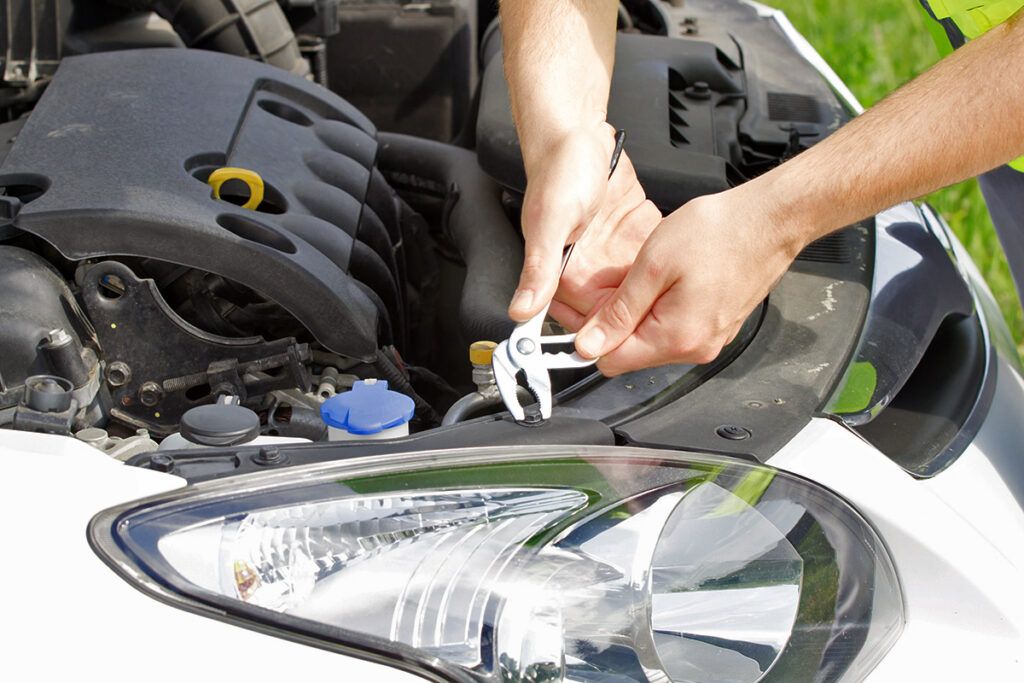
To adjust the vertical angle of your headlights, first locate the vertical adjustment screw, which is above or below the headlight assembly. (There’s also a horizontal adjustment screw, so consult the manual to determine which of the screws is the right one.) Keep the headlights on as you adjust the screws so you can see when the lights are aligned properly. Once the top of the lights sits just below center, they shouldn’t shine directly in other drivers’ eyes.

Advertisement
Advertisement

Featured Image Credit: © timnewman—iStock/Getty Images

More From Our Network

Better Report is part of Inbox Studio, an email-first media company. *Indicates a third-party property.

Go Retro With This 1960s Fashion Quiz

Quiz Daily

Go Retro With This 1960s Fashion Quiz

True or False: Are You a Master of U.S. Geography?

Travel Quiz

True or False: Are You a Master of U.S. Geography?

5 Reasons You Can Be Denied Boarding an Airplane

Daily Passport

5 Reasons You Can Be Denied Boarding an Airplane

What Did People Do Before Eyeglasses?

History Facts

What Did People Do Before Eyeglasses?

How To Use a Balloon To Clean Up Dust

House Outlook

How To Use a Balloon To Clean Up Dust

11 Shopping Hacks Costco Members Should Know

FinanceBuzz*

11 Shopping Hacks Costco Members Should Know

Share this article

  • Share to Facebook
  • Share to Twitter
  • Copy Url
  • Share to Email
Ali Eldridge

This article is for general informational purposes only.
Affiliate Disclaimer Medical Disclaimer Financial Disclaimer


Updated:
Posted In: Health
Hero Image Credit: Better Report
Advertisement

Related Articles

5 Things To Ask Your Doctor About the New Flu Shot

5 min read

Is Sourdough Actually Healthier Than Regular Bread?

7 min read

Do You Really Need a Bidet in Your Home?

4 min read

3 Common Sleep Habits That May Be Aging Your Brain

5 min read

Is the Traditional Mediterranean Diet Actually the Best for Your Brain?

4 min read
Advertisement

The Appliances Using the Most Electricity in Your Home

Wealth | Updated: July 22, 2026
Bennett Kleinman
Author
Bennett Kleinman is a New York City-based staff writer for Inbox Studio. He is also a freelance comedy writer, devoted New York Yankees and New Jersey Devils fan, and thinks plain seltzer is the best drink ever invented.
Woman looking at electricity bill
Better Report

No matter how many lights you turn off or how many degrees you adjust your thermostat, odds are, your energy bills will still end up costlier than you’d like. A large chunk of energy use is attributable to certain home appliances that feed on electricity with the same fervor that fuels competitive eaters feeding on hot dogs. Here’s a look at which appliances are using up the most energy, and what you can do to lower your utility bills going forward.

Woman using remote with AC unit
Credit: © Pekic—iStock/Getty Images

The Worst Offenders

According to a 2025 U.S. Energy Information Administration report about residential energy consumption, heating and cooling systems (which can be combined into a single HVAC system) make up the largest chunk of electrical use.

Advertisement
Advertisement

Space cooling accounted for 17.3% of electricity consumption last year. In the summer months, according to the home warranty company American Home Shield, AC units run for six hours per day on average. Space heating systems, meanwhile, accounted for 14.1% of electricity use; furnace fans and boiler pumps were also a part of that figure. All told, heating and cooling make up 31.4% of home energy use.

Outside of the heating and cooling of spaces, water heating systems accounted for 8.5% of total residential electricity consumption. While that number takes into account typical water heating needs (sinks, showers, etc.), it could be higher if you have a pool heater powered by electricity.

Refrigerators and freezers account for 8.0% of home energy use — which makes sense, given that those appliances are running 24/7, even if they’re not overly powerful. Home lighting accounted for 3.4% of electricity use, TVs (and related equipment) accounted for 2.3%, and computers (and related equipment) made up 1.8%.

Advertisement

That leaves approximately 44.5% attributable to every other electrical appliance you might use. This could include a kitchen blender, a phone charger, an electric toothbrush, and so on. But at the end of the day, no single appliance uses as much energy as what you use to heat and cool your home.

Recommended Articles

  • The Safety Rules for Candles You Probably Don’t Know

  • 5 Things Your Car Needs Before the First Freeze

  • 6 Amazon Prime Day Hacks

  • 5 Things To Ask Your Doctor About the New Flu Shot

Advertisement
Advertisement

Reader Favorites

  • Woman looking in fridge

    9 Foods You Should Toss ASAP if They’re Expired

  • Person eating salad

    7 Things a Chef Never Orders at a Restaurant

  • Cherry angioma

    Are the Tiny Red Dots on Your Skin Dangerous?

If you’re curious about the appliances using the least amount of energy, none do a better job than fixtures that use LED light bulbs — an energy-efficient type of lighting that uses up to 90% less energy than more wasteful incandescent bulbs. It’s also worth noting that ceiling fans are a more cost-effective alternative to HVAC systems since they help disperse air but don’t require extra energy to cool it off.

Hot water heater
Credit: © Nanci/stock.adobe.com

What Can You Do To Cut Costs?

When it comes to your heating and cooling equipment, there are a few ways to make the systems run more efficiently and cut down on utility bills. First, consider upgrading to a unit that’s ENERGY STAR-certified. These devices are designed to be more energy efficient and could save you roughly $1,000 to $2,000 (compared to a less efficient model) over the lifetime of the unit.

Advertisement
Advertisement

Also, you should familiarize yourself with the recommended thermostat settings for the various times of year, as they can help you to stay comfortable indoors without breaking the bank. In the springtime, it’s best to set it between 68 degrees Fahrenheit and 70 degrees Fahrenheit, or 72 degrees Fahrenheit in the day and in the lower 60s at night. In the summer, it’s better to set the thermostat around 78 degrees Fahrenheit. And in the winter, the settings revert back to 68 degrees Fahrenheit, similar to in the springtime.

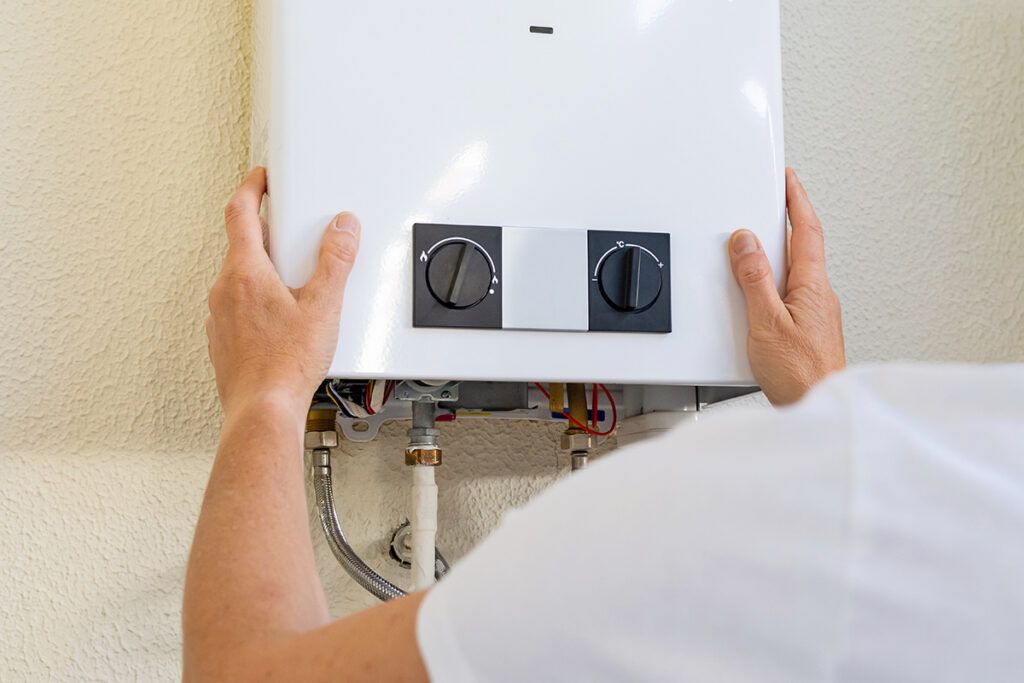
But it’s not just the HVAC you should be worried about — consider replacing your water heater as well. Swapping from a less efficient water heater to an ENERGY STAR device uses 70% less energy and can help families save $550 annually. ENERGY STAR-certified refrigerators can also save you roughly $150 over the product’s lifetime.

Advertisement
Advertisement

Featured Image Credit: © miniseries—E+/Getty Images

More From Our Network

Better Report is part of Inbox Studio, an email-first media company. *Indicates a third-party property.

Go Retro With This 1960s Fashion Quiz

Quiz Daily

Go Retro With This 1960s Fashion Quiz

True or False: Are You a Master of U.S. Geography?

Travel Quiz

True or False: Are You a Master of U.S. Geography?

5 Reasons You Can Be Denied Boarding an Airplane

Daily Passport

5 Reasons You Can Be Denied Boarding an Airplane

What Did People Do Before Eyeglasses?

History Facts

What Did People Do Before Eyeglasses?

How To Use a Balloon To Clean Up Dust

House Outlook

How To Use a Balloon To Clean Up Dust

11 Shopping Hacks Costco Members Should Know

FinanceBuzz*

11 Shopping Hacks Costco Members Should Know

Share this article

  • Share to Facebook
  • Share to Twitter
  • Copy Url
  • Share to Email
Bennett Kleinman
Staff Writer

Bennett Kleinman is a New York City-based staff writer for Inbox Studio. He is also a freelance comedy writer, devoted New York Yankees and New Jersey Devils fan, and thinks plain seltzer is the best drink ever invented.

This article is for general informational purposes only.
Affiliate Disclaimer Medical Disclaimer Financial Disclaimer

Updated: July 20, 2023
Posted In: Wealth
Hero Image Credit: Better Report
Advertisement

Related Articles

5 Things Your Car Needs Before the First Freeze

4 min read

6 Amazon Prime Day Hacks

6 min read

Is It Actually Better To Lease a Car?

9 min read

7 Free MIT Classes You Can Experience From Home

4 min read

The Bedroom Color That Adds $2,000 to Your Home Value

3 min read
Advertisement

The Surprising Age When Life Satisfaction Peaks

Health | Updated: July 24, 2026
Jennifer M. Wood
Author
Jennifer M. Wood has been writing about news, entertainment, culture, and travel for longer than she cares to admit. She lives just outside Philadelphia with her husband and an ever-growing menagerie of rescue pets.
Woman with back to camera, arms open
Better Report

Do you feel satisfied? The answer might just depend on your age.

A new survey of more than 6,400 older Americans offers new insight into the things that really matter in life, and when. Cherry Signals Data, a consumer research and digital PR firm, spoke with 6,442 participants 65 and older to reflect on when they felt most fulfilled, as well as the roles that family, career, friendships, romance, and lifestyle played in their overall well-being — and what respondents said may surprise you. 

The Magic Number

Credit: © Paperkites—iStock/Getty Images 

For many respondents, age 52 is the point at which they felt most satisfied.

Advertisement
Advertisement

“The findings suggest that, for many Americans, peak life satisfaction arrives in the early fifties,” the report notes. “By that stage, many people have moved beyond the more uncertain years of early adulthood and may have built some of the foundations commonly associated with stability: close relationships, family ties, a home, an established career, and enough financial comfort to enjoy small luxuries such as travel, meals out, hobbies, or time with loved ones.”

While the overall age landed at 52, the magic number varied dramatically by state, from 37 in Maryland and Mississippi to 57 in California and New York. The survey didn’t explore why some states skewed younger or older, and the authors note that state-level figures should be viewed as estimates rather than definitive measures.

Advertisement
Three older men in a park
Credit: © andreswd—E+/Getty Images

A Friend Indeed

Perhaps the clearest takeaway from the survey is that happiness seems to be rooted in connection. Romantic relationships often receive the bulk of attention in discussions about life satisfaction, but respondents in this survey placed a high value on the wider network of personal relationships they had built over the years. More than one-third said those connections were what brought them the most happiness, far outpacing any other category.

Recommended Articles

  • The Safety Rules for Candles You Probably Don’t Know

  • 5 Things Your Car Needs Before the First Freeze

  • 6 Amazon Prime Day Hacks

  • 5 Things To Ask Your Doctor About the New Flu Shot

Advertisement
Advertisement

Reader Favorites

  • Woman looking in fridge

    9 Foods You Should Toss ASAP if They’re Expired

  • Person eating salad

    7 Things a Chef Never Orders at a Restaurant

  • Cherry angioma

    Are the Tiny Red Dots on Your Skin Dangerous?

Notably, romantic relationships ranked much lower, with just 15% of people citing their partners as their greatest source of satisfaction. The findings suggest that for many older Americans, fulfillment comes not from a single person but from a wider circle, including friends, family members, neighbors, and longtime companions.

Here’s the full ranking of where life satisfaction comes from, according to the survey:

  1. Friendships & Relationships: 34%
  2. Health: 18%
  3. Romantic Partner: 15%
  4. Career: 14%
  5. Home: 11%
Advertisement
Advertisement
Three older women smiling
Credit: © LaylaBird—E+/Getty Images

The Happiness Curve

This age finding is consistent with a growing body of research suggesting that many people become happier as they age. Psychologists have observed what is sometimes called the “Happiness Curve,” in which well-being dips during midlife before rebounding later on as people gain perspective, become more comfortable with themselves, and are able to focus their energy on the things that matter most.

In other words, true happiness may be less about arriving at a particular age and more about reaching a stage where your priorities become clearer. The pressures of building a career, raising children, and feeling the need to conform to traditional markers of success often lessen, giving way to a greater appreciation for meaningful relationships, personal interests, and time spent doing things that spark joy.

Advertisement
Advertisement

No matter what your age, the survey offers a reassuring message that your happiest years are never necessarily behind you. While 52 may be the age the survey pinpointed, the bigger lesson is that personal fulfillment comes from the connections, experiences, and sense of purpose we cultivate throughout our lives. Those opportunities don’t disappear with age; oftentimes, they only become easier to recognize.

Advertisement

Featured Image Credit: © mapodile—E+/Getty Images

More From Our Network

Better Report is part of Inbox Studio, an email-first media company. *Indicates a third-party property.

Go Retro With This 1960s Fashion Quiz

Quiz Daily

Go Retro With This 1960s Fashion Quiz

True or False: Are You a Master of U.S. Geography?

Travel Quiz

True or False: Are You a Master of U.S. Geography?

5 Reasons You Can Be Denied Boarding an Airplane

Daily Passport

5 Reasons You Can Be Denied Boarding an Airplane

What Did People Do Before Eyeglasses?

History Facts

What Did People Do Before Eyeglasses?

How To Use a Balloon To Clean Up Dust

House Outlook

How To Use a Balloon To Clean Up Dust

11 Shopping Hacks Costco Members Should Know

FinanceBuzz*

11 Shopping Hacks Costco Members Should Know

Share this article

  • Share to Facebook
  • Share to Twitter
  • Copy Url
  • Share to Email
Jennifer M. Wood
Writer

Jennifer M. Wood has been writing about news, entertainment, culture, and travel for longer than she cares to admit. She lives just outside Philadelphia with her husband and an ever-growing menagerie of rescue pets.

This article is for general informational purposes only.
Affiliate Disclaimer Medical Disclaimer Financial Disclaimer

Updated: May 8, 2026
Posted In: Health
Hero Image Credit: Better Report
Advertisement

Related Articles

5 Things To Ask Your Doctor About the New Flu Shot

5 min read

Is Sourdough Actually Healthier Than Regular Bread?

7 min read

Do You Really Need a Bidet in Your Home?

4 min read

3 Common Sleep Habits That May Be Aging Your Brain

5 min read

Is the Traditional Mediterranean Diet Actually the Best for Your Brain?

4 min read
Advertisement

What Your Tongue Says About Your Health

Health | Updated: July 22, 2026
Ali Eldridge
Author
Ali Eldridge is a writer and editor based in Chicago. Currently the editor of "What on Earth! Magazine," she has also contributed extensively to Encyclopaedia Britannica and published several books for children. She spends much of her free time learning new languages and trading puns with her clever kid.
Woman licking ice cream cone
Better Report

The human tongue is an impressive and important organ, albeit one that many people don’t pay much attention to. This muscular multitasker helps you move food and drink around in your mouth for chewing and swallowing and is essential for speaking and even breathing properly. Your tongue can also be a key indicator of some health conditions and illnesses, providing valuable information about many systems in your body. Here’s an overview of tongue characteristics that can give you signals about your health — and how to interpret those signals.

Macro shot of tongue texture
Credit: © amixstudio/stock.adobe.com

Texture

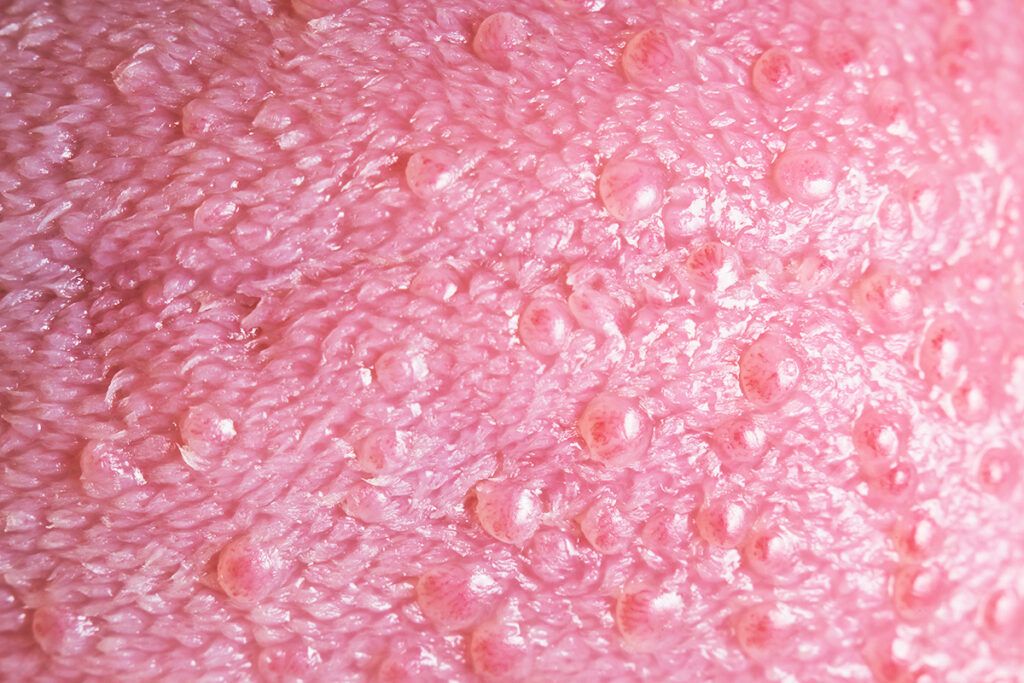
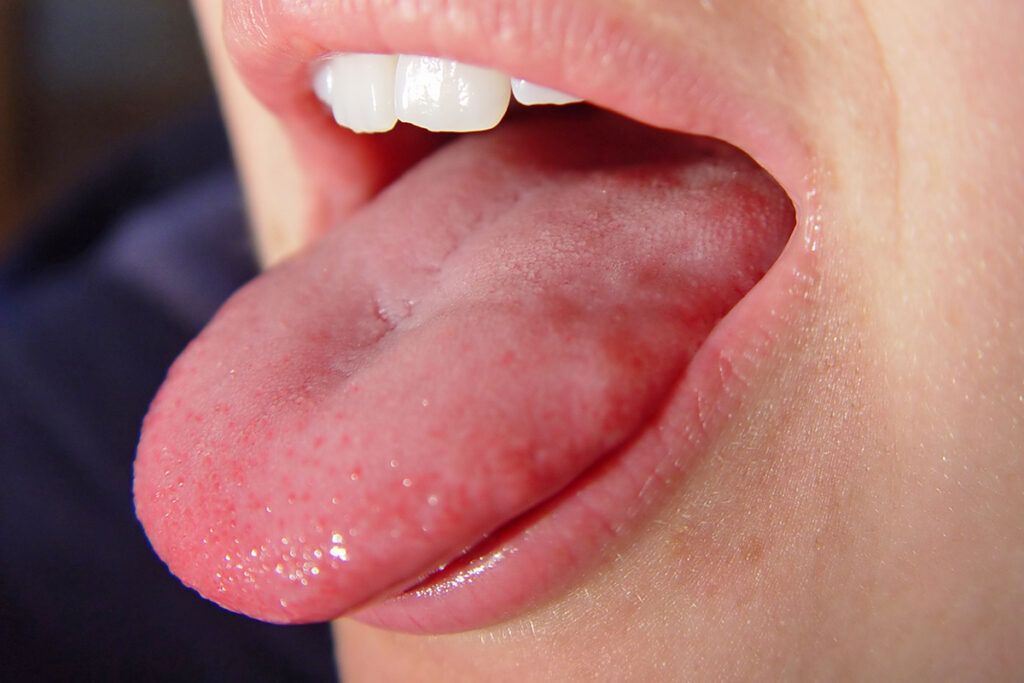
A healthy tongue is somewhat rough and bumpy in texture. Those little bumps are called papillae; there are four types, and inside three of them are your taste buds. If your tongue feels or appears to be completely smooth, a condition called atrophic glossitis (or sometimes simply “bald tongue”), it could indicate a deficiency in nutrients such as iron or vitamin B12.

Advertisement
Advertisement

Painful bumps on the tongue could come from things like biting it or smoking. In more infrequent cases, they could be a sign of oral cancer. The tongue can also develop cold sores, although those are more common on the lips. 

As you get older, you may notice more wrinkles and cracks appear in your tongue. Those are usually normal signs of aging, but you should still take extra care to clean those crevices.

Tongue
Credit: Melissa King/stock.adobe.com

Moisture

Moisture helps your tongue with its essential functions, so it should feel moist with saliva the majority of the time. A dry mouth and tongue often indicates dehydration, but it can also be the result of high blood sugar, autoimmune conditions such as Sjögren’s syndrome or lupus, or breathing with your mouth open. 

Advertisement

As you age, your mouth may produce less saliva, which can lead to dry mouth. This may, in turn, impede your tongue’s functionality and subsequently affect your ability to taste and swallow.

Curled tongue
Credit: © Ben Gingell/stock.adobe.com

Movement

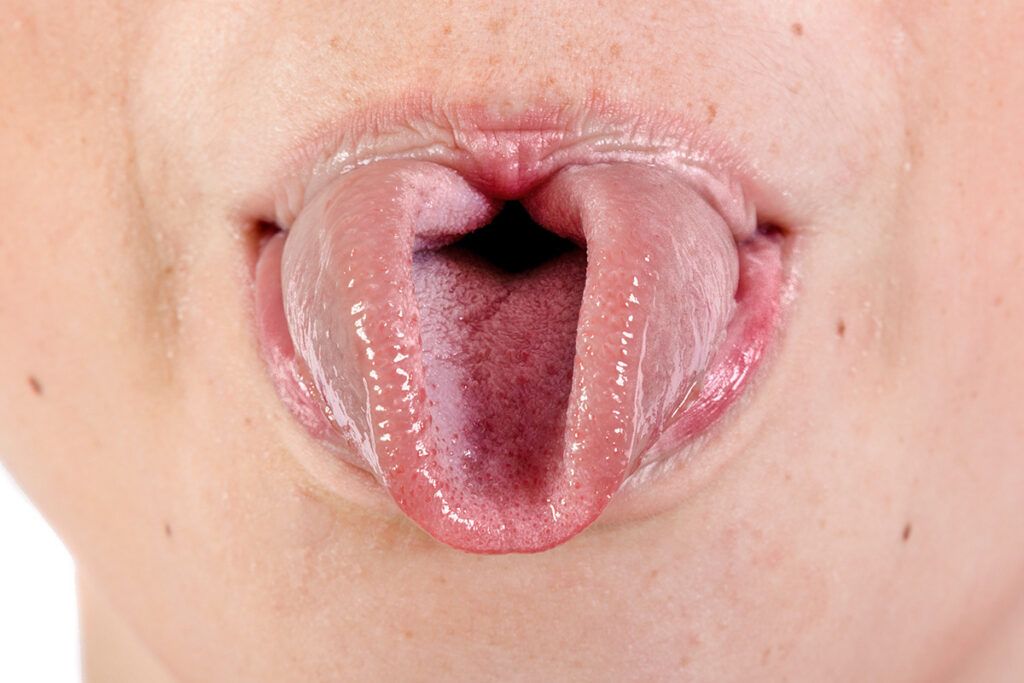
The tongue is mostly made of muscles, and a healthy tongue can move up, down, forward, back, and from side to side. You should also be able to extend and retract your tongue to make it longer and shorter. Some people may be able to curl, roll, and twist it. 

Difficulty moving the tongue may be due to nerve damage, which can cause the tongue muscles to become weak or paralyzed. Research has shown that muscle tissue in the tongue shrinks and fat mass increases as we age, which can lead to differences in tongue function over time.

Recommended Articles

  • The Safety Rules for Candles You Probably Don’t Know

  • 5 Things Your Car Needs Before the First Freeze

  • 6 Amazon Prime Day Hacks

  • 5 Things To Ask Your Doctor About the New Flu Shot

Advertisement
Advertisement

Reader Favorites

  • Woman looking in fridge

    9 Foods You Should Toss ASAP if They’re Expired

  • Person eating salad

    7 Things a Chef Never Orders at a Restaurant

  • Cherry angioma

    Are the Tiny Red Dots on Your Skin Dangerous?

Another major cause of decreased tongue movement is ankyloglossia, also known as tongue-tie. People with this condition have a short frenulum (the band of tissue that connects the tongue to the floor of the mouth). Tongue-tie can sometimes impair speech, and in babies it can cause issues with feeding.

Woman licking ice cream cone
Credit: © STUDIO TAURUS/stock.adobe.com

Sense of Taste

A distorted sense of taste, or dysgeusia, can be caused by several different medical conditions, including cancers of the head and neck, chronic acid reflux, inflammation, diabetes, hypothyroidism, kidney or liver disease, and infections such as COVID-19. It can also be caused by nerve damage or neurological conditions such as Parkinson’s disease, Alzheimer’s disease, or multiple sclerosis. 

Advertisement
Advertisement

People who are deficient in vitamin B or zinc often experience a distorted sense of taste as well. Some people find these changes come naturally with age or even with the surge of hormones associated with pregnancy. 

Advertisement

Additionally, the number of taste buds you have decreases as you get older. A complete loss of taste, or ageusia, is common in people older than 50, and it can be caused by many of the same conditions that cause dysgeusia or by other mouth issues such as tongue inflammation or periodontal disease. Medications may also affect your ability to taste or cause a loss of taste while you are taking them.

Illustration of tongue
Credit: © Mohammed Haneefa Nizamudeen—iStock/Getty Images

Size

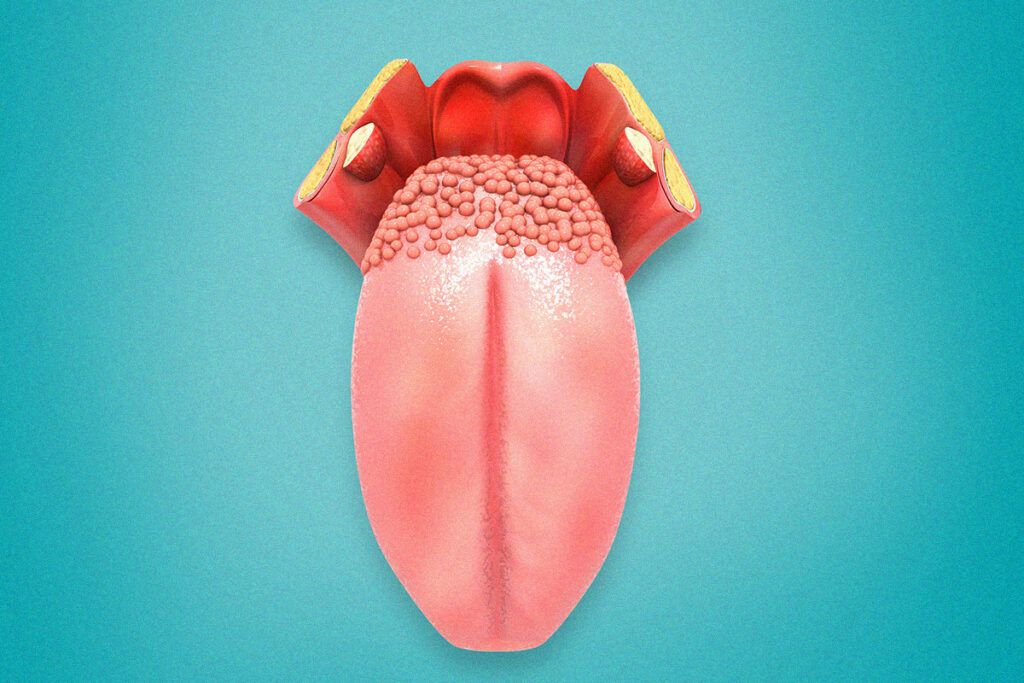
The average human tongue is about 3 inches long and 2.5 inches wide. A tongue noticeably larger than this can indicate an injury or an inflammatory health condition. Enlarged tongues may also be a sign of amyloidosis, a rare disorder that causes clumps of proteins to build up in bodily tissues. 

Advertisement
Advertisement
Tongue sticking out
Credit: © Sunny/stock.adobe.com

Shape

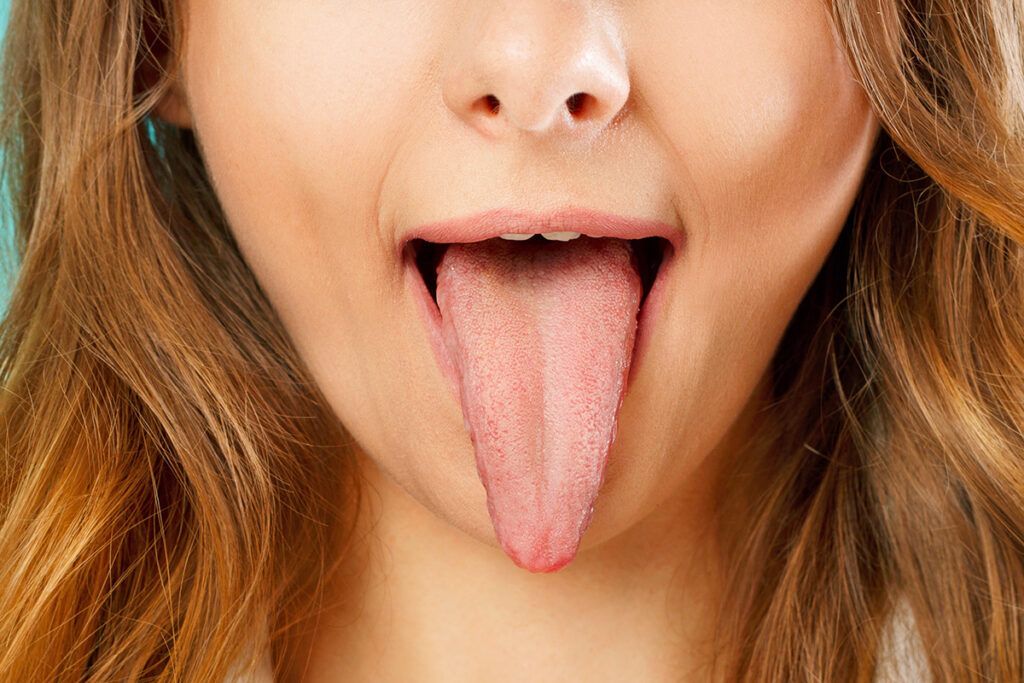
The tongue generally has a smooth and somewhat rounded shape. If your tongue is scalloped the edge or displays teeth marks, however, that may be a sign you’re grinding your teeth at night or that your tongue sits abnormally against your teeth. This can also be an indication of sleep apnea, as the tongue may be pushing into the teeth in an attempt to open the airway. Scalloped tongue can also be caused by conditions such as Down syndrome or hypothyroidism.

Advertisement
Advertisement
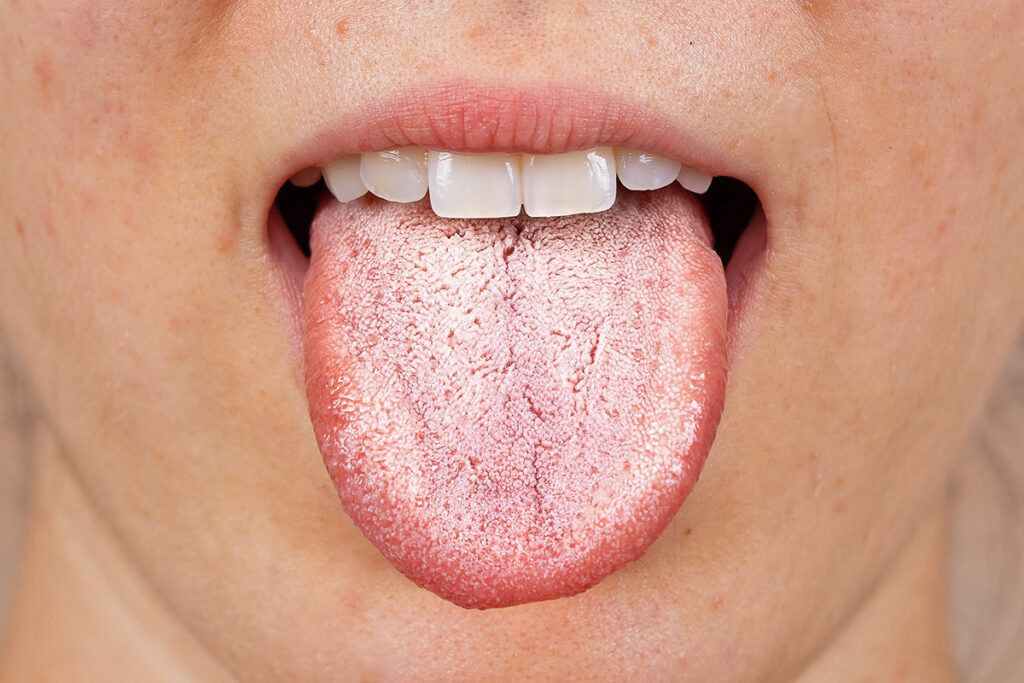
Tongue with white coating
Credit: © Alessandro Grandini/stock.adobe.com

Color

Normally, the tongue has a pinkish-red hue, but variations in its color can indicate various medical issues.

Creamy white patches on the tongue can be a sign of thrush (a fungal infection). If the patches have a lacy appearance, they may be lichen planus (an autoimmune condition). Leukoplakia, a condition that causes flat white patches in the mouth that won’t come off, can be caused by a variety of factors, including irritation in the mouth. The patches are typically benign, but some can show signs of cancer.

Advertisement
Advertisement

Black (or sometimes yellow or brown) discoloration on the tongue can indicate a weakened immune system caused by a condition such as diabetes, heavy tobacco use, or an overgrowth of bacteria and debris, among other causes. A deep red or purple color may be caused by vitamin deficiency, Kawasaki disease (a rare childhood disease that causes inflammation of blood vessels), scarlet fever, or a benign condition called geographic tongue, which causes inflammation in patches that may look like a map. A yellow tongue can be the result of smoking or coffee intake, psoriasis, or sometimes jaundice, while blue tongues are most often caused by oxygen deficiency (so you should call your doctor right away if you’re experiencing this).

Little girl sticking out tongue
Credit: © andrey/stock.adobe.com

Sensation

Tongue numbness can happen for several reasons, including allergic reactions to food or medicine, nerve damage, vitamin deficiency, or autoimmune disorders. In some rarer cases, numbness or tingling of the tongue can be a sign of a stroke. 

Advertisement

Soreness of the tongue can be caused by minor infections, smoking, sores, or wearing dentures that don’t fit properly. More infrequently, tongue soreness can be a symptom of oral cancer. A soreness that burns may be due to burning mouth syndrome, a condition that’s most common in people who have gone through menopause.

Advertisement
Advertisement

You don’t need to obsessively monitor your tongue, but checking it every now and again can help you keep tabs on your overall health. And while minor variations from day to day can be normal, if you notice any changes in your tongue’s condition or ability to function, it may be a good idea to schedule a visit with a health care professional.

Featured Image Credit: © STUDIO TAURUS/stock.adobe.com

More From Our Network

Better Report is part of Inbox Studio, an email-first media company. *Indicates a third-party property.

Go Retro With This 1960s Fashion Quiz

Quiz Daily

Go Retro With This 1960s Fashion Quiz

True or False: Are You a Master of U.S. Geography?

Travel Quiz

True or False: Are You a Master of U.S. Geography?

5 Reasons You Can Be Denied Boarding an Airplane

Daily Passport

5 Reasons You Can Be Denied Boarding an Airplane

What Did People Do Before Eyeglasses?

History Facts

What Did People Do Before Eyeglasses?

How To Use a Balloon To Clean Up Dust

House Outlook

How To Use a Balloon To Clean Up Dust

11 Shopping Hacks Costco Members Should Know

FinanceBuzz*

11 Shopping Hacks Costco Members Should Know

Share this article

  • Share to Facebook
  • Share to Twitter
  • Copy Url
  • Share to Email
Ali Eldridge
Writer

Ali Eldridge is a writer and editor based in Chicago. Currently the editor of "What on Earth! Magazine," she has also contributed extensively to Encyclopaedia Britannica and published several books for children. She spends much of her free time learning new languages and trading puns with her clever kid.

This article is for general informational purposes only.
Affiliate Disclaimer Medical Disclaimer Financial Disclaimer
Updated: July 1, 2026
Posted In: Health
Hero Image Credit: Better Report
Advertisement

Related Articles

5 Things To Ask Your Doctor About the New Flu Shot

5 min read

Is Sourdough Actually Healthier Than Regular Bread?

7 min read

Do You Really Need a Bidet in Your Home?

4 min read

3 Common Sleep Habits That May Be Aging Your Brain

5 min read

Is the Traditional Mediterranean Diet Actually the Best for Your Brain?

4 min read
Advertisement

6 Things You Can Wash in the Dishwasher That Aren’t Dishes

erin
Home | Updated: July 22, 2026
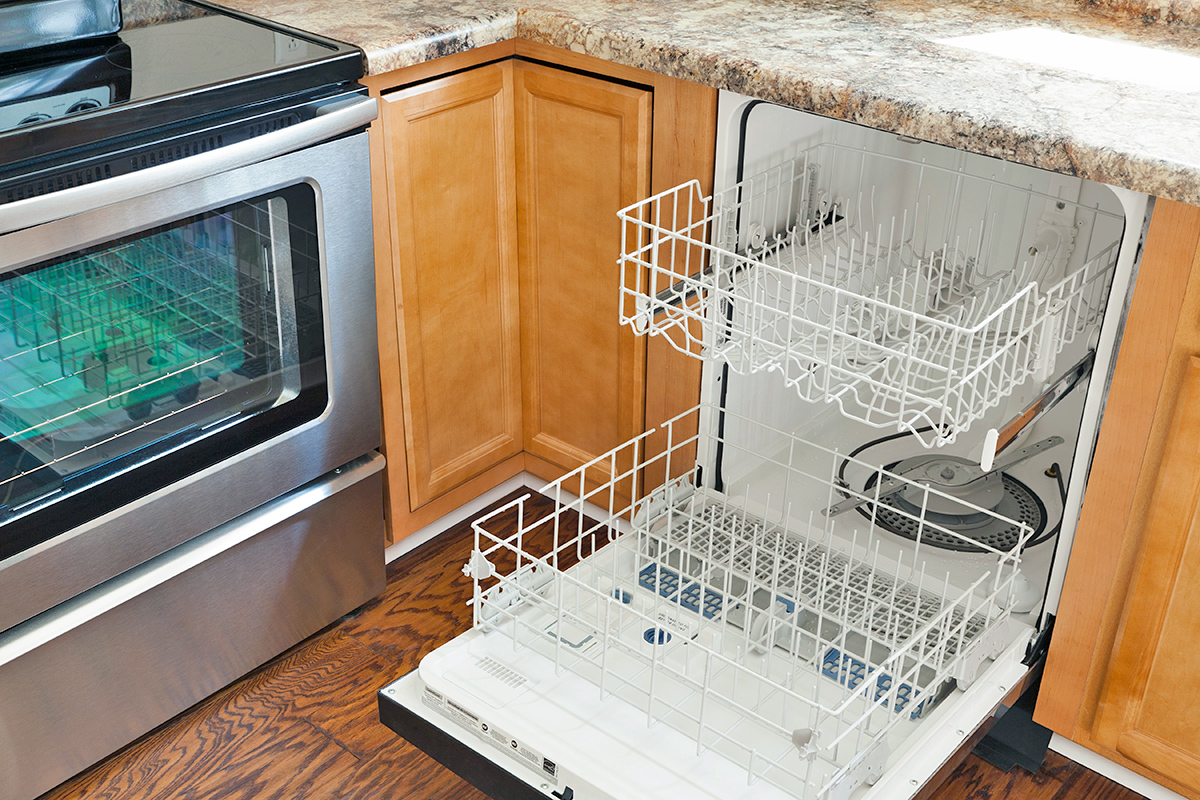
Open, empty dishwasher
Better Report

All featured products and deals are selected independently and objectively by the author. Better Report may receive a share of sales via affiliate links in content.

Your dishwasher may be one of the hardest-working appliances in your home, but chances are, you’re only using it for plates, cups, and cutlery. This kitchen staple can tackle way more than that, though. From bath toys to sports gear, a dishwasher can help clean a variety of household items that rarely get the attention they deserve — just be sure to check care instructions before loading them in.

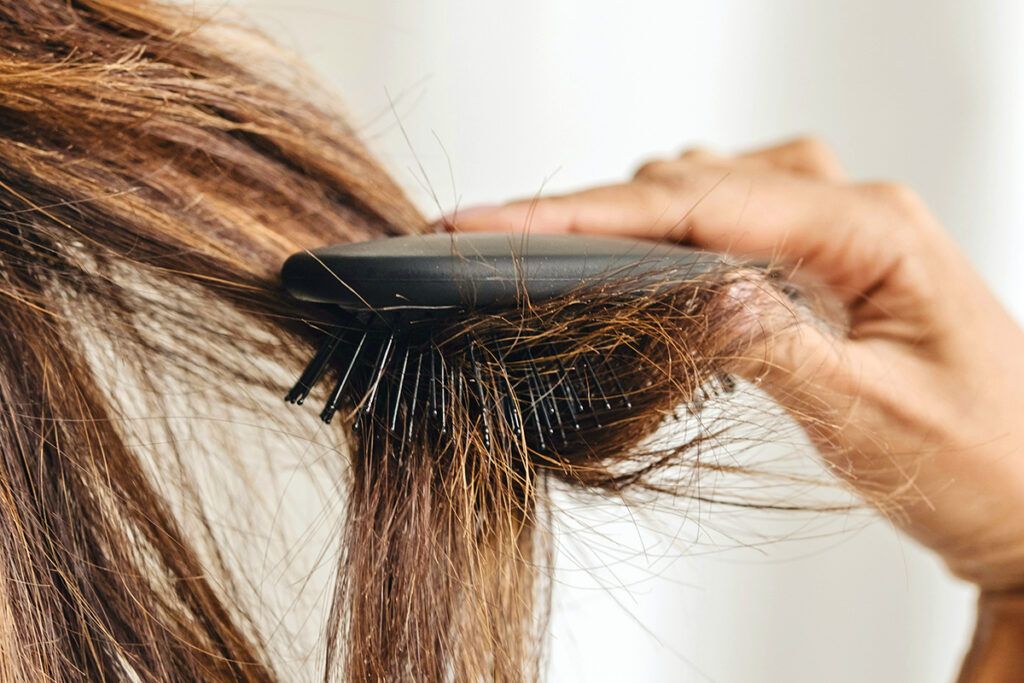
Hair brush in hair
Credit: © Mathilde Langevin/Unsplash.com 

Beauty and Personal Care Tools

Hairbrushes pick up more than just loose locks: Over time, hair products, natural oils, dust, and dead skin cells accumulate in them. If you want to clean them in the dishwasher, start by pulling out any trapped hair and clearing debris from the bristles, then pop them in the top rack. (Never put brushes with wooden handles or natural bristles in the dishwasher, though, since the heat and moisture can damage them.) 

Advertisement
Advertisement

Other personal care items like metal manicure tools can go through a dishwasher cycle in the utensil section to help remove buildup and everyday grime. Dry them thoroughly to prevent rusting. 

Lastly, the reservoir of your water flosser may also be safe to clean in the dishwasher. Since they’re constantly exposed to moisture, they can accumulate mineral deposits over time. The New York Times advises sticking them on the top rack of your dishwasher, removing them before the heated drying cycle, and allowing them to air-dry completely before reassembling the device.

Woman in baseball cap
Credit: © Andrej Lišakov/Unsplash.com 

Baseball Caps

A sweaty, dirty baseball cap doesn’t always require a run in the washing machine. In fact, the dishwasher can be a surprisingly good alternative: It will help clean away grime without flattening the hat. All you need to do is place it in the top rack in either a special plastic frame or on one of the prongs to hold it in place. You should avoid detergents with bleach or citric acid, and skip the heated-dry setting in favor of air-drying.

Recommended Articles

  • The Safety Rules for Candles You Probably Don’t Know

  • 5 Things Your Car Needs Before the First Freeze

  • 6 Amazon Prime Day Hacks

  • 5 Things To Ask Your Doctor About the New Flu Shot

Advertisement
Advertisement

Reader Favorites

  • Woman looking in fridge

    9 Foods You Should Toss ASAP if They’re Expired

  • Person eating salad

    7 Things a Chef Never Orders at a Restaurant

  • Cherry angioma

    Are the Tiny Red Dots on Your Skin Dangerous?

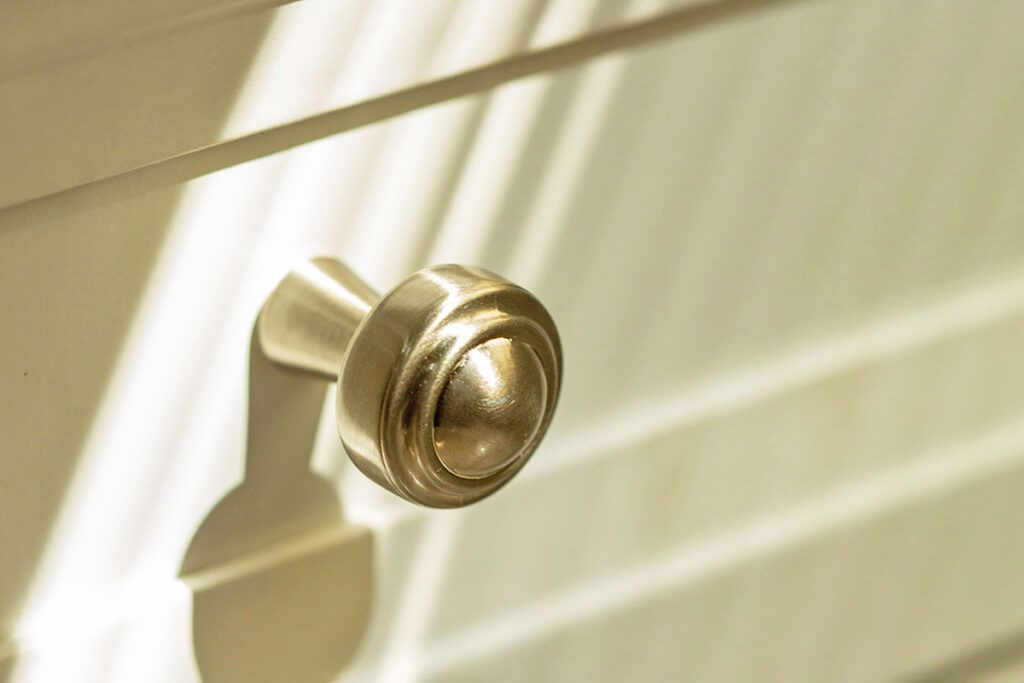
Cabinet knob
Credit: © Ruan Richard Rodrigues/Unsplash.com 

Cabinet Knobs and Handles

The hardware in your kitchen and bathroom is touched countless times throughout the day, making it a magnet for fingerprints, grime, and germs. Metal knobs, pulls, and handles — especially if they have grooves or crevices — can be refreshed in the dishwasher if they’re made of a dishwasher-safe metal or ceramic. Just place small pieces securely in a mesh bag or the utensil holder to prevent them from slipping through the racks.

Advertisement
Mouth guards
Credit: © Aneduard—iStock/Getty Images

Sports Equipment

Between practices, games, and time spent outdoors, sports equipment can accumulate plenty of sweat, dirt, and grime. According to Whirlpool, certain items — including shin guards, mouth guards, protective cups, and even golf balls — can often be cleaned in the dishwasher. Golf balls should be placed in a mesh bag or enclosed container on the top rack to keep them from rolling around during the wash cycle.

Advertisement
Advertisement
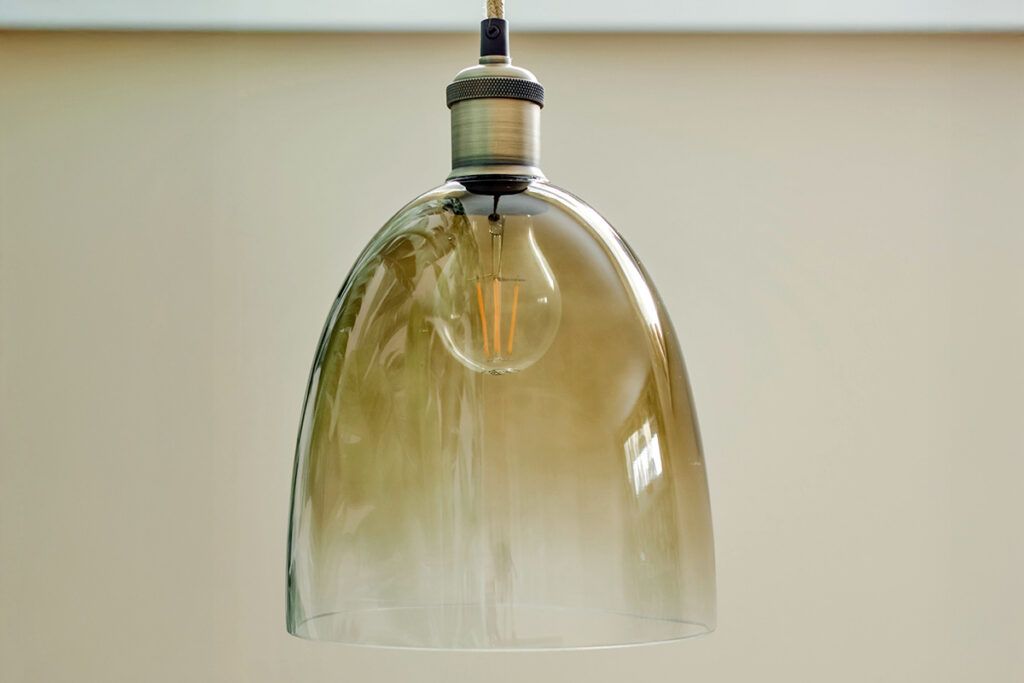
Glass light cover
Credit: © Eva Bronzini/Pexels.com 

Light Fixtures

Certain nonporous home décor items, including vases, sturdy soap dishes, and light fixtures, can often be cleaned in the dishwasher. Glass light fixtures should be placed in the top rack far enough apart that they don’t rub together. Forgo the heated cycle, and make sure not to put them back in place until they’re completely dry. Whirlpool advises against putting antiques, hand-painted pieces, and anything with delicate finishes that may not withstand high heat in the dishwasher. 

Rubber ducks in water from above
Credit: © Irina Alekseevskaya/Pexels.com  

Bath Toys and Kids’ Accessories

If you have grandkids, you know bath toys with small holes can get gross fast, since trapped water can lead to mold and mildew growth. If the bath toys you have are labeled dishwasher-safe, place them on the top rack and run a hot cycle to help remove buildup. Some small plastic baby items, including teething toys and pacifier holders, can often be cleaned the same way. But before placing them in the dishwasher, check the manufacturer’s instructions and make sure they don’t contain any electronic components.

Advertisement
Advertisement

Featured Image Credit: © Tetra Images/Getty Images

More From Our Network

Better Report is part of Inbox Studio, an email-first media company. *Indicates a third-party property.

Go Retro With This 1960s Fashion Quiz

Quiz Daily

Go Retro With This 1960s Fashion Quiz

True or False: Are You a Master of U.S. Geography?

Travel Quiz

True or False: Are You a Master of U.S. Geography?

5 Reasons You Can Be Denied Boarding an Airplane

Daily Passport

5 Reasons You Can Be Denied Boarding an Airplane

What Did People Do Before Eyeglasses?

History Facts

What Did People Do Before Eyeglasses?

How To Use a Balloon To Clean Up Dust

House Outlook

How To Use a Balloon To Clean Up Dust

11 Shopping Hacks Costco Members Should Know

FinanceBuzz*

11 Shopping Hacks Costco Members Should Know

Share this article

  • Share to Facebook
  • Share to Twitter
  • Copy Url
  • Share to Email

This article is for general informational purposes only.
Affiliate Disclaimer Medical Disclaimer Financial Disclaimer

Updated:
Posted In: Home
Hero Image Credit: Better Report

Advertisement

Related Articles

The Safety Rules for Candles You Probably Don’t Know
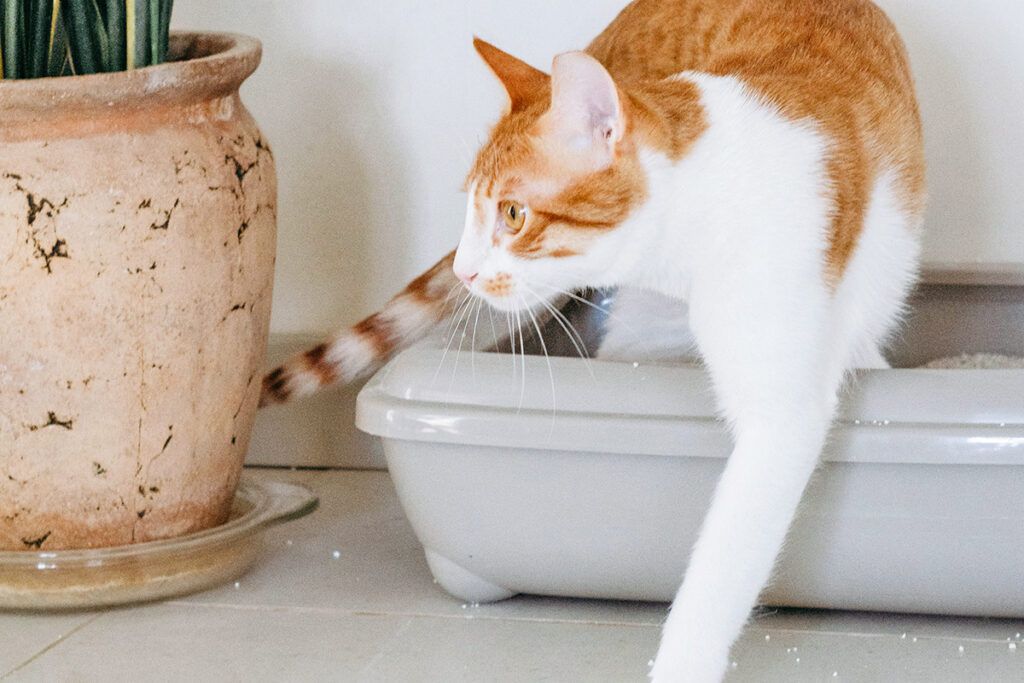
5 min read

9 Items in Your Basement You Should Toss Right Now

5 min read

5 Vegetables You Should Never Store in the Fridge

3 min read

Why a Flashing Check Engine Light Is Different From a Solid One

3 min read

Why Does Your Sink Have a Tiny Hole?

3 min read
Advertisement

Posts navigation

Older posts
Newer posts
  • Home
  • Health
  • Wealth
  • Logo
  • Advertise
  • About
  • Contact Us
  • Privacy Policy
  • Terms of Use
  • Your Privacy Choices
x
Thumb Image

Elevate your everyday.

Sign up to receive the practical tips and expert advice you need to pare down the complexities of everyday living right in your inbox.

Sorry, your email address is not valid. Please try again.

Your email is:

Edit Image
Sorry, your email address is not valid. Please try again.
Thank you for subscribing...

By subscribing you are agreeing to our Terms of Use and Privacy Policy.

Close image
Thumb Image
Second Thumb Image

Elevate your everyday.

Sign up to receive the practical tips and expert advice you need to pare down the complexities of everyday living right in your inbox.

Sorry, your email address is not valid. Please try again.

By subscribing you are agreeing to our Privacy Policy and Terms of Use.

Close image