Skip to content
Better Report
  • Home
  • Health
  • Wealth
8 Low-Maintenance Plants That Thrive on Neglect
  • Search
  • Subscribe
  • Home
  • Health
  • Wealth
  • About
  • Privacy Policy
  • Terms of Use
  • Contact Us
  • SubscribeSubscribe
  • Search
Thank you for confirming your email! Welcome to the community.

Tag: Food Safety

11 Food Safety Rules You’re Probably Breaking

Health | Updated: June 16, 2026
Fred Decker
Author
Fred Decker is a trained chef and former restaurateur. Since closing his restaurants over a decade ago he has been a prolific freelance writer, publishing several thousand articles on dozens of high-volume websites including Taste Of Home, Hunker, Tasting Table, Week&, eHow, and GOBankingRates. He lives on a rural acreage shared with a big garden, chickens, rabbits, and grandkids.
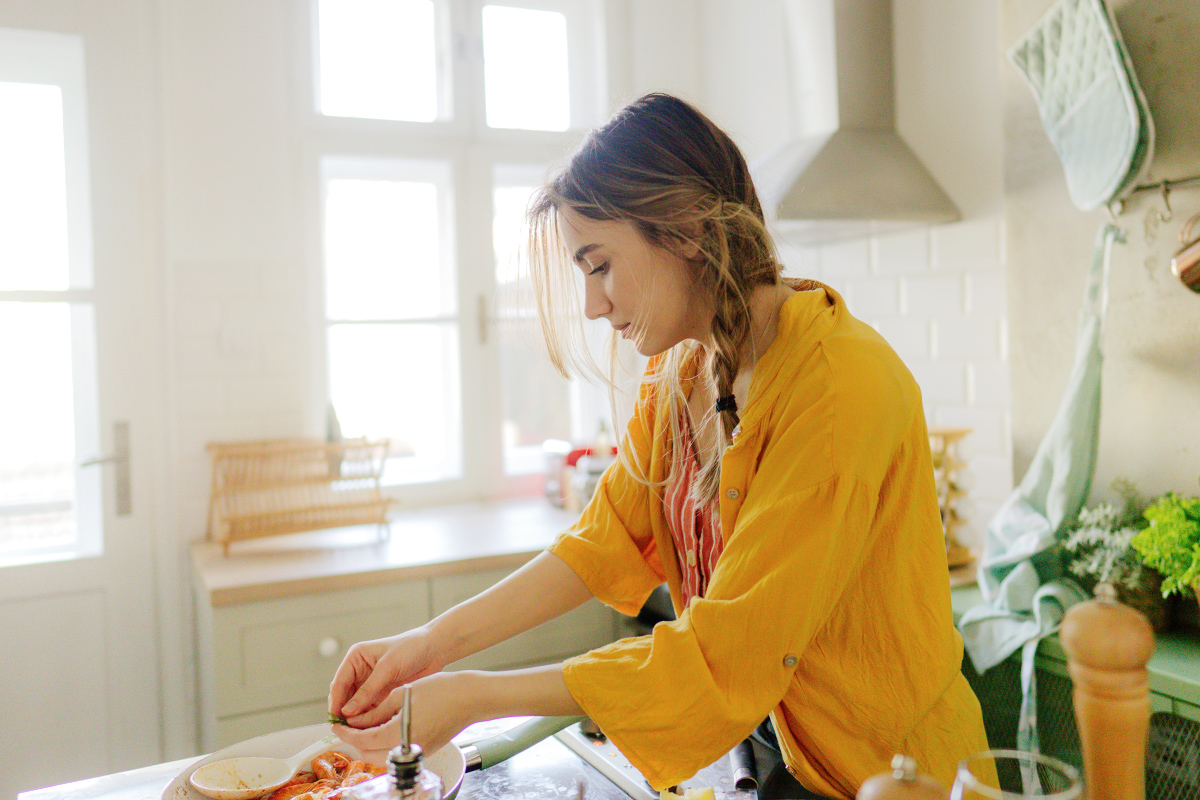
Woman making food
Better Report

All featured products and deals are selected independently and objectively by the author. Better Report may receive a share of sales via affiliate links in content.

Anyone who’s ever had formal culinary training can tell you that there’s a lot to learn about how to keep food safe — when I started my career, my classmates and I had to pass our food safety training before we were even allowed to set foot in the kitchen.  There’s good reason for that: According to the USDA’s Food Safety and Inspection Service, foodborne illness causes an estimated 48 million illnesses in the U.S. every year, and is responsible for about 3,000 deaths.   

The good news is that most of those illnesses are avoidable — it’s just a question of knowing (and following) food safety rules. As a former chef and food safety trainer, I see people breaking these 11 rules frequently. You’ll get away with them sometimes, but sooner or later, what you don’t know will hurt you and the ones you love. 
Advertisement
Advertisement
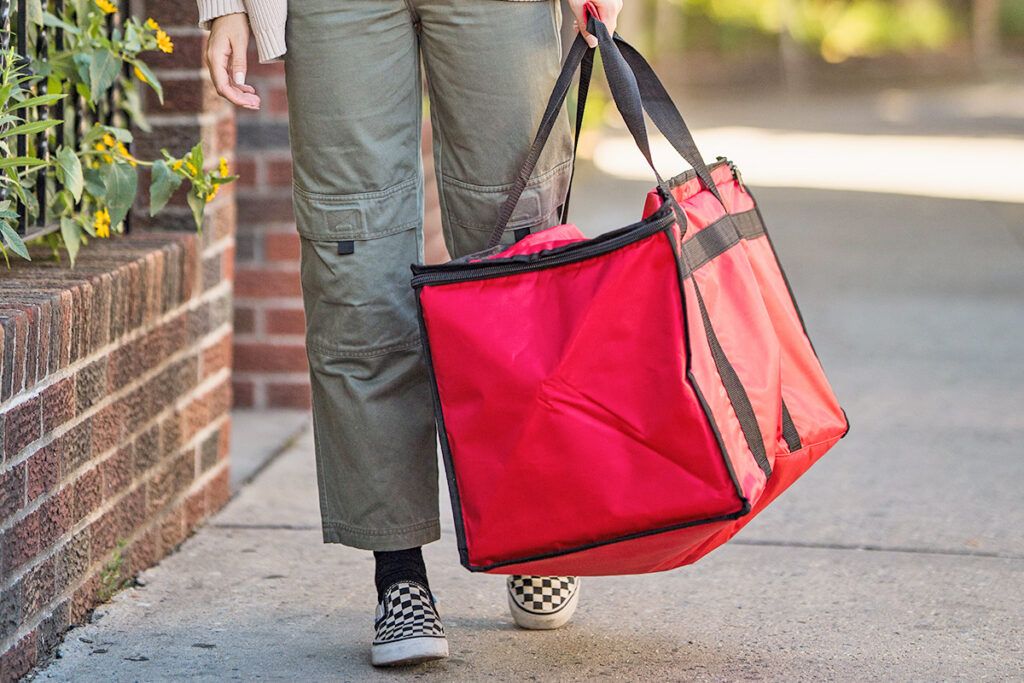
Person carrying insulated food bag
Credit: © Mizuno K/Pexels.com

Rule: Maintain the Cold Chain 

Your local supermarket is at the end of a very long shipping chain, and everyone who’s handled a product that’s perishable enough to require refrigeration or freezing — such as frozen shrimp — has checked and monitored its temperature at every step along the way. In the industry, this is referred to as “the cold chain.” 

Once you’ve bought that product, maintaining the cold chain — and with it, food safety — is up to you. So, when shopping, pick out your freezer- and cooler-case items last (every minute counts) and make sure you have a cooler or an insulated bag to pack them into for the trip home. This is especially important if you don’t live close to your supermarket or if you’re making a stop along the way. (Keep it to 30 minutes or less if your most-perishables, such as seafood and poultry, aren’t well insulated.) You wouldn’t leave dogs or kids in a hot, closed-up car, and those high temperatures can spoil your food as well. It’s less of a concern on cold winter days, but the midday sun can still raise your car’s interior temperature to an unsafe level, so keep that insulated bag handy. 
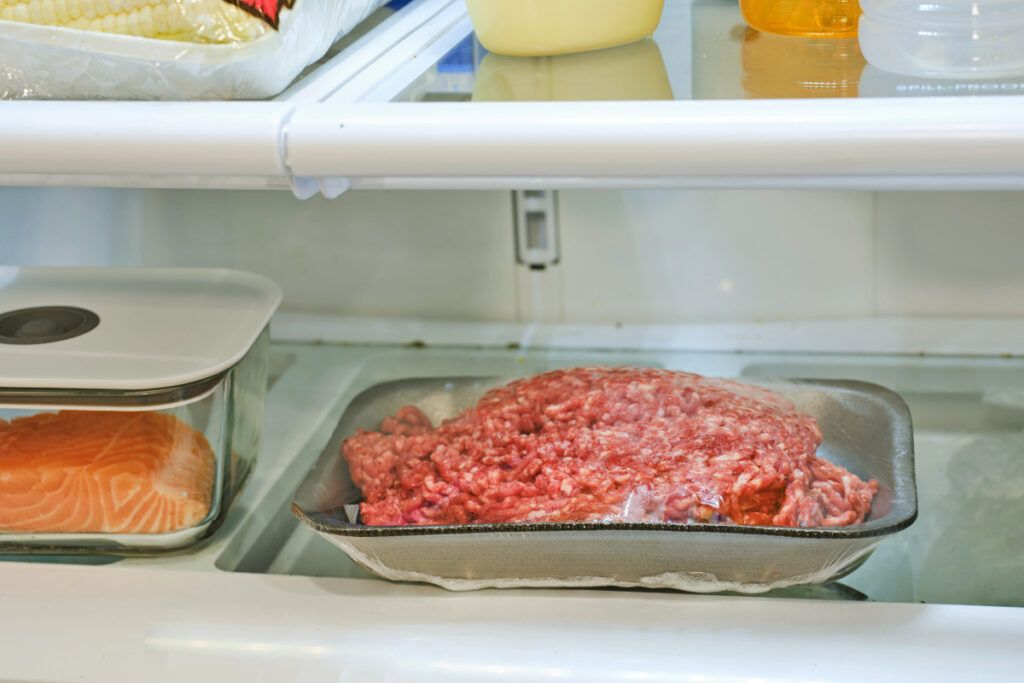
Ground meat on a plate in the fridge
Credit: © O2O Creative—E+/Getty Images

Rule: Store Foods Safely in Your Refrigerator  

Your fridge is designed to keep foods at a temperature between 32 and 40 degrees Fahrenheit, below the food “danger zone” (which ranges from above 40 degrees Fahrenheit to 140 degrees Fahrenheit) where bacteria can multiply freely. That goes a long way toward maintaining food safety. (You can use a thermometer periodically to check whether your fridge is as cold as it should be.) 

Recommended Articles

  • The 10 Healthiest Trader Joe’s Meals, According to a Dietitian

  • 5 Vegetables You Should Never Store in the Fridge

  • Is It Rude To Ask for Leftovers at Fancy Restaurants?

  • Is It Dangerous To Scratch Mosquito Bites?

Advertisement
Advertisement

Reader Favorites

  • Woman looking in fridge

    9 Foods You Should Toss ASAP if They’re Expired

  • Popcorn in a bowl

    7 ‘Bad’ Foods That Are Actually Good for You

  • Person sipping beer

    The Least Healthy Alcoholic Beverages

But how you organize and store your foods in the fridge is important, too. Things that you’ll eat without cooking or reheating, like salad greens, should be stored separately from risky perishables like raw meat. Meats should always be kept on your fridge’s bottom shelf (ideally toward the back, where it’s coldest), where they can’t contaminate other foods by dripping on them. Placing the meat in a bag, in an airtight container, or on a plate to contain drips helps, too. 
Advertisement
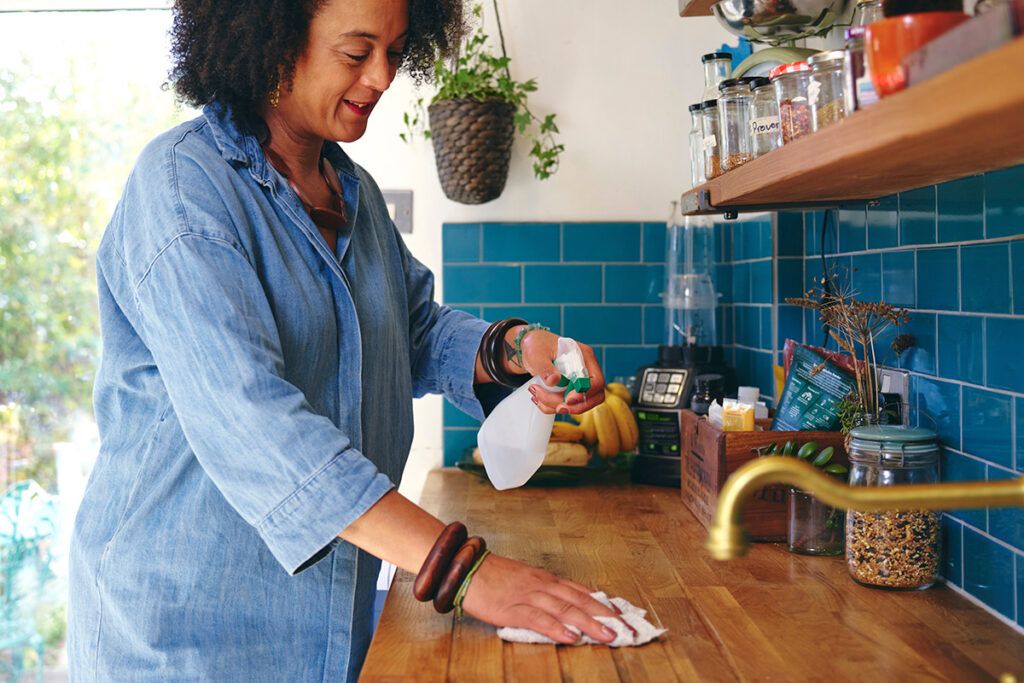
Woman cleaning counter
Credit: © Cultura Creative/stock.adobe.com

Rule: Clean and Sanitize Your Work Area

This is one of the biggest rules for line cooks, and it absolutely applies to home cooks as well. First, let me be clear that these are two separate steps: Cleaning means washing or scrubbing away any visible soil or debris, which can harbor bacteria, from your counter. Then you can use a food-safe sanitizer to clean your counter, utensils, and cutting boards as needed. 

You don’t need to buy fancy restaurant-style sanitizers: A teaspoon of bleach in a cup of room-temperature water works nicely. Measure those ingredients into a spray bottle. Don’t eyeball it; it won’t sanitize if you use too little, and it won’t be food-safe if you use too much. Next, use the bottle to thoroughly mist your work surfaces, and let the solution sit for at least a minute before wiping it away with a paper towel. The solution is good for only about 24 hours, so it’s best to make small batches and use them immediately. 

Advertisement
Advertisement

Note: Many household cleansers can sanitize your surfaces but typically aren’t food-safe. Feel free to use them — just wipe down surfaces afterward with a clean paper towel and fresh water to remove any residue. 
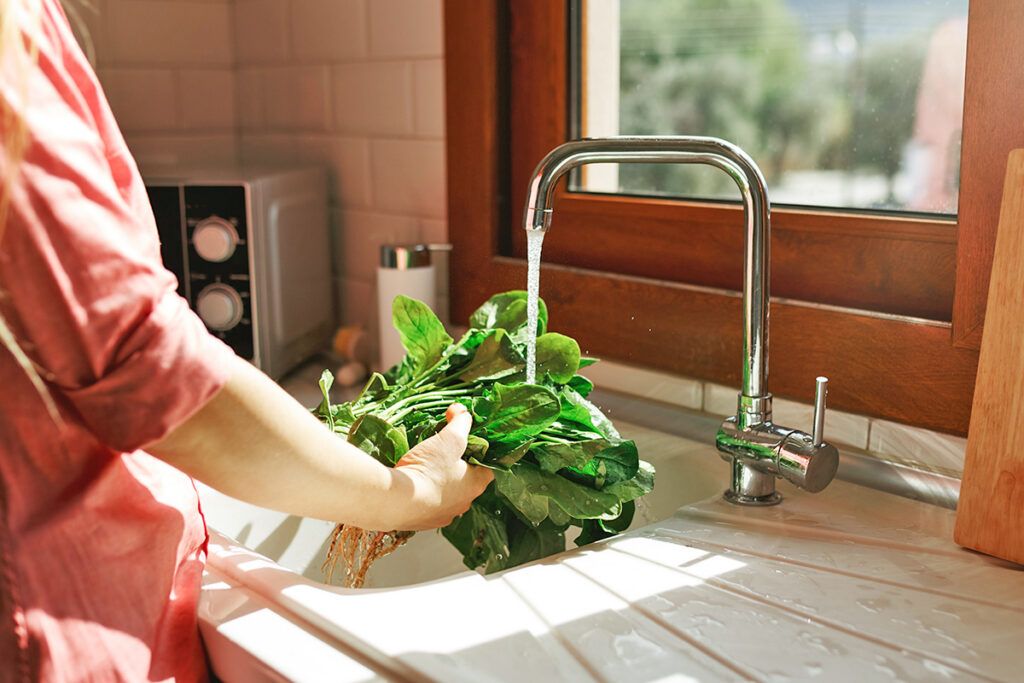
Washing produce
Credit: © Alina Bitta—iStock/Getty Images

Rule: Clean Foods as Needed (But Only Then)

I see home cooks going in both directions on this one. Sometimes, people rinse things that shouldn’t be rinsed, like poultry — that just spatters salmonella and other bacteria all around your sink and work area. Fresh produce, on the other hand, is something that often should be rinsed (especially if you’ll eat it without cooking), but might not be. 

Advertisement
Advertisement

Salad greens may pick up nasty pathogens like E. coli in the field, for example, and the warm, moist environment that makes alfalfa sprouts, bean sprouts, and similar products grow is also perfect for bacteria. Those types of things should be rinsed well in a bowl (not a sink, because those collect bacteria even without rinsing raw chicken) with 1 cup of cool water and ½ cup of distilled white vinegar before you put them on your sandwich or in your stir-fry. Melons should be scrubbed with a brush under running water, because their rinds (especially textured ones like cantaloupes) can trap dirt and bacteria. 

It’s almost always best not to rinse produce items until you’re ready to use them, though. Most fruits and vegetables, especially delicate ones such as berries and leafy greens, will deteriorate faster once they’re rinsed, and may be more vulnerable to bacteria and molds. 
Advertisement
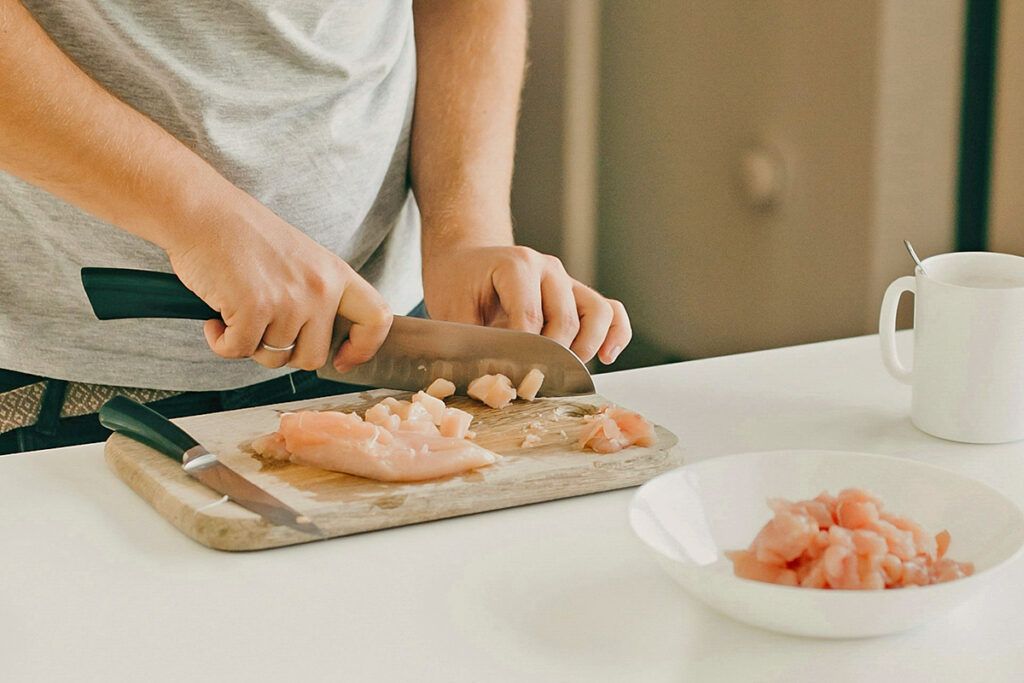
Cutting raw chicken on cutting board
Credit: © Getty Images/Unsplash.com

Rule: Use Separate Cutting Boards and Utensils for High-Risk Foods

One of the big risks in any kitchen is cross-contamination — accidentally transferring harmful bacteria from a high-risk food to other foods. In commercial kitchens we often use separate sets of color-coded cutting boards and knives for meats, fish, poultry, and produce to reduce the risk. You don’t necessarily have to do that, but the cutting boards aren’t expensive if you want to. (I buy sets like this one, and replace them as they get worn.) That will help keep nasty pathogens from, say, raw chicken out of your salad greens or melon wedges. 

Advertisement
Advertisement

Ideally, you’d have enough cutting boards, knives, and serving wares to use separate sets for each kind of food. If not, throw them in the dishwasher or use the method I described above to wash and sanitize everything that’s come into contact with raw meat, fish, or poultry — including utensils like a spatula — before using it for anything else. (And make sure to use a brush, not a sponge or a cloth; both can harbor disturbing levels of bacteria if not sanitized properly between uses.)
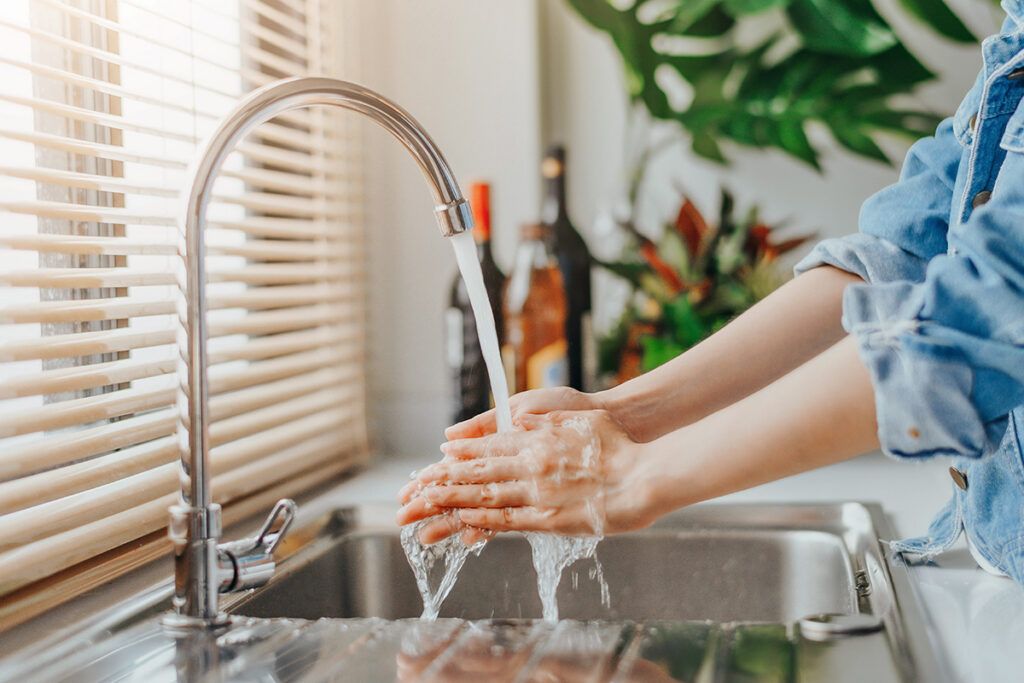
Washing hands
Credit: © interstid/stock.adobe.com

Rule: Change Gloves, or Wash Hands, After Every Task

This is closely related to the rule I’ve just mentioned, because “everything that’s come into contact with raw meat” includes your hands, which may be the likeliest way you’ll spread bacteria between foods. Any high-risk food you touch (meat, seafood, dairy products, raw eggs, etc.) could potentially contain bacteria that can make you ill. But you’ll also touch your hands to your face, hair, eyes, nose, ears, and other body parts, often without noticing. Those can contain unwelcome bacteria as well. 

Advertisement
Advertisement

So, the best thing you can do is wash your hands after every task before moving to the next one. The same holds true if you’re wearing disposable kitchen gloves to handle foods, either to avoid the ick factor or just to cut down on hand washing, which can be hard on the skin. I use nitrile gloves like these, but gloves are only clean until you use them and should also be changed whenever you switch tasks. 
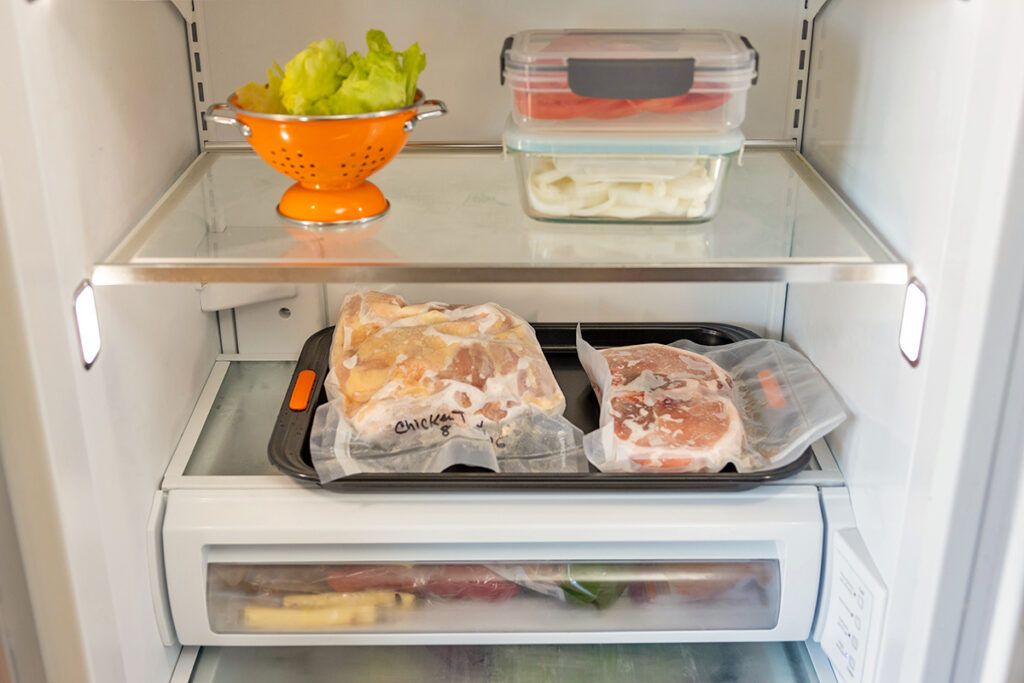
Frozen food thawing in fridge
Credit: © JasonDoiy—E+/Getty Images

Rule: Thaw Frozen Foods Safely

I cringe whenever I walk into someone’s home and see frozen food thawing on the counter. When you do that, the food’s outer layers may spend hours in the danger zone between 40 and 140 degrees Fahrenheit, giving bacteria ample time to flourish before the food is thawed all the way through. 

Advertisement
Advertisement

The USDA’s Food Safety and Inspection Service recognizes three safe thawing methods: 

  1. Defrosting your food in the refrigerator: Defrosting in the fridge is your safest option, because your food can thaw without ever entering the danger zone. (Remember to protect against drips, though, and make sure to remove frozen fish from vacuum-sealed packaging before thawing.) Most foods will probably thaw overnight, but big roasts or your holiday turkey will require more time. You can thaw in advance, because food stays safe in the fridge for up to five days, depending on what it is. 
  2. Thawing in cold water: This is a faster way to thaw food, and still safe as long as you change the water every half-hour to keep it cool. Food should be well sealed to prevent water from getting in, and will take about 30 minutes per pound to thaw. Once it’s thawed, it should be cooked immediately. 
  3. Thawing in the microwave: This is the last-choice option for when you’re really in a hurry. Microwaves heat unevenly, so some parts of your food will get into the danger zone before the rest is thawed. As long as you cook it immediately after thawing, though, you’ll still be safe. 
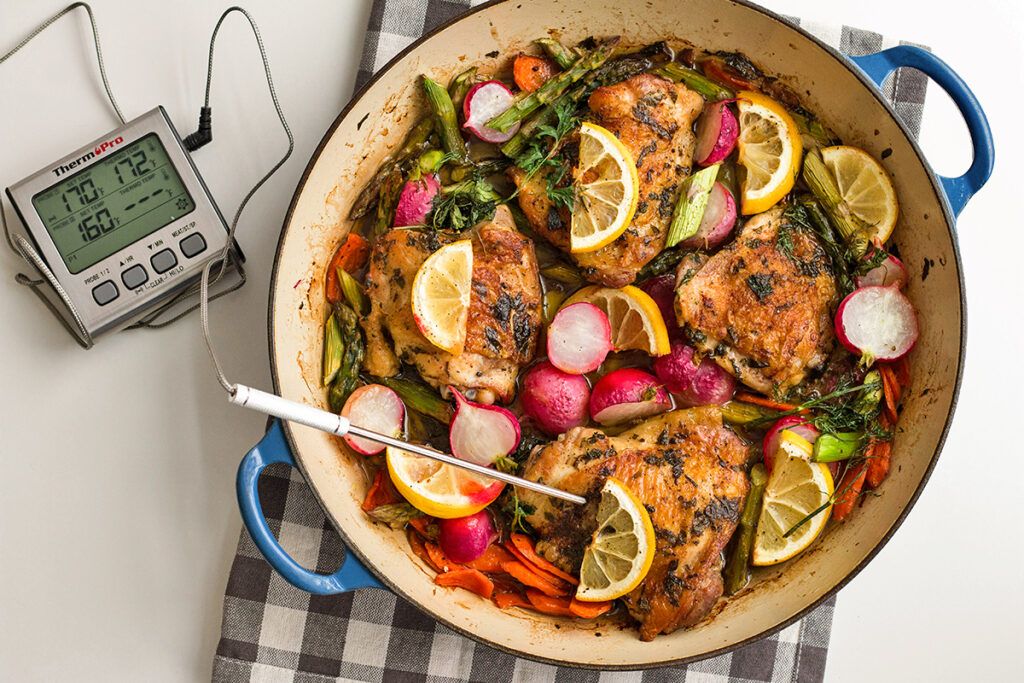
Meat thermometer in chicken dish
Credit: © ThermoPro/Unsplash.com

Rule: Use a Thermometer To Verify Temperatures

Thermometers are one of the most important tools for food safety, so I always recommend owning a few. I keep at least one in each of my fridge and freezer at all times, for example, so I know they’re keeping the right temperature (newer fridges will do this for you, and beep or send an alert to your phone if there’s a problem). I also have a point-and-shoot infrared thermometer like this one, which lets me spot-check temperatures in my  oven, on my grill temperatures, and so on. 

Advertisement

The USDA publishes recommended safe cooking temperatures for a variety of foods, and it breaks down pretty simply:

• Most meats, fish, and shellfish: 145 degrees Fahrenheit
• Eggs or ground meats: 160 degrees Fahrenheit
• Poultry (whole or ground): 165 degrees Fahrenheit
• Leftovers and casseroles: 165 degrees Fahrenheit

Advertisement
Advertisement

You may disagree with some of those, because it would mean no medium-rare steaks or soft-cooked eggs. That’s fine, as long as you’re comfortable with your decision and not cooking for someone who’s immunocompromised. But the only way to know for sure what temperature your food reaches, for safety or perfect-doneness reasons, is to check it with a thermometer. The Cadillac of meat thermometers is ThermoWorks’ Thermapen ONE, but if you don’t have that kind of budget, their ThermoPop 2 and OXO’s Good Grips thermometer both offer great value at lower price points. 
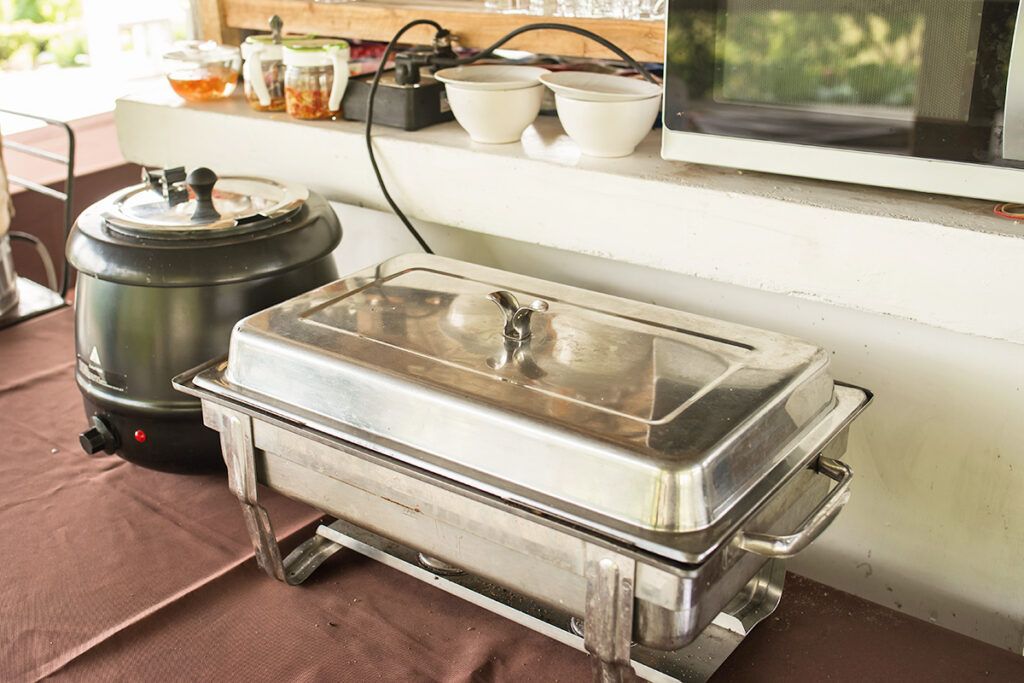
Food warmer
Credit: © wombatzaa—iStock/Getty Images

Rule: Keep Hot Foods Hot, and Cold Foods Cold

Do you love to entertain? Is your happy place a house filled with friends and family, laughter and conversation, with good food set out all around the room? If so, your responsibility for food safety doesn’t end when the food is served. 

Advertisement
Advertisement

As a chef, I handled a lot of catering, and keeping hot food hot and cold food cold is absolutely mandatory for catered events. Commercially, we used tools that home cooks typically don’t have (portable steam tables, chafing dishes, etc.), but you can work with what you do. Hot dips and casseroles can be served in suitable-sized slow cookers, for example, and cold dishes can sit in bowls of ice. I have a dozen thin, flat gel packs like these, that can be covered with a place mat and used underneath serving trays to keep them cool. 

The simplest option is to set out small batches of hot and cold main dishes, appetizers, and canapes, then replenish them as needed with new batches warmed (or kept warm) in your oven, or cold batches pulled from your fridge. 
Advertisement
Putting away leftovers
Credit: © BRETT STEVENS—Connect Images/Getty Images

Rule: Cool and Refrigerate Cooked Foods Promptly

That brings us to storing leftovers. 

I’ve talked a lot about temperatures, because formal food safety training is all about time and temperature. The longer foods stay in the danger zone, the more opportunity bacteria have to reproduce. Every nasty bug has what’s called an infective or infectious dose — the number of pathogens needed to actually make you sick. It’s often in the millions, but for some strains of E. coli, it can be as little as 10 individual cells. The longer your food is in the danger zone, the more likely it becomes that bacteria will reach that infective dose and make you sick. 

Advertisement
Advertisement

That’s why chilling any leftover foods within two hours is so important. That limit is cut to an hour if the ambient temperature is over 90 degrees Fahrenheit — hence why you shouldn’t leave your food in a closed vehicle in summer, where it can get even hotter. 

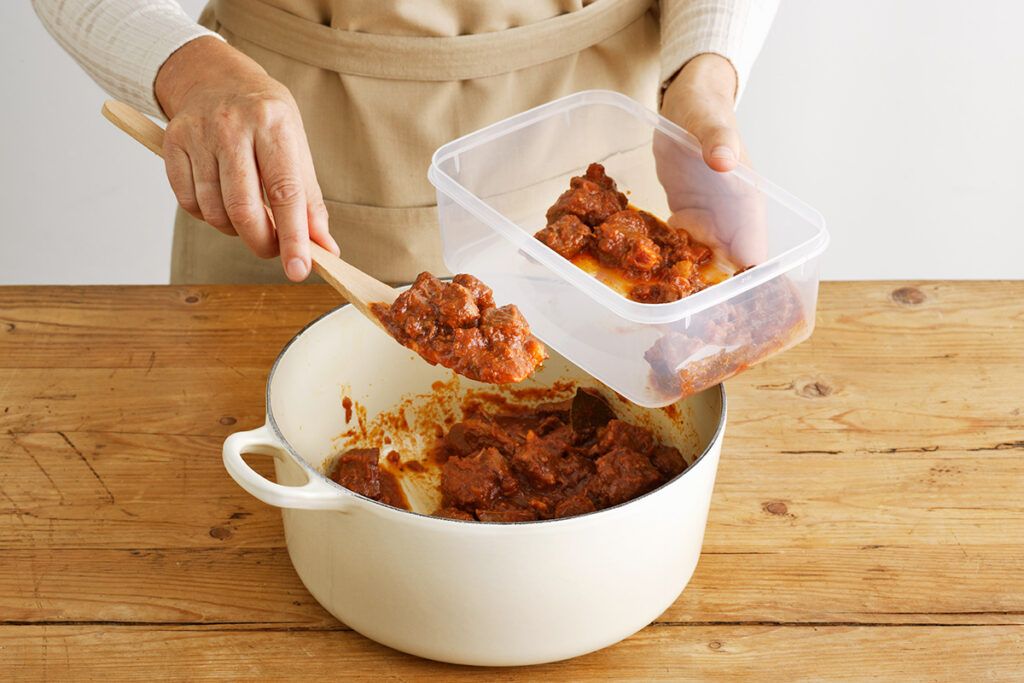
Big batches of food pose a special problem, because their sheer size means longer cooling time. The simplest solution is to portion your pot of chili (or other food) into flat containers, which can speed cooling. I like to clean and sanitize gel freezer packs in my dishwasher (the rigid kind, not the ones that are flexible bags when thawed), then freeze them in a bag to keep them clean. When I do large batches, I’ll stir those into the pot to cool its contents quickly before dividing the food into containers (the gel packs then go back into the dishwasher again). It makes a difference. 
Leftovers in fridge with dates on the containers
Credit: © vgajic—E+/Getty Images

Rule: Label Leftovers and Use Them Promptly 

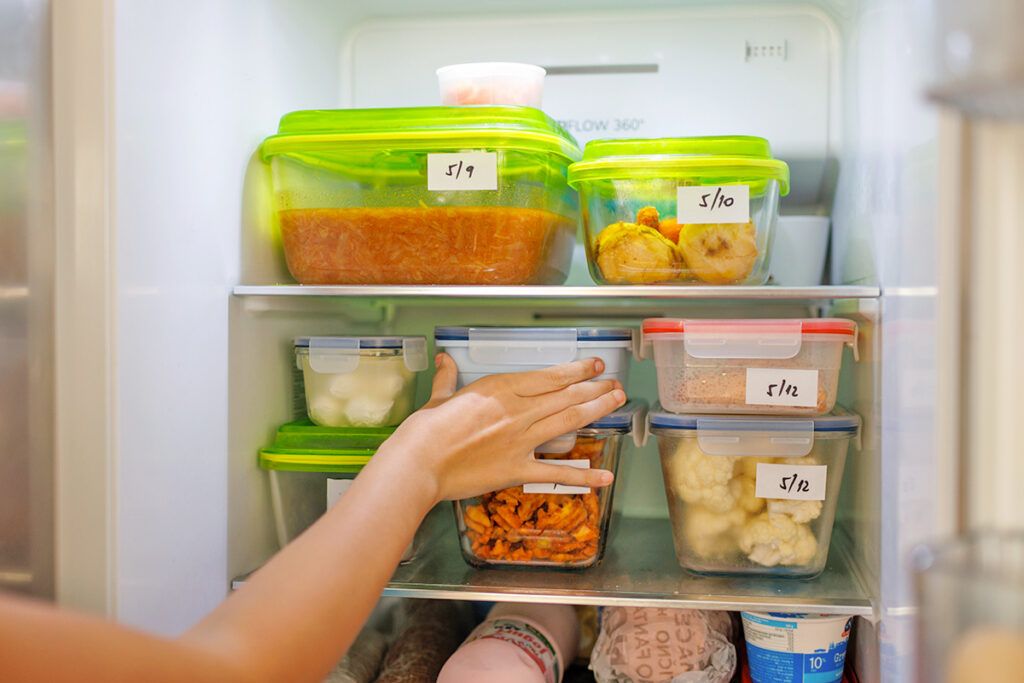
In commercial food service, chefs like me are sticklers for what’s called FIFO: First In, First Out. That means we label and date everything that goes into the freezer or walk-in cooler, and we’re diligent about using things in a timely fashion. 

Advertisement
Advertisement

Most leftovers (or made-aheads, if you’re doing it deliberately) have a refrigerator life of just three or four days, so there’s pressure to use them promptly. Labeling and dating everything individually can be a bit much at home, but some people use multicolored dots, or day of the week stickers, to label leftovers. If it has a Tuesday sticker and today’s Friday, you know you’re in “use it or lose it” territory. 

Advertisement

You may find it easier to make a plan for your leftovers in advance. Maybe they go as work lunches or serve as a stopgap for the day after tomorrow when everyone’s busy and there won’t be time to cook. If you’re uncertain whether you’ll use them in the next few days, go ahead and freeze them. That buys you three to four months — rather than days — to use them and prevent waste.   

Featured Image Credit: © AleksandarNakic—E+/Getty Images

More From Our Network

Better Report is part of Inbox Studio, an email-first media company. *Indicates a third-party property.

Go Retro With This 1960s Fashion Quiz

Quiz Daily

Go Retro With This 1960s Fashion Quiz

True or False: Are You a Master of U.S. Geography?

Travel Quiz

True or False: Are You a Master of U.S. Geography?

5 Reasons You Can Be Denied Boarding an Airplane

Daily Passport

5 Reasons You Can Be Denied Boarding an Airplane

What Did People Do Before Eyeglasses?

History Facts

What Did People Do Before Eyeglasses?

How To Use a Balloon To Clean Up Dust

House Outlook

How To Use a Balloon To Clean Up Dust

11 Shopping Hacks Costco Members Should Know

FinanceBuzz*

11 Shopping Hacks Costco Members Should Know

Share this article

  • Share to Facebook
  • Share to Twitter
  • Copy Url
  • Share to Email
Fred Decker
Writer

Fred Decker is a trained chef and former restaurateur. Since closing his restaurants over a decade ago he has been a prolific freelance writer, publishing several thousand articles on dozens of high-volume websites including Taste Of Home, Hunker, Tasting Table, Week&, eHow, and GOBankingRates. He lives on a rural acreage shared with a big garden, chickens, rabbits, and grandkids.

This article is for general informational purposes only.
Affiliate Disclaimer Medical Disclaimer Financial Disclaimer

Updated: April 14, 2026
Posted In: Health
Hero Image Credit: Better Report
Advertisement

Related Articles

The 10 Healthiest Trader Joe’s Meals, According to a Dietitian

6 min read

Is It Dangerous To Scratch Mosquito Bites?

4 min read

7 Gross Things That Could Be on Your Toothbrush

5 min read

7 Things a Chef Never Orders at a Restaurant

8 min read

Are the Tiny Red Dots on Your Skin Dangerous?

6 min read
Advertisement

6 Foods That Aren’t Safe To Keep as Leftovers

Ali Eldridge
Health | Updated: June 3, 2026
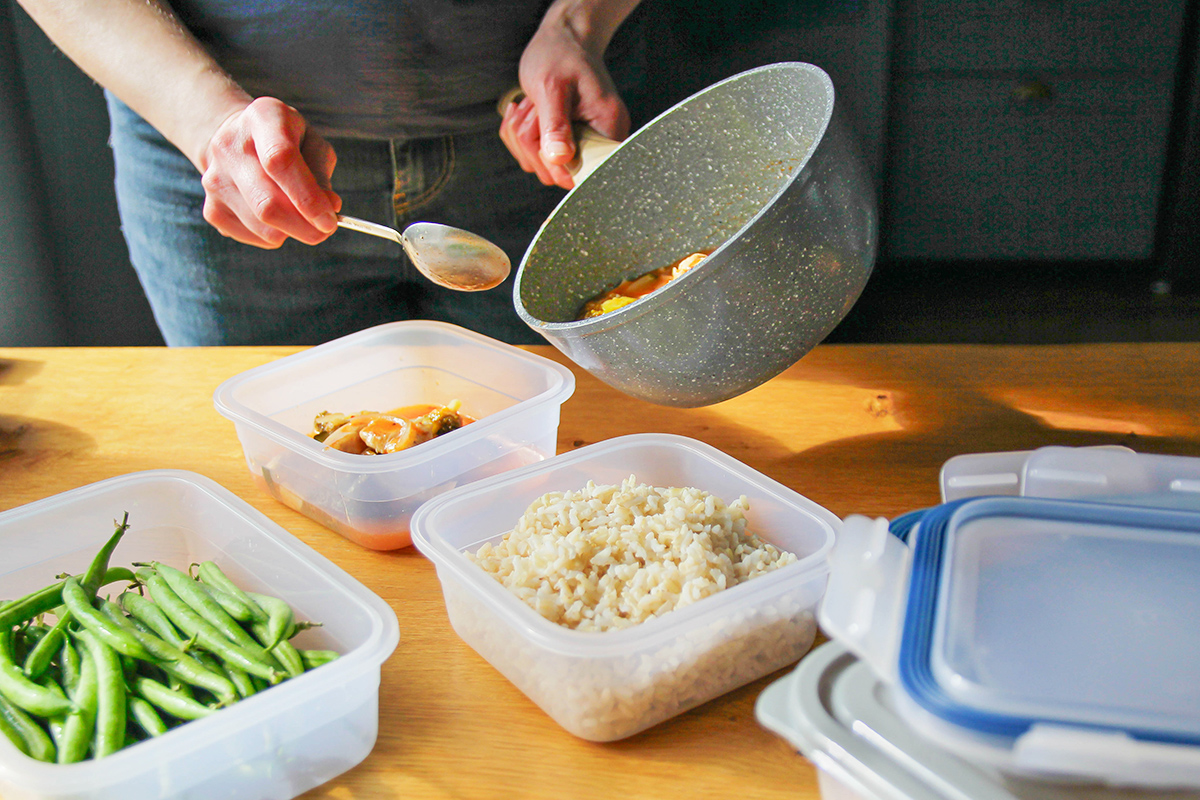
Putting leftovers in food storage containers
Better Report

The refrigerator changed our relationship to food in ways that, in retrospect, are hard to imagine. Just picture how much harder it would have been to feed your family if you didn’t have the option of keeping meats, produce, and leftovers in the fridge. Most leftovers would have been seriously high-risk except in winter, the only time it would be cold enough to keep them at food-safe temperatures. 

Today, most leftovers are safe if handled correctly — emphasis on the word “if.” From a former chef and food safety trainer, here are six kinds of high-risk leftovers you may want to think twice about keeping. 

Shrimp
Credit: © Jiri Hera/stock.adobe.com

Seafood, Especially Shellfish and Crustaceans

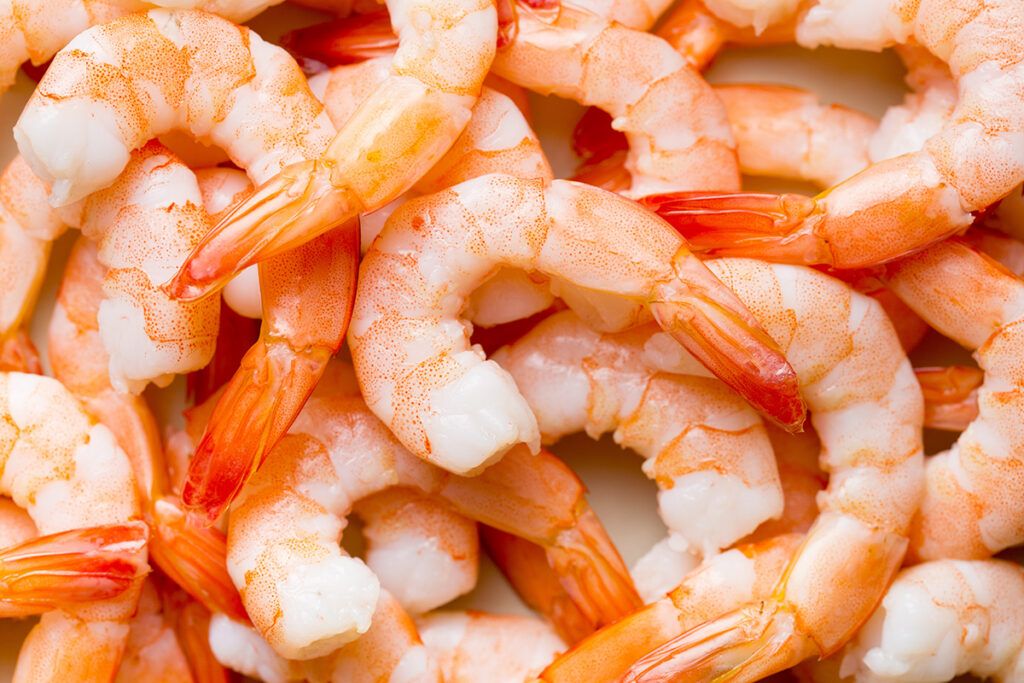
You should be especially careful with fish and shellfish, partly because they’re among the most perishable proteins you can build a meal around, and partly because they may host some nasty pathogens that can make you sick. These include listeria, salmonella, and E. coli, as well as norovirus, hepatitis A, and the Vibrio family (which can cause cholera, among other things). 

Advertisement
Advertisement

This doesn’t mean you can’t have seafood leftovers — you should be OK if you follow the FDA’s guidelines for buying and handling seafood and the USDA’s guidance for handling leftovers. But if you didn’t have those oysters or shrimp in a cooler when you left the store, or if the leftovers sat out on a summer afternoon, you’d be smarter to discard them. 

Bowl of rice
Credit: © Jubair Bin Iqbal/Pexels.com

Rice and Other Grain Dishes

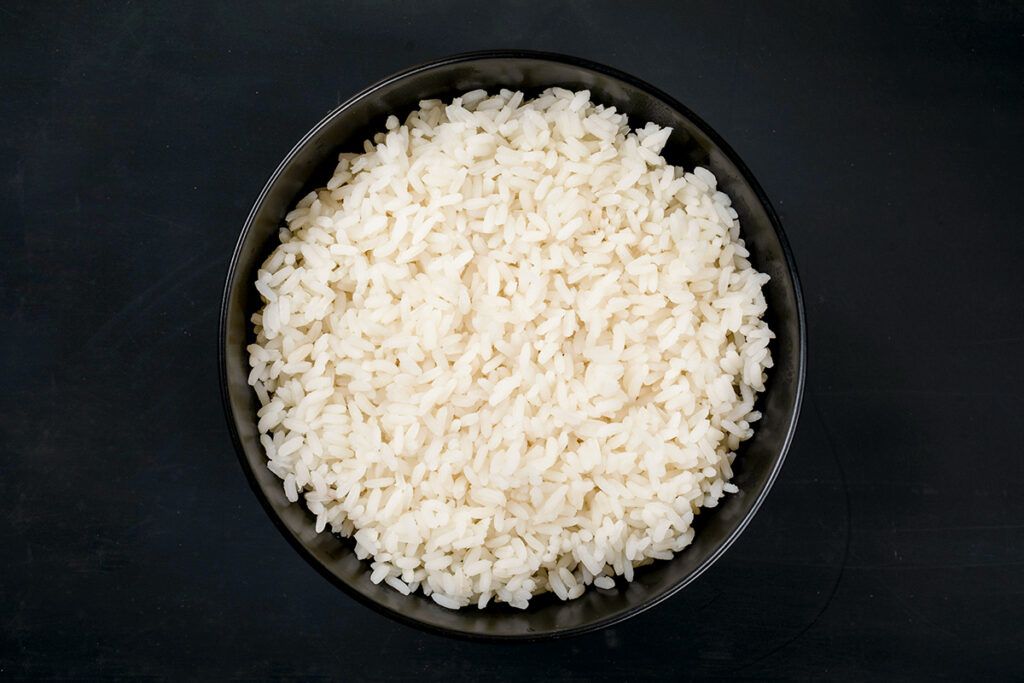
When you think of foods that are high-risk from the food poisoning perspective, you probably think of things like eggs or poultry. Rice? Not so much. But leftover rice can actually be problematic if it isn’t packed up and refrigerated ASAP after your meal. This is due to Bacillus cereus, which is often present in the grain. 

Advertisement

B. cereus forms both heat-resistant spores — which can survive cooking — and a heat-stable toxin, which means it can make you sick even if you reheat your leftovers to the recommended 165 degrees Fahrenheit. It’s rarely fatal, but it’ll definitely make you regret your choices for a couple of days. 

Recommended Articles

  • The 10 Healthiest Trader Joe’s Meals, According to a Dietitian

  • 5 Vegetables You Should Never Store in the Fridge

  • Is It Rude To Ask for Leftovers at Fancy Restaurants?

  • Is It Dangerous To Scratch Mosquito Bites?

Advertisement
Advertisement

Reader Favorites

  • Woman looking in fridge

    9 Foods You Should Toss ASAP if They’re Expired

  • Popcorn in a bowl

    7 ‘Bad’ Foods That Are Actually Good for You

  • Person sipping beer

    The Least Healthy Alcoholic Beverages

Though it’s primarily associated with rice, B. cereus can also be found in other starchy foods, including pasta and potatoes. The longer these foods linger above food-safe temperatures, the more time B. cereus spores have to come back to life, multiply, and produce toxins that will make us sick. Cool those foods quickly by getting them into the fridge as soon as you’re done eating. And if they’ve been left out for more than a couple of hours, toss them.

Casserole in an oven
Credit: © Kristine Tumanyan/Unsplash.com

Big, Rich Casseroles 

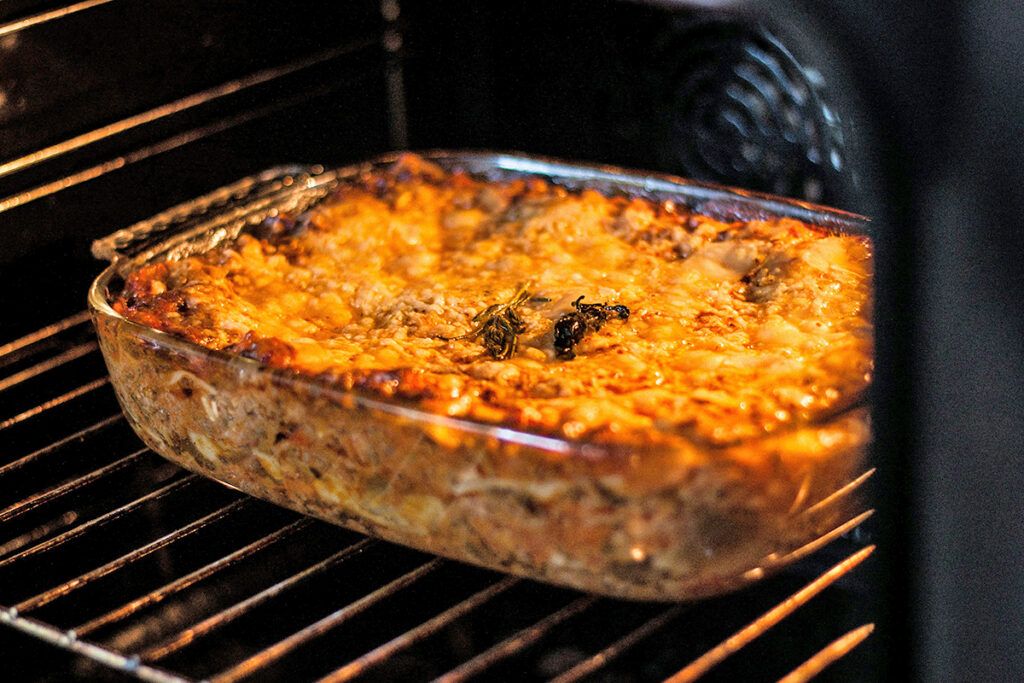
Casseroles are a great meal option, whether you think of them as an easy prep-ahead dinner or a can’t-miss contribution to a potluck. By nature, though, they’re often problematic in leftover form. There are a few reasons for this:

The Mix of Ingredients

Most casseroles contain some combination of milk or cream, eggs, cheese, meats, and a starchy base that might be potatoes, grain, or pasta. All of those rich, high-protein ingredients are a prime breeding ground for pathogens like salmonella or norovirus, and the starchy base can host B. cereus. 

Advertisement
Advertisement

Retained Heat

A big casserole, and the pan you bake it in, can retain heat for a long time. Once it enters the food safety “danger zone” — temperatures below 140 degrees Fahrenheit and above 40 degrees Fahrenheit — bacteria can reproduce freely. It’s important to cool your leftovers as quickly as possible, so your best bet is to divide the casserole into small containers and refrigerate them as soon as the meal is finished. 

The Social Aspect

Casseroles can easily cool enough to slip into the danger zone at potlucks or holiday gatherings. If they sit out for a couple of hours as people graze and chat, and then come home with you, your chances of illness will rise sharply. 

Advertisement
Advertisement

Not Reheating Adequately

For leftovers to be reliably safe, you need to reheat them to 165 degrees Fahrenheit throughout. The only way to know that for sure is to use a thermometer and check the food in several places before you eat it. Microwaves provide uneven heating, so it’s important to let microwaved food sit for a couple of minutes so the temperature can even out before you test. 

Advertisement
Chicken in a dish
Credit: © Diana Light/Unsplash.com

Poultry 

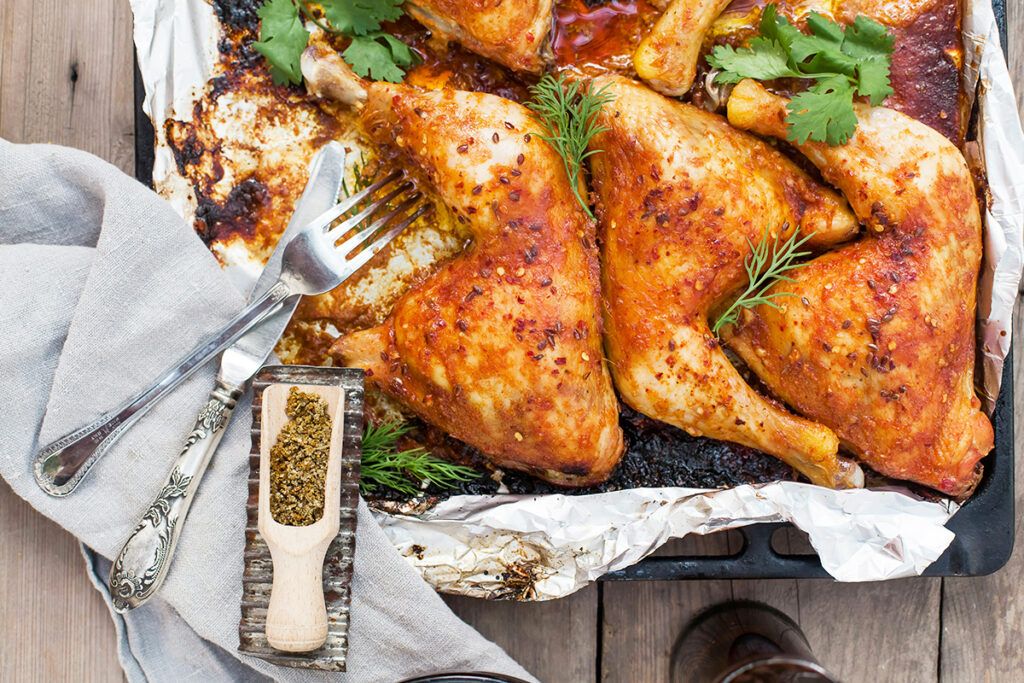
Chicken is a really popular meal option in the U.S., but it’s also responsible for a lot of illness. The CDC estimates that infected chicken alone sickens about a million Americans each year, and poultry is collectively responsible for almost one in five cases of food poisoning. Raw chicken is prone to infection by various strains of salmonella, campylobacter, and Clostridium perfringens, none of which are anybody’s idea of a good time. 

Advertisement
Advertisement

So if, for example, your chicken or turkey was infected to begin with and you didn’t cook it to a food-safe temperature; or you handled utensils or surfaces that had been in contact with the raw bird, and then put away the leftovers without washing your hands in between, then your leftovers will be primed for bacterial growth by the time they make it to the fridge. If you don’t then reheat your leftovers to the recommended 165 degrees Fahrenheit, you may find yourself calling in to work with a case of food poisoning. 

Chip in a dip
Credit: © photokitchen—iStock/Getty Images

Appetizers, Dips, and Party Foods in General

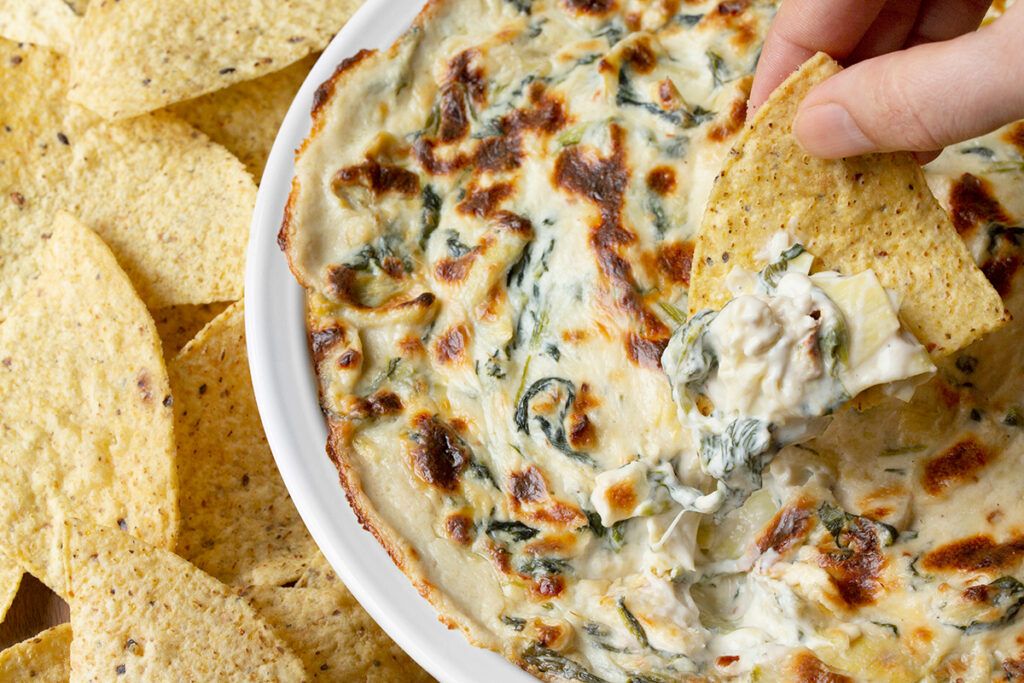
Some of the most problematic leftovers are the appetizers, dips, and other treats you prepare when you’re entertaining. Many of the issues with casseroles apply to party foods as well, especially hot dips. The biggest problem with party foods is that they’re usually left out for extended periods, so guests can help themselves over time as they feel inclined. 

Advertisement
Advertisement

Two hours in the danger zone is as long as any food can safely be left out (and that drops to one hour if the ambient temperature is over 90 degrees Fahrenheit). It’s not uncommon to leave food out for much longer than that at parties. So unless you’re careful to keep hot foods above 140 degrees and cold foods below 40 degrees, as professionals do for buffets and catering, it’s safest just to discard those leftovers. You may get away with it repeatedly, but sooner or later your luck will run out. 

Made-ahead food
Credit: © Ella Olsson/Pexels.com

Big-Batch Meals

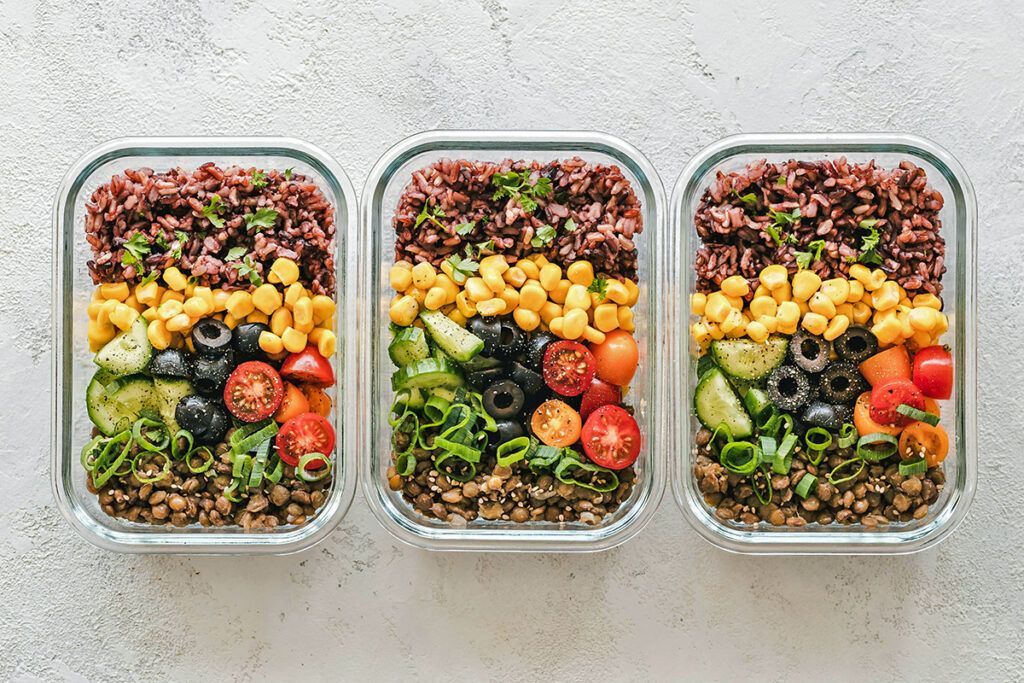
This final example is a little bit ironic. If you periodically cook up large batches of a favorite food so it’s available for quick meals (“made-aheads” rather than leftovers), you may be setting yourself up for trouble. To be clear, I’m not saying you shouldn’t do this — I often make big batches myself; it’s really practical — but you need to be diligent about food safety. 

Advertisement
Advertisement

If you’ve read this far, you’ve probably picked up on most of the important rules to keep leftovers food safe: 

• Wash your hands, utensils, and work surfaces after handling high-risk ingredients like raw egg or meat.
• Keep those high-risk ingredients away from anything you’ll eat raw, like your side salads.
• Cook your food to the recommended temperature, and test it with a thermometer to be sure.
• Cool your food quickly once it’s made. (Portion it into smaller, flatter containers so heat can easily escape — a whole casserole will stay warm and linger in the danger zone, even when it’s in the fridge.)
• Refrigerate or freeze the food ASAP so it doesn’t sit out past the two-hour mark.
• Don’t keep leftovers in the fridge for more than three to four days.
• Thaw the food safely.
• Reheat your meals to 165 degrees Fahrenheit before eating them.

Advertisement
Advertisement

Those guidelines are the result of long, bitter experience and high-quality research, so if you stick to them, you can feel confident about eating most leftovers or prepped-ahead meals. 

Advertisement

Featured Image Credit: © Kinga Krzeminska—Moment/Getty Images

More From Our Network

Better Report is part of Inbox Studio, an email-first media company. *Indicates a third-party property.

Go Retro With This 1960s Fashion Quiz

Quiz Daily

Go Retro With This 1960s Fashion Quiz

True or False: Are You a Master of U.S. Geography?

Travel Quiz

True or False: Are You a Master of U.S. Geography?

5 Reasons You Can Be Denied Boarding an Airplane

Daily Passport

5 Reasons You Can Be Denied Boarding an Airplane

What Did People Do Before Eyeglasses?

History Facts

What Did People Do Before Eyeglasses?

How To Use a Balloon To Clean Up Dust

House Outlook

How To Use a Balloon To Clean Up Dust

11 Shopping Hacks Costco Members Should Know

FinanceBuzz*

11 Shopping Hacks Costco Members Should Know

Share this article

  • Share to Facebook
  • Share to Twitter
  • Copy Url
  • Share to Email
Ali Eldridge

This article is for general informational purposes only.
Affiliate Disclaimer Medical Disclaimer Financial Disclaimer

Updated:
Posted In: Health
Hero Image Credit: Better Report
Advertisement

Related Articles

The 10 Healthiest Trader Joe’s Meals, According to a Dietitian

6 min read

Is It Dangerous To Scratch Mosquito Bites?

4 min read

7 Gross Things That Could Be on Your Toothbrush

5 min read

7 Things a Chef Never Orders at a Restaurant

8 min read

Are the Tiny Red Dots on Your Skin Dangerous?

6 min read
Advertisement

Is It Safe To Eat Lettuce That’s Turning Red?

Health | Updated: June 1, 2026
Michele Debczak
Author
Michele Debczak is a writer and editor based in Brooklyn, New York. She appears in seasons four through six of History Channel's “The Food That Built America,” and her work has been featured in Mental Floss, Smithsonian Magazine, Eater, and Vice.
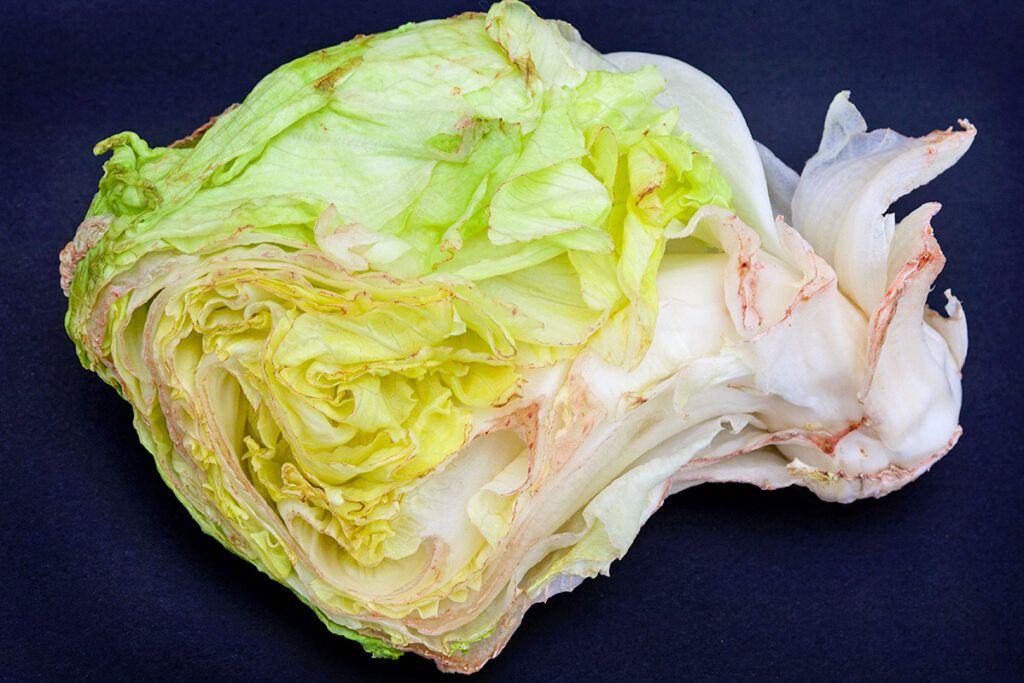
Rusty lettuce on a cutting board
Better Report

A head of lettuce can sometimes feel like a ticking time bomb in your fridge. Unlike sturdier root or cruciferous vegetables, delicate leafy greens are prone to wilting within a few days of coming home in your grocery bag. And that’s the best-case scenario. Worst case is opening your crisper drawer to find your lettuce looking like something you dug out of the compost bin. 

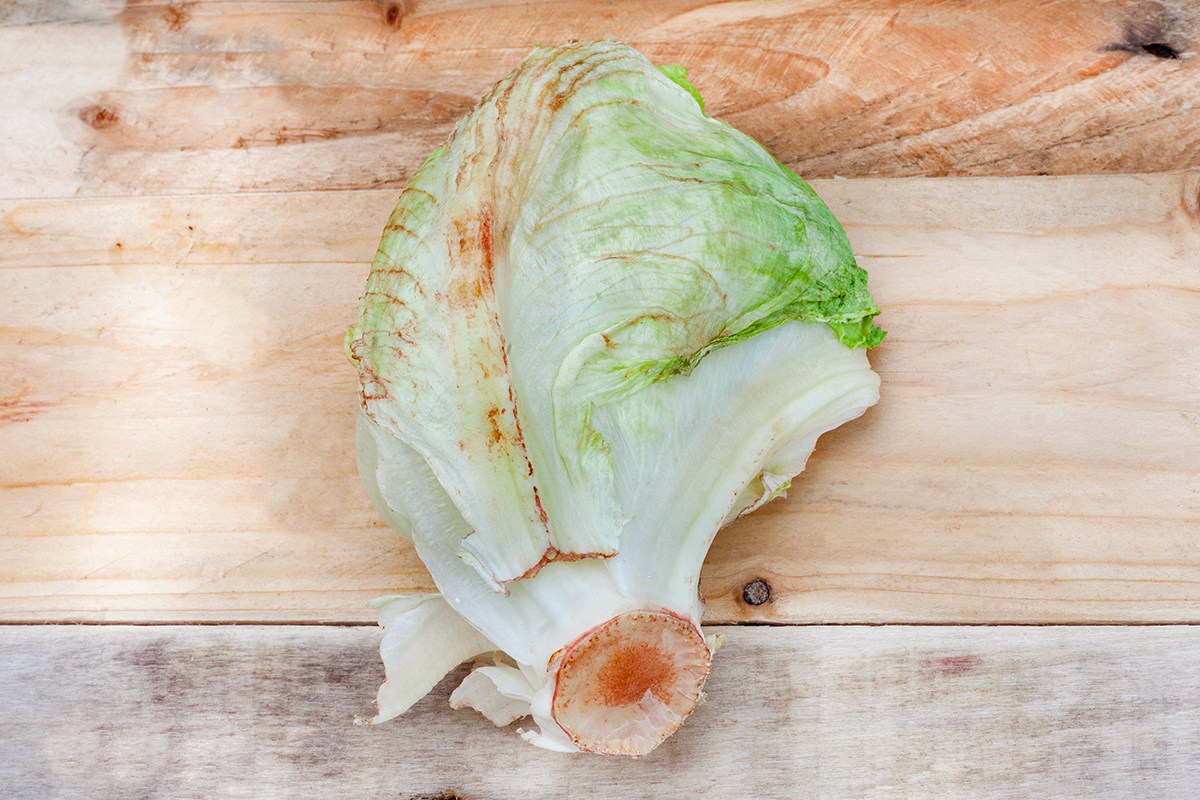
Changes in color can be a sign that your produce has crossed the point of no return. But some shades — like a pinkish rust color that appears on the pale cores of some lettuce leaves — are tricky to decipher. Is lettuce that’s turning red in some places still safe to eat? Or is it better to be safe and skip the Caesar salad before dinner? 

Credit: © Aninka/stock.adobe.com

Why Does Some Lettuce Change Color?

Romaine and iceberg lettuce varieties are both susceptible to something called “rusting” or “russet spotting.” It’s a sign not of spoilage, but that the vegetable is attempting to stop itself from going bad using its own chemistry. 

Advertisement
Advertisement

Like all fresh produce, lettuce starts to oxidize when its cells have been damaged and exposed to the air. As a defense mechanism, the leaves produce polyphenols, plant compounds capable of fighting off harmful microbes like fungi and mold. Not only are polyphenols safe to eat, but they even have anti-inflammatory properties that make them a natural antioxidant. In lettuce, they also have the unfortunate side effect of giving the paler parts of the leaves an unappealing, orangey-pink hue.

Mishandling on the way to the supermarket — or your kitchen — is a common cause of bruising in lettuce that can lead to oxidation. If you buy your lettuce precut, you can also expect to see rusty spots when you open the bag. 

Advertisement

Another possible source of oxidation is exposure to ethylene. Fruits release lots of ethylene when they’re ready to ripen, and nearby produce can be triggered by it even though the compound didn’t originate with them. That’s why tossing a hard avocado in a paper bag with ripe apples or bananas is one of the most effective ways to get it to ripen faster. 

Recommended Articles

  • The 10 Healthiest Trader Joe’s Meals, According to a Dietitian

  • 5 Vegetables You Should Never Store in the Fridge

  • Is It Rude To Ask for Leftovers at Fancy Restaurants?

  • Is It Dangerous To Scratch Mosquito Bites?

Advertisement
Advertisement

Reader Favorites

  • Woman looking in fridge

    9 Foods You Should Toss ASAP if They’re Expired

  • Popcorn in a bowl

    7 ‘Bad’ Foods That Are Actually Good for You

  • Person sipping beer

    The Least Healthy Alcoholic Beverages

In the case of lettuce, which is ready to eat as soon as it’s picked, ethylene exposure means oxidation, which means rusting and eventually decomposition. So if your romaine shares a corner of your fridge with ethylene-producing fruits, you may be setting it up for an untimely demise.

Credit: © Vedrana Sucic—iStock/Getty Images

How To Keep Lettuce From Going Bad

If a slight blushing around the core is the only significant change to your lettuce, it’s still OK to eat. The telltale signs of spoilage in leafy greens tend to be more obvious: a noticeable odor and slimy texture, for example. 

Advertisement
Advertisement

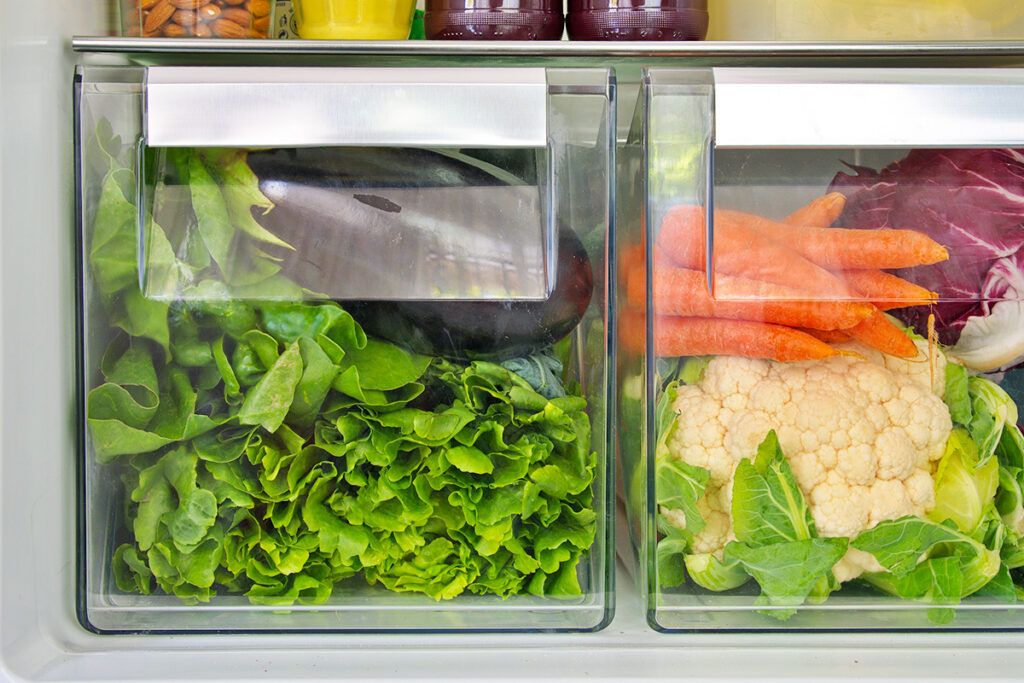
To limit rusting and extend your lettuce’s shelf life, be intentional with how you store it. The crisper drawer is the best spot for it in your fridge; it’s actually designed to preserve more delicate produce and keep leaves crisp for as long as possible. The key is to reserve the drawer for leafy greens exclusively and store your fruit in another part of the refrigerator — or better yet, on your counter.

Featured image credit: © Aninka/stock.adobe.com

More From Our Network

Better Report is part of Inbox Studio, an email-first media company. *Indicates a third-party property.

Go Retro With This 1960s Fashion Quiz

Quiz Daily

Go Retro With This 1960s Fashion Quiz

True or False: Are You a Master of U.S. Geography?

Travel Quiz

True or False: Are You a Master of U.S. Geography?

5 Reasons You Can Be Denied Boarding an Airplane

Daily Passport

5 Reasons You Can Be Denied Boarding an Airplane

What Did People Do Before Eyeglasses?

History Facts

What Did People Do Before Eyeglasses?

How To Use a Balloon To Clean Up Dust

House Outlook

How To Use a Balloon To Clean Up Dust

11 Shopping Hacks Costco Members Should Know

FinanceBuzz*

11 Shopping Hacks Costco Members Should Know

Share this article

  • Share to Facebook
  • Share to Twitter
  • Copy Url
  • Share to Email
Michele Debczak
Writer

Michele Debczak is a writer and editor based in Brooklyn, New York. She appears in seasons four through six of History Channel's “The Food That Built America,” and her work has been featured in Mental Floss, Smithsonian Magazine, Eater, and Vice.

This article is for general informational purposes only.
Affiliate Disclaimer Medical Disclaimer Financial Disclaimer

Updated: April 3, 2026
Posted In: Health
Hero Image Credit: Better Report
Advertisement

Related Articles

The 10 Healthiest Trader Joe’s Meals, According to a Dietitian

6 min read

Is It Dangerous To Scratch Mosquito Bites?

4 min read

7 Gross Things That Could Be on Your Toothbrush

5 min read

7 Things a Chef Never Orders at a Restaurant

8 min read

Are the Tiny Red Dots on Your Skin Dangerous?

6 min read
Advertisement

Should You Refrigerate Tomatoes?

Ali Eldridge
Home | Updated: May 21, 2026
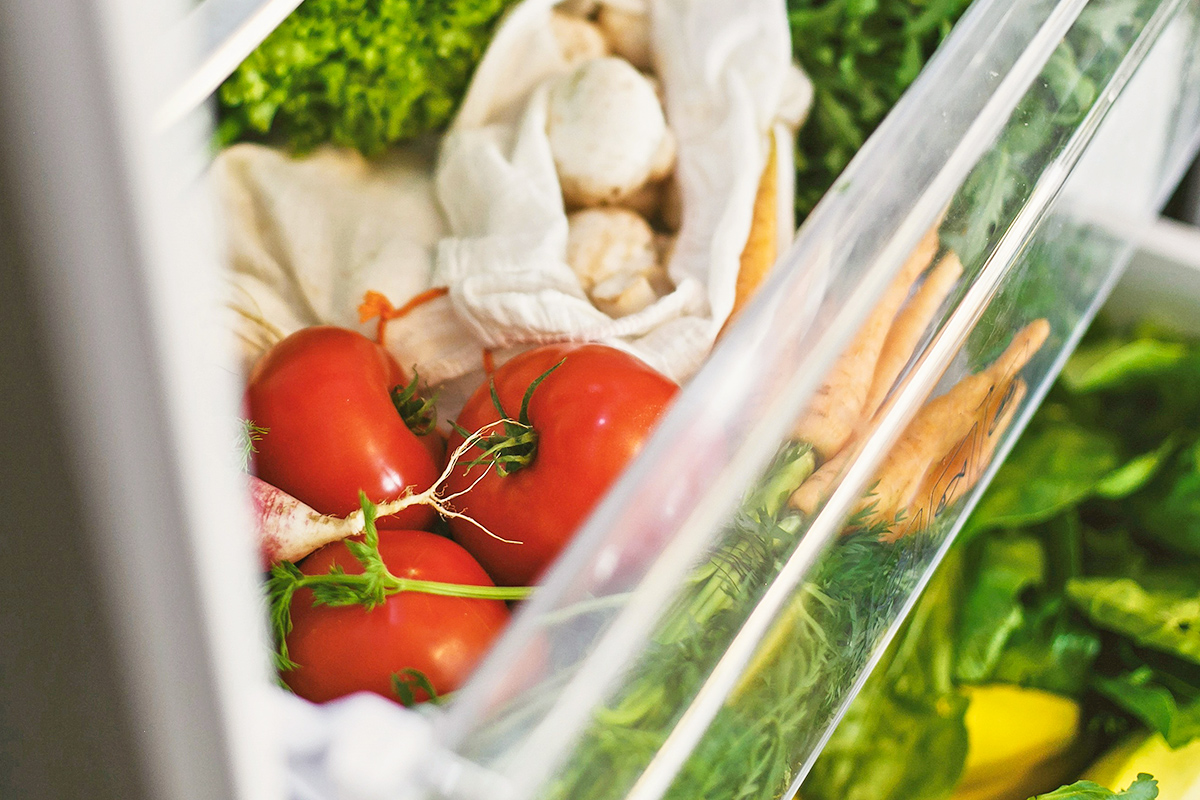
Tomatoes in a fridge
Better Report

The beginning of summer is a glorious time at the farmers market. Not only is the temperature excellent (not too hot yet) for an outdoor shopping day, but the produce is at the top of its game — especially the tomatoes. I went from a tomato skeptic to a tomato lover when I got the best ones from my local farmers market and treated them properly.  

Whether you’re making an elaborate bruschetta or just eating tomato slices on their own, you want to make sure they’re at their best. And while it may feel like the right move to put them in the refrigerator, where you should store your tomatoes depends on a few factors. Let’s break it down. 

Tomatoes on the counter
Credit: © Gunnar Ridderström/Unsplash.com

The Case for the Counter 

To figure out how to best store your tomatoes, you’ll want to determine how ripe they are and also when you plan to use them. 

The refrigerator is a useful tool for extending the life of many foods, but for the most part, it’s one of the worst places for fresh tomatoes. In the fridge, tomatoes become mealy and lose flavor, becoming sour. This is part of why farmers market tomatoes are preferable to those you buy at the supermarket: They haven’t been chilled for transport and therefore haven’t lost taste and texture.

Advertisement
Advertisement

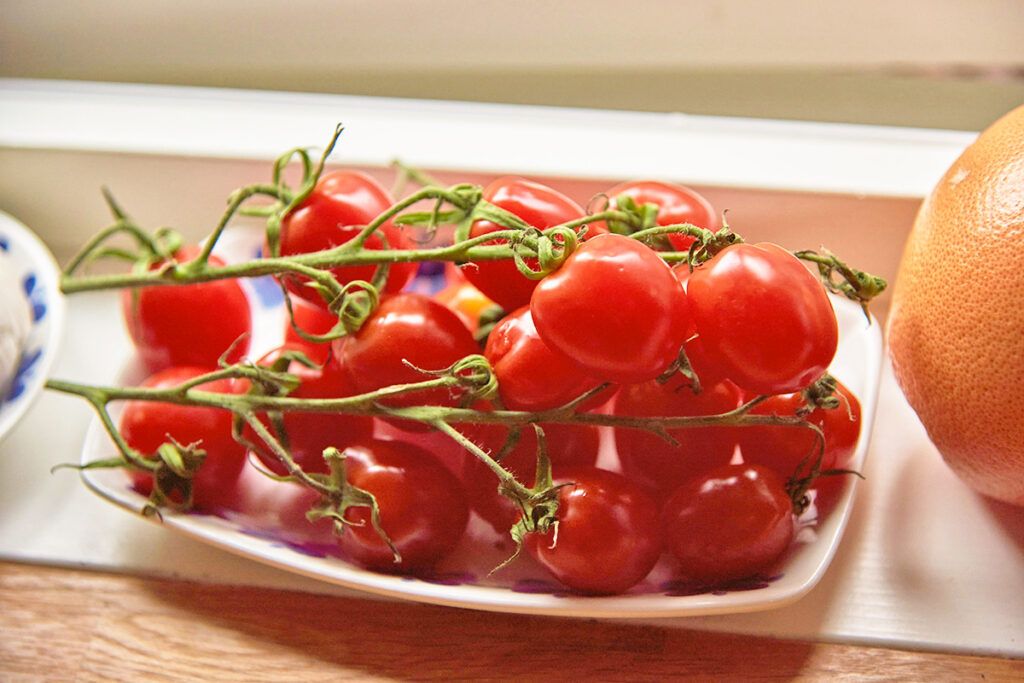
If you’re planning to make a meal with your tomatoes quickly, or if they need time to ripen, you can keep them in a dry area of the counter, stem-down — this prevents bacteria from entering the fruit and keeps them juicy. You can also put a little tape over the stem to keep them fresh. They should be out of direct sunlight and, ideally, at a temperature between 60 and 70 degrees Fahrenheit. Counter storage works for larger tomatoes and for smaller grape or cherry tomatoes as well, even though they’re in a container.

Advertisement

Fresh tomatoes last two to five days on the counter. Check them daily to ensure they don’t go bad — you’ll know your tomato is ripe when it’s uniform in color and tender to the touch, whereas an overripe tomato will be soft and possibly start leaking. 

Recommended Articles

  • The 10 Healthiest Trader Joe’s Meals, According to a Dietitian

  • 5 Vegetables You Should Never Store in the Fridge

  • Is It Rude To Ask for Leftovers at Fancy Restaurants?

  • Is It Dangerous To Scratch Mosquito Bites?

Advertisement
Advertisement

Reader Favorites

  • Woman looking in fridge

    9 Foods You Should Toss ASAP if They’re Expired

  • Popcorn in a bowl

    7 ‘Bad’ Foods That Are Actually Good for You

  • Person sipping beer

    The Least Healthy Alcoholic Beverages

Cut tomatoes on a cutting board
Credit: © Peter Dyllong/Pexels.com

When It’s OK To Put Tomatoes in the Fridge

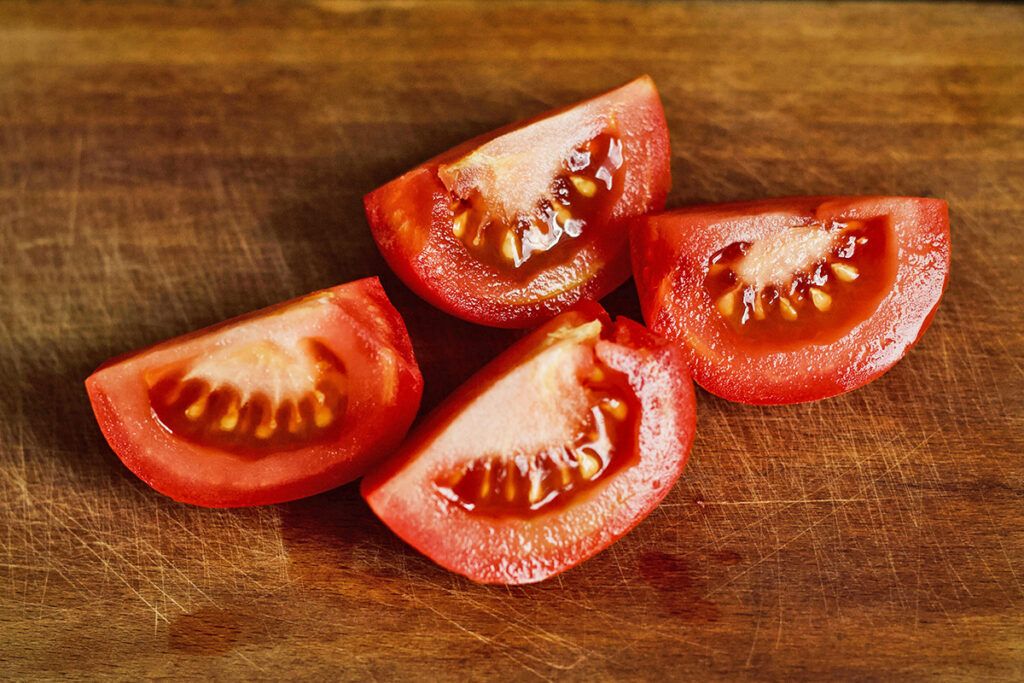
There are some scenarios where you should put your tomatoes in the fridge. Any cut tomatoes that aren’t used fully, for example, should be stored in the fridge. Cover them with cling wrap so they don’t dry out, then place them in an airtight container before putting them in the refrigerator. They’ll last a day or two and stay safe from bacterial growth. 

Advertisement
Advertisement

Ripe tomatoes that are about to become overripe can also go in the fridge, where they may last for up to two weeks. That said, they likely won’t taste as good when you take them back out, so experts advise using them only in cooked dishes.

Tomato soup
Credit: © Curated Lifestyle/Unsplash.com 

Getting the Most Out of Your Tomatoes

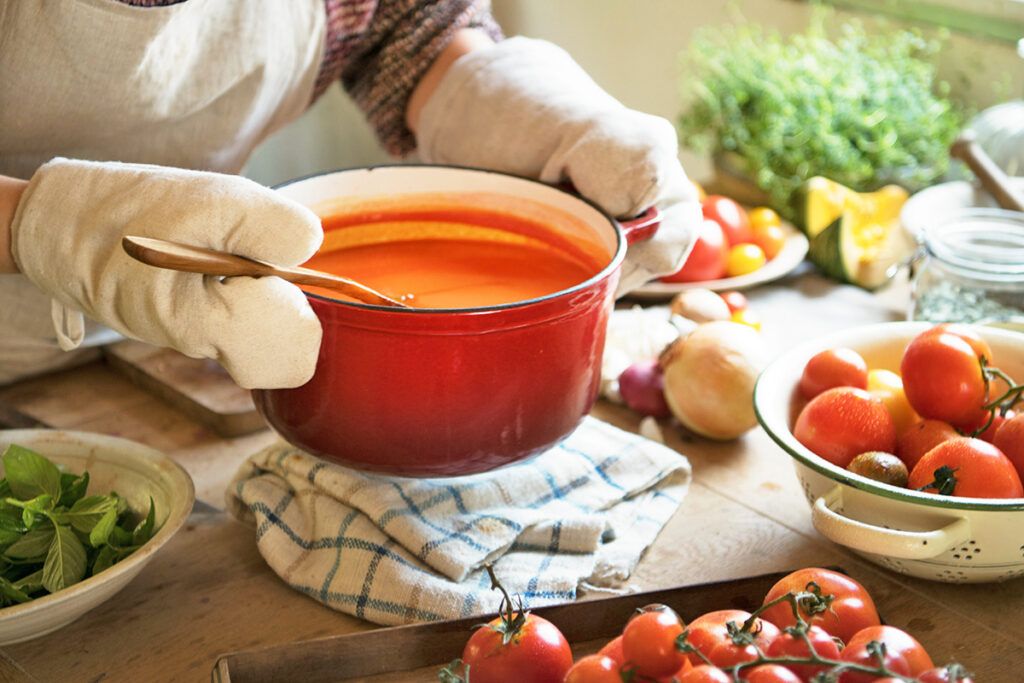
If you have tomatoes that are ripe but you don’t want to eat them yet (or you’ve had them in the fridge), you can make a red sauce, turn them into soup, or freeze them whole and use them later.  Don’t just throw them in the freezer, though — take the time to blanch the tomatoes. Drop them into boiling water for 30 seconds, then put them in dated freezer bags. When you unfreeze these tomatoes later, it’s best to use them for recipes that require cooking. 

Advertisement
Advertisement

As we get ready for peak summer produce season, consider the refrigerator the last resort, instead of the first step. Your tomatoes will thank you. 

Featured Image Credit: © Getty Images/Unsplash.com

More From Our Network

Better Report is part of Inbox Studio, an email-first media company. *Indicates a third-party property.

Go Retro With This 1960s Fashion Quiz

Quiz Daily

Go Retro With This 1960s Fashion Quiz

True or False: Are You a Master of U.S. Geography?

Travel Quiz

True or False: Are You a Master of U.S. Geography?

5 Reasons You Can Be Denied Boarding an Airplane

Daily Passport

5 Reasons You Can Be Denied Boarding an Airplane

What Did People Do Before Eyeglasses?

History Facts

What Did People Do Before Eyeglasses?

How To Use a Balloon To Clean Up Dust

House Outlook

How To Use a Balloon To Clean Up Dust

11 Shopping Hacks Costco Members Should Know

FinanceBuzz*

11 Shopping Hacks Costco Members Should Know

Share this article

  • Share to Facebook
  • Share to Twitter
  • Copy Url
  • Share to Email
Ali Eldridge

This article is for general informational purposes only.
Affiliate Disclaimer Medical Disclaimer Financial Disclaimer

Updated:
Posted In: Home
Hero Image Credit: Better Report
Advertisement

Related Articles

5 Vegetables You Should Never Store in the Fridge

3 min read

Why a Flashing Check Engine Light Is Different From a Solid One

3 min read

Why Does Your Sink Have a Tiny Hole?

3 min read

Is Hard Water Ruining Your Clothes?

3 min read

9 Fall Cleaning Tasks You Shouldn’t Neglect

6 min read
Advertisement

Should You Throw Out Food if a Fly Lands on It?

Health | Updated: April 29, 2026
Rachel Gresh
Author
Rachel Gresh is a Washington, D.C.-based freelance writer. When she's not writing, you can find her wandering a museum, exploring an unfamiliar city, or baking something new in the kitchen.
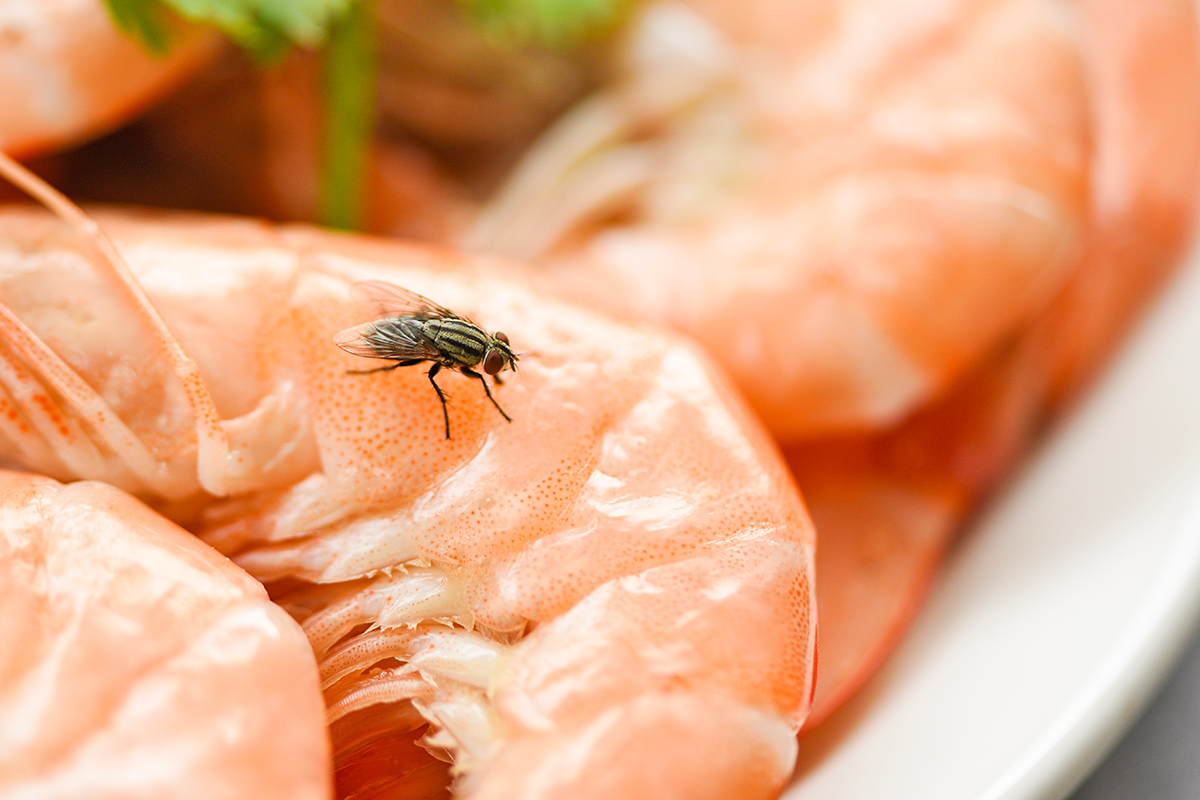
Fly on shrimp
Better Report

All featured products and deals are selected independently and objectively by the author. Better Report may receive a share of sales via affiliate links in content.

Too often, we find unwanted guests at our dinner table: flies. Though there are more than 160,000 species of flies, the housefly accounts for about 90% of those found in our homes. Known as “filth flies,” they plague households and picnics around the world, popping up during warmer months en masse.

Advertisement
Advertisement

Before sanitation standards improved, houseflies posed a major threat to public health in cities. Is their reputation as harbingers of disease deserved? Here’s what the research says.

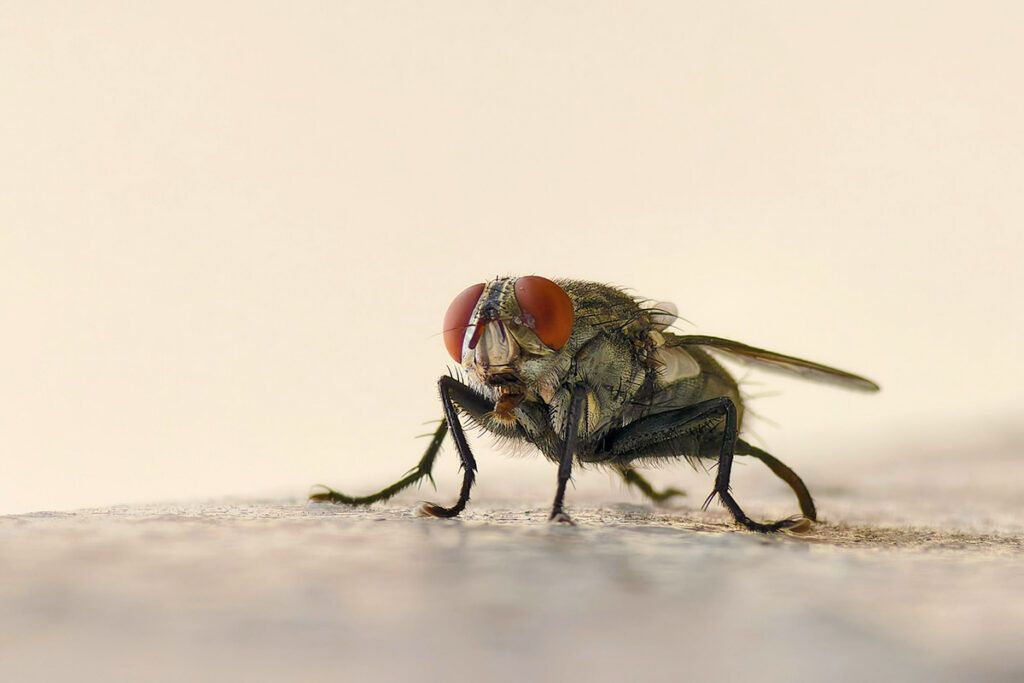
Close-up of house fly
Credit: © Garuda/Pexels.com

Do Flies Carry Disease?

Houseflies don’t distinguish between clean food and contaminated surfaces, which means they can transmit disease. They spend much of their time on unsanitary, decomposing organic matter, such as animal carcasses, feces, and rotting plants.

When flies land on things like garbage or manure, germs are transferred to their feet and bodies. As a result, they may carry millions of microorganisms, including potentially harmful pathogens and parasites. These microbes can then be transferred to food upon contact.

Another sanitation concern is how flies eat. They land on our food because they like to eat it, but they can’t bite into it — their mouthparts are made only to sponge or lap up food. Instead, they spit out saliva loaded with enzymes that dissolve food so they can suck it up. If a fly spends a lot of time on our food, it may vomit, eat, and defecate repeatedly, potentially leaving behind pathogens.

Recommended Articles

  • The 10 Healthiest Trader Joe’s Meals, According to a Dietitian

  • 5 Vegetables You Should Never Store in the Fridge

  • Is It Rude To Ask for Leftovers at Fancy Restaurants?

  • Is It Dangerous To Scratch Mosquito Bites?

Advertisement
Advertisement

Reader Favorites

  • Woman looking in fridge

    9 Foods You Should Toss ASAP if They’re Expired

  • Popcorn in a bowl

    7 ‘Bad’ Foods That Are Actually Good for You

  • Person sipping beer

    The Least Healthy Alcoholic Beverages

Researchers estimate that flies have the ability to transmit at least 65 diseases to humans through regurgitation and defecation. This includes things like typhoid fever, dysentery, cholera, leprosy, and tuberculosis — though real-world evidence of disease transmission is mostly circumstantial. 

Advertisement
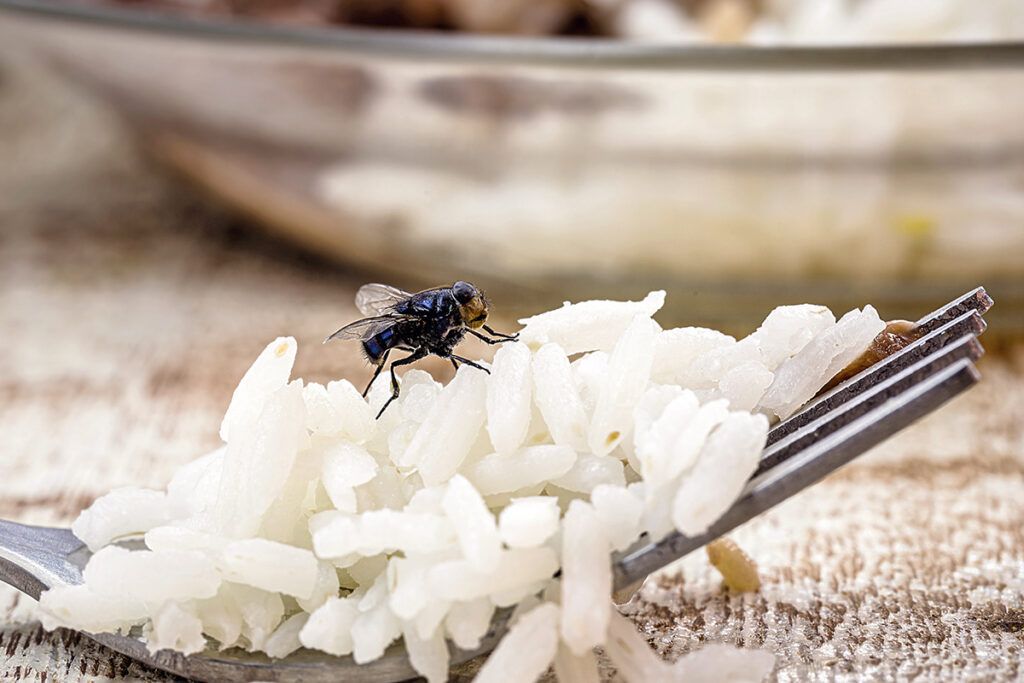
Fly on rice
Credit: © RHJ/stock.adobe.com

Should You Throw Fly-Ridden Food Away?

Everyone handles the question of flies on food differently. Some swat them away and continue eating. Others throw away the parts of the food that were touched, while some toss out the entire plate. The correct answer can be any of these options, depending on the situation.

Advertisement
Advertisement

According to Dr. Cameron Webb, a clinical lecturer at Sydney Medical School, a single landing from a fly is unlikely to contain enough bacteria to cause illness, provided a person is healthy — so in that case, there’s no reason to throw away your food. However, longer periods of contact, along with greater numbers of flies, increase the likelihood of contamination. For example, if a serving plate at a picnic is covered in flies, it’s best to throw the food away. As with all communicable diseases, any threat would be greater for at-risk groups, such as young children, older adults, and immunocompromised individuals.

Interestingly, the risk of transmission is greater outside of cities, where flies are more likely to come into contact with animal waste and decaying matter. In urban areas, insecticides and hygiene measures have reduced both fly populations and their exposure to highly contaminated materials.

Advertisement
Advertisement
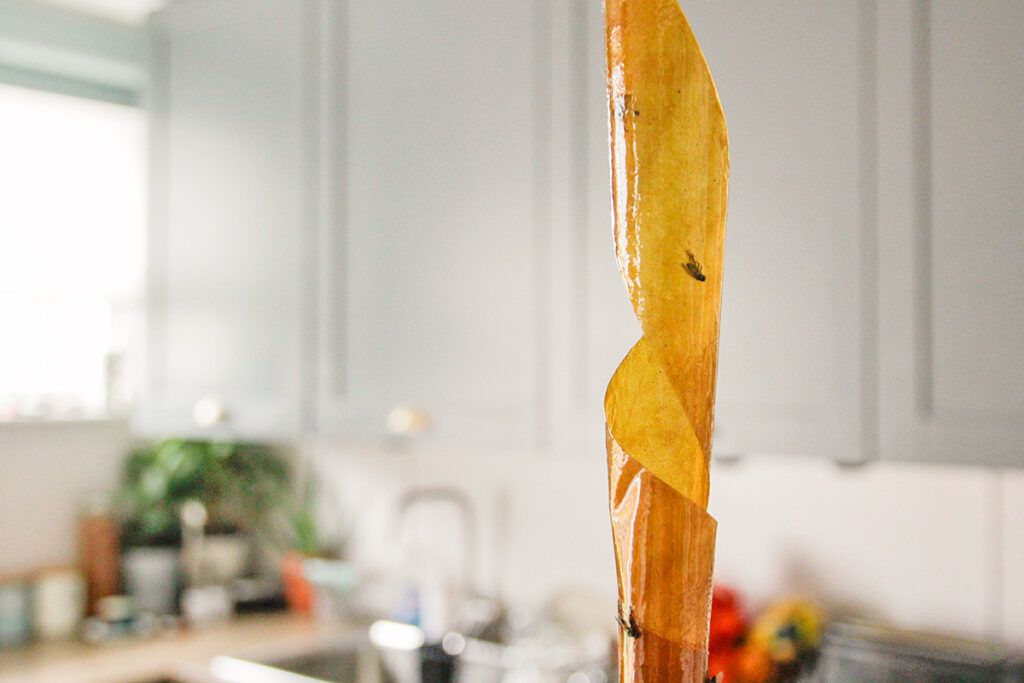
Fly paper
Credit: © Kinga Krzeminska—Moment/Getty Images

Keeping Flies at Bay

To limit the number of flies in and around your home and reduce your risk of food contamination, focus on sanitation first so that flies have fewer places to breed. This means keeping trash cans tightly closed and clearing piles of decaying organic matter, such as garbage, grass clippings, weed piles, and animal feces.

Advertisement
Advertisement

Physical barriers can be effective, too. Install screens on windows, doors, and ventilation openings, and seal gaps around pipes or wiring that may allow flies to enter the home.

Additionally, there are several nonchemical methods of reducing flies in indoor settings, such as UV traps, sticky traps, and fly swatters. As a last resort, chemical control may be necessary. Indoors, an aerosol spray for winged insects will provide temporary relief.

Stronger insecticides may be used on exterior surfaces, but they often break down in sunlight within several days. And some housefly populations have developed resistance to certain insecticides such as DDT, limiting their effectiveness.

Advertisement
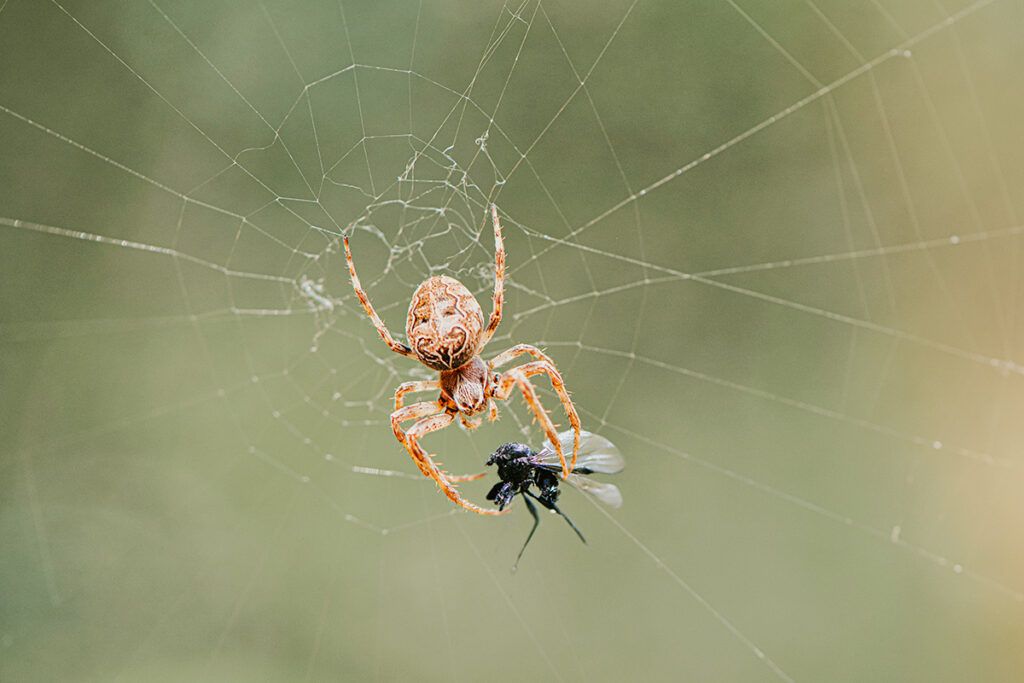
Spider and fly in web
Credit: © Catherine Falls Commercial—Moment/Getty Images

Not All Flies Are All Bad

Despite their reputation as nuisance insects, flies in general play an important ecological role. Many species contribute to pollination and help break down organic matter, accelerating decomposition.

Advertisement
Advertisement

In many food chains around the world, flies also serve as food for insectivorous predators, such as frogs, lizards, spiders, and birds, making them a valuable part of many ecosystems. So, while we don’t want them in our food or homes, they still have a role to play in nature.

4 Fly Deterrent Products

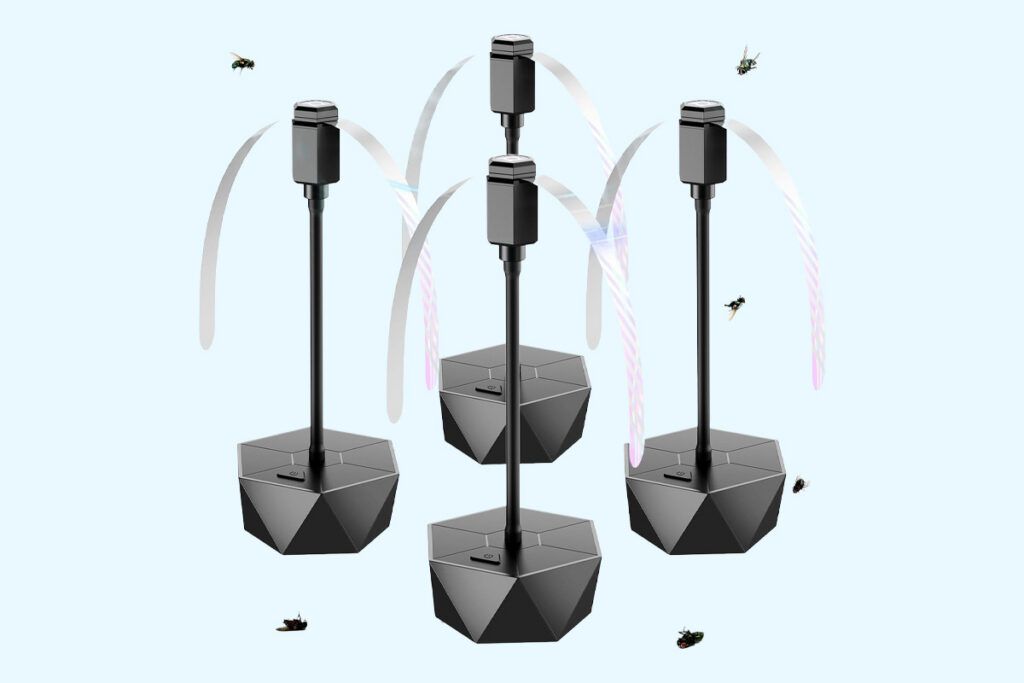
fly repellant fans
Amazon

Portable Fly Repellant Fans

These battery-powered fans help keep flies away without the need for insecticide sprays near food. Their soft-touch blades stop on contact for safety, while the reflective, holographic pattern helps deter insects. Pick up this set of four for your next barbecue.

Buy for $34 at Amazon
Advertisement
Advertisement
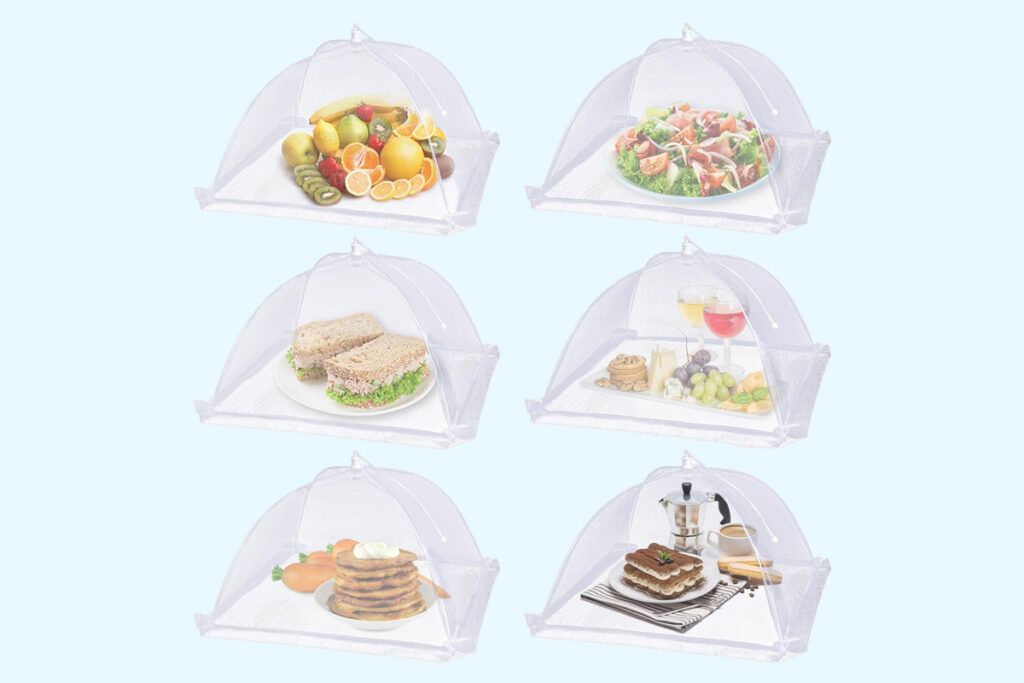
Mesh food tents
Amazon

Mesh Food Tents

Protect your food from insects, dust, and debris with breathable nylon covers. A sturdy metal frame keeps them in place outdoors, while the fine mesh allows airflow and helps prevent condensation buildup.

Buy for $10 at Amazon
Advertisement
Advertisement
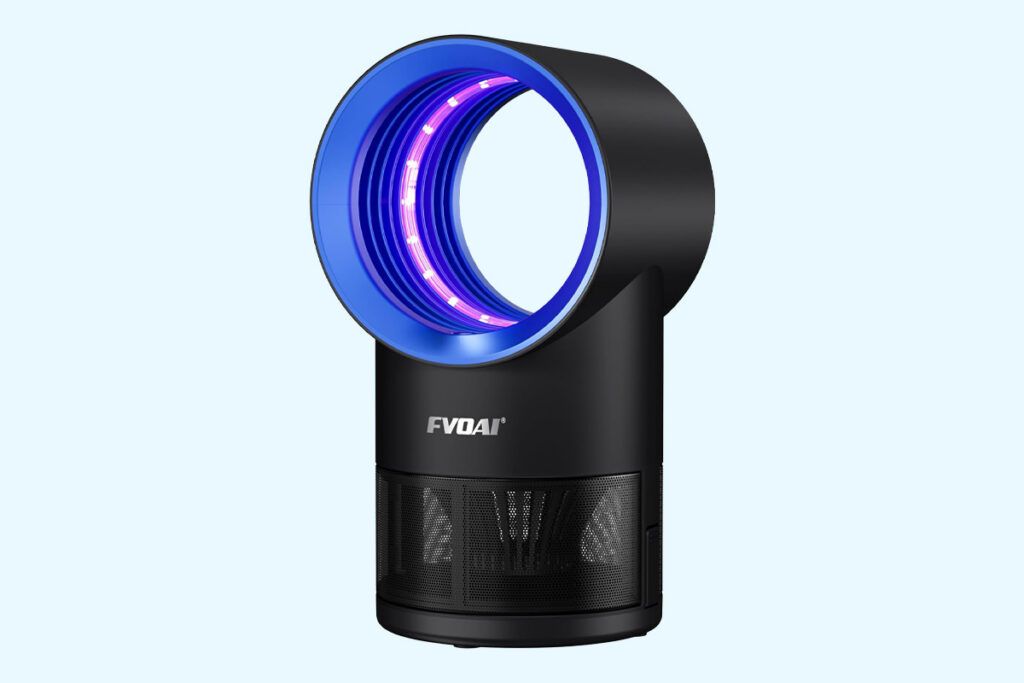
Indoor fly trap
Amazon

Indoor Fly Trap

No one likes using heavy-duty chemicals inside the home. This indoor fly trap uses light and gentle suction to attract and capture insects instead. Flies are trapped on a concealed glue board, helping reduce indoor populations discreetly.

Advertisement
Buy for $32 at Amazon
Advertisement
Advertisement
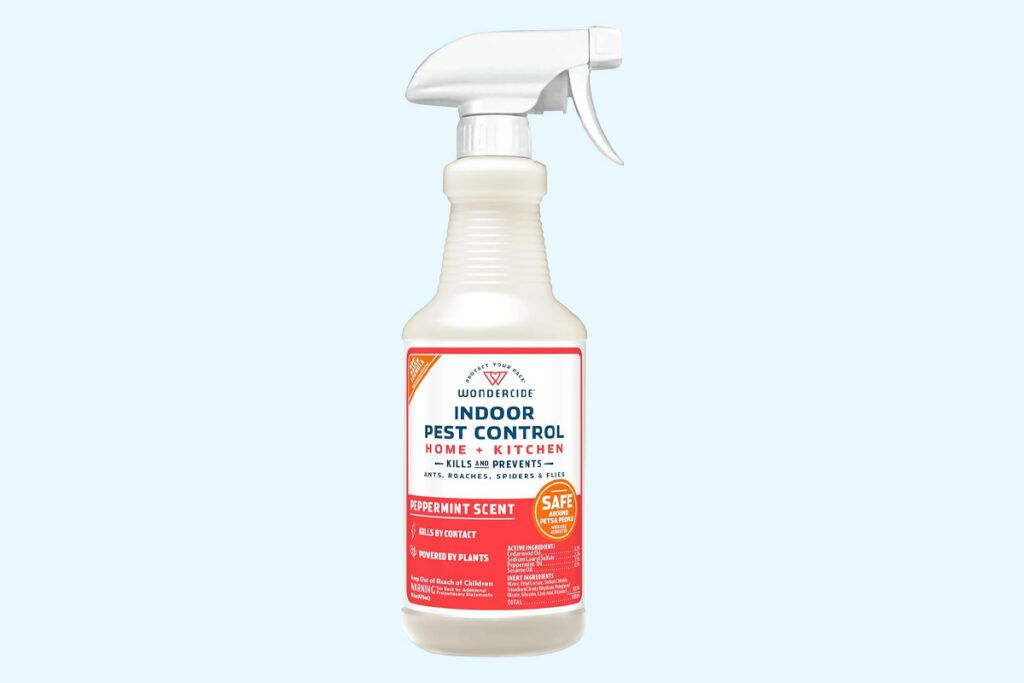
Pest control spray
Amazon

Indoor Pest Control Spray With Essential Oils

While heavy-duty insecticides are generally recommended for outdoor use, plant-based sprays such as Wondercide — which is formulated with essential oils including peppermint, cedarwood, lemongrass, and rosemary — are safe for indoor use. They can help repel and kill common household pests without posing a health risk. (The spray can cause irritation and possibly allergic reactions if used improperly, however, so make sure to use as directed.)

Buy for $27 at Amazon
Advertisement
Advertisement

Featured Image Credit: © Bigc Studio/stock.adobe.com

More From Our Network

Better Report is part of Inbox Studio, an email-first media company. *Indicates a third-party property.
Go Retro With This 1960s Fashion Quiz

Quiz Daily

Go Retro With This 1960s Fashion Quiz

True or False: Are You a Master of U.S. Geography?

Travel Quiz

True or False: Are You a Master of U.S. Geography?

5 Reasons You Can Be Denied Boarding an Airplane

Daily Passport

5 Reasons You Can Be Denied Boarding an Airplane

What Did People Do Before Eyeglasses?

History Facts

What Did People Do Before Eyeglasses?

How To Use a Balloon To Clean Up Dust

House Outlook

How To Use a Balloon To Clean Up Dust

11 Shopping Hacks Costco Members Should Know

FinanceBuzz*

11 Shopping Hacks Costco Members Should Know

Share this article

  • Share to Facebook
  • Share to Twitter
  • Copy Url
  • Share to Email
Rachel Gresh
Writer

Rachel Gresh is a Washington, D.C.-based freelance writer. When she's not writing, you can find her wandering a museum, exploring an unfamiliar city, or baking something new in the kitchen.

This article is for general informational purposes only.
Affiliate Disclaimer Medical Disclaimer Financial Disclaimer

Updated: December 15, 2023
Posted In: Health
Hero Image Credit: Better Report
Advertisement

Related Articles

The 10 Healthiest Trader Joe’s Meals, According to a Dietitian

6 min read

Is It Dangerous To Scratch Mosquito Bites?

4 min read

7 Gross Things That Could Be on Your Toothbrush

5 min read

7 Things a Chef Never Orders at a Restaurant

8 min read

Are the Tiny Red Dots on Your Skin Dangerous?

6 min read
Advertisement

Posts navigation

Newer posts
  • Home
  • Health
  • Wealth
  • Logo
  • Advertise
  • About
  • Contact Us
  • Privacy Policy
  • Terms of Use
  • Your Privacy Choices
x
Thumb Image

Elevate your everyday.

Sign up to receive the practical tips and expert advice you need to pare down the complexities of everyday living right in your inbox.

Sorry, your email address is not valid. Please try again.

Your email is:

Edit Image
Sorry, your email address is not valid. Please try again.
Thank you for subscribing...

By subscribing you are agreeing to our Terms of Use and Privacy Policy.

Close image
Thumb Image
Second Thumb Image

Elevate your everyday.

Sign up to receive the practical tips and expert advice you need to pare down the complexities of everyday living right in your inbox.

Sorry, your email address is not valid. Please try again.

By subscribing you are agreeing to our Privacy Policy and Terms of Use.

Close image