Skip to content
Better Report
  • Home
  • Health
  • Wealth
8 Low-Maintenance Plants That Thrive on Neglect
  • Search
  • Subscribe
  • Home
  • Health
  • Wealth
  • About
  • Privacy Policy
  • Terms of Use
  • Contact Us
  • SubscribeSubscribe
  • Search
Thank you for confirming your email! Welcome to the community.

Tag: Food Safety

5 Vegetables You Should Never Store in the Fridge

Home | Updated: September 10, 2026
Erin McCarthy
Author
Erin is a writer, editor, and content strategist living in the New York City area. Previously, she was the VP/Editor-in-Chief of MentalFloss.com and an editor at Popular Mechanics magazine. When she’s not working, Erin is hanging out with her cats, reading books from her never-ending TBR, traveling, karaoking, and making sourdough with her starter Stephen Sondheim.
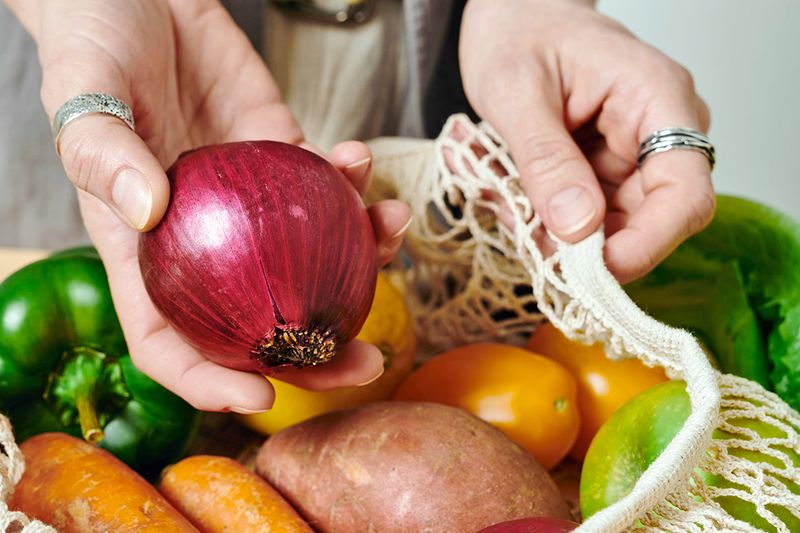
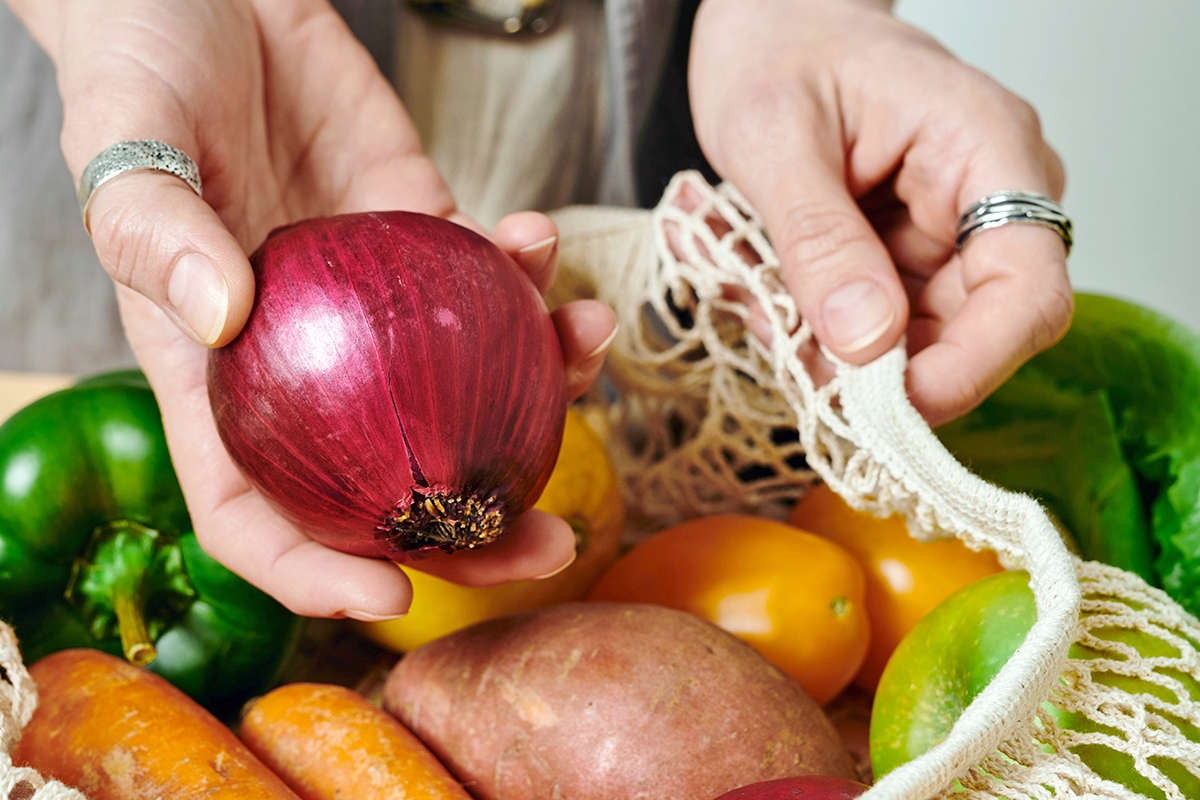
Hand holding a red onion
Better Report

It can be tempting, after a trip to the grocery store, to throw anything that’s seemingly perishable into the fridge. And while it’s true that the fridge keeps many foods good for far longer than they would be outside of it, that’s not true of all foods. In fact, refrigerating certain foods actually decreases their shelf life. We all know the usual suspects that don’t belong in the fridge (tomatoes, avocados, and bananas, for example), but the vegetables below may surprise you. 

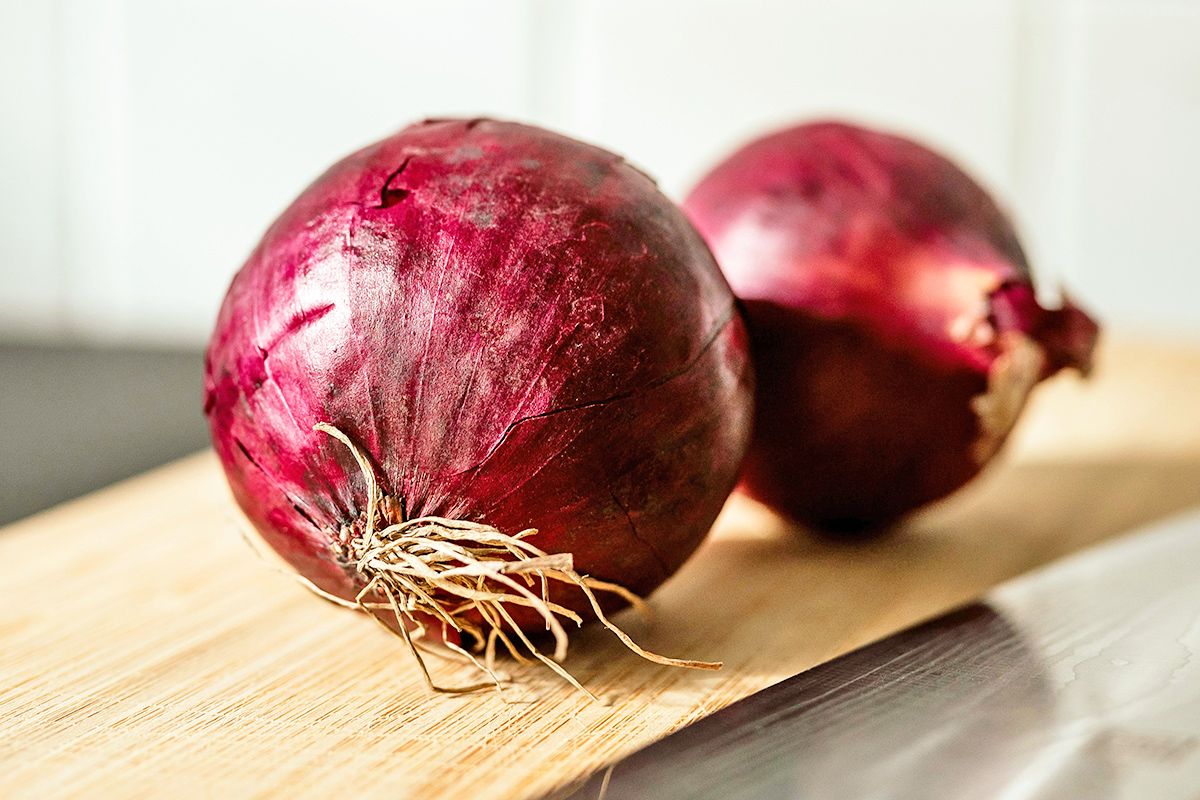
Red onions on cutting board
Credit: © Justus Menke/Unsplash.com

Certain Onions

There are some onions, such as scallions, that should go in the fridge — but yellow, white, and red onions don’t belong there (unless they’ve been peeled or cut). Your fridge is both cold and humid, creating an environment that causes them to go soft and spoil. Instead, store them in a perforated bag or mesh basket in a cool, dark spot that gets lots of ventilation. Avoid plastic bags, which encourage mold growth, and don’t place them in a well-lit area, which will cause them to sprout and change their flavor.

Advertisement
Advertisement
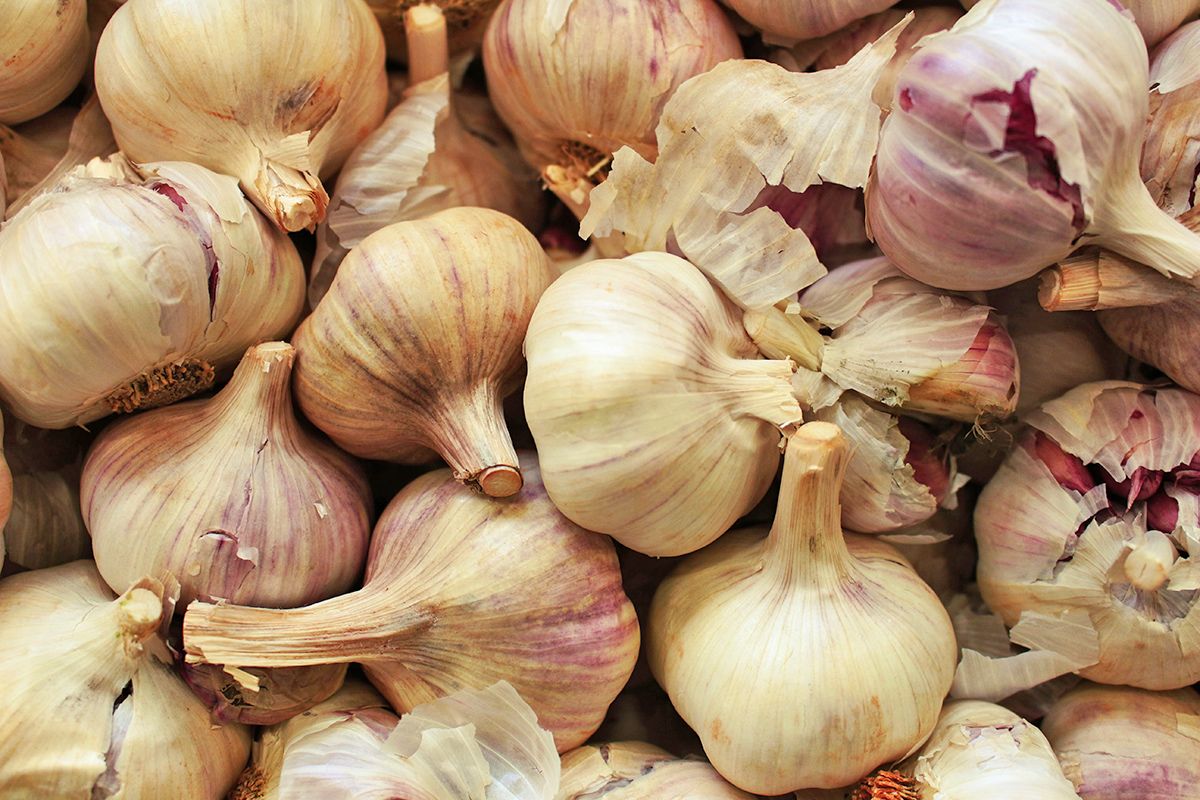
Bulbs of garlic
Credit: © Daniel Dan/Pexels.com

Garlic

Storing bulbs of garlic in the fridge will cause them to go soft and sprout — and while you can still eat those sprouts, they tend to taste pretty bitter. To keep your garlic fresh for as long as possible, store the bulb whole in a dark, cool place such as your pantry, and make sure it’s well ventilated. 

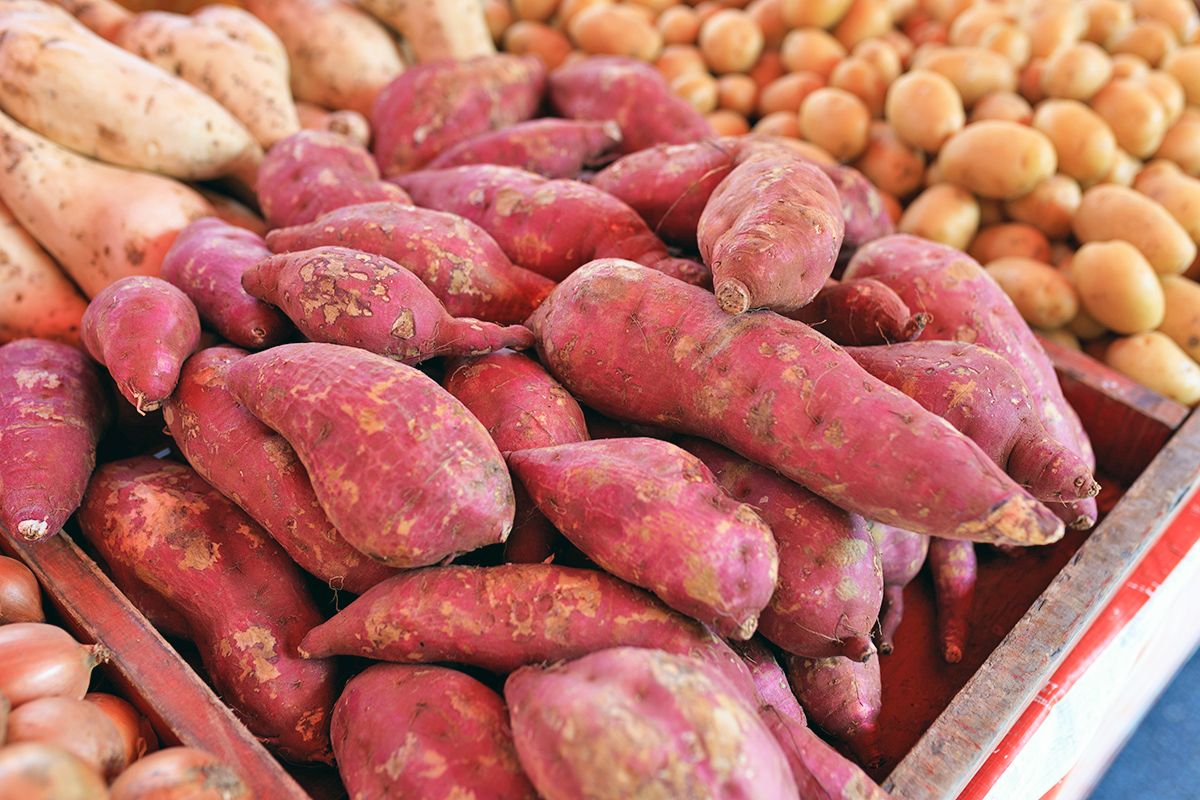
Sweet potatoes and potatoes
Credit: © Matheus Bertelli/Pexels.com

Potatoes and Sweet Potatoes

Whole potatoes and sweet potatoes fare better outside the fridge; inside, the chilly temp turns the starch in the vegetables to sugar. Both taste and texture suffer as a result. Store them in a cool, dark, well-ventilated area, and they should last for weeks. (But make sure your potatoes are far away from your garlic and onions, which emit gases that will cause the potatoes to sprout. If that occurs, you should throw your potatoes out.)

Recommended Articles

  • The Safety Rules for Candles You Probably Don’t Know

  • How Old Are the Apples in the Grocery Store?

  • How To Tell if You’re Brushing Your Teeth Too Hard

  • 5 Things Your Car Needs Before the First Freeze

Advertisement
Advertisement

Reader Favorites

  • Woman looking in fridge

    9 Foods You Should Toss ASAP if They’re Expired

  • Person eating salad

    7 Things a Chef Never Orders at a Restaurant

  • Cherry angioma

    Are the Tiny Red Dots on Your Skin Dangerous?

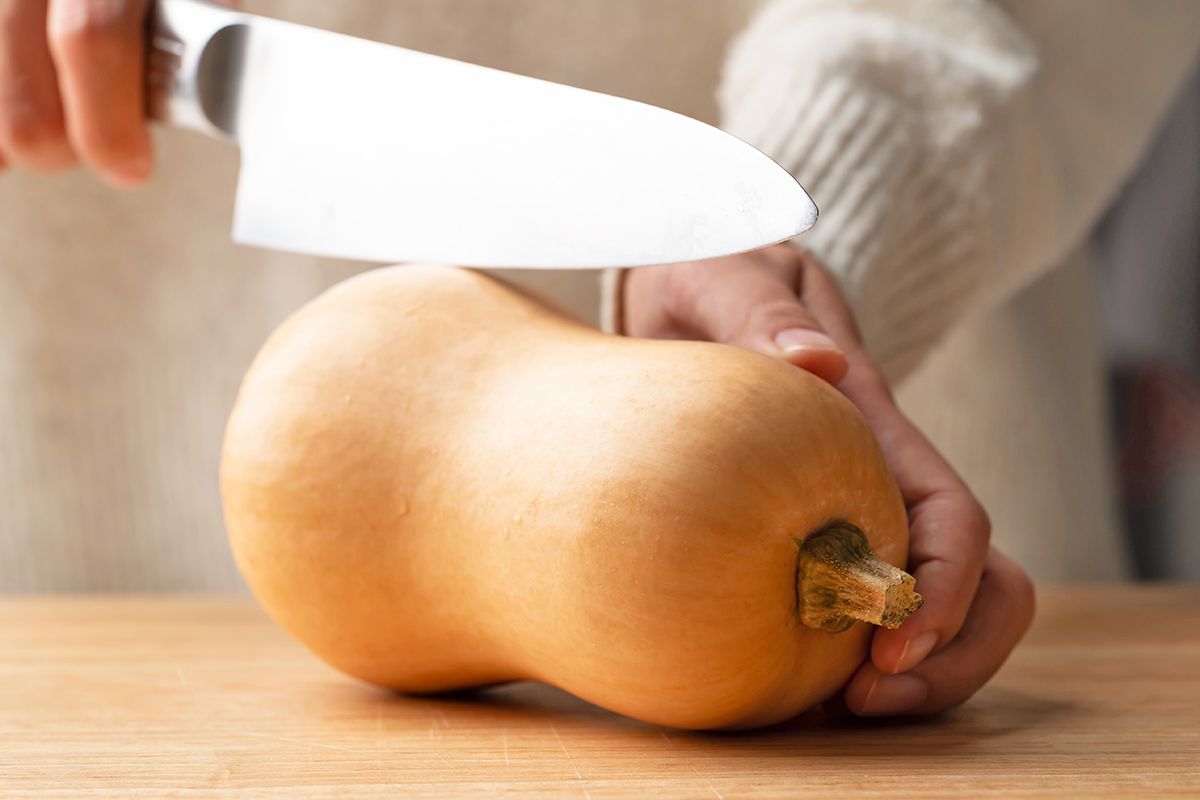
Person cutting butternut squash
Credit: © Nungning20—iStock/Getty Images

Winter Squash

Winter squashes like butternut, acorn, and delicata are planted in the spring and left on the vine until they grow to full size; their outer skin gets harder as they mature, which means when they’re whole, they can be stored without refrigeration and consumed much later when the weather has turned colder. 

As with potatoes, your fridge’s cold temperatures will convert a winter squash’s starches to sugars, causing the vegetable to become very sweet, soggy, or even rubbery. Instead, find a spot like a root cellar or basement where the temperatures are between 50 and 55 degrees Fahrenheit and the humidity is between 50% and 70%. (Too humid and your squash will rot; too dry and it will shrivel up.) Depending on the type of squash, it’ll last two to six months when properly stored. 

Advertisement
Advertisement

Featured Image Credit: © Getty Images/Unsplash.com

More From Our Network

Better Report is part of Inbox Studio, an email-first media company. *Indicates a third-party property.

Go Retro With This 1960s Fashion Quiz

Quiz Daily

Go Retro With This 1960s Fashion Quiz

True or False: Are You a Master of U.S. Geography?

Travel Quiz

True or False: Are You a Master of U.S. Geography?

5 Reasons You Can Be Denied Boarding an Airplane

Daily Passport

5 Reasons You Can Be Denied Boarding an Airplane

What Did People Do Before Eyeglasses?

History Facts

What Did People Do Before Eyeglasses?

How To Use a Balloon To Clean Up Dust

House Outlook

How To Use a Balloon To Clean Up Dust

11 Shopping Hacks Costco Members Should Know

FinanceBuzz*

11 Shopping Hacks Costco Members Should Know

Share this article

  • Share to Facebook
  • Share to Twitter
  • Copy Url
  • Share to Email
Erin McCarthy
Editor, Better Report

Erin is a writer, editor, and content strategist living in the New York City area. Previously, she was the VP/Editor-in-Chief of MentalFloss.com and an editor at Popular Mechanics magazine. When she’s not working, Erin is hanging out with her cats, reading books from her never-ending TBR, traveling, karaoking, and making sourdough with her starter Stephen Sondheim.

This article is for general informational purposes only.
Affiliate Disclaimer Medical Disclaimer Financial Disclaimer

Updated: March 23, 2026
Posted In: Home
Hero Image Credit: Better Report
Advertisement

Related Articles

The Safety Rules for Candles You Probably Don’t Know

5 min read

9 Items in Your Basement You Should Toss Right Now

5 min read

Why a Flashing Check Engine Light Is Different From a Solid One

3 min read

Why Does Your Sink Have a Tiny Hole?

3 min read

Is Hard Water Ruining Your Clothes?

3 min read
Advertisement

7 Things a Chef Never Orders at a Restaurant

Health | Updated: September 1, 2026
Fred Decker
Author
Fred Decker is a trained chef and former restaurateur. Since closing his restaurants over a decade ago he has been a prolific freelance writer, publishing several thousand articles on dozens of high-volume websites including Taste Of Home, Hunker, Tasting Table, Week&, eHow, and GOBankingRates. He lives on a rural acreage shared with a big garden, chickens, rabbits, and grandkids.
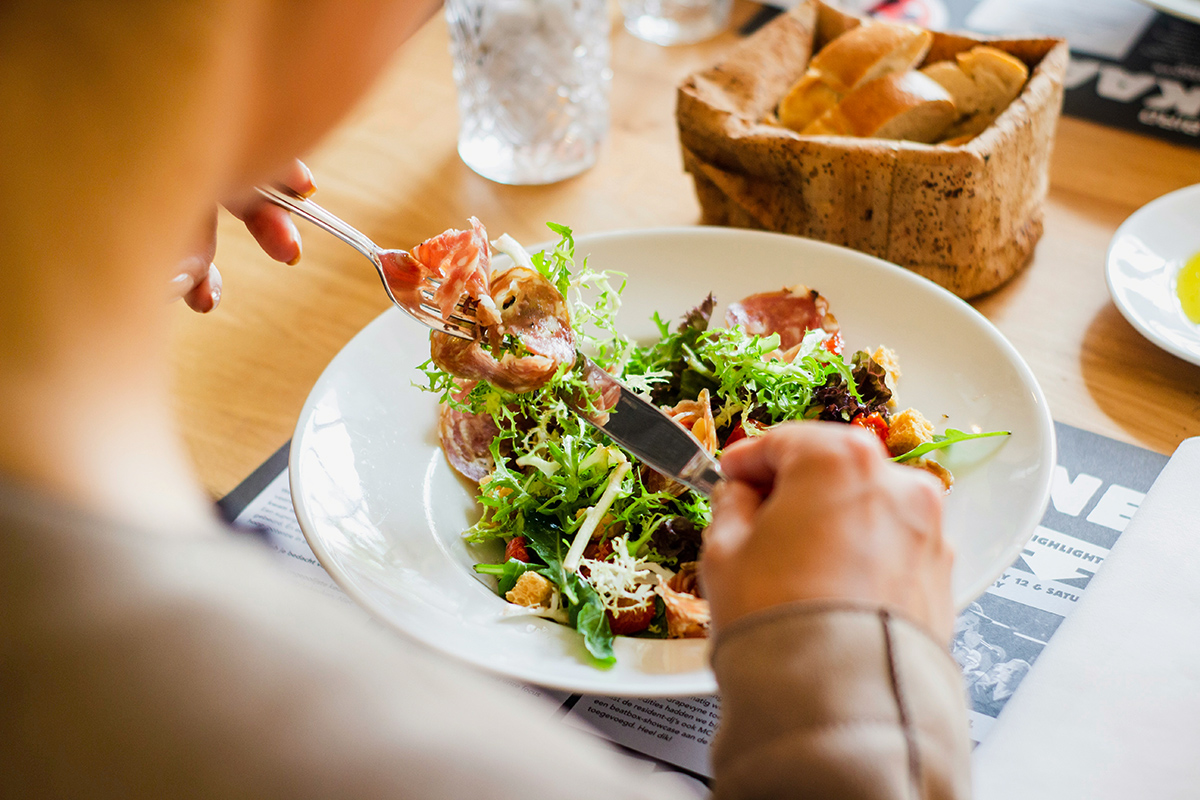
Person eating salad
Better Report

One question I get asked a lot, as a trained chef and former food safety instructor, is how to know which things to order at a restaurant and which to avoid. But a lot of the time, the honest answer is “it depends,” based on whether I think the restaurant can do it right. 

So here’s my personal list of seven items I’ll usually avoid when I’m eating out, why they’ll help you find the best food, and how avoiding them could possibly help reduce your risk of foodborne illness. 

Advertisement
Advertisement
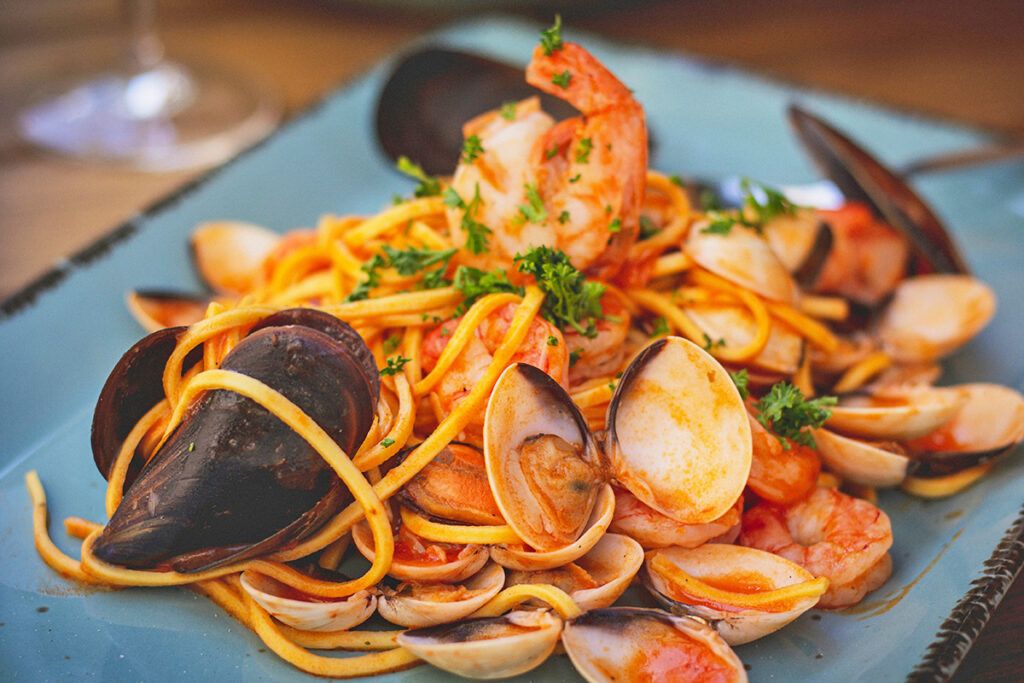
Seafood pasta
Credit: © Sarda Bamberg/Unsplash.com

Shellfish

A lot of chefs are choosy about seafood in general, but I’m pickiest about shellfish. That’s because they’re about the most perishable thing a restaurant can stock — they’re at their peak for just a day (and sometimes less). 

Consider mussels. They’re tasty and relatively inexpensive, and I’ve gathered them myself from rocky shorelines for a tasty meal. But just one bad mussel can make you pretty ill, so I avoid ordering them unless I’m really confident in the restaurant and the chef. Raw oysters are also especially problematic, because they can carry a range of dangerous pathogens, including norovirus, salmonella, hepatitis A, and Vibrio vulnificus. 

I’ll make an exception if shellfish is what the restaurant is famous for. A place that cranks out thousands of oysters a day has plenty of expertise in handling them, not to mention excellent relationships with its suppliers. If you’re going to eat shellfish, that’s the kind of restaurant you want to choose. 

Recommended Articles

  • The Safety Rules for Candles You Probably Don’t Know

  • How Old Are the Apples in the Grocery Store?

  • How To Tell if You’re Brushing Your Teeth Too Hard

  • 5 Things Your Car Needs Before the First Freeze

Advertisement
Advertisement

Reader Favorites

  • Woman looking in fridge

    9 Foods You Should Toss ASAP if They’re Expired

  • Person eating salad

    7 Things a Chef Never Orders at a Restaurant

  • Cherry angioma

    Are the Tiny Red Dots on Your Skin Dangerous?

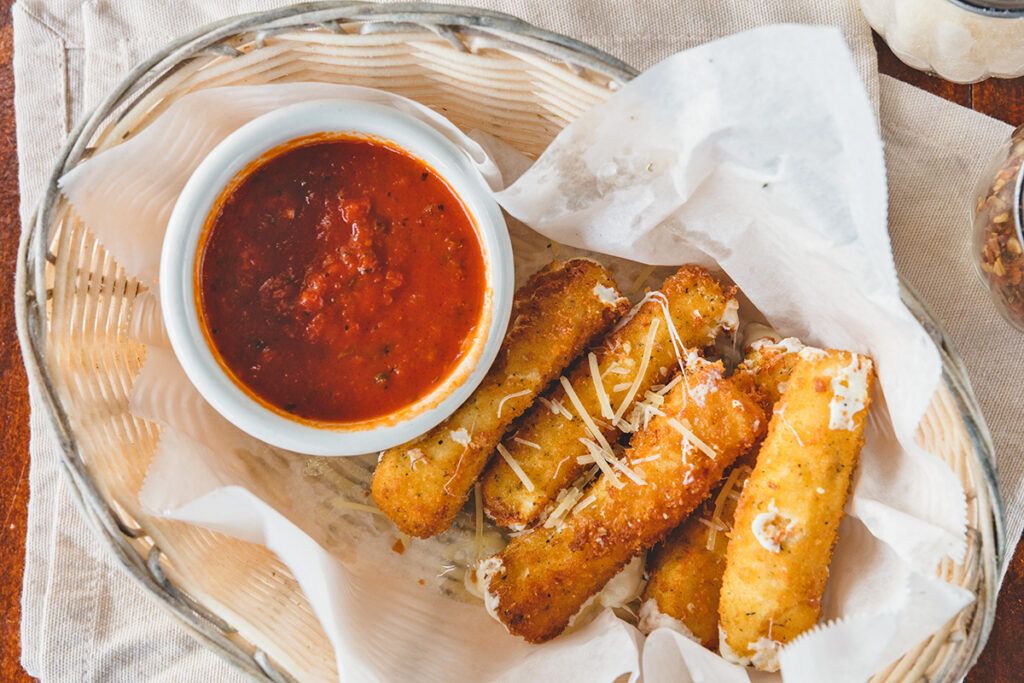
Mozzarella sticks
Credit: © Cultured Images/stock.adobe.com

Things I Know They Didn’t Make

The freezer section of your supermarket is filled with take-home versions of your favorite restaurant nibbles, from french fries and onion rings to mozzarella sticks, precooked chicken wings, and potato skins. But here’s the thing: Those nibbles you’re eating at the restaurant probably also come from a freezer. 

Advertisement

It’s not especially labor-intensive to make mozzarella sticks or onion rings from scratch, but it does take time, fresh ingredients, and at least a basic level of skill. Those are all things that have a cost and can interrupt the flow of a high-volume fast-food or fast-casual restaurant. That means, in practice, that the big chains (and independent restaurants with six-page “something for everyone” menus) usually buy those things ready-made from big wholesalers like Sysco or Gordon Food Service. So why pay a big markup to buy reheated frozen food from someone else? 

Advertisement
Advertisement
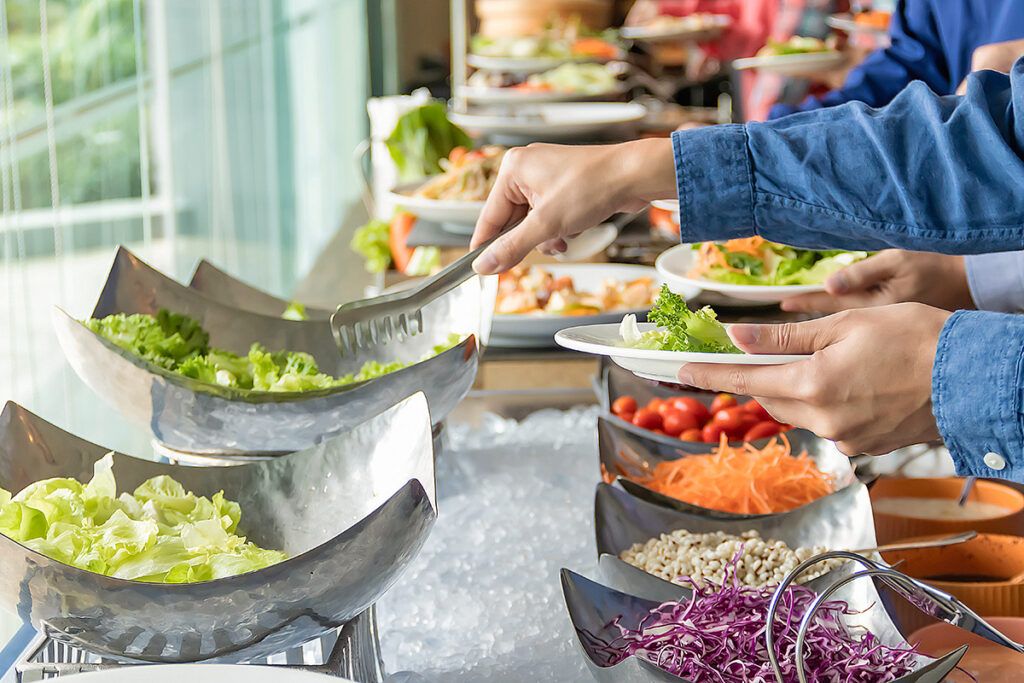
Person taking salad at buffet
Credit: © Chalearmrat/stock.adobe.com

Salads

I avoid ordering things that may be substandard, give poor value for my dollar, or may not be food-safe — and salads unfortunately tick all three boxes. 

First, they can be a dumping ground for vegetables or toppings that are getting old and tired (especially if they’re being offered as a daily special), and their dressings are often bought in bulk rather than house-made. Second, they tend to be a high-profit menu item for restaurants, which by definition means they don’t offer me good value for what I spend. 

Finally, there are several ways that salads may not be completely food-safe. Some toppings, like chicken, fish, and egg or tuna salad, are risky if they’re approaching the end of their storage life. There’s also the risk of a pathogen in the vegetables used (see the recent cyclosporiasis outbreak, which as of writing has been linked to iceberg lettuce). And that goes double for the salad bar, where countless hands have touched the utensils and food, and countless mouths have breathed on everything. None for me, thanks! When I’m in the mood for fresh food built around quality produce, I’ll make it at home. 

Advertisement
Advertisement
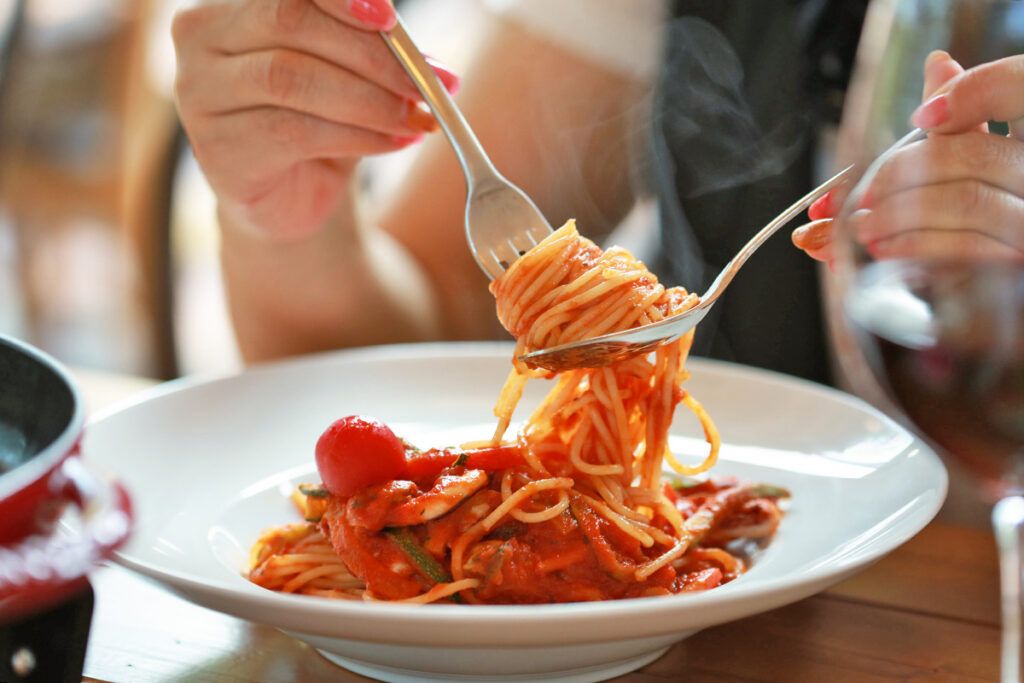
Person holding spoon and fork with spaghetti
Credit: © 준섭 윤/Pexels.com

Pasta Dishes

Don’t get me wrong: There are some truly excellent pasta-centric restaurants out there. I’ve eaten in places where line cooks cranked out sheets of fresh-made pasta in full view of diners, and I made and served fresh pasta at one of my own restaurants. In establishments like that, the pasta dishes can be some of the best food you’ve ever eaten. 

At big chains or everyday restaurants, though, pasta is usually there as high-margin “filler” for the menu — a way to offset lower margins on other, higher-cost meals. The sauces, too, are very often bought premade from a wholesaler. Chains may have a central commissary making sauces from scratch and shipping them to individual locations, which is sometimes (but not necessarily) better. So, save your money and eat pasta at home, unless there’s a really great pasta restaurant nearby. 

Advertisement
Advertisement
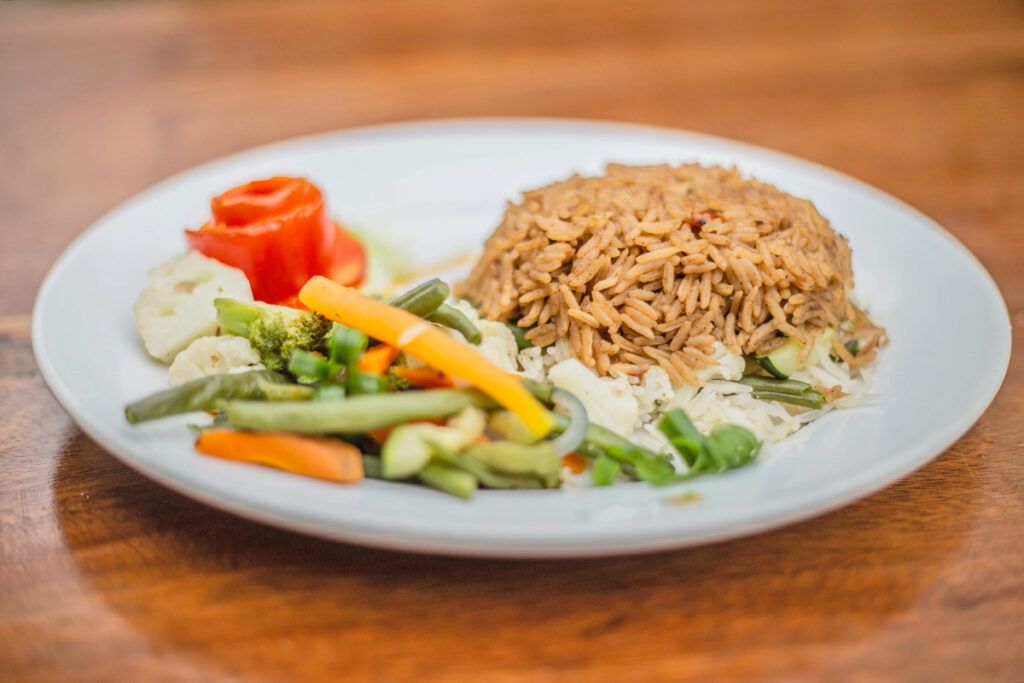
Rice and veggies on a plate
Credit:© Speak Media Uganda/Pexels.com

The Low-Effort “Vegetarian Option” at a Nonvegetarian Restaurant

Although I’m an omnivore, I’ll periodically eat a vegetarian menu item just because I’m in the mood for something light and tasty. But — as most vegetarians and vegans know too well — a surprising number of restaurants don’t have any actual vegetarian meals on their menu, even when they’d be easy to implement. A vegetarian choice at restaurants like that will amount to a pasta dish or a handful of vegetable sides thrown on a plate with potato or a scoop of rice. 

Advertisement

If I ask someone to dinner and that’s what they get, how good a friend am I? It’s not worth ordering, and they shouldn’t have to resign themselves to it. So, when you’re including a vegetarian friend or co-worker in your group, find a restaurant that has at least a few vegetarian or vegan options on the standard menu. And when in doubt, ask your vegetarian friends for recommendations! Restaurants centered around a cuisine with plenty of excellent vegetarian options, like Indian and Mediterranean food, are good choices as well. 

Advertisement
Advertisement
Eggs benedict
Credit: © Nishihama/stock.adobe.com

Anything With Hollandaise

When it’s made properly, hollandaise sauce is really good stuff. The canonical version requires just three ingredients: a small amount of lemon juice or good vinegar combined with egg yolks, and butter whisked in slowly over heat to make a thick, rich sauce. 

There are two kinds of hollandaise sauce you’ll find at restaurants, and they’re both problematic for different reasons. The classic version can be a breeding ground for bacteria if the egg yolks don’t reach a high-enough temperature. It’s also temperamental for the cooks, because you can’t reliably hold it on a steam table without risk of it separating. As a result, it needs to be made frequently in small batches, which requires skill and labor — and that means you’ll usually find it only at higher-priced restaurants. 

The other kind of hollandaise is made from a mix, which typically combines a lot of starches with artificial flavors and colorings to make it look and taste kinda-sorta like the made-from-scratch hollandaise. It’s a lot cheaper, and it’ll hold just as well as gravy from a mix (because it’s basically the same thing). This is what you’ll find at most brunch places serving eggs Benedict, for example. It’s … fine, if you’ve never tasted the real thing. And in fairness, it’s not all bad: Unlike real hollandaise, which is high in both fat and saturated fat, mixes can be fat-free (good), but also usually high in sodium (bad). I don’t personally like eating a mix, and definitely won’t pay a premium to eat it at a restaurant.

Advertisement
Advertisement
Cheeseburger egg roll
Credit: © LauriPatterson—iStock/Getty Images

Ill-Considered Mashups, Deconstructions, and Fusion Food

In some ways there’s never been a better time for adventurous eaters than right now. Almost any ingredient we might want is available year-round in supermarkets or online. All of the world’s cuisines are at our fingertips too, not just on TV and social media but in brick-and-mortar restaurants. 

Innovative chefs love playing with this bounty and coming up with new ways to put things together. That’s a good thing, when it’s done well: For example, French Algerian chef Farid Zadi drew on the historic culinary connections between North Africa and Mexico (via Spain) to open a restaurant serving North African-inspired tacos in Los Angeles. But mashups and fusion food don’t always draw on the same kind of logical parallels, and they can often be random and off-putting (think cheeseburger wontons or borscht meets pho). So can deconstructed versions of familiar dishes, which pull apart a meal’s components and treat them in unconventional ways. 

Advertisement

When these oddball riffs on a familiar food work, they can be great — remember Cronut mania? But you need to understand the classic dishes before you pick them apart, and not all chefs have that understanding or an intuitive grasp of how flavors and textures should play together. So this is very subjective, but if it strikes you as a weird or repellent combination, don’t be shy to ask what the reasoning is. If the chef and servers can’t give you a persuasive answer, order something else.  

Advertisement
Advertisement

Featured Image Credit: © Louis Hansel/Unsplash.com

More From Our Network

Better Report is part of Inbox Studio, an email-first media company. *Indicates a third-party property.

Go Retro With This 1960s Fashion Quiz

Quiz Daily

Go Retro With This 1960s Fashion Quiz

True or False: Are You a Master of U.S. Geography?

Travel Quiz

True or False: Are You a Master of U.S. Geography?

5 Reasons You Can Be Denied Boarding an Airplane

Daily Passport

5 Reasons You Can Be Denied Boarding an Airplane

What Did People Do Before Eyeglasses?

History Facts

What Did People Do Before Eyeglasses?

How To Use a Balloon To Clean Up Dust

House Outlook

How To Use a Balloon To Clean Up Dust

11 Shopping Hacks Costco Members Should Know

FinanceBuzz*

11 Shopping Hacks Costco Members Should Know

Share this article

  • Share to Facebook
  • Share to Twitter
  • Copy Url
  • Share to Email
Fred Decker
Writer

Fred Decker is a trained chef and former restaurateur. Since closing his restaurants over a decade ago he has been a prolific freelance writer, publishing several thousand articles on dozens of high-volume websites including Taste Of Home, Hunker, Tasting Table, Week&, eHow, and GOBankingRates. He lives on a rural acreage shared with a big garden, chickens, rabbits, and grandkids.

This article is for general informational purposes only.
Affiliate Disclaimer Medical Disclaimer Financial Disclaimer

Updated: April 14, 2026
Posted In: Health
Hero Image Credit: Better Report
Advertisement

Related Articles

How Old Are the Apples in the Grocery Store?

4 min read

How To Tell if You’re Brushing Your Teeth Too Hard

4 min read

5 Things To Ask Your Doctor About the New Flu Shot

5 min read

Is Sourdough Actually Healthier Than Regular Bread?

7 min read

Do You Really Need a Bidet in Your Home?

4 min read
Advertisement

9 Foods You Should Toss ASAP if They’re Expired

Health | Updated: August 21, 2026
Erin Scottberg
Author
Erin Scottberg is a Brooklyn-based writer, garden designer, and houseplant expert — and the founder of Full Sun Studio (fullsun.studio), a garden design and plant consulting studio in New York City. She holds an Urban Horticulture Certificate from Brooklyn Botanic Garden, an NYC Street Tree Pruner License, and an NYC Master Composter Certification, and spent three years as Head of Content and Education at The Sill. When she's not working, you can find her creating in her textile studio, running craft nights in her neighborhood, or hanging with her rescue pup, Sunny. She's an ambitious DIYer, avid composter, and has never been able to walk by a thirft store without taking a look.
Woman looking in fridge
Better Report

Food expiration dates are confusing — and not just because they don’t necessarily indicate when you should throw food out. “Sell by” and  “best by” refer to peak quality, not safety. And to add to the confusion, the terms aren’t federally regulated or required (except in the case of baby formula and certain baby foods). Most foods are fine after the dates on their packaging pass, though they may be slightly subpar. 

There are a handful of foods, however, where timing actually does matter. In these cases, it’s less about flavor and more about whether that meal is going to haunt you tomorrow. The common thread is bacteria: Moist, low-acid, ready-to-eat foods make especially good hosts, and the pathogens that can make you sick (like listeria and salmonella) don’t always announce themselves with a smell. Here are the foods you should toss once the expiration date has passed (or sooner if you’ve opened them).

Advertisement
Advertisement
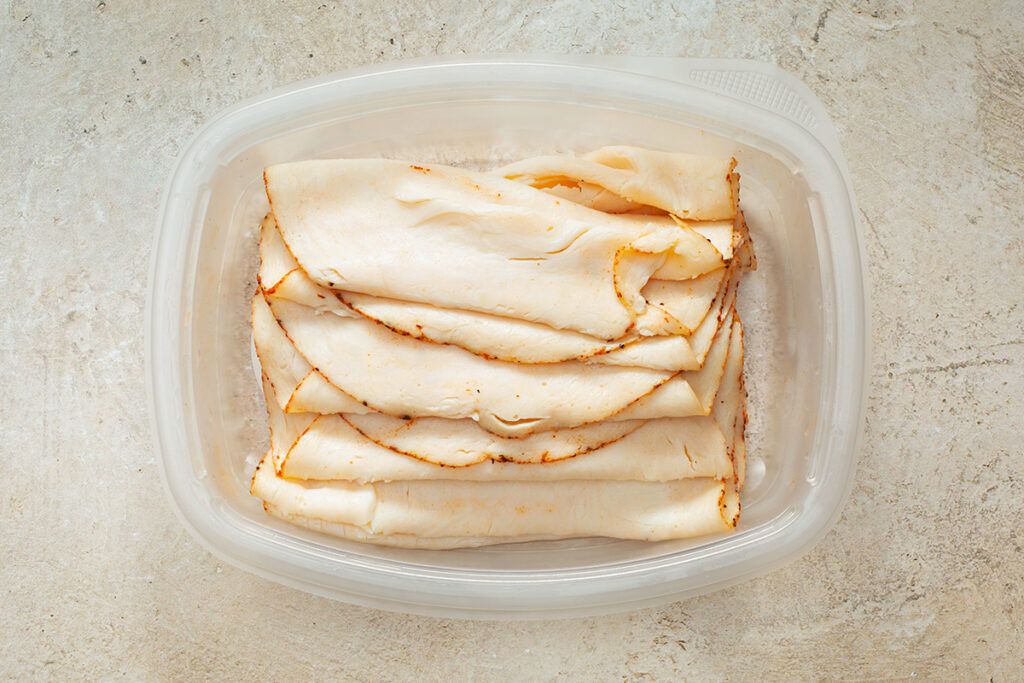
Deli meat in plastic container
Credit: © Photography By Tonelson—iStock/Getty Images

Deli Meat and Cold Cuts 

Lunch meats are prime territory for listeria, a bacterium capable of growing at temperatures as low as 31 degrees Fahrenheit — meaning “well, it stayed cold” isn’t the protection it seems to be. And, as the FDA notes, the longer a ready-to-eat refrigerated food sits, the more opportunity listeria has to grow. 

While it’s rare for healthy people to get extremely ill from listeria infection, it can be fatal for newborns and those who are immunocompromised, and it can cause miscarriages in pregnant people. So you shouldn’t let freshly sliced deli meat linger too long in your fridge: It has only three to five safe days before you should toss it out. The prepackaged versions you get in the refrigerated aisle last a little longer if they’re unopened — usually about two weeks — but once the seal is broken, you’re back to the same short window.

Recommended Articles

  • The Safety Rules for Candles You Probably Don’t Know

  • How Old Are the Apples in the Grocery Store?

  • How To Tell if You’re Brushing Your Teeth Too Hard

  • 5 Things Your Car Needs Before the First Freeze

Advertisement
Advertisement

Reader Favorites

  • Woman looking in fridge

    9 Foods You Should Toss ASAP if They’re Expired

  • Person eating salad

    7 Things a Chef Never Orders at a Restaurant

  • Cherry angioma

    Are the Tiny Red Dots on Your Skin Dangerous?

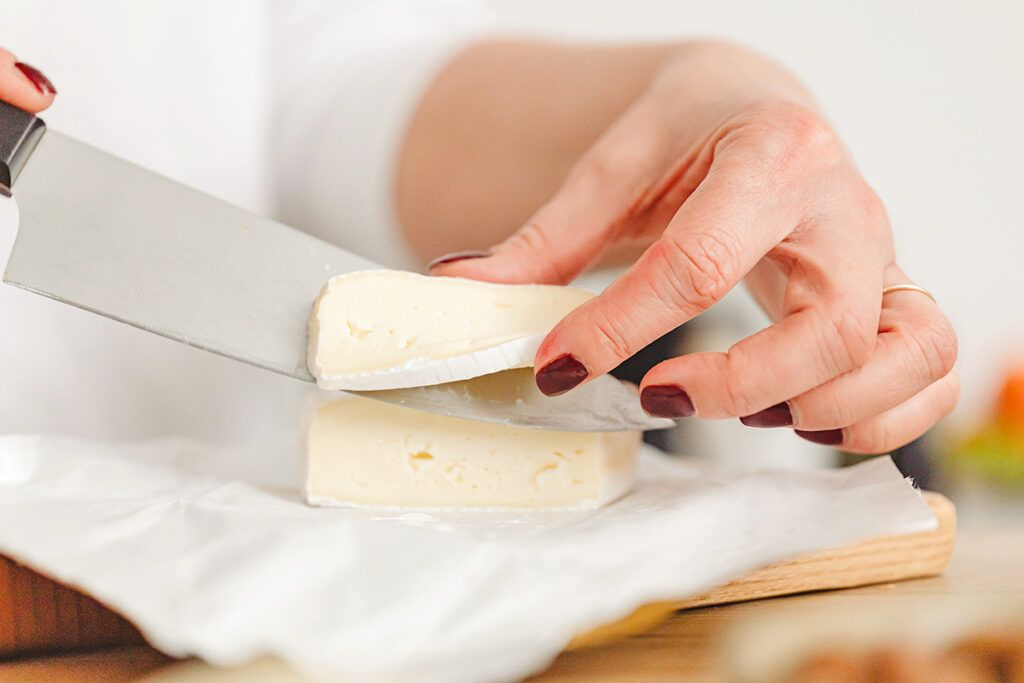
Person cutting brie cheese with knife
Credit: © kaboompics/Pexels.com

Soft Cheeses 

Solid blocks of hard cheeses (cheddar, Parmesan, and pecorino, for example) are very forgiving. They last for up to four weeks in your fridge, and even if they get a little moldy, they’re not a lost cause — just cut an inch around the moldy spot and carry on. (If your hard cheese is grated or shredded and exhibits signs of mold, though, you should throw it out.)  

When it comes to soft, high-moisture cheeses like ricotta, cream cheese, goat cheese, or brie, it’s best to follow package guidelines. And definitely toss them at any sign of mold: In soft cheese, it spreads throughout and can’t be cut out. Soft cheeses are also more prone to listeria. The Academy of Nutrition and Dietetics suggests using cream cheese within two weeks of opening, and ricotta within one. Bottom line: Toss at the first sign of spoilage or by the date on the package — whichever comes first.

Advertisement
Advertisement
Oysters on ice
Credit: © cottonbro studio/Pexels.com

Raw Fish and Shellfish 

Seafood is one of the most perishable things in your kitchen. Eating improperly stored fish can cause various types of food poisoning, resulting in an upset stomach, diarrhea, or worse. For this reason, the USDA recommends cooking or freezing raw fish within 48 hours of purchase. Certain types of shellfish give you a little more leeway: Clams, mussels, and oysters need to be eaten within three days if you buy them live or in five to 10 days if they’ve been commercially shucked and jarred. Scallops should be consumed within one to three days. Any sour, fishy, or ammonia-like smell is your cue to throw seafood out immediately. And while we don’t want to scare you, here’s one additional thing to consider: There are some types of food poisoning you can get from fish that no amount of cooking can prevent. If you feel sick after eating seafood, seek medical advice.

Advertisement
Advertisement
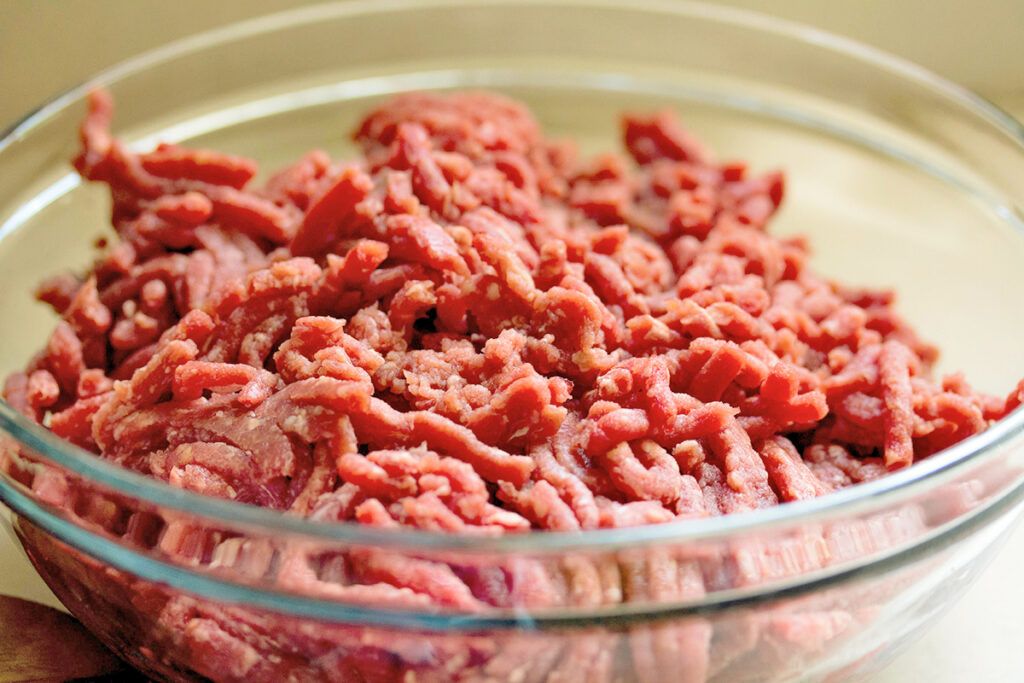
Ground meat in a glass bowl
Credit: © Angele J/Pexels.com

Ground Meat 

Think about this: A steak carries bacteria mostly on its surface, which is why searing the outside does a lot of work in making it both safe and tasty. However, it’s smart to consider whether your meat has been mechanically tenderized. The process, which involves poking the meat with sharp needles to break up the muscle, can transfer bacteria into the center of the steak. Similarly, grinding meat mixes that bacteria all the way through, so ground beef, turkey, and pork spoil faster and carry more risk. The USDA says to use or freeze ground meat within two days of purchase. 

Advertisement
Advertisement
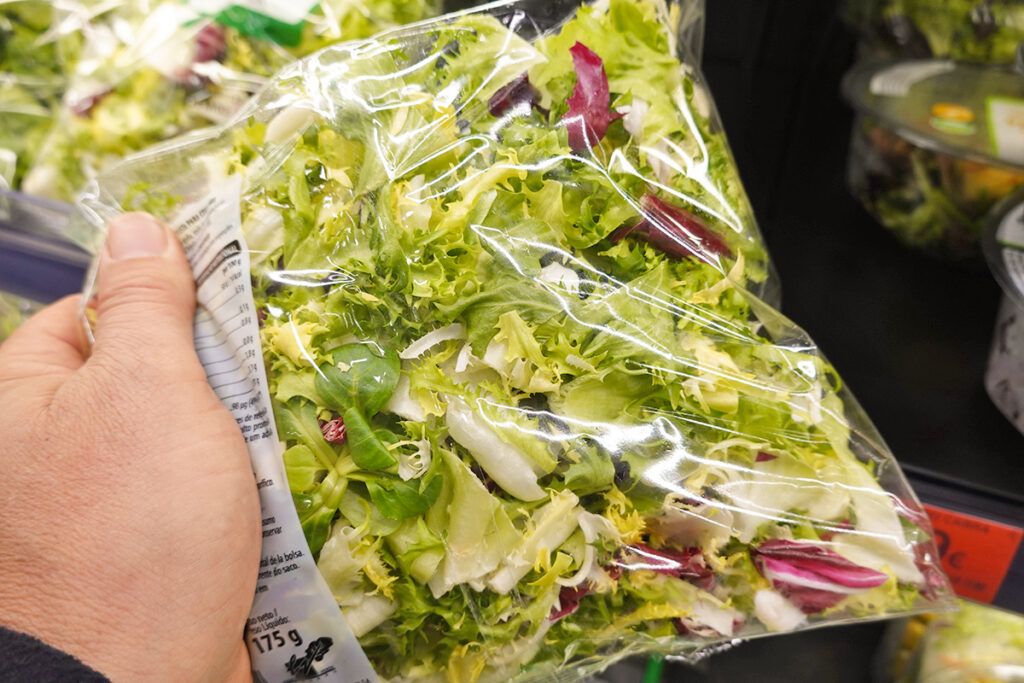
Bag of lettuce
Credit: © Toni Jardon—iStock/Getty Images

Bagged Salads and Leafy Greens 

Leafy greens can carry bacteria that may become a problem once the leaves break down and get soggy, allowing the bacteria to proliferate. So, once greens go slimy or brown, they’re done (and wilted salad, being what it is, means you probably wouldn’t want to use them anyway). This applies even to prewashed mixes. According to FoodSafety.gov, bagged produce, if unopened, “will last [three to five] days after date on bag; after opening it will last [two] days.”

Advertisement
Advertisement
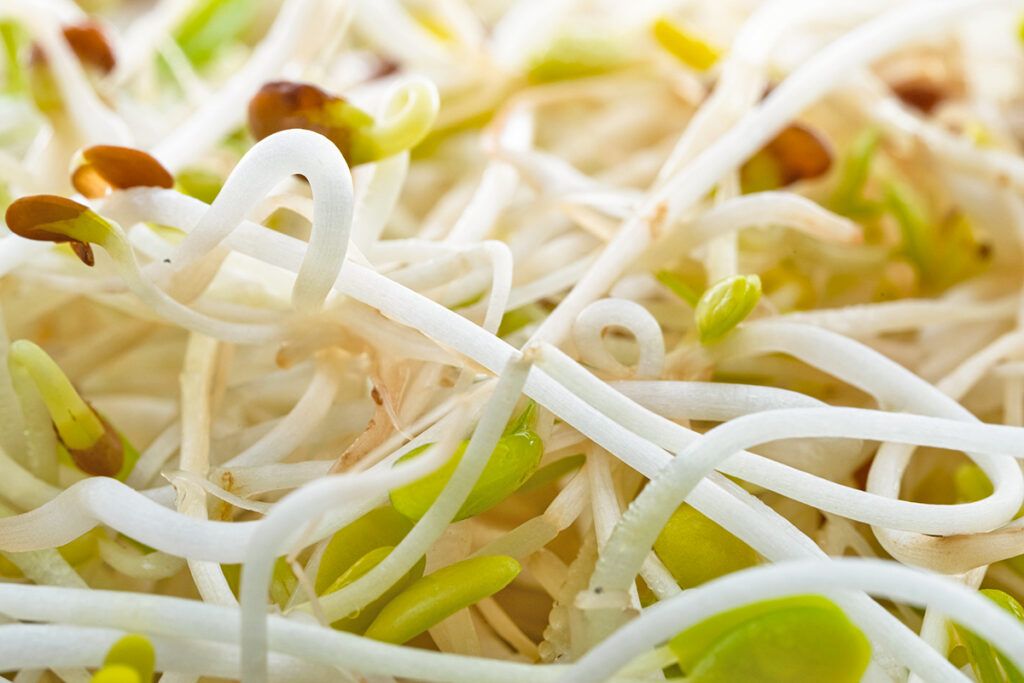
Sprouts
Credit: © Mario Spencer/Pexels.com

Sprouts 

Bean sprouts can elevate a sandwich with crunch and freshness in a way few other veggies can, but beware: These tiny shoots are grown in exactly the warm, humid conditions bacteria love. Salmonella, listeria, and E. coli can all be found on raw sprouts. The FDA notes that if even a few harmful bacteria are present on the seed, they can multiply to high levels during sprouting.  The safe window is short — roughly five to 10 days after purchase — and if you’re pregnant or immunocompromised, the FDA advises skipping raw sprouts altogether.

Advertisement
Advertisement
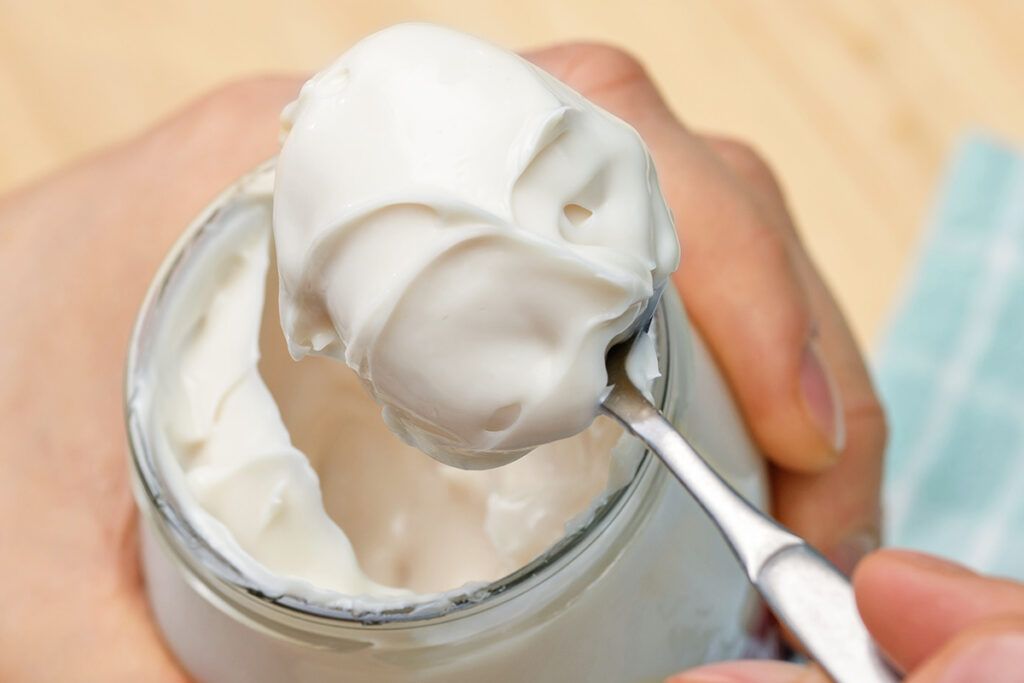
Mayonnaise on a spoon
Credit: © Pawel Kacperek—iStock/Getty Images

Mayonnaise and Creamy Dressings 

Mayo, aioli, and many creamy dressings are egg- and dairy-based and high in moisture, which makes them hospitable to bacteria once the seal is broken and a knife is going in and out of the jar. The USDA gives open commercial mayonnaise about two months in the fridge; creamy dressings have three to four weeks in the fridge. Even if the date hasn’t yet approached, if it smells off or looks weird, throw it out. 

Advertisement
Advertisement
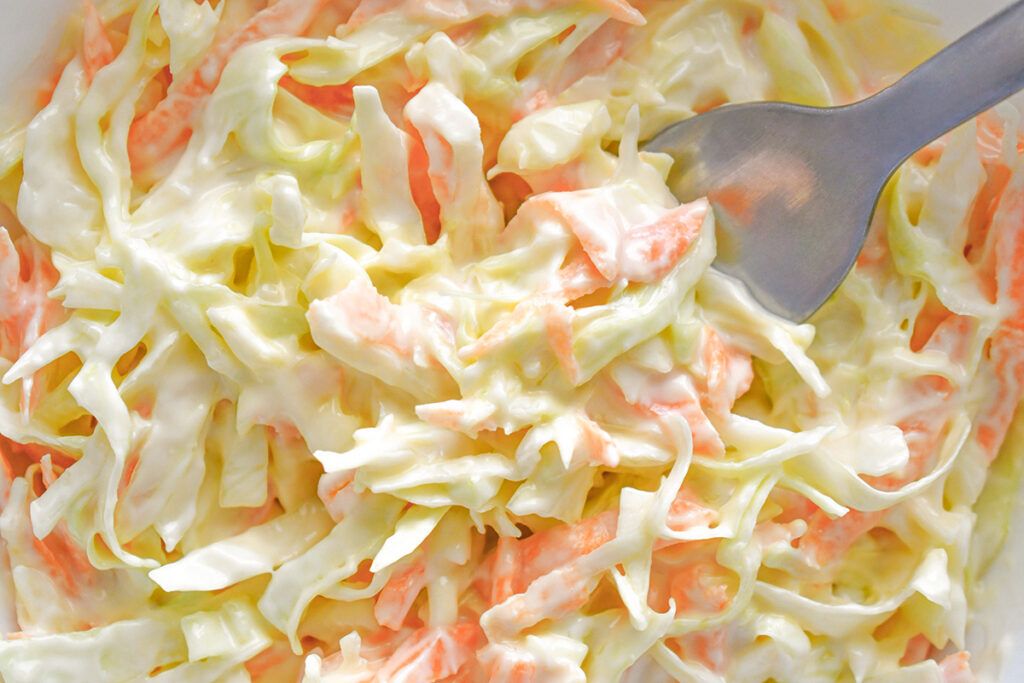
Coleslaw
Credit: © Maliflower73—iStock/Getty Images

Prepared Deli Salads 

Potato, egg, tuna, and pasta salads combine a few risk factors at once: They’re moist, often mayo-based, and scooped with a spoon, which can introduce bacteria. That exposure adds up fast, especially if the container is taken out of a cold fridge and drifts into the danger zone that allows bacteria to thrive (between 40 degrees Fahrenheit and 140 degrees Fahrenheit). Deli salads like coleslaw, potato salad, and tuna salad are among the ready-to-eat foods that can carry listeria, which will thrive even if you put the dish back in the fridge. The USDA gives store-bought and homemade deli salads about three to five days — and unlike a wilted salad, a contaminated one won’t necessarily look or smell wrong, so play it safe and toss it when that timer is up (or sooner if it’s been allowed to linger at room temperature).

Advertisement
Advertisement
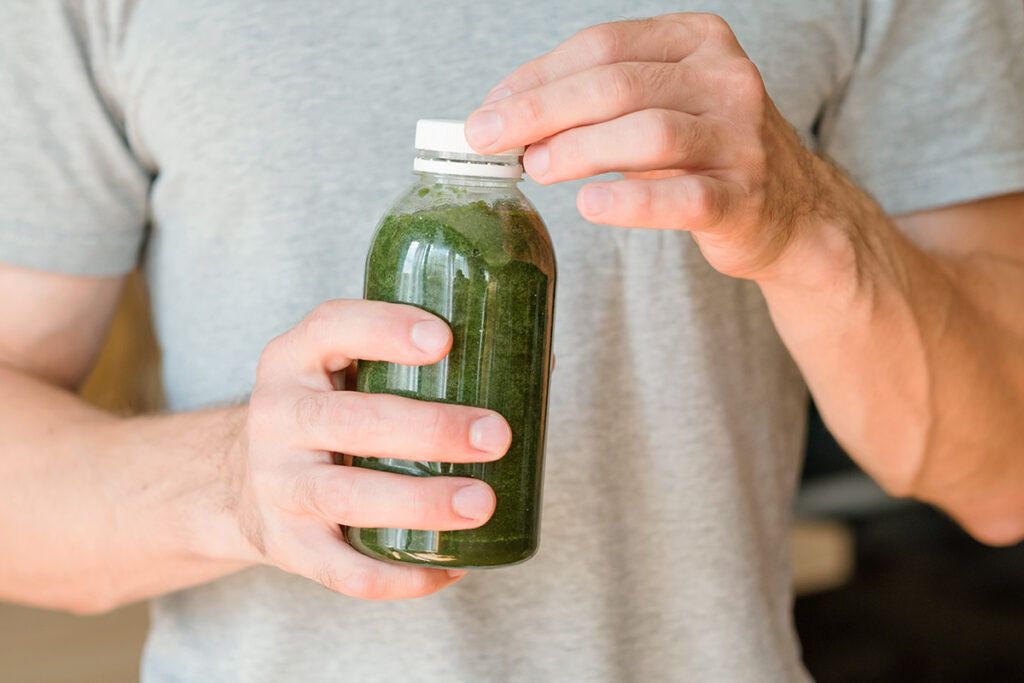
Person holding bottle of green juice
Credit: © golubovy—iStock/Getty Images

Cold-Pressed Juice 

The reason raw green juices cost what they do is also why they don’t last: They skip the pasteurization that kills bacteria, which leaves them prone to contamination and with a short life of three to five days once opened. Untreated juices are required to carry a warning label, and the FDA advises that children, older adults, pregnant people, and anyone immunocompromised should avoid them.

Advertisement
Advertisement
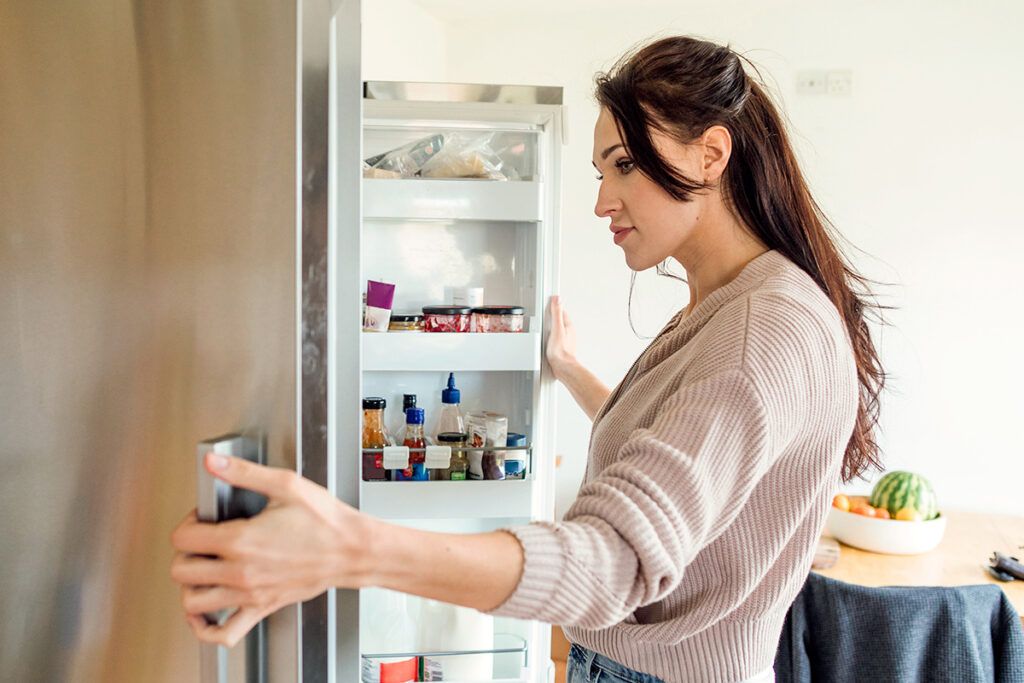
Woman standing in front of open fridge
Credit: ©SolStock—E+/Getty Images

The Takeaway 

The catch with all of these is that the sniff test gets you only so far. A funky smell is a good reason to toss something, but it’s important to also remember that the absence of funk isn’t a good reason to eat it — listeria and salmonella can be present with no smell at all. 

Advertisement

For most of your pantry (especially dry goods), the dates on the packaging are a loose suggestion and your nose is a fine backup. For this short list, however, the date and the open-container clock are both worth taking at their word — and when you’re genuinely unsure, the few dollars you’d lose chucking the item are rarely worth the discomfort you’d suffer if it is indeed spoiled.

Advertisement
Advertisement

Featured Image Credit: © Catherine Falls Commercial—Moment/Getty Images

More From Our Network

Better Report is part of Inbox Studio, an email-first media company. *Indicates a third-party property.

Go Retro With This 1960s Fashion Quiz

Quiz Daily

Go Retro With This 1960s Fashion Quiz

True or False: Are You a Master of U.S. Geography?

Travel Quiz

True or False: Are You a Master of U.S. Geography?

5 Reasons You Can Be Denied Boarding an Airplane

Daily Passport

5 Reasons You Can Be Denied Boarding an Airplane

What Did People Do Before Eyeglasses?

History Facts

What Did People Do Before Eyeglasses?

How To Use a Balloon To Clean Up Dust

House Outlook

How To Use a Balloon To Clean Up Dust

11 Shopping Hacks Costco Members Should Know

FinanceBuzz*

11 Shopping Hacks Costco Members Should Know

Share this article

  • Share to Facebook
  • Share to Twitter
  • Copy Url
  • Share to Email
Erin Scottberg
Writer

Erin Scottberg is a Brooklyn-based writer, garden designer, and houseplant expert — and the founder of Full Sun Studio (fullsun.studio), a garden design and plant consulting studio in New York City. She holds an Urban Horticulture Certificate from Brooklyn Botanic Garden, an NYC Street Tree Pruner License, and an NYC Master Composter Certification, and spent three years as Head of Content and Education at The Sill. When she's not working, you can find her creating in her textile studio, running craft nights in her neighborhood, or hanging with her rescue pup, Sunny. She's an ambitious DIYer, avid composter, and has never been able to walk by a thirft store without taking a look.

This article is for general informational purposes only.
Affiliate Disclaimer Medical Disclaimer Financial Disclaimer

Updated: May 27, 2026
Posted In: Health
Hero Image Credit: Better Report
Advertisement

Related Articles

How Old Are the Apples in the Grocery Store?

4 min read

How To Tell if You’re Brushing Your Teeth Too Hard

4 min read

5 Things To Ask Your Doctor About the New Flu Shot

5 min read

Is Sourdough Actually Healthier Than Regular Bread?

7 min read

Do You Really Need a Bidet in Your Home?

4 min read
Advertisement

Is It Safe To Eat Food That’s Dropped on the Floor?

Ali Eldridge
Health | Updated: August 19, 2026
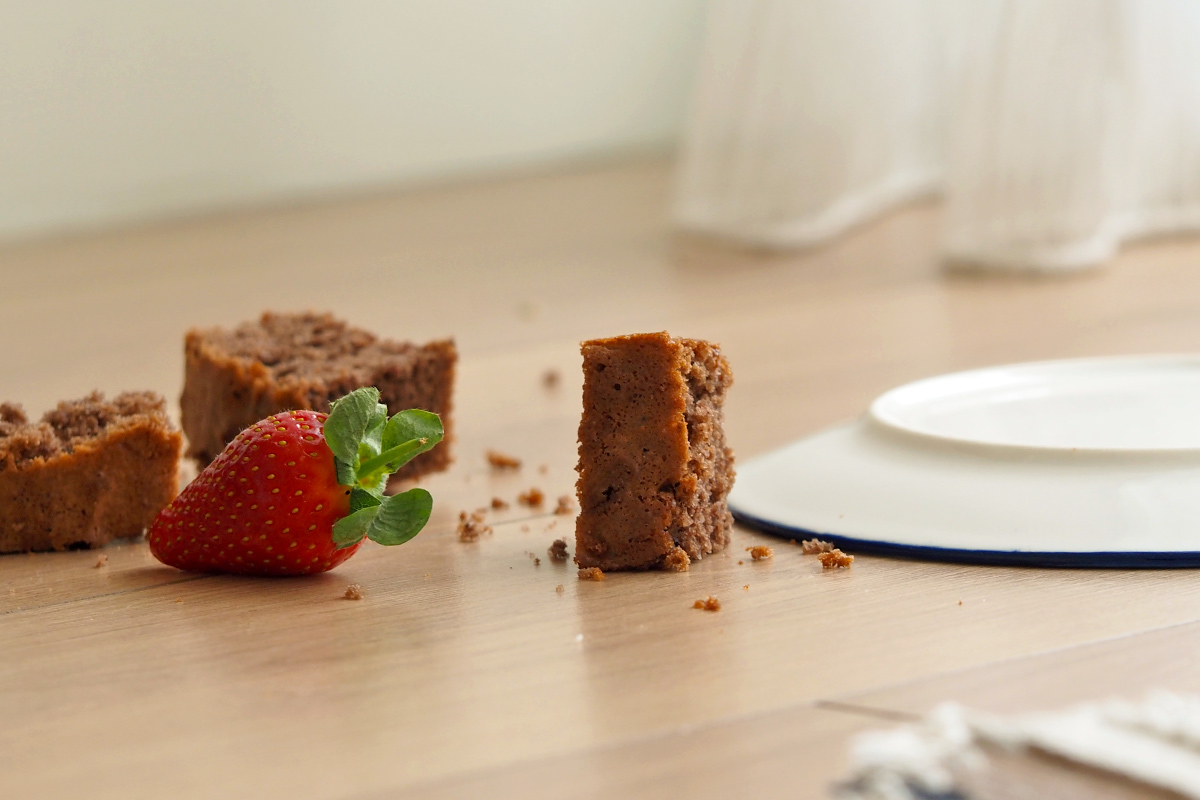
Brownies and a strawberry on the floor
Better Report

It happens to all of us: You’re chopping veggies for a salad or shoveling popcorn into your mouth while watching a movie, and a morsel of food ends up on the floor. Thoughts pass fleetingly through your mind: If you pick it up quickly, is it still OK to eat? Is the five-second rule a real thing? The answers to these questions may be more complicated than they seem.

Raw egg on counter
Credit: © Toa Heftiba/Unsplash.com

Background on Bacteria

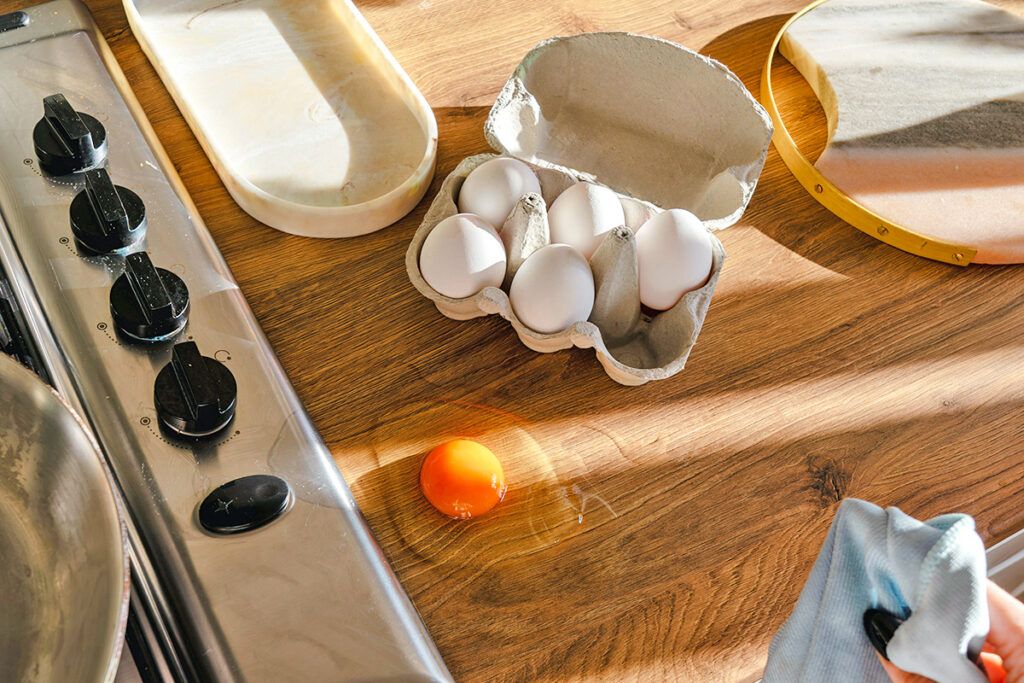
No matter how well you wash your hands or scrub your sink, you spread bacteria among any surfaces you touch. A 2012 study found that human skin was the main source of bacterial transfer across kitchen surfaces, and that infrequently cleaned areas like exhaust fans, refrigerator door seals, and floors had the highest diversity of bacteria. 

Advertisement
Advertisement

At the same time, anything that touches a surface in your kitchen — including food — picks up bacteria. A Dorito doesn’t have to fall on the floor to acquire a few microbes; it could simply come into contact with the kitchen counter, which actually harbors more coliform bacteria per square inch than the floor, according to a 1998 study. Cutting boards, dish towels, and sponges can also bear bacteria and spread them among the surfaces they touch.

The important thing to remember is that most bacteria found in kitchens and food-prep areas are not harmful to your health. However, pathogens such as salmonella and E. coli, which are often brought into kitchens via contaminated meat or produce, can linger on improperly cleaned surfaces. If you drop a piece of food and it falls directly on disease-causing bacteria on the floor, you could, theoretically, get sick from eating that food — but chances of that happening are low, Paul Dawson, a food scientist at Clemson University, told Prevention.

Pancakes on the floor
Credit: © Toa Heftiba/Unsplash.com

Five-Second Rule Fiction?

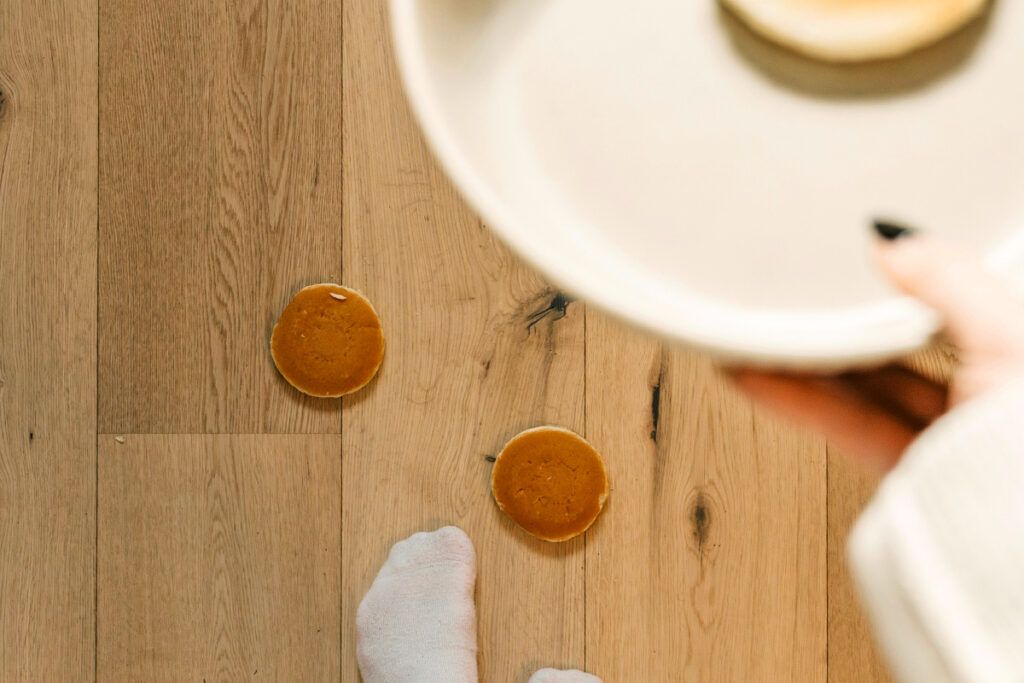
The apocryphal five-second rule suggests that food that’s dropped on the floor is safe to eat if it’s retrieved within five seconds, ostensibly because it doesn’t have time to acquire pathogens. Dawson led a frequently cited 2007 study that assessed whether the rule was scientifically sound by dropping sliced bread and bologna on tile, wood, and carpeted floors contaminated with salmonella and measuring the bacterial loads the foods picked up after various amounts of time. 

Recommended Articles

  • The Safety Rules for Candles You Probably Don’t Know

  • How Old Are the Apples in the Grocery Store?

  • How To Tell if You’re Brushing Your Teeth Too Hard

  • 5 Things Your Car Needs Before the First Freeze

Advertisement
Advertisement

Reader Favorites

  • Woman looking in fridge

    9 Foods You Should Toss ASAP if They’re Expired

  • Person eating salad

    7 Things a Chef Never Orders at a Restaurant

  • Cherry angioma

    Are the Tiny Red Dots on Your Skin Dangerous?

Though the carpet-to-bologna pathway transferred less than 1% of bacteria, “over 99% of bacterial cells were transferred from the tile to the bologna” after five seconds. Overall, 48% to 70% of bacteria moved from wood or tile floors to the bread and bologna within seconds, disproving the basic idea that brevity of time prevents bacterial migration from floor to food.

Advertisement

Later studies have shown that the moisture content of the food, the floor material, and duration affect bacterial transfer. In general terms, the stickier or wetter the food is, and the longer it spends on the floor, the more bacteria it’s going to acquire, though carpet tends to transfer fewer bacteria than harder surfaces. 

Advertisement
Advertisement

The Bottom Line 

Food that’s been dropped on the floor is unlikely to make you sick. But if you decide to eat it, give it a thorough rinse. Anything you can’t wash should be thrown out.

Featured Image Credit: © Towfiqu Barbhuiya/stock.adobe.com

More From Our Network

Better Report is part of Inbox Studio, an email-first media company. *Indicates a third-party property.

Go Retro With This 1960s Fashion Quiz

Quiz Daily

Go Retro With This 1960s Fashion Quiz

True or False: Are You a Master of U.S. Geography?

Travel Quiz

True or False: Are You a Master of U.S. Geography?

5 Reasons You Can Be Denied Boarding an Airplane

Daily Passport

5 Reasons You Can Be Denied Boarding an Airplane

What Did People Do Before Eyeglasses?

History Facts

What Did People Do Before Eyeglasses?

How To Use a Balloon To Clean Up Dust

House Outlook

How To Use a Balloon To Clean Up Dust

11 Shopping Hacks Costco Members Should Know

FinanceBuzz*

11 Shopping Hacks Costco Members Should Know

Share this article

  • Share to Facebook
  • Share to Twitter
  • Copy Url
  • Share to Email
Ali Eldridge

This article is for general informational purposes only.
Affiliate Disclaimer Medical Disclaimer Financial Disclaimer

Updated:
Posted In: Health
Hero Image Credit: Better Report
Advertisement

Related Articles

How Old Are the Apples in the Grocery Store?

4 min read

How To Tell if You’re Brushing Your Teeth Too Hard

4 min read

5 Things To Ask Your Doctor About the New Flu Shot

5 min read

Is Sourdough Actually Healthier Than Regular Bread?

7 min read

Do You Really Need a Bidet in Your Home?

4 min read
Advertisement

Should You Refrigerate Avocados?

Home | Updated: August 13, 2026
Julia Rittenberg
Author
Julia Rittenberg is a culture writer and content strategist driven by a love of good stories. She writes most often about books for Book Riot. She lives in Brooklyn with a ton of vintage tchotchkes that her cat politely does not knock over.
Avocados on cutting board
Better Report

Avocados are the perfect building block for any summer meal. They’re packed with nutrients, provide healthy fat, contain vitamins that can help reduce stress, and can be turned into the ideal snack with just a little lemon juice, salt, and a slice of good bread. The problem with avocados is that they can go from ripe to bad very quickly. 

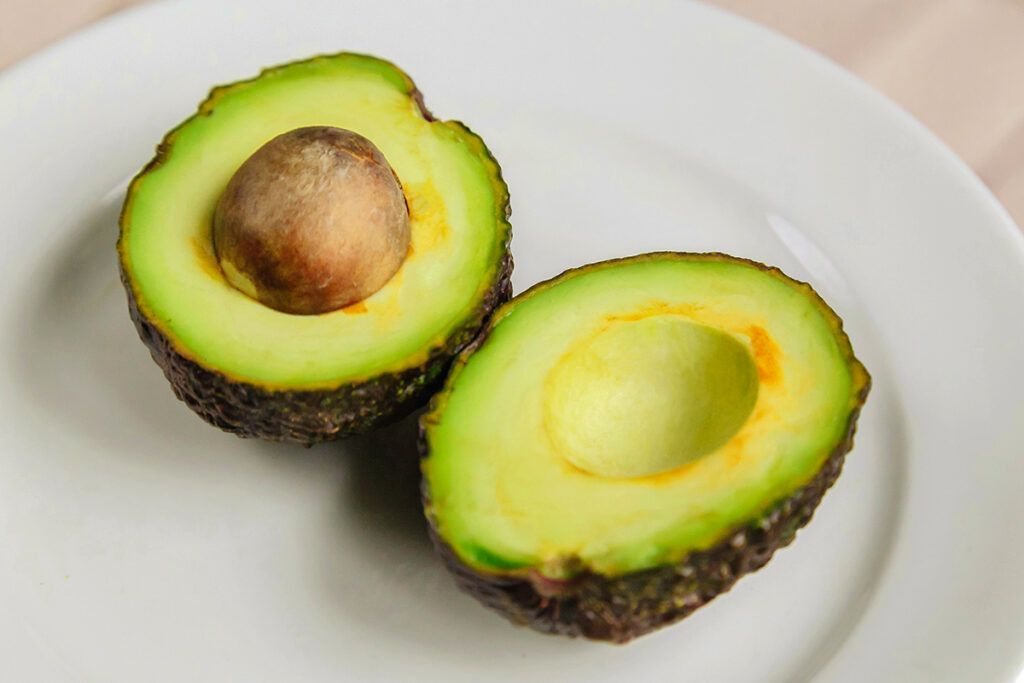
After being picked, avocados can ripen in anywhere from a few days to about a week (or more) depending on a variety of factors. The environment they’re stored in is particularly important: Avocados ripen faster when exposed to heat, so you want to store them correctly to avoid a rotting fruit. 

Advertisement
Advertisement

Putting them in the refrigerator may seem like the obvious choice, but it depends on how ripe your avocado is and how quickly you want to use it. 

If Your Avocado Isn’t Ripe

If your avocado is rock hard, the last place you want to put it is in the fridge — the chilly temperatures will slow ripening significantly. Here’s what you should do instead. 

Whole avocados in container
Credit: © Annie Spratt/Unsplash.com

Natural Ripening

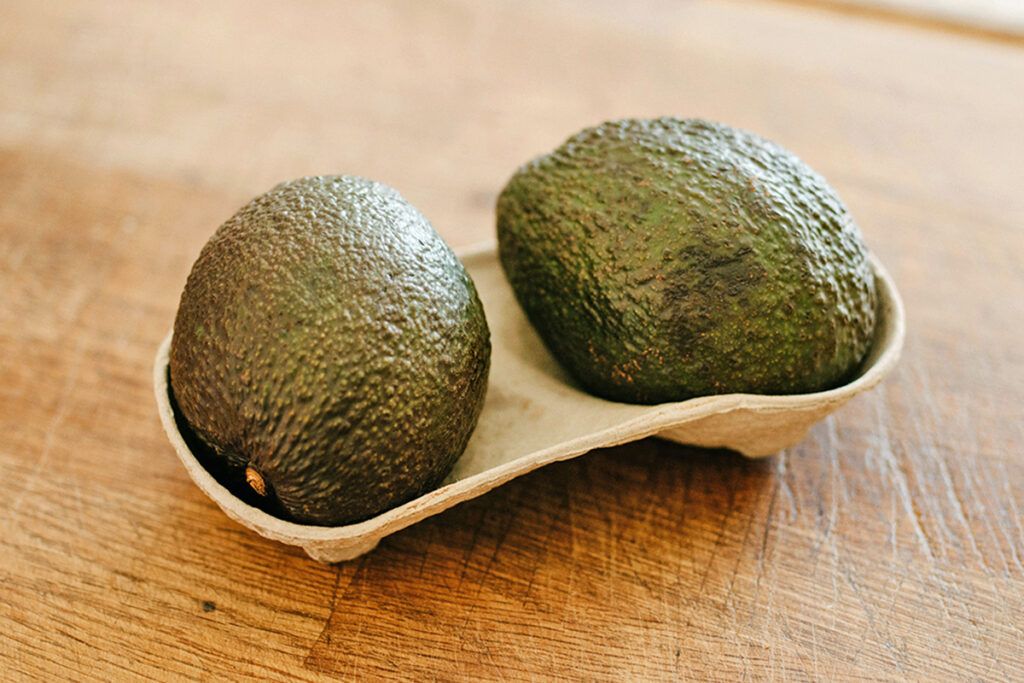
To allow your avocados to ripen naturally, simply leave them on your kitchen counter. Keep an eye on the ripeness: A slight give when you place it in your palm and apply gentle pressure means it’s ready. You can also determine ripeness based on the darkening of the skin of the avocado. Finally, if the avocado is ripe, you should be able to easily remove the nub of the stem at the top of the fruit. (Avoid squeezing them, though — you don’t want to bruise the avocado flesh and cause brown spots.)

Advertisement
Avocados with bananas
Credit: © Lisa A/Unsplash.com

Speedy Ripening

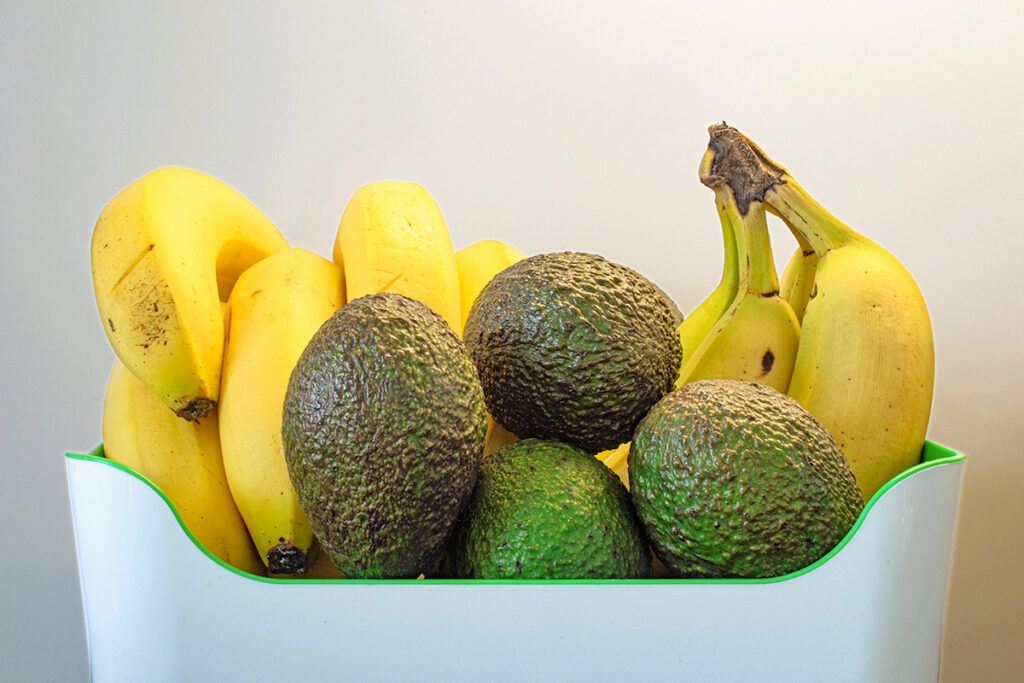
If you have hard avocados and need them to ripen a bit faster, you’ll want to place them alongside some other fruits such as bananas, apples, or tomatoes. Like avocados, these fruits all produce ethylene gas, which triggers ripening. Grouping them together on your counter will make your avocado soften more quickly. 

You can also try putting your avocados in a paper bag and closing it to trap the ethylene gas inside, which will help the avocados ripen fast. Putting a ripe banana in the paper bag can speed things up even further. The paper bag method is best if you need ripe avocados in 24 hours. 

Recommended Articles

  • The Safety Rules for Candles You Probably Don’t Know

  • How Old Are the Apples in the Grocery Store?

  • How To Tell if You’re Brushing Your Teeth Too Hard

  • 5 Things Your Car Needs Before the First Freeze

Advertisement
Advertisement

Reader Favorites

  • Woman looking in fridge

    9 Foods You Should Toss ASAP if They’re Expired

  • Person eating salad

    7 Things a Chef Never Orders at a Restaurant

  • Cherry angioma

    Are the Tiny Red Dots on Your Skin Dangerous?

Avocado cut in half
Credit: © Diana Polekhina/Unsplash.com

Popular Ripening Hacks

There are hacks you can use to get avocados soft even more quickly than that. Food & Wine tested two popular ones — using the microwave and an oven — and reported that while both methods softened the avocados, the flavor of the fruits left a lot to be desired. If you’re still tempted to try them yourselves, here’s how:

• Microwave Method No. 1: Cut an avocado in half, remove the pit, wrap it in microwave-safe plastic, and then nuke it for two minutes. Finally, plunge it into ice water before consuming.
• Microwave Method No. 2: Pierce a whole fruit all over with a fork and microwave for two minutes on high. Wait for it to cool before eating. 
• The Oven Method: Tightly wrap the avocado in foil and pop it in the oven at 200 degrees Fahrenheit for 20 to 30 minutes.

Advertisement
Advertisement

If Your Avocado Is Ripe

If you want to slow the ripening process or keep avocado pieces fresh, the fridge is your best bet. 

Whole avocado in fridge
Credit: © Lera.MB/stock.adobe.com

Whole Avocados

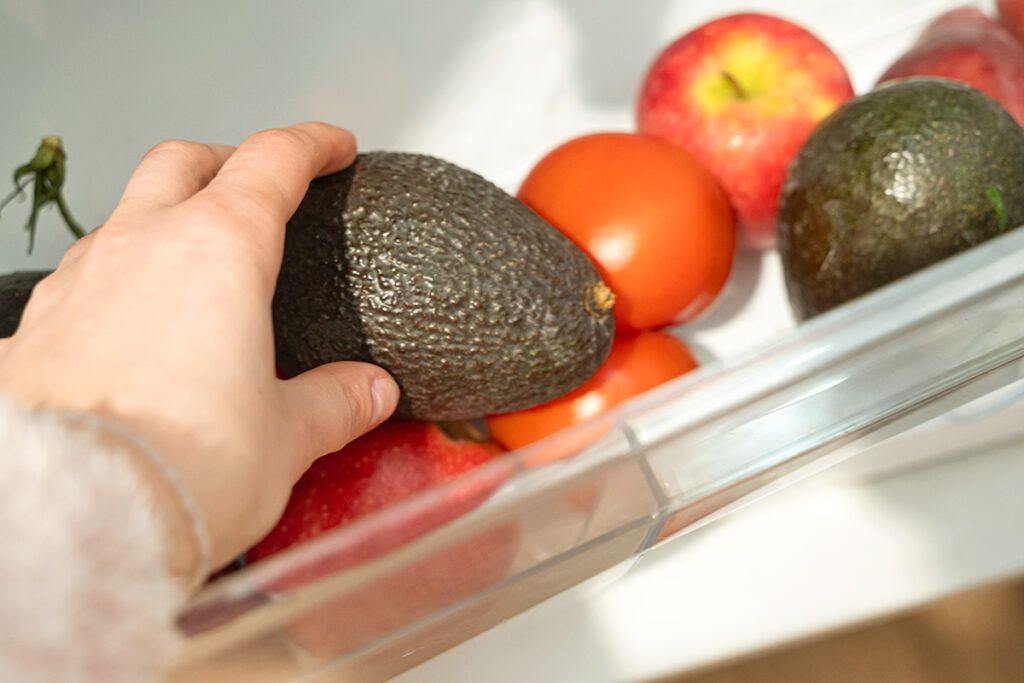
You can keep a whole avocado at peak ripeness in the fridge for as long as five days. The crisper drawer or your fridge’s upper shelves are the best places to keep it, and don’t wash it — moisture could lead to spoilage. Only wash the avocado right before you intend to eat it. 

Advertisement
Advertisement
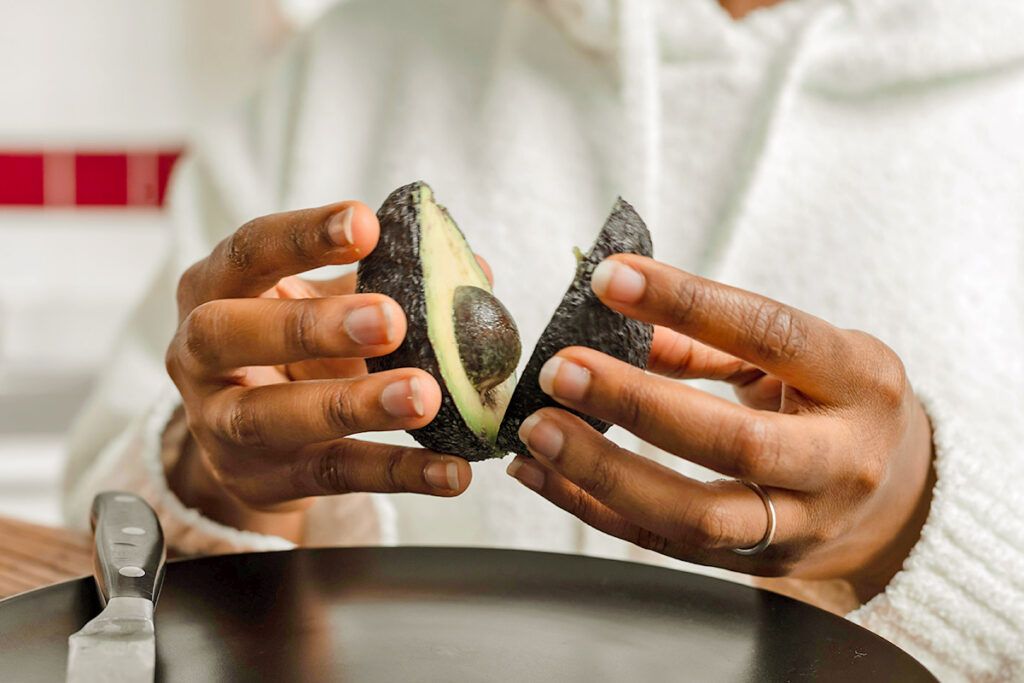
Half of avocado
Credit: © Liudmila Chernetska—iStock/Getty Images

Cut Avocados

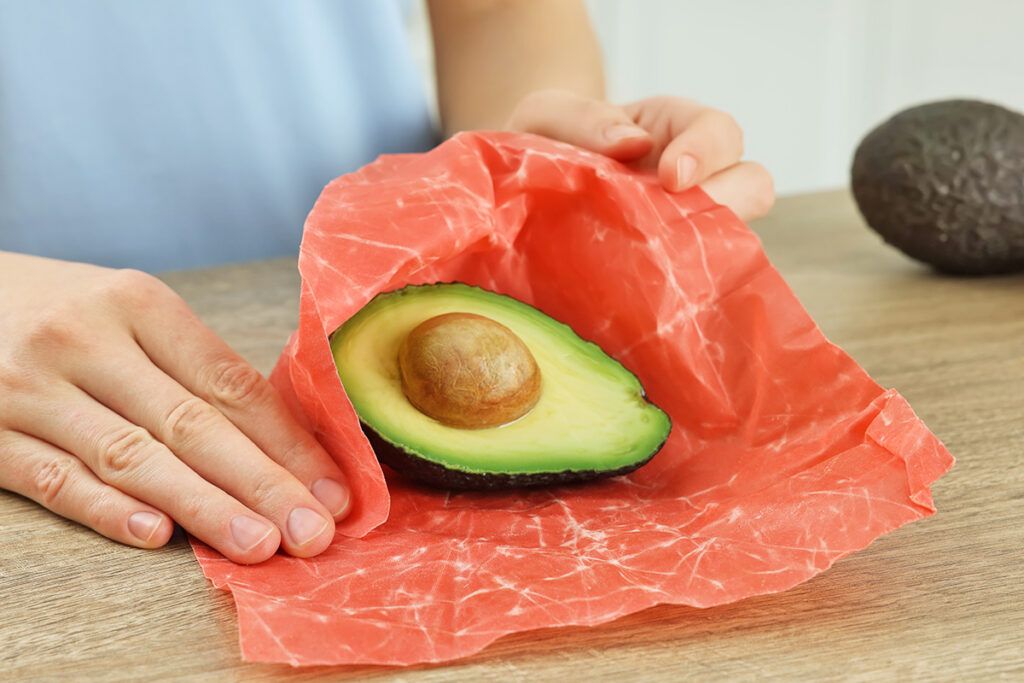
There are several methods you can use to preserve cut avocados and prevent them from browning. One is to cover the unused part of the avocado in plastic wrap and pop it in the fridge.  Drizzling citrus juice on the avocado before wrapping it in plastic or putting it in an airtight container will also help prevent browning for a couple of days. 

Advertisement
Advertisement
Frozen avocado
Credit: © Xvision—Moment/Getty Images

How Not To Store Your Avocados

A popular Internet hack advocates for putting avocados in a bowl of water in the fridge, but that’s a very bad idea: Moisture encourages bacterial growth, and bacteria such as listeria on the avocado skin can actually seep into the fruit’s flesh if you leave it in water. 

Advertisement

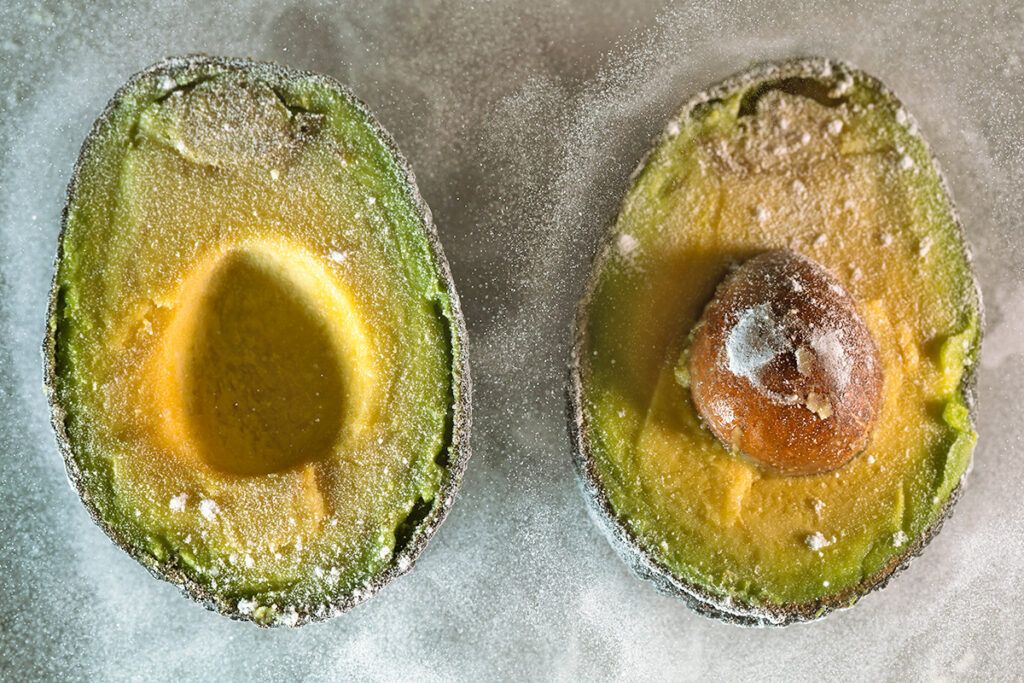
Putting avocados in the freezer can be done, but it negatively affects the fruit’s texture — once thawed, it will be mushy. The best way to freeze your avocado may be to blend two avocados with a tablespoon of lemon juice and put the purée in a sealed container. 

Advertisement
Advertisement
Person holding avocado sliced in half
Credit: © PNW Production/Pexels.com

The Verdict

Ultimately, the best way to store avocados depends on how speedily you plan to consume them. A dry, cool spot in your kitchen is ideal for letting hard avocados ripen naturally, but you do need to keep an eye on them to make sure they don’t overripen. 

The fridge is the best bet for an avocado you’ve already cut open, but it will also extend the life of a ripe avocado when you can’t use it right away. Putting a whole avocado in the fridge to extend ripeness usually doesn’t negatively affect the taste of the avocado, but leaving it on the counter will lead to the most consistent texture. 

Advertisement
Advertisement

Featured Image Credit: © Louis Hansel/Unsplash.com

More From Our Network

Better Report is part of Inbox Studio, an email-first media company. *Indicates a third-party property.

Go Retro With This 1960s Fashion Quiz

Quiz Daily

Go Retro With This 1960s Fashion Quiz

True or False: Are You a Master of U.S. Geography?

Travel Quiz

True or False: Are You a Master of U.S. Geography?

5 Reasons You Can Be Denied Boarding an Airplane

Daily Passport

5 Reasons You Can Be Denied Boarding an Airplane

What Did People Do Before Eyeglasses?

History Facts

What Did People Do Before Eyeglasses?

How To Use a Balloon To Clean Up Dust

House Outlook

How To Use a Balloon To Clean Up Dust

11 Shopping Hacks Costco Members Should Know

FinanceBuzz*

11 Shopping Hacks Costco Members Should Know

Share this article

  • Share to Facebook
  • Share to Twitter
  • Copy Url
  • Share to Email
Julia Rittenberg
Writer

Julia Rittenberg is a culture writer and content strategist driven by a love of good stories. She writes most often about books for Book Riot. She lives in Brooklyn with a ton of vintage tchotchkes that her cat politely does not knock over.

This article is for general informational purposes only.
Affiliate Disclaimer Medical Disclaimer Financial Disclaimer

Updated: September 26, 2024
Posted In: Home
Hero Image Credit: Better Report
Advertisement

Related Articles

The Safety Rules for Candles You Probably Don’t Know

5 min read

9 Items in Your Basement You Should Toss Right Now

5 min read

5 Vegetables You Should Never Store in the Fridge
3 min read

Why a Flashing Check Engine Light Is Different From a Solid One

3 min read

Why Does Your Sink Have a Tiny Hole?

3 min read
Advertisement

Could Your Kitchen Cleaning Habits Be Making You Sick?

Health | Updated: August 13, 2026
Fred Decker
Author
Fred Decker is a trained chef and former restaurateur. Since closing his restaurants over a decade ago he has been a prolific freelance writer, publishing several thousand articles on dozens of high-volume websites including Taste Of Home, Hunker, Tasting Table, Week&, eHow, and GOBankingRates. He lives on a rural acreage shared with a big garden, chickens, rabbits, and grandkids.
Person washing dishes
Better Report

If you watch the news, you’ll frequently see stories about food recalls. They’re worth keeping tabs on, because food poisoning is no joke: The USDA estimates that Americans experience about 48 million foodborne illnesses each year from a population of about 342 million. That’s a lot.

When it comes to avoiding foodborne illnesses, food safety is important, but it’s only part of the picture — you also need a safe place to prepare your food. The unfortunate truth is that even if you pride yourself on keeping a clean kitchen, you still may be inadvertently letting bacteria thrive. Here are the issues I see most often as a former chef and food safety trainer. 

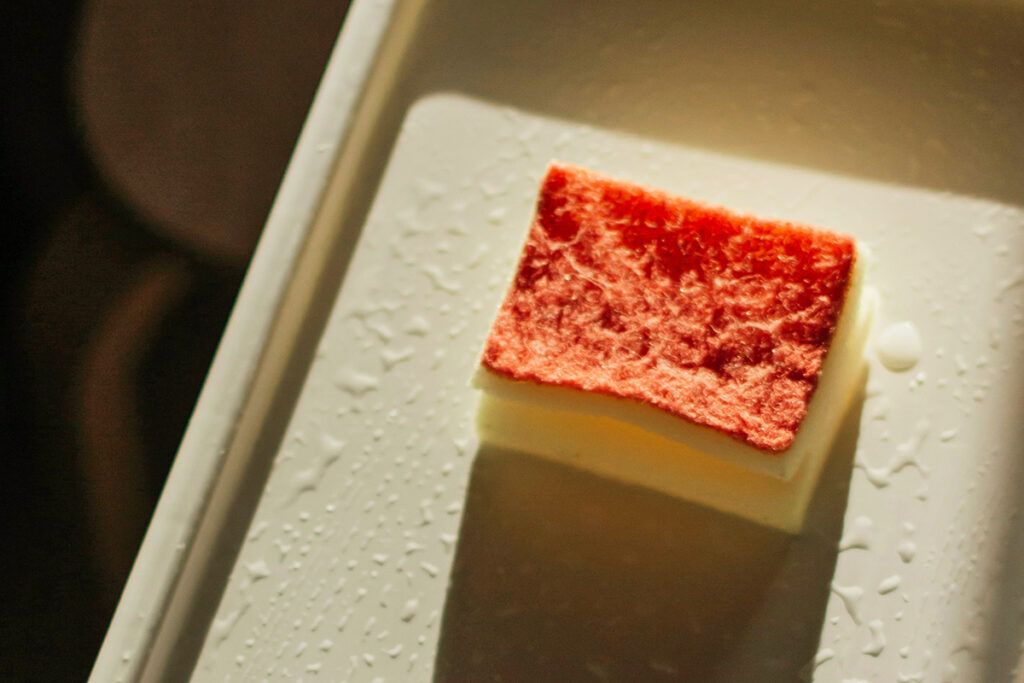
Sponge on counter
Credit: © Alina Bondar/Unsplash.com

Your Sponge

You’ve probably seen clickbait headlines telling you that “there are more bacteria on your kitchen sponge than in your toilet.” It’s true, but a little misleading: Your kitchen sponge does have a really high bacterial load, but most of the bacteria on it are harmless. The bad news? It can also harbor harmful pathogens including salmonella, E. coli, listeria, and others you might not know by name. 

While you’re cleaning, your sponge picks up bacteria and pathogens from the surfaces you wipe (dishes, cutting boards, knives, and so on). If you clean a cutting board that just held raw chicken, for example, any salmonella on the board is now in your sponge. Your sponge also traps food particles and moisture, and then sits at room temperature for hours. 

Advertisement
Advertisement

In other words, you’re creating perfect conditions for bacteria to grow. So, the next time you use your sponge, you’ll be smearing bacteria across your counters and dishes rather than cleaning them off. If you use a cloth for cleaning your counters or hand-washing dishes, you’ll face similar challenges. 

Advertisement

So what should you do if you don’t want to spread bacteria? 

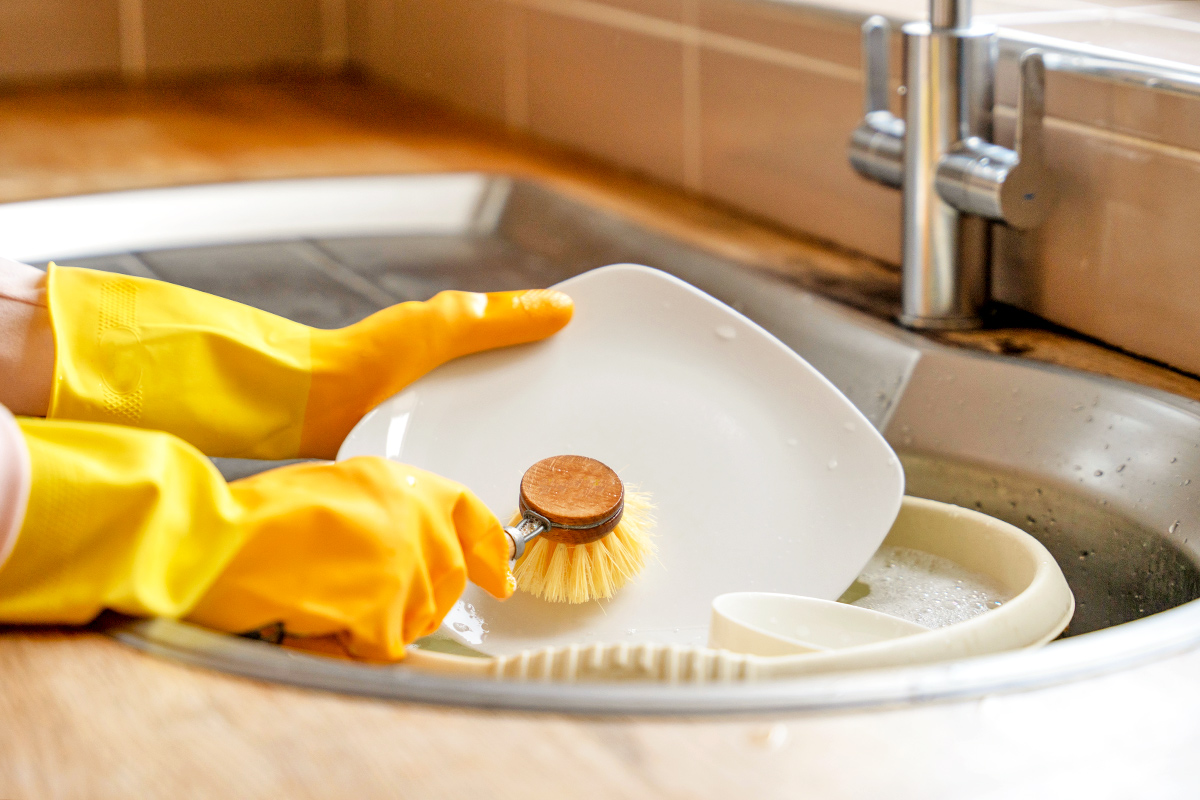
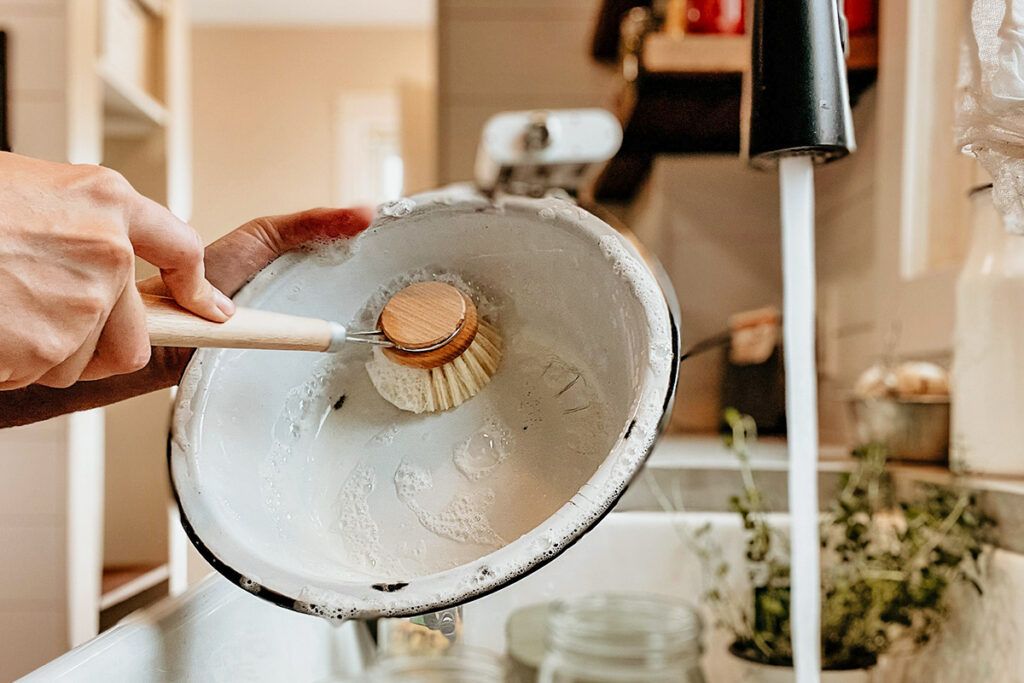
Cleaning dish with brush
Credit: © Hannah Grapp/Pexels.com

How To Clean Without Spreading Bacteria

The simplest option might be to change the tool you use. A study conducted in 2022 across 10 European nations found that dish-scrubbing brushes were significantly more sanitary than sponges. Not only did their bristles retain less food waste and bacteria than sponges, but they were also easier to clean and dried faster, taking away the moisture bacteria need for survival. 

Recommended Articles

  • The Safety Rules for Candles You Probably Don’t Know

  • How Old Are the Apples in the Grocery Store?

  • How To Tell if You’re Brushing Your Teeth Too Hard

  • 5 Things Your Car Needs Before the First Freeze

Advertisement
Advertisement

Reader Favorites

  • Woman looking in fridge

    9 Foods You Should Toss ASAP if They’re Expired

  • Person eating salad

    7 Things a Chef Never Orders at a Restaurant

  • Cherry angioma

    Are the Tiny Red Dots on Your Skin Dangerous?

For uses where brushes might not be the tool for the job, there are several methods you can use to sanitize your sponge or washcloth between uses:

• Run it through a cycle in your dishwasher, using its high heat setting and heated drying.
• Soak the sponge in pure, 10% chlorine bleach for one minute.
• Soak the sponge in 70% ethanol (i.e., overproof vodka or equivalent). 
• Put the sponge through a hot water wash in your washing machine, with bleach, and dry it on your dryer’s hot setting.
• Wet the sponge or cloth thoroughly, then microwave on high for one minute.
• Boil your sponge or cloth for 10 minutes.

USDA testing showed that the microwave is the simplest and most effective option for sanitizing your sponge, as long as your sponge is microwave-safe. But additional research from other sources, including a microbiologist in her home kitchen, showed that it’s not a bulletproof option: The bleach, dishwasher, and washing machine options all worked pretty well; hydrogen peroxide and the dishwasher without hot drying were less effective; and the microwave results were variable. 

Advertisement
Advertisement

Considering all the benefits that come with using brushes, and the fact that they can also be sanitized in the dishwasher, you may just want to opt for that instead. If you must use a sponge, replace it every one to two weeks, even if you’re sanitizing it. 

Advertisement
Cutting meat
Credit: © Getty Images/Unsplash.com

Your Hands

You use your hands to hold food, cooking utensils, and the sponge or cloth you clean with, so they’ll be exposed to any pathogens on those things. You’ll spread those microbes to the knobs on your stove, the handles of your faucet and knives, your light switches and doorknobs, and any family members you happen to touch. 

Advertisement
Advertisement

That’s why handwashing is drilled into culinary students (and medical students!) so thoroughly. It’s one of the fundamental rules of food safety. You really need to wash your hands with soap and water for at least 20 seconds every time they’ve been in contact with a possible source of contamination, whether you took a bathroom break or were touching raw meats or fresh produce (a common source of food recalls). Alternatively, you can use gloves, as long as you change them when you shift from one task to another. Doing so will help prevent any skin irritation from frequent handwashing. 

Washing your hands or changing gloves often is inconvenient, sure. But touching things absentmindedly with unwashed hands is how a lot of common pathogens like norovirus, for example, spread — and I can assure you that the extra time spent washing your hands is a lot less inconvenient than getting noro. 

Advertisement
Advertisement
Cleaning sink
Credit: © Liliana Drew/Pexels.com

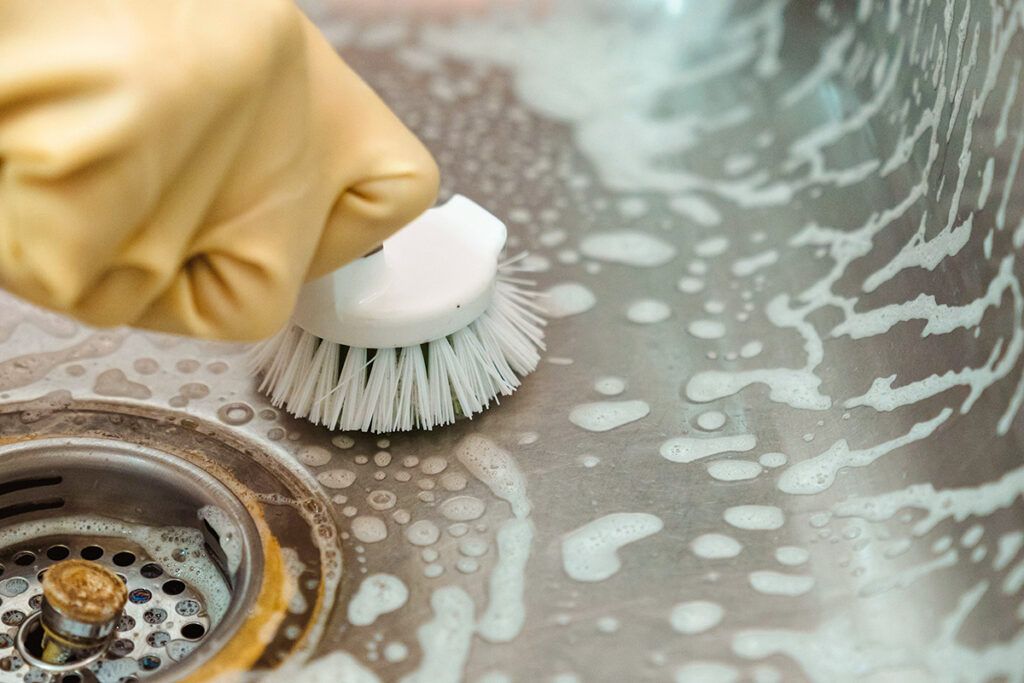
Your Sink

Your sponge is what you use to clean a lot of things, but your kitchen sink is where you clean them. That means it sees a whole lot of foodborne bacteria, viruses, and parasites. (The cyclosporiasis outbreak that sickened thousands in July 2026 is caused by a parasite.) Your sink is a place where pathogens gather, and it might need a little more care than you’re giving it. 

After you’ve used your sink to rinse produce or things like cutting boards, or after you’ve drained the juices from a package of fresh or thawed meat, wash it carefully with your cleanser of choice. The drain is an especially good place for bacteria to gather due to its nooks and crannies, so scrub those with a brush to get out any gunk. If your sink has a basket-type stopper, run that through a hot dishwasher cycle at least once a week to keep it sanitary. Finally, make a habit of disinfecting the whole sink and drain with diluted bleach every few days. 

Advertisement
Advertisement
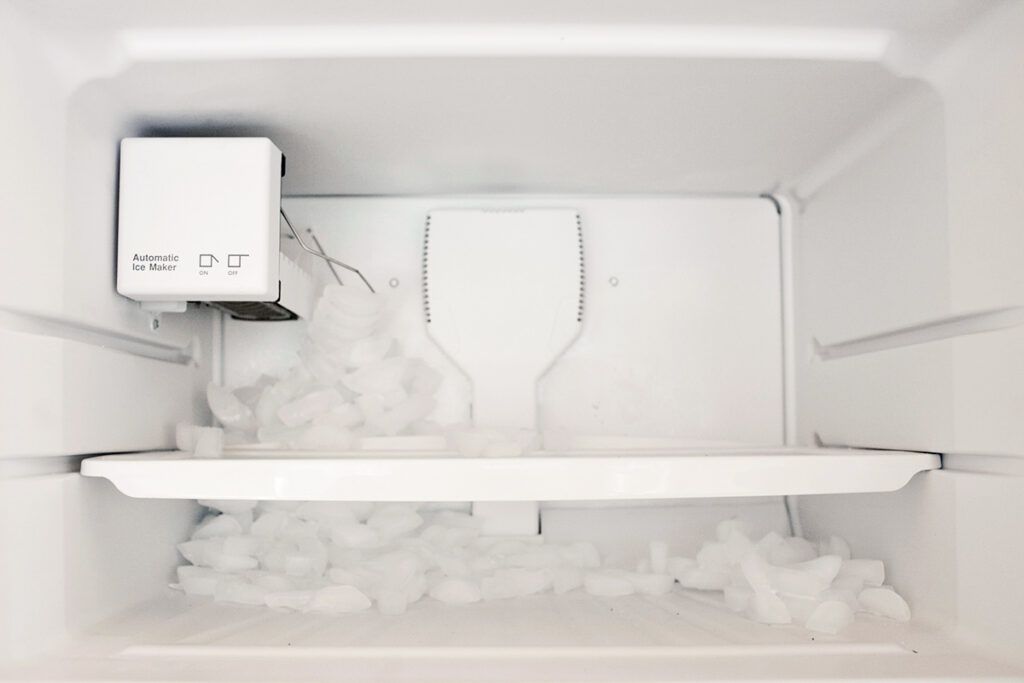
Icemaker
Credit: © Sarah Palmer—Moment/Getty Images

Your Icemaker

The ice maker in your fridge (or a stand-alone ice maker, if you have one) may also be one of the dirtiest things in your house. Ice makers accumulate molds and bacteria — many of which, including cold-tolerant listeria, can make you pretty ill. Cleaning it two to three times a year is relatively straightforward, and easy to remember if you schedule it to coincide with something else (holiday weekends, for example). Not only will this protect you from possible illness, but your ice cubes will also look and taste better. 

Advertisement
Advertisement
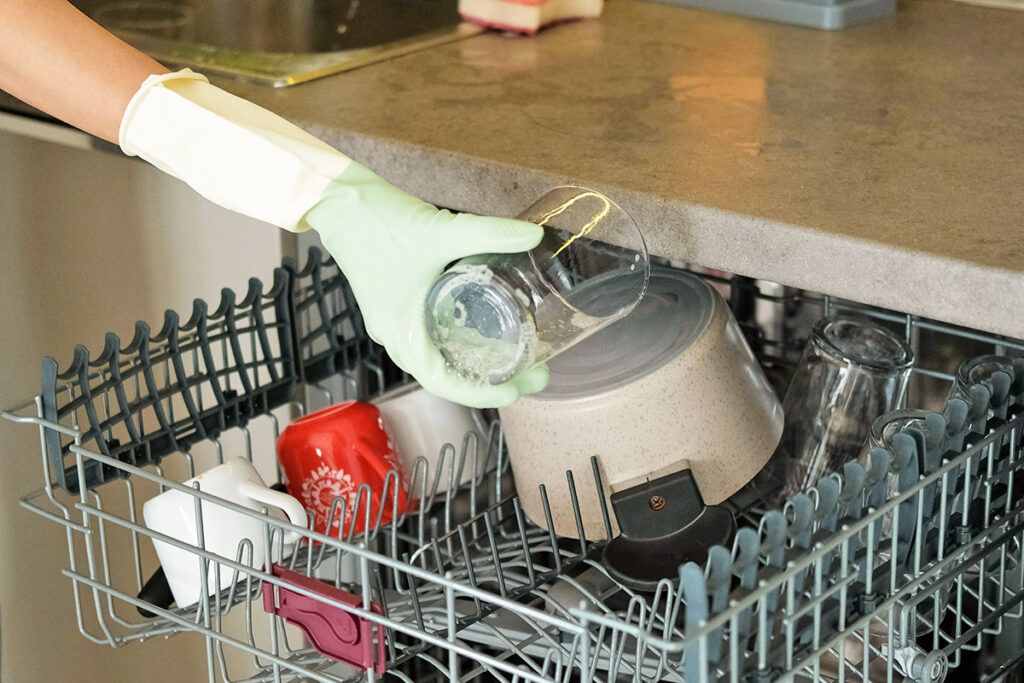
Person loading dishwasher
Credit: © Kübra Arslaner/ Unsplash.com

Your Dishwasher 

Your dishwasher plays a key role in keeping other things clean and sanitary, but only if the machine itself is clean and sanitary. If you allow gunk to build up in and around the filter, in the jets, or around the door seals, you’re providing a place where hardy bacteria can linger. Yes, a hot water wash and heat drying will probably kill them, but why take chances? Here’s a guide you can use to make sure your dishwasher is pristine. 

Advertisement
Advertisement

Featured Image Credit: © Iryna/stock.adobe.com

More From Our Network

Better Report is part of Inbox Studio, an email-first media company. *Indicates a third-party property.

Go Retro With This 1960s Fashion Quiz

Quiz Daily

Go Retro With This 1960s Fashion Quiz

True or False: Are You a Master of U.S. Geography?

Travel Quiz

True or False: Are You a Master of U.S. Geography?

5 Reasons You Can Be Denied Boarding an Airplane

Daily Passport

5 Reasons You Can Be Denied Boarding an Airplane

What Did People Do Before Eyeglasses?

History Facts

What Did People Do Before Eyeglasses?

How To Use a Balloon To Clean Up Dust

House Outlook

How To Use a Balloon To Clean Up Dust

11 Shopping Hacks Costco Members Should Know

FinanceBuzz*

11 Shopping Hacks Costco Members Should Know

Share this article

  • Share to Facebook
  • Share to Twitter
  • Copy Url
  • Share to Email
Fred Decker
Writer

Fred Decker is a trained chef and former restaurateur. Since closing his restaurants over a decade ago he has been a prolific freelance writer, publishing several thousand articles on dozens of high-volume websites including Taste Of Home, Hunker, Tasting Table, Week&, eHow, and GOBankingRates. He lives on a rural acreage shared with a big garden, chickens, rabbits, and grandkids.

This article is for general informational purposes only.
Affiliate Disclaimer Medical Disclaimer Financial Disclaimer

Updated: April 14, 2026
Posted In: Health
Hero Image Credit: Better Report
Advertisement

Related Articles

How Old Are the Apples in the Grocery Store?

4 min read

How To Tell if You’re Brushing Your Teeth Too Hard

4 min read

5 Things To Ask Your Doctor About the New Flu Shot

5 min read

Is Sourdough Actually Healthier Than Regular Bread?

7 min read

Do You Really Need a Bidet in Your Home?

4 min read
Advertisement

5 Scary Parasites You Can Get From Your Food (And How To Avoid Them)

Ali Eldridge
Health | Updated: July 27, 2026
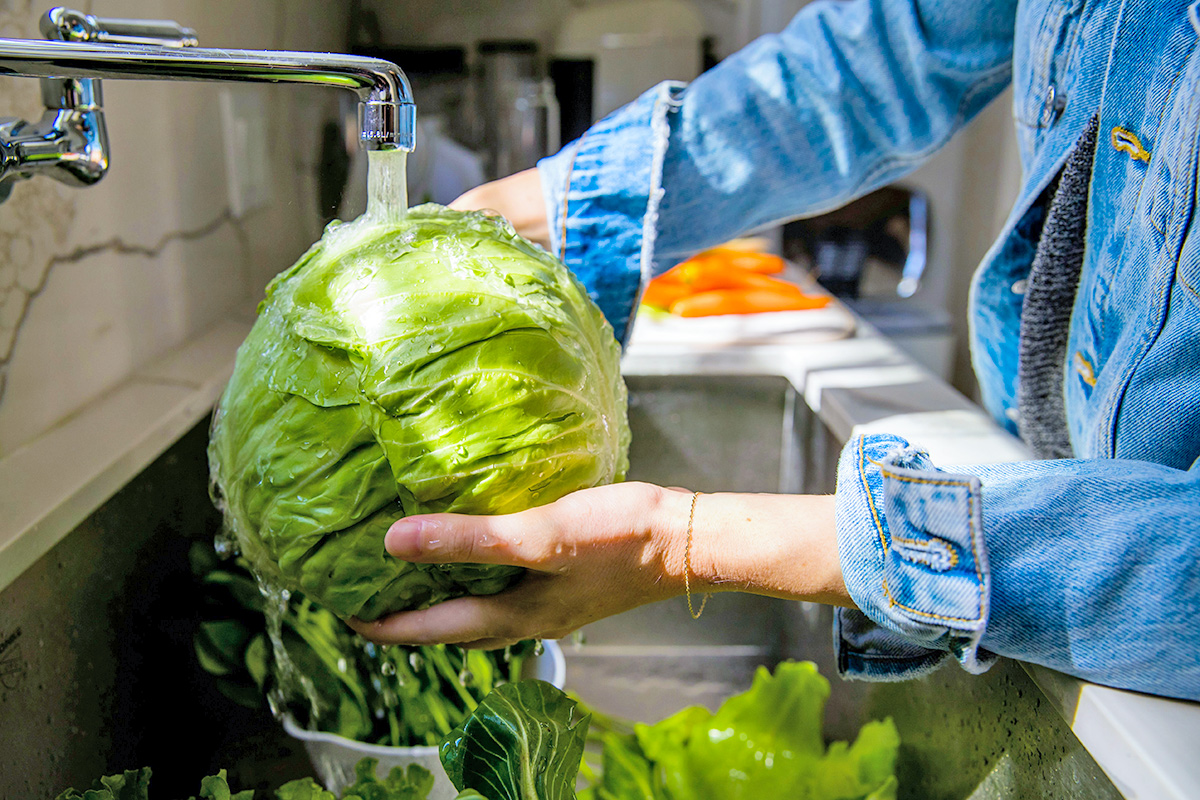
Person washing lettuce
Better Report

Fresh fruits and vegetables seem so innocent when stacked in dewy rows at the grocery store. But produce and other common foods can be vectors for parasites if proper handling guidelines aren’t followed, and these bugs can make you sick if you’re not careful. Here’s what could be lurking in your lettuce — and what you can do to stay safe.

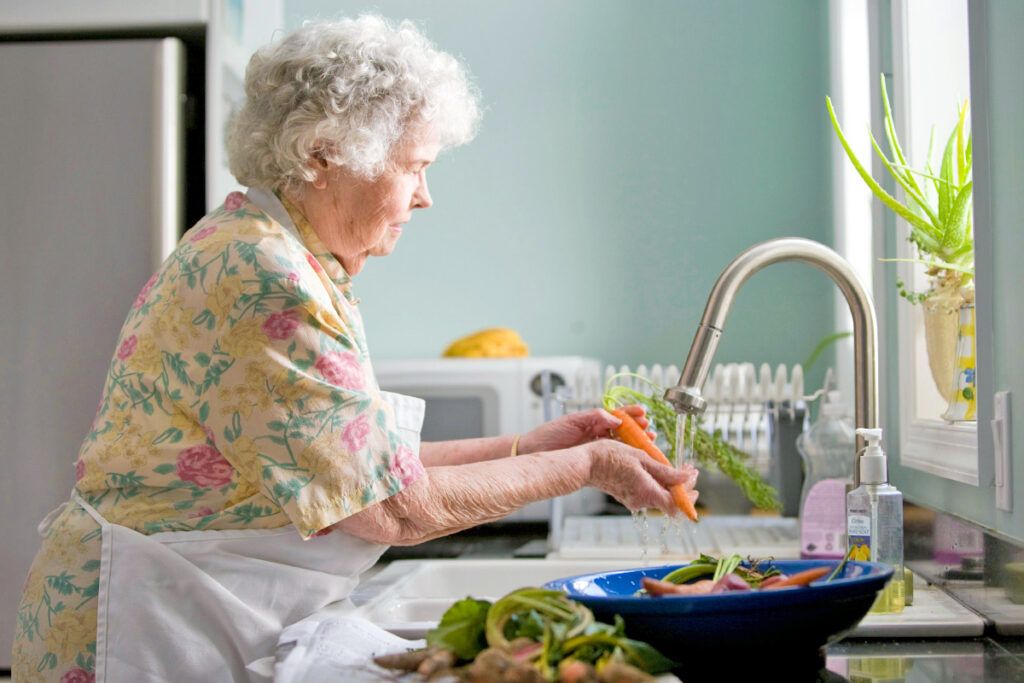
Older woman washing carrots
Credit: © CDC/Unsplash.com

Giardia

In 1681, when the pioneering microbiologist Antonie van Leeuwenhoek peered through a microscope at a sample of his own feces, giardia stared back at him. This protozoan parasite’s life cycle includes a stage as an infectious cyst that can contaminate food, water, soil, and other substances. When ingested, the cysts colonize the host’s small intestine and change into their active form, allowing them to absorb nutrients and multiply. Eventually the parasites make their way to the host’s colon, turn back into infectious cysts, and exit the host’s body through defecation.

Giardia is the most common intestinal parasite in humans, and it can be found worldwide. Symptoms of infection include frequent diarrhea, gas, stomach cramps, and nausea, and untreated cases can lead to irritable bowel syndrome and other complications. 

Advertisement
Advertisement

To avoid this unpleasantness, wash your hands after touching potentially infected substances and before preparing food; wash fresh produce thoroughly with clean water; cook fruits and vegetables to kill any parasites; never drink untreated water from lakes, rivers, or streams; and clean and disinfect any potentially contaminated surfaces.

Person swimming in pool
Credit: © Yunus Tuğ/Unsplash.com

Cryptosporidium

Like giardia, cryptosporidium is transmitted through the “fecal-oral route”: Hosts (including humans) ingest the microscopic parasites via contaminated food or water, the parasites multiply in the host’s gastrointestinal tract, and then the parasites exit the host in feces. Symptoms of crypto infection range from diarrhea and stomach discomfort to low fever and loss of appetite. Immunocompromised people can experience more severe and long-lasting effects. 

Advertisement

People contract cryptosporidium by accidentally swallowing contaminated water while swimming (including at the pool — chlorine can’t kill it), eating contaminated produce or unpasteurized dairy products, or coming into contact with infectious feces (such as when changing an infant’s diaper). The best ways to prevent a nasty bout of crypto are washing produce before consuming it, avoiding unpasteurized foods and untreated water, and frequently washing your and your grandkids’ hands. 

Recommended Articles

  • The Safety Rules for Candles You Probably Don’t Know

  • How Old Are the Apples in the Grocery Store?

  • How To Tell if You’re Brushing Your Teeth Too Hard

  • 5 Things Your Car Needs Before the First Freeze

Advertisement
Advertisement

Reader Favorites

  • Woman looking in fridge

    9 Foods You Should Toss ASAP if They’re Expired

  • Person eating salad

    7 Things a Chef Never Orders at a Restaurant

  • Cherry angioma

    Are the Tiny Red Dots on Your Skin Dangerous?

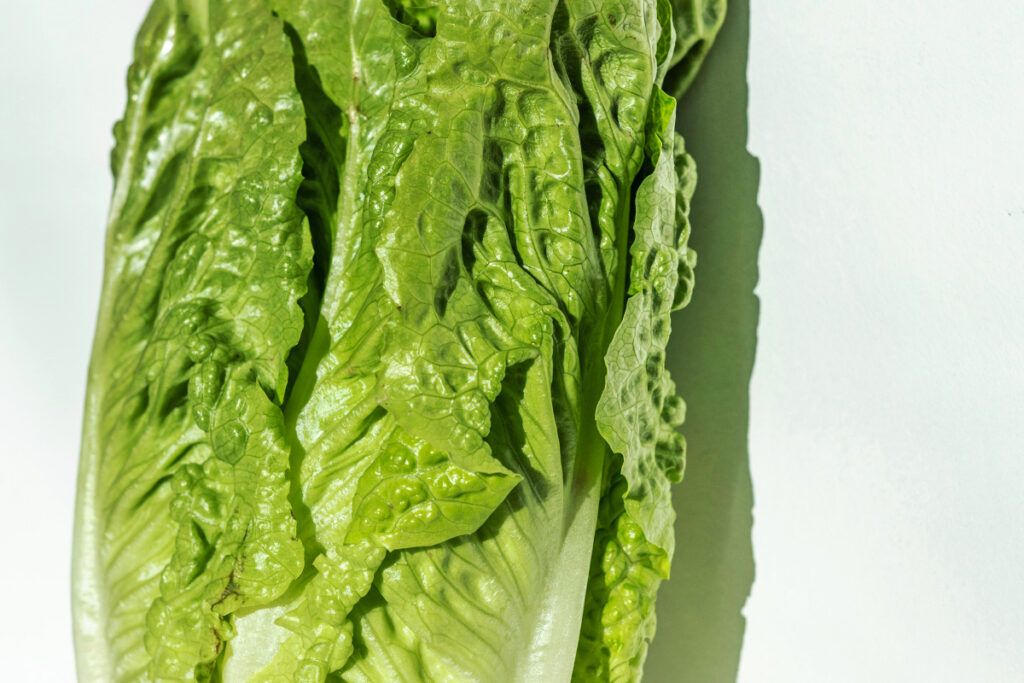
Close-up of lettuce
Credit: © Anita Austvika/Unsplash.com

Cyclospora

Humans are the only known hosts for cyclospora, which made headlines in July 2026 when an outbreak of the intestinal infection it causes hit several U.S. states. Preliminary results from the Food and Drug Administration’s investigation linked the cases to contaminated iceberg lettuce. 

Advertisement
Advertisement

Cyclospora is another microscopic parasite transmitted via the fecal-oral route, most often through produce or water contaminated with human poop. Infections can be asymptomatic, or they may cause gastrointestinal upset, diarrhea (“possibly explosive”), weight loss, bloating, and flu-like symptoms. Health agencies recommend thoroughly washing and peeling raw fruits and vegetables and then cooking them to 158 degrees Fahrenheit to kill potential cyclospora; washing alone, especially with a bit of dish soap, may reduce the number of parasites clinging to produce but may not eliminate them completely. Experts also suggest drinking only purified or bottled water when traveling outside the U.S. where sanitation practices are less rigorous and cyclospora is endemic.

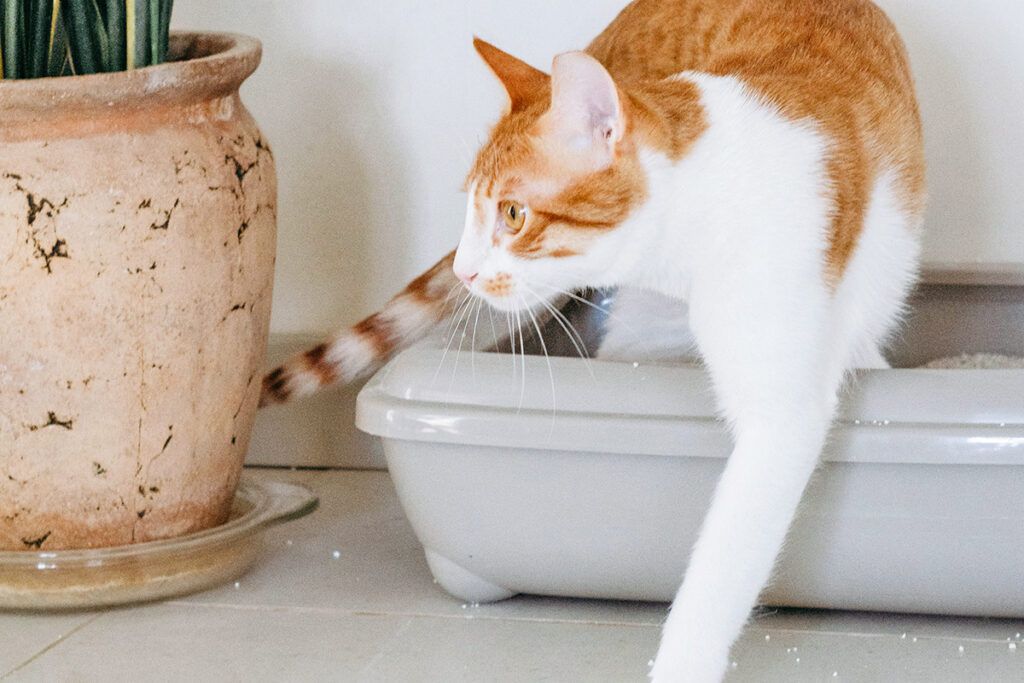
Cat in a litter box
Credit: © Nadiye Odabaşı/Pexels.com

Toxoplasma gondii

For a single-celled parasite, Toxoplasma gondii can lead to a lot of problems. T. gondii causes toxoplasmosis, an illness with a constellation of symptoms ranging from mild muscle aches in healthy people to damage to the eyes, brain, and other organs in immunocompromised people.  Pregnant people are particularly at risk because the parasite can cause miscarriage or congenital toxoplasmosis in babies, leading to further health issues down the line.

Advertisement
Advertisement

Cats are T. gondii’s primary hosts. The parasite colonizes feline intestines, and people usually contract toxoplasmosis by ingesting undercooked meat (including shellfish), as well as produce, soil, or water contaminated by cat feces. Dealing with your cat’s litter box is another common mode of transmission. To avoid getting sick, wash hands and all food prep surfaces and utensils before and after use. Wash and peel fruits and vegetables before eating them and don’t consume raw shellfish or raw dairy. Don’t forget to wear gloves when gardening and emptying your cat’s litter box.

Deer in the grass
Credit: © Fiona Pröll/Pexels.com 

Trichinella

Trichinella — a genus of roundworms — is conveyed in raw meat. People usually contract trichinellosis by eating raw or undercooked wild game, including deer, moose, seal, or bear, or pork purchased “on the hoof” (in other words, a whole animal bought directly from a farmer, then butchered for personal consumption), that contains trichinella larvae. After being consumed, the larvae grow into adult worms in the host’s small intestine. Females then release new larvae that migrate to the host’s striated muscle tissue. Symptoms at this stage include swelling and inflammation around the eyes, fever, joint aches, and muscle pain.

Advertisement
Advertisement

The easiest way to avoid trichinella is to cook wild game to a safe temperature using a meat thermometer. Cuts of pork less than 6 inches thick can be frozen at 5 degrees Fahrenheit for three weeks to kill T. spiralis, the species of roundworm found in domestic pigs (though freezing at any temperature doesn’t work on game, which usually carries T. nativa, a hardier species). Be sure to wash and disinfect any surfaces that come into contact with raw meat, including your hands.

Featured Image Credit: © Getty Images/Unsplash.com

More From Our Network

Better Report is part of Inbox Studio, an email-first media company. *Indicates a third-party property.

Go Retro With This 1960s Fashion Quiz

Quiz Daily

Go Retro With This 1960s Fashion Quiz

True or False: Are You a Master of U.S. Geography?

Travel Quiz

True or False: Are You a Master of U.S. Geography?

5 Reasons You Can Be Denied Boarding an Airplane

Daily Passport

5 Reasons You Can Be Denied Boarding an Airplane

What Did People Do Before Eyeglasses?

History Facts

What Did People Do Before Eyeglasses?

How To Use a Balloon To Clean Up Dust

House Outlook

How To Use a Balloon To Clean Up Dust

11 Shopping Hacks Costco Members Should Know

FinanceBuzz*

11 Shopping Hacks Costco Members Should Know

Share this article

  • Share to Facebook
  • Share to Twitter
  • Copy Url
  • Share to Email
Ali Eldridge

This article is for general informational purposes only.
Affiliate Disclaimer Medical Disclaimer Financial Disclaimer

Updated:
Posted In: Health
Hero Image Credit: Better Report
Advertisement

Related Articles

How Old Are the Apples in the Grocery Store?

4 min read

How To Tell if You’re Brushing Your Teeth Too Hard

4 min read

5 Things To Ask Your Doctor About the New Flu Shot

5 min read

Is Sourdough Actually Healthier Than Regular Bread?

7 min read

Do You Really Need a Bidet in Your Home?

4 min read
Advertisement

10 Foods You Should Buy Frozen Instead of Fresh

Health | Updated: July 15, 2026
Fred Decker
Author
Fred Decker is a trained chef and former restaurateur. Since closing his restaurants over a decade ago he has been a prolific freelance writer, publishing several thousand articles on dozens of high-volume websites including Taste Of Home, Hunker, Tasting Table, Week&, eHow, and GOBankingRates. He lives on a rural acreage shared with a big garden, chickens, rabbits, and grandkids.
Woman reaching into freezer at store
Better Report

All featured products and deals are selected independently and objectively by the author. Better Report may receive a share of sales via affiliate links in content.

Frozen food sometimes gets a bad rap (“Ours is fresh, never frozen!”), as if it’s a compromise or of lower quality. But make no mistake: It’s more than just a convenience. Commercially frozen food preserves fruits, vegetables, and meats at their peak of freshness and flavor, and super-cold blast freezing causes less damage to food than freezing done at home. 

As a former chef, I appreciate frozen food for a lot of reasons. Sometimes it’s outright better than fresh. Sometimes it’s cheaper or more practical, and it’s almost always more convenient. Here are 10 foods I recommend buying frozen rather than fresh. 

Advertisement
Advertisement
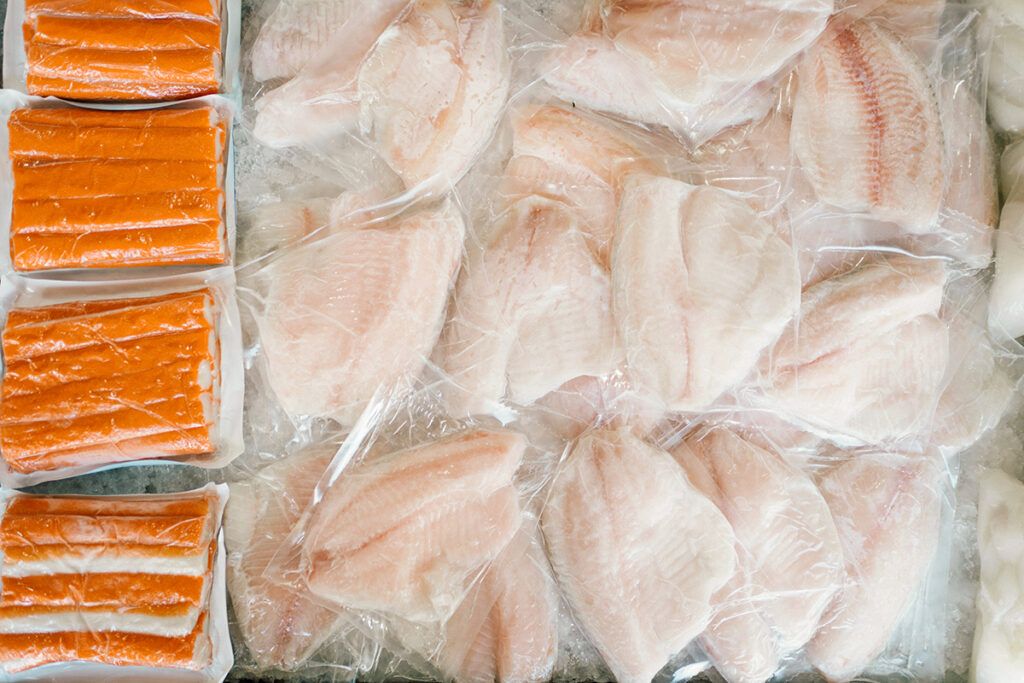
Frozen fish
Credit: © Ramsés Cervantes/Unsplash.com 

Fish

Unless you literally buy your seafood off the boat, frozen fish is usually fresher and of higher quality than what you find at your store’s fish counter. It’s blast-frozen either on the fishing vessel itself or at a processing plant immediately after it comes ashore, and that quick freezing process preserves the fish’s texture and prevents spoilage. In fact, a lot of the “fresh” fish you’ve bought in your life was probably previously frozen. (Even fish used for sushi is typically frozen to kill parasites.) 

Frozen fish is also convenient and low-stress. Fresh or previously frozen fish needs to be cooked within a day or two (although same day is best); otherwise its quality goes downhill rapidly. But you can keep frozen fish on hand and use it whenever you feel like it. (How long it will keep depends on the type of fish and its packaging: Fatty fish such as tuna will last for around three months, leaner fish like halibut for six, and vacuum-sealed fish can last for up to a year. I have a FoodSaver, which I use for anything I won’t be eating in the near-term, and use Ziplocs only for food that’ll be eaten within a month or two.) Frozen fish is also  usually cheaper, which makes it better for your budget, too.

Recommended Articles

  • The Safety Rules for Candles You Probably Don’t Know

  • How Old Are the Apples in the Grocery Store?

  • How To Tell if You’re Brushing Your Teeth Too Hard

  • 5 Things Your Car Needs Before the First Freeze

Advertisement
Advertisement

Reader Favorites

  • Woman looking in fridge

    9 Foods You Should Toss ASAP if They’re Expired

  • Person eating salad

    7 Things a Chef Never Orders at a Restaurant

  • Cherry angioma

    Are the Tiny Red Dots on Your Skin Dangerous?

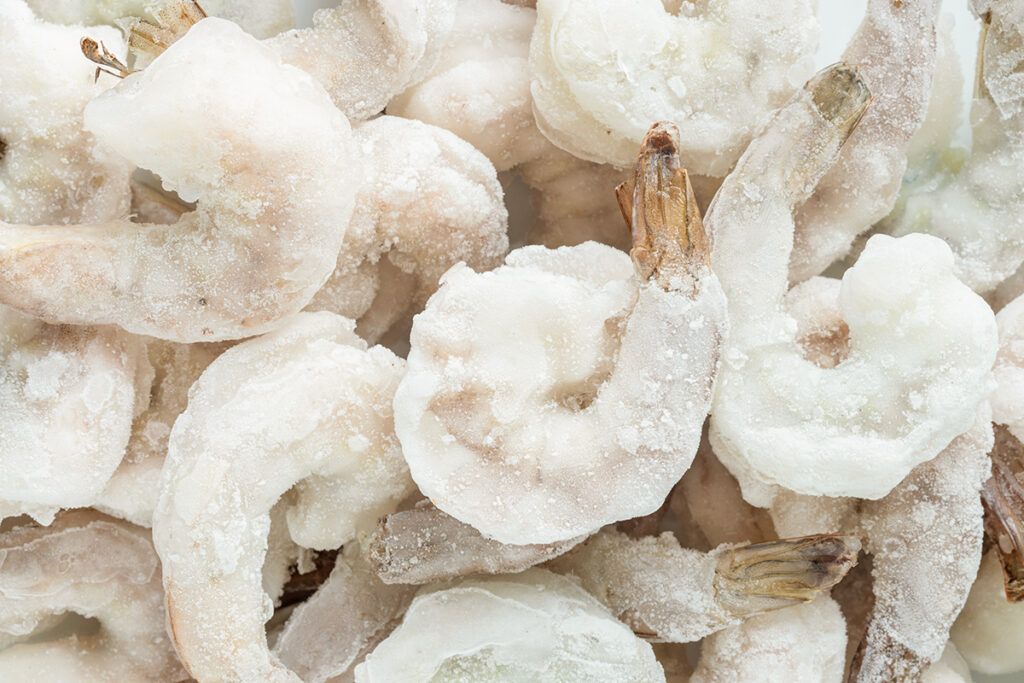
Frozen shrimp
Credit: © amstockphoto—iStock/Getty Images

Shrimp

In a few markets around the U.S., it’s possible to buy fresh, local shrimp that have just come out of the ocean. For everyone else, the choices almost invariably are frozen shrimp or previously frozen shrimp, though some specialty stores may offer them live and swimming. Shrimp and other shellfish are even more perishable than finned fish, which makes freshness all the more important, so if you can’t buy them live or directly from a boat, frozen is your best bet. 

Advertisement
Advertisement
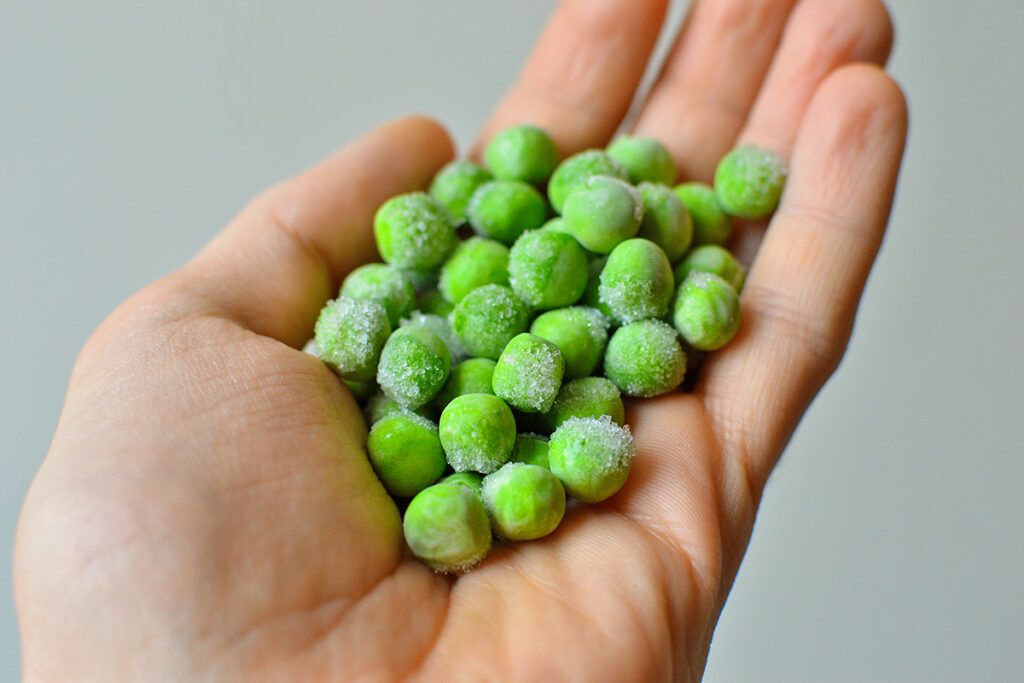
Frozen peas in hand
Credit: © Geri Tech/Pexels.com

Shell Peas

There’s nothing quite as good as shell peas fresh from the garden: They’re sweet and delicately flavorful, and especially tender if you pick them before they reach full size. But for those who don’t garden, or who want to enjoy their fresh early-summer flavor all year long, frozen peas are a slam-dunk. They capture that flavor and color beautifully because processing plants are usually located close to the growing areas, minimizing shipping time and giving consumers a better product. (The saved time and shipping costs also make them more profitable for processors.) The same holds true for soybeans (edamame) and shell beans. 

Advertisement
Advertisement
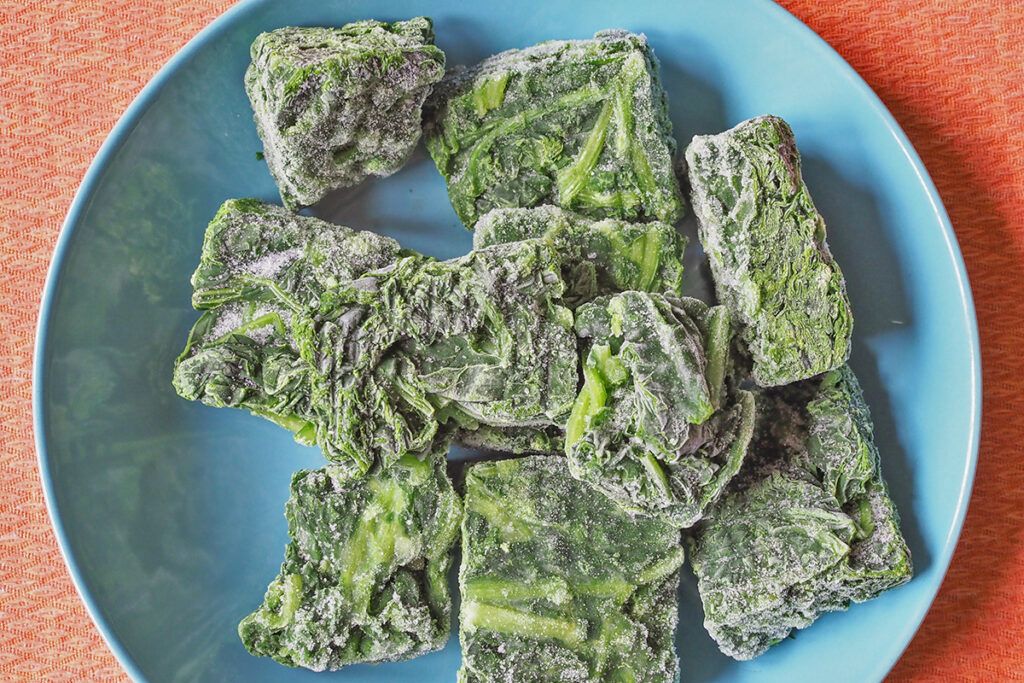
Frozen spinach on a plate
Credit: © Claudio Divizia/stock.adobe.com

Spinach and Other Leafy Greens

Greens, especially the more delicate ones like spinach, have a tendency to shrink as they cook. So, if you eat greens regularly and want to put dinner on the table in a hurry, you may want to buy them frozen. 

Frozen vegetables are always blanched — parcooked in steam or boiling water — prior to freezing to deactivate enzymes that would otherwise start breaking them down, even at freezer temperatures. Blanching shrinks greens to their final size, so you can tell at a glance whether you’re using enough, and it also means they’ll keep their bright color longer when cooked, so your finished dishes will look better. 

Advertisement

Those factors, plus the convenience and fresh flavor you get with frozen greens, make keeping them on hand a no-brainer. 

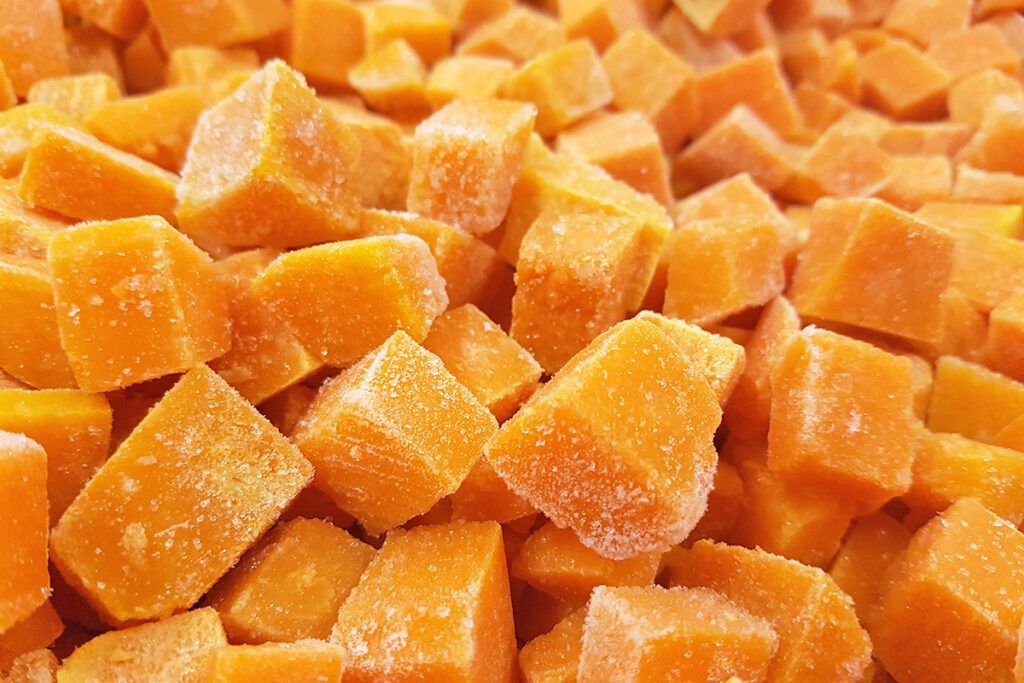
Frozen butternut squash
Credit: © GAnnison—iStock/Getty Images

Winter Squash

Butternut, Hubbard, and other winter squashes are some of the longest-lasting, and hardiest, vegetables. That means they’re widely available and stay relatively inexpensive year-round — so why buy them frozen? 

In a word, convenience. Winter squashes are known for their hard flesh and tough rinds, which means they’re kind of a pain to work with, especially if your knives and knife skills aren’t the best, or if you have physical limitations that impact your cooking. So if you love squash, but hate the hard work of preparing it, getting yours frozen and already diced is well worth the modest price premium. 

Advertisement
Advertisement
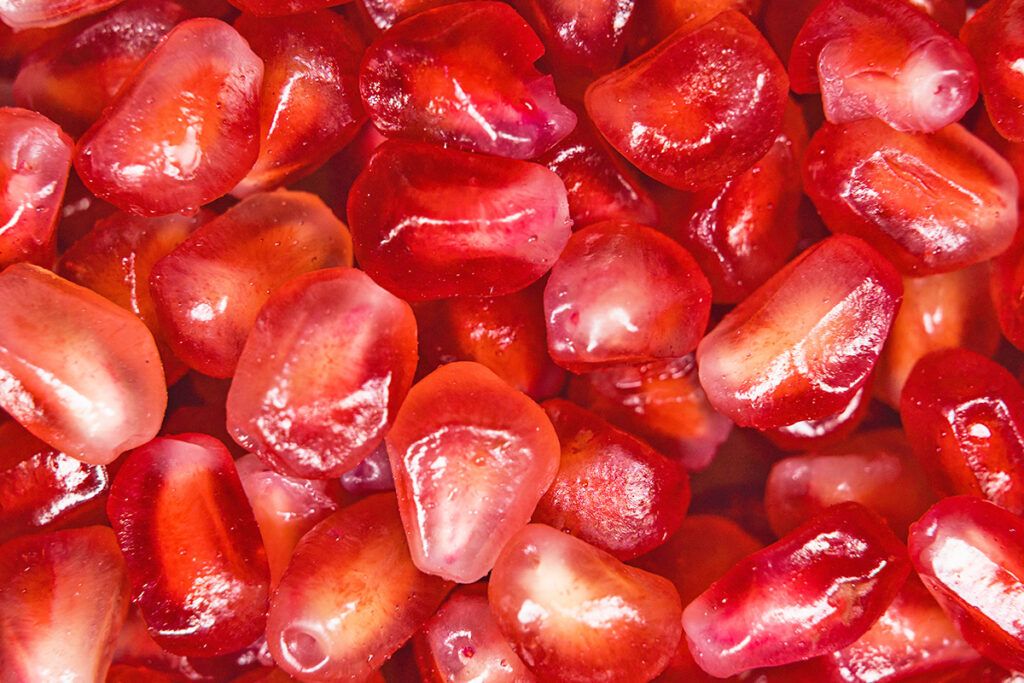
Pomegranate seeds
Credit: © Tima Miroshnichenko/Pexels.com

Pomegranate

If ever a fruit was made to be a festive accent, it’s pomegranate. The deep, jewel-like red of pomegranate arils (seeds) brings a striking splash of color anywhere you use them, from party punch to salads to your breakfast bowl. But stripping the arils from a fresh pomegranate is a messy and time-consuming business, and you’ll run the risk of staining both your hands and clothes with the colorful juice. Buying them frozen means you can sprinkle as many as you need straight from the bag, which is both simpler and cleaner. 

Advertisement
Advertisement
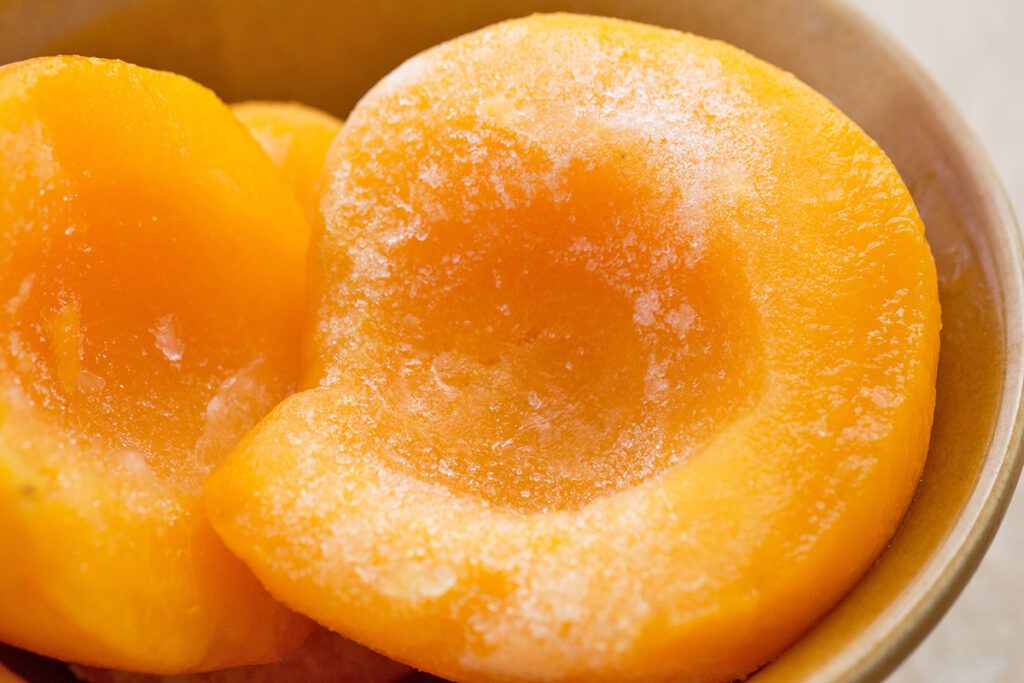
Frozen peaches
Credit: © Segmed87ru—iStock/Getty Images

Peaches

Georgians may get their backs up over this one, but hear us out. Unfortunately, people who live outside of peach-growing areas can seldom rely on getting really good peaches. They’re a climacteric fruit, meaning they continue to ripen after picking — so they’re harvested early while still hard enough to stand up to shipping and will (theoretically) ripen once you get them home. 

That doesn’t always happen, of course. Peaches bruise and brown easily, which might make them start to decompose before you can eat them. If conditions aren’t right, they can also shrivel up without ever ripening. Worst of all, they may look and feel ripe but be dry and mealy rather than lush and juicy when you cut into them. 

Advertisement

Buying your peaches frozen lets you avoid all of those issues. And because processing plants are usually located near the orchards, peaches destined for the freezer can be harvested when fully ripe, sweet, and juicy (because they don’t need to stand up to shipping). So when the urge for a cobbler or a peach pie comes along, you’ll enjoy both convenience and a better product with frozen peaches. 

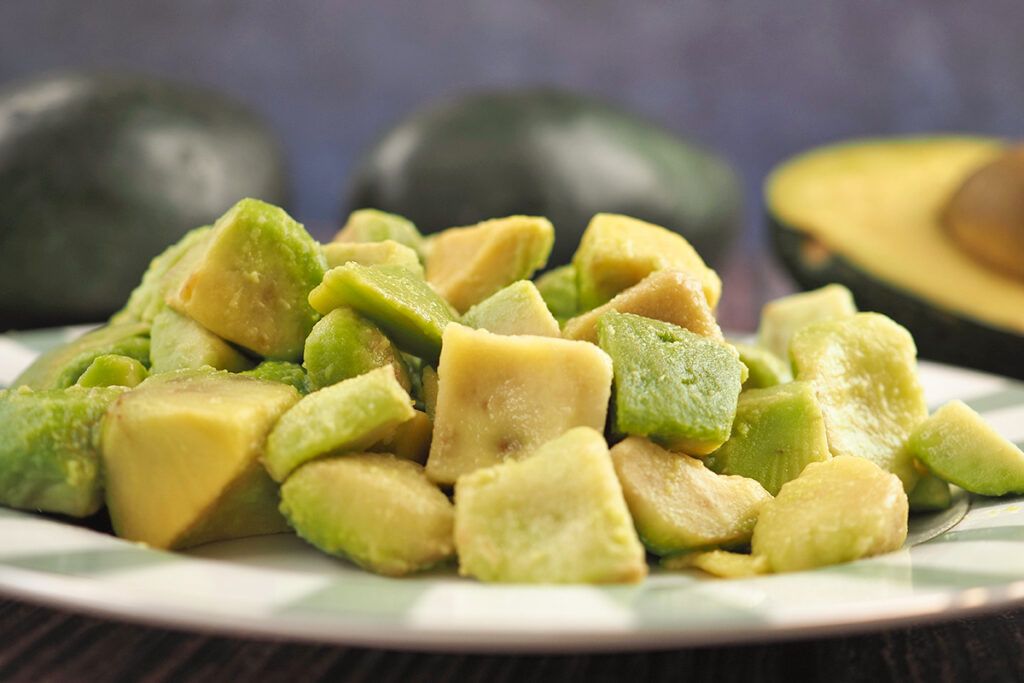
Frozen avocados
Credit: © Towfiqu Barbhuiya/stock.adobe.com

Avocados

This one may also raise some eyebrows, given that avocados are so easily damaged by cold temperatures. But unless you eat avocados every day, it’s hard to time their ripening process so that you can whip up a batch of guacamole exactly when you feel like it. 

Frozen avocados aren’t as common as other kinds of frozen fruit, but if you can find them, they’re really convenient to keep on hand. Some are cut in half and frozen in airtight individual cryo packs, and can be thawed and sliced for things like sandwiches. Others are sold in chunks, which are good for guacamole or salads or smoothies. 

One caveat: Frozen foods are often a no-compromise option, but in this case you’ll find that freezing and thawing does alter the avocado’s texture, making it slightly softer than it would normally be. Ideally, you’d use it mashed or in a dish where there’s a contrasting texture, such as in salads or on toast. Also, to prevent browning, frozen avocado is usually treated with an antioxidant like citric acid, which can give it a tart overtone that you won’t get with fresh avos. Still, they’re useful to keep on hand for those days when you have a craving and can’t find one ripe. 

Advertisement
Advertisement
Credit: © ULADZIMIR CYARGEENKA—iStock/Getty Images

Mixed Fruit and Berries (aka “Smoothie Fruit”)

If you love smoothies, you already know that many of the popular fruits and berries have short lives on the counter and in the fridge. Bananas, like avocados, have a way of going from not-ripe to overripe in the blink of an eye. 

Advertisement

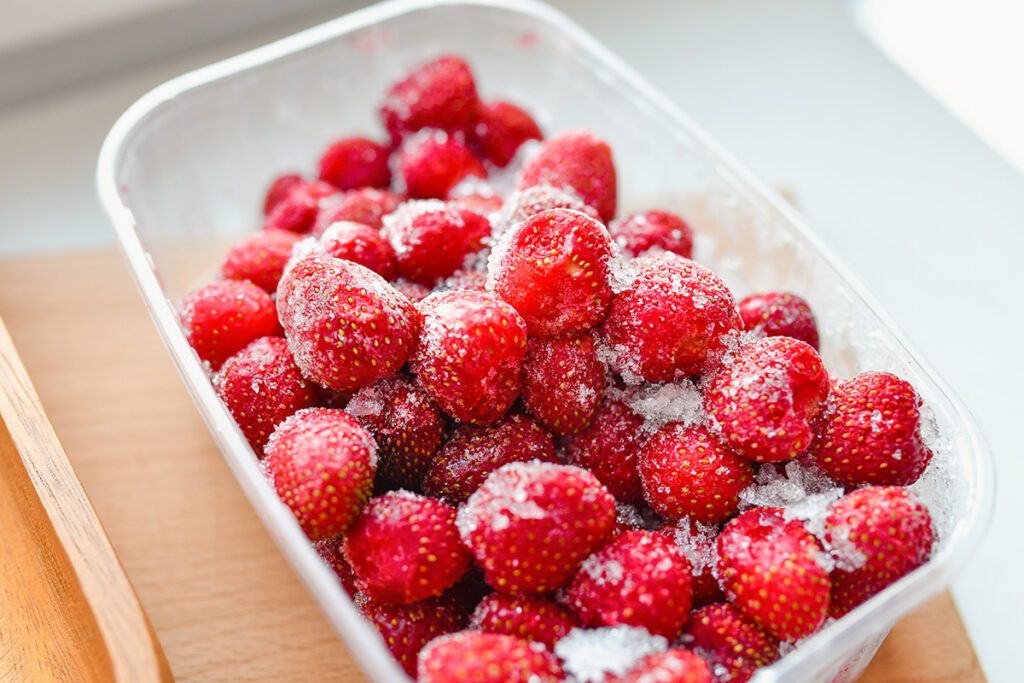
So if your standard breakfast, lunch, or on-the-go meal is a smoothie or protein shake, it makes sense to keep one or two bags of frozen fruits and mixed berries in the freezer. It means less food waste and it’s usually cheaper than buying all of those fruits and berries individually. Best of all, getting your fruit already frozen means you’ll need less ice (or maybe none at all) to get the thick, cold consistency you’re looking for. 

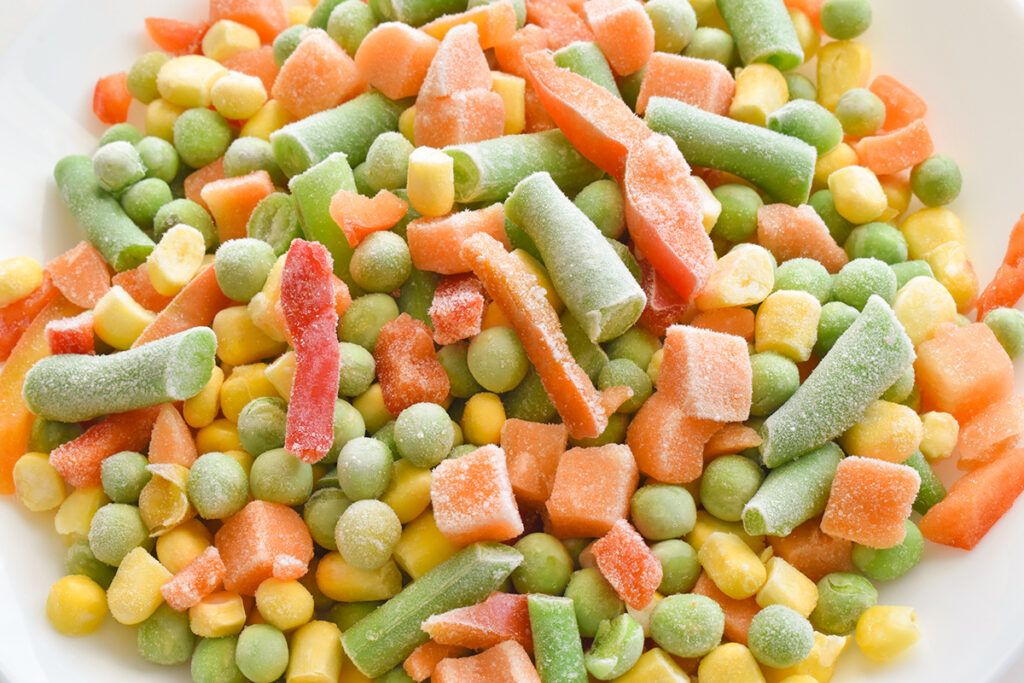
Frozen peas, carrots, corn, and green beans
Credit: © Maliflower73—iStock/Getty Images

Vegetable Mixes

Preparing vegetables is one of the biggest time-sinks when you’re cooking — those minutes you spend washing, peeling, and cutting vegetables account for a big chunk of a meal’s prep time. You’ll get dinner on the table a lot faster if you keep a few strategically chosen bags of mixed vegetables in the freezer. 

Most producers have a number of options, from the carrot-and-pea mix you see in cafeteria food to themed blends oriented around a specific kind of dish or style of cooking (California mix, stir-fry mix, etc.). Most are meant to provide you with a ready-made vegetable side dish that just needs to be cooked. Others, though, are intended to be used as the base of a dish made from scratch, like a classic French-style mirepoix (onion, carrots, and celery) or perhaps a “spaghetti mix” for making tomato sauce.

In either case, you get all the usual benefits of frozen produce — peak freshness, zero waste, minimal prep, low cost compared to buying the vegetables separately — and you save time while still putting a healthy meal on the table.

Advertisement
Advertisement

Why Buy Frozen Instead of Fresh?

Usually, it boils down to a combination of these advantages:
• Commercial freezing uses high-speed blast freezers, which creates a better-quality product than home freezers can produce.
• Seafoods, meats, and produce items are frozen at peak freshness and flavor, close to where they’re grown or harvested. Which means that …
• Frozen fruits, vegetables, and perishable meats are often a higher-quality option than buying fresh.
• Frozen foods are convenient: You don’t have to use them right away, they require no preparation, and they can save you a lot of time and effort when mealtime rolls around.

Advertisement

Featured Image Credit: © JGalione—E+/Getty Images

More From Our Network

Better Report is part of Inbox Studio, an email-first media company. *Indicates a third-party property.

Go Retro With This 1960s Fashion Quiz

Quiz Daily

Go Retro With This 1960s Fashion Quiz

True or False: Are You a Master of U.S. Geography?

Travel Quiz

True or False: Are You a Master of U.S. Geography?

5 Reasons You Can Be Denied Boarding an Airplane

Daily Passport

5 Reasons You Can Be Denied Boarding an Airplane

What Did People Do Before Eyeglasses?

History Facts

What Did People Do Before Eyeglasses?

How To Use a Balloon To Clean Up Dust

House Outlook

How To Use a Balloon To Clean Up Dust

11 Shopping Hacks Costco Members Should Know

FinanceBuzz*

11 Shopping Hacks Costco Members Should Know

Share this article

  • Share to Facebook
  • Share to Twitter
  • Copy Url
  • Share to Email
Fred Decker
Writer

Fred Decker is a trained chef and former restaurateur. Since closing his restaurants over a decade ago he has been a prolific freelance writer, publishing several thousand articles on dozens of high-volume websites including Taste Of Home, Hunker, Tasting Table, Week&, eHow, and GOBankingRates. He lives on a rural acreage shared with a big garden, chickens, rabbits, and grandkids.

This article is for general informational purposes only.
Affiliate Disclaimer Medical Disclaimer Financial Disclaimer

Updated: April 14, 2026
Posted In: Health
Hero Image Credit: Better Report
Advertisement

Related Articles

How Old Are the Apples in the Grocery Store?

4 min read

How To Tell if You’re Brushing Your Teeth Too Hard

4 min read

5 Things To Ask Your Doctor About the New Flu Shot

5 min read

Is Sourdough Actually Healthier Than Regular Bread?

7 min read

Do You Really Need a Bidet in Your Home?

4 min read
Advertisement

Does One Moldy Berry Ruin the Whole Bunch?

Ali Eldridge
Health | Updated: July 2, 2026
Strawberries
Better Report

If berries are a regular part of your diet, you already know that they can be sneakily expensive — which makes it especially frustrating when you’re unpacking your groceries and spy a patch of fuzz among an otherwise immaculate bunch of produce. Moldy berries are unsightly and unappetizing, but what about their neighbors? Does spotting one offender in a container warrant tossing out the whole thing? 

Moldy blackberries
Credit: © ztony1971/stock.adobe.com

What To Know About Moldy Berries

Good news for your wallet and your breakfast routine: Fresh berries packaged with a couple of spoiled ones are still safe to eat. When it comes to fruits like strawberries, blackberries, and raspberries, pediatric infectious disease expert Dr. Nipunie Rajapakse told the Mayo Clinic, a little mold isn’t the end of the world. She recommends picking out the visibly fuzzy berries as well as whatever fruits they were touching. Give the remaining produce a thorough wash and it should be fine to consume. But if your basket or clamshell is more than a quarter moldy, it’s probably not worth salvaging, according to Dr. Rajapakse.

Advertisement
Advertisement

The reason health experts are fairly lenient when it comes to berries is due to the type of spores they grow. Certain foodborne fungi can cause serious illness, which is why we’ve evolved to turn up our noses at spoiled foods in the first place. According to the U.S. Department of Agriculture, some molds produce mycotoxins that may make us sick; they’re mostly found in grain, corn, dried fruits, nuts, and coffee, but can also pop up on produce such as celery and apples.

The mold commonly found on berries, however, isn’t known to produce toxins, so it doesn’t pose any serious health risks. Even if you were to miss a moldy berry and eat it accidentally, it wouldn’t be pleasant, but it probably wouldn’t send you to urgent care.

It’s a different story with many other grocery items. Foods that are soft and moist with more area for microbes to populate tend to cultivate more dangerous fungi. That’s why if you see a blue speckle on your loaf of bread, health experts say you should throw away the whole thing, because the mold may have already spread to parts you can’t see. 

Advertisement

Berries, on the other hand, are less likely to harbor harmful spores due to their small size. But because you can’t tell what molds are toxic by looks alone, you’ll want to throw out any moldy berries just in case.

Recommended Articles

  • The Safety Rules for Candles You Probably Don’t Know

  • How Old Are the Apples in the Grocery Store?

  • How To Tell if You’re Brushing Your Teeth Too Hard

  • 5 Things Your Car Needs Before the First Freeze

Advertisement
Advertisement

Reader Favorites

  • Woman looking in fridge

    9 Foods You Should Toss ASAP if They’re Expired

  • Person eating salad

    7 Things a Chef Never Orders at a Restaurant

  • Cherry angioma

    Are the Tiny Red Dots on Your Skin Dangerous?

Washing raspberries
Credit: © Giorgio Trovato/Unsplash.com

How To Store Berries To Keep Them Fresh Longer

Even if a single moldy berry won’t kill you, you still don’t want the nasty surprise of biting into one. The spores may be less harmful, but it won’t taste very good. Berries are more prone to spoilage in general due to their high moisture content and delicate skins. The best way to prevent mold is by practicing smarter storage habits. 

Advertisement
Advertisement

Before refrigerating the fruit, rinse it off in a solution of 3 cups water to 2 tablespoons white vinegar. This will help kill off most of the spores sitting on the surface waiting to become full-blown fungi. Make sure the berries are completely dry before transferring them to a larger container lined with paper towels. This environment will provide your berries some breathing room while absorbing excess moisture, giving them a fighting chance of surviving to see a week’s worth of meals. (There’s an exception to this advice: raspberries. Moisture will make them go bad quickly, so instead, you should discard any moist, moldy, or discolored raspberries before storing them in the container they came in on a shelf in your fridge — not the crisper, which is more humid and will cause the raspberries to dry out. Don’t wash them right until you’re ready to eat them.)

Another option is to freeze your berries after washing and drying them. They can last six to eight months in the freezer, which means if you go overboard at the farmers market this summer, you could still be enjoying peak-season strawberries in January.

Advertisement
Advertisement

Featured Image Credit: © Eigens/stock.adobe.com

More From Our Network

Better Report is part of Inbox Studio, an email-first media company. *Indicates a third-party property.

Go Retro With This 1960s Fashion Quiz

Quiz Daily

Go Retro With This 1960s Fashion Quiz

True or False: Are You a Master of U.S. Geography?

Travel Quiz

True or False: Are You a Master of U.S. Geography?

5 Reasons You Can Be Denied Boarding an Airplane

Daily Passport

5 Reasons You Can Be Denied Boarding an Airplane

What Did People Do Before Eyeglasses?

History Facts

What Did People Do Before Eyeglasses?

How To Use a Balloon To Clean Up Dust

House Outlook

How To Use a Balloon To Clean Up Dust

11 Shopping Hacks Costco Members Should Know

FinanceBuzz*

11 Shopping Hacks Costco Members Should Know

Share this article

  • Share to Facebook
  • Share to Twitter
  • Copy Url
  • Share to Email
Ali Eldridge

This article is for general informational purposes only.
Affiliate Disclaimer Medical Disclaimer Financial Disclaimer

Updated:
Posted In: Health
Hero Image Credit: Better Report
Advertisement

Related Articles

How Old Are the Apples in the Grocery Store?

4 min read

How To Tell if You’re Brushing Your Teeth Too Hard

4 min read

5 Things To Ask Your Doctor About the New Flu Shot

5 min read

Is Sourdough Actually Healthier Than Regular Bread?

7 min read

Do You Really Need a Bidet in Your Home?

4 min read
Advertisement

Is It Safe To Eat Leftovers Cold?

Health | Updated: June 29, 2026
Fred Decker
Author
Fred Decker is a trained chef and former restaurateur. Since closing his restaurants over a decade ago he has been a prolific freelance writer, publishing several thousand articles on dozens of high-volume websites including Taste Of Home, Hunker, Tasting Table, Week&, eHow, and GOBankingRates. He lives on a rural acreage shared with a big garden, chickens, rabbits, and grandkids.
Container labeled "leftovers"
Better Report

The federal government’s consumer-facing food safety pages — including FoodSafety.gov and websites for the FDA, the CDC, and the USDA’s Food Safety and Inspection Service — contain pretty much all the information you need as a home cook to avoid food poisoning. Most of it comes down to basic concepts like the “four simple steps” shown on the homepage at FoodSafety.gov: clean, separate, cook, and chill. But occasionally, a specific piece of information you’re looking for isn’t easy to track down, or even to spot once you’ve found the correct page. 

Advertisement
Advertisement

For example, most of these pages talk about reheating leftovers to 165 degrees Fahrenheit. But what about leftovers you plan to eat cold? Are they safe to eat? That answer takes some digging. Let’s break it down. 

Putting food in microwave
Credit: © Barmaleeva—iStock/Getty Images

Why Leftovers Are Usually Reheated to 165 Degrees Fahrenheit

The typical advice for leftovers is to reheat them to 165 degrees Fahrenheit. That’s because they often include foods with a high level of risk, such as meats, dairy, eggs, seafood, and poultry. Add in starches and any liquid sauces, and you have a lot of prime real estate for bacteria to set up shop. 

Recommended Articles

  • The Safety Rules for Candles You Probably Don’t Know

  • How Old Are the Apples in the Grocery Store?

  • How To Tell if You’re Brushing Your Teeth Too Hard

  • 5 Things Your Car Needs Before the First Freeze

Advertisement
Advertisement

Reader Favorites

  • Woman looking in fridge

    9 Foods You Should Toss ASAP if They’re Expired

  • Person eating salad

    7 Things a Chef Never Orders at a Restaurant

  • Cherry angioma

    Are the Tiny Red Dots on Your Skin Dangerous?

Cooking food the first time usually kills any bacteria it might have contained, especially if you reached the USDA-recommended food-safe temperatures of 145 degrees Fahrenheit for meats, 160 degrees Fahrenheit for ground meats, and 165 degrees Fahrenheit for poultry. But bacteria can find their way back to your food after it’s cooked — from your hands, from dirty utensils, or from being present in droplet form in the air. 

Reheating leftovers to the recommended 165 degrees Fahrenheit is enough to kill illness-causing pathogens like salmonella that might have recolonized your food. But that doesn’t mean all leftovers are automatically safe if you heat them to that temperature. A few kinds of dangerous bacteria produce toxins that linger even if the bacteria themselves are killed, and those can still make you seriously ill. That’s why government sources recommend discarding any food that’s been left out at room temperature for more than two hours, or that’s been in your fridge for more than three or four days. 

Woman eating takeout Chinese food
Credit: © Stephanie Berbec/Unsplash.com

Leftovers Are Usually Safe To Eat Cold (If You Handle Them Correctly)

But what about leftovers that you plan to eat cold? A quick search of the usual food safety sites doesn’t turn up any obvious guidance on the subject, but the information is there if you do a bit of digging. 

Advertisement

If you look in the USDA’s Kitchen Companion, for example, you won’t see anything about eating leftovers cold. But in the section on takeout/delivery food, you will find a discussion of keeping cold-prepared foods (essentially leftovers or made-aheads) cold for later consumption. 

Advertisement
Advertisement

A stand-alone USDA handout on the same subject goes further. After describing the correct procedure for first refrigerating or freezing leftovers (hot or cold), and then thawing them if necessary, it explicitly states that “the food may be eaten cold or reheated.” Similarly, a handout specifically about food safety for turkey dinners says that the turkey can be eaten “either cold or reheated” for three to four days. 

So the short answer is yes — usually, leftovers are safe to eat cold, provided you follow food safety guidelines. Then the question is: Are you familiar with those guidelines, and if so, have you actually followed them? 

Putting leftovers in continer
Credit: © Anchiy—iStock/Getty Images Plus

A Quick Primer on Food Safety for Leftovers

If you don’t have time to sort through publications and websites about food safety, here’s a quick cheat sheet of what you need to know for leftovers specifically: 

• Chill your leftovers ASAP. Don’t wait for them to come to room temperature first (your fridge can handle it). Leftovers should never sit at room temperature for more than two hours, or more than one hour if the temperature is above 90 degrees Fahrenheit. 
• Portion big-batch leftovers, like a pot of chili or a full-sized roast or turkey, into small, flat containers for refrigerating or freezing. Several small, shallow portions cool off a lot faster than one big container, which means less time spent in the danger zone (above 40 degrees Fahrenheit, but below 140 degrees) where bacteria can thrive.
• Eat your leftovers within three or four days if they’re refrigerated, or freeze them if you know you won’t eat them within that time frame. 
• If you freeze your leftovers, thaw them safely. The best method is overnight (or longer) in the fridge, but thawing in cold water is OK if you eat them that day. The microwave should be used only if you plan to eat them right away, because it heats unevenly and some parts of the food may reach an unsafe temperature. And never thaw leftovers by leaving them on the counter — that’s just asking for trouble.
• Leftovers that have been thawed in the fridge are also good for three to four days if they were frozen the same day you cooked them. Your maximum is a total of four fridge days, so if you froze them two days after cooking, and thawed them for a day in the fridge, you now have only one day left to eat them.  

Advertisement
Advertisement

At this point you may wonder: If leftovers are safe to eat cold, why the emphasis on reheating to 165 degrees Fahrenheit? It’s because once you start heating up those leftovers, you put them squarely into the food safety danger zone. So at that point you’re committed and need to keep going until the food reaches 165 degrees Fahrenheit. 

Advertisement

Featured Image Credit: © Steven Puetzer—The Image Bank/Getty Images

More From Our Network

Better Report is part of Inbox Studio, an email-first media company. *Indicates a third-party property.
Go Retro With This 1960s Fashion Quiz

Quiz Daily

Go Retro With This 1960s Fashion Quiz

True or False: Are You a Master of U.S. Geography?

Travel Quiz

True or False: Are You a Master of U.S. Geography?

5 Reasons You Can Be Denied Boarding an Airplane

Daily Passport

5 Reasons You Can Be Denied Boarding an Airplane

What Did People Do Before Eyeglasses?

History Facts

What Did People Do Before Eyeglasses?

How To Use a Balloon To Clean Up Dust

House Outlook

How To Use a Balloon To Clean Up Dust

11 Shopping Hacks Costco Members Should Know

FinanceBuzz*

11 Shopping Hacks Costco Members Should Know

Share this article

  • Share to Facebook
  • Share to Twitter
  • Copy Url
  • Share to Email
Fred Decker
Writer

Fred Decker is a trained chef and former restaurateur. Since closing his restaurants over a decade ago he has been a prolific freelance writer, publishing several thousand articles on dozens of high-volume websites including Taste Of Home, Hunker, Tasting Table, Week&, eHow, and GOBankingRates. He lives on a rural acreage shared with a big garden, chickens, rabbits, and grandkids.

This article is for general informational purposes only.
Affiliate Disclaimer Medical Disclaimer Financial Disclaimer

Updated: April 14, 2026
Posted In: Health
Hero Image Credit: Better Report

Advertisement

Related Articles

How Old Are the Apples in the Grocery Store?

4 min read

How To Tell if You’re Brushing Your Teeth Too Hard
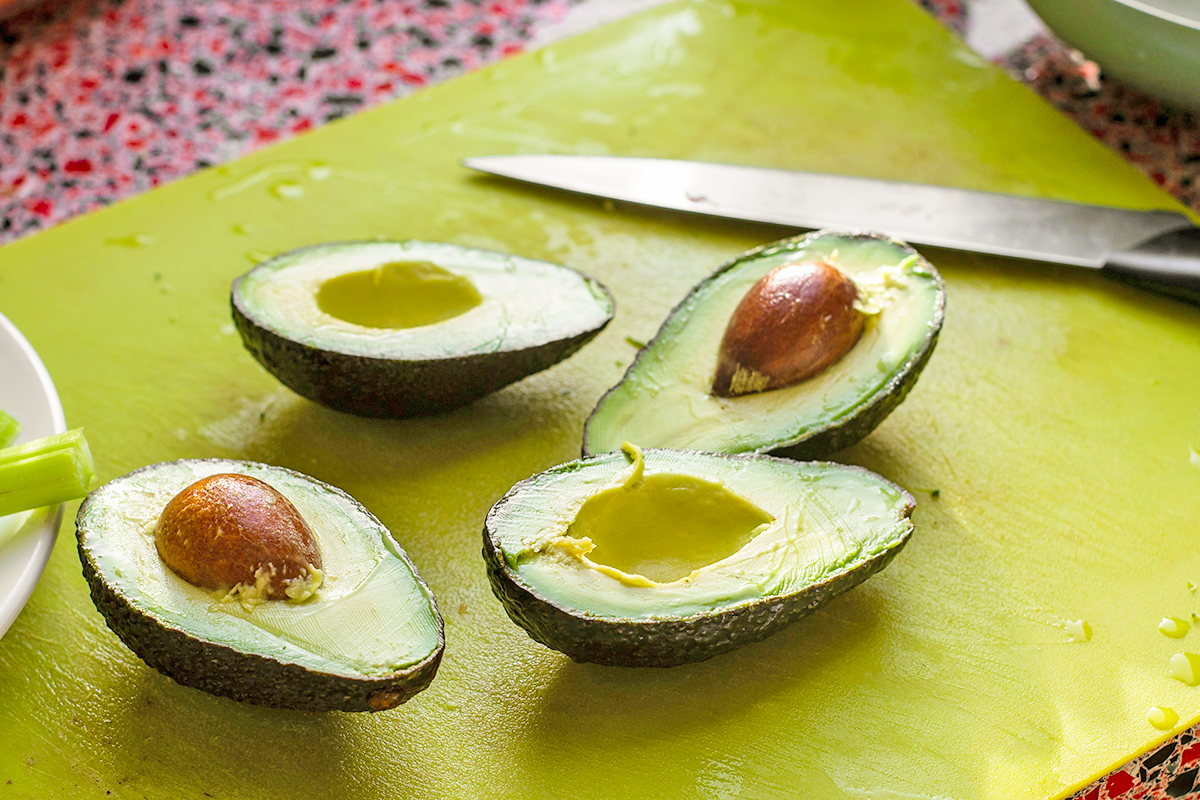
4 min read

5 Things To Ask Your Doctor About the New Flu Shot

5 min read

Is Sourdough Actually Healthier Than Regular Bread?

7 min read

Do You Really Need a Bidet in Your Home?

4 min read
Advertisement

Posts navigation

Older posts
  • Home
  • Health
  • Wealth
  • Logo
  • Advertise
  • About
  • Contact Us
  • Privacy Policy
  • Terms of Use
  • Your Privacy Choices
x
Thumb Image

Elevate your everyday.

Sign up to receive the practical tips and expert advice you need to pare down the complexities of everyday living right in your inbox.

Sorry, your email address is not valid. Please try again.

Your email is:

Edit Image
Sorry, your email address is not valid. Please try again.
Thank you for subscribing...

By subscribing you are agreeing to our Terms of Use and Privacy Policy.

Close image
Thumb Image
Second Thumb Image

Elevate your everyday.

Sign up to receive the practical tips and expert advice you need to pare down the complexities of everyday living right in your inbox.

Sorry, your email address is not valid. Please try again.

By subscribing you are agreeing to our Privacy Policy and Terms of Use.

Close image