Skip to content
Better Report
  • Home
  • Health
  • Wealth
8 Low-Maintenance Plants That Thrive on Neglect
  • Search
  • Subscribe
  • Home
  • Health
  • Wealth
  • About
  • Privacy Policy
  • Terms of Use
  • Contact Us
  • SubscribeSubscribe
  • Search
Thank you for confirming your email! Welcome to the community.

Author: erin

Why You Should Never Go To Bed With Wet Hair

Health | Updated: April 27, 2026
Nicole Pyles
Author
Based in Portland, Oregon, Nicole Pyles is an experienced freelance writer who writes about home and kitchen, health and wellness, and more. She's written for a variety of outlets, including Better Homes and Gardens, Tom's Guide, Better Report, and more.
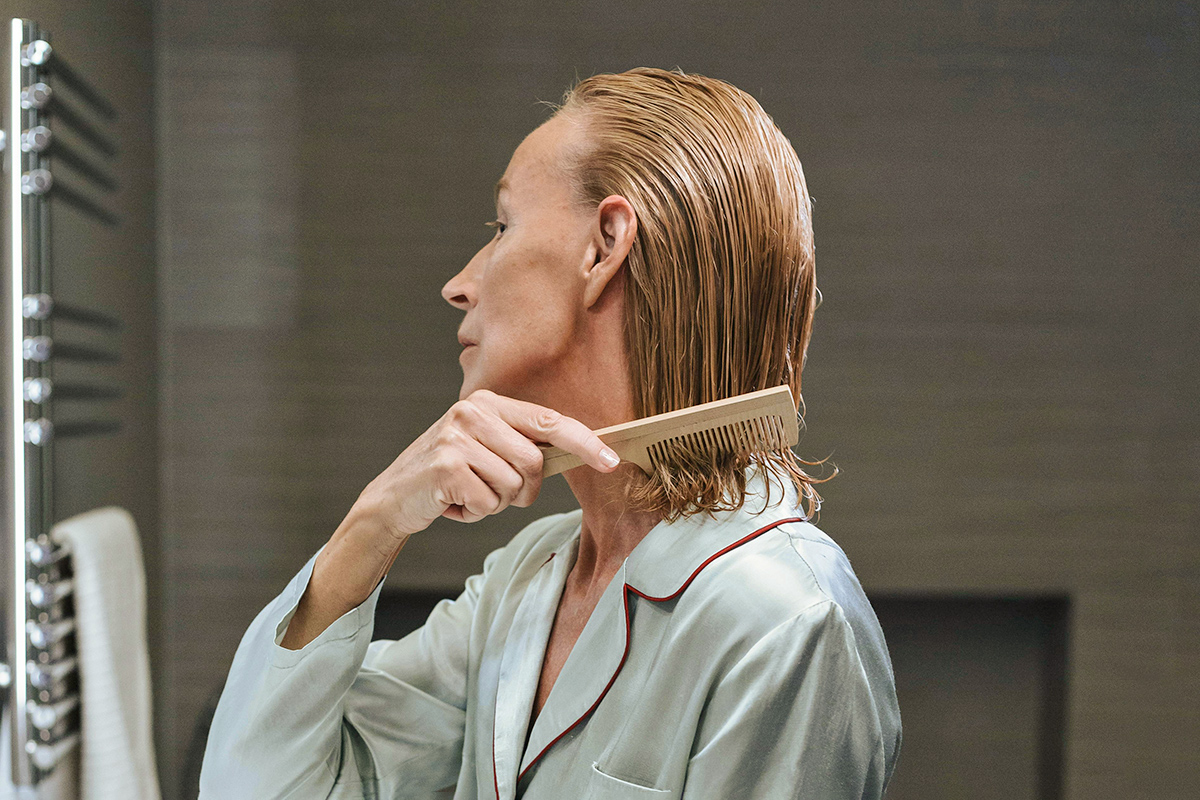
Woman brushing wet hair
Better Report

All featured products and deals are selected independently and objectively by the author. Better Report may receive a share of sales via affiliate links in content.

There are plenty of ways to save a few minutes as you go about your day. Meal prepping. Signing up for TSA PreCheck. Using the Pomodoro method. But while it might seem like a hack, going to bed with your hair wet and letting it dry while you snooze is, unfortunately, not one of them. It may be tempting — especially after a long day — but this practice does more harm to your hair, your skin, and your health than you might realize. 
Advertisement
Advertisement
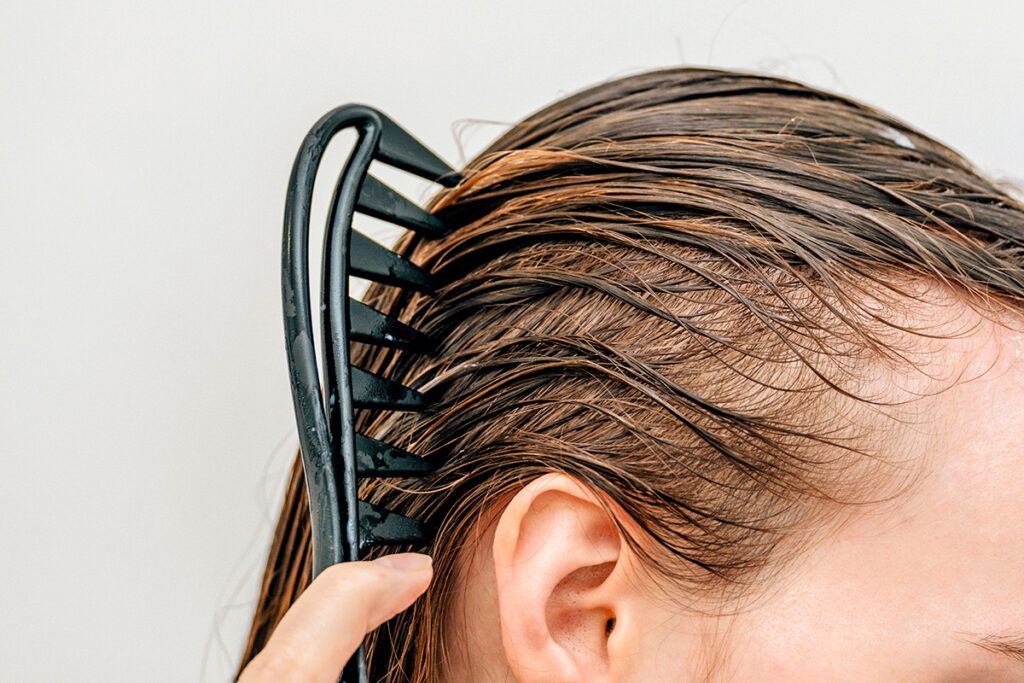
Person running comb through wet hair
Credit: © Dmitrii Shirnin/Unsplash.com

What’s So Bad About Going to Bed With Wet Hair?

“Don’t go to sleep with wet hair” sounds like an old wives’ tale — yet there is truth to it. One reason you shouldn’t do so is that you risk damaging your hair, which is most vulnerable when wet. “The cuticle is lifted, so it stretches more easily and breaks way faster,” says Erin Davis, scalp health educator and founder of the hair and skin care brand Erin & Mae Co.

Combine that with tossing and turning that happens while you sleep, and “you’re basically creating friction all night long,” she says. All of this movement can harm your luscious locks. 

But there’s more to fear than split ends. A damp environment puts your skin — including your scalp — at risk for infections. Davis says that the warm and damp environment created by wet hair  is the perfect atmosphere for “yeast and bacteria to grow,” which can lead to problems like “itchiness, flakes, or irritation.” You also increase your risk for folliculitis, a condition where pimple-like bumps appear on the scalp.

Recommended Articles

  • The Safety Rules for Candles You Probably Don’t Know

  • How Old Are the Apples in the Grocery Store?

  • How To Tell if You’re Brushing Your Teeth Too Hard

  • 5 Things Your Car Needs Before the First Freeze

Advertisement
Advertisement

Reader Favorites

  • Woman looking in fridge

    9 Foods You Should Toss ASAP if They’re Expired

  • Person eating salad

    7 Things a Chef Never Orders at a Restaurant

  • Cherry angioma

    Are the Tiny Red Dots on Your Skin Dangerous?

Anyone who goes to bed with wet hair could face these issues, but those with long or thick hair have increased risk. “[Long] hair holds moisture way longer, especially toward the mid-lengths and ends. So if you have long or thick hair, it’s likely staying wet for hours while you sleep,” Davis says. “Short hair usually dries faster, so the risk is lower, but your scalp is still sitting in that damp environment for a bit, so it’s not totally risk-free.” 

To make matters worse, the bacteria from your scalp can transfer to your pillowcase and end up on your face. “That moisture sits there overnight and can turn into a breeding ground for bacteria and yeast. Then you’re laying your face on it for hours,” Davis says. “This is one of those sneaky things that can contribute to breakouts or irritation, especially if you already have sensitive skin.”

Advertisement
Advertisement

Your pillowcase is also a haven for bacteria that can transfer to your head and scalp. One study showed that in just a week, pillowcases accumulated 3 million colony-forming units (CFUs) of bacteria per square inch — more than 17,000 times the CFUs on a toilet seat. 
Advertisement
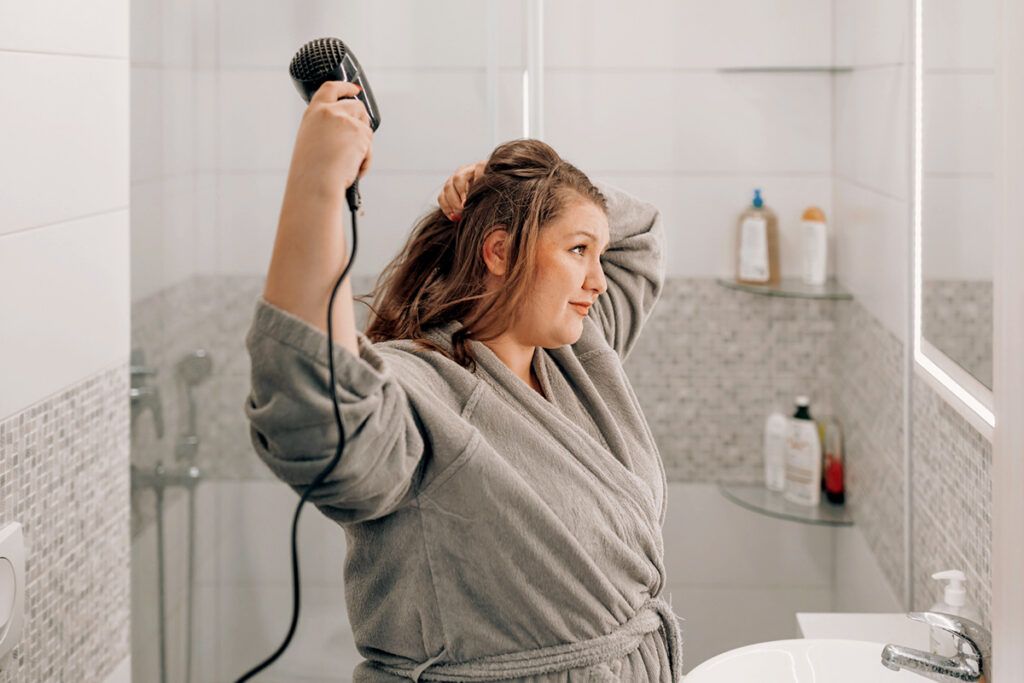
Woman blow drying hair
Credit: © RealPeopleGroup/iStock

What You Can Do If You Fall Asleep With Wet Hair

There’s no need to cut evening showers from your routine. Davis recommends hitting the hay with your hair at least 70% to 80% dry. Use a hair dryer — she recommends the CONFU Ionic Blow Dryer —  to blow dry your roots if needed. Braiding your hair will help reduce friction, and some experts also recommend picking up a silk pillowcase. 

Advertisement
Advertisement

If you can’t get your hair dry before bed, though, take comfort in the fact that a night or two of falling asleep with a wet head won’t do too much harm — it’s when it becomes a regular part of your routine that you may have problems. 

If you do end up falling asleep with wet hair, Davis recommends taking time in the morning to give your hair some TLC. “Gently detangle [your hair] starting from the ends,” she says. Then, give your scalp “a light massage to get circulation going” using your fingers or a massage brush. And don’t forget to swap out your pillowcase for a clean one — Davis recommends flipping your pillow nightly and changing your pillowcase every four days.

Advertisement
Advertisement

Feature Image Credit: © Ron Lach/Pexels.com

More From Our Network

Better Report is part of Inbox Studio, an email-first media company. *Indicates a third-party property.

Go Retro With This 1960s Fashion Quiz

Quiz Daily

Go Retro With This 1960s Fashion Quiz

True or False: Are You a Master of U.S. Geography?

Travel Quiz

True or False: Are You a Master of U.S. Geography?

5 Reasons You Can Be Denied Boarding an Airplane

Daily Passport

5 Reasons You Can Be Denied Boarding an Airplane

What Did People Do Before Eyeglasses?

History Facts

What Did People Do Before Eyeglasses?

How To Use a Balloon To Clean Up Dust

House Outlook

How To Use a Balloon To Clean Up Dust

11 Shopping Hacks Costco Members Should Know

FinanceBuzz*

11 Shopping Hacks Costco Members Should Know

Share this article

  • Share to Facebook
  • Share to Twitter
  • Copy Url
  • Share to Email
Nicole Pyles
Writer

Based in Portland, Oregon, Nicole Pyles is an experienced freelance writer who writes about home and kitchen, health and wellness, and more. She's written for a variety of outlets, including Better Homes and Gardens, Tom's Guide, Better Report, and more.

This article is for general informational purposes only.
Affiliate Disclaimer Medical Disclaimer Financial Disclaimer

Updated: September 18, 2024
Posted In: Health
Hero Image Credit: Better Report
Advertisement

Related Articles

How Old Are the Apples in the Grocery Store?

4 min read

How To Tell if You’re Brushing Your Teeth Too Hard

4 min read

5 Things To Ask Your Doctor About the New Flu Shot

5 min read

Is Sourdough Actually Healthier Than Regular Bread?

7 min read

Do You Really Need a Bidet in Your Home?

4 min read
Advertisement

Do Blue-Light Glasses Actually Work?

Health | Updated: April 15, 2026
Kat Long
Author
Kat Long is a freelance science journalist in the Washington, D.C. area. Previously, she was the science editor at Mental Floss and a digital editor at National Geographic. She now writes the Arctic Archives newsletter on Substack. Kat spends her free time birdwatching, road-tripping to historical sites and perusing old manuscripts at libraries.
Woman looking at computer wearing blue light glasses
Better Report

The internet is filled with ads for blue-light-blocking glasses whose manufacturers claim all kinds of health benefits. Many promise to “defend your eyes” from “potentially pesky” blue light without specifying why your peepers might need defending. Some say wearing the glasses “[boosts] evening melatonin production” and helps regulate your circadian rhythms for better sleep. Others claim to absorb blue light from digital devices to relieve eye strain and fatigue or even help prevent eye diseases.

Should you believe the hype? Or are blue-light blockers just smoke and mirrors? Here’s what the science says.

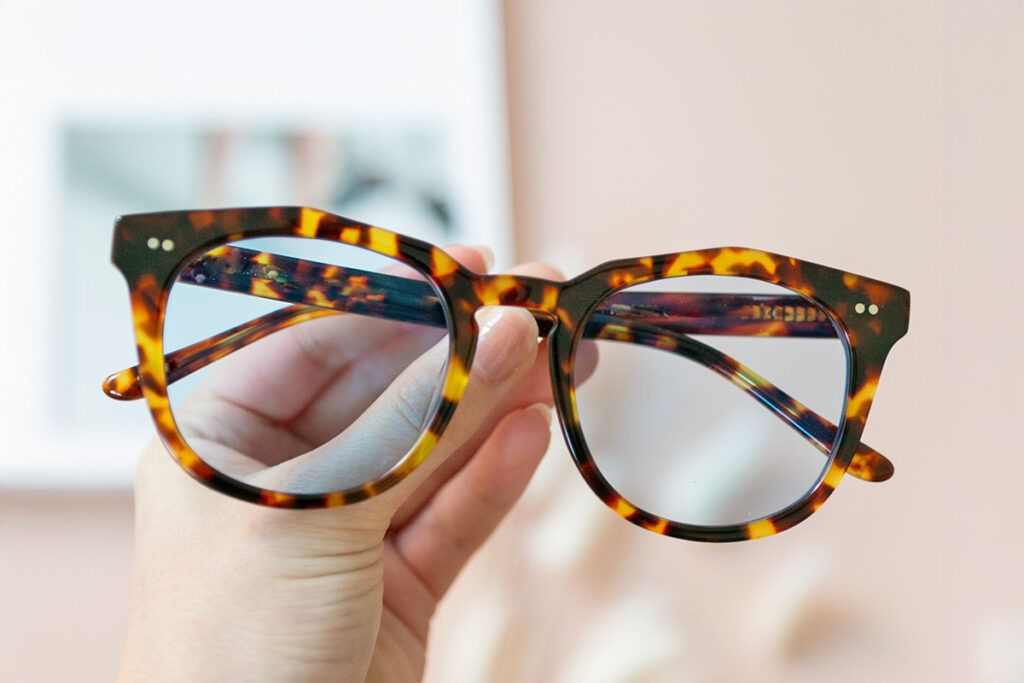
Glasses with blue-tinged lenses
Credit: © Deidre/adobe.stock.com

Blue-Light Basics

Blue light is a short, high-energy wavelength of light that comprises about one-third of all visible light in our atmosphere. The sun is our main source, but it also shines from light-emitting diodes (LEDs), the mechanisms that backlight smartphones, laptops, tablets, and TVs. While exposure to blue light does boost your energy and wakefulness by regulating your internal circadian rhythm, too much blue light can disrupt sleep by suppressing your brain’s production of melatonin. Extremely high doses of blue light in the environment can even damage the eye’s retina and contribute to cataracts and macular degeneration.

Our eyes are not great at blocking blue light on their own. But with many teens and adults spending hours every day looking at screens, and likely experiencing some degree of eye fatigue from that activity, blue-light-blocking glasses have emerged as a potential solution. These glasses often have a special coating or amber lenses meant to prevent some of the blue wavelength of light from penetrating your eyes. 

Advertisement
Woman wearing glasses staring at screen
Credit: © Getty Images/Unsplash.com

Shedding Light on Eye Health

A few randomized, controlled trials have found that wearing blue-light-blocking glasses before bedtime had some positive effects on sleep quality, but these trials were small and used self-reported data. A 2023 meta-analysis of 17 randomized clinical trials revealed little evidence that the glasses relieved eye fatigue from screen use and no consensus on whether the glasses improved sleep.

As for eye comfort, screen-related eye strain and blurred vision usually come from forgetting to blink while looking at your phone or computer — not from the blue light emanating from the device, according to the American Academy of Ophthalmology. A better solution for scrolling fatigue is to keep your screens an arm’s length from your eyes and take “20-20-20” breaks: Shift your gaze to an object 20 feet away for 20 seconds every 20 minutes. Rewetting drops can also keep your corneas comfortable.

Woman wearing glasses holding laptop
Credit: © Evrymmnt/stock.adobe.com

The Bottom Line

While long-term exposure to ambient blue light may cause eye problems, there is no evidence that the amount of light put out by digital devices, including blue light, causes any eye disease. In fact, the amount of blue light in Earth’s atmosphere, which you’re exposed to every day, is much higher than the amount emitted from your smartphone, computer, or TV. 

UVA and UVB radiation, which also emanate from the sun, pose a bigger risk to eye health than blue light does. Long-term exposure to UVA/UVB can cause cataracts, macular degeneration, and eye cancer. Because of that well-established risk, the most effective glasses for eye protection are probably not blue blockers with iffy health claims, but a pair of sunglasses with a 100% UV protection rating.

Advertisement

Featured Image Credit: © PhotoLife94/iStock

Advertisement
Advertisement

Related Articles

How Old Are the Apples in the Grocery Store?

4 min read

How To Tell if You’re Brushing Your Teeth Too Hard

4 min read

5 Things To Ask Your Doctor About the New Flu Shot

5 min read

Is Sourdough Actually Healthier Than Regular Bread?

7 min read

Do You Really Need a Bidet in Your Home?

4 min read
Advertisement

5 Signs Your Tires Are a Safety Hazard

Ali Eldridge
Home | Updated: April 27, 2026
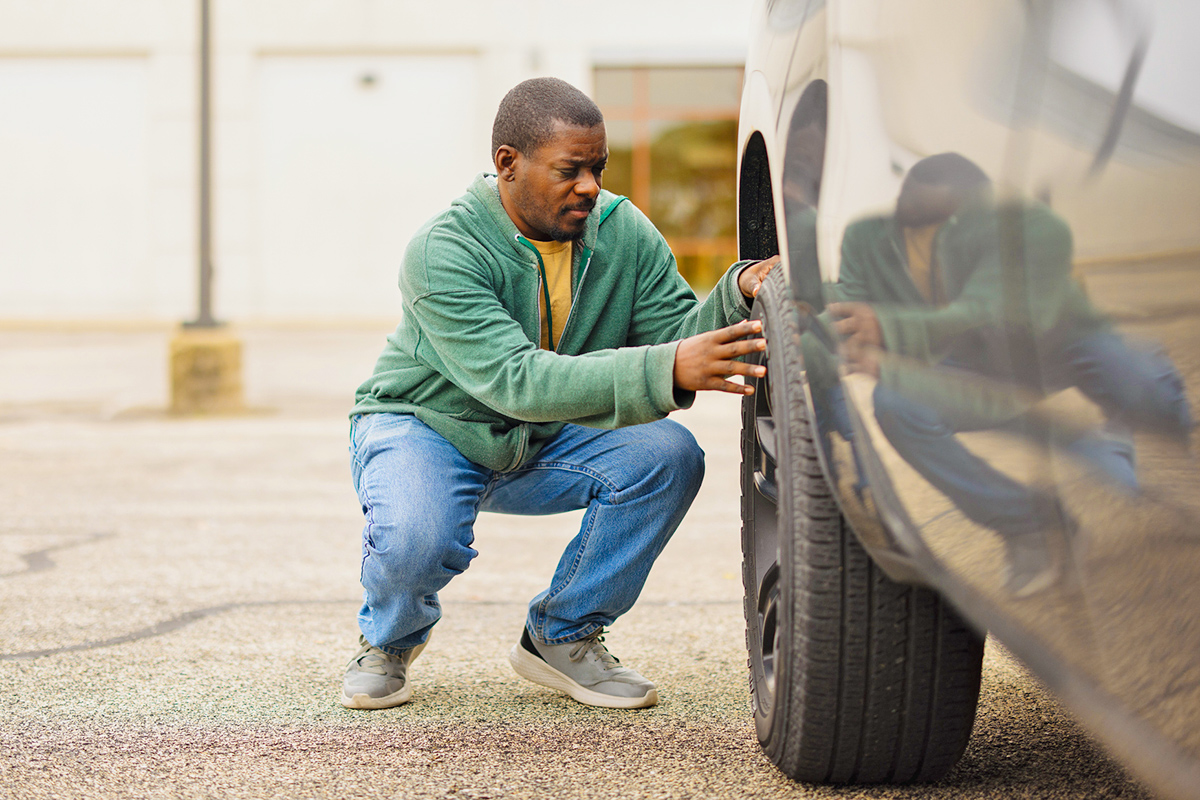
Man checking tire
Better Report

There are countless perils you might encounter on the road — deer leaping out from behind bushes, reckless or distracted drivers, potholes and construction debris, stalled vehicles, and so on. While some of these issues are random and unavoidable, other potential problem areas are well within your control.

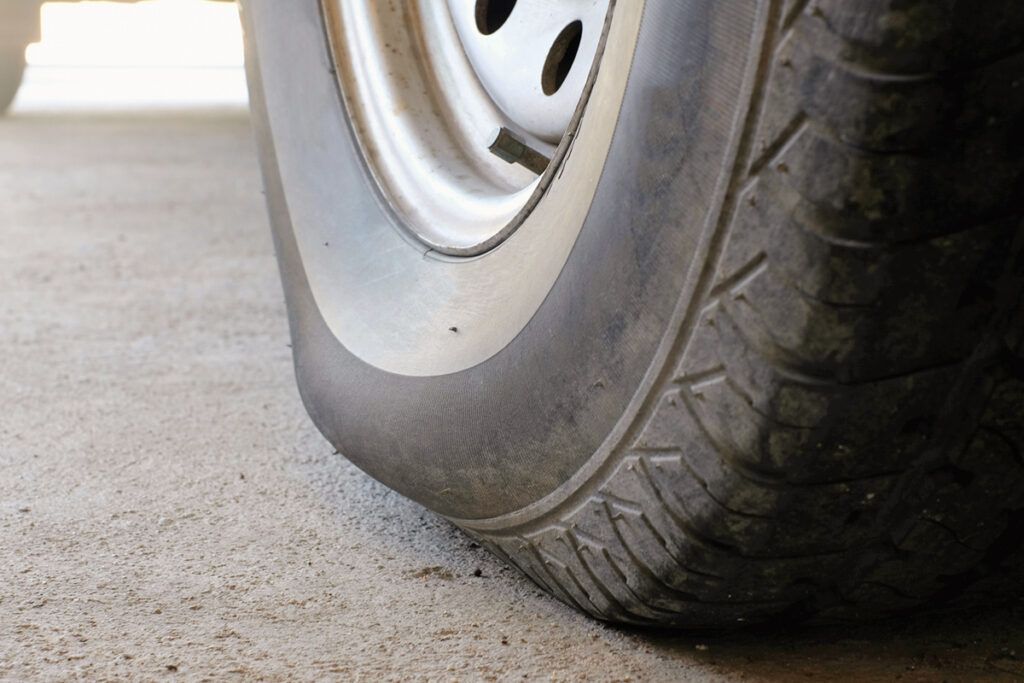
One thing you can and should do is properly maintain your tires, which are necessary for providing traction and stability. Over time, tires wear down and become safety hazards, or worse: According to the National Highway Traffic Safety Administration (NHTSA), 646 people died of tire-related crashes in 2023. 

Advertisement
Advertisement

The good news is that tires can be replaced, but the bad news is that a lot of people don’t know when to do so. Here are five signs it’s time to swap out those old tires for a new set.

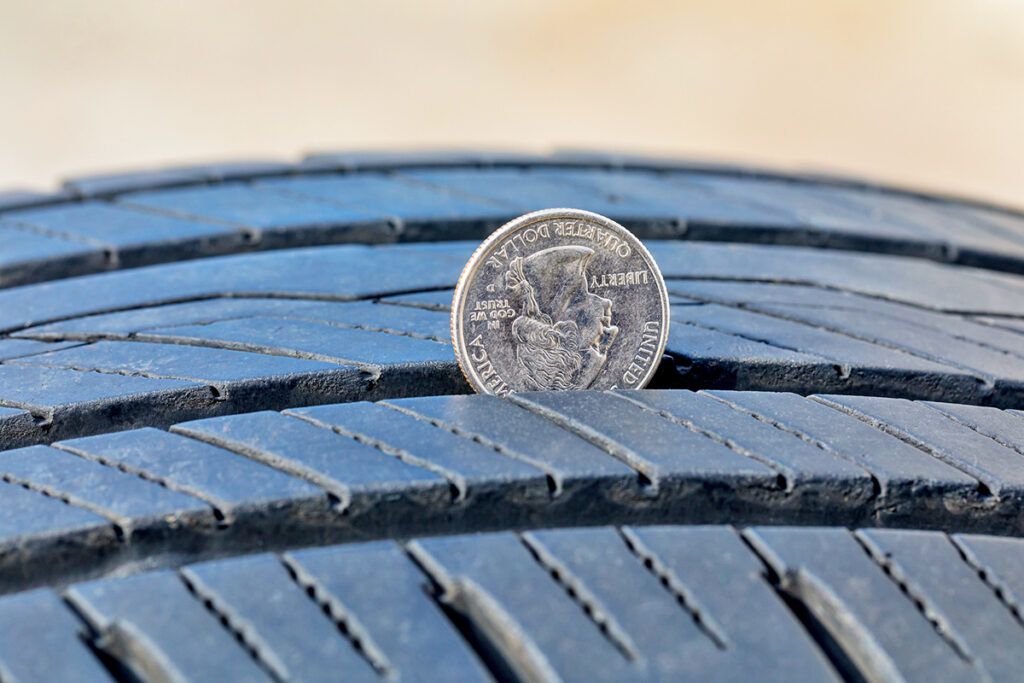
Quarter in a tire tread
Credit: © JJ Gouin/iStock

Poor Tread Depth

The patterns and grooves on a new tire are known as the tire tread, and they  provide traction on the road. But that tread wears down the more you drive, and in some cases it may end up completely smooth. The NHTSA recommends measuring tread depth at least once a month. New tires have a tread depth between 10/32 and 12/32 of an inch. Anything measuring around 4/32 of an inch is risky, and 2/32 of an inch or less is dangerous and below the legal limit.

Thankfully, there’s an easy way to measure tread depth using spare change. First, take a quarter and stick it into the tread with Washington’s scalp facing in toward the tire. The gap between his head and the edge of the quarter measures 4/32 of an inch, so if you see any open space, you know you’re teetering near dangerously low tread depth. Next, repeat the same test using a penny, which has 2/32 of an inch of space between the top of Lincoln’s head and the edge. If you see any space, you need to replace your tires ASAP.

Advertisement
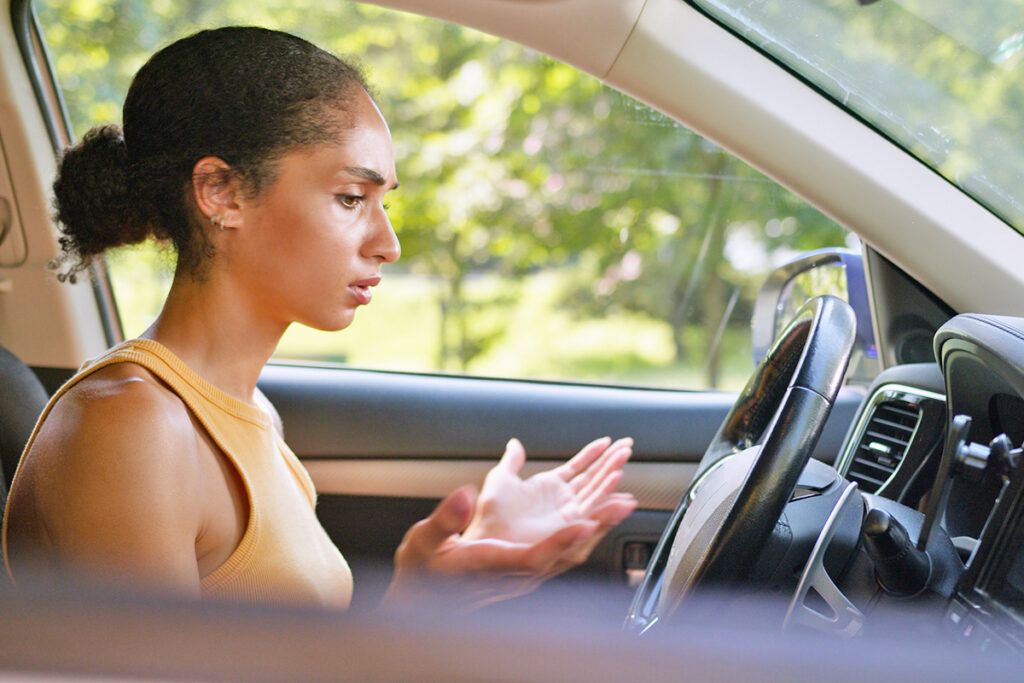
Person in car staring at steering wheel
Credit: © Yuliia Kaveshnikova/iStock

Excess Vibration

While there may be no damage visible to the naked eye, an excessive amount of vibration while you’re driving can be a sign of internal wear in the tire. It can also indicate a misshapen tire, uneven treads, or a variety of other issues — all of which warrant replacing the tire. Whatever the case may be, you’ll likely notice the vibration at higher speeds, so stay alert on the highway.

Recommended Articles

  • The Safety Rules for Candles You Probably Don’t Know

  • How Old Are the Apples in the Grocery Store?

  • How To Tell if You’re Brushing Your Teeth Too Hard

  • 5 Things Your Car Needs Before the First Freeze

Advertisement
Advertisement

Reader Favorites

  • Woman looking in fridge

    9 Foods You Should Toss ASAP if They’re Expired

  • Person eating salad

    7 Things a Chef Never Orders at a Restaurant

  • Cherry angioma

    Are the Tiny Red Dots on Your Skin Dangerous?

It may be difficult to determine which tire is at fault, but there are methods to narrow it down. If you feel more vibration coming from the steering wheel, the problem is likely emanating from one of the front two tires. But if you feel more vibration in the seat, the issue is probably coming from one of the rear tires. 

While it is possible to fix the issue by having a professional rotate and adjust your tires, sometimes the wear is too substantial to remedy. Also, even if it’s only one tire creating the issue, it’s recommended to replace the entire set. This ensures that all tires have the same amount of tread, which can prevent future issues from popping up.

Advertisement
Advertisement
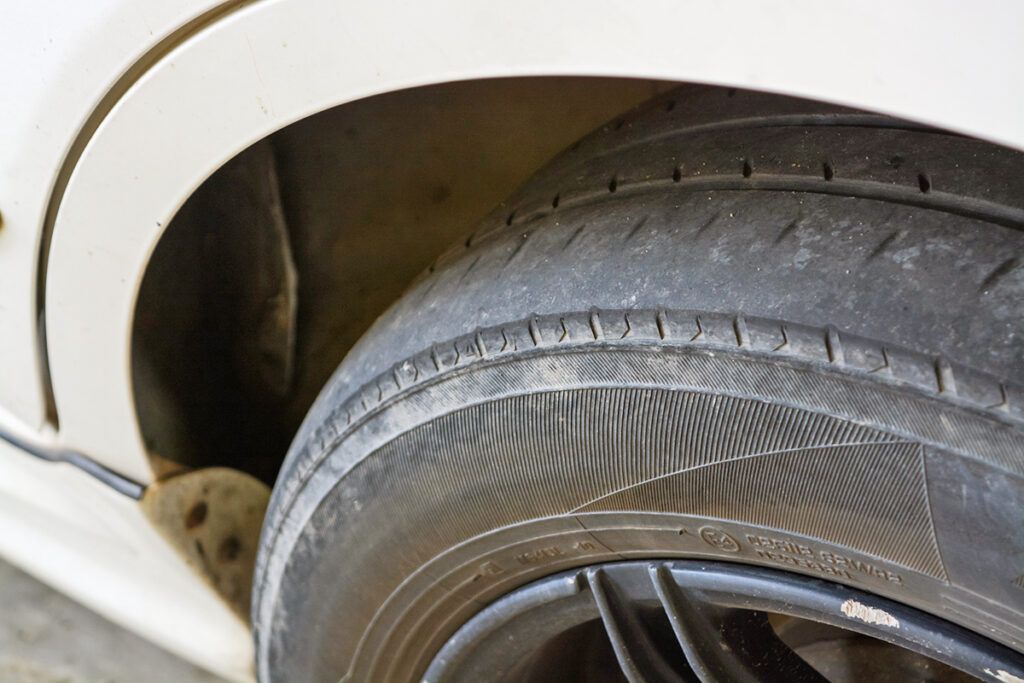
Closeup of a tire with worn treads
Credit: © Abu Hanifah/iStock

Uneven Wear

If you notice uneven tread wear on your tires, it may be due to improper installation. For instance, if the exterior half of the tire looks far more worn than the interior half (or vice versa), that’s one potential sign of poor alignment. Or if you notice that the middle part of the tire looks more worn down than the outer edges, that’s a sign of overinflation. These are just two examples, but whatever caused the issue, you should never drive on a tire with unevenly worn-down treads, as it could cause you to lose control on the road.

Advertisement
Advertisement
Bulge in a tire
Credit: © wachira aekwiraphong/iStock

Bubbles or Bulging

Visible bubbles or bulging are a surefire sign that the structural integrity of the tire has been compromised. These bulges usually form in the wake of a high-impact event — for example, hitting a large pothole, colliding with the curb, or driving too fast over a speed bump. Such events can damage the inner lining and cause leakage, which in turn leads to big bulges and the potential for the tire to pop. If you notice any of these bubbles beginning to form, swap out the tire for a new one ASAP.

Advertisement
Advertisement
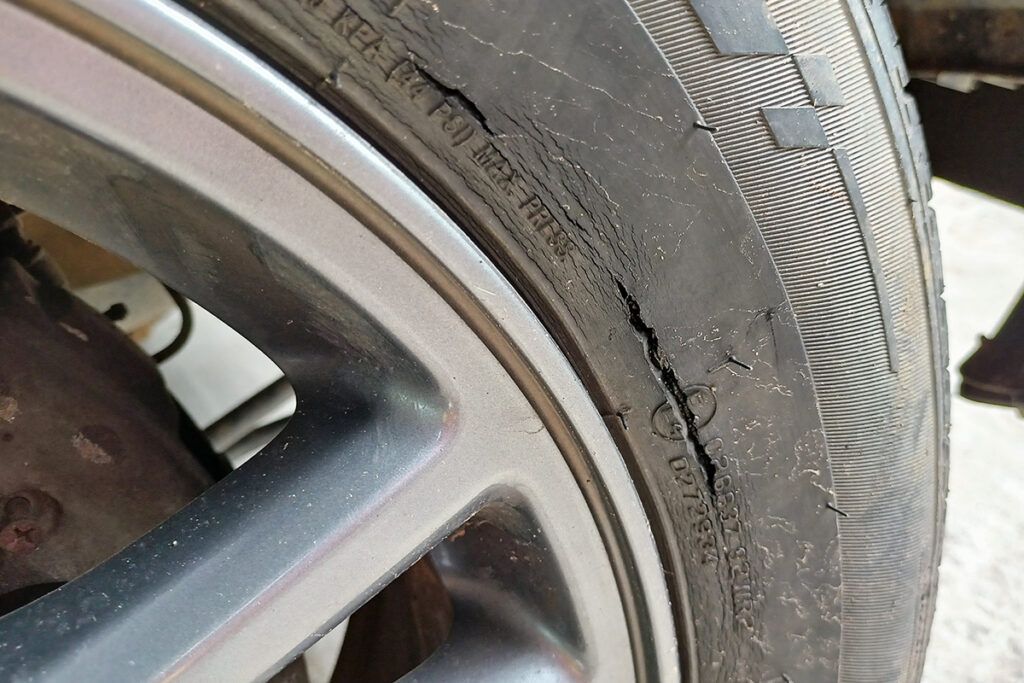
Cracks in a tire
Credit: © ใหม่ ยิ้มเหงา/iStock

Sidewall Cracks

Take a look at the side of your tires — do you notice any cracking, akin to an old leather chair that’s started to show its age? If so, the tires are likely quite old themselves, and it may be time to replace them. Cracking is an issue that arises from general wear and tear as opposed to a single traumatic event. It’s a sign that your tires have served you well for years, but also that it’s time to install a new set. Leaving the cracks as-is can lead to a blowout in the blink of an eye.

Advertisement
Advertisement

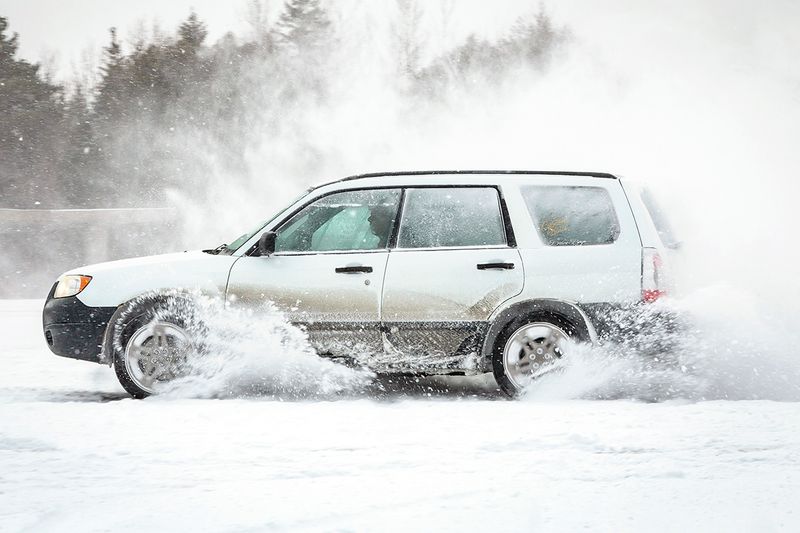
Featured Image Credit: © Ivan Pantic/iStock

More From Our Network

Better Report is part of Inbox Studio, an email-first media company. *Indicates a third-party property.
Go Retro With This 1960s Fashion Quiz

Quiz Daily

Go Retro With This 1960s Fashion Quiz

True or False: Are You a Master of U.S. Geography?

Travel Quiz

True or False: Are You a Master of U.S. Geography?

5 Reasons You Can Be Denied Boarding an Airplane

Daily Passport

5 Reasons You Can Be Denied Boarding an Airplane

What Did People Do Before Eyeglasses?

History Facts

What Did People Do Before Eyeglasses?

How To Use a Balloon To Clean Up Dust

House Outlook

How To Use a Balloon To Clean Up Dust

11 Shopping Hacks Costco Members Should Know

FinanceBuzz*

11 Shopping Hacks Costco Members Should Know

Share this article

  • Share to Facebook
  • Share to Twitter
  • Copy Url
  • Share to Email
Ali Eldridge

This article is for general informational purposes only.
Affiliate Disclaimer Medical Disclaimer Financial Disclaimer

Updated:
Posted In: Home
Hero Image Credit: Better Report
Advertisement

Related Articles

The Safety Rules for Candles You Probably Don’t Know

5 min read

9 Items in Your Basement You Should Toss Right Now

5 min read

5 Vegetables You Should Never Store in the Fridge

3 min read

Why a Flashing Check Engine Light Is Different From a Solid One

3 min read

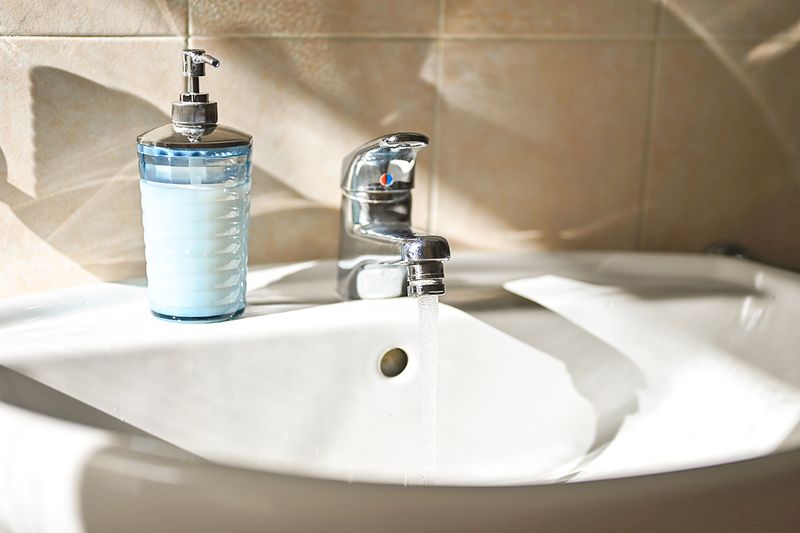
Why Does Your Sink Have a Tiny Hole?

3 min read
Advertisement

One Thing You Can Do Daily To Benefit Your Brain

Health | Updated: April 10, 2026
Kat Long
Author
Kat Long is a freelance science journalist in the Washington, D.C. area. Previously, she was the science editor at Mental Floss and a digital editor at National Geographic. She now writes the Arctic Archives newsletter on Substack. Kat spends her free time birdwatching, road-tripping to historical sites and perusing old manuscripts at libraries.
Woman napping on couch
Better Report

Daytime naps aren’t just for babies and cats. A brief snooze in the early afternoon has the power to boost your energy, improve your alertness, relax your mind, and brighten your outlook on life. Read on to discover more of the surprising perks of napping — and how to set yourself up to maximize the benefits.

Woman napping
Credit: © Ivana Cajina/Unsplash.com

What Is a Nap, Exactly?

“Napping is sleep, but in a shorter time and during the day rather than at night,” says Joseph Dzierzewski, Ph.D., senior vice president of research and scientific affairs at the National Sleep Foundation. You won’t cycle through all four stages of sleep in a 20- to 30-minute nap. Instead, you’ll experience only the first and second stages — in other words, light sleep — and wake up refreshed rather than groggy.

Advertisement
Advertisement

“The brain processes all sorts of information, pruning and cleaning out toxins from the mind” during sleep, Dzierzewski says. Good sleep is a biological necessity for health and well-being, and you can gain a lot of the benefits with a quick nap.

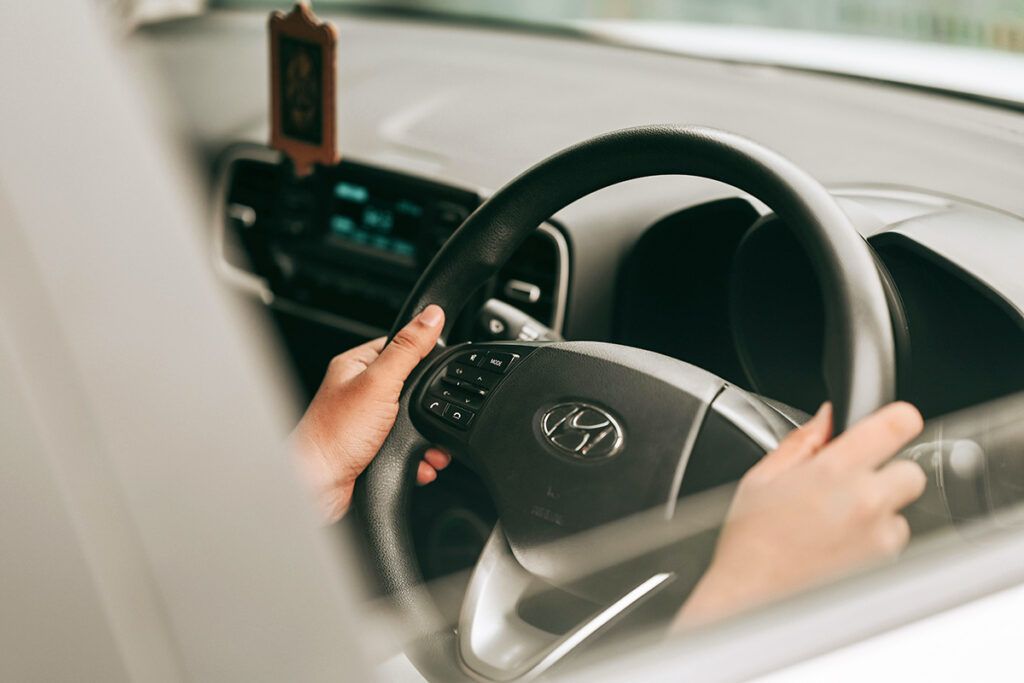
Hands on a steering wheel
Credit: © Sachu Zayn/Pexels.com

Benefits for Your Brain

If you learn something new and then nap on it, you’ll remember the information better. According to a 2018 study, when young adults spent a morning and afternoon studying, with either a break, a nap, or cramming in the middle, the nappers had the best recall of the information after one week. 

Recommended Articles

  • The Safety Rules for Candles You Probably Don’t Know

  • How Old Are the Apples in the Grocery Store?

  • How To Tell if You’re Brushing Your Teeth Too Hard

  • 5 Things Your Car Needs Before the First Freeze

Advertisement
Advertisement

Reader Favorites

  • Woman looking in fridge

    9 Foods You Should Toss ASAP if They’re Expired

  • Person eating salad

    7 Things a Chef Never Orders at a Restaurant

  • Cherry angioma

    Are the Tiny Red Dots on Your Skin Dangerous?

Napping can also improve your alertness and performance. These abilities are important for paying attention at work or while playing sports, but they become life-or-death matters when you’re behind the wheel. A 2023 study suggested that the risk of a car crash doubles when the driver has had less than five hours of sleep in the previous 24 hours. Napping can restore your sense of vigilance and improve reaction time, reducing your chance of an accident.

Older adults can gain additional cognitive benefits from naps as their sleep efficiency (the quality of sleep versus how much time is spent sleeping) declines with age. A 2016 study of older people found that those who took a post-lunch nap of between 30 and 90 minutes displayed better word recall and figure drawing — indicators of healthy cognition — than participants who took longer naps or didn’t nap at all.

Advertisement
Advertisement
Woman on laptop smiling
Credit: © miniseries/iStock

Mood and Energy Boost

Feeling cranky, irritable, or burned out? There’s a nap for that. Short naps can reset your mind and help you deal with stressful or annoying situations more productively. A post-lunch snooze may allow you to retain new skills, gain new perspectives, and boost creativity. Jade Wu, a sleep medicine specialist, told NPR that naps “[make] us less biased towards negative stimuli and more flexible in our thinking.”

Advertisement
Advertisement

Napping also reduces daytime sleepiness so you can tackle tasks after lunch and avoid the afternoon slump. The trick is to take a brief nap of no more than 30 minutes to avoid sleep inertia, that disoriented, confused feeling you may get when waking from a deep sleep.

Advertisement
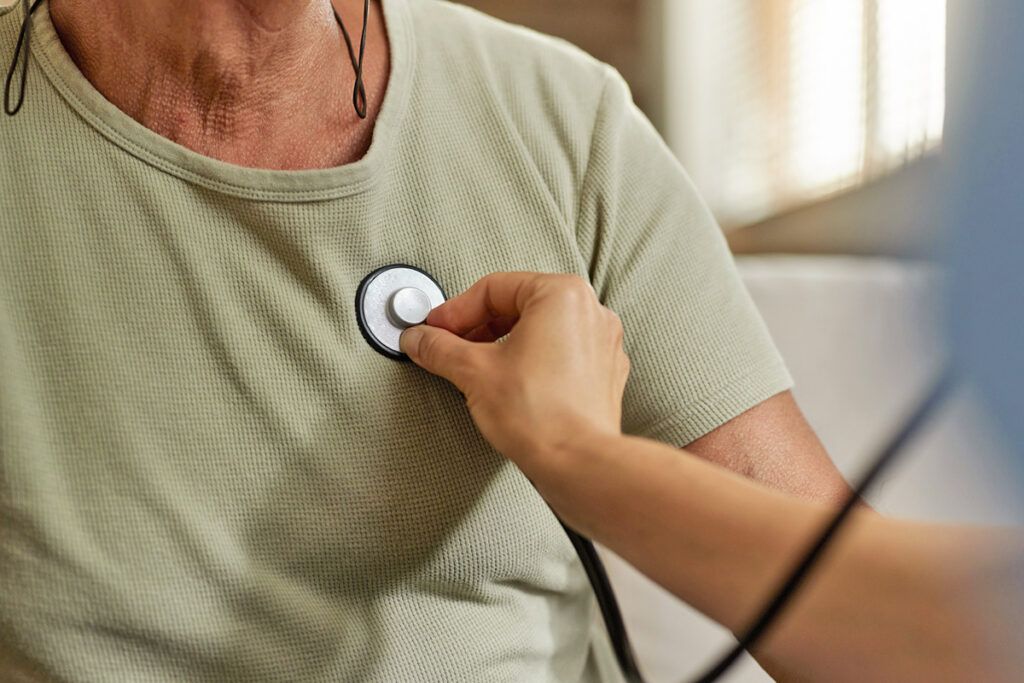
Stethoscope on chest
Credit: © skynesher/iStock

Help for Your Heart?

Some studies have shown that naps can offer a boost for your heart health, while others have found links between napping and risk factors for heart disease.

Advertisement
Advertisement

According to a 2019 study, naps may help lower blood pressure, a risk factor for cardiovascular disease. A midday siesta seems to decrease blood pressure levels at the same magnitude as other behavioral changes, like reducing salt and alcohol intake, and nearly as much as low-dose hypertension medications. 

However, a study published in 2022 found frequent daytime napping was associated with a higher risk of high blood pressure and stroke. Napping in itself is not dangerous, but frequent or extended naps can be symptoms of poor sleep at night. Chronic poor sleep can cause high blood pressure, diabetes, and other heart disease risk factors. 

Advertisement
Advertisement

If you find yourself nodding off at different times of the day, or feeling so tired that you can’t avoid a lengthy nap, it’s a sign to ask yourself why you’re feeling so sluggish. It may indicate an underlying health issue that should be evaluated, Dzierzewski says.

Woman napping peacefully on couch
Credit: © DjelicS/iStock

How To Take the Perfect Nap

The key thing to remember is that napping shouldn’t impact your regular nighttime sleep. The ideal nap should last 20 to 30 minutes and take place in the early afternoon, such as when you find yourself yawning after lunch. Find a place where you can recline and close the curtains to foster a dark, cool, and quiet environment. And don’t forget to set your alarm. “A small, intentional nap is a booster, not a replacement for your main sleep period at night,” Dzierzewski says.

Advertisement
Advertisement

Featured Image Credit: © urbazon/iStock

More From Our Network

Better Report is part of Inbox Studio, an email-first media company. *Indicates a third-party property.

Go Retro With This 1960s Fashion Quiz

Quiz Daily

Go Retro With This 1960s Fashion Quiz

True or False: Are You a Master of U.S. Geography?

Travel Quiz

True or False: Are You a Master of U.S. Geography?

5 Reasons You Can Be Denied Boarding an Airplane

Daily Passport

5 Reasons You Can Be Denied Boarding an Airplane

What Did People Do Before Eyeglasses?

History Facts

What Did People Do Before Eyeglasses?

How To Use a Balloon To Clean Up Dust

House Outlook

How To Use a Balloon To Clean Up Dust

11 Shopping Hacks Costco Members Should Know

FinanceBuzz*

11 Shopping Hacks Costco Members Should Know

Share this article

  • Share to Facebook
  • Share to Twitter
  • Copy Url
  • Share to Email
Kat Long
Writer

Kat Long is a freelance science journalist in the Washington, D.C. area. Previously, she was the science editor at Mental Floss and a digital editor at National Geographic. She now writes the Arctic Archives newsletter on Substack. Kat spends her free time birdwatching, road-tripping to historical sites and perusing old manuscripts at libraries.

This article is for general informational purposes only.
Affiliate Disclaimer Medical Disclaimer Financial Disclaimer

Updated: April 6, 2026
Posted In: Health
Hero Image Credit: Better Report
Advertisement

Related Articles

How Old Are the Apples in the Grocery Store?

4 min read

How To Tell if You’re Brushing Your Teeth Too Hard

4 min read

5 Things To Ask Your Doctor About the New Flu Shot

5 min read

Is Sourdough Actually Healthier Than Regular Bread?

7 min read

Do You Really Need a Bidet in Your Home?

4 min read
Advertisement

Why Are People Rubbing Banana Peels on Their Faces?

Ali Eldridge
Health | Updated: April 27, 2026
Woman running banana peel on face
Better Report

All featured products and deals are selected independently and objectively by the author. Better Report may receive a share of sales via affiliate links in content.

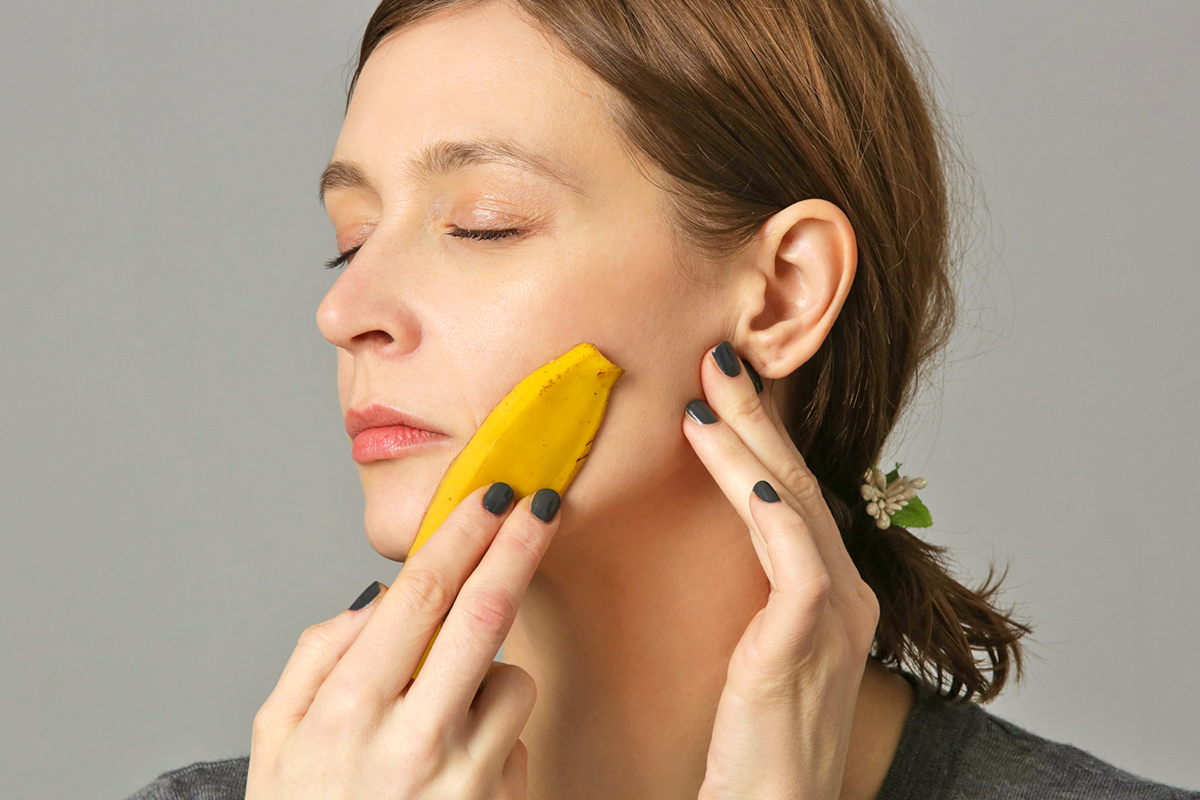
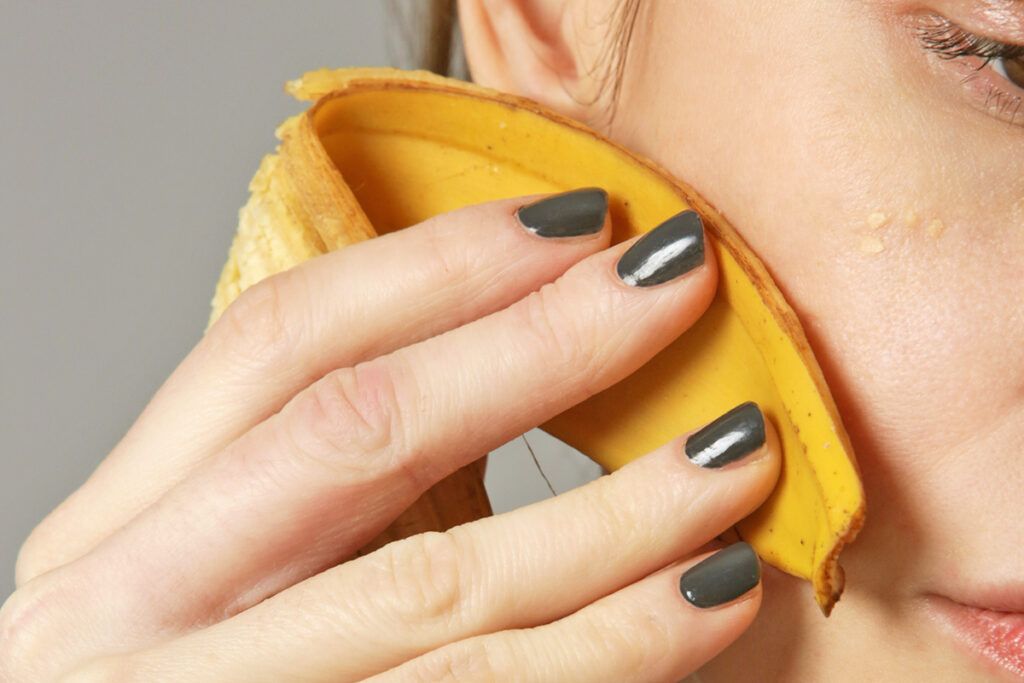
TikTok trends have done a lot for our skin care routines, and not all of it good. The social media platform has given rise to some truly bizarre fads, from rubbing your face with beef tallow to basking in the odor of a mayonnaise-based mask. The latest craze is sure to sound bananas — pun definitely intended, because that’s exactly what it is. People are rubbing the inside of banana peels on their faces, saying it works as well as Botox in eliminating fine lines and wrinkles. Many insist doing so can also reduce inflammation and remove dark circles. Before you buy a bundle of bananas or finally make use of the not-so-ripe-looking bunch sitting on your counter, here’s what you should know. 

Advertisement
Advertisement
Woman rubbing banana peel on face
Credit: © triocean/iStock

Are There Benefits to Rubbing Banana Peels on Your Face?

There are many reasons to incorporate bananas into your diet. They’re packed with vitamins C and A as well as other antioxidants that “[fight] oxidative stress from free radicals and environmental factors, including UV rays, pollutants, and chemicals,” says Dr. Ava Shamban, a board-certified dermatologist, clinician, researcher, and author.

Studies have shown the peel itself has even greater levels of antioxidants. However, “there is zero scientific evidence to suggest rubbing a banana peel on your face will help with any … skin conditions or signs of cellular aging,” Dr. Shamban says. She adds that the “banana or peel won’t penetrate the matrix or that skin barrier.”

The comparison to Botox is also faulty. Botox is derived from a toxin produced by bacterium Clostridium botulinum. The targeted injections weaken or paralyze facial muscles, temporarily reducing the appearance of fine lines and wrinkles in the forehead and around the mouth and eyes. Banana peels — no matter how often you rub them on your face — won’t replicate that. 

Recommended Articles

  • The Safety Rules for Candles You Probably Don’t Know

  • How Old Are the Apples in the Grocery Store?

  • How To Tell if You’re Brushing Your Teeth Too Hard

  • 5 Things Your Car Needs Before the First Freeze

Advertisement
Advertisement

Reader Favorites

  • Woman looking in fridge

    9 Foods You Should Toss ASAP if They’re Expired

  • Person eating salad

    7 Things a Chef Never Orders at a Restaurant

  • Cherry angioma

    Are the Tiny Red Dots on Your Skin Dangerous?

“Beauty creators on TikTok look for trends, views, and virality, not necessarily science-backed solutions,” Dr. Shamban says. “If banana peels could really rid us of our wrinkles similar to a neuromodulator [like Botox], Dole and Chiquita would already be star players in the aesthetics business.”

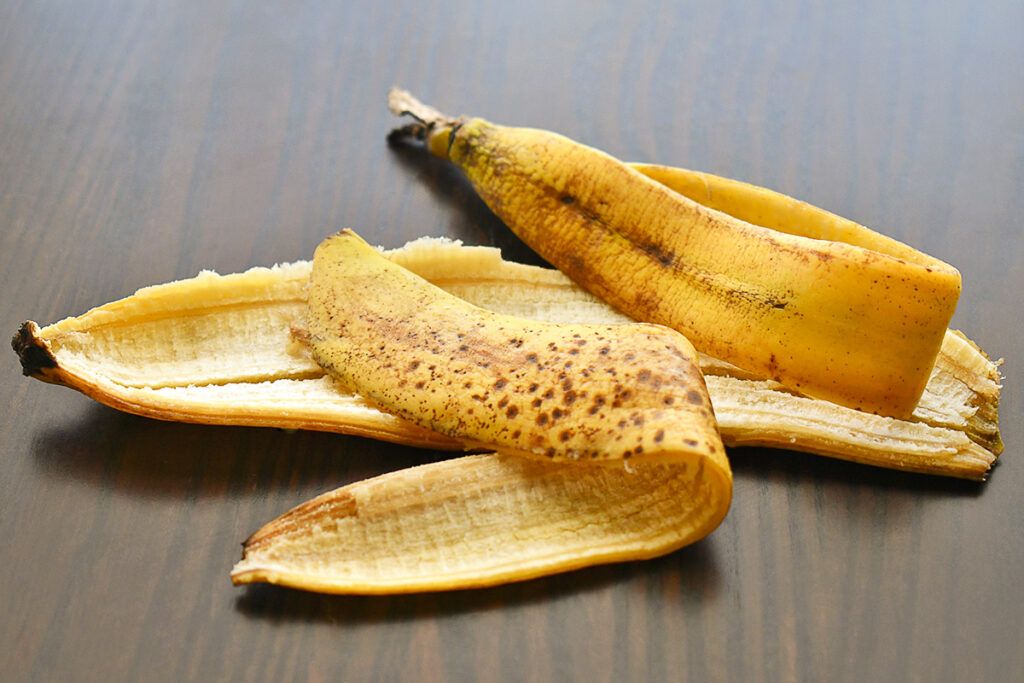
Banana peel on a table
Credit: © Maliflower73/iStock

Are There Risks to Rubbing Banana Peels on Your Face?

Fortunately for those creators, there aren’t any major risks to giving this trend a try. If you feel compelled to do so, just make sure you use a fresh peel — a decomposing peel can quickly attract fruit fly larvae and other insects. 

Advertisement
Advertisement

Be aware, too, that the peel itself can be rough, which can irritate your skin, as could any chemical pesticides on the peel. You also risk “atopic dermatitis and even increased breakouts,” Dr. Shamban warns. You should avoid this trend if you have an allergy to bananas or if your skin is highly sensitive. If you notice hives, swelling of the lips or tongue, or a burning sensation, these are all signs of an allergic reaction — stop right away and contact your health care provider. 

Advertisement

Ultimately, according to Dr. Shamban, it’s better to eat the banana and then incorporate products with antioxidants into your skin care routine. She recommends skin care products with ingredients such as “vitamin C (L-ascorbic acid), vitamin E (tocopherol), resveratrol, ferulic acid, and niacinamide, among others.” These products can be found everywhere from your local drugstore to your favorite luxury brands to your dermatologist’s office, and they’re “all backed by years of research, development, and clinical data.”

Advertisement
Advertisement

Featured Image Credit: triocean/iStock

More From Our Network

Better Report is part of Inbox Studio, an email-first media company. *Indicates a third-party property.

Go Retro With This 1960s Fashion Quiz

Quiz Daily

Go Retro With This 1960s Fashion Quiz

True or False: Are You a Master of U.S. Geography?

Travel Quiz

True or False: Are You a Master of U.S. Geography?

5 Reasons You Can Be Denied Boarding an Airplane

Daily Passport

5 Reasons You Can Be Denied Boarding an Airplane

What Did People Do Before Eyeglasses?

History Facts

What Did People Do Before Eyeglasses?

How To Use a Balloon To Clean Up Dust

House Outlook

How To Use a Balloon To Clean Up Dust

11 Shopping Hacks Costco Members Should Know

FinanceBuzz*

11 Shopping Hacks Costco Members Should Know

Share this article

  • Share to Facebook
  • Share to Twitter
  • Copy Url
  • Share to Email
Ali Eldridge

This article is for general informational purposes only.
Affiliate Disclaimer Medical Disclaimer Financial Disclaimer

Updated:
Posted In: Health
Hero Image Credit: Better Report
Advertisement

Related Articles

How Old Are the Apples in the Grocery Store?

4 min read

How To Tell if You’re Brushing Your Teeth Too Hard

4 min read

5 Things To Ask Your Doctor About the New Flu Shot

5 min read

Is Sourdough Actually Healthier Than Regular Bread?

7 min read

Do You Really Need a Bidet in Your Home?

4 min read
Advertisement

What Your Earlobes Can Tell You About Your Heart Health

Health | Updated: April 27, 2026
Kat Long
Author
Kat Long is a freelance science journalist in the Washington, D.C. area. Previously, she was the science editor at Mental Floss and a digital editor at National Geographic. She now writes the Arctic Archives newsletter on Substack. Kat spends her free time birdwatching, road-tripping to historical sites and perusing old manuscripts at libraries.
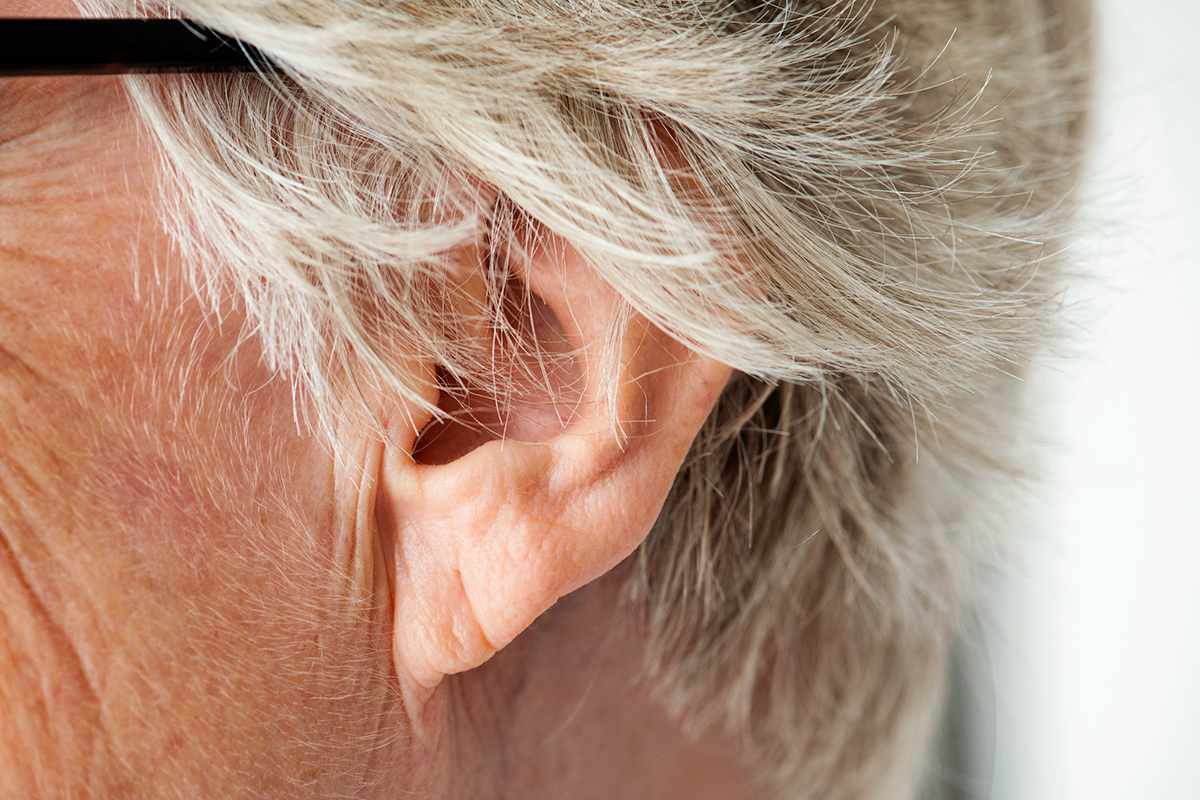
Close up of earlobe with crease
Better Report

There are some body parts you probably don’t think about that often, like your eyebrows, or your tonsils, or your earlobes. But when it comes to the latter, you may want to reconsider. If your lobes have a particular feature, they could reveal important clues about your health — specifically, your potential for heart problems.  

Advertisement
Advertisement
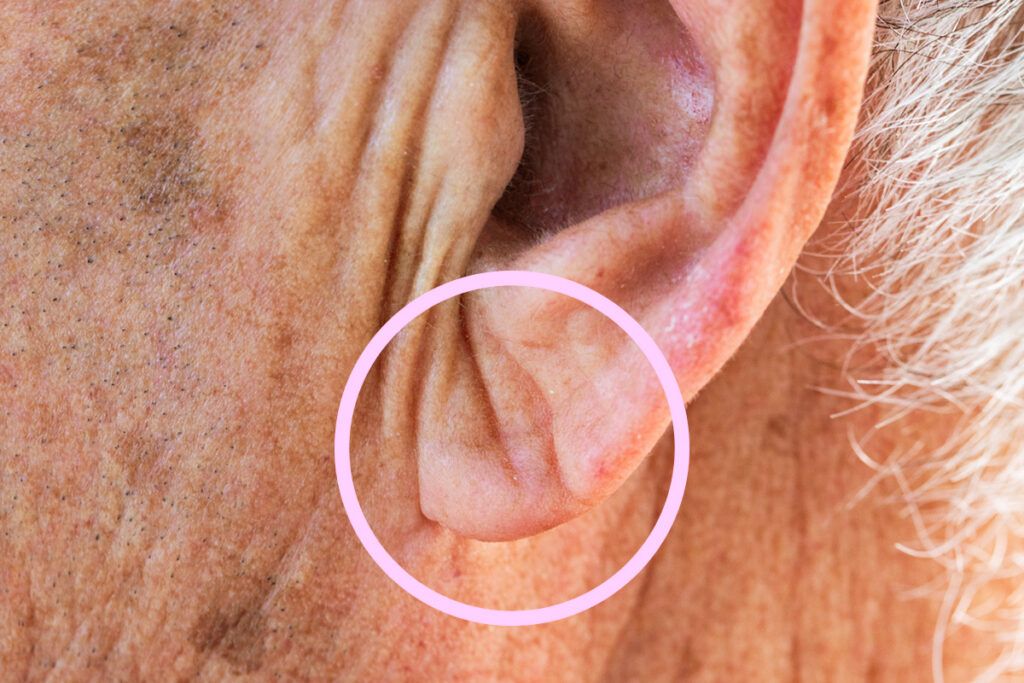
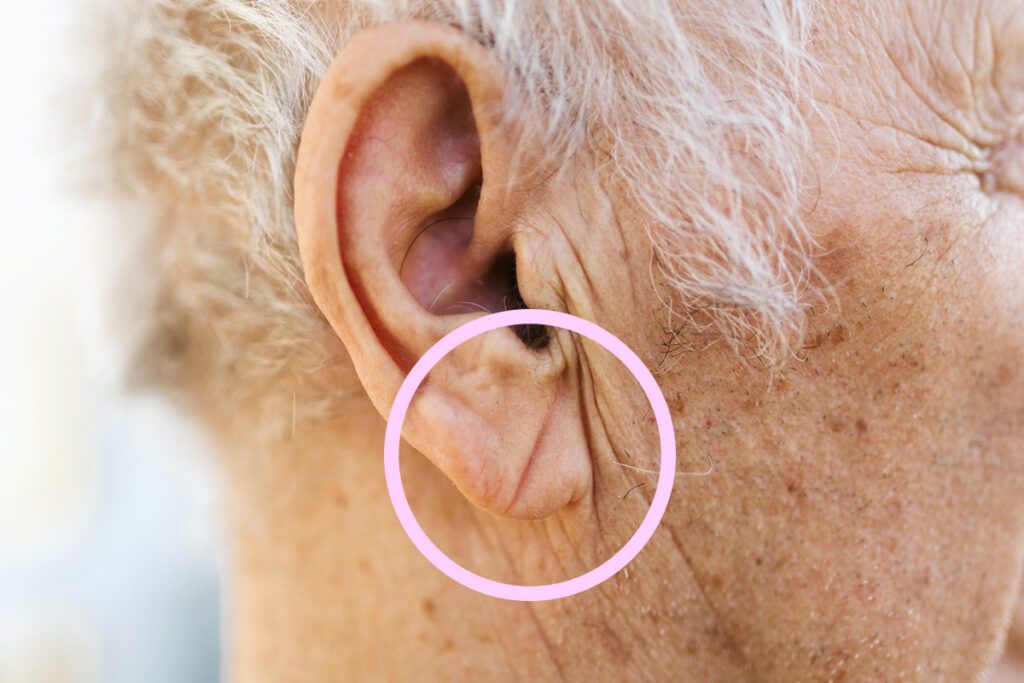
Close up of ear with crease circled
Credit:© simarik/iStock

A Telltale Crease

The feature to look for is a diagonal crease on the earlobes called Frank’s sign. It’s named for the pulmonologist who first described it in 1973 after noticing that his patients with symptoms of coronary artery disease also shared the telltale earlobe fold. 

Subsequent studies have shown a strong link between the presence of the crease and heart disease. An early investigation of the relationship found 47% of heart attack patients had Frank’s sign in one or both earlobes, compared to 30% of a control group, while a study conducted some 40 years later showed 43% of people with cardiovascular disease had Frank’s sign in both earlobes, compared to 29% of the controls.

Technically, Frank’s sign is a diagonal crease from the tragus, the little bump of cartilage above the earlobe, to the pinna, the lobe’s outer edge. Physicians categorize the crease into grades, from Grade 1 (a superficial wrinkle) to Grade 3 (a deep skin fold that covers the entire lobe). Some studies have found the crease’s grade, length, and other factors may relate to the severity of cardiovascular symptoms. 

Recommended Articles

  • The Safety Rules for Candles You Probably Don’t Know

  • How Old Are the Apples in the Grocery Store?

  • How To Tell if You’re Brushing Your Teeth Too Hard

  • 5 Things Your Car Needs Before the First Freeze

Advertisement
Advertisement

Reader Favorites

  • Woman looking in fridge

    9 Foods You Should Toss ASAP if They’re Expired

  • Person eating salad

    7 Things a Chef Never Orders at a Restaurant

  • Cherry angioma

    Are the Tiny Red Dots on Your Skin Dangerous?

Close up of ear with crease circled
Credit: © themacx/iStock

Let’s Be Frank

So, how does an obscure furrow in one’s earlobe often indicate disease in an entirely different body part? Researchers have a few theories. One is that the correlation comes from the fact that both the earlobe and heart are fed by terminal arteries; when blood flow in these arteries is obstructed, the resulting tissue damage shows up as Frank’s sign. Another theory suggests that the loss of elastic fibers in creased earlobes reflects a similar hardening in the heart’s tiniest blood vessels.

Advertisement
Advertisement

Researchers continue to debate whether Frank’s sign is a predictor of heart issues, a potential marker of heart disease in some but not all people, or a sign of premature biological aging. Frank’s sign and heart disease are both more common in older populations, so the crease may be more useful for pinpointing heart problems among people under 65.

Though its origins and significance are still a bit mysterious, Frank’s sign has been noticed for centuries. Sculpted busts of the Roman emperor Hadrian often reveal a deep crease in his outer ears, and Renaissance painters captured a crease in portraits of Cardinal Ludovico Trevisan and  members of the Medici family. Photos of General Robert E. Lee also show a fold across his right earlobe, and he frequently described heart disease-like symptoms in his letters.

Advertisement
Advertisement

Listen to Your Lobes

All of these studies show only correlations between Frank’s sign and cardiovascular conditions — they don’t prove that heart disease causes the crease, or vice versa. If you think you might sport Frank’s sign, researchers suggest mentioning it to your doctor and discussing your heart health. It also wouldn’t hurt to focus on preventing cardiovascular problems by eating a healthy diet, not smoking, getting enough quality sleep, and exercising regularly.

Advertisement
Advertisement

Featured Image Credit: © Rawpixel/iStock

More From Our Network

Better Report is part of Inbox Studio, an email-first media company. *Indicates a third-party property.
Go Retro With This 1960s Fashion Quiz

Quiz Daily

Go Retro With This 1960s Fashion Quiz

True or False: Are You a Master of U.S. Geography?

Travel Quiz

True or False: Are You a Master of U.S. Geography?

5 Reasons You Can Be Denied Boarding an Airplane

Daily Passport

5 Reasons You Can Be Denied Boarding an Airplane

What Did People Do Before Eyeglasses?

History Facts

What Did People Do Before Eyeglasses?

How To Use a Balloon To Clean Up Dust

House Outlook

How To Use a Balloon To Clean Up Dust

11 Shopping Hacks Costco Members Should Know

FinanceBuzz*

11 Shopping Hacks Costco Members Should Know

Share this article

  • Share to Facebook
  • Share to Twitter
  • Copy Url
  • Share to Email
Kat Long
Writer

Kat Long is a freelance science journalist in the Washington, D.C. area. Previously, she was the science editor at Mental Floss and a digital editor at National Geographic. She now writes the Arctic Archives newsletter on Substack. Kat spends her free time birdwatching, road-tripping to historical sites and perusing old manuscripts at libraries.

This article is for general informational purposes only.
Affiliate Disclaimer Medical Disclaimer Financial Disclaimer

Updated: April 6, 2026
Posted In: Health
Hero Image Credit: Better Report
Advertisement

Related Articles

How Old Are the Apples in the Grocery Store?

4 min read

How To Tell if You’re Brushing Your Teeth Too Hard

4 min read

5 Things To Ask Your Doctor About the New Flu Shot

5 min read

Is Sourdough Actually Healthier Than Regular Bread?

7 min read

Do You Really Need a Bidet in Your Home?

4 min read
Advertisement

Should You Freeze Your Credit?

Ali Eldridge
Wealth | Updated: April 10, 2026
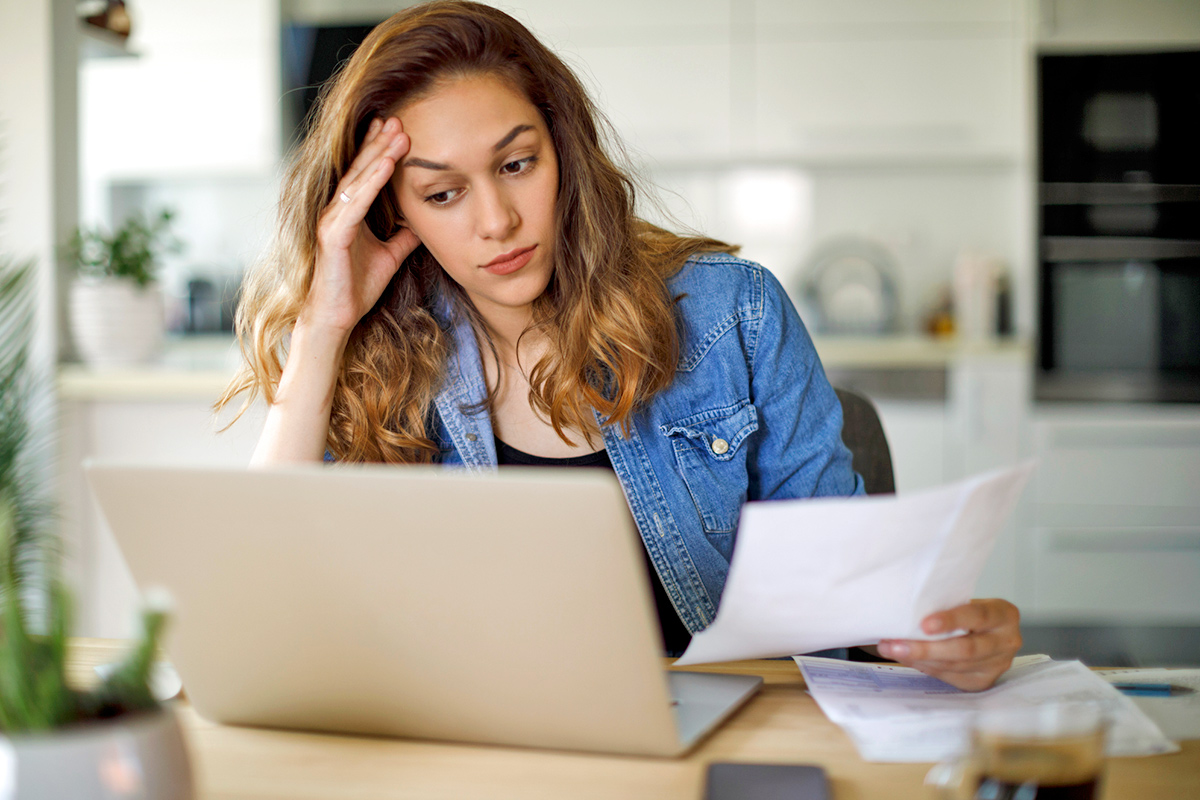
Woman with hand to forehead holding papers and looking at a computer
Better Report

Thanks to conflicts around the world — which bring an increased risk of cyberscams — experts have suggested keeping a close watch on your credit. 

Having a good credit score carries a lot of weight in the modern world. It makes it easier for you to buy a home, lease a car, and even get approved for an apartment. So, if you’ve received a notification that your information has been compromised, you’ve lost your purse or wallet with all of your personal identification, or you’ve started getting mail about offers you’ve never claimed, you’ll likely want to act fast and set up a credit freeze. Doing so protects you against potential fraud: Creditors will no longer have access to your credit report, thus making it more challenging for new accounts to be opened in your name. 

Advertisement
Advertisement

Freezing your credit is surprisingly easy to do, and best of all, it’s free. Here’s what you need to know.

Credit: © damircudic/iStock

When To Freeze Your Credit 

According to Joel Steele, entrepreneur and co-owner of Steele Financial Solutions, “there are mostly pros and minimal cons” to freezing your credit — but it’s important to know  when you should do so. 

Recommended Articles

  • The Safety Rules for Candles You Probably Don’t Know

  • How Old Are the Apples in the Grocery Store?

  • How To Tell if You’re Brushing Your Teeth Too Hard

  • 5 Things Your Car Needs Before the First Freeze

Advertisement
Advertisement

Reader Favorites

  • Woman looking in fridge

    9 Foods You Should Toss ASAP if They’re Expired

  • Person eating salad

    7 Things a Chef Never Orders at a Restaurant

  • Cherry angioma

    Are the Tiny Red Dots on Your Skin Dangerous?

Steele doesn’t recommend freezing your credit proactively, because if you’re trying to get a mortgage or take out a loan for a car, “you may shoot yourself in the foot if your credit is frozen,” he says. “That means no new credit can be issued to you.” And even though data breaches are frequent, “that doesn’t mean your data will be successfully accessed or used.” 

Instead, Steele suggests reviewing your accounts every week or two for suspicious activity. If you have one fraudulent charge on a credit card, you don’t need to freeze your credit; in that case, dispute the charge and get a new card. But you should definitely freeze your credit if you see signs of potential identity theft, such as “things coming to your email inbox or physical mailbox with your name, but someone else’s info or someone else’s name and your info,” Steele says. Other common signs include getting collection calls for accounts you didn’t open, and your credit report showing new credit cards you never applied for. 

Advertisement
Advertisement

In that case, Steele says, “a freeze is the best and quickest solution to prevent future damage.” 

Advertisement

How To Freeze Your Credit

If you want to freeze your credit, you’ll need to do so with each of the three major credit bureaus: Equifax, Experian, and TransUnion. The process is similar across all three, based on whether you want to freeze your credit online, by mail, or by phone.

Advertisement
Advertisement

Equifax

Online via their website
By phone: 1-888-378-4329
By mail to: Equifax Information Services LLC 
P.O. Box 105788 
Atlanta, GA 30348-5788 

Be sure to download their online forms and include the requested necessary information, such as proof of identity and proof of address.

Advertisement
Advertisement

Experian

Online via their website
By phone: 1-888-397-3742
By mail to: Experian Security Freeze
P.O. Box 9554
Allen, TX 75013

Advertisement
Advertisement

Per Experian.com, your written request needs to include:

  1. Your full name
  2. Social Security number
  3. Complete addresses for the past two years
  4. Date of birth
  5. A government issued identification card, such as a driver’s license
  6. Copy of a utility bill or bank statement
Advertisement
Advertisement

Transunion

Online via their website
By phone: 1-800-916-8800
By mail at: TransUnion
P.O. Box 160
Woodlyn, PA 19094

With your mail-in request, include photographic copies of one proof of identity and two proofs of your current address. Make sure the documents show your current name and aren’t expired. Anyone under the age of 18 will need an adult or guardian to do this for them, and active-duty service members can have an authorized representative complete the process.

Advertisement
Advertisement
Woman on the phone looking out the window
Credit: © April Story/iStock

When Does the Freeze Take Effect — And Can It Be Undone?

If you decide to freeze your credit by phone or online, it typically happens within an hour of you contacting the credit bureau. By mail, it can take about three business days. Managing your freeze online means you can monitor it and easily lift the freeze when needed. 

Advertisement
Advertisement

If you’re concerned about more fraud or identity theft than what you’ve already found, “don’t unfreeze [your credit] until you’ve gotten some answers on what happened, how deep [it ran], and what’s the chance it continues when you unfreeze,” Steele says. When you’re ready, making a phone call to the three credit bureaus or going into your online account can easily undo a freeze.

Advertisement
Man typing on computer
Credit: © Jana Murr/iStock

Alternatives to Freezing Your Credit

A credit freeze isn’t the only option if you’re concerned about fraud. One step you might want to take is to set up a fraud alert. This requires creditors to take extra steps to confirm your identity before issuing credit. You can set up a one-year alert, a seven-year alert, or an active-duty military fraud alert. The process is similar to freezing your credit, as you can request a fraud alert online, by phone, or by mail at Transunion, Experian, or Equifax. 

Advertisement
Advertisement

Credit locks are another option you can pursue if you’re worried about fraud. They often come with a small fee, however, as they’re typically part of a premium credit monitoring package. Experian CreditLock, for example, costs $24.99 per month, and it functions similar to a credit freeze but with features such as data exposure alerts, real-time alerts, and identity theft insurance. 

Man looking at paper in front of laptop
Credit: © DjelicS/iStock

How To Avoid Future Problems

Steele says the best way to avoid credit issues is by “being vigilant and monitoring your own accounts” on a routine basis, which he calls “your best defense.” That’s especially true in times of conflict, when cyberterrorists from other countries might be trying to get your information. He recommends looking out for any unusual credit card activity or unrecognizable charges, and checking your credit report activity a few times a year to “make sure you didn’t miss anything.”Transunion, Experian, or Equifax all allow you to check your credit score for free and monitor your credit report for updates. 

Advertisement
Advertisement

Featured Image Credit: © damircudic/iStock

More From Our Network

Better Report is part of Inbox Studio, an email-first media company. *Indicates a third-party property.

Go Retro With This 1960s Fashion Quiz

Quiz Daily

Go Retro With This 1960s Fashion Quiz

True or False: Are You a Master of U.S. Geography?

Travel Quiz

True or False: Are You a Master of U.S. Geography?

5 Reasons You Can Be Denied Boarding an Airplane

Daily Passport

5 Reasons You Can Be Denied Boarding an Airplane

What Did People Do Before Eyeglasses?

History Facts

What Did People Do Before Eyeglasses?

How To Use a Balloon To Clean Up Dust

House Outlook

How To Use a Balloon To Clean Up Dust

11 Shopping Hacks Costco Members Should Know

FinanceBuzz*

11 Shopping Hacks Costco Members Should Know

Share this article

  • Share to Facebook
  • Share to Twitter
  • Copy Url
  • Share to Email
Ali Eldridge

This article is for general informational purposes only.
Affiliate Disclaimer Medical Disclaimer Financial Disclaimer

Updated:
Posted In: Wealth
Hero Image Credit: Better Report
Advertisement

Related Articles

5 Things Your Car Needs Before the First Freeze

4 min read

6 Amazon Prime Day Hacks

6 min read

Is It Actually Better To Lease a Car?

9 min read

7 Free MIT Classes You Can Experience From Home

4 min read

The Bedroom Color That Adds $2,000 to Your Home Value

3 min read
Advertisement

How To Safely Dispose of Your Leftover Prescription Medications

Home | Updated: April 8, 2026
Michele Debczak
Author
Michele Debczak is a writer and editor based in Brooklyn, New York. She appears in seasons four through six of History Channel's “The Food That Built America,” and her work has been featured in Mental Floss, Smithsonian Magazine, Eater, and Vice.
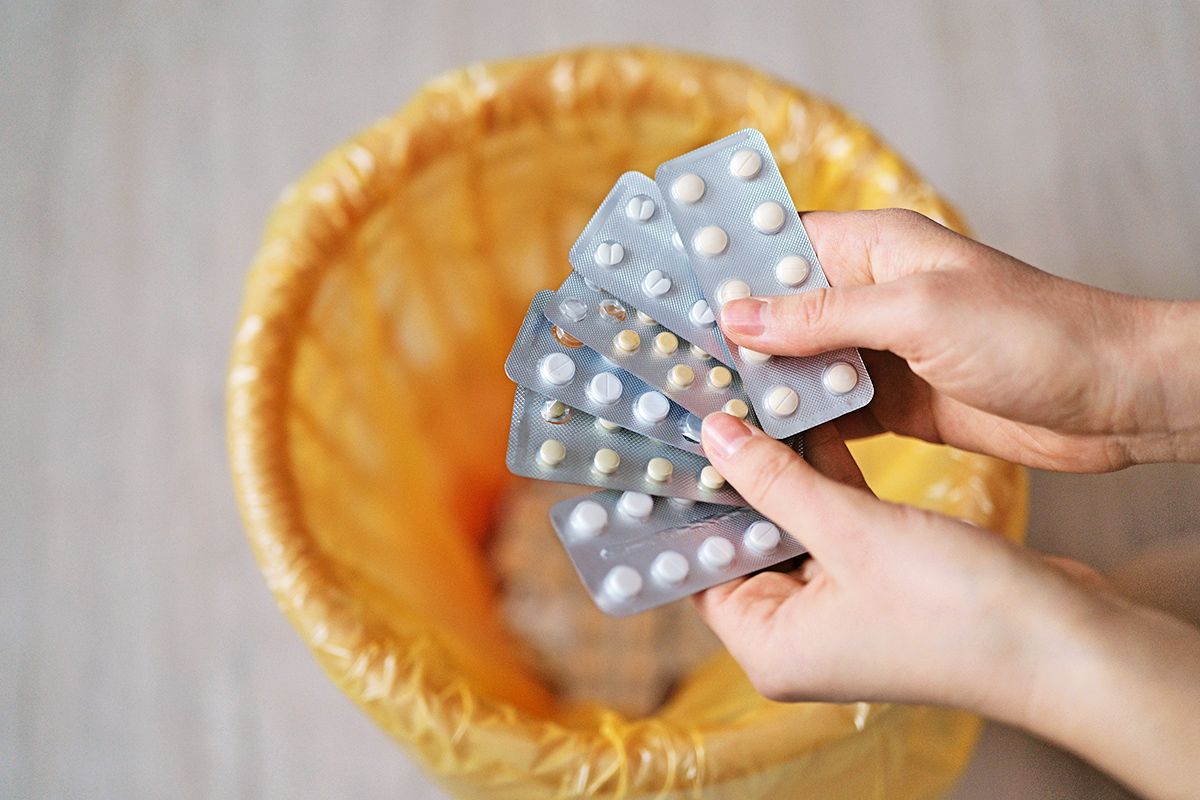
Person holding medication over trash
Better Report

Most prescription medications come with clear instructions for how to take them safely. Guidance on what to do with the medicine you didn’t take, however, is often harder to track down.

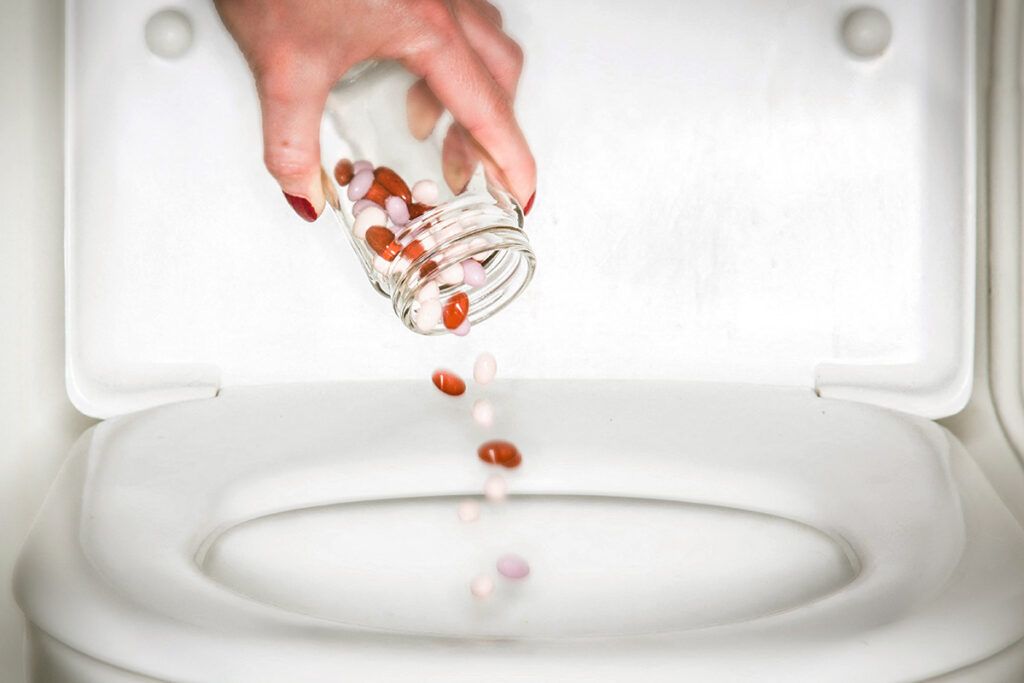
If you were prescribed more pills than you needed, you may be tempted to toss out the excess with your regular trash or flush them down the toilet. But doing so without taking the right precautions poses a few risks — both to the environment and to any people who might come across them.

Advertisement
Advertisement

Luckily, getting rid of your leftover prescription medication is a straightforward process once you have the right intel. Ahead of the U.S. Drug Enforcement Administration (DEA)’s National Prescription Drug Take Back Day on April 25, here are some tips to follow for safe, responsible disposal. 

Credit: Steve/stock.adobe.com

Where To Take Your Unwanted Prescription Meds

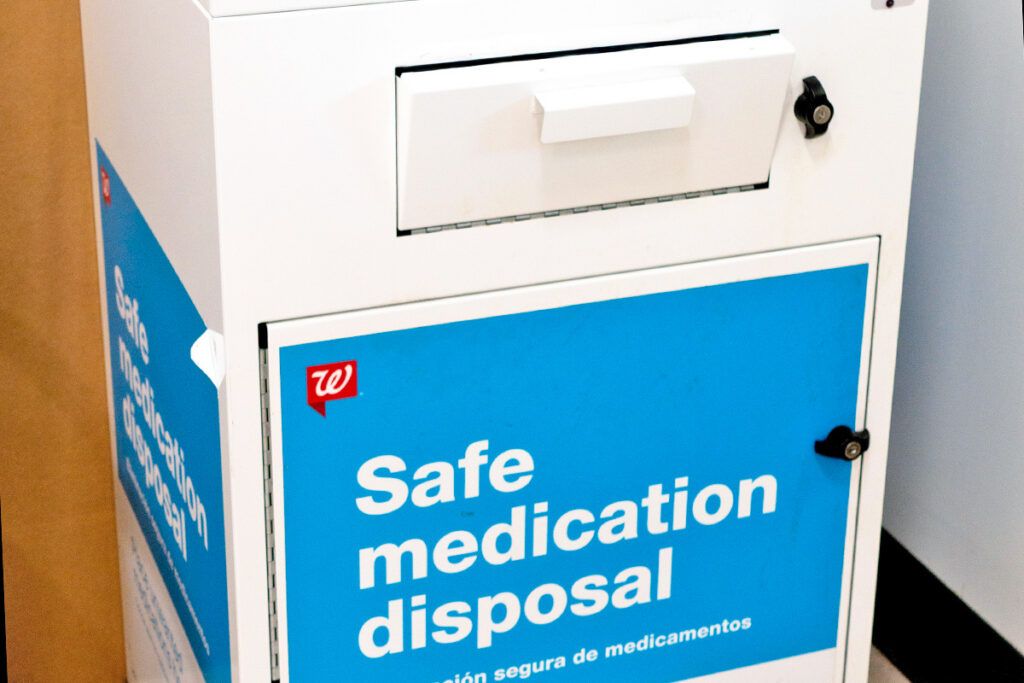
The safest thing to do with medications you no longer need is to drop them off at a drug take-back location. Many pharmacies, including Walgreens and CVS, have permanent medication disposal kiosks where you can leave prescription and over-the-counter medicine. This isn’t just for customer convenience; unused medications are more likely to be abused, and anonymous drop-off locations are a simple way to mitigate the problem. The National Association of Boards of Pharmacy (NABP) has an online tool that allows you to look up the closest kiosk to you by entering your ZIP code.

Recommended Articles

  • The Safety Rules for Candles You Probably Don’t Know

  • How Old Are the Apples in the Grocery Store?

  • How To Tell if You’re Brushing Your Teeth Too Hard

  • 5 Things Your Car Needs Before the First Freeze

Advertisement
Advertisement

Reader Favorites

  • Woman looking in fridge

    9 Foods You Should Toss ASAP if They’re Expired

  • Person eating salad

    7 Things a Chef Never Orders at a Restaurant

  • Cherry angioma

    Are the Tiny Red Dots on Your Skin Dangerous?

If you don’t see any spots in your neighborhood, you may be in luck closer to the next National Prescription Drug Take Back Day. Twice a year, the DEA sponsors drug collection events in communities nationwide. You can see if a collection site is popping up near you using the DEA’s locator tool — and if you miss April’s event, the next one will be held in October.

If dropping off your unused drugs in person isn’t the most convenient option for you, you can opt to mail them instead. Some pharmacies distribute prepaid drug mail-back envelopes for free, and you can also purchase them online. Once you have yours, all you have to do is slip the bottle of medication into the packet, seal it up, and mail it off to be destroyed. 

Advertisement
Advertisement
Credit: © Phanie – Sipa Press/ Alamy

How To Safely Dispose of Leftover Drugs at Home

Depending on the type of medication you’re dealing with, you may be able to safely dispose of some drugs at home. 

Advertisement
Advertisement

Check the label on the bottle or the leaflet your medication came with to see if the contents are good to flush. You can also check for its name on the FDA’s flush list. According to the administration, the chemicals in these drugs present a negligible threat to the environment when flushed down the drain (and that threat is outweighed by the risk they pose to people who might otherwise get ahold of them). If you don’t see your medicine on the list, however, it may pose a greater environmental risk and should be kept away from the water supply.

Advertisement

Drugs that aren’t safe to flush can be thrown away, but doing so requires some extra work. First, remove them from their original container and add them to something you can seal, like a plastic storage bag. Mix them up with dirt, coffee grounds, or some other material that will conceal them and make them undesirable to any animals or children going through the trash. Finally, seal up the bag or container before tossing it in with your regular garbage, and redact your information on the pill bottle before putting it in your recycling. Once that’s done, cleaning out the rest of your medicine cabinet will seem easier in comparison.

Advertisement
Advertisement

Featured Image Credit: © sementsova321/stock.adobe.com

More From Our Network

Better Report is part of Inbox Studio, an email-first media company. *Indicates a third-party property.

Go Retro With This 1960s Fashion Quiz

Quiz Daily

Go Retro With This 1960s Fashion Quiz

True or False: Are You a Master of U.S. Geography?

Travel Quiz

True or False: Are You a Master of U.S. Geography?

5 Reasons You Can Be Denied Boarding an Airplane

Daily Passport

5 Reasons You Can Be Denied Boarding an Airplane

What Did People Do Before Eyeglasses?

History Facts

What Did People Do Before Eyeglasses?

How To Use a Balloon To Clean Up Dust

House Outlook

How To Use a Balloon To Clean Up Dust

11 Shopping Hacks Costco Members Should Know

FinanceBuzz*

11 Shopping Hacks Costco Members Should Know

Share this article

  • Share to Facebook
  • Share to Twitter
  • Copy Url
  • Share to Email
Michele Debczak
Writer

Michele Debczak is a writer and editor based in Brooklyn, New York. She appears in seasons four through six of History Channel's “The Food That Built America,” and her work has been featured in Mental Floss, Smithsonian Magazine, Eater, and Vice.

This article is for general informational purposes only.
Affiliate Disclaimer Medical Disclaimer Financial Disclaimer
Updated: April 3, 2026
Posted In: Home
Hero Image Credit: Better Report
Advertisement

Related Articles

The Safety Rules for Candles You Probably Don’t Know

5 min read

9 Items in Your Basement You Should Toss Right Now

5 min read

5 Vegetables You Should Never Store in the Fridge

3 min read

Why a Flashing Check Engine Light Is Different From a Solid One

3 min read

Why Does Your Sink Have a Tiny Hole?

3 min read
Advertisement

Why Is Everyone Talking About Fiber?

Ali Eldridge
Health | Updated: April 8, 2026
Person putting lid on a jar of grains
Better Report

Fiber has become a nutrition buzzword lately, popping up everywhere from morning talk shows to grocery store labels. You’ve likely heard that fiber is good for you — but what exactly is it, and why does it matter? 

Dietary fiber, found in plant-based foods, plays a key role in digestive health. Beyond that, it supports overall wellness and may help reduce the risk of certain chronic diseases. Despite its importance, however, the American Society for Nutrition estimates that only 7% of adults meet daily fiber recommendations, leaving plenty of room for improvement. Here’s what you need to know about this essential nutrient and how to incorporate more of it into your diet.

Advertisement
Advertisement
Person holding jar of nuts
Credit: © fcafotodigital/iStock

Why Is Fiber Important?

Dietary fiber is a type of carbohydrate found in the indigestible parts of plants. Unlike other nutrients, such as fats and proteins, fiber cannot be broken down or absorbed by the human body. Instead, it moves through the digestive tract, supporting several key functions along the way.

Recommended Articles

  • The Safety Rules for Candles You Probably Don’t Know

  • How Old Are the Apples in the Grocery Store?

  • How To Tell if You’re Brushing Your Teeth Too Hard

  • 5 Things Your Car Needs Before the First Freeze

Advertisement
Advertisement

Reader Favorites

  • Woman looking in fridge

    9 Foods You Should Toss ASAP if They’re Expired

  • Person eating salad

    7 Things a Chef Never Orders at a Restaurant

  • Cherry angioma

    Are the Tiny Red Dots on Your Skin Dangerous?

“[Fiber] aids in satiety because it adds bulk to your food without adding calories, can help reduce cholesterol, slows the spike of blood sugar from eating, and promotes gut health by providing food for your healthy gut bacteria,” Devon Kroesche, a registered dietitian nutritionist who specializes in women’s health, explains. Getting more fiber is also linked to overall longevity, including a decreased risk of heart disease and type 2 diabetes, according to the Mayo Clinic.

Person scooping oats into a bowl
Credit: © Arx0nt/iStock

What Are Some High-Fiber Foods?

There are two main types of dietary fiber: soluble and insoluble. Soluble fiber dissolves in water, forming a gel-like material that slows digestion. This can lower cholesterol and stabilize blood sugar levels. Kroesche recommends oats, bananas, and sweet potatoes as good sources of soluble fiber; peas, beans, apples, citrus fruits, and carrots are also excellent options.

Advertisement
Advertisement

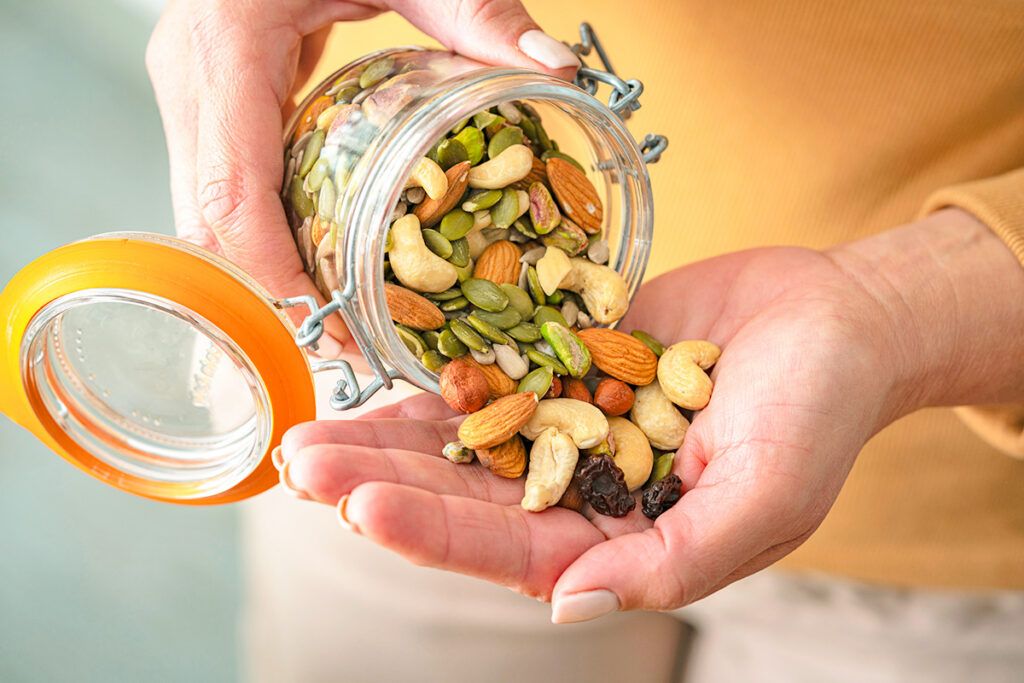
Insoluble fiber, as its name suggests, does not dissolve in water. It helps move nutrients through the digestive system and adds bulk to stool, which can ease constipation. To increase your intake, focus on whole grains, nuts, seeds, and whole vegetables with skins.

It’s worth noting that many high-fiber plant foods contain both types of fiber, so variety is key to meeting your daily needs.

Advertisement
Advertisement
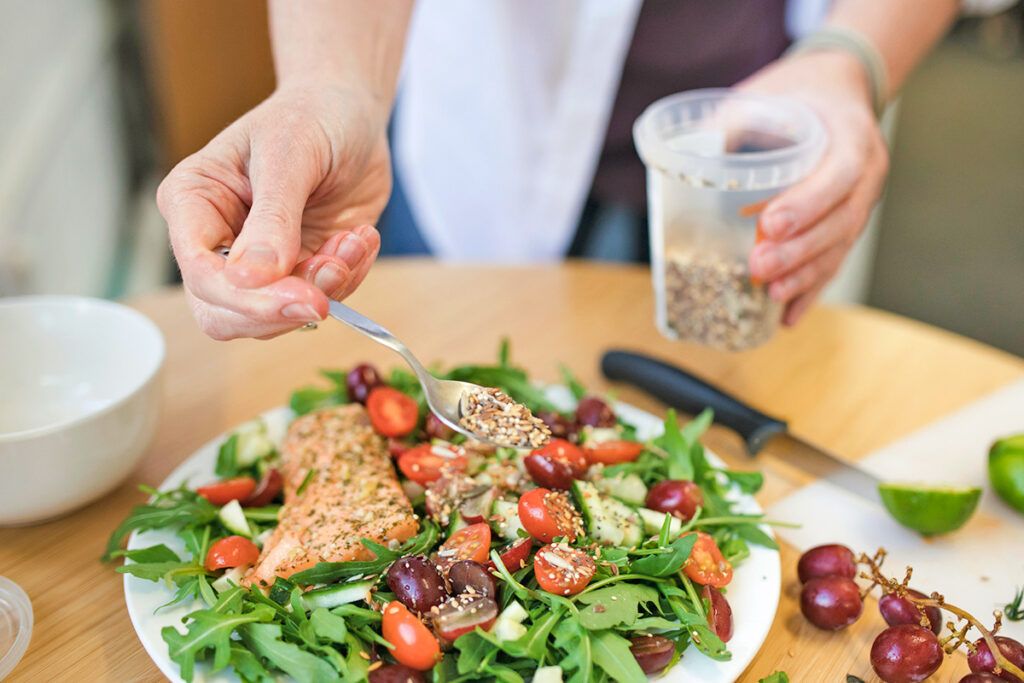
Person adding seeds to salad
Credit: © SolStock/iStock

What Are Some Easy Ways To Increase Fiber Intake?

Adding more fiber to your diet doesn’t have to be complicated. Amanda Callenberg, a London-based registered nutritional therapist specializing in gut health and IBS, offers several simple strategies: “Add an extra serving of vegetables to meals, include beans or lentils, swap to whole grains, and add nuts or seeds where you can.”

Advertisement
Advertisement

Why prioritize whole grains? Refined or processed foods are lower in fiber because the bran (the outer portion) is removed from the grain. This strips away nutrients, including fiber. Choosing whole-grain pastas, cereals, and breads allows you to retain those benefits without sacrificing taste. Similarly, removing skin or pulp from fruits and vegetables reduces fiber levels, so opt for whole foods whenever possible.

Advertisement
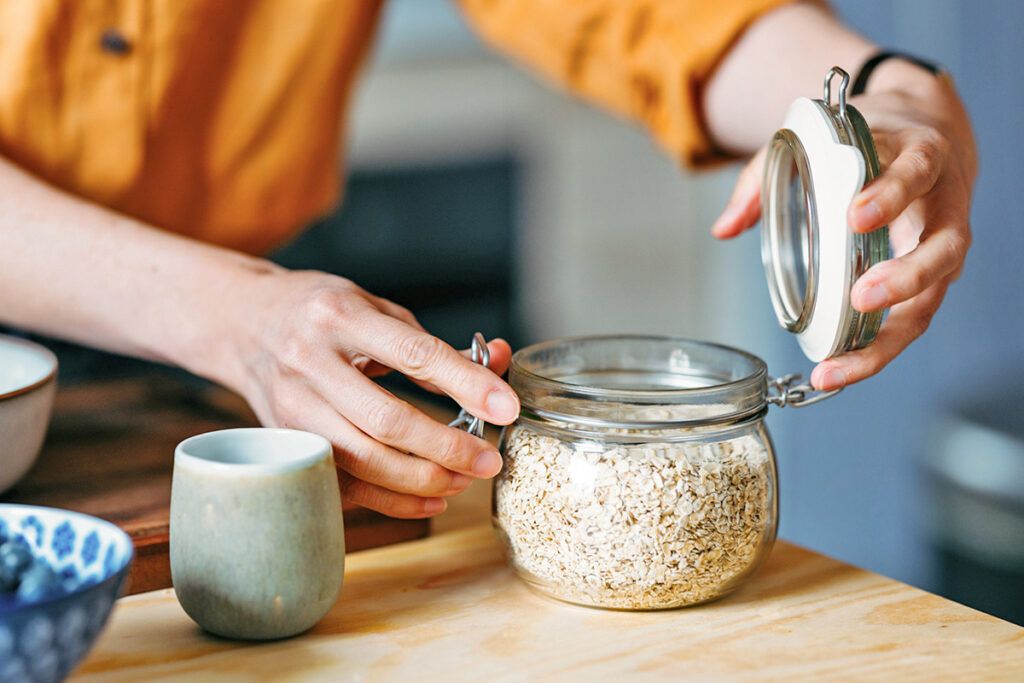
Person opening jar of oats
Credit: © FreshSplash/iStock

How Much Daily Fiber Do We Really Need?

A recent social media trend known as “fibermaxxing” encourages a very high daily fiber intake — but is there a limit? 

Advertisement
Advertisement

“There can be a misconception that more is always better when it comes to fiber,” Kroesche says. “In reality, we want just the right amount of fiber — not more or less.” Consuming too much fiber, she warns, can cause digestive discomfort or more serious issues, such as digestive tract blockages.

While there isn’t a strict upper limit to how much fiber you can consume, the Mayo Clinic recommends a daily goal of 25 grams of dietary fiber for women and 38 grams for men. As with all aspects of nutrition, these goals should be tailored to your health, including any current digestive issues, your age, and your activity level. Kroesche also recommends gradually increasing your daily intake by about 5 grams per week. “Your gut is a muscle and may need some time to adapt to a higher-fiber diet to prevent gas and bloating,” she says. 

Advertisement
Advertisement
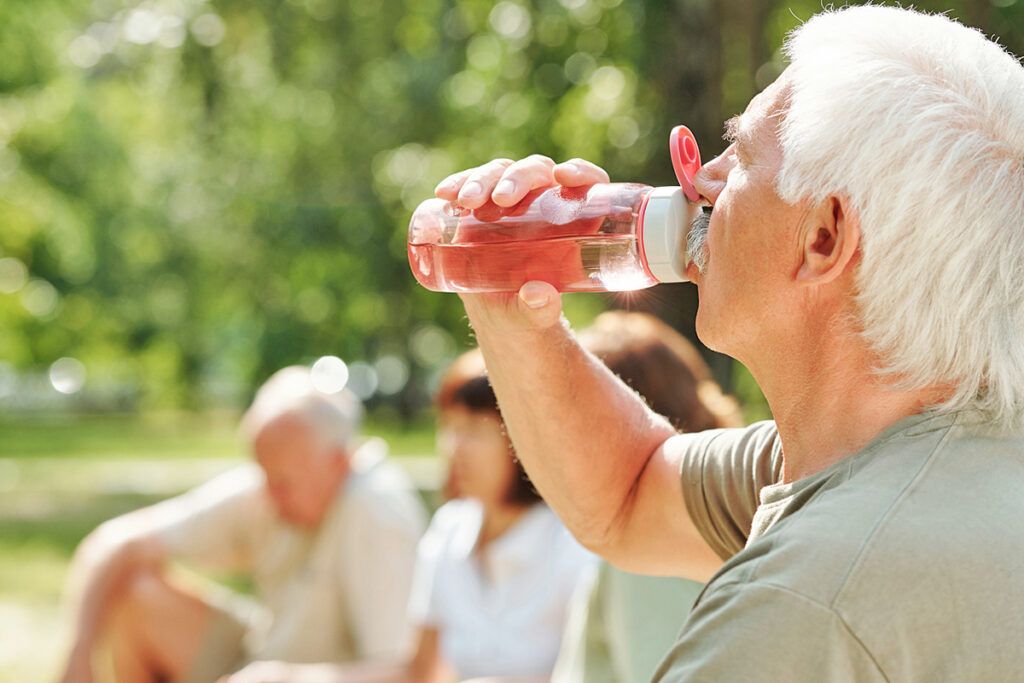
Older man drinking water
Credit: © Pressmaster/iStock

Do Older Adults Need To Think About Fiber Differently?

Fiber is important at all stages of life, and according to Callenberg, “meeting those needs can become more challenging with age, as appetite and activity levels often decrease.” Other challenges older adults face include reduced stomach acid and slowed digestion, which may affect how well fiber is tolerated.

Advertisement
Advertisement

To reduce fiber-related digestive issues, focus on a consistent intake spread throughout the day and drink plenty of water to prevent blockages. Hydration and fiber efficacy go hand in hand.

Fiber needs also decrease slightly with age. The Mayo Clinic recommends a daily intake of 21 grams for women over 50 and 30 grams for men over 50. Meeting these targets — without overdoing it — can help you maintain digestive system balance.

Advertisement
Advertisement
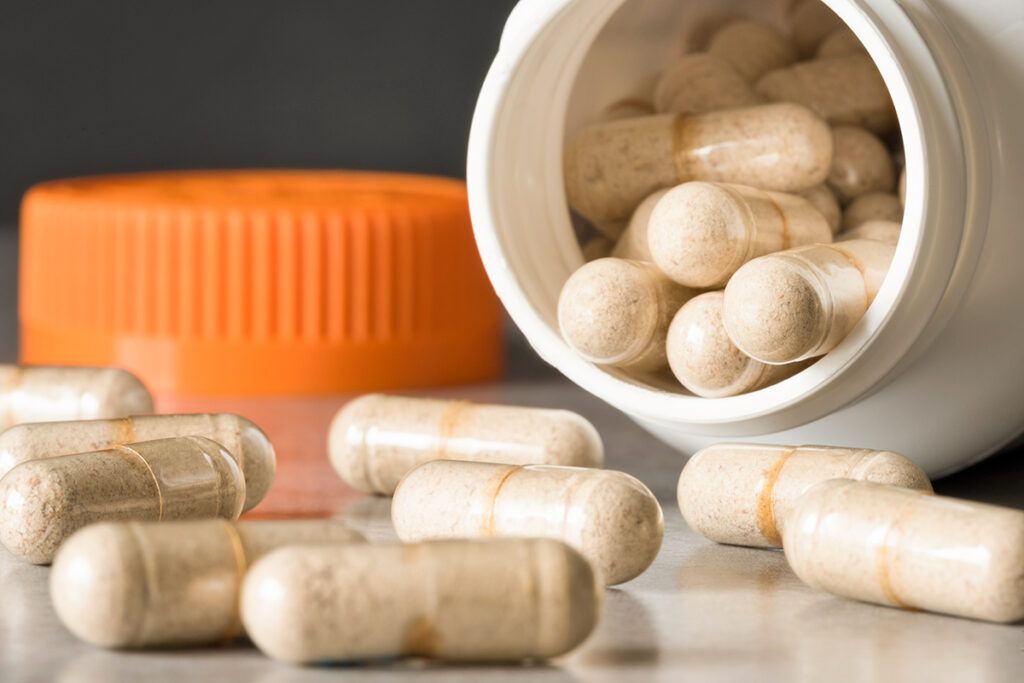
Fiber supplements
Credit: © Michelle/stock.adobe.com

Are Fiber Supplements as Effective as Whole Foods?

Fiber supplements can be helpful if you’re struggling to meet your needs through diet alone. However, whole foods are generally preferred. If you decide to start a fiber supplement, consult your doctor.

Advertisement
Advertisement

“Many other nutrients, such as vitamins and minerals, [are] contained in high-fiber foods,” Kroesche says. “Incorporating more of these foods often displaces less nutrient-dense foods,” such as processed foods. A whole-food-first approach not only supports digestion but also contributes to a more nourishing diet with long-lasting health benefits. 

Featured Image Credit: © Happy Kikky/iStock

More From Our Network

Better Report is part of Inbox Studio, an email-first media company. *Indicates a third-party property.

Go Retro With This 1960s Fashion Quiz

Quiz Daily

Go Retro With This 1960s Fashion Quiz

True or False: Are You a Master of U.S. Geography?

Travel Quiz

True or False: Are You a Master of U.S. Geography?

5 Reasons You Can Be Denied Boarding an Airplane

Daily Passport

5 Reasons You Can Be Denied Boarding an Airplane

What Did People Do Before Eyeglasses?

History Facts

What Did People Do Before Eyeglasses?

How To Use a Balloon To Clean Up Dust

House Outlook

How To Use a Balloon To Clean Up Dust

11 Shopping Hacks Costco Members Should Know

FinanceBuzz*

11 Shopping Hacks Costco Members Should Know

Share this article

  • Share to Facebook
  • Share to Twitter
  • Copy Url
  • Share to Email
Ali Eldridge

This article is for general informational purposes only.
Affiliate Disclaimer Medical Disclaimer Financial Disclaimer

Updated:
Posted In: Health
Hero Image Credit: Better Report
Advertisement

Related Articles

How Old Are the Apples in the Grocery Store?

4 min read

How To Tell if You’re Brushing Your Teeth Too Hard

4 min read

5 Things To Ask Your Doctor About the New Flu Shot

5 min read

Is Sourdough Actually Healthier Than Regular Bread?

7 min read

Do You Really Need a Bidet in Your Home?

4 min read
Advertisement

Stamps Are About To Get More Expensive

Wealth | Updated: June 8, 2026
Bennett Kleinman
Author
Bennett Kleinman is a New York City-based staff writer for Inbox Studio. He is also a freelance comedy writer, devoted New York Yankees and New Jersey Devils fan, and thinks plain seltzer is the best drink ever invented.
Person putting a letter in a mailbox
Better Report

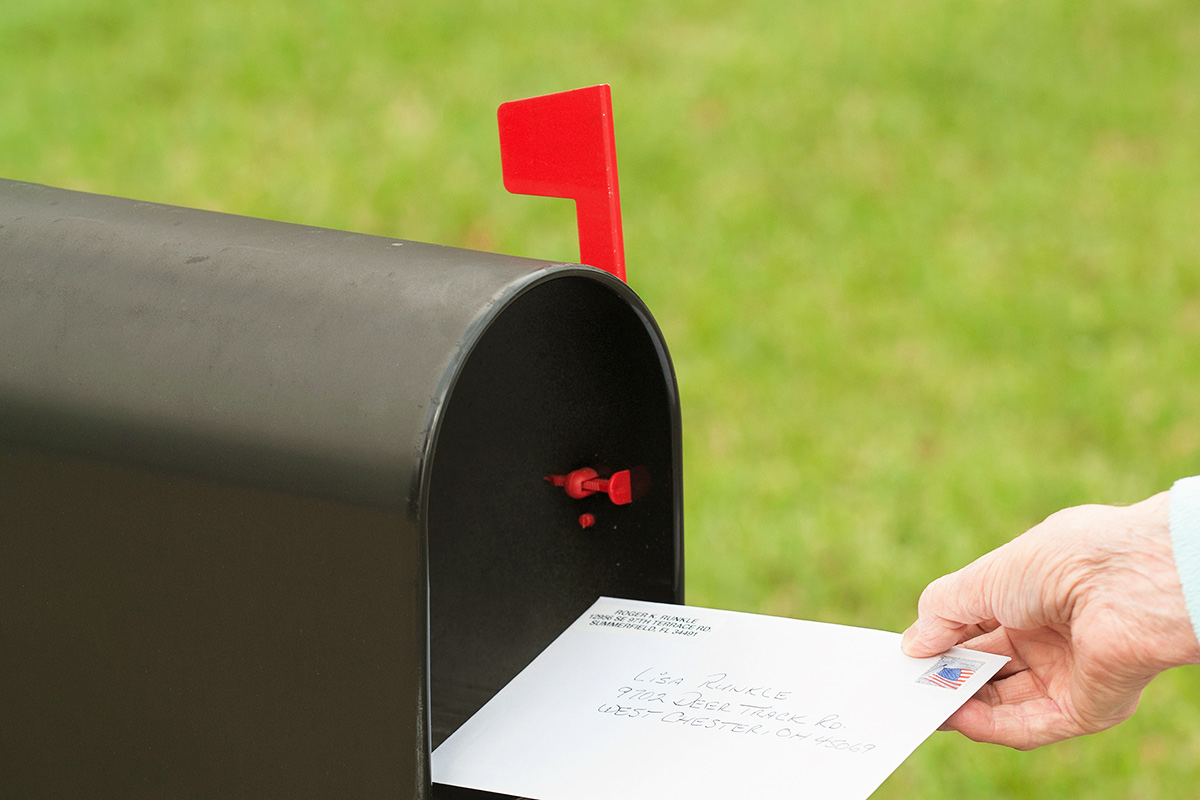
Though virtual communication is easier than ever, many Americans still rely on the U.S. Postal Service to stay in touch with their loved ones or send packages across the country. The organization remains highly popular for both its reliability and its affordability, but it has become less affordable over time.

Advertisement
Advertisement

Intermittent price increases can be a hard pill for everyday Americans to swallow, but it’s not as if the Postal Service is intentionally trying to price gouge customers. These hikes are meant to help keep the organization afloat and offset the financial losses that have plagued the USPS for years. The latest price increase takes effect July 12 — here’s what you should know.

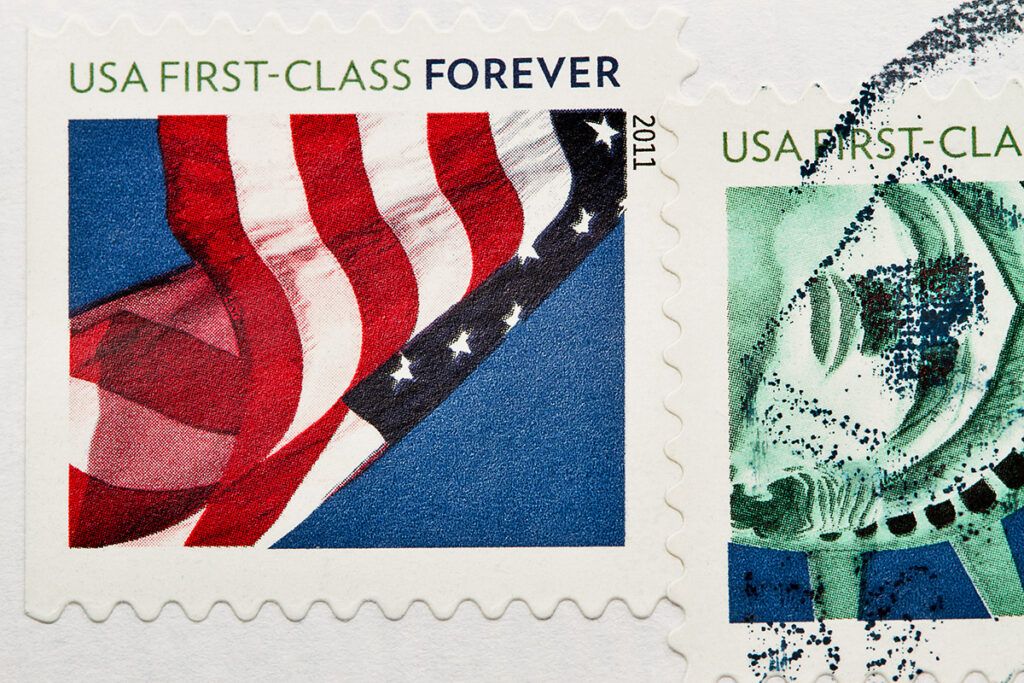
Stamps
Credit: © ra3rn/iStock

A 20% Increase?

The USPS suffered a $9 billion loss in 2025, and earlier this year, Postmaster General David Steiner said the organization might run out of money in less than 12 months. In a March 2026 appearance before Congress, Steiner proposed raising the cost of a first-class stamp from its current rate of 78 cents to as high as 95 cents, claiming it “would largely solve our controllable loss.”

Recommended Articles

  • The Safety Rules for Candles You Probably Don’t Know

  • How Old Are the Apples in the Grocery Store?

  • How To Tell if You’re Brushing Your Teeth Too Hard

  • 5 Things Your Car Needs Before the First Freeze

Advertisement
Advertisement

Reader Favorites

  • Woman looking in fridge

    9 Foods You Should Toss ASAP if They’re Expired

  • Person eating salad

    7 Things a Chef Never Orders at a Restaurant

  • Cherry angioma

    Are the Tiny Red Dots on Your Skin Dangerous?

The U.S. Postal Service began operations in 1971, replacing an earlier postal agency that had existed since 1792. When the USPS was founded, the cost of mailing a letter was just 8 cents, which equates to 65 cents when adjusted for inflation. It hit 10 cents in 1974, a quarter in 1988, and 50 cents in 2018. Over the next seven years, the price kept creeping up until it hit the current rate of 78 cents, which has been in effect since July 13, 2025 — a 56% increase over the 2018 cost.

A hike up to 95 cents per stamp would denote the largest single increase in USPS history, but thankfully, we’re not going to be paying that price just yet. There’s an annual limit on how much decision-makers at the USPS can increase prices, which takes into account factors such as inflation and mail volume. After doing those calculations, the USPS decided to raise the price of a first-class Forever stamp by 4 cents (or about 5%), from 78 cents to 82 cents, starting on July 12. Other classes of mail will increase in price, too:

ProductCurrent PriceIncreased Price
Letters (1 ounce)78 cents82 cents
Letters (metered 1 ounce)74 cents78 cents
Domestic Postcards61 cents65 cents
International postcards$1.70$1.75
International letter (1 ounce)$1.70$1.75
Advertisement
Advertisement
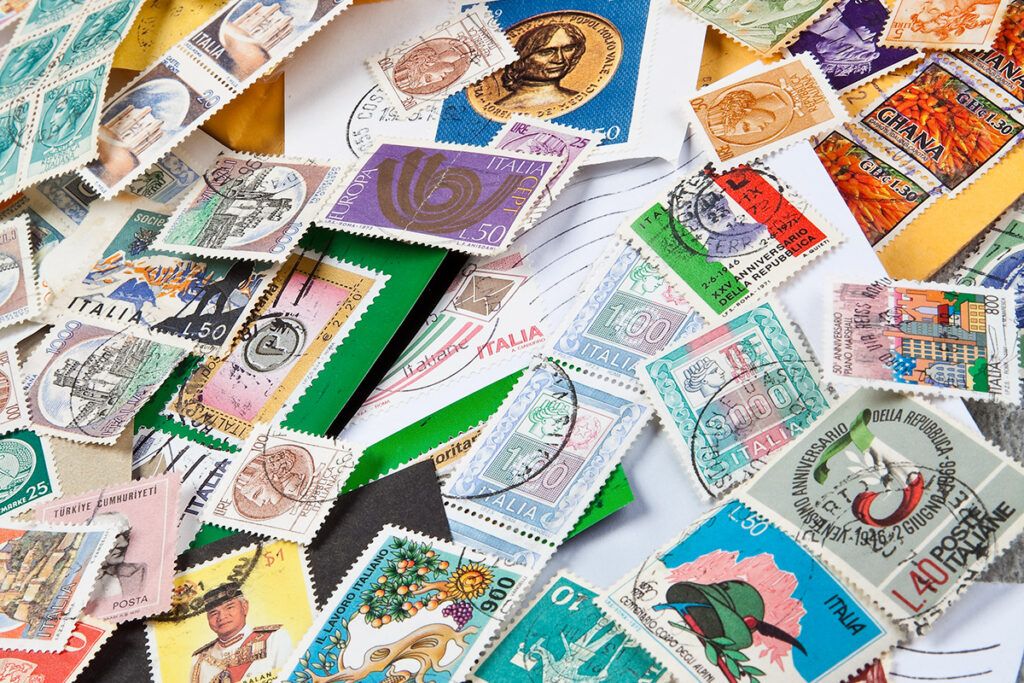
Stamps from around the world
Credit: © dp3010/stock.adobe.com

Global Stamp Prices

It’s worth noting that even 95 cents per stamp is quite affordable compared to other countries’ postal services. In his remarks in March, Steiner cited additional data saying that the cost of a first-class stamp in France is almost $3, while the same type of stamp in England costs around $2.50.

Advertisement
Advertisement

Previously, a 2023 report from the Office of Inspector General noted that first-class stamps in the U.S. were more affordable than their equivalents in 26 other nations as of June of that year. The findings ranked Italy at the top, listing the cost of a first-class stamp there as equal to $2.96 USD; Finland and Estonia were runners-up at $2.43. 

Advertisement

All this is to say that while nobody is a fan of rumored USPS price hikes, the organization still offers stamps at a more affordable rate than many other industrialized countries.

Advertisement
Advertisement
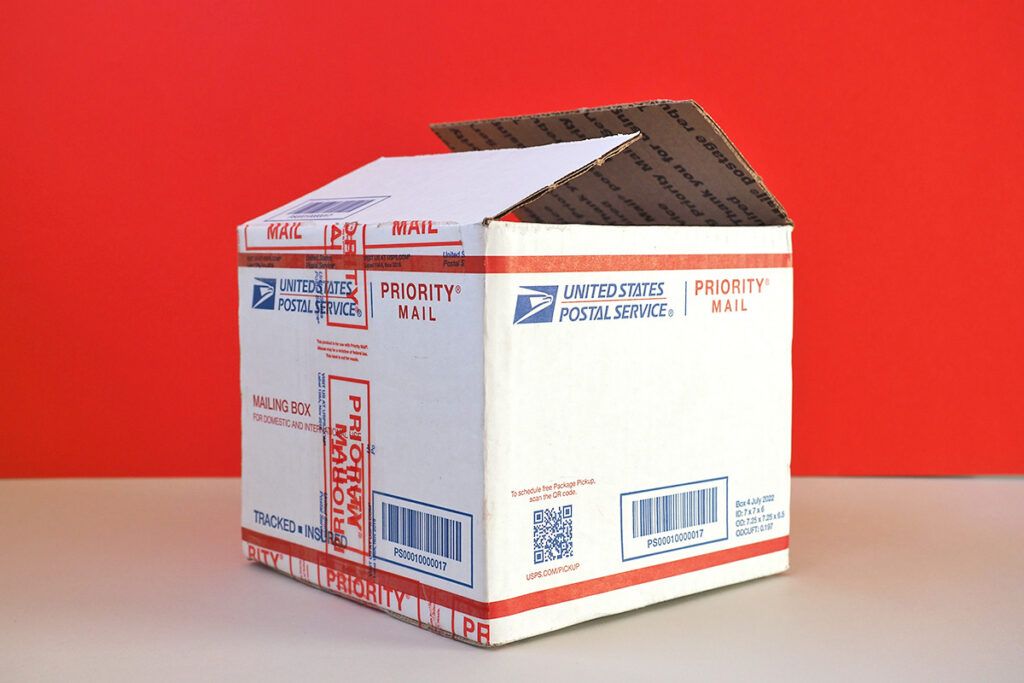
Priority mail box
Credit: © Claudio Divizia/stock.adobe.com

Another Price Hike

Stamps aren’t the only thing that have gotten more expensive at the USPS this year. The organization imposed an 8% price hike on April 26 that is set to last until at least January 17, 2027. The price increase — which affects Priority Mail Express, Priority Mail, USPS Ground Advantage, and Parcel Select — is meant to help offset rising fuel and transportation costs.

Advertisement
Advertisement

Featured Image Credit: © petert2/stock.adobe.com

More From Our Network

Better Report is part of Inbox Studio, an email-first media company. *Indicates a third-party property.

Go Retro With This 1960s Fashion Quiz

Quiz Daily

Go Retro With This 1960s Fashion Quiz

True or False: Are You a Master of U.S. Geography?

Travel Quiz

True or False: Are You a Master of U.S. Geography?

5 Reasons You Can Be Denied Boarding an Airplane

Daily Passport

5 Reasons You Can Be Denied Boarding an Airplane

What Did People Do Before Eyeglasses?

History Facts

What Did People Do Before Eyeglasses?

How To Use a Balloon To Clean Up Dust

House Outlook

How To Use a Balloon To Clean Up Dust

11 Shopping Hacks Costco Members Should Know

FinanceBuzz*

11 Shopping Hacks Costco Members Should Know

Share this article

  • Share to Facebook
  • Share to Twitter
  • Copy Url
  • Share to Email
Bennett Kleinman
Staff Writer

Bennett Kleinman is a New York City-based staff writer for Inbox Studio. He is also a freelance comedy writer, devoted New York Yankees and New Jersey Devils fan, and thinks plain seltzer is the best drink ever invented.

This article is for general informational purposes only.
Affiliate Disclaimer Medical Disclaimer Financial Disclaimer
Updated: July 20, 2023
Posted In: Wealth
Hero Image Credit: Better Report

Advertisement

Related Articles

5 Things Your Car Needs Before the First Freeze

4 min read

6 Amazon Prime Day Hacks

6 min read

Is It Actually Better To Lease a Car?

9 min read

7 Free MIT Classes You Can Experience From Home

4 min read

The Bedroom Color That Adds $2,000 to Your Home Value

3 min read
Advertisement

Posts navigation

Older posts
Newer posts
  • Home
  • Health
  • Wealth
  • Logo
  • Advertise
  • About
  • Contact Us
  • Privacy Policy
  • Terms of Use
  • Your Privacy Choices
x
Thumb Image

Elevate your everyday.

Sign up to receive the practical tips and expert advice you need to pare down the complexities of everyday living right in your inbox.

Sorry, your email address is not valid. Please try again.

Your email is:

Edit Image
Sorry, your email address is not valid. Please try again.
Thank you for subscribing...

By subscribing you are agreeing to our Terms of Use and Privacy Policy.

Close image
Thumb Image
Second Thumb Image

Elevate your everyday.

Sign up to receive the practical tips and expert advice you need to pare down the complexities of everyday living right in your inbox.

Sorry, your email address is not valid. Please try again.

By subscribing you are agreeing to our Privacy Policy and Terms of Use.

Close image