Skip to content
Better Report
  • Home
  • Health
  • Wealth
8 Low-Maintenance Plants That Thrive on Neglect
  • Search
  • Subscribe
  • Home
  • Health
  • Wealth
  • About
  • Privacy Policy
  • Terms of Use
  • Contact Us
  • SubscribeSubscribe
  • Search
Thank you for confirming your email! Welcome to the community.

Author: erin

Which Sweetener Is the Healthiest?

Health | Updated: June 25, 2026
Nicole Pyles
Author
Based in Portland, Oregon, Nicole Pyles is an experienced freelance writer who writes about home and kitchen, health and wellness, and more. She's written for a variety of outlets, including Better Homes and Gardens, Tom's Guide, Better Report, and more.
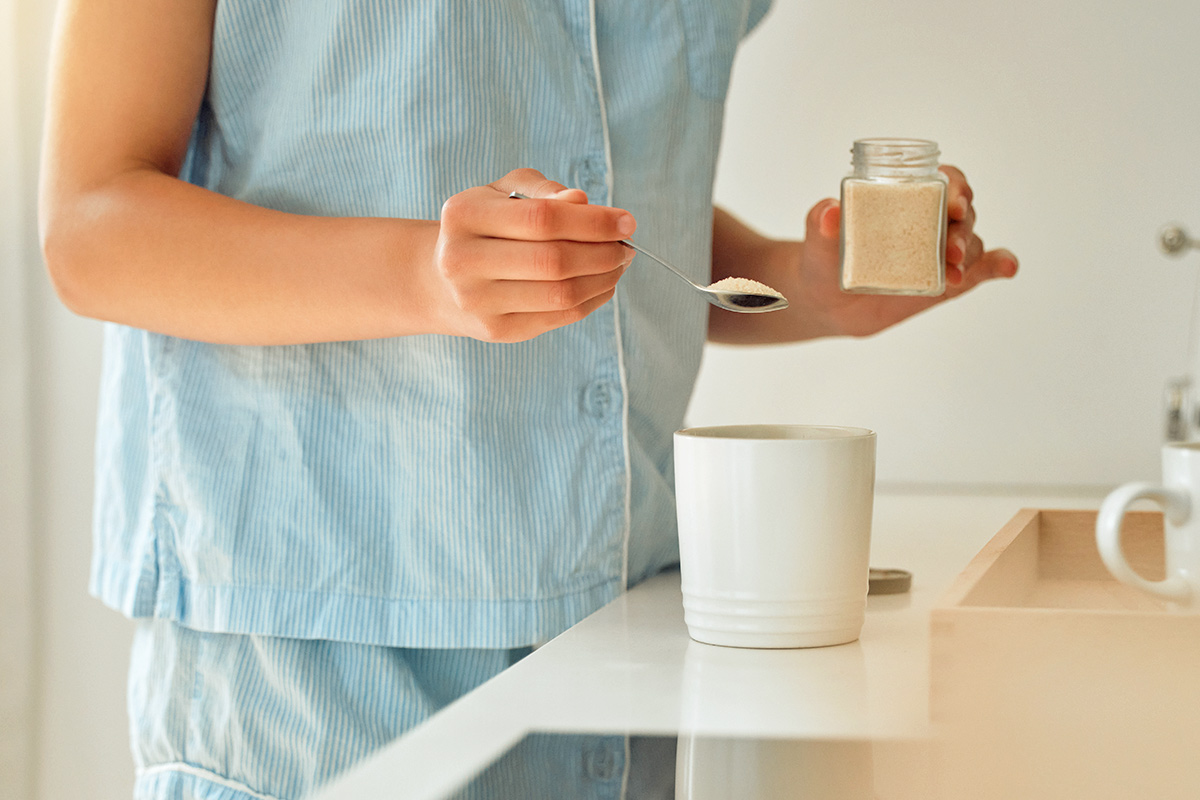
Woman with spoon of sugar
Better Report

Most of us know — even if we’re loath to accept — that sugar is not good for us. While the occasional sweet treat is fine, many of us have too much sugar in our diets: According to statistics published by the Centers for Disease Control and Prevention (CDC), the average daily added sugar intake for Americans 2 and older was 17 teaspoons (or roughly 71 grams) in 2017–2018. That’s well over the Food and Drug Administration’s recommendation of no added sugar for children under 11 and only 10 grams of added sugar per meal for adults.

But are any sweeteners healthier or better than others? To find out, we talked with Sarah Rockoff, licensed nutritionist and founder of Renewed Roots Nutrition, and Dr. Jean-Marc Schwarz, professor of biochemistry at Touro University’s College of Osteopathic Medicine. Schwarz is also the co-author (with associate professor Dr. Grace Marie Jones) of a 2017 study on dietary fructose restriction in children with obesity.
Advertisement
Advertisement
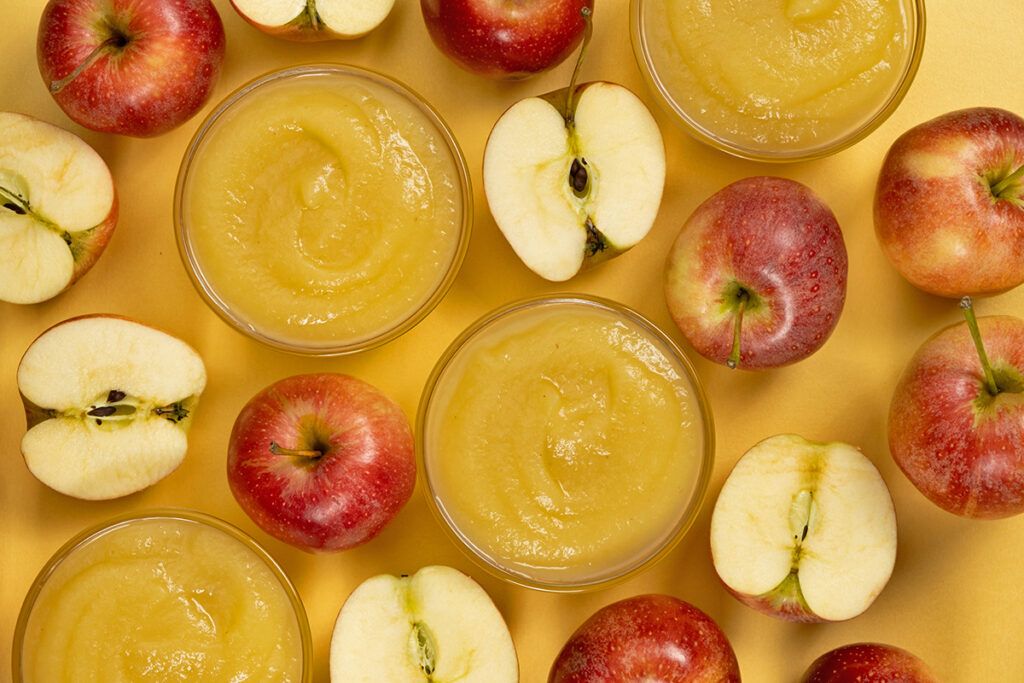
Apples and applesauce
Credit: © Zarina Lukash—iStock/Getty Images

Natural vs. Added Sugar

According to Rockoff, sugar itself isn’t necessarily bad. “It’s a carbohydrate, and carbohydrates are essential macronutrients that act as the body’s main energy source for the organs, muscles, and brain,” she explains.

Recommended Articles

  • The Safety Rules for Candles You Probably Don’t Know

  • 5 Things Your Car Needs Before the First Freeze

  • 6 Amazon Prime Day Hacks

  • 5 Things To Ask Your Doctor About the New Flu Shot

Advertisement
Advertisement

Reader Favorites

  • Woman looking in fridge

    9 Foods You Should Toss ASAP if They’re Expired

  • Person eating salad

    7 Things a Chef Never Orders at a Restaurant

  • Cherry angioma

    Are the Tiny Red Dots on Your Skin Dangerous?

However, not all sugar is created equal — what’s found in fruits or milk isn’t the same as the sweetener you add to your coffee. “[Natural sugars] are naturally found in foods such as whole fruits, dairy products [like milk and yogurt], vegetables, and whole grains,” Rockoff says. “Sugar in whole fruits and grains contains fiber, vitamins, minerals, and some antioxidants and is digested more slowly, which can blunt blood sugar spikes.”

Take, for example, apples versus applesauce. “Although the sugar molecules are chemically similar, their health impact differs,” Dr. Schwarz explains. “Whole foods deliver nutrients and satiety, whereas added sugars are more likely to contribute to excess intake and metabolic risk when consumed in large amounts.”

Advertisement
Advertisement

It’s refined added sugar we need to watch out for. “Concerns about health and intake arise when added and refined sugars found in foods such as condiments, soda, candy, and breads are consumed in excess,” Rockoff says. “This can lead to health concerns such as weight gain, cardiovascular diseases, blood sugar elevations, and chronic inflammation.” These added sugars can be found in processed foods and are added to make them taste better. “They are typically highly refined sugars, meaning they are processed and stripped of nutritional value,” Rockwood explains, “[and they] … tend to be digested very quickly, causing a spike in blood sugar.”
Advertisement
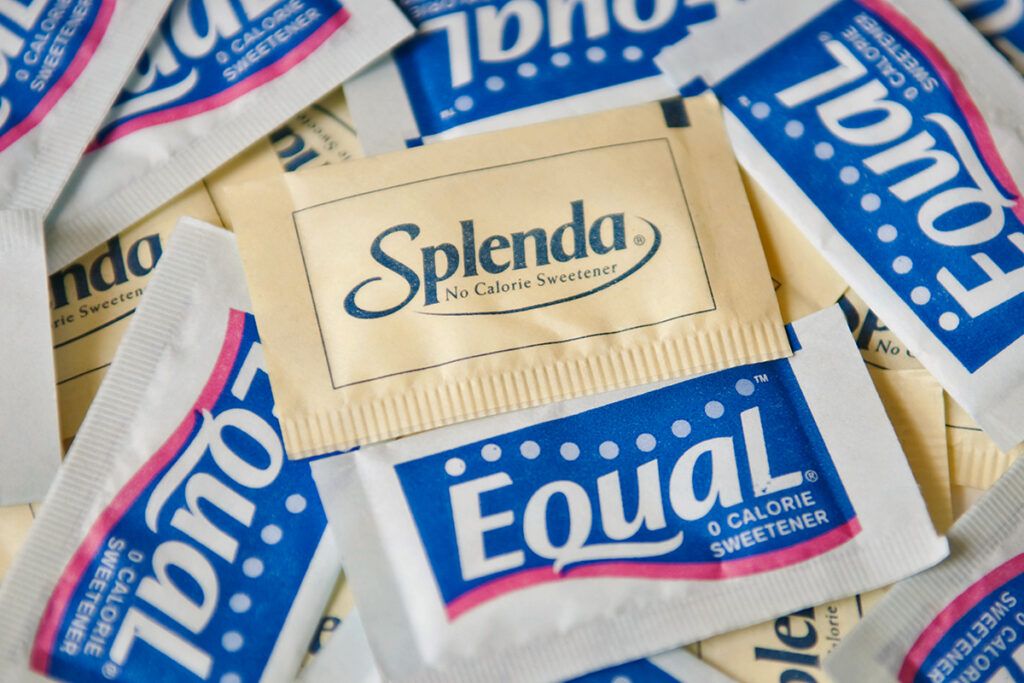
Packets of artificial sweeteners
Credit: © magnez2—iStock Unreleased/Getty Images

Artificial Sweeteners vs. Other Sweeteners

To reduce sugar intake and the calories that often accompany it, many people turn to artificial sweeteners such as sucralose (Splenda), aspartame (Equal and NutraSweet), and saccharin (Sweet’N Low, among others). While they tend to have a low glycemic index (GI) — which measures the extent to which foods increase blood sugar levels, ranging from 1 to 100 — these low-cal sweetener swaps aren’t necessarily healthier. 

“Some options, like noncaloric or plant-based sweeteners, may offer advantages such as fewer calories or minimal impact on blood sugar, but they don’t provide true health benefits,” Dr. Schwarz says.

Advertisement
Advertisement

According to Rockoff, recent research has shown a connection between sweeteners like sucralose and adverse changes to the gut microbiome, among other negative effects, and the World Health Organization has classified aspartame as a possible carcinogen to humans.

Plus, many have added sugar alcohols like xylitol and erythritol, which have been linked to an elevated risk of heart attacks and strokes, Rockoff explains, “due to increased blood platelet activity, which increases blood clot formation.” 

The truth is, the healthiest option is avoiding added sugars as much as possible. “Improving health comes primarily from reducing overall intake of added sugars and lowering our preference for sweet foods altogether,” Dr. Schwarz says. “A practical rule is to focus on whole foods and check labels for ‘added sugars’ to limit intake.”

Advertisement
Advertisement

The GI Ranking System

Low GIMedium GIHigh GI
0–5556–6970–100

Different Types of Sugar

Cutting added sweeteners from our diet is easier said than done, of course. If you need a little sugar for your batch of freshly baked cookies, your glass of iced tea, or your morning cup of coffee, you have a few options to consider, some healthier than others. But according to Rockoff, “There is no perfect sweetener.”

Advertisement

“All sugar is broken down in a similar way through digestion, absorption in the gut, and transported through the bloodstream and converted to energy or stored in the cells,” she says. 

Advertisement
Advertisement

Dr. Schwarz concurs. “Most caloric sweeteners, whether white sugar, brown sugar, maple syrup, or turbinado sugar, are metabolically quite similar,” he explains. “[They] should be viewed as sources of added sugar rather than healthier alternatives.”

When choosing your preferred sweetener, Rockoff advises basing your choice on your health goals. “For example, someone who is trying to manage their blood sugar may choose something different than someone who is focusing on unprocessed whole foods,” she says. 
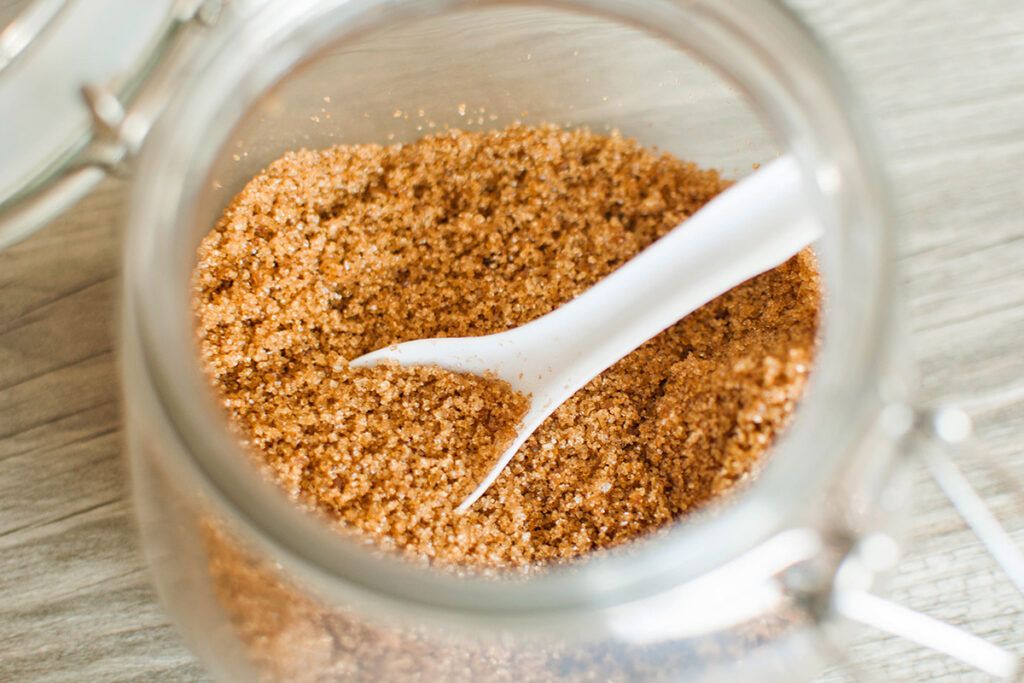
Brown sugar in a jar
Credit: © Karl Tapales—Moment/Getty Images

Cane, Brown, and Turbinado Sugar

These are the three most popular table sugars that Rockoff views as quite similar to each other. “White and brown sugar are highly refined,” she says. “White [is] the most refined, leaving just sucrose crystals and removing all molasses. Brown sugar is white sugar with molasses added back in.” Turbinado, meanwhile, is minimally processed cane sugar that contains only trace minerals. “Nutritionally, [these three sugars] are almost identical and should be consumed in moderation, as [they] can be digested very quickly, causing a spike in blood sugar,” she explains.

Advertisement
Advertisement

All three have high GI scores of about 65 and roughly the same calorie content, at about 16 calories per teaspoon. 
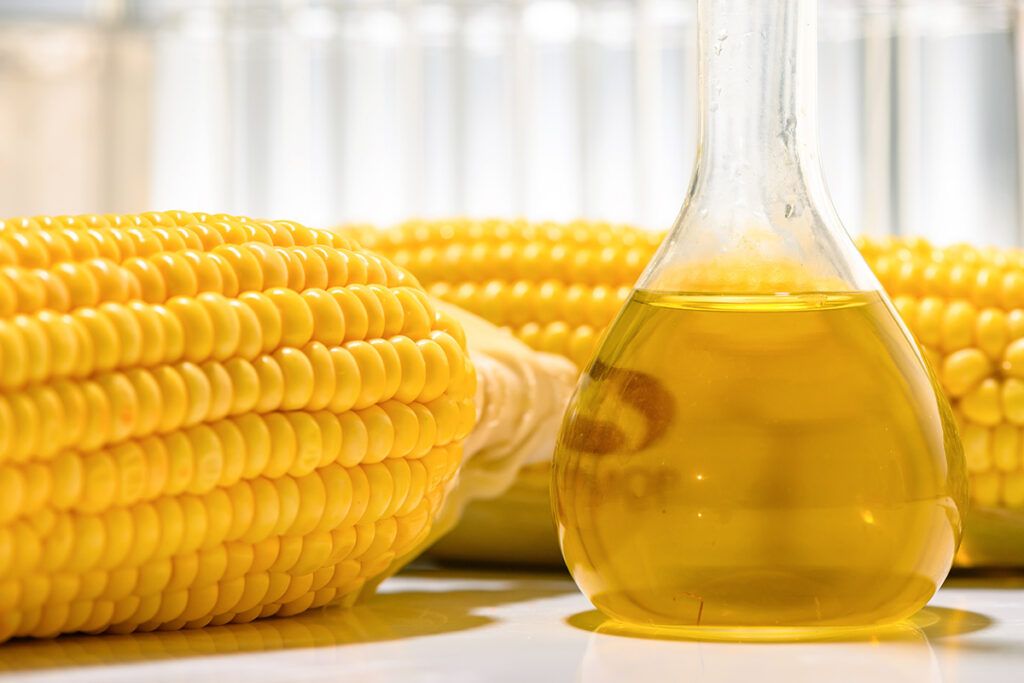
Corn and oil or syrup
Credit: © chokniti/stock.adobe.com

Corn Syrup

Corn syrup is often considered the same as high-fructose corn syrup; however, they differ in how they’re made. “Corn syrup is a liquid sweetener that is made from cornstarch,” Rockoff says. “It is made from 100% glucose and can be used at home and in commercialized baked goods to support texture and sweetness.” 

Advertisement
Advertisement

High-fructose corn syrup (HFCS) goes a step further. While it’s also made from cornstarch, it has additional enzymes that convert glucose into fructose, the same sugar found naturally in fruits and vegetables. But because it’s manufactured, it doesn’t have fiber and nutrients like its naturally occurring form. “Glucose is absorbed directly into the bloodstream, while fructose is absorbed more slowly and metabolized in the liver,” Rockwell explains. “The liver can convert excess fructose into fat, which can lead to higher blood triglycerides and nonalcoholic fatty liver disease.” Triglycerides are the most common type of fat in your bloodstream — too much puts you at risk for heart disease — and fatty liver disease can lead to cirrhosis or liver cancer.

Advertisement

Dr. Schwarz warns that excessive fructose can “increase the risk of cardiovascular disease, insulin resistance, and Type 2 diabetes,” adding, “These effects are most strongly associated with fructose consumed as added sugar in processed foods and sugar‑sweetened beverages.” (It’s very hard to get too much fructose from eating fruit because it takes time to digest, so your liver isn’t bombarded with fructose all at once, as it is with refined sugars and HFCS.)  

Advertisement
Advertisement

It’s important to note that corn syrup has a GI of 90, higher than HFCS, which comes in around 56. Corn syrup is also a bit higher in calories — it has 20 calories per teaspoon, while HFCS has 18.

Honey on a waffle
Credit: © Adonyi Gábor/Pexels.com 

Honey and Maple Syrup

Rockoff’s favorite sources of natural sugar are honey and maple syrup. “Honey is one of the oldest natural sugars and has been used since ancient times for both its nutritional and healing properties,” she says. “Research suggests that it contains antioxidant and antimicrobial compounds and can help support a healthy anti-inflammatory response. It also contains trace amounts of minerals, vitamins, amino acids, and enzymes.” 

Advertisement
Advertisement

When it comes to maple syrup, make sure you buy one marked “100% pure,” as many inexpensive options contain blends of other ingredients such as high-fructose corn syrup and artificial flavorings. Pure maple syrup, on the other hand, “is produced only from the concentration of sap from a maple tree,” Rockoff says. “Maple syrup has higher nutritional value compared to other sweeteners and contains manganese, riboflavin, zinc, magnesium, calcium, and potassium. It also contains antioxidants that can be beneficial to human health.”

If you’re watching your blood sugar or calorie intake, however, be aware that honey and maple syrup both have medium GI scores: Honey’s can vary depending on the type, though the average is 55 to 60, and maple syrup’s GI is 54. They also have similar calorie counts to table sugar, with honey containing about 21 calories per teaspoon and maple syrup 17.
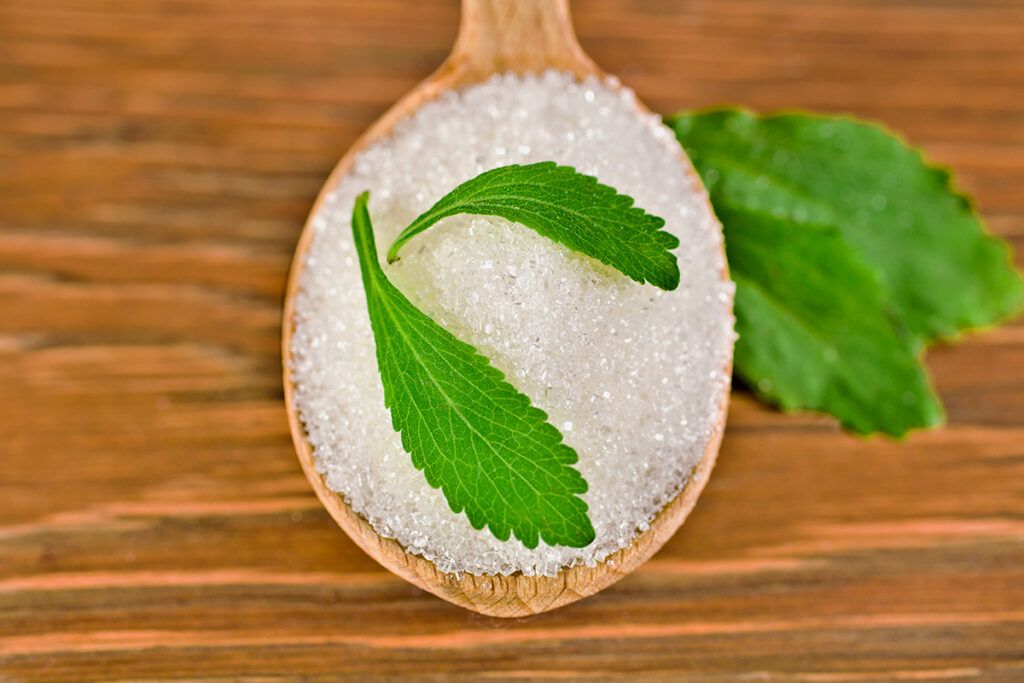
Stevia leaves and stevia on a spoon
Credit: © MilenaKatzer—iStock/Getty Images

Stevia and Monk Fruit

Stevia is derived from the stevia plant found in South America, and monk fruit comes from a plant native to Southeast Asia. Both stevia and monk fruit have a GI of 0 and contain no calories. “Some benefits of these [sweeteners] are that they do not spike blood sugar levels, which is ideal for those managing diabetes, aiming for weight loss, and keto diets,” Rockoff says.

Advertisement
Advertisement

Dr. Schwarz warns that these sweeteners shouldn’t replace the goal of a healthy diet, though. “Low- or no-calorie options like stevia or monk fruit may help reduce calorie or glucose intake in specific situations, but they are best seen as substitutes, not inherently ‘healthy’ choices,” he explains. “The broader goal should be to moderate overall sweetness in the diet.”

Advertisement

Note, too, that you may need to experiment to get the ratio right when swapping traditional sugar for stevia or monk fruit in recipes or drinks. Generally, you’ll want to start with less, as stevia and monk fruit are significantly sweeter. “These are 100 to 400 times sweeter than white sugar,” Rockoff says. “The taste can range from intensely sweet to bitter.” 

Advertisement
Advertisement

And, as always, keep an eye on the ingredients: Many stevia and monk fruit sweeteners have added erythritol, one of the sugar alcohols linked to a risk of cardiovascular problems and blood clot formation. Before buying, ensure your sweetener is made with pure monk fruit or stevia.

Sweeteners Cheat Sheet

Type of SweetenerGI RankingCalories per Teaspoon
Cane Sugar6516
Brown Sugar6516
Turbinado Sugar6516
Corn Syrup9020
High-Fructose Corn Syrup5618
Honey55–6021
Maple Syrup5417
Stevia00
Monk Fruit00

Featured Image Credit: © K Abrahams/stock.adobe.com

More From Our Network

Better Report is part of Inbox Studio, an email-first media company. *Indicates a third-party property.

Go Retro With This 1960s Fashion Quiz

Quiz Daily

Go Retro With This 1960s Fashion Quiz

True or False: Are You a Master of U.S. Geography?

Travel Quiz

True or False: Are You a Master of U.S. Geography?

5 Reasons You Can Be Denied Boarding an Airplane

Daily Passport

5 Reasons You Can Be Denied Boarding an Airplane

What Did People Do Before Eyeglasses?

History Facts

What Did People Do Before Eyeglasses?

How To Use a Balloon To Clean Up Dust

House Outlook

How To Use a Balloon To Clean Up Dust

11 Shopping Hacks Costco Members Should Know

FinanceBuzz*

11 Shopping Hacks Costco Members Should Know

Share this article

  • Share to Facebook
  • Share to Twitter
  • Copy Url
  • Share to Email
Nicole Pyles
Writer

Based in Portland, Oregon, Nicole Pyles is an experienced freelance writer who writes about home and kitchen, health and wellness, and more. She's written for a variety of outlets, including Better Homes and Gardens, Tom's Guide, Better Report, and more.

This article is for general informational purposes only.
Affiliate Disclaimer Medical Disclaimer Financial Disclaimer

Updated: September 18, 2024
Posted In: Health
Hero Image Credit: Better Report
Advertisement

Related Articles

5 Things To Ask Your Doctor About the New Flu Shot

5 min read

Is Sourdough Actually Healthier Than Regular Bread?

7 min read

Do You Really Need a Bidet in Your Home?

4 min read

3 Common Sleep Habits That May Be Aging Your Brain

5 min read

Is the Traditional Mediterranean Diet Actually the Best for Your Brain?

4 min read
Advertisement

Do Multivitamins Actually Do Anything?

Health | Updated: June 25, 2026
Sarah Gleim
Author
Sarah Gleim is an Atlanta-based freelancer with more than 25 years of experience writing and producing explainers and features about history, science, food, and health for media outlets like AARP, WebMD, The Conversation, History.com, HowStuffWorks, CNN, and others. She’s also the editor of several cookbooks for Southern Living and Cooking Light.
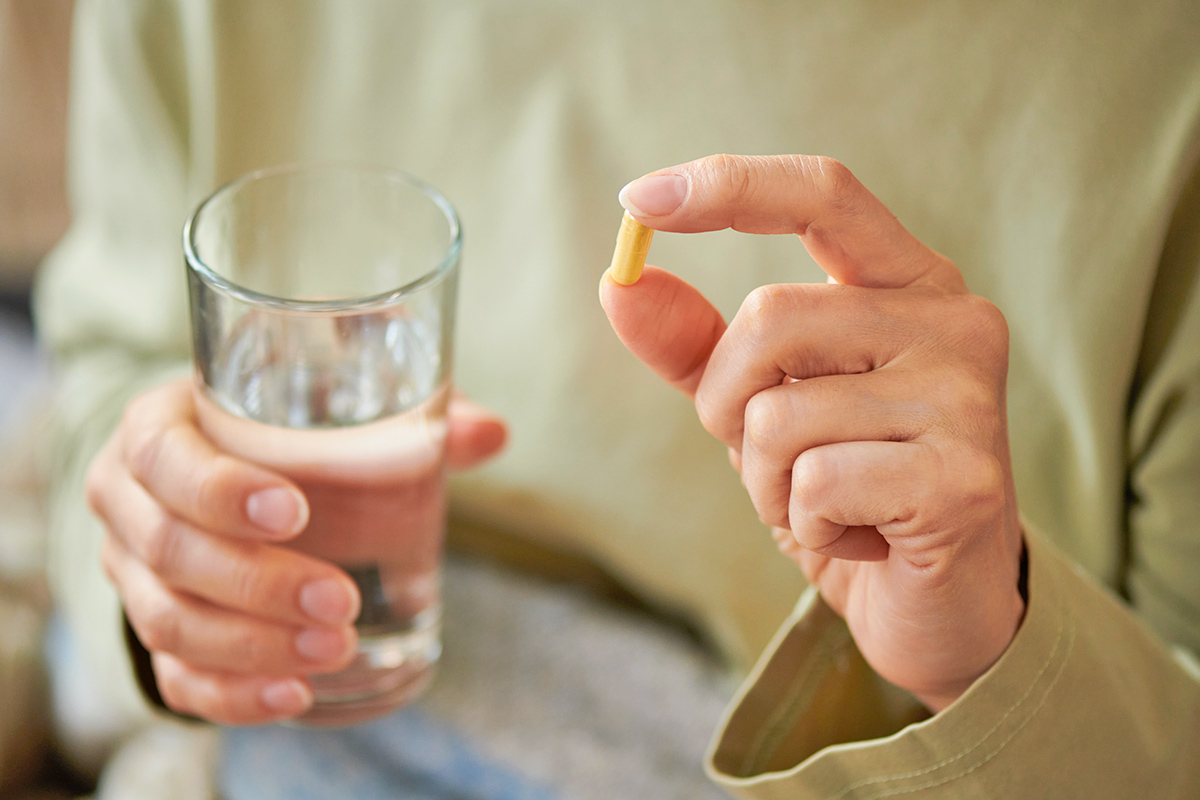
Person holding pill and glass of water
Better Report

Walk down the supplement aisle at your local pharmacy and you’ll find no shortage of multivitamins. They’re formulated for women, men, children, and seniors, and promise to support everything from your cardiovascular system to your immunity. But can one pill do that much to improve your health?

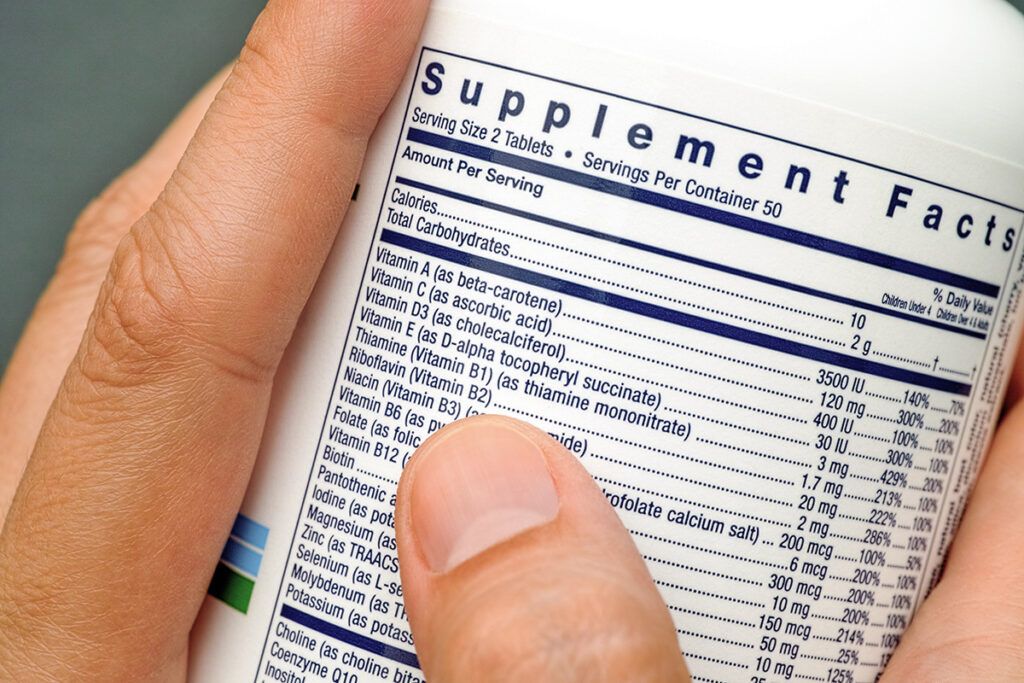
Back of a supplement bottle
Credit: © rosinka79/stock.adobe.com

What Are Multivitamins?

The National Institutes of Health (NIH) defines a multivitamin as a supplement that combines vitamins and minerals in amounts near your recommended daily allowance. The first multivitamins hit the U.S. market in the 1940s, and Americans have been taking them ever since. Today, as many as one in three adults in the U.S. takes a daily multivitamin, according to the Journal of the American Medical Association (JAMA).

Advertisement
Advertisement

Multivitamins can include calcium, folate, iron, magnesium, zinc, vitamins B12 and D, and more, but there’s no standardization when it comes to their formulas. They’re also not regulated by the Food and Drug Administration, which means their nutritional makeup will vary depending on the brand. To ensure the supplement you’re taking is safe, you can use the Department of Defense’s (DoD) Operation Supplement Safety Scorecard, a simple yes-or-no quiz that directs you to look for things like third-party certification, the number of ingredients, and the percentage of daily values. If the supplement scores 4 or above, it’s OK to take, provided it doesn’t include any of the ingredients on the DoD’s prohibited list. 

Multivitamins are big business, too. You can find them in tablets, capsules, gummies, and liquids. Americans spent nearly $9.2 billion on multivitamins in 2025, accounting for 12.4% of the total $74.15 billion in U.S. supplement sales that year, according to the 2026 Nutrition Business Journal Supplement Business Report, which tracks the U.S. dietary supplement industry.

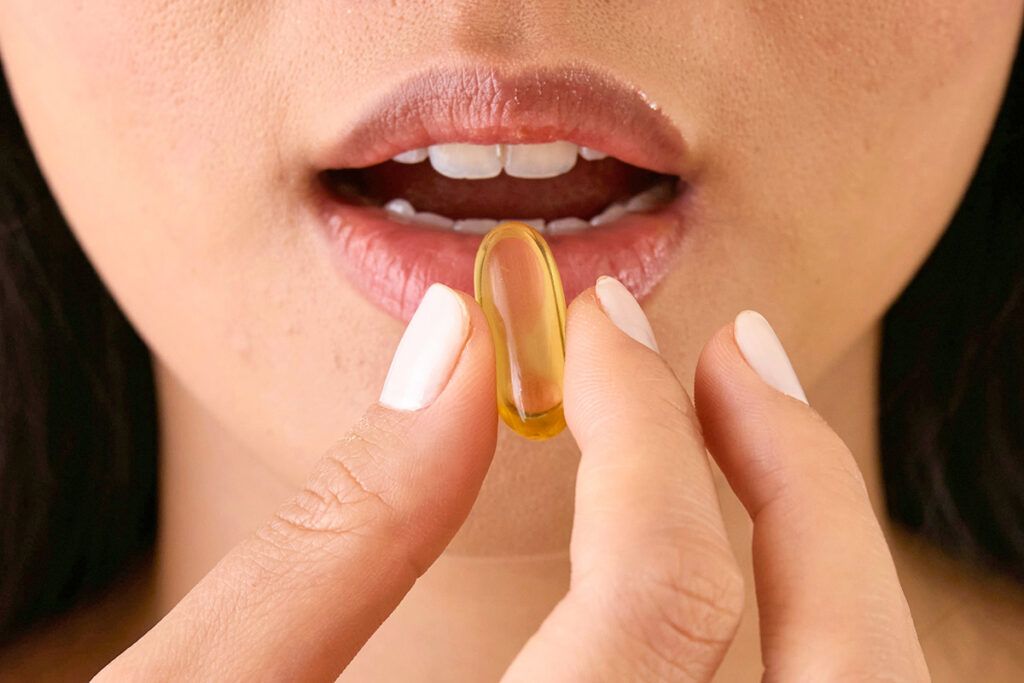
Pill in front of open mouth
Credit: © Natalia Blauth/Unsplash.com

Do Multivitamins Work?

The short answer: It depends. Taking multivitamins is supposed to help fill in nutritional gaps in your diet. Because your health relies so much on what you eat, you should aim to get your vitamins and minerals from your food. But if you’re consistently lacking fresh fruits, vegetables, and whole grains — or you have a condition that affects your ability to absorb vitamins and minerals — taking a multivitamin could be beneficial, if your doctor OKs or recommends it.

Recommended Articles

  • The Safety Rules for Candles You Probably Don’t Know

  • 5 Things Your Car Needs Before the First Freeze

  • 6 Amazon Prime Day Hacks

  • 5 Things To Ask Your Doctor About the New Flu Shot

Advertisement
Advertisement

Reader Favorites

  • Woman looking in fridge

    9 Foods You Should Toss ASAP if They’re Expired

  • Person eating salad

    7 Things a Chef Never Orders at a Restaurant

  • Cherry angioma

    Are the Tiny Red Dots on Your Skin Dangerous?

If you’re a relatively healthy person eating a well-balanced diet, though, there’s likely no reason for you to take a multivitamin. The U.S. Preventive Services Task Force, in fact, says there’s not enough evidence to say whether the benefits of taking a multivitamin outweigh the potential harms.

Advertisement
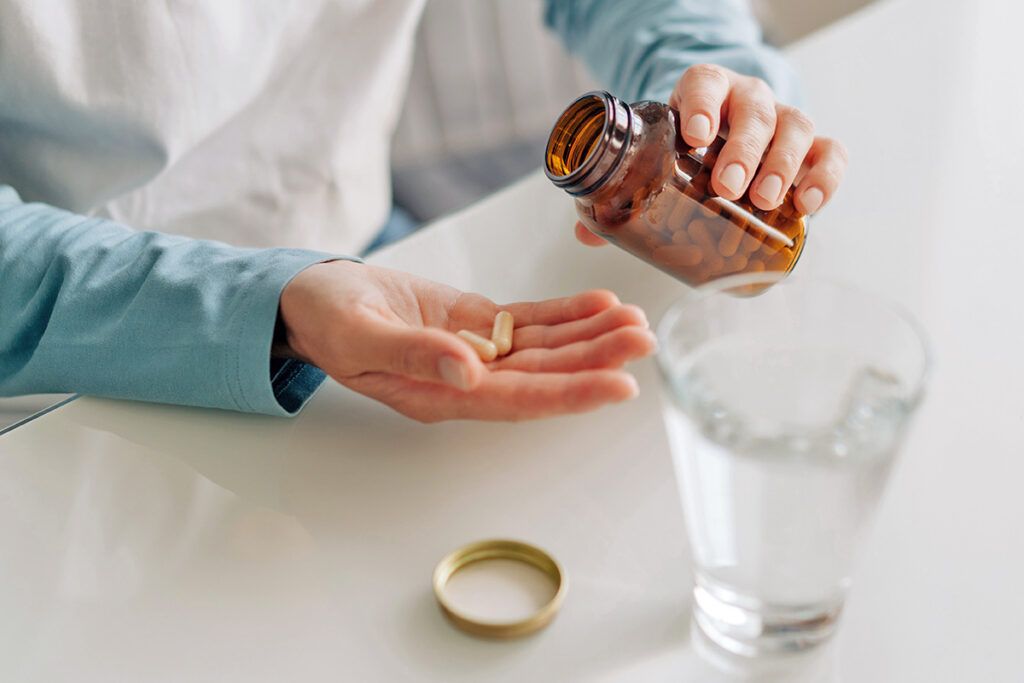
Person holding bottle with pills in hand
Credit: © ilona titova—iStock/Getty Images

Do Multivitamins Make You Healthier?

Research over decades has found taking multivitamins won’t lower the risk of a cardiac event in men or women, or prevent common cancers like prostate, colorectal, or lung cancer. It also won’t prevent, or even reduce, your odds of early death. One study even found that for older women, taking multivitamins was associated with a higher risk of death compared to those who didn’t use them.

Advertisement
Advertisement

However, other research shows taking multivitamins can have benefits, including three COcoa Supplement and Multivitamin Outcomes Study (COSMOS) trials focusing on cognition and memory. The studies tested about 5,000 people and showed a significant benefit to memory and cognition in those who took a daily multivitamin compared to those who took a placebo.

But even multivitamins have some potential risks if you take them at high doses. Fat-soluble vitamins like A, D, E, and K get stored in your liver and can be toxic if you take too much. Others can interfere with medications you’re taking. That’s why it’s important to talk to your doctor before starting a multivitamin.

Advertisement
Advertisement

So, is it worth spending the money to take a daily multivitamin? The good news is taking one every day likely won’t harm you (provided you’re taking it as directed and aren’t also eating fortified foods that could put you over the recommended maximum of some daily nutrients). If you need to fill in a nutritional gap in your diet, a multivitamin may even be beneficial. But if you’re a healthy adult, most evidence suggests that daily multivitamins won’t dramatically improve your health. You’re better off getting the recommended daily allowance of vitamins and minerals from a well-balanced diet.

As physician Dr. Lola Okunnu put it in an interview about multivitamins with Houston Methodist Hospital, “If you’re eating well-rounded meals three times a day, the only thing a multivitamin provides you is expensive urine.”

Featured Image Credit: © Pressmaster—iStock/Getty Images

More From Our Network

Better Report is part of Inbox Studio, an email-first media company. *Indicates a third-party property.

Go Retro With This 1960s Fashion Quiz

Quiz Daily

Go Retro With This 1960s Fashion Quiz

True or False: Are You a Master of U.S. Geography?

Travel Quiz

True or False: Are You a Master of U.S. Geography?

5 Reasons You Can Be Denied Boarding an Airplane

Daily Passport

5 Reasons You Can Be Denied Boarding an Airplane

What Did People Do Before Eyeglasses?

History Facts

What Did People Do Before Eyeglasses?

How To Use a Balloon To Clean Up Dust

House Outlook

How To Use a Balloon To Clean Up Dust

11 Shopping Hacks Costco Members Should Know

FinanceBuzz*

11 Shopping Hacks Costco Members Should Know

Share this article

  • Share to Facebook
  • Share to Twitter
  • Copy Url
  • Share to Email
Sarah Gleim
Writer

Sarah Gleim is an Atlanta-based freelancer with more than 25 years of experience writing and producing explainers and features about history, science, food, and health for media outlets like AARP, WebMD, The Conversation, History.com, HowStuffWorks, CNN, and others. She’s also the editor of several cookbooks for Southern Living and Cooking Light.

This article is for general informational purposes only.
Affiliate Disclaimer Medical Disclaimer Financial Disclaimer

Updated: June 9, 2026
Posted In: Health
Hero Image Credit: Better Report
Advertisement

Related Articles

5 Things To Ask Your Doctor About the New Flu Shot

5 min read

Is Sourdough Actually Healthier Than Regular Bread?

7 min read

Do You Really Need a Bidet in Your Home?

4 min read

3 Common Sleep Habits That May Be Aging Your Brain

5 min read

Is the Traditional Mediterranean Diet Actually the Best for Your Brain?

4 min read
Advertisement

The Most Trusted Grocery Store in 2026

Ali Eldridge
Wealth | Updated: June 25, 2026
Woman and child in grocery store
Better Report

Grocery stores are a lot like sports teams — people tend to develop a deep sense of loyalty for their favorite one. Some shoppers return to the same supermarket because of the convenient location, some because of affordability, and some because the store sells higher-quality products than others.

The grocery store with the most loyal fanbase was recently revealed in the 2026 Most Trusted Awards. The study, conducted by Newsweek and the research firm BrandSpark, surveyed 35,215 American shoppers to identify their most-trusted brands, including grocery stores, in various categories and geographical regions. Here’s a look at the findings.

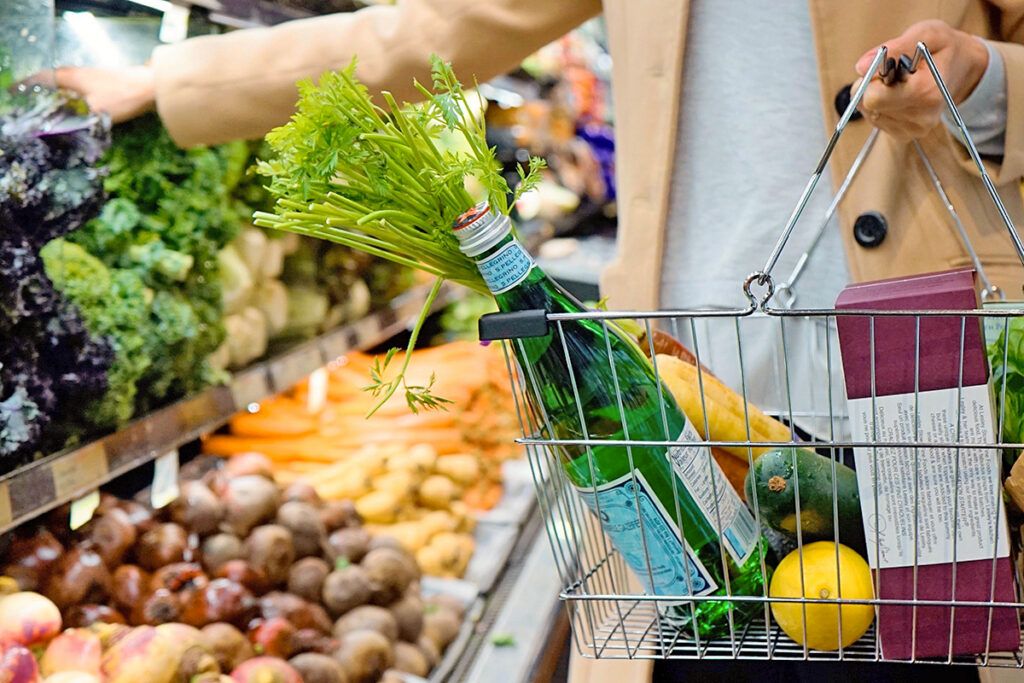
Sparkling water and food in a shopping basket
Credit: © Tara Clark/Pexels.com

The Methodology

Before discussing the most-trusted grocery store, let’s look at the survey’s methodology. BrandSpark surveyed respondents across 27 categories related to grocery stores. Among those categories, people were asked for their favorite grocery store when it came to factors such as low prices, promotions, organic foods, and brand-name products, to name a few. The survey also ranked different types of grocery stores based on size and region.

Advertisement
Advertisement
Interior of a Walmart grocery store
Credit: © Jammer Gene/stock.adobe.com

The Best of the Best

The supermarket that took home the most victories in the grocery sphere is Walmart, which was ranked No. 1 in 13 of the 27 categories. To make matters more impressive, Walmart finished as the runner-up in 10 of the 14 other categories. (The remaining four categories ranked small-format grocery stores, so Walmart wasn’t eligible.)

Recommended Articles

  • The Safety Rules for Candles You Probably Don’t Know

  • 5 Things Your Car Needs Before the First Freeze

  • 6 Amazon Prime Day Hacks

  • 5 Things To Ask Your Doctor About the New Flu Shot

Advertisement
Advertisement

Reader Favorites

  • Woman looking in fridge

    9 Foods You Should Toss ASAP if They’re Expired

  • Person eating salad

    7 Things a Chef Never Orders at a Restaurant

  • Cherry angioma

    Are the Tiny Red Dots on Your Skin Dangerous?

Here’s a look at the 13 categories where Walmart topped the list.

• Conventional Supermarket (non-discount) (South)
• Discount Supermarket (West) (a tie with the company Grocery Outlet)
• Grocery Store for Customer Service
• Grocery Store for Low Prices/Affordability (South)
• Grocery Store for Low Prices/Affordability (West)
• Grocery Store for Store Brand/Private Label Products
• Supermarket for Quick & Easy Shopping
• Supermarket for Sales & Promotions
• Superstore/Hypermarket (Midwest)
• Superstore/Hypermarket (Northeast)
• Superstore/Hypermarket (South)
• Superstore/Hypermarket (West)
• Grocery Pickup & Delivery

Advertisement
Advertisement

According to the survey consumers, Walmart has a trusted reputation across a wide variety of categories. It also dominates the superstore sphere and excels when it comes to low prices and good customer service. Part of what makes Walmart so popular is its huge national footprint: 90% of Americans live within 10 miles of a Walmart or a Sam’s Club, a wholesale store owned by Walmart, so many people in the U.S. probably shop there often.

Advertisement
Woman shopping in grocery store
Credit: © _KUBE_/stock.adobe.com

The Other Most-Trusted Stores

The European grocery chain Aldi put up a strong showing with eight wins, especially with regard to categories related to discounts and affordability. Here are the categories Aldi won:

• Discount Supermarket (Midwest)
• Discount Supermarket (Northeast)
• Discount Supermarket (South)
• Grocery Store for Low Prices/Affordability (Midwest)
• Grocery Store for Low Prices/Affordability (Northeast)
• Small-Format Grocery Store (Midwest)
• Small-Format Grocery Store (Northeast)
Small-Format Grocery Store (South)

Advertisement
Advertisement

Only one other grocery store earned multiple accolades: Kroger, which ranked as the most-trusted grocery store in the following categories:

• Conventional Supermarket (non-discount) (Midwest)
• Grocery Loyalty Program

Advertisement
Advertisement

Four other grocery store brands won the most-trusted title in one individual category each:

• ShopRite – Conventional Supermarket (non-discount) (Northeast)
• Safeway – Conventional Supermarket (non-discount) (West)
• Whole Foods Market – Grocery Store for Natural/Organic Foods
• Trader Joe’s – Small-Format Grocery Store (West)

Advertisement

Based on the findings, Walmart has clearly earned itself the top spot among consumers looking to shop at a trusted grocery store — its  expansive reach and impeccable reputation with consumers is hard to compete with.

Advertisement
Advertisement

Featured Image Credit: © Getty Images/Unsplash.com

More From Our Network

Better Report is part of Inbox Studio, an email-first media company. *Indicates a third-party property.

Go Retro With This 1960s Fashion Quiz

Quiz Daily

Go Retro With This 1960s Fashion Quiz

True or False: Are You a Master of U.S. Geography?

Travel Quiz

True or False: Are You a Master of U.S. Geography?

5 Reasons You Can Be Denied Boarding an Airplane

Daily Passport

5 Reasons You Can Be Denied Boarding an Airplane

What Did People Do Before Eyeglasses?

History Facts

What Did People Do Before Eyeglasses?

How To Use a Balloon To Clean Up Dust

House Outlook

How To Use a Balloon To Clean Up Dust

11 Shopping Hacks Costco Members Should Know

FinanceBuzz*

11 Shopping Hacks Costco Members Should Know

Share this article

  • Share to Facebook
  • Share to Twitter
  • Copy Url
  • Share to Email
Ali Eldridge

This article is for general informational purposes only.
Affiliate Disclaimer Medical Disclaimer Financial Disclaimer

Updated:
Posted In: Wealth
Hero Image Credit: Better Report
Advertisement

Related Articles

5 Things Your Car Needs Before the First Freeze

4 min read

6 Amazon Prime Day Hacks

6 min read

Is It Actually Better To Lease a Car?

9 min read

7 Free MIT Classes You Can Experience From Home

4 min read

The Bedroom Color That Adds $2,000 to Your Home Value

3 min read
Advertisement

The Surprising Item You Should Almost Always Wash in the Dishwasher

Home | Updated: June 23, 2026
Lauren Dana Ellman
Author
Lauren Dana Ellman is a New York–based writer and editor specializing in lifestyle, travel, food, and shopping. A graduate of Syracuse University’s SI Newhouse School of Public Communications, she covers everything from destinations and hotels to fun product finds and personal essays. Her work has been featured in Condé Nast Traveler, AARP, Travel + Leisure, Time Out, The Knot, and more lifestyle-oriented publications.
Better Report

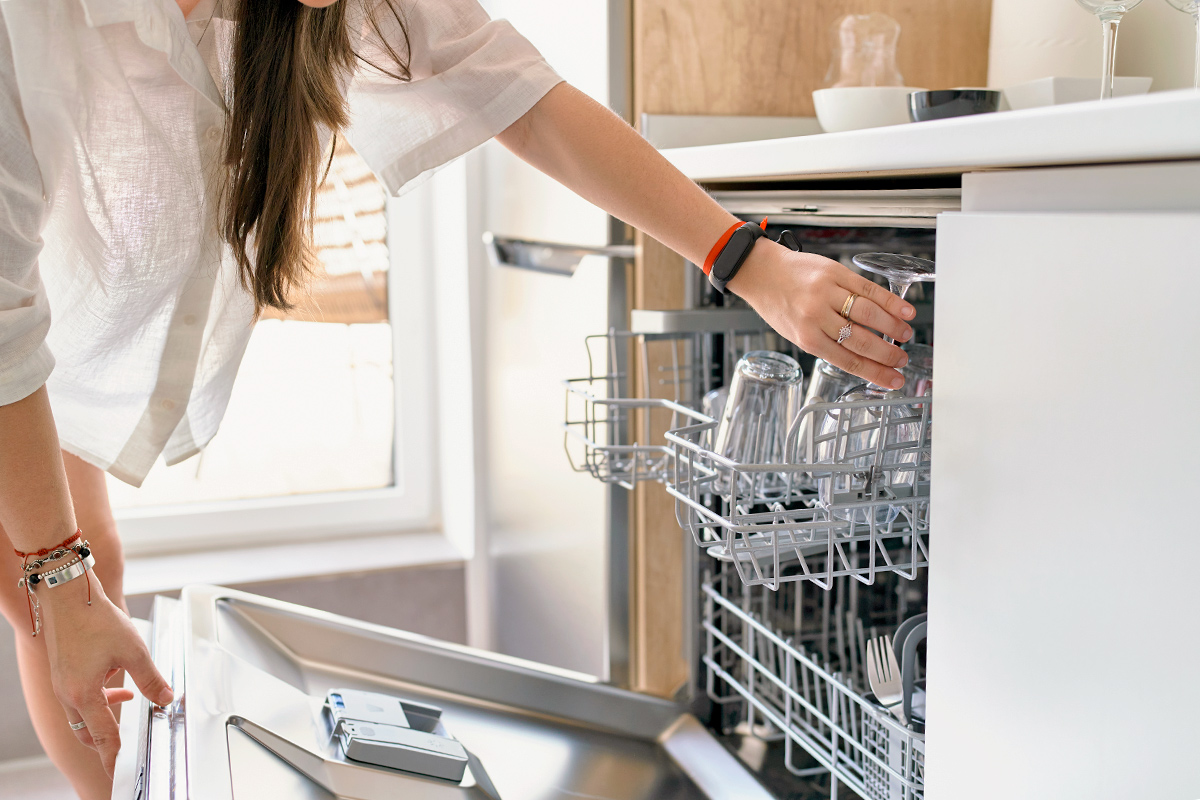
For years, wine lovers have been told the same thing: Never put wine glasses in the dishwasher. Hand-washing has long been considered the safer option, especially for delicate stemware — but according to experts, that advice may be outdated. In fact, your dishwasher could actually be the safest place to clean your wine glasses. Here’s why. 

Holding wine glass in front of dishwasher
Credit: © lomanskaph—500px/Getty Images

The Case for Skipping Hand-Washing

The fear about putting wine glasses in the dishwasher largely stems from older machines, which weren’t as gentle as today’s models. As Wine Enthusiast reports, many dishwashers today include dedicated glassware settings and adjustable racks designed to keep stemware secure throughout the wash cycle, making them a good option for many dishwasher-safe glasses. 

Advertisement
Advertisement

And according to The Spruce, stemware is often more likely to get damaged or broken during hand-washing. People may squeeze the glasses too hard as they’re scrubbing, or  accidentally knock them against the sink, the faucet, or another dish. That’s not an issue when glasses are properly placed in a dishwasher (more on that in a bit). 

But there’s another reason experts prefer the dishwasher: cleaner glasses. The high temperatures reached during a wash cycle, along with modern detergents and rinse aids, help remove residue that can linger after hand-washing, resulting in clearer glassware with fewer water spots and streaks. And for wine drinkers especially, that can make a big difference: Fingerprints can affect the appearance of a glass, and even small amounts of lingering soap residue can interfere with the tasting experience.

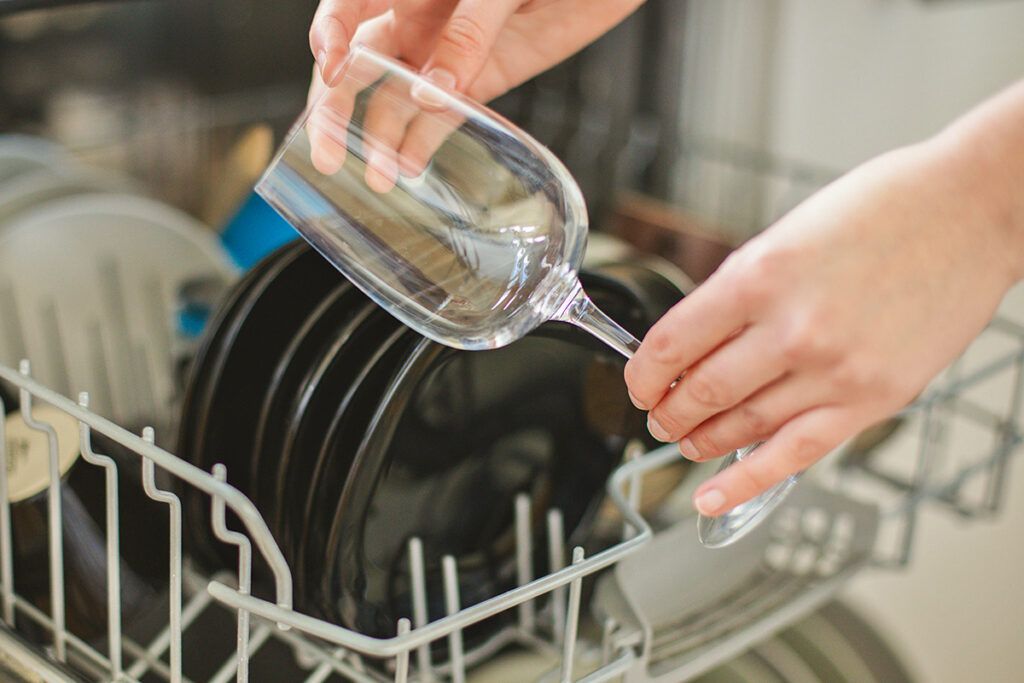
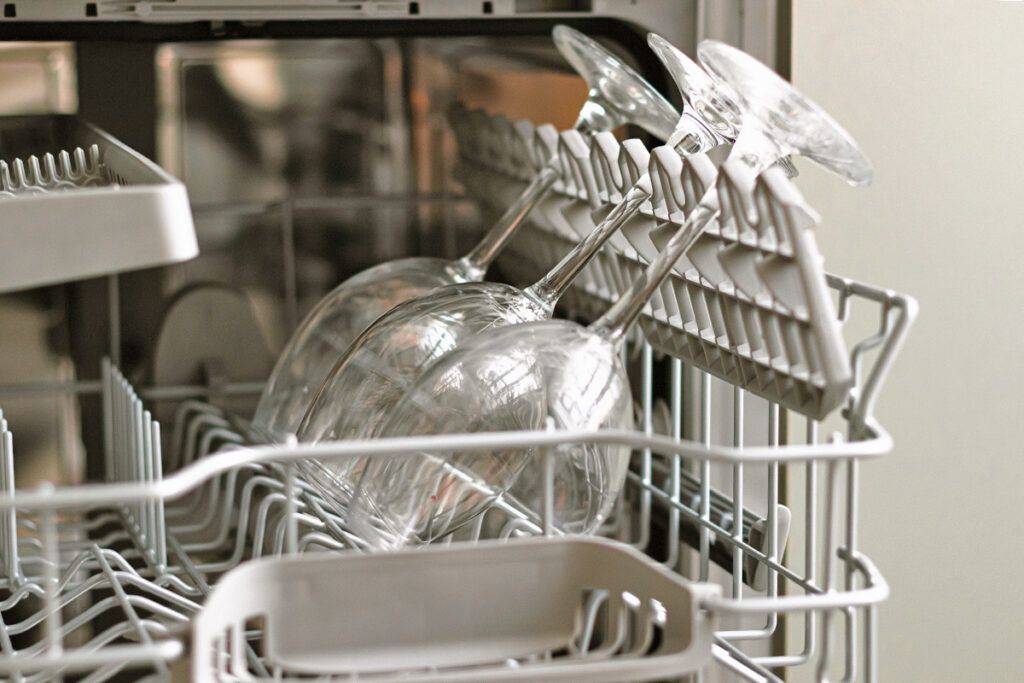
Wine glasses in dishwasher
Credit: © Serhiy Chaiko/stock.adobe.com

How To Protect Your Stemware

That doesn’t mean every wine glass belongs in the dishwasher. Experts caution that delicate, hand-blown, antique, or decorative glasses may still require hand-washing. So, before placing stemware in the dishwasher, check the manufacturer’s care instructions to confirm that it’s dishwasher-safe.

Advertisement

If they are, proper loading is key. Place the glasses securely in the top rack, face down, making sure they don’t touch one another or other dishes. According to Real Simple, keeping them a finger-width apart is a good rule of thumb. While these steps may sound simple, they can go a long way toward preventing chips, cracks, and other damage that can shorten the lifespan of your glassware.

Recommended Articles

  • The Safety Rules for Candles You Probably Don’t Know

  • 5 Things Your Car Needs Before the First Freeze

  • 6 Amazon Prime Day Hacks

  • 5 Things To Ask Your Doctor About the New Flu Shot

Advertisement
Advertisement

Reader Favorites

  • Woman looking in fridge

    9 Foods You Should Toss ASAP if They’re Expired

  • Person eating salad

    7 Things a Chef Never Orders at a Restaurant

  • Cherry angioma

    Are the Tiny Red Dots on Your Skin Dangerous?

It’s also worth paying attention to what you’re putting in the dishwasher besides wine glasses, as well as the condition of your dishwasher itself. Food particles, hard-water deposits, and clogged filters can affect cleaning performance and leave residue on glassware. Regularly cleaning the filter and checking that spray arms are free of debris can help ensure glasses come out spotless. Experts also recommend running the delicate cycle, skipping the heated dry, and using a rinse aid, which can help reduce water spots and improve drying — particularly in homes with hard water.

The key is knowing which glasses are dishwasher-safe and loading them correctly. For many modern wine glasses, the dishwasher isn’t a risky shortcut — it’s the cleaning method experts recommend to save you time and money.

Advertisement
Advertisement

Featured Image Credit: © aire images—Moment/Getty Images

More From Our Network

Better Report is part of Inbox Studio, an email-first media company. *Indicates a third-party property.

Go Retro With This 1960s Fashion Quiz

Quiz Daily

Go Retro With This 1960s Fashion Quiz

True or False: Are You a Master of U.S. Geography?

Travel Quiz

True or False: Are You a Master of U.S. Geography?

5 Reasons You Can Be Denied Boarding an Airplane

Daily Passport

5 Reasons You Can Be Denied Boarding an Airplane

What Did People Do Before Eyeglasses?

History Facts

What Did People Do Before Eyeglasses?

How To Use a Balloon To Clean Up Dust

House Outlook

How To Use a Balloon To Clean Up Dust

11 Shopping Hacks Costco Members Should Know

FinanceBuzz*

11 Shopping Hacks Costco Members Should Know

Share this article

  • Share to Facebook
  • Share to Twitter
  • Copy Url
  • Share to Email
Lauren Dana Ellman
Writer

Lauren Dana Ellman is a New York–based writer and editor specializing in lifestyle, travel, food, and shopping. A graduate of Syracuse University’s SI Newhouse School of Public Communications, she covers everything from destinations and hotels to fun product finds and personal essays. Her work has been featured in Condé Nast Traveler, AARP, Travel + Leisure, Time Out, The Knot, and more lifestyle-oriented publications.

This article is for general informational purposes only.
Affiliate Disclaimer Medical Disclaimer Financial Disclaimer

Updated: April 28, 2026
Posted In: Home
Hero Image Credit: Better Report
Advertisement

Related Articles

The Safety Rules for Candles You Probably Don’t Know

5 min read

9 Items in Your Basement You Should Toss Right Now

5 min read

5 Vegetables You Should Never Store in the Fridge

3 min read

Why a Flashing Check Engine Light Is Different From a Solid One

3 min read

Why Does Your Sink Have a Tiny Hole?

3 min read
Advertisement

Could Your Banking Habits Signal Future Dementia?

Wealth | Updated: June 23, 2026
Jennifer M. Wood
Author
Jennifer M. Wood has been writing about news, entertainment, culture, and travel for longer than she cares to admit. She lives just outside Philadelphia with her husband and an ever-growing menagerie of rescue pets.
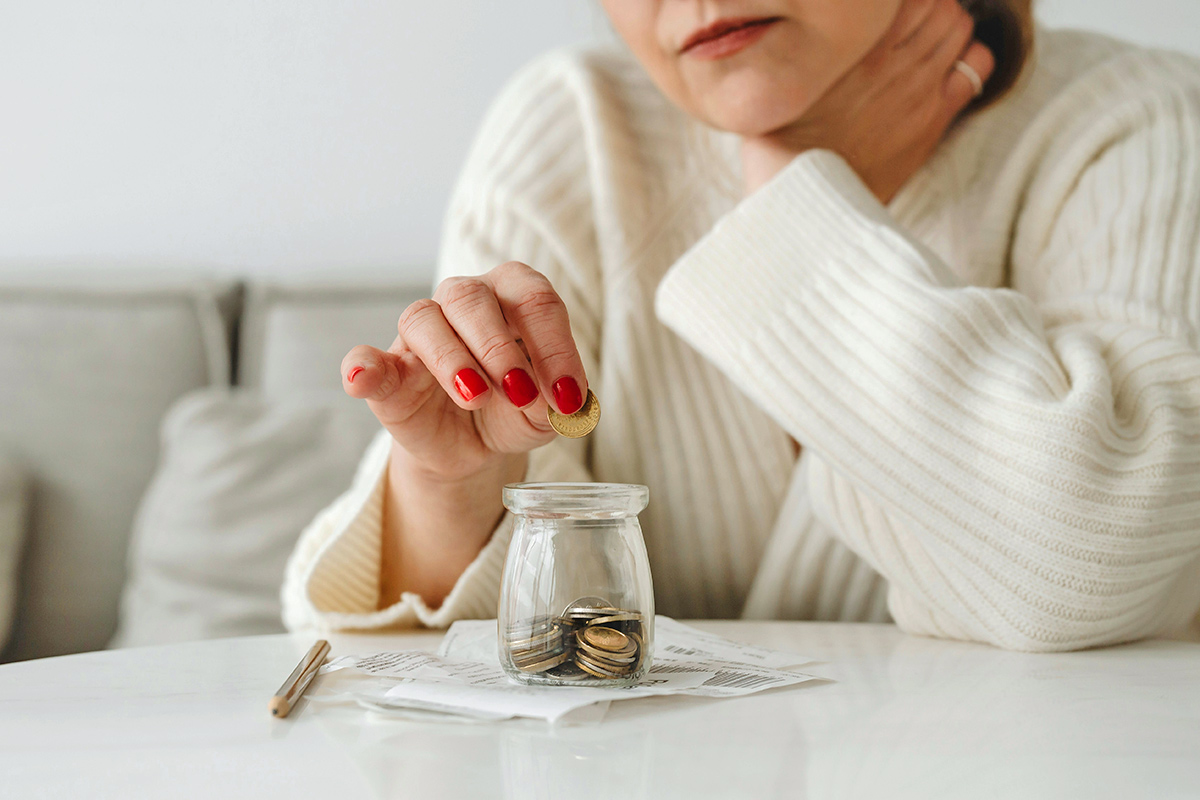
Woman putting coins in jar
Better Report

Long before memory lapses become noticeable, the earliest signs of dementia may show up somewhere unexpected: a person’s bank account.

In America alone, more than 6 million people are living with dementia. Typically, patients begin noticing telltale symptoms such as memory loss and challenges with word recall about three and a half years before they are officially diagnosed. But a new analysis suggests that changes in financial behavior may begin years before a formal diagnosis, potentially offering an early warning sign of cognitive decline.

Advertisement
Advertisement

“Dementia is one of the diseases where you lose a lot of cognitive capabilities over time that are unfortunately closely tied to our ability to manage our own money,” Lauren Nicholas, one of the study’s authors and a health economist and professor of geriatrics at the University of Colorado, told NPR. “We actually see that some of the earliest signs show up in your financial portfolio and your checkbook and kind of not in the standard tests your doctors are doing.”

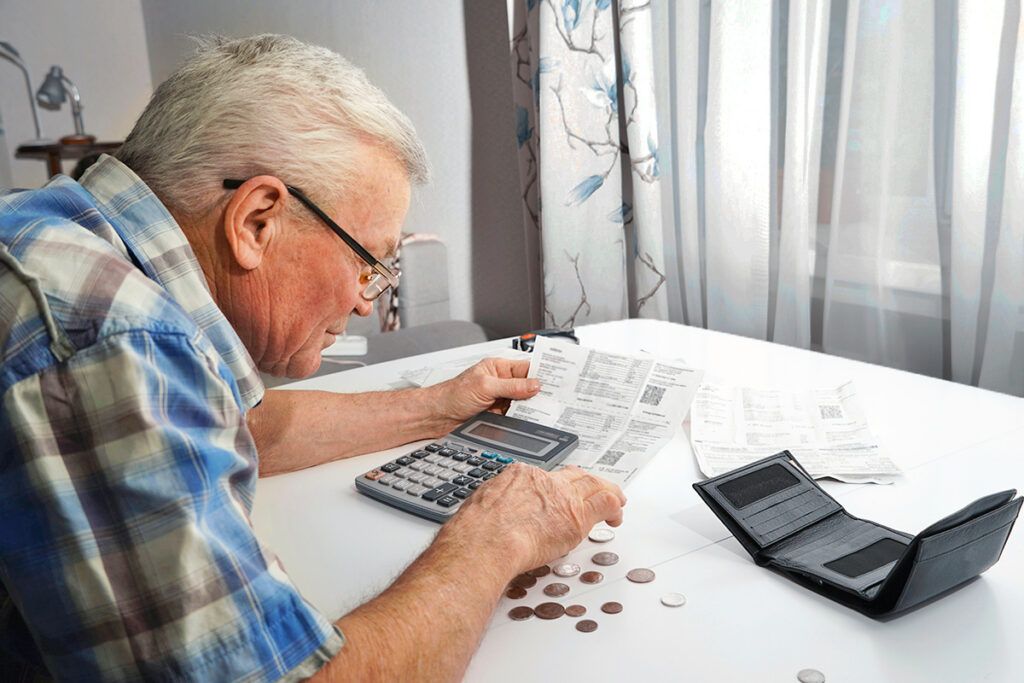
Older man looking at his bank statement
Credit: © Irene/stock.adobe.com

An Early Warning Sign 

To better understand when and how wealth decline may serve as an early sign of dementia, Nicholas and several colleagues from institutions across the nation analyzed nearly 20 years of data from the Health and Retirement Study to compare the financial behaviors of people who were later diagnosed with dementia with those of people who were not. 

Recommended Articles

  • The Safety Rules for Candles You Probably Don’t Know

  • 5 Things Your Car Needs Before the First Freeze

  • 6 Amazon Prime Day Hacks

  • 5 Things To Ask Your Doctor About the New Flu Shot

Advertisement
Advertisement

Reader Favorites

  • Woman looking in fridge

    9 Foods You Should Toss ASAP if They’re Expired

  • Person eating salad

    7 Things a Chef Never Orders at a Restaurant

  • Cherry angioma

    Are the Tiny Red Dots on Your Skin Dangerous?

Their findings, which were published in January, pointed to a striking conclusion: People who eventually developed dementia began to see their wealth diverge from that of otherwise similar adults about six years before the condition became clinically recognizable. Those losses were largely relegated to investment accounts, stocks, bonds, and mutual funds — assets that generally require ongoing attention and active decision-making. Checking and savings accounts saw losses as well.

The analysis found little evidence that the decline was driven by outside factors such as reduced earnings, increased health care expenses, or intentional spending. Instead, the researchers concluded that subtle cognitive changes may impair financial judgment and decision-making long before memory problems become apparent enough to prompt a medical diagnosis, or to even seek a doctor’s opinion.

Advertisement
Older couple reviewing papers
Credit: © shapecharge—E+/Getty Images

The Bright Side

The findings also suggest that many older adults may not recognize their own cognitive decline. However, there was one encouraging takeaway: People who received a timely memory-related diagnosis appeared to successfully stabilize their finances afterward, suggesting that early intervention and help with money management can make a meaningful difference before small mistakes become costly ones.

Advertisement
Advertisement

Nicholas and her colleagues believe these financial warning signs are unique to dementia, because those in the analysis who were diagnosed with other diseases such as cancer did not see a similar decline in the wealth of their households pre-diagnosis.

“Some personality changes happen early in the course of cognitive decline, which can include propensity to trust people, your risk tolerance,” she told NPR. “What happens commonly is …  even though you’re losing these capabilities, starting to forget about making your bill payments or something, you’re actually getting more confident in your abilities, and … you think you’re crushing it.”

Advertisement
Advertisement

In the future, Nicholas told NPR that the researchers would like to develop a model that looks at activity on credit reports, for example, and creates a financial dementia score that a physician can access to determine if further evaluation is needed. But, as the paper notes, “Addressing this risk requires coordination across multiple sectors, including health care, financial institutions, legal services, and policymakers,” and Nicholas believes a solution is at least a few years away. 

But that doesn’t mean that there’s nothing you can do to protect yourself. In the paper, the authors underscore the importance of putting safeguards — such as simplifying financial accounts or involving family members in financial decision-making — in place before cognitive problems become apparent. The sooner families recognize potential cognitive changes, the more opportunity they have to protect hard-earned savings.

Advertisement
Advertisement

Featured Image Credit: © Karolina Grabowska/unsplash.com

More From Our Network

Better Report is part of Inbox Studio, an email-first media company. *Indicates a third-party property.

Go Retro With This 1960s Fashion Quiz

Quiz Daily

Go Retro With This 1960s Fashion Quiz

True or False: Are You a Master of U.S. Geography?

Travel Quiz

True or False: Are You a Master of U.S. Geography?

5 Reasons You Can Be Denied Boarding an Airplane

Daily Passport

5 Reasons You Can Be Denied Boarding an Airplane

What Did People Do Before Eyeglasses?

History Facts

What Did People Do Before Eyeglasses?

How To Use a Balloon To Clean Up Dust

House Outlook

How To Use a Balloon To Clean Up Dust

11 Shopping Hacks Costco Members Should Know

FinanceBuzz*

11 Shopping Hacks Costco Members Should Know

Share this article

  • Share to Facebook
  • Share to Twitter
  • Copy Url
  • Share to Email
Jennifer M. Wood
Writer

Jennifer M. Wood has been writing about news, entertainment, culture, and travel for longer than she cares to admit. She lives just outside Philadelphia with her husband and an ever-growing menagerie of rescue pets.

This article is for general informational purposes only.
Affiliate Disclaimer Medical Disclaimer Financial Disclaimer

Updated: May 8, 2026
Posted In: Wealth
Hero Image Credit: Better Report
Advertisement

Related Articles

5 Things Your Car Needs Before the First Freeze

4 min read

6 Amazon Prime Day Hacks

6 min read

Is It Actually Better To Lease a Car?

9 min read

7 Free MIT Classes You Can Experience From Home

4 min read

The Bedroom Color That Adds $2,000 to Your Home Value

3 min read
Advertisement

How To Repel Mosquitoes Naturally

Health | Updated: June 23, 2026
Erin Scottberg
Author
Erin Scottberg is a Brooklyn-based writer, garden designer, and houseplant expert — and the founder of Full Sun Studio (fullsun.studio), a garden design and plant consulting studio in New York City. She holds an Urban Horticulture Certificate from Brooklyn Botanic Garden, an NYC Street Tree Pruner License, and an NYC Master Composter Certification, and spent three years as Head of Content and Education at The Sill. When she's not working, you can find her creating in her textile studio, running craft nights in her neighborhood, or hanging with her rescue pup, Sunny. She's an ambitious DIYer, avid composter, and has never been able to walk by a thirft store without taking a look.
Legs with bugs flying around
Better Report

Every summer, mosquitoes force most of us to choose between two less-than-ideal propositions: get eaten alive, or cover ourselves in an insect repellent that likely includes DEET. 

DEET-based topical repellents are widely used because DEET has a reputation for being effective. But between its strong chemical smell and the sticky, skin-irritating residue it leaves behind, it’s not the most pleasant experience. And though DEET is considered safe for human use, not everyone loves to douse themselves with a substance known to break down synthetic fabrics. 

Advertisement
Advertisement

There are plenty of non-DEET options on the shelves, but it’s unclear whether natural choices work as well. New research, however, brings some good news — and it involves patchouli oil. Yes, the same scent wafting out of your local health food store is actually effective at repelling mosquitoes. 

Asian tiger mosquito
Credit: © tacio philip/stock.adobe.com

What the Research Found

A study published in the journal ACS Omega in March found that patchouli oil mixed into an unscented lotion repelled mosquitoes just as effectively as DEET under controlled conditions. 

To test it, researchers had some brave volunteers of both sexes (the exact number isn’t specified) place their bare forearms inside a cage containing 50 live Aedes aegypti mosquitoes in 30-minute segments for a total of more than three hours.  Arms treated with the patchouli lotion had zero bites; arms treated with a commercial DEET product got the same result. The same cannot be said for the brave volunteer who stuck their arms in the cage without any repellent — they  did not fare as well.

Advertisement

The study didn’t examine exactly why patchouli works, but the researchers theorized that its strong scent may block a mosquito’s ability to detect humans, essentially rendering you invisible to bugs. 

Recommended Articles

  • The Safety Rules for Candles You Probably Don’t Know

  • 5 Things Your Car Needs Before the First Freeze

  • 6 Amazon Prime Day Hacks

  • 5 Things To Ask Your Doctor About the New Flu Shot

Advertisement
Advertisement

Reader Favorites

  • Woman looking in fridge

    9 Foods You Should Toss ASAP if They’re Expired

  • Person eating salad

    7 Things a Chef Never Orders at a Restaurant

  • Cherry angioma

    Are the Tiny Red Dots on Your Skin Dangerous?

Other experts say it may be that mosquitoes simply don’t care for the oil’s smell: “It’s an odiferous material that could repel mosquitoes,” Elmer Gray, an entomologist and mosquito control researcher at the University of Georgia, told Outside.com. (Gray was not involved in the study.)

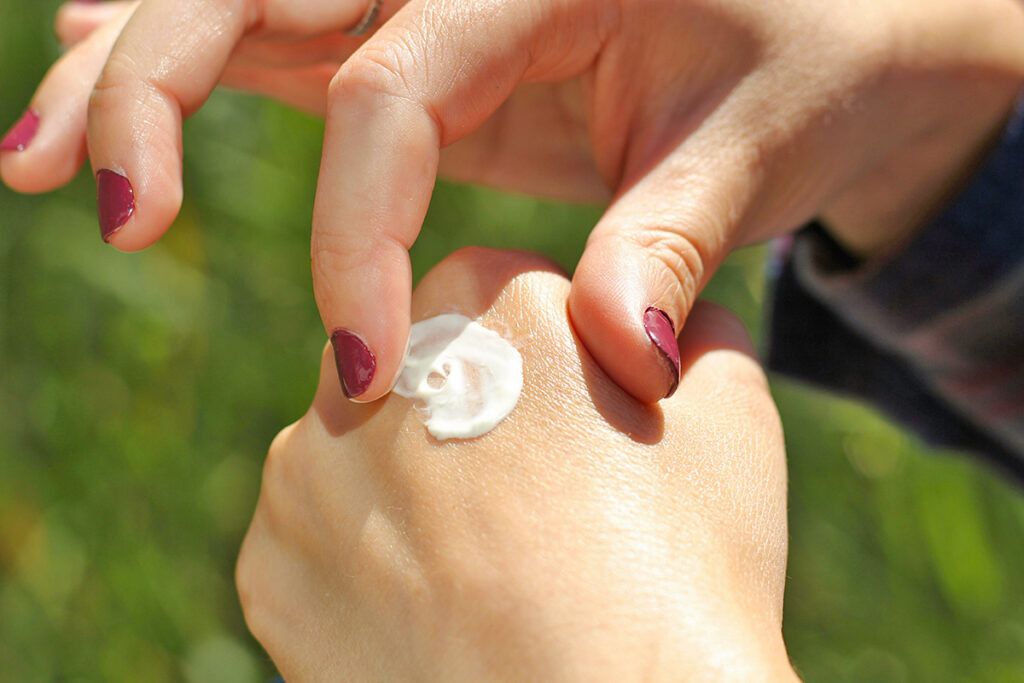
Lotion on hand
Credit: © Ana azuria/unsplash.com

How To Make Your Own

Patchouli oil breaks down quickly when exposed to air, which is why the researchers mixed it into a lotion rather than applying it straight. You can do the same at home with any standard unscented cream, like CeraVe.

Advertisement
Advertisement

Aim for a 1% solution: For every 8 ounces of lotion, add about 2.4 milliliters (roughly half a teaspoon) of patchouli oil. Mix well before applying. 

It’s possible to be allergic to patchouli oil, so it’s important to do a patch test to see how your skin will react. Apply a small amount of the patchouli lotion to the inside of your elbow twice a day for seven to 10 days. No redness or irritation means you’re good to go. If you do get a reaction, though, you should wash the lotion off immediately and not use it again. (Never apply undiluted essential oils to your skin, either; doing so can cause extreme irritation.) 

Advertisement
Advertisement

There’s also some evidence that patchouli oil affects blood clotting, so don’t try this DIY lotion if you have a bleeding disorder, are on blood-clotting medication, or have a major surgery coming up.

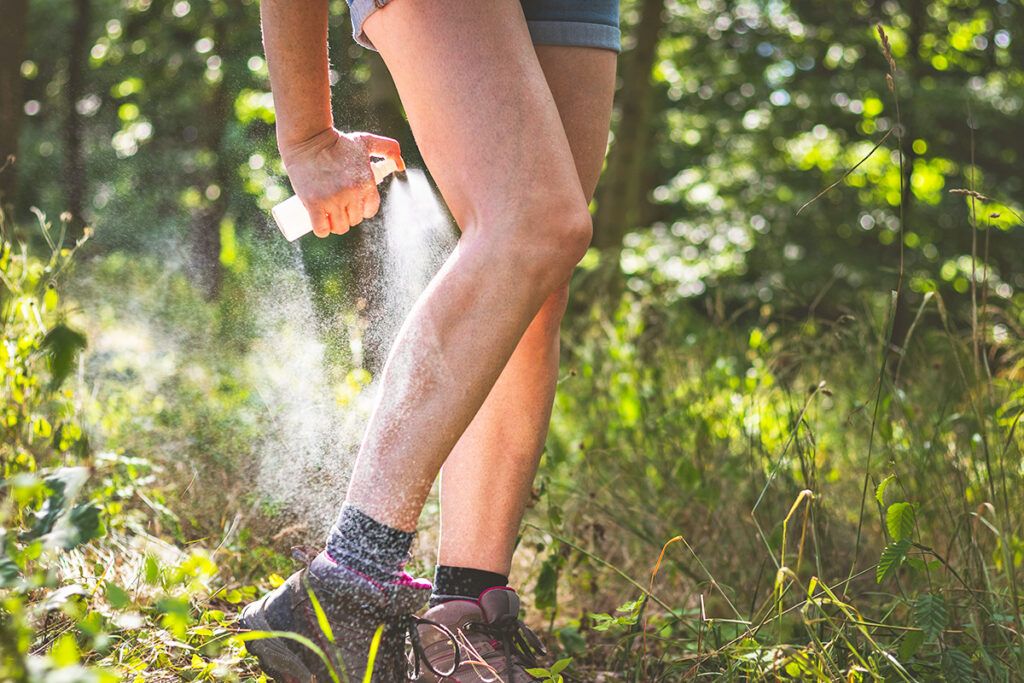
Spraying bug spray
Credit: © encierro/stock.adobe.com

Don’t Bug Out: A Few Important Caveats

Patchouli hasn’t been registered with the EPA as an approved repellent — that requires extensive testing — and this study was conducted under controlled lab conditions, so real-world results may vary. 

Advertisement
Advertisement

If you’ve tried the DIY lotion and are still getting bitten, you may end up grabbing a DEET-based repellent anyway — but there’s an interesting wrinkle there, too. A separate study published in the Journal of Experimental Biology found that mosquitoes can actually learn to associate the smell of DEET with food (that’s you), meaning that in theory, repeated exposure could make DEET-wearers more attractive to bugs over time. It’s kind of like Pavlov’s dog, except the dog is a mosquito that wants to bite you.

Advertisement

That said, in parts of the world where mosquito-borne diseases are a serious threat, DEET saves lives, and experts still consider it the gold standard for high-risk situations. For backyard evenings, though, a patchouli lotion will hopefully do the trick.

Featured Image Credit: © famveldman/stock.adobe.com

More From Our Network

Better Report is part of Inbox Studio, an email-first media company. *Indicates a third-party property.

Go Retro With This 1960s Fashion Quiz

Quiz Daily

Go Retro With This 1960s Fashion Quiz

True or False: Are You a Master of U.S. Geography?

Travel Quiz

True or False: Are You a Master of U.S. Geography?

5 Reasons You Can Be Denied Boarding an Airplane

Daily Passport

5 Reasons You Can Be Denied Boarding an Airplane

What Did People Do Before Eyeglasses?

History Facts

What Did People Do Before Eyeglasses?

How To Use a Balloon To Clean Up Dust

House Outlook

How To Use a Balloon To Clean Up Dust

11 Shopping Hacks Costco Members Should Know

FinanceBuzz*

11 Shopping Hacks Costco Members Should Know

Share this article

  • Share to Facebook
  • Share to Twitter
  • Copy Url
  • Share to Email
Erin Scottberg
Writer

Erin Scottberg is a Brooklyn-based writer, garden designer, and houseplant expert — and the founder of Full Sun Studio (fullsun.studio), a garden design and plant consulting studio in New York City. She holds an Urban Horticulture Certificate from Brooklyn Botanic Garden, an NYC Street Tree Pruner License, and an NYC Master Composter Certification, and spent three years as Head of Content and Education at The Sill. When she's not working, you can find her creating in her textile studio, running craft nights in her neighborhood, or hanging with her rescue pup, Sunny. She's an ambitious DIYer, avid composter, and has never been able to walk by a thirft store without taking a look.

This article is for general informational purposes only.
Affiliate Disclaimer Medical Disclaimer Financial Disclaimer
Updated: May 27, 2026
Posted In: Health
Hero Image Credit: Better Report
Advertisement

Related Articles

5 Things To Ask Your Doctor About the New Flu Shot

5 min read

Is Sourdough Actually Healthier Than Regular Bread?

7 min read

Do You Really Need a Bidet in Your Home?

4 min read

3 Common Sleep Habits That May Be Aging Your Brain

5 min read

Is the Traditional Mediterranean Diet Actually the Best for Your Brain?

4 min read
Advertisement

The Scary Scam That Could Leave You Without a Home

Ali Eldridge
Wealth | Updated: June 23, 2026
Exterior of a white house
Better Report

Your home is one of the biggest purchases you’ll ever make, so it’s essential to protect it however you can. But a sneaky scam has left an increasing number of homeowners vulnerable to fraudsters.

The scam goes by several names: Deed theft, deed fraud, title fraud, and home title theft are just a few of them. Some experts even refer to it as “house stealing,” and it’s a growing problem.

Advertisement
Advertisement

According to the FBI, between 2019 and 2023 alone, 58,141 victims reported losing a combined $1.3 billion to real estate fraud, though the bureau says the true number is likely far higher because many victims either don’t know where to report it, feel embarrassed, or don’t realize they’ve been scammed until much later.

In New York state, CBS News New York reported a 240% increase in complaints about home title thefts between 2023 and 2025 — enough to prompt Attorney General Letitia James to co-author a new law in 2024 that allowed her office to more thoroughly prosecute the crime.

“With the technology advancing and new ways of creating documents like birth certificates, Social Security numbers, any type of ID that you can make on the internet, it’s becoming much more prevalent and people are hearing that they have a voice about it now,” Queens District Attorney Melinda Katz said.

Advertisement
Mortgage deed
Credit: © peopleimages/stock.adobe.com

What Is Deed Theft?

Deed theft happens when a scammer illegally transfers ownership of a property into their own name by forging documents, stealing a homeowner’s identity, or impersonating the owner in fraudulent real estate filings. In many cases, the criminal files fake paperwork, such as a forged deed, with a county recorder’s office, making it appear as though the property was legally transferred.

Recommended Articles

  • The Safety Rules for Candles You Probably Don’t Know

  • 5 Things Your Car Needs Before the First Freeze

  • 6 Amazon Prime Day Hacks

  • 5 Things To Ask Your Doctor About the New Flu Shot

Advertisement
Advertisement

Reader Favorites

  • Woman looking in fridge

    9 Foods You Should Toss ASAP if They’re Expired

  • Person eating salad

    7 Things a Chef Never Orders at a Restaurant

  • Cherry angioma

    Are the Tiny Red Dots on Your Skin Dangerous?

Once the fraudulent deed is recorded, the scammer can attempt to sell the property, take out loans against it, or even rent it out — all without the true homeowner realizing what has happened.

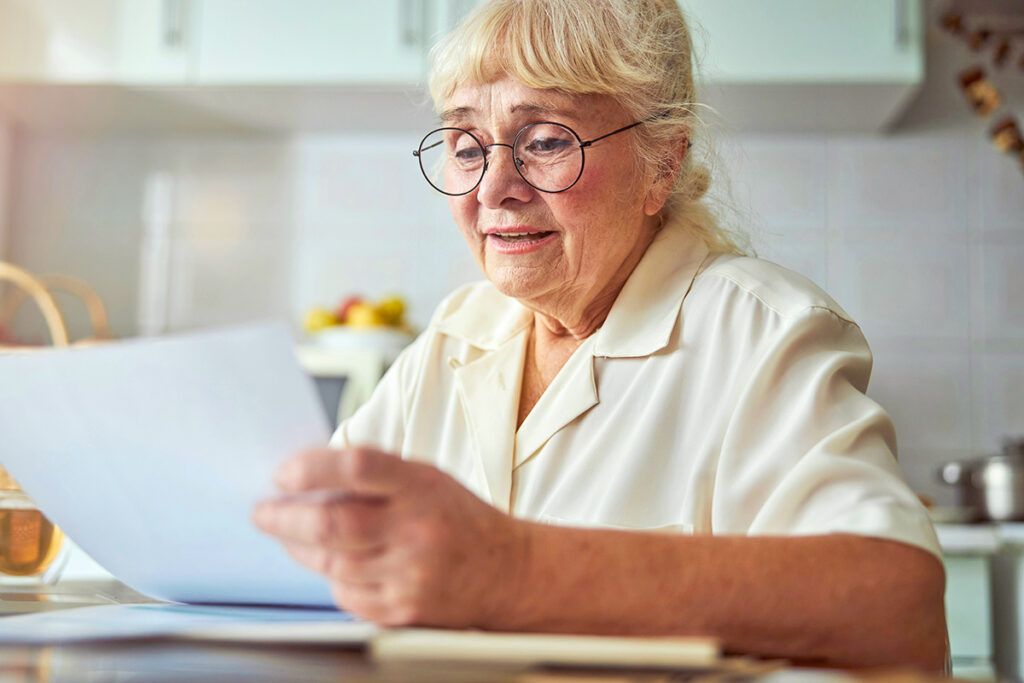
Older woman looking at paperwork
Credit: © Getty Images/unsplash.com

Who Is at Risk for Deed Theft?

In some cases, fraudsters target vacant homes or lots, rental properties, or vacation homes, since those properties may be monitored less frequently. Houses owned by the elderly may also be attractive to scammers, since those homeowners have likely paid off a lot of their mortgage, “which could equal more equity for a criminal to fraudulently borrow against,” according to the insurance company AllState. But experts warn that anyone can become a victim.

Advertisement
Advertisement

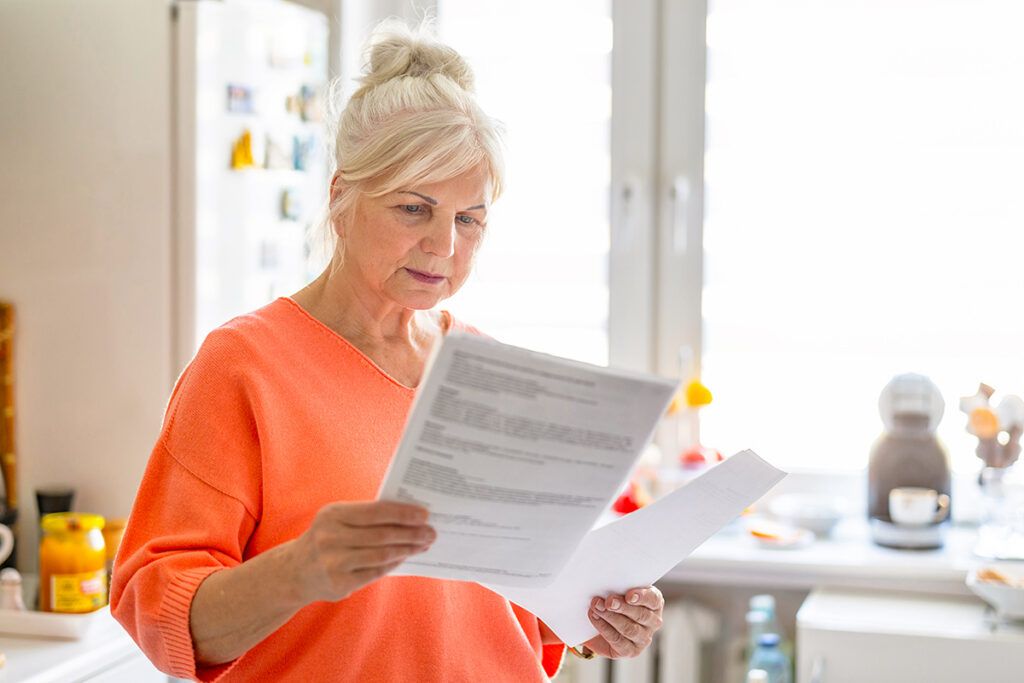
One reason deed theft can be so devastating is that it often isn’t discovered until major damage has already been done. Some homeowners learn about the scam only after receiving foreclosure notices, missing mortgage statements, receiving unfamiliar tax bills, or discovering that someone else has claimed ownership of their home.

Unlike dealing with credit card fraud, reversing deed theft can be a lengthy and expensive legal process that may require hiring attorneys and going to court to prove ownership.

Older woman looking at papers
Credit: © pikselstock/stock.adobe.com

How To Avoid Falling Victim to Deed Theft

While there’s no foolproof way to prevent deed theft, experts say there are several steps homeowners can take to reduce their risk:

Advertisement

• Regularly check your property records through your local county clerk or recorder’s office to make sure no unauthorized changes have been made.
• Sign up for property or title alerts if your county offers them. These notifications can warn you when documents are filed using your name or property address.
• Monitor your credit reports for suspicious activity, especially unexpected loans or lines of credit.
• Be wary of unsolicited offers related to your home, including requests to sign unfamiliar paperwork or pressure to refinance quickly.
• Protect sensitive personal information, since scammers often rely on stolen identities and forged signatures to commit deed fraud.
• If you own a vacant property, vacation home, or rental property, check in on it regularly and make sure mail isn’t piling up.
• Set up a Google Alert with your property address so if any activity involving your property occurs, like a real estate listing going live, you’ll see it.

Advertisement
Advertisement

Homeowners who suspect fraud should immediately contact local law enforcement, their county recorder’s office, and a real estate attorney. Among the things you’ll need are proof of your identity and original documents showing you’re the rightful owner; copies of fraudulent documents and unauthorized loan and filings; and logs of any communications you may have had with the thief.  

While a stolen credit card can usually be canceled with a single phone call, a stolen home is much more complicated. That’s why experts say keeping a close eye on your property records could help prevent a nightmare scenario before it starts.

Featured Image Credit: © Clay Banks/unsplash.com

More From Our Network

Better Report is part of Inbox Studio, an email-first media company. *Indicates a third-party property.

Go Retro With This 1960s Fashion Quiz

Quiz Daily

Go Retro With This 1960s Fashion Quiz

True or False: Are You a Master of U.S. Geography?

Travel Quiz

True or False: Are You a Master of U.S. Geography?

5 Reasons You Can Be Denied Boarding an Airplane

Daily Passport

5 Reasons You Can Be Denied Boarding an Airplane

What Did People Do Before Eyeglasses?

History Facts

What Did People Do Before Eyeglasses?

How To Use a Balloon To Clean Up Dust

House Outlook

How To Use a Balloon To Clean Up Dust

11 Shopping Hacks Costco Members Should Know

FinanceBuzz*

11 Shopping Hacks Costco Members Should Know

Share this article

  • Share to Facebook
  • Share to Twitter
  • Copy Url
  • Share to Email
Ali Eldridge

This article is for general informational purposes only.
Affiliate Disclaimer Medical Disclaimer Financial Disclaimer
Updated:
Posted In: Wealth
Hero Image Credit: Better Report
Advertisement

Related Articles

5 Things Your Car Needs Before the First Freeze

4 min read

6 Amazon Prime Day Hacks

6 min read

Is It Actually Better To Lease a Car?

9 min read

7 Free MIT Classes You Can Experience From Home

4 min read

The Bedroom Color That Adds $2,000 to Your Home Value

3 min read
Advertisement

7 Cars You Shouldn’t Buy Used in 2026

Wealth | Updated: June 22, 2026
Bennett Kleinman
Author
Bennett Kleinman is a New York City-based staff writer for Inbox Studio. He is also a freelance comedy writer, devoted New York Yankees and New Jersey Devils fan, and thinks plain seltzer is the best drink ever invented.
Used cars for sale
Better Report

When purchasing a new car isn’t financially viable, used vehicles are the next best thing. But not all used cars are created equal —  according to U.S. News & World Report, there are certain makes and models you’ll want to avoid if you’re shopping used this year. Here are the seven worst offenders based on their metrics.

Credit: © Image courtesy of Kelly Blue Book

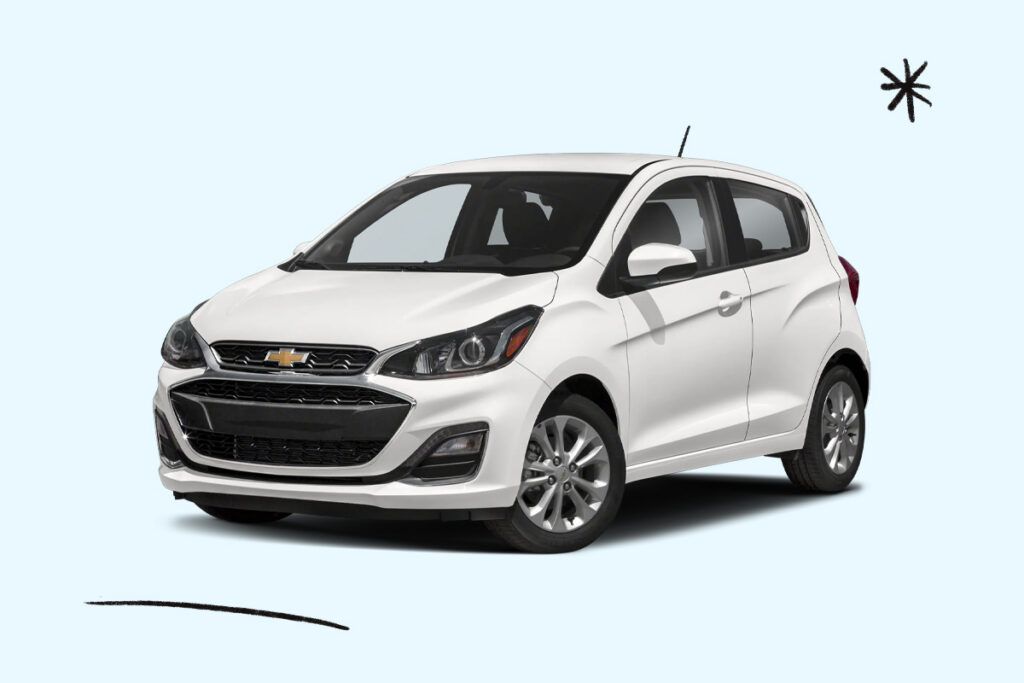
7. 2022 Chevrolet Spark

Seven of the 10 vehicles covered in U.S. News & World Report came out in 2022, starting with the 2022 Chevrolet Spark. While the car is compact and maneuverable, it also has pretty average mpg ratings for a car of its size: 29–30 when driving in the city and 37–38 on the highway (though U.S. News & World Report notes that the latter mpg is “nothing to sneeze at”). It also has a cramped interior, doesn’t handle bumpy roads well, and is downright slow due to its weak engine. The Spark wasn’t made again after 2022.

Advertisement
Advertisement
Credit: © Image courtesy of Kelly Blue Book

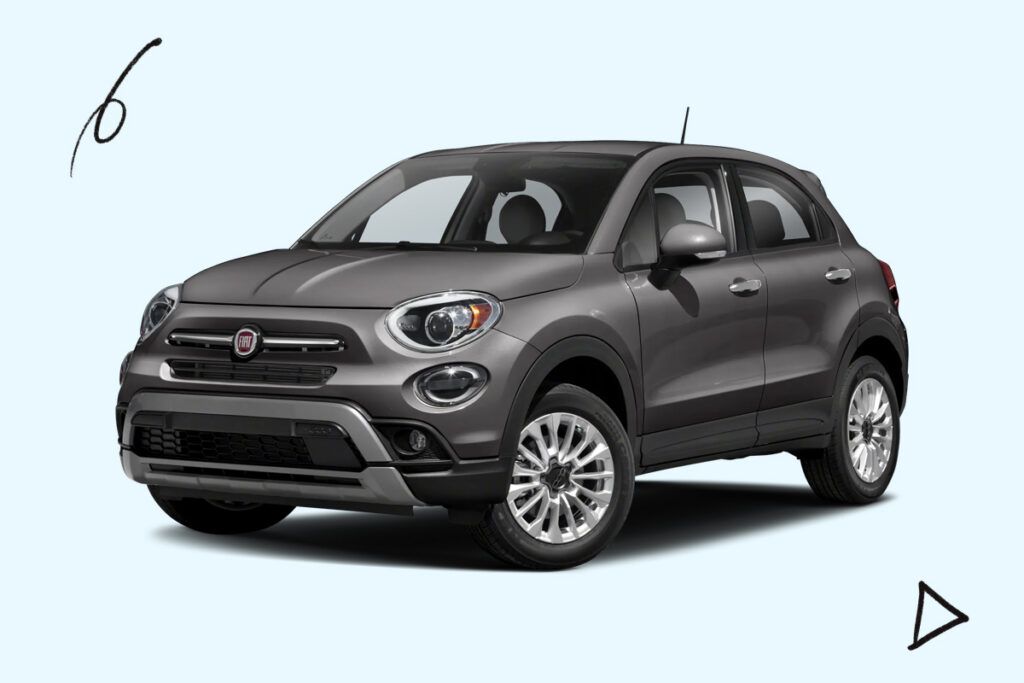
6. 2022 Fiat 500X

The 2022 Fiat 500X subcompact SUV is another vehicle you should avoid, in large part due to the fact that it feels cramped and jostles around every time you hit a bump on the road. It also lacks suitable cargo space and has a wonky transmission, which U.S. News & World Report states is “indecisive and apparently views downshifting as a mortal sin.” The 500x was discontinued in 2023.

Credit: © Image courtesy of Kelly Blue Book

5. 2022 Toyota C-HR

While Toyota typically has a reputation for producing reliable vehicles, the company’s 2022 C-HR is an exception. Despite earning a 9.2/10 safety rating from U.S. News & World Report, it received a paltry 4.8 rating for performance and a 5.1 rating for its lackluster interior. This vehicle is also slow, features below-average cargo capacity, and has an engine that emits an unpleasant droning sound.

Recommended Articles

  • The Safety Rules for Candles You Probably Don’t Know

  • 5 Things Your Car Needs Before the First Freeze

  • 6 Amazon Prime Day Hacks

  • 5 Things To Ask Your Doctor About the New Flu Shot

Advertisement
Advertisement

Reader Favorites

  • Woman looking in fridge

    9 Foods You Should Toss ASAP if They’re Expired

  • Person eating salad

    7 Things a Chef Never Orders at a Restaurant

  • Cherry angioma

    Are the Tiny Red Dots on Your Skin Dangerous?

Credit: © Image courtesy of Kelly Blue Book

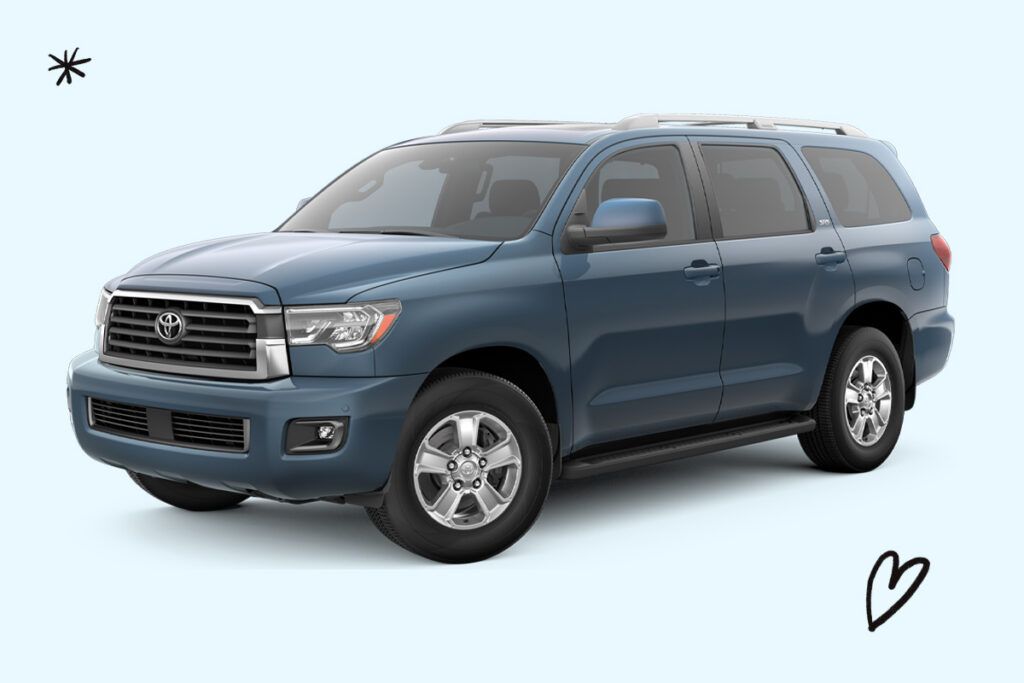
4. 2022 Toyota Sequoia

The 2022 Toyota Sequoia is the second Toyota on the list (there are three total). While U.S. News & World Report praises this SUV for its powerful 381-horsepower V8 engine, it has terrible fuel efficiency — just 13 mpg in the city and 17 mpg on the highway — so unless you’re looking to blow your paycheck at the pump, it’s best to avoid this model. In addition to poor fuel economy, the 2022 Sequoia has a tiny touch screen, a dated infotainment system, and parts made of low-grade plastic material. The Sequoia was redesigned the following year.

Credit: © Image courtesy of Kelly Blue Book

3. 2022 Mitsubishi Outlander Sport

According to U.S. News & World Report, Mitsubishi’s 2022 Outlander Sport was made of cheap material and felt underpowered to drive as well as uncomfortable to ride in. The publication gave it just a 3.5/10 for performance, and a slightly better 4.7 for its interior. The fuel economy also isn’t great for a vehicle of its size: It gets just 23–24 mpg in the city and 28–30 mpg on the highway.

Advertisement
Advertisement
Credit: © Image courtesy of Kelly Blue Book

2. 2022 Ford EcoSport

Despite being billed as an eco-friendly subcompact SUV, the 2022 Ford EcoSport lacks the good fuel economy that you’d normally associate with that kind of car — it gets only 23 mpg in the city and 29 mpg on the highway. The interior is also quite cramped, especially in the rear row of seats. As if that weren’t bad enough,  it has poor acceleration, iffy handling, and an infotainment display that measures a mere 4.2 inches. Your iPhone screen is bigger. The model was discontinued in 2022.

Advertisement
Credit: © Image courtesy of Kelly Blue Book

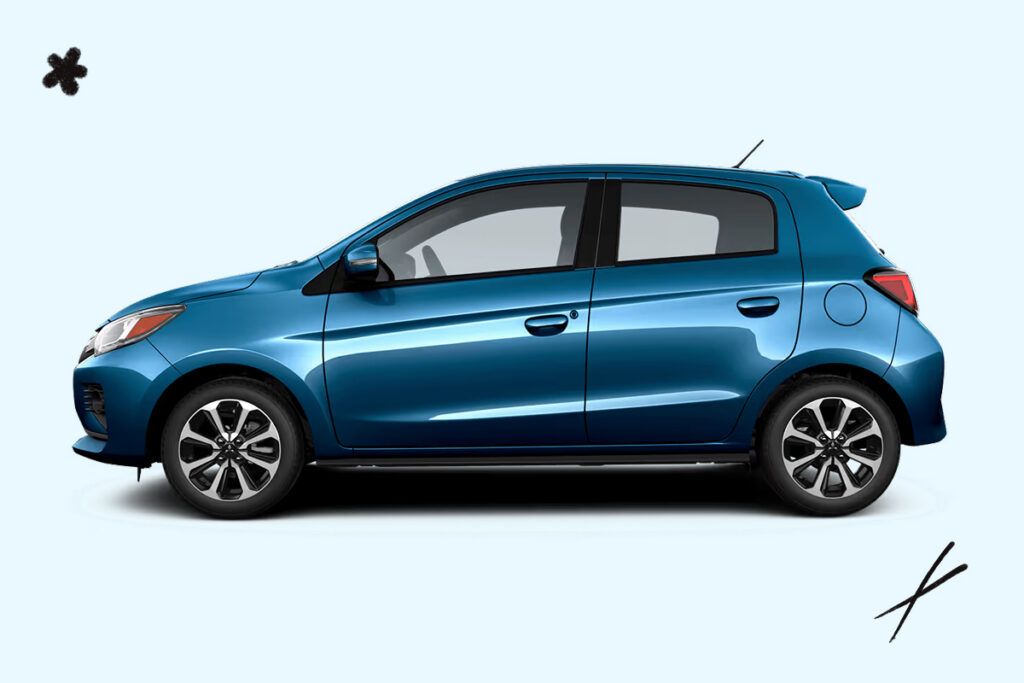
1. 2022 Mitsubishi Mirage

While it’s often an honor to be ranked No. 1, this time, it’s a distinction that Mitsubishi would probably prefer to avoid. The 2022 Mitsubishi Mirage is considered by U.S. News & World Report to be the worst used car to buy right now. Its underpowered engine, small trunk, and “lifeless handling” mean that this model simply isn’t worth it. Also, it takes a staggering 13 seconds for the car to go from 0 to 60 mph, which may feel like an eternity as you try to merge onto the highway. U.S. News & World Report notes that the model was discontinued in 2024, cheekily adding, “The real tragedy is that it didn’t happen sooner.”

To see the complete list, head to U.S. News & World Report.

Advertisement
Advertisement

Featured Image Credit: © jetcityimage/stock.adobe.com

More From Our Network

Better Report is part of Inbox Studio, an email-first media company. *Indicates a third-party property.

Go Retro With This 1960s Fashion Quiz

Quiz Daily

Go Retro With This 1960s Fashion Quiz

True or False: Are You a Master of U.S. Geography?

Travel Quiz

True or False: Are You a Master of U.S. Geography?

5 Reasons You Can Be Denied Boarding an Airplane

Daily Passport

5 Reasons You Can Be Denied Boarding an Airplane

What Did People Do Before Eyeglasses?

History Facts

What Did People Do Before Eyeglasses?

How To Use a Balloon To Clean Up Dust

House Outlook

How To Use a Balloon To Clean Up Dust

11 Shopping Hacks Costco Members Should Know

FinanceBuzz*

11 Shopping Hacks Costco Members Should Know

Share this article

  • Share to Facebook
  • Share to Twitter
  • Copy Url
  • Share to Email
Bennett Kleinman
Staff Writer

Bennett Kleinman is a New York City-based staff writer for Inbox Studio. He is also a freelance comedy writer, devoted New York Yankees and New Jersey Devils fan, and thinks plain seltzer is the best drink ever invented.

This article is for general informational purposes only.
Affiliate Disclaimer Medical Disclaimer Financial Disclaimer
Updated: July 20, 2023
Posted In: Wealth
Hero Image Credit: Better Report
Advertisement

Related Articles

5 Things Your Car Needs Before the First Freeze

4 min read

6 Amazon Prime Day Hacks

6 min read

Is It Actually Better To Lease a Car?

9 min read

7 Free MIT Classes You Can Experience From Home

4 min read

The Bedroom Color That Adds $2,000 to Your Home Value

3 min read
Advertisement

How To Play Pickleball (Without Hurting Yourself)

Health | Updated: June 18, 2026
Nicole Pyles
Author
Based in Portland, Oregon, Nicole Pyles is an experienced freelance writer who writes about home and kitchen, health and wellness, and more. She's written for a variety of outlets, including Better Homes and Gardens, Tom's Guide, Better Report, and more.
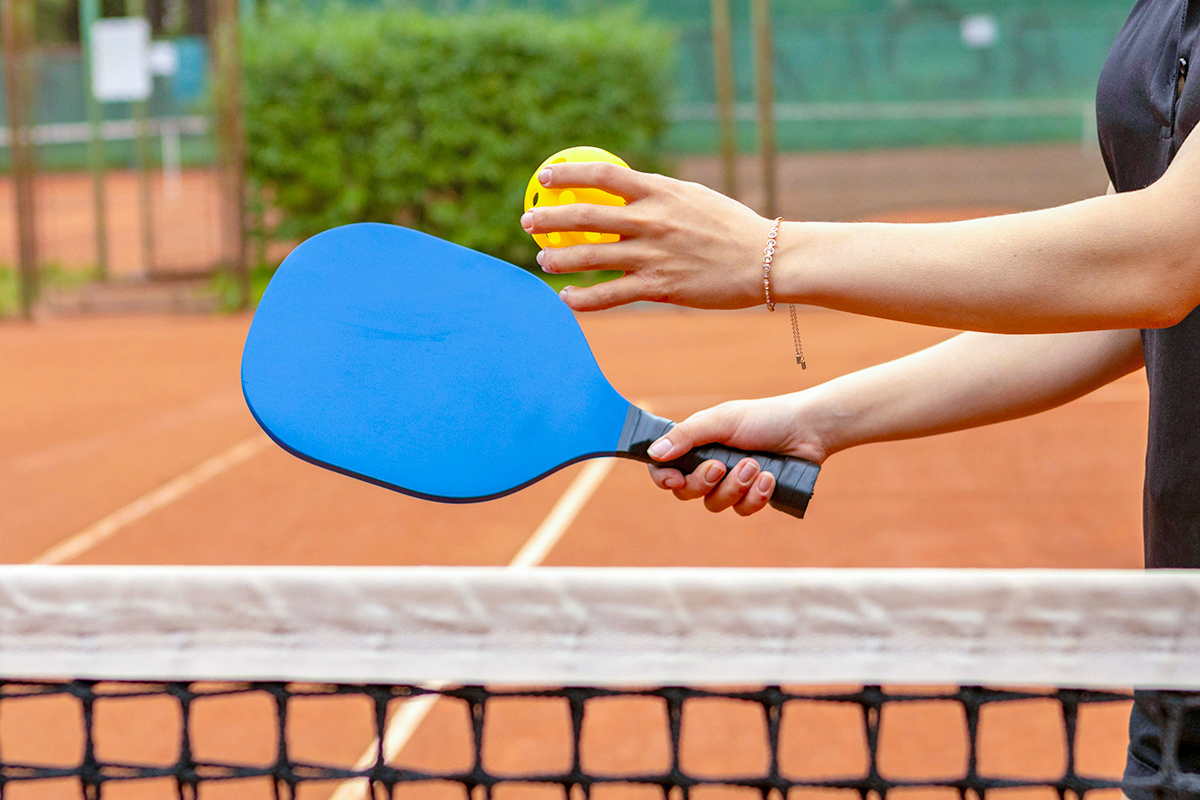
About to serve during Pickleball game
Better Report

All featured products and deals are selected independently and objectively by the author. Better Report may receive a share of sales via affiliate links in content.

Pickleball is the fastest-growing sport in the United States. The game was invented in the summer of 1965 by a group of neighbors who wanted to entertain their families, and there are now more than 24 million pickleball players (also known as picklers) nationwide, according to a recent report released by the Sports & Fitness Industry Association (SFIA). The sport is popular across all ages, too: The average age of pickleball players is 35, and more than 15% of players are 65 and older. Not bad for a game cobbled together using Ping-Pong paddles, a Wiffle ball, and a badminton court.

“One of the reasons pickleball has exploded in popularity is that it’s relatively affordable and easy to get started,” says Laura Gainor, founder and CEO of the marketing and lifestyle platform Pickleball in the Sun. Pickleball also has a number of benefits, including improved hand-eye coordination and better heart health, as well as increased happiness and a sense of well-being. So, if you’re ready to become a pickler yourself — or simply want to level up your game — we’ve put together guidelines that will help you step onto the court with confidence. 

Advertisement
Advertisement

Gear To Get Started

If you’re brand-new to the sport, getting the right gear is key. “The essentials are simple,” Gainor says. “A paddle, a few pickleballs, court shoes, and comfortable athletic apparel.”

JOOLA Pickleball paddle
Credit: © Image courtesy of JOOLA

Picking Your Paddle

According to Gainor, paddle technology has evolved a lot in recent years. She recommends going with a reputable brand that has options for players of all levels, such as JOOLA’s Vision Series, which provides “high-level performance at an accessible price point.” As you get more comfortable with the sport and your skills improve, you may want to consider premium options like the Pro V Series for “enhanced power, control, and feel.” 

Recommended Articles

  • The Safety Rules for Candles You Probably Don’t Know

  • 5 Things Your Car Needs Before the First Freeze

  • 6 Amazon Prime Day Hacks

  • 5 Things To Ask Your Doctor About the New Flu Shot

Advertisement
Advertisement

Reader Favorites

  • Woman looking in fridge

    9 Foods You Should Toss ASAP if They’re Expired

  • Person eating salad

    7 Things a Chef Never Orders at a Restaurant

  • Cherry angioma

    Are the Tiny Red Dots on Your Skin Dangerous?

Gainor also likes Franklin Sports paddles, which are used by the No. 1 pickleball player in the world, Anna Leigh Waters. “Their products are also widely available at major retailers such as Target and Dick’s Sporting Goods, making them an easy entry point for new players,” she says.

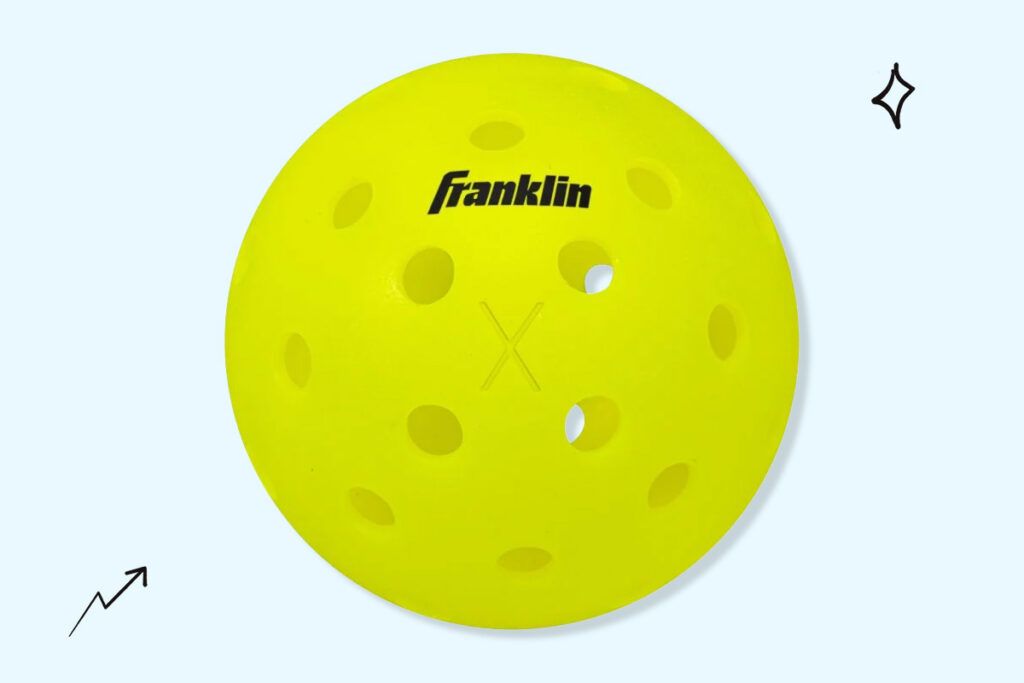
Franklin Pickleball
Credit: © Image courtesy of Franklin

Choosing the Pickleball

Gainor recommends the Franklin X-40 outdoor ball. “[It] remains one of the most popular and widely accepted balls in the sport,” she says, “making it a great choice for beginners looking to join games at their local courts.”

Advertisement
Advertisement
Skechers Pickleball Shoes
Credit: © Image courtesy of Skechers

Wearing the Right Shoes

The right shoes won’t just provide support while you play — they’ll also help you avoid injuries (more on that later). “Court shoes provide the stability and support needed to help reduce the risk of rolled ankles, slips, and other common injuries,” Gainor explains. Her go-to shoes are Skechers Viper Pro Court shoes, which are available for both men and women.

Advertisement
Advertisement
People playing pickleball as seen from above
Credit: © Unsplash+ Community/unsplash.com

Tips and Tricks for Leveling Up Your Pickleball Game

Here’s a simplified explanation of how pickleball works: You can play in singles or doubles, and while there are different strategies for each, the objective in both is to hit the ball over the net. Serves must be either underhand or drops, and there’s a two-bounce rule, meaning the serve needs to bounce, and the return must also bounce. After that, the rally continues until a player commits a fault — letting the ball bounce twice before hitting it, for example, or whacking a ball out of the air in the 14-foot area around the net, known as the non-volley zone or “the kitchen.” Only the team that serves can score points. The first team or player to reach 11 points with a two-point lead wins. When the game is done, it’s good sportsmanship to tap paddles with your opponent. (You can check out more in-depth rules for doubles play here and singles play here.)  

Advertisement
Advertisement

Once you’ve mastered the basics, you may feel ready to improve your pickleball skills. Gainor says one of the best ways to level up is to play consistently. “There’s no substitute for time on the court,” she says. “I personally block off time on my calendar every morning to play … That regular court time has been one of the biggest contributors to improving my game over the years.”

Advertisement

She also encourages instruction. “Working with a certified instructor can help you develop proper technique, improve your strategy, and correct bad habits before they become ingrained,” she says. Online platforms like Pickleheads can help you find personal instructors for private lessons, or you can play at a private club such as Pickleball Kingdom. You may also find classes through your local community college. 

Advertisement
Advertisement

If you only want to learn enough to have fun with the sport, that’s OK too. “Remember that improvement looks different for everyone,” Gainor says. “Some players want to compete at the highest levels, while others simply want to enjoy better matches with friends and family.” Whatever your goals are, she says, “Along the way, you’ll meet incredible people, discover new places to play, and become part of a welcoming community that makes the journey just as rewarding as the results.” 

Picklers tapping paddles
Credit: © Unsplash+ Community/unsplash.com

Finding Picklers To Play With

According to Gainor, in the early days of pickleball, finding places to play, and people to play with, was the biggest challenge. But as the sport has grown in popularity, that’s now one of the easiest parts of playing. There are more than 68,000 courts nationwide, according to Pickleheads. “Dedicated indoor and outdoor pickleball facilities have opened across the country, making it easier than ever to find courts and playing partners,” Gainor says.

Advertisement
Advertisement

If you want to play with others, Gainor suggests searching for local courts and checking their open-play schedule. Pickleheads has a large database of courts to help you find options near you. “Many local pickleball courts have a simple paddle-rack system where you can put your paddle up and rotate into games, making it easy to meet new people and start playing,” she says. You may need to pay fees or be a member to play, though, so do some research before heading out. 

Man playing pickleball
Credit: © joescarnici/stock.adobe.com

Avoiding Injuries as You Play

A 2025 study in the Orthopaedic Journal of Sports Medicine, which looked at pickleball injuries recorded in the National Electronic Injury Surveillance System (NEISS) between 2013 and 2022, showed that the majority of pickleball injuries — 61.1% — occur in players 65 to 80 years old, with 31.3% occurring in players ages 35 to 64. Falls caused the most injuries, the most common of which were fractures, followed by sprains. 

Advertisement
Advertisement

So, as you plan to play, remember that one of the best ways to avoid injury is to wear the right shoes. “A common mistake new players make is stepping onto the court in running shoes,” Gainor says. “Running shoes are designed for forward movement, while pickleball requires quick lateral movements, sudden stops, and changes of direction.”

She also recommends concentrating on your footwork, because chasing down shots can leave you off balance. So, “rather than backpedaling aggressively, which can lead to falls and injuries, players should focus on using proper footwork techniques,” she says. They include “side-stepping, turning and running to the ball when appropriate, and maintaining good balance.” 

Advertisement

Be wary of the shots you chase, too. “Being strategic about which balls to pursue and how you move to them can go a long way toward staying healthy on the court,” Gainor says.

Paying attention to any signs of fatigue before you play can also reduce your risk of injury. According to Gainor, “Many injuries happen late in matches when players become tired, and their footwork breaks down.”

Advertisement
Advertisement

Finally, if you’re playing during the hot-weather months, be sure to stay hydrated. “Pickleball can be deceptively demanding, especially during long sessions in the heat,” Gainor says. “Drink water before, during, and after play, and consider adding electrolytes when playing in high temperatures. Staying properly hydrated not only improves performance but can also help prevent cramps, dizziness, and heat-related illnesses.” These simple steps, Gainor says, “will help keep you on the court and enjoying the game for years to come.”

Featured Image Credit: © Alex Saks/unsplash.com

More From Our Network

Better Report is part of Inbox Studio, an email-first media company. *Indicates a third-party property.

Go Retro With This 1960s Fashion Quiz

Quiz Daily

Go Retro With This 1960s Fashion Quiz

True or False: Are You a Master of U.S. Geography?

Travel Quiz

True or False: Are You a Master of U.S. Geography?

5 Reasons You Can Be Denied Boarding an Airplane

Daily Passport

5 Reasons You Can Be Denied Boarding an Airplane

What Did People Do Before Eyeglasses?

History Facts

What Did People Do Before Eyeglasses?

How To Use a Balloon To Clean Up Dust

House Outlook

How To Use a Balloon To Clean Up Dust

11 Shopping Hacks Costco Members Should Know

FinanceBuzz*

11 Shopping Hacks Costco Members Should Know

Share this article

  • Share to Facebook
  • Share to Twitter
  • Copy Url
  • Share to Email
Nicole Pyles
Writer

Based in Portland, Oregon, Nicole Pyles is an experienced freelance writer who writes about home and kitchen, health and wellness, and more. She's written for a variety of outlets, including Better Homes and Gardens, Tom's Guide, Better Report, and more.

This article is for general informational purposes only.
Affiliate Disclaimer Medical Disclaimer Financial Disclaimer
Updated: September 18, 2024
Posted In: Health
Hero Image Credit: Better Report
Advertisement

Related Articles

5 Things To Ask Your Doctor About the New Flu Shot

5 min read

Is Sourdough Actually Healthier Than Regular Bread?

7 min read

Do You Really Need a Bidet in Your Home?

4 min read

3 Common Sleep Habits That May Be Aging Your Brain

5 min read

Is the Traditional Mediterranean Diet Actually the Best for Your Brain?

4 min read
Advertisement

The Gross Reason Your Pillow Gets Heavier Over Time

Health | Updated: July 16, 2026
Sarah Gleim
Author
Sarah Gleim is an Atlanta-based freelancer with more than 25 years of experience writing and producing explainers and features about history, science, food, and health for media outlets like AARP, WebMD, The Conversation, History.com, HowStuffWorks, CNN, and others. She’s also the editor of several cookbooks for Southern Living and Cooking Light.
Woman holding pillow
Better Report

All featured products and deals are selected independently and objectively by the author. Better Report may receive a share of sales via affiliate links in content.

You probably don’t think much about your pillow except when you lay your head on it at night. But the experts at the Sleep Foundation say that an optimal sleep environment is critical to a good night’s rest — and that includes a great pillow.

Once your pillow is past its prime, it’ll be lumpy and saggy, and it won’t support your head and neck properly. It likely has gotten heavier while you’ve been sleeping, too, and you won’t like why.

Advertisement
Advertisement
Woman sleeping
Credit: © Space_Cat—iStock/Getty Images

What’s Lurking Inside Your Pillow?

Every night when you go to sleep, you’re exposing your pillow and sheets to organic debris, moisture, and microscopic life, including dead skin, dirt, bacteria, dust, dust mites, sweat, drool, and skin oils. Over time, they get trapped in your pillow’s filling and fibers and increase its overall weight (though it won’t double in weight, as some posts around the internet claim).

According to the Cleveland Clinic, you shed nearly half a teaspoon of dead skin every night while you sleep. Many of these microscopic cells end up in your pillow, where they provide the perfect food source for dust mites.

These tiny arachnids — and their droppings — account for 10% of the weight of a 2-year-old pillow, according to LiveScience, and have the potential to make you sick. Dust mites are one of the most common household allergens and they thrive in warm, humid environments like pillows. (Depending on what material your pillow is made out of, you may be able to wash it to keep dust mites from building up. If you’re able to do so, aim to throw your pillow in the wash every six months.)

Recommended Articles

  • The Safety Rules for Candles You Probably Don’t Know

  • 5 Things Your Car Needs Before the First Freeze

  • 6 Amazon Prime Day Hacks

  • 5 Things To Ask Your Doctor About the New Flu Shot

Advertisement
Advertisement

Reader Favorites

  • Woman looking in fridge

    9 Foods You Should Toss ASAP if They’re Expired

  • Person eating salad

    7 Things a Chef Never Orders at a Restaurant

  • Cherry angioma

    Are the Tiny Red Dots on Your Skin Dangerous?

And if you sweat, drool, or put wet hair on your pillow, you’re providing dust mites exactly what they need. You’re also adding to the weight of your pillow.

Advertisement

Sweating at night is normal, especially if your room is too warm. Some conditions, including menopause and certain infections, can make you sweat excessively at night. Your pillow will absorb some of that moisture. And if the air is humid, the moisture can stay trapped in the filling, making your pillow feel heavier. It may even cause it to turn yellow.

Stack of pillows
Credit: © Hanna Pad/Pexels.com

The Type of Pillow Matters

The kind of filling in your pillow is a factor, too. Researchers at the Wellington Asthma Research Group found that pillows filled with synthetic materials like polyester had higher concentrations of dust mite allergens than feather pillows after 12 months of use.

But down and feather pillows aren’t perfect, either — they also trap debris and moisture. Memory foam isn’t much better; it does a poor job of preventing buildup of moisture and repelling dust mites.

Advertisement
Advertisement

Buckwheat hull pillows, on the other hand, are among the best at repelling dust mites and moisture. They’re filled with the shells of buckwheat seeds, which you can add or remove to modify the pillow’s shape to the curvature of your head and neck. The space between the hulls also lets air flow and moisture wick and dry easily.

Regardless of what material it’s made of, though, your pillow will gradually lose its structural integrity over time. The filling will compress and may get lumpy or flat. 

Advertisement
Advertisement

Synthetic pillows, including memory foam, also shed fibers and microplastics as they break down, and you could be exposed to these tiny particles every night. According to a 2025 study in PLOS One, the estimated amount of microplastics suspended in air indoors is “higher than previously thought”; these particles, which can penetrate into the lungs, “may contribute to causing lung tissue damage, inflammation, and associated diseases.”

Advertisement
Person pulling pillow out of pillowcase
Credit: © Nik/Unsplash.com

How Often Should I Replace My Pillow?

Even if you regularly wash your pillows, the Sleep Foundation recommends replacing your pillows at least every other year to ensure they’re providing proper support. You also may want to consider a pillow protector: A 2002 study demonstrated that using one can reduce the accumulation of dust mites. Consumer Reports suggests purchasing a pillow protector with fabric weave openings of 6 micrometers or less to help keep out the tiniest mites and skin cells.

Advertisement
Advertisement

Just remember, no pillow will stay pristine forever. They’ll collect your skin cells, sweat, and dust mites, which can make you sneeze, give you itchy eyes, and even cause asthma flare-ups. So if your pillow feels heavier, flatter, or lumpier, it’s probably time for a new one.

Featured Image Credit: © Iuliia Pilipeichenko—iStock/Getty Images

More From Our Network

Better Report is part of Inbox Studio, an email-first media company. *Indicates a third-party property.

Go Retro With This 1960s Fashion Quiz

Quiz Daily

Go Retro With This 1960s Fashion Quiz

True or False: Are You a Master of U.S. Geography?

Travel Quiz

True or False: Are You a Master of U.S. Geography?

5 Reasons You Can Be Denied Boarding an Airplane

Daily Passport

5 Reasons You Can Be Denied Boarding an Airplane

What Did People Do Before Eyeglasses?

History Facts

What Did People Do Before Eyeglasses?

How To Use a Balloon To Clean Up Dust

House Outlook

How To Use a Balloon To Clean Up Dust

11 Shopping Hacks Costco Members Should Know

FinanceBuzz*

11 Shopping Hacks Costco Members Should Know

Share this article

  • Share to Facebook
  • Share to Twitter
  • Copy Url
  • Share to Email
Sarah Gleim
Writer

Sarah Gleim is an Atlanta-based freelancer with more than 25 years of experience writing and producing explainers and features about history, science, food, and health for media outlets like AARP, WebMD, The Conversation, History.com, HowStuffWorks, CNN, and others. She’s also the editor of several cookbooks for Southern Living and Cooking Light.

This article is for general informational purposes only.
Affiliate Disclaimer Medical Disclaimer Financial Disclaimer

Updated: June 9, 2026
Posted In: Health
Hero Image Credit: Better Report

Advertisement

Related Articles

5 Things To Ask Your Doctor About the New Flu Shot
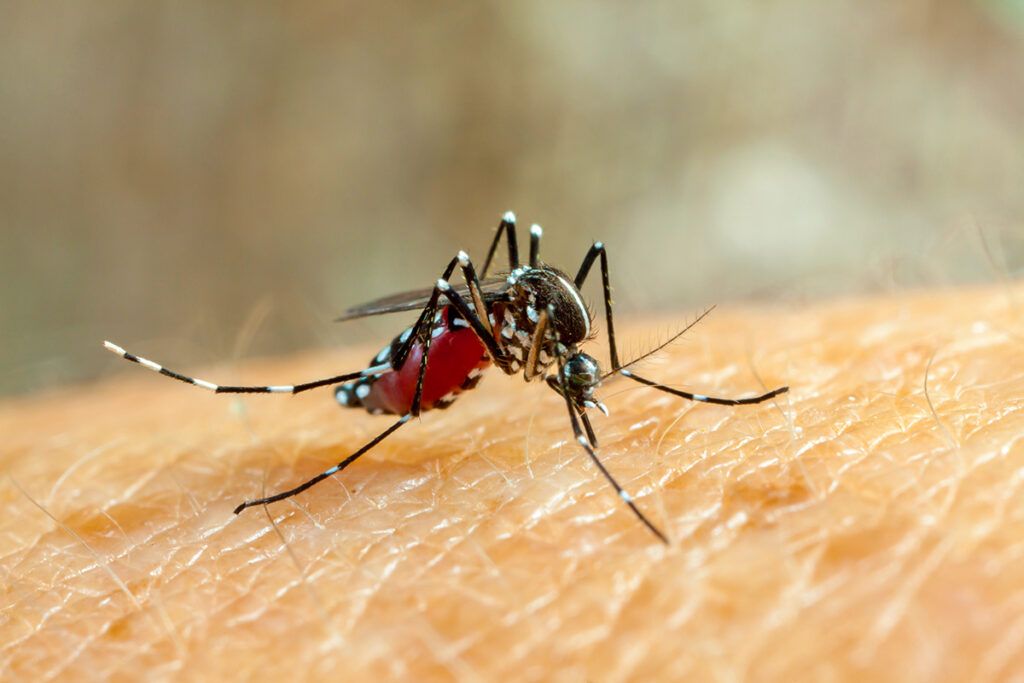
5 min read

Is Sourdough Actually Healthier Than Regular Bread?

7 min read

Do You Really Need a Bidet in Your Home?

4 min read

3 Common Sleep Habits That May Be Aging Your Brain

5 min read

Is the Traditional Mediterranean Diet Actually the Best for Your Brain?

4 min read
Advertisement

Posts navigation

Older posts
Newer posts
  • Home
  • Health
  • Wealth
  • Logo
  • Advertise
  • About
  • Contact Us
  • Privacy Policy
  • Terms of Use
  • Your Privacy Choices
x
Thumb Image

Elevate your everyday.

Sign up to receive the practical tips and expert advice you need to pare down the complexities of everyday living right in your inbox.

Sorry, your email address is not valid. Please try again.

Your email is:

Edit Image
Sorry, your email address is not valid. Please try again.
Thank you for subscribing...

By subscribing you are agreeing to our Terms of Use and Privacy Policy.

Close image
Thumb Image
Second Thumb Image

Elevate your everyday.

Sign up to receive the practical tips and expert advice you need to pare down the complexities of everyday living right in your inbox.

Sorry, your email address is not valid. Please try again.

By subscribing you are agreeing to our Privacy Policy and Terms of Use.

Close image