Skip to content
Better Report
  • Home
  • Health
  • Wealth
8 Low-Maintenance Plants That Thrive on Neglect
  • Search
  • Subscribe
  • Home
  • Health
  • Wealth
  • About
  • Privacy Policy
  • Terms of Use
  • Contact Us
  • SubscribeSubscribe
  • Search
Thank you for confirming your email! Welcome to the community.

Author: erin

8 Things Your Dentist Wishes You Wouldn’t Do

Health | Updated: June 18, 2026
Nicole Pyles
Author
Based in Portland, Oregon, Nicole Pyles is an experienced freelance writer who writes about home and kitchen, health and wellness, and more. She's written for a variety of outlets, including Better Homes and Gardens, Tom's Guide, Better Report, and more.
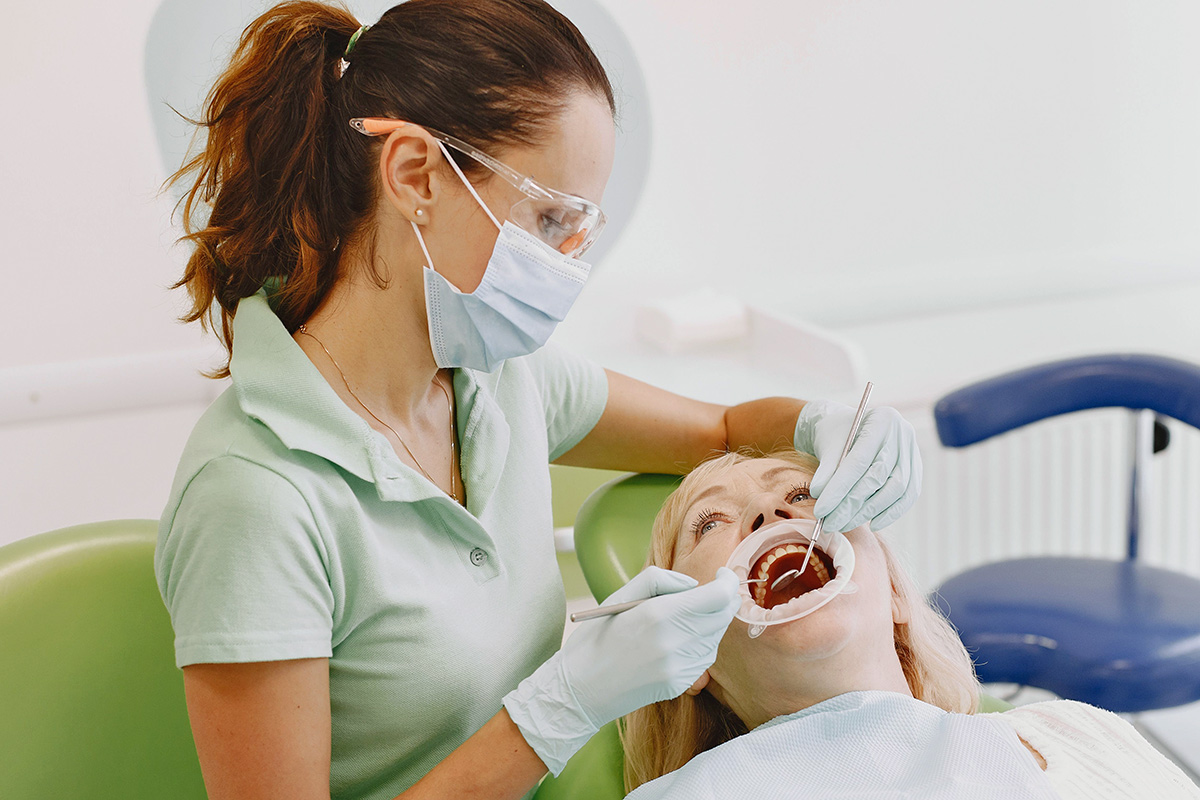
Dentist looking in a patient's mouth
Better Report

All featured products and deals are selected independently and objectively by the author. Better Report may receive a share of sales via affiliate links in content.

You want to keep your teeth healthy for as long as possible, and that requires practicing good oral habits. Most of us know the basics: Brush twice a day, floss at least once, and visit your dentist for regular checkups. But there are certain things that put our pearly whites at risk, from what we’re not doing (flossing, ahem) to dangerous DIY hacks. We spoke with Dr. Ann Nguyen-Chung, dentist and founder of the dental and body care brand Hippotanicals, and cosmetic dentist Dr. Bill Dorfman about what they wish their patients wouldn’t do to keep their teeth in good condition.
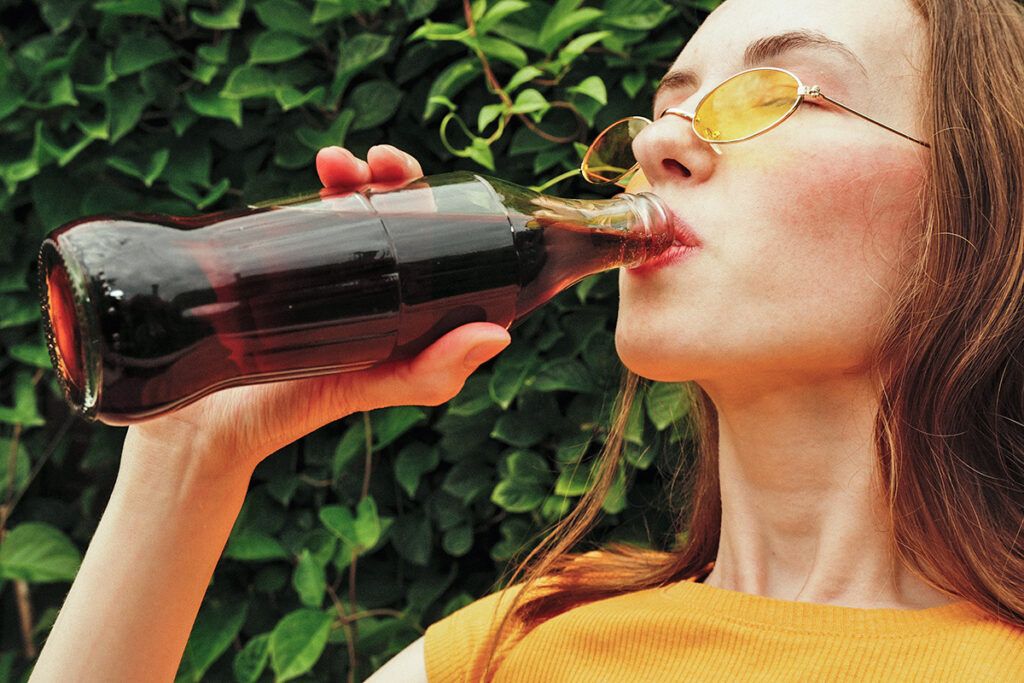
Woman drinking a soda
Credit: © Dmitrii Shirnin/Unsplash.com

Sipping All Day Long

We all have our beverages of choice, but before you pour a glass, beware: All-day sipping on anything other than plain water can expose your teeth to harmful acids that erode your enamel, the hard outer shell of your tooth. “Whether it’s soda, sports drinks, energy drinks, sweetened coffee, or even fruit juice, frequent exposure gives cavity-causing bacteria and acids more opportunities to damage teeth,” Dr. Nguyen-Chung says. “If you’re going to enjoy these beverages, it’s better to have them with a meal rather than continuously sipping for hours.”
Advertisement
Advertisement
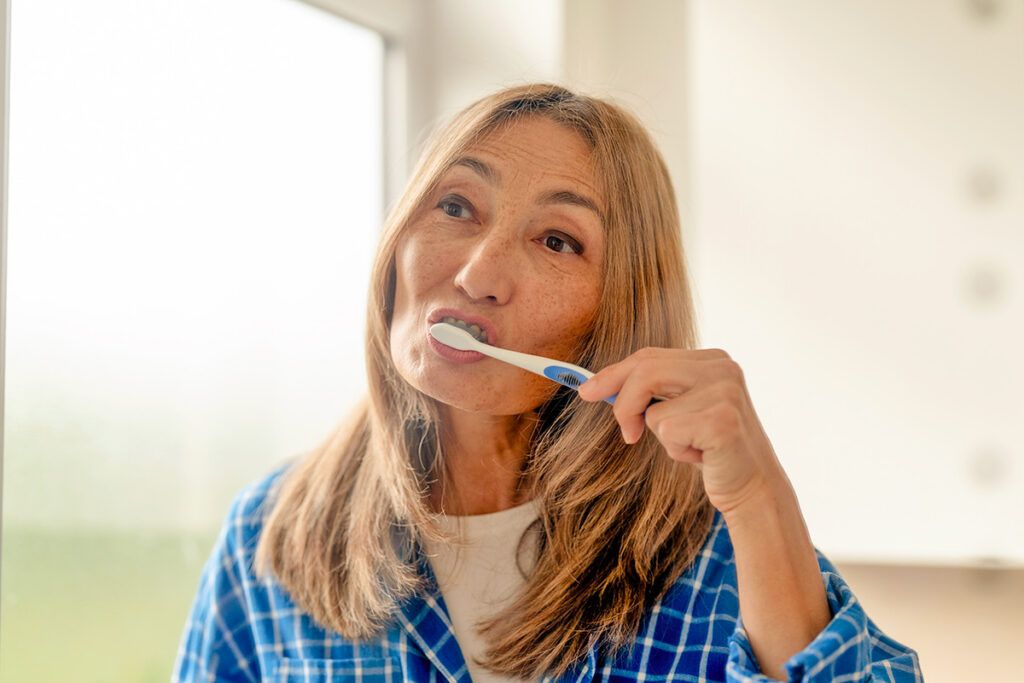
Woman brushing teeth
Credit: © Iryna Melnyk—iStock/Getty Images

Hard Brushing

It may sound contradictory, but brushing aggressively can harm your teeth. “Many people think scrubbing harder will clean their teeth better,” Dr. Nguyen-Chung says. “But it can actually wear away enamel and contribute to gum recession and enamel loss over time.”

Instead, she recommends using a soft-bristled toothbrush and gentle techniques. Hold the brush at a 45-degree angle and brush all surfaces of your teeth with circular motions. If you’re using an electric toothbrush, apply gentle pressure, glide the brush along your teeth, and let the bristles do the work. 
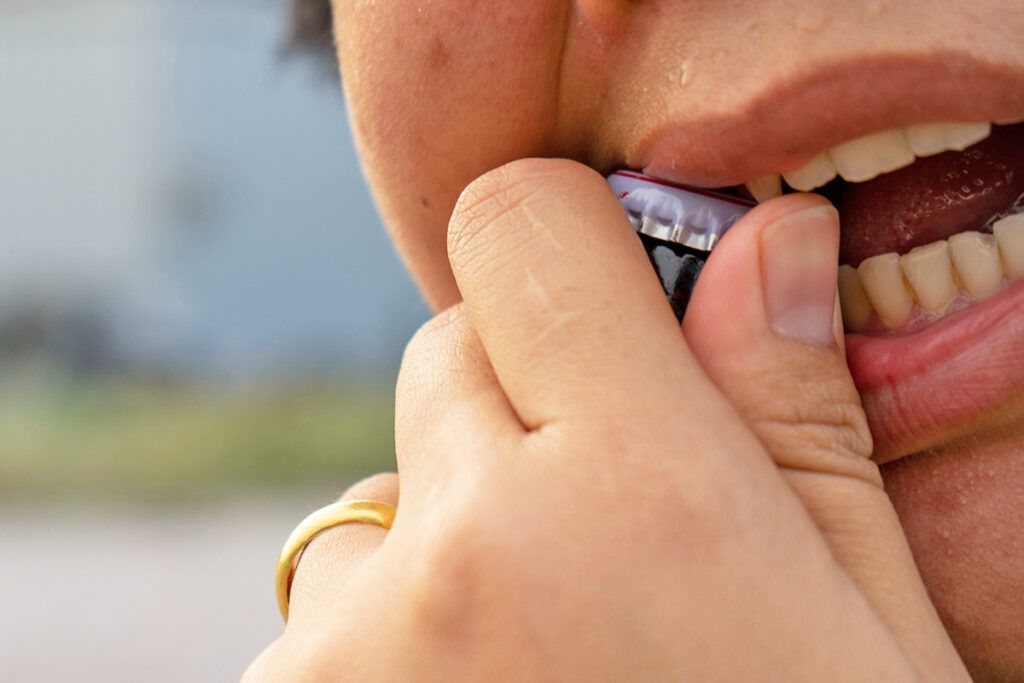
Opening bottle with teeth
Credit: © SIMONE/stock.adobe.com

Using Your Teeth as Tools

If you’ve ever opened a bottle or a package with your teeth, you’ve put yourself at risk for a dental emergency. “I’ve seen many patients crack or fracture teeth this way,” Dr. Nguyen-Chung says. “In some cases, the damage extends into the nerve of the tooth, requiring root canal treatment and a crown to save [it].”

Recommended Articles

  • The Safety Rules for Candles You Probably Don’t Know

  • 5 Things Your Car Needs Before the First Freeze

  • 6 Amazon Prime Day Hacks

  • 5 Things To Ask Your Doctor About the New Flu Shot

Advertisement
Advertisement

Reader Favorites

  • Woman looking in fridge

    9 Foods You Should Toss ASAP if They’re Expired

  • Person eating salad

    7 Things a Chef Never Orders at a Restaurant

  • Cherry angioma

    Are the Tiny Red Dots on Your Skin Dangerous?

You can eliminate the temptation to use your pearly whites as a bottle opener or pair of scissors by keeping those utensils nearby — add a key-chain-sized bottle opener to your house keys and leave scissors throughout your home. “Our teeth are designed for chewing food, not for opening or breaking objects,” Dr. Nguyen-Chung says.
Advertisement
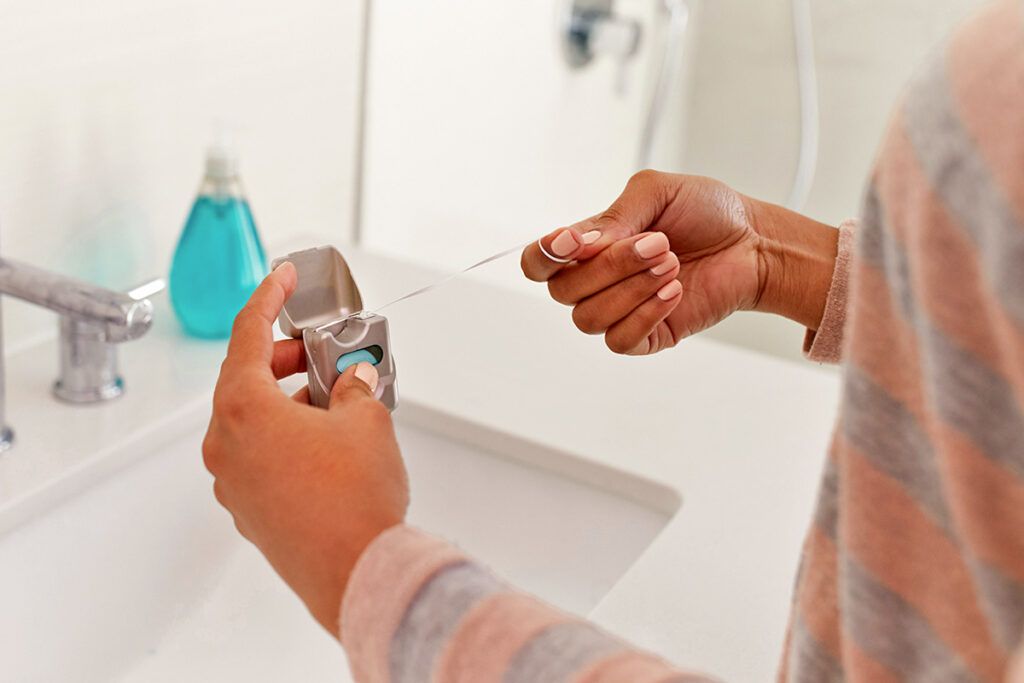
Hands holding floss
Credit: © Monkey Business/stock.adobe.com

Skipping Flossing

A 2014 survey by Delta Dental found that only 41% of adults floss once daily, and 20% never floss at all. That means most of us are skipping this essential part of the dental routine, which is an issue, according to Dr. Nguyen-Chung. “Since a toothbrush can’t effectively clean between teeth, plaque and food debris can accumulate in those areas, increasing the risk of cavities and gum disease,” she says.

Advertisement
Advertisement

If you don’t like traditional flossing methods, consider using interdental proxabrushes or water flossers instead. They’re great for adults with dexterity issues or those who don’t feel comfortable using traditional dental floss.

Biting nails
Credit: © blackday/stock.adobe.com

Chewing Any Nonfood Items

Take note if you’re a nail-biter or an ice-cruncher: These habits do more harm than good. “Biting … destroys your nails, which grow back, and your teeth, which don’t grow back,” Dr. Dorfman says. “Ice is too hard for normal biting and often cracks teeth.” 

Advertisement
Advertisement

If you have a hard time quitting your nail-biting habit, cut your nails short. Ice-crunchers can chill their drinks in the fridge or by using a frosted glass. And if you just like the chewing sensation, opt for sugar-free gum when the temptation strikes.
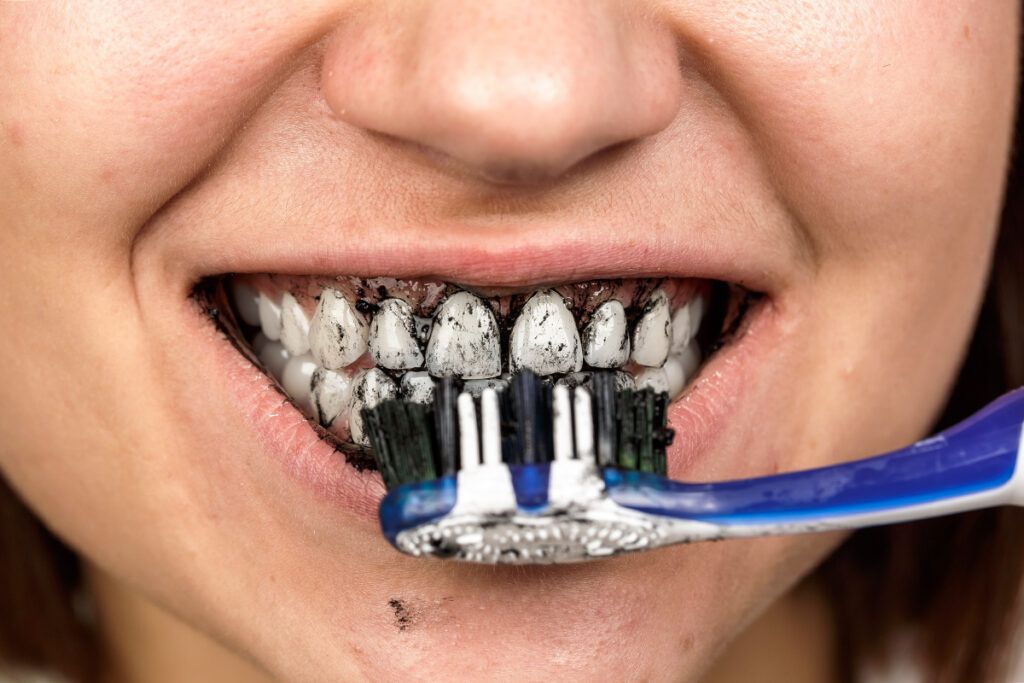
Brushing teeth with charcoal toothpaste
Credit: © Alex/stock.adobe.com

DIY Dental Work

Visiting the dentist can come with a healthy dose of anxiety — we’re all worried that we’ll get terrible news about our teeth. Unfortunately, that can lead people to consider DIY dental procedures, one of which, Dr. Dorfman says, is teeth filing. “People who have not gone to dental school decide to reshape their teeth with a nail file,” he says. “The problem here is that, unlike hair, teeth don’t grow back.”

Dr. Dorfman has also seen an alarming trend where people get veneers from someone other than a dentist: “This can cause several problems,” he says, “from permanent tooth and gum damage to malocclusion [aka a bad bite] and TMJ problems with your jaw.”

Advertisement
Advertisement

DIY whitening is also a bad idea. (This doesn’t include whitening strips, which are safe for most people when used as directed.) “Teeth whitening with hydrogen peroxide, lemon juice, or baking soda … can cause chemical burns, severe tooth sensitivity, enamel erosion, and unpredictable results,” Dr. Dorfman says. Dr. Nguyen-Chung concurs: “While [brushing with charcoal or other viral home remedies] may sound natural or effective, they can wear away enamel over time. Since enamel doesn’t grow back, the damage can be permanent.”

Advertisement
Woman eating chips
Credit: © Tim Samuel/Pexels.com

Frequent Snacking

Like all-day sipping, regular snacking puts your teeth at risk. “Every time we eat, especially carbohydrate-rich foods, the bacteria in our mouths produce acids that can contribute to tooth decay,” Dr. Nguyen-Chung says. “Giving your mouth time between meals allows saliva to help neutralize acids and protect your teeth naturally.” 

Advertisement
Advertisement

Instead of setting out a bag of chips to nosh on, opt for a mindful snacking choice that cuts your hunger craving and restores energy. Consider grabbing a piece of fruit, some veggies, or a handful of nuts for healthy nourishment. (If your enamel is weak, you may want to cut your fruit and veggies into more manageable pieces and soak nuts to make them easier on your teeth.) Rinse your mouth with water to remove any lingering food particles, or wait 30 minutes after snacking to brush.

Hands holding phone
Credit: © cottonbro studio/Pexels.com

Taking Oral Health Advice From Social Media

Influencers can come across very confidently on social media, so it’s hard to resist a seemingly hot take or pro tip on dental health. But Dr. Nguyen-Chung warns against following anyone’s advice without consulting a dental professional first. “Not every viral trend is backed by science, and what’s safe for one person may not be appropriate for another,” she says. “When it comes to your teeth, prevention is often much easier and less expensive than trying to fix damage later.” If you’re curious whether a trend or life hack for your teeth is safe, ask your dentist to confirm.

Feature Image Credit: © Gustavo Fring/Pexels.com

More From Our Network

Better Report is part of Inbox Studio, an email-first media company. *Indicates a third-party property.

Go Retro With This 1960s Fashion Quiz

Quiz Daily

Go Retro With This 1960s Fashion Quiz

True or False: Are You a Master of U.S. Geography?

Travel Quiz

True or False: Are You a Master of U.S. Geography?

5 Reasons You Can Be Denied Boarding an Airplane

Daily Passport

5 Reasons You Can Be Denied Boarding an Airplane

What Did People Do Before Eyeglasses?

History Facts

What Did People Do Before Eyeglasses?

How To Use a Balloon To Clean Up Dust

House Outlook

How To Use a Balloon To Clean Up Dust

11 Shopping Hacks Costco Members Should Know

FinanceBuzz*

11 Shopping Hacks Costco Members Should Know

Share this article

  • Share to Facebook
  • Share to Twitter
  • Copy Url
  • Share to Email
Nicole Pyles
Writer

Based in Portland, Oregon, Nicole Pyles is an experienced freelance writer who writes about home and kitchen, health and wellness, and more. She's written for a variety of outlets, including Better Homes and Gardens, Tom's Guide, Better Report, and more.

This article is for general informational purposes only.
Affiliate Disclaimer Medical Disclaimer Financial Disclaimer

Updated: September 18, 2024
Posted In: Health
Hero Image Credit: Better Report
Advertisement

Related Articles

5 Things To Ask Your Doctor About the New Flu Shot

5 min read

Is Sourdough Actually Healthier Than Regular Bread?

7 min read

Do You Really Need a Bidet in Your Home?

4 min read

3 Common Sleep Habits That May Be Aging Your Brain

5 min read

Is the Traditional Mediterranean Diet Actually the Best for Your Brain?

4 min read
Advertisement

Your Vintage Pyrex Could Be Worth Big Bucks

Wealth | Updated: June 16, 2026
Jennifer M. Wood
Author
Jennifer M. Wood has been writing about news, entertainment, culture, and travel for longer than she cares to admit. She lives just outside Philadelphia with her husband and an ever-growing menagerie of rescue pets.
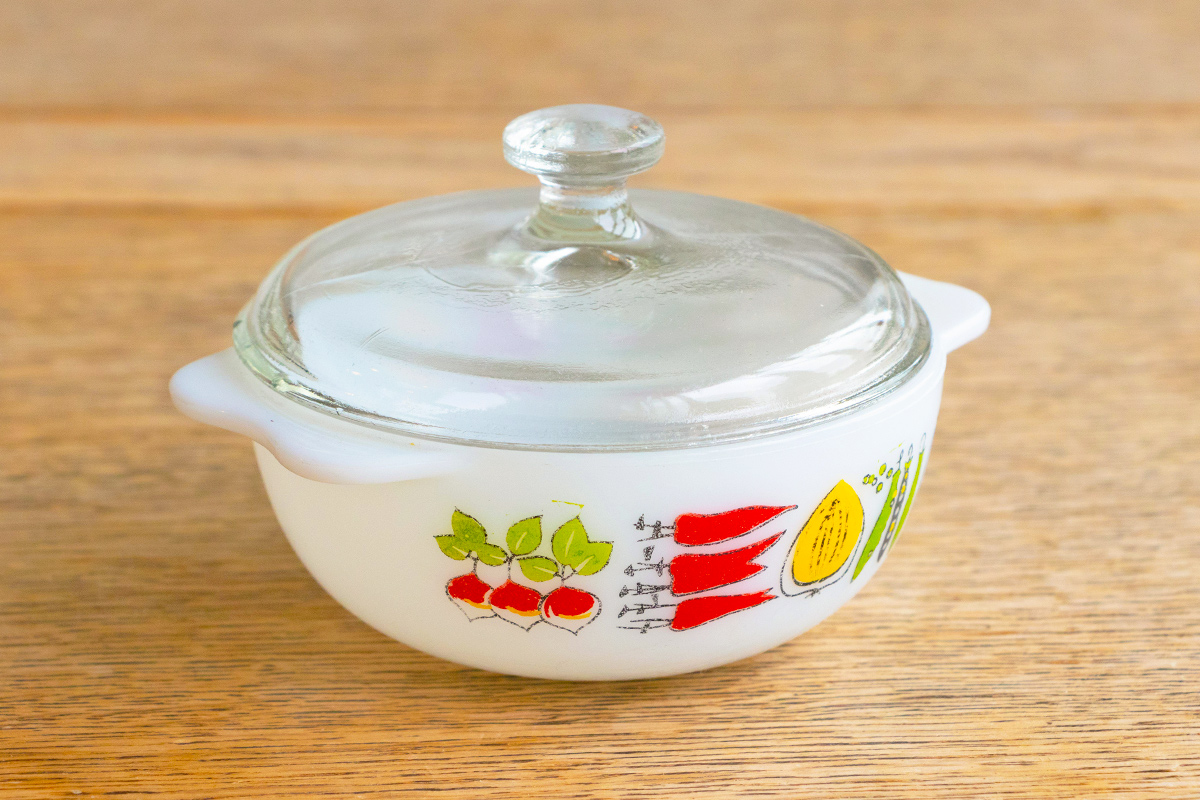
Vintage Pyrex
Better Report

For many Americans, vintage Pyrex dishes trigger a wave of nostalgia. But for collectors, that sentimental value can translate into serious cash.

The beloved kitchen brand, which has been a staple of family dinners for more than a century, is now a highly sought-after commodity, with some pieces selling for thousands of dollars among collectors. That means that you could have a small fortune stored beneath your sink or hidden away in your attic — as long as you know what you’re looking for.

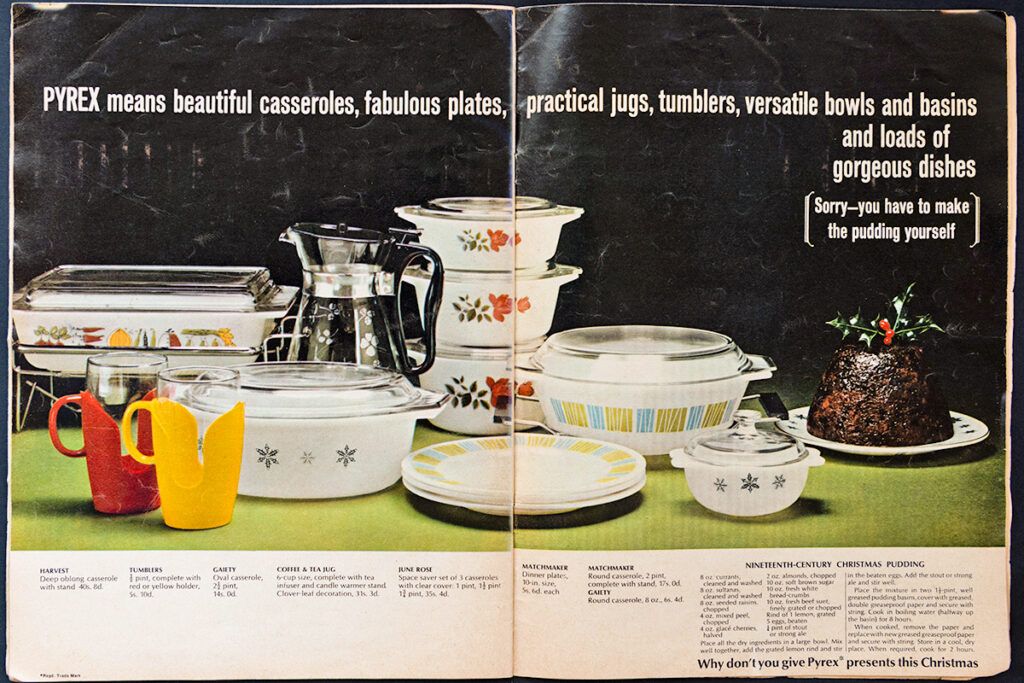
Pyrex ad in a magazine
Credit: © Kay Roxby/Alamy

What Is the Most Valuable Pyrex Piece? 

While Pyrex has gone through some changes in ownership and materials since it was first introduced in 1915, the company is still very much in business. And that’s part of the appeal: “One of the joys of collecting Pyrex is that valuable, sought-after pieces are still available,” Jolene Forrester, owner of JoRetro vintage shop in Havre de Grace, Maryland, which specializes in rare Pyrex pieces, told Country Living. 

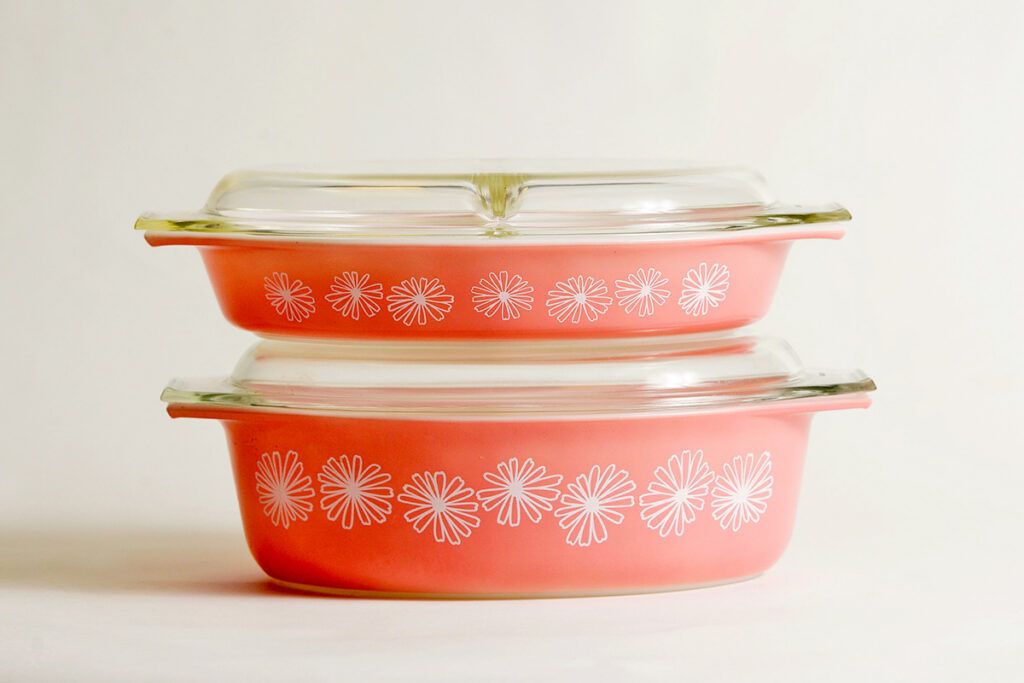
Still, if you’re looking to score a major payday, it’s often the decades-old exclusive or promotional pieces that are the most valuable. The extremely rare “Lucky in Love” pattern, a mix of hearts and shamrocks that was introduced in 1959, is considered the holy grail among Pyrex collectors, as the design was never mass-produced. In 2022, a casserole dish with the print sold for a whopping $22,100 on eBay (though according to experts, most go for between $4,000 and $10,000).

Advertisement

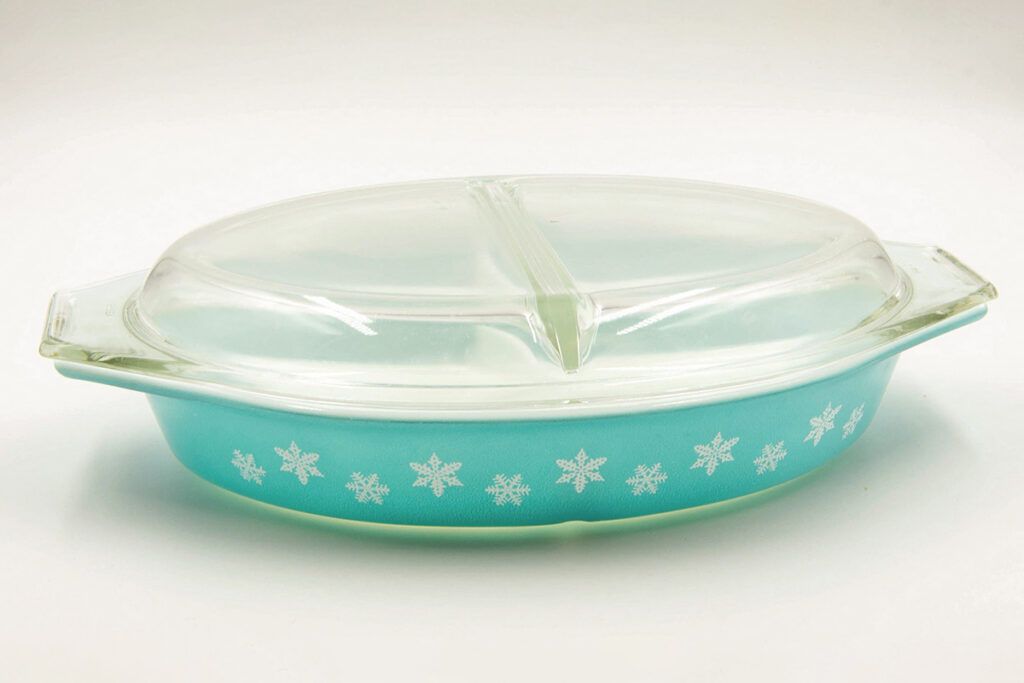
Other prints that can command top dollar include 1957’s Pumpkin Orange Amish Butterprint, which can be worth between $800 and $1,600; 1960’s Atomic Starburst print, which can sell for $600 to $1,500; and Atomic Eyes pieces, which can fetch between $200 and $650. “[T]his is a turquoise blue or pink mid-century elongated eye-shaped pattern that was made from 1950 to 1959 in a chip and dip service,” glass specialist Reyne Hirsch, who has appeared on Antiques Roadshow and American Pickers, told Parade. “Later, a coffee carafe was also produced.”

Vintage Pyrex
Credit: © Portland Press Herald/Getty Images

What To Look For When Evaluating Pyrex

While rare patterns are one of the surest ways to guarantee the value of your Pyrex, they’re not the only factor used in determining worth. Certain colors can yield higher values, as can condition. 

Two colors to keep an eye out for, according to Forrester, are “pinks and turquoises, which instantly stand out and were produced in more limited quantities.” 

Hirsch agrees with those color choices, and notes that the more complete a set is, the better. (Think space-saving casserole dishes, nesting sets, and items that include their original lids.)

Advertisement

As with any valuable item, the closer it is to like-new condition, the more valuable it will be. “Even small damage greatly reduces the value of each item,” Hirsch told Parade. “The damaged value is often 10% to 20% of the value if it was [in mint condition].” 

While Pyrex dishes are typically dishwasher- and microwave-safe, if you have collectible pieces you want to keep in the best possible condition, you should avoid putting them in the microwave and always hand-wash them.

Vintage Pyrex
Credit: © Sharon McCormack/Alamy

How Can I Tell If My Pyrex Is Worth Anything?

To determine whether that vintage dish gathering dust in your basement is worth anything, you need to authenticate it. The easiest way to do this is to first check for the Pyrex logo, which most items were stamped with.

Pyrex by Corning: A Collector’s Guide by Susan Tobier Rogove and Marcia Buan Steinhauer details nearly two dozen stamps used by the company between 1915 and 1965 to help you authenticate your piece and determine when it was made. A stamp that’s in all capital letters is often more valuable. If a piece’s color is faded, that can lower its value. “A lot of it was ruined by dishwashers,” vintage kitchenware seller David Ross told Martha Stewart Living.

Advertisement

Because Pyrex was made to be used, not displayed, valuable pieces are still hiding in kitchen cabinets, thrift stores, and attics across the country. So before you drop that old mixing bowl into the donation bin, you may want to flip it over and check the stamp first.

Featured Image Credit: © Hugh Williamson/Alamy

Advertisement
Advertisement

Related Articles

5 Things Your Car Needs Before the First Freeze

4 min read

6 Amazon Prime Day Hacks

6 min read

Is It Actually Better To Lease a Car?

9 min read

7 Free MIT Classes You Can Experience From Home

4 min read

The Bedroom Color That Adds $2,000 to Your Home Value

3 min read
Advertisement

11 Food Safety Rules You’re Probably Breaking

Ali Eldridge
Health | Updated: June 16, 2026
Woman making food
Better Report

All featured products and deals are selected independently and objectively by the author. Better Report may receive a share of sales via affiliate links in content.

Anyone who’s ever had formal culinary training can tell you that there’s a lot to learn about how to keep food safe — when I started my career, my classmates and I had to pass our food safety training before we were even allowed to set foot in the kitchen.  There’s good reason for that: According to the USDA’s Food Safety and Inspection Service, foodborne illness causes an estimated 48 million illnesses in the U.S. every year, and is responsible for about 3,000 deaths.   

The good news is that most of those illnesses are avoidable — it’s just a question of knowing (and following) food safety rules. As a former chef and food safety trainer, I see people breaking these 11 rules frequently. You’ll get away with them sometimes, but sooner or later, what you don’t know will hurt you and the ones you love. 

Advertisement
Advertisement
Person carrying insulated food bag
Credit: © Mizuno K/Pexels.com

Rule: Maintain the Cold Chain 

Your local supermarket is at the end of a very long shipping chain, and everyone who’s handled a product that’s perishable enough to require refrigeration or freezing — such as frozen shrimp — has checked and monitored its temperature at every step along the way. In the industry, this is referred to as “the cold chain.” 

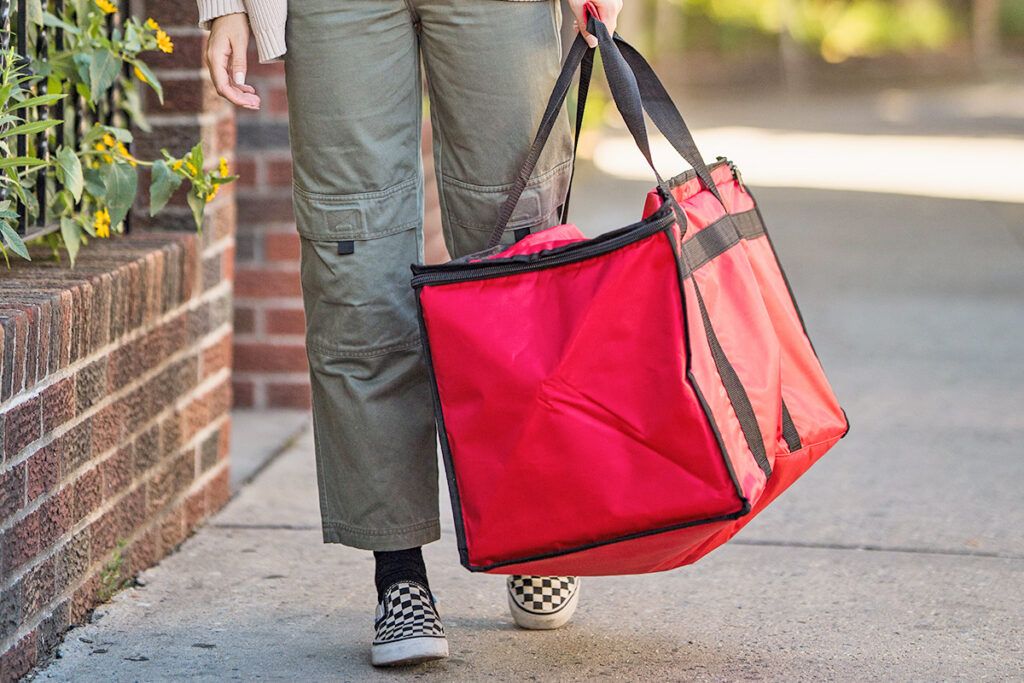
Once you’ve bought that product, maintaining the cold chain — and with it, food safety — is up to you. So, when shopping, pick out your freezer- and cooler-case items last (every minute counts) and make sure you have a cooler or an insulated bag to pack them into for the trip home. This is especially important if you don’t live close to your supermarket or if you’re making a stop along the way. (Keep it to 30 minutes or less if your most-perishables, such as seafood and poultry, aren’t well insulated.) You wouldn’t leave dogs or kids in a hot, closed-up car, and those high temperatures can spoil your food as well. It’s less of a concern on cold winter days, but the midday sun can still raise your car’s interior temperature to an unsafe level, so keep that insulated bag handy. 

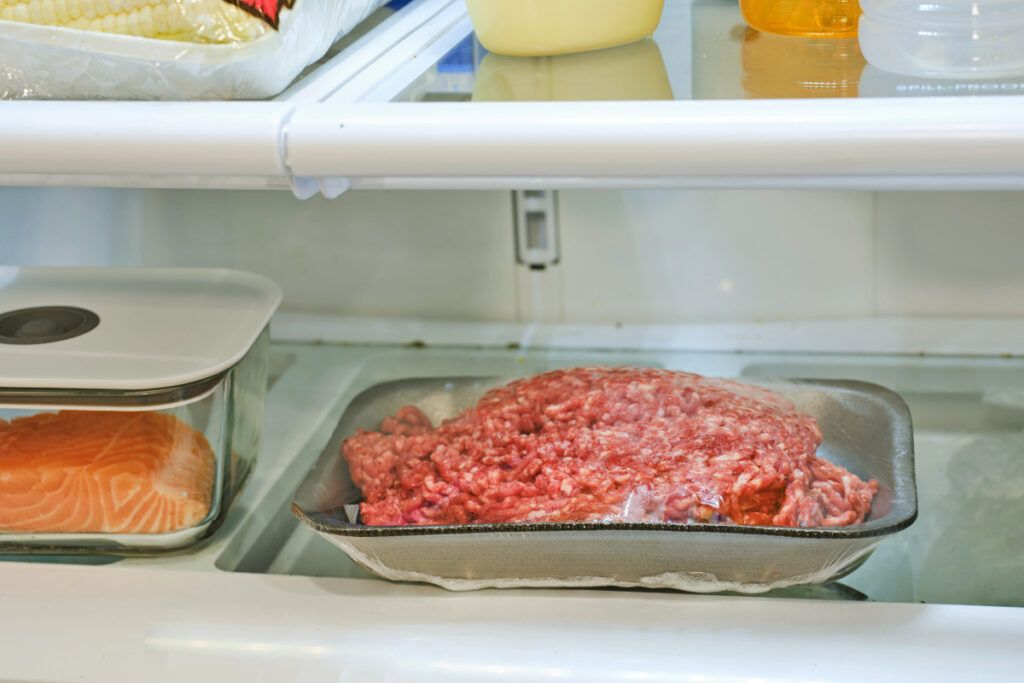
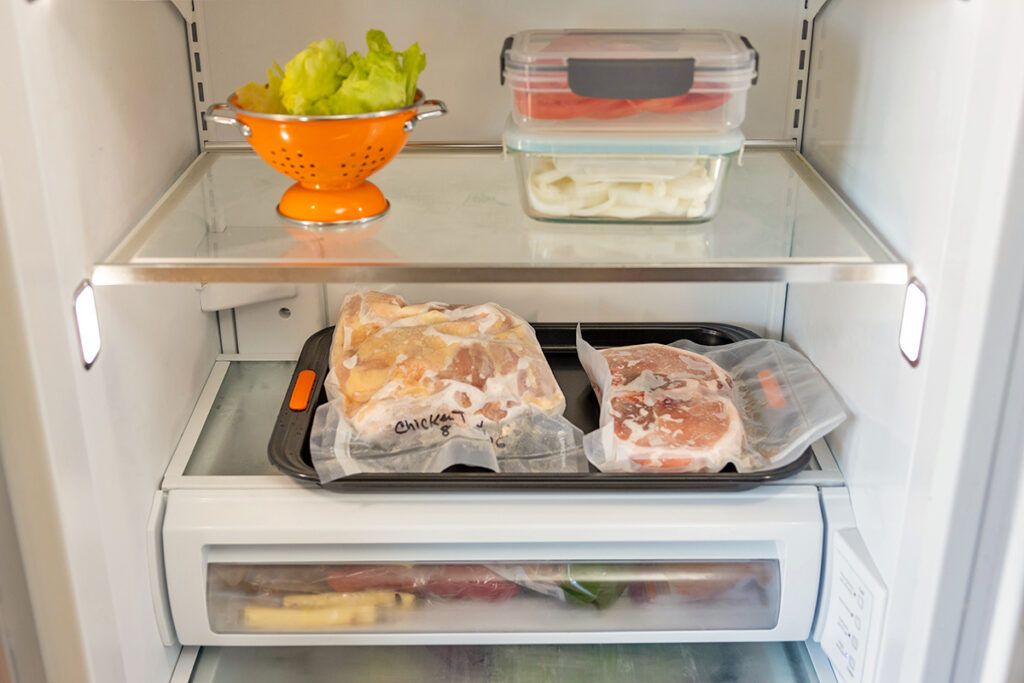
Ground meat on a plate in the fridge
Credit: © O2O Creative—E+/Getty Images

Rule: Store Foods Safely in Your Refrigerator  

Your fridge is designed to keep foods at a temperature between 32 and 40 degrees Fahrenheit, below the food “danger zone” (which ranges from above 40 degrees Fahrenheit to 140 degrees Fahrenheit) where bacteria can multiply freely. That goes a long way toward maintaining food safety. (You can use a thermometer periodically to check whether your fridge is as cold as it should be.) 

Recommended Articles

  • The Safety Rules for Candles You Probably Don’t Know

  • 5 Things Your Car Needs Before the First Freeze

  • 6 Amazon Prime Day Hacks

  • 5 Things To Ask Your Doctor About the New Flu Shot

Advertisement
Advertisement

Reader Favorites

  • Woman looking in fridge

    9 Foods You Should Toss ASAP if They’re Expired

  • Person eating salad

    7 Things a Chef Never Orders at a Restaurant

  • Cherry angioma

    Are the Tiny Red Dots on Your Skin Dangerous?

But how you organize and store your foods in the fridge is important, too. Things that you’ll eat without cooking or reheating, like salad greens, should be stored separately from risky perishables like raw meat. Meats should always be kept on your fridge’s bottom shelf (ideally toward the back, where it’s coldest), where they can’t contaminate other foods by dripping on them. Placing the meat in a bag, in an airtight container, or on a plate to contain drips helps, too. 

Advertisement
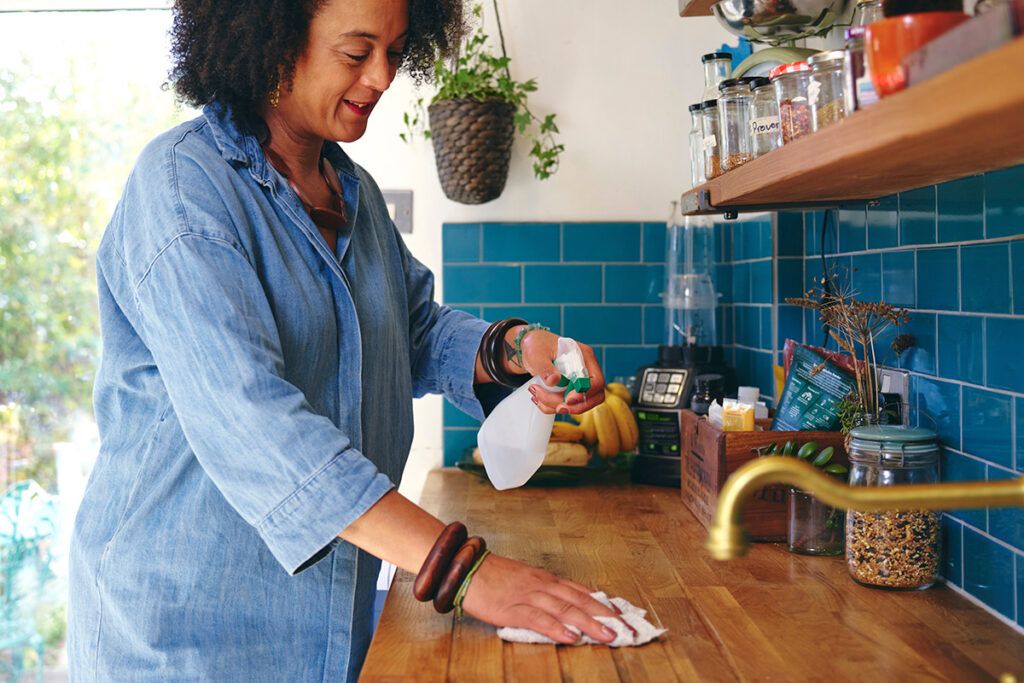
Woman cleaning counter
Credit: © Cultura Creative/stock.adobe.com

Rule: Clean and Sanitize Your Work Area

This is one of the biggest rules for line cooks, and it absolutely applies to home cooks as well. First, let me be clear that these are two separate steps: Cleaning means washing or scrubbing away any visible soil or debris, which can harbor bacteria, from your counter. Then you can use a food-safe sanitizer to clean your counter, utensils, and cutting boards as needed. 

You don’t need to buy fancy restaurant-style sanitizers: A teaspoon of bleach in a cup of room-temperature water works nicely. Measure those ingredients into a spray bottle. Don’t eyeball it; it won’t sanitize if you use too little, and it won’t be food-safe if you use too much. Next, use the bottle to thoroughly mist your work surfaces, and let the solution sit for at least a minute before wiping it away with a paper towel. The solution is good for only about 24 hours, so it’s best to make small batches and use them immediately. 

Advertisement
Advertisement

Note: Many household cleansers can sanitize your surfaces but typically aren’t food-safe. Feel free to use them — just wipe down surfaces afterward with a clean paper towel and fresh water to remove any residue. 

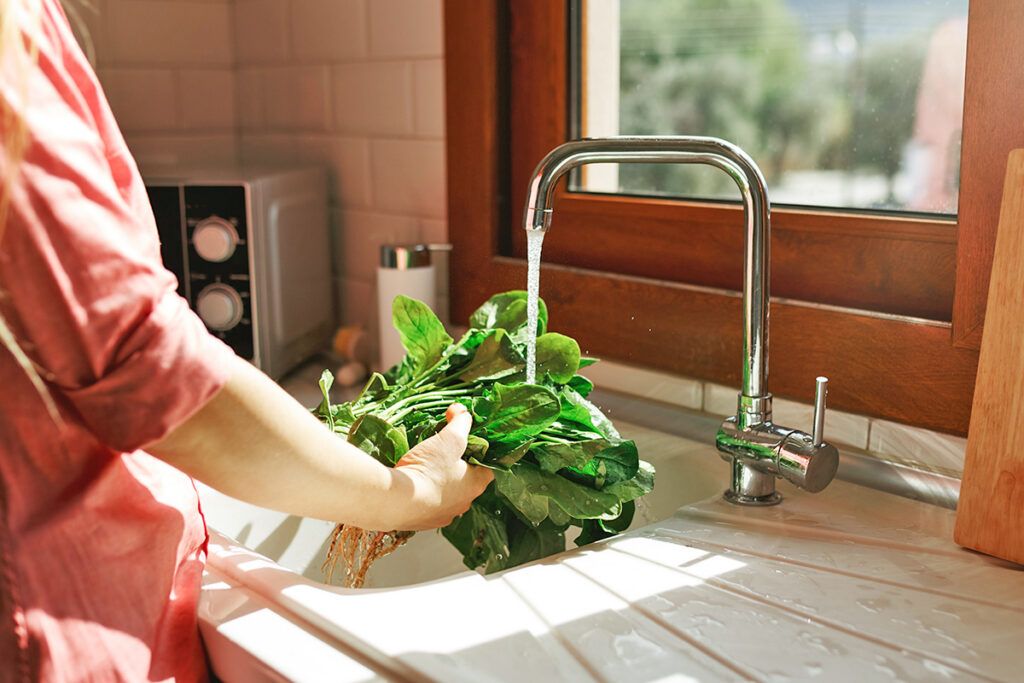
Washing produce
Credit: © Alina Bitta—iStock/Getty Images

Rule: Clean Foods as Needed (But Only Then)

I see home cooks going in both directions on this one. Sometimes, people rinse things that shouldn’t be rinsed, like poultry — that just spatters salmonella and other bacteria all around your sink and work area. Fresh produce, on the other hand, is something that often should be rinsed (especially if you’ll eat it without cooking), but might not be. 

Advertisement
Advertisement

Salad greens may pick up nasty pathogens like E. coli in the field, for example, and the warm, moist environment that makes alfalfa sprouts, bean sprouts, and similar products grow is also perfect for bacteria. Those types of things should be rinsed well in a bowl (not a sink, because those collect bacteria even without rinsing raw chicken) with 1 cup of cool water and ½ cup of distilled white vinegar before you put them on your sandwich or in your stir-fry. Melons should be scrubbed with a brush under running water, because their rinds (especially textured ones like cantaloupes) can trap dirt and bacteria. 

It’s almost always best not to rinse produce items until you’re ready to use them, though. Most fruits and vegetables, especially delicate ones such as berries and leafy greens, will deteriorate faster once they’re rinsed, and may be more vulnerable to bacteria and molds. 

Advertisement
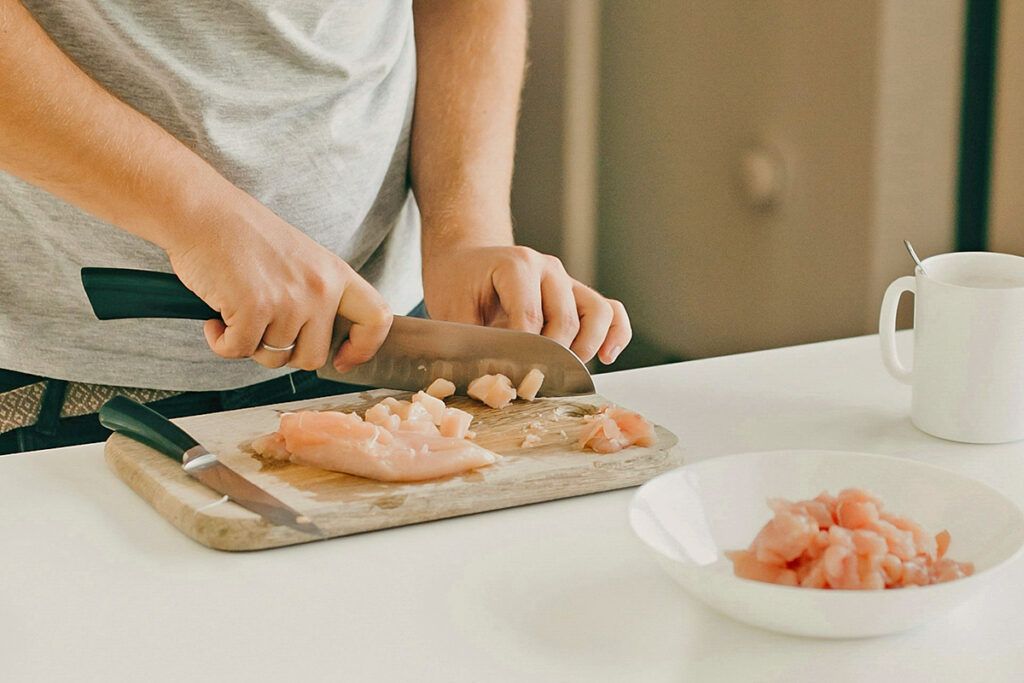
Cutting raw chicken on cutting board
Credit: © Getty Images/Unsplash.com

Rule: Use Separate Cutting Boards and Utensils for High-Risk Foods

One of the big risks in any kitchen is cross-contamination — accidentally transferring harmful bacteria from a high-risk food to other foods. In commercial kitchens we often use separate sets of color-coded cutting boards and knives for meats, fish, poultry, and produce to reduce the risk. You don’t necessarily have to do that, but the cutting boards aren’t expensive if you want to. (I buy sets like this one, and replace them as they get worn.) That will help keep nasty pathogens from, say, raw chicken out of your salad greens or melon wedges. 

Advertisement
Advertisement

Ideally, you’d have enough cutting boards, knives, and serving wares to use separate sets for each kind of food. If not, throw them in the dishwasher or use the method I described above to wash and sanitize everything that’s come into contact with raw meat, fish, or poultry — including utensils like a spatula — before using it for anything else. (And make sure to use a brush, not a sponge or a cloth; both can harbor disturbing levels of bacteria if not sanitized properly between uses.)

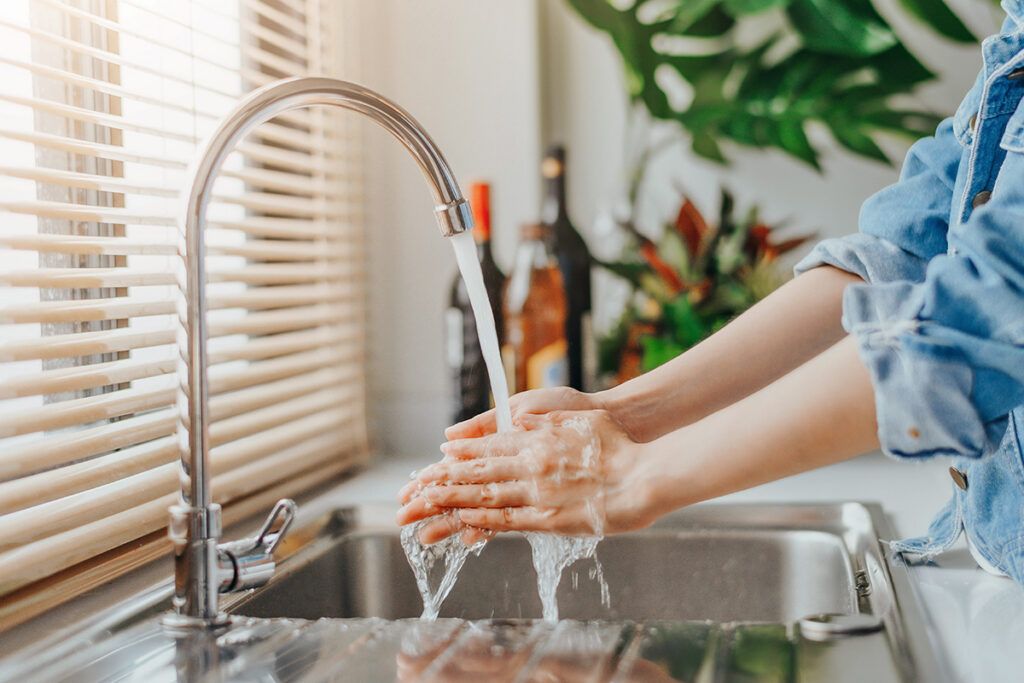
Washing hands
Credit: © interstid/stock.adobe.com

Rule: Change Gloves, or Wash Hands, After Every Task

This is closely related to the rule I’ve just mentioned, because “everything that’s come into contact with raw meat” includes your hands, which may be the likeliest way you’ll spread bacteria between foods. Any high-risk food you touch (meat, seafood, dairy products, raw eggs, etc.) could potentially contain bacteria that can make you ill. But you’ll also touch your hands to your face, hair, eyes, nose, ears, and other body parts, often without noticing. Those can contain unwelcome bacteria as well. 

Advertisement
Advertisement

So, the best thing you can do is wash your hands after every task before moving to the next one. The same holds true if you’re wearing disposable kitchen gloves to handle foods, either to avoid the ick factor or just to cut down on hand washing, which can be hard on the skin. I use nitrile gloves like these, but gloves are only clean until you use them and should also be changed whenever you switch tasks. 

Frozen food thawing in fridge
Credit: © JasonDoiy—E+/Getty Images

Rule: Thaw Frozen Foods Safely

I cringe whenever I walk into someone’s home and see frozen food thawing on the counter. When you do that, the food’s outer layers may spend hours in the danger zone between 40 and 140 degrees Fahrenheit, giving bacteria ample time to flourish before the food is thawed all the way through. 

Advertisement
Advertisement

The USDA’s Food Safety and Inspection Service recognizes three safe thawing methods: 

  1. Defrosting your food in the refrigerator: Defrosting in the fridge is your safest option, because your food can thaw without ever entering the danger zone. (Remember to protect against drips, though, and make sure to remove frozen fish from vacuum-sealed packaging before thawing.) Most foods will probably thaw overnight, but big roasts or your holiday turkey will require more time. You can thaw in advance, because food stays safe in the fridge for up to five days, depending on what it is. 
  2. Thawing in cold water: This is a faster way to thaw food, and still safe as long as you change the water every half-hour to keep it cool. Food should be well sealed to prevent water from getting in, and will take about 30 minutes per pound to thaw. Once it’s thawed, it should be cooked immediately. 
  3. Thawing in the microwave: This is the last-choice option for when you’re really in a hurry. Microwaves heat unevenly, so some parts of your food will get into the danger zone before the rest is thawed. As long as you cook it immediately after thawing, though, you’ll still be safe. 
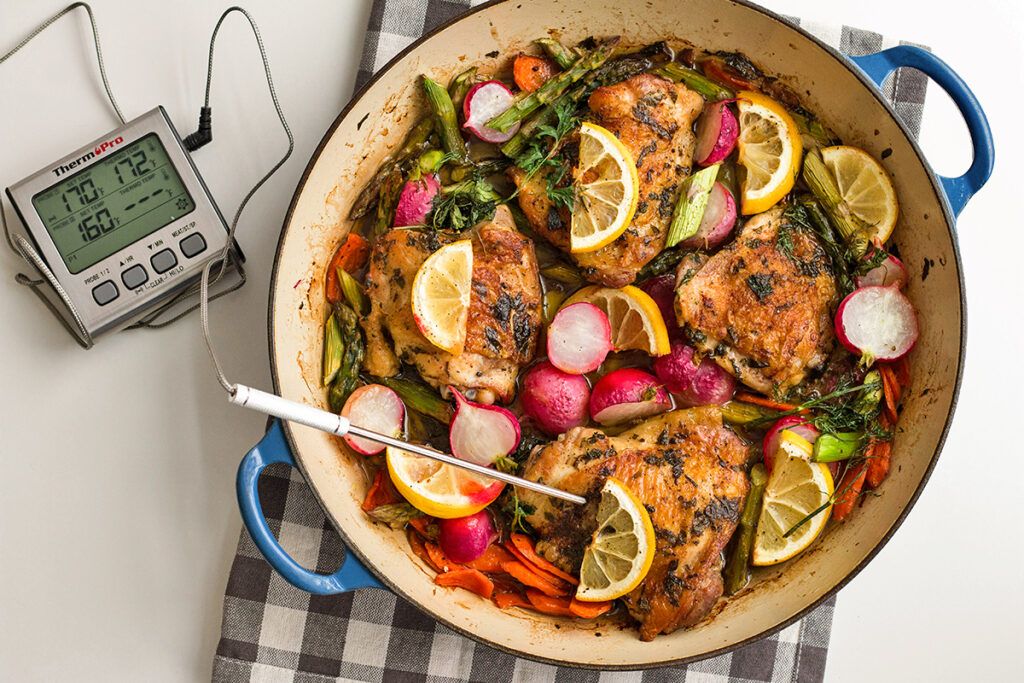
Meat thermometer in chicken dish
Credit: © ThermoPro/Unsplash.com

Rule: Use a Thermometer To Verify Temperatures

Thermometers are one of the most important tools for food safety, so I always recommend owning a few. I keep at least one in each of my fridge and freezer at all times, for example, so I know they’re keeping the right temperature (newer fridges will do this for you, and beep or send an alert to your phone if there’s a problem). I also have a point-and-shoot infrared thermometer like this one, which lets me spot-check temperatures in my  oven, on my grill temperatures, and so on. 

Advertisement

The USDA publishes recommended safe cooking temperatures for a variety of foods, and it breaks down pretty simply:

• Most meats, fish, and shellfish: 145 degrees Fahrenheit
• Eggs or ground meats: 160 degrees Fahrenheit
• Poultry (whole or ground): 165 degrees Fahrenheit
• Leftovers and casseroles: 165 degrees Fahrenheit

Advertisement
Advertisement

You may disagree with some of those, because it would mean no medium-rare steaks or soft-cooked eggs. That’s fine, as long as you’re comfortable with your decision and not cooking for someone who’s immunocompromised. But the only way to know for sure what temperature your food reaches, for safety or perfect-doneness reasons, is to check it with a thermometer. The Cadillac of meat thermometers is ThermoWorks’ Thermapen ONE, but if you don’t have that kind of budget, their ThermoPop 2 and OXO’s Good Grips thermometer both offer great value at lower price points. 

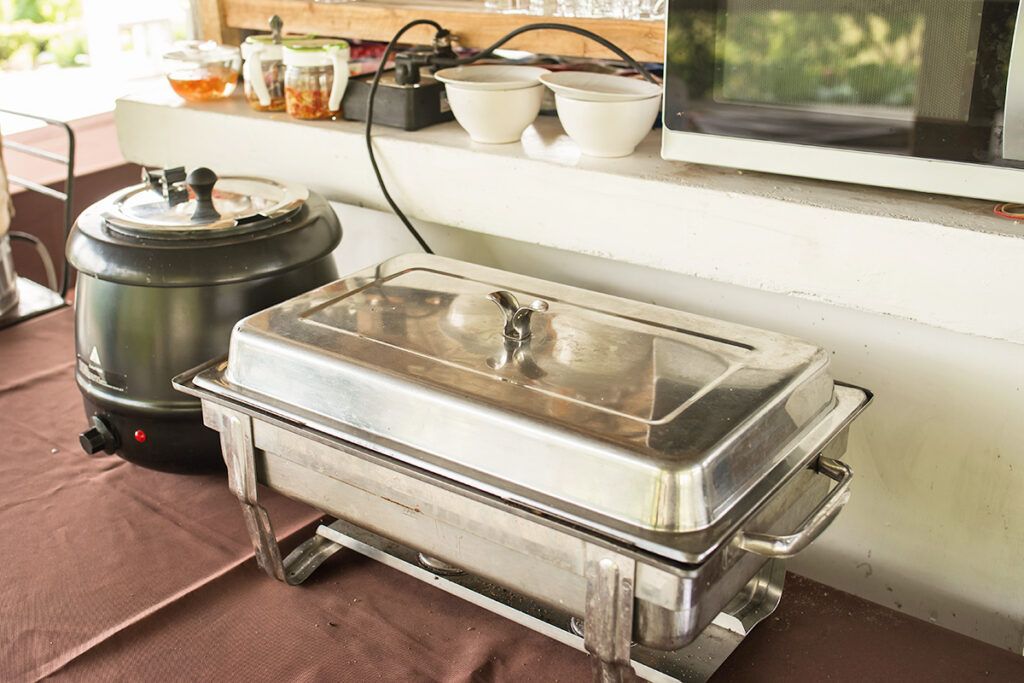
Food warmer
Credit: © wombatzaa—iStock/Getty Images

Rule: Keep Hot Foods Hot, and Cold Foods Cold

Do you love to entertain? Is your happy place a house filled with friends and family, laughter and conversation, with good food set out all around the room? If so, your responsibility for food safety doesn’t end when the food is served. 

Advertisement
Advertisement

As a chef, I handled a lot of catering, and keeping hot food hot and cold food cold is absolutely mandatory for catered events. Commercially, we used tools that home cooks typically don’t have (portable steam tables, chafing dishes, etc.), but you can work with what you do. Hot dips and casseroles can be served in suitable-sized slow cookers, for example, and cold dishes can sit in bowls of ice. I have a dozen thin, flat gel packs like these, that can be covered with a place mat and used underneath serving trays to keep them cool. 

The simplest option is to set out small batches of hot and cold main dishes, appetizers, and canapes, then replenish them as needed with new batches warmed (or kept warm) in your oven, or cold batches pulled from your fridge. 

Advertisement
Putting away leftovers
Credit: © BRETT STEVENS—Connect Images/Getty Images

Rule: Cool and Refrigerate Cooked Foods Promptly

That brings us to storing leftovers. 

I’ve talked a lot about temperatures, because formal food safety training is all about time and temperature. The longer foods stay in the danger zone, the more opportunity bacteria have to reproduce. Every nasty bug has what’s called an infective or infectious dose — the number of pathogens needed to actually make you sick. It’s often in the millions, but for some strains of E. coli, it can be as little as 10 individual cells. The longer your food is in the danger zone, the more likely it becomes that bacteria will reach that infective dose and make you sick. 

Advertisement
Advertisement

That’s why chilling any leftover foods within two hours is so important. That limit is cut to an hour if the ambient temperature is over 90 degrees Fahrenheit — hence why you shouldn’t leave your food in a closed vehicle in summer, where it can get even hotter. 

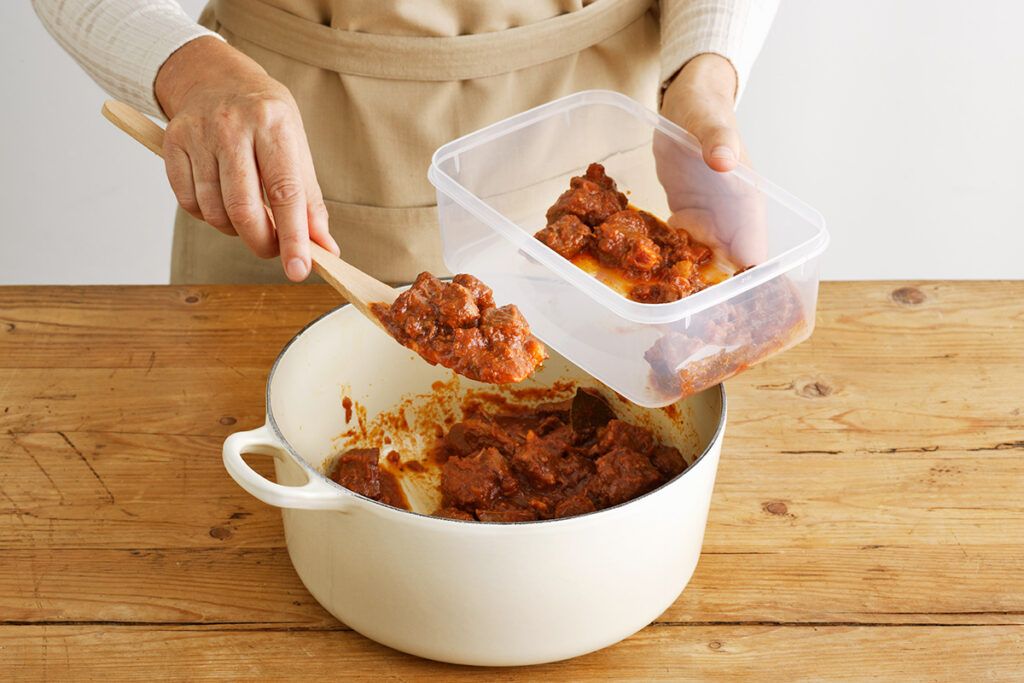
Big batches of food pose a special problem, because their sheer size means longer cooling time. The simplest solution is to portion your pot of chili (or other food) into flat containers, which can speed cooling. I like to clean and sanitize gel freezer packs in my dishwasher (the rigid kind, not the ones that are flexible bags when thawed), then freeze them in a bag to keep them clean. When I do large batches, I’ll stir those into the pot to cool its contents quickly before dividing the food into containers (the gel packs then go back into the dishwasher again). It makes a difference. 

Leftovers in fridge with dates on the containers
Credit: © vgajic—E+/Getty Images

Rule: Label Leftovers and Use Them Promptly 

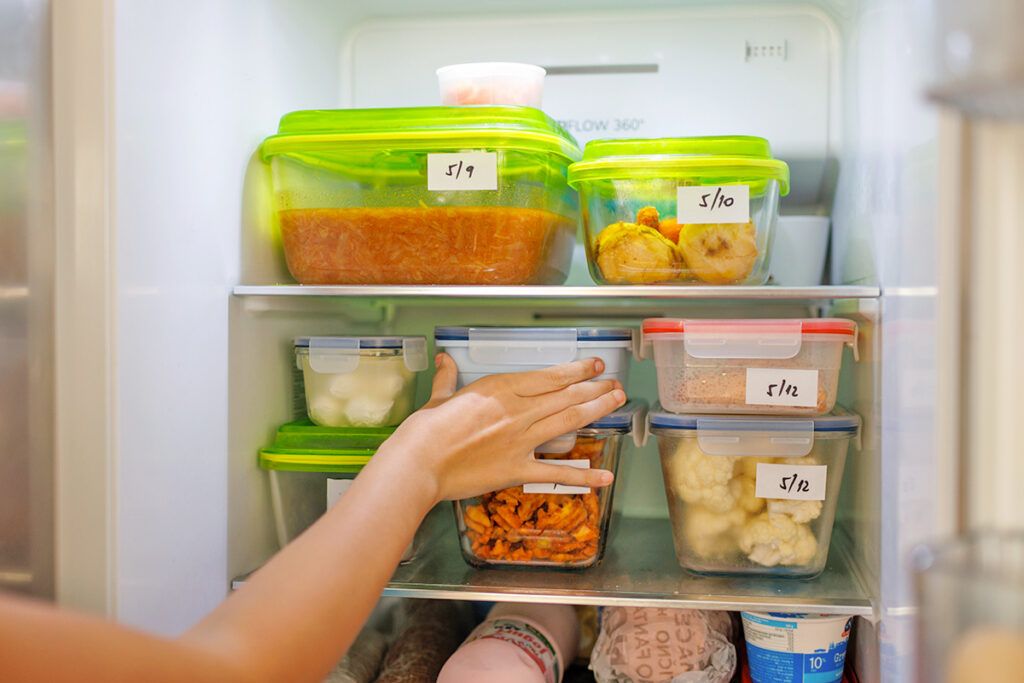
In commercial food service, chefs like me are sticklers for what’s called FIFO: First In, First Out. That means we label and date everything that goes into the freezer or walk-in cooler, and we’re diligent about using things in a timely fashion. 

Advertisement
Advertisement

Most leftovers (or made-aheads, if you’re doing it deliberately) have a refrigerator life of just three or four days, so there’s pressure to use them promptly. Labeling and dating everything individually can be a bit much at home, but some people use multicolored dots, or day of the week stickers, to label leftovers. If it has a Tuesday sticker and today’s Friday, you know you’re in “use it or lose it” territory. 

Advertisement

You may find it easier to make a plan for your leftovers in advance. Maybe they go as work lunches or serve as a stopgap for the day after tomorrow when everyone’s busy and there won’t be time to cook. If you’re uncertain whether you’ll use them in the next few days, go ahead and freeze them. That buys you three to four months — rather than days — to use them and prevent waste.   

Featured Image Credit: © AleksandarNakic—E+/Getty Images

More From Our Network

Better Report is part of Inbox Studio, an email-first media company. *Indicates a third-party property.

Go Retro With This 1960s Fashion Quiz

Quiz Daily

Go Retro With This 1960s Fashion Quiz

True or False: Are You a Master of U.S. Geography?

Travel Quiz

True or False: Are You a Master of U.S. Geography?

5 Reasons You Can Be Denied Boarding an Airplane

Daily Passport

5 Reasons You Can Be Denied Boarding an Airplane

What Did People Do Before Eyeglasses?

History Facts

What Did People Do Before Eyeglasses?

How To Use a Balloon To Clean Up Dust

House Outlook

How To Use a Balloon To Clean Up Dust

11 Shopping Hacks Costco Members Should Know

FinanceBuzz*

11 Shopping Hacks Costco Members Should Know

Share this article

  • Share to Facebook
  • Share to Twitter
  • Copy Url
  • Share to Email
Ali Eldridge

This article is for general informational purposes only.
Affiliate Disclaimer Medical Disclaimer Financial Disclaimer

Updated:
Posted In: Health
Hero Image Credit: Better Report
Advertisement

Related Articles

5 Things To Ask Your Doctor About the New Flu Shot

5 min read

Is Sourdough Actually Healthier Than Regular Bread?

7 min read

Do You Really Need a Bidet in Your Home?

4 min read

3 Common Sleep Habits That May Be Aging Your Brain

5 min read

Is the Traditional Mediterranean Diet Actually the Best for Your Brain?

4 min read
Advertisement

11 Stores You Didn’t Know Have Outlets

Wealth | Updated: June 16, 2026
Julia Rittenberg
Author
Julia Rittenberg is a culture writer and content strategist driven by a love of good stories. She writes most often about books for Book Riot. She lives in Brooklyn with a ton of vintage tchotchkes that her cat politely does not knock over.
Exterior of an LL Bean Outlet
Better Report

Going to the outlet mall was once a big event. You’d pile into the car and drive to a collection of luxury-brand stores that had merchandise available at a greatly reduced price. At the end of the day, you’d return home with bags full of designer duds and your wallet not that much lighter.

These days, outlets are no longer just brick-and-mortar locations — you can find plenty of them online — but the concept is the same. A store with “outlet” at the end is an offshoot of a brand where the manufacturer sells extra stock, returns, factory seconds, and more directly to consumers. (Many outlet stores also create products specifically for the outlet.) In addition to lower base prices, outlets also have consistent sales to clear out the extra stock, so they’re great places to score deals. And in recent years, they have extended well beyond their designer roots. Here are a few big brands you may not have known have outlet stores — and how you can shop them. 

Target store
Credit: © Joshua Brown/Pexels.com

Target

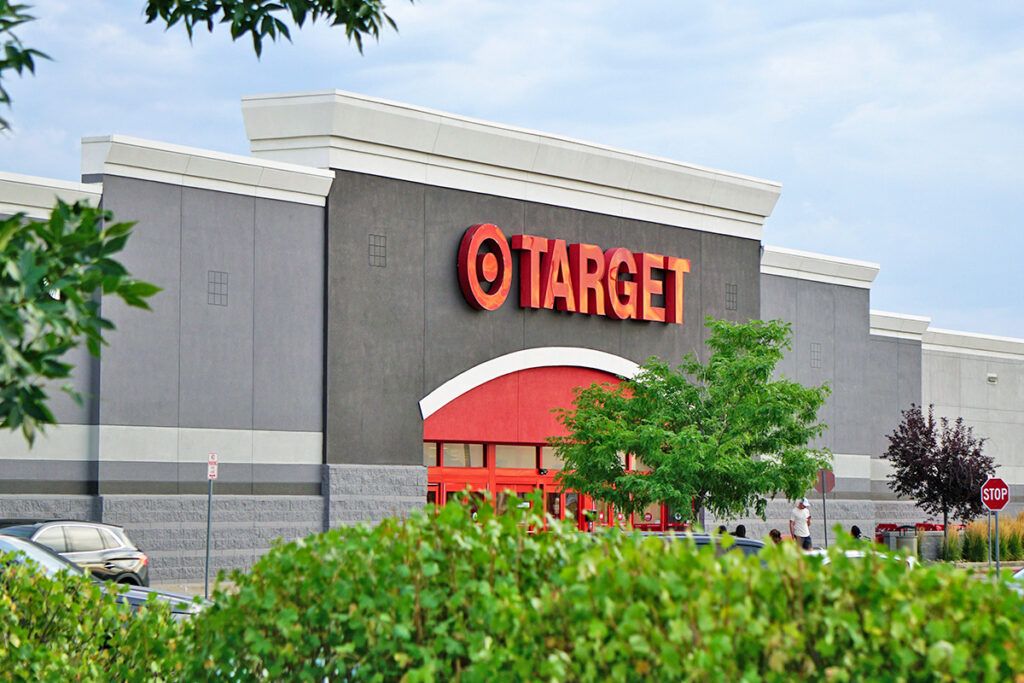
Target is already full of deals, but when stores have extra stock they need to clear, they’ll send it to Target salvage stores. According to Krazy Koupon Lady, these stores won’t have the Target name attached: Instead, you can find highly discounted items from Target (and maybe from Walmart and Amazon as well) at Goodwill, Big Deal Outlet, Bargain Hunt, Bulldog Liquidators, Dirt Cheap, and other retailers. Where the items end up depends on your state, so ask local Target employees where their stores offload extra inventory. 

Advertisement
Advertisement
Interior of an REI
Credit: © ColleenMichaels/stock.adobe.com

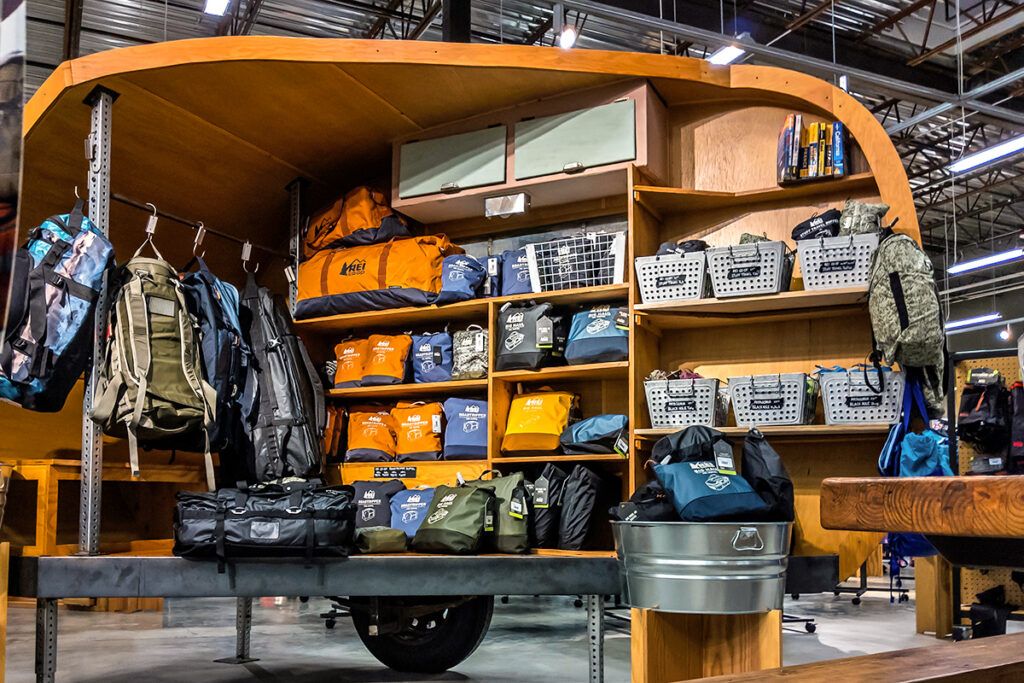
REI

If you’re planning an outdoorsy vacation and don’t want to break the bank, tracking down deals at REI’s outlet is a good place to start. Their outlet stock — which the site says consists of “end-of-season closeouts and previous-year models” handpicked by their dealers — can be up to 40% off. Plus, everything is backed by REI’s 100% satisfaction guarantee, and you can return anything you buy online from the outlet at an REI store if it doesn’t work for you.

Amazon on a laptop screen
Credit: © ymgerman/stock.adobe.com

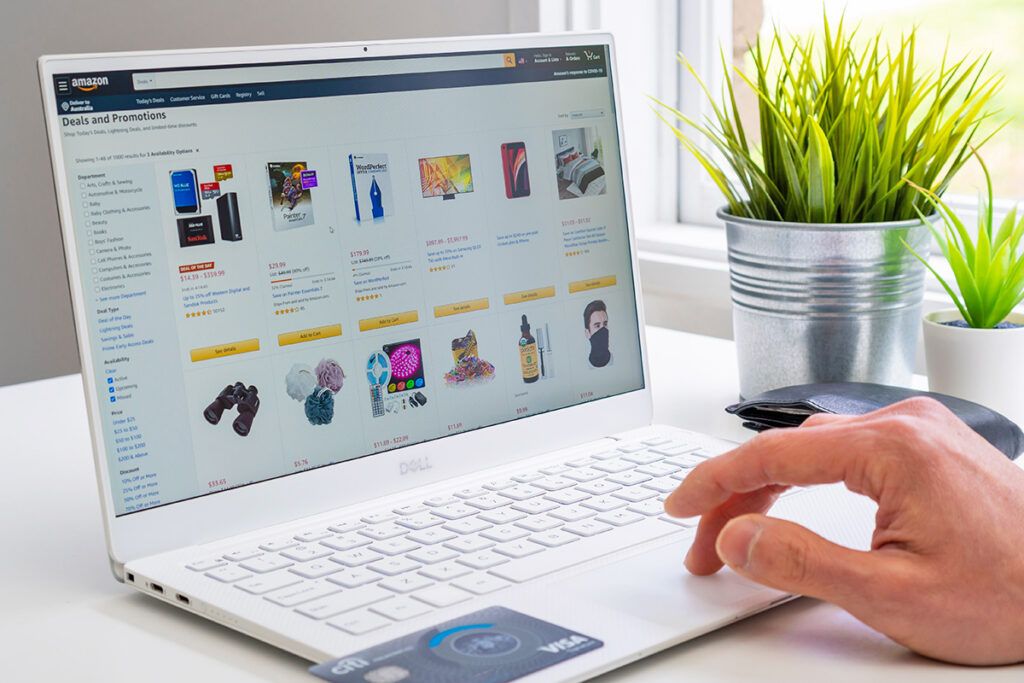
Amazon

Already a frequent destination for bargain shoppers, Amazon offers even more discounts on the outlet section of their site. It’s regularly updated with new products, and you can browse the deals category for even more markdowns. 

Recommended Articles

  • The Safety Rules for Candles You Probably Don’t Know

  • 5 Things Your Car Needs Before the First Freeze

  • 6 Amazon Prime Day Hacks

  • 5 Things To Ask Your Doctor About the New Flu Shot

Advertisement
Advertisement

Reader Favorites

  • Woman looking in fridge

    9 Foods You Should Toss ASAP if They’re Expired

  • Person eating salad

    7 Things a Chef Never Orders at a Restaurant

  • Cherry angioma

    Are the Tiny Red Dots on Your Skin Dangerous?

Pottery Barn
Credit: © Joseph Hendrickson/stock.adobe.com

Pottery Barn

Redecorating is expensive, and you don’t want to cut corners on furniture since you have to look at — and sit on — it every day. Thankfully, there are Open Box outlet pages for Pottery Barn, Pottery Barn Kids, and Pottery Barn Teen, which all list returned items (hence the name “Open Box”) at a discount. If you want to see items for yourself, the company also has in-person outlets. Stock varies, but some (like the location in Elizabeth, New Jersey) have Instagram pages where they announce stock. You can find the outlets on Pottery Barn’s store locations page (look for the “O” icon).

Advertisement
Advertisement
West Elm
Credit: © Joe Hendrickson—iStock Editorial/Getty Images

West Elm

Though West Elm has decent deals during sales, you can find even deeper discounts on their Open Box page, where they sell returned items. Because the items are returned, they may have signs of use — make sure to review the extra images of the item before you buy to understand its condition (damage or wear will be marked with red stickers). 

Advertisement
Advertisement
Exterior of a Best Buy Outlet
Credit: © Refrina/stock.adobe.com

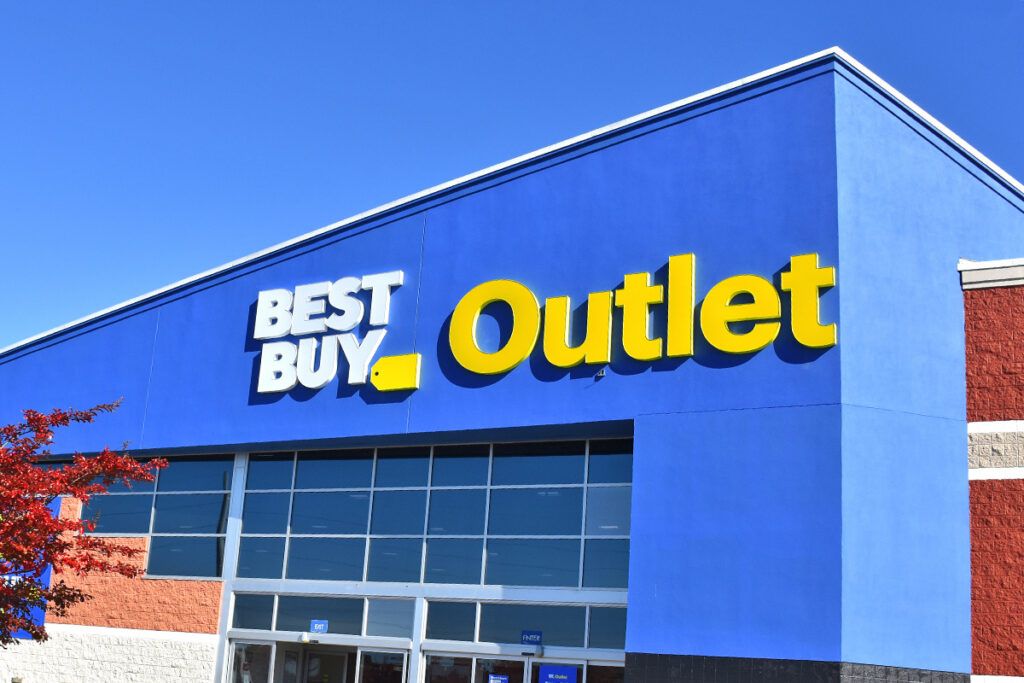
Best Buy

The Best Buy Outlet is a great place to find returned, refurbished, or clearance electronics, wearable tech, appliances, and more. There are 19 outlets in 14 states; the location in Cleveland, Ohio, specifically sells major appliances, so it’s the place to go for new kitchen or laundry appliances. You can shop Best Buy’s returned products online as well. 

Advertisement
Advertisement
Exterior of an LL Bean Outlet
Credit: © KenWiedemann—iStock Unreleased/Getty Images

L.L. Bean

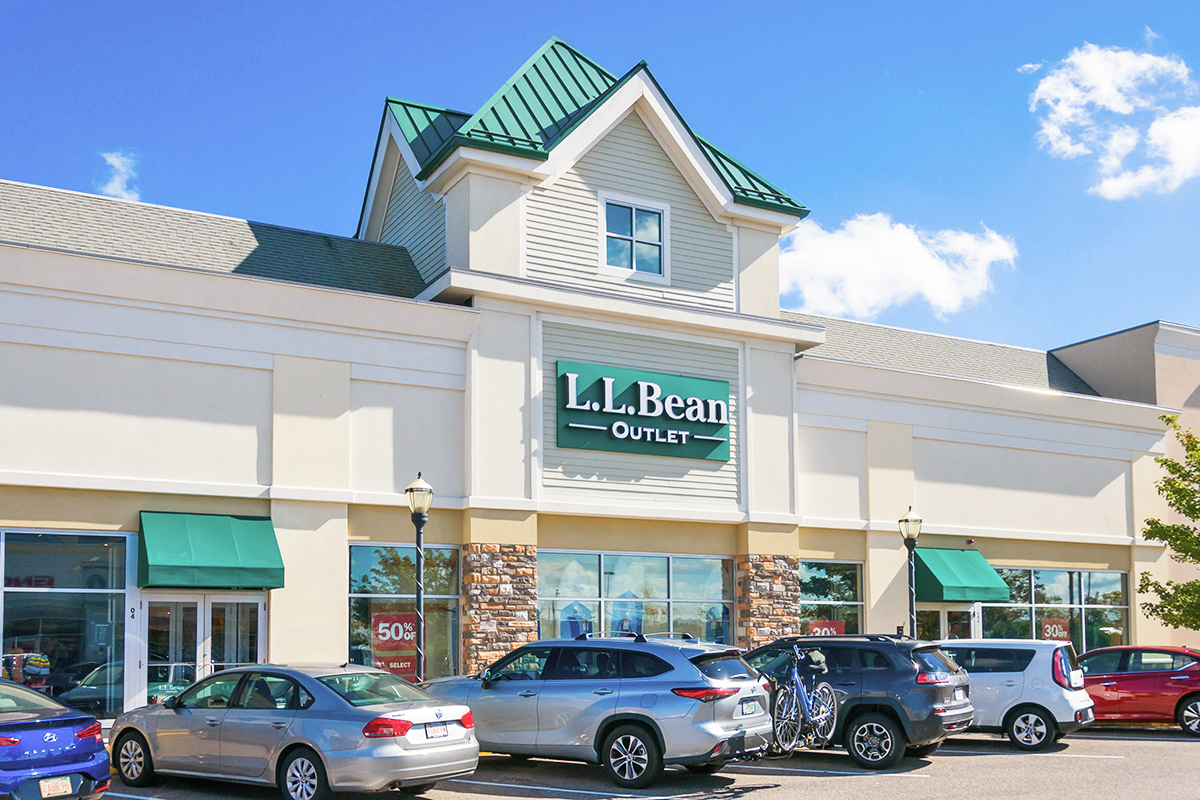
L.L. Bean has a reputation for high-quality outdoor goods that last forever — so getting those items discounted at one of the company’s outlet stores feels like an especially great deal. You can find outlets in Maine, Massachusetts, Connecticut, New Hampshire, and New York. Check out the company’s store locations page. 

Advertisement
Advertisement
Zales store
Credit: © JHVEPhoto/stock.adobe.com

Zales

New jewelry doesn’t have to break the bank. Zales has an online outlet with deals up to 50% off (and some promotions give even deeper discounts than that), so it’s a great place to shop for everything from casual hoop earrings to diamond engagement rings. 

Advertisement
Advertisement
Pendleton store
Credit: © Dmitry/stock.adobe.com

Pendleton

Pendleton Woolen Mills was established in Oregon in 1863, and it’s still producing its iconic cozy blankets, high-quality wool products, and more today. The company has some physical outlets, as well as an online outlet with a small selection of deep discounts on an assortment of items; check back regularly to see if anything you’ve had your eye on gets added. 

Advertisement
Advertisement
Exterior of an Urban Outfitters
Credit: © Wolterk—iStock Editorial/Getty Images

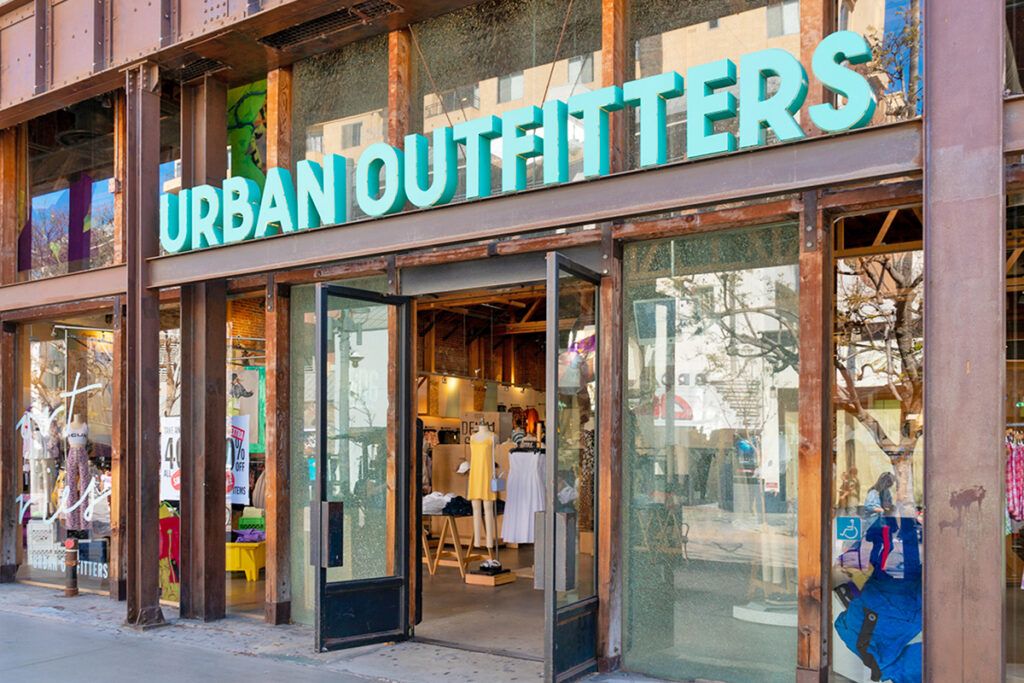
Urban Outfitters

Urban Outfitters Inc. owns Urban Outfitters, Anthropologie, Free People, and the clothing rental brand Nuuly. The individual stores don’t have specific outlets, but you can find clothing, shoes, and accessories from all of them at the company’s resale store, Reclectic. It’s a great option if you love secondhand and vintage shopping but want a more updated wardrobe. There are six Reclectic locations around the country. If you’re looking for furniture, there are two Anthropologie Home Outlets in Pennsylvania. 

Advertisement
Advertisement
A Lululemon outlet
Credit: © JHVEPhoto—iStock Editorial/Getty Images

Lululemon 

There are some brick-and-mortar Lululemon outlets, but you can also browse the  “we made too much” page on their website. This overstock page has items priced under $50, so if you keep an eye on it, you can probably find your preferred size, color, and style of fitness gear at a great price. 

Advertisement
Advertisement

Featured Image Credit: © KenWiedemann—iStock Unreleased/Getty Images

More From Our Network

Better Report is part of Inbox Studio, an email-first media company. *Indicates a third-party property.

Go Retro With This 1960s Fashion Quiz

Quiz Daily

Go Retro With This 1960s Fashion Quiz

True or False: Are You a Master of U.S. Geography?

Travel Quiz

True or False: Are You a Master of U.S. Geography?

5 Reasons You Can Be Denied Boarding an Airplane

Daily Passport

5 Reasons You Can Be Denied Boarding an Airplane

What Did People Do Before Eyeglasses?

History Facts

What Did People Do Before Eyeglasses?

How To Use a Balloon To Clean Up Dust

House Outlook

How To Use a Balloon To Clean Up Dust

11 Shopping Hacks Costco Members Should Know

FinanceBuzz*

11 Shopping Hacks Costco Members Should Know

Share this article

  • Share to Facebook
  • Share to Twitter
  • Copy Url
  • Share to Email
Julia Rittenberg
Writer

Julia Rittenberg is a culture writer and content strategist driven by a love of good stories. She writes most often about books for Book Riot. She lives in Brooklyn with a ton of vintage tchotchkes that her cat politely does not knock over.

This article is for general informational purposes only.
Affiliate Disclaimer Medical Disclaimer Financial Disclaimer

Updated: September 26, 2024
Posted In: Wealth
Hero Image Credit: Better Report
Advertisement

Related Articles

5 Things Your Car Needs Before the First Freeze

4 min read

6 Amazon Prime Day Hacks

6 min read

Is It Actually Better To Lease a Car?

9 min read

7 Free MIT Classes You Can Experience From Home

4 min read

The Bedroom Color That Adds $2,000 to Your Home Value

3 min read
Advertisement

6 Surprisingly Hydrating Drinks (That Aren’t Water)

Ali Eldridge
Health | Updated: June 16, 2026
Woman pouring orange juice
Better Report

It’s important to stay properly hydrated during these sweltering hot days of summer — and while a cool glass of water will always hit the spot (and is almost always the best option for everyday needs), there are other drinks that are surprisingly hydrating. Some may be even more so than H2O, due to the nutrients and electrolytes they contain. Sipping on one of the unusual replenishing beverages below can help prevent aches, dizziness, fainting, and other complications associated with dehydration. 

Person pouring milk from jug into glass
Credit: © Alex Green/Pexels.com

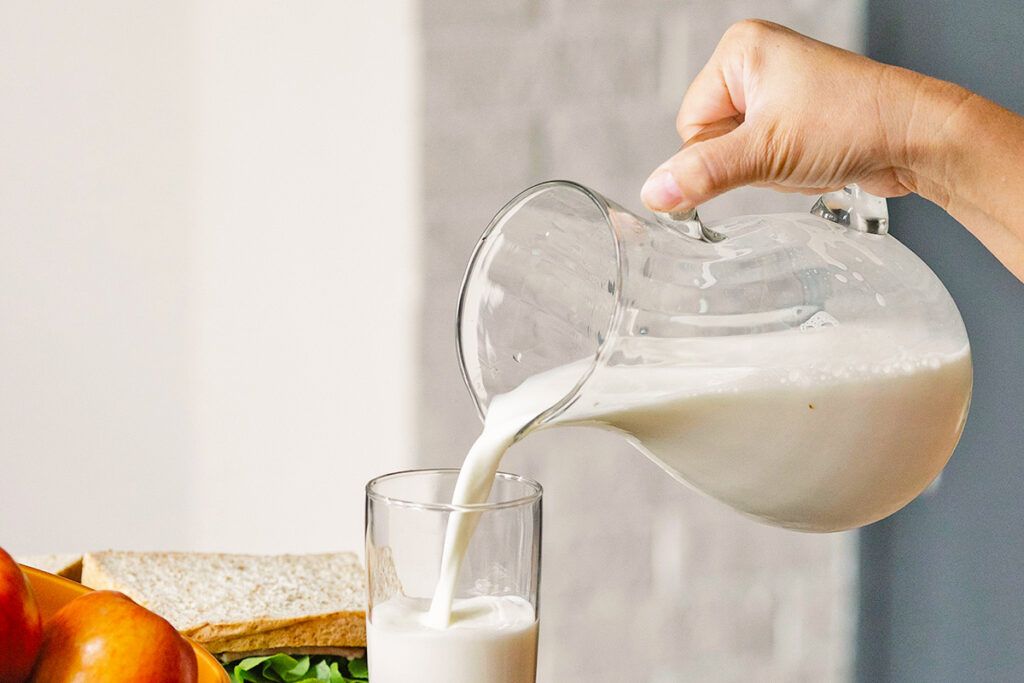
Milk

Ron Burgundy may have exclaimed, “Milk was a bad choice!” while drinking it on a hot day in 2004’s Anchorman, but science suggests otherwise. A 2007 study and two additional studies from 2016 found that milk drinkers retained more fluid than water drinkers — and that fluid retention suggests more thorough hydration. It has to do with the nutrients and electrolytes in milk, which help to replenish what we lose through sweating. It’s worth noting that the data is limited: The studies were small and looked at short periods of time; some involved heavy exercise (and therefore may not be applicable to everyday activity levels); and only one measure of hydration was assessed. Plus, there are other downsides to milk, such as its high calorie count. Still, if you’ve been working up a sweat and need a beverage, milk may be a good  choice.

Advertisement
Advertisement
Pickle juice in jar and glass
Credit: © MaskaRad—iStock/Getty Images

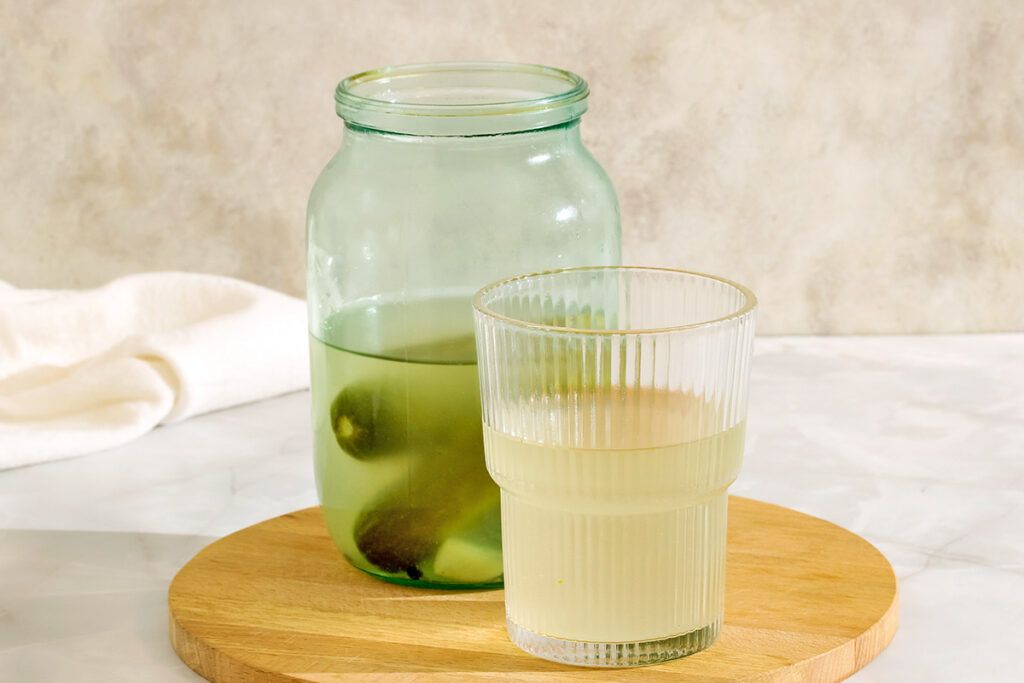
Pickle Juice

Dehydration leads to a risk of muscle cramps, as the loss of fluids, salts, and electrolytes through sweating can cause the muscles to spasm. But a 2010 study suggests that pickle juice is a good way to prevent these cramps. As part of the study, healthy men with low levels of body water were asked to drink about 1/3 cup of pickle juice, while others drank the same amount of water. The study found that the men who drank the briny concoction experienced quicker relief from muscle cramps than those who had water. Pickle juice is loaded with sodium and has potassium as well — two electrolytes we lose as we sweat that also help you become hydrated more quickly. That means pickle juice may be a  beneficial beverage for those who don’t have sodium-related restrictions on their diets. And like water, pickle juice has no calories.

Recommended Articles

  • The Safety Rules for Candles You Probably Don’t Know

  • 5 Things Your Car Needs Before the First Freeze

  • 6 Amazon Prime Day Hacks

  • 5 Things To Ask Your Doctor About the New Flu Shot

Advertisement
Advertisement

Reader Favorites

  • Woman looking in fridge

    9 Foods You Should Toss ASAP if They’re Expired

  • Person eating salad

    7 Things a Chef Never Orders at a Restaurant

  • Cherry angioma

    Are the Tiny Red Dots on Your Skin Dangerous?

Pedialyte on a shelf
Credit: © Adriana/stock.adobe.com

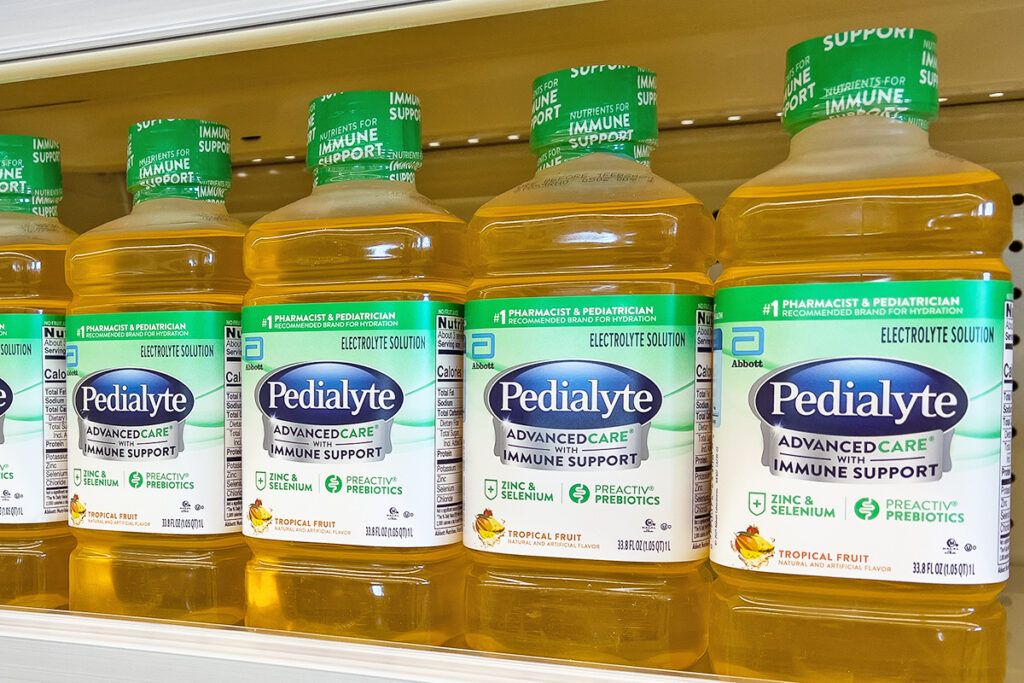
Pedialyte

Pedialyte was originally created for infants and children, but it’s actually an ideal rehydrating beverage for people of all ages. The drink includes electrolytes such as sodium, potassium, and chloride, which help control the body’s fluid levels. Those electrolytes — coupled with the drink’s balanced sugar levels — result in a beverage that, according to Healthline, is “more effective than water” in treating moderate dehydration and restoring fluids or nutrients we lose through sweating, urination, vomiting, or diarrhea.

Advertisement
Advertisement
Bone broth in a bowl
Credit: © Monika Grabkowska/Unsplash.com

Bone Broth

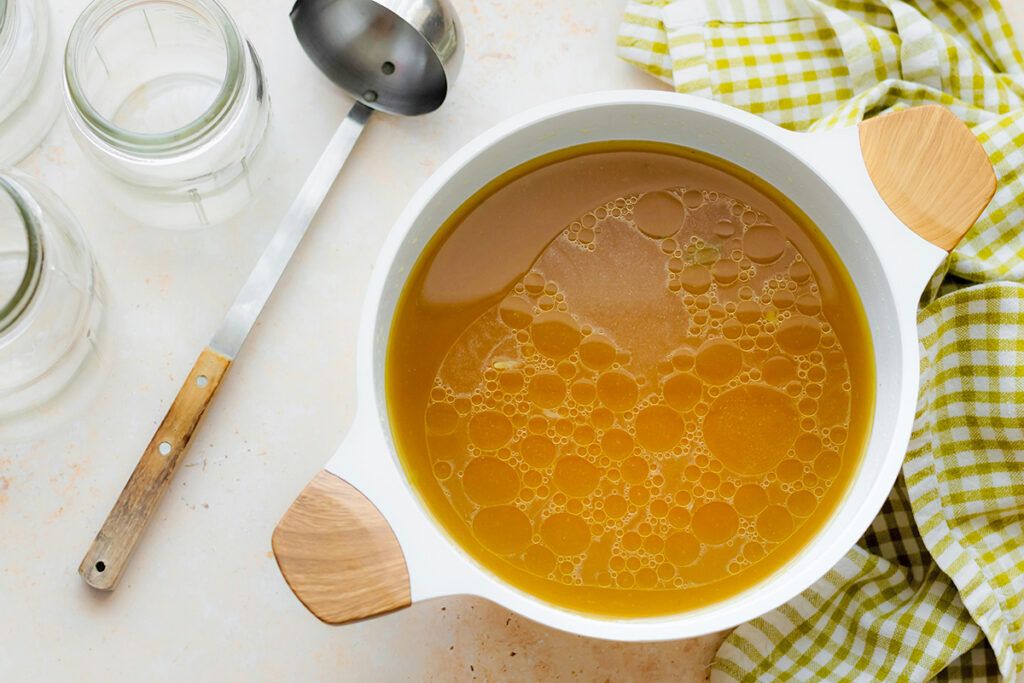
Bone broth is mostly water, and it’s also rich in electrolytes, collagen, minerals, and other nutrients that support proper hydration. In addition, bone broth contains hyaluronic acid, which is able to retain over 1,000 times its weight in water. The acid’s ability to bind so effectively with water helps it act as a natural moisturizer: A 2014 study found that ingesting hyaluronic acid resulted in more adequately moisturized and hydrated skin.  

Advertisement
Advertisement
Woman pouring orange juice
Credit: © Westend61/Getty Images

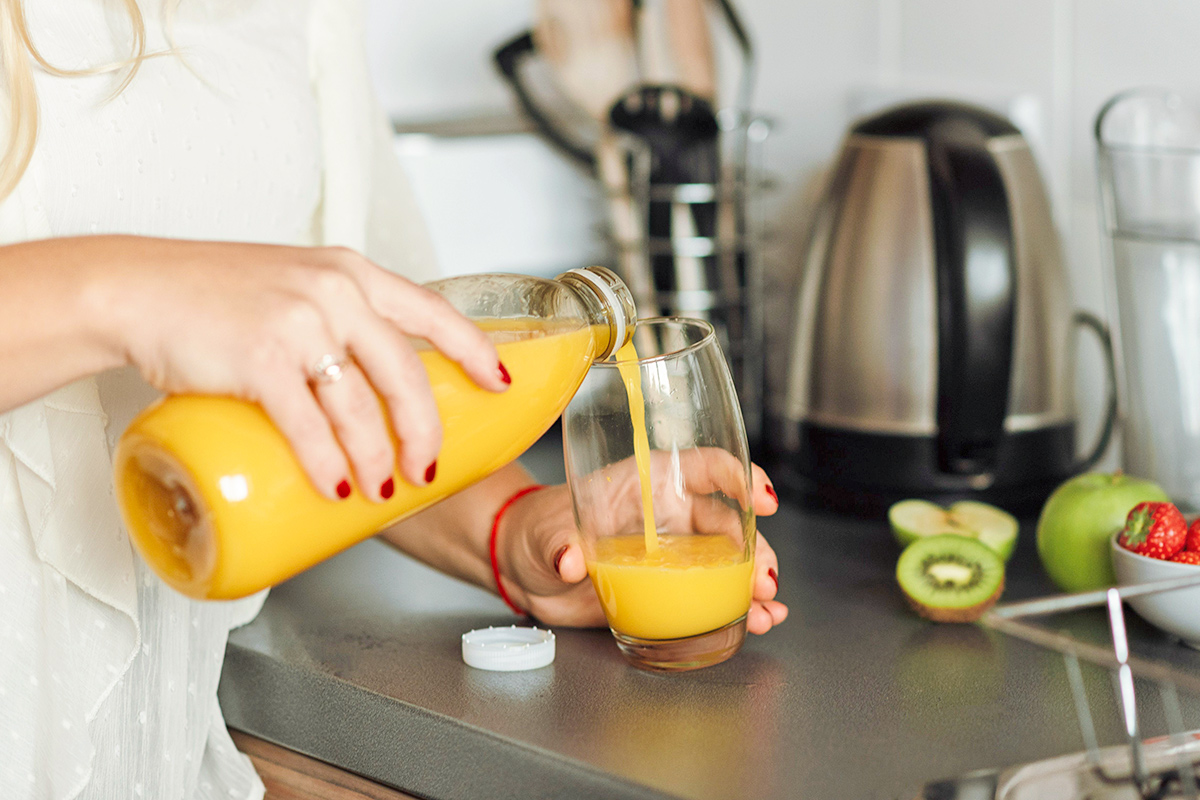
Orange Juice

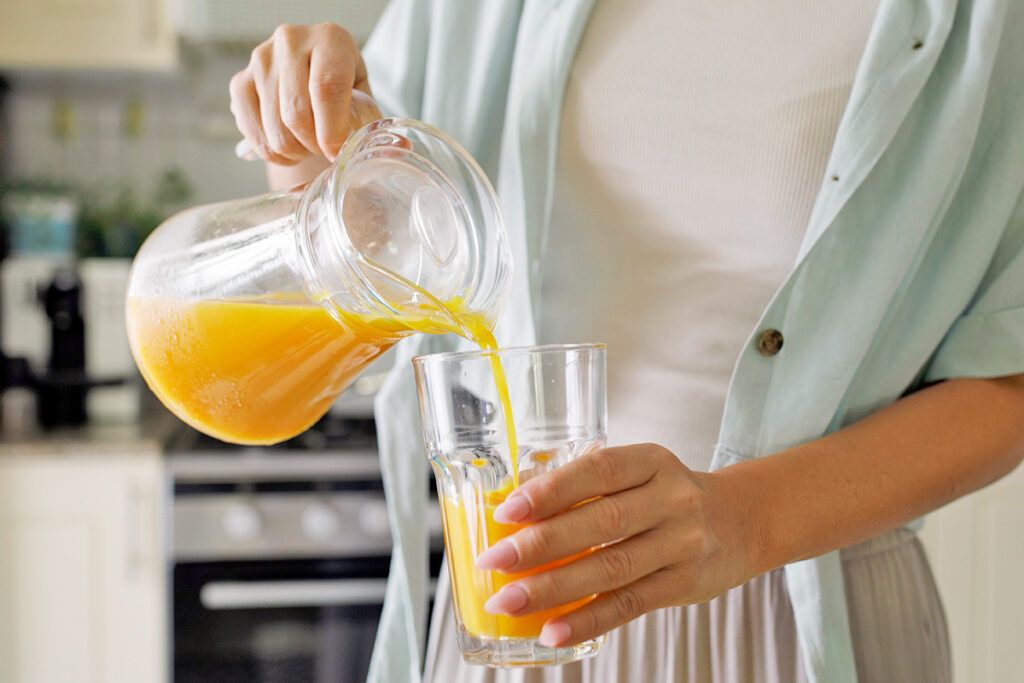
A 2016 study — the very same study that preached the hydrating capabilities of milk — determined that OJ is one the most hydrating beverages available, much of which has to do with the fact that orange juice is made up of almost 90% water. But what helps it stand out is that it’s also loaded with electrolytes such as potassium, which our bodies need to stay hydrated. Watch your total intake, though, as 100% orange juice contains a lot of naturally occurring sugar.

Advertisement
Advertisement
Women drinking out of coconuts
Credit: © Jordan González/Unsplash.com

Coconut Water

Coconut water is actually a juice that comes from green coconuts. It’s loaded with potassium, sodium, and magnesium, three electrolytes that make it good for hydration after things like illness or exercise. Coconut water is also ideal for those with sensitive stomachs who might have trouble with sugary electrolyte beverages such as Gatorade. If you have kidney or liver disease, Type 1 diabetes, or congestive heart failure, however, you may want to avoid coconut water due to its high potassium content.

Featured Image Credit: © Anete Lusina/Pexels.com

More From Our Network

Better Report is part of Inbox Studio, an email-first media company. *Indicates a third-party property.

Go Retro With This 1960s Fashion Quiz

Quiz Daily

Go Retro With This 1960s Fashion Quiz

True or False: Are You a Master of U.S. Geography?

Travel Quiz

True or False: Are You a Master of U.S. Geography?

5 Reasons You Can Be Denied Boarding an Airplane

Daily Passport

5 Reasons You Can Be Denied Boarding an Airplane

What Did People Do Before Eyeglasses?

History Facts

What Did People Do Before Eyeglasses?

How To Use a Balloon To Clean Up Dust

House Outlook

How To Use a Balloon To Clean Up Dust

11 Shopping Hacks Costco Members Should Know

FinanceBuzz*

11 Shopping Hacks Costco Members Should Know

Share this article

  • Share to Facebook
  • Share to Twitter
  • Copy Url
  • Share to Email
Ali Eldridge

This article is for general informational purposes only.
Affiliate Disclaimer Medical Disclaimer Financial Disclaimer

Updated:
Posted In: Health
Hero Image Credit: Better Report
Advertisement

Related Articles

5 Things To Ask Your Doctor About the New Flu Shot

5 min read

Is Sourdough Actually Healthier Than Regular Bread?

7 min read

Do You Really Need a Bidet in Your Home?

4 min read

3 Common Sleep Habits That May Be Aging Your Brain

5 min read

Is the Traditional Mediterranean Diet Actually the Best for Your Brain?

4 min read
Advertisement

10 Things You Need To Sweat Less This Summer

Health | Updated: June 15, 2026
Erin McCarthy
Author
Erin is a writer, editor, and content strategist living in the New York City area. Previously, she was the VP/Editor-in-Chief of MentalFloss.com and an editor at Popular Mechanics magazine. When she’s not working, Erin is hanging out with her cats, reading books from her never-ending TBR, traveling, karaoking, and making sourdough with her starter Stephen Sondheim.
Woman in front of fan
Better Report

All featured products and deals are selected independently and objectively by the author. Better Report may receive a share of sales via affiliate links in content.

Summer is upon us, which means that many of us are sweaty — and hating it. 

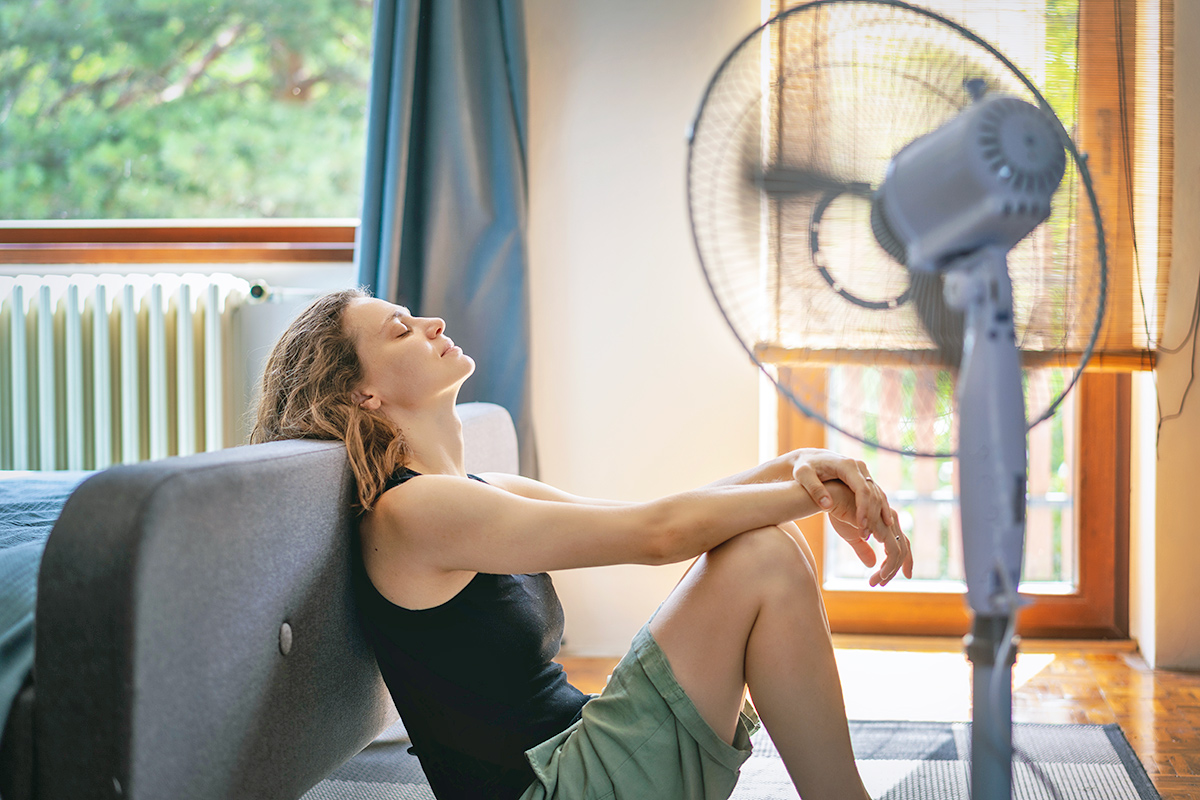
Sweat serves an important purpose — it regulates our body temperature and prevents us from overheating — but it can still be really unpleasant, especially if you perspire a lot. Thankfully, there are some solutions that can help keep you comfortable as temperatures creep higher. Beyond setting your thermostat to the correct summer temp and implementing these ways to stay cool while saving on your AC bills, you may want to pick up these things that will help you sweat less this summer.

Shark Chill Pill Personal Cooling System
Credit: Image Courtesy of Amazon

Shark ChillPill 3-in-1 Personal Cooling System

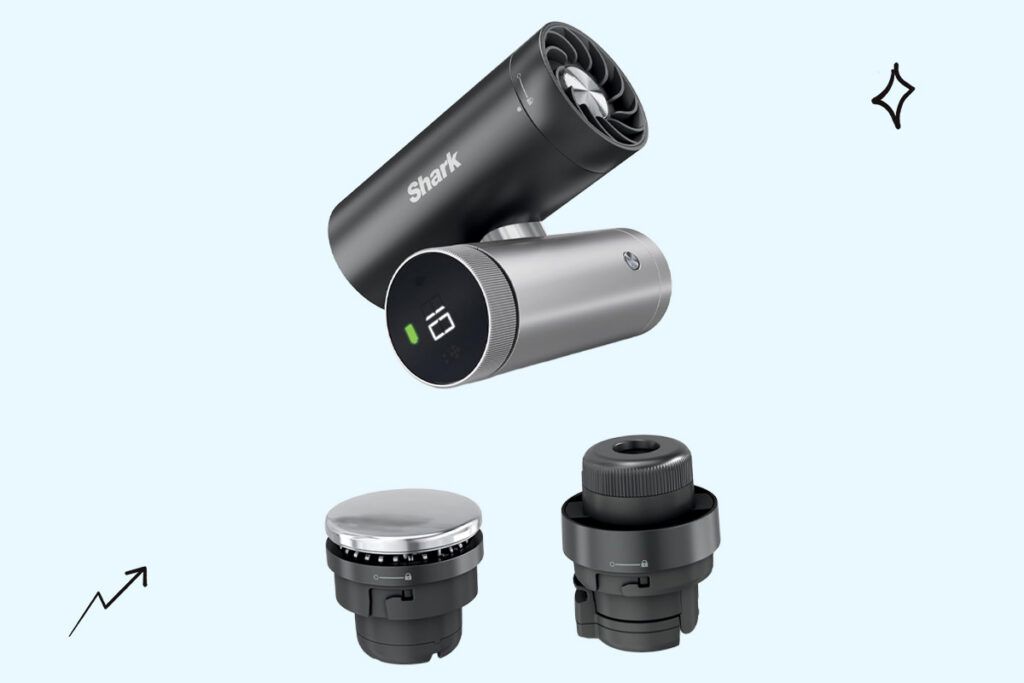
No one in my life hates the heat as much as my husband, so when I saw Shark’s ChillPill all over social media, I knew I had to get him one. The device has three functions: a fan with 10 speeds (the first five for indoor use, the last five intended for outdoors); a mister; and the InstaChill cooling system, a metal disc that purports to drop skin temperature by 16 degrees Fahrenheit. After a month of using it, he broke down his pros and cons for me.

Advertisement
Advertisement

First, the cons: He sees the price as the biggest barrier to entry for most people, because there are plenty of cheaper fans that will do some of what the ChillPill does. “This fan is for people who’ve been burned, literally, and they may be willing to pay top dollar for that relief,” he says. It’s also “a lot of carry,” he says, especially compared to smaller, slimmer personal fans. “There’s a pouch, which helps, but you’re still managing multiple components, and it adds up fast.” (It may end up being annoying if you leave one component behind and can’t use the fan’s full capabilities.) The noise also may be irritating for those who prefer to be discreet: “It’s not obnoxious at low speeds, but once you’re hitting the six-to-10-speed range, you’re buzzing.”

All that aside, he loves that he gets three different functions in a single device. His favorite feature, hands down, is the InstaChill. “Having this option on a brutal afternoon is the difference between surviving your commute and actually enjoying it,” he says. He believes that people will probably spend most of the time using fan mode because “it’s genuinely that good,” and the latter five levels actually move air outdoors. “Once you’ve used it across the full range,” he says, “going back to anything less feels like a downgrade.” And while the shape may be a little weird and takes some getting used to, it actually ends up making total sense — you hold one side while the other does the work. “Give it five minutes during a 90-degree day and the sort of questionable design stops being a factor,” he says. Plus, you can prop it up on your desk for hands-free use.

BUY IT FOR $150 ON AMAZON

Recommended Articles

  • The Safety Rules for Candles You Probably Don’t Know

  • 5 Things Your Car Needs Before the First Freeze

  • 6 Amazon Prime Day Hacks

  • 5 Things To Ask Your Doctor About the New Flu Shot

Advertisement
Advertisement

Reader Favorites

  • Woman looking in fridge

    9 Foods You Should Toss ASAP if They’re Expired

  • Person eating salad

    7 Things a Chef Never Orders at a Restaurant

  • Cherry angioma

    Are the Tiny Red Dots on Your Skin Dangerous?

Theraice Migraine Relief Cap
Credit: Image Courtesy of Amazon

TheraICE Migraine Relief Cap

This gel cap is an oft-used product in my house. Yes, it’s technically for migraines, but it’s also great at taking hot heads down a few degrees without the mess and stress of melting ice. Pop it in the freezer bag and freeze it for two hours and it’s ready to go. You can pull it fully over your face if you have a headache or wear it on the top of your head to cool off as you go about your day. As a bonus, you can throw it in the microwave and heat it up to soothe and relax muscles when temperatures drop.

BUY IT FOR $30 ON AMAZON
Advertisement
Advertisement
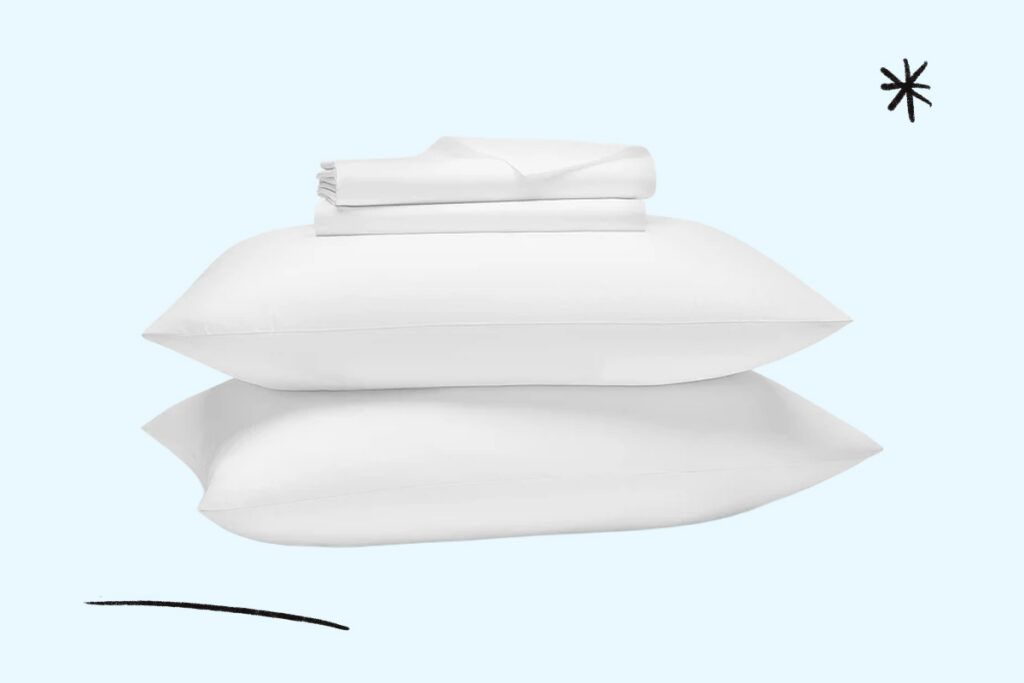
Brooklinen Percale Sheets
Credit: Image Courtesy of Brooklinen

Brooklinen Classic Percale Core Sheet Set

Brooklinen’s percale sheets are my go-to during the summer months, so I can personally vouch for them. Though they’re not cheap — prices start at $159 for a twin set — these 100% cotton sheets are crisp, cool, and breathable, and they come in more than 20 colors and patterns. I particularly like that the pillowcases have envelopes so my pillows aren’t constantly slipping out. And for those of us who find putting on a fitted sheet akin to participating in an Olympic sport, Brooklinen’s are labeled with “long” and “short” so you get it right the first time (yet another way they help you sweat less). 

Advertisement
Advertisement

If Brooklinen’s sheets are out of your price range, these highly rated bamboo sheets from Quince are a good choice — they come in 19 colors, sets start at $100, and plenty of reviews attest to how cool they feel.

BUY IT STARTING AT $159 ON BROOKLINEN
Advertisement
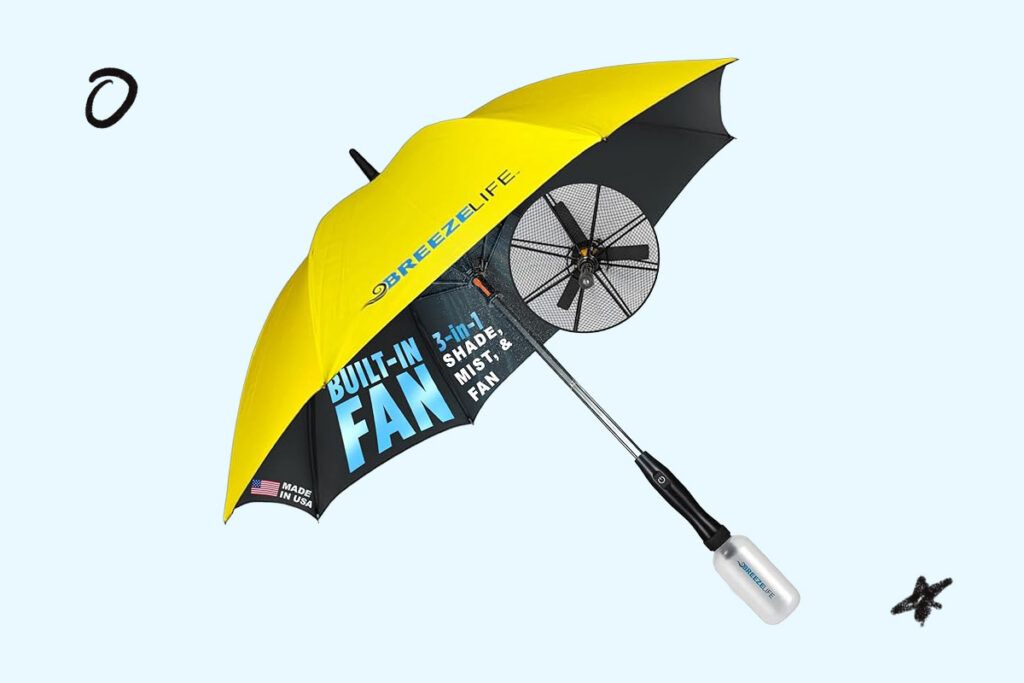
BreezeLife Misting Fan
Credit: Image Courtesy of Amazon

Breeze Life Misting Umbrella

Being outside at a sporting event or concert during the summer months can be almost unbearable for anyone, but it’s especially brutal for sweaty people. The Breeze Life Misting Umbrella can help you beat the heat: Fill the included water bottle, attach it to the handle, turn on the fan, and sit in the umbrella’s shade to enjoy up to three hours of cool mist on a single charge. At just a pound, it’s light, so bringing it with you is easy, and it’s available in five fun colors. 

BUY IT FOR $80 ON AMAZON
Advertisement
Advertisement
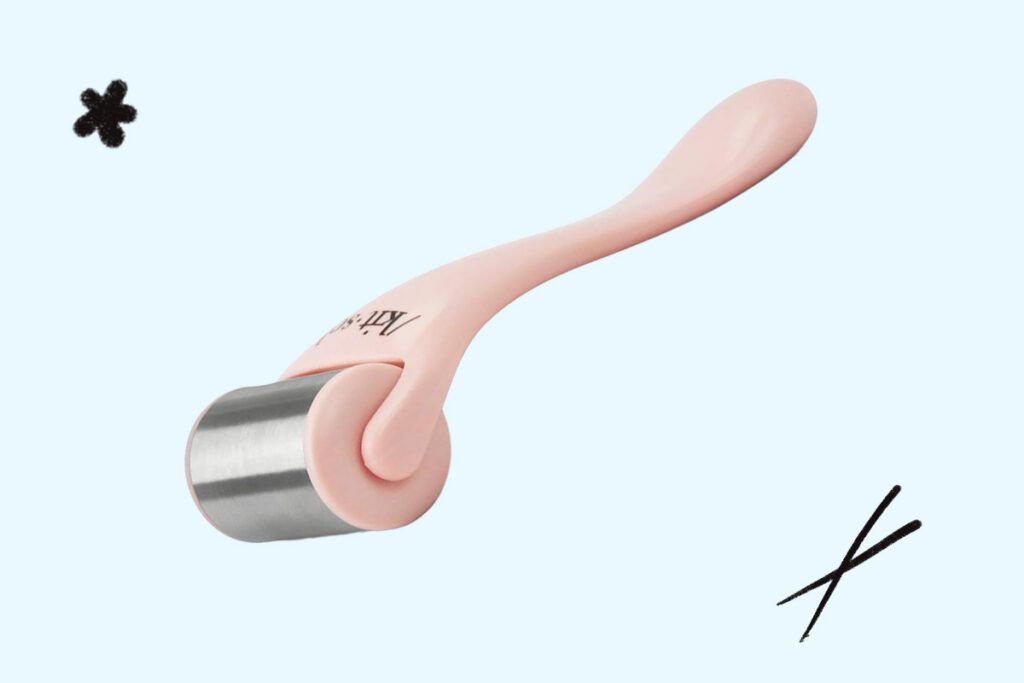
Kitsch Ice Roller
Credit: Image Courtesy of Amazon

Kitsch Ice Roller

This roller from Kitsch will give your hot, tired skin a welcome refresh. Stick it in your fridge or freezer to chill; the stainless steel roller stays cool for extended periods, soothing puffiness, redness, and irritation (and giving you a bit of a spa experience at home for a fraction of the price). You can follow it up with a cooling gel moisturizer to really chill out.

BUY IT FOR $18 ON AMAZON
Advertisement
Advertisement
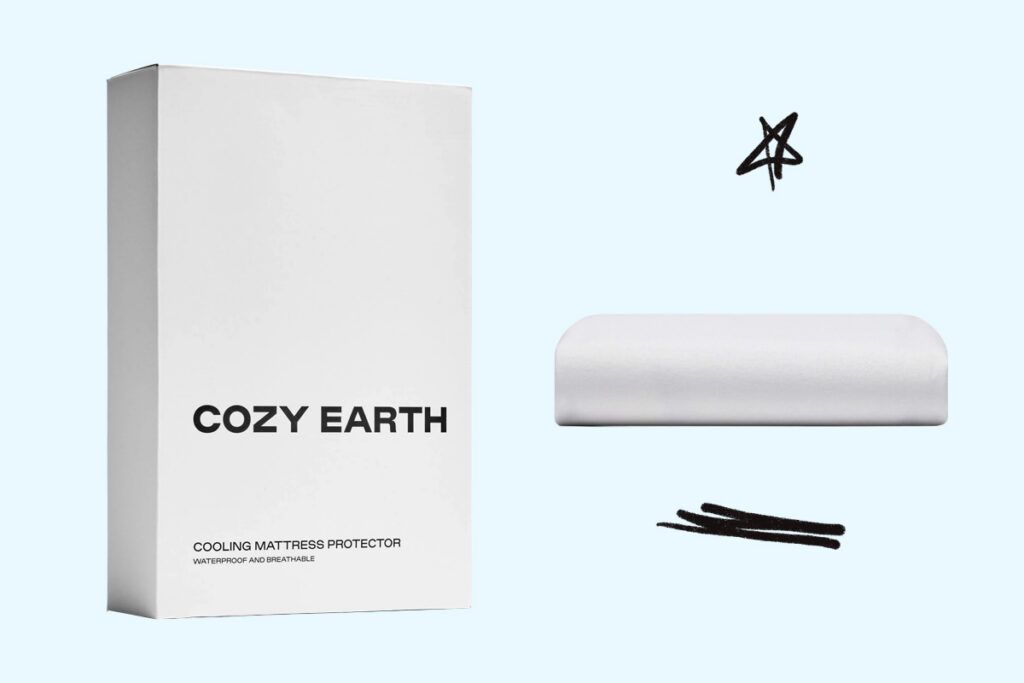
Cozy Earth Mattress Protector
Credit: Image Courtesy of Cozy Earth

Cozy Earth Cooling Mattress Protector

There are many pricey bed-cooling options out there, from Perfectly Snug’s Smart Topper to the BedJet to Eight Sleep’s system. Cozy Earth’s mattress protector will cool you off at night without breaking the bank: It’s made of bamboo, so it’s breathable (reviewers praise its cooling properties), and it has a waterproof Gore-tex membrane that protects your mattress. Even better, it’s machine-washable. There are also cooling pillow protectors.

BUY IT FOR $68 ON COZY EARTH
Advertisement
Advertisement
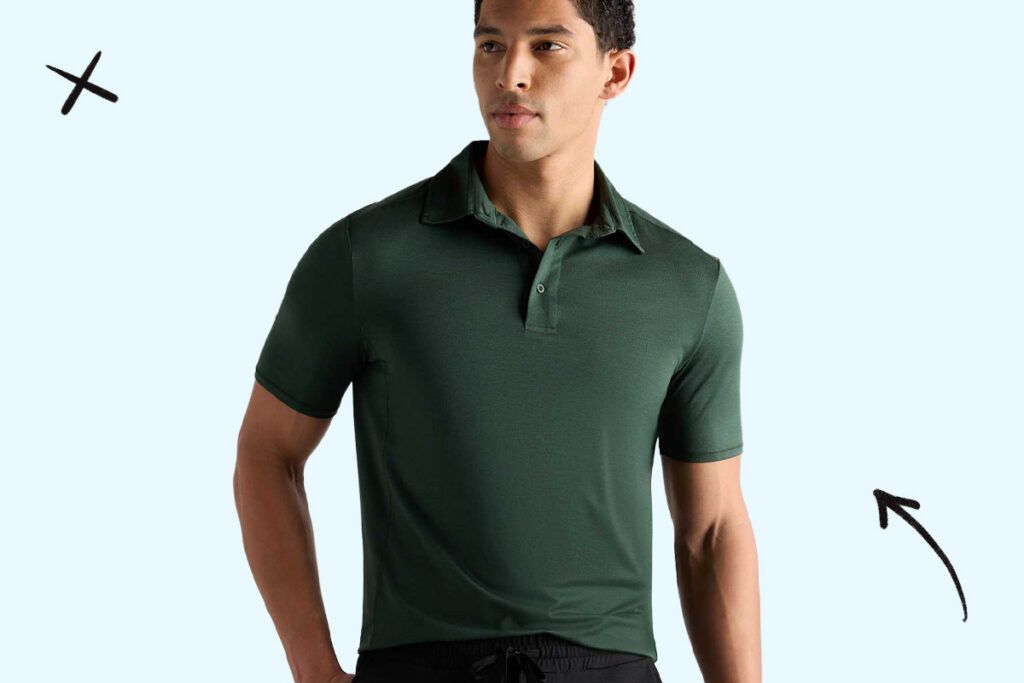
Quince Flowknit Polo
Credit: Image Courtesy of Quince

Quince Flowknit Breeze Performance Polo 

Lots of moisture-wicking clothing looks more appropriate for the gym than for everyday life, but this polo from Quince is an exception: It’s polished enough to wear on a date or while traveling. The soft fabric is not only moisture-wicking but also quick-drying and antimicrobial, and it has UPF 40 protection. Plus, it’s sustainably made from recycled plastic water bottles with eco-friendly dyes. It’s also available in nine colors, so you have plenty of options to choose from. Reviewers rave about the fit and quality.    

Advertisement
Advertisement

For a similarly polished look, women can pick up the Knitflow Breeze Fit & Flare Dress (it has pockets!). Their linen offerings are great, too.

BUY IT FOR $36 ON QUINCE
Solibari Bucket Hat
Credit: Image Courtesy of Amazon

Solibari Bucket Hat

Some sun-protective hats can make you look like a bit of a dork, but this unisex bucket hat from Solibari manages to be fashionable and lightweight while still providing UPF 50 sun protection. It’s made of moisture-wicking nylon, which will ensure you stay nice and cool, and it comes in seven colors and two sizes — plus, it has a drawstring so you can customize the fit, which is handy on windy days. 

BUY IT FOR $65 ON AMAZON
Advertisement
Advertisement
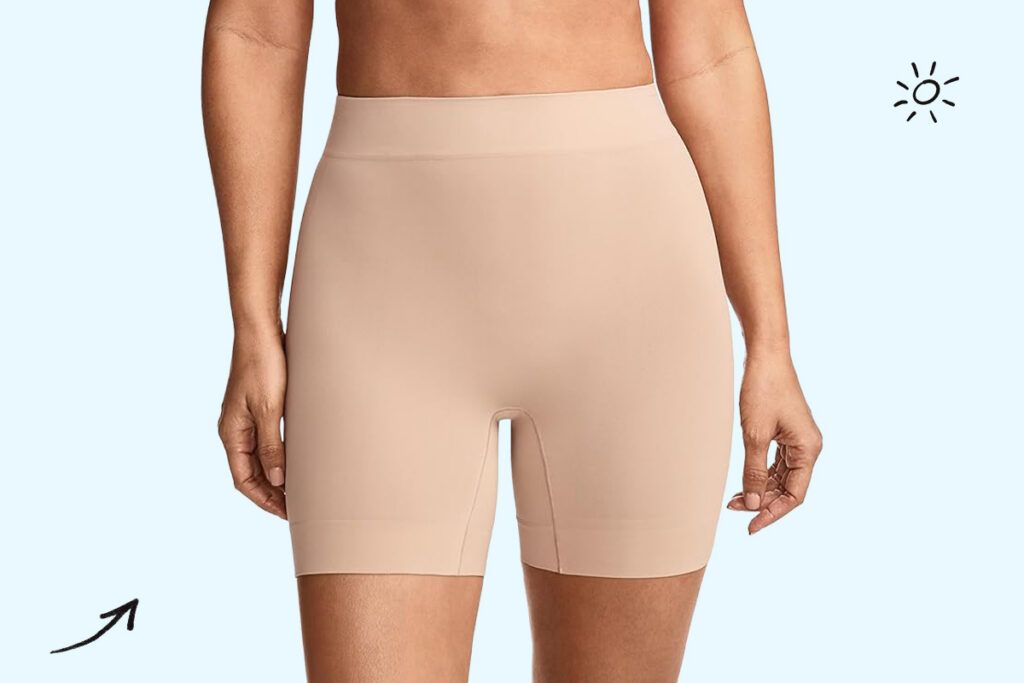
Jockey Shapewear Skimmies Slipshort 
Credit: Image Courtesy of Amazon

Jockey Shapewear Skimmies Slipshort 

The only thing worse than sweating is sweating and chafing. Jockey’s slipshorts prevent both. The soft, cooling fabric will help keep you comfortable no matter how hot it gets — so much so that you’ll forget you’re wearing them. 

Advertisement
Advertisement

Men who want to avoid chafing and sweating should pick up SAXX’s Underwear Co.’s performance boxer briefs.

BUY IT FOR $20 ON AMAZON
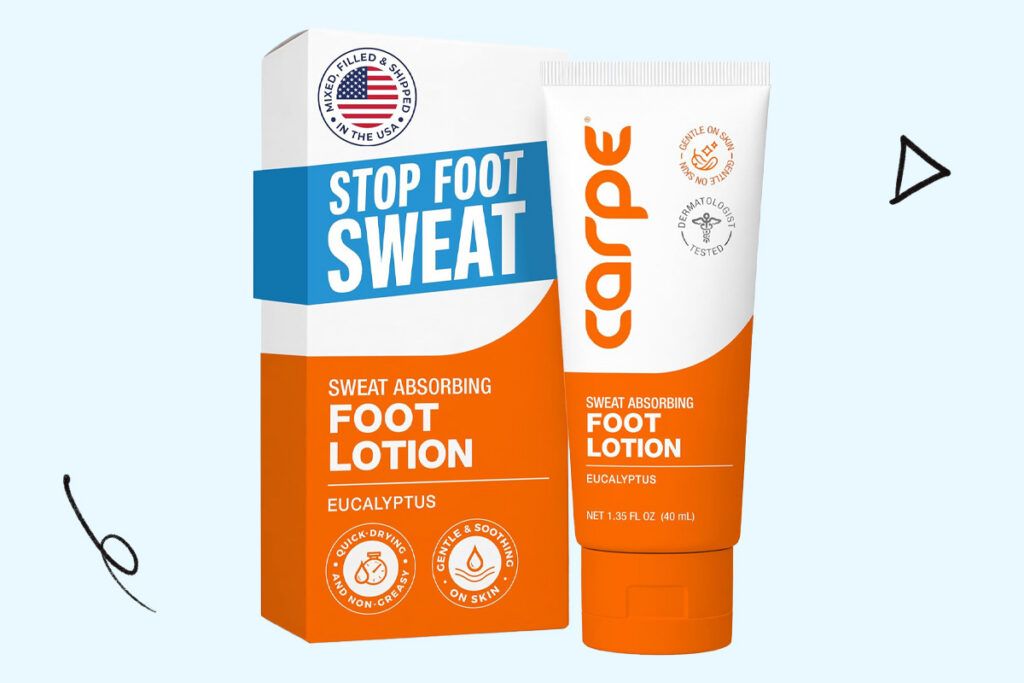
Carpe Sweat Absorbing Foot Lotion
Credit: Image Courtesy of Amazon

Carpe Sweat Absorbing Foot Lotion

Sweaty feet don’t feel or smell nice. Carpe developed this lotion with dermatologists to stop sweat in its tracks: Apply a dime-sized amount to each foot before bed, rub it into the skin for 15 seconds, and repeat in the morning. Users on Amazon rank it 4.4 out of five stars.

Advertisement
Advertisement

If you’re looking for a product that will both cool and deodorize your feet, try this peppermint spray from Rocket Pure. 

BUY IT FOR $20 ON AMAZON

Featured Image Credit: © Olezzo—iStock/Getty Images

More From Our Network

Better Report is part of Inbox Studio, an email-first media company. *Indicates a third-party property.
Go Retro With This 1960s Fashion Quiz

Quiz Daily

Go Retro With This 1960s Fashion Quiz

True or False: Are You a Master of U.S. Geography?

Travel Quiz

True or False: Are You a Master of U.S. Geography?

5 Reasons You Can Be Denied Boarding an Airplane

Daily Passport

5 Reasons You Can Be Denied Boarding an Airplane

What Did People Do Before Eyeglasses?

History Facts

What Did People Do Before Eyeglasses?

How To Use a Balloon To Clean Up Dust

House Outlook

How To Use a Balloon To Clean Up Dust

11 Shopping Hacks Costco Members Should Know

FinanceBuzz*

11 Shopping Hacks Costco Members Should Know

Share this article

  • Share to Facebook
  • Share to Twitter
  • Copy Url
  • Share to Email
Erin McCarthy
Editor, Better Report

Erin is a writer, editor, and content strategist living in the New York City area. Previously, she was the VP/Editor-in-Chief of MentalFloss.com and an editor at Popular Mechanics magazine. When she’s not working, Erin is hanging out with her cats, reading books from her never-ending TBR, traveling, karaoking, and making sourdough with her starter Stephen Sondheim.

This article is for general informational purposes only.
Affiliate Disclaimer Medical Disclaimer Financial Disclaimer

Updated: March 23, 2026
Posted In: Health
Hero Image Credit: Better Report
Advertisement

Related Articles

5 Things To Ask Your Doctor About the New Flu Shot

5 min read

Is Sourdough Actually Healthier Than Regular Bread?

7 min read

Do You Really Need a Bidet in Your Home?

4 min read

3 Common Sleep Habits That May Be Aging Your Brain

5 min read

Is the Traditional Mediterranean Diet Actually the Best for Your Brain?

4 min read
Advertisement

What Can You Call Firefighters for Besides Fires?

Ali Eldridge
Home | Updated: June 15, 2026
Fire truck
Better Report

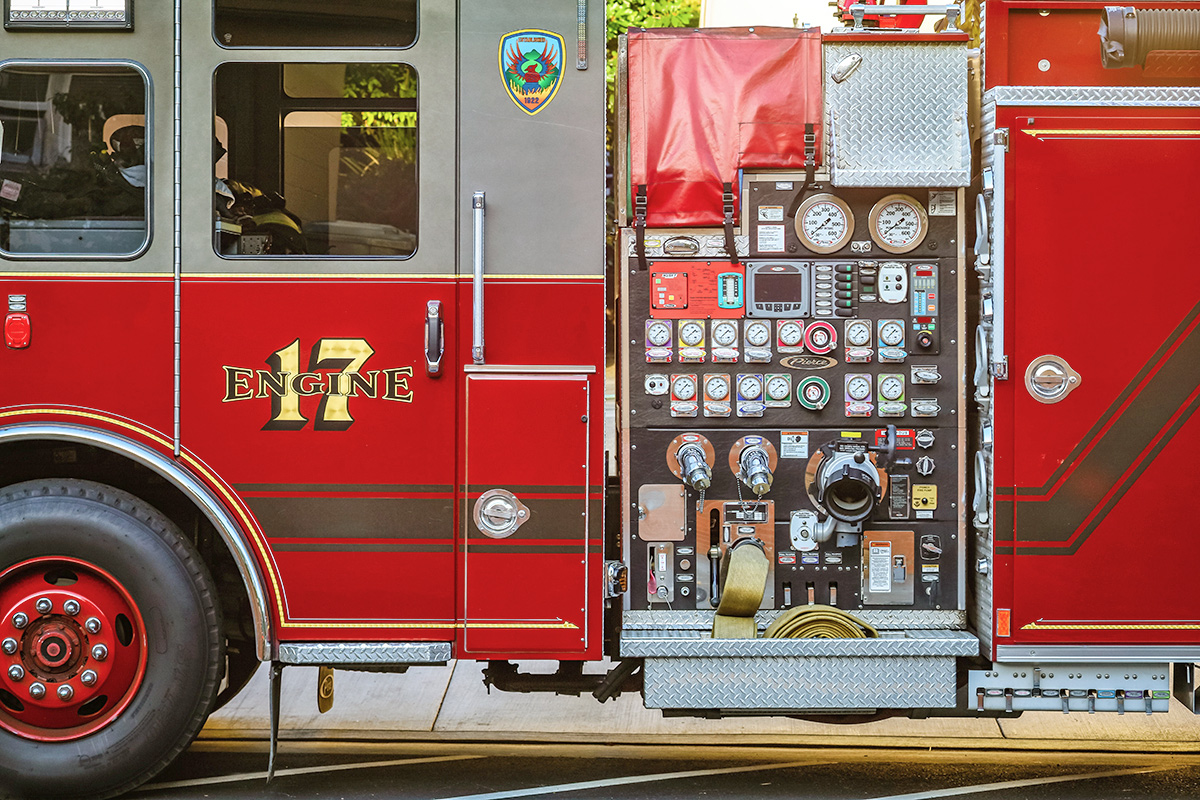
Firefighters are an essential part of any community, working tirelessly to keep blazes at bay. But don’t be misled by their name, because they do much more than just fight fires. These everyday heroes respond to all sorts of emergencies, perform urgent rescues, and do public outreach events to help educate and engage with those they serve. Let’s look at five situations that firefighters can help with beyond putting out fires.

Firefighters at car accident
Credit: © Dallas Penner/Unsplash.com

Vehicle Accidents

Road accidents are among the most common calls that firefighters receive, and they’re well equipped to help: Not only are many firefighters trained as EMTs or licensed paramedics, but they also have access to special lifesaving equipment such as the “Jaws of Life,” which are used to cut through metal and extract victims from vehicles. And fire trucks can be used to create a barrier between the accident and oncoming traffic, protecting emergency responders and allowing teams to divert other drivers in order to safely secure the scene.

Advertisement
Advertisement
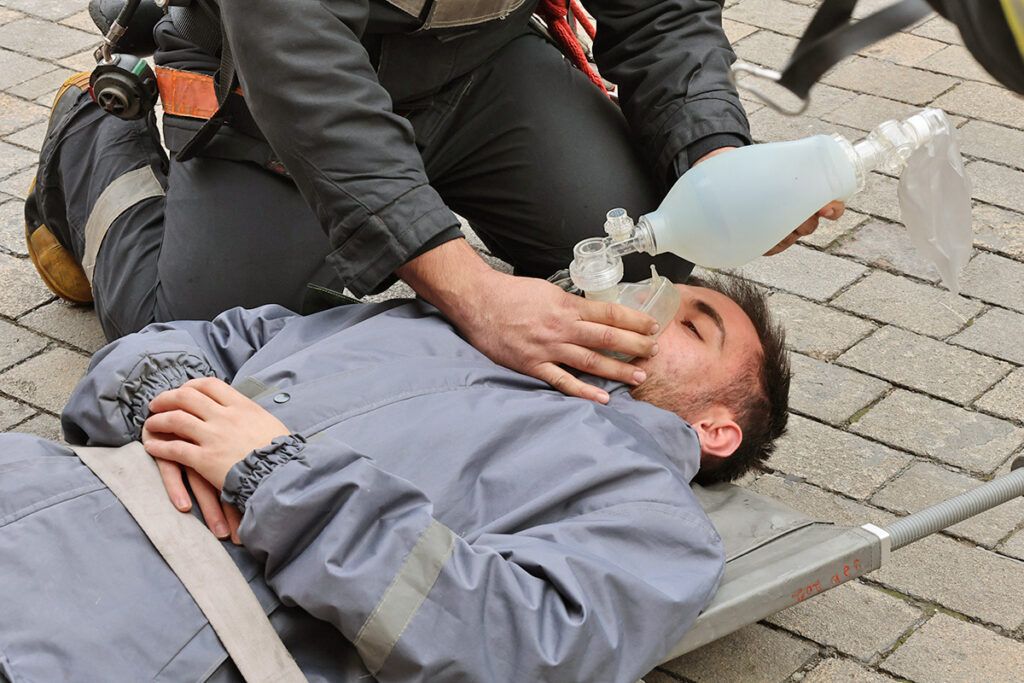
Firefighter putting oxygen bag over mouth of man on the ground
Credit: © Tahir Xəlfə/Pexels.com

Medical Emergencies

Statistics show that medical emergencies account for the majority of the incidents that the New York City Fire Department (the largest fire department in the nation) responds to, and there’s a good reason for that.

Because many firefighters are trained as EMTs or paramedics, they can perform CPR, stop the loss of blood, or provide other care that’s medical in nature. It’s also worth noting that firefighters may arrive on scene sooner than other medical professionals because fire stations are evenly dispersed through communities to provide a rapid response to emergencies. Where an ambulance comes from depends on where you live and whether it’s publicly operated, hospital-based, or privately owned, but there are more fire stations than hospitals: According to the American Hospital Association, there are 6,100 hospitals in the United States. Compare that with more than 27,000 fire departments in the U.S., with over 52,000 stations collectively, per the National Fire Department Registry. 

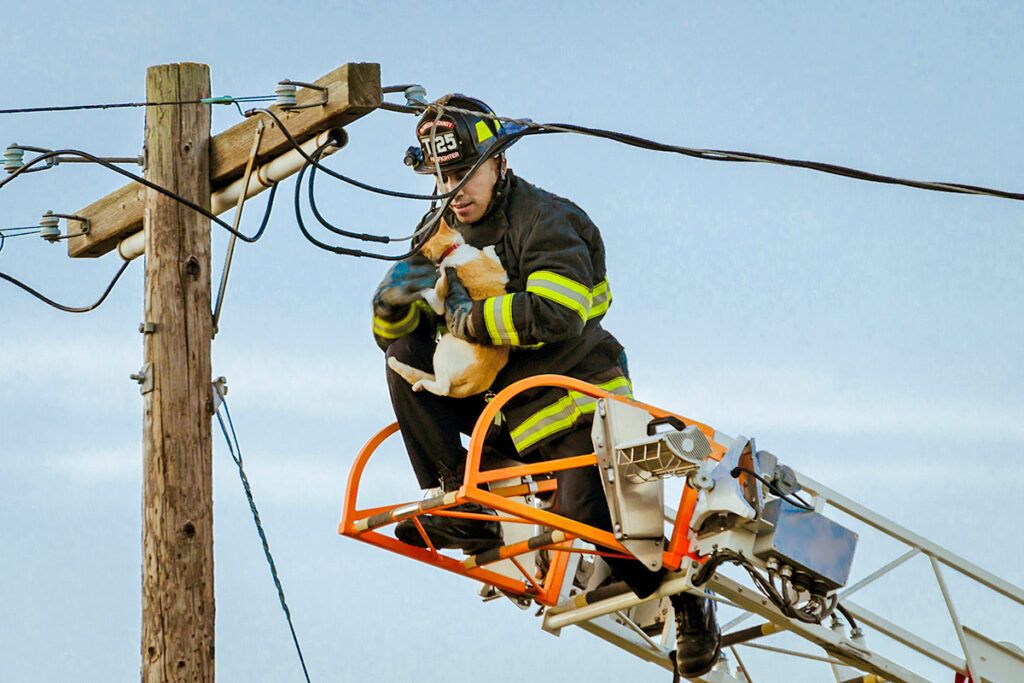
Firefighter rescuing cat
Credit: © Chris Briggs/Unsplash.com

Rescue Operations

Firefighters are well equipped to handle various rescue operations, whether they involve a human or an animal. Firefighters may be called to rescue a person trapped in a car in rising floodwaters, people in a stalled elevator, or someone who’s gotten a limb stuck in a fence.

Recommended Articles

  • The Safety Rules for Candles You Probably Don’t Know

  • 5 Things Your Car Needs Before the First Freeze

  • 6 Amazon Prime Day Hacks

  • 5 Things To Ask Your Doctor About the New Flu Shot

Advertisement
Advertisement

Reader Favorites

  • Woman looking in fridge

    9 Foods You Should Toss ASAP if They’re Expired

  • Person eating salad

    7 Things a Chef Never Orders at a Restaurant

  • Cherry angioma

    Are the Tiny Red Dots on Your Skin Dangerous?

Firefighters also respond to rescue situations for both pets and wildlife. For instance, if your dog crawls through a sewer grate and can’t get out, firefighters can help get your pup back. Or if you open up the toilet and find a snake in the bowl, you can call the fire department for assistance. And yes, they also rescue cats from trees.

Advertisement
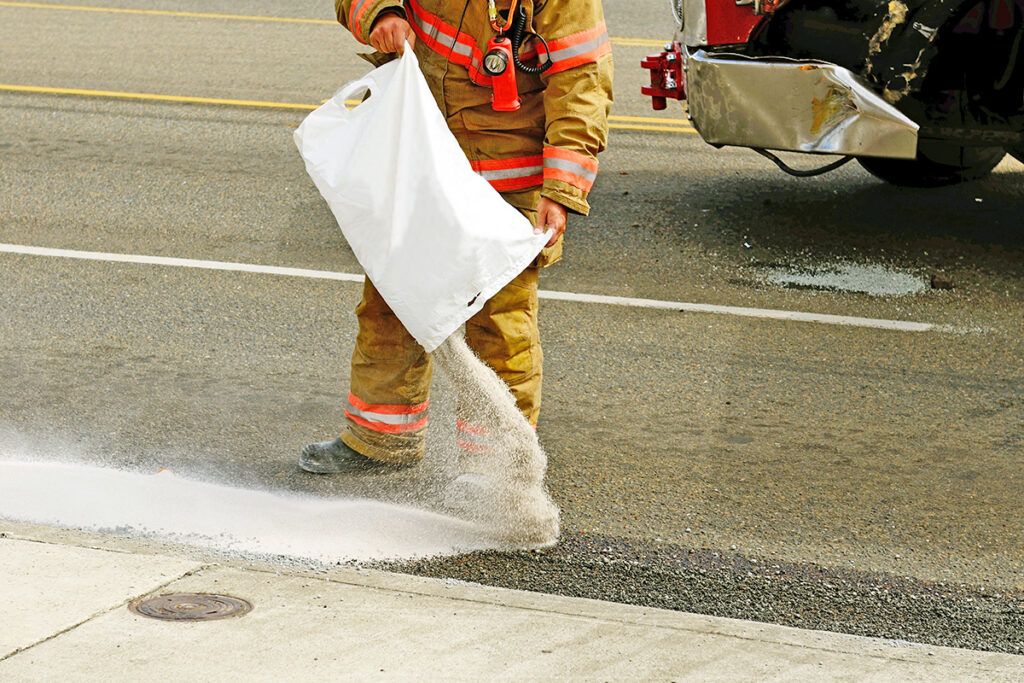
Firefighter putting down something at wreck
Credit: © ftfoxfoto/stock.adobe.com

Hazardous Conditions

From chemical spills to gas leaks to downed power lines, firefighters are trained to handle hazardous conditions and ensure public safety. They may employ an “isolate, evacuate, and deny entry” strategy, which involves isolating the scene, evacuating anyone at risk, and keeping folks at a safe distance thereafter. 

Advertisement
Advertisement

In the case of chemical spills, firefighters not only ensure the safety of everyone around the site, but also work to stop the spill from contaminating the surrounding environment. When power lines go down, firefighters will come to the scene and communicate with local utility companies to de-energize live wires before they tackle any fires that may have arisen. Firefighters also handle 200,000 natural gas leaks annually. In those situations, they’ll locate the source of the leak using a monitor, evacuate if necessary, shut off the gas supply, and control potential sources of ignition before ventilating the area and coordinating with the gas company on next steps.  

Firefighter with student at school
Credit: © wavebreak3/stock.adobe.com

Community Service

Part of a firefighter’s job is giving back to the community. For instance, workplaces and schools may contact the local fire department to deliver an educational talk to students or employees. Firefighters may also show up at community events like street fairs or markets, where they can answer questions you may have about the department or fire safety in general. Many fire stations also host open houses each year where you can speak with the people keeping you safe, experience educational demonstrations about fire safety, and learn about potential careers if you’re interested in fire service. 

Featured Image Credit: © Robert So/Pexels.com

More From Our Network

Better Report is part of Inbox Studio, an email-first media company. *Indicates a third-party property.

Go Retro With This 1960s Fashion Quiz

Quiz Daily

Go Retro With This 1960s Fashion Quiz

True or False: Are You a Master of U.S. Geography?

Travel Quiz

True or False: Are You a Master of U.S. Geography?

5 Reasons You Can Be Denied Boarding an Airplane

Daily Passport

5 Reasons You Can Be Denied Boarding an Airplane

What Did People Do Before Eyeglasses?

History Facts

What Did People Do Before Eyeglasses?

How To Use a Balloon To Clean Up Dust

House Outlook

How To Use a Balloon To Clean Up Dust

11 Shopping Hacks Costco Members Should Know

FinanceBuzz*

11 Shopping Hacks Costco Members Should Know

Share this article

  • Share to Facebook
  • Share to Twitter
  • Copy Url
  • Share to Email
Ali Eldridge

This article is for general informational purposes only.
Affiliate Disclaimer Medical Disclaimer Financial Disclaimer

Updated:
Posted In: Home
Hero Image Credit: Better Report
Advertisement

Related Articles

The Safety Rules for Candles You Probably Don’t Know

5 min read

9 Items in Your Basement You Should Toss Right Now

5 min read

5 Vegetables You Should Never Store in the Fridge

3 min read

Why a Flashing Check Engine Light Is Different From a Solid One

3 min read

Why Does Your Sink Have a Tiny Hole?

3 min read
Advertisement

The Best Times of Year To Buy a Car

Wealth | Updated: June 11, 2026
Bennett Kleinman
Author
Bennett Kleinman is a New York City-based staff writer for Inbox Studio. He is also a freelance comedy writer, devoted New York Yankees and New Jersey Devils fan, and thinks plain seltzer is the best drink ever invented.
Hands with car keys
Better Report

When making a big purchase, it’s smart to wait until the time of year when prices are typically discounted. Black Friday is a great time to shop for a television due to holiday sales, for instance, and you’re likely to find cheap ski gear in the spring as retailers unload old inventory. The same goes for buying a new car. Though the “right” time to buy a vehicle may not be as evident, there are periods of the year when car prices are known to be lower. Here’s when you should hit the gas on your next set of wheels.

Woman in car showroom
Credit: © Peter Cade—Photodisc/Getty Images

The Month of December

Many dealerships lower the manufacturer’s suggested retail price (MSRP) in the month of December. According to Car and Driver, dealers may be trying to meet internal sales quotas before the new year, and lowering the price is a helpful way to get a boost.

Advertisement
Advertisement

Dealerships also may lower prices as part of an effort to meet manufacturer minimums — the lowest number of units that dealerships are expected to sell of a model. If the dealership fails to meet those minimums, carmakers may be less inclined to do business with them going forward, so it’s in the dealership’s best interest to hit those goals.

Sales aren’t necessarily guaranteed: A successful car dealership may have no problem meeting quotas and therefore  no need to cut prices. But it’s still worth checking your local dealerships to see if sales pop up as the new year approaches.

Cars in a car dealership parking lot
Credit: © Crosby Hinze/Unsplash.com

As New Models Appear

When a new model hits the showroom floor, older versions of that same model might be discounted to clear space. There’s no universally agreed-upon time of year for new car models to debut, but according to U.S. News & World Report, new models often debut in the fall, so it’s worth keeping an eye out for sales around that time of year.

Recommended Articles

  • The Safety Rules for Candles You Probably Don’t Know

  • 5 Things Your Car Needs Before the First Freeze

  • 6 Amazon Prime Day Hacks

  • 5 Things To Ask Your Doctor About the New Flu Shot

Advertisement
Advertisement

Reader Favorites

  • Woman looking in fridge

    9 Foods You Should Toss ASAP if They’re Expired

  • Person eating salad

    7 Things a Chef Never Orders at a Restaurant

  • Cherry angioma

    Are the Tiny Red Dots on Your Skin Dangerous?

You may also be able to get a great deal when a car model gets discontinued, because the price on remaining units is likely to be slashed. This isn’t to say that the car is faulty — just that the public didn’t have much interest in a new version of that vehicle. The general public’s loss can be your gain.

Advertisement
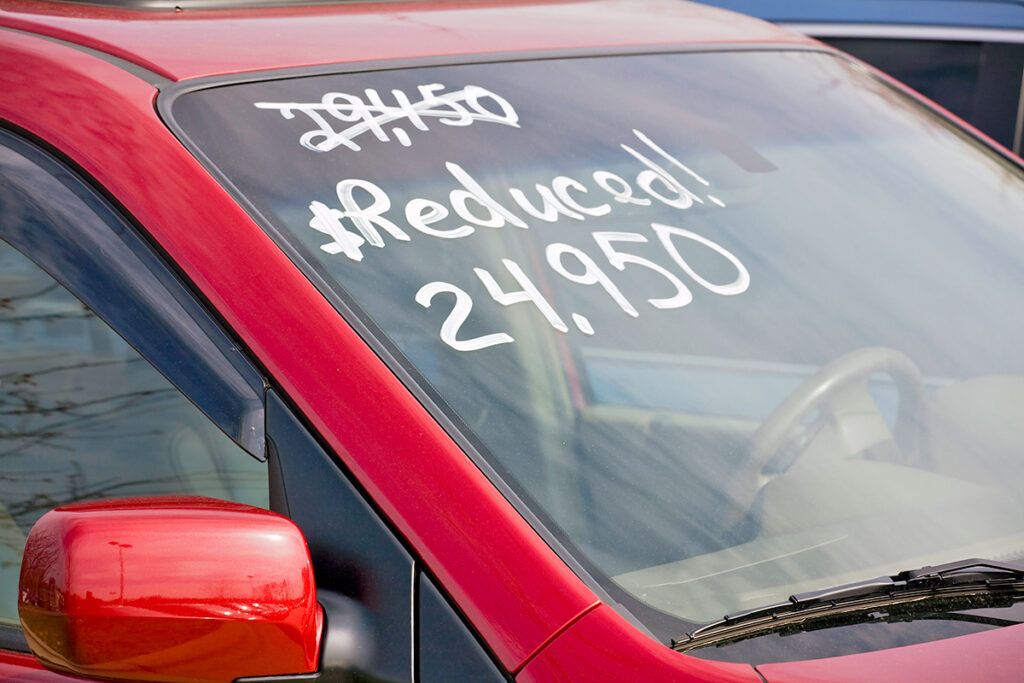
Car with sale price on windshield
Credit: © red_moon_rise—E+/Getty Images

Around Holidays

If there’s a holiday coming up, you better believe that dealerships are thinking of a way to use it in their marketing materials. According to Car & Driver, dealerships may attempt to draw people in for celebratory sales pegged to everything from Presidents Day and Memorial Day to Father’s Day and even Halloween. So if you’re looking to buy a car around mid-August, wait two more weeks to see what deals become available around Labor Day. The price probably isn’t going to go up — if anything, it’ll drop to your benefit.

Advertisement
Advertisement

Make sure you familiarize yourself with the MSRP of the car you’re looking to purchase so you can discern between a holiday sale that’s worth taking advantage of and one where the dealer is offering just a few bucks off the standard price.

Man looking at a car
Credit: © yacobchuk—iStock/Getty Images

On Mondays

No matter the time of year, Mondays tend to be the slowest day at car dealerships. These off-peak times are a great opportunity to snag a good deal on a new vehicle. If you head into the dealership on Monday morning, you’ll have ample time to speak with a salesperson about a price that makes sense for you, and they’ll be more motivated to make a deal that leads to a sale.

Advertisement
Advertisement

But if you go on a Saturday or another busy day, then you may get only a few moments of the salesperson’s time. The more you feel rushed, the more likely you may be to agree to a price that you don’t feel comfortable with. A salesperson is also less likely to give you a deal since there’s already another customer right behind you. Always prioritize off-peak visits, as it allows you to have a legitimate negotiation with the salesperson.

Featured Image Credit: © Getty Images/Unsplash.com

More From Our Network

Better Report is part of Inbox Studio, an email-first media company. *Indicates a third-party property.

Go Retro With This 1960s Fashion Quiz

Quiz Daily

Go Retro With This 1960s Fashion Quiz

True or False: Are You a Master of U.S. Geography?

Travel Quiz

True or False: Are You a Master of U.S. Geography?

5 Reasons You Can Be Denied Boarding an Airplane

Daily Passport

5 Reasons You Can Be Denied Boarding an Airplane

What Did People Do Before Eyeglasses?

History Facts

What Did People Do Before Eyeglasses?

How To Use a Balloon To Clean Up Dust

House Outlook

How To Use a Balloon To Clean Up Dust

11 Shopping Hacks Costco Members Should Know

FinanceBuzz*

11 Shopping Hacks Costco Members Should Know

Share this article

  • Share to Facebook
  • Share to Twitter
  • Copy Url
  • Share to Email
Bennett Kleinman
Staff Writer

Bennett Kleinman is a New York City-based staff writer for Inbox Studio. He is also a freelance comedy writer, devoted New York Yankees and New Jersey Devils fan, and thinks plain seltzer is the best drink ever invented.

This article is for general informational purposes only.
Affiliate Disclaimer Medical Disclaimer Financial Disclaimer
Updated: July 20, 2023
Posted In: Wealth
Hero Image Credit: Better Report
Advertisement

Related Articles

5 Things Your Car Needs Before the First Freeze

4 min read

6 Amazon Prime Day Hacks

6 min read

Is It Actually Better To Lease a Car?

9 min read

7 Free MIT Classes You Can Experience From Home

4 min read

The Bedroom Color That Adds $2,000 to Your Home Value

3 min read
Advertisement

Why You Shouldn’t Use Rubbing Alcohol on Open Wounds

Ali Eldridge
Health | Updated: June 11, 2026
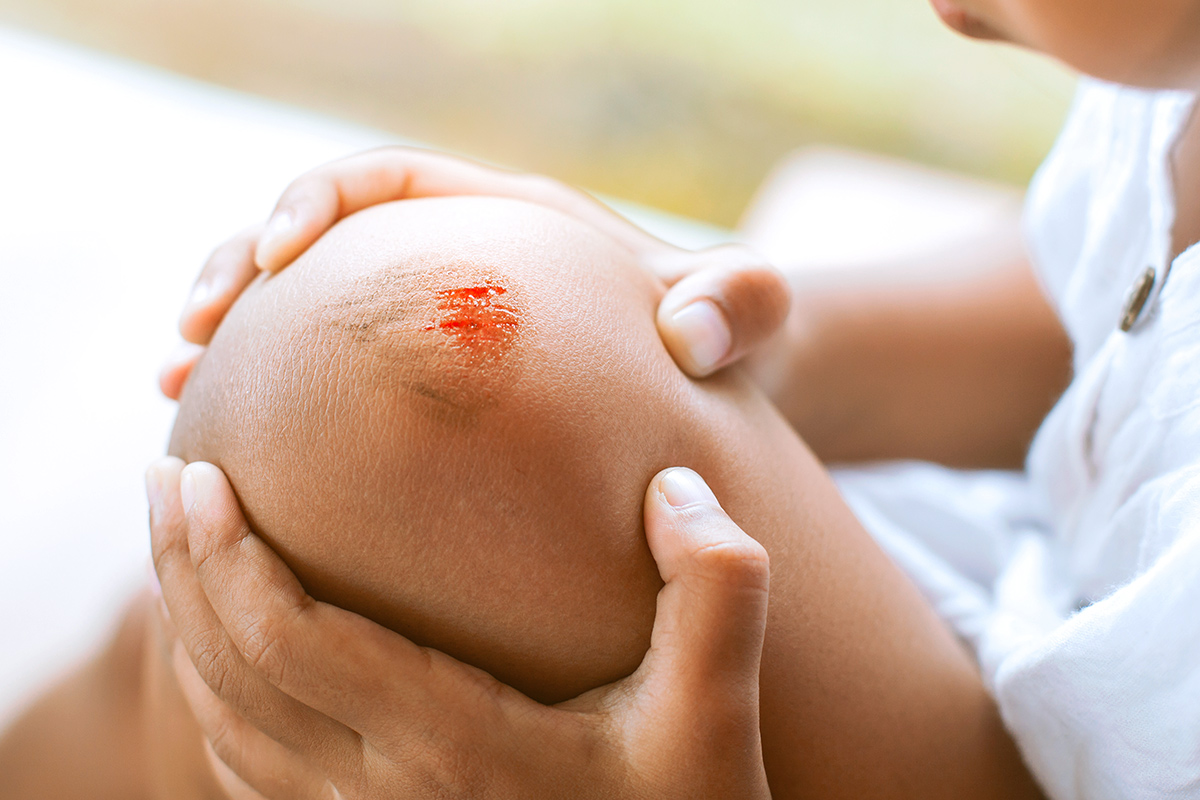
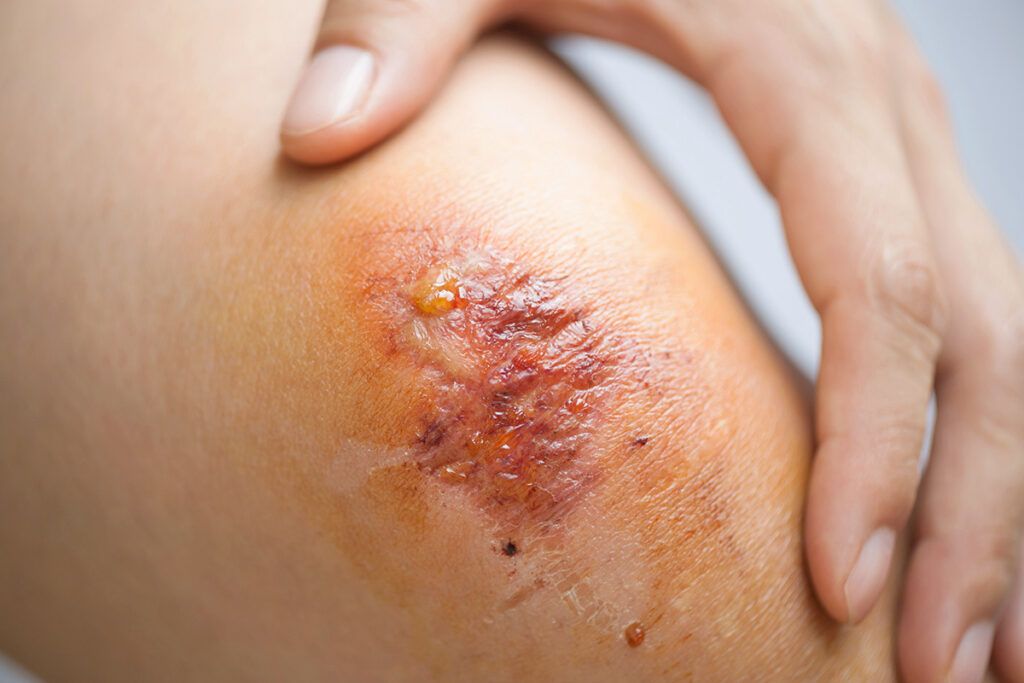
Scraped knee
Better Report

All featured products and deals are selected independently and objectively by the author. Better Report may receive a share of sales via affiliate links in content.

When you were a kid and scraped your knee, the first thing your parents may have done was apply rubbing alcohol to disinfect the wound. But while this home remedy has existed for decades, it may not be as beneficial as once thought. Many medical experts say that putting rubbing alcohol on open wounds is actually a bad idea. Here’s a look at why, and what you should do instead.

Scabbing wound
Credit: © lzf/stock.adobe.com

There’s the Rub

According to WebMD, applying rubbing alcohol (or hydrogen peroxide, for that matter) to an open wound is highly inadvisable. While the substances do kill off bacteria, they also harm the exposed tissue and kill healthy cells that would otherwise play a key role in the healing process. This delays healing and may even result in more scarring. That’s why you should use alternative methods that eliminate bacteria from the wound without causing any additional damage.

Advertisement
Advertisement

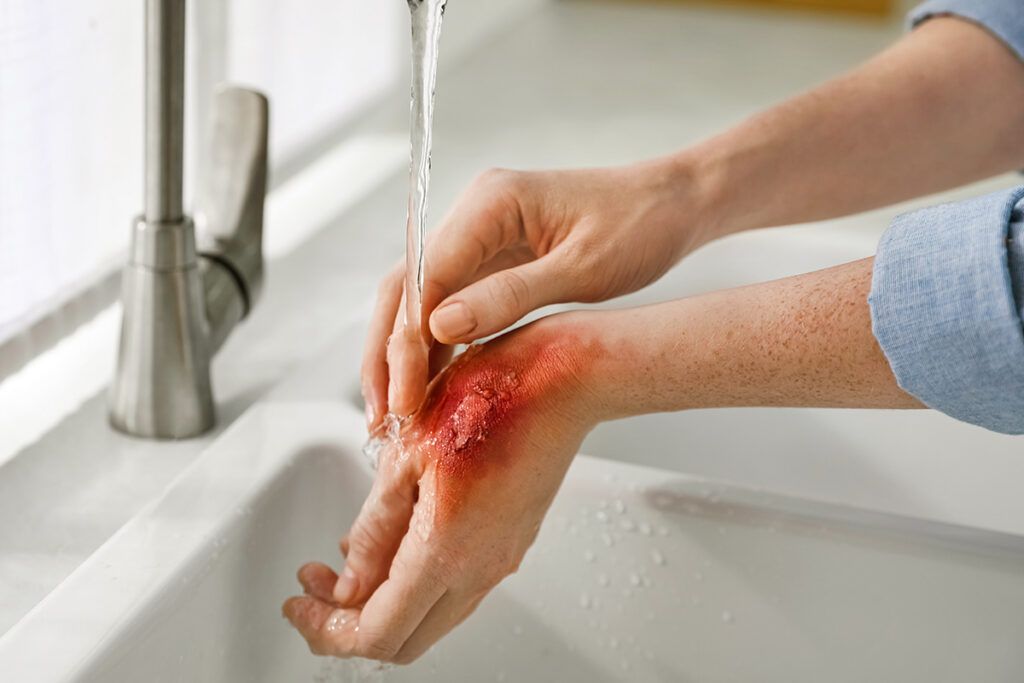
Dr. Nicholas Kman of the Ohio State Wexner Medical Center advises that anyone with a cut, scrape, or minor open wound should clean it using warm, running tap water and soap. The way you choose to do this is your call — you can step into the shower if the cut is on the leg, for example, or run it under the sink if it’s on your forearm. Just be sure to use a mild soap, which will remove bacteria without damaging healthy cells. WebMD recommends rinsing the cut for at least five minutes to adequately flush out any debris or bacteria.

Keep in mind that this advice applies only to smaller cuts that have stopped bleeding. If you’re dealing with a larger, deeper wound that’s gushing blood, then you should consult a medical professional for immediate treatment.

Washing wound on hand under water
Credit: © Liudmila Chernetska—iStock/Getty Images

Additional Tips for Treating Wounds

Avoiding the use of rubbing alcohol or hydrogen peroxide is just one thing to keep in mind when it comes to proper wound care. According to the Mayo Clinic, you should always wash your hands before touching a wound — this helps prevent infection. Next, use a clean bandage or cloth to press on the wound until bleeding stops. Then, clean the wound with warm running water and soap, as described above. Don’t scrub.

Recommended Articles

  • The Safety Rules for Candles You Probably Don’t Know

  • 5 Things Your Car Needs Before the First Freeze

  • 6 Amazon Prime Day Hacks

  • 5 Things To Ask Your Doctor About the New Flu Shot

Advertisement
Advertisement

Reader Favorites

  • Woman looking in fridge

    9 Foods You Should Toss ASAP if They’re Expired

  • Person eating salad

    7 Things a Chef Never Orders at a Restaurant

  • Cherry angioma

    Are the Tiny Red Dots on Your Skin Dangerous?

After thoroughly rinsing the wound, apply an antibiotic ointment or petroleum jelly to the affected area. This keeps the wound moist (which is essential for healing) and helps prevent scarring as well. 

Advertisement

If you’re dealing with a minor cut or scrape, there’s no need to cover it up. But a larger wound should be covered with a clean bandage or gauze to protect it from coming into contact with additional dirt or bacteria. Be sure to replace the bandage once per day (or if the bandage ever gets dirty or wet) until the wound fully heals.

Featured Image Credit: © pingpao/stock.adobe.com

More From Our Network

Better Report is part of Inbox Studio, an email-first media company. *Indicates a third-party property.

Go Retro With This 1960s Fashion Quiz

Quiz Daily

Go Retro With This 1960s Fashion Quiz

True or False: Are You a Master of U.S. Geography?

Travel Quiz

True or False: Are You a Master of U.S. Geography?

5 Reasons You Can Be Denied Boarding an Airplane

Daily Passport

5 Reasons You Can Be Denied Boarding an Airplane

What Did People Do Before Eyeglasses?

History Facts

What Did People Do Before Eyeglasses?

How To Use a Balloon To Clean Up Dust

House Outlook

How To Use a Balloon To Clean Up Dust

11 Shopping Hacks Costco Members Should Know

FinanceBuzz*

11 Shopping Hacks Costco Members Should Know

Share this article

  • Share to Facebook
  • Share to Twitter
  • Copy Url
  • Share to Email
Ali Eldridge

This article is for general informational purposes only.
Affiliate Disclaimer Medical Disclaimer Financial Disclaimer

Updated:
Posted In: Health
Hero Image Credit: Better Report
Advertisement

Related Articles

5 Things To Ask Your Doctor About the New Flu Shot

5 min read

Is Sourdough Actually Healthier Than Regular Bread?

7 min read

Do You Really Need a Bidet in Your Home?

4 min read

3 Common Sleep Habits That May Be Aging Your Brain

5 min read

Is the Traditional Mediterranean Diet Actually the Best for Your Brain?

4 min read
Advertisement

What Your Sweat Can Tell You About Your Health

Health | Updated: June 10, 2026
Rachel Gresh
Author
Rachel Gresh is a Washington, D.C.-based freelance writer. When she's not writing, you can find her wandering a museum, exploring an unfamiliar city, or baking something new in the kitchen.
Woman sweating
Better Report

Sweating might feel annoying or embarrassing, but it’s one of your body’s smartest survival tools: Whether you’re dripping through a workout or suddenly sweating during a stressful meeting, perspiration is the main way our bodies regulate their temperature. To do so, millions of sweat glands expel mostly water, which is mixed with small amounts of other substances, such as sodium and chloride. Exactly how much you sweat varies based on genetics, fitness level, climate, and age.

But sweat can also offer clues about hydration, stress, hormones, medication side effects, and overall health. Here’s what your sweat could be trying to tell you.

Person with sweat stain in the armpit of their shirt
Credit: © sebra/stock.adobe.com

If You Sweat A Lot

Sweating helps prevent overheating during exercise or time spent in hot weather. Most of the time, excess sweat is normal, but sometimes it can signal physical or emotional changes in the body.

Advertisement
Advertisement

A few medical conditions are associated with oversweating. If you’re extra sweaty without being overheated, working out, feeling stressed, or experiencing another obvious trigger, it may be hyperhidrosis. This skin condition, which is caused by a genetic variation, results in extra sweat, typically on the face, armpits, feet, and hands.

A sudden onset of excessive sweat can also be linked to hormonal fluctuations during pregnancy, perimenopause, and menopause. These changes may trigger hot flashes, characterized by a sudden surge of heat. While hormones are the most likely culprit, general overheating, stress, or consumption of alcohol, caffeine, or spicy food may also contribute.

Advertisement

Night sweats that soak clothing or bedding are also usually hormonal, but they may point to infections, sleep disorders, anxiety, medication side effects, or other medical conditions. You should see a doctor if your night sweats occur regularly, wake you up, are accompanied by symptoms such as a fever or unexplained weight loss, or start long after symptoms of menopause have ended.

Woman smelling armpit and holding nose
Credit: © aquaArts studio—iStock/Getty Images

If Your Sweat Has a Strong Odor

Stress not only increases sweat production but also makes it stinkier. This happens because there are two types of sweat glands. 

Sweat from overheating is produced by eccrine glands, which are found all over the body. This type of sweat usually doesn’t have much of an odor because it’s mostly water and salt. Stress-related sweating, on the other hand, is produced by apocrine glands, which are mostly found in the armpits and groin area. This sweat contains proteins and lipids that skin bacteria feed on, causing odor.

Recommended Articles

  • The Safety Rules for Candles You Probably Don’t Know

  • 5 Things Your Car Needs Before the First Freeze

  • 6 Amazon Prime Day Hacks

  • 5 Things To Ask Your Doctor About the New Flu Shot

Advertisement
Advertisement

Reader Favorites

  • Woman looking in fridge

    9 Foods You Should Toss ASAP if They’re Expired

  • Person eating salad

    7 Things a Chef Never Orders at a Restaurant

  • Cherry angioma

    Are the Tiny Red Dots on Your Skin Dangerous?

If persistent body odor doesn’t improve with hygiene, lifestyle, or stress improvements, it can occasionally be linked to conditions such as diabetes, liver disease, or kidney disease. It’s important to notify your doctor of any significant changes in the odor of your sweat.

Man lifting weights and sweating
Credit: © Jacob Lund/stock.adobe.com

If Your Sweat Is Salty

We naturally lose salt through sweat, especially during intense exercise. White streaks on clothing or sweat that burns your eyes may indicate higher sodium loss. This is common among endurance athletes or people training in hot conditions. In these cases, replacing electrolytes along with fluids may help maintain hydration. However, certain medications and medical conditions, including cystic fibrosis, can also cause unusually salty sweat.

Advertisement
Advertisement

While salty sweat typically isn’t cause for concern, contact your health care provider if it is accompanied by other symptoms, such as nausea, vomiting, confusion, headache, muscle weakness, or cramping. These are signs of hyponatremia, a condition in which blood sodium levels are very low.

Advertisement
Woman drinking water
Credit: © brizmaker—iStock/Getty Images

If You Barely Sweat

Everyone sweats differently, but if you feel you’re not sweating when you normally would, such as during exercise or in the heat, it could be a sign of a medical condition called anhidrosis. This condition prevents you from sweating normally in at least one area of the body, and it may be caused by genetics, nerve or skin damage, medications, autoimmune conditions, or chronic illnesses.

Advertisement
Advertisement

A major decrease in sweating can also indicate severe dehydration or heat stroke, both of which can be very dangerous. Heat stroke doesn’t always come on suddenly. Nonexertional heatstroke can develop over several days and is more common in those ages 65 and older or those with underlying health conditions. Seek medical attention if you’re not sweating and are experiencing a fever, dizziness, fast pulse, and confusion.

Sweating man wiping brow with cloth
Credit: © Mohamed hamdi/Unsplash.com

How To Support Healthy Sweating

Because sweating is so important for regulating our bodies, you may be wondering how you can support healthy sweating. Maintaining good hygiene, wearing breathable clothing, managing stress, staying hydrated, and replenishing electrolytes after intense workouts are great ways to support your body’s natural functions. Remember, sweat merely provides clues — professional medical advice matters most for persistent concerns.

Featured Image Credit: © PonyWang—iStock/Getty Images

More From Our Network

Better Report is part of Inbox Studio, an email-first media company. *Indicates a third-party property.

Go Retro With This 1960s Fashion Quiz

Quiz Daily

Go Retro With This 1960s Fashion Quiz

True or False: Are You a Master of U.S. Geography?

Travel Quiz

True or False: Are You a Master of U.S. Geography?

5 Reasons You Can Be Denied Boarding an Airplane

Daily Passport

5 Reasons You Can Be Denied Boarding an Airplane

What Did People Do Before Eyeglasses?

History Facts

What Did People Do Before Eyeglasses?

How To Use a Balloon To Clean Up Dust

House Outlook

How To Use a Balloon To Clean Up Dust

11 Shopping Hacks Costco Members Should Know

FinanceBuzz*

11 Shopping Hacks Costco Members Should Know

Share this article

  • Share to Facebook
  • Share to Twitter
  • Copy Url
  • Share to Email
Rachel Gresh
Writer

Rachel Gresh is a Washington, D.C.-based freelance writer. When she's not writing, you can find her wandering a museum, exploring an unfamiliar city, or baking something new in the kitchen.

This article is for general informational purposes only.
Affiliate Disclaimer Medical Disclaimer Financial Disclaimer

Updated: December 15, 2023

Posted In: Health
Hero Image Credit: Better Report

Advertisement

Related Articles

5 Things To Ask Your Doctor About the New Flu Shot

5 min read

Is Sourdough Actually Healthier Than Regular Bread?

7 min read

Do You Really Need a Bidet in Your Home?

4 min read

3 Common Sleep Habits That May Be Aging Your Brain

5 min read

Is the Traditional Mediterranean Diet Actually the Best for Your Brain?

4 min read
Advertisement

Posts navigation

Older posts
Newer posts
  • Home
  • Health
  • Wealth
  • Logo
  • Advertise
  • About
  • Contact Us
  • Privacy Policy
  • Terms of Use
  • Your Privacy Choices
x
Thumb Image

Elevate your everyday.

Sign up to receive the practical tips and expert advice you need to pare down the complexities of everyday living right in your inbox.

Sorry, your email address is not valid. Please try again.

Your email is:

Edit Image
Sorry, your email address is not valid. Please try again.
Thank you for subscribing...

By subscribing you are agreeing to our Terms of Use and Privacy Policy.

Close image
Thumb Image
Second Thumb Image

Elevate your everyday.

Sign up to receive the practical tips and expert advice you need to pare down the complexities of everyday living right in your inbox.

Sorry, your email address is not valid. Please try again.

By subscribing you are agreeing to our Privacy Policy and Terms of Use.

Close image